
Podcast
1 Hour Guide - Anil Nathoo
Hosted by 1 Hour Guide - Anil Nathoo · EN
My name is Anil Nathoo and this is my little corner of the internet exploring leadership, technology & curiosities. This is a place where my love for books and fascination with AI tech tools come together in a symphony of discovery. If you’ve ever felt the thrill of getting lost in a story, the satisfaction of finding that perfect tool for the job, or the wonder of stumbling upon something totally unexpected, then you’re in for a treat. Join me as I share my thoughts on the books that have captured my heart, the tools that have transformed my work and play.
15episodes
Episodes
Newest firstAll episodes
The Art of Strategy
Apr 600:22:13Tap to summarizeClick here for more.This podcast summarizes The Art of Strategy by economists Avinash Dixit and Barry Nalebuff, a work that translates complex game theory into practical advice for business and daily life. The podcast explores how individuals can make superior decisions by anticipating the moves of others through techniques like backward reasoning and the resolution of the Prisoner's Dilemma. It examines the vital roles of credibility, information manipulation, and incentive structures in shaping successful outcomes. The guide provides a framework for navigating both competitive and cooperative environments, ensuring that strategic choices remain ethical and effective. It serves as a comprehensive guide to mastering the art of negotiation, bargaining, and strategic thinking across diverse real-world scenarios.
Transcribe →
Charlie Munger’s Latticework of Mental Models
Apr 400:32:52Tap to summarizeClick here for more.This podcast explores Charlie Munger’s "latticework of mental models" as a strategic decision-making framework specifically adapted for solopreneurs. It argues that individuals working alone lack the institutional checks of large companies, making them highly susceptible to cognitive biases and emotional impulses. To counter this, the podcast provides a comprehensive catalog of 129 models drawn from diverse fields like psychology, economics, and physics to help business owners identify hidden risks and opportunities. By interconnecting these various disciplines, the framework acts as a "silent co-founder" that promotes more objective and rigorous thinking. It emphasizes that systematic decision-making is a compounding asset that leads to greater profitability and long-term business resilience.Practical guidance is also included on how to integrate these intellectual tools into daily operations to reduce regret and improve professional outcomes.Resources: ✅ Twinlabs: https://twinlabs.co.za/✅ 1 Hour Guide: https://www.1hourguide.co.za/✅ AI Coach: https://aicoach.co.za/
Transcribe →
Mastery by Robert Greene
Mar 2800:52:00Tap to summarizeClick here to read the article.The podcast outlines a comprehensive framework for achieving mastery, specifically adapted from Robert Greene’s research to assist modern entrepreneurs and leaders. It describes a six-stage evolutionary process that begins with identifying one's unique life’s task and moves through a rigorous apprenticeship phase of skill acquisition. The podcast further explores the importance of securing mentors, developing social intelligence, and fostering creative innovation to solve complex problems. It illustrates how these steps lead to a state of high-level intuition, where rational thought and experience merge to allow for exceptional performance. Complementary reading suggestions are also included to reinforce the themes of deliberate practice and a growth-oriented mindset.
Transcribe →
Feel The Fear and Do It Anyway
Jan 3100:41:03Tap to summarizeClick here to read the article.Susan Jeffer's classic, "Feel the Fear and Do It Anyway," provides a transformative framework for entrepreneurs who frequently encounter fear as a silent business-killer. Rather than viewing fear as an enemy to be eliminated, Jeffers reframes it as a natural companion that signals growth and opportunity. By internalising her three-level framework and core truths, founders can move from paralysis to action. This approach fosters personal transformation, empowering entrepreneurs to build exceptional ventures by learning to act powerfully despite the inevitable presence of uncertainty and doubt.
Transcribe →
4DX - The Four Disciplines of Execution: Achieving Wildly Important Goals
Jan 100:26:14Tap to summarizeClick here to read the article.This podcast covers "The 4 Disciplines of Execution: Achieving Your Wildly Important Goals" by Chris McChesney, Sean Covey, and Jim Huling. The podcast outlines the 4DX Model, a business strategy framework designed to help organisations achieve their most critical objectives. This framework is detailed through 4 specific disciplines: 1. Focus on the Wildly Important Goals (WIGs), 2. Act on the Lead Measures that predict success,3. Keep a Compelling Scoreboard for clear progress tracking, and 4. Create a Cadence of Accountability through regular team check-ins. The 1 Hour Guide explains the essence, importance, and application steps for each discipline, offering leaders a structured method for improving organisational performance and alignment. Finally, it includes additional reading recommendations on related topics like strategic thinking and motivation.📚 1 Hour Guide🧰 AI Coach
Transcribe →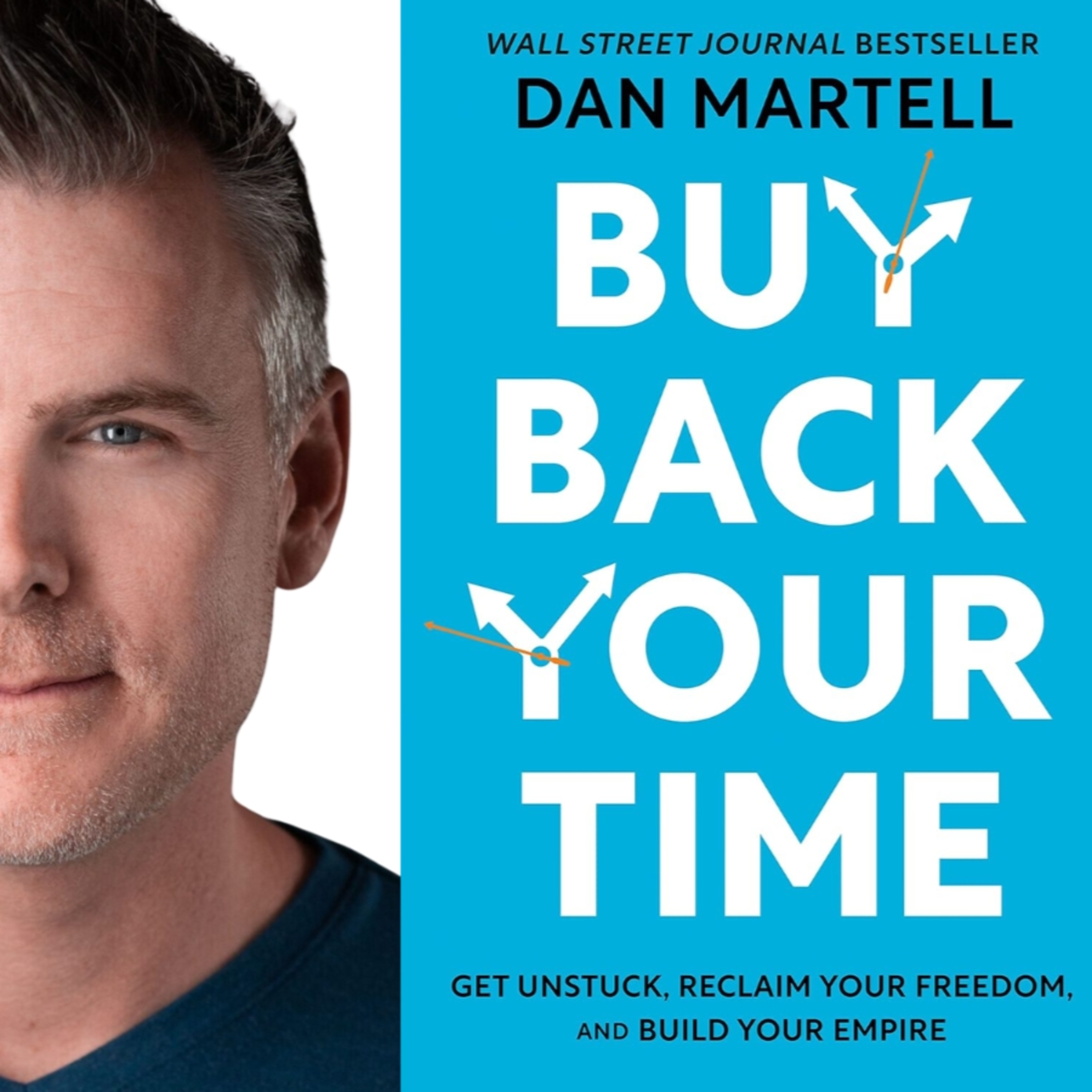
Buy Back Your Time: 15 Principles for Building an Empire
Dec 2600:45:15Tap to summarizeClick here to read the article.This podcast provides extensive excerpts and a comprehensive guide to Dan Martell’s book, Buy Back Your Time: 15 Success Principles to Reclaim Your Life and Build an Empire. The podcast outlines Martell's central philosophy, which encourages entrepreneurs to focus on strategic delegation and time management rather than relying on endless effort. Key concepts explained include the "painline" of business growth, the DRIP Matrix for categorising work based on income and energy, and the Buyback Rate Formula for valuing one's time financially. Furthermore, the podcast details the Replacement Ladder—a specific sequence of hiring to ensure freedom—and the 10-80-10 Rule for effective delegation, all aimed at achieving Level Three, or "empire-building," freedom.
Transcribe →
Blink: The Power of Thinking Without Thinking
Dec 1100:28:44Tap to summarizeClick here to read the article.The podcast offers an extensive guide and summary of Malcolm Gladwell’s book, "Blink: The Power of Thinking Without Thinking" - exploring the concept of rapid cognition and snap judgments. It challenges the conventional reliance on extensive analysis, arguing that the adaptive unconscious—or "thin-slicing"—allows experts to make remarkably accurate decisions in mere seconds, often outperforming slow, deliberate reasoning. The 1 Hour Guide supports this premise with numerous case studies, including art authentication, military simulations, and divorce prediction by psychologist John Gottman, showing that complex patterns can be quickly identified. However, the podcast also cautions that this rapid thinking can be severely compromised by stress, bias, and irrelevant information, illustrating its dark side through the Warren Harding Error and the tragic shooting of Amadou Diallo. Finally, the podcast provides practical lessons for leaders and entrepreneurs on creating structured environments that optimise intuition and when to trust—and distrust—their gut instincts.
Transcribe →
126 - The Millionaire Next Door
Sep 100:53:24Tap to summarizeClick her to read more.This podcast covers the book "The Millionaire Next Door: The Surprising Secrets of America’s Wealthy" by Thomas J. Stanley and William D. Danko It reveals that most millionaires are self-made, frugal individuals who live well below their means. Based on extensive research, the book highlights that these individuals prioritise financial independence over displaying high social status. They efficiently allocate time, energy, and money towards building wealth, often running "dull-normal" businesses. Crucially, their parents typically did not provide "economic outpatient care". This contrasts with "Under Accumulators of Wealth" (UAWs) who often earn high incomes but fail to build wealth due to hyper-consumption and status-seeking.The core message is that true wealth is accumulated, not spent.
Transcribe →
125 - Evolution of Leadership Theory - A Historical Review
Aug 11, 202501:21:50Tap to summarizeClick here to read more:This podcast explores the historical development of leadership theories based on the article by Benmira and Agboola.Tt categorises these theories into four main eras: trait, behavioural, situational, and new leadership. Initially, the focus was on the innate characteristics of "Great Men" and then on identifiable traits of effective leaders. This evolved to consider observable behaviours, then how situational context influences leadership effectiveness. The most recent era, "new leadership," broadened the scope to include complex interactions among leaders, followers, and the overall system, encompassing theories like transactional, transformational, and collaborative leadership, which account for the multifaceted nature of modern organisations.For the source article click here.
Transcribe →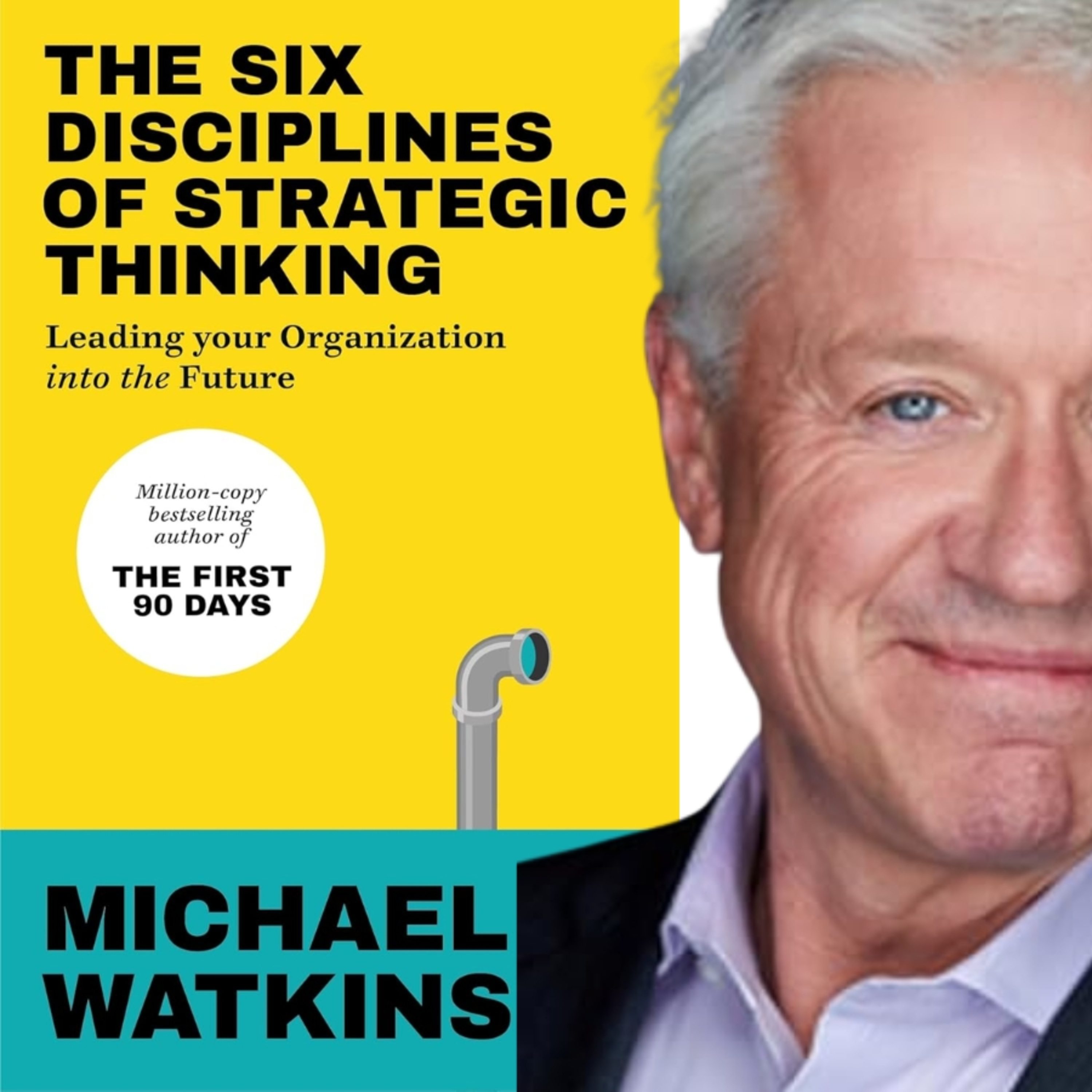
124 - The Six Disciplines of Strategic Thinking by Michael Watkins
Aug 4, 202500:54:53Tap to summarizeClick here to read more. In this podcast we cover "The Six Disciplines of Strategic Thinking by Michael Watkins".The podcast offers a detailed exploration of strategic thinking as a crucial skill for leaders and entrepreneurs. It outlines six interconnected mental disciplines that form a comprehensive framework for recognising opportunities and threats, prioritising actions, and mobilising organisations effectively. These disciplines are categorised into recognition and prioritisation (pattern recognition, systems analysis, and mental agility) and mobilisation (structured problem-solving, visioning, and political savvy). The guide emphasises that strategic thinking is a learnable skill, enhanced through deliberate practice, diverse experiences, and continuous learning, ultimately enabling organisations to navigate complexity and achieve sustainable success.
Transcribe →