← 1% of the 1% Podcast with JT Foxx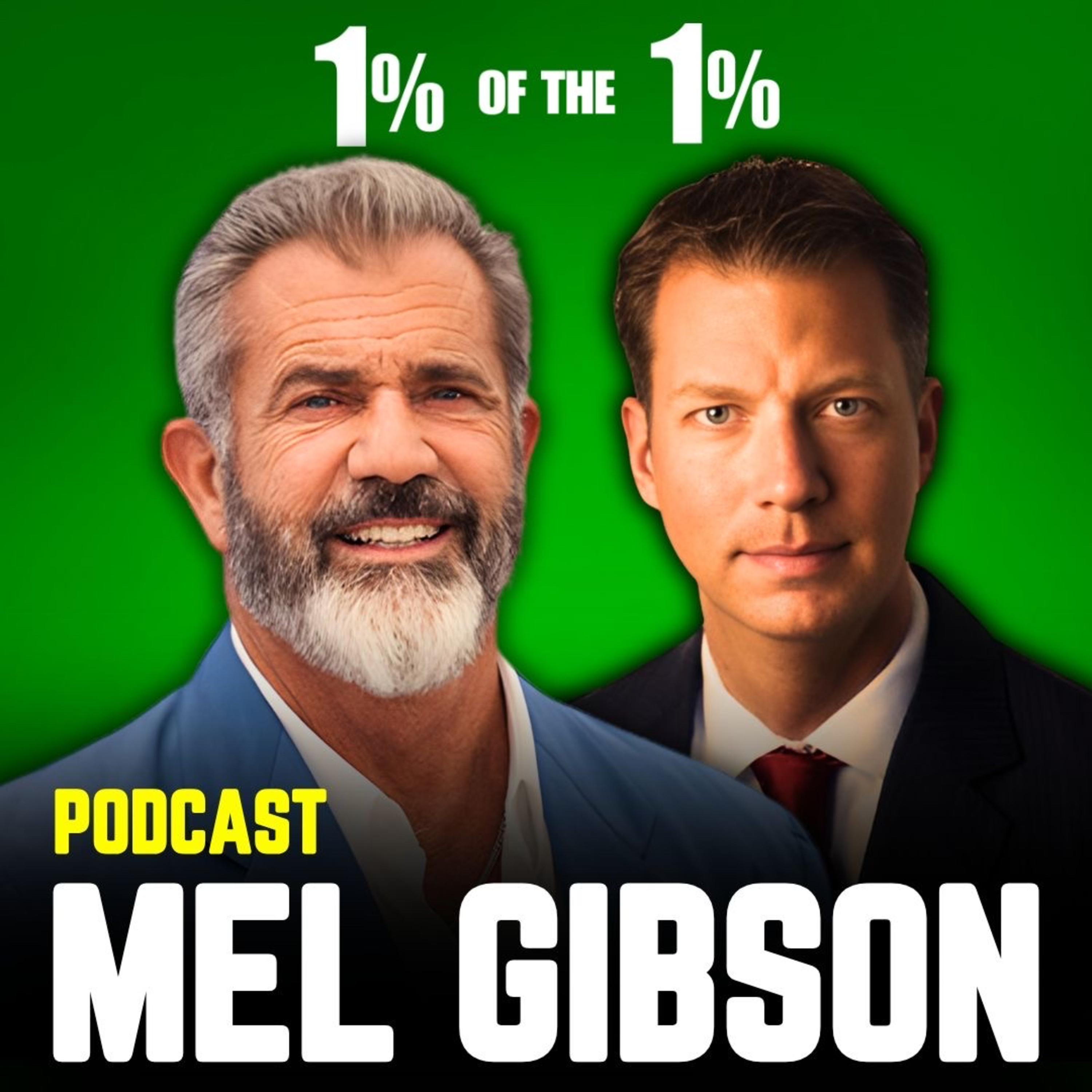
1% of the 1% Podcast with JT Foxx
#147: JT Foxx EXCLUSIVE interview with Mel Gibson. SHOCKING!
00:27:09
Loading summary
Transcript255 lines
- [00:00]
A
Hey everyone, this is JT Fox, the 1% of the 1% podcast. As you know, we've interviewed some of the biggest billionaires and Hollywood celebrities and successful entrepreneurs from all walks of life from all over the world. This show is going to be quite special because I will be interviewing the one and only Mel Gibson, Braveheart, what Women Want and countless other great movies that he's done. So exclusive interview also too, I recommend you guys go to my YouTube show where you can actually listen to my mergers and acquisition show for those of you who want to do deals or learn to merge your acquisition or just in essence, how people have been able to scale and exit their business. So check that interview out, please. Do me a favor, if you can share this and just give it a review on Apple or rate it positively, hopefully on Spotify, if you feel that way, takes two seconds and help me enjoy the show. Gibson,
- [01:04]
B
I love you too. Send Polaroids.
- [01:07]
A
How come nobody says I love you when I speak?
- [01:10]
B
I'm sure they do.
- [01:12]
A
Yeah, but they only say when you're here.
- [01:14]
B
Someone will say it.
- [01:15]
A
Yeah, they'll all say. Because I now said it to say it, you know.
- [01:17]
B
All right, well, I love you. Okay. Oh, there you go. If no one else will say it.
- [01:23]
A
You know, Charlie Sheen loved me too.
- [01:25]
B
Kinda.
- [01:27]
A
Not really.
- [01:28]
B
That's a different kind of love.
- [01:29]
A
Yeah, he was sweating all over this floor. It was like a sweat splish splash of things. But you got this like beard now going on.
- [01:36]
B
Sure.
- [01:37]
A
You know, why do you have a beard? Is it a movie or something?
- [01:39]
B
No, I'm just basically lazy and my girlfriend likes it that the 10 month old is used to it now.
- [01:49]
A
Wait, was afraid at first.
- [01:51]
B
No, this is how he knows me. If I took it off, I'm sure he'd be. Maybe he might get a little shocked for a while.
- [01:57]
A
Have him watch your movies.
- [01:58]
B
Yeah, we often just sit on the floor together and just gnaw and I'll lamb shank the pair of us. It's like Animal Planet at my place. He hasn't even got any teeth yet, so.
- [02:10]
A
Mel, 68% of the audience here are women. Trav. Wow.
- [02:17]
B
Wow. You're all here on some kind of entrepreneurial. You're all entrepreneurs. Yeah. Right. Well, good. You know, there's only a few difference, you know, a few letters difference between entrepreneur and what I am. It's an ultra manure, which is like amounts to the same thing. There's a lot of bullshit involved. Right.
- [02:45]
A
Did you just make that up or. That was part.
- [02:47]
B
Yeah, I guess so. Yeah. See, I'm just trying to, you know, just off the. I haven't even got cuffs off the cuff.
- [02:55]
A
So I travel all over the world, 68% of the women. I watched the movie what Women Want. I watched it five times, and I still don't know what women want. So what do women want?
- [03:09]
B
Well, there's something like, you know the answer somewhere between conversation and chocolate. But I think eventually, you know, once you get to know them a little better, they just want your soul. Body and soul.
- [03:30]
A
Holy mo. Were you here earlier?
- [03:32]
B
No, no. I mean, I've been here before, but that's. You know, I don't go for this reincarnation stuff. You know, it's like. But. And, you know, people think, oh, I've been here before.
- [03:42]
A
Let me read your hands.
- [03:44]
B
Yeah. Really?
- [03:46]
A
Now I get it.
- [03:47]
B
What?
- [03:48]
A
I don't know. There's a lady who reads hands here. She says to me, ooh, ooh, okay. And I'm like, well, what does that mean? She goes, I'd rather not tell you. So now I'm like, self conscious.
- [03:59]
B
What'd she say about your hands?
- [04:00]
A
Well, she gave this look, like I was gonna die, you know, and then this other lady read my lines, and she goes, I've never seen big lines like this.
- [04:09]
B
Yeah.
- [04:10]
A
And then she kept doing this and over and over. And then I just got freaked out. So I thought I was sexually harassed.
- [04:16]
B
Well, you know, you gotta be careful nowadays. But you'll know what her ass meant. Anyway, it's like, I had an experience one time with a lady at dinner, and she was a clairvoyant, and she told me, I'm a clairvoyant. And I'm like, all right. And then she told me a couple of things that were right, spot on about me and my relationship with my mother and, you know, stuff she couldn't have known, but she was absolutely spot on. And I'm like, about 41 years old, right? And this is one of Billy Bob Thornton's. I think it was his first wife. And she was kind of clairvoyant. And she said she was just talking about things. This, that, the other. And then she just casually dropped into the conversation. And I was 41 at the time. She says, and you'll live for about 15 more years, but then when you die, you'll go to heaven like that. So I said, wait a minute. Did you just tell me I was gonna die in 15 years? And she says, yeah. And I said, that's not very long. She says, yeah, 15 years is a long time. I Said, no, it's fucking not. And we had this argument about it, right? And then I kind of, like, got upset because she was kind of accurate with some stuff. And then she dropped that one on me, by the way, I'm 61 now. So she was wrong. So I go outside and Billy Bob's having a cigarette on the front, you know, And I said, hey, your old lady just told me I was going to kick the bucket in 15 years. And he was dragging on his cigarette. And he said, yeah, I wouldn't pay any attention to her. She just had too much fucking vodka. That's all he said. So I hate things like that, at any rate.
- [05:55]
A
Yeah. Hashtag rich people problems.
- [05:57]
B
Yeah. Yeah, right. Yeah. So sometimes I wish I had gone shuffled off this mortal coil back then. But then there's a real adventure coming. There's a real adventure coming.
- [06:06]
A
Yeah. But you've made a lot of money. Like that Passion of the Christ thing
- [06:10]
B
that, like, made some dough.
- [06:12]
A
Yeah. I mean, that's.
- [06:13]
B
Yeah. Nobody actually believed in that. And especially not doing it in the English language or any language that anybody knew of. It's mostly a dead language. Although it's not dead. There's still 400,000 people that speak old Aramaic, you know, Syrian dialect. But to get under that and do that and conceive of the whole thing, nobody would.
- [06:36]
A
What did they think it would do in the theater?
- [06:38]
B
Oh, nothing. And neither did I. Oh, you didn't
- [06:41]
A
think it was gonna make any money? So it was more like a passion project. Yeah, that's Passion of the Christ. Passion project. That's a passion. Passion of the Christ. Passion.
- [06:48]
B
So it was one of those things where I just thought I'd just do it for myself, you know, and the
- [06:52]
A
movie made how much?
- [06:53]
B
Oh, God, I can't even. I think after all was said and done with, you know, videos and DVDs, everything all up did about, I don't know, 1.3 billion or something, but it was.
- [07:08]
A
And did you, like, take some of that money and build a church in your backyard? Did I read that correctly?
- [07:13]
B
No, I built a church. Yeah.
- [07:14]
A
Yeah. After. Before that. After. Oh, yeah. Like, now I got church money and church passion. I'm gonna belt you a home.
- [07:20]
B
Well, you gotta give some back, you know? I know.
- [07:22]
A
Who builds a church in their backyard?
- [07:24]
B
I mean, it's not really in a backyard. I just bought a place and turned into. It was empty and I just put a church there.
- [07:29]
A
I mean, people do that all the time.
- [07:31]
B
Yeah.
- [07:32]
A
I mean, these are everyday problems that people are faced every Day buy this property. I create my own church.
- [07:36]
B
Well, it's not with the diocese.
- [07:38]
A
So did you like, buy your own priests too, and then bring them in too, or. Yeah. That's amazing.
- [07:42]
B
Sure. They're hand picked.
- [07:44]
A
They're hand picked.
- [07:45]
B
Hand picked, yes.
- [07:45]
A
Because you have like 19, 25 kids,
- [07:48]
B
50, something like that.
- [07:50]
A
There's a lot of kids.
- [07:51]
B
No, nine and counting.
- [07:52]
A
Nine and counting.
- [07:53]
B
Nine kids, eight grandkids. So it's like, it's moving along.
- [07:58]
A
So you need your own megachurch at this point.
- [08:01]
B
That's it. Yeah. And, you know, they pay rapt attention to whatever I say. Not so.
- [08:09]
A
I noticed something. Obviously your movies are like, all really, really good. And then the directing, you know, the Hacksaw Ridge and the Passion of the Christ and other movies, there's like this intricate detail like, that you don't really see elsewhere for some reason. It's like. It's kind of very graphic y and you're kind of immersed into the story. Like Passion of the Christ. You're like, immersed in it. Hacksaw Rich, you felt like you were there and I think you directed Brihart, Is that correct?
- [08:41]
B
Yes, I did.
- [08:41]
A
And there's that. Like. And these are considered some of the great movies of all time. Like, are you like the super. Cause I saw you backstage and you spilled your salmon all over your place and you had shit in your beard and, you know, you went to the bathroom and came out with your pants off. I mean, these are all things that. And I'm thinking, like, how the fuck is the precision? And I'm like, I saw you here and then you're like, coming out and I'm like, how does this guy even remember his name? So I'm a little confused.
- [09:10]
B
Yeah.
- [09:11]
A
Okay.
- [09:11]
B
And that's fair enough. I am probably one of the most disorganized people on the planet, and I don't do things the way that most people do. A lot of people are very organized and I admire that. And I wish I could take a leaf out of their book. And some days I can actually multitask and do things efficiently and organized in an organized fashion. Pre thought everything. But most of the time I'm just kind of flying by the seat of my pants. Right.
- [09:36]
A
I saw that earlier. Literally, I saw the seat of your pants. So.
- [09:39]
B
Hey, listen, at least I wasn't wearing a bathrobe. Okay.
- [09:42]
A
No.
- [09:42]
B
Yeah.
- [09:44]
A
So you'll be hearing from my lawyers.
- [09:46]
B
Oh, I'm sure. Yeah.
- [09:50]
A
So, like, is there, like. There's. But there's so much attention. So now we're a nice person. But the movie seems to be very attentive to details. So what's the.
- [09:57]
B
Yes. Well, I'm very into, you know, I'll get a task and I'll focus on it, and I visualize everything. I have a very strong visual sense, so I know what it needs to look like and I know the impression.
- [10:09]
A
So it's like, right here and then.
- [10:11]
B
Yeah, it's telling a story.
- [10:13]
A
Now I try acting, and it's a disaster. I mean, the amount of work that, like, doing the same scene over and over and over and over and getting yelled at and saying it's perfect, and then doing it again and again and again and again. How do you like. So you're disorganized, but are you a very patient person to be able to do that?
- [10:31]
B
Yes. I mean, I can do it again and again and again and get it right. And I don't necessarily consider myself a great actor. I'm okay. I get by with it.
- [10:40]
A
Yeah, but you're. Well, hold on. Ask people, what is your top five? And the majority of people I talk to say Braveheart.
- [10:48]
B
Awesome.
- [10:49]
A
So I mean that. Right? I mean, you've heard that before. Sure. Right. By the way, it's one of those movies like. Like Godfather and you can watch a million times, and it's. It's good every single time. And I think all of us now will watch it again, and it's now going to be different for every single one of us in this room, because now we actually met you, and it keeps getting longer.
- [11:08]
B
Every time you watch it, it's longer.
- [11:10]
A
So what's your process? I mean, what does it take to become a great actor? And you've had a lot of sustainability. A lot of actors are one and done. Also, older actors have a hard time finding roles and things to do. And so you still. You're in a big movie right now with Mark Wahlberg. We had Mark Wahlberg a couple days ago. So what's the key to success?
- [11:31]
B
I think I didn't start out thinking, gee, I want to be. Well, of course you want to be successful at whatever it is you walk up to. You want to walk up to the plate and you want to swing for, you know, you want to knock it out of the park. And that's kind of subconscious. But basically, I think I understood from an early time that what I needed to do is just be really good at what I did.
- [11:54]
A
We driven my money.
- [11:56]
B
No, not at all.
- [11:57]
A
Never.
- [11:58]
B
Never.
- [11:58]
A
Anybody says that. I mean, you're a broke actor. Correct. When you start and you're not driven by any, by any money at that time. Like, hey, like if I get a big movie, it's going to pay for things on nice homes in California's expensive to, you know, half your money. You got to make like 10 times more money than anywhere else because you give it all to the state when you live in California, that's for sure.
- [12:15]
B
Yeah. They tax the hell out of you.
- [12:17]
A
Correct. So you're telling me at no point the thing of like I'd like to make money, it's that or I work at Starbucks.
- [12:22]
B
It just wasn't.
- [12:23]
A
You're like coffee.
- [12:25]
B
Honestly, I was raised in a. I was raised with, I mean, I had 10 brothers and sisters, okay. And it was like my family wasn't wealthy and I was vaguely aware that there were financial difficulties, but they never complained about it and they didn't give a hoot about it. And I asked my dad about it one time and he says it doesn't matter what you make, he says, because whatever it is, you're going to live to just be beyond your means. It doesn't matter who you are or where you're on, you're going to live beyond your means. So I always took that into consideration. And you know, when I was making nothing and as a student, I think I was on a hundred bucks a month and that was to pay rent and buy your food and your car fare and tuition and like just everything was like, it was pretty difficult. But I thought that that was a king's ransom, you know, and of course I sort of hit a peak like maybe about 10 years ago where I was taking insane, you know, amounts of money and percentages of back end and stuff like that. And that was more about lawyers and agents. You know, I just, you know, people would, people like Bryant Gumbel or who's that other Matt Lauer would ask you on the Today show, hmm, you're paid this and you're paid that. Do you think you're worth it like that? My response was, well, Hollywood is not a charitable institution. They're not giving it to you because they feel sorry for you. They're giving it to you because it's worth it to them.
- [13:58]
A
If not, they wouldn't pay it.
- [13:59]
B
It's a business. That's true, that's true.
- [14:01]
A
That's frustrating when non business people criticize what other people make. You know, you should have said, Matt Lauer, are you worth 30 million? Not based on the ratings.
- [14:08]
B
Yeah, right.
- [14:09]
A
Well, I called me and I would
- [14:10]
B
have, I actually did Find out what he made.
- [14:12]
A
So 20.
- [14:13]
B
I was tempted to ask him the question back, but I thought, that's kind of a cheap shot. I'll let him live with it.
- [14:18]
A
You know, I don't think he lived with it.
- [14:20]
B
No?
- [14:20]
A
No. I think he moved on to the next interview.
- [14:22]
B
I got more hair than him.
- [14:23]
A
You know this. Where does this interview ranked in the highlight of your life?
- [14:27]
B
This one here.
- [14:28]
A
This one right here.
- [14:29]
B
Wow.
- [14:30]
A
In terms of moment of your career,
- [14:36]
B
this is perhaps the noisiest interview I've ever had. And for a Monday, it's okay.
- [14:42]
A
Is it Monday? We don't even know we've been.
- [14:44]
B
I think it's Monday. You've been here four days.
- [14:45]
A
I haven't seen the sunlight in, like. Like, we're like 10 minutes. What's it like out there?
- [14:50]
B
Been living indoors?
- [14:51]
A
We've been living indoors, yes.
- [14:52]
B
You gotta get some blue light before 11am Otherwise you won't sleep. Did you know that?
- [14:57]
A
Shh. Don't tell these people this.
- [14:58]
B
Really.
- [14:59]
A
Are you trying to mess up my event?
- [15:00]
B
No.
- [15:01]
A
I have anointed you with a JT Fox tie. And now look at this.
- [15:08]
B
See, it was the least loud. I like yours.
- [15:14]
A
Not you, too.
- [15:15]
B
Yours is screaming.
- [15:17]
A
Yeah, well, you didn't want that. You came in with a polka dot door. I thought it was like Mr. Rogers.
- [15:22]
B
That's true.
- [15:24]
A
I mean, it was.
- [15:25]
B
It made me take the sweater off everything. Yeah.
- [15:27]
A
And there was like. I think your breakfast was on it. I mean, literally.
- [15:33]
B
But that was an old tie.
- [15:34]
A
No. Well, whatever it had. It had your morning's breakfast. It had some egg on it. It was just. It was very interesting.
- [15:39]
B
Yeah.
- [15:40]
A
So, Mel, go. I love the movie Payback. So can you, like, give me, like, a porter kind of, like, little line out there in a very Mel Gibson dialogue?
- [15:51]
B
Wow. I think. And that film.
- [15:54]
A
What's your favorite line other than Braveheart? Forget, like, what. What comes. What's something that you like, really?
- [15:59]
B
Like, I think we had to write voiceover afterwards because.
- [16:01]
A
Yeah, I know, but it's so deep. It's like I just wanted my 75 grain.
- [16:07]
B
Yeah. That kind of thing.
- [16:08]
A
Yeah. It was so deep, and I was just so, like.
- [16:11]
B
I remember writing a line and then the green editing room, and it was like something like, crooked cops, do they come any other way? It was like. It was like that kind of.
- [16:22]
A
Yeah. No, I like that. But do it now. Do lines like that with that voice, but with JT Fox in there.
- [16:26]
B
With JT Fox, you're like, do what? Do that voice, but say J.T.
- [16:31]
A
fox. No, but say, like, lines. Like, you're making up shit, you know? Do I have to, like, direct you? All right, let me direct you. All right, I'm sorry. I forgot.
- [16:38]
B
Need to help.
- [16:39]
A
You know, we think on our own, and actors need to be told what to do.
- [16:47]
B
I'm also a director.
- [16:50]
A
I wouldn't know. Mr. Disorganized.
- [16:56]
B
Geez, you give him any piece of cheese, he's eventually gonna get to the pizza, isn't he?
- [17:02]
A
Well, if you need testosterone cream, I know someone who has some.
- [17:05]
B
Yeah, no, I wouldn't use that stuff, especially if he's used it first. And where's it been? Everywhere, really.
- [17:18]
A
And back.
- [17:19]
B
It's been all over everyone.
- [17:24]
A
Mel, I just want to know one thing. Do you have melgibson.com, like, genesimmons.com?
- [17:30]
B
i don't have that. No, no, no. I don't go for the social media stuff much.
- [17:34]
A
What do you mean you don't go for the social media?
- [17:36]
B
I don't do any of that. Facebook or any. Nothing. The best I do is, like, an email, maybe now and then. I'm a Luddite. I don't like devices. But I figure, you know, your life is not private anyway, so to give it away like that is. It's kind of tough. So I'd rather not do that. I kind of keep a little for
- [17:54]
A
me, but that's the voice I want. No, no, no. Like, it doesn't matter what it says. I don't like social media. Fuck it. I'll kill it. I just want my 75 grand. I don't want a Facebook account. You know, just like. That's, like, really, like the way you say it. Like, I'm intimidated. That. Where's that mail? That's the mail I want.
- [18:16]
B
Well, you know, he's in the morning when you wake up, it's somewhere between, you know, it's somewhere between John Garfield and John Wayne, you know, Before morning coffee.
- [18:31]
A
I don't know about you, but you gave two names that are not really my age demographics. So can we use, like, you know, Justin Bieber and Taylor Swift, you know, do you know who those are?
- [18:41]
B
I know who they are. Yeah. Yeah. They don't really fit the vocal profile, though.
- [18:49]
A
So you're also an entrepreneur and you do businesses. A lot of people don't know do that. So let's talk about Mel Gibson, the entrepreneur.
- [18:55]
B
Entrepreneur, yeah. One time, I remember, I got into the meat business.
- [19:01]
A
Hold on. You got into the meat business?
- [19:02]
B
Meat business? Yeah.
- [19:03]
A
Like, what kind of meat business?
- [19:05]
B
The kind of meat you can't beat. It was like. It was like. It was.
- [19:15]
A
Hold on. Charlie Sheets calling me. He disagrees. Any meat can be beat, even when Charlie's not here. It's so easy, right? I want Charlie at every event.
- [19:25]
B
I know. Let's get him back. He's backstage.
- [19:29]
A
Don't clap like that when Mel Gibson is there. What are you doing? Like, woo.
- [19:32]
B
Charlie.
- [19:34]
A
That was a three hour train wreck.
- [19:36]
B
Well, I had this. I had these ranches at a ranch up in Montana.
- [19:39]
A
You see, like a train crash. That was yesterday.
- [19:41]
B
Was it?
- [19:41]
A
Oh, I'm telling you, man, after that you'd be like, man, there's nothing I can do to fail after that interview. Let me tell you something. I mean.
- [19:50]
B
Well, I hear it was very well. It went well, right? No, it was amusing. You're being too hard on yourself.
- [19:57]
A
It went well for me, not for him.
- [20:00]
B
Oh, right. Okay, good. Yeah, not for him.
- [20:02]
A
No. He actually took a bathroom break in the middle. Right in the middle. 30 seconds. And then he like, peed, but took it out. And he's like in the middle of Disney, like. And then, you know, apparently he went to the bathroom and he didn't like, door knock closed and was all buttoned up and running down the hall and everything like that.
- [20:20]
B
He was probably just trying to perfect his golf swing.
- [20:27]
A
So meet the meat beat. Tell us about this meat business.
- [20:31]
B
Well, I had all this. I had a ranch in Montana and I had one in Australia. And there were all these critters and, you know, they're animals, but like, hey, we gotta eat, right? So I started a meat program.
- [20:46]
A
Man, that sounds like a wine business with kangaroos. The thought process you actors have in business is.
- [20:52]
B
I know, it's terrible.
- [20:53]
A
I have a ranch and it has meat. We can have a meat business. I'm disorganized, but it doesn't matter, right?
- [21:05]
B
But it was organic beef.
- [21:10]
A
Okay, where's the meat business now?
- [21:12]
B
It's dead. I never said I was that successful. He's the one saying it. I don't even know what I'm doing here.
- [21:23]
A
We heard that before. Yeah, we've heard that before. Yeah, before. Oh, you're the best. Have you had Wahlburgers?
- [21:35]
B
I haven't had a Wahlburger. I went to one at the airport in Boston, but they were lined up. They were lined up and the plane was gonna go, so I opted out of the Wahlberger.
- [21:49]
A
I'm Mel Gibson. Get the fuck out.
- [21:51]
B
No, I didn't do that.
- [21:52]
A
No, you're like, burger to go.
- [21:57]
B
Yes, I did Not. I was not the carnivore to cut into the front of the line.
- [22:02]
A
Did you drop in, like, you know, I used to be in the meat business. How are you doing?
- [22:09]
B
Pleased to meet you. Yeah, Pleased to meet you. With the meat. To please you,
- [22:26]
A
People are like, what did you learn from Mel Gibson? It's very interesting. His concepts on the meat business really were disruptively bad.
- [22:34]
B
Yeah, but they were grounded. I'm sorry. Please forgive that mincing words.
- [22:47]
A
Did your meat have extra testosterone?
- [22:49]
B
It did, but it was organic. It was organic and testosterone, because we didn't hit it with hormones, we simply didn't cut the family jewels off the victims. What we were doing was selling bull beef.
- [23:08]
A
Now, mel, I have 59 businesses, and I have no idea what you're talking about.
- [23:12]
B
Well, most meat that you get is like, steers.
- [23:17]
A
No, the business didn't make it. So at this point, whatever you're telling me. All right, so if you want to get into the meat business, this is what not to do. Now, Mel.
- [23:28]
B
No meat packing. No.
- [23:30]
A
So let's talk about what are the keys to success? So if someone says, you know what, Mel, you've achieved a great career, you've achieved a lot of things. You've had some of the highest grossing movies of all time, what's the key to success? What does Mel Gibson say?
- [23:41]
B
Just try and pursue excellence.
- [23:43]
A
What does that mean? Give me an example of you pursuing excellence.
- [23:46]
B
Okay. Well, when you approach anything, any kind of story, I mean, I got a different kind of brain. And it isn't, like I say, organized. It isn't even necessarily logical.
- [24:00]
A
No, we don't.
- [24:00]
B
Yeah, I know. I'm somewhere in the spectrum, I think. So. A lot of stuff is subconscious. So, for example, say when I'm gonna. I wrote a film called Apocalypto, right? And it was just something that came out of my subconscious somewhere. And it was a collection of ids. IDS being like, primal fears. And almost everyone you can imagine, from being chased to being bit by snakes, to, you know.
- [24:26]
A
Were you high?
- [24:27]
B
Huh?
- [24:27]
A
Were you high when you did?
- [24:28]
B
I wasn't high, but I was. In a sense, you are. Because you're in a different realm somehow. And like, over 10 years. Over 10 years, you will see something. You will see a piece of material, a piece of music, an image or something, and you will take that thing, whatever it happens to be a concept, and you'll put it in a little box, and there'll be lots of these things along the road. But, like, every now and then, you'll get one that belongs in that box. And then 10 years might go by, and you'll open up the box and there'd be 14, 20, 30 things in there. And you look at them and you realize that you collect them over a long period of time and that you subconsciously put them all in the same place. And you'll look at the contents of the box and you'll go, oh. And you'll go. And it makes something. And everything fits together with something else. It's kind of a. And that subconsciously you've been gathering these things and putting them aside for maybe a decade. And then one day you just shove them all together and put it together like a model airplane. And it works.
- [25:37]
A
So that's like scripted writing inside your brain right now.
- [25:41]
B
Like I say, it's pretty disorganized and a lot of it's subconscious. I'll come to you in your dreams. Yes.
- [25:48]
A
Sounds like another speaker on Thursday.
- [25:50]
B
Really?
- [25:51]
A
Who was in Damian's dream?
- [25:52]
B
Damian who?
- [25:53]
A
Damian, who you met. I know he's very forgettable.
- [25:56]
B
Damien Damien.
- [25:58]
A
You didn't meet Damian.
- [25:59]
B
Maybe I did. Tell me who it is.
- [26:02]
A
Short guy, stiletto tops?
- [26:05]
B
Yeah. Flathead.
- [26:07]
A
More like a teapot thing.
- [26:08]
B
Was I drinking a beer off him?
- [26:10]
A
No, no, no. You would have noticed him. Damian. Is he here? He's in there. Oh, he'll come out now. He's just gotta put the. Take off the platform shoes.
- [26:18]
B
Okay.
- [26:20]
A
It's a process. You know, it's obviously a.
- [26:23]
B
Was he Travolta's buddy?
- [26:25]
A
Yes.
- [26:35]
B
Yeah.
- [26:37]
A
Well, come on here, shorty.
- [26:41]
B
There he is. What did I miss? Why are we standing? Why would you say something?
- [26:47]
A
I figure you go in and.
- [26:48]
B
Do I have to rewind the video and watch now?
- [26:51]
A
Well, no,
- [26:54]
B
that's always a bad sign.
- [26:56]
A
So we got some people all over the world. Damon's gonna coordinate, then Damon's gonna talk to you. And then we've got people. Literally. By the way, is this good? Mel Gibson.