Podcast
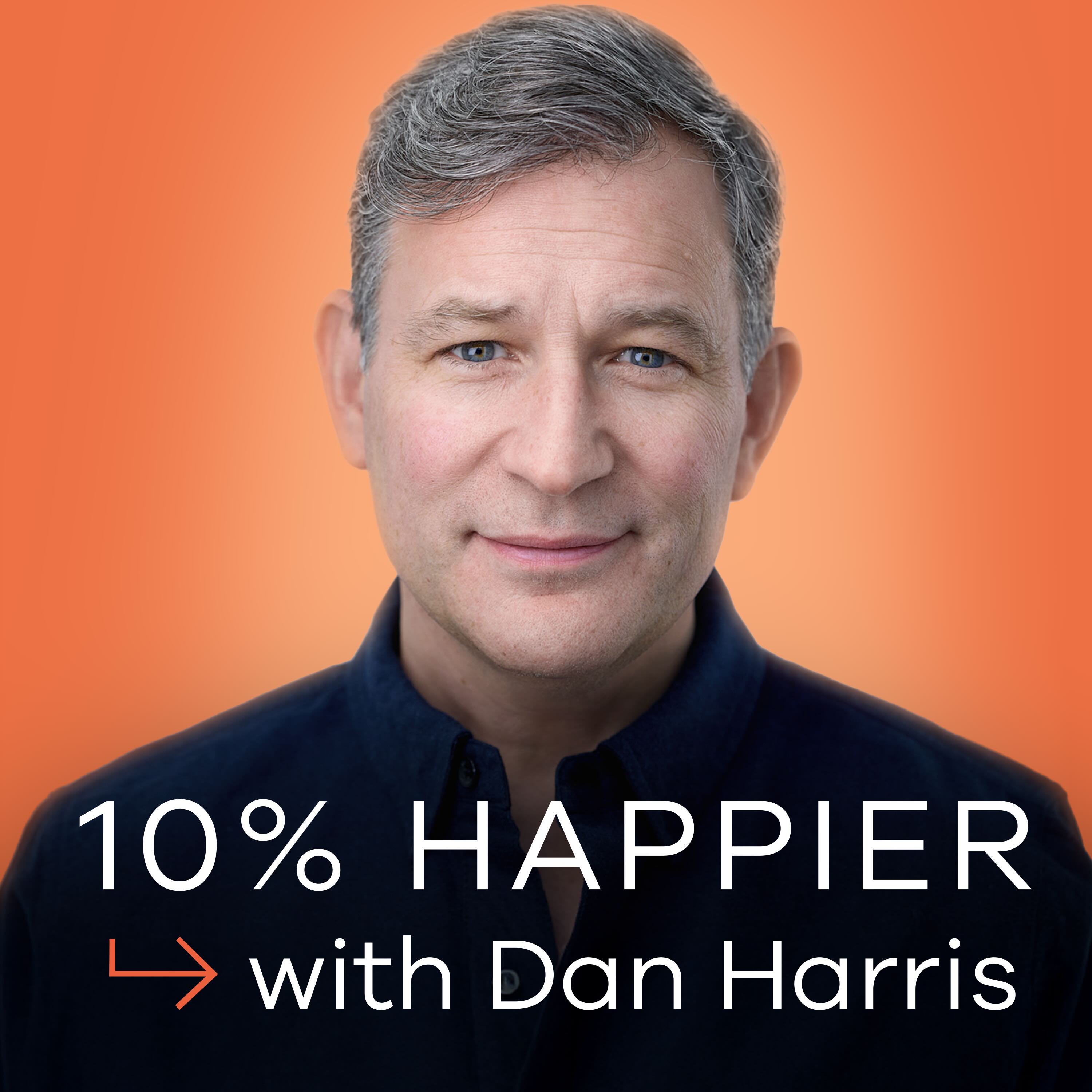
10% Happier with Dan Harris
Hosted by 10% Happier · EN
Self-help for smart people. World-class insights and practices from experts in modern science and ancient wisdom. Hosted by veteran journalist and best-selling author, Dan Harris.
414episodes
Episodes
Newest firstAll episodes
The Science of Journaling: How 15 Minutes of Writing Can Free Up Your Brain, Improve Your Health, and Make You a Better Friend | Dr. James Pennebaker
3d ago01:08:33Summary readyWriting can reduce overthinking, rumination, and anxiety. Here's what the researcher who pioneered the science suggests. James Pennebaker is Professor Emeritus of Psychology at the University of Texas at Austin. He is known for his early research on expressive writing and health. More recently, he has pioneered ways to study people's personalities and behaviors through the analysis of their language use. His text analysis program LIWC is used across disciplines. Author of over 300 scientific articles and 8 books, his research has affected our understanding and treatment of mental and physical health of people dealing with upheavals in their lives. This episode first aired in November 2024, and is co-hosted by Dr. Bianca Harris. In this episode we talk about: The specific form of journaling, called expressive writing or therapeutic journaling, that he invented and studied. Other kinds of journaling such as to-do lists and gratitude lists. Why writing things down helps shift our perspective on our stress or trauma. How that can lead to a cascade of benefits, from improved sleep to improved working memory And why Pennebaker, who's a very laid-back dude, is so laid-back about how often we need to journal in order to derive its benefits Get the 10% with Dan Harris app here Sign up for Dan's free newsletter here Follow Dan on social: Instagram, TikTok Subscribe to our YouTube Channel Additional Resources: To advertise on the show, contact sales@advertisecast.com or visit https://advertising.libsyn.com/10HappierwithDanHarris
SummaryThe Non-BS Science of Manifestation: How Your Imagination Can Help With Pain, Anxiety, Conflict, and Recovery | Cassi Vieten
5d ago00:58:08Summary readyHow elite athletes use visualization to improve performance, why visualization can turbo-charge physical recovery, and the mental trick that can make your nervous system feel safe. Cassi Vieten, PhD, is a licensed clinical psychologist and director of research at the Arthur C. Clarke Center for Human Imagination at the University of California, San Diego, where she also directs the Center for Mindfulness. She is the author Imagine That: Transform How You Think, Feel, and Live with the Science of Imagination. In this episode we talk about: Why imagination is the oldest human technology The VISTA method for training your imagination Why manifestation isn't as crazy as it sounds How to talk yourself out of catastrophizing Why conflict is really a clash of two imaginations What glimmers are How to use imagination to dial down physical pain What years of hidden alcoholism taught Cassi about a narrowed imagination Get the 10% with Dan Harris app here Sign up for Dan's free newsletter here Follow Dan on social: Instagram, TikTok Subscribe to our YouTube Channel To advertise on the show, contact sales@advertisecast.com or visit https://advertising.libsyn.com/10HappierwithDanHarris
SummaryThe Neuroscience of Likability, Social Connection, and Brain Health | Ben Rein
1w ago01:00:40Summary readyBen Rein, PhD is a neuroscientist who studies the biology of social behavior and explains the brain to an audience of over 1.2 million people online. He serves as Chief Science Officer of the Mind Science Foundation, Head of Science Communication at ResearchHub Foundation, and teaches at Stanford University. In this episode we talk about: Distinguishing between science and online "neurobullshit" Three research-backed ways to protect your brain health and boost social connection, even for introverts Why isolation shows up in the body like a low-grade injury The real difference between loneliness and isolation, and why we rarely recognize either in ourselves The power of pets in reducing stress and inflammation Whether sugar is really more addictive than cocaine (short answer: no, and here's why) Get the 10% with Dan Harris app here Sign up for Dan's free newsletter here Follow Dan on social: Instagram, TikTok Subscribe to our YouTube Channel Additional Resources: Why Brains Need Friends: The Neuroscience of Social Connection This episode is sponsored by: BetterHelp: See the reviews, see what stands out, and see if BetterHelp is right for you. Visit betterhelp.com/HAPPIER. Quo: Try QUO for free, PLUS get 20% off your first 6 months when you go to Quo.com/HAPPIER. Ironwall: Stop online threats before they become real-world attacks with Ironwall. Visit ironwall.com/DANHARRIS and request a free Risk Assessment to see exactly how exposed your executives are. To advertise on the show, contact sales@advertisecast.com or visit https://advertising.libsyn.com/10HappierwithDanHarris
SummarySelf-Help Without Other People Is Just Selfish — and Here's the Science to Prove It | Dan Harris
1w ago00:55:30Summary readyDan doesn't usually sit in the interviewee's chair — but when journalist and author Allison Gilbert invited him to speak at the 92nd Street Y as part of their Connected Lives series, he said yes. What followed was one of the more wide-ranging conversations Dan has had about his own practice, his own anxieties, and why he's become convinced that inner work divorced from relationships is just selfishness dressed up as self-care. The evening also included a guided loving-kindness meditation — metta practice — that Dan led live with the audience. They talked about: Why Dan thinks the meditation world's PR problem has shifted — it's no longer "this is weird hippie stuff," it's "I get it, but I personally can't do it" The upward spiral: how taking care of your mind improves your relationships, which improves your inner weather, which improves your relationships further — and the "toilet vortex" that runs in the opposite direction Free-range mindfulness: why brushing your teeth or standing in a grocery line can rewire your brain just like formal seated practice The self-compassion toolkit — Kristin Neff's three-step practice, distanced self-talk, and why putting your hand on your heart is "cheesy as f*ck" but actually works Joseph Goldstein's single best question for breaking an anxiety loop: "Is this useful?" Why micro-interactions — with your doorman, your barista, a stranger on the elevator — are one of the most underrated sources of happiness Allison Gilbert is a journalist, author, and the creator of The Joy of Connections, a book and companion app designed to help people build more meaningful relationships. She writes and speaks about human connection, grief, and resilience. Learn more at allisongilbert.com. Get the 10% with Dan Harris app here Sign up for Dan's free newsletter here Follow Dan on social: Instagram, TikTok Subscribe to our YouTube Channel Additional Resources: Check out Allison's new app at beingmoreconnected.com This episode is sponsored by: Notion: Learn more about how Notion can support your business, at notion.com/happier. To advertise on the show, contact sales@advertisecast.com or visit https://advertising.libsyn.com/10HappierwithDanHarris
SummaryResetting Your Nervous System When You're Anxious, Hurting, or Just Powering Through | Johanna Franzel
2w ago00:59:32Summary readyHow to calm down fast with an 'inventory' practice, how to build 'resources' you can call on anytime, and why 'healing' might be the wrong goal to chase. Plus, living with autoimmune disorder, writing as a practice of embodiment, and why white-knuckling isn't worth it. Johanna Franzel is a teacher, somatic practitioner, educator, and author of the new book Write Yourself Home: A Creative Guide for Living Well in the Body You Have Through Embodied Writing and Movement Practice. She brings both professional expertise and the lived experience of navigating chronic illness for more than two decades. She also writes a Substack called Permission Slips. In this episode we talk about: Why your nervous system stays on high alert for threats that aren't actually there The three-step "inventory" practice for finding calm in your body, right now Why calling to mind a "resource" can genuinely shift your physiology "Presence without scrutiny": the difference between being with someone (or yourself) and staring them down Why Johanna doesn't love the word "healing" and the word she prefers instead How to turn your most embarrassing memories into material, not shame Why the way you talk to yourself matters more than you think What over two decades with Crohn's disease taught Johanna about self-advocacy and knowing your own margins Get the 10% with Dan Harris app here Sign up for Dan's free newsletter here Follow Dan on social: Instagram, TikTok Subscribe to our YouTube Channel To advertise on the show, contact sales@advertisecast.com or visit https://advertising.libsyn.com/10HappierwithDanHarris
SummaryFor The Lonely, Suffocated, or Overextended: How To Balance Your Relationships When Others Won't Change | Nedra Glover Tawwab
2w ago01:04:50Summary readyPlus: how to build a village, why your attachment style isn't your destiny, and a two-step method for asking for help that actually works. Nedra Glover Tawwab is a licensed therapist and the author of Set Boundaries, Find Peace, an instant New York Times best-seller translated into over 35 languages worldwide. In addition, she has authored seven other books, including Drama Free and, most recently, The Balancing Act. A sought-after relationship expert, she has practiced relationship therapy for almost 20 years. In this episode we talk about: The difference between healthy dependency and full-blown enmeshment Why your attachment style is useful information, not a life sentence Wise compassion versus what Buddhists call "idiot compassion" Why you can't force someone else to change, but your own change might be contagious The "silent agreements" we make in relationships without ever saying them out loud — and how they quietly build resentment Why over-considering everyone else's needs backfires, and how to actually advocate for your own How to stop dragging old relationship trauma into brand-new relationships What to actually do if you feel lonely, or like you don't have enough friends Related Episodes: How to Handle Family Drama | Nedra Glover Tawwab That Rut You're In – This One Word Could Pull You Out | Nedra Tawwab Get the 10% with Dan Harris app here Sign up for Dan's free newsletter here Follow Dan on social: Instagram, TikTok Subscribe to our YouTube Channel Join Dan, Sebene Selassie, and Jeff Warren for Meditation Party, a 3-day immersive retreat at the Omega Institute in Rhinebeck, NY, October 16–18. Grab your in-person spot here, or sign up to livestream here! This episode is sponsored by: Tonal: Get $200 off your Tonal purchase with promo code HAPPIER at tonal.com. Warby Parker: Our listeners can buy one pair of glasses and get 20% off any additional pairs at WarbyParker.com/HAPPIER — and using our link helps support the show. #WarbyParker #ad To advertise on the show, contact sales@advertisecast.com or visit https://advertising.libsyn.com/10HappierwithDanHarris
SummaryWhen You Don't Know What You Actually Want: How To Say No, When To Say Yes, and The One Question That Cuts Through It | Yara Shahidi
2w ago00:41:30Summary readyPlus: The "hard yes" list, the intentional pursuit of being bad at things (and how that opens doors you didn't know were closed), being "on intimate terms with catastrophe," and optimism as a daily practice. From How To Be A Better Human. Today we're sharing an episode from another show we love: How to Be a Better Human, hosted by Chris Duffy. In this conversation, Chris talks with actor Yara Shahidi — known for Black-ish and Grown-ish, and now host of The Optimist Project podcast — about what she's learned from building a career and an identity at the same time. Yara explains why she thinks of optimism as a daily practice rather than a fixed personality trait, how a "year of no" eventually led her to build a "hard yes list" of things that reliably bring her joy, and why she's been deliberately pursuing things she's bad at — cartwheels, crochet, the glockenspiel — as a way of staying curious and connected. It's a thoughtful conversation about purpose, identity, and how to keep growing once you've already achieved the thing you thought you wanted. If you like what you hear, check out How to Be a Better Human wherever you get your podcasts. Join Dan's online community here Follow Dan on social: Instagram, TikTok Subscribe to our YouTube Channel Join Dan, Sebene Selassie, and Jeff Warren for Meditation Party, a 3-day immersive retreat at the Omega Institute in Rhinebeck, NY, October 16–18. Grab your in-person spot here, or sign up to livestream here! To advertise on the show, contact sales@advertisecast.com or visit https://advertising.libsyn.com/10HappierwithDanHarris
SummaryYou're Gonna Be Alright No Matter What: On Facing Anger, Aging, and Loss With Humor and Grace | Sylvia Boorstein
3w ago01:06:07Summary readyThe legendary dharma teacher on self-acceptance, the two-sentence trick she uses on her own anger, and what actually makes her happy after 90 years of living. Sylvia Boorstein, PhD, LCSW is a co-founding teacher of Spirit Rock Meditation Center in Woodacre California and the author of five books on Buddhism, Mindfulness, and particularly That's Funny, You Don't Look Buddhist: On Being a Faithful Jew and a Passionate Buddhist. In this episode we talk about: Why turning 90 makes the Buddha's teachings on impermanence feel real instead of theoretical The line Sylvia repeats to herself that's become the antidote to ill will and anger Why "there's always a hand to hold" might be the whole point of being alive The four (or three) noble truths, reworked in Sylvia's own words A grocery store treat that turned into an unexpected lesson about where happiness actually comes from What she says to people who are dying, and why it's not a lie And much more Get the 10% with Dan Harris app here Sign up for Dan's free newsletter here Follow Dan on social: Instagram, TikTok Subscribe to our YouTube Channel This episode is sponsored by: BetterHelp:: Don't let stigma stand in the way of support. Start therapy with BetterHelp. Sign up and get 10% off at BetterHelp.com/HAPPIER. Warby Parker: Our listeners can buy one pair of glasses and get 20% off any additional pairs at WarbyParker.com/HAPPIER — and using our link helps support the show. #WarbyParker #ad To advertise on the show, contact sales@advertisecast.com or visit https://advertising.libsyn.com/10HappierwithDanHarris
SummaryHow To Read People, Calm Tension, Build Trust, and Ask For What You're Worth | John Richardson
3w ago01:01:20Summary readyAn MIT/Harvard negotiation expert on the two types of "no," the FBI hostage negotiator trick you can use with anyone, and the rhetorical move that improves outcomes for women. John Richardson teaches negotiation at MIT's Sloan School of Management, and previously at Harvard Law, and was an associate at the Harvard Negotiation Project. He was coauthor with Roger Fisher and Alan Sharp of Getting It Done and Negotiation Analysis with Howard Raiffa and David Metcalfe. He is also a graduate of the Massachusetts Firefighting Academy. His latest book is Never Settle, co-written with Attia Qureshi. In this episode we talk about: Why lying in a negotiation is tactically stupid, not just morally wrong The "give them a sandwich" trick FBI hostage negotiators use, and how to steal it for everyday life The difference between healthy manipulation and the harmful kind A simple word that can pull someone's brain out of fight-or-flight mode mid-argument Why knowing your alternative matters more than knowing your ask When saying no is actually the smartest move in the room And much more Get the 10% with Dan Harris app here Sign up for Dan's free newsletter here Follow Dan on social: Instagram, TikTok Subscribe to our YouTube Channel This episode is sponsored by: Cash App: Download Cash App Today: https://click.cash.app/ui6m/oh9jnxlq #CashAppPod. Cash App is a financial services platform, not a bank. Banking services provided by Cash App's bank partner(s). Prepaid debit cards issued by Sutton Bank, Member FDIC. Cash App Visa® Debit Flex Cards issued by Sutton Bank, Member FDIC, and The Bancorp Bank, N.A., pursuant to a license from Visa U.S.A. Inc. See terms and conditions for the Sutton prepaid card, Sutton debit flex card, and Bancorp debit flex card. Savings provided by Cash App, a Block, Inc. brand. Visit cash.app/legal/podcast for full disclosures. IQ Bar: To get twenty percent off all IQBAR products, including the ultimate sampler pack, plus free shipping, text DAN to 64000. To advertise on the show, contact sales@advertisecast.com or visit https://advertising.libsyn.com/10HappierwithDanHarris
SummaryThat Feeling of "Always-Behind and Never-Enough"—Here's the Antidote | Ellen Hendriksen
3w ago01:05:31Summary readyMove on from the inner critic and beat perfectionism without lowering your standards. Dr. Ellen Hendriksen is a clinical psychologist who helps people calm their anxiety and be their authentic self. She serves on the faculty at Boston University's Center for Anxiety and Related Disorders (CARD) and is the author of HOW TO BE ENOUGH: Self-Acceptance for Self-Critics and Perfectionists and HOW TO BE YOURSELF: Quiet Your Inner Critic and Rise Above Social Anxiety. You can find her on Substack at How to Be Good to Yourself When You're Hard on Yourself. This episode originally aired in 2025. In this episode we talk about: The relationship between perfectionism and anxiety The definition of perfectionism––and why the word is actually a misnomer Dr. Hendriksen's own struggles with perfectionism, and how they manifested physically The difference between healthy perfectionism and unhealthy perfectionism Changing your relationship with your inner critic Shifting from rigid rules to flexibility Keeping high standards while making room for mistakes Overcoming procrastination Navigating social comparison And much more Related Episodes: Strategies for Social Anxiety | Ellen Hendriksen The Voice in Your Head | Ethan Kross How To Move Into The Future With Optimism Instead Of Anxiety | Frederik Pferdt Get the 10% with Dan Harris app here Sign up for Dan's free newsletter here Follow Dan on social: Instagram, TikTok Subscribe to our YouTube Channel Join Dan, Sebene Selassie, and Jeff Warren for Meditation Party, a 3-day immersive retreat at the Omega Institute in Rhinebeck, NY, October 16–18. Grab your in-person spot here, or sign up to livestream here! To advertise on the show, contact sales@advertisecast.com or visit https://advertising.libsyn.com/10HappierwithDanHarris
Summary