Loading summary
Transcript48 lines
- [00:02]
Debra Roberts
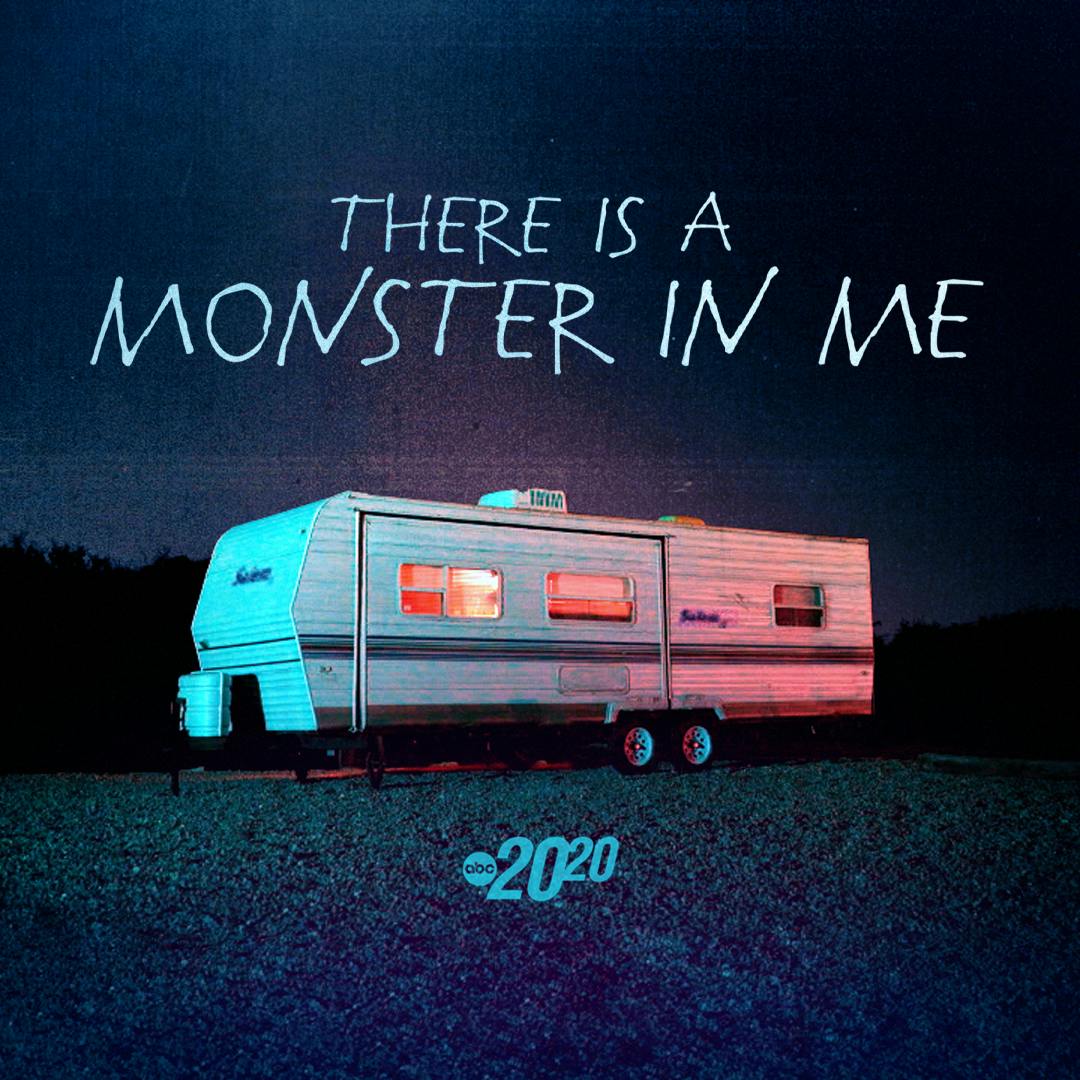
On WhatsApp, no one can see or hear your personal messages. Whether it's a voice call message or sending a password to WhatsApp, it's all just this. So whether you're sharing the streaming password in the family chat or trading those late night voice messages that could basically become a podcast, your personal messages stay between you, your friends and your family. No one else, not even us. WhatsApp message privately with everyone. Hi there, 2020 viewers and listeners. I'm Debra Roberts, here with this episode of 20 20, the After Show. And today we are talking about a program out of Texas led by ABC News contributor Chris Connelly, one of my buddies. This episode was called There Is a Monster in Me, and it investigates the murder of Susan Woods. Her. Her tightly knit community was quick to place the blame on Michael woods, who was her estranged husband. But when fingerprints at the scene didn't match woods, the case came to a halt. There was still some suspicion, but 20 years later, a different detective took a fresh look at the evidence and was able to find a match for those fingerprints. Michael woods was cleared and a jury ultimately convicted another man by the name of Scott Hatley, a local man with a violent history. You learned all about those twists and turns during the episode. Let's dive into this story with Chris, who knows all the details. And Chris, I gotta tell you, you and I get to talk about a lot of different things, but it's rare we get a chance to talk about our 2020 stories. Welcome.
- [01:41]
Chris Connelly
That's true. Thank you very much. It's an honor and a privilege to work with the amazing team that there is at 2020 on these stories. And as you know, they're incredible. And this was a very powerful tale to be involved with as well.
- [01:54]
Debra Roberts
Yeah. Well, you're such a great storyteller, Chris, and a lot of our listeners will know you from, you know, from all kinds of stories that you've told. And they see you on Good Morning America a lot. I mean, you've covered icons and newsmakers, entertainment and of course, you know, tragedy when it comes to these kinds of stories, which are consistent themes for us at 2020. But telling stories is something that you just excel at, and this was no exception. I mean, you're kind of a masterclass researcher. And wr, I'm just laying it on thick here, man. What was it about this one that really attracted you, the Susan woods murder case?
- [02:27]
Chris Connelly
Well, you know, our team had done an amazing job researching it and finding the story in the first place. And then Brian Burrow had written this remarkable story for Texas Monthly about this murder. And we were lucky to get him on our team as well. And he was an amazing guide and Sherpa. I'm an old magazine journalist, and he was, you know, one of the best from the days that I was at Premier magazine in the 1990s. So getting to talk to him about this was also pretty special. But this is a powerful story because this was a man that an entire town had decided had done something. There was no doubt in anyone's mind that Michael woods had murdered his estranged wife Susan. And everybody was just waiting for the law enforcement to catch up and. And arrest him and him to be convicted, and they could not ever make the case. And he insisted on his innocence. And so for the story to turn in just the way you described is a remarkable thing and a look at kind of what happens or can happen in a small town where everybody assumes one thing and something very different happens. So that was a powerful undercurrent to this story as well.
- [03:35]
Debra Roberts
Well, also, too, because there was so much reason there to believe that he could have been responsible. Right. I mean, he. There was a tape recording. There were angry, nasty notes that he. And so, of course, people sort of thought, and you and I cover these stories, they often look at the spouse, and you had a chance to talk to Michael woods about the anguish that he felt. And the fact that people looked at him talk about that, if you would, because he had actually left a trail of anger and vitriol, even though his fingerprints didn't match.
- [04:07]
Chris Connelly
Yeah. So much of what you're saying is spot on. And I think that was always the challenge. Michael woods had harbored life under this penumbra of suspicion for decades. He had not murdered Susan Woods. He had not been a great husband at a number of key moments, and certainly the last acts of his time as her husband cast him under great suspicion. He had left in the middle of the night, essentially. He had taken their car. He had taken her fur coat. He had left cassette tape full of vitriol against her. He left notes, as you saw, that were found all over the house by Susan for months later, just excoriating her. So these were not great moments for Michael woods, and we had to ask him about those. Why was he so angry? Why was he saying these things about this woman that he loved? And as a result, of course, he found himself very much under suspicion. But Michael woods had been under suspicion in Stephenville from the moment he'd set foot in Stephenville. And that was a story we needed to tell also yeah.
- [05:10]
Debra Roberts
You know what was interesting, Chris, is that you kind of saw a different side of this guy. You know, we hear about these angry notes and the way he had conducted himself. But then he's playing the guitar. I mean, you know, only Chris Connolly could sort of like get that kind of, you know, other side of a story to us. But tell us a little bit about that and about meeting him and how that actually came to be.
- [05:32]
Chris Connelly
I'm not gonna lie, Deborah. We did have a guitar for him to play, and I was kind of hoping there was a second guitar so that I could play along with him. And he could, because he had worked with his brother in Indianapolis as the Hamilton brothers. And I looked up their advertisements from back in the 90s in Indianapolis Papers when they were performing in bars. And I think it was two brothers, two guitars, and one commitment to the soft rock hits of the 1970s. Well, I know the soft rock hits of the 1970s. So while we were trying to get Michael sort of comfortable and situated, the two of us actually wound up singing together.
- [06:08]
Debra Roberts
Singing together?
- [06:10]
Chris Connelly
Yeah, by Zager and Evans. A one hit wonder called in the year 2525, which is this sort of dystopic futuristic single that inexplicably went to number one. So, you know how we do just about anything to get our subjects comfortable with us. Deborah? Yeah, I'm not saying my singing voice helped at all, but that's kind of how we broke the ice with Michael Wood.
- [06:28]
Debra Roberts
That's interesting. And that is a big part of what we have to do when we're doing these stories. Oftentimes we get there and they're very nervous and we have to break the ice. I can't say that I've ever played a guitar. I don't play guitar or sang with anybody.
- [06:40]
Chris Connelly
Oh, yeah. I don't advise it. It just seemed to be the, you know, the method at hand. But you're right, he was traumatized. I think just by coming back to town, it was revisiting a lot of tough things that had happened to him. As our story indicated, from the moment he was there, he was rock and roll in a town of country music. He was long hair in a town of crew cuts. And the stigma that was placed on him had never sort of gone away. People saw him as a, you know, we would call later a slacker. A guy who, like, would lie out outside his house and suntan and play the guitar while his wife was working in the sandpaper factory. And so he was excoriated for being this, you know, this layabout, I guess, by people in town. But he saw himself as a rebel. He saw himself as a guy who, if he got the opportunity, could really make a go of it in music somehow. And, you know, he heard and saw the way that the town reacted to him. He pushed back on a number of occasions. So to come back after all these years, I think was a real thing for him. More than 40 years after he first came to town, Michael woods returned to Stephenville for 2020. It was a drastic switch. Anytime I ran into somebody new, they were like, well, you're kind of odd. I think people very much looked at me like an outsider because I didn't sound the same, I didn't look the same. I certainly didn't act the same. What made him stand out in this team? What didn't? Everything about Michael woods not only stood out in Stephenville, it was the anti Stephenville. But more than anything, Michael had an attitude. I was a child of the 60s, and I wasn't about to cut my hair just to get along with a bunch of stuffed shirts. People would see you, as you remember, sort of outside sunning, and they thought, he doesn't want to work. What was the story? Well, I wanted to work, but I couldn't find places that would hire me or keep me. And I had a bit of an attitude. What does that feel like, to come back to a place where you can just sense the hostility and the rejection? I felt trapped, no way out. And then he kind of unburdened himself. But like you say, in addition to talking about what his emotional journey was with Susan and afterwards, he had to be held to account a little bit for those notes and those messages and the conflicts he'd had with his wife.
- [09:07]
Debra Roberts
Yeah, which. Which you did so brilliantly. Well, we're gonna take a quick break, and when we come back, we're gonna share more behind the scenes and how Chris and the team brought all kinds of creative touches to this episode. So this episode is brought to you by JCPenney. And if you've been to JCPenney recently. Yes, JCPenney, you'll know it's becoming the way to find good clothes for prices that still make sense. They've got hidden gems for everyone and every budget with deals and rewards that actually make a dent. If you already shop JCPenney, you feel like you know a secret. But if not, it's time to ask. Wait, am I sleeping on JCPenney? Shopjcpenney.com, yes, JCPenney.
- [09:56]
Chris Connelly
Ryan Reynolds here from Mint Mobile. With the price of just about everything going up, we thought we'd bring our prices down. So to help us, we brought in a reverse auctioneer which is apparently a thing. Mint Mobile Unlimited Premium Wireless. How many? Better get 30.
- [10:09]
Debra Roberts
30. Get 30.
- [10:10]
Chris Connelly
Better get 20. 2020.
- [10:11]
Debra Roberts
Better get 20.
- [10:11]
Chris Connelly
20.
- [10:12]
Debra Roberts
Everybody get 15.
- [10:12]
Chris Connelly
15. 15 15.
- [10:13]
Debra Roberts
Just 15 bucks a month.
- [10:15]
Chris Connelly
Sold. Give it a try@mintmobile.com Upfront payment of.
- [10:19]
Debra Roberts
$45 for three month plan equivalent to $15 per month required new customer offer for first three months only. Speed slow after 35 gigabytes of network's busy taxes and fees extra. This message is sponsored by Greenlight. With school out, summer is the perfect time to teach our kids real world money skills they'll use forever. Greenlight is a debit card and the number one family finance and safety app used by millions of families, helping kids learn how to save, invest and spend wisely. Parents can send their kids money and track their spending and savings while kids build money, confidence and skills in fun ways. Start your risk free Greenlight trial today@greenlight.com Spotify that's greenlight.com Spotify. I'm back now with ABC News contributor Chris Connelly. We love giving you a peek behind the scenes of how we put these stories together. And you know, Chris, you had to go to Stephenville, Texas to report this story. And you know, I'm from small town Georgia. I mean, are you a California guy or you're an east coast guy?
- [11:17]
Chris Connelly
I grew up at 36 in Lexington in Manhattan.
- [11:20]
Debra Roberts
I thought so you're a New Yorker. But going to these small towns sometimes can pose a little bit of a challenge. Trying to get in and get people to trust us and so forth. And tell us a little bit about Stephenville, Texas.
- [11:32]
Chris Connelly
Well, first thing you know, as I mentioned, I grew up in Manhattan. And so even though I moved out to California in 1990, I never got a driver's license. So for like 30 plus years out here, I did not have a driver's license. And during the pandemic, my wife taught me how to drive and I got a driver's license.
- [11:47]
Debra Roberts
You're kidding.
- [11:48]
Chris Connelly
So this was my first chance. I've done a lot of stories in Texas. This was my first chance to be in Texas behind the wheel. And I was thrilled for the opportunity to go to a small town in Texas as a guy doing what everybody else does driving. It's like an hour and change outside dfw, I think. And so I savored every moment. I stopped next to the world's biggest rocking chair took a picture. All the rest of it. Small town Texas has always fascinated me, and so Stephenville was a great experience. It's a very different town now than it was during the time of our story because there's been a big university that's really expanded, and so the town is much smaller and much more of a small town. During the period of time that we were focusing on, which is the late.
- [12:32]
Debra Roberts
1980S, you and the team, you had to immerse yourself in this town to tell this story of what happened to Susan Woods. The episode was called There is a Monster in Me. And you all were digging deep to find out about the mystery of the case of the murder of this woman. And there was another woman who eventually became intertwined with Susan woods story. Shannon Meyers Barriento's survival story. It was deeply emotional. A woman who was very resilient and smart and really brave to talk about her assault. And her story figured prominently here. Tell us about meeting her and obviously being sensitive enough to share her story. After, you know, years of her dealing.
- [13:13]
Chris Connelly
With the trauma, Everyone would agree that Shannon is this story's hero. Shannon is this story's hero for telling her story and for never backing down from her story. She endured a horrific assault at the hands of the man who would later be found guilty of killing Susan Woods. But Shannon's willingness to come forward, you know, in the face of rejection, but to tell her story was enormously powerful, I think, for her and for everybody who listened to it. And it played a key role in finding the killer.
- [13:46]
Debra Roberts
Yeah.
- [13:47]
Chris Connelly
So it was, you know, as you know, when you talk to heroes like Shannon, you really want to honor their story. You want to make sure that you're listening as they tell you their story. You know, you can have questions in your lap or questions in your head, but the most important thing is to be listening, I think, to the story that somebody's telling you.
- [14:06]
Debra Roberts
Yeah. And she definitely had a very difficult story to share. Tell us about her connection to Scott Hatley, because she was pivotal in solving this case. He had attacked her. He said something to her about how he had killed before. And you spoke with Lt. Don Miller about making the connections between her case and Susan's way back in the 80s. Tell us about that connection and that aha moment that brought these two cases together.
- [14:30]
Chris Connelly
Yeah. Shannon had been brutally attacked by Scott Hatley at a campsite just off, you know, some sort of highway road there. And so she took us back to the site where these terrible things had happened and the things she tried to do while she was being attacked that would help people someday identify her or if, in case she did not survive or identify her attacker. And so after this horrific night, doing whatever she needed to do just to stay alive, she went to the police, you know, and she told her full story. She went to the hospital, and then there was no indictment pressed against Scott Hatley. And so it was a horrifying moment for her. But what's fascinating is in the long term, her willingness to go to police. Despite Scott Hatley's, you know, vows, I'll get you if you go to police. He was so sure he would get into trouble that he liked, went off his head a little bit and drove to Las Vegas and got into trouble, and he got arrested in Las Vegas. When he got arrested in Las Vegas, they took his fingerprints. If it hadn't been for the fact that her going to cops had essentially driven Scott Hatley out of town, he would never have gotten arrested. They would never have gotten his fingerprints, and they would not have been able to match those fingerprints. Years and years later, with the fingerprints at the site of Susan Wood's murder, Shannon, like, drives the thing that gets Scott Hatley nailed for the murder of Susan Woods.
- [15:54]
Debra Roberts
So years later, authorities finally cracked this case. DNA. And we report so often about how DNA made such a significant difference in stories. How did police finally, you know, the fingerprints are one thing. What about DNA?
- [16:08]
Chris Connelly
As I recall, fingerprints really sealed it. Like, you know, there were these fingerprints that, you know, that Don Miller knew were on the bathtub where Susan woods had died. This is obviously the fingerprints of the killer. And so when they met match with Scott Hatley, that mattered a lot. There are also a number of cigarette butts, I think, that were left at the scene that were smoked by the killer, just as Scott Hatley had smoked one cigarette after the other, following during his assault of Shannon. And so matching those, I think, as.
- [16:35]
Debra Roberts
Well, was significant, ultimately, the outcome. Scott Hatley was arrested in 2006 for Susan woods murder. And while behind bars, he took a plea deal. He was sentenced to 30 years in prison. He refused to say why he killed her. There was never really any clarification there. We learned, though, later that he died. And so this case just, you know, in a way, just sort of had this ending that probably nobody would have expected. But when Shannon learned of Hatley's death, she was obviously relieved, I mean, after all these years. But the man who was never convicted in her case but had died, she felt a certain amount of relief, I.
- [17:16]
Chris Connelly
Think a lot of things had happened with Shannon. You know, she was hoping, I think, for a trial in the case of Susan Woods. I think she was ready to get some sort of justice in that, even though it wasn't about her case. So when, at the urgings, I think, of Susan woods parents, the case was settled and Hatley went to prison and took a plea. As you said, I don't know if it was that easy for Shannon. And then that Hatley was later released from prison. And in a strange way, that was not the end of Scott Hadley's story, because he wound up speaking from the grave, more or less, and telling the most chilling story imaginable.
- [17:55]
Debra Roberts
Yeah, yeah, you talked about that in the piece. Kind of a rare window into a killer's mind. More than 260 pages of writings that were found in a trailer and where police believe that he died. And as you said earlier, you spoke with the editor at large for Texas Monthly, and he had written about these particular writings. And it just all led to so many twists and turns in this story, moments in those pages that. That even shocked him. Right. I mean, the writings were really something else.
- [18:25]
Chris Connelly
It was just an. It was just a window into the twisted mind of someone who could do these awful things, hiding in plain sight. Deborah, in this small town, like just Beaver Cleaver, just the kid in town, no one ever suspected him. He was even in groups, as we disclosed during the show. He was in groups of friends that were talking about who might have killed Susan Woods. You know, he was part of those conversations, and he was the guy who did it. So Scott Hatley is convicted of the murder of Susan woods and goes to prison. But he's paroled eventually for that murder and is released and is back among society. For all of Joseph Scott Hatley's evil deeds, he only spent 11 years in prison.
- [19:06]
Debra Roberts
When I found out he was being released for killing my best friend, we were angry. And I'm thinking, gosh, drug dealers get more prison time than that. But Lt. Miller had told us that the Texas prison system was overcrowded.
- [19:22]
Chris Connelly
He moved into a trailer near his daughter outside of Abilene, Texas, was diagnosed with cancer. And In December of 2021, his landlord found him on the floor of his trailer, dead. There is a God.
- [19:37]
Debra Roberts
Thank you, Lord Jesus.
- [19:40]
Chris Connelly
Unknown to all, in that trailer on the outskirts of the woods where he'd spent his final days, there were answers to the mystery of his depravity just waiting to be found. So not long after Hatley was found dead, Detective Don Miller gets this call Somebody had just bought the trailer where Hatley died and while cleaning it out, had found all sorts of disturbing stuff that really creeped him out. Pages and pages of a handwritten account of a life of crime and murder. He shares those surprising findings with writer Brian Burrow, the killer, in his own words. I did not cry. I did not grieve. I was without any doubt, evil to my entire core. And then he finishes. I wish with all my heart that I could tell you I've mourned for what I'd done, but that would be a lie. It was clear that he had, like, been, you know, bent in this direction, literally from, you know, his teen years. He had been a figure of kind of constant depravity and these dark thoughts right from the beginning, you know, it was fascinating. So for people like Brian Burrow and myself and our team, this was kind of a roadmap into the mind of a killer. Why something like this happens and what other things might have taken place. You asked Donny Miller, the officer who was responsible for the conviction of Scott Hadley. So what did you think when you read all those things that Scott Hadley had written? I didn't read that garbage. I didn't want to read one word of that garbage, I think is what he said. So he was focused on the Scott Hadley that he put in prison. The rest of us are left to, you know, to be horrified by the motives and the methods of this man who went undetected for decades in this small town.
- [21:25]
Debra Roberts
Yeah, yeah. And the title of our program, there's a Monster in Me, was actually taken from those writings, Chris. It was just fascinating. Your reporting is always just mesmerizing. You have a way of sort of bringing it all home, all the turns in this case, and terrific job on it. Thanks so much for being with us and giving us a little insight into how you put it together.
- [21:48]
Chris Connelly
Thank you, Deborah. It's great to be able to talk about our wonderful work together.
- [21:52]
Debra Roberts
Absolutely. Absolutely. The 2020 after show is produced by Amira Williams and Sasha Aslanian with Joseph Rhee, Chris Connolly, Karen Shiffman, Amanda Carr, Brian Mazersky and Alex Barenfeld of 20 20. Theme music by Evan Viola. Janice Johnston is the executive producer of 2020. Josh Cohen is the director of podcasting at ABC Audio. Michelle Margulis is the operations director. Laura Mayer is the executive producer. This episode is brought to you by Progressive Insurance. It's Brad Milke, host of ABC's Daily News podcast. Start here. Fiscally responsible financial geniuses, monetary magicians. These are things people say about drivers who switch their car insurance to Progressive and save hundreds. Visit progressive.com to see if you could save Progressive Casualty Insurance Company and affiliates. Potential savings will vary. Not available in all states or situations.
- [23:02]
Chris Connelly
Finding great candidates to hire can be like, well, trying to find a needle in a haystack. Sure, you can post your job to some job board, but then all you can do is hope the right person comes along. Which is why you should try ZipRecruiter for free at ZipRecruiter.com Zip ZipRecruiter doesn't depend on candidates finding you, it finds them for you. Its powerful technology identifies people with the right experience and actively invites them to apply to your job. You get qualified candidates fast. So while other companies might deliver a lot of hay, ZipRecruiter finds you what you're looking for. The needle in the Haystack. See why 4 out of 5 employers who post a job on ZipRecruiter get a quality candidate within the first day. ZipRecruiter the smartest way to hire and right now, you can try ZipRecruiter for free. That's right, free at ZipRecruiter.com Zip that's ZipRecruiter.com Zip ZipRecruiter.com Zip.