← 36 From the Vault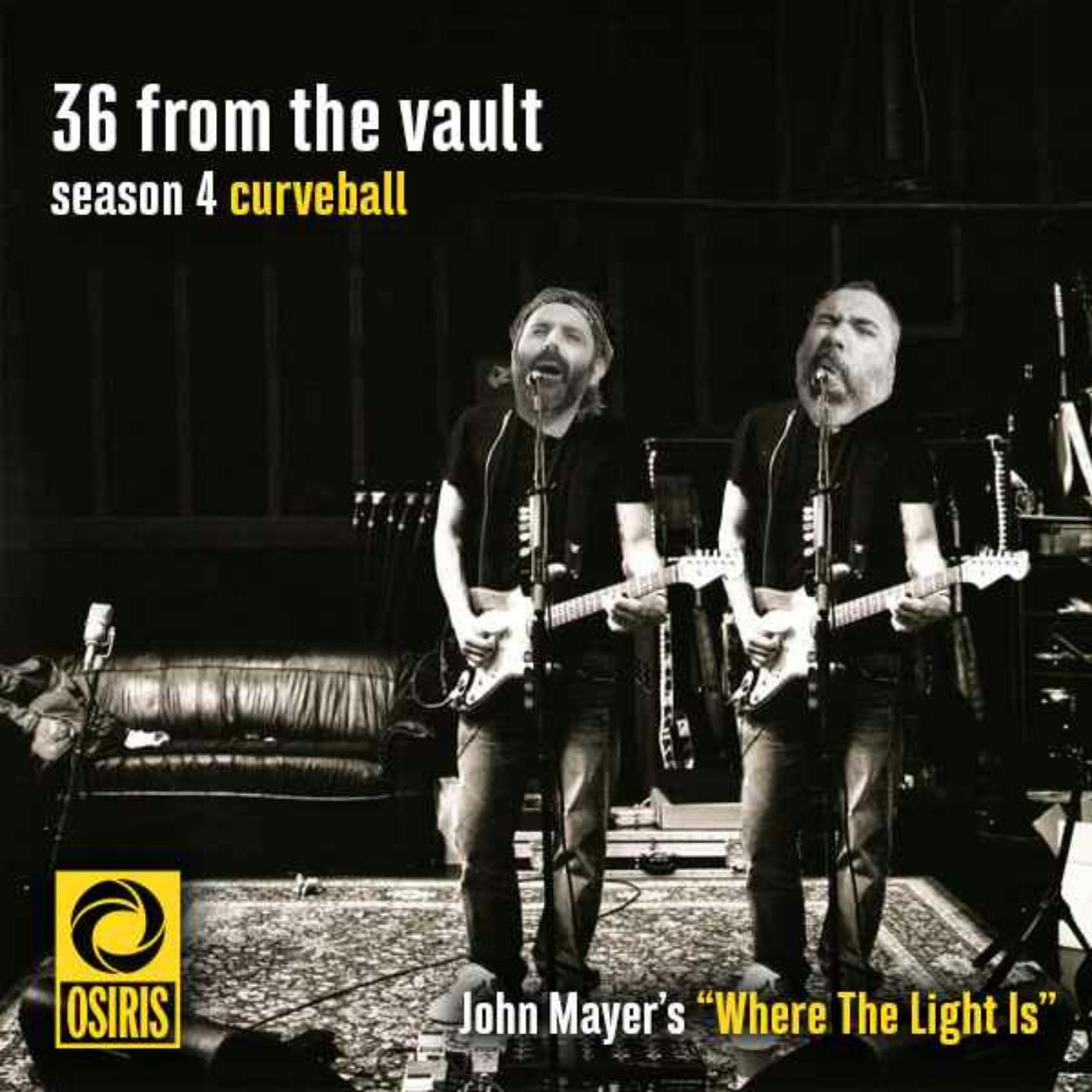
36 From the Vault
Where The Light Is: Let's Talk About John Mayer
02:09:31
<p>In this week’s episode of 36 From The Vault we explore the world of Mr. Sob Rock himself, John Mayer. Focusing on the peak of his solo career, we discuss the backstory of the future Dead & Co. lead guitarist, and try to better understand his path from pop rock to The Dead. Focusing on his 2008 LP of the December 8, 2007 show in LA, <em>Where The Light Is</em>, we hear his DMB side, his Blues Trio side, and his full band, Sob Rock side. </p><br><p>Disc One highlight’s Mayer’s origins with a focus on his original hits through solo acoustic performances. “Neon” stands out as one of the best cuts of the record. In addition, we hear samples of Mayer’s Blues Trio with “Who Did You Think I Was” and “Vultures” showcasing depth to Mayer’s Blues interests.</p><br><p>On Disc Two we hear Mayer’s performance with this larger live band. Running through some of his biggest songs from <em>Continuum</em>, we hear the differences between Mayer’s experimental ambitions and his more produc...
Loading summary
Transcript545 lines
- [00:03]
Lawrence Lanahan
When you think about businesses that are selling through the roof, like Skims or Allbirds, sure, you think about a great product, a cool brand and great marketing. But an often overlooked secret is actually the businesses behind the business making, selling, and for shoppers, buying. Simple. For millions of businesses, that business is Shopify. It's home of shop pay, the number one checkout in the world. You can use it to boost conversions up to 50%, meaning way less carts going abandoned and way more sales going through. To checkout, upgrade your business and get the same checkout Allbirds uses. Sign up for your $1 per month trial period at shopify.com income all lowercase go to shopify.com income to upgrade your selling today. Shopify.com income.
- [01:01]
Rob Mitchum
Osiris.
- [01:20]
Stephen Hyden
So I'm wondering, should we begin this episode with you coughing into the mic here, you know, to create the ambiance that we're having in this episode?
- [01:29]
Rob Mitchum
Yep. It's official. Should I. Should I do it?
- [01:32]
Stephen Hyden
Yeah. There. There you go. Germs flying everywhere. It's a good thing you're in seclusion right now.
- [01:39]
Rob Mitchum
That's right, I am live from my isolation chamber here in Oak Park, Illinois. Yeah, I caught Covid.
- [01:46]
Stephen Hyden
You got it.
- [01:47]
Rob Mitchum
It was, you know, humorous timing for this episode in particular. I would love to say that I caught Covid from listening to John Mayer, but I gotta be factually accurate. And I hadn't even listened to the album before I tested positive. But, you know, spending the last, let's see, I'm on day six here of being in isolation and, you know, for the last couple years, I imagined what it would be like to be in isolation with COVID And I did not imagine listening to, you know, most of the catalog of Johnny B. Mayer while I'm alone in my room.
- [02:27]
Stephen Hyden
You went. You went full bore. I feel like you having Covid, it was just an excuse for you to not just listen to the album we're going to be talking about today, but to really dive in because you have nothing else to do. So you're like, do I just sit here and do nothing, or do I check out Room for Squares?
- [02:44]
Rob Mitchum
Right.
- [02:45]
Stephen Hyden
Like the. The alternative. Now that I'm in COVID isolation, Room for Squares might be pretty good. I'm open to it now.
- [02:52]
Rob Mitchum
Right? Yeah, it's Wolf. We'll circle back to this at the end. But I can't quite tell if this experience softened me up for the John Mayer experience or, you know, raised up my barriers even more, because as I texted you, I think in the middle of last Week I was gravitating mostly towards, you know, musical comfort food. Just trying to make myself feel better. I didn't get it that bad. I have pretty mild symptoms. But, you know, was listening to a lot of my favorite albums just to pass the time, time up here. And listening to Johnny Mayer talk about how he has the blues every day wasn't really qualifying as musical comfort food in my illness, so. But, you know, I listen to a lot of fish, too. Working on my Phish 97 essays. So it was balancing out the Mayor, A Deep Dive Investigation with some of my favorite bands.
- [03:42]
Stephen Hyden
When I was thinking about you preparing for this episode, I was imagining Kurt Russell in the Thing, you know, where he's in it. He's by himself. It's. He's in Antarctica.
- [03:54]
Rob Mitchum
Yeah.
- [03:54]
Stephen Hyden
There's, like, snow on his beard and there's this, you know, alien threatening life force out there that he has to fend off. And that would be like the John Mayer metaphor for you. You're in seclusion and there's this thing out there that you have to grapple with.
- [04:13]
Rob Mitchum
Right.
- [04:13]
Stephen Hyden
It's uncertain, but, you know, you're not going to be able to avoid it. It's an inevitability that you're going to have to confront this thing eventually.
- [04:21]
Rob Mitchum
Yeah, I feel a little bit more like Barton Fink. Like, I feel like I'm in my hotel room and John Mayer is John Goodman running down the hallway towards me with flames shooting out of the hallway. Yeah. It's been an experience, I'll say that. I was worried my wife was going to call an ambulance for me when she heard me repeatedly listening to John Mayer's daughters through the door because clearly I was suffering brain damage from having Covid, so.
- [04:52]
Stephen Hyden
That's right. Rob has lost his damn mind. He's listening to Daughters on repeat. Yeah. It's funny because, I mean, I felt like we had to do John Mayer as the curveball in our fourth and possibly final season because we've been joking about it for so long, and our show basically has occurred during the entire Covid era. I think we maybe had a couple.
- [05:19]
Rob Mitchum
Episodes before COVID We recorded a couple before maybe. I think maybe the first couple came out just before the pandemic started. You're right.
- [05:26]
Stephen Hyden
I feel like we started in February of 2020.
- [05:29]
Rob Mitchum
Yeah.
- [05:30]
Stephen Hyden
And then Covid really, you know, it was March when it. When it. When it came down. So we've. We've been operating under, you know, the shadow of COVID through this whole series. But to just think forward and to think that you getting Covid would line up with the curveball where it's basically me just trolling you.
- [05:54]
Rob Mitchum
Exactly. Yeah.
- [05:56]
Stephen Hyden
You know, where I'm like, I'm gonna pick the longest John Mayer live album. I'm gonna make sure there's some blues on there. I'm gonna make sure, you know, there's some acoustic singer song, you know, the whole gamut.
- [06:09]
Rob Mitchum
Yeah.
- [06:10]
Stephen Hyden
And that it would line up with you getting Covid. I mean, in a way, I feel guilty about it, but in another way, it also just adds another dimension to the comedy I know of this episode.
- [06:22]
Rob Mitchum
I mean, yeah, I'll admit, soon after I tested positive, I was like, this is golden podcast content right here. I mean, you couldn't have scripted it any better. So, you know, it's like you willed.
- [06:35]
Stephen Hyden
You willed yourself to get Covid.
- [06:36]
Rob Mitchum
Maybe. Maybe.
- [06:37]
Stephen Hyden
And we cursed it at this juncture.
- [06:38]
Rob Mitchum
We jinxed it a couple episodes back where you were encouraging me to catch it before our. Our summer concert plans.
- [06:44]
Stephen Hyden
Well, exactly. That's another reason why I'm. I mean, look, I'm. I'm glad that you got it. It appears that aside from being isolated from your family, which sucks, but you haven't been that affected. I figured you wouldn't be your vaxxed and you're healthy.
- [06:58]
Rob Mitchum
Yeah.
- [06:58]
Stephen Hyden
Yeah. So it's not a big deal. And I am glad that it's not screwing up our concert plans.
- [07:05]
Rob Mitchum
Right.
- [07:08]
Stephen Hyden
Covid will be a distant memory by the time those shows come around, which is great. And it lined up with John Mayer. I gotta say, Covid, you know, this is like the one instance of good timing.
- [07:18]
Rob Mitchum
It was.
- [07:19]
Stephen Hyden
Covid is like over like a billion. But like, this is like the one win. I don't know if Covid, maybe, I.
- [07:25]
Rob Mitchum
Don'T know if I'm calling it a win, but a silver lining. And I think, I don't know, this is like the music fans reaction to Covid. I immediately started looking at all the concerts this summer that I would have avoided going to. Probably that now I can just go in, you know, stress free, including perhaps I might. I don't know. I have to negotiate with the family. I've used up a lot of dad points here this week, but Dead and company is coming to Chicago in a couple weeks.
- [07:51]
Stephen Hyden
I know.
- [07:52]
Rob Mitchum
Maybe I'll be seeing John Mayer just to cap off my recovery. I'll see him in the flesh.
- [07:57]
Stephen Hyden
Well, and I would consider going to that, but that's coinciding with a family cabin trip. So that's the 24th and 25th. Which will. I guess that will be the week. This post, I think. Right. I think the week our episode goes live. I think we go live on the 21st or so.
- [08:19]
Rob Mitchum
Right. Yeah. A few days after. So I might go to that. I'm taking my dad to see Steely Dan next Sunday for Father's Day. It's like the ultimate, ultimate dad rock experience.
- [08:28]
Stephen Hyden
Oh, my God. A single tear just went down my cheek hearing about that. That's moving.
- [08:33]
Rob Mitchum
So doing that. And yeah, I've been avoiding Fish tour ever since they came back out of fear of spreading Covid to my family. But, yeah, maybe I'll just hop on the whole tour now. We'll see.
- [08:45]
Stephen Hyden
Well, and I don't know if we've talked about this on the pod, but there's that festival in Chicago in late August that Phil and friends is playing at. That's right, With Jeff Tweedy.
- [08:55]
Rob Mitchum
Another thing we like, conjured a new existence on this podcast.
- [08:59]
Stephen Hyden
Exactly.
- [08:59]
Rob Mitchum
Yeah.
- [09:00]
Stephen Hyden
But that is the. That show is the day before my wife's birthday.
- [09:08]
Rob Mitchum
Yeah.
- [09:09]
Stephen Hyden
And I'd have to drive six hours to that show, which would mean that my wife would wake up on her birthday and I wouldn't be here and I wouldn't roll even if I left early.
- [09:20]
Rob Mitchum
Yeah.
- [09:20]
Stephen Hyden
I'd get here around 11 or 12. You know, this will be about two weeks after our other jam band adventure.
- [09:27]
Rob Mitchum
Yeah.
- [09:27]
Stephen Hyden
I don't know. I. I don't know if there is enough husband collateral that you can muster.
- [09:34]
Rob Mitchum
Absolutely.
- [09:35]
Stephen Hyden
To pull that one off.
- [09:36]
Rob Mitchum
Yeah. Even after two years of staying home. I think that's, that's asking.
- [09:39]
Stephen Hyden
Yeah, yeah. Just, just, just being like, oh, my wife's waking up on the morning of her birthday. But I am going to see Phil. I've never seen. I haven't seen Phil Lesh play live. I've never seen him in flesh. I've never seen Lesh in the flesh. There's been weird things that conspired against me. I was gonna go see him and Bobby do their two man thing a few years ago and I got sent to south by Southwest for work. Yeah, exactly, exactly. I missed it there. And there were a couple other things that I missed. So anyway, are we putting out the inevitable here? Should we just get into it here with John Mayer?
- [10:15]
Rob Mitchum
Let's do it. I am so studied up on John Mayer. So happy to this out and then forget everything I've learned this week. Every day.
- [10:24]
Stephen Hyden
Rob has the blues, at least these days. But let's, let's, let's play those blues away with John May.
- [10:59]
Sponsor/Ad Voice
Independent artists looking to release music have probably heard the name Distrokid, and for good reason. Distrokid is one of the easiest ways for artists to get their music onto Spotify, Apple Music, TikTok, YouTube, and and dozens of other streaming platforms. Artists upload a song or album once, and Distrokid distributes it everywhere. It also makes collaboration simple. With splits, artists can automatically pay producers, bandmates, and collaborators without awkward follow ups. And when it's time to send large audio files or artwork, Instant Share lets users securely send up to 1 gigabyte for free, complete with optional passwords and download controls. Promotional tools are also built right in. Hyperfollow creates free landing pages with pre saves and streaming links, while features like promo cards, mini videos, and a free Spotify Canvas generator help releases stand out. Plus, the Distrokid app, available on iOS and Android, lets artists upload music, check streaming stats, and withdraw earnings right from their phone. For artists who want to release music quickly, professionally, and without the hassle, Distrokid makes it easy. Head to DistroKid.com VIPEVG to get 30% off your first year with DistroKid. That's DistroKid.com VIPEVg.
- [12:31]
Stephen Hyden
It's. All right. This is 36 from the vault. I'm Steve.
- [13:21]
Rob Mitchum
I am Rob with COVID Yes.
- [13:24]
Stephen Hyden
And this is our curveball episode for. For our season 4.
- [13:28]
Rob Mitchum
4.
- [13:29]
Stephen Hyden
Possibly our last season. Who knows?
- [13:31]
Rob Mitchum
Possibly our last curveball.
- [13:32]
Stephen Hyden
We'll see Possibly our last curveball. We're doing where The Light is 2008 double album by John Mayer. Again, we. We've talked about doing a John Mayer curveball for a long time. I saw some grumbling online about us doing John Mayer. You know, I feel like we'll get into this in our episode. There's the masses of Grateful Dead fans, and then you got like the. You got the Grateful Dead hipsters who are on the Internet, and you and I are probably Grateful Dead hipsters. We have to cop to that. We're in that crew.
- [14:05]
Rob Mitchum
Yeah, I would say so.
- [14:07]
Stephen Hyden
So I'm saying it with love. I'm not saying it in an accusing way, but, you know, I do feel that John Mayer has fully won over the masses of Grateful Dead fans. Oh, yeah, the hipsters are still skeptical. They're taking shots. But. Right. I mean, he's. He has really become this star in the community. I mean, because, like, you know, Dead and Company's been going for seven years now. I guess you.
- [14:31]
Rob Mitchum
Yeah.
- [14:32]
Stephen Hyden
You want to discount the. The COVID Year. They didn't tour in 2020. But there's a whole generation of people who only know John Mayer as, like, the guitarist of Dead and Company.
- [14:44]
Rob Mitchum
Yeah, I think he. He won the war here. I think it's.
- [14:48]
Stephen Hyden
Yeah, it is.
- [14:49]
Rob Mitchum
It is over. It's been clinched. Yeah. I mean, they were. We're recording this the day after they started this summer's tour. They started it in Dodger Stadium. The surviving members of the Dead are not playing. I think they're playing two nights there. They're not playing two nights in baseball stadiums without John Mayer in the band.
- [15:10]
Stephen Hyden
And this. Yeah. And just like, how he's proven himself.
- [15:13]
Rob Mitchum
Yeah. You don't hear this community. Yeah. I mean, if you hear complaints about Dead and Company, it's. It's much more often about, you know, the. The tempos. Right. The slowness, the Dead and slow of it all. Not about John Mayer. I mean, you still get, as you say, the people that have never gotten over the fact that there's, you know, a pretty boy up on stage with our. Our favorite senior citizens. But, I mean, I think he's. I haven't listened to enough Dead and Company to know. But my sense is that he has, you know, gotten better and better. Like, he's actually progressed quite a bit. And really, you know, it's like a natural part of the band now. You don't think of it as, like, this weird, gimmicky pick. He's earned it. So, you know, I hand it to him. We did our special episode last summer, and I think, you know, our takeaway was that, you know, if you get over a few of the sort of surface level things, he's. He's quite good. He's one of the more exciting things about it. Yeah, we did. I can't deny it.
- [16:14]
Stephen Hyden
And we're going to get into it in this episode. You know, there's definitely criticisms you can make of the. Of Dead and Company and of. Of Mayor, and I think we'll touch on some of those things. And I'm going to talk about this later, but I. I am. I do have to give him credit for being such a big star as he is. And we're. And I had kind of forgotten how big of a star he was.
- [16:32]
Rob Mitchum
Yeah.
- [16:33]
Stephen Hyden
Especially in the aughts. Like, this album that we're going to be talking about is really from, like, his peak as a pop star right. In the 2000s. And it's also an interesting pivot point because it's also him, really. It's part of that era where he was really positioning himself as a guitar hero, like, really making the guitar a bigger part of his identity, which I think began a few years before this album. And I think this album is kind of like the culmination of that in his solo career. But it is kind of amazing to me still, like, how, like, egoless he is in Dead and Company that, like, he knows what the job is, which is that I am here to imitate Jerry Garcia and not necessarily to assert my own musical personality in this band. Like, even when he is being creative and, you know, we talked about this in our Denko episode. I think he, like you said, has been. He's really, I think, adapted to that improvisational style, and I think he can play well in that framework, but it is still someone else's framework. It's not really what he was doing before.
- [17:38]
Rob Mitchum
Right.
- [17:39]
Stephen Hyden
Dead and Company. And, you know, you've never seen John Mayer be like, oh, I want to write songs with Bob Weir, and I want to play those new songs live, or I want to play my own. I want to drop an occasional John Mayer tune into the set, which, you know, a different musician might insist on that, especially now that we're, you know, seven years into it and they're very successful. He's still very deferential to the old guys in the band, and I think that is probably the biggest reason why they're still going and are as successful as they are.
- [18:11]
Rob Mitchum
Yeah, I feel like he's earning the right now to work one of or two of his songs. And I know it would be controversial, but I mean, you know, seven years of playing with these guys. Like, you're right. He's totally. He's been incredibly ego free. Sort of a theme. I want to. I don't want to talk about it right at the top here, but I want to come back to. And we can come back to it a couple times, maybe. Is. Has it been better for the Dead to have hooked up with John Mayer, or is it better for John Mayer to have hooked up with the Dead? Because that's what I was thinking a lot about with this album, which, as we'll get into, is before he had even really heard of the Dead. Which is kind of funny to think about just deep into his career, because, yeah, I do think it's had a really interesting effect on a guy who has a really interesting relationship with his influences. And I'll leave it at that for now because we got a lot of influences to talk about here, but.
- [19:04]
Stephen Hyden
Well, and also just. Just some of his career problems. That he was having before Dead and Company came along.
- [19:10]
Rob Mitchum
Exactly. Yeah.
- [19:11]
Stephen Hyden
Which people have forgotten about. But we're gonna bring him back up because it's pretty fun to talk about.
- [19:17]
Rob Mitchum
And I might make it an explicit episode by bringing them back.
- [19:19]
Stephen Hyden
Yeah, well, we'll see. But before we get to that, let's go to our mailbag segment here. And thank you all for writing in. Always great to hear from our listeners. If you want to hit us up, we're at 36 ftvmailbagmail.com this first letter I'll read this is like some housekeeping that we need to do because this came up on Twitter and this person wrote us about it. I feel like we should just mention it about. And this is tied to our. The mailbag segment. In our last episode, someone brought up that Dead and Company did an all woman set.
- [19:56]
Rob Mitchum
Yeah.
- [19:57]
Stephen Hyden
A few years ago and. Well, I'll just read the letter. This is again, this is from Michael in Dallas. Gentlemen, longtime listener on your Alpine Valley podcast. There was a mailbag entry that led to a discussion of the women themed set list from Dead and Co's Dallas show last fall. To give you heads up, you will likely be getting some online grief about this. And we did, we did a little bit. What you don't know, at the time of the concert, Texas had just passed legislation that criminalized abortion. Before the show, Dead and Company was selling T shirts as a fundraiser for women's rights groups, taking donations, etc. Then they came out with all the women theme set first and for the encore, Bob saying liberty while wearing a cowboy hat and one of these shirts. And it's a save our rights steely tea. So for what it's worth, I would tend to say it was a major overstatement to characterize the crowd as going nuts for man smart, woman smarter, which I guess we said that. So. Yeah. So this came up in a letter. And look, we pulled the letter right before we recorded. So we saw the woman themed set. The letter writer didn't mention that. We were just riffing on it. But yes, we should have mentioned the context for it. So, yes, I just. So I just wanted to read this letter to make sure that we've acknowledged that.
- [21:12]
Rob Mitchum
Yeah.
- [21:13]
Stephen Hyden
And yes.
- [21:13]
Rob Mitchum
And it's a very cool thing for them to do. Of course.
- [21:15]
Stephen Hyden
Exactly.
- [21:16]
Rob Mitchum
It's cool.
- [21:16]
Stephen Hyden
Absolutely.
- [21:17]
Rob Mitchum
I know Bob. I saw at some point some photos of him at like, you know, a pro choice march and some other things. They've been very active in all of this terrible stuff that's been going down. I Still think it's fair game to make fun of how they executed the women themed set list, which is basically what we did with.
- [21:37]
Stephen Hyden
We're just saying, like play Bertha.
- [21:39]
Rob Mitchum
Exactly.
- [21:40]
Stephen Hyden
It was, you know, that's all we're saying, you know? But yes, it's. We should have acknowledged the context, which we didn't know because we don't know anything on this show. I mean, that's just the way it is.
- [21:51]
Rob Mitchum
We're light on research. Unless it's John Mayer's catalog.
- [21:54]
Stephen Hyden
Yes, exactly. Then we go crazy. So. Yeah. So thank you, Michael from Dallas, for pointing that out to us. Do you want to read our second letter?
- [22:04]
Rob Mitchum
Yeah. So this one's coming from Dustin in Wisconsin Rapids. Where is Wisconsin Rapids, Steve?
- [22:10]
Stephen Hyden
It's like in the middle of the state.
- [22:11]
Rob Mitchum
Okay.
- [22:14]
Stephen Hyden
That's all I have to say about Wisconsin Rapids. But yeah, it's. Yeah, I don't know if there's like actually rapids there. Yeah, presumably there are. But you know, Wisconsin, not necessarily a rapids rich state.
- [22:24]
Rob Mitchum
Yeah. It makes me think of the Dells more than anything. Like that would be a good water park name for the Wisconsin Dells.
- [22:30]
Stephen Hyden
True.
- [22:31]
Rob Mitchum
But hey, Wisconsin Rapids, I love it. Sounds good. Dustin has some Wisconsin centric feedback for us as well in relation to our Alpine Valley episode. He writes, I thought I would add in my two cents about why so few major touring acts play at Alpine Valley. While the various points you guys brought up, including location convenience, their tendency to avoid pop acts, are all great ones, I think another important factor is their lack of infrastructure and upgrades over the years of operating the venue. Even when Fish plays there, they aren't able to use their full moving light rig. I forgot about that. And. And it may be a little bit bummed for August. Just a little bit. Just 1%. But it does kind of suck that their ray can't move around. Anyway, I would imagine the large pop acts like you mentioned in T. Swift or Harry Styles have a far too elaborate stage light show for it to work at Alpine. Looks like your dreams of rolling down the hill during Watermelon Sugar will have to continue to be dreams. Love the show. Especially as a born and raised Midwesterner. It's nice to hear some familiar sounding voices. I think he means our accents. Talking about my favorite bands. Free goose stickers for Steve. If I run into you guys on lot at Alpine for Fish. So I don't get any goose stickers.
- [23:40]
Stephen Hyden
Well, I'll share mine with you.
- [23:43]
Rob Mitchum
Okay.
- [23:44]
Stephen Hyden
Gotta get you into the flock, Rob. Dustin, great letter. That's a great point. And you can see that when you go see shows at Alpine Valley, as great as that venue is in terms of the setting, very bucolic, all the rolling hills. You know, the stage is relatively small and you could totally see why you wouldn't be able to do like a full production as you would at other more modernized venues.
- [24:12]
Rob Mitchum
Yeah, I think the Midwest gets stiffed on that a lot, actually, because I think Deer Creek is the same where, at least for Fish, the light rig cannot move around as it does in other venues. So we're kind of cursed with some older stock as far as outdoor amphitheaters here in the Midwest. But, you know, we're humble folk. We like our lights to be just stationary.
- [24:35]
Stephen Hyden
Yeah. I wonder, like, if Dead and Company will go back there. They haven't been there. I'm trying to remember the last time they were there. Justin Vernon hopped up on stage with them. I think that was 19, maybe. It might have been 18.
- [24:50]
Rob Mitchum
Sounds right. Yeah.
- [24:51]
Stephen Hyden
Because they've been going to Wrigley now for the last several years. But it'd be cool for them to go back to Alpine.
- [24:58]
Rob Mitchum
Yeah, and we saw some. There was some online chatter too that Alpine might have brought back camping in some limited circumstances, I guess. I haven't heard anything about it for these Fish shows in August, but yeah, you know, if they could make it sort of like a festival destination, I think it would hold a lot more appeal for people. I mean, it still is going to be great and I can't wait.
- [25:18]
Stephen Hyden
Yeah, I'm excited to go.
- [25:20]
Rob Mitchum
Yeah, you're right. A lot of the big shows these days need to more modern accoutrements than.
- [25:26]
Stephen Hyden
I wonder if there's any. If there's any money in like, you know, just doing a major renovation.
- [25:31]
Rob Mitchum
Are you saying we should buy it? 36 FTV Incorporated taking over, you know.
- [25:36]
Stephen Hyden
The Section 119 money. You know, I feel like a couple more shekels, we'll be able to afford to pony up for Alpine. Yeah, I don't know. I mean, I wouldn't. I mean, I like it the way it is, but it would also might be nice if it was modernized a little bit and you could have more shows there. I actually like going to Wrigley to see Dead and Company and, you know, like when Fish has played there and other bands. But I don't know, it'd be nice for a little bit more parody. It seems like Fish is committed to sticking with Alpine, like at least going there like every other year or something.
- [26:09]
Rob Mitchum
Right. They seem to really like it. They've played it like 20 times now.
- [26:14]
Stephen Hyden
Yeah, they respect the lineage.
- [26:16]
Rob Mitchum
Yeah, it was for, I think, a week. The biggest concert they ever had, ever played in 1996, was at Alpine Valley before the Clifford Ball beat it out. So it's got some history there. And, you know, I mean, they are big fans of sort of the classic rock era that it represents. So I think they enjoy being the. Being the classic rock band. They're similar to how they like Madison Square Garden.
- [26:42]
Stephen Hyden
Well, we'll see. I don't know. People keep listening to our show. Maybe Rob and I will buy Alpine, update it. We'll bring all the bands back there. Let's get into the context of this album. And again, it's called where the Light Is. John Mayer live in Los Angeles. This album was released on July 1, 2008. It was recorded about, I guess, eight months earlier or so. Seven. Eight months. On December 8, 2007, the 27th anniversary of John Lennon's murder.
- [27:14]
Rob Mitchum
That would be Blake.
- [27:16]
Stephen Hyden
I always remember December 8th. John Lennon was killed. Right. 1980. One thing I was surprised to learn, you know, just digging into John Mayer's past, is that I always associate him as a Berkeley School of Music guy because he does seem so polished. And he is a technician, right? As a musician. And that's something I'm sure we'll talk about more as this episode unfolds. Because I feel like people who are skeptical of him, that's one of the things that they're skeptical about, is that he seems a little too slick maybe to fit in the Dead's loosey goosey framework. But in reality, I guess he only went there for two semesters, right. Like in the late 90s. And then he dropped out of school and he moved to Atlanta. And he was in the indie scene there for a few years. And he recorded his first album, Room for Squares, as. And it was released as an indie, like an independent release. And then Columbia Records re released it in 2001. And, you know, that's. That record has no such thing on it. Your Body is a Wonderland. Why Georgia? It just had a ton of hits. And it coincided, like, with a moment where you had, you know, Coldplay was really big then. You know, there was this sort of like pop rock, like, white guy type pop star. That was moment. Yeah, yeah. Like where, you know, if John Mayer came along now, like, there's no way he'd be as successful now just because radio and pop music has changed so much. But like Rooms for Squares, it goes five times platinum.
- [28:48]
Rob Mitchum
Right.
- [28:49]
Stephen Hyden
And then he Puts out heavier things. I think that was 2003. That goes platinum, I think, three or four times. And he's on his way to being a huge pop star. And again, like, I think I had forgotten, like, how many records he sold at his peak.
- [29:06]
Rob Mitchum
Yeah.
- [29:06]
Stephen Hyden
He puts UP Continuum in 2006, which is the album, the studio album before this live record that went five times.
- [29:14]
Rob Mitchum
Platinum and, like, without really any hits. Right. I didn't recognize any of the songs.
- [29:20]
Stephen Hyden
Like, Waiting on the World to Change, I think, was a big song. And Daughters certainly was a big song on. We'll talk more about Daughters later. Definitely on the suspect side of the John Mayer, you know, spectrum of music, along with Your Body Is in Wonderland. But, you know, he was. He was a big pop star. He was also. I remember he was on, like, Chappelle's Show.
- [29:44]
Rob Mitchum
Yeah. I mean, so that's like, around that time. So Room for squares comes out, 2001. I'm a senior in college, and so it kind of hit at just the right time for me to be maximum annoyed by him, which I think is part of my, like, grudge against him. Because, I mean, it is a very, like, college rock, you know, college party type of album. Right. I feel like I heard a lot of that outside in Ann Arbor, you know, on the porches of Ann Arbor.
- [30:15]
Stephen Hyden
Yeah. There's sort of like a Dave Matthews Band element.
- [30:17]
Rob Mitchum
Exactly.
- [30:19]
Stephen Hyden
Like. Like a strummy type, you know, guy on the quad.
- [30:22]
Rob Mitchum
Yeah.
- [30:23]
Stephen Hyden
Playing acoustic guitar type music.
- [30:24]
Rob Mitchum
That's what I associate him with. Absolutely. And it took.
- [30:28]
Stephen Hyden
And then you have, like, the romantic ballad side of him.
- [30:31]
Rob Mitchum
Yeah.
- [30:31]
Stephen Hyden
And I feel like the people who don't like John Mayer or just instinctively recoil. It's. It's him and that guys. And. And I think his voice, too.
- [30:43]
Rob Mitchum
Right.
- [30:43]
Stephen Hyden
Alienates people. Like, the haters. They don't like the voice. There's. Especially when he's singing those ballads like Daughters or your Body's a Wonderland. There's something about the way he sings that feels a little smarmy.
- [30:56]
Rob Mitchum
Yeah. I mean, they're two very gross songs already. And then his vocal delivery doesn't help at all. So it's really. It's a real double whammy. But you mentioned the. The Chappelle show, which is kind of when I started, that image of him, I think, for me, at least, and I think for a lot of people, started to change because. Do you remember the sketch he was in?
- [31:17]
Stephen Hyden
Yeah. That was like. It was like Chappelle was going wrong. It was like. Like, Mayor would play like, a Little guitar. And it would, like, make white people dance.
- [31:26]
Rob Mitchum
Yeah, it was like a black people dance like this. White people dance like this type of sketch. But he was, like, following Chappelle around, playing blue solos, basically on an electric guitar. And I mean, that was the first time where I was like, oh, maybe there's something more to this guy than just being sort of a fratty. You know, soft rock, soft folk favorites, like, you know, music frat guys put on to make out to sort of thing. So I think it was around then, even before, you know, what we're about to talk about is sort of blues revival. It just seemed like he was playing with a lot of cool people, and it was sort of like the move that some people do, a lot of people try to do, and not that many people pull off, but he seemed to kind of pull it off where he just, like, started associating with people that were a lot cooler than him. And it made him look cooler by Osmosis, because he was on a Kanye song. There's a common song that samples him. Like, he got into this, like, hip hop zone, even though he's never tried to make, like, a hip hop crossover.
- [32:26]
Stephen Hyden
Really well, like, many years later, too, he was on Saturday Night Live with Frank Ocean, like, the first time Frank Oceanl like, he appeared with him. Channel Orange era.
- [32:37]
Rob Mitchum
He's on an Alicia Keys album right around this time. Like, there's, like, he never seems to say no. So if somebody says, hey, John Mayer, will you come play guitar on my track? He. He is there five minutes later with his guitar. And I think that keeps going to this day. And so. But I think it worked in his benefit because all of a sudden people are like, oh, hey, this John Mayer kid, he can actually play. People seem to like him. Maybe I should give him another chance. So it worked.
- [33:06]
Stephen Hyden
I think it speaks to again, how, you know, there is a disconnect a little bit between his image among, again, people who don't like him as kind of like a douchebag, I guess I think you could apply that word to him. It seems pretty definitional for him because of some of these sort of image things that he has. But then at the same time, he is a great musician, and I think musicians recognize that and they respond to that. And the fact that he was also hugely commercially successful, it probably also made people want to work with him because he was a draw in and of himself in this mid 2000s era. It is interesting because it does seem like he made a conscious choice, and I think he's even talked about this, that he wanted to downplay, like, the balladeer part of his music and really put the focus on his skills as. As a guitar player. And that begins with his 2005 record, Try, which is credited to the John Mayer Trio, who appears on this live record we're going to be talking about. But they originally put out a live record called Try, and it was Mayor with Steve Jordan, who is currently the drummer in the Rolling Stones. Right. And he's had a long career playing with a lot of different people. He's also a record producer, very respected musician. And then Pino Palladino on bass, who has played with everyone from Lauryn Hill to the who. And my. My quick Pino Palladino story is that I saw the who in 2002, and when I bought my ticket, John Entwistle was still alive, right? And. But when the show came around, he had died two months prior, and the guy playing bass was Pino Palladino, who. That's the first time I'd ever heard of him. And he did a good job, although not nearly as loud as John Entwistle, which is probably impossible.
- [35:08]
Rob Mitchum
Who could be?
- [35:09]
Stephen Hyden
Yeah, who could be? So, like, Pete Townsend just had to solo. I feel like, a lot more than he normally would have, which was actually pretty awesome. Like, I loved the show. I thought it was great. I was actually going into it feeling like this is going to suck because it's only two members of the who. And then they totally won me over in about a minute. Just killed it. But anyway, yeah, he's playing with this great rhythm section, right?
- [35:33]
Rob Mitchum
And he picked, like. I mean, he could have picked anybody. Like we said, like, he's been playing with, you know, everybody who will play with them, and it's. It's kind of remarkable that he went with musicians. Musicians, right? Because, like, I mean, they are like, you. You go on their, you know, AllMusic guide page and look at all the musicians that Steve Jordan and Peto Palladino have played with. They're on, like, every record of the 80s and 90s. Like, it is unbelievable how many, like, big, huge superstars they played with. So it's another thing. It's just like, you know, piece by piece, you're building up this. At least I am, you know, building up some respect for John Mayer, where I'm like, you know, it's kind of interesting that he decided to pick these guys that are, like, you know, real ringers. Like, he could have done a blues rock album with, you know, two anonymous people, and it Would have sold, you know, millions of copies. Because anything you put out in that decade seemingly moved millions of copies automatically. But it was definitely a choice to play with Jordan and Palladino. And it made for a pretty interesting album, actually. I liked going back and listening to Try. I mean, part of what I like about it is that it does the, like, Time Fades Away, Running On Empty trick of. It's a bunch of new material, you know, performed live. Like songs that hadn't been recorded in the studio yet. There's a few. I think Daughters is on that one too, funnily enough.
- [37:00]
Stephen Hyden
Yeah. Is it? That's on Try too.
- [37:02]
Rob Mitchum
It is. That's kind of like an encore sort of thing, tucked at the end. But, you know, for the first, like 10 tracks, it's almost all previously unreleased material. Played in a different style than you would expect from John Mayer. Very heavy blues rock. Not as 36 from the vault listeners. No, not my favorite genre of music. But, you know, I gotta hand it to him that it is like. It's a fully realized vision. I guess he's not just dabbling.
- [37:32]
Stephen Hyden
And it's interesting because Try is probably my favorite John Mayer record that he's made. Like, you know, the music that he's made outside of the. Of Dead and Company. I mean, I. I think that record and Continuum, which is the studio record that comes after Try, that Steve Jordan co produced with John Mayer and I think Pino Palladino plays.
- [37:52]
Rob Mitchum
They're both on a lot of tracks, I noticed.
- [37:54]
Stephen Hyden
Yeah. I think Steve Jordan is also on the previous record, Heavier Things. I think, like, that relationship started before Try. And then Pino Palladino came in at some point. I think that's the case. But yeah, like, Try, it's.
- [38:09]
Rob Mitchum
It.
- [38:09]
Stephen Hyden
You know, it's interesting comparing that to what Mayer will do in Den Company because, you know, based on what he was doing in the mid aughts when he made this pivot to more of like a Guitar Hero type image. I feel like his model was more Stevie Ray Vaughan. Because when you listen to Try. And this is also on where the Light Is too, like, in a way, where the Light is. Is a little redundant to Try. Because there's like a lot of Try material on this record. And Try is already a live record.
- [38:43]
Rob Mitchum
Right.
- [38:43]
Stephen Hyden
So I don't think the songs are as good here as they are on Try. But, you know, there's these Jimi Hendrix covers.
- [38:52]
Rob Mitchum
Yeah.
- [38:53]
Stephen Hyden
That he was doing, I think. I don't think Boldest Love is on Try, but, like, Wait Until Tomorrow is on Try. And it reminds me of the covers that Steve. Stevie Ray Vaughan did of Hendrix songs in the 80s, because Hendrix. Because Stevie Ray Vaughan was also a Hendrix acolyte. And I feel like Mayer is. Was very influenced by the sort of hard charging style of Stevie Ray Vaughan. Steve Ray Vaughan, like, played really hard and physical. And I. I'm a fan of Stevie Ray Vaughan. I like his guitar playing. And I think the physicality of it is what I like about it. Like, he was just known to hit the strings with incredible force. And there is like a sort of kinetic energy that comes off of his records, especially the live stuff, that I think is pretty exciting. And I think, you know, what Mayer did in the 2010s with Garcia, I think that's what he was doing with Stevie Ray Vaughan in the aughts, where it's like, I'm a student of this guy. And I mean, it's not as deliberate as it is with Dead and Company. Like, he's clearly just deliberately aping Jerry as much as he can with Dead and Co. Because that's the job. Whereas with his solo stuff, I think it's more of like an homage to Stevie Ray Vaughan. But it is a similar kind of thing where he's trying to kind of get that, like, thick guitar tone that Stevie had.
- [40:25]
Rob Mitchum
Yeah.
- [40:25]
Stephen Hyden
Like on these records.
- [40:27]
Rob Mitchum
Yeah. I guess I can kind of hear it in the sound. I mean, the thing is with Stevie Ray Vaughan, and again, I am not a blues fan or historian, but like, Stevie Ray Vaughan was already drawing from, you know, a long history of blues guitarists. Right. Like, I'm sure he added his own voicing to it. And so Mayer is kind of like, you know, he's doing Stevie Ray Vaughan, doing Jimi Hendrix, doing like Muddy Waters or somebody. Like, it's like he's next in a long lineage where it's harder to do that with Jerry. I mean, Jerry, of course, had his influences too, but Jerry just seems like so much more of a singular guitarist to me than Stevie Ray Vaughan. And that's not really a knock on their relative abilities or whatever. It's just like Jerry is a very unique player, whereas Stevie Ray Vaughan is part of a whole blues world. And there's a lot of other people doing a Stevie Ray Vaughan thing, I guess, whereas there's not as many people doing a Jerry Garcia thing.
- [41:27]
Stephen Hyden
But I. I do. I do think Stevie Ray Vaughan, though, is pretty distinctive. I don't think John Mayer is. Is as distinct.
- [41:33]
Rob Mitchum
Okay. Yeah.
- [41:33]
Stephen Hyden
Because. Because again, like, when I hear him doing blue stuff, it does bring to Mind Stevie Ray Vaughan more than, you know. And I don't know, like, what that John Mayer personality necessarily would be.
- [41:46]
Rob Mitchum
Right.
- [41:46]
Stephen Hyden
You know, again, like, that's just the parallel I would make. Like, if you were to ask me in 2000, like, eight, when this record dropped, like, what is John Mayer going to be doing in 10 years? I would have felt like, well, he's gonna be making, like, Eric Clapton type live records.
- [41:59]
Rob Mitchum
Yeah.
- [42:00]
Stephen Hyden
You know, like, it seemed like he was moving towards that. And I think, like, in his solo career, he is still doing that kind of thing. But, like, I would not have guessed that he would have gone to the Dead, and I'm sure he wouldn't have either. I mean, we talked about this, like, when this album was released. I don't know if he had ever heard the Grateful Dead. I mean, the story with him. Yeah. Is that he. He was on Pandora in 2011.
- [42:24]
Rob Mitchum
Right.
- [42:24]
Stephen Hyden
And Althea came up as a suggestion and he just flipped for Althea, and that was this. That was the gateway drug for him to get into the Grateful Dead. Which, you know, I think totally makes sense that John Mayer would respond to Althea. I mean, that we've talked about this in other. In previous episodes. Like, I love Althea. It's a great song. Of course, you know, that's on Go to Heaven, which came out in 80 for the grateful Dead. And I think we talked about this in the previous episode that it kind of sounds like. It sounds like the Dead, but it also kind of sounds like Dire Straits. You know, Dire Straits is a big band at that time.
- [43:03]
Rob Mitchum
Yeah.
- [43:03]
Stephen Hyden
And I think Dire Straits was also an influence on John Mayer. I think Mayer was kind of like a poppy version of Dire Straits on some of those early records, especially, like, heavier things.
- [43:13]
Rob Mitchum
Yeah.
- [43:13]
Stephen Hyden
There's songs on that record that kind of remind me of like, a poppier Dire Straits, even poppier than Brothers in Arms, you know. But, yeah, it totally makes sense to me that Althea would be the song that he would respond to.
- [43:26]
Rob Mitchum
Yeah, it's absolutely the most John Mayer Grateful Dead song. Right. Like, if you went through the whole Grateful Dead catalog and had to pick out one that would fit his style, Althea is probably the one. Has he ever said what. Like, what did he have his Pandora set to that brought up Althea, like, I want to go even deeper on this. Was he listening to Dire Straits radio? Was he listening to John Mayer radio when it came up with Althea, like, the Pandora algorithm got it, nailed it for him.
- [43:55]
Stephen Hyden
It was probably like kind of like lightly bluesy classic rock. It was probably something that you would totally expect John Mayer to be listening to in his own time.
- [44:06]
Rob Mitchum
I love it as just like. It's like, the most millennial origin story ever. John Mayer is probably a millennial, right? He's probably just a little younger than us.
- [44:15]
Stephen Hyden
John Mayer is. Is one month younger than I am.
- [44:18]
Rob Mitchum
Okay, so he's older than me. Okay, Well, I mean, yeah, he was born.
- [44:22]
Stephen Hyden
He was born in October of 77.
- [44:23]
Rob Mitchum
Okay, so late Gen X, like us. Yeah.
- [44:26]
Stephen Hyden
Yeah.
- [44:26]
Rob Mitchum
But it's so funny that, like, a musical algorithm is what turned him onto the Dead. It's not like, oh, my, you know, old music friend from 20 years ago passed me a tape of Cornell, and I had this awakening to the dead. It was like, literally, like, sitting by his pool listening to Pandora and Althea. Like an incredibly slick, you know, the go to heaven version of Althea, even.
- [44:52]
Stephen Hyden
Yeah.
- [44:53]
Rob Mitchum
Being an incredibly slick version of the Dead. Like, as slick as they ever got. It's just. It's really funny to me. But as you said, it's worked out for him. I mean, like, kind of. Getting back to my question I asked earlier, like, the. The subsidiary to that question is, who is John Mayer? Like, does John Mayer even know who John Mayer is? And I feel like he's really flailing around a lot at this time and even beyond that, because, like, you put.
- [45:20]
Stephen Hyden
He wasn't flailing. I mean, he came up a decade where he sold probably, like, 30 or 40 million records.
- [45:26]
Rob Mitchum
But, you know, you can tell how unsatisfied he is, though, with that. Like, I think he's, you know, even in, like, the monologues that he does on this album, I also looked up, like. So this was also a movie, this live album directed by Danny Clinch, who has done a lot of photography for Fish actually, too. So there's one Jam Bandy connection. He has this, like, super pretentious quote at the start where he's talking about, like, the thing about people knowing anything about you before you meet them is they have to work to get people back to knowing nothing about you. Like, he's got this whole thing where he's, like, trying to reinvent himself, as he said. And what he's trying to reinvent himself as is, I feel like, sort of like the easy route if you want to be like, a guitar dude. Right? Like this. This is sounding condescending in my head, but, like, if you're really good at playing the guitar, like, sort of like the path of least resistance is to be a blues rock guitar guy. Because you just get to wail big, long blues solos all the time.
- [46:29]
Stephen Hyden
Well, I would actually disagree with that because I, I, how many, like, multi platinum blues guitarists were there in the 2000s? I mean, I, I feel like going that route was actually like the, not the path of least resistance.
- [46:43]
Rob Mitchum
Well, I mean, no, not, I'm not talking about commercially, though. I'm talking about, like, artistically.
- [46:47]
Stephen Hyden
Well, I mean, the thing that we're not mentioning, and I think this is a big part of the story, is that in 2010, for people who don't remember this, there was a huge controversy with John Mayer where he gave an interview to Playboy. Yeah. And, you know, and I think he said, in retrospect, that there was a period in his life where he really wanted to be perceived as funny. You know, it was, like, really important for people to think that not only is he a great musician, but that he's a funny guy. And he would, you know, go on Chappelle's show. He was a columnist for Esquire for a while. I think there was also, like, a, like a comedy, like, talk show that he was hosting around this time. So he had this whole other thing where he was not just a musician, but he was like a media personality.
- [47:32]
Rob Mitchum
Right.
- [47:33]
Stephen Hyden
And he did this interview with Playboy where you can tell that he's, like, trying to be irreverent and. But it just completely backfired on him. Like, he's talking about all of the famous women that he's dated, like Jessica Simpson and Jennifer Aniston and being, like, pretty sexually explicit, talking about it. I know there's one quote in there where he said that, like, I have a white supremacist dick.
- [47:59]
Rob Mitchum
Yeah.
- [47:59]
Stephen Hyden
Because he doesn't like to sleep with black women, I think, or maybe, like, women of other races. Probably the worst thing in this interview is that there was this, There was this riff that he was going on about how he has a hood pass.
- [48:13]
Rob Mitchum
Yeah.
- [48:14]
Stephen Hyden
He referred to it as a hood pass. And I guess that's in reference to him being friends, like, with famous black celebrities. And, you know, we were talking about him being cool with Dave Chappelle and Kanye west and people like that. And then he actually drops an N bomb in this interview. Like, he drops an N word in this interview.
- [48:34]
Rob Mitchum
Right.
- [48:37]
Stephen Hyden
It's, like, unbelievable. Like, if this interview had happened, maybe like, five years later, he would be finished.
- [48:43]
Rob Mitchum
Yeah, yeah.
- [48:45]
Stephen Hyden
Like, you read stories about this interview at the time, and it was controversial, but people were almost paying more attention to, like, the gossip about Jessica Simpson than him using A racial slur. And he uses it in, like, not in a derogatory way necessarily. I think he's just being irreverent. But it's John Mayer, Right?
- [49:09]
Rob Mitchum
I know. And this is what, 2010. So it's like, right before Twitter, if this happens and Twitter exists. He's done.
- [49:16]
Stephen Hyden
Like, he's done. Yeah, it never goes away. And, like, people, I think, have forgotten about this now. But anyway, I. You know, this interview, it coincided, I think, you know, he had been in the spotlight for 10 years. Pop music was changing. It was going away from people, like, like a white guy guitar player being a pop star. I mean, like, that was over. He had this terrible controversy. He's using racial slurs in an interview.
- [49:40]
Rob Mitchum
He's a tabloid guy. I mean, that's, like, sort of what it became, Right. He just dated everybody. Like, he dated every, like, hot female celebrity of that era.
- [49:50]
Stephen Hyden
And, you know, you listen to his next couple records after that. He put a record called Born and Raised and then another record called Paradise Valley. The Grateful Dead influences are pretty obvious in those records. So this is.
- [50:02]
Rob Mitchum
This is what I love about this. Like, I mean, this is what kind of where I was going was like, he just seems to be, like, constantly throwing out, like, you know, hooks in every direction to figure out what is it he wants to do. So, like, the blues rock thing ended. He hears the Grateful Dead. He has this, like, you know, big controversy. He, like, buys like a fashionable drug rug poncho, moves to Montana and makes, like, folky records. Like, it's like he's just kind of like. He seems to be constantly trying to find, you know, I don't know if it's, like, external or internal. Like, he wants people to take him seriously, but he can't quite figure out what his thing is. And I. And I. I know I'm being dismissive, but I think it has a happy ending and.
- [50:47]
Stephen Hyden
Well, yeah, and I mean, I wouldn't be, because I do think that he has a. A personality. And especially if you listen to his last record.
- [50:55]
Rob Mitchum
Well, that's what I was getting. That's the happy ending I'm getting to is like, I think he finally found it. And it's like, to me, it's amazing. It took so long to get to.
- [51:01]
Stephen Hyden
Sabrak, because he puts out Sabrak. I guess that was last year. Yeah. And to me, because on that record, he was really embracing, like, all these sort of 80s signifiers in kind of a jokey way.
- [51:13]
Rob Mitchum
Yeah.
- [51:13]
Stephen Hyden
But, like, if you listen to the music on that record. It's not that different from what he was doing in the aughts. Like, it was. It was like just underlining it and exaggerating it a little bit. But he was like, to me, the thing with John Mayer, the thing that this. And I think I've talked about this in other, like, before, maybe in our Dead and Company episode. What got me into his music was realizing that he is basically an 80s adult contemporary musician, and that the things I like about Phil Collins and the things I like about, like, the early Sting solo albums, you know, are kind of the same thing. Like, with John Mayer records, it's like, you know, impeccable musicianship, and it's. It's like a genuine love that I have for that. But it's also nostalgia because I remember when that. When that music came out, and I. I have fond memories of seeing VH1 videos, like Steve Winwood, Higher Love.
- [52:15]
Rob Mitchum
Yeah.
- [52:15]
Stephen Hyden
Seeing that on VH1 when I was 11 or whatever, and feeling some warmth for that. And I'm like, that's the. That's the zone that John Mayer's in. Like, those solo records. And that was the thing that kind of got me to understand, okay, that's what's good about those records. For all their weakness, there is some good stuff that I. That I do respond to and I enjoy.
- [52:37]
Rob Mitchum
Yeah. And. But, yeah, I. I think. And I had this frustration listening to this record because I hadn't really heard a lot of those 2000s records and his 2000s songs. And I really like Sabrak a lot. Like, I think Sabrach is probably my favorite John Mayer release, you know, and still is after listening to all this stuff this last week. Because I do think he pushed it, like, the extra 20% and finally just went for this, like, 80s sound, which I think suits him so well. And, like, a lot of the stuff in this set and from the albums around this era, it seems like, are kind of keeping that at, like, just like, at an arm's length. Like, a lot of these songs would be so much better if you just threw gated drums and a synthesizer on it. But he doesn't do that because it wasn't. I don't. I don't know why, but it took him up until now, and I think maybe, you know, something about Playing with the Dead is finally what, like, unlocked the. This for him, that he was capable of making an album that is just kind of like. It's kind of cheesy and goofy and he's not really trying to look cool, but it Actually fits his style and his strength so well.
- [53:39]
Stephen Hyden
Yeah.
- [53:39]
Rob Mitchum
Whereas I think all the stuff that he was trying to do before, obviously, he's very good. He's a very good musician, and he can do blues, rock solos, he can do the country folk thing. It just doesn't feel like him, like, being totally honest with himself, I think, until Sabrach and I wonder if playing with the Dead and totally going, like, egoless as we're talking about is what kind of unlocked that for him.
- [54:02]
Stephen Hyden
Well, and I think it was also just the. I mean, those signifiers, like the gated drums and, like, the synths. Yeah. That's just become way more fashionable in the last 10 years. I mean, like, indie rock reclaimed that, and like, even, like, mainstream pop reclaimed that in the last 10 years. So, you know, if to go back to your thing about him maybe following people or emulating people more than asserting his own personality, I mean, to me, I think that's. That's another part of that. It's like, he wasn't going to do that in the odds because, like, music culture wasn't in a place yet where those things were being embraced.
- [54:37]
Rob Mitchum
Yeah.
- [54:37]
Stephen Hyden
And now you can do that, and it's. You can. You can be cool and kind of ironic, but also. Also genuinely enjoy the sonic textures of that kind of music.
- [54:48]
Rob Mitchum
And I think that all lined up for him, like, in 2021 with Sabrach, is what I'm trying to say. And I, like, legitimately went back to that, you know, this week and was like, I like a handful of songs in this a lot. Like, I would listen to this without being forced to by my podcast. So that's the highest praise I can give them right now, I guess.
- [55:09]
Stephen Hyden
Well, let's set up the show here because, like, we're running long. Like, we're talking Mayor.
- [55:13]
Rob Mitchum
I know this is a deep dive into mayor. Yeah.
- [55:16]
Stephen Hyden
So we want to get to this show eventually. So let's just talk a little bit about the background here of this particular performance, this gig. Again, it was in early December. It was part of the annual John Mayer Holiday charity review. I guess it was. I think he did two shows, Right.
- [55:33]
Rob Mitchum
It was the first annual, and then there was a second one, and I couldn't find any evidence that he did it again, so I guess sort of went out the door. So that's why it has this, like, weird format. Right. Tell us about the format of it.
- [55:47]
Stephen Hyden
Well, yeah, we've got an acoustic set, We've got the John Mayer trio set, and then there's like, the regular Band set. So it really does have, like, a retrospective feel for, like, the first six years of his career, which, again, in terms of him being a pop star, was really his zenith. I mean, the next record he put out after this was Battle Studies, which went platinum twice, which in 2009, for mainstream, like, rock record seems still, like, really impressive.
- [56:16]
Rob Mitchum
Yeah.
- [56:17]
Stephen Hyden
But, you know, not as robust as, like, the early albums, but, you know, again, like, he was already a, you know, an arena and, like, amphitheater headliner at this point, and most of 2007 was him. I think he did a tour, like, early on in the year, like, in, like, late winter. And then he went out in the summer again, playing sheds and arenas all over the place. And that continues to this day. I mean, even outside of the Dead, he plays arenas and sheds. And that seems like that's probably not going to go away from. For him. And my sense with Mayor is that he checks a lot of boxes where you're going to get people that like his pop hits. You're going to get, like, guys in, like, leather jackets who, like blues guitarists. You're going to get. Now you're gonna get some Grateful Dead fans. He does seem to be in that. I feel like in 20 years, he's still gonna be playing arenas.
- [57:14]
Rob Mitchum
He's hit, like, the perfect. The perfect recipe of. Yeah. Like you're saying, crossing across demographics. He has a lot of women fans, which I think you can hear on this live album. Like.
- [57:25]
Stephen Hyden
Yeah, A lot. A lot of women in the audience, clearly. Which, you know, for us on this show, you don't necessarily hear a lot of women.
- [57:31]
Rob Mitchum
No.
- [57:32]
Stephen Hyden
In the audience at the Grateful. Although they're obviously out there.
- [57:35]
Rob Mitchum
Yeah.
- [57:35]
Stephen Hyden
You know. You know, respect to our female Deadheads out there, but, you know, it does seem at times to be pretty dude heavy out there. But not. Not the case with this show. We should talk about. We don't have a whole lot to say about the venue that he played.
- [57:51]
Rob Mitchum
Right.
- [57:52]
Stephen Hyden
For the shows. The LA Live Nokia Theater, now known as Microsoft Theater. So soulful. So soulful. Such soulful venue names. This venue opened not long before the show. It opened on October 18, 2007. I believe it was opened with concerts by the Eagles and the Dixie Chicks. Of course, the Eagles would be opening very L. A. Yeah, they were just hanging out. It's in downtown Los angeles, capacity of 7,100 people. And it's mainly known as a venue for award shows. You know, the longtime venue for The Emmys, the ESPYs and the American Music Awards. It's also hosted the pre telecast Grammys for a long time and also several finales for American Idol.
- [58:45]
Rob Mitchum
Right.
- [58:45]
Stephen Hyden
Have been. So you just feel again, the soul well of this venue here.
- [58:51]
Rob Mitchum
And I mean, it kind of seems like the perfect place for John Mayer in 2007 to be playing. Right. Like he's got this sort of half celebrity, half musician status. So, you know, playing a venue more famous for American Idol and award shows than like, you know, old musical like achievements kind of feels appropriate, I guess. I don't know. Did he live in LA at this time? That's what I was trying to figure out.
- [59:19]
Stephen Hyden
I'm sure he did because he has.
- [59:20]
Rob Mitchum
A song about how he doesn't want to go to la. So I'm like, so did he live there or was he. I mean, he must have at some point if he was dating like every film actress in Hollywood.
- [59:30]
Stephen Hyden
Yeah, I mean, I, I feel like that's a very LA musician thing to do.
- [59:34]
Rob Mitchum
Yeah.
- [59:34]
Stephen Hyden
It would just complain about la.
- [59:36]
Rob Mitchum
Yeah.
- [59:37]
Stephen Hyden
Especially again, mayor being I think essentially a yacht rock musician. I think in his solo career he's like a yacht rock guy. And again like Sabrach was him maybe becoming self aware about that. But I think even in the, in the 2000s, those records remind me a lot of like yacht rock records of the 70s and 80s. So. Yeah, that would, that, that would be suitable to have very impeccably played songs about that are recorded in Los Angeles. About LA being a soulless place.
- [60:14]
Rob Mitchum
Yeah, it's a long tradition of that, right?
- [60:16]
Stephen Hyden
Yeah, long tradition of that. Sam, Let's talk about what was going on in pop culture. Yeah. At the time of this concert.
- [61:08]
Rob Mitchum
So where, before we get into that, where were you in 2007, Steve? I want to get.
- [61:12]
Stephen Hyden
I would have been in Milwaukee.
- [61:13]
Rob Mitchum
Okay.
- [61:14]
Stephen Hyden
You know, I was with, I wasn't married yet, but I was with my wife. We were living together, having a great time. I loved it. You know, like we were, you know, footloose and fancy free, childless, jobless, you know, going out a lot, going out to eat a lot, you know, had just. Again, my wife and I always laugh about this. You know, we get up in the morning, 10 o', clock, you know, like on a weekend, and you have nothing to do. Yeah. You got jack shit to do. And you'd be like, let's go get brunch. All right, go get brunch. Maybe have a Bloody Mary. And then you go home, you take a nap.
- [61:50]
Rob Mitchum
Yeah.
- [61:50]
Stephen Hyden
And then it's like three o'. Clock. Oh, let's go to a Movie and then let's get dinner after. You got nothing to do.
- [61:55]
Rob Mitchum
Yeah. Now the hours to kill. Now, the only way I can do that is to catch the novel coronavirus and be stuck in my room.
- [62:03]
Stephen Hyden
Exactly. You can listen to John Mayer records.
- [62:07]
Rob Mitchum
Recorded in 2000, sleep until the gaudy hour of 8:30, and watch a movie every night. Oh, my gosh. What a luxury. Yeah. 2007, I'm in Chicago. I'm finishing grad school. I am going to work at the Chicago Tribune. Not writing about music. This is like a gap in my music writing life.
- [62:27]
Stephen Hyden
But you did, though. You wrote the review for. Well, I guess not in December, but it's Sky Blue Sky.
- [62:32]
Rob Mitchum
No.
- [62:32]
Stephen Hyden
By the Wilco review was 2007.
- [62:35]
Rob Mitchum
I was looking at this. Yeah. So that is what got me hired at the Chicago Tribune. In a strange series of events, the people who hired me wanted to argue with me about my Woko Sky Blue sky review. So they hired me as a science writer. But, yeah, by the end of 2007, I was no longer writing about music. The Tribune told me that I could not write about music while I was working there. So all of this.
- [62:59]
Stephen Hyden
So many of your relationships are based on that review? I feel like a lot of our relationships started out just arguing about Skye Luska.
- [63:06]
Rob Mitchum
It has opened a lot of doors. Yeah. In a funny way. Yeah.
- [63:10]
Stephen Hyden
Dad rock. The dad rock shot heard around the world.
- [63:13]
Rob Mitchum
Yeah.
- [63:15]
Stephen Hyden
I gotta say, man. Just looking at what was popular. We're gonna go through this horrible time in culture. It's a terrible time. You know, like, we. We joke about. Oh, and the family always being the top show. That's a great show. You know, I mean, come on. Or MASH or, you know, all these albums that we talk about, like, were popular when the Dead were playing. Whatever show in 73 or 74, 77. You got some terrible stuff here. The number one song in America. No. 1 by Alicia Keys.
- [63:44]
Rob Mitchum
That's a.
- [63:44]
Stephen Hyden
That's. That's an okay song.
- [63:45]
Rob Mitchum
Yeah. I actually kind of like it. It's all right. Yeah.
- [63:47]
Stephen Hyden
Not bad. Mayer was on the record.
- [63:50]
Rob Mitchum
Yeah. I looked that up just before recording, and sure enough. What do I see here? Featuring Johnny Mayer.
- [63:57]
Stephen Hyden
There you go. It's all over the place.
- [63:58]
Rob Mitchum
That shows you. Yeah. How ubiquitous he was in 2008.
- [64:02]
Stephen Hyden
Couldn't get away from him. Yeah. Also in the top 10, you have apologize by one Republican, Timbaland. Horrible song. Kiss Kiss by Chris Brown. Oh, great. Terrible person. And then you have Low by Flo Rida. That's probably the best song here. And you crank that.
- [64:22]
Rob Mitchum
Yeah, you left out that both of those are featuring T. Pain. Just to show you where we were in 2007. That every song. Half the songs in the top 10 were featuring T. Pain.
- [64:31]
Stephen Hyden
There you go, you know. Got some love for T Pain. He seems like a nice guy. Soulja Boy. Tell him crank that.
- [64:39]
Rob Mitchum
Soulja Boy.
- [64:39]
Stephen Hyden
A little Chicago, right? Rapper for Rob. You pulled out the 2000 Best of Music list from Pitchfork, which would have dropped around that time.
- [64:50]
Rob Mitchum
Yeah, I had to. Just because I was so detached from the chart music, though, even, like. And I thought maybe, like, by doing that, maybe that's more akin to what John Mayer was aspiring to. I guess was trying to get back to some indie credibility. But I don't really think so because.
- [65:08]
Stephen Hyden
It'S like number one was Person Pitch by Panda Bear. I doubt John Mayer's ever heard that.
- [65:15]
Rob Mitchum
Yeah. And LCD sound systems. There. Mia in Rainbows is number four. Just to shout out back to our previous Curveball, which was right around this time, I guess, the. The Radiohead Bonnaroo show. It would have been the next summer, right?
- [65:28]
Stephen Hyden
No, it was the summer before.
- [65:29]
Rob Mitchum
Oh, summer before that was.
- [65:30]
Stephen Hyden
Oh, six. It was before that record dropped.
- [65:32]
Rob Mitchum
Oh, that's right. They were debuting those songs. So it did. It did remind me that another thing that maybe reconsider John Mayer was that he had that cover of Kid A, which must have been like Room for Squares time. Right. Early 2000s was like a B side. But I remember that being like an early sort of Napster Internet thing where you could download John Mayer playing Kid A and he actually, like, you know, enunciated the words on like, Thom York. But it was a good cover. He has good taste in covers. As we're gonna.
- [66:04]
Stephen Hyden
He does. And we'll talk about that when we get to the record. Number one album, Noel by Josh Groban.
- [66:11]
Rob Mitchum
Right. It's December. Yeah.
- [66:13]
Stephen Hyden
Yep. Also Big As I Am by Alicia Keys, which we already mentioned. Now that's what I call pop music. 26.
- [66:21]
Rob Mitchum
My favorite of the now series.
- [66:24]
Stephen Hyden
Yes. This again, pre streaming platforms. I mean, I'm sure streaming platforms just totally eradicated.
- [66:30]
Rob Mitchum
Yeah. The NOW company.
- [66:31]
Stephen Hyden
Yeah, you don't need that anymore. The Ultimate Hits by Garth Brooks. Long Road out of Eden by the Eagles. Yeah, that's the song. You've seen the documentary, right?
- [66:44]
Rob Mitchum
I haven't yet. No. I never have.
- [66:45]
Stephen Hyden
What?
- [66:46]
Rob Mitchum
I know. I gotta watch it. It's. It's.
- [66:48]
Stephen Hyden
Jesus Christ.
- [66:49]
Rob Mitchum
Yeah, maybe I'll do that tonight while I sit alone in my room.
- [66:52]
Stephen Hyden
Oh, my God. I've Seen that so many times. It is the gift that keeps on giving. Okay, well, maybe I won't talk about it. I don't want to spoil it. But, like, the second disc, which people tend to overlook because it talks about, like, the reunion years, but I think that in some ways is even funnier than the first disc. They talk about the recording of that album, and there's a song on that record. I think it's called Busy Being Fabulous. Sure. And I'll just leave it at that. Like, they talk about the writing of that song. It's like, one of the best parts of the movie. So I'll just leave it. I don't want to spoil it anymore for you. The number one film, the Golden Compass.
- [67:32]
Rob Mitchum
Yeah.
- [67:33]
Stephen Hyden
I have no memory of.
- [67:34]
Rob Mitchum
I read the book series. Never saw the movies. It's kind of like a. Kind of a Harry Potter, ish young adult book with some, like, adult things in it, but I never saw them. I think Nicole Kidman's in it. I don't know.
- [67:48]
Stephen Hyden
Okay. No interest. Yeah, I'll never see it. Not even on an airplane. I'll never watch that movie. Juno came out around this time.
- [67:56]
Rob Mitchum
Right.
- [67:57]
Stephen Hyden
That was kind of a big deal. Alvin and the Chipmunks, which I have seen many times.
- [68:03]
Rob Mitchum
Seen that one. Yeah.
- [68:04]
Stephen Hyden
David Cross was in that. Walk Hard.
- [68:08]
Rob Mitchum
Yeah.
- [68:09]
Stephen Hyden
Came out two weeks after this, which is. That was, like, the brightest spot in pop culture that I could find.
- [68:14]
Rob Mitchum
It's becoming a classic, isn't it? Lockhard.
- [68:17]
Stephen Hyden
I love that movie.
- [68:18]
Rob Mitchum
Yeah. I feel like John Mayer's Playboy interview could be a scene in Walk Hard.
- [68:23]
Stephen Hyden
Oh, man, it could be great. Eddie Vedder cameo in that movie, by the way. Especially, like, the long ver. He gives this speech inducting Dewey Cox into some. Yeah, he's given, like, a lifetime achievement award. And, like, the long version of his speech that's. You can watch it on YouTube, is great. And the way Eddie Vedder delivers it.
- [68:43]
Rob Mitchum
Maybe I'll. I'm doing a double feature. A Walk Hard and the Eagles documentary tonight.
- [68:48]
Stephen Hyden
Oh, my God.
- [68:49]
Rob Mitchum
Come on over. And you've already caught Covid, so you could watch it with us.
- [68:53]
Stephen Hyden
That's an amazing night right there. Okay, so this is where we hit rock bottom for culture in 2007. December of 2007. I want to read down the top five shows of 2007, 2008. Number five, Dancing with the Stars, the Tuesday night edition. Number four, Dancing with the Stars, the Wednesday night edition. Number three, Dancing with the Stars, the Monday night edition. Number two, American Idol, the Wednesday night edition and number one, American Idol, the Tuesday night edition. Just the worst.
- [69:30]
Rob Mitchum
A clean sweep of horrible. Yeah, reality TV competitions that are still on the air today.
- [69:39]
Stephen Hyden
I guess, I mean, American Idol is pretty diminished at this point. I mean, I guess Dancing with the Stars might still be popular.
- [69:44]
Rob Mitchum
My parents favorite show. Yeah. So it's still.
- [69:46]
Stephen Hyden
Oh really?
- [69:47]
Rob Mitchum
Still cooking.
- [69:48]
Stephen Hyden
Yeah, Like Ted Cruz will be on there, you know, like Sean Spicer, I remember was on there.
- [69:54]
Rob Mitchum
Yeah.
- [69:55]
Stephen Hyden
Just. Just terrible people. Yeah.
- [69:57]
Rob Mitchum
Makes you long for the days of all in the Family.
- [70:01]
Stephen Hyden
Exactly. Well, it's a good, I guess, tone setter for what we're about to get into. So let's get into it.
- [70:22]
Rob Mitchum
What is a city without its music?
- [70:25]
Stephen Hyden
The legacy of the New York Philharmonic is incredible.
- [70:28]
Rob Mitchum
Nearly two centuries of history. That's a lot of music and a lot of stories. I was sitting on stage for the very first time thinking, I can't quite believe this is happening. Join me, Jamie Bernstein, as we explore the history of the New York Philharmonic. It's the NY Phil story, Made in New York, a podcast about a city, its people and their orchestra. Listen wherever you get podcasts.
- [70:55]
Stephen Hyden
Sam. All right, let's get into it. We're talking about John Mayer, where the light is.
- [71:37]
Rob Mitchum
Yeah, it's only a two banger, but it's a, it's a three setter.
- [71:41]
Stephen Hyden
Three setter. And again, in a way it's like a greatest hits record. I mean there's, it's not a greatest hits record in the sense of having all of the big John Mayer songs, but it does, I think, give you a sense of the range of John Mayer from this period in his career again, like the first six years, the most successful period of his career, recorded in December of 2007. We're going to break this up into sets here. We're going to talk about the acoustic set which begins disc one. And I don't know if we want to go through every song here, but one thing I want to ask you about first and maybe we could go backwards from this because like when I picked this album out, one of the things I was really excited for you to hear was, was the COVID of Free Fallen. Yeah, the Tom Petty song. And I, I first heard this album a few years ago and I didn't know that John Mayer had covered Free Fallin. Of course, I'm a big Tom Petty fan.
- [72:37]
Rob Mitchum
Right.
- [72:38]
Stephen Hyden
I, you know, Full Moon Fever. I've heard that record a million times. Of course, Free Fallen is the first song on that record. That song means a lot to me. Tom Petty means a lot to me. Even though that song is maybe overexposed, I don't care. I think it's a great song. It deserves to be overexposed. So I didn't realize this. This, to me, is incredible. Even though, like, I was surprised by this, but then I wasn't surprised. Like, I understand why this is the case, but, like, if you go on Spotify, you'll see that John Mayer's cover of Free Fallen has been streamed more than 445 million times. Yeah, it is. I. I think it's his most popular song on Spotify. Like, your Body's a Wonderland is around the same amount, but I think the Free Fallen cover, it's either the most popular or it's among the most popular.
- [73:30]
Rob Mitchum
Yeah, it looks. I have it here. It looks like New Light from Sabrac is actually Beat it out.
- [73:34]
Stephen Hyden
Right.
- [73:35]
Rob Mitchum
It's sort of a recency bias. Yeah, yeah.
- [73:37]
Stephen Hyden
And I think that was probably on a playlist. I feel like that's, like a playlist.
- [73:40]
Rob Mitchum
But, yeah, you're right. It's right around. Your body is a wonderlands at 438 million.
- [73:44]
Stephen Hyden
So the Tom Petty version has 477 million. So about 30 million more.
- [73:51]
Rob Mitchum
Yeah. You know, barely beating it out.
- [73:54]
Stephen Hyden
Yeah, barely beating out. It's like neck and neck. Yeah. And. And I think I understand why, because if you listen to the Tom Petty song, it is a song that, on one hand has a very uplifting chorus that everyone can sing along with, but, like, the. The overall sentiment of the song is pretty melancholy. You know, there's a sense of loss in that. You know, the guy's talking about this girl that he once loved, and he, you know, screwed it up, and now he's thinking about it in this sort of wistful way. And the John Mayer version, instead of putting the focus on the chorus, it's about. It kind of like, slowly rises up and it has this big ending, like a Coldplay song, really. And it feels like a more romantic song when he sings it.
- [74:39]
Rob Mitchum
Yeah.
- [74:39]
Stephen Hyden
So I can see people preferring to put that on a playlist if. If it's for their girlfriend or something. You know, like, he. He turns it into a John Mayer song, basically.
- [74:50]
Rob Mitchum
Right.
- [74:51]
Stephen Hyden
And I kind of like it for that reason. You know, I. I actually don't hate his cover. I like that he made it his own. And I guess in the same. You know, it reminds me of that Ryan Adams cover of Wonderwall. I think it's a similar type thing where you turn. You turn like, this anthemic song into, like, A kind of like a pretty ballad, but I don't know. What did you think of this cover?
- [75:15]
Rob Mitchum
I mean, I know you had me set up to, like, absolutely despise this, but I didn't. And I think. I think it's a good version. And I think one of John Mayer's strengths is that he is a very good cover artist. You know, I listen to this record. One of my missions listening to it was even though we had heard of the Dead at the time. And this is all sort of looking back at this from the future. What on this album would foreshadow the fact that he would assume the role of Jerry Garcia in the Grateful Dead. And there's not really much at all, but the one thing in sort of a general sense I would give him is that there's a number of covers on here, and I think he plays them all very well and does a pretty good job of, as you say, mayorizing it slightly. Like he's not doing a dramatic rearrangement of the song or anything other than it being, you know, acoustic and spare instead of a big Jeff Lynn widescreen blown out production. Yeah, I mean, it's fine. I mean, I think he does it very well, and I totally agree that. I can see why people would, you know, sort of playlist this version. I don't like it as much as the Tom Petty version, of course, but I've spent 30 years. The Tom Petty version. The thing that I tried to put a, you know, a finger on what I prefer, and I think it's that, you know, Tom Petty. I think it comes down to the voice. And this is where we're gonna bring up the mayor voice, I guess. You know, Tom Petty is not a very, you know, his singing is. I like his voice, but he's not, you know, a great singer by any means. And part of what's so good about Free Fallen is that. And about that chorus is that it's Tom Petty going outside of his range. And that's what gives that song that sort of like, desperate feeling that you're talking about. And it's really beautiful. John Mayer kind of sticks to his mayor voice. Right? Like, he sings it very much. That's what kind of gives it the more like, downer vibes or I would say, because he doesn't. It doesn't have that, like, wild, free abandonment that the. The Tom Petty version does. And it makes it smaller and I think a little less satisfying in a lot of ways.
- [77:36]
Stephen Hyden
Yeah, I mean, I think Mayer has, like an ingratiation or you know, he's very ingratiating in his vocals, like. Or he's trying to be ingratiating, which I think can be off putting for people. Yeah, there's something I think maybe a little too like, you know, he's trying to be emotional here. Whereas I think Petty, like you were saying, like there's that thing on the chorus where he's pushing his voice a little bit and you feel like that, you know, the strain in the voice is where the emotional quality is and. But on the verses it is like he's more laconic, you know, which is like that great kind of Tom Petty thing. He's. He's the stoner dude relating. He's talking about the vampires on.
- [78:15]
Rob Mitchum
Yeah.
- [78:16]
Stephen Hyden
You know, Ventura Boulevard and that whole thing. And it's great. And he paints the images so well.
- [78:20]
Rob Mitchum
Right.
- [78:22]
Stephen Hyden
And it doesn't.
- [78:23]
Rob Mitchum
That's the danger of John Mayer being such a good cover artist and putting, you know, pretty good covers on this record is. I don't think he's a very good songwriter. Like, I really feel like that's his weak point. He's a great guitarist. I don't think anybody can argue with the fact that technically he is a really excellent guitarist. He's got a lot going for him sort of stylistically, even though he's kind of like casting on a lot of different directions. Like I think he lands on some good sounds sometimes. But he's putting Free Fall in two songs after a song called in youn Atmosphere. And it has a little parentheticals LA song. It's a song about how he doesn't want to go to LA anymore. Free Fallen is like a great Los Angeles song, but, you know, written by somebody who grew up in Florida. Right. And Tom Petty grew up in Florida and it has like the most cliched, like L. A things that it's name dropping, you know, you know, Mulholland, Ventura Boulevard, all this stuff. But it's great. It's like. It's like so like, it's just like a perfect like shorthand for this very. He's sketching out this very rich short story in like, you know, the most sparing language and the most like obvious signposts.
- [79:34]
Stephen Hyden
Yeah, I mean like, like the vampire, he's. He's referencing Venter Boulevard, but like the vampires. Yeah, I just love the image of like these sort of, you know, dead eyed scenesters.
- [79:44]
Rob Mitchum
Right.
- [79:44]
Stephen Hyden
Just roaming around la. Or like the. The girl who likes Elvis and I.
- [79:49]
Rob Mitchum
Know, it's so great.
- [79:51]
Stephen Hyden
Horses, like that kind of stuff.
- [79:52]
Rob Mitchum
He rhymes two with two, which I always laughed at, like, even when the song was first out, like, it's like, it's so simple, and it's, like, the kind of thing that repeatedly on this album, I think Mayer is striving for and just, like, cannot get to. Because, like, I find a lot of his songs to be very dull. Very well, both lyrically and musically. I just find them very paint by number and very unsatisfying.
- [80:21]
Stephen Hyden
Well, I'll say, like, you know, and again, we don't have to walk through every song because I feel like, especially when we get to the second disc, it's gonna get a little repetitive. But, you know, one thing about this acoustic set is that he opens with the song Neon, which is, like, one of the early John Mayer songs. And I've got to say, you know, I. I totally hear you on some of the lyrical lapses that he has. I'm really listening to John Mayer because I enjoy his guitar playing. And when he is using his music, using his songs as a showcase for that, that tends to be, like, where I respond the best. And I think Neon is an example of him actually coming up with, like, a pretty cool riff and that.
- [81:06]
Rob Mitchum
Yeah, I like that.
- [81:07]
Stephen Hyden
I like. Right. And. And that song, in a way, like, it's like a more technical version of, like, a Grateful Dead song. But, like, I can understand hearing that it being at least in the same, like, solar system as the Grateful Dead, you know, like. You know, like people that would have been in their orbit, like a. Like a Leo Khaki or like a Pat Metheny or something.
- [81:32]
Rob Mitchum
Well, yeah, that was the joke I made in the notes is, like, before the actual song Neon starts, there's just, like, a minute of acoustic guitar soloing, and with. With no singing or anything. It's just him sort of freestyling on acoustic guitar. And it. To me, it sounded like a John Fahey record. Like, I was like, hey, maybe I'm gonna like this. I can kind of get down with some of this, like, American primitive stuff. And then he goes into, you know, the Neon song, which I actually didn't mind. And it's like, I looked. You know, I went back, I did my research, Steve. I went back. I listened to the original EP version of Neon, which was acoustic, and then the Room for Squares version of Neon, which is electric. I think he was kind of onto something like, the. Really. This is, like, I think the oldest song in the entire set. And, you know, I like this song. Like. Like, I just got through talking about all the reasons I Don't like his songwriting, but I thought this one was. I mean, the central metaphor is kind of clever. Also a little icky. But he does that a lot too. But it's got a cool riff. It's got like, I don't know, it moved in a way that I thought a lot of his more recent at the time material didn't really have much going for.
- [83:32]
Stephen Hyden
When sky blue gets dark enough.
- [83:37]
Rob Mitchum
To.
- [83:37]
Stephen Hyden
See the colors of the sensing lights A trailing through the red and diamond Wide hits are locked in a sunrise she comes and goes Comes and go like no one can. Yeah. And I mean, the other part of this said that. And I don't know if you want to spend too much time on this, cuz we've already ripped this song. But Daughters is a pretty awful song. And. And again, like, I'm like. And you. And you've been very fair to Mayor so far. I am more of like the mayor defender here. But this to me is John Mayer at his worst. Where you really feel, again, the smarminess of this song where it's about, you know, like, mothers, be good to your daughters. And.
- [84:29]
Rob Mitchum
Well, it's more. I mean, it's about. More about fathers being good to their daughters. Like. And that's what makes it even grosser, I think. It's like, I don't know, he had some like, VH1 storytelling quote I found where he's like, it's about all the broken women I've dated who, like, dads weren't good to them and so they're. They're impossible to fix. And I'm just like, ah, dude, this, you are the worst. Yeah.
- [84:52]
Stephen Hyden
You're just thinking about this guy and like, look, I'm not judgmental. Yeah, he was a. He. He was like 30 years old. He was single.
- [84:58]
Rob Mitchum
Yeah.
- [84:58]
Stephen Hyden
He's a rock star. You know, all the things that happen to people in that situation, you know?
- [85:04]
Rob Mitchum
Right.
- [85:05]
Stephen Hyden
Good for you. But then to write a song like that, it's like, okay, like, you're like a, you know, you're a ladies man guy, and now you're talking about Daughters. I don't know, it's just gross.
- [85:17]
Rob Mitchum
And Steve. But it won the Grammy Song of the year.
- [85:20]
Stephen Hyden
I know, it's. That's crazy. Again, the Grammys. Grammys, like one of the great institutions right out there.
- [85:28]
Rob Mitchum
They're never wrong. I wanted to know. And maybe. I don't know if you know this or not, but. So it's. Given that this is sort of a career retrospective, are you surprised that he didn't play your body as a wonderland and no, I'm not. Has he like disowned it? Is it like creep for him where he just like rarely plays it and everybody goes crazy when he does, but he mostly wants to pretend it doesn't exist?
- [85:49]
Stephen Hyden
Yeah, I mean, I think it's one of those songs that has become a punchline and I'm sure he's aware of that. Maybe he doesn't. Maybe he's sick of it himself. I mean that's another just like peak smarm moment for. For Mayor. So, you know, especially when he got into the more, you know, Guitar Hero era, you know, I'm sure he was like, I'd rather play every day I have the blues rather than your body's in wonderland. Yeah, that's probably a good segue here to get into the trio set.
- [86:22]
Rob Mitchum
Yeah.
- [86:22]
Stephen Hyden
Disc one. And I have to say, you know, so I was very curious to hear your free fallen take and I'm surprised, quite honestly that you are as open to that song as. As you just said you were. I was also excited for you, you to hear this part of the record because this is the bluesiest part.
- [86:41]
Rob Mitchum
Yeah.
- [86:41]
Stephen Hyden
Of the record. Blues Rock on the second disc. But this has the most blues. There's actually a part, and you and I have talked about this, it's a part in the song out of My Mind where he starts going into this long language. It's like a 10 minute blues vamp and people start cheering in the audience and he's like, oh, it's a sign that we're going to be okay. People in LA are getting excited about a slow blues in 2007. That's pretty funny.
- [87:11]
Rob Mitchum
Very much. Definitely the funniest part because I mean, I'm pretty sure you can even tell from the crowd that they're not really that excited about it. Like they're about a tenth as excited for that as they are for daughters. So John I think is a little off in his assessment. But yeah, I thought it was funny that he. What he specifically says is all is not lost.
- [87:32]
Stephen Hyden
All is not lost.
- [87:34]
Rob Mitchum
Like of all people to be a raucous like John Mayer is like.
- [87:38]
Stephen Hyden
I know he's waving the flag. Waving the flag, man. Let me first say how wonderful it feels to know that it's 2007 and we just launched into a slow blues and 7,000 people in LA went nuts. All them of not lost. But I, I will say honestly that like this is my favorite part of the record. And, and I, and I said this before that I really like, the John Mayer Trio stuff. I. I like power trios. Again, I feel like he was really emulating Stevie Ray Vaughan at that time, and he played in a power trio. I mean, they. He added the keyboard player later, but they were power trio. And, of course, Jimi Hendrix Experience and Band of Gypsies, I think. Band of Gypsies. There's a big Band of Gypsies vibe.
- [88:32]
Rob Mitchum
Yeah.
- [88:32]
Stephen Hyden
To this part of the set.
- [88:33]
Rob Mitchum
That's what I got.
- [88:35]
Stephen Hyden
And so, honestly, this is, like, my favorite part of the record. Even though, again, it is redundant, I think, with Try. Try, I think, would be the record, like, if we were just saying which, like, John Mayer live record should you check out? Like, if I wasn't trying to make you listen to a double record, you know, I would have picked Try. Like, if you just asked me, like, what's your favorite? I would have said try. And again, like, the. Like, the long, slow blues. Out of my mind. I. That. I tend to skip that. But, like, I know you were making jokes about every day I have the blues. I like that. I really like this part of the set a lot. I think this is. This is really spotlighting maybe my favorite guys for him in his solo career.
- [89:21]
Rob Mitchum
Well, Steve, I hope you're sitting down. I can't tell if you are, because we have our zoom cameras off today.
- [89:27]
Stephen Hyden
Yeah.
- [89:27]
Rob Mitchum
Maybe it's the. Maybe it's a Covid brain, but I'm gonna tell you, this is my favorite part of the album, too.
- [89:35]
Stephen Hyden
Wow.
- [89:35]
Rob Mitchum
The trio set. I am. You know, that. That is a relative compliment, not an absolute, but I did find myself enjoying this segment more than the other two. When it starts, when it kicks into every day, I have the blues. It was absolutely everything I expected it to be. My worst nightmare of a live album, because it is just like, you know, I made the very tired Ghost World Blueshammer joke on Twitter today, But that's, like, exactly what it sounds like to me is just, you know, the prettiest white boy, you know, hammering away, faking his way through an old blues song.
- [90:22]
Stephen Hyden
Okay. But I'm gonna dispute that on two counts because. And I love Ghost World.
- [90:26]
Rob Mitchum
Yeah.
- [90:26]
Stephen Hyden
If you remember that scene.
- [90:28]
Rob Mitchum
Yeah.
- [90:28]
Stephen Hyden
The band is playing. The guy's talking about picking cotton.
- [90:31]
Rob Mitchum
Yeah. He's talking about plowing your fields.
- [90:33]
Stephen Hyden
Plowing your fields. Okay. There's nothing like that in this song. So there's none of that.
- [90:38]
Rob Mitchum
He wisely stays away. Wisely. Ironically, I guess, given the Playboy interview. He wisely stays away from, you know, the sort of Southern black dialect.
- [90:49]
Stephen Hyden
Yeah.
- [90:50]
Rob Mitchum
There's none of that. Yeah.
- [90:51]
Stephen Hyden
And it's not as, like, you know, boogie heavy as, like, Blue's Hammer is, like, where it's, like, really sort of, like, screamy and, like, Humble Pie, but.
- [91:02]
Rob Mitchum
He'S still John Mayer, and it's still doing the, like, just the most airheaded version of the blues.
- [91:11]
Stephen Hyden
But, like, again, like, I. I dig it because, again, it's a power trio setup, and you have a great rhythm section and a really good guitar player. And the thing about this part of the set is that it's probably the jammiest part of the set. It's also, like, the most guitar heavy. Like, he's not singing a whole lot. It's really just him playing guitar with Steve Jordan and Pino Palladino. And they sound really good.
- [91:37]
Rob Mitchum
Well, that's okay. I mean, and that. I mean, that's what I'm getting to is, like, it gets better from there, like, every day. I have the blues is my nightmare for four minutes. And then when they reprise it, of course, at the end, just to stick it in me one more time. But almost all the stuff in between I actually really enjoyed. And it's because, I mean, Pino Belladino and Steve Jordan are greats, and they bring the best out of John Mayer, too. Like, he is playing. I noticed. It seemed to me like he was playing more out of the box here. Right. Like, he's playing noisier solos. He's playing more interesting guitar than I think he tends to do. I mean, a lot. He wrote a lot of these songs still. I mean, there's a couple covers in here, but it's still, like. I know he wrote some of them collaboratively with Jordan and Palladino. I don't know, it just seems like he feels a lot more free in this set than he does in the other two sets. You know, again, I circle back to my point. Like, being part of Denko, I think, has freed him up to be a much better musician and maybe understand himself a little more. And, like, he's benefited a lot from playing with older people, with, you know, really accomplished people and, you know, not being, you know, John Mayer in quotes, being just a really good guitarist in a really good band.
- [94:24]
Stephen Hyden
Yeah. I mean, and we keep hitting on this, and it's pretty clear that, like, you and I, like, if we're gonna do the good points of what we like about John Mayer, it really begins and ends with his guitar playing. He's a really good technician. He's a. He's just a good player. And when he's in a situation where he gets to play a lot of guitar, which he does in a power trio, you know, because it's just he's providing all the music. I mean you've got like the rhythm section, but like it just for any guitar player. If you're just with a bass player and a drummer, it is going to allow you to stretch out and play a lot more than when we get to the second disc. That's his solo band. And you've got. It is more again like a. Like an Eric Clapton, I think, type setup. Like where you've got these excellent musicians, you know, you've got backing singers and you've got horn players and you've got other things going on here. It's pretty stripped down. It's only up to him to play. You know. One thing we didn't talk about earlier was that as I think Mayer was woodshedding getting ready for dead and company to launch after fairly well into in 2015 because I think him and Weir had already talked about Mayer joining Dead and Company after Fare Thee well happened. Like he was learning songs at that summer already. And you found this clip that Mayor played with. With Phil and Friends.
- [95:49]
Rob Mitchum
Yeah. At Phil's Restaurant.
- [95:50]
Stephen Hyden
At Phil's Restaurant in June of 2015. And they did like a straight up replication of the Cornell show, like down to like the stage pattern.
- [95:59]
Rob Mitchum
Right.
- [96:00]
Stephen Hyden
Which is kind of creepy. But I thought it was interesting in that show that like there were three guitarists on stage, including Mayor. And Mayor was the only one who didn't sing.
- [96:10]
Rob Mitchum
Yeah.
- [96:10]
Stephen Hyden
At that. At that show.
- [96:12]
Rob Mitchum
I think that was around the time you might have been having his like vocal cord issues too, which I learned about in my extensive research that he couldn't sing for a while. But yeah, I mean people should look up that video especially in light of where he is now with Dead and Company. Because I found it very charming how out of place John Mayer is in that set. I mean, other than Phil, he's playing with a bunch of nobodies. Like I think Scott Metzger is up there was the only other name I recognize who's in J Rad.
- [96:45]
Stephen Hyden
Was J Red going yet in 2015?
- [96:47]
Rob Mitchum
Don't think so.
- [96:48]
Stephen Hyden
No, they. No, they were. They were going.
- [96:50]
Rob Mitchum
If they were. It was just like they were playing, you know, a show here and there. There. It wasn't like a full time thing.
- [96:55]
Stephen Hyden
I remember the only time they played Minneapolis so far was in 2015. It was right before I moved here. So they played First Avenue, I think, and probably no one showed up and that's why they haven't been back, which is sad. I want to see J. Red. I've not seen them yet.
- [97:10]
Rob Mitchum
But as you mentioned, there's two other guitarists who clearly play the Grateful Dead all the time, and they do all the singing. And John is just like. He's in the middle of the stage, but he's clearly just trying to, like, keep up. Like, he is, like, I think, just learning the material. He's not singing. He is having a blast, it looks like. But he is not the band leader at all. Like, he is just a sideman. And then I didn't watch the whole show, but I watched the Scarlet Fire, of course. And they all take turns taking guitar solos. Basically, they take turns being Jerry. And it gets to the end of Fire on the Mountain and John Mayer takes the last guitar solo and he plays this, like, really over the top blues rock guitar solo. It's like, it's right out of this, like, trio set. And it sounds totally wrong for Fire on the Mountain, but at the same time, it kind of sounds great because I've heard so many versions of Fire on the Mountain, I know exactly what it's. What everybody's gonna do with it, whether it's Jerry or whether it's like a Dead tribute type of thing. And it's just like, hey, this guy can actually bring something new to this. And he's doing it because I think he's just so, at that time, so new to the Dead and so just still learning, like, what people expect. So I actually. I found myself really liking him more having watched that because it was so endearing to see him as like a fish out of water in that. In those circumstances. Yeah.
- [100:53]
Stephen Hyden
And again, just like the ego free part of it that, like you said, when I watched it, I felt like, oh, he's having a good time up here.
- [101:00]
Rob Mitchum
Yeah.
- [101:01]
Stephen Hyden
But he's also deferring to these other guitar players who are great guitar players, but they're nowhere near as accomplished or as famous famous as. As John Mayer. And I don't know, I'm sure this hadn't happened yet, like, because I feel like. Because I. I read this, there was a. There was a Guitar World feature on, like, how John Mayer had a guitar built specifically for Dead and Company that so he could get the tone that Jerry has. And it's like. And just like all the preamps that he's using and like all the gadgetry very much modeled on what Jerry did. And for people out there who are like, I don't want to listen to a John Mayer solo live record. It is interesting to compare his tone here to, like, what he gets with the Dead, because it is pretty different, and it shows. And again, you.
- [101:53]
Rob Mitchum
You can.
- [101:54]
Stephen Hyden
You can look at this either way that this is. You can compliment John Mayer and you can criticize him for this. That, like, he is so, you know, willing to emulate this guy who died, you know, over 25 years ago. And it's great because that's what people want. But then it's also, like, to go back to the question you asked before, like, who is John Mayer?
- [102:18]
Rob Mitchum
Right.
- [102:18]
Stephen Hyden
And, like, would it be better to have a player who would maybe assert more of their personality? Like, we've talked about Trey.
- [102:25]
Rob Mitchum
Yeah.
- [102:26]
Stephen Hyden
He playing I Fare Thee well, and he was great, but he would have asserted more of his personality. He's a strong. He's a band leader himself. He's got a very distinctive personality musically. But, you know, that's not what Dead and Company is. Dead and Company is a. And I say this with love because I enjoyed seeing them, but they're a cover band, right? Right. I mean, they're covering the Dead. They're not doing new music. They jam really well. But, you know, they're not a creative band in the sense of creating new music together or changing what the Dead is like, moving it in a different direction. Like, they are emulating or they're. They're carry. You know, they're doing what they do, what they've done in the past. There's nothing. There's no new direction that they're seeking to go in.
- [103:14]
Rob Mitchum
Yeah. But what I do think, when I mentioned earlier at the top, that I think John Mayer has definitely progressed within Dead and Company over these seven years. What I heard from them early on, he was very much trying to do a Jerry impression. So, like, I think as he got into the Dead and Company thing, it was very much like, I need to sound like Jerry. I need to give the fans the same vibes. I know there was a lot of criticism of him even playing certain licks that Jerry would play in certain songs and things like that. He's coming after Trey, who, like, I think I've said this before on this show, but the best thing about Fare Thee well is that Trey just nailed the balance between sounding like Jerry but also sounding like Trey. Like, not giving up his own personality, but also giving people sort of the Jerry feeling that they wanted. And it's taken John Mayer more time to get to that point, but I think he's gotten there, and I Think, you know, that's what jumped out to me at the Wrigley Field show was, like, even though John Mayer is kind of a chameleon figure as a guitar player and can sound like so many different guitar greats of rock past, like, he is, I think, bringing his own flavor to Dead and Company now, even without playing his own songs. Like, within the songs, like, him and Kamenti are kind of the most interesting part of Dead and Company because within that box, they're kind of forming their own language and having their own conversations. That can be the most surprising part of those shows and the most.
- [104:38]
Stephen Hyden
Well, we talked about that in our Dead and Company episode, that it was like, dudes rock between John and Jeff at the Wrigley Field shows. Like, they were just digging each other. And really, like, they were. They were the MVPs of those shows.
- [104:53]
Rob Mitchum
And John Mayer, he's a. He's a collaborator. Like, I got to hand it to him, because he could be, you know, a total prima donna based on his commercial success and, you know, the. The circles he ran in in the 2000s. But he seems to really love, you know, being part of a band and playing with good musicians, and that's why the trio set, I think, is quite good and, like, has, you know, my favorite moments on the record.
- [105:19]
Stephen Hyden
You know, speaking of Trey, I had to laugh because you texted me when you started listening to this record. You're like, you didn't mention that he's doing a Fish cover on this record because. Well, it's funny because he. He plays Bold is Love the Jimi Hendrix song, which is also a song that Fish has covered many times. It's also funny that there's a song called Vultures right before that.
- [105:42]
Rob Mitchum
Yeah.
- [105:43]
Stephen Hyden
Which is not the Fish song. But, you know, I mean, really, I. Because did the fish. Vultures exist in 2007?
- [105:51]
Rob Mitchum
Oh, yeah, yeah. I'm writing about it right now. It debuted in 97.
- [105:54]
Stephen Hyden
Oh, did it? Okay, I didn't know. I didn't know it went back that far.
- [105:58]
Rob Mitchum
Yeah, yeah, it's an older song.
- [106:00]
Stephen Hyden
Okay.
- [106:00]
Rob Mitchum
I will say before we get into the Hendrix discussion, that John Mayer's Vultures, I think, is my favorite song on this whole record. I thought that was a good song.
- [106:08]
Stephen Hyden
Yeah, good tune.
- [106:09]
Rob Mitchum
And it's very different from the rest of the record. And it's actually almost kind of surprising that it came out of the trio because it sounds a little bit more sabraki to me than a lot of this other stuff.
- [106:23]
Stephen Hyden
I think it's pointing toward Continuum, too. It has, like, A similar kind of like soulful rock, yacht rock type vibe.
- [106:32]
Rob Mitchum
Yeah, I think with the. And it's got him singing in falsetto, which, I mean, again, I think Mayer needs to get out of his, like, soft rock jarl that he does. I know that's his thing, but like, the, the more he can get himself away from that comfort zone with his voice, I think the better it is.
- [106:51]
Stephen Hyden
I agree. I think that's a good song. I mean, I, I also like the more blues rock tunes on this that are from Try, like Good Love is On the Way.
- [106:59]
Rob Mitchum
Like that song.
- [106:59]
Stephen Hyden
Who do you think I was like that song? I like both of those songs. They're riffy blues rock songs that have like really cool solos on them. I think the band sounds great. I think, again, try the versions on there. I would, I would give the not to over the ones here, but I like those. Look, I like blues rock, man. I'll defend the blues rock. You know, I, I, you know, I've been, I've been talking a lot about Stevie Ray in this episode and I'll, I'll defend Stevie Ray all the time. I don't know, I probably don't even need to defend Steve. Maybe with you. I would.
- [107:36]
Rob Mitchum
Probably not with a lot of our listeners.
- [107:38]
Stephen Hyden
Yeah, not in the general populace, but yeah, Boldest Love sounds good. There is that monologue in there.
- [107:47]
Rob Mitchum
That's what really kills it for me. I mean, he does a good job. I like Wait until Tomorrow better. I thought that was like a really cool. Not just a cool performance, but also a cool choice. Like, you know, picking Free Fallen by Petty might be an obvious cover, but you got to go pretty deep to get to Wait Until Tomorrow in the Hedrick's catalog. And I guess both from the second record, both from Access Bold and Love, that ended up of itself. Like most people would go to, you know, Electric Landlady or the debut, not.
- [108:17]
Stephen Hyden
Access.
- [108:18]
Rob Mitchum
Boldest Love. It's kind of the weird Jimi Hendrix record. But yeah, love that record. It's a great. I don't know, it's a very solid cover up until the monologue, which is just like, you know, everything. All the respect I had built up for John Mayer kind of gets my feet swept out from under it because it's like all about. I don't know how he's a self made man that just turned 30 and all he wants is love. And I mean, it's just like, dude, you're John Mayer. What do you, what do you have to complain about?
- [108:49]
Stephen Hyden
I know. Especially like 2007 John Mayer, exactly. Like, he. He's having a great run at that point. You know, he was gonna have some difficulties if it was, like, early. If it was like, 2011, John Mayer, I'd be like, okay, yeah, I get it.
- [109:02]
Rob Mitchum
But no, at this point, he's rich, he's attractive, he's on top of the world. He's just gotta. He's gotta show up and play his guitar.
- [109:10]
Stephen Hyden
He's. He's. Yeah, he's got, like, a line of women outside of his mansion.
- [109:13]
Rob Mitchum
Right.
- [109:13]
Stephen Hyden
Waiting to come in, tons of millions of dollars. He was living the life at this point. Yeah. Let's get to disc two here. I feel like we're not gonna have as much to say about this one. This is the band set.
- [110:47]
Rob Mitchum
Yeah, this was. I mean, it's very consistent, but I also found it kind of boring compared to the first disc, which I either had a visceral hatred towards or a kind of surprising respect for. Like, that was. I was oscillating between that on disc one. Disc two, I'm just kind of like, yeah, all right. Here's some. Some competent music.
- [111:10]
Stephen Hyden
Yeah. I mean, a lot of this set is pulled from Continuum, which was the. The most recent studio record. I think it's his best studio record. I like that album quite a bit. I. Again, like, I hear what you're saying about parsing the lyrics. I'm not looking to mayor really for lyrics. I'm looking for the bluesy guitar that evokes a cross of Phil Collins and Dire Straits with a little bit of Sting in me. If I can get, like. If I can get, like a. If I can get a combination of, like, making movies, no jacket required, and, like, the Dream of the Blue turtles, I'm dropping three deep 80s rock references there, soft rock references. I'm happy, and I feel like that record gives me that a little bit. You know, I was thinking that song Slow Dancing in a Burning Room, there's that line. Do you know what I'm talking about? There's a line in that song that always makes me cringe where he says, you'll be a B word because you can.
- [112:14]
Rob Mitchum
Yeah, that, like, okay, again.
- [112:17]
Stephen Hyden
Yeah.
- [112:17]
Rob Mitchum
Another strike against.
- [112:19]
Stephen Hyden
Yeah.
- [112:20]
Rob Mitchum
It's Johnny Mayer's personal worldview and relationship to women. Yeah.
- [112:24]
Stephen Hyden
Yeah. I don't want to police lyrics too much. That's such a scoldy thing to do. But, you know, again, if you're. If you. If you're looking for Signs of the Fall coming in about four years or three or four years after this, I feel like that song a little bit is pointing to him being like, okay, you're like, you're punching above your weight here a little bit. You're gonna get knocked out with some of this stuff, right? But yeah, I mean, I don't know how deep we want to get into this disc. I feel like we've hit a lot of the points that we've talked about already here. I mean, I'd like the songs kind of towards the end. Gravity, I Don't Trust Myself With Loving you, and Belief. Those are all Continuum songs. I think they're good. Why Georgia Is Like A was one of his big hits.
- [113:13]
Rob Mitchum
Yeah.
- [113:14]
Stephen Hyden
From the first record again, I found.
- [113:16]
Rob Mitchum
Myself kind of enjoying the. His really early songs in the same way as I like Neon on the first disc.
- [113:23]
Stephen Hyden
Y George is very Dave Matthews Band.
- [113:26]
Rob Mitchum
Yeah, both of those are extremely Dave Matthews Band. I can totally see why he got that knock early on. I mean, the Voice is a big thing, but also just that sort of jazz rock feel to it. But I don't know, I, I, he had something there. I mean, it's a typical thing where he had a lot of time to write his first album and then had to follow it up, I guess. But, like, you know, he's got some clever stuff in those songs that I don't know. The Continuum. And I listen to the Continuum studio record too. Again, like I was saying, like.
- [113:59]
Stephen Hyden
It'S.
- [114:00]
Rob Mitchum
It doesn't hold up to Sabrak because I, like, I agree that he's evoking all of those 80s touch points, but, you know, maybe just because of the, the difference in time between 2006 and 2021, he didn't take the production that far to where it is actually sort of, you know, in that, recreating that zone of the 80s. So it, and then it just kind of comes off as bland to me. But yeah, I don't know, it's. I feel bad for his regular band because the Paladino Jordan Band is so good that I'm sure all these people are really good, but they're just like, they're not as good.
- [114:40]
Stephen Hyden
They're more like, you know. And again, we talked about Paladino and Steve Jordan being studio musician ringers, but I feel like those guys also, especially Steve Jordan, he's played live a lot. I mean, he's not just that. He's not just like a guy that plays in sort of a sterile way. I mean, those guys, I think, have like a real sort of live chemistry that comes through. And this, I think his band on this Record is really good too. Like, Robbie McIntosh was in his band at this point.
- [115:10]
Rob Mitchum
Another big session.
- [115:11]
Stephen Hyden
Yeah, yeah. Who was in the pretenders in the 80s. I always associate him with like Paul McCartney, like late 80s, like that flowers in the Dirt era. Like that live record. I remember, like my dad had that record. So, like, I know his. He put a live record called Tripping the Live Fantastic, which no one remembers.
- [115:33]
Rob Mitchum
But I remember that name.
- [115:35]
Stephen Hyden
Yeah, but like, I know that record and Flowers in the Dirt. I have warm feelings towards that record from 89, which is again, it's like another. Like Robbie Macintosh is like, he should have played on Sabrock because he played on a lot of these 80s records. That mayor is pointing. Sam. Hold on, hold on. I don't trust myself. I don't trust myself. I don't trust in myself. I don't trust my sounding. One thing I wanted to bring up, and I feel like I've brought this up in the past when we've talked about John Mayer, that I think you can make a comparison to Brent Midland.
- [117:11]
Rob Mitchum
Yeah.
- [117:11]
Stephen Hyden
And Mayer, because Brent Midland had a similar soft rock past in the 70s. And then he got into the Dead and he was able to adapt to their improvisational style. But when he would write his own songs and perform them, especially in the late 80s, it did have that Michelob rock type flavor to it.
- [117:30]
Rob Mitchum
Right.
- [117:31]
Stephen Hyden
Which again, I. I love the taste of Michelobrock. I will, you know, you know, the night I remember like all this, all the commercials were about the night and like, you know, guys in trench coats walking across rain soaked streets.
- [117:48]
Rob Mitchum
Right.
- [117:49]
Stephen Hyden
Going into like blues bars, those commercials. And I have. Have such warm feelings about that.
- [117:55]
Rob Mitchum
You aspire to that life.
- [117:56]
Stephen Hyden
Yeah, yeah, exactly. I'm still chasing that, you know, now that I am in my 40s. But it's like I missed the Michelob era, you know, I was born too late for it. But I think there is a similar thing there with. And that sort of soft rock element to the Dead, which again, and I say this with affection, our Grateful Dead hipsters out there, maybe you recoil at that. You know, it just wants to be about dark star and like, you know, you know, 1972 or whatever. But there is that element of the Dead too. And like, I have a lot of affection for that. And I think that mayor, like, that's how he, to me makes sense in the context of the Dead. It's like, it's almost like he's like what Brent was. Obviously Bruce Hornsby comes from that world too. And we love Bruce, you know, Like Bruce Hornsby in the Range. He's like another person. That Michelob era of 80s rock.
- [118:56]
Rob Mitchum
Sure.
- [118:58]
Stephen Hyden
But obviously he's a great musician, and he's, like, totally legit. No one would ever question Bruce Hornsby at this point, but I think John Mayer kind of fits in that same sort of zone on the Grateful Dead tree.
- [119:09]
Rob Mitchum
Right. Well, they both have questionable views on women through their. Through their songs.
- [119:15]
Stephen Hyden
What, you mean John and Brent?
- [119:16]
Rob Mitchum
Yeah, yeah.
- [119:18]
Stephen Hyden
What's the. Exclude Bruce from that narrative?
- [119:20]
Rob Mitchum
Oh, yeah, yeah. Not Bruce, just John and Brent. Sorry. But, yeah, no, I think it's funny that, like, the Dead now, and we've joked about this before, that the Dead are just going to keep going. Like, eventually, John Mayer will be Bob Weir, the Bob Weir role, and there'll be some other young dudes surrounding him and, you know, Dead and Company Junior or whatever. It's funny, though, that they can keep, like, recombining the genetics of the people they add to the band because, like, Brent famously was like, you know, Donna and Keith and one. Like, we can get a keyboard player who can also sing the high harmonies. It's great. Like, we can, you know, only pay one person instead of two, but also have, like, you know, this sort of new voice. But also he covers all the parts from before. So it's kind of interesting that John is, like, you know, he brings the, like, soulfulness of Brent, I guess, the soft rock, 80s dead vibes of Brent. But as you noted somewhere in the notes, like, he's also bringing the sort of bluesy Bob feel to the band. Because Bob isn't really the bluesy Bob anymore. Now he's the Jerry, so.
- [120:27]
Stephen Hyden
Exactly. Yeah, we. We talked about that in our Dead and Company.
- [120:30]
Rob Mitchum
Yeah, exactly.
- [120:31]
Stephen Hyden
And I never really felt that way listening to Dead and Company until I saw them. And it was like, oh, yeah, like, Bob is the Jerry now.
- [120:39]
Rob Mitchum
Yeah.
- [120:40]
Stephen Hyden
And. And. And now John is, like the little brother.
- [120:43]
Rob Mitchum
Right.
- [120:43]
Stephen Hyden
Who's, like, kind of boisterous, and he's filling that role. You know, there was a CBS this Morning interview that they did with Dead and Company, I think, in 2016, where Bob Weir goes on this riff on what you were just saying about how he said he once had this vision, or he recently had a vision, where he was on stage and he looked over at John Mayer and John Mayer had, like, gray hair. And then there was, like, a blonde guy in his 20s, you know, on the other side of the stage, and. And he realized, like, he wasn't on stage anymore. It was, like, 20 years from now.
- [121:21]
Rob Mitchum
Right.
- [121:21]
Stephen Hyden
And. And that really is. You know, we've joked about that, but I think that is going to be the reality that, like, whether it's called Dead and Company or some other name, you know, eventually the core four, three, they're not going to be with us anymore. And it will be John Mayer and, you know, maybe, you know, Ed Sheeran will have a change of heart. He'll want to join the Grateful Dead. You know, who knows who's going to be in the span in 20 years.
- [121:48]
Rob Mitchum
It'll be like Travis Barker on drums.
- [121:52]
Stephen Hyden
Exactly. Travis Barker on drums. And they're going to be playing stadiums, right?
- [121:58]
Rob Mitchum
Bruno Mars, somehow, like.
- [122:01]
Stephen Hyden
Oh, man.
- [122:03]
Rob Mitchum
Yeah.
- [122:03]
Stephen Hyden
And they. And they. And it seems like the members of the band, like, want it to be that way. And it is again, like, this sense that, like, well, this is like folk music. This is like blues music. It's. These songs just are gonna be played and kept alive in the same way. You know, people are playing every day. I have the blues. You know, like, they're gonna be playing sane a circumstance. That's. That's. That's what they want.
- [122:29]
Rob Mitchum
Yeah. And to bring it full circle, that's. That's really what I got out of this experience of diving into John Mayer and sort of seeing where he was at before, you know, he heard of the Dead and before he joined the Dead and watching clips of him playing with Phil and playing with Dead and Company and thinking back to the Wrigley show, is that, like, it kind of warms my heart that John Mayer found the Dead, because I do think he's an incredibly talented person who was trying to figure out, like, his artistic direction. Right. And was very commercially successful, but wanted more. Like, he could have just. He could be Ed Sheeran. Like, he could be churning out, you know, pop radio hits to this day that have, you know, like a drum loop and a guest appearance by Megan Thee, Stallion or whatever on it. You know, he could easily do that. But he tried to find something else. He tried. He tried doing blues rock, and he clearly loves it, and he does it very well. He tried the sort of like, a moving to Montana doing country folk thing, and then he found the Dead. And I feel like it's like it's just a great match because obviously it works great for the Dead commercially. They've had huge success and made a shit ton of money off of having John Mayer in the band.
- [123:41]
Stephen Hyden
Like a quarter of a billion dollars.
- [123:43]
Rob Mitchum
Yeah, exactly. Literally. And that's good. They deserve to be paid. They've lost. They've Made fortunes and lost fortunes more times than you can count. So I'm glad they will never need money in their retirement whenever they eventually do retire. But for John Mayer, I feel like this is like, you know, he became a fan of the Dead just like you and I became fans of the Dead. And I think it enriched his life and enriched his music, and I think it. You know, I'm happy that he didn't make a solo album that sounds like a Jerry Garcia album or like a Grateful Dead album. He made, I think, sort of like the fullest realization of who John Mayer is in Sabrach and. But just feels. I don't know, he seems so happy to be part of the Dead experience and does it in a very, well, very tasteful way. Does it finds his, like, slot and finds his, like, creative satisfaction in it. And I don't know, I just, like. I think as much as I'm not, I wasn't convinced to become a John Mayer fan by this album. I think it was, like, a really interesting snapshot of, like, you know, what he was in 2007 and what he was going to be today and how the Grateful Dead sort of played a beneficial role for him. And, you know, that's a very cool thing. The Grateful Dead has. Has helped out a lot of people. So that's where I landed here. And I'm. You know, maybe it's the COVID talking again. I was gonna say put an asterisk on everything I've said the last two hours, because I am, you know, suffering from a pandemic. But, yeah, it was kind of a beautiful thing in the end. I thought I was happy with it.
- [125:17]
Stephen Hyden
Speaking so warmly about John Mayer, you and your Covid rack brain, it's like. It's such a. It's a beautiful thing. But, no, I'm with you. I mean, I think that if you look at this in a good faith kind of way, whether you like Dead and Co or not, you don't have to check it out, but it's. It's kind of impossible to hate John Mayer in this context. He's just coming at it from, like, I think, like, a pretty pure place and a pretty deferential place.
- [125:45]
Rob Mitchum
Yeah.
- [125:46]
Stephen Hyden
And again, it might not be your cup of tea, but it's like, can you really take a shot at another Grateful Dead fan? I mean, I think that's what he is. It's. It. I think it's clearly sincere. And, you know, millions of people have enjoyed this music in stadiums and arenas in the last, you know, since 2015. So, you know, that that's a good thing to see. So, again, I thought I'd be torturing you with this. It seems like you came away, though, with understanding and warmth and happiness. So I'm happy. Slightly disappointed, too.
- [126:21]
Rob Mitchum
I could have sat here and, you know, played the Blueshammer card for two hours, but nobody wants to hear that. And that's. That's not fair. It's.
- [126:28]
Stephen Hyden
You know, some people probably want to hear it. Some people probably would have enjoyed that.
- [126:32]
Rob Mitchum
Right.
- [126:32]
Stephen Hyden
But anyway, so, okay, so we're done with John Mayer now, right? We're moving on.
- [126:37]
Rob Mitchum
We did it. We delivered.
- [126:38]
Stephen Hyden
We did it. Rob survived. He. With trials and tribulations. Health issues can't hold Rob back.
- [126:47]
Rob Mitchum
Isolation.
- [126:49]
Stephen Hyden
And he's going to. He's going to be rewarded now with a four banger.
- [126:53]
Rob Mitchum
Yeah.
- [126:53]
Stephen Hyden
And Dix picks 33, a four banger from 1976.
- [126:57]
Rob Mitchum
Yeah. I feel like I am refueled for the home stretch here. Right. Like, we're in the. The closing straightaway of the Dick's Picks series. We got four left, and I'm really excited for this next one because we did 1976 for Dix picks 20. I guess that's a couple seasons ago now. And I. I really like that set. I really am fascinated by the dead in 76. I think it's a really interesting era. And, yeah, I'm down for these shows, and I'm after, you know, an overload of just, you know, masterpiece. 70s dead. Taking a couple episodes off has been good. I'm ready to dive back into the 70s now.
- [127:37]
Stephen Hyden
Well, I can't wait to hear John Mayer in 1976. You know how his playing was at that point. You know, when he was. Well, he wasn't even alive yet. He was like a fetus. I'm sure he was a very talented fetus in 1976. So I think that's gonna be a great show. So thank you all for listening.
- [127:59]
Rob Mitchum
Yes.
- [127:59]
Stephen Hyden
This episode 36 from the Vault. We'll be back with more actual Grateful Dead music.
- [128:03]
Rob Mitchum
Thanks for. For bearing with the John Mayer experience. We did it.
- [128:07]
Stephen Hyden
Yes.
- [128:08]
Rob Mitchum
We made it.
- [128:08]
Stephen Hyden
We did it. We made it. It was great. We love it. Good. Love is on the way.
- [128:13]
Rob Mitchum
See you in two weeks.
- [128:36]
Stephen Hyden
36 from the bald is hosted. Hosted by me, Stephen Hyden and Rob Mitchum and produced by Osiris Media. It is edited and produced by Brian Brinkman. All music is composed by Amar Sastry unless otherwise noted. Logo design is by Liz B. Art and design. The executive producer of 36 from the Vault. Is RJB.
- [129:27]
Rob Mitchum
Osiris.
- [129:30]
Lawrence Lanahan
This is Lawrence Lanahan, journalist, musician and host of Rearranged, an Osiris Media podcast about music arranging. Once a song is written, arrangers make musical decisions that shape how we end up hearing the song. We're not just talking about adding orchestral accompaniment like horns and strings, or doing a cover version of a song. Arrangement can be putting happy music over dark lyrics, using samples, recording all acoustic, even tiny decisions like putting an electronic loop into an acoustic song to draw your attention to an important turn of phrases. It's all arranging. Rearranged Episodes are documentary essays where I use arrangements to answer some big questions like what is a song and what can a song become? And how can the sound of a song change the meaning you take from it? Listening this way has changed my relationship with music. Tune into Rearranged and maybe it'll happen happen for you too. Learn more@rerangedpodcast.com.