Podcast
51 Insights - Weekly Briefing
Hosted by Marc Baumann · EN
The most actionable intelligence in digital assets. Join 35k+ execs & investors at JP Morgan, Citi, VanEck, Cantor, Coinbase & more who read 51 every week. 5 minutes. Zero BS. Stay ahead (it’s free).
www.51insights.xyz
www.51insights.xyz
27episodes
Episodes
Newest firstAll episodes

184: Ethereum is tumbling
Jun 2600:09:17Tap to summarizeHey, it’s MarcFor years, the story was CeFi vs DeFi. Kraken just blew that up.The exchange is in talks to take a 15% stake in Aave at a $385 million valuation. Price: roughly 35,000 ETH (about $71 million) for 250,000 AAVE and a seat on the cap table. Same week, it expanded onchain OTC lending with Maple, pulled tokenized assets into custody with Centrifuge, and moved its Ink chain onto Optimism in a multi-year deal. Weeks before its IPO, Kraken is not telling public-market investors that DeFi is the enemy. It is telling them DeFi is the asset class.Our highlights this week:* Kraken is buying DeFi* MiCA’s cliff locked out Binance* Invesco joined the reserve race* The Ethereum Foundation cut 40%* UBS put compliance on-chainAnd 10+ more signals below.Top Boardroom Reads* Safeguarding Trust in Money: The Next-Generation Monetary System (BIS, June 23, 2026)* Tokenization 2030: Wall Street On-Chain (Citi Institute GPS, June 2026)* From Recovery to Resurgence in Global Fintech (BCG, June 2026)* Principles for How State Regimes Can Comply with the GENIUS Act (a16z crypto, June 2026)* Europe’s Crypto Reset: MiCA Creates a Single Market as Hundreds of Firms Face Exit (Euronews, June 24, 2026)🚀 Build credibility. Drive pipeline. Win in digital assets. We position you as the authority among 100,000+ digital asset decision-makers who act on what we publish.Kraken is buying DeFi instead of fighting itWhat happened: Kraken’s parent Payward is in talks to take a 15% common equity stake in Aave Group at a $385 million valuation, investing roughly 35,000 ETH (about $71 million) in exchange for 250,000 AAVE tokens and the equity, with plans to syndicate part of the deal. It’s described as the first in a series of transactions building out Payward Asset Management ahead of Kraken’s IPO. The same week, Kraken expanded onchain OTC lending through a warehouse facility with Maple, partnered with Centrifuge to bring tokenized assets into qualified custody, and moved its Kraken-incubated Ink chain onto Optimism’s managed enterprise stack in a multi-year deal. [CoinDesk] [Centrifuge]Why it matters: For a decade the pitch was that centralized exchanges and DeFi were rivals. Kraken just priced the opposite: it would rather own 15% of the largest onchain lender than rebuild one, and route flow through protocols it has a stake in. The Aave deal is small, but the logic is not. A US exchange weeks from an IPO is telling public-market investors that DeFi is part of its balance sheet, not its competition. Our read: expect Coinbase and others to follow, and expect the best protocols to start picking which exchange they marry.Invesco joins the stablecoin reserve raceWhat happened: Invesco, which manages close to $2 trillion, filed with the SEC for the Invesco Stablecoin Reserves Onchain Fund, a tokenized Rule 2a-7 government money market fund built to hold the cash and short-dated Treasuries that back stablecoins. The fund runs on a public blockchain, uses tokenization firm Superstate as sub-transfer agent for an onchain shareholder registry, and is expected to go effective around the end of August. It joins GENIUS Act-aligned reserve products already launched or filed this year by BlackRock, State Street, Fidelity, Goldman Sachs, BNY, and ProShares. [CoinDesk]Why it matters: Two weeks ago this was a State Street and Fidelity story. Now it’s an industry. The GENIUS Act made the float a regulated, T-bill-backed business, and every large manager wants the carry on a pool Citi sees reaching $1.9 to $4 trillion by 2030. The only real fight left is how fast the fee compresses once six giants chase the same dollars.Ethereum is tumbling What happened: Vitalik Buterin said the Ethereum Foundation will cut its budget roughly 40% this year and move to an endowment-style model, lowering annual spending from about 15% of treasury assets toward 5% by 2030. The reset includes a 20% staff cut (about 54 roles), the wind-down of its Privacy and Scaling Explorations unit, smaller Devcon events, and a reorganization into five clusters. It follows nine senior departures since January, including co-executive director Hsiao-Wei Wang. In parallel, former Foundation contributors launched Ethlabs, funded by Bitmine, Sharplink, and Joe Lubin, to court institutional builders. [Bloomberg] [PR Newswire]Why it matters: This is another big blow for Ethereum, which is under pressure to pursue a more aggressive and commercial roadmap. But the risk is governance. When the people funding the protocol are the people holding billions in the token, “neutral infrastructure” gets harder to claim, and that has been Ethereum’s main selling point. That is the question allocators should be asking, not the ETH price.Tokenization’s plumbing week: UBS, Chainlink, and a UK bond fund go on-chainWhat happened: The infrastructure layer had a busy week. UBS and Nethermind completed compliance proofs of concept on Ethereum, testing how regulated transfer rules can be enforced directly onchain. Chainlink and a consortium of multinational banks launched Project Pangea to build a T+0 settlement framework for international FX. And Baillie Gifford, with BNY, launched BAGEY, the UK’s first natively tokenized bond fund, issued directly on Ethereum and Solana so the token itself is the legal record of ownership. [UBS] [CoinDesk]Why it matters: Putting an asset on a chain is the easy part, and the market is past it. We think the harder, more valuable work is what happened this week: compliance, settlement, and recordkeeping moving on-chain so institutions can actually transact, not just demo. UBS testing onchain compliance rules and a bank consor...
Transcribe →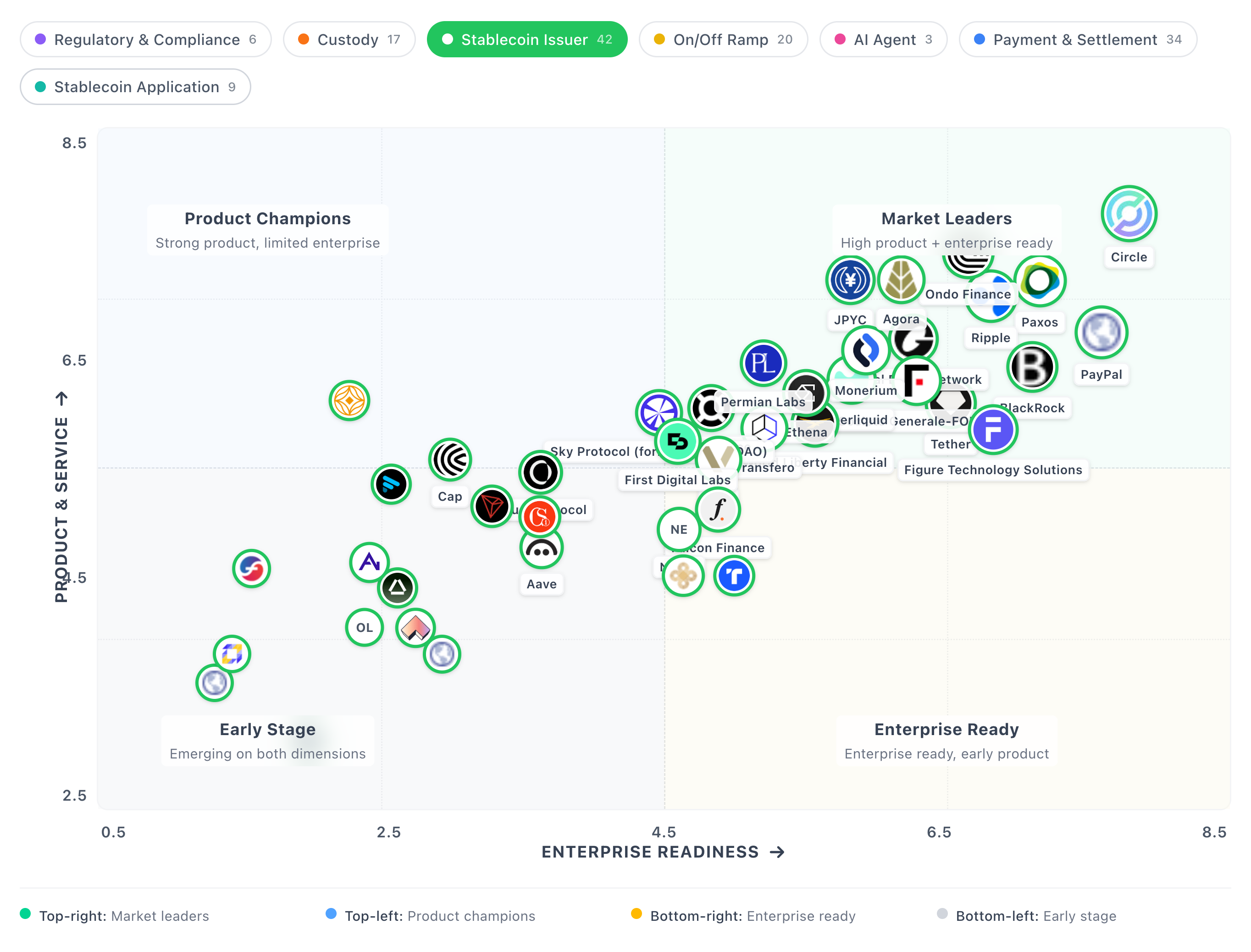
183: Wall Street wants the float
Jun 1900:07:09Tap to summarizeHey, it’s Marc,For two years everyone’s asked the same stablecoin question: whose logo goes on the coin? Circle or Tether? Banks or fintechs?Wrong question.This week State Street and Fidelity answered the one that actually prints money: who manages the reserves behind the coin. State Street launched a money market fund built solely to hold stablecoin reserves. Fidelity opened one two days later. BlackRock, Goldman, and BNY are already there.Here’s the tell: the GENIUS Act forces issuers to back tokens with T-bills and government money funds, and Citi says supply hits $1.9–4 trillion by 2030. The issuer’s name goes on the token. The asset manager keeps the carry on all of it.Wall Street didn’t bet on a stablecoin. It bet on the float underneath every one of them. (Meanwhile, CME is suing the regulator that just opened the perps market — more below.)Our highlights this week:* State Street and Fidelity opened the reserve land grab* CME is suing its own regulator* Europe’s MiCA deadline could cut off millions* Moody’s put credit ratings on Solana* Franklin Templeton filed a dividends-into-Bitcoin ETF* Morgan Stanley undercut every crypto ETF on fees* Coinbase joined the tokenized stock race* A Gulf dynasty is moving a $6T trade market on-chainAnd 12+ more signals below.Loading...Top Boardroom Reads* Stablecoins 2030: Web3 to Wall Street (Citi Institute)* Euro Stablecoins and Their Potential Effect on Sovereign Bond Markets (ECB Macroprudential Bulletin)* Digital Assets: A strategic playbook for banks (BCG)* Towards an Efficient and Integrated Digital Capital Market in Europe (ECB)* Tokenized Finance (IMF)* Effects of Stablecoin Yield Prohibition on Bank Lending (White House CEA)* Stablecoin Payments: The Truth Behind the Numbers (BCG)🚀 Build credibility. Drive pipeline. Win in digital assets. We produce institutional-grade research that positions you as the authority in your category, then distribute it to 100,000+ decision-makers who act on what we publish.Wall Street found its stablecoin trade: managing the reservesState Street Investment Management launched the State Street Stablecoin Reserves Money Market Fund, a GENIUS Act-aligned Rule 2a-7 government money market fund designed specifically to back stablecoin issuance. State Street Bank and Trust and Anchorage Digital are the initial investors. Two days earlier, Fidelity opened the Fidelity Reserves Digital Fund, which holds only US Treasuries maturing in 93 days or less, overnight repo, and government money market shares, at a 0.18% net expense ratio. Both products sit alongside GENIUS-aligned launches this year from BlackRock, Goldman Sachs, and BNY. [State Street] [CoinDesk]Why it matters: We think this is the cleanest institutional trade in the entire space. The GENIUS Act forces issuers to back tokens with short-dated Treasuries and government money funds, so the asset manager holding those reserves gets paid on the float no matter whose logo is on the coin. State Street runs over $5 trillion; it doesn’t need to win the consumer war to win this one. Our read: the issuer is becoming the commodity, and the reserve manager is the toll booth on a market Citi sees hitting $1.9–4 trillion by 2030. The only real question left is how fast the fee compresses once five of the world’s largest managers fight over the same mandate.CME is suing the regulator that just opened the perps marketWhat happened: CME Group, the world’s largest futures exchange operator, said it will sue the Commodity Futures Trading Commission over the agency’s approval of crypto perpetual futures. Outgoing CEO Terrence Duffy announced the suit on CNBC, arguing that perps, which carry no expiration date and can run up to 50-to-1 leverage, are swaps rather than futures under the Dodd-Frank Act, and therefore face a different clearing and trading-venue regime. [CNBC] [Bitcoin Magazine]Why it matters: We don’t read this as a safety fight. It’s a turf fight. CME isn’t claiming perps are dangerous; it’s claiming they’re swaps, a jurisdictional weapon to keep a $20 billion franchise routed through its own pipes. We think the lawsuit is the most bullish signal of the week. (The same day, a Michigan judge ruled prediction wagers aren’t swaps, so the swap-versus-future line is about to be drawn across the whole market.)Europe’s MiCA cliff arrives July 1, and Binance and Tether are exposedEurope’s Markets in Crypto-Assets regulation hits its hard licensing deadline on July 1, and the industry is not ready. By one count, only 194 of more than 3,000 crypto firms operating in the EU have secured a license, and roughly 60% of European users still sit on unlicensed platforms. Binance’s passporting strategy ran through Greece, where regulators are reportedly preparing to reject its application, pushing the exchange to explore a France route instead. Tether, which has said it will not seek EU approval, has already seen USDT pulled or restricted for EU customers across Binance, Coinbase, Kraken, OKX, Bitstamp, and Crypto.com. Circle’s USDC, which is MiCA-compliant, is now the only major dollar stablecoin widely available on licensed EU venues. [CryptoSlate] [<a target="_blank" href="https://decrypt.co/371561/europes-crypto-firms-face-squeeze-mica-t...
Transcribe →
182: AI agents just got a credit card
Jun 1200:10:38Tap to summarizeHey, it’s Marc & the 51 team,SpaceX just pulled off the biggest IPO in history.$75 billion raised. A $2 trillion valuation at the open. Shares priced at $135, trading as high as $168.75. Elon Musk became the world’s first trillionaire before lunch.Here’s the part most people missed: SPCX went live on Solana the same day. Tokenized shares, issued by Backpack Securities, redeemable for the real thing, trading 24/7. The biggest IPO ever was also the first to debut on Nasdaq and a blockchain simultaneously.And while SpaceX owned the front page, Mastercard and Visa quietly gave AI agents their own payment rails. Within hours of each other. Agent credentials now live on Solana, Polygon, and Base. Settlement runs in stablecoins.Wall Street got its biggest listing ever. Machines got their first credit cards. Same week.Here’s what moved:* SpaceX listed twice on the same day* Citi tokenized the pre-IPO market* Mastercard launched Agent Pay for machines* Visa gave AI agents a credit score* Japan’s megabanks picked one stablecoin* Wall Street wrote a $355M check to its own blockchain* A $300M crypto unicorn sold for $10MAnd 9+ more signals below.TOP BOARDROOM READS* Digital Assets: A strategic playbook for banks (BCG)* Wholesale banking reckons with the rise of digital assets (Oliver Wyman)* Handbook: Crypto assets (KPMG)* Banks Evaluate Opportunity and Threat of Digital Assets (Morgan Stanley)* Inside JP Morgan’s $3T tokenization machine, with Dennis Cristallo, Head of Wealth Management at Kinexys, JPMorgan (51)* Tokenization 2030 (Citi GPS)* Beyond Stablecoins: The Emerging Architecture of On-Chain Money (McKinsey)* Towards an Efficient and Integrated Digital Capital Market in Europe (ECB)* Tokenized Finance (IMF)* Effects of Stablecoin Yield Prohibition on Bank Lending (White House CEA)* Stablecoin Payments: The Truth Behind the Numbers (BCG)US Banks are going on-chainThe Clearing House (TCH), the payments operator owned by 25 of the largest US banks, will run the network. It connects traditional rails (RTP, CHIPS) to blockchain infrastructure for 24/7 atomic settlement, with use cases spanning programmable treasury, real-time liquidity, cross-border payments, and agentic commerce. “A big move for the banks,” TCH CEO David Watson told the WSJ; the industry faces a “radically different” future in on-chain payments. The release names 17 participants, including BNY, HSBC, PNC, Truist, TD Bank, and U.S. Bank. One detail buried in the coverage: no blockchain partner has been selected yet. The build, in any meaningful sense, has not started. [RELEASE] [ANALYSIS]Why it matters: McKinsey modeled it in May: when a corporation moves $1,000 into a third-party stablecoin, only $150 returns to the banking system as wholesale reserves. The other $850 buys T-bills off bank balance sheets. Tokenized deposits keep the full $1,000 on the bank’s balance sheet, preserving credit capacity. The Bank Policy Institute went further on May 8. Applying an industry-sponsored model to the projection that stablecoins reach ~$4T by 2030, BPI calculates deposits would first rise by $300B, then fall by $4T. Net result: $3.7T in destroyed deposits and a 19% decline in bank lending. A December Fed note by Jessie Jiaxu Wang points the same direction: credit supply likely shrinks, lending costs likely rise.Citi tokenizes the pre-IPO marketWhat happened: Citigroup launched a blockchain-based platform that lets wealthy and institutional clients trade tokenized shares of private companies. The product, Digital Depositary Receipts, adapts the 100-year-old depositary receipt structure for private markets. Citi acts as both issuer and custodian, with the receipts recorded on blockchain infrastructure run by Swiss exchange operator SIX. [WSJ] [CoinDesk]Why it matters: The structure is the story: a depositary receipt is a trust wrapper investors already understand, and putting it on-chain makes it transferable in ways paper private placements never were. A week after Goldman tokenized a real estate fund on GS DAP, a second bulge-bracket bank is turning tokenization into a distribution product, not a back-office experiment. Private markets access is becoming the first consumer-facing use case of institutional tokenization.AI agents got payment rails this weekWhat happened: On the same day, the two largest card networks launched infrastructure for AI agents to transact. Mastercard unveiled Agent Pay for Machines (AP4M), an open protocol that lets AI agents authorize, coordinate, and settle transactions autonomously, including micropayments worth fractions of a cent. Agent credentials and spending permissions are stored on public blockchains: Polygon, Solana, and Base. 31 launch partners include Coinbase, Stripe, Adyen, and Cloudflare. Settlement runs in traditional currencies or stablecoins. Hours later, Visa announced Agent Scoring, an Agentic Registry, a Large Transaction Model, and a collaboration with OpenAI at Visa Payments Forum, plus expanded stablecoin settlement now running at a roughly $7 billion annualized rate with 160+ stablecoin-linked card programs live or in development. [Mastercard] [Visa]Why it matters: Note where the trust layer lives. Masterc...
Transcribe →
181: JPMorgan, Citi, big banks go all-in on tokenzied deposits
Jun 500:09:00Tap to summarizeHey, it’s MarcFor years, the stablecoin debate has been about who issues the token. This week made that debate obsolete. The companies that actually move money for a living stopped arguing about issuance and started building settlement infrastructure together. Three payment networks forming one platform. Four of the biggest U.S. banks building shared tokenized deposit rails. And 1.5 million contractors waking up to a stablecoin wallet they didn’t ask for, built on infrastructure they’ll never see.We called this in our Money Movement 2.0 report and in “Stablecoin issuance is overrated.” The real race was never about who mints the coin. It’s about who owns the pipes. This week, we found out.Here’s what moved:* Stripe, Visa, and Mastercard are forming a stablecoin platform* Deel launches stablecoin accounts for 1.5M workers via Stripe* JPMorgan, Citi, and big banks plan tokenized deposit network for 2027* Goldman Sachs tokenizes real estate on GS DAP* DTCC picks Stellar for tokenizing Russell 1000 equities and Treasuries* Coinbase and Better fund first bitcoin-backed mortgage, Fannie Mae-approved* CME goes 24/7 with crypto futures🚀 Build credibility. Drive pipeline. Win in digital assets. We produce institutional-grade research that positions you as the authority in your category, then distribute it to 100,000+ decision-makers who act on what we publish.Top Boardroom Reads* Deposit Tokens: A Foundation for Stable Digital Money (JPMorgan)* Stablecoins: Modernizing Financial Infrastructure (Morgan Stanley)* Tokenized Finance (IMF)* The Stable Door Opens: How Tokenized Cash Enables Next-Gen Payments (McKinsey)* 2026 Institutional Digital Assets Survey (EY & Coinbase)* Stablecoins: Framing the Debate (BIS)The payment giants are forming a stablecoin supergroupStripe, Visa, and Mastercard are close to launching a shared stablecoin platform. Coinbase is exploring whether to participate. Each company has been building stablecoin infrastructure independently for years. Stripe acquired Bridge for $1.1 billion in late 2024. Mastercard acquired BVNK earlier this year and just expanded on-chain settlement to USDC, PYUSD, and RLUSD, enabling intraday, weekend, and holiday settlement. Visa expanded its stablecoin settlement network to nine blockchains in April. Now they are converging on shared rails. [CoinDesk]Why it matters: When three competitors stop competing on infrastructure and start pooling it, they are responding to a threat bigger than each other: fragmentation. Dozens of stablecoins on dozens of chains with no shared settlement standard. If this platform launches, it becomes the SWIFT replacement everyone has theorized about for years, except it will be owned by the companies that already process most of the world’s card transactions. We flagged this dynamic in our Money Movement 2.0 report: purpose-built payment infrastructure is displacing general-purpose blockchains for institutional settlement. This is the clearest proof yet.Deel gives 1.5 million workers a stablecoin accountDeel, the global payroll platform used by 40,000 businesses and 1.5 million workers across 150+ countries, launched a stablecoin wallet built on Stripe’s full infrastructure stack. Bridge handles issuance via Open Issuance. Privy provides embedded wallets. Tempo handles settlement. The product is called DLUSD. Contractors receive dollar-denominated balances, can earn rewards on idle funds via Morpho, and spend anywhere via the Deel Card. Live today in Argentina, with LATAM, APAC, MENA, and Africa to follow. [Stripe] [Privy]Why it matters: This is the first time Stripe’s full crypto stack (Bridge + Privy + Tempo) has been deployed at real scale. The use case is not speculative. In Argentina, 85% of contractors wanted to be paid in US dollars rather than Argentine pesos in 2025, according to Deel. In Turkey, a local salary can lose 20-40% of its value in a single year. The blockchain is invisible to the contractor. What they see is dollars landing in their account. The banks are building “The Bridge”JPMorgan Chase, Bank of America, Citigroup, Wells Fargo, and other major U.S. banks plan to launch a tokenized deposit network as early as H1 2027, operated by The Clearing House, a private-sector payments company owned by the consortium. Some banks call it “The Bridge.” Others call it “The Chain.” Clearing House CEO David Watson told the Wall Street Journal it marks a “big move for the banks,” adding that the industry faces a “radically different” future built around on-chain payments. Early users: large global companies seeking to streamline payments and treasury operations. [WSJ] [The Block]Why it matters: This is the consortium phase. Individual bank efforts have matured: JPMorgan’s Kinexys has settled over $3 trillion in cumulative transactions. BNY launched its own tokenized deposit service in January. The Clearing House already processes $2 trillion per day in traditional payments. If tokenized deposits plug into that volume, it creates a bank-native alternative to stablecoins for corporate treasury. As we described in Issue 180: the payment networks are building stablecoin rails, the banks are building tokenized deposit rails. Both racing toward instant, 24/7 settlement. The question is not which w...
Transcribe →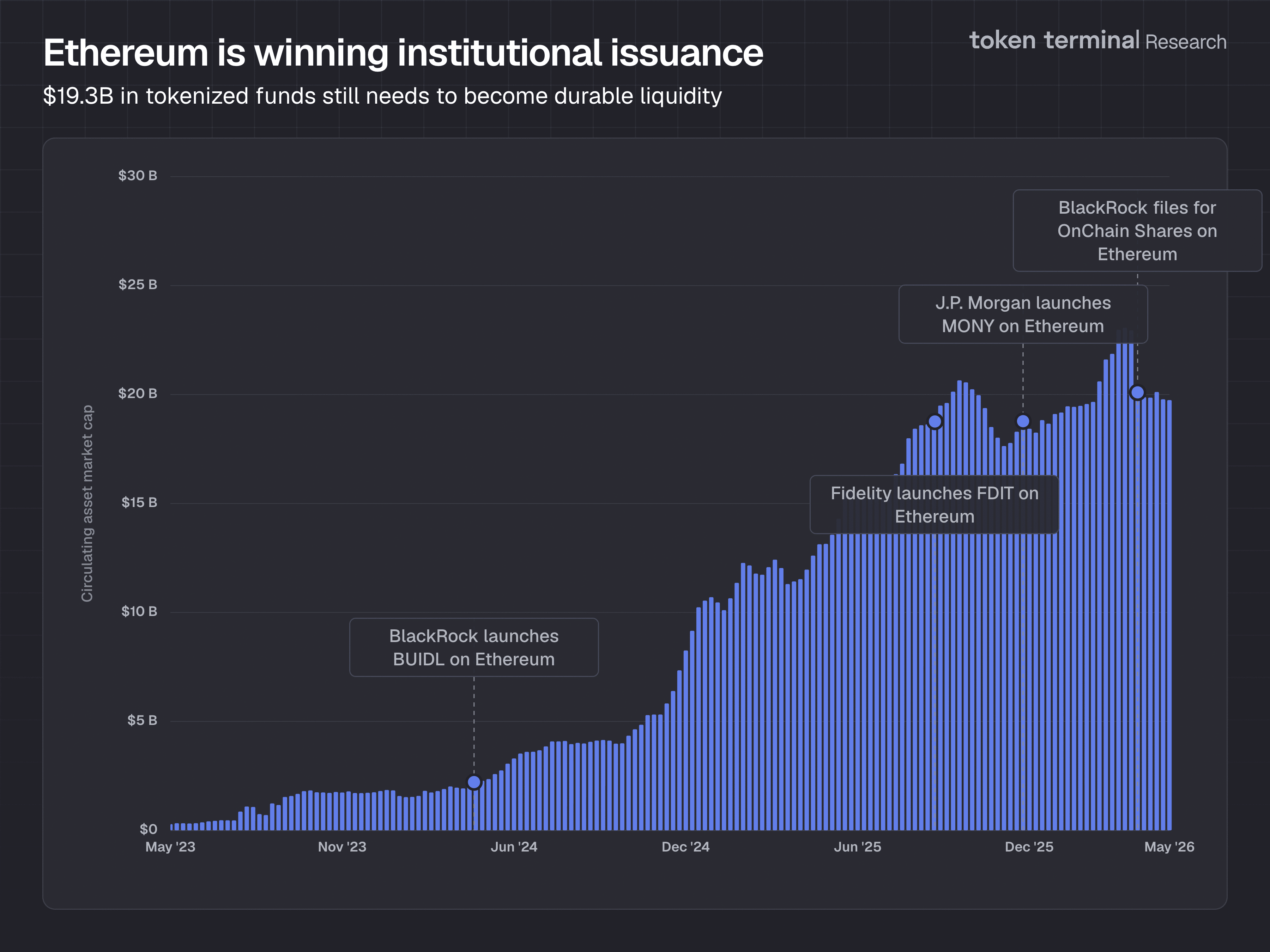
180: first bank to offer a stablecoin on a public blockchain
May 2900:09:01Tap to summarizeHey, it’s Marc & the 51 teamI’ve watched plenty of turf wars in this market. Never one like this.Minnesota just made running a prediction market a felony. Punishable by five years in prison.The same week, CFTC filed its proposed rule to govern prediction markets with the White House on Tuesday, and the same afternoon Donald Trump posted that the agency’s “exclusive authority over Prediction Markets” must be defended. Now, the Office of Management and Budget is reviewing the proposal. All of this is happening a week after Minnesota became the first state to ban prediction markets outright (SF4760, effective August 1), with the CFTC suing within 24 hours to block enforcement. Meanwhile former CFTC and SEC Chair Gary Gensler told CNBC the agency may not even have authority under Dodd-Frank to regulate prediction markets, predicting the issue will ultimately be decided by the Supreme Court. [Read more on prediction markets]Here’s what else moved this week:* DTCC picked Stellar for tokenising securities* SoFi launches its first stablecoin* Coinbase added six new currencies to its institutional product * Bitwise just undercut 21Shares by 165 bps* Mastercard just cleared NYDFS* VanEck’s $61M treasury token got a DeFi lending venueAnd 15+ more signals. Let’s jump in 👇🌆🚨 SAVE YOUR SPOT: We’re running two live panels next week with BCG on what banks and asset managers should actually be doing about digital assets. * Webinar 1: June 5, 10am EST, with Nadine Chakar (DTCC), Christian Schmid + Roy Choudhury (BCG). Inside the DTCC’s $100T tokenization buildout that goes live in October. * Webinar 2: June 8, 12:30pm CET, with Kim Hochfeld (State Street), Christian Schmid + Roy Choudhury (BCG). What live tokenization actually looks like, from the team that just shipped SWEEP, a tokenized private liquidity fund. 30 min each, 10 min live Q&A. Top Boardroom Reads * Project Agorá: A shared programmable platform for wholesale cross-border payments (BIS)* Stablecoin issuance is overrated, with Tony McLaughlin, Founder at Ubyx (51)* Banking in tokenised economy (IBM)* Beyond stablecoins: The emerging architecture of on-chain money (McKinsey)* Accelerating AI Investment in Emerging Markets (IFC)* Global Banking Annual Review 2026 (McKinsey)Top Signals This WeekDTCC picked Stellar for tokenising securitiesOn May 27, 2026, DTCC announced that it will integrate DTC’s tokenization service with the Stellar network, with the initial scope covering Russell 1000 equities, major index ETFs, and U.S. Treasuries. The integration supports the full asset lifecycle, including corporate actions and reporting, rather than a wrapper or representation. Tokenized assets retain the same investor protections, entitlements, and safeguards as traditionally held securities. [RELEASE]Why it matters: The chain selection is a signal. Stellar offers compliance-first protocol, native token primitives, and predictably lower operating costs. And, it is the only public blockchain that has run an SEC-registered tokenized money market fund (BENJI) continuously for five years. WisdomTree and Amundi are also running their funds on Stellar. It is not avoiding Ethereum or EVM compatibility as the DTCC AppChain is built on Hyperledger Besu. Hyperledger Besu is handling settlement infrastructure. The DTCC’s AppChain is not issuing assets, it is moving them, matching them, and settling them between institutions. While, for tokenizing which includes asset creation, Stellar’s native token primitives do this cleanly, without smart contract risk and without unpredictable costs. Surprising for us that DTCC didn’t select Canton for this, given their partnership. 🚨 The Friday newsletter only scratches the surface. A lot more is going on that we’ll tell you in our PRO briefings. SoFi becomes the first bank to offer a stablecoin on a public blockchainOn May 27, 2026, SoFi Technologies (NASDAQ: SOFI) made SoFiUSD available to retail members directly inside the SoFi app on Ethereum and Solana. The token is 1:1 redeemable for U.S. dollars from SoFi Bank, backed by liquid reserves on the bank’s balance sheet, and audited by an independent U.S.-licensed CPA. SoFi originally issued SoFiUSD in December 2025 to enterprise partners. Today’s announcement is the consumer rollout. [RELEASE]Why it matters: Under the GENIUS Act, permitted payment stablecoin issuers cannot pay holders any form of interest or yield. Tokenized deposits sit outside that prohibition and qualify for FDIC insurance. Only a chartered bank can issue them and SoFi has the charter. In this process, SoFiUSD reserves remain at SoFi Bank. Also, SoFi has 14.7M banked customers and now it has become the first bank to offer a stablecoin on a public blockchain. The acquisition cost on each is zero.Coinbase added six new currencies to its institutional product Coinbase announced on 26 May that Standard Chartered will provide multi-currency banking rails for Coinbase Prime and Coinbase Exchange institutional clients. The integration adds new direct rails in Australian dollars, Singapore dollars, Canadian dollars and Swiss francs. Euros and pounds settle through G-SIB-backed infrastructure, Standard Chartered itself is a global systemically important bank designated by the Financial Stability Board. [<a target="_blank" href="https://www.coinbase.com/blog/coinbase-and-standard-chartered-partner-to-unloc...
Transcribe →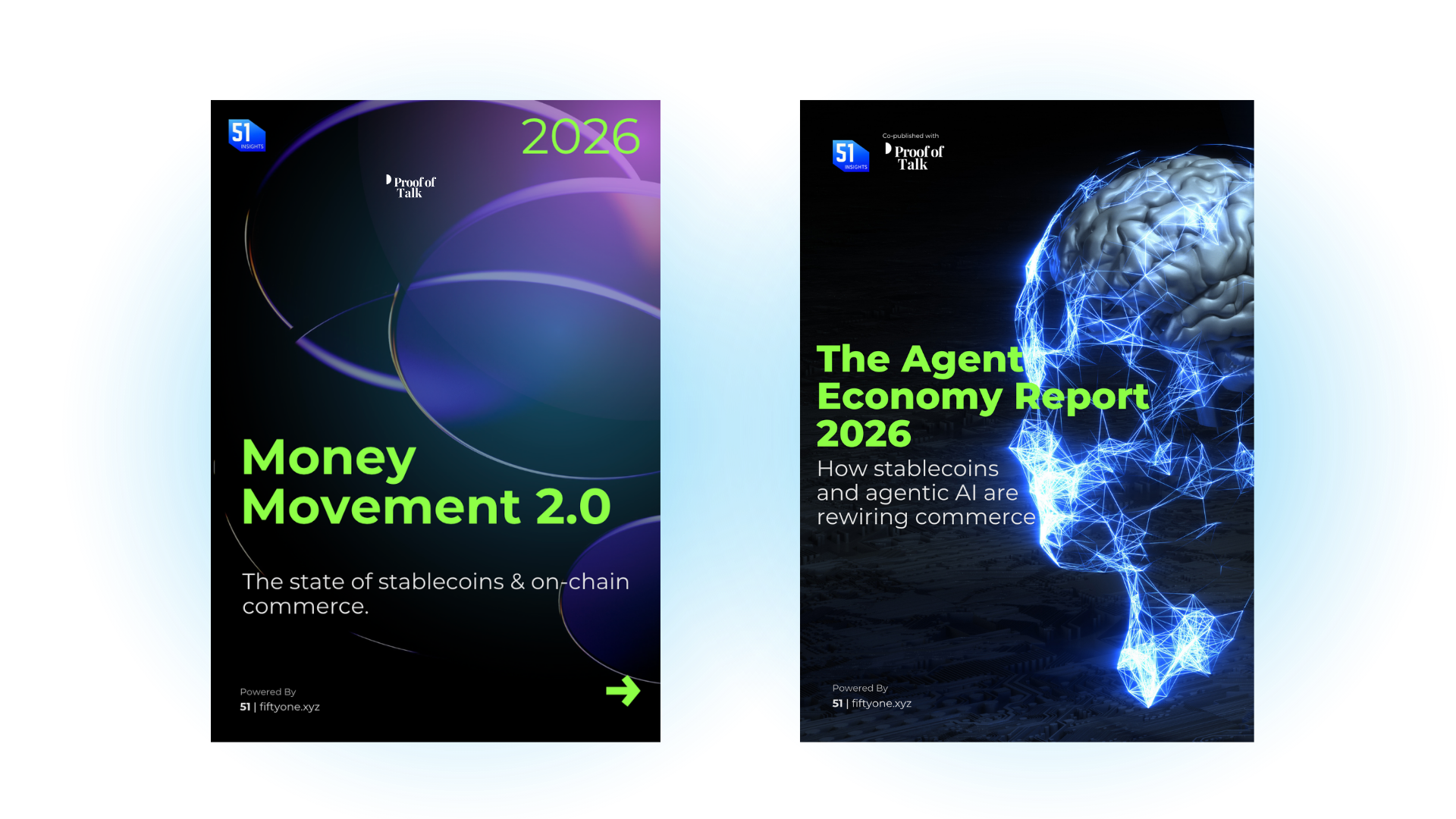
179: Wall Street pushes back
May 2300:07:14Tap to summarizeHey, it’s Marc & the 51 team,Before we get into this week’s signals, one thing worth flagging at the top.Karl from Proof of Talk pitched 51 as official research partner for June 2-3. My instinct was to decline. But I met this team for the first time 4 years ago at in Paris, just before they launched. And they've built it into one of the top digital asset conferences of the year: 2,500 attendees from banking, regulation, and institutional capital. 95% C-suite. Zero pay-to-speak. So we said yes. We’re producing two reports as the official research partners: 1) Money Movement 2.0: State of Stablecoins and 2) The Agent Economy 2026, second editions after last year’s became one of our most-read reports of 2025. 👉 3-5 partner slots open for companies that belong in the conversation.The report goes to every attendee via email and print and hits our 100K+ institutional audience in the week of the event, and lives on our socials for months.If you run marketing or BD at a stablecoin issuer, custody platform, or B2B fintech, reply to this email. 15 minutes, I’ll tell you if it’s the right fit.Now to this week’s signals 👇I’ve tracked every SEC rule change this year. None of them prepared me for this one:* Anthropic tried to disown tokenized versions of its own stock last week. It couldn’t pull them off Solana.The SEC is about to make that the default for every blue chip on a US exchange. CLARITY, PARITY Act, and American Reserve Modernization Act (ARMA) are all moving through Congress this month. Trump just signed an EO ordering federal regulators to identify barriers to fintech and crypto. The door isn’t opening anymore. It’s open.Here’s what else moved this week:* VanEck and Grayscale file Binance ETF* Qivalis hits Europe’s 37 banks* Basel walks back its 2022 crypto rules* Ripple Prime + EDX go live * Standard Chartered acquired ZodiaAnd 15+ more signals. Let’s jump in 👇🌆Top Boardroom Reads * Digital Asset Playbook (BCG)* 8 of 9 recessions called, now he’s calling bitcoin, with Cam Harvey, Economist (51)* Consultation Paper on the Prudential Treatment of Cryptoassets on Permissionless Blockchains (MAS)* How AI is rewiring global trade (Allianz)* Quantum’s bold promise: What business leaders need to know (Mckinsey)* Stablecoins in Africa (DCI)* GenAI in central banking (SUERF)Top Signals This WeekSEC will let DeFi trade stocksOn May 18, Bloomberg reported that the SEC is preparing to release its long-signaled Innovation Exemption for tokenized securities. The framework allows digital tokens linked to public-company shares, including tokens issued by third parties without the underlying company’s consent, to trade on decentralized platforms and automated market makers under lighter-touch registration. [NEWS]Why it matters: Issuer consent just died. The 1933 Securities Act gave public companies veto power over where their stock trades. The Innovation Exemption removes it. That rule lasted 93 years.Here’s how it works in practice. Backed Finance wraps AAPL, NVDA, or TSLA, sells SPL-token versions on Solana, and Apple has no recourse. The token settles against real shares Backed holds in a regulated brokerage account. Shareholder rights route through Broadridge’s ProxyVote platform. Superstate and Ondo already pass through votes and dividends. Be smart: Anthropic figured this out last week. It publicly disowned tokenized versions of its own stock. The tokens kept trading. Every blue chip on a US exchange will face the same problem.Wall Street pushed back: traditional exchange representatives, including the World Federation of Exchanges, warned the framework creates a regulatory shortcut for crypto platforms, forcing the SEC to delay its plans. 🚨 The Friday newsletter only scratches the surface. A lot more is going on that we’ll tell you in our PRO briefings. VanEck and Grayscale filed for Binance ETFOn 15 May 2026, VanEck filed Amendment No. 5 to its Form S-1 for the VanEck BNB ETF (Nasdaq under ticker VBNB). The same day, Grayscale filed Amendment No. 2 to its competing BNB ETF registration, slated to list as GBNB. VanEck disclosed a 0.39% management fee; Grayscale has not yet published one.[NEWS]Why it matters: Altcoin ETFs used to mean fighting the SEC over fund architecture. Now you just swap the ticker. Bitcoin and Ether ETFs already cleared the legal framework. BNB inherits it. One detail makes this bigger. The SEC dropped the Rule 19b-4 requirement for every individual crypto ETP. Generic listing standards now apply across the category. That bottleneck is gone. Notice what the issuers are doing in response. They’re not arguing anymore. VanEck compromised early on staking yield to preserve speed-to-market. Grayscale followed. The race stopped being about winning the regulatory argument. It became about being first to file the next altcoin.Qivalis hits Europe’s 37 banksOn May 20, Qivalis announced a 25-bank expansion that takes the consortium from 12 founding members to 37. Spain led the new wave with five additions: ABANCA, Banco Sabadell, Bankinter, Cecabank and Kutxabank. France, Sweden, Greece, the Netherlands, Finland and Ireland each contributed two new institutions. Italy added BPER and Intesa Sanpaolo to founding member UniCredit. Iceland, Luxembourg, Poland and Austria entered the consortium for the first time via <a tar...
Transcribe →
178: Moody’s AAA for an ERC-20
May 1500:07:17Tap to summarize🚨Coming Monday: BCG’s flagship report on the future of digital assets in banking. 68 pages, and probably the most important report on digital assets in banking this year. 51 got early access. Free download lands May 18. Reserve your copy below.Hey, it’s Marc & the 51 team,There is a lot happening in the United States. The CLARITY Act cleared the Senate Banking Committee on Thursday, 15-9. But the real signal wasn’t the vote. It was the joint statement from six bank trade associations (ABA, BPI, Consumer Bankers, the Forum, ICBA, and NBA) saying they support the bill and just want the stablecoin yield rules tightened. The banking lobby isn’t fighting crypto regulation anymore. They’re negotiating the terms. Plus: * Kevin Warsh is confirmed as the Fed Chair. He’s pro crypto. * The CFTC is federalizing prediction markets through litigation. On May 12, it filed an amicus brief in the U.S. Court of Appeals for the Sixth Circuit in KalshiEx LLC v. Matthew T. Schuler, et al. (No. 26-3196). If the Sixth Circuit follows the Third, state gambling regulators lose authority over sports event contracts. [RELEASE]These are our highlights this week:* Moody’s just rated AAA a tokenized fund* DTCC just rewired $25T of collateral* BlackRock files to squeeze stablecoin yield* Circle isn’t a stablecoin company anymore* Schwab opens crypto to 39M accounts at 75bps* Strategy ends ‘never sell’And 15+ more signals. Let’s jump in 👇🌆🚀 51 Insights and Proof of Talk are co-publishing the institutional digital assets report of 2026, launching at the Louvre, June 2 to 3. Top Boardroom Reads * Why “DeFi is dead” and what replaces it with Sidney Powell, CEO of Maple Finance (51)* Collateral Infrastructure for Tokenized Capital Markets (DTCC)* The impact of stablecoins on the international monetary and financial system (BIS)* Digital Assets: Stablecoins in Regulated Finance (UOB)* Stablecoins and the future of money: separating functions from instruments (ECB)* State of Stablecoin & Crypto Payments 2026 (WalletConnect)🚨 COMING MONDAYBCG: “The Future of Digital Assets” - The most important report on digital assets in banking this year. We got early access.Key insights: * Tokenized real-world assets could hit $88T (16% of global investable assets) by 2035* Stablecoins could plateau around $9T (15% of M2) absent monetary regime change* The 7-page CEO summary covers the headlines. The full report covers Board, CRO, CTO, and ExCo views.Free download. In partnership with BCG.Top Signals This WeekMoody’s just rated an ERC-20Moody’s gave a AAA-mf rating to an ERC-20 token. That’s the same grade it gives Goldman Sachs and JPMorgan’s money market funds. The token is FILQ, a USD liquidity fund from Fidelity International, issued through Sygnum Bank’s Desygnate tokenization platform. It holds short-dated government securities, mirrors Fidelity’s Irish-domiciled $7B LVNAV money market fund, and starts with roughly $10M in on-chain AUM. It settles via smart contracts with 24/7 stablecoin-funded subscriptions. No CUSIPs, no transfer agents, no end-of-day NAV strikes. Restricted to non-US institutional investors. [Explore FILQ]Why it matters:Moody’s is saying the blockchain wrapper doesn’t degrade sovereign debt quality. That’s the whole game. Capital allocators whose investment policies blocked “blockchain-native assets” can now point to a AAA-mf rating from the same agency that rates their existing Treasury MMFs. The institutional firewall just fell. And it sets the benchmark every other tokenized fund will be measured against.🚨 The Friday newsletter only scratches the surface. A lot more is going on that we’ll tell you in our PRO briefings. BlackRock files to squeeze stablecoin yieldThe GENIUS Act prohibits stablecoin issuers from paying interest to holders. BlackRock just filed two products designed to capture exactly that yield.On 8 May 2026, BlackRock filed two post-effective amendments with the SEC.* Filing 1: BRSRV (BlackRock Daily Reinvestment Stablecoin Reserve Vehicle), a new fund holding cash, sub-93-day Treasuries, and overnight Treasury repos. Shares issued as “OnChain Shares“ through a permissioned system across multiple public blockchains. Securitize Transfer Agent LLC1 keeps the official ownership records. Off-chain identity systems link wallet addresses to verified investors. $3M minimum. The filing does not yet name the chains.* Filing 2: An on-chain share class for the existing $7B BlackRock Select Treasury Based Liquidity Fund. BNY Mellon Investment Servicing acts as transfer agent, recording shareholders on Ethereum using the ERC-20 token standard2. Off-chain KYC links wallets to investor records. This is the first time a public ETH share class has been bolted onto an existing BlackRock money-market product.Both build on BUIDL, BlackRock’s first tokenized MMF launched in March 2024 with Securitize.Why it matters: If stablecoin issuers can’t share yield with holders, the yield stays in the reserve pool. By law, that reserve pool has to sit in short-term Treasuries, repos, or 2a-7 money market funds. BRSRV is a 2a-7-aligned fund packaged for on-chain settlement — designed for institutional investors who want to move out of non-yield-bearing stablecoins into a regulated fund that pays daily yield. Context: Circle’s Reserve Fund (USDXX) manages ~$66B, with ~90% managed by BlackRock. BlackRock already runs the money. Now it’s offering the product that keeps the yield too.DTCC just rewired $25T of collateralOn May 12, DTCC confirmed that its Collateral AppChain, first introduced at last year’s Great Collateral Experiment, is on track for production in Q4 2026. The platform is built as shared infrastructure: collateral providers, receivers, managers, triparty agents and custodians all work from one ledger rather than reconciling across systems that today run in silos. [RELEASE]On May 13, 2026, they also released white paper with Finadium and modeled what happens when a single institution moves 25% of its book onto the platform: $1.9B in capital freed by year three, plus another $225M from capital relocation. [Whitepaper]Be smart: DTCC is solving the two biggest bottlenecks in collateral management: the weekday-only settlement window and triparty silos. BNY, JPMorgan, Euroclear, and Cl...
Transcribe →
177: DTCC's $20T October debut
May 800:09:00Tap to summarizeHey, it’s Marc & the 51 team,Tuning in from Consensus Miami 2026 this week. The signal was clear: institutions aren’t waiting for the Clarity Act. My key takeaways: * Institutional participation was through the roof (35%, nearly double last year). I’ve never experienced a crypto conference that felt so complete, both with crypto OGs and big institutions present. And for the first time, Morgan Stanley and JPMorgan weren’t just speaking, they were sponsoring. * DTCC’s Frank La Salla casually announced that the entity clearing $20T/day in U.S. securities will ship a tokenized securities platform by October, with BlackRock, Goldman, JP Morgan, Citi, Anchorage, Circle, and Ondo already in.* White House crypto adviser Patrick Witt announced a target date of July 4 to pass comprehensive federal digital asset legislation at Consensus Miami.We also hosted our own event on May 4 with Proof of Talk with Swift, JP Morgan, KPMG, DTCC, ICE, Google and others attending. Subscribe to our event calendar to join future events. These are our highlights this week:* DTCC brings capital markets on-chain* CLARITY Act takes a step further* Blockchain just bypassed global payment rails* Securitize brings atomic settlement to equities* AI just got a bank account* Morgan Stanley starts crypto price war with spot trading* Western Union’s stablecoin goes live* SIX Group unifies crypto and capital marketsAnd 15+ more signals. Let’s jump in 👇🌆🚀 51 Insights and Proof of Talk are co-publishing the institutional digital assets report of 2026, launching at the Louvre, June 2 to 3. Top Boardroom Reads * The impact of stablecoins on the international monetary and financial system (BIS)* Digital Money: A Perspective on Stablecoins, Tokenised Deposits and CBDCs (Deutsche Bank)* PACTs: Protecting Your Bitcoin From a Quantum Sunset (Paradigm)* Tokenization of Money Market Funds (JPMorgan)* The 3 phases of stablecoin adoption (and why enterprise is just beginning) (BVNK)* Cracks in Private Credit (Goldman Sachs)* Finance Is Entering Its Autonomous Era (Anchorage)Top Signals This WeekDTCC brings capital markets on-chainOn May 4, 2026, the DTCC publicly advanced DTC’s native tokenization service and announced its commercial launch in October. More than 50 firms are already in the working group that helped DTCC build this platform, including BlackRock, Goldman Sachs, J.P. Morgan, Citi, Anchorage Digital, Circle, Ondo Finance, and Payward (Kraken’s parent). [RELEASE]Why it matters: We recently dissected the importance of shareholders and voting for tokenised stocks and their impact on wrappers and native issuers. Platforms like Ondo Global Markets (voting rights using Broadridge’s Proxyvote) and Kraken’s xStocks built real traction, offering tokenized stock exposure. But these are structured as collateralized loans or derivatives, holders get price performance, not legal ownership. Whereas Superstate offers natively issued tokenised stocks with voting rights in partnership with Broadridge. DTCC makes this very simple. DTCC’s tokens will include full UCC Article 8 entitlements, voting rights, native dividends, and SEC protections. This chooses between a synthetic derivative with counterparty risk and a legally identical DTC-issued digital twin easy for institutions.🚨 The Friday newsletter only scratches the surface. A lot more is going on that we’ll tell you in our PRO briefings. CLARITY Act takes a step furtherSenators Tillis and Alsobrooks dropped the Section 404 compromise for the CLARITY Act. It strictly bans platforms like Coinbase from paying passive yield simply for holding stablecoins. But there’s a massive loophole: platforms can pay rewards if you actually use the network, like staking, providing liquidity, or voting, and they can scale those payouts based on your total balance. [NEWS]Why it matters: Europe’s MiCA bans stablecoin yield absolutely, no activity exemptions, no loopholes. The U.S. preserved economic incentives. And, the US gained another edge over MiCA with the CLARITY Act becoming the dollar hegemony. This legislation creates three distinct lanes for the digital dollar. We have the offshore standard (Tether’s $187B USDT), the U.S. incumbent (Circle/Coinbase’s $75.6B USDC), and now, the compliant challenger. Tether’s launch of USAT (Genius Act compliant stablecoin) now feels like a better move to fight for U.S. institutional capital. This also works with China, offering yield on e-CNY.Blockchain just bypassed global payment railsOn May 6, 2026, Ripple redeemed Ondo Short-Term U.S. Government Treasuries (OUSG) on the XRP Ledger. Instead of waiting days for legacy settlement, Mastercard’s Multi-Token Network (MTN) translated the on-chain action into a compliant fiat instruction. J.P. Morgan’s Kinexys then instantly debited Ondo’s blockchain account and routed U.S. dollars directly to a Singapore bank. The on-chain leg cleared in under five seconds. By utilizing this hybrid approach, the consortium bypassed the “stablecoin sandwich” model, and its 0.1%-1.5% friction fees, proving public blockchains can trigger regulated, real-time fiat settlement globally. [RELEASE]Why it matters: This is a pure example of how trapped capital can be freed with blockchain. This transaction unlocks the “intraday repo.” Institutions can now borrow and repay funds on the exact same day using tokenized securities as collateral. Moreover, Mastercard faces an FCA antitrust probe over its traditional wallet rails. By building the MTN orchestration layer, it is preemptively disrupting its own legacy model before public blockchains render it obsolete. Meanwhile, SWIFT is scrambling to launch a defensive permissioned EVM chain this year. This pilot proves global institutions don’t need to wait for SWIFT; they can route around it right now.Securitize brings atomic settlement to equitiesOn May 4, Securitize ($4B AUM) received FINRA CMA approval to operate as a regular broker-dealer capable of custodying tokenized securities, executing atomic swaps (T+0), and underwriting onchain IPOs. To operationalize this immediately, Securitize partnered with Jump Trading and Jupiter to laun...
Transcribe →
176: the disruptors are paying rent
May 200:09:18Tap to summarizeHey, it’s Marc & the 51 team,I’ve been to several Bitcoin conferences. This time in Las Vegas, a sitting SEC Chair showed up. So did the Vice President. Here’s what you need to know: * Paul Atkins became the first SEC Chair ever to address a Bitcoin conference. He unveiled ACT (Advance, Clarify, Transform) and published a token taxonomy that puts four of five categories (digital commodities, collectibles, tools, stablecoins) outside the securities perimeter. * Vice President JD Vance told the audience: “Crypto and digital assets, particularly Bitcoin, are part of the mainstream economy and are here to stay.” * Tether CEO Paolo Ardoino unveiled the “Resilience Stack”: Holepunch, the Keet messaging app, the WDK self-custody toolkit, and the QVAC local-AI development platform, alongside the open-source Mining Development Kit (MDK). Corporate treasuries, sovereign allocators, and the people who used to send associates are now sending CFOs. This is the biggest signal of the week.These are our highlights this week:* Morgan Stanley targets stablecoin issuers’ $320B reserve pool* Western Union to launch a stablecoin to kill its SWIFT bill* Broadridge’s tokenized stock landgrab* Meta shipped what Libra was supposed to be* Vanguard’s Index Engine bought $500M of BitMine* Bridge made Phantom and Metamask issue Visa cardAnd 15+ more signals. Let’s jump in 👇🌆🚨 51 is hosting a private event for institutional decision makers in Miami on May 4, ahead of Consensus. If you want to be in the room, sign up here. Top Boardroom Reads * The $700T blueprint, with Robert Leshner, Co-Founder & CEO of Superstate (51)* Joint Letter: Call for a DLT Pilot Regime Quick-Fix (EDFA)* Tokenization of Money Market Fund (JPMorgan)* 9 charts on what stablecoins are becoming (a16z)* Beyond concentration: Where non-USD stablecoins can scale (Standard Chartered)* The Financial Grid (Fireblocks)* From automation to tokenization: ETF trends to watch (JPMorgan)🚨 The Friday newsletter only scratches the surface. A lot more is going on that we’ll tell you in our PRO briefings. Top Signals This WeekMorgan Stanley targets Stablecoin issuers’ $320B reserve poolOn April 23, 2026, Morgan Stanley launched the Stablecoin Reserves Portfolio (MSNXX). It’s a money market fund holding cash and U.S. Treasuries (under 93 days), charging a 0.15% fee with a $10M minimum. It’s built strictly for tier-one stablecoin issuers to comply with the 2025 GENIUS Act’s strict 1:1 reserve mandate. [RELEASE]Concurrently, Morgan Stanley rolled out a spot Bitcoin ETP, MSBT, at a cut-throat 0.14% fee and launched “DAP Class“ tokenized treasury shares that mirror off-chain ledgers onto the blockchain.Why it matters: Stablecoin reserves are the new prime brokerage. The market is $320B and growing. Tether alone holds $141B in U.S. Treasury exposure, which makes it the 17th-largest holder of U.S. government debt on the planet. Circle parks the bulk of USDC’s reserves in its own SEC-registered government MMF. The economics are simple. Every dollar of payment stablecoin must be matched 1:1 by a high-quality liquid asset in a regulated vehicle. The yield on that asset accrues entirely to the issuer. Holders get nothing under the GENIUS framework.That means competition between stablecoin issuers cannot happen on price. It can only happen on distribution, compliance, trust, and utility. Tether and Circle have a decade-long head start on all four. Morgan Stanley plans to custody the reserves of those who don’t.🚀 Build credibility. Drive pipeline. Win in digital assets. We produce institutional-grade research that positions you as the authority in your category, then distribute it to 100K+ decision-makers who act on what we publish.[let's talk →].Western Union to launch a stablecoin to kill SWIFT billDuring its Q1 2026 earnings call on April 24, McGranahan formally outlined Western Union’s three-layer digital asset strategy.* USDPT, a GENIUS Act compliant stablecoin issued by Anchorage Digital Bank, will launch in May 2026 on Solana in select countries with key agent partners. The goal is to replace Western Union’s existing SWIFT-dependent settlement infrastructure, utilized for agent network funding. * The Digital Asset Network (DAN) goes live this week with its first partner. DAN lets crypto wallet users, Phantom, Solflare, and any future integration, convert digital dollars into local fiat at any Western Union agent or retail location. * The USD Stable Card, built with Rain and Visa, launches later in 2026 across dozens of markets. Why it matters: Western Union is launching a stablecoin to kill its own SWIFT bill. McGranahan was explicit during the Q&A: USDPT is not consumer-facing. It is internal infrastructure, a SWIFT replacement for the cross-border settlement Western Union uses to fund its agents in 200+ countries. Western Union pays SWIFT-network correspondent banking fees on every funding leg today. The SWIFT-based correspondent banking model requires massive pre-funded accounts across every corridor, traps working capital in 2–5 day settlement cycles, and bleeds the company through FX remeasurement losses. Replacing that with an on-chain USDPT transfer collapses cost and time-to-settle. The stablecoin’s entire purpose is to take a cost line off Western Union’s P&L. That is a different game from competing for stablecoin reserves like Morgan Stanley just launched. Broadridge’s tokenized stock landgrabOn April 28, 2026, Ondo Finance integrated Broadridge’s new Web3-enabled ProxyVote platform across its tokenized stock and ETF catalog. Token holders now log in with a crypto wallet, receive prospectuses and issuer communications, and submit proxy votes that flow back into Broadridge’s traditional aggregation pipeline. Ondo Global Markets attributes votes from token holders to specific underlying securities. Broadridge bundles those preferences alongside conventional brokerage votes, provided Ondo Global Markets consents. [RELEASE]Why it matters: TradFi is consuming the value layer. The crypto narrative was disintermediation, but, in reality, it is absorbing the new market structure with blockchain as an infrastructure. Decentralized protocols can’t...
Transcribe →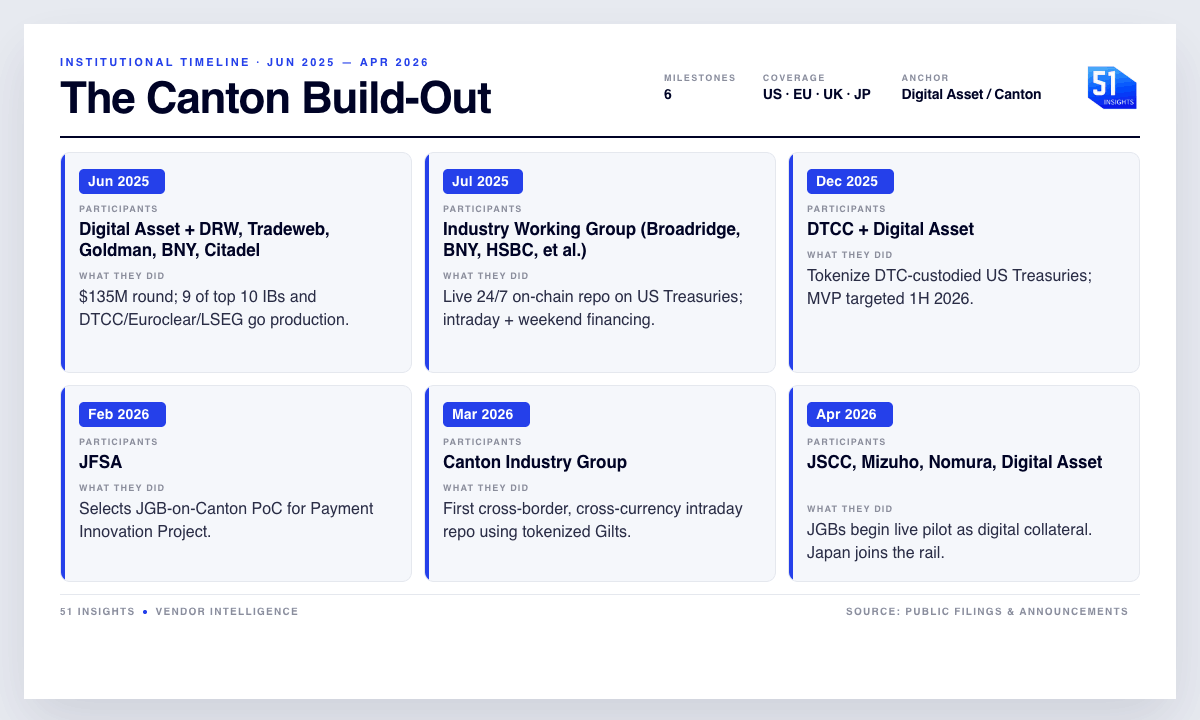
175: Stress test of DeFi
Apr 2400:10:08Tap to summarizeHey, it’s Marc & the 51 teamNothing prepares you for a month where the Fed buys its own debt, the US military is running a Bitcoin node, and the Treasury Secretary Scott Bessent calls crypto "very important payment rails” for the country. The Senate Banking Committee was supposed to mark up crypto legislation this month, but the date was delayed until May. “If we don’t get the Clarity Act passed by May, digital asset legislation will not pass for the foreseeable future.”— United States Senator Bernie Moreno On top of that, we saw one of the biggest blow-ups in DeFi. We’ve watched a lot of them, but this one’s different.These are our highlights this week:* Why Treasury’s record buyback matters to USDT* Congress just rewrote Fed access rules* The $196M hole Aave didn’t code* Singapore just flanked PAXG with a bank* DTCC front-runs Crypto to own tokenized Wall Street* Japan’s banks ditch Euroclear for Canton JGB repoAnd 15+ more signals. Let’s jump in 👇Exclusive for 51 Readers: 👉 Register for Consensus Miami, May 5-7, 2026, and get in the room where the people moving that money actually meet. Use this for up to $200 off:🎟️ 20% Discount Code: MARC🔗 Auto-applied discount link: https://go.coindesk.com/3NLCAAdTop Boardroom Reads * How the U.S. Weaponized the Dollar (And Stablecoins), with Eddie Fishman, New York Times Bestseller (51)* 2026 Institutional Investor Survey on Digital Asset Investment Trends (Nomura)* How tokenised assets transform liquidity management (Deutsche Bank)* CLARITY Act Update: Final Push Ahead (Galaxy)* Tokenized collateral goes global (ValueExchange)* Adopting AI Agents in Banking (Creatio)The Friday newsletter only scratches the surface. A lot more is going on that we’ll tell you in our PRO briefings. Top Signals This WeekWhy Treasury’s record buyback matters to USDTOn April 16, 2026, the U.S. Treasury executed a record $15 billion debt buyback, matching the largest single-day operation in the program’s history. The operation targeted off-the-run nominal coupon securities maturing between May 2026 and April 2028, with settlement on April 17. The Treasury funded the repurchase through new bill issuance, keeping overall debt stock largely unchanged, but shifting the duration profile toward the short end of the curve. [NEWS]Why it matters: Tether’s $141.6B in Treasury exposure as of Q4 2025 makes it the 18th-largest holder of U.S. government debt on the planet. The company printed more than $10 billion in net profit in 2025 almost entirely on T-bill yield. A buyback that absorbs off-the-run coupons and recycles them into bill issuance is, mechanically, a subsidy to Tether’s business model: it deepens the market for the exact instrument USDT requires as collateral and keeps front-end yields structurally attractive. Whether the Treasury intends this or not, the effect is symmetric with supporting the peg.Be smart: Recent BIS research found stablecoin inflows reduce three-month T-bill yields by 2–2.5 bps within 10 days; outflows widen them by 6–8 bps. The buyback is now part of that same feedback loop, on the supply side.🚀 Build credibility. Drive pipeline. Win in digital assets. We produce institutional-grade research that positions you as the authority in your category, then distribute it to 100K+ decision-makers who act on what we publish.[let's talk →].Congress just rewrote Fed access rulesOn April 21, Reps. Kim and Liccardo introduced the PACE Act to establish a federal registration regime for non-bank payment firms, overseen by the OCC. Qualifying firms must hold a state bank or credit union charter, or 40 or more active state money transmitter licenses. Registered firms gain direct access to Fedwire, FedNow, and FedACH, rails historically walled off to chartered banks. [RELEASE] [PDF]Why it matters: Getting a federal crypto license is nearly impossible for newcomers, and that’s by design. To qualify, a company needs money-transmission licenses in at least 40 states. Only a handful of giant, established companies have bothered to collect that many, think PayPal, Circle, Coinbase, and Western Union. They spent years and millions of dollars building up those licenses. Kraken already got approved through a different route (the Federal Reserve), so this rule doesn’t even affect them. Everyone else, any startup or smaller company trying to enter the market, is simply locked out. They haven’t had the time or money to get 40 state licenses yet. The $196M hole Aave didn’t codeNobody hacked Aave last weekend. $196M walked out the door anyway. The attacker forged a message on a bridge next door, minted $292M of fake rsETH, and posted it to Aave as collateral. That’s the problem. [ANNOUNCEMENT]Why it matters: DeFi lending is not a product. It’s an unpriced insurance contract on every asset listed. Aave’s defense is that its contracts worked. That is true. It is also beside the point. A depositor who supplies WETH to Aave is not just lending to Aave. They are lending into every cross-chain bridge that underpins every collateral asset Aave accepts. LayerZero broke. Kelp’s bridge released unbacked tokens. Aave’s oracle priced those tokens as real. The loss landed on WETH suppliers. The smart contract did its job. The insurance contract was never written, and not a single audit scope covered such incidents.PRO Analysis: Singapore just flanked PAXG with a bankOn April 21, 2026, OCBC ($526B in total assets), its asset-management arm Lion Global Investors, and MAS-regulated digital-asset exchange DigiFT launched GOLDX, a security token that provides on-chain exposure to the LionGlobal Singapore Physical Gold Fund ($525.9M in AUM). Tokens are issued natively on Ethereum and Solana. [RELEASE]Why it matters: The tok...
Transcribe →