← A Bit of Optimism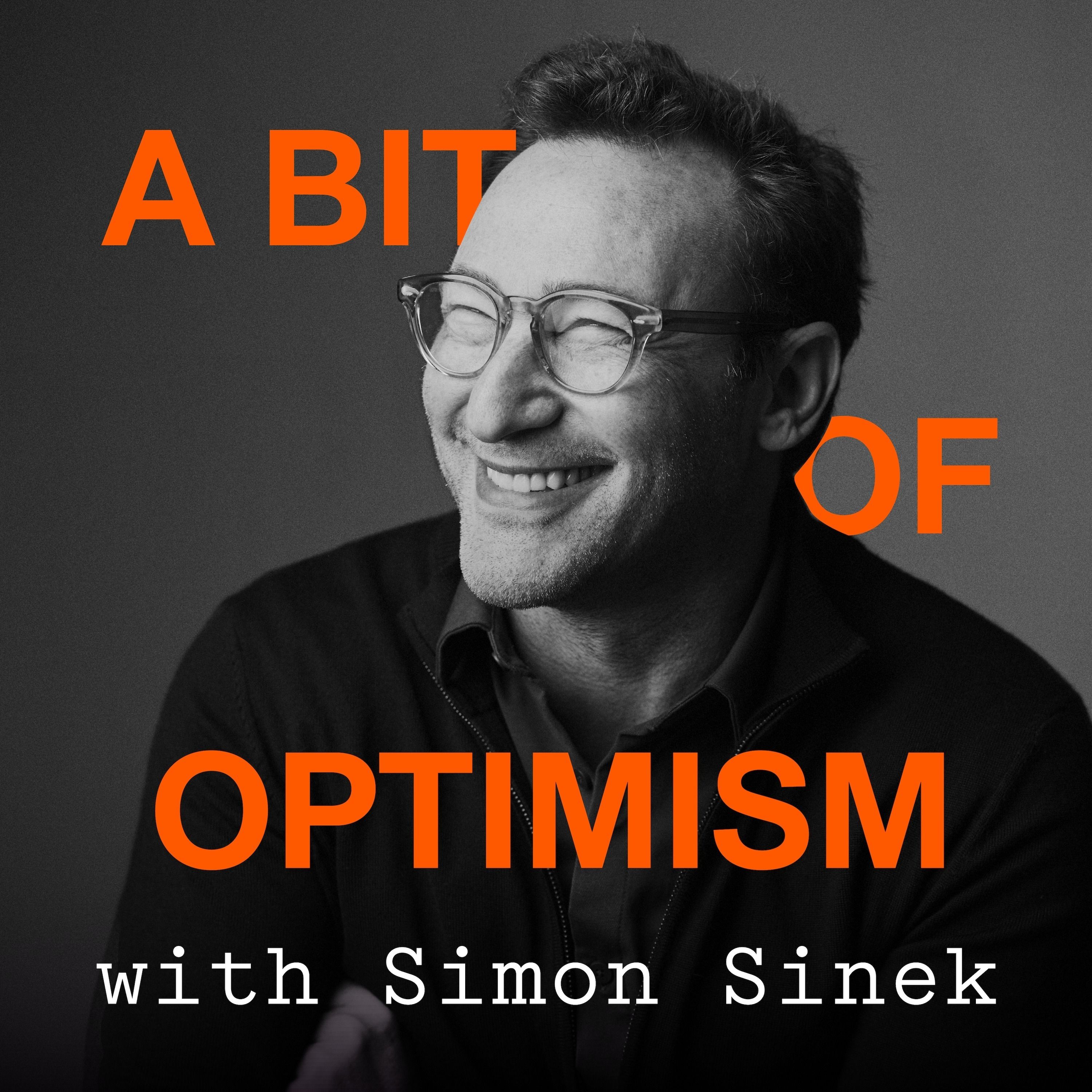
A Bit of Optimism
Trevor Noah Makes My Brain Hurt
00:56:36
It’s our last episode of 2024, so I decided to invite comedian Trevor Noah on…to get as serious as possible.
Loading summary
Transcript317 lines
- [00:00]
A
This is a very deep conversation that.
- [00:02]
B
You said you don't like small talk.
- [00:03]
A
No, no, but people. But I put a. When we promote the podcast, we've got a picture of Trevor Noah and we'll put a little clip and people are like, I'm going to listen to this one. It's going to be so funny.
- [00:14]
B
We can still make jokes.
- [00:16]
A
I love to think, but more important, I love to think about things that make my head hurt. I like really difficult, complicated things that there's no obvious right or wrong, which means I love people who make me think about those things. And one of the best people who does this is Trevor Noah. You may know Trevor from the Daily show and is a standup comedian and bestselling author. What I love him for is for his intense ability to think about things and see things that the rest of us don't see. This episode is intense and it'll definitely make you think and it'll definitely make your head hurt in a good way. This is a bit of optimism. Trevor, always a joy to see you and sit down with you.
- [00:58]
B
Always fun, my friend.
- [00:58]
A
I've never sat down with you ever, ever, ever. And not learned something or had my perspective changed about something because of that insane mind that you have that I.
- [01:08]
B
So it's a lot of pressure on our conversations now. I feel like one day we should hang out and not talk about anything new or interesting. Just so we have like a, you know, we don't.
- [01:19]
A
We don't like small talk youk.
- [01:21]
B
I actually like small talk.
- [01:22]
A
Do you?
- [01:23]
B
Yeah. You know why? Because maybe like a few years ago I read on how important small talk is and how in society we have diminished the value of small talk. But we don't realize that small talk is what connects us as people and big talk is what separates us. So if you have the foundation of a lot of small talk, you find similarities. You exist in the same realities. But then if you only have big talk, then it's like large ideas. So when you go, man, the weather, the other person goes like, yeah, I can't believe how beautiful it is. And you're like, I know, right? Or you go, ah, the weather. Oh, it's just, ah, it's been raining. When is it going to stop? I know, right in that moment, it's the craziest thing ever. You have literally created reality that you share. And now it's easier to say, how do you plan to vote? It's wild.
- [02:11]
A
So it greases the skids.
- [02:13]
B
Yeah, it does. So I actually like small talk now.
- [02:17]
A
You and I haven't spent a lot of time together.
- [02:19]
B
No.
- [02:20]
A
I think socially, outside of, like, seeing each other at conferences and things, we've only ever actually hung out once. And it was spontaneous.
- [02:27]
B
It was.
- [02:28]
A
Yeah. We weren't. We had no plans. That was a crazy day. I. I've. I've texted with you. I've never called you in my life. Yeah, you've never called me in your life.
- [02:41]
B
I'm not a big caller.
- [02:41]
A
No, you're not a big caller. And I don't know if I was driving home and for whatever reason, I decided to call you.
- [02:49]
B
Yeah.
- [02:50]
A
And out of the blue, I called you and I'm like, hey, what are you doing? And you said, I'm sitting here at this hotel in Los Angeles. And I had just driven past that hotel, turned around, and we had a cup of coffee. That's the only time we've ever hung out.
- [03:01]
B
Yeah. And it was a great hang.
- [03:03]
A
And yet I feel like you're a kindred spirit. I love spending time with you. And it's not because of small talk. It's because every time I see you, we waste no time and go deep. And if other people happen to be at the table, they'll join in. So this is going against the small talk thing.
- [03:23]
B
Yes.
- [03:23]
A
I can't speak how you feel, but I feel close to you because we always go deep and we find commonality in the deepness and we abandon the small talk.
- [03:31]
B
But I think it's because we are of a tribe. So I think that's where small talk is crucial for people. Small talk is not necessary for everybody, but it's crucial when you don't know whether or not you're in the same tribe. So from our get go, I was told by somebody, a mutual friend, he said, you have to meet Simon. You're gonna love Simon. You and Simon. Wow. You two together. So. And I trust our mutual friend. So I was like, oh, yeah. I mean, let's see if he says that we would get along, we'll get along. So I was like, I'll meet this person. And I assume that you know enough about me because we're friends, that I will get along with this person. And so now when we meet, I don't now waste time. If I met you in a different way, I think I would have been a little slower to just jump in with you because I'd be like, I don't.
- [04:15]
A
Small talk is. I. Look, I understand the purpose of it, and maybe I'm sometimes socially awkward in groups and introverted. I'm not good at small talk. And I start with, like, my opening is a yes or no question. Which has been here before. Yeah. And then. And then my mind goes blank. Panic starts to happen.
- [04:35]
B
Do it. I'm the same as you, so I genuinely love doing the things that I'm not good at. And then trying to get comfortable in the spaces that I'm uncomfortable. And so what I'll actively try and do, like, my first instinct when I walk into a room is to find a corner. Yeah, that's my first instinct.
- [04:50]
A
Or find somebody I know. Or a corner. Either one of those is fine.
- [04:53]
B
Corner immediately.
- [04:54]
A
Agreed.
- [04:55]
B
And then I. And then I enjoy the room from there.
- [04:57]
A
You'll find me by the buffet because I can disappear and just fill up a plate.
- [05:02]
B
Just go and peruse the food.
- [05:03]
A
I'll fill up a plate.
- [05:04]
B
Oh, okay, okay. But I could just go stand.
- [05:07]
A
My point is, it gives me something to do that doesn't look like I'm awkwardly trying to not engage.
- [05:12]
B
Yeah.
- [05:12]
A
It looks like I'm just trying to get food.
- [05:14]
B
Okay. Which I see that. Yeah.
- [05:15]
A
And then I can sit down and eat.
- [05:17]
B
Yeah, that's. So that's my instinct.
- [05:18]
A
Yeah. Yeah.
- [05:18]
B
But I. But I realized over time, I was like, okay, I asked myself a question. I was like, all right, Trevor, why are you uncomfortable? I was like, well, I'm uncomfortable because I assume that people don't want to talk to me, and I assume that I'm taking up unnecessary space, and I assume that these people will reject me. And I assume. And I assume. And I. So based on all those assumptions, through a lot of therapy and I guess a little bit of introspection, I started realizing I'm making assumptions about how the world sees me before the world has told me how it sees me. So I just take a moment to see if the opposite is true. And then what I try to do as much as possible, which is hard. And you and I do talk about this is I don't make it about the outcome. So I don't go. If I go speak to people, they will like me. Or if I go speak to people, I'll become friends with them. I just walk in and I think to myself, all right, try your best. Just have a small talk conversation with this person. And I'll walk in and I'll go, wow, those are really cool shoes. And the person's like, oh, thank you. Thank you. And then I'm like, why did you choose those shoes for this outfit? And then they'll go, oh, well, you know, it's actually funny. And you'll be shocked at people and they. And you get into the world and you're like, oh, this is an interesting party. You know, I'm awkward. And then they'll be like, oh, I have fun here. I know it. It's amazing how the world is not oftentimes what you think it is. It's just what you've told yourself it is. Because I always wonder what it's like for somebody like you. People consume so much of you, whether it's your writing, whether it's your videos, whether it's like, I wonder how many times people don't give you the opportunity to start or have a middling conversation because they just jump straight into, like, a conversation with your work, which is actually.
- [06:56]
A
As an introvert, it's actually been very helpful.
- [06:58]
B
Oh, you like that?
- [06:59]
A
It's been very helpful because I'm no longer required to start conversations. And people are very nice when they. When they come up to me. But what's interesting, and you just touched upon this, which is they have assumptions about who I am, what I like, what I do, how I may live my life, because they judge me through my work. And for example, people think that I've read every book and that I read every book. Right. And they talk to me with that assumption. They're like, anyway, this book, I'm sure you've read it. You know, they'll literally say that to me. And the thing that I held a lot of shame for for many years, and I never was public about it until pretty recently, is I read no books. I have seriously bad adhd. I've started a lot of books. I finished one book, excluding having to read my own because I had to. But I've only read one book cover to cover my entire life. And that was DaVinci code, which is so good. But I struggle to read. And so people just assume because I'm. I write things and I talk about things that I just voraciously consume books.
- [08:00]
B
Yes.
- [08:00]
A
And I hear people talk about, like, with incredible judgment, like, people who don't read or, you know. No. And then I'm like, you know, I'm curious what misperceptions people have about you because of the Persona that you. They have of you.
- [08:14]
B
I'll say this, everyone's assumption of me is based on the world that they know me from. So I've realized I don't have a common assumption. So South Africans, I think, have, like, the best idea of who I am as Trevor because their understanding of me was Formed through, like a sort of natural relationship. I hosted TV shows in South Africa. I did stand up comedy. I, you know, was in interviews or what. So people had an idea of who this person is.
- [08:42]
A
Did you have fame in South Africa before you came here?
- [08:44]
B
Yeah, yeah, yeah, yeah. Like, I always tell people, I go, like, south Africa is my country in that way. I'm lucky that I have that as my country. They have like a. Like a solid idea of me. A lot of Americans knew me only as Daily Show Guy, so they had this fixed assumption of me. Some still do. And I've learned this by meeting people. It always come in the form of like a backhanded, ish compliment, but which I still appreciate. You know, someone will come up to me with a firm handshake and they'll go, you know, I. I didn't expect to enjoy anything you said because I don't agree with a lot of your politics, but I gotta say, I really enjoyed your piece. It was good. That was really good. Thank you. And I'm like, oh, well, thank you very much. I'm glad you enjoyed. I'm even impressed that as a person you are able to see beyond what you thought you.
- [09:32]
A
That's a high compliment.
- [09:33]
B
Yeah. So there's some people who see me as like a. Just like a hyper partisan political person who only exists in one world. You know, one of the craziest ones that happened to me is I was in Miami. I was in a strip club for a friend's bachelor party, and some guy in the strip club walks past me and he looked at me in the eye, and then he's like, Donald Trump, 2024. That's literally what he screamed at me. And then he looked at. And I could see he was looking at me like he thought it was going to shatter my world. And I looked at him and I was like, and. And he said, do you hear what I said? Trump, 2024. I was like, okay. And he said, yeah, what do you think about that? I said, my friend, we are in a strip club right now. The last thing I'm thinking about is a presidential candidate. And I said, and you need to ask yourself what your priorities are if you're thinking about Donald Trump while you were in a strip club. I was just like, what are you doing? But then I understood it. I was like, all right, you've distilled me to this. So I think people have.
- [10:40]
A
They misperceive you as being partisan.
- [10:42]
B
Some people think I'm only political. Some people think I'm only partisan. Some people think I'm only comedian. But what about your personality?
- [10:48]
A
But what about your personality? It still depends, like I said, the fact that people think I.
- [10:53]
B
Some people think I'm only argumentative, some people think I'm only affable. But it all depends on where they've seen me.
- [10:59]
A
Because the other frequent one that I get is people think I'm very organized. Like if you come to my house.
- [11:04]
B
I can see that though, if you.
- [11:05]
A
Come to my house. My house is much like my brain, which is. It's filled with, huh, shit. I love art. And I like, if there's an empty wall. Yeah, I'm filling it like there's no empty walls. There's color, there's stuff, there's piles. I'm not organized. A friend of mine used to call me a surface abuser. If there was a horizontal surface anywhere near me, I would fill it. And it not necessarily in an organized way. Like papers get piles of papers, you know, bowls of things. So like my dining room table, I go through these phases where it gets to the point where you can't see that I have a dining room table. And I'm like, I hate this. And I like clean everything.
- [11:43]
B
Yeah, yeah. I mean that's common for me.
- [11:45]
A
People think I'm. People think I'm super, super organized. And I just think it's really funny, the impression that people have of me, judged through the work.
- [11:53]
B
Yes.
- [11:53]
A
And I wonder if you have the same experience, which is. I think that's part of the appeal that people have for my work, which is when they discover that I'm not Ivy League school educated, read everything like a book a day, you know, that I'm actually more normal and average. That I think that's one of the reasons I think people relate to it, which is I'm, I'm not that thing that they think that I am. And I wonder if that's the same for you.
- [12:19]
B
I actually think it's the other way around for me. Funny enough. So I think what will happen sometimes is people have. And this is not, this is not unique to me. People have a misconception about comedians. I think a lot of people do. So a lot of people think that comedians are like nonstop goofing clown people. Do you know what I mean? They think we're just like walking around from room to room, like, arrr, God.
- [12:42]
A
But in reality, it's depression.
- [12:45]
B
That's what they think. Yeah, it's a navigation of depression. It's the navigation. A lot of depression. Yeah. So what it is funny Enough is so people will meet me sometimes and they'll be like. Someone once said to me, they were like, you're a lot more fun on tv. And I said, yes, I'm sitting in an airplane right now. We're all quiet. You think I'm just going to be turning to all the other passengers and be like, let me tell you about the time. No, we're on an airplane.
- [13:17]
A
Anybody here from Cleveland? Cleveland.
- [13:18]
B
You know what I mean?
- [13:19]
A
This is the funny thing about show business. Right. Which is they associate your character with who you are.
- [13:24]
B
Yes. But it's what the thing is. It's one side of it.
- [13:27]
A
Because you're a comedian.
- [13:28]
B
It's one side of it.
- [13:28]
A
So they want you to be funny all the time.
- [13:29]
B
Yes, it's one side of it. And I try and explain this to people who, even if they are curious enough to ask the question, they go, hey, you're a lot more quiet than I thought. You seem a lot more introspective or you seem. I go, yeah, because what I'm expressing is the culmination of what I've consumed, but I need to consume. So I spend most of my time quiet. I spend most of my time observing. I spend most of my time listening.
- [13:49]
A
Actually, my experience of you the few times we've hung out is you're exactly the same publicly and privately. And it's one of my favorite things.
- [13:58]
B
About you, which is in terms of my personality.
- [14:01]
A
When I see you on tv.
- [14:02]
B
Yeah.
- [14:02]
A
Or on a stage, I'm like, that's what he's like. Off the stage and off the camera.
- [14:07]
B
I hope so.
- [14:08]
A
Yeah.
- [14:09]
B
I'll tell you why, though. For me, there's a thing that I experienced a very long time ago when I was first starting comedy and stand up and all of these things. Where this was in South Africa, I bumped into some people who were comedians and they were popular and they were really funny and they were like a nice guy image and all of it. And then I met them, even in the comedy industry, and I was like, wow, what a mean asshole.
- [14:29]
A
Like, what a.
- [14:30]
B
Like the way they treated people. But like, this person was like, well, it's me, you know, the good guy. And I was just like, wow, what a. Huh? That sucked. And beyond the moral judgment of it, I remember thinking to myself, it must suck to have to constantly pretend to be someone and then have to act like the person you're pretending to be. That's what I often think to myself. And so then what I thought was, even for, like, my comedy, I wanted to Be able to get on stage and even tell the audience I'm having a terrible day, but not have them go, whoa, this is not we signed up for. But my goal was and still is to give you the best version of Trevor. When I'm on stage, what you see of me on stage is like, that's how I'm at my best when I'm with my friends, making everyone laugh. That's how I am with like a group of people where we're thinking and going through crazy concepts and ideas. That's the best of me. So what I aim to do is to sort of aim for the best of me and then if I don't hit it, I don't hit it. But you get what I'm saying.
- [15:30]
A
Yeah, it's a striving.
- [15:31]
B
Yeah. So I don't, I don't exist as one.
- [15:34]
A
You have an uncanny self awareness. You notice the patterns and the absurdities in your own life when you talk about them out loud. Sometimes they're funny, sometimes they're interesting. But I think what they do is the ways in which you found to navigate life or understand yourself are also valuable to us and they're valuable to your friends because you're seeing things that the rest of us are missing. So like, what are some of the lessons that you've learned that have helped you navigate the world that you think have had value in the lives of your friends or of others?
- [16:10]
B
I think the biggest thing I've learned that has given me the most reward has been consideration. I'm not always able to execute on it. As in, like, I don't always make the best decisions. I don't always make the right decisions. Sometimes I don't know at the time or sometimes I do, but I do know I always work from the place of consideration.
- [16:32]
A
Explain what that means or give an example.
- [16:34]
B
When I was growing up, my mom drilled into me through her actions as well, not just through her words, that we were always to consider others. Always, always, always, always, always, always. So, like everywhere my mom went on like the route that she would drive to work, to church, to, you name it. Every single homeless person knew her in like a wonderful way. They give her a nickname. They'd be like, oh, mamzo. Which means like, like, it's like a nickname version of like mama, you know, I was like, hey mom, how are you? Hey mom, I need shoes. Hey mom. And they like know her. They like know her and they know her in way. It's. It was really interesting to me. But she would just consider we would be lucky enough to eat out at like a. You know, because we didn't always, when I was growing up, but sometimes we would. And she would say to me, stop eating. She'd be like, you fool. She said, let's save that week. This is a lot of food. We can give this to the guy on the way home. And we would do that. And I'm just a kid watching this. Do you know what I mean? And she would go, there's an old man who's our neighbor. His grass. His grass is getting too long. We must. We must go help him cut the grass. And I was like, this lady is insane. We're gonna cut somebody else's grass. We're just doing this. He didn't even ask us, by the way. He didn't even seem to appreciate that we were going to do it, by the way. And I remember this one really sticks with me prominently, because she said to me. I said, why are we doing this? Like, genuinely, what are we. This is just torture. And she said, by considering others, you are also able to consider yourself. And she said, if this man doesn't cut his grass, you know what's going to happen? There's going to be rats in his yard. And she said, and you know where the rats go? They're going to come to our house as well. And so she said, I'm cutting his grass for him, but I'm also cutting his grass for us. And so we can live in a world where we say, we don't cut grass for other people, or we can live in a world where we say, if I'm able to, I'll cut their grass so that I also don't experience the rats. And so she said, so we're able. So I'm going to cut that grass. And I was like, I still don't know about this, but. And you know this, I mean, better than most people. But the modeling that a parent showed, like the things they show you for good or bad, you learn that one's very loud and very big. But she knows that, you know, she knows that she's even embarrassing for me when, you know, when I'm, like, a kid in high school, she's like, oh, your mother embarrasses you. Even that, for me, I think, was a beautiful thing to experience as a child because it showed me that she at least considered how she was affecting me now. She didn't change it, you know?
- [19:00]
A
Yeah.
- [19:00]
B
She was like, oh, you must be so ashamed. Oh, you look at your. Your mother. I come in I'm dirty and the car is horrible and. Oh, you must be so ashamed. Oh, I'm so sorry. I'm so sorry. No, she wouldn't change it, but at least I knew. Yeah, yeah.
- [19:12]
A
She was aware.
- [19:13]
B
Yeah. And so I think that for me has been the biggest thing.
- [19:15]
A
That's a nice one. The alternative is so funny. I'm just sort of playing the cutting the grass example, which is, you know, we don't help the neighbor cut the grass. The rats come, and then we scream and yell and call the authorities so that he'll deal with his rat problem.
- [19:28]
B
Yeah.
- [19:28]
A
And the irony is like a little bit of generosity, a little bit of kindness to your mother's point of view, a little bit of consideration.
- [19:34]
B
Yeah.
- [19:35]
A
And this is a theme that comes up almost every time you and I talk, which is community.
- [19:40]
B
Yeah.
- [19:40]
A
And that's all that is. I think it's funny when people have less in lower income neighborhoods, people sit on the front porch and raise each other's kids.
- [19:48]
B
Yeah.
- [19:49]
A
And then as soon as you have wealth, you move in, you move in the backyard and you sue your neighbor because their branches are hanging over your fence. It is amazing how when you have less, community is survival.
- [20:00]
B
Yeah, it is.
- [20:01]
A
Right. Because both parents have to go to work and we can't afford childcare, but we can rely on the neighbors. Whereas when you have all the luxuries and you can afford all of the help, you don't even know the names of your neighbors because you don't need to.
- [20:15]
B
Yeah.
- [20:15]
A
If we look at the society we live in now, where we feel so closed off from everybody because this has become the American dream, which is to go to the backyard and block everybody else off. We become so insular that we now are desperate for that feeling of community and belonging and we're sort of struggling to find it and looking for anywhere to get it. And you see it on the political left and on the political right, whether it's anti Israel or anti Vax, like I'm gonna latch onto anything I can that makes me feel good about belonging to some sort of community. And you get all the feels. I feel like my life has purpose and I'm making good friends and I'm sacrificing and all these things, but for the fact that it won't last. Like these aren't lifelong commitments to something.
- [20:56]
B
Okay. So here's what I. Here's what I think it is. I don't think that those things are unnatural. I don't think that it's zero sum. I don't think it's going to be one or the other. People will always have their politics. People always gravitate towards certain issues. People will always form and find different alliances and allegiances. This is the human experience. Right. I think the thing that's different now is we have fewer spaces where we blend all of those worlds into something else. Does this make sense? So I think one of the things we're losing as time moves is we're losing communal community spaces where a place.
- [21:42]
A
To come together, us being part of church.
- [21:45]
B
Yeah. But even not church, because I'm saying church is, like, also an extension of it, in my opinion. I think what it is is it's a space where people are allowed to be and are expected to be regardless of how they think or regardless of what they choose, because the choice has sort of been made for them. Okay. So I often think to myself, one of the greatest gifts and curses a person can get is the ability to leave their hometown. Because you leave your hometown and now you choose to go live somewhere else. When you've chosen to go live somewhere else, you're now going to encounter other people who've also chosen to go, but then choose to live next to you, and you didn't choose to live next to them. And so now you go, I hate my neighbor. I wish they would move. I hate my neighbor. I need to move. I hate this neighborhood. I need to get out. I hate this neighborhood. I wish they would change it. But you exist in a state of constantly wishing for the thing or the people around you to change because you believe it's possible.
- [22:42]
A
Right.
- [22:42]
B
But there's very few people who have that same expression about, like, where they're from. From.
- [22:47]
A
Oh, that's such a great insight.
- [22:49]
B
Do you understand?
- [22:50]
A
Home is home.
- [22:50]
B
You just go like, this is what it is. So you go, where you from? I'm from a little town in the middle of wherever, and. And I go, like, what? You go like, oh, yeah, Jimbo. Yeah, man. Jimbo's like this, and he's like that. And actually, oh, Mary. I don't like Mary because she's always saying these things to my mom.
- [23:05]
A
You don't wish for them to move. You don't wish.
- [23:06]
B
You don't even. You don't hear. You don't hear people say that. I wish Mary would move. Move away.
- [23:12]
A
Oh, this is. This is such a great insight.
- [23:16]
B
Like, move where?
- [23:17]
A
Which is the blessing and curse of basically what an urban center is.
- [23:20]
B
Yeah.
- [23:20]
A
Because there's too much choice.
- [23:22]
B
Yes. And the main thing is you have been Told there is a choice of community. And I think what it does is it fundamentally undermines our belief or our ability to understand that you can coexist with people you don't agree with because now you cannot exist with them.
- [23:39]
A
Right?
- [23:40]
B
Right. So I say this to my friends all the time, and I think you know this about me. Away from mics and cameras, I encourage friends to bring up the things that they don't agree about, because your friends you trust, your friends you love, your friends are a community that, you know, want the best for you. So I think it's important to have discussions where you don't agree, because then you can always fall back on the things that you do agree on. Right. You can have what I call, like, healthy fights. And so I'm still friends with my friends who are pro Israel. Some people don't like that about me. They go, like, how could you? Then I go like, yes, but also, how could I not? Then I'm also friends with my friends who are pro Palestine. And then my pro Israel friends are like, how could you? Then I go like, I understand why you say that, but I go, how could I not? Because I fundamentally believe, genuinely, whether it's at the level of leadership or whether it's at the level of you and your life, if you cannot find a way to exist despite the things you're disagreeing on. And because there'll be many of them and some are, like, the most extreme, and then some aren't. So please don't get me wrong. I'm not saying it's. I'm not talking about Kumbaya. I'm just saying there are many things where you sort of have to accept. And so when I was growing up in South Africa and we were living at my grandmother's house in Soweto, black people couldn't leave Soweto. It wasn't like a thing. This is the southwestern township. This is where you've been putting by the apartheid government. You cannot leave it. So what do you do? You live. You know, your neighbor always plays music loud on a Saturday morning when they're cleaning their stoop. Oh, man, you just know this. Maybe you complain once or twice, but you, like, know this. You know, every Friday night, there's going to be a bunch of guys who drive cars that have loud exhausts. They're going to do this every Friday. They get paid, they get drunk, they do this. Ah. And the weirdest thing happened.
- [25:25]
A
You.
- [25:26]
B
You knew that you didn't like it, but you also accepted the reality that you were In. And I found it was like, in a weird way, more tolerable. You know what I mean? People even tolerated each other and then found a connection with each other. You could even tell shit to that person. You're like, ah, here you come with your, you know, ah, man, on Friday, I don't look forward to seeing you. Guy will be like, ah, baba, don't talk about my car like that. Why you. You just like. Yeah. I mean, you guys with your cars or you with your radio or you with your. And I don't know how to explain it, but there's something necessary, in fact, in my opinion, in being able to say to somebody, these edges of yours, they don't work with mine. But I also have to learn that other people have edges.
- [26:05]
A
So now it raises the question, how do we create that community?
- [26:09]
B
I don't know that we can anymore.
- [26:10]
A
I think that the thing that you had in common is there's a shared enemy, right? Which is apartheid South Africa.
- [26:17]
B
No, but I take it away. I don't even think people thought that, to be honest with you.
- [26:21]
A
No, I don't think it's conscious. I don't think we think.
- [26:22]
B
Yeah, but I'm saying even. Let's take the word enemy away. What we shared is we didn't have a choice, Simon. That's what I'm saying. Take enemy away.
- [26:30]
A
Okay, okay, okay. State it a different way.
- [26:32]
B
Yeah.
- [26:32]
A
Yes. What you shared is you didn't have a choice.
- [26:35]
B
We shared this. Non. Choice.
- [26:36]
A
And so. And so when given no choice, you have to make it work.
- [26:42]
B
If a plane crashes and everyone survives and everyone's on this island, you have to make it work. We cannot now say, how did you vote in the midterms?
- [26:50]
A
Right.
- [26:51]
B
Hey, man, it doesn't matter right now.
- [26:52]
A
We have to make it work.
- [26:53]
B
I need you to get those coconuts. I need you to help us build a raft.
- [26:56]
A
So what is it about our current society that we don't feel we have to make it work? Because it's not like you can just sort of execute half the country and be like, oh, finally they're gone. You know, short of half the country moving to one part and the other half moving to another part. Yeah, like, what is it about the current society that we don't feel like we have to cooperate?
- [27:18]
B
That's what I mean is the gift and the curse. We got the choice. It's impossible to go back from choice. And it's one of the great dilemmas.
- [27:24]
A
You can't ignore the apartheid government. You can't. No, no, no, but remember, there was a confining.
- [27:29]
B
Yeah, exactly. So water is a power. Yeah. Water is a. The ocean is a confining factor. We are the people of this land. And then someone builds a ship and it's like, well, now do you want to be the people of this land? Because you can go somewhere else. And then what happens? Someone goes like, I'm going to go to this America place because I don't like how the English are treating.
- [27:48]
A
So what's that so wetter neighborhood like now that people can leave and travel, Are they as tolerant as they used to be?
- [27:53]
B
Now, what's interesting is I would argue and because I don't spend as much time there anymore since my grandmother passed, I don't think that it's the same. But I still think a lot of it is the same. Because now the thing that's forced people is class and income. So still many people are forced.
- [28:15]
A
So the confining force has changed.
- [28:16]
B
That's why I say, forget the force.
- [28:18]
A
I understand. But there's still a confining force.
- [28:20]
B
Exactly.
- [28:20]
A
It went from government policy to social economics. Social, economic.
- [28:24]
B
Yeah. So now people cannot. The people who cannot afford to move out of Soweto still live in Soweto. And the people who have left have left. And just from my little anecdotal experiment and my anecdotal experiences, they're lonelier, they are sadder, they feel more isolated, they feel less purpose. They're caught up in, like, a drive that never ends, but they've just got. And it's amazing to see they have more than every generation that came before them. And wow, Simon. They are like. And it's amazing to see. And I think this is the thing that's tough, is, like, you can't undo getting something right. I grew up religious, and what I loved about the Bible is whether you think it's real or not, the stories are fantastic. They truly are. Once you have eaten the apple in the Garden of Eden, you cannot unsee that you are naked. And that's like, almost what God, like, tells Adam and Eve. He's like, oh, you guys messed up, man. Before this, you didn't know you needed clothes.
- [29:21]
A
Right?
- [29:22]
B
And now you will spend every day thinking, I am naked. And he's like, that's why I didn't want you to eat the apple. But you guys ate the apple. This is the paradox of choice.
- [29:30]
A
Yeah. The temptation is to conclude that it's money. The temptation is to say, but once you have wealth. No, but I think that it's More like the absence of struggle in the cases there's some sort of hardship that and in all of your plane crash example, Soweto example. So it's like as hardship is relieved and choice is a relief of hardship, then for some reason our ability to cooperate and put up with each other seems to go down.
- [30:07]
B
So I will agree with one part of it. I still come back to. I don't even think it's hardship. I think it's just the constraining factor. Here's why I say this. Let's say there is an island of mega rich people and they go hang out together and they're on this mega rich island and they do whatever they want to do. Right? It's the mega rich, they're having a great time. If they are confined or constrained in some way, they will find the same thing. And they do find it temporarily. So if you, you've maybe been to them, I've visited them on occasion. But you know, you get these places where people go to these like golf resorts and it's like, wow, what is this place? And in that place I have found people have a different level of community, a different level of enjoyment, a different level of, you know, it's like people buzzing around on golf carts and people meeting. And there's only the four restaurants and all you can do is choose from one of the four. And so you just rotate. We'll do the Spanish place on Monday and then we always love doing the Italian place on Wednesdays.
- [31:15]
A
And I'll have the eggs again. Exactly.
- [31:18]
B
Because all of a sudden you're constrained. So there's this weird thing that happens. I even think about it for my life as I go. The great curse is going to be the choice. The great curse is going to be knowing that you can choose. So how do you create artificial constraint for yourself to help yourself? Because I don't think it's about hardship at all. I think you can have a good time together, but if you cannot change the people or the situation, it changes your ability to appreciate or get along with the change or the situation.
- [31:45]
A
So there's a story about a shoe salesman in Los angeles in the 1950s. I can't remember his name, but he was a very successful entrepreneur who owned a whole bunch of women's shoe stores.
- [31:55]
B
Yeah.
- [31:55]
A
A journalist asked him, what's your secret? And he said two, not three. And they're like, what do you mean? He goes, if a woman comes into my store, I'll bring her a pair of shoes, she'll try them on and she'll say, could I see that pair, please? And I'll bring her a second pair of shoes. And she said, could I also see that pair, please? And she. And he'll say, which one would you like me to take away? Because what he found is when they had a choice of three, they bought none. And when they had a choice of two, they bought one.
- [32:24]
B
Oh, I love that.
- [32:25]
A
Right. Two, not three. Too much choice is overwhelming.
- [32:30]
B
I need to apply that to my life. You see, that's brilliant. I love it when people find the nexus of how you're supposed to do it, because I understood it as a concept. But it's a nice way to think about it for anything, really.
- [32:40]
A
Yeah. And so what I've started doing in my life is I've added constraint. Right. And I didn't even realize it until we're talking right now, which is like, I've got all these options on the table. Pick. I mean, it doesn't matter what it is.
- [32:52]
B
Yeah, no, I know what you mean.
- [32:53]
A
And what I'll start doing is I'll start pairing them off. I'll be like, okay, between these two. Okay, get rid of that one. Okay, between these two. Okay, get rid of that one between these two. And the choices become really easy. And then I get to the final two. I'm like, oh, it's obvious, it's that one. Whereas I'm looking at six or five or four or three.
- [33:09]
B
And I'm like, ah.
- [33:10]
A
But this one gives me this and that one. Get. And I'm playing them off and doing sort of, you know, that's pros and cons.
- [33:15]
B
I love that.
- [33:16]
A
But it's. It's, you know, the trick of the flipping the coin.
- [33:18]
B
Yeah.
- [33:18]
A
You know, I don't know, should I do this or that? And you, like, flip a coin.
- [33:21]
B
Yeah. And you accept fate's decision.
- [33:23]
A
Well, the question is, do you want to flip again? It's whether you're satisfied with the coin flip or not. And it works every time. When people are stuck between a choice and you force them to flip a coin, you say the coin decides. And if they're happy with what the coin decides, they go with it. And if they're unhappy, then obviously go with the other one.
- [33:38]
B
Yes, because I think to that point, because we are so terrified of making the wrong choice. And rightly so, by the way, if you're living your life well, you don't want to make the wrong choice. No, that's why, you know, when you book something, you go sort by price because you, like okay, I'll make it a price choice because the world has told me that price is most important. But if they added other ones, I mean, like Google Flights does this. They'll go, oh, here's duration. And you're like, oh, well, time is more important to me than the price. And another one will be like, sort by best value. And you're like, okay, I'll go for value. What is the price relative to what it normally costs, et cetera. But they at least give you something to give you, like, a clear distinction.
- [34:11]
A
And you only look at the first few because that's whatever your hierarchy is. This idea of constraint is really important. So the question is, how do we add constraint at a social level, at a societal level, in order to help people better find community or at least get along? And maybe that's not possible.
- [34:28]
B
I think it happens naturally, whether we like it or not. It's the unnatural, natural order of.
- [34:33]
A
But it seems not to be happening right now.
- [34:35]
B
Yeah, because exactly your last two words right now. We love everything right now in life. Everything is right now. Right. People think this, and I don't agree. I think it always goes to, where are you zooming in and where you zooming out? Like, genuinely, where are you zooming in and when are you zooming out? Right. Because I think of, like, everything, whether it's markets or whether it's countries or whether it's the world or whether it's. Yeah, it's. It's terrible, but it's the best it's ever been. But it's. It depends on. And I will never minimize someone's experience because it's the moment that you're in. The moment that you're in is the most important moment for most of us. And then the larger thing is how you aggregate all of the moments and what you think of or how you remember them. So when I think of the. Right now, I go, let's use an example, which is a crazy example. I'm acknowledging this. But let's look at the United Healthcare CEO who was assassinated. I found it fascinating. And I'll throw all the disclaimers out there. So let's just say this is me using, like, what I like to call, like, my lab hands. Yeah. I'm thinking of this more like a.
- [35:39]
A
This is a thought experiment.
- [35:40]
B
Yes.
- [35:41]
A
Not a social commentary.
- [35:42]
B
Yeah. Forget all of it. I just go like, wow, what a crazy moment where one person was killed. And I would argue most of the country was united in their joy, elation.
- [35:59]
A
Frustration, being, quote, unquote, fine with it.
- [36:03]
B
Schadenfreude or whatever you want.
- [36:04]
A
Weird.
- [36:05]
B
Yeah, yeah, yeah. But I think to myself, wow, what just happened here?
- [36:09]
A
Yeah.
- [36:10]
B
I'm willing to bet if you asked, let's say we did a cross section or, you know, we. We selected people from all walks of life who were happy or fine or celebrated or whatever it was. We asked those people, hey, what are you. What are you happy about here? What? Oh, let's do it this way. You said to them separately, do you like it when people get killed? They go, no, no, no. I'm willing to bet all of them.
- [36:33]
A
Would say no, 100% against murder.
- [36:34]
B
Yeah. And you go like, do you like it when people don't like how the world is going and so they shoot someone? They'd be like, no, no, no, no, no. That's chaos. That's anarchy. No, no, no, no, no, no, no, no. And if you broke this incident down into many different things, they would basically say no to all of it 100%. So then I found myself asking, what was it about the colle brought so many different people together In a country where we're constantly told people are not together. Right. We're always told, america's more polarized than ever. America is more polarized than ever. I go, but why weren't they polarized about this?
- [37:06]
A
And what's your conclusion?
- [37:07]
B
My conclusion is everybody is experiencing the same constraints. Whether you are a rich person or whether you are a poor person. The healthcare industry in America has constrained you to living in a world where you don't know whether you're going to be able to pay for the next bill, where you don't know if you'll go broke because of an incident. You don't. If you'll have even just the frustration.
- [37:31]
A
Of being forced to jump through hoops after hoops.
- [37:33]
B
It doesn't matter who you. And imagine that even a rich person goes, ah, the healthcare industry. And so in a way, in this moment, because of this action, we got to see how that constraint works. You're like, oh, because everyone is constrained to this, they are all then having the same experience. They're coming together in ways that nobody thought people could. And again, as I say, I'm not like, happy.
- [37:55]
A
No, no, no, I understand. No, no, of course, of course. But you're like, it's an observation, but the last time I saw this happen, and again, it's an extreme example, but it's just data, right? Was after September 11th. After September 11th, there was this big concern that the Muslim world hated America. And so There was research done. They went to the moderate, average Arab on the street.
- [38:15]
B
Oh, yeah. People in Jordan.
- [38:16]
A
And they asked them, what do you think about September 11th? A huge, huge number said, I think what happened was apparent. I think it's terrible. And then they added, but I understand it. And that's the part that I found very scary, which is the minute that a rational person can rationalize an abhorrent behavior, there's something under the surface there that has to be addressed. I agree, but I understand it. And this is what's happening now with this assassination, which is. I think murder is horrible. I think that his family lost. It's horrible. Horrible. But I understand it. And it's that part that we need to explore. And we all know what it is, which is what's happening in the insurance industry in the United States has become so unjust and so unbalanced that we are able to rationalize and let go of our ethics and morals because of this. The opportunity is to somehow understand how it got to this place and try and back away from it. Because the last thing we want is for these unjust experiences to happen in the world. And then you have. Vigilante justice is the only way to calm. Because what it is, it's frustration. It's the schadenfreude. It's an alleviation of frustration. Like, I can't solve this problem. I'm still stuck in this problem. But I feel like I got some relief.
- [39:27]
B
Yes.
- [39:28]
A
Which is a horrible thought.
- [39:30]
B
But is it, though? Think of it. Okay, let's flip it the other way around.
- [39:34]
A
Horrible. I think we keep saying that because we don't want to be, but let's.
- [39:37]
B
Flip it the other way around. This is, again, what this made me think about. What are laws. What are laws fundamentally if not how a society wishes?
- [39:46]
A
Constraints on. Yeah, we agreed upon constraints on our behavior.
- [39:51]
B
Laws are fundamentally a fence that we build around a yard that we all agree.
- [39:55]
A
That we choose to agree to. Yeah.
- [39:57]
B
So we all go, where's the fence for everything? Where's the fence for the speed limit? Where's the fence for shooting a person or not shooting? Where's the fence for food?
- [40:05]
A
If I go outside that fence, I know there's a consequence.
- [40:07]
B
And. And we agree on the fence, right? Yeah. Then what happens? Because of how power isn't equally shared, because of how some people are able to manipulate. All of a sudden, somebody's jumping over the fence, and you're like, hey. And the person's like, yeah, well, look how big I am.
- [40:25]
A
Yeah.
- [40:25]
B
I'm a corporation. And you're like, yeah, but we agreed on the fence. And they're like, yeah, well, I. I didn't break the fence. I just climb over it. And you're like, I mean, yeah, but we. The whole point of the fence is that you're not supposed to get over it. And they're like, no, no, the law says I'm not allowed to break the fence, but I can climb over the fence. And then what happens to the people if they can't do anything within the fence? They then go, okay, look, you get over the fence. I can't get over the fence. And then one person, this kid, allegedly goes, actually, you know what? I'm just gonna break the fence. And so then people go, actually, in a weird way, and this is what's so complicated for people to understand. Especially people, if they're in, like, power or whatever because of how close it is to them, they panic. We're going to live in a world where there's just chaos. And do you know why so many people agreed with it? Because it wasn't chaos. I think that's what a lot of people are missing. And I'm not saying I'm for it, but I'm saying we miss it if we don't realize it wasn't chaos.
- [41:18]
A
You and I are not. We're trying to understand.
- [41:20]
B
Yes.
- [41:20]
A
Why people understand why people understand. And we're trying to understand why people are fine.
- [41:26]
B
Yes.
- [41:26]
A
Or at least able to rationalize it away.
- [41:30]
B
Because I go. They are in many ways going. If this had happened to anyone else or to anything else, we would then apply the rules on the vet. But just like a legal system, how we respond to the situation will change depending on how the person is responding.
- [41:48]
A
People are missing. Is that he's not a father or a husband. He's a symbol.
- [41:54]
B
Yes. And an active participant. It's more than just the symbol. You're the CEO.
- [41:58]
A
But that people feel.
- [42:00]
B
Yes.
- [42:00]
A
A moral rebalancing.
- [42:02]
B
Completely. Yeah, completely. And this is why I say, in the same way, funny, like, quote unquote.
- [42:06]
A
That seems fair. Which. Do you know the concept of ethical fading?
- [42:09]
B
No.
- [42:09]
A
So ethical fading is a concept where we're able to rationalize unethical behavior. And there's a few things that contribute to ethical fading. We see this inside corporations, inside governments. So one of the things that contributes to ethical fading, sort of peer pressure, like, well, everyone's doing it. I mean, if I'm not going to do it, they're going to do it, and they're going to the advantage and I won't. So. Right. The other one is, that's what my boss wants. It's what I need to. It's what I need to do. The other one is sort of self talk, that rationalizing like, I got to put food on the table.
- [42:43]
B
Right.
- [42:43]
A
I got it. Like, I have no choice. Right. And then there's the slippery slope. Well, he did it and nothing happened to him, so why can I do it? And when cultures with weak leaders allow ethical fading to happen, what you do is you get Wells Fargo with people opening up fake bank accounts to hit their numbers. They all know it's wrong. What you do is you get pharmaceutical companies who have patents on essential drugs, raising the prices 500%, 1000%, 1500%. What you get is insurance companies saying, we'll pay for your anesthetic up to one hour of surgery. Anything more than one hour, it's on you.
- [43:14]
B
Like knowing that most surgeries are not.
- [43:17]
A
And they pull numbers out of their ass and everybody knows it's wrong. It's unethical. But in weakly led companies, good people, because we say things like, how can they sleep a night? They sleep fine. Right. Like, good people are able to rationalize away unethical behavior if we're really honest with ourselves and we peel away the onion from a lot of companies. And I think it's particularly egregious in public companies. Ethical fading runs rampant in America today. And I think what we're starting to see is a responding to that in the rise of populism and the rationalizing of apparent behavior, because we're seeing a rebalancing of, you did something so unethical to us. One point on this side of the team. One point to the powerless. Right, Right. And the question that we have to ask as a society is, yes, he'll go to jail and justice will be done because he went outside the fence. But we have to address the thing. But I understand it. If we don't, all the fears the executives have will all come true unless we actually address the. But I understand it.
- [44:23]
B
But I.
- [44:23]
A
Who's going to do that?
- [44:24]
B
I would also argue this, though, and maybe. Okay, maybe I'll start by asking you this.
- [44:28]
A
This is a very deep conversation that.
- [44:31]
B
You said you don't like small talk.
- [44:31]
A
No, no. But people. But I put a. You know, when we promote the podcast, we've got a picture of Trevor Noah, and we'll put a little clip and people like, I'm gonna listen to this one. It's gonna be so funny.
- [44:42]
B
I mean, we can still make jokes. So here's the question I have for you. Do you think that this alleged shooter, do you think that that was an ethical fading?
- [44:55]
A
No, I think the ethical fading happens on the side of the insurance companies.
- [44:57]
B
Okay, so you don't think it's of the, like, the people who even, like, go, like, yes, we're fine with this, or yes, we're.
- [45:02]
A
Oh, that's actually interesting. Is it on both sides? Because we are rationalizing. We are. Okay, so the ethical fading is. I mean, so.
- [45:07]
B
No, I'm asking.
- [45:08]
A
No, no, no. I'm thinking. I don't. I'm not 100% sure of the answer. So. Because the definition is our ability to do unethical things, make decisions outside of our ethical frameworks, rationalizing that they're okay.
- [45:21]
B
Right.
- [45:21]
A
And so I guess. Yes.
- [45:25]
B
So you see, that's where. I don't think so. So. So this is. This is what. This is what I mean. So this is. This is what I've been wrestling with.
- [45:31]
A
No, I know. You know why? No.
- [45:33]
B
Okay, go.
- [45:33]
A
He knew what he was doing was illegal. He knew what he was.
- [45:36]
B
Okay, yes.
- [45:37]
A
He had an awareness that what he's about to do is illegal, which is why he took all the steps to hide himself. Whereas in the companies, there's literally a mis. Like, no, no, no, everything's fine, Everything's fine.
- [45:48]
B
But they know. I argue. So here's deep.
- [45:50]
A
Deep. They know.
- [45:51]
B
I don't even think deep. I think shallow. They know. Okay, here's why. Here's what I think it is. Let's stick on the healthcare industry, because this is, like, really where most people, I think, have a loathing, you know, where people. What's brought people together. Let's take a step back from this story that was in the news. Let's look at, like, the opioid crisis where millions of Americans died. Died, lost family. We always forget, like, the secondary effects, right? We always think of the earthquake. We forget about the aftershock. Think of everybody who lost a family member. We know what that does to a family. A breadwinner disappears. What does that do to the kids? What happens when a community has breadwinners that disappear? Right? And then we look at the people who benefited the most from it. And what happened to them? Arguably nothing. Oh, they got. They lost a little bit of money. Not all their money, by the way. Not all their money. A little bit of their money. I always found it particularly interesting that El Chapo would be arrested and the US Government would take all of the money that they could, all of it and go like, yeah, it's ill gotten money. They wouldn't go like, well, El Chapo, some of this you earned from interest, and some of this you earned from other ventures that aren't actually drugs. And some they just go like, no, no, we're taking all your money. But then for the Sackler family, they don't take all their money. They go like, I pay a fine. Do you know what I mean? Pay a fine. Why not all their money as well? Look at what they did and look at how many people were affected. Not even jail. And so what starts to happen then I think, and this is what I think we have to grapple with as a society is beyond like the. This is what I always try and talk to people in power about is I go, it is easy when you are close to power to assume that the actions of the powerless are devoid of morality because you have the levers of power and so power responds to you accordingly. Right? But when people live in a country where their healthcare gets denied, they pay insurance believing they will be insured. And then only when they're on their deathbed do they get tricked out of it. People are like, what has happened here? And then the recourse is almost nothing. There's nothing you can do. The difficult thing for us to grasp is when do we say that a person has done something wrong? I always think about this with history. It like blows my mind. The British did not think that the Americans were heroes. They did not think that, right? When Paul Revere and all these people are riding around on horses, the British aren't like, ah, these heroes, man, these heroes. Do you know what I'm saying?
- [48:34]
A
Yeah.
- [48:35]
B
The Spanish did not go like, che Guevara, what a hero fighting for his people. Ah, Che Guevara doing his thing. You know what I mean? History is littered with examples of people who did the wrong thing by the confines of what that current time agreed on. And then afterwards, the people were like, this was for the greater good. And so this is why I say I'm wrestling with it. I'm wrestling because it is a complicated thing. Because the one side of my brain, as Trevor goes, hey, man, I don't want to live in a world where someone goes around shooting somebody because they feel like the thing doesn't work the way they would like it to and it's affected them. I don't want that. You know what I mean? And I would argue that's what a lot of, let's say, even gang Violence is, you did me wrong, I'm going to shoot you. Or, you know, the mob.
- [49:21]
A
Vigilante justice is not a thing we agreed to.
- [49:23]
B
That's. There's one side of my brain that says that as Trevor completely. Then the other side of my brain goes, yes, but we don't seem to have mechanisms that work effectively for when large bodies do these things. So what do we do? Some would be like, oh, with the legals. But we've seen it doesn't work. So it's like, what do people do? And I think that's, that's why I'm so interested in answering the question, because I think CEOs of. Let's even just stick in the healthcare industry, because that's where the thing is aimed, by the way. It's not like I love how they're going to try and make it seem like it's CEOs. It's like, no, no, no, no, no, no. Let's. Let's be honest here. The CEO of Ben and Jerry's is fine. They don't have to get any extra security. None whatsoever. Don't try ropes. CEO's in. Let's make it industry specific.
- [50:09]
A
Yeah, yeah.
- [50:10]
B
Do you know what I'm saying?
- [50:10]
A
Yeah, yeah, yeah.
- [50:11]
B
This is like a. This is like a dictator being like us world leaders, we have such a tough time getting the people and it's like, whoa, whoa, whoa, whoa, whoa.
- [50:17]
A
Yeah, yeah.
- [50:18]
B
There's world leaders.
- [50:18]
A
You know what Stalin said. Right. Which is the death of one man is a tragedy and the death of a million is a statistic.
- [50:23]
B
Right.
- [50:24]
A
And that's what we're dealing with here. You're dealing with the emotions of a person with a name and a face.
- [50:28]
B
Yes.
- [50:28]
A
And the emotion of that versus the statistic of how many people have suffered as a result. And you. And it's very hard to compare thousands to somebody with a name and a face. One is emotional and the other one is rational.
- [50:39]
B
Yeah. And that's why I think it's important for us whenever those types of things happen. I think it's important for us if we, if we want to think of ourselves as thinkers, we have to then go, hmm, what is this actually telling us about society? Like, if I was a lawmaker in Washington, I'm thinking less about the fact that a person was killed and I'm thinking more about why my population, for the most part thinks that it was everything from understandable to great. Yeah. That's what I would be thinking of.
- [51:06]
A
I'd go like, because the people. Exactly. I Think at the base level, I understand it.
- [51:10]
B
Do you see what I'm saying? Yeah.
- [51:11]
A
And I. So unfortunately, we, we all understand it.
- [51:14]
B
That's the thing. And now if I'm a CEO of a health insurance company or whatever. Yes. As much as I think about getting security, the thing I would think is.
- [51:23]
A
Like, whoa, how do we change with the way we do business? Whoa, whoa, whoa, whoa.
- [51:25]
B
Wait a minute, wait a minute. Do I want this company to be a thing that the majority of a country wishes death upon? Whoa.
- [51:35]
A
You have just defined politics in America, which is regardless of who you somebody voted for, if you just look at the way people voted and if you don't understand why they voted for it, then you don't understand what has to be fixed in America.
- [51:49]
B
Yeah.
- [51:50]
A
The person who voted for Trump can say, I can tell you why I voted. And the person who didn't vote for Trump has to be able to say, but I understand it.
- [51:59]
B
Yes. Or even I would even say this, though I sometimes pose it this way to people who don't agree with that. They'll go, no, I don't understand how you could. Because they go. Because the Democrats have a more robust policy for doing that and they're going to bring the poor up. So I go, okay, let's do it another way then. Let's actually do it another way. I don't force you to understand. Let's do it another way. Would you agree that this person's concern is real? So now let's not say that they did or didn't do the thing. Let's not, let's not say that you like, because you'll go like, no, but it's not true. Do you agree that there are fewer jobs and people have fewer opportunities and the disparities and they can't catch up with inflation and towns are, you know, falling into disrepair and they're becoming. Do you agree with that? Yes, but I. Trump's not going to fix it. Ah, okay, great. But at least now you may not.
- [52:52]
A
Let'S go before them.
- [52:54]
B
But you do see that these things are real. And I think this is what we struggle with sometimes in life is we don't realize that issues are real. Politics are an imagined way to solve the issues. Right. But the issues there. Issues like a pothole, it exists. The politics is arguing about who pays for the pothole or how we get to fix the pothole. But the pothole is very real. And so I think sometimes what we do is we don't spend enough time just acknowledging the pothole and we spend more time arguing about why the other person thinks the pothole should be filled with sand instead of concrete. But if we just spent a little more time on that. And I've said this to any Democrat I meet who's in power or whatever, I go, why don't you just make your thing, like, irresistible? You know, it's the same way I would say, like, Americans as a concept of democracy. Yeah, yeah. I'm like, just make it irresistible that everybody wants it. You won't have to force. You know what's irresistible? Movies. Have you noticed that you don't have to go to any country and bomb it to force them to watch the Avengers. Have you noticed that? You know how. You know this, Simon? People bootleg movies.
- [53:55]
A
Exactly. They steal.
- [53:56]
B
America has never had to fly to a communist country, to a socialist. They've never had to fly to any.
- [54:03]
A
Of them, force them to watch movies.
- [54:04]
B
Drop DVDs on them and be like, you watch these movies. Those people have bootlegged them and translated them into their language.
- [54:10]
A
It was.
- [54:10]
B
Without you forcing the why? Because that thing was amazing. The film industry made something that was irresistible. And if you make something that is good, people will want it. Right?
- [54:21]
A
And because Ben and Jerry's is good.
- [54:24]
B
People will want it.
- [54:25]
A
People will want it.
- [54:25]
B
And so I go, think of it.
- [54:27]
A
Like, make everything good.
- [54:28]
B
So I say, as a Democrat, if you are a Democrat, I go like, okay, just find the states where you control. You're the governor, you are the senator, you are the mayors, you are the.
- [54:38]
A
Just make it. Yo, yo, yo, yo, yo.
- [54:39]
B
So then make your state.
- [54:41]
A
Yeah.
- [54:42]
B
So irresistible that people are like, I want my state like that one. I'm either going there or I like my state like that one.
- [54:46]
A
Exactly.
- [54:47]
B
As opposed to saying, we could, we could. Because I don't think that the one has to wait for the other. And I think that's something that we take for granted is if the thing is good people. Yo. People are always going to come for a thing that is good. You don't have to force them to believe in it.
- [55:00]
A
That is a perfect place to end this. This was good. And hopefully we won't have to force anybody to come to it. The problem with talking to you is I never want it to end. I have endless energy. My brain hurts a little bit, and I really love it. It's like, you know, you go to the gym and you get muscle pain. You're like, ah, it's good. You know, that's how my brain feels right now. And I absolutely love it.
- [55:25]
B
The feeling is mutual.
- [55:26]
A
Every time I sit down with you, I said it at the beginning, I'll say it at the end. I absolutely, absolutely love talking to you. You have an insight into how the world works and how people work clearer than most people in the world. Such a joy. Such a joy.
- [55:38]
B
Such a joy. It really is. It's mutual. That's why I love sitting with you.
- [55:40]
A
And no small talk.
- [55:42]
B
Maybe. Yeah, I mean, a little bit. But maybe. Maybe that's what makes our conversations so great, is that at some point they have to end. And so that constraint. Constraint is what keeps them being amazing.
- [55:52]
A
Exactly. If we did it all the time, it wouldn't be as fun.
- [55:54]
B
Thank you, my friend.
- [55:55]
A
Thank you. If you enjoyed this podcast and would like to hear more, please subscribe wherever you like to listen to podcasts. And if you'd like even more optimism, check out my website, SimonSinek.com for classes, videos and more. Until then, take care of yourself. Take care of each other. A Bit of Optimism is a production of the Optimism Company. It's produced and edited by Lindsay Garbinius, David Ja and Devin Johnson. Our executive producers are Henrietta Conrad and Greg Rudersham.