← A Bit of Optimism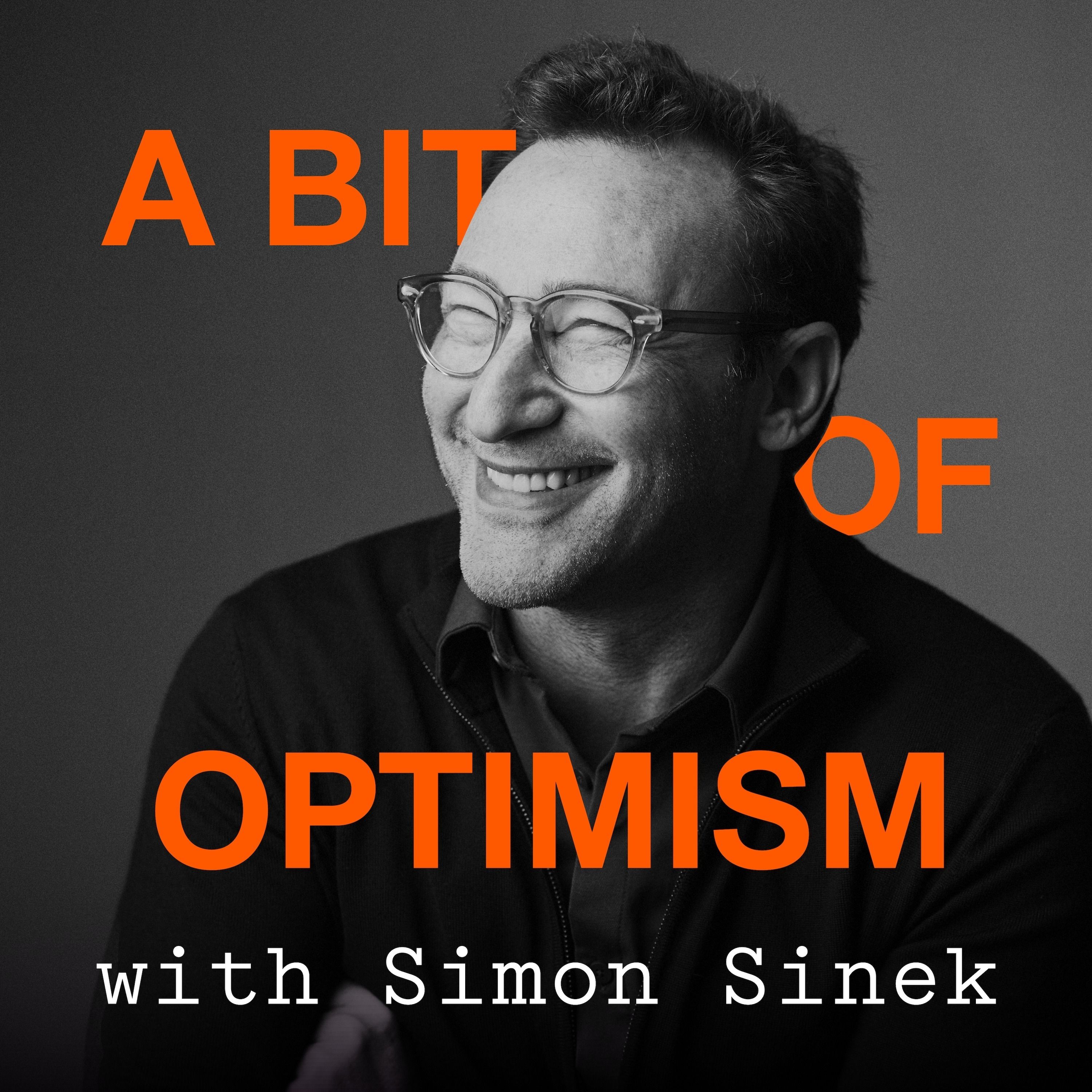
A Bit of Optimism
What Grit Really Teaches Us About Happiness with Professor Angela Duckworth
00:56:05
Loading summary
Transcript218 lines
- [00:00]
A
Do you think that society is, is moving toward the direction of like, selflessness, of belonging?
- [00:06]
B
I have empirical evidence. You and I have careers. You and I should not have careers. There should be no demand for our work. We talk about trust, we talk about cooperation, and there should be no demand for our work. But the fact that people are interested in the things that we're putting in the world that are some of the guidance that we can help offer towards getting to that ideal that we imagine proves that people are hungry for this.
- [00:34]
A
Five years from now, we'll revisit the conversation. We'll see how it went, and in the meanwhile we'll try to like, you know, tilt the odds in the direction.
- [00:41]
B
I promise to have you back on the old pod in five years. Every now and then I have a guest where we talk about everything and everything seems to be really, really interesting. Angela Duckworth is one of those guests. She's a professor of psychology at UPenn MacArthur Genius Award winner and probably the reason most of us know her. The best selling author of the book Grit. We talked about the problem of living in a world that pushes us to stand out as individuals when as human beings we're actually hardwired to thrive together. We went deep into the loneliness epidemic, particularly as it affects young people. And we talked about something that both of our work delves into. The reason achievement means very little without belonging. So pull up a chair, sit back and enjoy. This is a bit of optimism. Now the thing that I love about language, it is a living, breathing thing. It changes pronunciations, change grammars, change words get added and taken away. And it is a reflection of the times we live in. And there's one word that I find really funny that I. My ear catches every time somebody says it of a completely new way of people speaking. Very rarely do people use the word me anymore. They use myself. So Angela and myself went to the beach as opposed to Angela and me went to the beach. Ah, it is amazing how many people say the word myself.
- [02:17]
A
What does that reflect?
- [02:18]
B
I do not know, but it is a clear pattern. How many people say myself?
- [02:24]
A
Do they think it's like more proper? But that would not be. You know, language is getting more informal.
- [02:28]
B
I don't think it's a proper news. If I had to make a wild ass guess, I would say that it is a reflection of the fact that our nation over indexed on rugged individualism and individualism in general and that so much of our society has become. Look at me, look at me. Look at me. Look at me. You Know, and I'm the hero, and I want the promotion and, like, the concept of team and togetherness. And we're all in. This has kind of taken a back seat for this over emphasis on individual performance. And I think changing the word from me to myself.
- [03:06]
A
First of all, you get two syllables, you get twice the airtime.
- [03:10]
B
And it's a more emphatic me, isn't it?
- [03:12]
A
It's more emphatic. Right. It's sort of like a slightly larger font.
- [03:16]
B
It's a slightly larger font. It's exactly what it is. I think that's interesting.
- [03:21]
A
Want me to ask the people in the linguistics department?
- [03:23]
B
Yes, please. What is their theory as to why more people are using particularly young people? But it has now become to your point that the young people lead the language.
- [03:33]
A
And by the way, I completely agree about rugged individualism. I guess it was Aristotle, right? Like, man is a social animal, but just, like, forget that you are part of an organism. Like, it's not like the universe extends to just, like, your fingers and toes. Right. Like, you are part of an organism called society. But, like, yeah, I mean, my parents are Chinese, so I think I was brought up with both American and Chinese, like, sensibilities. And I think the rugged individualism that is distinctly of the United States is not good.
- [04:07]
B
You'll go inside companies and you look at incentive structures, and almost all incentive structures inside most companies today are based on individual performance. If you hit this number, you will get a bonus.
- [04:18]
A
Right.
- [04:18]
B
You know, incentives don't incentivize performance outcomes. They incentivize behavior. And so you can't incentivize an outcome. You can only incentivize a behavior. And the goal is to align the incentive to the behavior you want, hopefully to get the outcomes that you want. And so when you emphasize individual performance, what you get is hoarding information, can't share it. Right?
- [04:42]
A
Yeah.
- [04:43]
B
What you get is me before we. What you get is my performance is more important than your performance. You know, what you get is. That's what my boss wants. That's what I'm going to do, as opposed to what's the right thing to do here.
- [04:56]
A
Right. So, like, your annual performance review, like, paradoxically, like, disincentivizes, like, what you can do for the company. You know, we should do. We should figure out a better grading system. Right. Because, you know, all of us went to elementary school, all of us went to middle school, most of us went to high school, a lot of us went to college. And at no point in the academic journey are you ever incentivized to do things for other people? Right. Like, how would I, as a professor, for example, change the grades in my class so that when you are part of the tide that lifts the other boats, like you, you know, whatever, you can get marked for it. Right. Yeah.
- [05:32]
B
When I used to teach, I did the final project. So they got individual grades for all their tests leading up to the final. And the final was a group project. And what I told them was the group grade is going to be your grade.
- [05:48]
A
Yeah.
- [05:49]
B
And the people who like, like literally filed complaints with university about. About that were my high performers because.
- [05:58]
A
Oh, interesting. They felt like they were going to suffer, that the group would.
- [06:03]
B
The group would pull.
- [06:06]
A
So what did you say to that? That must have had a rebuttal to that.
- [06:09]
B
Oh, I didn't care.
- [06:10]
A
Oh, you just let them complain.
- [06:12]
B
What it reveals is just that, which is. There's a. There's a flaw here that they're missing.
- [06:16]
A
Yeah.
- [06:16]
B
When the first time I did group projects in a classroom, I did what I thought was fair. I took my highest performers and evenly distribute them. I took my lowest performers and evenly distributed them, and I took my average players and evenly distributed them so that I had four or five teams that were similar profiles. And the university gave me advice. They said, absolutely, do not do that.
- [06:39]
A
Many of the high performers are going to be unhappy. Right.
- [06:42]
B
Based on the university's advice, I remade the groups and I put my highest performers on one group and then sort of evenly distributed everybody else.
- [06:52]
A
Right. And then what happened when I announced.
- [06:54]
B
The teams to the class, literally, because they, they know who the high performers are, right?
- [06:58]
A
Yeah.
- [06:58]
B
I announced that all my top performers are gonna be one team. And literally the classroom goes, come on. Right. Not one year ever did my high performers get the best grade. Never really. And the reason is, is because the high performers are predominantly motivated by individual performance. And they would constantly stab each other in the back. They would constantly complain to me that somebody's not pulling their weight and I'm doing all the work and they're going to get the grade based on my work. And that's not fair. You know, where your average performers, because they know they're not the smartest, they work really well together.
- [07:36]
A
They work really well together.
- [07:37]
B
And they're not so bothered if somebody does slightly more and somebody slightly less because they're kind of all in it together and every single year they got the better grades. That's not to say that the high performers got bad grades, but when they got like B pluses, like My God, the complaints. Right?
- [07:54]
A
Yeah, Right, right, right. So do you know this David Deming paper? Do you know David Deming at Harvard? He is one of my favorite econom. He is so great. Anyway, he wanted to know what makes a great team player, which is a version of the title of this paper. So what he did was he.
- [08:11]
B
I have a theory. I want to see if he. If he lines up well.
- [08:13]
A
Yeah, yeah. Okay. So like. Well, first give me your theory because now then I could reveal to you what he discovered. But I'm going to also tell you how he did it because it's so clever. But what, what do you think makes a great team player?
- [08:24]
B
Well, I mean, I've seen data on this before that average students tend to make as I just, you know, sort.
- [08:30]
A
Of my example, like average versus like outstand students. Okay.
- [08:34]
B
Yeah. Outstanding students are put on pedestals and they're afraid to fall off them. And very, very, very smart kids in school are told, you're so smart, I knew you do so well. You're so smart, I knew you do so well. And so they're afraid of falling off their pedestal. Where more average players aren't rewarded for their outcomes, they're rewarded for their effort. Hey, great effort. So for them, there's no ceiling.
- [08:55]
A
You're partly vindicated. I don't think there's anything that contradicts it. But I will tell you that he measured iq. I mean, this is a experiment. So there are, I don't know, volunteers, they're all adults, and they take a baseline set of measures like the big five personality measure, one of them, and then iq. And then they also do the reading the mind in the eyes test, which is, I think, 27 items. You know, you get a photograph of someone, you can only see their eyes and their eyebrows, and you have to essentially guess what emotion they're feeling. Like, are they irritated, are they angry, are they sad, are they upset? And then what he does, and I think this is the part that is so clever, is that you rotate through teams. I mean, it's kind of like being a company. But you're like, okay, next, switch, switch. And each time you're with a team, you have to basically solve a bunch of puzzles, right? So they're all games that require you to figure out something. And what he finds is that, you know, being higher IQ because, you know, full scale IQ test at the beginning, it does help you do do better. Right. But the question is, like, when you are on a team, you know, is it likely that that team Because Simon was on it, right? Because Angela was on it, that, that you will be part of the tide that lifts the other boats. Right? That as a, as a team, the team will do better. And so he does this, you know, rotational thing so he has enough observations to know every time Simon's on a team, you know, they, they do better. And what he finds is that IQ is not a predictor of being a team player. I don't think it's a negative predictor, but it's certainly not a positive predictor. The predictor is really how well you do on this test of social intelligence, like reading other people's emotions. And he does speculate, you know, economists tend not to be too forthcoming about like what might be going on because they don't want to make the wrong inferences going beyond the data. But I think he says, like, you know, basically people work harder collectively when there is this like empathy on the team, right? Where you're like checking in with people, you're like, oh, you know, you seem kind of annoyed by what I just said we should all do for the next step. Like, like, can you help me understand what's going on? Right. Like, I don't want to annoy you. I think it's so interesting because if you just ask this deeper question, which is like, how much energy do we spend as a society, like thinking about this, measuring it and rewarding it, it's like not enough. And you know, I, I think this is related to like the general like decline in well being among young adults. And I know you've thought a lot about generational changes, but that is the other thing that is like literally keeping me up at night just like just how unhappy Gen Z is, like, wow, like holy smokes. And I think it's related to what we're talking about.
- [11:34]
B
And I'm very happy to hear about this experiment because it basically validates my work, which is the difference between high performing teams and low performing teams is not the iq, it's how good a leader are you. And the good leader is checking in. The good leader is concerned about the well being of their people. And I guess I go back to what I said before because I'm thinking about some remarkable leaders I know who are brilliantly smart, but they care so much about their people first. And where I talked about the sort of more average, you know, they're not worried about, are you bringing down my grade?
- [12:07]
A
So what is your prescriptive recommendation then for like the rehaul of, you know, traditional incentives and structures in let's say corporate America for starters. Right.
- [12:17]
B
So I need, there is a rebalancing that's required. It's not that individual performance isn't important, it's that we need a rebalancing. Right. So for example, one of the theories that I've heard from business and one of my favorite companies, and I think it's proprietary, so I'm going to leave out their name, but they, they don't do individual performance, they do group performance. And it's not usually, it's not money based. It's like, what are the things we have to do to succeed? And the analogy they use is sports, right? Which is in sports nobody practices winning. You don't practice winning in sports. You practice plays and then you go out on the field and if you play the plays to perfection, you're more likely to win as a team. But nobody practices winning. And so he took that logic and they applied it to their company. I guess I can see what it is. Trek Bicycles, they're amazing.
- [13:13]
A
John Burke, who's their CEO, I have a track bicycle.
- [13:15]
B
John Burke, who's the CEO, was inspired by the sports idea, you know, of playing the play to perfection. And so what he does is say, what are the plays? So if, if you're in marketing, if you're in product development, if you're in sales, what are the plays versus, versus? What is the score?
- [13:30]
A
Right, right.
- [13:30]
B
And so what are the plays that if we do these plays to perfection, we're more likely to succeed? Now I'm, we're going to score ourselves, we're going to do scorecards and we're going to score how well we're playing the play on the plays. And so there's no individual incentive at all put into these. It's all team oriented. The incentives come later, which is if the corporation hits certain goals, then the, then those in leadership position will, will get a financial benefit.
- [13:58]
A
I think some people listening to you say that will be like, wow, I didn't know Simon Sinek was a communist. I mean it sounds a little bit like, hey, if we all work together then like the harvest will be better and you know, we'll all be fed. Right. I think what people worry about is that without creating a like individual incentive structure, then there's the, you know, sort of the, the slacking off phenomenon.
- [14:19]
B
No, but, but, but it's, it's not. Communism says everything's equal and everybody, and everything's distributed. Right. And everybody does their, their. That's not what this is saying what there's what he's saying is we are more likely to succeed, hit and exceed our goals if we work better as a team. And so the better I can incentivize teamwork than individual performance, the more likely we will succeed as a, as a company, a team sport. You do not incentivize individual performance. You incentivize how well they play plays. So it's all fine and good that you're the fastest runner.
- [14:49]
A
Okay, so maybe your point is, like, you don't incentivize the outcome, which you have limited agency over, but you incentivize the thing that somebody has. I don't know if it's 100%, but like, yeah, like a lot of agency over.
- [15:03]
B
If somebody is a great runner, then let's. Then the play we're going to run, maybe we'll have our fastest runner be the runner in that play. And the person who's a great thrower will have the person who's a great thrower be in that play. You know, it's, it's leveraging everybody's individual skills for the good of the play.
- [15:19]
A
Yeah. Do you think this has anything to do with. Maybe this is like too far afield. But just the other day I was listening to another Harvard professor named Mike Norton give a talk on CEO pay. And so he has these charts about, you know, how much people think that a CEO should make relative to the lowest paid worker in the company. Right. Like an unskilled worker, say like a factory worker or something. And then, you know, you can elicit these, you know, sort of. Ah, I think it should be 10 to 1. You know, some people might say like 20 to 1. I think the average was something in the teens. Right. It's like 12 to 1. Right. So if I make $10 an hour, you know, I'm comfortable with you making $120 an hour or something like that. Right. But then he has like another slide on like. Yeah, actually, what, what the ratio is. And maybe this isn't entirely related, but it is really stunning how vastly, you know, higher paid CEOs are that 30.
- [16:16]
B
To 1 or something.
- [16:17]
A
Yeah, I think it's over 200 or something. Crazy. I mean, I'm, I might be wrong, but I think order of magnitude it's like whatever, 10.
- [16:25]
B
But here's, here's the thing. Do you know about this? So the anthropology of this I find really fascinating. Right. Which is. And to your point, people aren't angry that somebody more senior makes more money. Right. Because we're naturally hierarchical animals. I like the anthropology of it, which is, you know, you go back to early Homo sapien, we're living in tribes of about 150, 200 max and austere conditions, and the hunters bring back food and we're all hungry, so what happens? And so if you just left it to the concept of, you know, the misunderstanding of survival of the fittest, which is not about strength, different conversation, which is, then we'd all shove our way to the front. And if you happen to be built like a football player, you get to eat first. And the artist of the family gets an elbow in the face. This is a bad system for cooperation because if you punch me in the face this afternoon, I'm not going to wake you and alert you to danger tonight. And so we evolved into these hierarchical animals where we're constantly assessing and judging who's alpha in the natural hierarchy, and we defer to the alphas. So we let our alphas get first choice of meat and first choice of mate. And this is true in our modern world too, which is, you know, you hold a door open for somebody senior, you know, you're, if you're, if you're senior and you left your coat in the other room, someone will go get your coat for you. If you're a junior, you get your own coat, right? You get a better parking space, you get a better office, and nobody minds that somebody more senior gets a higher salary than me. I might think you're an idiot, but I'm not morally offended by it.
- [17:53]
A
No, we get hierarchy. I agree, we are hierarchical, but where.
- [17:56]
B
It gets screwy is and go back to caveman again, which is the group is not stupid. We don't give these benefits of leadership for free. There's a deep seated social expectation that if danger threatens the tribe, the person who's actually smarter, actually stronger, actually better fed will be the one to rush towards the danger, to protect the tribe. In other words, the benefits come at a cost. So if you want to be a leader, it comes at a cost. And so if you go back to our modern world, we have no problem paying our leaders incredible amounts more than what we get. However, if the economy hits the skids, if bad things happen, you better put your own interests aside and protect us. But what ends up happening is we see CEOs lay their people off, lay off their people to protect their bonuses.
- [18:53]
A
They will like, you know, decrease their own right performance.
- [18:56]
B
And that's why we get angry. It's not the disparity, it's that they have failed their deep seated Social contract.
- [19:02]
A
They abrogated the contract.
- [19:04]
B
Right, like, exactly. That's where we get morally offended, I.
- [19:08]
A
Think when you ask people what they think the ideal thing is and they're like, oh, you know, it's different from what the actual is. But when you show them the actual, they're not like, oh, wow, let's like, do something about it. Maybe you can move them a little bit. Like, hey, should we have this policy? Should we have that policy? But. But maybe what you're saying is that that's not really people's central concern. I don't care that you make 500 times what I make. What I care about is that you have an obligation as our leader to protect and to serve. And therefore, if I'm threatened, you have to go do your job. Right. Like, that was the one job I gave you.
- [19:43]
B
The one job I gave you was to protect the tribe.
- [19:46]
A
Yeah.
- [19:46]
B
And it goes right back to where we started, which is teamwork, which is, hey, how you doing? You okay? Like, do you even care about me? Because if you do care about me, I will work my brains out to see that your company does really, really well. Because I'm grateful that I feel protected in this tribe. Called my job. Called the company.
- [20:07]
A
Well, let me ask you this business question because, you know, I am a professor at a business school. So slash, you know, I don't have, you know, decades of experience myself as a leader or. So let me just ask you this. If you have a large company and you are at the head or in the, you know, executive leadership, how does this work? Right, because you're taking us back to the time where there were like 150 people living in a group. It's more clear to me what I do to show you in word and indeed that I do care about you, even though you are a lower ranking person in the hierarchy. So what does this mean when you have like a global conglomerate of like 5 or 10,000 people or more?
- [20:49]
B
So, super simple. We see it all the time, unfortunately, at the end of every financial year, especially in the public markets. But not exclusively. We're seeing it in the private markets too, because the amount of VC in business today basically is making lots of private companies operate like public companies, which is they care more about their investors and their shareholders than they do about their employees or their customers. Right.
- [21:09]
A
And their quarterly, quarterly performance.
- [21:11]
B
The whole idea that you're better off as a private company is not necessarily even true anymore.
- [21:15]
A
That's interesting.
- [21:15]
B
But we see it all the time, which is the company missed its projections these Projections were arbitrary. They made up numbers of what goals we could hit, and they missed them. They're still profitable. They're just not as profitable as they promised. And so to make the numbers work, they send you home and you can tell your spouse you no longer have a job because the company missed its arbitrary projections. Because if I hit the projections, I get my bonus because my bonus is based on the price of the equity. Right. So we see it all the time versus a company saying, we missed our numbers. And that's it. We missed our numbers. And so the shareholders will be pissed off. But that's okay. Don't worry about it. Let's learn our lessons and figure it out next time and protect the people. I saw it happen even in one of my favorite examples. Barry Wehmiller. Bob Chapman, the CEO of Barry Wehmiller. And in 2008, they lost 30% of their orders. And their company was. I mean, like, if they. The expenses that they had, that if they continued down that path, it would have been very, very, very damaging to the company. And the board was like, we need layoffs. We have to do layoffs. That is the prudent thing to do. And Bob absolutely refused. And what they ended up doing was implementing a furlough program that every employee had to take. I can't remember what it was, two weeks or three weeks, four weeks vacation. They didn't have to take it consecutively. They could take it whenever they wanted. But Bob announced the program, and he said, better we should all suffer a little, then anyone should have to suffer a lot. And no one lost their jobs. And something that was not a part of the program but happened organically, which is the team started looking after each other. So people who could afford to take off more time would do so. So that people who couldn't afford to take off anytime didn't have to take off any. And this is the point, which is when leadership expressed care about the people, the people took care of each other, as opposed to stabbing each other back. Because I gotta protect numero uno. I gotta protect myself.
- [23:04]
A
Right, Right, right. Like, you turn it from a zero sum game into right, like a collective.
- [23:10]
B
And all these years later, people still talk about that and talk about their love and loyalty to the company from that time.
- [23:15]
A
You know, I think there's another company. I don't know that they had the same crisis. But, like, one of my favorite companies is Wegmans, you know, the supermarket chain. Do you have a Wegmans near you?
- [23:25]
B
I don't, but I've been Going to Wegmans.
- [23:28]
A
Don't you think it's like a magical experience? I just think it's so fun. It's like, it's like people are nice. They, like, help you.
- [23:36]
B
It's Trader Joe's is like that, too.
- [23:38]
A
And Trader Joe's. Yes, Wegman. Trader Joe's. I knew an executive in the food industry and he was like, by the way, if you want to talk about, like, cold chain management and these things that, like, nobody really thinks about, but actually you should know that, like, it influences the quality of your foods. Like, they were like Wegmans and Trader Joe's, like, best in the business. Yeah, but on culture, I think they have a policy. I mean, they're very successful supermarket, and so I don't think they have a lot of closures. But, you know, like, every company, they take risks, you know, like, whatever. They're going to start a cafe and like, maybe the cafe idea takes off and maybe they shouldn't have cafes. I think they have a general corporate policy that, that, you know, if a store doesn't work out or if an idea doesn't work out, that you have a job, you have an open invitation, and maybe you don't have, like, infinite latitude about what those choices are. But I think it builds tremendous loyalty. But when I learned about its culture, it made me think of, do you know this anthropologist, since you like anthropology, named Alan Fisk at ucla? I don't know. Like, this is very Simon Sinek. I, I think you'll appreciate this theory that he developed for understanding human relationships. So he said, you know, we have different kinds of relationships with other people, and they're categorically different. And they have, like, different math to it, like different logic. So one kind you already mentioned, which is hierarchy, right? We are primate species. And so I know what it means to be a follower. I know what it means to be a leader. I know what it means to be a manager. I know it means to be a subordinate. And those have rules, you know, like, for example, when the manager says to do something, the employee tends to do it. There's another kind of relationship which is like a contractual relationship or matching relationship. So it's like, I agree by the rules of the society to give you $10 for the stated price of this pizza, and you going to give me a pizza in return. And it's tit for tat. And, you know, we agree on prices and, you know, that's it. And the third kind of relationship is a communal relationship where you're, you're Sort of part of the same organism. So now, instead of, like, taking orders from you because you are my manager or because, you know, you paid me a certain amount, and in return, I promised you a certain service in return. A communal relationship, which it's almost like, you know, the elbow to the wrist to the hand to the foot, like you're part of an organism. And the analysis I think he has used is, like, if you come down in the morning to the kitchen and you open the refrigerator and you pour a glass of milk, you're not recording on a little pad that you, like, took 8 ounces of milk, and you owe the family 8 ounces, and you'll try not to drink too much milk in the next week to balance it out. Nobody thinks about that. Right. Because you're in a family and the milk one is gone. Somebody has to go buy the milk. But that's pretty much it. And I think that that bears on, like, what we're talking about, because, yes, we are hierarchical and we're, you know, primates. But I think the best leaders, you know, understand, at least at some tacit level, that in some ways, you're in all three relationships with the people who work for you. Right? Yes. You're the boss. Also, you have made contractual obligations that you will honor and are explicit. But thirdly, I do think that that's the best feeling in the world to feel that you are, you know, part of a. An organism, and you're going to do your part, and then other people are going to do other parts. But you're not really individuals, like, first and foremost.
- [26:55]
B
Look, you've had contracts with people, and everybody knows that the best contracts are when you sign it and then you never refer back to it.
- [27:02]
A
Yeah, you probably don't even. And everybody just.
- [27:04]
B
Everybody just gets the work done. And nobody's actually checking if you're doing more or less. And nobody's actually.
- [27:08]
A
I don't know what my contract says with my employer. Right. Like, University of Pennsylvania. Did I even sign one?
- [27:13]
B
A relationship has gone sour when you pull out the contract and you start.
- [27:17]
A
Referring to the terms when you're reviewing the prenup, it's not a good relationship.
- [27:22]
B
And so even though the contract, like an employment agreement or minimum standards or whatever it is, it's really important for mutual protections at the beginning. But once that deal is signed and you shake hands and say, we both agree to these broad terms, it gets put aside. And this is why one's like, well, you're contracted to work 40 hours a week. You Know, but we're in a group project. I mean, like, for example, I'll tell you what we do, right? So. Yeah, and it's not because it's written down. It's not a company policy. It's not a promise. It's just what we do. If somebody works on a. On a Saturday, like, we have a huge project and somebody, whether they're asked to or not, but they work on a Saturday, somebody will say to them, hey, listen, thanks so much for working this Saturday. Why don't you take any day off your week? Use your responsible freedom to pick the right day. You know, we advise you Friday or Monday because it'll work out better for you. But, like, take off. We owe you a day. Like, we took one of your personal days, so we owe you one of our days.
- [28:23]
A
Yeah, yeah.
- [28:24]
B
Again, it's not written down. It's not a corporate policy. It's just like, that's the right thing to do. And so the point is, we don't pull out the contract and say, well, we're entitled to six weekends a year. Nobody cares. We're just thinking about each other. And I actually just touched. You know, pivot real quick. You know, if you go back to your family analogy, you know, mom and dad are the leaders of the. Of that. Of that company. And, you know, when the milk has run out, it's mom, dad, we need more milk. And so there's the expectation that the leaders will provide. And we're not counting all the things, but, like, let's just get the work done, you know, and there's the expectation that the kids will support. And you know, the data better. Better than I do, which is kids who are raised with chores tend to be happier as adults.
- [29:18]
A
Yeah, I totally wanted to do a chores random assignment study. Like, when my daughters, who are now 24 and 22, like, we looked up when is it legal to work in Philadelphia and the state of Pennsylvania. And my husband and I were like, the day you get your working papers, like, you're getting a job. Yeah, we were like, of mixed success. And get. We. Yes, they had chores. I think we were, you know, not as. But we knew that having a boss was like, a good thing. But I wonder if, you know, the malaise slash ennui of Gen Z, which. Which is really documented.
- [29:48]
B
Two French words there in the same.
- [29:50]
A
Sentence, you know, because it's the language of feeling. Like, I love.
- [29:56]
B
I didn't pull out my word ennui.
- [29:59]
A
But those are like, just.
- [30:00]
B
Let's be clear. Just so that people who know what we're talking about, like, because I unwe and I always forget the definition. But ennui is kind of like meh.
- [30:09]
A
Okay. I think ennui has a sort of like existential vibe. And I recently did a Google Scholar search because, you know, in addition to Google, I use Google Scholar to look up anything and there are, you know, remarkably few articles written on the psychology or any other aspect of ennui. But I think it's a great word. Again, no direct English, but kind of like spiritually restless. You're feeling a little empty. I mean, I think, Victor, what's it all for? What's it all for? And what am I doing, you know.
- [30:40]
B
From a philosophical like essential standpoint? Not, not life.
- [30:43]
A
All of the above. I think all of the above. I think it's also something that, you know, people feel about themselves. Like it's not necessarily just a comment on the state of the world.
- [30:52]
B
Yeah.
- [30:52]
A
And you know, as you can tell from this description, it's not something that people like feeling. And I been thinking about these like say, you know, 18 to 28 year olds, which is, as you know, the, the lower and upper bound of being a Gen Z adult. And when I look at the data on how unhappy they are, it is really, I mean, I have to say as a social scientist, it is rare to be shocked by data. When you look at the data on Gen Z adults and how they're feeling, how lonely they are, how depressed they are, how anxious they are, the number of days out of the last 30 where they would say like every day was a bad day, it's really amazing how unwell they are in that sen. Sense. And I mean everyone points to phones and, and to social media. I, I don't think it's a complete explanation. I think, I mean Viktor Frankl pointed out the existential crisis that he both saw and predicted for the United States when he came to visit in the mid 20th century. So I think it's, it's not uniquely a social media phenomenon because that predates social media. And I'm not saying that phones and screens don't have anything to do with it, but, but I just wondered, you know, Simon, as somebody who thinks about these things, like what the heck do you think is going on?
- [32:04]
B
Yeah, I think there's two very, very simple answers. And social media and cell phones are not the cause, but they do absolutely exaggerate the problem. And it's not feeling a part of a community, not feeling part of something bigger. Myself, no sense of belonging and few if any deep, meaningful relationship, those are.
- [32:24]
A
Not the same thing. You're saying, like, not the same thing? Not the same thing. Yeah. Elaborate.
- [32:29]
B
A deep, meaningful relationship is a friendship with someone with whom I confide in, that I share my hard days. I celebrate my good days. I want to be there and sit in the mud with them on their bad days, and I want to cheer them on. On their good days. Right.
- [32:53]
A
Yeah.
- [32:53]
B
Fully relaxed. And even young people will admit to me, you know, that they wouldn't be surprised if their friends canceled on them because they got better plans. I've heard people tell me that they like their friends, they have fun, fun with their friends, they enjoy the company with their friends, but they don't deeply trust their friends and wouldn't turn to them in a time. In a time of desperate need. Yeah. So you. You go to the chat for advice and hard times and that business model, I was like, oh, we got another live one, you know?
- [33:23]
A
Yeah, yeah.
- [33:24]
B
We keep using, like, drugs and alcohol to talk about the addiction of phones and social media, which is unfair, because when you are addicted to drugs or alcohol, the way you can solve that addiction is abstinence.
- [33:35]
A
You.
- [33:35]
B
You cease the use of drugs and alcohol. You can't cease the use of social media and your cell phone entirely. And so it's more like an eating disorder, which is you can't stop food to get over your bulimia.
- [33:46]
A
Right.
- [33:46]
B
You can. You can't stop eating, but you have to learn to have a healthy relationship with food. I would argue that we're. We have to learn to have healthy relationships with the devices, but the priority is the friend, and how do I have a healthy relationship with the device in order to prioritize my friend and. And the act of service, which is, it's not about me. And so if I'm struggling with deep, meaningful relationships, instead of worrying about me and how do I get friends?
- [34:11]
A
Friends.
- [34:11]
B
It's. How do I help my friends get friends, and how do I be the friend that people want? And that actually helps solve the problem. So that's. Friendship is one problem. The other one is belonging. It's a deep psychological need to feel a part of something bigger than ourselves. I am both me and I am in a member of a group every moment of every day. But the problem is, where's the group? You know, there's a. There's no bowling leagues. There's a decline in membership to churches and where work could provide that sense of belonging and meaning. And just what we just talked about. The problem is all the Incentive structures at work are not about belonging and meaning. The purpose is a statement on a website, but we don't actually use it to make decisions. It's all about individual performance and money. And there's nothing to do with serving the greater good. Using our products or services or our culture to give people a sense that they're contributing to something larger. You go back to that company, Barry Wehmiller, and you walk around their factory. In fact, in fact, I did an episode with Bob Chapman and Barry Wehmiller where we visited their factory. You can see that these magical human beings feel a part of something bigger than themselves. They work in a factory. And so if that company is able to give people that feeling, then sort of the glamorous products and the glamorous industries have no excuse. And even in America, like as a nation, we've lost that sense of feeling a part of something bigger than ourselves. And I will blame every president that has served since the collapse of the Berlin Wall because we got a cheat. Because when there was an existential threat outside of our own borders, it's like no matter how much our political divisions were, at the end of the day, the threat outside our borders was worse than the threat inside our borders. So it gave us a collective feeling of we're in this together. We saw it after September 11th. Osama bin Laden thought it would divide our country. It did the opposite. It brought us together because the existential threat threat was scarier outside of our borders than inside our borders. And it brings us together. And so I think every president since the collapse of the Berlin Wall has failed to bring, to give us a.
- [36:11]
A
Sense of, of unity, of unity and belonging.
- [36:14]
B
And that only contributes to. Well, if I, if I can't get it at a national level and I'm.
- [36:20]
A
Not getting it at my work, I'm.
- [36:21]
B
Not getting at my work and I'm not getting it from my church. And I'm not getting, by the way, amongst young people, we're seeing a rise of, of church ministry.
- [36:31]
A
I just heard that. I just heard that, like very recently.
- [36:34]
B
Right, college students are attending church and worshiping. They're becoming more religious and God fearing. And you can see it. And if you look on the left or the right side of the aisle, you can see people desperate, especially young people, desperately looking for anything that will help them feel like they're a part of something bigger than themselves. So, so on the left it might be Palestine, Israel, that kind of that thing. On the right it might be vax or masks or whatever it was. You know, and those things have all of the feelings of movement and a part of something bigger. And I'm contributing. It has the community and has all of it, but for the fact that all of those things are reactive and temporary and they aren't something that you would commit your entire life to. And then your kids will pick up the torch where you left off. And you can see one thing will phase out and something else will phase in. But what's interesting to me is not what they're latching onto, it's that they're. That everybody's trying to latch onto something. How do you rally a people to come together around a common cause without waiting for fear to galvanize us?
- [37:37]
A
Yeah.
- [37:38]
B
And the. This is, this is what distinguishes the reactive cause. Finding that we see versus real cause.
- [37:49]
A
Yeah.
- [37:49]
B
You still need, unfortunately, you still need a threat. And I'm very uncomfortable with this point of view and I've struggled with it for over a decade, which is. It is much easier to know what you stand for when you can see the thing that stands in the way of what you stand for. Right. Because standing for something is ethereal. It lives in our imagination where the thing that is against is real and tangible. And the difference between the reactive versus the true cause relationship is the threat that stands in the way of you achieving what you're trying to get is temporary. It is simply an obstacle in the way. And true cause is being able to know what is on the other side of that obstacle that will outlast. It'll have another obstacle and another obstacle and another obstacle. But we are driven by what is on the other side of the wall. We are not driven by breaking down the wall, although we recognize that the wall is an obstacle. And so the Soviet Union stood in the way of us achieving democracy and peace in the world. And it's not that we are inherently waiting for them to fail, it's just that if they did go away, we still believe in democracy and peace. I believe in a world in which people wake up in the morning inspired, feel safe wherever they are, and end the day fulfilled by the work that they do. I see current leadership models left over from the 80s and 90s and the lack of good leadership education as the obstacle standing in the way from me achieving my vision. So I am anti, you know, the way Wall street tells us to run companies. I'm anti the way, you know, private investors and venture Capitalists tell good CEOs how to run their companies. I'm anti rank and yank. I'm anti mass layoffs I'm anti those things. But if I got rid of those things, I still have something to believe in.
- [39:32]
A
Right? Right.
- [39:33]
B
And so it's not that I'm just anti corporate. That's too convenient. That's not true. Yeah, but I'm driven by the vision of where to go to. So like you can take a look at both the left and the right and you can play the mental exercise which is, okay, what if you achieve what you're looking for, Then what? There's no, there's no answer. There's no answer because it's not, it's against something. It's not for something.
- [39:58]
A
Not for something. Do you think that's true? Do you think, I mean, obviously you think it's true. You just said that. I don't know if they would agree that, that it's true.
- [40:05]
B
Ask for any of them to articulate the vision and explain what this is standing in the way of because they talk about the obstacle more than they talk about where they're going. And at the end of the day, at the end of the day, true cause true vision is not, is not exclusively about standing against.
- [40:27]
A
Yeah. It's not about negation of X. It's about the affirmation of what it.
- [40:31]
B
Is a service to building something. And the question is, what are you in service to building?
- [40:37]
A
Who's your favorite leader? Like, who are your favorite leader? Who are the leaders that you think will like. Okay, let me give you a counter example to what I just described.
- [40:45]
B
I mean it's the greatest hits, you.
- [40:48]
A
Know, give it to me.
- [40:49]
B
You know, I think Winston Churchill was pretty great. I think Marshall was George Marshall.
- [40:54]
A
George Marshall. The Marshall Plan.
- [40:55]
B
Marshall Plan, yeah. What a remarkable, remarkable.
- [40:57]
A
Marshall Plan was good.
- [40:58]
B
What a. He was. He was Secretary of Defense. He was Secretary of State and he developed the Marshall Plan after the end of the war. His thinking was like, okay, we've completely flattened Japan, so how do we prevent Japan from, from rising up again and threatening us again in the future? Right. So we can suppress them and we can overbear them with force and might, which probably won't work in the long term. It'll work in the short term. What if we spend our money, rebuild that nation and make them a great trading partner?
- [41:34]
A
You know, I'm a Marshall scholar, so I have George Marshall to thank.
- [41:37]
B
Oh, well, there you go. And what a brilliant long term idea to spend our own money to rebuild our enemies, to turn them into allies. And that's exactly what happened.
- [41:47]
A
What about like living today, like 20, 25, 2026.
- [41:51]
B
So, so I told you about, about Bob Chapman from Barry We.
- [41:55]
A
Sounds great.
- [41:56]
B
Who is, who is absolutely remarkable. And by the way, wasn't born that way. He, he had to have a come to Jesus and recognize that the way he was leading was, was, was not the way to lead. And so, so leaders, the good ones, have conversions, you know, and so it's never too late. So Bob was converted. He used to view people as items on a spreadsheet until he didn't. I told you about John Burke from Trek Bicycles. I think he's absolutely remarkable.
- [42:31]
A
Yeah.
- [42:31]
B
Gary ridge, who left WD40 just recently. I think he was one of the good guys. You know, you talk. I mean, if you just look at the companies we love to do business with.
- [42:41]
A
Yeah.
- [42:42]
B
You're going to get some clues because people who love to work for their companies, we love to work with people are happy. Yeah. So like, sure, Wegmans, that's on the list. How can it not be, you know, Trader Joe's? How can it not be? Just go and interact with their employees and you'll get a very clear sense of what the leadership environment is like.
- [42:59]
A
That's the litmus test. You're like, when I go there, is everybody happy? Like, you know, wanting to be helpful.
- [43:05]
B
And there are companies that I will keep their names out of this. Who I used to love going to their stores and now it's just a retail experience.
- [43:13]
A
Or worse.
- [43:14]
B
Or worse.
- [43:15]
A
Or worse. Or worse than a retail.
- [43:17]
B
I went to a store recently and I sort of like said semi jokingly to the guy, like, as I was buying something, I was like, any sales today?
- [43:23]
A
Yeah.
- [43:24]
B
He's like, I'll give you 50% off. I'm like, say more. You know why he gave me 50% off? Because he, because he hates his job.
- [43:31]
A
Oh. And he's like, I would rather you have the money than he couldn't give a shit.
- [43:37]
B
He's like, screw this place. You can have 50% off. It wasn't done. Like, oh my God. Here, here, let me give you. It wasn't done like this. Like, you know what? Screw this place. I'll give you 50% off. It was done out of anger.
- [43:49]
A
Yeah. So much work to be done. Simon Sinek. So much work.
- [43:52]
B
Can I ask you one other question because I'm curious about this with your work. So your work and my work has both been on the market for 10 years and both your language and my language have now been integrated into the vernacular, which is, you know, grit is now a much talked about thing. And People talk about their why, which is a great honor for both of us. Right. What about your work has either been completely misinterpreted and. Or is outdated.
- [44:24]
A
Oh, right. Like, what have I changed my mind about? Or what is a misconception?
- [44:28]
B
Because. Because grit is one of those very dangerous things. I'll tell you where the root of the question comes from. Right.
- [44:35]
A
Yeah.
- [44:36]
B
I see people who are unhappy. I see people who are grinding, and.
- [44:40]
A
They'Re like, I have to grit it out.
- [44:41]
B
I gotta grit it out. And like, it is either used to force myself to do something I don't want to do and I've lost any joy, or it is used as a feedback, like, you need more grit, you know?
- [44:56]
A
Yeah.
- [44:56]
B
And not.
- [44:57]
A
You're hitting on what I think the misconception is. Right. So I'm going to answer both these questions. The first is, I mean, I recently reread Grit. I give it to my undergraduates to read, and I wouldn't give them anything to read that I don't read the same time they do. I agree with my past self, Simon. And, yeah, growth, mindset, check. Deliberate practice, check. Like, you know, getting to the flow state and being interested in what you do. Check. Like, I. I stand by what I said. Now, to answer your other question, I think it's a huge misconception to think that what gritty people really are are people who have iron willpower.
- [45:31]
B
Yeah.
- [45:32]
A
So something about the monosyllabic word grit that makes you think that it's, you know, they're like white knuckling their way to excellence, but as you know, better than most, and I think, myself included, not just because of what we study for a living, but also because who we are, that nobody becomes great at what they do because they're forcing themselves against their. Against their will. I mean, there are four things that I think run through the mind of a person who has grit. This is interesting. This is important. I can do this.
- [46:04]
B
Yeah.
- [46:05]
A
I know what to try next. When you have those four sentences like, nobody has to, like, shove you out of bed in the morning, you know, force you to stay late. You want to. And so the. The monosyllabic, you know, grit, you know, should I grit or should I quit? I mean, it's not the Nike slogan, I will tell you that. It's not. Just do it.
- [46:24]
B
And look, the great thing is the concept has, Has. Has spread. And I think the part that I try and instill in people is, is. Is the sacrifice worth it? Like, you should lean into your grit if it's if it feels like it's.
- [46:41]
A
Worth it, which, by the way, is a rational decision. I know people think that what greedy people do is they do irrational things. No, they do rational things. But the way they tally up the costs and benefits may be different than the way you do. But nobody does irrational things. Nobody does things where the, you know, the. The costs outweigh the benefits to them. Right.
- [47:01]
B
I think some people, to your point, which is when they get it wrong, is they feel they need to prove to themselves or somebody else that I.
- [47:08]
A
Hereby give everybody license and endorsement and even encouragement to quit the things that hate.
- [47:14]
B
There we go.
- [47:15]
A
You know, like, don't spend another day doing things that you don't really want to do. And I think everybody, if they introspect and they look in the mirror and they say, like, do I really want to do this? Like, don't worry about, like, you know, being a wimp. Like, you probably have a voice in you that does. And if the answer is no, go do something else. Life is short.
- [47:34]
B
Yeah. Love. Thank you for that. Thank you for that.
- [47:37]
A
That's a great question. I love that question.
- [47:39]
B
It speaks to something slightly aside to what we're talking about, but related. And when it goes right back to what we're talking about, about grading, which is. I've always believed that grades should be given as ratios, which is the level of accomplishment your grade over how many hours you studied. Right. So you got.
- [47:59]
A
Oh, that's interesting. You got an efficiency rating.
- [48:02]
B
Well, so you get an A over 50 or a B plus over a 3. So. Because what it does is it demonstrates that an A is not necessarily a better grade than a B plus. It depends the kind of person you're looking for. So if you need somebody to hit perfection and you're willing to give them the time to hit it, you hire the A over 50. But if you need somebody who can grind, if you need somebody who can grind and do pretty well, you know, with a lot of pressure, you hire the B plus over the three, because the A over the 50 is going to flail in your company. Right.
- [48:30]
A
I like this because you're like, not only am I going to radically change the way you think about it, like, even the scale, it's not like more is always better.
- [48:37]
B
And it's not that a higher level of accomplishment is better. It's. It tells you different skills and different personalities. Right? So I. My whole life was a B plus over a three guy. Right. And I literally would have people be like, I'm smarter than you. I got an A. I'm like, yeah, but your life sucks. You studied 50 hours. Like I studied three. And I, I'm okay with a B plus.
- [49:04]
A
Right, right. Well, I like the ratio. I'm not sure I'm going to change all my grading to it. And I'm not sure I would categorize myself as the same person you were. But, you know, there is something about hard workers. Like they have a heuristic, they have a rule which is like, pain is good. You know, like suffering is good, being tired is good, not getting enough sleep is good, and all those rules are stupid. Like, no, that's not true. Efficiency is good. Sleep is great. If you can get this task done in five minutes that I thought was going to take you an hour, that's amazing. Right? But I think there is a kind of, you know, masochistic, you know, self flagellating. Like, oh, I, I know that tired is good and I spent a lot of my life that way. I was like, oh, the more tired I go to bed, like, the better I am doing. And like now at the age of 55, I'm like, no, exactly the opposite. But I think it took me longer than I would have liked to figure out that efficiency is a thing.
- [50:02]
B
And I think it's, look, I know that there's always somebody who's going to sell more books, make more money, be better looking, be more charming, blah blah, blah, blah, blah. So like, I'm not competing against them, right? I'm competing against me. Do I want the A to make myself feel better? Sometimes depends what the thing is. And sometimes B is great because I want to go live my life. It comes right back. It sums up so perfectly the whole conversation we've had and the loneliness, unhappiness of a young generation who has been raised in an environment that over emphasizes individual performance, has been raised in an environment where good leadership is not the norm. And they are all one degree away from either their parents having been laid off or their friends parents having been laid off through no fault of their own. It was not a meritocracy. They've been raised in a world in which they've seen only bad leadership in jobs, you know, where the company would sooner sacrifice the people than its own Money or the CEO's executive pay package over the people's pay packages. Right? We see this over and over again and it's no wonder why they're cynical. They don't trust companies, they offer no loyalty and they're unhappy. I would be too. And the solution that we're asking is be the friend you wish you had, be the leader you wish you had. Because in every example that you and I have been talking about about the highest performing team, the happiest people, the healthiest people, it's not about grit. It's not about individual performance. It's not about me before we in every single circumstance. It's a commitment to the greater good. It's a commitment to serve. It's a commitment to the people to the left of me and the people to the right of me. And the great irony is when we do that, we're happier, we're healthier, we feel more connected, and the performance of the organization, regardless of which organization we're working for, thrives.
- [51:53]
A
I literally could not agree more. And I couldn't agree more that that is not the general direction of where society is going.
- [52:01]
B
Yes, it is. Yes, it is, because you think that society is. Yes, it is.
- [52:06]
A
And I can prove selflessness, of belonging.
- [52:10]
B
I have empirical evidence. You and I have careers. You and I should not have careers. There should be no demand for our work. We talk about trust, we talk about cooperation, and there should be no demand for our work. But the fact that people are interested in the things that we're putting in the world that are some of the guidance that we can help offer towards getting to that ideal that we imagine proves that people are hungry for this. I would not have had a career in the 80s or 90s. They would have left.
- [52:41]
A
Okay? But it also proves that they have a yearning. So let's see. Okay, in five years, right?
- [52:47]
B
That's the optimist in me, which is if people want it, I agree. I agree. The fact that there's demand is the embarrassing part, but the fact that it exists. All right, I gotta ask you a couple more questions here.
- [52:59]
A
Five years from now, we'll revisit the conversation. We'll see how it went, and in the meanwhile, we'll try to, like, you know, tilt the odds in the direction.
- [53:06]
B
I promise to have you back on the old POD in five years. Okay? If you could teach every child or young person one thing about grit and building character, what would it be and why?
- [53:18]
A
I would say that character is everything you do, not just for yourself, but for other people. That is my definition of character. And if that's only one thing, that's. I'll leave it at that. It's like what you do, not just for yourself, but for others. If you ever ask, like, what is my character like, what do people mean by good character? What do they mean by bad character? It's all in the definition.
- [53:41]
B
That is brilliant. And I think it challenges a traditional definition of character, which is, is. It's how you are when nobody's looking.
- [53:47]
A
When nobody's looking. And I think that is not enough.
- [53:49]
B
And I think this is better. It's how it's. It's. It's. It's the pro social component. It's how you treat others.
- [53:55]
A
It's what we've been talking about.
- [53:56]
B
Amen to that. I completely agree with you. Do you ever struggle with losing motivation? And if so, what are your tricks to getting it back?
- [54:03]
A
Yes, I have struggled even with burnout, which I used to talk about as an academic subject in the abstract, but have personally experienced in the last couple of years. And, you know, it turns out, like, I can experience that emotion. I will just say that when you are really struggling with your motivation, I think the first thing to do is to like, really listen to that, because whenever you feel anything, it's like spraining your ankle. The first thing you should do is ask, like, what's wrong? And not blame yourself and not try to, like, fast forward to not feeling burned out and to, you know, suddenly wake up the next day and have a lot of energy. But to really ask with seriousness, what's wrong? I did finally learn to ask what was wrong, and then I fixed in. It took a long time and now I don't feel that way.
- [54:49]
B
The thing that I really like about what you said there, about the loss of motivation or the feeling of demotivation or unmotivation, I don't know what the grammar is, but that is, what you said is, it's a feeling.
- [55:00]
A
It's a feeling, it's an emotion. I think burnout is best characterized as an emotional state. And like all emotions, they're signals, but.
- [55:08]
B
Burnout is an emotion and you have to allow yourself to feel right. So. So we don't want everybody to go through the world being happy all the time. That's not healthy. But a good. A healthy human being has a range of emotions, and burnout is one of those emotions, including happy, sad, angry, and all of the rest.
- [55:23]
A
Jealousy.
- [55:24]
B
Jealousy. And so the question is, if you have that feeling, like any of those feelings, investigate where that feeling is coming from.
- [55:31]
A
Exactly.
- [55:31]
B
Great advice, Angela. Thank you so much. It's so fun talking to you because we just. We just go and time disappears.
- [55:39]
A
So awesome.
- [55:39]
B
Thanks so much for coming on. I so appreciate it.
- [55:41]
A
Thank you. Thank you. We'll see you soon. Simon.
- [55:44]
B
A bit of optimism is a production of the Optimism Company, lovingly produced by our team, Lindsey Garbinius, Phoebe Bradford and Devin Johnson. Subscribe wherever you enjoy listening to podcasts. And if you want even more cool stuff, visit simonsinek.com thanks for listening. Take care of yourself. Take care of each other.