Loading summary
Transcript60 lines
- [00:03]
A
You're listening to A Book with Legs, a podcast presented by Smead Capital Management. At Smead Capital Management, we advise investors who play the long game. You can learn more@smeedcap.com or by calling your financial advisor.
- [00:22]
B
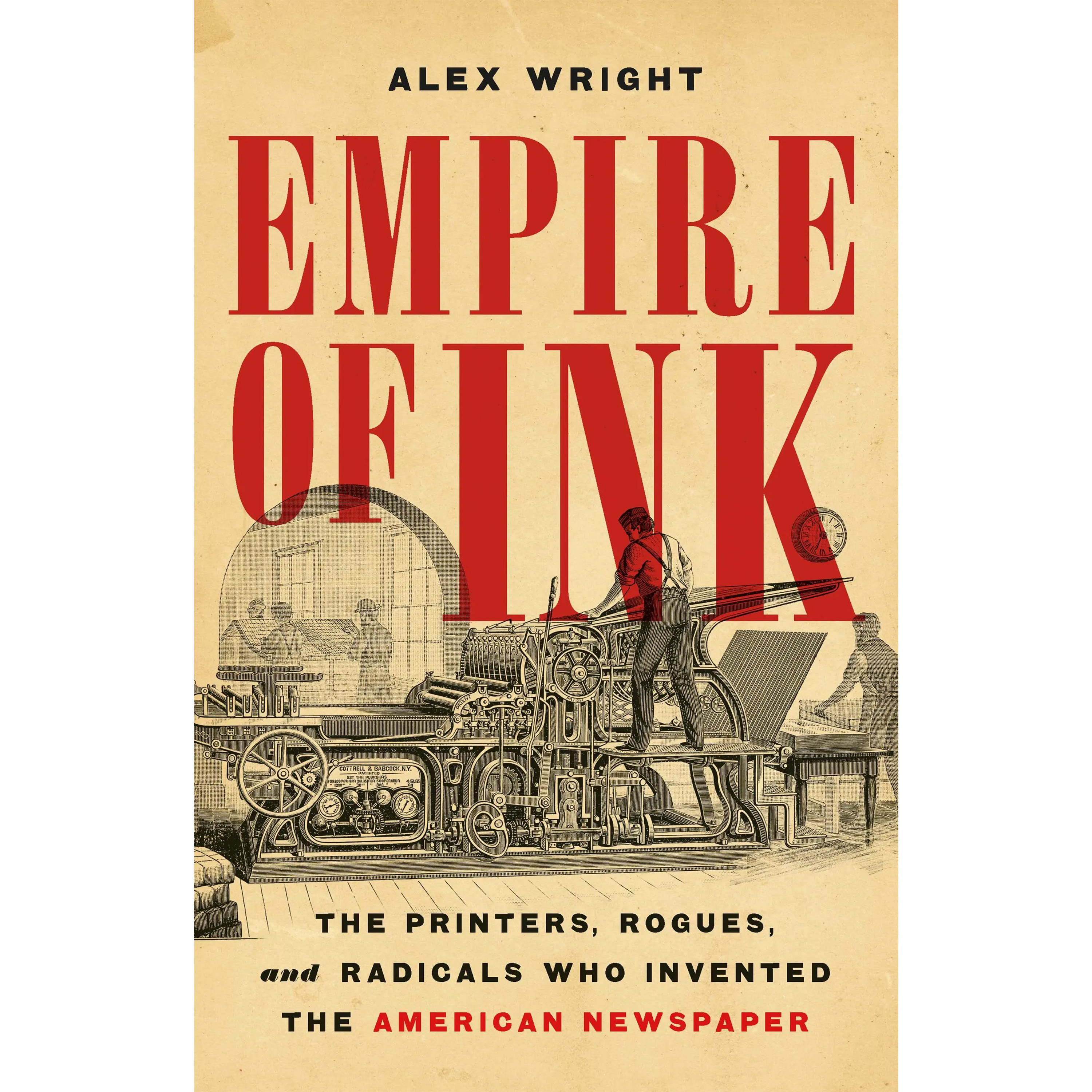
Welcome to A Book with Legs podcast. I'm Cole Smead, CEO and Portfolio Manager here at Smead Capital Management. At our firm, we are readers and we believe in the power of books to help shape informed investors. In this podcast, we speak to great authors about their writings the late, great Charlie Munger prescribed. Using multiple mental models and analysis, we analyze their work through the lens of business markets and people. Today we will look back at how a young republic became the world's first information superpower. We will think about what happens when a decentralized network of tinkerers, partisans and and printers devils give way to corporate consolidation and what that arc tells us about the media landscape we live in today. Joining us is Alex Wright to discuss his newly published book, Empire of the Printers, Rogues and Radicals who Invented the American Newspaper. A little background on Alex before we get started. He is an American writer, researcher, and information designer whose work traces how humans create, organize and circulate information. He is the author also of Cataloging the World, Paul Otlet and the Birth of the Information Age and Glut Mastering Information through the Ages. His writing has appeared in the New York Times, the Atlantic, Salon, the Believer, and Communications of the acm. He served as Director of User Experience, the New York Times, and has led information architecture for Harvard University, the Internet Archive, and the Long Now Foundation. He holds a PhD in transition design from Carnegie Mellon University and an Ms. In library information science from Simmons College and a BA in English from Brown University. Alex, thanks for joining me today.
- [02:06]
C
Hi there. Thanks so much for having me.
- [02:08]
B
So I always ask people what caused you to write this book. You note in the book that you have ancestors that have been in the news business before going back more than a century, so I can kind of assume, but we'd love to hear why.
- [02:24]
C
Yeah, so this book for me really started out kind of scratching a personal itch. I was just very interested in my own family history, but also just more broadly in the question of as someone who has spent a chunk of my career working in journalism and newspapers for a while in TV news and magazines and so forth, just sort of how we got here. And as you mentioned, I do have a bit of a family connection. My ancestors in the 19th century ran a couple of country newspapers in Georgia, in rural Georgia, Liberty County, Georgia. And then it stayed in the family for a couple of generations. My great great aunt Stella, who lived to be 99 years old and lived with us at home at the end of her life, had spent 50 years as the editor and publisher of the, you know, the Ludewiczy news tiny paper in Georgia. But that was how she supported herself for 50 years. So I just kind of was interested. And to be honest, this book actually started about 10 plus years ago as a novel. I was starting to try to imagine what life was like for somebody working in a country newspaper back in the 19th century. And then I just kind of started going down the rabbit hole and it turned into a totally other kind of book.
- [03:38]
B
So, okay, you opened the book on July 2, 1886, with the printers at the New York Tribune watching a 2 ton mach being pulled up via crane for 9 floors. Why that morning is the doorway into this big story?
- [03:56]
C
Well, yeah, so that moment, I feel like, is kind of one of those pivotal points in the history of media. The machine that they were hoisting up to the ninth floor of the New York Tribune that day was a machine that eventually came to be called the Linotype. And it was the first commercially successful machine that could set type automatically. And so I think that the thing to understand, the reason that was such a big deal was that, you know, the process of, of printing for, you know, the almost 500 years after Gutenberg had remained almost unchanged, people, printers still essentially had to pick out little metal bits of type and set them in a line and then compose them into a, you know, into, into a form that they could then press a piece of paper against. And even though during the 19th century, the technology of actually, you know, putting things on paper accelerated, you know, they started to develop. You know, there were eventually things like steam powered printing presses and what were called rotary presses, so they could actually, you know, crank out printed paper more quickly. This kind of last mile of the process, the process of putting tape to paper, was still just this stubbornly manual process that they' been people inventors had been trying for decades to figure out the solution. And finally somebody did. His name was Otmar Mergenthaler, and he invented this machine that really quickly took the publishing world by storm. And within 10 years, it was the dominant mechanism being used to set type in newspapers worldwide. And I think you can argue, really triggered an information explosion that led to the rise of the kind of modern daily newspaper with the big thick book that came out daily with 50, 100 pages of material that would not have really been economically possible without The Linotype.
- [05:53]
B
Yeah. You talk about in the 18th century, though, the printer lived to be, I think, 32 years old. Back then, this is what you refer to as the printer's devils. These are the people toiling away, breathing lead and dust, and yet they had a pride. And there was this fraternity, you argue, of these printers, devils, even in this kind of bleaker moment for the person doing the typesetting. Why did this trade survive?
- [06:24]
C
Well, it's interesting, for most of the first 300ish years after Gutenberg, printing was really a craft trade. It was something more along the lines of being like a blacksmith or something. Like it was really a kind of like, you know, workman like, or working woman like trade, where you went into this apprenticeship usually as a young teenager, and you did an unpaid apprenticeship for seven years and learned the trade, learned the craft, and it was pretty grueling work. Like, these people worked long hours and kind of dark conditions, breathing in lead fumes all day. And many of them turned to drink, many of them sort of died young. But at the same time, it was actually considered a pretty high status craft. And the reason for that is because the end of the day, the printing of words on paper kind of inevitably put printers sort of close to the levers of power in society. Like the people who were getting books printed were typically wealthy people, politically connected people, scholars. So even though, you know, it was a, it was for sure a trade. It was, it was a pretty high status trade and people. And there was a certain sense of pride in it that these were the, you know, the printers were kind of the, you know, almost like the midwives of the, of the written word into the world. And they took, you know, there was definitely. And for, you know, for centuries, there was this strong sense of tradition and just professional, like, satisfaction that people took in this trade, even though it was quite, quite dangerous and pretty grueling at times.
- [08:09]
B
Sure. Mary Catherine Goddard prints the Declaration of independence in 1777. Knowing it's treason to do so. She had the largest circulation in the colonies, I think you said at the time. How does a woman printer end up in that position? And why isn't she more standard in that story of the Declaration of Independence?
- [08:30]
C
Yeah, Goddard is a fascinating figure and I think she invites us to recognize that the role that women printers played in the colonies, that's often overlooked. I had the good fortune to talk to a scholar at Princeton named Martha King, who's done a lot of work along these lines. And women were very much present in the printing trades throughout and throughout the book, it's a recurring theme, like they are in many cases. As you mentioned, Goddard had a high. Ran a newspaper with a huge circulation, hugely influential. When the Continental Congress decided to print the first version of the Declaration of Independence that actually included their names on the document. This is the important distinction. It wasn't the very first time it was printed, but it was the first time that all of those signers decided to put their names out there, taking a huge personal risk to do it. Goddard was the one they turned to because she was very. Being very sympathetic to the patriot cause, had published Thomas Paine's work and ran a newspaper that was very pro patriot. And so she was seen as like a trusted partner in this. And in fact, the first, that first, you know, signed version of the Declaration of independence includes the 50. I think it's 50, right. The 50 male signers of the Declaration and one more name at the bottom. It says, printed by M.K. goddard, Mary Katherine Goddard. So her name's on there too.
- [09:55]
A
But.
- [09:57]
C
But, yeah, you're right. Not many people have heard of her.
- [09:59]
B
Yeah. Daniel Boorstin wrote that the colonial printer had to be a government man. Then, to your point, the revolution happened. What changed this from being the government man for Daniel Borson?
- [10:11]
C
Well, a few things. I mean, in the early, earlier in the colonial era, you know, printing was tightly regulated by the British Crown. And so in order to print anything, you know, you had to do it with the, you know, with the blessing of the Crown. In fact, there had been an earlier, and a very early paper was published in Boston in the 1690s that was quickly shut down by the Crown because it was not sort of authorized. And the truth is that most of the printing business in the colonies in the 1700s consisted actually of government documents of, you know, the colonial governments were like a big producer of printed material. There weren't a lot of books printed in the colonies. Most of them were imported from England. And so the printers sort of depended on the government for their livelihood in many ways. And some of them started to produce newspapers as kind of a side hustle. It was rarely like something that they could do to support themselves fully. But over time, they became more popular. But they were certainly, like, aware that the eyes of the Crown were on them or the eyes of the governor were on them. But over time, as more papers started to appear, some of those printers started to take more chances with the content they were producing. One of them, the most famous example, of course, is Benjamin Franklin, who started to really develop his own voice. Occasionally take more opinionated stances on things. And by the 1750s, 60s, you started to see a little bit of an independent streak started to emerge in the press. And that was really brought to a Head in 1765 with the passage of the Stamp act, which I think most people know was one of the sort of triggers for the revolution. But I think what people may not fully understand is that the Stamp act was really attacks specifically targeting printers, basically saying that they had to basically pay a tax on anything they were printed, and it was a huge threat to their livelihoods. And Franklin and a few other printers, including actually Mary Katherine Goddard's brother and several others, basically started to protest in the pages of their newspapers against what they saw as this unfair tax. And so in a really pivotal way, printers were pretty directly involved in fomenting the revolutionary spirit that actually led to the independence movement because they saw their livelihoods at risk and they started to exert their political power. There's a great example, actually. I have a book here. I just flipped to the page. A printer named William Bradford, if I can flash this up here. But he printed a version of his paper, the Pennsylvania Journal, with this famous tombstone design on it that basically he was sort of sending a message that this is the death of my newspaper if the Stamp act isn't repealed. And I thought that was a great example of early kind of newspaper design experimentation.
- [13:21]
B
Well, the other thing you point out that was really interesting, that again, I've never heard this in any other history book. The Post Office act of 1792 caused newspapers to be subsidized. And it was really interesting to think about, wow, we subsidized the postal carrying of newspapers. So, you know, the old, you know, the old saying is if you subsidize something, it's going to flourish. Typically, and obviously newspapers did, you know, as we think about subsidies nowadays, you know, we think in things like EVs more recently, ET cetera, but you don't often hear that, oh, by the way, we allowed papers to flourish via a reduced delivery rate.
- [14:01]
C
Yeah, I think people are generally not aware of what a central role the federal government played in sowing the seeds for the newspaper industry. In the early days, really right after the revolution, the strategic decision was made that having a free press was going to be a good, was going to benefit the public, that it was going to be a common good for there to be free access, open access to information. Thomas Jefferson even thought there should be a national newspaper supported, directly supported by the government. They eventually backed off of that. Idea. But instead what they did. And actually, Franklin, keep in mind that newspaper printers and publishers were very close to the levers of power here. And so Franklin and Goddard and others were able to influence the legislative process. And the Post Office act of 1792 put in place this massive subsidy for. For newspapers where basically any newspaper in the country could be mailed for a fraction of the cost of any other kind of material. Essentially their distribution was hugely subsidized. And in addition, I think this is where it gets kind of interesting. There was an additional carve out where newspapers could send copies of their papers to each other free of charge. And then layered on top of that was another aspect of the law, which is that the Copyright act explicitly excluded newspapers from copyright, so that essentially papers were free to copy each other at will with no consequences. And so as a result, the whole newspaper, the early newspaper kind of industry, coalesced into this kind of free information sharing network where people were. Printers were sending copies to each other back and forth, copying each other's work. The same story might appear in one paper one week and another one the next week. And then there's a researcher named Ryan Cordell who's done some really interesting data analysis around this, who's identified this phenomenon of stories really in a very real sense going viral across the postal networks, where a story would sort of take off, get some traction, then it would be reprinted over and over and over again. And by his estimate, by the 1830s or 40s, about half of what you would see in any given newspaper was copied from elsewhere. And it wasn't just news stories. It was things like recipes and poems and weird facts or sometimes spiritual reflections or sermons. It was all kinds of stuff that was fun, but it was in a way you can really draw. And I think you want to be careful of pushing historical parallels too far. But I think there is a really interesting parallel with social media where things can basically be copied and distributed freely, and if they attract an audience, they get further distributed and have kind of an extended shelf life. So I think there's something interesting going on there that I think people at the time weren't really aware of. But today, in hindsight, we can sort of recognize that pattern and, and see that kind of viral aspect of media sort of taking shape in this era that again, before copyright was reintroduced to newspapers about 100 years later. But it was a very interesting time where a lot of stuff was. There was this kind of information ecosystem sort of emerging that looks very familiar in some ways today.
- [17:41]
B
I think the Other thing that you bring up in that section with Cordell's work is the idea of scrapbooking, which is like. I mean, I, you know, as a kid that was born in 83, it's like, I've heard of scrapbooking. I never did any myself, but I knew people that did that were older than me. And so, you know, you think about, like, cutting out. Let's say I played high school sports, for example, right? So, you know, to have, like, a relative that would cut out articles of me playing, you know, high school baseball in the local paper, Things like that were not uncommon back then as we're nowadays. We would say, oh, you can just Google that, right? You can look it up. You can see it on my feed. I reposted that. I reshared that. Do you think that is fairly analogous or is it very different?
- [18:29]
C
It's for sure very analogous. I think the scrapbooking phenomena is fascinating. There's a great book by a writer named Ellen Gruber called Writing with Scissors where she talks about this phenomenon of scrapbooking. And it really kind of swept the country in the 19th century. Like, you know, people. A huge number of people took this up as kind of a hobby. And what that looked like in practice is, you know, almost everybody was reading newspapers or, you know, journals or whatever they were reading. But they would find something that was interesting and they would cut it out and they would put it in a little book. And this, you know, this kind of dates back to the earlier English custom of the commonplace book, where people would write down little, you know, tidbit, morsels of wisdom or tidbits that were interesting. But it. But with the spread of newspapers, there was this kind of huge amount of raw material people could draw. And so they would put things into scrapbooks just for their own sort of recollection or just things that. The same way that people might bookmark interesting web pages today or, you know, share them in some other way. But what's also interesting about the scrapbook phenomena is these things also circulated, often within families or friends. People would share their scrapbooks with each other. And it was a big business. Mark Twain actually created his own sort of Mark Twain branded scrapbook that. He was also a big scrapbooker. So it was Walt Whitman. A lot of these people were super into it. But there was a Mark Twain scrapbook you could buy if you wanted to do it the Mark Twain way. It was actually a pretty successful little business for him for a while.
- [20:03]
B
Hi, I'm Cole Smead, CEO and portfolio manager here at Stake Smead Capital Management and host of this podcast. If you enjoy this podcast, I'd like to invite you to check out smeedcap.com at our firm we are stock market investors. We advise investors who play the long game with a discipline that has proven success over long periods of time. Learn more about our funds@smeecap.com Past performance is not indicative of future results. Investing involves risks, including loss of principal. Please refer to the prospectus for important information about the investment company, including objectives, risks, charges and expenses. Read and consider it carefully before investing. Smead Funds distributed by Smead Funds Distributors, llc. Not affiliated. You talk about in the Book the Cherokee Phoenix was the first Native American newspaper. It was printed both in English and Cherokee. You know, I think the other thing, you know, going through the book is there's these really unique publications, right? They're playing to a certain audience in a group or a thought process or, you know, there's just a unique audience that they're going to. You talk about the Georgia Guard burned the print shop on the, you know, to the ground on the eve of the Trail of Tears. That was viewed to be important to kind of end this fight. Wasn't.
- [21:23]
C
Was. Yeah. And this is one of the themes I really that really captured me as I was researching the book. I feel like a lot of the sort of conventional histories of journalism tend to really come at the story from the point of view of sort of big city journalism like the history of the Hearsts and the Pulitzers and maybe going as far back as the New York sun or something. But a lot of the really interesting activity that was happening really in more marginalized communities, I mean, the, the growing availability of printing presses enabled people to find their voices on the printed page in a way that had not previously been possible. So in the case of the Cherokee Phoenix, this was a community that previously didn't even have a written language. There was a super interesting character named Sequoia who was this kind of genius polymath Cherokee man who basically invented an Alphabet for the Cherokee people so that they could write down their words. And soon thereafter there was a missionary who had come to the Cherokee settlement and had decided to adopt Sequoia's Alphabet so that they could create a newspaper to help the newly literate members of the tribe share their experiences or form a sort of sense of collective identity. And the Cherokee Phoenix became a super important voice for the Cherokee in sort of representing their interests and sort of advocating with the government in Georgia. And as you say, when the decision was made to move them out and force them onto the Trail of Tears. One of the first acts they took was to destroy that press, to sort of remove that voice and remove that opposing view from the conversation. And it was. It was many years later they finally stood the paper up again in their new settlement. There's actually a new version of the Cherokee Phoenix that's out today that has inherited the name, which I think is great to see. But there are quite a few of those, like Native American newspapers are a fascinating little subgenre. And they're one of many sort of examples of these kind of marginalized communities who found their voices. There's the abolitionist movement. There were early women's papers. Later in the book, I talk about how much later in the 19th century, in the 1870s, a lot of teenagers started to take advantage of newly affordable portable printing presses to express themselves, even though they had tiny audiences. But this kind of urge towards self expression and the desire to take advantage of the available technology to make yourself heard seems to be a kind of almost universal impulse that some people have.
- [24:07]
B
Yeah. Alexander Hamilton and Aaron burr duel in 1804 over a newspaper article. As you write, we all look at this as like a very conspicuous event in American history for someone like Hamilton. In reality, this was pretty common among people publishing and editing papers, wasn't it?
- [24:29]
C
That's right. Newspaper publishing was an incredibly dangerous job in the 19th century. And, you know, I think today we don't tend to think of it that way. We think of it as a sort of, you know, respectable middle class kind of profession. But going back to the early 1800s, like publishers, editors, you know, they would get pretty feisty with each other and sometimes their readers would get feisty with them. And often that erupted into not just sort of rhetorical combat, but the real kind of. And the Burr Hamilton duel is a famous example. But there are many examples of editors who got into kind of what today we might think of as kind of almost like flame wars with each other, where they'd be insulting each other, calling each other out in the pages of their papers. And then especially in the south, where there was a very strong honor culture where if you were insulted, you had to defend your honor on the battlefield. There was duels broke out all over the place, often between editors, but again, sometimes also, like there are many cases where a local politician or businessman might take offense at something that was written about them and would storm into the editor's office and demand satisfaction. So there are a few stories like that I talk about where People kind of get into all kinds of scrapes. And probably the most extreme example is in Vicksburg, Mississippi. There were, I think, in a span of about 10, maybe 12 years, they burned through eight different editors of the News newspaper. And six of those eight people died on the job, either through duels or gunfights or just unfortunate things happening to them. So it was definitely, it was a, it was a, it was a tough business back in the day.
- [26:16]
B
Well, and I also think of Vicksburg was one of the greater sieges of the Civil War because it was on the river. So it was tough to access. And so it sucked to be an editor. It sucked to be in Vicksburg at one point too, for sure. Let's see. So Horace Greeley founded the New York Printers Union and celebrated their first wage victory by firing a cannon outside the Tribune building. Whitelaw Reid takes over after he dies in 1872, and within five years he's hiring strike breakers and declaring the Tribune an open shop. How like there's these tectonic shifts that kind of happen very quickly. Is this just because it's, it's, it's such a young industry and it's trying to find its place? It doesn't know what that settlement is or what do you ascribe these changes to?
- [27:03]
C
Yeah, I mean, that was such an interesting time because I feel like that moment when that transition happened around the 1870s, going into the 1880s, it was really this kind of shift from an old way of newspapering that was much more, I would say, kind of driven by individual editors, publishers, often with very strong ideals or very idiosyncratic voices. It was kind of the. Greeley was a great example of this. Even though he had a big operation behind him, he was still the visionary of that paper. But over time, as the market grew, as circulation grew, as there was, you know, increasingly money to be made, I think at a high level, what you see from the, maybe the first part of the 19th century, where newspapers are more political outlets, like in many ways, they're very partisan. They're often propped up by the political parties. They are. Editors themselves are sort of political actors in many ways. But as we get into the latter half of the century, the calculus changes and they become more commercial money making ventures. And that's partly to do with, with scale and circulation. It's partly to do with the rise of advertising, the advertising industry, but essentially they start to evolve into more commercial enterprises. And so at that point, maybe some of the more idealistic kind of values Driven ways of newspapering start to give way to more commercial imperatives. And so someone like Reid comes along and decides to take the strike. Reid was also the one who brought the Linotype into the Tribune. So he was very much on a mission to cut costs and improve efficiencies and go for scale. Very much like a kind of capitalist mindset. And he did that. But that became more the norm as we go into the 20th century, where the rise of the commercial media enterprise becomes the dominant story. And the old way of newspapering that was more driven by these strong, individual, opinionated editors starts to fall by the wayside.
- [29:23]
B
Sure, let's see. Sam Clemens becomes Mark Twain at the Territorial Enterprise in Virginia City. Full disclosure, we did another book about George Hurst by Matthew Bernstein and that has Virginia City and obviously has Samuel Clemens in it. And so I've been to Virginia City, which is a very fun kind of tourist trap nowadays up in the hills above Reno. And so I've become kind of a Sam Clemens sucker, for better or for worse. So reading your book was. You had all, you know, the trappings in the later part of the book of him. But you know, he brings up this idea of like he has a story of the petrified man hoax. And he said, quote, the public needed matters of thrilling interest for breakfast. End quote. You call it, you quantify it to be like the 1860s equivalent of clickbait. And I also think of like papers in the front of the headlines, right? The front page news. You're not gonna put your clickbait in the front page news. It's like the back pages or kind of the comedy section or the gossip section. Do you think how these were laid out would change how we think about the news?
- [30:37]
C
Yeah, I mean, there's a lot to unpack there. I think maybe I'll just pick your question apart a little bit first. Yes, there were certainly all kinds of fun examples of kind of hoaxes and tall tales that kind of circulated in these papers. I mean, there was a lot of so called straight news too. But you can go back to the 1840s and the new York sun publishing the famous moon hoax story about the supposed discovery of people and creatures living on the moon, which they later. That was one was actually kind of a prank where they were trying to test out other papers to see if they would fall for it, which they did. And then all these papers started republishing and then they acknowledged they were putting them on. But Clemens was, I mean, Clemens and eventually Mark Twain, he had a lot of Fun with it. He had started out in the newspaper trade early on, working, apprenticing. He was apprenticed at I think the age of 11 or 12 to a local newspaper in Hannibal, Missouri. And you know, then eventually went to work for his brother who was publishing another newspaper. And he would submit sort of anonymous stories because he didn't think his older brother would publish his younger brother's work. So he would submit them anonymously. There was a whole culture of like pseudonymous anonymous kind of submissions. And as Twain went on his journey working in different newspapers, he started to really experiment with the forum a lot like he was. There was one example, I think it was in. I forget if it was in somewhere on the east coast, maybe Philadelphia or Baltimore. He was doing a stint at a newspaper and he really decided to make fun of the obituaries. There were apparently a lot of very flowery poems being written about people who had passed away. And so he started to basically submit fake obituaries in this kind of purple poetry, like all these people. So he was a prankster. He wasn't afraid to make stuff up. And so when he got to the Territorial Enterprise, which was a really amazing collection of talent, not just Twain, but some really great newspaper, it was probably the best written newspaper west of the Mississippi for many years. He had kind of a partner in crime, a guy named Dan De Keel, who has largely been forgotten, but also wrote a lot of these tall tale stories about, like there's one about the traveling stones, these kind of rocks that move across the desert by themselves. And then Twain with the. The petrified man. Yeah, they didn't shy away from. From having it on it. It was kind of. I think they were having fun with. I don't think they really fully expected people to believe all these stories, but they were testing the boundaries and seeing what they could get away with.
- [33:14]
B
Yeah.
- [33:15]
C
Because I think wouldn't see that today.
- [33:16]
B
Yeah. You know, to your point, and I think, you know, we, we do see these things on the Internet. We do see them on social media. And I think that was one of the takeaways I had from your book. Is, is the media business taking itself too seriously? Like, for example, let's say we're chatting and we're talking about politics or we're talking about sports. And you say to me, oh, well, did you hear the rumor is xyz. Well, by the way, if the media doesn't wanna talk about the rumors, that's kind of the scuttlebutt. And what's interesting about that is it's terribly human. It's gossip. It could be true, it could be false. I work in the investment business, so I always joke that like 90% of the rumors in our business are true. Cause they usually are. But again, so who deals in the rumors of the investment business? We call that the New York Post, for example, obviously created by Alexander Hamilton. So they've made a really good business out of rumors in many ways. And yet you see all these other publications that are like prim and proper and they're like, I am not going to traffic in that kind of indulgence. And the answer is, if you don't, someone will. And what creates intimate content is the people that publish stuff that's unique.
- [34:28]
C
Yeah. And I think it's really interesting to think about when you look at this earlier era of newspapering and the kinds of value that people got out of these papers. It wasn't just what today we would maybe call news, which is a hard term to define, actually. But I think we tend to think of it as kind of like politics and, you know, maybe sports and, you know, some, some. The kinds of things you see and the, the, you know, in the, you know, the, the main menu of, you know, the section names of newspapers. So politics, sports, business, weather, whatever. You know, if you look in the 19th century, people got all kinds of other value out of newspapers. They got gossip, they got tall tales, they got poetry, they got updates from their neighbors about their vacation. You know, people would submit these little things about so and so came a calling from, you know, two counties over last weekend. And, and here's the, you know, here's the, you know, here's the, here's the latest hog prices. Here's the, you know, all kinds of things. And it was real, a real mix of stuff. And I think if you look today, I think those people still want that whole range of, you know, of stuff in their media diet. But they're only get, they're not getting, they're not looking to news organizations for a lot of that stuff. They're looking to places like TikTok or Instagram or Facebook. And I think in a way, you know, the success of these social media companies stems from the fact that they're fulfilling a real human need that once upon a time newspapers used to fill. And they have not even tried to fill those needs in a very long time. Yeah, Complicated reasons.
- [36:13]
B
It reminds me of the Bonnie Raitt song let's Give Him Something to Talk About. Right. I mean, that's kind of what part of the news fulfilled. Let's move over to kind of the print distribution side. Richard Ho's rotary Press could print 60 page a minute, 10 times faster than anything before it. There's this other tension, this kind of big arc and theme of your book, which is like some look and say, here comes technology. Let's adapt it and adopt it quickly. And others say, oh, it's the death of the news business. Some people tried to sabotage his technology, as an example.
- [36:53]
C
Well, yeah, I mean, there's always been this kind of tension between doing things faster, better, cheaper, and trying to maintain some sense of quality and sort of human touch to the whole thing. In the case of the HOE press, I mean, that was another massively important innovation. Whereas before the rotary press came along, and Ho wasn't the first one to invent a rotary press, but he kind of perfected it and commercialized it. Newspapers and any kind of printed material were printed sort of one sheet at a time. You know, the way you would maybe feed things into a home printer. You know, you have one sheet and you feed it in, you print it, and then you get to the next sheet. The rotary press basically lets you print using a roll of paper in a continuous flow. So it just massively accelerates the whole process. Interestingly, though, that the sheer kind of scale and velocity of rotary printing also exacerbated another problem I talk about in the book, which is the. The raw materials problem. Up until people, I think, don't recognize it that the use of wood pulp paper didn't become a normal practice until well into the 19th century. For most of that time, paper was made out of rags. And even as early as the mid-1700s, printers were worried that they were going to run out of rags and raw material. And so people started experimenting with other things they could print with, like straw or grass or all kinds of vegetables. And there's also one particularly weird story I get into in the book where there was a guy who discovered a very strange source of raw material for printing in the form of Egyptian mummies, which were in plentiful supply in the mid-1800s. And he started importing them from Egypt and. And determined that they were actually. It was cheaper to print on recycled mummies than to find local rags. And so people. It was a thing for a while, and that's. People found out about it, were somewhat horrified. But, you know, but anyway, you know, necessity is the mother of invention, I guess. But people were trying all kinds of things. And anyway. But then, you know, eventually things did start to scale. But again, up until like the 1880s, there was still this kind of fundamental bottleneck around the last step in the production cycle, which was the typesetting. And so I think for a long time that did actually. And I think a lot of printers took pride in this notion that they were the last gatekeepers for the quality of the printed word. And they were the last kind of QA step in the process. And a lot of them held onto that. And it was a tough transition where a lot of them were suddenly thrown out of work by the Linotype. Although eventually things worked out because there was so much, so much greater demand and market for papers that eventually many of the. Most of them transitioned to become line of type operators.
- [39:56]
B
Yeah. To your point about the use of wood and pulp, my. Let's see, my. My maternal grandfather worked at a Crown Zellerbach mill on the Columbia river, which obviously had five presses at one point. I think they're down to one. It's now owned by Georgia Pacific and that would be a typical pulp plant. And that was the largest, I think in the area at that time. But it's gone to be much more efficient for one press. But there's just not the same print needed. And I also think of the transition that the Wall Street Journal did. It used to have the wider format and it moved to a more standardized print format.
- [40:34]
C
That's right.
- [40:34]
B
So it could be published across the United States by other printers. That was a big change that happened in the last 20 years, by the way. That was a big deal. I remember when that happened. We hope you're enjoying the podcast. You know, we work hard putting together this show, but we work even harder for our investors at SMEAD Capital Management. At smead, we believe in disciplined investing, which is why the SMEAD funds have a proven track record of long term outperformance. If you're an investor who plays the long game and want to invest in wonderful companies to build wealth, we invite you to visit smeedcap.com Past performance is not indicative of future results. Investing involves risks, including loss of principal. Please refer to the prospectus for important information about the investment company, including objectives, risks, charges and expenses. Read and consider it carefully before investing. SMEAD funds distributed by SMEAD Funds Distributors llc. Not affiliated. The other change that came about, you talk about Kellogg. Kellogg built the first ready print syndication service. This is like the predecessor in my mind of the Associated Press or other syndication services like that. How did he come up with that idea and how much scale did he combine for that?
- [41:48]
C
Yeah, Kellogg is a really interesting character. And another one of these folks who's maybe living a little bit on the margins of history, but he invented this, what he called ready print service, which is sometimes also called boilerplate. And the, essentially what he, the solution that he came up with, he was trying to address the problem of newspapers not having enough news to print. And this is something that was really exacerbated during the Civil War. He was right at the end of the war. The fact is, a lot of the trained, skilled printers in the country had gone off to war and many of them were killed. And there was actually a printer shortage after the war. And so a lot of these papers, and at the same time, the demand for newspapers had actually boomed during the war because people were so like, were, you know, very engaged in following the news of the war.
- [42:46]
B
Yep.
- [42:47]
C
And so the problem was papers, just many small, especially smaller country papers just didn't have enough stuff or enough people to print a weekly edition, a weekly four page edition. And so he hit on this idea of what if there was sort of more of a knowledge sharing kind of mechanism where you could basically print out sheets in advance. And what he came up with was interesting idea. So a typical paper at this country paper at the time would have been a four page paper. So basically two sheets folded over. Right. And his idea was, what if you printed one side of the sheet? So essentially what are the inside pages like the pages 2 and 3? So 1 and 4, the local paper, page 1 still looks like your local paper. Stage 4 still looks like your local paper. But the inside half the paper, half the work comes to you pre printed. And he invented this whole business model around this. And he would sell ads on the inside pages. And so he would give you your paper for free. You could have a free stock of paper. He would collect the ad money for the inside pages and you could do what you wanted with the rest of the. Turned out to be wildly popular in the Midwest. And that really expanded. Eventually you started introducing all kinds of variations on that where you could get like pre printed blocks or just buy certain stories or certain topics you were interested in. You could subscribe to kind of a particular political. You could have like Republican flavored pages or Democratic flavored pages. He had eventually ran a whole newsroom in, in Chicago with people cranking out these stories without bylines. It was sort of this anonymous, I think in the book, I call them the ghost editors. This anonymous newsroom of people who were quietly producing a huge volume of the news that was being consumed in the country. Nobody knew who they were for the most part and as you say, that really paved the way for eventually the rise of new syndicates, these kind of syndication services that became kind of a dominant force in the 20th century. Things like the AP and UPS, sorry, the United Press, UPI and things like that.
- [45:00]
B
When I think, I mean, you know, it's now called USA Today but Gannett was the big publisher and they had enough dailies that they could, you know, conglomerate that news. Together we sit. Arizona Central News is what is now referred to as the Arizona Republic is a USA Today on publication. So when you go into the paper, you'll see quite a bit few USA Today articles that are just repurposed into the daily paper obviously coming out of that same idea. You mentioned ads. I'm going to list off a few of the oddities of prior, you know, the idea of ads. Early on, patent medicine ads paid for the late century, late century, late 19th century press. As you point out, Coca Cola started as a curative French tonic wine had 6 milligrams of cocaine per fluid ounce. Highly unregulated. Highly unregulated. A potion called Big G reputedly cured syphilis. And you talk about like today's social feeds. I mean like when I think of TikTok, my daughters will come to me. I have three daughters, they're 16 to 12 years old right now and they will come tell me about skin treatment ideas that just seem totally insane but actually are very historically accurate for crazy stupid ideas that proliferate on media platforms.
- [46:24]
C
I think you're exactly right. I think there is this really weird echo right now of the patent medicine boom in the 1880s and 90s. I have a teenage kid too who I'm constantly having to explain to him why maybe peptides are not a great idea. But it's really. He's reading all about them so funny. And it was, yeah in that era like, and it was very tied to the rise of ready print and boilerplate. Some of the many of the ads that these people like Kellogg and later a guy named George Joslin were, were selling were patent medicine ads and they were kind of nationally advertised. Lydia Pinkham's famous women's tonic was like probably the most popular one of the, of the era that sort of cured all kinds of women's ailments supposedly and there were all kinds of other ones that were of all kinds of dubious concoctions out there. But it was a booming business and it really fueled the kind of growth of the modern advertising industry in many ways before eventually Congress Came in and started regulating it in the early 1900s, which needed to happen. But up until then, it was kind of anything goes. And, you know, a lot of money was changing hands. But they're fun to look at. Like, there's all kinds of cool. You can go online and go down all kinds of rabbit holes. Look at your old patent medicine ads. They're kind of. They're really visually fun to look at, too.
- [47:41]
B
Well, I was gonna say the visuals you do provide in the book are fun because you look back at these old ads and whatnot, and it's just kind of fun to put yourself in the moment and think of how human. Again, back to the earlier point, this all is so. This is kind of like the more somber or sad part of the book. Twain meets James Page at the Colt factory in Hartford and just is just blown away by what this guy wants to do. Paige wants to create this column connected by strings to really speed forward the idea of print and the ability to do that. And Twain sinks a small fortune into Paige. How could Twain be so enraptured with this person and be so disappointed in the end?
- [48:29]
C
Yeah, it really turns out to be kind of a tragic chapter in Twain's life, But it starts out with a lot of optimism. We talked at the beginning about the Linotype and this problem of automating the process of setting type. James Page had thought he had the answer. He was a brilliant inventor who had thought about this problem and thought he had it solved with this quite elaborate machine that seemed on paper, like it should work. And Twain was no dummy. He was, you know, remember, he had spent much of his life in the printing trades. He grew up as a printer's devil, an apprentice, a writer. He knew the ins and outs of the. Of the business. And he himself had actually, in addition to, you know, writing newspaper articles, later novels and things, he was also a publisher. He had had huge success publishing Ulysses S. Grant's memoirs just prior to meeting Page. And so he was actually convinced that he kind of had a Midas touch at this point. I think it's an important thing to keep in mind. He had just. Huckleberry Finn had just come out to huge acclaim. He had just made a fortune on Grant's memoirs. He had started to see himself as someone who could kind of do no wrong. And he was always like. And, you know, Paine had. Twain had grown up in poverty, and there was always this kind of undercurrent of financial insecurity. And he was always kind of trying to figure out how to make more money, how he would eventually hit it, rich or richer. And he had speculated on a bunch of different little inventions that people would bring to him. He was a real kind of technophile, I guess you would say today. He loved new inventions. He was fascinated with the typewriter. And he developed a tool, he funded a device for image printing and all kinds of other things. But when he got wind of the Page project, he just decided this was it, this was where he was going to really make his fortune. And he started out as kind of coming in with a small investment and he got very close to the project. He became progressively more and more obsessed with figuring out how to solve this problem because he saw the opportunity and he was right. It was a huge opportunity. Whoever, you know, solved this problem was going to make, you know, was going to make a fortune. And he thought it was going to be him. The problem was that Page was a bit of a mercurial figure and a fast talker and kind of a charmer. And he was a brilliant engineer, but he was also had the fatal flaw of a lot of brilliant engineers. He was a perfectionist. And he could never let it go. It was always like this close to being perfect. This one more feature, this one more tweak. And eventually he ended up designing this machine that was just so kind of over engineered that it was impossible to maintain. And it broke down all the time. And Twain was also kind of implicated in this because Twain for many years was right in there in the weeds of it with Paige. I went to the Bancroft Library and the archives in UC Berkeley and saw some of Twain's papers. He was writing like a man possessed, like notebooks and notebooks full of his ideas and specifications and figuring out the economics of the machine and how it was going to work. And while they were so busy trying to concocting this grand plan, Mergenthaler came along with the Linotype, a much simpler machine, a less elegant machine, machine that did not produce quite the beautiful, elegant specimens of type that the Page machine would produce, but was good enough for the purposes of the newspaper publishers who used it. And it was very reliable. And in fact, the Linotype was in service for 100 years. I mean, that machine was kind of like. I mean, not that it was also a complicated machine that requires some maintenance, but it clearly just won in the marketplace. And unfortunately, Twain kind of kept throwing good money after bad, convinced that they were going to get out front of this and ultimately prevail, and they didn't. And eventually he became disillusioned and withdrew his investment, but it was too late at that point. He had basically spent most of his fortune and his wife's inheritance on this project. Had to actually pack up his family and leave their home in Hartford. And for several years they went over to Europe where he got on the lecture circuit to try to make some money back. Yeah, and his writing, you know, his bio, if you read his biographers, they kind of all agree that he. His writing was never the same after that. It took so much out of him that his writing took a turn for the kind of dystopian after that. If you look at Connecticut Yankee and King Arthur's Court, which is kind of like. It has a sour tone to it about the modern world, I think it really drained him spiritually and psychologically. He continued to write and produce some good stuff, but I think he put some of the best creative years of his life into this project that ultimately went bust. And it is kind of a tragedy
- [53:50]
B
when it reminds me, I think you mentioned in the book that if Page or the compositor was brought up, I mean, it was like you just couldn't say anything around him to the tune of that Sir Isaac Newton. It was said many years later, after the South Seas bubble, that no one would bring up the South Seas bubble around him because he had lost so much money personally on that as well. Much like Twain with Page, the line of type disenfranchise hand compositors at first, but in kind of like a classical creative destruction way, it then powers the newspaper to be, you know, more cost effective, cheaper to produce, and it causes an explosion of the newspaper because of this technology. As you think about the rebound for the hand compositors or the industry following this technological change. Looking back as a historian, who paid the price, who lost, who won, and was it actually a massive positive for all, or was there something to really be said that was a big loser in that?
- [54:55]
C
Yeah, I mean, it's a complicated story. I think it's hard to say who won, who lost. I think it's a great example of sort of creative destruction where this new, very disruptive technology comes along, throws a lot of people out of work at first. It's kind of a John Henry story. All these skilled. And one of the chapters of the book, I talk about this phenomenon of typesetter races in the 1870s and 80s, where the. The typesetting became people, I think sort of knew that something like this was coming and the fastest typesetters started to compete for prize money and Prove who could be the fastest, best, and then eventually they just all lose out to the Linotype. But in the years that followed, the Linotype did trigger this massive expansion of newspaper publishing that ultimately created a lot of jobs for Linotype operators, many of whom had formerly been hand compositors. There's a book coming out later this year by Jeff Jarvis which actually talks also about the line of type and the page compositor that actually really more follows the trajectory of what happened afterwards. Which I think that book will actually be a nice kind of counterpoint to my book which is more focused on what came before. But there was this. But in terms of what was lost and what was gained, I mean, I think what one of the big gains that came out of this was sort of the professionalization of journalism like it was for most of the 18th century or the 19th century. It was, you know, it was kind of a anything goes kind of environment. Like a lot of very passionate, voicey, kind of idiosyncratic people like, you know, made themselves heard. But it was very noisy, very chaotic and occasionally violent. And there wasn't really this sense of journalistic standards or ethics or guiding principles behind it. And I think that's really started to change after a period of a rocky adjustment period. You go through the era of Hearst and Pulitzer and all that, but the formation of the first journalism schools, the fact that suddenly reporting became like a kind of normal middle class job you could have living in a city and you could go to grad school for and learn some, you know, some, some guidelines for how to do this. It did give birth to this kind of more dispassionate, kind of just the facts kind of ideal of reporting that became, you know, more of a, more of the model going into the 20th century. Not that there weren't still people voicing opinions and speaking their minds, but there was what the historian James Carey calls the, this iron core of journalism sort of coalesced of like, like this kind of pyramid style, just the facts, like baseline reporting that then enabled a lot of things to flourish around it. So I think, you know, it's, I don't want to like over romanticize 19th century reporting. It was like people did play fast and loose with the facts and it was pretty messy. And you know, there, there was, what passed for news was a lot of stuff that probably today would not pass muster, you know, in any news organization. So there's, it's always, you know, there's trade offs both ways.
- [58:10]
B
Hey, I want to give a big shout out to everyone who's been working so hard on this show. You know, we recently hit the top 10 in investing podcasts on Apple Podcasts and even number one in the business category in several countries. As you may know, this show is brought to you by Smead Capital Management. Smead Capital Management understands how frustrating and illogical the stock market can be. If you're searching for for funds with a proven track record, give the Smead funds a look. Or better yet, reach out@smeedcap.com and don't forget to mention you're a fan of the podcast. Past performance is not indicative of future results. Investing involves risks, including loss of principal. Please refer to the prospectus for important information about the investment company, including objectives, risks, charges and expenses. Read and consider it carefully before investing Smead funds to Distributed by Smead Funds Distributors llc. Not affiliated One of your core arguments is that this 19th century press was this like self organizing, decentralized, participatory ecosystem. It's like anything goes that is more common with today's, you know, social media platforms or kind of direct to the masses in a way. Do you think this is like a pendulum? It's swinging back and forth constantly. So the 19th century was really chaotic. Whatever goes, we swung in the 20th century to call it the late 20th century of being really a organized and rote kind of ideal system. And we're swinging back towards where the 19th century is, or at least are kind of hanging in that area more often. These paradigm shifts happen more than once in an industry. They go back and forth between, you know, kind of highly concentrated to an explosion of creativity and revolution. Do you think that's just the transition that we're in the media business too?
- [60:01]
C
Yeah. So first I'm always hesitant to try to like, you know, predict the future. I'm much more comfortable talking about the past. But I will say that I think the parallels are, you know, seem almost self evident. Like when we look at the media landscape today and just how chaotic and noisy and self organizing it is, you know, it does start to look a lot like the kinds of sort of self expression and opinion mongering that was happening in the, in the 19th century. And we see that everywhere online and this sort of mass media monoculture that, that, that that evolved in the 20th century seems like to be fracturing in a lot of ways like the so called mainstream or legacy media. I mean it's still there, but it doesn't have the same cultural authority that it did. I was reading somewhere recently in 1980, like 1 in 4American households watched the evening news, watched one of the evening newscasts on network TV, and now it's closer to 1 in 15 or 1 in 20. So it just doesn't have the same weight or sort of ability to hold a kind of cultural consensus as it used to. But I think what's interesting to ponder as we go into this, yet another kind of wave of disruption to the media business with generative AI. I think a lot of people are sort of fixated on the problems like AI slop or AI generated content. But I actually feel like that's kind of just a very surface level kind of phenomenon. I think what could be really interesting and we'll see how it plays out, but whether the ability of newsrooms to leverage some of these tools to sort of support what they're doing might actually enable them to sort of reconstitute that iron core of journalism that has been so threatened in the last couple of decades by the Internet. And to give you a better idea of what I mean there, if you think about the. The economics of covering your local town council or your school board meeting or your kids Little League sports game or whatever, there's no economic model where sending a dedicated reporter to cover those things is probably going to make sense. But I think there are models where machines can do some of that data gathering and then create a substrate of information and data that then human reporters and editors and journalists can work with to recreate some of that scaffolding. And I think it'll be. I actually think that looking ahead, I'm actually kind of bullish on the possibilities of local news. I think the hypothesis is that people are maybe getting burned out on these kind of big global platforms that are so kind of catering to their interests and increasingly are just awash in AI slop. And I wonder if people won't start to gravitate back towards their local communities in the sense of real things happening to real people around you and wanting to find ways to connect and sort of make sense of the world that's right around them as we look ahead to how the media ecosystem might evolve. But who knows? Much remains to be seen.
- [63:21]
B
I agree, and let me follow on that, because if you look at the news business in general, the news business has stayed the strongest where there's the most money. So for example, financial news is highly profitable. And therefore, because people will pay a lot for financial news, that's been kind of like the central core of some of the news. So you think of like a Bloomberg, a New York Times, a Wall Street Journal, et cetera, since they're so financial related in some respects, that's where a lot of money's, you know, kind of kept. Now, it doesn't change. None of that changes. What you might want to know. For example, I think gossip's terribly interesting. I just do call it human. Okay. Now, that being said, what I think when someone writes or wants to put prose out there or an interesting idea, et cetera, that's what AI can't do. Well, right. It cannot create an original idea. Now if you say, hey, we don't need to have a full time editor because we can do a lot of editing through AI in taking an original idea and synthesizing it down to what we want to get to in the word format we need for XYZ column, that actually makes a lot of sense. I see a lot of editorial needs that can be reduced. Or to your point, what happened to little league games? Well, let's synthesize what it was down to and then let's go out on the Internet and see what people were talking about. And let's use that as the way to say what was the most important part of that. I think there's elements of that that I. It's a filtering process. It is not the original idea though.
- [64:47]
C
Well, I think that's right. I think it's also interesting to think about as these big AI platforms kind of coalesce, we're already at a point where they have kind of vacuumed up almost the entirety of published human knowledge about things. Right. And so what's next? I believe that one of the, one of the kinds, one of the sort of types of information that's going to hold value over time is actually going to be local news. Because the one thing that they don't have access to are things that haven't happened yet. Correct. And especially in smaller communities or areas where there's maybe only one or two people actually covering what actually happened at the town council meeting, that that information I think becomes pretty valuable. And I think people will recognize that over time. But. But, you know, who knows? I think there's also like an open question of how, you know, to what extent people value like kind of civic information like news about the local politics or school board, versus the more of the kind of like lifestyle or interests or information or kind of, you know, entertainment type of information. I think that, you know, that's a little bit of what has been lost with the fragmenting of the newspaper bundle. It used to be that it was really the shopping market Circular. And the movie listings and the entertainment section that sort of subsidized the town hall reporter. And now how do we put. How can you put Humpty Dumpty back together again? This kind of an open question.
- [66:28]
B
Yeah, no, I totally agree. And also I think about, for example, being here in Arizona, we have the state capitol here in our town. The local paper, Arizona Republic, historically is kind of like a left leaning, not terribly left, but just left leaning relative to a town that's historically red or pink as a state and there's nothing right leaning. So I always think about, like, what if we get back to more competition of ideas in things like politics? Because I do agree with you that like local politics, there's still a vast trove. I also think about other incentives. Like, you know, if you're a U.S. senator, you make no money. Do I think you have a lot of power? Yeah. If we paid you $2 million a year, would we care a lot more about what's going on in local politics? Probably so. Maybe also solving for some of the incentives and politics from a financial perspective would cause the news to be more valuable to the people involved with it. Right.
- [67:26]
C
That's interesting.
- [67:27]
B
Right. Cause the grift is going on and sometimes graft is going on, but those go on because they don't pay very well directly in the job, which if you got paid $2 million, do I think the local publication's gonna wanna hold you more accountable? 100%. So I agree. I think of it as a spectrum and a pendulum that we have to swing back. And what causes that, to your point, is very unknown. Let me. You know, outside of gossip or financial news or politics, are there other content categories that you think sit out there that are kind of unexplored, if you will?
- [68:05]
C
Well, I think there are. I mean, I think it's interesting you brought up the example of the continued demand for like, business information. I think there are these kind of like very vertical information products that I think will continue to have legs. Like, if you look at the, you know, the success of, you know, some writers on substack or, you know, people with these kind of specialized, you know, there's media newsletters or people doing like political newsletters that are dedicated to politics or other topics. Like, I think there are those kinds of, like, niche businesses. I think will, will continue to, to find audience. Because if people, you know, find value in an individual writer's, like, expertise or access to information, you know, feeling like they have sort of an inside track on things, I think that will be a thing. I think what will also be interesting is are there more kind of data driven products that might emerge? And this is a little bit speculative, but in a world where AI tools can hoover up and analyze and synthesize a lot of data from a lot of different sources, what kinds of value might you be able to create out of those kinds of environments? I think a lot of that will probably be more in the business and finance world, but I can imagine other sorts of, again, probably more vertical kind of opportunities like that. But then where does that leave sort of communities and local news? I think it's going to be interesting to think about. I think the other thing that I think about when I look Back to the 19th century news landscape was just how participatory it was. And in many cases, especially in the first half of the century, these printers weren't making a lot of money necessarily from the newspaper itself, but they had a lot of influence in their communities. They often had. The newspaper might be one of several little side hustles they had going. They might also be running a printing business. They might be doing some advertising, doing some posters. Some of them were also running the post office or later the telegraph shop. So I think it's another way of thinking about it and I think it's interesting to look today in the world of content creators, influencers. We kind of see that now for many people, they might have a podcast as kind of a project that they run. That's part of their livelihood, but it's one of many parts of their livelihood. I think it'll be interesting to see if those kinds of models continue to evolve where the idea of the big city newsroom being the only way of doing journalism. I think we have to keep an open mind about other kinds of ways that value exchange can happen.
- [70:42]
B
Yeah. What's your point? A side hustle, as they call it. And even the newspaper businesses, their side hustle in many cases ended up being radio or tv.
- [70:51]
C
That's right.
- [70:52]
B
As well. Where can people follow you going forward? Where can our listeners keep track of what you're writing and what you're thinking?
- [71:00]
C
Yeah, well, I have a personal website, alexwright.com I also do a substack newsletter. I'm on Instagram. Those are kind of my main channels at the moment. I'm also on LinkedIn. Those are the main places to find me. And yeah, I'm mostly heads down trying to think about what another book might look like and moving on to the next thing, but would love to hear from anyone who takes interest in this stuff. I'm always happy to chat, but I enjoyed this conversation. This was great.
- [71:30]
B
Yeah. This is a great read, Alex. Yeah, thank you. Your book Empire of Ink reminds me that great industries are built, made and unmade in long arcs and the people who shape them are rarely the ones we remember. Many of these names we talked about today I had never heard of until your research comes to this book. Legacy is everything in the building of long lasting tribes and our families, our communities to our discussion just a second ago and our companies as well. Our listeners should go out and buy a copy of Empire of Ink today. If you enjoy this podcast, go to Apple, Spotify, YouTube or wherever you listen to A Book with Legs, give us review, tell others about the books and the great authors like Alex Wright that we have the opportunity to understand and study the world with and through for our tribe. If you have a great book that you'd like to recommend, email podcastmeedcap.com that's podcastmeedcap.com you can also send your suggestions to us on X. Our handle is meedcap. Thank you for joining us for Book with Legs Podcast. We look forward to the next episode.
- [72:34]
A
Thank you for listening to A Book with Legs, a podcast brought to you by Smead Capital Management. The material provided in this podcast is for informational use only and should not be construed as investment advice. You can learn more about Smead Capital Management and its products@smeadcap.com or by calling your financial advisor,
- [72:59]
C
Sam.