Loading summary
Transcript107 lines
- [00:03]
A
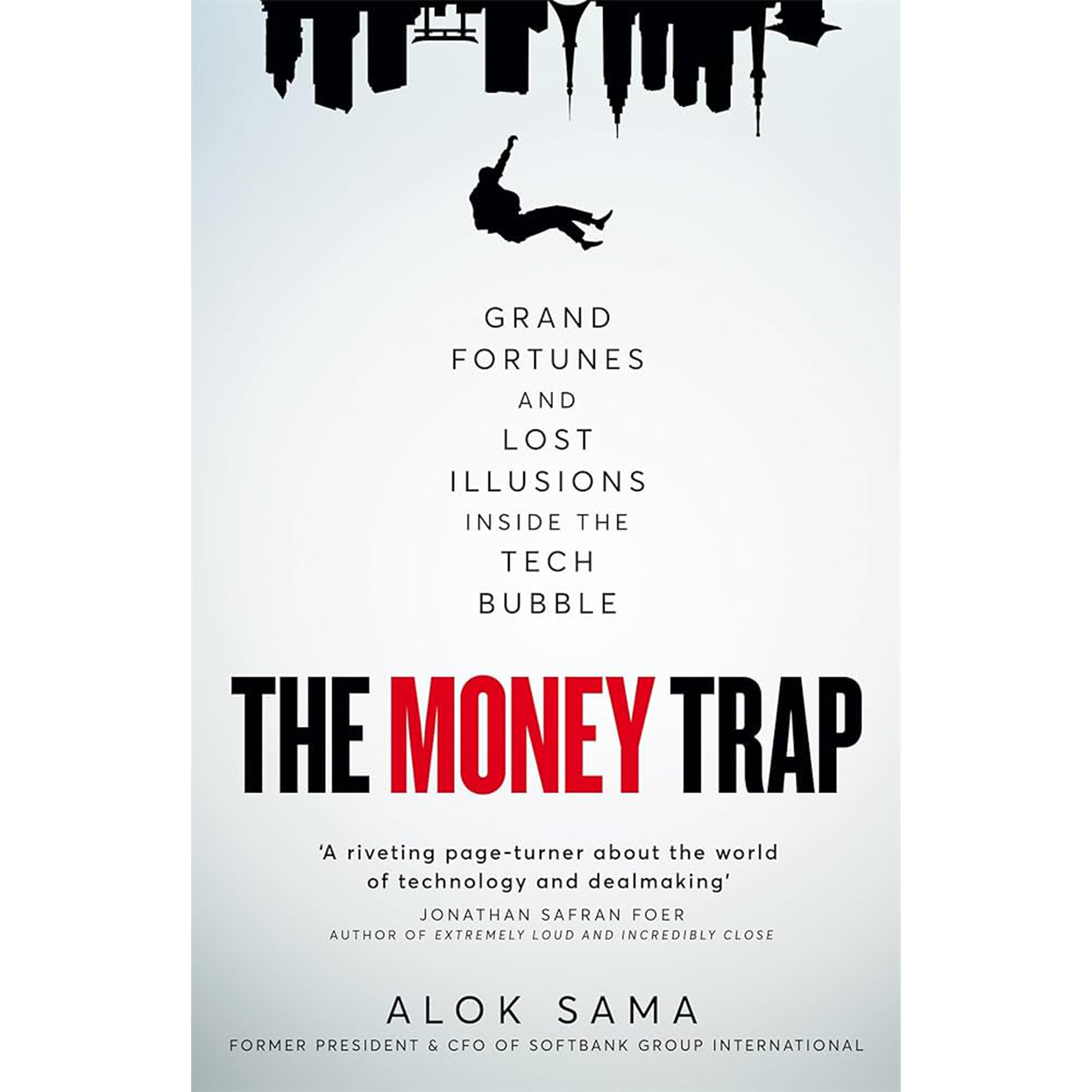
You're listening to A Book With Legs, a podcast presented by Smead Capital Management. At Smead Capital Management, we advise investors who play the long game. You can learn more@smeedcap.com or by calling your financial advisor. Welcome to A Book with Legs podcast. I'm Cole Smead, CEO and Portfolio Manager here at Smead Capital Management. At our firm, we are readers and we believe in the power of books to help shape informed investors. In this podcast we speak to great authors about their writings the late, great Charlie Munger prescribed. Using multiple mental models and analysis, we analyze their work through the lens of business markets and people. In this episode we will discuss one of the truly most well known tech investors and deal makers in the history of venture funding in public companies. Alok Sama is joining us to discuss his book the Money Grand Fortunes and Lost Illusions Inside the Tech Bubble. To give our listeners a little background on our guest, he is a Senior Advisor at Warburg Pincus. He was formerly President and CFO of SoftBank Group International and Chief Strategy Officer for SoftBank Group. Mr. Sama was a board member at ARM Holdings, Fortress Investment Group, SoFi, Brightstar and Airtrail Africa. He was also a Senior Managing Director at Morgan Stanley, where he was involved in the communications practice in Europe and the TMT practice in Asia Pacific. More interestingly, outside of finance, he holds a Master of Fine Arts and Creative Writing from nyu, which is why I think you'll enjoy this book if you read it, and an MBA in Finance from the Wharton School. He also has a BA in Mathematics from St Stephen's College. Alok, thank you for joining me today.
- [01:47]
B
Thank you Cole. Pleasure to be here. And I'm so glad to hear that you guys, when you approach investing, think about reading. And hopefully it's not just business books because I think there's just so much you can learn from the world of fiction, from the world of literature that you can bring to bear on the world of finance.
- [02:06]
A
Agree. And your background. I want to just kind of touch on your education. I got the strong sense from your writing that, you know, you're a very well educated person. Like when you're talking about Homer at one point in your book, I'm thinking this is not a traditional undergraduate person speaking in 2025. This is someone who is more classically educated. And I really think about, you know, to your point, as investors or, you know, say, what's the point of this podcast? I think of it as, you know, as investors, we're learning to learn. And I think of your career you learned a lot in different seasons, through different people. And that's. I think that's what we're doing as investors or business people.
- [02:43]
B
Yeah. No, I think. I mean, look, it's just talking about ancient Greece, this is simplistic, but I think probably the best lesson you can learn from Greek tragedy is the notion of hubris. And you know exactly what I'm talking about. We've all been there, right? I mean, that's one of the things I'm kind of going all the way to the end of the book. But the notion which Masa Son went through too, you know, kind of that feeling of being infallible, we all know how that feels, particularly in market bubbles. And there's just so much you can learn from people's experiences.
- [03:19]
A
I agree. So, you know, you mentioned before that this was a memoir for you. You know, what was it just that. Was it your writing in the past that made you say, one day I'd love to write a book. What really drove you to tell this story?
- [03:35]
B
Yeah, it's a great question. Let's just rewind. I grew up in India. I mean, I first came to the United States, kind of a classic immigrant story. So many Indians left our country in the 70s and the 80s when it really accelerated because there was just nothing going on. I mean, it was a socialist economy. And from my perspective, I loved reading. And there's kind of an old alternate life where I might have actually become a writer, but it's just not something I could even think about. I mean, the notion of being an artist, of being a writer, forget it. I mean, you know, priority number one, two, three was. Was go out and make a living. And you sure as heck don't come to the United States with the idea of doing anything but trying to make a living. Right. I mean, you gotta get a green card. You gotta make a living.
- [04:24]
A
Yeah.
- [04:24]
B
So I kind of got thrown into this world of finance and I kind of put aside. I had this closet ambition that I'd love to. I'd love to write. And it's one of those things kind of in my late 50s, and you go through that. It's a little bit cliched, but you know what I mean? I mean, you know, when you're on your deathbed, you're never going to kind of regret, you know, kind of not having made that last million. But this bug about, like, you know, I really wanted to write and I want to kind of get it. Get it out of my system. It's now whenever that's Kind of what drove me. And I went to, to school, as you mentioned. I got my MFA, but the interesting thing about my MFA is I went to NYU at age 58 and spent two years in school and got my MFA and I didn't think I would write this book. A lot of people assume I went to school with the objective of writing this book, and that's just not true at all. I thought I might write fiction. And as I was in there and I kind of. In writing workshops you share, there's an element of kind of throwing stuff at the wall and seeing what sticks. And I think people found the idea of, or reading about my experiences, some of what I'd seen to be compelling. And that was kind of the genesis of this book. And I kind of tried to put it all together as a story and hopefully you agree that it reads like a story. There's a narrative arc to my own life and there's a narrative out to kind of the parallel life of Masayoshi san and his ups and downs and how the two interval and converge and kind of, that's the, that's the history behind my writing and this book. And now I'm working on a work of fiction, so that's kind of my next project.
- [06:04]
A
Well, it's funny you mentioned fiction because there's elements of your book that. It actually sounds weird to say this, but the other book that I think of, like, I think I read your book in two days because once I picked it up, you were leaving all these very, you know, what I'll call personal breadcrumbs around the story where you would kind of. You'd be telling of an event or a season in your life and you'd be telling very personal things. And it was, it was easy to relate and connect with, you know, your personal voice and your personal, Your personal narrative. And it reminds me of a book where you just, you can't, you can't really put it down because you're having so much fun reading. So I think, I think you did that exquisitely.
- [06:43]
B
Thank you.
- [06:44]
A
You mentioned a little bit about your background. Let's just start with, you know, you. Much of your, your, Your work. You talk about the deal making you do at SoftBank, but that was all teed up by your career at Morgan Stanley. So how did you end up at Morgan Stanley initially?
- [06:56]
B
Yeah, I mean, I. It's actually quite simple. When I first came to the U.S. you know, I was an immigrant. I was there on a. On a student visa, and there were only a handful of Firms that actually would hire people without green cards, people who weren't US Citizens. And no surprise, it turns out it was the top investment banks and it was the consultants, McKinsey, et cetera. Those just happened to be the most sought after jobs too. So that's how I kind of gravitate towards those jobs. But I do talk about this in my book. One of the. I knew nothing about finance coming to the United States. Right. I mean, I might have heard of bank of America or Citigroup, because those are the only two that operated in India at the time. I never heard of JP Morgan or Morgan Stanley or Goldman Sachs, any of those big guns. And I described in my book, in my first semester at the Wharton School in Philadelphia, I literally stumbled into this presentation only because everyone seemed to be going there. There was this buzz around the sky. And it was Michael Milken. And Milken was king of the hill back in the. Back in the 80s in a kind of Drexel. He was at Drexel. He wasn't CEO, but he kind of basically.
- [08:15]
A
He was the profit center.
- [08:16]
B
He owned the high yield market, right? Absolutely. I mean, you're absolutely right. That was the profit engine at Drexel. And I just thought he was cool because. Cool in the sense that I could relate to him. Right. I mean, he was this nerdy Jewish kid, a little bit like me, kind of an underdog, who did some research and discovered that investing in high yield bonds can outperform investing in traditional portfolios. A fairly basic insights on the back of that kind of created this mammoth junk bond market, which is in kind of a parallel capital market that finances not just US companies, but emerging countries and become completely global in scope.
- [08:58]
A
Sure. My dad first got into the investment business in 1980 at Drexel. So I grew up a Drexel kid.
- [09:04]
B
Oh, really? Okay, cool.
- [09:05]
A
And so it's funny you mentioned that because when I was doing Connie Brooks book Predator's Ball, there were elements of my childhood or interactions with. I've had people in my business career that were running into our book. And to your point, that was. I mean, it's weird for people. I'm 41 years old, just so you know, but it's weird for people to think about that in 1986, that was the most profitable private company in America. And three years later it was bankruptcy court.
- [09:32]
B
Yeah, it is. It is quite a remarkable story. Again, you know, go back to hubris. There were elements of that. Right. I mean, you know, you kind of become it. Is it become. Milken was you know, kind of the, I mean we all seen the, well most people would have seen. You would hopefully remember it, that movie Wall street and, and that's exactly what it was like.
- [09:53]
A
So teach us how you initially met Nikesh. You know, I just to give you a sense, I was aware of him when he was involved at SoftBank. When he first joined. I remember thinking, gosh, there's this entrepreneurial person that came in from Google and he bought stock in the open market. It's something we typically look at. And so it's like, gosh, this guy's here and kind of looking at it from afar as investor. And you know, it wasn't too long later that, that, you know, he was no longer in that process. And I always remember thinking, gosh, where, what happened there? I wonder what happened. Obviously your book tells a lot of that story but. Well, how did you first meet him?
- [10:28]
B
I met him, he was, I was a banker in London. I was, you know, I was co running the, the telecom and media practice for Europe and Nikesh was a senior executive at T Mobile, which is German phone company, still is. And one of my colleagues who was covering him kind of thought that just because we both happened to be Indian, you know, kind of we might connect and I'd ping them and we got together and immediately liked each other and, and he wanted to, I mean the guy was, he was a absolute rock star. He knew he would, he would move beyond T Mobile. I knew he would move beyond T Mobile. I helped him look at a few options and eventually he ended up at Google and we remained very good friends socially, I mean. And when he joined Softbank, which was much later, 10 years later, more than 10 years later, actually happened in 2014, he joined as the, the designated successor to Masayoshi Son. And he asked me to join him initially in a CFO role and then obviously as I tell the story of how he moved on and so that's how I met him and that's how I ended up at softmax.
- [11:46]
A
Okay, so then what was your first interaction with Masasan after that?
- [11:51]
B
So I, Nikesh roped me in. Initially it was to look at a couple of acquisitions, a Mexican phone company, if you can believe that was the first deal I looked at. And then Nikesh and I started to get along and I think what they were doing SoftBank, that is in terms of looking at the quality, the scale and the breadth of deals, it was really very cool. And so Nikesh said look, I mean I would love to have you join us full Time go to Tokyo, meet with Masayoshi Son. And there's a chapter in that book where I described my first meeting with Masa san. And I found him to be. Well, I liked him. I think in the grand scheme of things, particularly at that stage in life, that's as important as anything else. I mean, he was this. He was visionary. Visionary in a. In a very idiosyncratic way. Right. I mean, he was an. He was an idealist. And a lot of people talk about that. I mean, you know, even if now when you go look at South Bank's website, their corporate vision is happiness for everyone. Which sounds a little bit weird, almost something you might see on a Disneyland billboard or something. But he really believed in that. I mean, kind of it was. It was his belief in technology, the force for positive change. You know, the enthusiasm was almost childlike. The belief was almost shot like. And it was very appealing. And he's a brilliant man, a visionary. Great track record of. Of calling the mega trends in the world, the technology, the Internet, smartphones. And I was drawn to it. I mean, it was. I just thought I'd have fun hanging out with him.
- [13:39]
A
Yeah. Let's see. One of your chapters is the Mike Posner song, I Took a Pill in Ibiza, which is very comical. Again, back to the human part of your book. I just really. It really, you know, you were never short on unique experiences and you kind of tell a lot of stories about, you know, your experiences or, you know, you're kind of like, ha, ha, look how silly I was at that age. Or what? I knew you told the story of your first big bonus check. Can you. Can you tell us what you did with that first big bonus check? Because we've all had that first big check where you actually feel like you did something.
- [14:14]
B
Well, actually, it's the opposite. It was more like not. I mean, it was $190,000. I get quite specific about that. Which was, remember it? Well, of course. How can I forget it? More money than like, you know, kind of 10 generations of SAMAs had made in India. Right? I mean, you know, those numbers are insane, man. I mean. And, you know, I remember going out and buying my wife a bracelet from Bulgari and I bought myself, you know, Saks Fifth Avenue, which was. We were in the Rockefeller Center. It was a. It was. This is the original sex. Fifth Avenue on Fifth Avenue.
- [14:50]
A
Yeah.
- [14:50]
B
And they had a five for one shades on customer special on. Sorry, you get six for the price of five. So buy five, get one free promotion. And I kind of bought myself, you know, kind of six. These six. Custom made, two tone, you know, kind of. Sure I look ridiculous. Inspired by Michael Douglas in Wall Street. So that's what I did with my first bonus check, by the way.
- [15:15]
A
And I think you commented on the Bulgari bracelet. I think you made a comment like, did your wife ever wear it or.
- [15:21]
B
She never wore it. She thought it was silly. I mean, I would buy these trinkets and she never wore that.
- [15:26]
A
Your wife might see a lot of mine, by the way, when I, when I read that was like, gosh, that's his wife's like, mine. I could do some. She's like, that's just not my style. Sorry.
- [15:35]
B
Yeah, it was more like, you know, did. I mean, I'd prefer it if you did the dishes. Yeah, yeah.
- [15:40]
A
That's so funny. So let's see. So. So you mentioned this kind of briefly, but, you know, nicksh brought you in to Softbank. You did some initial consulting for him and then he wanted to bring you in as an employee and kind of a senior person to their team. Teach us what it was like to get to know Ron Fisher, who is really kind of Masa's number two.
- [15:58]
B
Yeah, Masa was vice chairman and he was, you know, kind of on the face of it, really easygoing, laid back, but an absolutely brilliant man. And he was, after Nikesh, the, the first senior person I met at Softbank. And I really, really liked him too. So a combination of meeting with Ron Fisher, very personable, someone I want to hang out with, and he was older, he was almost 70. But I used the line in that book and I really searched for the right line to describe how I felt about him. I think the line I used is he was one of those people, if you were around him, it made you less afraid of aging. And that's the best way I can describe how he made me feel because he was just, he was just a happy, positive person and really brilliant, hardworking, and it was cool to work with him. And then of course I met Mahsa, who was inspiring in a very different way. And a combination of meeting those two individuals is a lot of what drew me to Softback.
- [17:02]
A
Sure. You had a phrase you used in describing one of Masa's early strategies. You called it his time machine management strategy. Can you explain what you mean by that? Because when I think of early Softbank or early Masa, I think of this as being like kind of his easy arb in a way, if that makes sense.
- [17:23]
B
Yeah, no, I think that's an interesting way to describe it, and I think it's accurate. So what I was referring to is it was a key component of his strategy, which is when he looked at emerging markets. And India is a great example, China is another example. The idea of a time machine was simply taking business models, technology business models that have worked in the western world, and transplanting them into emerging markets like India. And you'd always need to tweak those models for local conditions. But it was literally as simple as that. And allied to the notion of a time machine was the idea of leapfrogging. And you know, what do I mean by leapfrogging? Well, take E commerce for example. In the United States you've got an embedded mall culture, right? I mean that's what people like to wean them away from that into shopping, digital shopping to shopping online is a shift. Whereas in India you really don't have organized retail at all. So these technology mega trend, there's no kind of switch change in behavior pattern involved. As you become as economical economic prosper steps in middle class has greater propensity to spend, you naturally gravitate towards spending online, right? So as a result, E commerce spending is a proportion of total. Retail is a much, much higher proportion in India and China even now than it is in the United States. So a combination of time machine taking business models that work in the US Transplanting them, and then those models take off even more powerfully than they do in the US Leapfrogging because there's less impediments, there's less, less of a behavioral change at the consumer level that's required for those business models to take hold. So that's a lot of what drove his bet on Alibaba, for example. I mean, he ended up making $73 billion realized profit on Alibaba and a lot of what drove his bets on emerging markets like India.
- [19:29]
A
Hi, I'm Cole Smead, CEO and portfolio manager here at Smead Capital Management and host of this podcast. If you enjoy this podcast, I'd like to invite you to check out smeedcap.com at our firm. We are stock market investors. We advise investors who play the long game with a discipline that has proven success over long periods of time. Learn more about our funds@smeecap.com past performance is not indicative of future results. Investing involves risks, including loss of principal. Please refer to the prospectus for important information about the investment company, including objectives, risks, charges and expenses. Read and consider it carefully before investing. Smead funds distributed by Smead Funds Distributors llc. Not affiliated. This is the part of the book that you were talking about your first time going to see Masa in Tokyo. You reference one of the most stereotypical movies of experiencing Tokyo, which is obviously the movie Lost in Translation.
- [20:27]
B
Lost in Translation, yeah.
- [20:29]
A
Starring Bill Murrelly and Scarlett Johansson. A young Scarlett Johansson and an ugly Bill Murray, as usual. But, but so, so here's. It's funny. So I just gone to Tokyo for the first time from a business perspective. You had obviously been there as a banker, you know, numerous times. I'm a big baseball fan. And we'll get, we'll get into the baseball conversation later because I, I love that story too. But you know, I land there, first time there, I can't remember where I was staying. I was staying at some nice hotel, you know, really central there in Tokyo. And you know, obviously the Yama Yuri Giants are playing that afternoon on Sunday. And so I thought, oh, maybe I'll go up to the game. I don't end up going to it. But you know, obviously the baseball culture is very big there and some people think, oh, that's very American. But at the same time, the Nippon Baseball League, I think you can have a max of like two or three foreigners on the baseball team. Can you speak to the homogenous nature that you experience as a business person? And also you were a very senior person at Softbank and yet it seems that you walk away with that too much like everybody else has.
- [21:28]
B
Well, my early visits to Tokyo were short business trips, initially from New York and then from Hong and from Hong Kong. And that was your classic, you know, kind of the. Bill Murray captured it wonderfully. Right. I mean, through that haze of jet lag, you're kind of in this complete alien land. And the disorientation is. I hated it, to be qu. Honest. And then I go in and actually, even before I joined Softbank, we did a two week family, a one week family holiday. And it happened to be cherry blossom season. And I absolutely loved it. Right. So, you know, all that negativity was, that was a function of kind of, you know, in and out, never really experiencing the culture, etc. Etc. And then, you know, when you're, when you're, looking at Tokyo, when you're going to restaurants, and I describe how I walk through Ginzan. We walked into this store, sort of the equivalent of Tiffany's in Ginza, which is the main shopping area in Tokyo. And when you're with Masayoshi san, it was, I don't know if there's a parallel Right. I mean, you know, it's kind of, maybe it's a little bit like walking with Donald Trump into Tiffany's. But let's face it, Masa Sans is a lot more popular than Donald Trump in New York and elsewhere. He's polarizing. Masa was just universally popular. And to go in with the richest and one of the most popular, by the way, in terms of measuring popularity, Masa at the time had more Twitter followers. Back when Twitter X was known as Twitter, he had more Twitter followers than the Prime Minister of Japan. Right. So you're going in where with someone who's the richest man in the country. A bit of a cult figure. That was seriously, seriously cool. I mean, if he went out for dinner, the restaurant would have. Yeah.
- [23:21]
A
If he'd say like, oh, why don't you get your wife something? And it's like, it's almost like the king is saying you should do this. And you're like, absolutely. Who am I to say no?
- [23:30]
B
Yeah. And the, and the irony of like richest man, if not the richest, is certainly the second, certainly the one of the richest people in the world doesn't matter, you know, kind of surrounding error after, you know, after 10 billion, who's counting? The, the, the, the irony of the store manager telling me that because you've come in with so and so and we're going to give you a discount. I thought that was kind of cute too.
- [23:51]
A
That's awesome. Let's see. So when you're talking about Masa as an idealist, the other thing that you talked about in your book and he talks about is the idea of being crazy. And people think of that as like a negative thing. In Masa, there's a craze in a way that Masa looks like, it looks at as a brilliant and really kind of driven phenomena. Can you explain the idea of crazy to Masa?
- [24:16]
B
Yeah. So there's two elements to crazy. One is plain and simple, you know, kind of the idea of living in the future. Right. If you're living in the Future back in 2014, I talk about this, he would talk about singularity and he would talk about empathetic robots and the Internet of things. In his mind, you know, as we sit here today with self driving cars and AI and you know, ChatGPT, etc. It's a reality. But this is 2014. In his mind, this was a done deal. He was living in that future. Right. And when you're living in that future and you're talking about kind of robots with emotional engines and Agentic AI. He was talking about all of those things. And when you do that, people are going to think you're a little bit crazy. When you talk about we start making giant bets kind of based on convictions like that. But there's a second element of that which is almost kind of Machiavellian, which is really clever, which is. And there's elements of Donald Trump there, which is very interesting, which is let the world think you're crazy. And when you come along, you're this crazy guy with this big checkbook. Nobody messes with you. I gave the example. One of the first deals I did was a Uber competitor in India. And back then there were two local competitors to India. When Masa San got behind one of them, in this case it was Ola Cabs. The second one folded because who's going to mess with this crazy guy, right? So I think letting people believe that you're not just powerful in the sense that you've got this capital cannon behind you, but that you're a little bit crazy, that you might act a little bit irrationally, nobody wants to mess with you. And in a business context, sometimes that could be a real competitive weapon.
- [26:14]
A
Well, I think you mentioned, because you were looking at it as like, why would someone want a negative revenue business? But to your point, it was more about the strategy in that case than it was about the business.
- [26:24]
B
Well, you can't really. I mean, you know, I had a fairly conventional upbringing in as much as, you know, Wharton mba, so schooled in conventional finance, discarded flows, Wall street, same thing. You know, kind of building big LBO models, valuation models, looking at comps. You kind of need to throw a lot of that out the window when it comes to technology investing. Because, you know, I kind of did the numbers on. You did the early, early days. You did the numbers on Uber. And you could quickly conclude, I mean, I did, that these businesses were worthless. I mean, they were just bleeding money. Right. And the. But then I had this conversation with Mahsa and his perspective was, look, I mean, you gotta look out 10 years in the future because you're really buying into a platform. And, you know, take ride hailing, for example. Imagine a world with autonomous cars. We're here now, by the way. Yeah, but again, These conversations were 10 years ago. Imagine a world with autonomous cars where, you know, kind of what's the biggest single leakage in the Uber business model? Well, you, when you and I, any of your listeners, when you take an Uber, you spend, say, $10, $7 goes to the driver while in an autonomous cars, there is no driver. Right now, you can't even begin to model that because who's going to own these autonomous cars? What are the economics of that? And you very quickly realize that, forget it, forget the numbers. This is a bet on a future which is going to be very different, on an entrepreneur who I think will execute and will position the company so that it becomes center of that futuristic ecosystem. And that's what those bets were all about.
- [28:03]
A
Yeah, it's funny, we. So we have, obviously we have driverless cars all around the valley here, you know, with Waymo. And so to your point, I always tell people, and here's the weird thing, I think a lot of people get caught up and say, like the electric engine versus combustion debate on cars, I think that's a waste of time. To your point, it's the technology of ease and convenience and freedom is what I'd call it. And I mean, in full disclosure, I send my daughters that do not yet drive to the mall in a Waymo. Yeah, because why not? Like, I'm a very expensive taxi driver, in effect. And to your point, that was something that wasn't possible. Let me ask you this. So you talk about the idea of blitzscaling and again you pepper really good kind of, I'll call it technology strategy ideas or financing ideas throughout your book in Blitzscaling is part of the reason why we never saw blitz scaling on some of these levels. Do you think it has anything to do with the cheaper cost of money? Or in effect, you know, you're only as good as your last ability to raise capital in some cases, as we've seen through history. Do you think that the ability to raise capital is a dominant feature of blitzscaling?
- [29:14]
B
It absolutely is. But let's be careful about choice of words. Reid Hoffman, in the kind of celebrated venture capitalist behind LinkedIn, many other companies, he's the one who introduced that term into the vernacular. And blitzscaling works wonderfully in the context of platform business models. Right. Where you have this. I'm sure most people are familiar with the idea of network effects, which is the more people get on a platform, the more valuable it becomes. I mean, your reason, early days, your reason to get on Facebook was while everyone was getting on Facebook. And as more and more people get on, you gotta be there too. And that becomes a reason for people to advertise on Facebook and more people get on, et cetera, et cetera. You know, kind of, that's the, that's the flywheel. Same thing with Amazon or Google or Uber for that matter. You know, Uber, another great example which is, you know, kind of more people get on, that attracts drivers if there are more drivers and wait times go down and more people get on and so on, so forth, so up. I think there is a winner take all aspect to these platform business models and blitzscaling is the only way to go. Now blitzscaling works less well for capital intensive business models, right? So in my book we talk about the counter example which is WeWork, which did not work out very well because we work is not. Not only is it not a, it certainly isn't a platform business model, it's not even a technology business model. Because the economics are local, right? They're hyperlocal. I mean if you're in a place like New York City, the economics of literally, you know, vary by block, even within the block varies by building, right? I mean there's so many factors that come into play. So blitzscaling is not a good idea. You got to be really, really efficient about how you deploy capital. And that's one of the many things you learn along the way when you're in the world of technology. But coming back to the point you made capital is you look at what's going on with AI now and how quickly people are scaling. And certainly for someone like an OpenAI, the need to invest, even over invest in processing capacity. And again, virt circle, the more you're investing in capacity, the more people on the network your models get better, et cetera. Again, same flywheel, right? But in this case it's really capital intensive. So even in that case, capital is a competitive advantage. It's absolutely crucial. And that I would argue even more than a lot of the other business models.
- [32:07]
A
Sure. I really like what you're saying and I got a tangent real quick with you because you're on a topic that I just think is super important. So, so, and I'm actually working on a piece on exactly what you said. So we've crossed the Rubicon. I would argue to your point, we've gone from OPX tech, what I'll call asset light to capex tech and those are vastly different outcomes, volatility variables, et cetera. And the markets are still treating it as like an asset light story because the idea is that there'll be so much volume that it will become asset light based on volume per se. But to your point. So what I've tried to look at is ask is there a paradigm that we can use to compare this? Because to your point, I mean I think Meta is going to be borrowing money by the end of the year because they're running out of cash on this. To your point, right, there's going to be a lot of off balance sheet financing. And so the idea I'm working on is if you look at Berkshire Hathaway, which obviously is not a tech company, but Buffett went from being an asset light investor, right? He wanted businesses that didn't need any capital, which is a very asset light idea, to he had so much capital, he had to eventually buy capital intensive businesses which were utilities first and then ultimately the railroad business. And if you look at the returns of Berkshire since then, they're serially lower. They cannot be what they were in the past. And I think what the market is doing is treating this as though the returns are going to be as good or better than they were in the past when just the transition from, to your point, asset light to capital intensive guarantees serially lower returns. And so I'm calling it the market's Berkshire sized problem, which is a weird analogy.
- [33:52]
B
No, no, no, look, I mean, I think you're absolutely spot on. I think an interesting parallel is what happened with telecom infrastructure with fiber opt to build out of fiber optic networks in the year 2000, right. I mean, I think you could say that AI is next big industrial revolution. Got to keep investing. It's going to change our lives. And you can still have a major disaster on your hands with respect to excess capacity. Both those statements are completely, totally consistent. And that's exactly what happened in the year 2000, which is all the hype. Every company is an Internet company, ubiquitous broadband. People build capacity, massive capacity. But guess what? They overbuilt. A lot of them went bankrupt. As global crossing many other examples, the.
- [34:45]
A
Utilities businesses that got into it too, they, you know, a lot of those went BK, MT Power and Light building up broad broadband, for example.
- [34:51]
B
Right? Yeah, well, exactly. It was overdone. Right. So, and you're going to have, it's quite, it's possible, maybe even likely that you're going to have an element of that. So I'm a huge believer in Nvidia, for example. I mean, can I talk about a company that's got awesome kind of competitive moats. Is there an absolute tear? Everyone uses Nvidia. There is no alternative. But I think that some way down there, and I can't predict whether it's next quarter or a quarter three years down the road, there's going to be a major hiccup because the hyperscalers are going to realize that, okay, we're being in land grab mode, but we might be a little bit ahead of our time. Even in OpenAI, the early verdict on ChatGPT is it's not incrementally relative to GPT4. I'm talking about chat ChatGPT5, sorry, relative to GPT4. Is the incremental capex really worth it? In other words, in a classic case of diminishing returns and to your point about is it really efficient to keep deploying capital in that fashion, at some point you're going to hit it right? And I think there will be a major hiccup and a major reset evaluations. But that's not to suggest that kind of as a macro trend, as a technology macro trend, as a margin expansion productivity tool, it's revolutionary. Both those statements are completely consistent.
- [36:27]
A
Well, I agree. And just to use an example of where I think AI does really superb things. So on that idea I've been working on, you know, obviously I wanted to think a lot about the railroads of Berkshire. So I went to Grok 4, I think it is now, and I said, hey, I want you to give me every reference to railroads from the Berkshire meetings that come from like say cnbc.com you know, has archived a lot of those. And then I asked for any railroad reference in the shareholder letters. And then I asked for any railroad reference even in the, even in any public interview Charlie or him did. And just the voluminous nature of the data I can get back on short order is incredible. But again, I'm asking it a very particular question which I think to your point, it's a wonderful tool. It's like the best hammer you've ever had. But if you don't know how to use a hammer, it's not going to be any good to you.
- [37:18]
B
Absolutely, absolutely.
- [37:21]
A
Let me pivot a little bit more light hearted. You mentioned a story about Vijay Singh. Okay. And he was talking about the idea of pressure. You, you guys were talking about pressure and he kind of laughed at your idea of pressure. The reason why I wanted to bring this up is because Vijay comes every November here to Phoenix to play at the World cup in the Champions Tour. And he comes to my home core. So I have a lot of affinity for seeing Vijay every November. What was, what did he explain was as real pressure in his world.
- [37:49]
B
Wow. Real pressure. It's a bit of a cliche, but I think most people would have heard this joke. The real pressure, Vijay, is his background, as you know, was driving range pro out in an island of Fiji in the middle of nowhere. And you know, I asked him in the quest, in the context of going up Vijay, that is going head to head against Tiger woods when Tiger was at his best. And the wonderful thing about Vijay, I mean, if you followed him, you know this, he is the only player who did go head to head against Vijay and won. Right. I mean, he was the number one ranked player in the world when Tiger was at his best, which is seriously, seriously cool. And I asked him about that and he said, you know, he just was laughed. He said, look, pressure was when I was hustling tourists for $100 a hole with $20 in my pocket. Right. That was pressure. So, yeah, I mean, you know, it's people. Masa, by the way, his risk tolerance, it's an interesting case study in risk tolerance. Right? I mean, people, a lot of people think of Masa as this kind of inveterate, even reckless risk taker. I kind of have a different view because if you live in the future as Masa San does, he's kind of reading tomorrow's headlines, right? And if you're reading tomorrow's headlines, it's not that racy to make a leverage bet on pretty much anything, right? Sure. So with Masa, it's this crazy, almost crazy conviction about what the future looks like as opposed to gambling. That's what drives it.
- [39:25]
A
We hope you're enjoying the podcast. You know, we work hard putting together this show, but we work even harder for our investors at Smead Capital Management. At Smead, we believe in disciplined investing, which is why the Smead funds have a proven track record of long term outperformance. If you're an investor who plays the long game and want to invest in wonderful companies to build wealth, we invite you to visit Smith. Past performance is not indicative of future results. Investing involves risks, including loss of principal. Please refer to the prospectus for important information about the investment company, including objectives, risks, charges and expenses. Read and consider it carefully before investing. Smead funds distributed by Smead Funds Distributors llc. Not affiliated. You mentioned some stuff about Joe Tsai that I had never heard. Okay, I know who Josiah is, obviously, but you made a comment that's a very east coast comment. And as a west coast kid, I'm born and raised in Seattle. I live in Phoenix now. You said something that most West Coasters might not totally understand. So I want to make sure we're all in the Komodo and. And we're all in the tent on this one. What is it? When talking about Josiah, you mentioned you commented that he had a Mayflower descent. That makes sense to East Coasters. But can you bring a West Coaster up to speed on what that means?
- [40:43]
B
Oh, yeah. I mean, you know, I was talking about his educational background. Right. I mean, you know, kind of the, the, the, the, the so called Boston Brahmins. I mean, you know, kind of the east coast elite. You associate them with Andover and Exeter and Harvard and Yale. Right. I mean it was like everyone did that. Right. And, and it was a little bit like that with, with Josiah. You know, I mean, he was, he was a Yale man through and through and you know, he played the UL sport, lacrosse. Right. So that's kind of as as preppy as it gets. And you don't necessarily associate that with someone who came from Taiwan originally. And obviously he's, he's gone on to now own the Brooklyn Nets. And, and by the way, rewind. Some of your listeners may not know this, but Josiah is the chairman of Alibaba and along with Jack, Ma was the, was the co founder of Alibaba.
- [41:36]
A
Yeah, so when you said that, I had like flashbacks to like playing at some nice east coast golf club and asking like, well, how does someone become a member here? And their response is, well, did you come over on the Mayflower?
- [41:47]
B
Yeah, exactly, exactly.
- [41:49]
A
That was the easiest way to do it. Let me pivot on. This is a really personal part of your story and I think it's an incredible part of the story. I think it's a very endearing part of it. But you talk about your mom, teach our listeners, what was her background, you know, what was her education? What did she do for a living? And then, you know, she ultimately gave that up for you and talk about that for our listeners.
- [42:12]
B
Yeah, I mean, I wouldn't say she gave it up for me per se, but both my parents were doctors and. Right. In as much as my mother, after she was a student, when she had me, she got married very young. She was only 22 at the time and she was in medical school. My father was a professor and they got married and she had me very early, literally nine months. Exactly. I mean, you could not make this up. They got married February 28th. I was born November 30th. And then very quickly she had my brother and she had to actually drop out of medical school to spend time with us, to bring us up. We couldn't afford help. Not quality help anyway. And so, yeah, she made a sacrifice. She eventually did go back to medical school and complete her mba and she had quite a distinguished career. As a doctor herself. So both my parents made sacrifices. My father was an academic, and we made nothing. We lived in government housing, did not have air conditioning, did not own a car. My father went on to become a very prosperous physician. But my early memories and the sacrifices they made was. That sticks in your mind. And you kind of determined that. Even though I had a very happy childhood, you kind of become very determined that I'm never going to put myself in a position where I feel that my kids are, you know, kind of not getting their dose of protein in a day. Right. A lot of things that you just completely take for granted.
- [43:52]
A
Yeah. Well, I always tell my kids the definition of love is, you know, giving something to someone that they don't deserve. That's the definition of love. And to your point, that's a good picture of what your mom did for you and your brother, and it's a great story you tell of her. Okay, so, personal question, because again, I don't know if I totally got this out of the book, and I don't know if you maybe have the right answer to it. Okay. So do you consider yourself an American or an Indian or a foreigner or a person of Indian origin or an overseas citizen of India?
- [44:24]
B
I'll make it even more confusing for you. Actually, the only passport I carry is actually a British passport.
- [44:33]
A
That's hysterical.
- [44:34]
B
Yeah.
- [44:34]
A
And I don't ask it flippantly. I was like, okay, if I'm getting his story and really understanding him, it's somewhere in the stratosphere in between all these things that, you know, cause your experiences. And I think somewhat about this. You know, I was born and raised in Seattle. I now live in Phoenix, Arizona. And I really identify with Phoenix a lot. It's not the different country, but it's a very different culture and different people group, I would argue. And so as you were going through a lot of your background and your experiences, I was like, man, I mean, he has been every which way and, you know, you're kind of a chameleon, is how I looked at you.
- [45:06]
B
No, I think that's. You touch on something very, very interesting. And it's actually a theme that I want to explore in my next book. I think this issue of immigrant identity, particularly immigrant identity in the United States, is fascinating, and these are interesting times. I wrote a piece that got a lot of traction globally in the Sunday Times, and that was driven by the backlash against the appointment of a friend of mine who's Indian as Trump's Aizar. And a lot of people raise the Issue. Why do we need someone like that in an important role like that? And I think these are very interesting questions. To what degree do you have to assimilate? Some of my friends have assimilated. They've become completely Americans, others less so. And I think the way you characterize me, chameleon is appropriate. I mean, I've kind of. First 21 years of my life, I lived in New Delhi, and then I came to the United States, to Philadelphia, to go to business school. Then I lived in New York for a long time, and then I moved to Asia, to Hong Kong, and then I moved to London and carry a British passport. I had to give up my Indian passport, which was quite traumatic. I described that in my book. But even though I am an overseas citizen of India, I go back to India and it's like resetting the clock. Like, in my case, literally 30 years. I mean, it's like I never left. So it's. It. It gets complicated. I mean, you know, I was on a podcast in. In Delhi, and I kind of felt almost humiliated that I, even though Hindi is my mother trunk, because I don't speak in Hindi that often kind of struggled speaking in Hindi in the context of a conversation like this, and that's a bit of an uncomfortable feeling. So you gotta change, but, you know, you kind of wonder how much you've changed. It's a constant struggle. I don't have. Very few people have clear, crisp answers, and if they do, they're usually not being completely honest to kind of this where are you from? Question.
- [47:28]
A
Sure. Or they're not contemplating it deeply enough. To your point. Yeah, And I say that because, you know, I mean, I work in the investment business on the west coast, which means you get up early, you go to bed early. And to your point, it's. I'm as likely to get together with a friend halfway across the country or, you know, if they happen to be somewhere else in the world at the time as I am anywhere else. So I think a lot about that is like, you know, we all have unique experiences, and yours reminded me a lot of an experience that it's just very hard to capture and stereotype or put in a bucket or anything like that.
- [48:00]
B
Let's see.
- [48:01]
A
You were skeptical of the VIE structure, the variable interest entity structure of Alibaba investors weren't necessarily then, but you kind of brought up some obvious possible issues with it. How do you look at that now? It seems like in the China US Debate, that became a little more of a formative discussion. How do you Think that's all weighing out.
- [48:24]
B
Well, look, I mean, I own Alibaba stock, by the way, so I don't want to overplay my concerns about that. But one of the things you become aware of when you've lived through 2008, for example, is this extraordinarily powerful notion of tail risk. Right. And if you're in the investment business, you know exactly what I'm talking about. And to me, you know, something as untested as. As a vie, that's tail risk for you. I mean, it's a Six Sigma event. But there is a scenario where the Chinese decide, and they came pretty darn close to turning their backs on capitalism a few years ago. Right. I mean, you look at Didi. I mean, kind of I bought Didi stock at $12, and it went all the way to $2. And again, it was a function of the management team kind of being a little bit. Bit too outspoken. I think that happened with Jack Ma at Alibaba. And you look at, you know, he disappeared. It's still a mystery where did he go. Right. I mean, you could. Those things happen in China. My days at Morgan Stanley, we were asked to create a competitor to China Telecom. China Telecom being the equivalent at the time, it was a monopoly. Cause AT&T Verizon rolled up into one. And it was literally a case of, okay, we'll give you this license, we'll give you that license. We'll take managers out of there. And. And you kind of realize that if you're creating a business, if it's that easy, all men did it. There are no entrepreneurs at work. There's no conflicts. And if it's that easy to put together, it's equally easy for that to be dismantled. So you become sensitized to that. So I kind of made that comment in the context of tail risk. Right. So if you're a public company like SoftBank, basic principles of diversification, kind of if you're a $100 billion company and kind of 70, 80% of your market cap, your NAV net asset value, there's leverage in there, too, is one single stock. And there's still risk associated with that. It's something you got to think about. That's the context of which I brought that up.
- [50:29]
A
Yeah. So you also talk about the boy Schiller hit on Nikesh. Can you just, you know, obviously that came as a shock to you and Nikesh and anybody else. But I guess, you know, as you look at that whole story, like, what's your postmortem on that, who do you. Would you. Was that just planted, in effect to get Nikesh out a softbank and that's kind of the summation of that story?
- [50:55]
B
Well, they targeted me. And in many respects the manner in which they've targeted me was even worse. I mean, the book starts off with, and if you read it, you know this obviously that the book starts off with me meeting Claridge's hotel in Mayfair, right? And you know, kind of as blue chip, as marquee as it gets. Sort of the equivalent of the Plaza in Manhattan, if those of you might be familiar with. And I'm meeting with two Mossad agents in the lobby and they kind of tried that. They want a million dollar success fee to tell me who's behind this. So I think the point of telling that story was twofold. One is it's experiential. It was very scary for me. And it's impossible to write a memoir, an honest memoir, without kind of going through what that feel like. And I think what people ought to take away from that is if you're going to be in this world, power, money, you better toughen up, right? People do stuff like that. Scary stuff happens. So corporate espionage, honey traps, as ridiculous as that sound, attempted sexual blackmail, that's the stuff that goes down in this world. And it seems comical and I can look back and kind of laugh at it now, but man, having lived through that, it was scary.
- [52:09]
A
It's funny when you mention, when you tell the honey trap story, I actually thought of the, the setting in Lost in Translation that Bill Murray is like having his Suntory whiskey drink at the bar. And I like, that was what I visioned in my mind as you're telling that story. And you know, to your point, I mean, there's been other stories that have gone out there like that, but you know, when you're reading this from a corporate perspective, I mean, there's a reason why someone's coming after you. It is for corporate reasons, which is to, again, to your point, it's a, it's a very messy and confusing world.
- [52:39]
B
It is. It can be. It certainly. It certainly can be. Yeah.
- [52:41]
A
Yeah. Let's see the other story you tell that I just, I thought was brilliant. This is like one of those Masa touches that I thought was incredible. You know, there's a lot of, there's been a lot of Musk fans and kind of like Tesla is like more than just a company. It's kind of like an identity to some people. Can you, can you tell people how Masa created the identity of Hawk bonds because I thought this was. This was very interesting from an investor, but also a business perspective.
- [53:06]
B
Oh, yeah. I mean, that was actually an absolutely brilliant idea. And I'm so glad you brought this up. So Softbank Hawks was. Japan has a World series and the SoftBank Hawks were world champions, if I'm not mistaken. Three years in a row, Right. Won the Japanese World Series. And the Fukuoka Hawks. Fukuoka is Masa's hometown. Again, cult following. A little bit like pick your favorite team, kind of the New York Yankees, whatever, it doesn't matter. But you know what I'm talking about. So the idea was he called domestic corporate bonds. And SoftBank, by the way, globally still is rated below investment grade. I think in Japan, the local yen rating is investment grade. But no matter. They call their bonds SoftBank. That is, they call their bonds Hawks Bonds Bonds. And because they were called Hawks bonds, people locked them up and were willing to accept an interest rate that was based on companies of comparable credit quality. You would consider that to be substantially below market. And on the back of that, SoftBank became. I'm not sure if it still is the biggest issuer of corporate bonds in the Japanese market market, which I think is a really interesting story because not only is Mazda a great technologist, he's a financial engineer and a remarkable vision. Fund is remarkably stood too, in terms of the engineering that went behind it. But the Hawks Bond is a great example of that.
- [54:43]
A
Yeah, you talk about ARM. It was bought on the idea of the IoT or Internet of things. That was the old buzzword, if you will. Now people are bullish on it because of what AI can do. To some of our discussion earlier, from your banking experience, and this is kind of like the idea that I wanted to get at is how important are stories. Numbers don't sell stocks, as the old saying, stories do. Is that what most of these buzzwords really carry is a storyline that people can attach to.
- [55:15]
B
Yeah. Narratives, which is numbers. Right. I mean, I think narratives rule in a market bubble. And they certainly ruled kind of at the height of the Internet when people. You could give me. I mean, you and I give us any story and we can come up with a set of numbers to fit the story. Right. We know how to do that. Right. So narratives rule in bull markets. And I think that's happening with AI right now. Fortunately, with the Internet bubble, it was happening in the public markets and a lot of people got very badly hurt, including ironically, Masayoshi Son, who went from being. Being the richest man in the world to Guinness Book of World Records, the man who lost the most money ever. Now, where the narrative is kind of run amok is when it comes to AI, but it's more in the private space. I mean, where it's a case of kind of in the application layer. In particular companies trying to, okay, they charge a dollar for a particular service and end up paying 2 or $3 in terms of compute capacity to generate that output. Negative gross margins, never story, you know, things are going to end badly. So, yeah, I mean, I think in the world of technology, when it comes to transformational technologies like AI, like the Internet, narratives, rules, and that's a lot of what's going on right now. But you never want to lose sight of that Warren Buffett style discipline, because you know that it's like gravity. Everything falls. The only thing you can hang your head on, the only thing that can sustain you is cash flow. The expression. I still remember this. I was 21 at the time when I went to the Wharton School. And it was Professor Knutson who taught me my first finance class. And the expression he would use is dollars you can buy beer with. I mean, this is like, this is it. You have to come back to cash flows. Dollars you can buy beer with. That's the only thing that matters.
- [57:20]
A
It's so funny you mentioned dollars you could buy beer with. My chief operating officer and colleague, Conor o', Callaghan, went to Penn for his undergrad and he was just talking about Smokes, the bar there that students would often go to.
- [57:31]
B
Smokey Joe's. Smokey Joe's?
- [57:32]
A
Yeah, Smokey Joe's. Yeah, yeah, yeah. So he was just talking about Smokey Joe's. He said they also used to go to the Blarney Stone back in the day, but he said he just found out Blarney Stone went out of business. And so I think he might be putting together a bid at some point to bring the Blarney Stone back. Because to your point, kids do need cash because they do want to buy beer.
- [57:51]
B
Yeah, exactly. Yeah.
- [57:53]
A
Let's see. So, you know, when you bought arm, I thought. I think the other thing that's very informative about your story in the ARM acquisition is, you know, ARM was its own animal. It was really a national champion, which made it a very interesting transaction. You talk about hiring Simon, Robbie, and can you kind of comment on the structure of UK banking and deal making like this? Because Simon, in some respects was your banker, but in many respects he was your social concierge, if that makes sense.
- [58:26]
B
Yeah, I Think social concierge may be exaggerating it. He was M and a advisor. He was also kind of defector. I think you might say he was a lobbyist. I think that might be a more accurate way of describing it. In. In many respects, what we went through is probably not that dissimilar to what people have to go through. In the United States, I think it's a little bit less complicated. In the uk, I think it's a lot more transparent. And we were fortunate in as much as the ARM deal was done right at the time of Brexit and we were able to package the story to the powers that be, to the government, all the way to the Prime Minister, that, look, I mean, I think politically, yes, it's a national champion, but you could position this as a vote of confidence in an iconic British company. We have a $34 billion investment into this company, UK company. And what they did, I thought was quite clever. There weren't any. I think that deal would be very. That deal actually would be impossible to get done today because there's so much of a sensitivity around a. From a national security perspective. But at the time, they extracted very sensibly concessions out of us, concessions that I think is the right set of issues for a government to focus on, which is employment, for example. We committed that we would double headcount within five years. We, that is SoftBank, and SoftBank exceeded that commitment, by the way. And that was a commitment that Grant Thornton auditing firm would come and audit to make sure that we stuck with it. So we got a deal with them and, you know, kind of in very similar fashion to what's going on in the United States right now, which is, you know, you kind of go. You got to kind of go in there and negotiate and see what works for the. For the powers that be.
- [60:30]
A
Hey, I want to give a big shout out to everyone who's been working so hard on this show. You know, we recently hit the top 10 in investing podcasts on Apple podcast, and even number one in the business category in several countries. As you may know, this show is brought to you by Smead Capital Management. Smead Capital Management understands how frustrating and illogical the stock market can be if you're searching for funds with a proven track record. Give the SMEAD funds a look. Or better yet, reach out@smeecap.com and don't forget to mention you're a fan of the podcast. Past performance is not indicative of future results. Investing in involves risks, including loss of principal. Please refer to the prospectus for important information about the investment company, including objectives, risks, charges and expenses. Read and consider it carefully before investing. Smead Funds distributed by SMEAD Funds Distributors llc. Not affiliated. You talked a lot about the Vision Fund and I think the Vision Fund really, it typified the, the idea of crazy you talked about. Obviously the backers that were involved like MBS was, you know, was highly involved in the Vision Fund from a capital perspective. You told great story around other VCs just being really frustrated with the Vision Fund because ultimately they didn't have obscene amounts of capital like this and therefore too much capital can, you know, ruin, ruin the stew, if you will. Was this just something that people had never seen before and that was the real problem with it?
- [62:01]
B
Yeah, I mean, let me just throw out, I think one statistic kind of tells all. The total volume of all venture investing in the United States in the year prior to the launch of the vision fund was 76 billion. So the notion of a single fund coming along with 100 billion of firepower, granted it was a global fund, it wasn't exclusive to the United States, but it's a tech fund. It was very clear the vast majority was going to go into the United States. I mean that kind of puts it in perspective, right? I mean this was huge. Nobody in the Valley had funds greater than a billion dollars. You know, kind of the marquee names and recent Horowitz, Sequoia, Kleiner Perkins. The idea of a billion dollar fund, let alone a multi billion dollar fund was unheard of. So in that sense, Masayoshi San, what he did was a game changer. You know, I told the story of how we met with, with the CEO of Sequoia who came in skeptically. But the next move, the next big move was to go out and raise an $8 billion fund. The last fund by the way, was 2 billion. So that was the softbank effect and it was very real. And I think a little bit of what you see going on in the Valley, which is companies holding on, whether it's Stripe, OpenAI now anthropic huge companies, but private companies holding out for much longer. This would have been unheard of 15, 20 years ago. The idea of private companies being valued at $100 billion, SpaceX, many others.
- [63:34]
A
Yeah, agree. The other thing too is, and I, you know, obviously this is a very telling story, but Masa would meet these founders and he'd say, hey, we're going to give you $500 million. And it's not like the founder was asking or Needed that much money. And you had a lot of cultural references. The other reason why I love the book, like you reference Animal House in the book, for example, like kind of a John Belushi moment is what you commented on. But you also mentioned the Godfather. And it's like a Godfather situation. If Masa son comes to you and says, I'm giving you $500 million, well, it's an offer that you can't refuse. Like, there's no way you're gonna be like, oh, I'm sorry, Masa, we don't need the money. You always will take that money. Because what's the downside?
- [64:16]
B
Well, so it's actually not to get too kind of geeky, but since you're a finance guy and I assume that a lot of your listeners are, let's kind of dive into that. Because founders don't, you know, if you come to a founder and say, I'll give you a billion dollars, well, you know, you do get diluted. Right. And you know, when a VC comes, it's always strings attached and you want both seats and you want negative controls or even worse. Right. But the beauty of Masasan's offering, I mean, I give the example of this company called Oil Rooms. And I talk about, you know, this guy was not looking for capital and Masazon wanted to write a massive check and he said, okay, okay, minimal to no due diligence. Right. I'm actually going to assign my voting rights to you. Right. And by the way, since you're going to get diluted down, I'm going to give you warrants to protect you. Right. I mean, so these offers, from a founder's perspective, they truly were going back to somewhat cliche, but that whole Godfather kind of making an offer you can't refuse thing. So, yeah, I mean, his style of investing was very different from VCs who keep you on a really tight leash, who drip feed capital. You sit on your boards, watch every move you make. With Masazan, it was like, I believe in the space, I believe in the technology, and most importantly, I believe in you. And I'm behind you and I'm backing you. So go out and do what you need to do. I'm behind you all the way.
- [65:49]
A
It's your point. The VCs tend to have more of an activist approach. You know, to your point, they're activist. They're like an activist operator in so many respects with these founders, which is very different, like you said, than what Mas has done.
- [66:01]
B
Yeah, they're managing Fiduciary money. They're managing other people's money, so they have to be.
- [66:05]
A
The other line that you had that I just. I think a lot about right now, just so you know. So I really appreciate it. And I came across your book randomly. I. My colleague, Will Keen, and his dad was. He was. You guys might have ran into each other at Morgan Stanley, but this. Your book came up randomly and think. I. I thought, this seems like a fun read. And then so many things, your book just. I mean, watching MAS's net worth go up 11 billion this year, it's like, wow, what a timely reason to read this book. But you have Chuck Prince's famous quote, which is. It's a classic quote speaking back to the mid-2000s. He said, quote, as long as the music is playing, you gotta get up and dance.
- [66:43]
B
Yeah, absolutely. Absolutely. So it's formal, right? I mean, every teenager will relate to that. It's formal.
- [66:49]
A
Correct. And Chuck said that. Chuck, obviously, is no longer running a major bank because that didn't sustain for too long. A quick side note, I was out doing tv. I was there at a studio in New York, and there was. I'll call it a really named person in our industry who was doing a TV spot. And we chatted briefly, and they're very much pitching the AI story. And they got on TV and they said, listen, listen, here's a deal. It's 10 o' clock at night and the party's going till 4 in the morning is what they said.
- [67:23]
B
Okay.
- [67:23]
A
Which is funny, but I'm sitting there as the person I am, and I'm like, but wait a second. Buffett said when the clock strikes 12, it all goes back to pumpkins and mice, right? And I was thinking about that, and Chuck Prince. I get the sense from you that you. You feel like the music's playing and it's, you know, obviously, as long as it plays like Prince said, it's fine. But the music always does stop at some point. And then we kind of have to sort out who was foolish and who was smart. Is that. Is that a fair way of looking at today's setup?
- [67:55]
B
I mean, there's another. Since we're talking about famous lines, probably my favorite Warren Buffett line is, you. You never know who's swimming naked until the tide goes out. Right? Yeah, so. So, yeah, I mean, I think there's an element of that. The problem with bubbles is if you've been around as long as I have, you can generally spot bubbles. And I know we're in one. I know it's not as outrageous as the year 2000. But the damn thing is you could never, nobody can call how long, how big it's going to get and when it's going to burst. I agree and I tell this story in my book and in some respects and it's a poignant story that you can't feel sorry for the guy because I still think he died. A billionaire is. And talk about Julian Robertson. Right? So Julian Robertson correctly predicted that technology stocks, Internet stocks were in a bubble. But he did that in 1998 and he went out of business in his Tiger fund, right? Went out of business in March 2000, the March of the year 2000 and the bubble burst in May 2000. Right. Now if he could have held on, he would have been a hero. But not only did he sit out, he actually went short the markets. So a point being you can't call the kind of the size or when a bubble bursts. It's just a complete bugs game. It's tough.
- [69:27]
A
I agree. And to your point, I think that the real principle I take away from the Julian Robertson source and by the way, within three weeks it was like, you know, Oakmark push out their PM Robert Sanborn to bring in their now PM Bill Nygren. They were a value shop that was, you know, looking like an idiot. Robertson, you know, quit, threw up his hands and discussed and then George Vanderheiden was thrown out at Fidelity all within like a two or three month stretch. So to your point, kind of one of those symptomatic things that happens in this era. To your point about Robertson, avoiding a bubble is vastly different than shorting a bubble. Right. In other words, like you could just say, you know what, there's games that I can play and games I can't. I'm just not going to play that game and I'm going to do something else with my capital because I don't think it's smart. But then again, to your point, it's impossible to predict shorting things because your time has to be pretty prescient. And that's very true. Tough to do as you're pointing out. So I think a lot about just avoiding bubble activities versus like trying to predict the timing of them. I, I think that's a way to lose a lot more money than being right about a bubble.
- [70:35]
B
Oh yeah, I mean I, you know, I mean I'll just not to digress too much but micro strategy, I mean, you know, that's one I'd love to short. That to me is peak. It's peak Insanity, right. Oh man.
- [70:47]
A
By the way, I listening to Jim Chano's comment on that on X all the time and by the way, to your point, I mean here's the other. If I want to get geeky on the numbers for a second, the other thing I think a lot about is I'll use Chanos. He's been talking a lot about balance sheet assumptions and it's back to your kind of like the capital intensive idea. If you go out to a lot of these hyperscalers, they're saying that their Nvidia chips are going to last four to five years. But then you talk to people in the industry and the use of these chips and the growth of the use, et cetera, etc, they might be done in two. And the difference between two and four years in investment, it means you'd have to double your investment over the period. And I mean we're looking at some of these numbers that are, to your point earlier, they're off the charts in Capex and therefore it's kind of like do we just run out of cash?
- [71:35]
B
Yeah, well, you know, the only good thing is the biggest checks are being written by people who can afford to write them. Right.
- [71:44]
A
I mean, you know, it's equity to your point, it's equity money right now.
- [71:47]
B
Yeah, yeah, yeah. I mean, you know, it is, it, it's, it's not. I mean it's, it's, it's Microsoft, it's Google, it's Meta, you know, massive, massive cash flow engines. Right. Which are, you know, you might argue that Google's got, you know, kind of could be the Google search engine. Separate conversation but still the cash generator power of these businesses is monumental. You know, their credit arguably is at least as good as the United States. They can afford it. It's not like Global Crossing. They're not relying on the junk bond market to finance these buildouts. That's the good news.
- [72:25]
A
I agree and I always liken it to it makes me think a lot about the fracking boom of the 2010s. Those were low return businesses, which are oil companies and they had to borrow money and they're not as credit worthy. So now it didn't end well there either. But the point is that I always tell people, listen, listen, you're competing against yourself. So if you produce low returns, cash returns, in the end it's not good for your investors. And if you ever to borrow money, it can add a lot of cyclicality to a business too. Let's see, the other thing I think I want to Touch on before we finish. To go back to my notes here, let's see if I had anything else. Oh, really quick. You went to Colorado to go see the Malone team and talk to Charter as a potential, you know, candidate to get involved with Sprint. What, what was your interaction with their team? Was that, were they just doing that to pay lip service or did you walk away with just a, you know, because Masa really respected Malone, which I thought was interesting because most people don't put Masa and Malone in the same camp, but they, they were real visionaries in what they did.
- [73:31]
B
Yeah. So it's, this is, this is actually interesting. So Masa respect expected Malone. This gets back to something I said earlier. Maas is a financial engineer and John Malone is a visionary, clearly, in terms of what he's done with cable. But he is also a brilliant, even masterful financial engineer. Right. I mean, everything he does has a clever tax angle. He uses kind of cracking stocks, for example, a lot of financial, I won't call it fickery, but certainly very clever engineering. And that's a lot of what he does. He uses the high yield market. Charter, Liberty, all the high yield, aggressive users of the high yield market. So that's part of the reason Masa really respected him. I don't believe that John Malone was playing us so that Liberty was playing us. What they did did was extract a brilliant deal for themselves, which you'd expect a deal maker of the Gallagher of John Mulan to do, which is, you know, they own 30% of Charter Communications. And they said, okay, you want us to play with you, you need to give us downside protection, but not downside protection at today's level. And the stock was trading in the 300s. They said, we want downside protection at $800 five years in the future. Future. Right. So they wanted sun, they wanted SoftBank to guarantee a minimum share price of 800 five years down the road in return for, okay, we'll roll over our stock and we'll support you a bit. So they extracted their part of flesh. I mean, in the end, this is all theoretical and we can talk about this quite openly. Well, the company certainly did. It was reported on cnbc. Deal never happened because company, the management team, the Charter management team had a view that they really didn't want this merger. They had enough on their hands dealing with their, their merger with Time Warning Cable, which they'd done a year before.
- [75:36]
A
Yeah. You mentioned David Faber, who has a very unique relationship with the Malone entities over the years from a media perspective. Let's see, there's a lot we didn't talk about. Some things that I, you know, I didn't ask you what your favorite golf tracks were. We didn't talk more about you eating at various Michael Mina restaurants, which I may or may have not attended in the past. You also got Clark Gable's mustache into the book, which all those things I'm just like, gosh, this guy is so interesting. He's so enjoyable to read, but I want to just throw it out to you. What else do you think should be mentioned in the discussion? Or what would our listeners. What's a story that maybe wasn't in your book that you think is interesting?
- [76:13]
B
Well, I think the stuff that it's an honest book and it's a complete book. So I think most of what's interesting is in there. The one thing we perhaps haven't talked about, and I think it's very interesting to unpack, I think particularly for or the 20 or 30 somethings in the audience is, you know, what do I mean by the money trap? Like, what does that mean? And you know, one of the reviews I've got had many interesting reviews, but one of the more interesting ones was from the Economist. And I say that not because it was a rave review or anything like that, but the Economist made a very perceptive comment, which is the book is a Rorschach test for readers. In other words, what you take away says a lot about you, the reader. You could read this book and you could come away saying, wow, this world of flying private, kind of glamorous, doing deals, multi billion dollar deals, meeting with John Malone, heads of state. This is cool, I want to be like this. But equally, you could read this book and say, man, this is really shallow. I think the word the economists used is this kind of vacuous pursuit of money. And there's enough ammunition for both in the book, right? And I think the idea of a money trap is an important one because, you know, it would be horribly hypocritical for me to sit there and tell you, as, I mean, kind of being an investment banker and being by most standards wealthy at this point in my life to say that money doesn't matter. I mean, that's like, you know, classic. Only rich people say that. That's a stupid thing to say. Of course money matters. But yeah, but I think part of what I'm trying to say is at some point it can become a trap, right? And there probably will be openings, periods of change, periods of upheaval. It could be the equivalent of 2008. It could be something that happens in your personal life. In my case it was Los, both my parents losing my dog within a compressed period of time. And when things like that happen, look back and feed that as an opportunity to reexamine your life. You know, do you want to keep playing? How much is that extra million going to mean? Right? I mean, so that's a little bit of what I was trying to say through that book. I don't believe in messages. I let readers take away their own, which is why the economy. This comment is so interesting, but I think it was it's sort of important to for completeness sake to talk a little bit about that too.
- [79:03]
A
Well, and that's a very UK way of looking at things, is what the Economist is saying. That's a very. I've seen that a lot in their culture there. I'm going to give you my crack at it in my closing here. Look. Your book the Money Trap reminds me that life has seasons to it, where your opportunities and work can vary greatly. They can carry their own sweet fragrance that you can never catch a whiff of again, but they are trapped in your experiences. Yours as a banker, an intellectual, a deal maker, a husband and a song rings really clear in my ears. Our listeners should go out and buy a copy of the Money Trap today. If you enjoy this podcast, go to Apple, Spotify, YouTube, or wherever you listen to A book with letters, give us a review, tell others about the books and the great authors like Alok that we have the opportunity to understand and study the world with and through for our tribe. If you have a great book that you'd like to recommend, email podcastmeedcap.com that's podcastmeedcap.com you can also send your suggestions to us on X. Our handle is meedcap. Thank you for joining us for A Book with Legs podcast. We look forward to the next episode. Thank you for listening to A Book with Legs, a podcast brought to you by Smead Capital Management. The material provided in this podcast is for informational use only and should not be construed as investment advice. You can learn more about Smead Capital Management and its products@smeedcap.com or by calling your financial advisor.