Loading summary
Transcript151 lines
- [00:03]
A
You're listening to A Book with Legs, a podcast presented by Smead Capital Management. At Smead Capital Management, we advise investors who play the long game. You can learn more@smeedcap.com or by calling your financial advisor.
- [00:22]
B
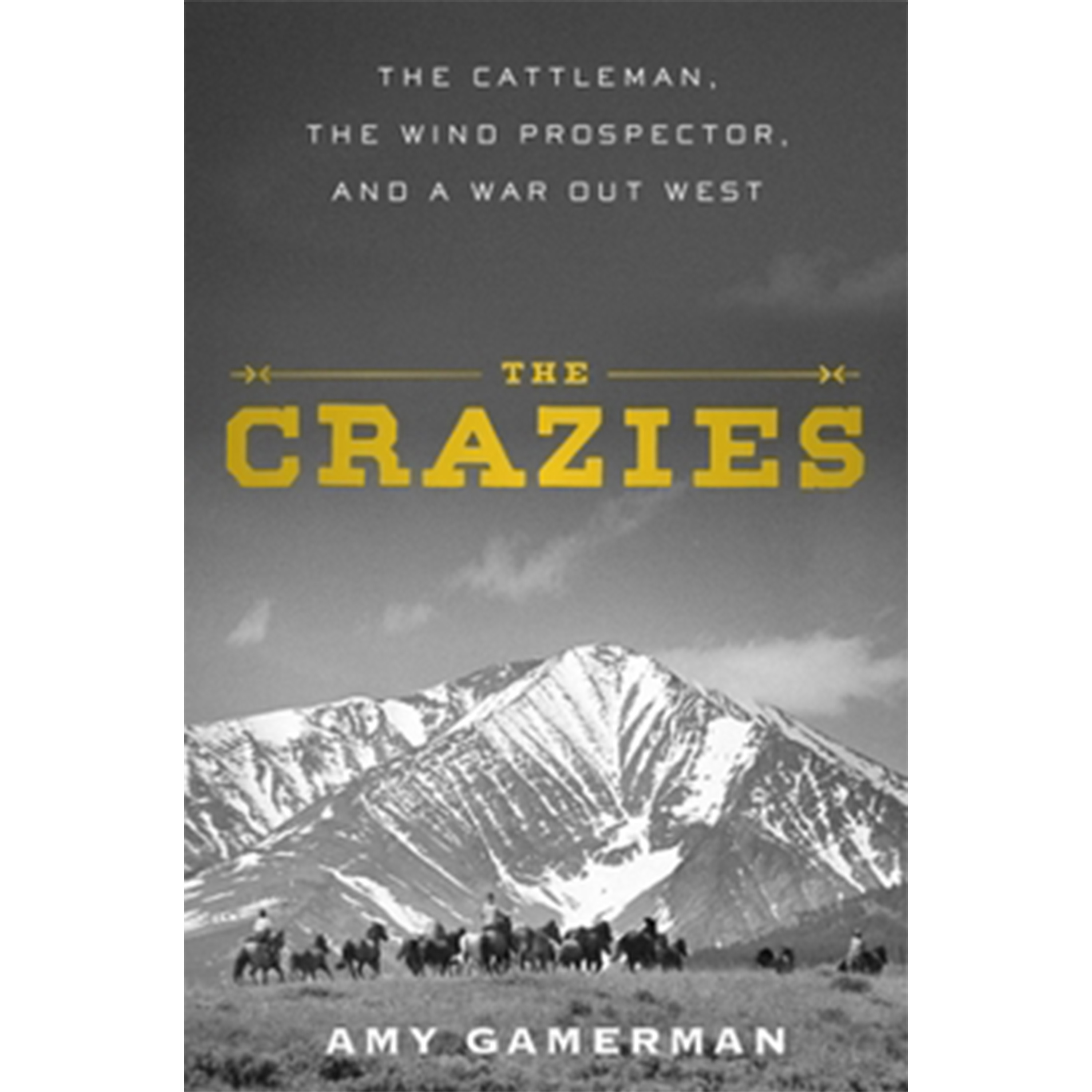
Welcome to A Book with Legs podcast. I'm Cole Smead, CEO and Portfolio Manager here at Smead Capital Management. At our firm, we are readers and we believe in the power of books to help shape informed investors. In this podcast, we speak to great authors about their writings the late, great Charlie Munger prescribed using multiple mental models and analysis. We analyze their work through the lens of business markets and people. In this episode, we will have a conversation about some of the issues that come with the expanse of the American west, particularly Montana. Amy Gammerman is joining us to discuss her recently published book, the Crazies, the Cattleman, the Wind, Prospector and a war out west. Ms. Gammerman has written about real estate and culture for the Wall Street Journal for more than two decades. Her work has been recognized with multiple awards to the national association of Real Estate Editors. Her writing has also appeared in Vogue, Redbook, and Departures. She attended Yale University and King's College, Cambridge. And Craziest. Amy, is your first book?
- [01:24]
C
Yes, I'm a very late bloomer.
- [01:27]
B
Well, so I always ask authors this because, you know, based on your background, you know, you know, and you've written a lot on real estate and culture and things like that. What brought you to the story? Something had to, there had to be a real estate transaction or something that you caught and said, wait a second, there's something bigger going on here.
- [01:46]
C
Right. So for many years I have written for the Wall Street Journal's personal real estate section, which is mansion and it's not entirely tongue in cheek. It is a real estate section that is devoted to the homes, the beach houses, the private islands, the ski chalets of the 0.00001%.
- [02:12]
B
Sure.
- [02:12]
C
And back in 2017, I decided to write a profile of a Texas oil and gas billionaire who collects ranches. He loves beautiful land. You know, some rich guys buy baseball teams, some get thoroughbred horses. For, for Russell Gordy, my Texan, the passion was beautiful land. He had grown up poor. His, his salvation as a, as a young person had been his summers on his grandparents farm in Louisiana. And he just grew up with this passion for land. So by the time I met him, he had amassed a collection of hundreds of thousands of acres. I think that at the time when we added it all up, it was something like a $96 million collection of ranches across the West. And I decided to write a profile of him and his beautiful ranches. And we were gonna do a little tour, and we decided to just focus on three of his favorites, okay? And his ranch in Montana's Crazy Mountains was the jewel of his collection, like, his absolute favorite ranch. When he bought it, he set a record at the time in the state of Montana because it was the biggest land transaction that the state had ever seen, both in dollars and in sheer acreage. He. In one fell swoop, he bought something like seven individual ranches to put together this enormous piece of property that stretched from the banks of the Yellowstone river up into the Crazy Mountains. And just a stunning, gorgeous piece of land, right? So I went out there. We were touring the ranch and kind of walking around on the ruins of this old hot springs resort. It burned down about 100 years ago. And while we were kind of taking it all in, he mentioned just kind of, like, in this offhand way that, you know, he had. He'd been thinking how fun it would be to rebuild this spa. But the rancher just over his borderline to the south, wanted to develop his land for wind, for, like, a wind farm. He wanted to put wind turbines out there and lease it for wind. And we'd been having a very kind of pleasant conversation. And when the subject of this wind farm came up, this billionaire, his whole face clouded over, and he started telling me how awful it was going to be, it was going to ruin all his views, it was going to kill all the birds he loves to hunt and etc. Etc. So I asked him, kind of joking, but kind of not, you know, why don't you buy this guy out? And he said, I've tried. The man is not interested. He is set on doing that wind farm. And I went home, I wrote my profile, and even though this exchange had absolutely nothing to do with the story I'd gone out there to write, I would just find myself thinking about it. And not just, like, thinking about it a week later. Like, months would go by, and I would suddenly wonder, you know what I wonder? What? How, like, who? Who? First of all, who is this neighbor who said no to this billionaire? A man who is not used to hearing the word no. Who is that guy? And whatever happened with his wind farm? Like, did he. Did he build it? Like, what happened?
- [06:03]
B
Sure.
- [06:04]
C
And about a year and a half, or maybe it was more like two years later, I stumbled across this news item in a local Montana newspaper. Just a very random Internet trawl that Referred to a lawsuit that was unfolding in the Crazy Mountains. And it was over a wind farm, a proposed wind development.
- [06:28]
B
Okay.
- [06:29]
C
That a couple of old, long time generational ranchers wanted to do on their land. And they were being sued by a collection of llc is all very anonymous sounding.
- [06:41]
B
Sure.
- [06:43]
C
You know, Wild Eagle Mountain and Rock Creek. And one was called Diana's Great Idea. And I started looking into who these LLCs actually were.
- [06:53]
B
Sure.
- [06:54]
C
And what I learned was that they were attached to some of the wealthiest people in America who all owned ranches right there in this little corner of Montana.
- [07:04]
B
Yeah.
- [07:05]
C
And at that point I just like we were off to the races. I got very interested. I found the lawyer who was representing the ranchers. I began learning about it and you know, just became obsessed.
- [07:17]
B
Nice. Well, and just to, just to set the stage, we're actually, I'm gonna show a slide here that includes the map just to give our listeners a sense of, you know, what we're talking about. And so I think we'll see here on the screen, here is the map from your book. And I want to bring up, you know, kind of another question out of this because you, you note, you know, who owns these various parts of land. But to give the historical context, this land came about from really the government, you know, many, many, many, you know, years ago through the Northern Pacific Railway, now part of, as, you know, part of the Burlington Northern, you know, Santa Fe Railroad, obviously owned by Berkshire Hathaway. But how did this land, you know, how was it determined from the railroad? And you talk about this idea of a quilt. And as we can see from this map, the quilt is still a quilt, Right.
- [08:13]
C
Well, I mean, it's funny, we're coming up on President's Day weekend right now as you and I are having this conversation. And a lot of land issues in the west all date back to something Abraham Lincoln did at the height of the Civil War, which was he decided with everything else that was going on, he felt that it was really important even though the nation was at war. And it's very survival was, it was an open question at that point, our survival as a Union. Abraham Lincoln was absolutely committed to creating a transcontinental railroad. He felt it was absolutely essential to the future of the United States that there be. That there be the series of railroad lines that would move across the country. But the government didn't have the money to pay for that itself. Now in the west, particularly where you had various gold and silver rushes on, where people were extracting a lot of gold you know, this question of how do we get that gold and claim it for the Union. Like, you needed railroads to bring out smelting equipment and stampers and all these other things. So in order to get this railroad track laid out across the west, what Congress did was it essentially granted land to railroad companies and said, you know, we will give you this land so that you can lay track across it. We're going to give you every other parcel of land. So hence this checkerboard pattern. So, and those are.
- [09:51]
B
Those are 640. I was going to say 640 acre parcels, if I remember correctly.
- [09:55]
C
Yes. And in fact, in some places the bequests would be larger or smaller for some reason in Montana, and some places it was large anyway, but 640 acre parcels of land alternating. So the railroad took that land and that it was free to do whatever it wanted with, with it. It could lease it, it could, you know, timber it, it could sell it and so forth. So at some point, the railroad went bankrupt and began selling off all of that land. And that's how you have these chunks of. You'll have wilderness, federal wilderness in some places where there's chunks of private land there as well.
- [10:43]
B
Sure.
- [10:44]
C
And it all dates back to this legacy of the railroads and how they, how they created these lines, these transcontinental lines.
- [10:53]
B
Sure.
- [10:54]
C
And if you look at a picture, you know, of the Crazy Mountains, for example, you will see, you know, if you look at a Forest Service map, you know, you will see like these alternating squares of different shades of green that's indicating what is owned by the people, what's public land, and what is now privately owned land.
- [11:16]
B
So, and to your point, I think you mentioned Jay Cook, who is obviously who was the financier behind the Northern Pacific. You know, I think he got washed out in the panic of 1883. His Philadelphia bank was involved in that. And so you not only have like the tumult of the railroad business, which has been talked a lot about in light of what's going on in the Capex of AI kind of in similar scale, but they had to, you know, when these reorganized, they had to sell land to effectively create cash, because it wasn't like that many people were going west and hence begets this land sale to some of these original pioneers. So, you know, you start off your book talking about Rick Jarrett and his family. Can you kind of teach us how they ended up there, how they got the land and really kind of the legacy of that.
- [12:01]
C
So the person who is at the heart of the Craziest that this, the, the hero, the protagonist, antihero, whatever you want to call him, sure is a fifth generation rancher named Rick Jarrett, whose family had been on this land pretty much from the moment that the Crow tribe was pushed off it. Okay. There was no coincidence in the timing. His people had come over and covered wagons and they were, they were pioneers and they had been there from the earliest days of settlement, of white settlement. And over the generations, this ranch had gotten smaller and smaller and smaller as family ranches do. And by the time Rick was, by the time I met Rick, a ranch that had once spread across both sides of the Yellowstone river and had been, you know, many thousands of acres was, was quite whittled down. It was much smaller. And even that to hang on to that had become so difficult because cattle ranching is, it's a very, it's a very difficult business to make a profit in. And most branching families have somebody in the household who's holding down a job in town just because you, you just cannot make ends meet by raising beef cattle anymore. And he had, he had tried over the years all kinds of different ways to generate other money making enterprises on his ranch so that it would be there his grandkids, like that was his, that was his thing. Like, I'm just borrowing this land from my grandkids. I want this land to be there for them.
- [13:49]
B
Yep.
- [13:50]
C
And so even though this guy was, you know, a red meat Republican in every sense of the word, didn't really believe in climate change, he found, he, he found himself in this interesting position of embracing green technology because Montana's wind is among the best wind in the country. And people were starting to realize that you could harness this wind like a, like a resource.
- [14:20]
B
Sure.
- [14:21]
C
And, and use it to power people's homes and, you know, heat their homes in the winter and provide electricity, all those other good things. So even though he was on the fence about climate change, he embraced this idea of becoming part of the green energy revolution because the revenues from selling his wind would enable him to secure the future of his ranch.
- [14:47]
B
Sure. You also talk about water rights. I mean, there's a lot of conversation like, I'm in Arizona, water rights are a big deal. Most people know this. But to build a single family house here, you have to have 100 year access to water to get a permit, as an example. Okay. And you tell a little bit of story that Montana, if I remember correctly, it has to do with when did you get your land? Dictates a lot of, you know, how many I think it was inches you get of water.
- [15:14]
C
Deeded water rights. Okay. Yeah. So this, this gets all a little bit complicated and highly technical, but bottom line is water rights, when. When you buy a piece of land, it might even. It might have a river running through it or a stream. But in Montana, owning the land that that water runs through does not give you ownership of the water.
- [15:37]
B
Okay.
- [15:38]
C
You have a right to. To take a certain amount of water, and that right goes back in time. And so there are these things called deeded water rights. And the more senior those water rights are, the more claim a landowner has to the water, if that makes sense.
- [15:57]
B
Sure.
- [15:58]
C
So, you know, I don't know if I can say this on your podcast or not, but as water is one of the most contentious issues in the, you know, in the. In the high desert of. Of many western states, Montana being one of them. And Rick once said to me, you can. You can steal a man's wife, but you don't with his water. And that was. And he always feared that once his wealthy neighbors stopped suing him over. Over the threat that he posed to their beautiful scenic views.
- [16:41]
B
Yeah.
- [16:41]
C
He believed that the next thing that would happen was that they would come after his water and that his water rights would be. Would be at risk.
- [16:51]
B
Sure. Now, you mentioned this quickly, but I just want to touch on this. You talk about how these family ranches pass down. You know, it is an asset the family owns, but it's not like giving away parts of your business for legacy planning the next generation. They really have to buy it from the current generation, and that becomes the retirement for the prior generation. Is that a fair way of thinking about it?
- [17:14]
C
Yeah, I mean, I think, you know, you may find some examples where a ranch has been handed down, but I haven't come across any myself. Sure.
- [17:26]
B
Or that that might be what the oligarchs do. That's not what the, you know, the family ranches.
- [17:31]
C
Yeah. I mean, I mean, here's the thing. Like the. The generational transfer of a ranch is in. In a way, a traumatic event.
- [17:38]
B
Yeah.
- [17:39]
C
Because first of all, in order for the parents to pass it on to the children, the children have got to somehow buy them out. Because ranchers do not have 401ks. They don't have retirement accounts, any money that they have earned over the course of their working lives that generally plowed back into the ranch.
- [18:01]
B
Sure.
- [18:02]
C
So the kids have to compensate them. They have to buy them out. And then you get into the situation of, well, you know, if you have siblings, like, how do they divvy it up? You know, who gets what? Like who's going to. Who's going to get the ranch? And there is tremendous amount of bitterness often associated with the, with the changing over of ownership of a ranch. It's. It is a. A very complicated thing. And, you know, the closer to the bone these operations are, the more difficult and loaded it becomes. And it's one reason why many of these small generational ranchers end up selling to, you know, a billionaire or a millionaire who's putting together their little recreational retreat. It's just. It's too hard to make a go of it. It's too hard to pass it to the next generation in some cases. So it is a. It's a really loaded thing.
- [18:59]
B
Yeah. When it reminds me, you know, just reading about this, it comes off as a wonderful hobby, but a terrible primary business, if that makes sense. Your point? There's not good margins. It's very cyclical business. I think you mentioned with the Jarretts originally, they did sheep because they would share the sheep, and that business got tough because when wool prices were poor, they effectively went into cows eventually and did cattle instead. You, you also tell a story of the Crow Nation, which I really love this part of your book because this also kind of begats the idea of why do they call them the Crazy Mountains? And you even throw. You threw little breadcrumbs out there on like, you know, I've been to Custer's Last Stand numerous times in my life as a kid, and it's like, I don't remember the Crow fighting with Custer, but to your point, they did.
- [19:46]
C
No, no, no, they didn't actually. The Crow were. The Crow were allies.
- [19:51]
B
Oh, no. Yeah. When I say fighting, you know, alongside the Union, not. Not against the Union.
- [19:56]
C
Yeah, yeah. So all of this land that we're talking about, and for your listeners who, like we're saying Crazy Mountains, they're like, what the heck is that? Where is that? We're talking about an island mountain range, which, you know, a range of mountains that is not connected to anything around it. Just like this literal island of peaks that just pops up out of the prairie in south central Montana. And it's between. To those. To your listeners who kind of know Montana a little bit, it's sort of between Billings and Bozeman. So. So it's right there kind of in the middle south, middle of the state. And that entire area was once Crow country. It was the ancestral lands of the Apsalika people, the Crow people. And the Crazy Mountains were this Sacred place for the Crow. They were a place where, if you were a young person who wanted to prove yourself to your elders, you would go up into these mountains, and you would fast for days on end. You'd go without water and food, and you'd just, like, lie in this bed of rocks and wait to be visited by a dream.
- [21:14]
B
Okay.
- [21:14]
C
And then you would take this dream, this dream that would give you some kind of insight or power, and then you would take that back down with you from the mountain. So a hugely important landscape to the Crow people. And then the Crow were pushed off of this land by a series of acts of Congress to make way for white settlers like Rick Jarrett's ancestors. And they were pushed onto a reservation 200 miles to the east. And, you know, the relationship to the Crazy Mountains would have seemed to have been completely severed, but it never was. It remains a very vital connection to this day. And so a big part of my book is really these cycles of dispossession that have taken place there.
- [21:59]
B
Yeah.
- [22:00]
C
And that it begins long before the story of Rick Jarrett and his struggle to hang onto his ranch, because the story of the Crow people there before him is very, very relevant. And I was fortunate enough to meet a Crow educator, leader, activist named Shane Doyle, who has devoted pretty much his life's work to reestablishing this important spiritual and physical connection that the tribe has to the Crazy Mountains, which is very difficult because they are, for the most part, privately owned.
- [22:39]
B
Yeah.
- [22:40]
C
So he has been working to get access for Crow people to climb back up into Crazy Peak now that it is owned by a billionaire.
- [22:49]
B
Yeah. We'll come back to Lucian later. We'll come back to that. Because he's, like, on all sides of this, and so I find him to be. He's the Rubicon of this story. Like he has. Once you get past him, you've touched all sides in my mind. Hi, I'm Cole Smead, CEO and portfolio manager here at Smead Capital Management and host of this podcast. If you enjoy this podcast, I'd like to invite you to check out smeedcap.com at our firm. We are stock market investors. We advise investors who play the long game with a discipline that has proven success over long periods of time. Learn more about our funds@smeecap.com past performance is not indicative of future results. Investing involves risks, including loss of principal. Please refer to the prospectus for important information about the investment company, including objectives, risks, charges, and expenses. Read and consider it carefully before investing Smead funds distributed by Smead Funds Distributors llc. Not affiliated. Quick question. Because, you know, to your point, there is a timelessness to the principle you just mentioned. Okay, so the more things change, the more they stay the same is kind of what you're pointing out in this area of the world. You know, you talked about how a rancher could lose his cows in 1886 to winter. They would just die from, you know, frost and snow.
- [24:13]
C
It was a terrible winter. It was like an. It was a historically terrible. The great die off, they called it.
- [24:20]
B
Correct. Yeah, correct. But the weird part is, I mean, calves and cows can still die in a bad winter in Montana, can't they?
- [24:28]
C
Oh, they can and they do.
- [24:30]
B
Yeah. So that part of it is like, that's the timelessness of the story is, yes, it's changed, but it's still Montana, it's still rural, and it's still, you know, there's still bad weather and these are the businesses they're in. You talked about Russell Gordy. I just want to touch on, like you, the paradox of Russell Gordy, if there's such a term to be used. The paradox of Russell Gordy that you point out in your story is he loves the crazies, he loves his trophy land. But when it came to the land that his business dealt in. Oh, well, yeah.
- [25:05]
C
Russell Gordy is someone who has made his fortune drilling, fracking, leasing land for coal mining and other forms of incredibly invasive extraction. And some of that has taken place in some other very beautiful parts of the country. But that land kind of fell into a different bucket than his beautiful ranch land. Like that land was. That was business. Right. And this was. This land was part of his. His legacy for his family. And it was a real kind of split screen way of looking at. At land with it, with a true contradiction at the heart of it, for sure.
- [25:53]
B
Sure. When you mentioned, you know, he did a lot of work in methane gas. Right. And you talked about the process to extract that you had to pump water in. And then once you got enough pressure in the well, you talked about how much gas could be extracted from those.
- [26:06]
C
And you kind of give some coal bed methane. Yeah, yeah. It's a form of. Of natural gas that is extracted from coal formations. And it's a bit like fracking. Yeah.
- [26:19]
B
But you talk about like the Halliburton loophole, for example, where like everyone else that touches water has certain provisions that they have to fulfill under federal programs. But there's the Halliburton loophole.
- [26:32]
C
Yeah, the Halliburton loophole. And, you know, I don't want to get too deep into the weeds on this. But basically this applied to like the kind of water you could use to fertilize frack with. And fracking basically involves pumping huge amounts of liquid of a type of water called slick water into the ground into a rock form formation to actually shatter it. And that shattering of the rock is what releases the, the shale gas or the methane, whatever kind of is, is trapped in the matrix of that, of that coal or that shale. And so there was a loophole that created a carve out for that type of activity where people who fracked didn't really need to disclose what was in the water.
- [27:28]
B
Sure. Or how they treated it after they used the water.
- [27:31]
C
Exactly, yeah.
- [27:33]
B
So you talked a lot about Gordy on this. So I just want to ask this because this is, you know, you've done a lot of work on large estates, mansions, ranches like this. If you were looking for a large ranch, what are the databases and websites because you talk about these various places during the book. What are, what are the big websites out there? What are the big databases that someone would go to to go down this rabbit hole of I'm a millionaire, I'm a billionaire and I want to go out and buy some, you know, incredible estate.
- [28:00]
C
You're looking to buy your own trophy ranch?
- [28:02]
B
No, I'm definitely not. No. But, but again, I just, I was you.
- [28:06]
C
How would you go about it?
- [28:08]
B
How would you go? Or what brokerage firms would you call? Yeah, what brokerage firms would you call?
- [28:11]
C
Okay, so, you know, the rise of this ranch real estate industry really began I think with, with Malcolm Forbes. He might have been one of the, or perhaps Ted Turner. I mean who, where do you say it began? But at a certain point, land brokers out west realized they traditionally when you sold ranch, you would value it based on the number of head of cattle you could run on it. Like that was the valuation. And at a certain point there was a shift in perception as, as ranch brokers realized that for wealthy people, particularly, you know, Easterners, that there was a tremendous romance to the west. And that also it was, you know, the notion of a place where you could go fly fish, you could go ride horses, that there was this scenic value to the land, an emotional value to it. And the industry really evolved by leaps and bounds to accommodate that. And so you have some firms that specialize in very high end ranch transactions. I think one of them is hall, and hall is a leader in this. Fay Ranches is another. And these, the brokers who work for These. These ranch brokerage companies are extremely experienced and practiced at dealing with not only all the myriad issues involved and what, you know, assessing a ranch and figuring out how to value it, all that stuff, but, like, understanding all the complicated issues that go into owning one.
- [29:54]
B
Yeah.
- [29:55]
C
Which their clients may not always know.
- [29:57]
B
Yeah. How to market this. I think you told the story where someone was going to sell a piece of property, and as soon as they got on the road, they didn't even get to the house. They quickly turned around because they decided it wasn't for them. So, you know, very particular buyers. The other story that was very unique that I could tell you, must have had fun with. You talk about the Clovis child, and this is super cool, in my opinion. You talk about the Clovis child. This was found off of Willsaw Peak, you know, near, I think, what is considered Willsaw, Montana, Near Willsaw. Yeah. And can you tell us, can you kind of teach us why it was so unique? I think you talk about, you know, what the DNA connection was, but really who the strongest ancestors are.
- [30:43]
C
Yeah. So I'm glad you brought this up, because this was one of those stories that just. It just brought home to me the emotional stakes of this battle over land and the view and the Crazy Mountains. And why, you know, why were people so up in arms over this? You know, there was this. This was a really heated battle over essentially, like, a patch of dirt and the view on that patch of dirt. And why did they all care so much and what was its stake? And then I learned the story of the Clovis Child. Now, the Clovis child lived about 13,000 years ago. His skeleton was discovered, I believe, in the 60s in the side of a cliff that kind of rises up from the valley floor facing the Crazy Mountains.
- [31:37]
B
Okay.
- [31:38]
C
And some local guys were excavating loose rock from the side of this cliff for a construction project. And suddenly they noticed that this big, shiny rock had tumbled out. And they went over and looked, and they saw it was like this obsidian polished disc. And there were more things in there. Like, they started. They went back at night and started digging in there. And there were over 100 beautiful stone tools that had taken untold hours to create. And under these stone tools was the skeleton, the tiny skeleton of a child. And years later, when, you know, forensic DNA testing on ancient remains had evolved to the point where you could look into this, it was ascertained that this child, that the genetics of this child linked him to something like 80 or 90% of all indigenous people. For whom DNA exists, you know, for the purposes of comparison, you know, where we have a DNA sample to check it against that he was related to almost every indigenous person in north and South America.
- [32:59]
B
Yeah.
- [33:00]
C
And the paleogeneticist who had done this research said to me, you know, I'm a scientist, so we never use. We never. We don't like to use language like this, but if you are ever going to call someone the Adam of the Americas, then this child was that Adam. He was related. He was the ancestor. And, you know, where in the world did this child's people who. Who were epic world travelers who had, you know, perhaps were just several generations removed from the group of people that had walked across Beringia when the continents were still connected.
- [33:42]
B
Sure.
- [33:42]
C
And there was still a land bridge that connected Siberia to this continent. Where in the world did these people choose to place this remarkable child? They placed him here in the Crazy Mountains. And if this kid was Adam, then this place must have been Eden. And when I realized that, and when I stood on the site where this child had been found, and I've looked up and realized that the sun, as it rose every morning, would have hit his burial spot, that would have been the first thing the sun's rays touched. It just sent a shiver through me. And I thought, well, gosh, no wonder they all care so much about this place. There's something very special about it. This is. There is something exceptional about these Crazy Mountains and the emotions that it evokes in people.
- [34:33]
B
When, to your point, it's not like you have everybody saying, hey, by the way, Montana might be the center of the Americas at one point in the history of the world, and you just don't hear that. So I want to go to more of the characters, because you slowly parse these out in the book, and I think it's wonderful storytelling. The Cargill legacy is wrapped up in the story. Can you teach us kind of briefly about the McMillans, how they ended up there? And these are very private folks, as the Cargill family has been.
- [35:04]
C
Yeah. So Cargill is one of the world's largest privately held companies. It's an agribusiness company. And you may not realize you're using their products, but you are, because they're part of the food web that sustains a lot of the processed. All the processed food industries. Like, they are the. They are the company that produces the, you know, cocoa that goes in your chocolate milk and the eggs that go in your McMuffin. I mean, they are completely. They are creators, producers, transporters, Of. Of all of these commodities that go into much of what we eat. And the family. At the heart of this. Of this company is the McMillan family. And Whitney McMillan, who was the last family member to run Cargill, loved. Loved ranchland for men of a certain generation. I found that the idea of the west has a tremendous romance. It has a tremendous. It captivates them. And Whitney McMillan had grown up very sheltered, very protected. In Minnesota. He was a small child when the Lindbergh baby was kidnapped. This was a sensational crime of its day. Charles Lindbergh and Anne Morrow Lindbergh, who were famous in aviators, you know, real true global celebrities, had a little child, a toddler, who was kidnapped from his bedroom, and a ransom note was found, and the child later was found dead. And I think Whitney McMillan was the same age as the Lindbergh baby. He was like a contemporary of the Lindbergh baby. And for wealthy families across America, that kidnapping just sent an epic shockwave, you know, rocked them to the core. So he was very, very protected growing up. The children, they didn't. They didn't really. They didn't go to summer camp. They. They. They were pretty much raised on the family compound on Lake Minnetonka. And I imagine that for him, the open spaces of the west and the freedom of the west, you know, much of it must have had just this tremendous allure for him growing up, because his childhood was so sheltered and so protected. And he owned this beautiful piece, or, you know, the family still owns a ranch in the Crazy Mountains that is very, very high up. It takes 40 minutes to drive there on a dirt road from the closest little major road and very remote. It was a. It's a serious cattle operation. He raised cows there and. And for many years, sold them himself when it was time to sell the cows. He took pride of doing that himself. And it was like a retreat for the family. It was a special place. All of the grandkids learned how to drive on an old truck that was on the ranch.
- [38:26]
B
And you talked about also, like, for the McMillans, privacy was really important post the Lindberghs. And so this is a very private rural place to hang out. It's not like, oh, yeah, people are gonna pop in and say hello. I mean, they're. They're on their own. The other character that's, you know, just. He is. I mean, his name's Marty Wilde, but I think he's kind of like the wily coyote of your story, right? Where he's. He's just kind of like everywhere and somewhere. And. And he's talking to everybody and.
- [38:56]
C
Yeah, yes, yes. I'll tell you about Marty. So Marty was Marty Wilde. Like, what a great name. I couldn't have invented that name.
- [39:04]
B
Yeah.
- [39:05]
C
Marty Wilde was like the modern incarnation of the gold prospectors that flooded into Montana in the 1850s and 60s. Sure. He was like paranoid and very. And shrewd and wily and ingenious. And instead of searching for gold in a stream with a pan, he was searching for his gold in the air because there were these. He realized he was a brilliant engineer. He was tremendously. This was a very complicated guy, but very brilliant. And he had realized while he was living on an Indian reservation, a black. The Indian reservation in northern Montana. He learned that there were these federal subsidies that were available for wind development because at that time the government was actually trying to promote developing alternative forms of energy with a particular interest in renewables. And he got into this because, you know, he could see a way where he could, if he could get a pro, you know, like find really good wind and create a package, he could sell it to a big developer. He could, you know, like flip it and make money that way.
- [40:28]
B
Yep.
- [40:29]
C
And he had actually driven up to Wild Eagle Mountain Ranch and introduced himself and said, hey, you got good wind up here. And I think they, I think they sent him packing. I don't think, I don't think he got past the ranch managers gate before he was turned around.
- [40:47]
B
We hope you're enjoying the podcast. You know, we work hard putting together this show, but we work even harder for our investors at SMEAD Capital Management. At smead, we believe in disciplined investing, which is why the SMEAD funds have a proven track record of long term outperformance. If you're an investor who plays the long game and want to invest in wonderful companies to build wealth, we invite you to visit smeadcap.com Past performance is not indicative of future results. Investing involves risks, including loss of principle. Please refer to the prospectus for important information about the investment company, including objectives, risks, charges and expenses. Read and consider it carefully before investing. SMEAD funds distributed by SMEAD Funds Distributors llc. Not affiliated. So he first seeks to build a company called Coyote Wind. And you walk through this as like their first run at, you know, really doing this wind farm that becomes so controversial.
- [41:42]
C
Rick and Marty, yeah, they start out.
- [41:44]
B
With this and this is smaller scale. I think if I remember correctly at the time, they were trying to package this up and sell it off to a Spanish, you know, power company at that time. And you kind of gave the story of the Spaniards and you know, their involvement in gold, et cetera. So it has some historical tones to that. You know, when he's going to do that, I think you talk about he's just going up and putting these big antennas up to try to figure out what the wind power is. And even that was pretty janky. I mean like his readings weren't very good. There was just a lot of problems that went with Marty.
- [42:16]
C
I have, I'll back up a little bit here. So Rick at some point heard a radio program. You know, I mentioned that Rick the landowner, the rancher, the old crusty guy, fifth generation rancher who is walking around in suspenders that are held together with duct tape. Right. He is a broke ass guy looking for a way to hang onto his land. And at some point he heard a radio program about wind and wind development and, and that Montana had this great wind. And he started asking around and someone said, oh well, you should talk to Marty Wild. So Marty Wild came out to his ranch and these two men, they hit it off. Like these were guys of a certain age, single, loved the ladies, had dalliances.
- [43:05]
B
Yeah, that's what these guys, these are like Montana players.
- [43:10]
C
Oh my God, they were so. It was, it was so game, recognizing game. When these two men met each other, they hit it off immediately. And so Marty had these things called met towers. It's a. Okay, short for meteorological tower. And it's basically like a tall pole that you put up and it has all kinds of instruments and gauges on it that measure different things. Basically measuring the wind and the quality of the wind. And you know, the wind was, I think Marty, when Marty really loved, when he'd say it was screaming, he had screaming wind there. He went out on it on a day, I think when the wind was just howling. And they came up with this name for their project of KYO Wind.
- [43:56]
B
Yeah.
- [43:57]
C
And you know, there was a very long, there's a very long history of them trying and failing to get one project after another off the ground there and has nothing to do with the quality of the wind, which is, it's just, just like million dollar wind. But they keep running into different roadblocks each time.
- [44:18]
B
Yeah, you also talk about the legal conflict. So. And this came up numerous times and for different reasons, I would say. But I think you gave an example where Marty. So the Department of Natural Resources and Conversation or the DNRC in Montana goes out to say, okay, let's look at places in the state that would be Good for wind projects. Okay. And so I think in the book you referred to section 36, which section 36 was a place highlighted by them. But then when you look below the surface, say, well, who consulted to them to come up section 36, which is, you know, this place and the crazies. Well, who it is, other than Marty Wilde is the consultant right now, that's never disclosed, that's never talked about. But again, it's Montana. Like those conflicts are kind of present in some cases already. And people might know that.
- [45:07]
C
Right. Well, there are these. Montana and other western states may have versions of this too, but there are these sections of state owned land that are called school sections. So basically any revenue that's raised off that land goes to the state's colleges and sometimes their high schools. So it's to benefit the education system of the state. And there was a school section that was. That Rick had leased for decades and he grazed cows on it. He leased it from the state and paid them a leasing fee on it. But at some point the department realized, you know, we could lease a section of land twice because, you know, with wind development, we can keep that land in rural use. We can graze cows on it and we can have wind turbines on it. So we can actually, you know, it's a way to help rural people who are looking for a little extra source of income. We can keep that. We can make sure that land doesn't, you know, it stays. It's still, it's still building an agricultural function. So they had hired a consultant to go find out what sections, what school trust sections of land had the best wind. And they hired none other than Mari Wilde. Yeah. And Marty saw that this section that Rick had been leasing was like the dream section, and then very quickly filed his own application to develop wind on it.
- [46:43]
B
Yeah, no, no problem.
- [46:45]
C
So it was a little bit. I don't know if we could call it double dealing or self dealing, but it was. There was something a little not kosher about it, but that's how Marty rolled.
- [46:55]
B
Well, to your point, this is very common in the West. So for example, in the state of Arizona, our gold or our oil, if I'm using the Dubai or the kind of the Middle east view of it, our oil is land. And so the state of Arizona, the state owns a lot of land. And so what they do is they sell that off in pieces, typically to say single family home developers in tranches. And all those lease payments or purchases are accumulated into what they call the state land trust. And that state land Trust here in Arizona has to invest. But all the proceeds of it, to your point, go to education. So that's a very common thing of the west, very much in all these states. We were the last contingent state. So it's no shock that we're very similar to Montana in that respect. Alfred Anderson is the next door neighbor to Jarrett. He is. My impression, him is. I see a white haired guy, wrinkled face, really calloused hands, and he is just the ultimate old man in the mountains. Ranching.
- [47:58]
C
Yes. Alfred is in his mid-90s, still going strong. Alfred's parents were Norwegian immigrants and they settled in the crazies. And his parents had actually worked as laborers on other ranches. And while saving the money to get their own piece of land, which was this little square, like two squares of land that they were able to get. And that's where Alfred spent his days that he had been a lifelong rancher and got up every day into his 80s and early 90s to go out and feed his herd and, you know, do all of the chores that he was doing 20 years before, 40 years before, just a committed lifelong rancher. And Rick and Marty approached him about putting some wind turbines on his land too, because for a wind project to be really economically viable, you need to have more turbines. And they wanted to make this, you know, they wanted to give this. They wanted to make it attractive to investors.
- [49:08]
B
Sure.
- [49:09]
C
And Alfred initially wasn't so sure about it, but he came around. He came around and decided that this could be a good thing and that, you know, you know, maybe he could use that money to build a tool shop. Like he'd never had a tool shop on the ranch, or he could.
- [49:24]
B
Or a $10,000 bull, or a $10,000 full, which is a reference to the book, just so everybody knows it's a. You should catch that part of the book because it becomes critical in the court case. But again, this old man has this dream about this prime bull.
- [49:39]
C
Yes, yes. Well, the thing is, you know, when you spend any time with ranchers, you realize first of all that, you know, the raising cattle, it's a science. It's. There's so much goes into it. Right.
- [49:51]
B
Yeah.
- [49:51]
C
And so one element of it is genetics. And to get, you know, to get calves that are going to have more meat on them and be more valuable, you need a sire. You meet a bull with really great genetics, too. And bulls, like, it's like sports cars. Like, there are bulls that are worth. There are $2,000 bulls, and then there are $10,000 bulls. And Alfred had it in his head how amazing it would be. This man didn't dream of personal riches. He didn't dream of putting a hot tub in or, or you know, are getting a nice car. He dreamed of getting a $10,000 bull to, to sire his calves and improve. Improve their slaughter value is the actual term.
- [50:43]
B
So. So David Chestnoff is obviously in this story. He's the noted Las Vegas lawyer, you know, Suge Knight, Andre Agassi are customers of his. From a legal perspective. I was trying to think who else I had. Oh, Phil Ivey. Yeah, Phil Ivey and his famous divorce with his wife, et cetera.
- [51:02]
C
But Mike Tyson.
- [51:04]
B
Yeah. His house was known as the Cabela's on the Yellowstone.
- [51:09]
C
Well, he didn't call it that.
- [51:10]
B
He didn't, but everyone else in town did.
- [51:13]
C
So David Chesnaugh, who is like the ultimate Sin City litigator, like the most connected man in Vegas, the guy you call if, you know a little pack of cocaine falls out of your, out of your purse at a traffic stop or you know, or you hit someone with your car when you're drunk and you're a very wealthy, high profile person. Like, he's the guy you call. He's your go to. He will, he will pick up the phone at three in the morning and he will, he'll be there for you.
- [51:41]
B
Sure.
- [51:42]
C
And he needed his own place, like his happy place. And he loved Montana too. And he and his wife bought five parcels of land right on the Yellowstone river. The story goes that his wife, Diana, he and David and Diana tore these five parcels. And Diana, they were, they were debating about which parcel they liked best. And Diana said, let's get all five. And hence the name of the ranch. Diana's great idea. And the Chesnas built a magnificent wood and stone lodge right on the banks of the Yellowstone that you could see from the highway that. That goes along the Yellowstone. And the locals called it Cabela's on the Yellowstone because of its resemblance to the large sporting and hunting goods store.
- [52:36]
B
Yeah. Which if you grew up in the Northwest, when you cross over between Washington and Idaho on your way to Montana, you will cross a Cabela's as you enter the state of Idaho, right off the freeway of I90, might I add, so that I90.
- [52:50]
C
Exactly.
- [52:51]
B
That fits perfectly. So Monica, I don't want to pronounce her name correctly. Monica, is it Tranelle or Tranelle?
- [52:58]
C
Monica Tranel.
- [52:59]
B
I mean, this is crazy. It's like just to hear this, the other northwest connection, she went to Gonzaga. I Went to school with a lot of kids that went to Gonzaga. She's just this incredible Montana story where it's like, she's had highs, she's had lows, and she's just fighting away all the time.
- [53:16]
C
So, Monica Tranell. So I mentioned at the very beginning of our conversation that Rick and his neighbor Alfred were sued by their very wealthy billionaire and millionaire neighbors. And Monica Tranell was the lawyer who took them on as clients. She was initially hired by the wind development company that was leasing, that was going to lease the land for its wind farm. And she took on their case. Rick and Alfred became so much more to her than ordinary clients. Like, their cause was tremendous. It became really personal to her. It was almost like a crusade for her, because she was a ranch kid herself. She had grown up on a ranch in eastern Montana. And she said, you know, what's happening to these ranchers? Like, this is not the Montana I grew up in. I grew up with ranchers like Alfred Anderson and Rick Jarrett. And they work hard their whole lives. They don't complain. They are what, you know, they are the bedrock of this state. And they're just trying to make a living on their land, and they're going to lose their ranches if. If they can't. If they can't lease it for wind development and get this extra income. And Monica's story was incredible. Again, something I would not have had the imagination to make up. Monica had grown up on this ranch in landlocked eastern Montana. The only body of water was the irrigation ditch, I think, which the kids would swim in when it. When there was a heavy rain.
- [54:55]
B
Yeah.
- [54:55]
C
When she was at college, she got into rowing, into. Into crew, and she was really good at it. And while she was at law school, she. She began rowing on the Sky Kill river in. In Pennsylvania. She was at Rutgers Law School. And she just got good enough that soon she was being scouted. And she ended up going to not one, but two. Two Olympics and competing for the United States on the women's rowing team. And her story is a very, very compelling one for me because a kind of heartbreaking thing happens to her at the very height of her powers. And this question of how she's going to continue and what she's going to do to create meaning for her life really feeds into the relationship that she later develops with Rick and Alfred.
- [55:52]
B
Yeah. And to your point, I mean, she goes from being on the top of the world when it comes to crew, and then has kind of personal tragedy happen in her own, you know, Call it personal life with her, you know, with her divorce and she's got all these kids. And I mean, just the ambition like that.
- [56:10]
C
I would say. I mean, not to minimize divorce and all of the trauma of that, but when I'm talking about her, the personal setback that. That really most shaped her. And, you know, she's. She's been married and she has. You know, there was the difficulty of the marriage breaking up, but what happened was when she went to the. She. And she competed in the Atlanta Olympics, I believe that was 1996. 96. And the women's rowing team was the best in the world. They had won the world championships and they were favored to take gold in Atlanta. And these women were on the COVID of Time magazine like they were when Monica cracked a rib in practice. It was news in the New York Times sports pages. So they were absolutely in the spotlight, favored to win. And the day of the race arrives, and they came in fourth. And to me, coming in fourth in the Olympics seems pretty damn good. But for Monica, this was an absolute crushing defeat. And in some ways, this defeat would assume more meaning for her. Kind of more. As more personal. More of a personal catalyst in some ways, than all of the many successes she had enjoyed before. There was something about that defeat, that failure, that really carved itself into her soul.
- [57:41]
B
Well, to your point about the crusade, it's almost as if you got the sense that out of your storytelling of that event that she didn't want others to experience loss or, you know, a feeling like that, and hence why Rick and Alfred. She was so willing to go to the. Willing to go to the mat for them because she didn't want them to experience that.
- [58:00]
C
That is such. That's such an interesting insight into it. I mean, I have to say, it didn't. It never struck me that way that I. I think I can see. I can see what you're saying. There's a lot of. Loss is a really powerful theme throughout this book. Yeah, you know, it's. It's. I always said it. It feels like I'm writing a ghost story in a weird way because there's so much loss and absence and dispossession. And many of the characters in this book are haunted by something and for. For Monica, that she. She goes on to create a life of tremendous meaning and accomplishment. But. But, yeah, I think you have a point. I think there might have been something about fighting for Rick and Alfred that touched those deepest feelings about. Yeah. About. About loss.
- [59:00]
B
Brought to you by Smead Capital Management. Smead Capital Management understands how frustrating and illogical the stock market can be. If you're searching for funds with a proven track record, give the SMead funds a look. Or better yet, reach out@smeedcap.com and don't forget to mention you're a fan of the podcast. Past performance is not indicative of future results. Investing involves risks, including, including loss of principal. Please refer to the prospectus for important information about the investment company, including objectives, risks, charges and expenses. Read and consider it carefully before investing. SMEAD funds distributed by SMEAD Funds Distributors, llc. Not affiliated. You know, you talk about the court case itself when ultimately, you know what you refer to as the oligarchs, which would be Chesnoff and.
- [59:46]
C
Well, that's not my term. That is actually. That's Monica.
- [59:49]
B
I agree, I agree.
- [59:50]
C
I'm referring to them that way.
- [59:52]
B
She calls them the oligarchs. I'll just say the really rich people that own land, for lack of a better term, they effectively file a suit that, as Monica probably knew, that they were trying to delay this because Pattern Energy, the company that you talk about that's going to ultimately be the owner of the windmill, of the windmill project, is they have a deadline to meet with Northwest Energy, which is the utility, which is governed by the Public Services Commission there in Montana for rates and et cetera. And so as she's going through this, she's having to deal with, well, how are we gonna attack this? She's counsel to the landowners. Pattern has their own separate counsel, high powered firm. But in the middle of this, Marty Wilde dies. And again, to this idea of loss, it's like as you're recanting the story to your readers, it's like you get this sense that, like, losing Marty is kind of like the heart of this was lost cause. What would Marty say in that courtroom and what would Marty be doing? And he would just call it like it is. And no one was willing to just kind of call it like it is. Is that a fair way of thinking about the loss of Marty for her as the council?
- [61:10]
C
Yeah, I mean, I don't want to give away too much, but there are some very dramatic twists and turns here and some very tragic and a very unexpected, terrible thing happens midway through, right when this battle is heating up, as you say, and Marty and Marty dies and it becomes this kind of. He's like. It's like the specter of his absence is hanging over these proceedings. It's at one point Monica says, it's like there was a black hole in the middle. Because, like, if Marty were here, like, what would he be saying? What would he be doing? And she, in a sense, has to. She and Marty were very close. She had been Marty's lawyer. She had worked with Marty on his projects and helped him. You know, Marty was being basically rooked out of his commission for a wind project he had developed. And. And Monica went in there and. And banged on the table when she was like eight months pregnant and got him his money. And. Yeah, so they were very, very close. And he had taught her all about the wind industry. Like, everything she knew about wind, she learned from Marty.
- [62:19]
B
Correct. And she. And she also tried to use that later. She, She. I think you mentioned she ran for the Public Services Commission. She lost, but again, she learned all that from Marty.
- [62:27]
C
Yeah, Marty was really a mentor and the two of them were very close. And. Yeah, so there. Yeah, that was a really important relationship. And it's, you know, as you're reading, like, I hope that the. I hope you kind of. I hope the reader gets kind of sucked into the drama of it all because there are so many twists and turns and the court case itself assumes so many little dramatic reversals.
- [62:53]
B
And I also. Each chapter, you. You have a small snippet from the court case. And I would say about. This is my own read, so you don't have to agree with this, but about a third of the way in, you get locked to your point. You just get locked. And you're like, wow, I gotta just keep going. And this is such a. Cause you're totally intrigued. So one last thing I'd love to ask because again, I really like experiential reading. So I read and then it's like, okay, I gotta check this place out. So, like, I have visited, like, beehive kilns in the middle of Death Valley because of a story, right? And so here's my kind of, like, fun question. And by the way, just for our listeners to know, there's a lot we didn't talk about. I have a myriad of stuff we didn't talk about. Ephraid of Washington. We didn't talk about Purpa. We didn't talk about anything tied to really, the subsidies that were involved. I mean, there's a myriad of them.
- [63:47]
C
That's another day. It's all there. It's all there for another day.
- [63:51]
B
But for. For, let's say, a listener or myself, if I was going to say, hey, I'm going to fly in to say, you know, Bozeman or Billings, and I'm going To drive out to Big Timber. Where would I stay? Where would I go eat? Where could I go hiking? Where could I kind of experience the story, you know, for all the beauty that all these people showed up for?
- [64:15]
C
Oh, I love that. I highly recommend, even if you haven't read my book, that you visit Big Timber, Montana. It is a true western town. And it's a small town that in some ways has. Has maintained its. Its character even. Even now as the money, the big money seeps into town and people like Russell Gordy are buying up restaurants there and things that's changing as we speak speak. So go soon. But I would say go to Big Timber. You can fly into Billings or Bozeman. It's about the same distance. You will be treated to an incredible view of the crazies. If you drive from Bozeman, you will have the crazies keeping you company for a good part of your ride up to your west. And then stay at the Grand Hotel, okay, Which was. Which was built over a hundred years ago. And in the morning, go and get yourself an apple turnover at the Big Timber Bakery, which is an incredible bakery. It's run by a Mennonite. There's a Mennonite community. Hutterite. Hutterite, Some one sect of Mennonites, and they have a. They have a community outside of town, and they own this bakery. And the baked goods are insane. So go and have an apple turnover. And then I would say there is one road that leads up into the Crazy Mountains, and it is going to jar your coccyx. Like, it's like you're gonna feel every bump on this dirt road up into the Crazies. But there are public trails from this one access point. If you go up that way and you can take a little hike into the mountains, as long as, you know, check your weather, because it's not. Not a place you want to be if the weather suddenly changes on you. And there will be snow into July up there, but it's an incredible experience to be in those mountains. And. Yeah. And. And also there's so much to see. There's a museum there. And just to wander around, there's a. I don't know if it's open to the public, but at one point, Big Timber was the wool capital of the world. There was more wool exported from Big Timber Montana than anywhere else. And the wool house, which is this brick building by the train yard, still stands, and it still has wool in it. There is still sheep farming in Big Timber, and the wool gets stored there. And you can see generations of graffiti on the walls that sheepherders would paint their names and sheep paint on the walls of this wool house. And if you can get somebody to let you in there, I highly recommend it. It's just so much history inside one building.
- [67:13]
B
Yeah. Well, the other thing that reminds me of the west is obviously Lewis and Clark came through this exact area. My. My parents grew up in a small town called Washougal, where Lewis and Clark also came through. You talk about wool. There's a Pendleton mill in my parents hometown. So I. I just say that because, you know, a lot of this follows very, you know, things that I've seen in my childhood or experiences, et cetera. Also, Monica's car with all the kids stuff in it. It's like, I've been in that car. I have four kids. It was called a minivan. I totally get her. So I want to ask this as kind of a final takeaway. Where can people follow your work going forward? Do you have another book that you've sprouted off of all this work or, you know, where. Where are you on social media? Where can people continue to follow you?
- [67:56]
C
That's such. Well, I am. I will say this book took such a huge part of my life. It was five years in the reporting and writing of the book, and I have begun work on a new project. But it's a little too soon to say it's not Montana, but it is Western. Cool. And yeah, I would just say stay tuned. You know, you can. I'm on Instagram. I'm not. I'm not. Join. Join my 38followers on Instagram and I will keep you posted on my next moves. But this has really been a pleasure, and it's always such a delight to talk to somebody who's read the book so carefully and enjoyed it. And thank you for all your good questions and for giving me something to think about too.
- [68:42]
B
Yeah. And I've also thought, you know, the reason why I asked one of those last questions was because I was like, gosh, maybe I'll have to call up Amy. I'll bring up like a group of 10 couples, and we'll spend a weekend in Big Timber and we'll just kind of like, enjoy it with Amy and just have her tell the story and have fun with it. So I might call you another time while you're working on this other project. But knowing that you're talking about the West, I'm kind of a sucker for a good western nonfiction book, and so I will definitely be looking for that. Amy, your story should remind our readers that the role the land plays in our local and national systems of politics are very important. Montana has a lot of power per voter, and the old adage that money talks and all politics are local as we know it also teaches us that the west continues to shape the growth and the dreams of America.
- [69:30]
C
Absolutely.
- [69:31]
B
If you enjoy this podcast, go to Apple, Spotify, YouTube or wherever you listen to A Book With Legs, give us a review, tell others about the books and great authors like Amy Gammerman that we have the opportunity to understand and study the world with and through for our tribe. If you have a great book that you'd like to recommend, email podcastmeedcap.com that's podcastmeedcap.com you can also send your suggestions to us on X. Our handle is meedcap. Thank you for joining us for A Book with Legs podcast. We look forward to the next episode.
- [70:03]
A
Thank you for listening to A Book With Legs, a podcast brought to you by Smead Capital Management. The material provided in this podcast podcast is for informational use only and should not be construed as investment advice. You can learn more about Smead Capital Management and its products at smeedcap. Com or by calling your financial advisor.