Loading summary
Transcript85 lines
- [00:03]
A
You're listening to A Book with Legs, a podcast presented by Smead Capital Management. At Smead Capital Management, we advise investors who play the long game. You can learn more@smeedcap.com or by calling your financial advisor.
- [00:22]
B
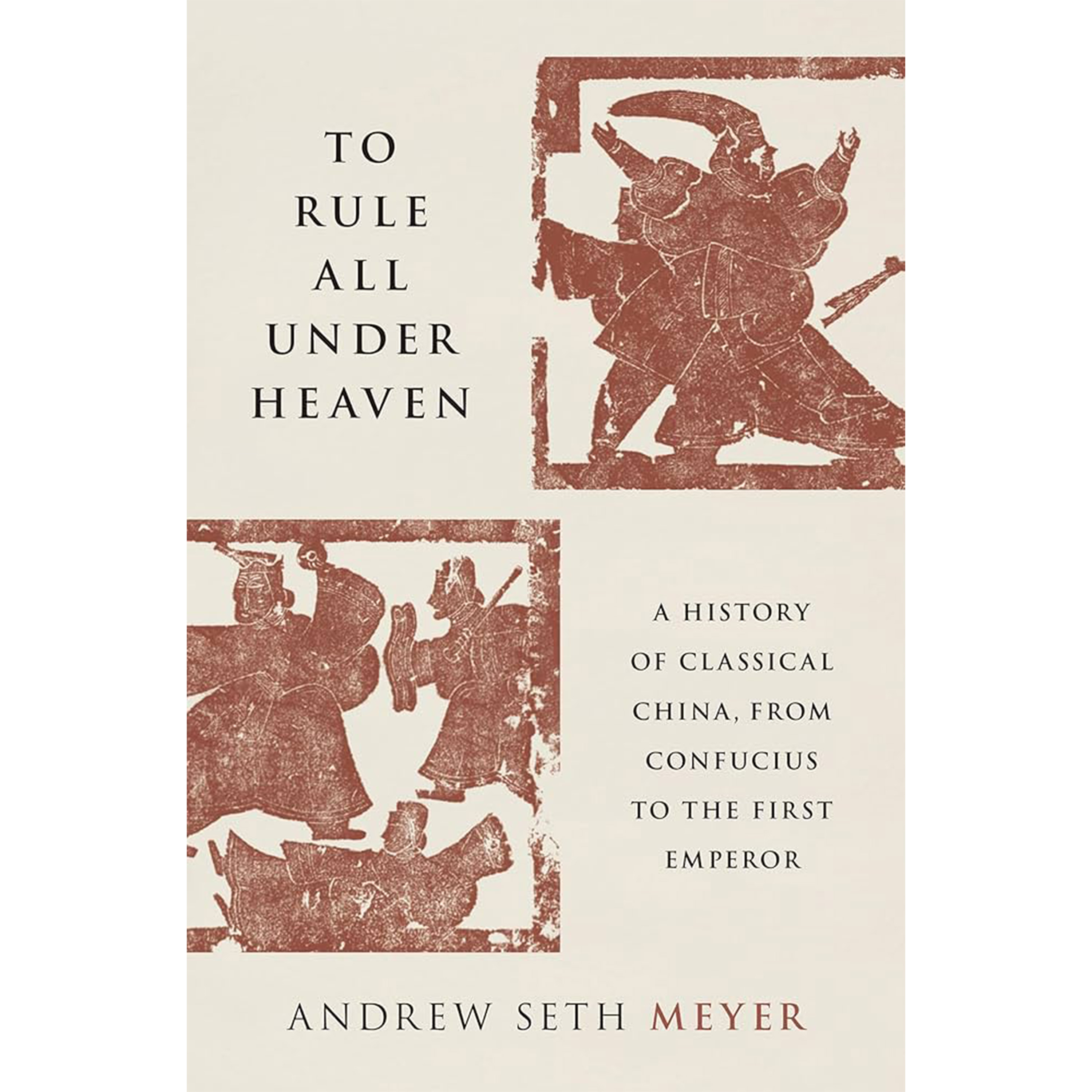
Welcome to A Book with Legs podcast. I'm Cole Smead, CEO and Portfolio Manager here at Smead Capital Management. As at our firm, we are readers and we believe in the power of books to help shape inform investors. In this podcast, we speak to great authors about their writings. The late, great Charlie Munger prescribed using multiple mental models and analysis. We analyze their work through the lens of business markets and people. Today, we will look back to a less studied period of history. We will think about what it means to be sovereign in the eternal sense. Joining us is Andrew Seth Meyer to discuss his book to To Rule All Under Heaven, a history of classic China from Confucius to the first Emperor. A little background on Andrew. He is a professor of history at Brooklyn College at City University of New York, where he teaches courses on ancient, medieval and modern history on China. He has published prior titles including the Dao of the Military and the Huaynanza. He received his PhD from Harvard University and his bachelor's at Brown University. Andy, thanks for joining me today.
- [01:28]
C
Oh, it's a pleasure. Thanks for having me.
- [01:31]
B
So we did this a little bit before we started today, but you have to tell us a story of why the Warring States were, why this book, why this story, how this all came to be.
- [01:44]
C
Well, I first became really fascinated with the Warring States as a college student. I took some classes. You know, if you, if you take any, if you go to college and you, you take any courses about China, especially any courses about early China, they almost always involve reading some of the great works of early Chinese thought. The Tao Te Ching, the Zhuangzi, the Analects of Confucius. And I encountered those, those texts as a college student and they just really fired my imagination. I really love them. And I became very interested as a history person. I always loved history in going way back. I became really fascinated by the history behind those, those texts. And you know, as I, as I came into my teaching career and my career as a, as a, as a historian, you know, there were two things I told you the story. One is that, you know, early in my teaching career, I was having some trouble publishing some of my scholarly work and I ran into a student who had friends in the publishing industry and said, well, why don't you try writing something for general readers? And I did that. I mean, the other Motivation. There was one other motivation behind it, which is that every time I get an opportunity to share the things that I love researching with my students, I always feel, God, I wish there was a book that would lay out the history behind these things. Because a lot of the texts that I became so interested in as an undergrad and that I still love to research, a lot of them have been translated into English and so you can teach them to undergrads. But what isn't really available is a book that will explain the historical context, sure. In which those works were produced. And I always thought, I wish there was a book that I could share with my students. So I had to go and write it, because books like it of course exist in Chinese and Japanese, but no one had really written it in English yet.
- [03:58]
B
So you opened the book on April 26, almost 2,600 years ago, and you explain it's kind of like a Julius Caesar style occurrence because of Tian Chang's coup and Chi. Why is that like the single day that to enter this, you know, you know, over 200 year story that you tell in this book.
- [04:23]
C
That's a great question. You know, on the surface it's a little bit surprising because what happens on that day, this coup? A minister murders his ruler and sets up one of his ruler's children on the throne so that he can sort of rule from behind the screen and things like that, that kind of thing had happened many times already in preceding centuries. What made that a particularly important threshold? And I'm not the first person to say this, the identification of that moment as an important starting point goes way Back to the 12th or 13th centuries among Chinese historians. But it was because, you know, things had been changing very rapidly. Everybody, everybody in early Chinese society knew that a lot of the social and political institutions that had structured the life of their society were sort of decaying, were falling apart. And the ruler of that particular state, the state of Chi in present day Shandong, he had kind of tried to address the crisis of the time that everybody, everybody was aware of by adopting the ideas of Confucius. You know, I make the argument for this in the, in the text that he had, he, he had become friends with one of Confucius disciples. He had lived much of his life in exile. And when he came home from exile, he was invited back to his home state. He and his father came back to their home state at the invitation of this group of nobles who had sort of seized control of the court and invited them to take over as, you know, to ascend the ducal throne. So they came back from exile. The father eventually fell afoul of one of his courtiers and was murdered, and the son inherited the throne. And, you know, he knew that one among these nobles who had helped bring him home from exile was very, very powerful, undeniably the most powerful aristocrat in his home state. But he decided that he was going to sort of follow Confucius teachings. Confucius said, well, the way that we're going to sort of stop the crisis of these times is by restoring traditional authority to all of the different stations of our hierarchy, of our traditional hierarchy. The king must be a king. The regional lords, I call them dukes. The duke must be a duke. So this duke said, okay, I'm going to put that into practice. I'm going to put the rubber on the road. And he took one of Confucius disciples, who was a relative, nobody, certainly in the. He was. He was a foreigner in the Kingdom of Chi. Right. In that.
- [07:30]
B
Not.
- [07:30]
C
Not kingdom, in the. In the state of Chi.
- [07:32]
B
Yep.
- [07:33]
C
And he said, all right, I'm going to make him co prime minister. I'm going to take this very, very powerful noble who helped bring me home from exile. I'm going to make him one of my prime ministers, but I'm going to balance his power against the. I'm going to raise up one of Confucius's disciples to be my co prime minister. And that move was so audacious that it, in effect, started almost a kind of civil war. Right. The noble in question did not take kindly to having his position challenged that way. And the coup that he launched ended up being much more radical in scope than anything that anyone had done before. He comes out of it because the challenge not only to his authority, but to the authority of all of the. The hereditary nobles of the state was so robust, it was so threatening, that he comes out of the coup, he seizes half of the arable land of the state and puts it under his own personal control, which, in effect makes him much more powerful than virtually anyone who's ever had any kind of position of authority in that society before, and opens up all kinds of new possibilities for organizing politics and social affairs and things like that and things sort of. He sets the ball rolling on a new path that continues to sort of evolve in surprising and significant ways from that point forward.
- [09:14]
B
When I think you explained that prior the Zhou aristocracy were closer to, like, samurais or medieval knights then to what we think of as kind of like the aristocracy of, say, the Enlightenment. Right. It was not an educated class. It was a warrior class. Can you kind of talk about how that changed with this? But then second part is you explain kind of the structure of this is like you got the effect of the Zhou kings or king, and then you have these dukes which play a role as kind of like the dawn. And the people below them is like, you explain. And I love this because I'm a big fan of the Godfather, but the Capo regime, these were kind of like a mob structure more than they were like a government or monarchical structure. Is that fair?
- [10:00]
C
Yes. The Zhou was a very successful system. And I talk in the beginning of the book, it was a very wealthy, very sort of culturally and technologically sophisticated society, but its social and political organization was pretty rudimentary. It basically had the same component parts of like a mafia family at every level. Every level sort of replicated all of the moving parts of the level above it. Right. And so, yeah, I mean, someone like the Duke and someone like this Tian Chang, the very powerful prime minister who initiated this coup, they both thought of themselves as warriors. And that was beginning to change. You know, one of the things that Confucius had proposed was that, well, we're going to have to initiate and understand that our, our society has to be animated by these moral values that are only sort of tangentially related to our martial traditions. Right. That come much more from civil pursuits than martial pursuits. And Confucius really emphasized learning and literacy as essential sort of achievements of someone who wants to be a leader in social and political life. And the Duke, under the influence of Confucius teachings, had basically, you know, he had sort of agreed to that by raising one of Confucius's disciples up. He chose Confucius disciples not because he was a great warrior, not because he had a particularly high born, noble pedigree, but because he was very learned. And this was sort of a struggle that was going to play itself out over the next several hundred years, right. Over the next 260 years. Because someone like Tian Chang said, oh, you want to give this very learned person my position? Forget it. And he kills Tian Chang. He comes in, he sweeps in. He and his brothers are warriors, but you know what, what they find then is having taken control. Well, how are you going to keep control? Right. How are you going to, you know, cause this, this wheel of, of strife that you've set turning, how are you going to slow it down or stop it?
- [12:36]
B
Sure.
- [12:36]
C
And all of these military leaders end up having to sort of make accommodations for the worldview of someone like Confucius because they find they need the help of people who are well educated and who are literate and who have civil rather than martial skills.
- [12:53]
B
When you say in the book that Confucius, he said to the elites of Joe that the world didn't need better institutions, they need to become better people. It was like an inward looking problem. It was cumulative, but it was inward to the person he was speaking to. I thought it was interesting to think about the trajectory of like, you know, you start with Confucius and then you look at the other people that come in that philosophical realm throughout the book of this 200 plus year period and you get all the way to dow. There were times where it was look inward versus look outward. In other words, it can't be of you. And you kind of talk about modern day Daoism in comparison. But I thought Confucius had a much more introspective view of the person than other people that followed him. Is that fair?
- [13:38]
C
I would say it's fair. This is a big debate among scholars. There was a very famous book by a scholar named Herbert Fingert, who I read him as an undergrad. He made this very, very provocative claim that Confucius had no sense of the person's sort of inner life. I would disagree. I'm more inclined to your view that Confucius was as preoccupied, as concerned with what's going on inside of us as externally. Of course, he did have a lot of concern for externalities too. He was very concerned with ritual and tradition. And he very much wanted everything about our cultural environment to be correct and to be edifying and to be based on solid precedents and to reflect what he saw as the edifying influence of the ancient sages. But he also insisted that look, none of these things. He was trying to answer a question for the people of his day because the people of his day had a lot of faith in the traditions that they had received from the founding kings of the Zhou dynasty. They were practicing all of these traditions as they had received them from their ancestors. And yet things kept getting worse and worse, right? Things kept spinning more and more out of control. The violence became more and more intense, more and more unpredictable, of longer duration and greater destructive impact. And people were like, well, why, if we're still practicing the same traditions, why don't they work? And Confucius answer was because you've forgotten what the ultimate object of these traditions is, which is to change you, to change you personally. And it's a change that happens as much on the inside as the out, right?
- [15:34]
B
Yeah. His core concept of humanness, to your point, there was like, something to be attained or sought after, if you will. You know, I actually thought, you know, in reading this, I have read very little on Confucius, so this was kind of like a great, you know, welcome, introduce yourself kind of thing. But I thought a lot about. So my kids go to a classical school, right? And in this classical school, they talk about these virtues and like, you know, beauty, truth, those are virtues. And I have just. I had this deep sense that as I was reading this book that Confucius would look and say, okay, what are the core virtues of any culture? Right. Using Western society. And he would appreciate a lot of the virtues that, you know, my kids would learn in school because to your point, there are things that drive us to ask questions that, you know, get things better, make things better, make ourselves better. You know, I think sometimes there's this idea of Western thought and Eastern thought being very antithetical or not simpatico. But I walked away thinking like, Confucius could walk into the ideals of Western thought and say, well, these are great virtues. Let's continue these on, and let's stick to these, because that's what makes us all better together. Is that a fair way of kind of putting him in a synopsis?
- [16:46]
C
Yeah, I think that's fair. I think that if you. If you got. If you could go back in a. In a time machine and we could arrange for some kind of simultaneous translation and you could get Confucius and Socrates into a room together, I think they would have found a lot of common ground. Right?
- [17:02]
B
Yeah. Philosopher king being one of those. I mean, to your point, Confucius. And this kind of jumps us to the next because Siwa, you know, one of Confucius most talented disciples, he ends up precipitating the very coup his master preached against. And to your point, Socrates, you know, he talked about a philosopher king, and then he'd run into these despots that were trying to exact what he had just got done, saying could be problematic. And he'd say, yeah, but they're trying virtuously. So, you know, it's not a bad thing, is that, you know, I guess, how much did these coups damage Confucianism in the realm at that time?
- [17:41]
C
You know, I'll confess that in doing my homework for today's interview, I listened to your recent, recent podcast you did with Professor Rahm. Joseph Rahm. James Rahm.
- [17:56]
B
Yep.
- [17:57]
C
His. His book about Plato and the tyrant of Syracuse, Dionysius Yeah, it's. It's a very. You know, the story of Plato and Dionysius is. It's. It's a lot like the story of Zywoh and his misadventure in the state of Chi, right, that you have this basically, you know, a thinker, a philosopher, trying to put his ideals into practice, and, you know, things go wrong when you. When you try to, you know, sort of put. Put ideals into. Into practice in the material world and in the social world, very often things go awry. And. Yeah, I mean, you know, I talk about it in the book. One of the. I think one of the people in the Confucian Fellowship who suffers the most from the episode in Chi is Ziwa himself, right? He gets memorialized. You know, he's without a doubt, one of the most. He's the most disciple, the most successful of Confucius's disciples. But if you read the Analects in which we. The sort of the. The. The earliest witness we have of Confucius's teachings, he's memorialized as the absolute worst of the disciples. Sure, he's lazy and he's. And, you know, one has to suspect that this is. There's a kind of politics at work here, you know, because the. The Fellowship didn't want to have to be tarred. They didn't want their. Their brand to be diminished by the. What was an obvious cataclysmic failure on the part of one of their members in the political realm. So, you know, but like I say at the end of chapter one, and it's sort of a theme that goes throughout the book, the Fellowship was sort of kept aloft, you know, by the fact that the successful maneuvers that Tien Chong and that aristocrats like him did in the face of the challenges posed to them by people like Confucius, they were never able to get. They always had the upper hand all the way down to the end of the warring states. The aristocracy, the highborn aristocracy really kept control of the levers of power, but they were never able to have things entirely their own way. They needed the help of people like Confucius and his disciples, and they had to compromise with them. And, you know, the Fellowship ended up being willing to compromise in order to sort of try to achieve their mission of sort of having an influence on the way the world was changing.
- [20:58]
B
Hi, I'm Cole Smedes, CEO and portfolio manager here at Smead Capital Management and host of this podcast. If you enjoy this podcast, I'd like to invite you to check out smeecap.com at our firm, we are stock market investors. We advise investors who play the long game with a discipline that has proven success over long periods of time. Learn more about our funds@smeecap.com past performance is not indicative of future results. Investing involves risks, including loss of principal. Please refer to the prospectus for important information about the investment company, including objectives, risks, charges and expenses. Read and consider it carefully before investing. SMEAD Funds distributed by SMEAD Funds Distributors, llc. Not affiliated. You argue that the book the Art of War is most likely a product of the later Qi military establishment, not Sun Wu personally. Does that change how we should read it today? In other words, is this kind of doctored history, or is it really what he would have thought at the time?
- [22:03]
C
Well, you know, I'm certainly not the first person to say this. I don't want to take credit for this. Many scholars would tell you the same thing, that if you look at the Art of War, you know, Sun Wu, the person who serves as the eponym, as the. The putative author of the text, he was dead by 500 BC, and a lot of the technology that is at the heart of the tactics and strategy described by the text really wasn't being deployed on the battlefields of early China until 350 BC or so. So the text's attribution to Sun Wu is anachronistic. I don't think that makes the text any less valuable, and it doesn't make the text any less sort of intriguing and worthy of study. You know, why did the whoever put this text together, why did they attribute it to Sun Wu? If you look at the opening line of the text, the opening line of the text says, the military is the great affair of the state, the way to survival or extinction. It cannot but be the heart of safety or danger. It cannot but be studied. And if you look at the life of the historical figure Sun Wu while he was alive, the state that he served was very, very powerful. Shortly after he died, the state that he served was destroyed, like wiped off the face of the map, which was a very. I talk all about this in Chapter two. It's this very dramatic story that shocked the people of the world of that time. So they chose Sun Wu to be the putative author of this text because his life underscores the message of the text as a whole, which is, look, military affairs are very serious. You know, a civil aristocrat, a civil teacher like Confucius. You know, Confucius's teachings, he wanted so much to stress civil attainments, that he, in effect, denigrates military pursuits and military learning as sort of beneath the dignity of a truly learned person. And whoever wrote and compiled the Art of War by Master sun was sort of pushing back against that and saying, no, no, no, no, no, no. We have to know about military affairs as much as we need to know about anything else. And we have to study this carefully. And the proof of that is in the life of somebody like Sun Wu. He was a skillful commander when he was alive. Everything was fine after he died. Right. The very state that he served ceased to exist. So I think that's the rhetorical sort of. It's a very powerful rhetorical statement behind the labeling of the texts.
- [25:05]
B
Sure. Modi preached that we should care as much for other people's parents as for our own. Was that going to be taken as a real cultural influence, or was it just a thing that was brought about to change the power structure from the top?
- [25:24]
C
Well, you know, you've given me these two alternatives, and I would say, yes. Yeah. I mean, I know that it's very shocking. You know, this is one of the things I love about the Warring States, is that there are these wild alternatives that are being pursued, you know, and from. From. From what we conventionally know about Chinese culture, the importance that people place on family, you know, family solidarity, filial piety, the reverence for parents and for parental authority. Knowing that there was a very, very influential thinker who said, yeah, no, we should. We should care for other people's parents as much as we care for our own. You know, that, to me, is a measure of just how deep the crisis of the time was. Right. Civilization was literally falling apart. Very often the metaphor I use, I liken it to people who are adrift on the sea in a boat, and the boat is sort of collapsing around them, and they're trying to build the boat, rebuild the boat. Right as it sinks. Right. And, you know, yeah. I mean, why. Why would Maudi propose something that radical? Well, I think he understood a. That conflict was. Was tearing the society apart, and that one of the things that drove conflict was. Were people's competing family allegiances. I think also, like many other learned people and people in the. In this, Playing this. The role of a kind of philosopher, he understood that they were competing with this. This aristocracy, whose claim to power and to authority was based entirely on their pedigree, on their lineage, on their family sort of heritage. And one way of sort of combating against that was to say, well, we should Stop emphasizing lineage and pedigree and family as much as we did. We shouldn't care about our own lineage. We shouldn't care about our own family to the exclusion of others. We should begin to understand that we're all in this together. Right?
- [27:52]
B
So another question I had, and I'll use this as an example. Zhao Wuxiu has Ziyao's skull beheaded. I think you tell a story of. And the top removed after the sea at Jinyang. I think you said they use it as a drinking cup. Is this like one of those, like, we're gonna tell the story to scare people? Or is this the kind of vendetta culture that you really think was present? I also, you know, just off the top of my head, I also think of the story of, like, the River God. They were taking these, what seemed like, you know, virgin, beautiful girls, putting them into these rafts, floating them down the river to die, and that was all for the River God. Were these real stories? Or was it people looking back saying, let's tell stories that show how brutal and inhumane a prior time was? And now with our current teachings, we're a lot more civilized. In other words, they're trying to make it sound like there's so much more advanced today compared to prior times.
- [28:53]
C
That's an interesting way of looking at this. You know, we always have to be sort of skeptical and critical of our sources. So depending on when we situate the origin of these records, if we think that these stories are being recorded long after the fact, then it's possible that some of these reports are operating the way you're saying, that they're sort of framing the bad old days for us in a way that will. But I suspect, like, if you take the case of Zhao Wushu and what he does to the head of Zhiyao, this is a theme that comes up in a lot of different places. People who, you know, one way of demonstrating sort of contempt for an enemy that you feel had been dishonorable in some way, that you feel had sort of transgressed in very, very radical ways was to disrespect their corpse. Right. That, you know, in a society that had this ancestral religion where people believed that if you weren't sacrificed to properly by your descendants, you were going to go hungry in the afterlife. That was sort of one of the basic sort of traditions of the ancient ancestral religion, and it kind of. It sort of remains a tradition within the ancestral religion in China today. You know, dismembering or defiling someone's corpse was a way of interrupting their care in the afterlife. They, their spirit, you wouldn't be able to properly serve their spirit if they hadn't been correctly interred. And you know, Zhiyao, the person who we're told suffered that he was a particularly brutal character, right. And he had done Jiao Shu particularly dirty. So it's kind of plausible that that's actually what happened to him at the end, you know?
- [31:11]
B
Yeah, well, reminds me like Indiana Jones where they're eating like monkey brains in India, for example, it's like, oh, that's kind of, kind of what happened to him. Also, there was another story of the dowager you had in your book where the dowager is going to die. And she's like, hey, I'm taking my lover to the afterlife with me. And they're like, but wait, you know the code of the afterlife. If they're conscious when you go to the afterlife, you know, it's like they'll seek out another lover or something, you know, along those lines, they're still awake, you know, for a lover in the afterlife. And it was to your point, there's this kind of interplay of, you know, the physical world, the duality of that and the spiritual realm. So Marcus Wen of Hu runs like a 50 year reign that basically invents what you argue is modern government in in these warring states, Li Qi stabilizes the grain prices, Shiman Bao as a poster boy for like local admin and they also use immigration. Which of these reforms were the most genuinely novel? Or was it just as kind of a multi factored approach that was just so inventive?
- [32:19]
C
Well, it's a very good question. You know, I think that probably the real groundbreaking novelty of all of this was that the government of Way at the time was taking things that other states had been experimenting with. There had been other legal codes, for example, there had been experiments with sort of routinizing local administration, giving, giving, particularly at the frontiers of one state. Instead of having the land and the people under the care of a hereditary noble, putting them under the authority of a centrally appointed magistrate who got rotated in and out of office by the central. All of those things had been done before. But to have a single court in a very coordinated way, putting all of these, all of these innovations into effect and then viewing them. And perhaps the most innovative thing about the Way court under Marquis one of way was that they understood that they came to understand that the economic, the social, the political and the military power of the state were all sort of intersectional. They all had to be coordinated in tandem. So if you wanted strong armies, you had to do things like encourage small freehold farming. Because if you have. If all the land is being, being farmed by slaves and bonded laborers, well, they don't eat very well, they don't make very good soldiers, they're not happy to be conscripted. But if we can put into effect policies that will encourage small, hold free, free farming and free or tenant farming, then we'll have better fed, happier farmers who will view the state as a kind of ally and might occasionally be willing to answer the call to military service because they see that their own interests are aligned with those of the state. Yeah, and so just the sort of the global vision, the way that they were able to see that all of these things are integrated and operate in tandem was maybe the biggest breakthrough of that period.
- [34:55]
B
Wu Chi ends up dismembered in Chu by the aristocrat whose influence he had effectively taken. Is this a pattern that we can just see throughout the story? Kind of outside reformer, prime minister type comes in, gets the state to a place it's never been. Either king decides something later in life, or king dies and then the arc of history says goodbye and moves on to some other power structure. In other words, you know, we live in these highly adaptive, complex social structures. Node disappears, the network readapts to a new node.
- [35:34]
C
Yeah, I think that's fair. And it is a pattern that you see, I mean, recurring throughout this time period where someone gets enlisted. I mean, and perhaps this is, I think, if you go around the world and you look at lots of different societies in the early years in which meritocracy kind of is on the rise. This is what happens to a lot of people who are on the winning end of early developments of meritocracy is that people rise into positions of extraordinary power and influence and jealousies and pressures and things like that bring them down. And yeah, it happens to Wu Chi, it happens to Xiangyang. You know, there are a few exceptions, like Lee Kuei, who you mentioned, you know, he served under Marquis one of way, as far as we, as far as we know, he died peacefully in bed after, you know, but he was
- [36:32]
B
the rarity in the story. If I, you know, I'm thinking back to all the examples. It's like that was very uncommon.
- [36:39]
C
It's true. And perhaps it's also testimony to the fact that why does Lee Kuei come out all right in all of this when all of these other. Because all of his sort of civil administrative reforms were really part of this overall, this overarching program of reform that brought in military and economic and political and social affairs and that were overseen by this ruler who, as you say, was at the helm for an extraordinary 50 years. Right. So if you have that kind of continuity, lots of things become possible and stability can sort of be maintained. But unfortunately, given the way most dynastic systems work, most rulers only really have a couple of decades in power if they're lucky. And that's generally not enough time. Right. To carry through on a comprehensive reform.
- [37:38]
B
Yeah. My next question is on Ni Jung. He is this former knight. He ends up being like this poor butcher, in effect. And I don't remember the person that befriends him, but they host these dinner parties, they're very fun and lavish. And then that person enlists him to go out and kill the king. Okay. The most interesting part of the story to me, and this is something that ruminates throughout your book too, is this idea of your familial connection to someone. He goes out, he like ruins his face. I mean, pretty much like takes apart his body so that he's dismembered in a way so that no one can identify him. Sadly, that doesn't work. His sister's like, oh, that's my brother. And he's like, no, you idiot. I mean, he's gotta be thinking like, I've ruined my life, please don't identify me. And she's too stupid to figure out he did this purposefully. Obviously she wouldn't have known that. But it also brings this idea, you know, I think in today's age, like, my problems are not your problems. Right. They don't affect you. But we can show in a lot of cases, if I do harm to something else or myself, it affects me, it affects my family, it affects the community around me. And I think they were much more self aware of how the things they did affected those around them, if that makes sense.
- [38:59]
C
Yeah, I hear that it makes sense. Nie Zhang is such a fascinating figure. And so many of the different kinds of social and cultural tensions that are sort of driving change during this period sort of intersect in his life. Right. And coalesce in his story. You know, he's a member of this group called the Shi. In Chinese, I translate that word as knight.
- [39:32]
B
Okay.
- [39:34]
C
You know, and the. Sure. It's basically the lowest rank that you can have and still be considered sort of a marginal member of the aristocracy. And this is a rank that's shared by people like Confucius and Ma Di and Li Kuei, they're all. Sure. They're all members of this lowest echelon of the elite. And, you know, Nie Jung, his life shows that one, that this martial ethos continues to have a very powerful pull on everyone in this society, no matter where they fall in the hierarchy, because he's. He basically identifies as a warrior, and his. His accomplishments are in. Are in this martial realm. You know, he. You know, when he mutilates himself, he's trying to protect two people. He's trying to protect his friend who had enlisted him to take revenge for him. And he successfully did that in the sense that he's trying to buy him time, right? In other words, he commits. His friend is actually living in the same state in which he commits this act of revenge. So he knows that if he's identified right away, his friend is going to be seized. So he commits the act of revenge. He mutilates himself. That'll give his friend some time to sort of get out of dodge, right? So he succeeds in that mission. The other people he's trying to protect are his own family, because he knows that if he's identified, his sister will be punished. But his sister is very loyal to him, and she doesn't want to see her brother make this sacrifice in vain. Why did her brother do this? Her brother did this because this is a way. He had been forced to give up any sort of claim to aristocratic status. He had been a knight, but because he'd been insulted and had been sort of painted a coward, he'd had to leave aristocratic society to take care of his mother. He decided ordinarily he would have. He would have avenged this insult to his honor, but in doing so, he would have risked being killed, and that would have left his mother high and dry. So he accepts disgrace. He lives as a butcher. But this. Taking this act of revenge on behalf of a friend is a way of sort of reclaiming his honor, right? He's like, I didn't do this for myself. I did this. But I did this for a friend. And I'm gonna show just how I'm not a coward, right? I'm gonna show just how brave, just how heedless I am of my own life when honor is at stake. Because I'm gonna give my life not for my own honor, but for the honor of my friend. And I'm not even gonna accept the credit for it, right? Because I'm gonna make it so that nobody knows who even did this. So it's this extraordinarily selfless act and this extraordinarily honorable act. Right, because it's not only is it an act of self sacrifice, but it's almost an act of almost self annihilation, right?
- [42:43]
B
Yeah.
- [42:44]
C
But of course, his sister, who has an equal sense of honor to him, won't let him go unremembered. And of course, you know, there's an element here where we might be a little skeptical about the facts, because absent what his sister does at the end of the story, there's no way to explain why anyone knows of what went on at all.
- [43:07]
B
We hope you're enjoying the podcast. You know, we work hard putting together this show, but we work even harder for our investors at SMEAD Capital Management. At smead, we believe in disciplined investing, which is why the SMEAD funds have a proven track record of long term outperformance. If you're an investor who plays the long game and want to invest in wonderful companies to build wealth, we invite you to visit smeedcap.com Past performance is not indicative of future results. Investing involves risks, including loss of principal. Please refer to the prospectus for important information about the investment company, including objectives, risks, charges and expenses. Read and consider it carefully before investing. Smead funds, distributed by Smead Funds Distributors llc, not affiliated Qin is the state that everyone knows will end up, you know, conquering in a way. But you argue that really wasn't obvious. Why did Chin's more primitive aristocracy actually become an advantage once Xiangyang arrived?
- [44:06]
C
Yeah, that's a good question, and I'm certainly not the first person to say this. A lot of scholars have noted that, you know, at the beginning of this period when the, when the book opens in 481 BCE, if you had told any of the people who were the key agents in that story, oh, Chin is going to be the ruler of the world someday, they would have all laughed. They would have laughed themselves silly because Chin was considered this hopeless backwater. And you know, everybody knew that those guys were, they just didn't have their act together. Yeah, you know, there's a lot about the, the, the structure of Chin elite society that we don't really know. That we don't. There's something, something distinctive was going on in Chin because they don't seem to have had the same kind of well developed aristocratic clans that we see in a place like the, the eastern state of Chi. Right, the clans of Chi, they're all, you know, there's this clear hierarchical structure that we talked about, sort of resembling that of a, of a, of a, sort of Mafia family. You know, with the Don and the Kapa regimes in Chin, it almost seems like the only family that. That has any kind of corporate sort of identity is the clan of the ruling duke, sort of the clan of the Don. And to the extent that there are Kapo regimes, they don't seem to be as well organized. They don't seem to be as cohesive and as powerful. And so when this knight from the neighboring state of Wei, Xiangyang, when he comes into Chin and he's employed by the ruler of Qin to sort of reorganize the state, he seems to have much less trouble, he meets much less resistance. It's not that he meets no resistance, but he meets much less resistance from the aristocratic clans of the state of Chin. They don't seem to be able to offer a kind of. To the extent that they exist, and we can't really name clans. We know that there were aristocrats in the state of Chin outside of the ruling clan because of the archaeological record, because we have their tombs, but we don't really have good records of who those clans were or how they organized themselves or if they organized themselves as clans at all. You know, they may have just sort of persisted as kind of isolated, almost kind of nuclear families. Right. So, yeah, it becomes an advantage once the ruler of the state invites this, this knight of Wei, Xiang Yang, to. To come in and begin reorganizing the state of Chin. Xiangyang meets with a great deal of success. And it seems in part because the. The aristocratic society of the state of Chin isn't really equipped to offer him as much resistance as we saw was the case in places like the state
- [47:26]
B
of chi in 334 BCE, the rulers of Chi and Wei simply just crown each other as kings. And I'll quote your book, you write, quote, in politics, there are no rules until someone invents and begins enforcing them. End quote. It reminds me of the John Maynard Keynes quote, when the facts change, I change my mind. You know, it makes me think a lot about political, you know, geopolitical structures today. Like when we do like a G8 or a G10 or a G20, it's effectively this. You are someone important. We recognize your importance in the scheme of the world, and we are gonna have, like a power get together. And you talked about how these. After this, these kings would go back and forth. They would kind of hold court with each other and kind of recognizing their eminence in a way, yes.
- [48:18]
C
I mean, it's a. You know, when you get to the level of sovereignty? What does it mean to be a sovereign power at that level? The rules are almost, Almost kind of completely arbitrary how sovereignty, the crucible out of which sovereignty emerges. You know, sovereignty begets sovereignty. That sort of seems to be the. The lesson of this. And yes, I mean, there are these. You know, the Joe Realm is Balkanized into all of these regional states in 334. And two of the most powerful states, they decide. Okay, now, you know, until now, everyone has sort of agreed, especially in the north, there had been sort of exceptions on the. The sort of periphery of the realm. But among the older Northern states, there had been this agreement. Only the Zhou monarch, only the Joe Son of Heaven, can rightfully claim the rank of King. Everybody else is below him.
- [49:26]
B
Well, it was always posthumous, like they'd be posthumously called king. It wasn't at the time as a duke.
- [49:32]
C
Well, even, you know, even posthumously, no one was really. You know, people could claim descent from a king if. If somewhere back in your ancestry there was one of the founding kings of the Zhou Dynasty. But, you know, the. So, but, but what happens in 334 is that two of the most powerful states say, all right, we're going to make sort of the, The. The cultural sort of inscription, the cultural label align with the material reality. Right. The king, everybody knows that the one guy we call king is much less powerful than either of us. So we're going to step forward and say we have the same rank as he does, we're his peers, and we're not going to allow that because he has more prestige than we do, that he can. That he has any authority to sort of undo anything that we do, which had been a problem. Right. Because he had. He had sort of the Joe King had asserted his prerogative to kind of unmake some of the symbolic actions of some of these regional lords. And the reason it worked, there were two reasons it worked. One was because nobody could really. It was really. The two reasons are the same reason. No one could really stop them. Right. That once they had acknowledged one another as king, if you wanted to get them to sort of retract that, you had to beat both of them simultaneously.
- [51:05]
B
Yeah.
- [51:06]
C
And because both of them were very powerful, any kind of combination of any of the other states to try and get them to go back on this would have, in effect, if it may have succeeded, but it would have been very, very costly.
- [51:21]
B
Yeah. Just to prove they're not king.
- [51:24]
C
Yeah.
- [51:24]
B
Yeah. But then you talk also about, like, you call them the wandering persuaders. And I Think I have here, like Su Qin, Yang Yi, Gong Sin Yen, they're like a diplomat, they lobby at times on behalf of others. How often was the double agent thing? Cause it's like at times you're like, is everyone a double agent? And then. And also they like, you'd have a prime minister of one state end up as a prime minister another. And as we got later in the story, it's like, that was more double agent in my mind, later I got in the book than earlier on. So, you know, do you think this is again, is this how they're trying to look back and shame people in the historical record? Or was there a lot of this double agent life going on among the persuaders and also some of these moving authorities?
- [52:13]
C
I think that in the case, in the kinds of norms that you're talking about, right, where one, this whole group of what gets called in the records, wandering persuaders, they emerge as sort of the diplomatic core of the day. And it operates a little bit differently than we think of as diplomatic core, a diplomatic core, because we think of a single state's, a single polity's diplomats belong permanently to that state and they get sent out. But instead, diplomacy was sort of largely being carried on during the warring states by this floating group of almost kind of transnational migrants, right? These literati who would wander from court to court irrespective of where their native place was, and accept missions and credentials from whichever ruler would enlist them in the cause of diplomacy, right? And there were various reasons why that was the way that these regional rulers preferred to do business, right? If you were, if you were using somebody from your own court, well, that created doubts about how much you could trust them. They may be one of your own kin, which would mean that maybe they're thinking of displacing you, right? But if you take a relative, nobody, who comes from somewhere else, and I give him credentials and maybe I give him big rewards, I reward him, if I give him a title, say. I say I'm going to make you into a marquess instead of a knight, right? Well, now he's very motivated to really succeed in this mission on my behalf, because if my state does well, then his new rank is very meaningful. But if my state's destroyed, his new rank disappears and becomes meaningless, right? So, you know, that I think, I think we can be. We can be fairly confident that, that, that really is the way things were going down back then, right? It created this very unique political dynamic that seems very strange from our perspective, but that made. Made sense According to the political logic of the time.
- [54:27]
B
Sure. What? Also, I mean, to your point, it aligned the incentives, if you will. Let's see. Tianwen blockades the Hengu Pass and cuts Chin off from all Eastern commerce. I think there was another episode at the Hangu Pass where someone's trying to get back to Chin and they're like, oh, sorry, we can't open the gate until the cock crows. And so then like one of the knights is like, cockle doodle doo, you know, which is a funny story, but how much of a pinch point was this? Did it really cut commerce off like the book explains?
- [55:04]
C
Yeah, the Hangu Pass was very critical and one of the big geographic advantages that Chin had. The Chin occupied the Wei River Valley, which had been the original base area of the Zhou kings. So it was a strategically very, very advantageous terrain. And you know, there are historians who will argue and there's some reason to believe that, well, people shouldn't have thought of the Chin, they shouldn't have despised the Chin as much as they did because their geographic advantages were so significant that they were almost foreordained to become very powerful over the course of the period. But yeah, the Hangu Pass and the other passes that led into Qin, they really were strategic choke points. There were only a couple of different places in which you could get an army into the home territory of Chin, and the Hangu Pass was the most significant one. So, yeah, it was a vital choke point in the sort of the strategic affairs of the larger Joe world.
- [56:19]
B
King Wuling of Zhou forces his own aristocrat to adopt step clothing and mounted archery. He talks about like, how from a cavalry perspective, it's easier to wear that. How big of a break was this traditionally for these new clothing to be adopted for military technology?
- [56:39]
C
That was a big. It was really an enormous change.
- [56:43]
B
This was considered barbaric, right? Yeah.
- [56:46]
C
I mean, there were, there were a couple of different reasons why this was an extraordinarily radical change. You know, one was in a, in a high ritual context society, in a society where every time people, especially elites, interact, there are these very high stakes protocols that everyone feels you have to get Right. In order for everyone's dignity to be preserved. Right. And for everything to go smoothly and for relations to remain on a favorable footing. Any kind of change you make to any dimension of that ritual environment and clothing, you know, clothing is a very key aspect of all aspects of ritual. Right. What you're wearing at the time, any change you make to that has profound ramifications for all of these different kinds of traditions. So the idea that we're going to go from having these traditional garb to dressing the way these people on the step who have traditionally been our enemy, that just offends people's sensibilities. It's very difficult to exaggerate the degree to which that was offensive to the sensibilities of traditional elites. So that's one thing that's going on. The other thing is that in this aristocratic society, in this steeply hierarchical society in which gradations of status were getting wider and wider and wider, people spent enormous amounts of their wealth on clothing, because clothing is one of the ways in which you can sort of demonstrate to everybody else in your world, oh, I'm a very important person. I'm someone whose parentage and lineage is very, very elevated. And, you know, especially if you're one of the sort of the lower echelons or the middle echelons of this hierarchy, you're spending a significant amount of your wealth, you know, trying to sort of keep up with the Joneses. So for somebody to come along and say, you're going to need an entirely new wardrobe because we're completely changing the way all of us dress, that creates this economic crisis, Right, for all of the people in the middle elites. And, yeah, so it was a big change.
- [59:13]
B
Hey, I want to give a big shout out to everyone who's been working so hard on this show. You know, we recently hit the top 10 in investing podcasts on Apple Podcasts and even number one in the business category in several countries. As you may know, the show is brought to brought to you by Smead Capital Management. Smead Capital Management understands how frustrating and illogical the stock market can be. If you are searching for funds with a proven track record, give the SMEAD funds a look. Or better yet, reach out@smeecap.com and don't forget to mention you're a fan of the podcast. Past performance is not indicative of future results. Investing involves risks, including loss of principal. Please refer to the prospectus for important information about the investment company, including objectives, risks, charges, and expenses. Read and consider it carefully before investing Smead funds distributed by Smead Funds Distributors, llc. Not affiliated Meat Butza tells Han that if they want Chin's help, they'll have to pay a premium on top of troop costs. Pay to play. Was it always this transactional or was this, you know, kind of the most overtly transactional occurrence in this story for military help?
- [60:26]
C
There were different people in the Zhou world who would pursue this kind of Transactional policy. And the other case that sort of almost contemporary with this is King Min of Chi. King Min of Chee pursues a kind of pay to play policy in his conduct of state affairs. MI Badzi and her brothers, they, they take over the state of Qin for a period of several decades and they're notorious for running this kind of pay to play foreign policy. And it's really, it puts a sort of. Puts the brakes on a lot of what might have been sort of the, the strategic and political leadership that Qin might have had. Until me. Bodza's son sort of overtly breaks with his mother and with his uncles, right. He. He enlists the help of this minister, Fan Sway to sort of chart a new path. Right. To sort of put. Put cheese for Chin's foreign policy on sort of a more principled, less transactional basis.
- [61:43]
B
Yeah. As we get to the end of the story, you talk about how obviously prior we talked about how the Qin Dynasty wasn't necessarily foreknown. It comes about in what seems to be a pretty swift collapse of other states and it only lasts for 15 years before it falls away for something that took 200 years to build. What's the reason that it fell so swiftly?
- [62:13]
C
There are a lot of different theories about this. I think one set of explanations. I think to me, the set of explanations that are least persuasive have to do with the character of the first emperor himself. That he's such a mercurial figure that, that he sort of brings about the ruin of his own dynasty. I think that's. That I think is probably ex post facto propaganda. That's people looking back from the perspective of the Han dynasty. And I'm certainly not the first person to say that another more persuasive set of explanations has to do with the policies of the Qin Dynasty itself. That the Chin, they, they adopt this very aggressively expansionist policy, which is not, you know, it's not. It's not uncommon for societies that have been riven by internal conflict. Right. At the end of this internal conflict, you have this surfeit of soldiers. What do you do with them? Well, you direct them outward. Right. You know, and rather than, rather than having them continue to be sort of standing off against one another and that, you know, this aggressive expansionism on the part of the Chin exhausted their resources to the point of collapse. There may be some, I think, some, some truth to that, my sense of why, why does the Chin collapse? I think the Chin collapses for the same reason that the other great warring states are ultimately unable to sort of come together and offer a unified resistance to Chin, which is that Chin and all of the other states, they're sort of hung on the same paradox, which is that each of them, all of these states were reorganizing themselves to be much more bureaucratic and much more meritocratic in sort of organization, but they continued to be led by this hereditary aristocracy that was wedded to this very antiquated sort of chivalrous ethos that never really gave full dignity to the aristocrats at the head of all of these states were in some sense committed to sharing power with people who were lower than them in status, but never really committed to acknowledging their inherent dignity. There was this constant conflict between the different imperatives at work in these societies. And that, that was part of what made it difficult, if not impossible, for the six eastern states to sort of align with one another, to resist Chin's encroachment. But then once, once Chin finds itself on top of the, this, this newly unified realm, it's subject to all of the same kind of social strife that had been a problem in all of the other states. They still have, it's still under the control of the super elite imperial clan, but everything about the administrative apparatus of this empire is run by these low status functionaries who were never made to feel that they were anything but second or third class subjects of this newly unified realm. Yeah, and that was just a, that was a recipe for disaster. Right. So, you know, I think that part of what, what makes the, the subsequent Han dynasty a more sustainable political entity, the first Han emperor is he's a farmer. Right. Everybody knows that he was born a peasant. And that sort of frees up a lot of the different kind of social forces that had been sort of bottled up and distorted by this strange power dynamic in the warring states and in the Qin.
- [66:16]
B
You close by invoking Zhuangzi, was this a heroic epic or an epic tragedy? What's your perspective on that?
- [66:26]
C
Well, it's a bit of a cop out. Zhuangzi. Of all of the different thinkers that I read as a college student, Zhuangzi was the one who sort of most transported me and enchanted me. And I know that I'm not the only college student who's been sort of carried away. I think Zhuangzi is probably the one writer who sort of hooked me and drew me into the study of the warring states and has kept me there for the better part of my adult life. Zhuangzi's perspective is that, well, look, truth is a matter of is contingent, especially any kind of normative evaluation. If you want to ask are things good or bad? The first thing you have to know in answering that question is, well, from whose perspective and from some people's perspective in the history of this society, the developments coming out of the warring states were unequivocally good. It led to rapid economic growth, you know, technological advancement, an increase in the coherence and the power of the state. But at other times it also led to terrible things. Right. You know, very, very destructive internal conflict. You know, it's sort of like asking, is civilization a good thing or not? Well, it sort of depends on where you rest in the whole civilizing process.
- [67:56]
B
Right, sure.
- [67:57]
C
What, which, which end of which process you're on the. The receiving end of.
- [68:03]
B
Yeah.
- [68:03]
C
And you know, the one thing I will say though is, and you know, this is sort of my, my summary of the book is that if you really want to understand the way human society has evolved, you kind of have to be aware of this history to some degree. Right. Because you really don't have a full understanding of how human societies can change and develop until you've taken a look at the history of what happened in this part of the world at this time.
- [68:32]
B
Sure. My final question for our conversation. We have this long run competition between these rival states, what you call the warring states, or what referred to as the warring states. What part about this do you think transfers the most to analogous situations today? I mean, as I was, as I was putting together my notes, I've been thinking, I've been ruminating a lot on this. I've been giving talks on it. So this is kind of what came to my mind was, you know, like, I'll use the big cap tech companies. They have really never competed with each other. Right. They've had kind of their own super profitable niches. And in this world of AI, they're actually competing directly. And I think of it as like, what if it was a winner take all system? And what if there has to be one emperor, who will that be? That, you know, obviously eventually these states fell. What are analogous situations that you think about to these warring states in present day?
- [69:27]
C
Well, perhaps the most obvious analogy is sort of the balkanized global system that we're living with today. Right. Is that if you look at what's going on today and you have this standoff between superpowers. Superpowers, the United States, China, Russia, the European Union, you know, the riddle of the warring states, the constant challenge that I think. And it's not, of course Only the warring states. But the constant challenge that periods of human history like the warring states pose to us is, well, how much competition is good. Right. How much, how much do good? Do progressive outcomes depend on competition and depend on zero sum competition?
- [70:24]
B
Sure.
- [70:26]
C
And you know, to me the, the, the, the lesson of the warring states is potentially very complicated and very interesting because what, the way the warring states end, I think that, you know, till the very, till the very last decade of the warring states, I think if you asked people, leaders living in that society, how is this all going to end? I think most people would have, most political observers would have said, well, it's not really going to be possible for the Chin. Everybody knew by the last decade of the war in states the Chin was going to come out on top, but they would have said, well, Chin is going to be forced to allow the other states to exist in some kind of subordinate role. We're going to have a kind of federal system in which Chin is the leading power and all of the other regional states have limited regional autonomy. But they have to acknowledge the leadership and the coordination of Chin. That's not, of course, the way it ends. It ends with Chin destroying, annihilating the other states and uniting them all.
- [71:32]
B
Yeah.
- [71:33]
C
And you know, so some people looking at that might say, well, the lesson of, of that is that when you have a competition like this, you should, you should, you should be seeking dominance, you should be seeking the total destruction of your opponents. But is that really the lesson here? Right.
- [71:50]
B
Sure.
- [71:51]
C
My Chin might the, you know, in other words, if, if, if the Qin dynasty had ended the way people expected it would have ended, might that have been a more sustainable outcome? Right. You know, might there have been salubrious effects of having a federal system in which the different regions of the empire had more autonomous control over their own affairs? Might that have, might, might that Qin dynasty have lasted more than 15 years and might it have led to other things? We can't know. But I think one thing we can know is that the sort of hyper unification that Chin achieves didn't do anything to protect them from collapse in 15 years.
- [72:36]
B
Yeah. Well, your question makes me think of Neil Ferguson has been arguing for a few years that American hegemony can't sustain by just domination. To your point, in other words, he's arguing America should back off from places and allow these other states, right, as a, as a term, to go out and solve those problems. Because if your allies don't know they need you, then, then you know, you have no power in effect. Right. You're just needed whenever. And so, you know, to your point, you know, if they fail, what is the value of our power if they fail?
- [73:15]
C
Yeah, no, I, look, I want to, I want to shout out to Neil Ferguson. I'm a big fan.
- [73:20]
B
I am too. Yep, I agree.
- [73:22]
C
I love his novels. He's, he's obviously a student of Chinese history because one of my favorite novels of his is the Diamond Age, a lot of which is set in China. And you know, he's obviously, he knows, he knows a lot about Chinese culture and Chinese society and Chinese history. But I agree with him. You know, I think that, you know, if you look at the lessons of the Warring States, the leaders who achieve the greatest long term impacts and the greatest sort of positive legacies are the ones who stress, who, who stress cooperation as much or more than competition. You know, all success, all successful leaders, you know, understand the importance of competition and engage in competition, seriously. But no, no leader that has any kind of long term legacy fails to under appreciate and understand the value of cooperation and of sort of shared prosperity and absolutely, I think that's one of the lessons that we can take forward from there from this period.
- [74:32]
B
Andy, where can people follow you going forward outside of waiting another 16 years for a really good book like this?
- [74:39]
C
Thank you. I have a website, andrewsethmeyer.com and I, you know I put up, I, I will put up the, this podcast once it's published will be up on the website and events talks that I'm going to be giving at libraries and universities and things like that. I also have links to my other publications and any future publications I will link to them there. I'm on Instagram, I think my handle on Instagram is andymeyer1818. I'm on X as Andrew Seth Meyer and yeah, anybody who wants to know what I'm up to, any of those places are good places to look awesome.
- [75:23]
B
Well, I appreciate your time, Andrew. Your book To Rule All Under Heaven reminds me that the process of governance and administration are refined purely over time. Further legacy is very impactful in the creation and building of long lasting tribes in our families, our communities and ultimately in my case, you know, companies. Our listeners should go buy a copy of To Rule All Under Heaven. If you enjoyed this podcast, go to Apple, Spotify, YouTube or wherever you listen to a book with legs, give us review, tell others about the books and great authors like Andy that we have the opportunity to understand and study the world with and through for our tribe. If you have a great book that you like or recommend. Email podcastmeetcap.com that's podcastmeedcap.com you can also send your suggestions to us on X. Our handle is meedcap. Thank you for joining us for A Book with Legs podcast. We look forward to the next episode.
- [76:20]
A
Thank you for listening to A Book with Legs, a podcast brought to you by Smead Capital Management. The material provided in this podcast is for informational use only and should not be construed as investment advice. You can learn more about Smead Capital Management and its products@smeedcap.com or by calling your financial advisor.