Loading summary
Transcript133 lines
- [00:03]
A
You're listening to A Book with Legs, a podcast presented by Smead Capital Management. At Smead Capital Management, we advise investors who play the long game. You can learn more@smeedcap.com or by calling your financial advisor.
- [00:22]
B
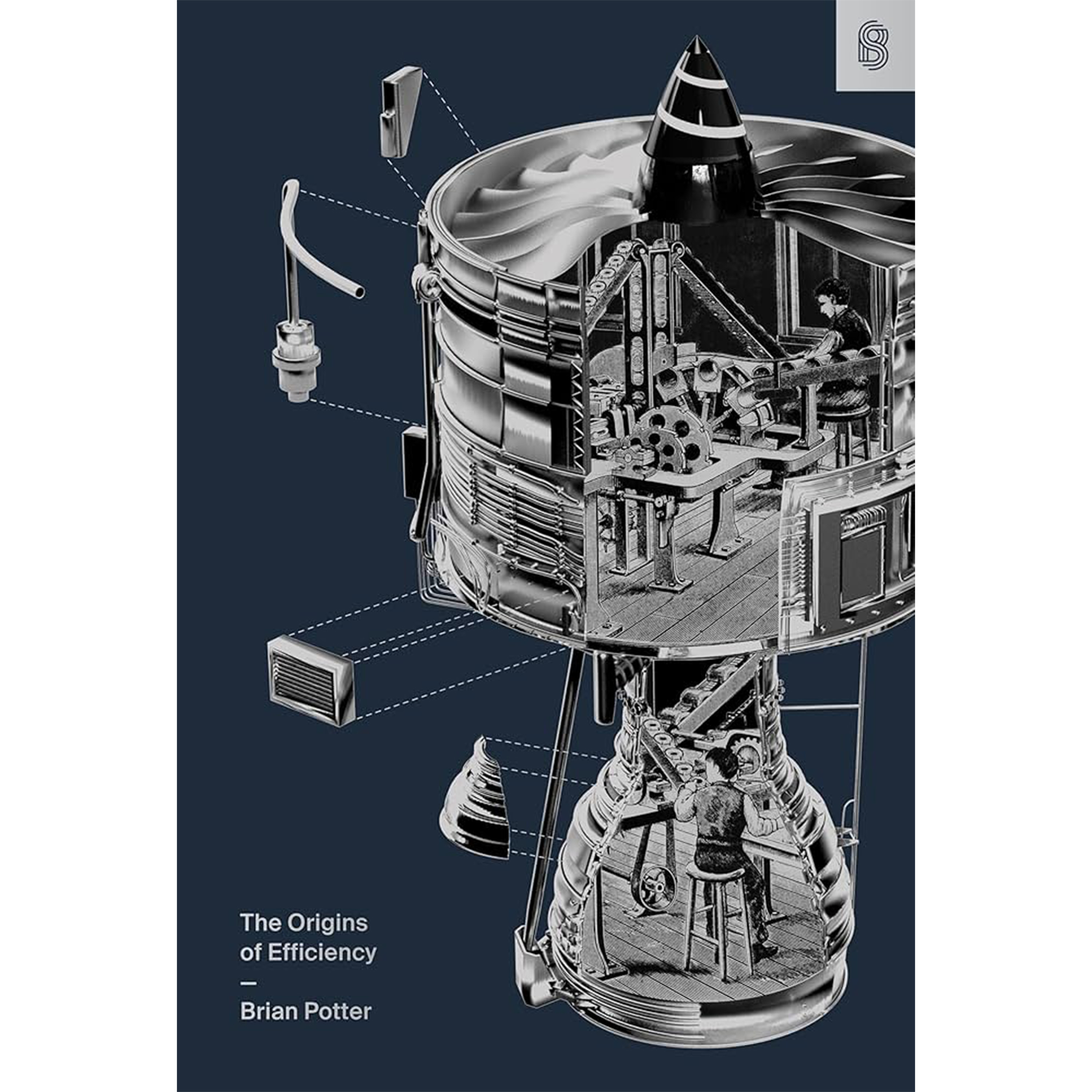
Welcome to A Book with Legs podcast. I'm Cole Smead, CEO and Portfolio Manager here at Smead Capital Management. At our firm, we are readers and we believe in the power of books to help shape informed investors. In this podcast we speak to great authors about their writings the late, great Charlie Munger prescribed using multiple mental models and analysis, we analyze their work through the lens of business markets and people. In this episode we will discuss running a process over and over and over and over again. Brian Potter is joining us to discuss his recently published book, the Origins of Efficiency. Little background on Brian for our listeners. He is the author of Construction Physics newsletter and a senior infrastructure fellow at the Institute for Progress. He previously worked at Katera, a softbank backed construction startup. He has a background in structural engineering. He has a Master's of Science and systems engineering. And that was from Brian, what was that? Ucf, I want to say.
- [01:22]
C
University of Central Florida.
- [01:23]
B
Yep, University of Central Florida. And he has a Bachelor's of Science and Structural engineering from, as I like to call it and some others do, the Rambling Wreck from Georgia Tech. So Brian, thank you for joining me today.
- [01:34]
C
Thanks for having me.
- [01:36]
B
So I consider this a brief but exhaustive look at products, processes and people. That's how I would characterize it to someone. What inspired you to put this pen to paper and write this story?
- [01:53]
C
Yeah, so as you said, my background is in the construction industry. I spent most of my career working as a structural engineer, designing different types of buildings, apartment buildings, water treatment plants, sure, you know, things like that. And the industry always seemed like quite inefficient to me. These buildings are built in a similar way that they've been built for decades and decades. They're very labor intensive. These things are built on site by hand with guys with power tools. You know, as for my end of the of the business, which was designing the buildings. We were designing a building over and over again every time instead of designing it once and making just, you know, 10 million copies of that house or parking garage or whatever. And so it always seemed like a very inefficient industry to me. And then in 2018 I had this chance to join this construction startup, Katera, which is had promised to oh, we're going to change how this works. We're going to make this industry much more Efficient and transform, however everything gets done and just sweep away these old ways of doing it and replace it with like very efficient factory based construction. You know, the same way that Henry Ford did. Right. Sweeped away the hand built car assembly with factory built car assembly. And we've, and we've never looked back. And so I joined them in 2018, very enthusiastic about this mission because I thought this was the exact correct approach.
- [03:16]
B
Sure.
- [03:17]
C
And then it just didn't go that way at all. They had raised a very, very large amount of venture capital and then they burned through it all and declared bankruptcy in a few years. And kind of in the aftermath of that I wanted to understand why it all had gone so sideways beyond just, you know, the difficulties of doing startups. Startups have a low high probability of failure and you know, any specific operational missteps they had made. I came to believe that they're sort of, you know, thesis that you just, if you just move some process into a factory that was kind of what you needed to do to kind of make it efficient, that wasn't really the whole story because they hadn't succeeded in doing that. And many, many I learned that many, many other businesses had essentially tried the same playbook. It's like, oh, we'll move this process into the factory and it'll be so much more efficient. And it's never really worked. You can kind of build a business that way, but you can't. Nobody's managed to build like you know, a transformative construction method that, you know, changes how the entire industry kind of does business. And so I, I needed to understand, I wanted to understand what specifically you needed to do to make some process more efficient in what specifically was happening when something was getting cheaper over time. And with the hope that that would give me a clue as to why it seemed to be so difficult to make those sorts of changes in construction. So that was kind of the gen of the book that I started to write.
- [04:51]
B
Well, and like you're using an example of where, you know, you learned through your experience with a business that you know, in some ways wasn't able to make things more efficient. But I get the sense from your writing that you are very optimistic that processes will improve and obviously units and prices come down, whether it be for the inputs or the outcomes, if you will. Because in no, at no point your book is it like it's so complicated and it's going to be miserable. No, it's something we tinker at and play with day to day as you talk through this story Is that a fair way of thinking about your bias in this?
- [05:28]
C
Yeah, I think so. I think, yeah, eventually technological change and other sorts of improvements in the process will eventually work its way into it. It's proved historically quite resistant to it.
- [05:42]
B
Sure.
- [05:43]
C
But I don't think it's impossible to improve. And I kind of sketch out a scenario of what that might look like, a vignette of what that might look like at the very end of the book.
- [05:52]
B
Sure.
- [05:54]
C
And just historically, the people who say, like, oh, so and so technology will never be possible, or no, it'll always be impossible to do this thing, those sorts of predictions have a pretty bad track record. They don't age well. If there's not some sort of law of physics that prevents something from happening and it's desirable to do, we usually can figure out a way to get there, even if it takes a very, very long time.
- [06:18]
B
Sure. You start out your book talking about penicillin. Can you kind of teach our listeners, you know, how did penicillin come about, which is kind of follow the track of like, artificial sweetener? It just happened in a way. But how do you go from something happening and realizing that there's something present to actually building a process and a framework where you can produce something in a voluminous way using penicillin?
- [06:43]
C
Yeah. So I opened the book with the example of penicillin, and I did that because, you know, this book is in large part about how things get, you know, cheaper over time. And the very easy thing to take away from that is like, oh, they get cheaper by like, making it, you know, worse in some way. Right. Maybe you have this like, really nicely built metal widget or something that would, like, work really well and last a really long time. And then people replace the metal with plastic and make it cheaper and it's now sells for much less, but now it's kind of a. A piece of junk. Right. So it's very easy to think of, like, these cost improvements in a negative light. And I really wanted to emphasize that these cost improvements are like, very, very important for just like, progress of civilization, essentially. And I use penicillin as an example. So, yeah, penicillin, the sort of. The effect of penicillin was first noticed by, you know, famous, famous researcher Alexander Fleming, and I think the. Either the late 20s or the early 30s. And he kind of noticed that these. Something was killing some bacteria, some petri dishes he had. He sort of did some studies on it to sort of study this effect, but he wasn't ever really able to isolate this, the substance, it proved very difficult. And so his research kind of just sat on a shelf for several years. And then at the very beginning of World War II, these other British researchers, they were sort of, they knew that there was going to sort of war brewing in Europe. And they also knew that historically a very, very major killer in wars was not necessarily battle wounds, but like infections. And so they were looking, they started looking through the existing literature to see if there was any, any research had been done on sort of anti infective, you know, agents or things that might help produce infection. And they came across Fleming's research and so they kind of picked it up and it, and they continued working on it and were eventually able to sort of isolate this substance which they named, you know, was named penicillin. And then they sort of continued doing their research and they eventually, you know, gathered enough of it to do some trials. They gave it to a policeman who had a very serious infection. And you know, it was miraculous. The substance like made his infection almost completely go away. It was like, oh, now we have this substance that can like treat these infections that before were untreatable. And it was amazing. But the very, very early steps for like gathering penicillin, it was incredibly time consuming and expensive to gather it. And so this, the, the amount of penicillin that they had gathered to treat this policeman, it had taken them basically a year to collect it. And they actually ran out when they were treating him. And so what happened is when they ran out of penicillin, the infection came back and he relapsed and he died. So it was, you know, they had this drug that theoretically could like treat these infections, but there was no way to sort of produce enough of it. And so in practice you didn't really have it right. Sure, you had this thing that you could gather a tiny, tiny amount after a tremendous amount of effort, but not, nothing that, not something that could be used to like for the armed forces or something like that, or could be used widely. And so it became very clear that what they needed to do was like, find a way to sort of mass produce this stuff. And so then, you know, at the time this was, you know, war was going on, they couldn't really this work in Britain. And so they took their sort of work over to the U.S. and in consultation with these U.S. pharmaceutical companies and the U.S. government, the U.S. department of Agriculture, they basically did this crash program to try to figure out ways to mass produce it. And so there's all these things that they discovered, certain chemicals that the sort of mold that produced penicillin would grow a lot more. And they looked for high and low for new strains of mold that produce more penicillin.
- [10:43]
B
Sure.
- [10:44]
C
And they look for ways to sort of make it produce penicillin in, like, these big vats and not just like, in petri dishes and stuff like that. So did all these things, and they were able to successfully figure out ways to, like, produce it in really, really, really large numbers, really large volumes. And as a consequence of that, it got very cheap to produce, you know, from, like, hundreds or thousands of dollars for, like, a single treatment to, you know, pennies for a single treatment. And so as a consequence of this, figuring out how to make this in large quantities, inexpensively, it basically became, you know, something that could, like, save lives and, like, effectively raise the life expectancy of entire countries, basically, because it was so. It was so effective at treating these infections that had previously been, like, untreatable. But that was all a consequence of basically making it possible to produce this stuff in very, very large numbers, incredibly inexpensively.
- [11:46]
B
And you run into this in other parts of your stories, it's like, okay, great. You solve for one part of the process, and it's like, in a lot of this scenario analysis, it creates a game of whack a mole. So you created this novel compound called penicillin, and now you got to produce a lot more of it. It's like the next iteration of the process. You talk early in the book about five factors in a production process. Can you just. As a framework, can you teach us about those five factors?
- [12:18]
C
Yeah, this is sort of my framework for how thinking about efficiencies, improvements happen.
- [12:24]
B
Sure.
- [12:24]
C
And you essentially have, like, five points of intervention in a process. And there's also sort of like a. A sixth one that I'll talk about as well. And so the first is this. You can just introduce some fundamentally new technology, something that helps produces some or part of whatever it is you're trying to produce in some fundamentally new way that just requires fewer inputs, fewer timeless time, less labor, less energy, whatever. So an example of that sort of thing is historically, steel was very, very expensive. To make it, you had to. It was made via this process called the cementation process, which is you put this iron in these, play chess, and heated it for, like, over a fire for, like, days and days. And it took a really, really long time and a lot of effort and resources to make even a small amount of steel. And so steel was very expensive and very rarely used. And in the middle of the 19th century, this guy, Henry Bessemer, he invented a new process for making steel called the Bessemer process, that was basically just blowing air through molten iron and doing that, you could make a very, very large amount of steel very, very quickly, much easier than the. Than the previous methods of making it. And so that was the first time that steel ever got cheap. So that's when you start seeing steel skyscrapers and steel ships and steel being widely used, because before that, it was just too difficult to make, too expensive. So, yeah, changing technology, changing the method that you're using to produce something, that the first point of intervention, then the second thing, which is related to that first one, but somewhat distinct, is you can reduce the inputs that you're using to make what you're doing, either use fewer inputs or less expensive ones. The way I kind of think about this is like for any given thing that you're making a widget or any manufactured good or the outcome of some process, you have a recipe to make that thing. And if you can reduce the cost of the ingredients in that recipe, you can make what you're doing making cheaper. And so kind of sort of example of this is for processes that use a lot of electricity, they tend to be located in places where that electricity is very, very cheap to produce.
- [14:41]
B
Like the aluminum smelter, for example.
- [14:43]
C
Yeah, yeah, exactly. So like Iceland, which has very inexpensive hydroelectricity. They produce a very, very large amount of aluminum almost as much as like the entire US does. Even the US Is like a massively large. Sure. Than Iceland is, because electricity is so much more inexpensive there. And of course, labor is like the classic example of this. Right. Where companies are constantly moving around their operations to find new sources of labor. But then there's other strategies that you can do this for. Right. There's this whole industrial discipline called design for manufacturing, where you have some product that does some given thing, you can redesign that product such that it basically does almost the exact same thing that did before, or maybe the exact same that did before. But if you design it in such a way that its parts are very easy to produce, you can really lower the cost of whatever it is that you're making.
- [15:38]
B
Sure.
- [15:38]
C
Without changing what you're doing. And so that's the second one, changing the cost of your inputs. And then the next one is sort of economies of scale where if you can make something in larger volumes, you can make that thing cheaper. Right. That's a pretty straightforward effect. You know, fix. You can spread your fixed costs more thin, thinly, you can build bigger equipment that is, you know, proportionally per unit of whatever it produces proportionally cheaper than smaller equipment. There's a whole bunch of different mechanisms by which economies of scale happen that I kind of go into in the book, and the next two are kind of related, is that you can reduce the variability in a process where a given production process, whatever it's producing, it's never going to be like, perfectly reliable. It won't do the exact same thing every single time. There's always going to be, you know, some slight variation in what it produces, things that are like slightly too big or slightly too small. Sometimes it will fail for, you know, have various failures, equipment will stop working or whatever. So, you know, you're never operating like 100% yield. Right. But the closer that you can get to that, the cheaper that you, you know, the less waste that you have, the cheaper that you can produce. And so if you can make your process work reliably, more reliably, you can reduce the cost of what you're making as well. There's a whole bunch of different strategies that I go into for that as well. And then related to that idea is this concept of buffers, which is different steps in the process. You start at one step and the output feeds into the next step. That feeds into the next step and feeds into the next step. And if those steps aren't like perfectly aligned, partly because of variability in your process.
- [17:20]
B
Sure.
- [17:21]
C
What you have is like, buffers accumulating between the different steps where, like, material or, you know, what's called work in process just kind of piles up and sort of the big insight of, you know, lean manufacturing and the Toyota production system is that this buffers have a lot of costs associated with them.
- [17:37]
B
Sure.
- [17:37]
C
Because it takes time and, you know, and labor to sort of keep track of and store and stuff like that. And also just it's stuff that you've produced that you haven't sold yet. And so if you can make your process work more reliably, you can also reduce the cost of the. Reduce the amount of buffering that your process requires and reduce the cost associated with it as well. And so those are the sort of five factors. And then the last kind of one that I also talk about is that it's also often possible to just. Just cut a step out of a production process completely. Yeah. And if you can do that, obviously every cost associated with that process gets removed.
- [18:18]
B
Sure.
- [18:18]
C
As well. And if you may, you know, people may ask, well, why would a production process have a step that you don't need to do in it. And it's because often, like, the steps in a process aren't like, necessarily contributing to actually producing that product, but there's these sort of scaffolding or ancillary steps that are like, supporting these other processes but aren't, like, strictly needed. You know, oftentimes you're like moving stuff around so it can get from point A to point B, but maybe it's being moved very inefficiently or being picked up and relocated a lot. And if you could rearrange these processes and cut out a lot of these extra steps that are contributing to sort of what's actually being produced, you can cut out a lot of these, you know, these extra parts of the process. So, yeah, those are the sort of factors that I've categorized as that you can sort of intervene in a process. Ways that you can intervene in a process to make it more efficient.
- [19:12]
B
Hi, I'm Cole Smead, CEO and portfolio manager here at Smead Capital Management and host of this podcast. If you enjoy this podcast, I'd like to invite you to check out smeedcap.com at our firm, we are stock market investors. We advise investors who play the long game with a discipline that has proven success over long periods of time. Learn more about our funds@smeecap.com Past performance is not indicative of future results. Investing involves risks, including loss of principal. Please refer to the prospectus for important information about the investment company, including objectives, risks, charges and expenses. Read and consider it carefully before investing. Smead funds distributed by Smead Funds Distributors llc. Not affiliated. Here's a common thing I hear, so, you know, if you go to someone and say, well, why do you do it like this? You ask about someone's process, let's just say, and you're the outsider because commonly you get the best advice from people that are looking at this new they come from a field that's not similar. They're looking at a problem for the first time. And the answer very commonly in a lot of industries, well, that's the way we've always done it. Now, to your point, like, as an engineer, you're like, well, that's not a good reason to do anything. The question's why, Right? But it's a very common question and answer that you hear back and forth in various industries, like, that's how we've always done it. And then you get into these like, well, you know, you give examples, I think, in where it's like, well, the cart goes there and up that because it's gotta get to the same level as that. And it's like, well, why don't you just, you know, cut out to get the cart at the same level before? And then you don't have to go up or down or those kind of processes. So I think a lot about, you know, how people do things out of rottenness or it's like inertia. Once they've done it, they continue to do that process.
- [20:56]
C
Yeah, for sure. And I think part of that is just a lot of times, you know, I talk about, in the book about, like, technology, you know, and process knowledge and just learning how to sort of do these processes in a. In how to make them work. And a lot of times that knowledge is not particularly like. It's quite opaque. And it's not necessarily, you know, it's locked up in people's heads. It's maybe separated from the people on the, you know, factory floor that are doing it. The people in the factory maybe only have like, a small visibility into a single part of the process. And it may just not be clear, you know, what specifically is needed to make this process work and what does not make this process work. So these things sort of evolve over time, and it may not necessarily be amazingly obvious what specifically is making it work at all.
- [21:50]
B
Sure. Talking about evolving, one of the other things you bring up early in the book is kind of like, I'll call it the rate of change in processes and technology. So, for example, you mentioned that in the 1930s, the typical light bulb had reached about 16 lumens then. Okay. And you point out that even an incandescent light today has about 17 lumens, like the modern incandescent. How often have you seen a process like that where we can go 50, 60, 70 years and the output hasn't changed that much?
- [22:25]
C
Yeah, so that's. Yeah, a little bit more about that specifically. So that's like a measure of, like. That's called luminous efficiency. So it's like lumens per watt. So how much light you get for a amount of electricity. And so, yeah, with incandescent light bulbs, there's like, laws of physics that say when you, you know, heat a piece of metal to incandescence or whatever, you can at most get this amount of light out of it using this particular process. Right. This is. There's just only so much light that the laws of physics.
- [22:53]
B
Yeah.
- [22:53]
C
Will allow you to produce. And so, yeah, if you want to get more light for a given amount of electricity, you need to produce it using something other than incandescents. Right. And so we've seen a whole series of evolution of light bulbs that basically work by these different mechanisms. Right. So like fluorescent lights, which can produce more light per unit of electricity, which. And then now we have like, LEDs, which produce even more light per unit of electricity. And. Yeah, it's not. I would say it's not uncommon to see, like, you know, you get some particular industrial process that like, at works at some level of efficiency, and then you just don't ever figure out an obviously better way of doing that. So, you know, light bulbs are one thing where we've like, found like, increasingly better, like, technologies that can produce light for, you know, using increasingly small amounts of electricity. But like, you know, we were talking a little bit about aluminum earlier. Aluminum is still produced using the same industrial process, what's called the Hall Herald process. This was discovered in the. The late 19th, early early 20th century. And we still. This is still the industrial process that is used to produce aluminum. And there's like, similar to light bulbs, there's like, laws of physics that limit, like, how energy efficient this production process can be, like how much, you know, how many kilowatts or kilowatt hours of electricity it takes to produce a given amount of aluminum. And you've as. Over time, we've like, gradually gotten closer and closer to that.
- [24:28]
B
Yeah. That limit.
- [24:30]
C
But we haven't found a successor process yet. The nitrogen, which is a very very, you know, industrial nitrogen production, producing ammonia, which is very, very important because that's what we used to produce in industrial fertilizer. And that's synthetic fertilizer. And that's what, you know, feeds the world of 8 billion people. Yeah, we still use. Produce that almost entirely with a process that was discovered in the. In the early 20th century called the Haber Bosch process. And it's a very similar story there where. Where there's like, laws of physics that say how efficiently this process could work. And we've gotten like, closer and closer and closer to this, like, theoretical minimum. Right. And we haven't found a obvious successor process. Yeah. So, yeah, it's not uncommon to sort of. Yeah. Find some way of doing something and then continually, like, refine and improve it over time and then just not find an obviously superior way of doing that. And sometimes. Yeah, if there's like, like, it's. It's not. It's not necessarily always the case that there's like, laws of physics that tell you exactly how efficient your process can be. Right. That's, you know, certain things are like, that many Many other things are not like that. But yeah, just over time, this thing maybe gets like, you know, more and more and more efficient and. But maybe the efficiencies become harder and harder and harder to. To get and you don't maybe just don't find a successor processor. We haven't found one yet.
- [25:56]
B
Yeah, well, and I think the other thing too, that always shows up is, so again, let's just use the led, because I think it's. If someone says, what's the best picture technology I've ever seen for paradigms and shaping the future and things you should think about, I'd say the led. So, for example, to your point, it's highly efficient. So there were people prior to the LED that are thinking, if we get something more efficient, we'll use way less electricity. Well, per. We get more light per watt. Yes, that's true. So then if you and I looked at our houses and said, hey, how many LED lights do we have compared to the home of 1970? The answer is way, way more. So we didn't use less electricity. Our houses are better lit. Which is a paradigm that most people would have missed because ultimately, with the cost of something going lower, the quality of life has gone up. So you just, you tend to consume at lower prices. And so there's those kind of paradigms where it's like the predictability of the outcome ends up following rules, but it's not necessarily what people always expected in their own minds, if that makes sense.
- [26:55]
C
Yeah, yeah. What you're talking about there is that very famous Jevons Paradox.
- [26:59]
B
Jevons Paradox to a T. Yeah, yeah.
- [27:01]
C
Where the efficiency of something improves, so the amount of whatever it consumes for each one declines. But because of that, it gets cheaper. And because it gets cheaper, people find more use, it becomes more widely used, just like you said.
- [27:17]
B
Exactly.
- [27:18]
C
Once it's cheaper, it can be used in places that it couldn't before. And so, yeah, actual total consumption of whatever it is goes way up. So, yeah, I'm not sure if that. It worked like that specifically, but for lights, but it wouldn't surprise me, is it? Yeah, yeah.
- [27:30]
B
Well, he used coal in his case. Cause they were going to run out. We're not going to use any of it. But obviously as they found more uses, they found more coal, and hence that drove Jevons Paradox. You had something else kind of on the British history side or the UK history side, the idea of the industry or geography being important to driving certain inefficiencies and certain process. So you use like The Newcomen engineering compared to the, you know, James Watts engine in comparison. And I think you pointed out that like the Newcomen engine was used particularly in the uk, particularly on mining. And so here you have other technologies going on, but in this geography, in this vertical, it's kind of one dominant technology is that are there a lot of other places you've seen where geography or vertical can really decide the technology and everything else gets crowded out?
- [28:20]
C
Yeah, that's an interesting question. What I was getting that in the book and comparing the UK and the US is that basically these geographical factors and the specific environmental constraints that different places are operating under kind of in some ways dictate the technology that makes sense there and the way that processes kind of spring up and yeah, with the Newcomen engineering, a kind of interesting example and the Watt engine, a kind of interesting example of that is that, yeah, the Newcomen engine was really only almost good for powering, being used at coal mines because it was so inefficient that it only made sense when you could basically get almost the fuel for free. And at sort of coal mines they had all this, what was called, called slat coal, which is like pieces of coal that were too small to sell. And so you could feed this coal into these Newcomen engines. And if you're getting your coal for free or very nearly free, then it makes sense to use this really inefficient engine. And then, yeah, this got replaced with the Watt engine, which was much more efficient. But the Watt engine was like, it required a lot more precision engineering and it actually was, I think, difficult to. I don't remember the exact specifics here, but I think it was somewhat difficult to, to use in the US because we didn't have the engineering knowledge and capabilities of doing this precision manufacturing. And this was all. So it was like hard for this engine to diffuse in this place without this different socio cultural fabric where you don't necessarily have this machining expertise and capabilities that you did in the uk. And so, yeah, this kind of of goes back a little to what we were talking about, like just with the case of electricity, sort of the geographical factors in a given place will shape and influence that kind of technology and sort of production processes that can like take root and kind of be exploited in a different place in a different, in a given place.
- [30:31]
B
Sure. You pose a really interesting way of thinking about, you know, the evolution of technologies. You said, or I'll frame it like this. Why can technologies that are promising, are they more likely to fail than a technology that doesn't have much room to improve.
- [30:50]
C
Interesting. So a technology that is more promising.
- [30:54]
B
Right, versus something that's getting closer to that maxim. I think you pointed out that the promising technology might fail versus the one that doesn't have much room ends up improving far more than people would have thought.
- [31:06]
C
I'm not sure I phrased it quite like that. I think the point that I get at in the book is that it's often quite, quite difficult to predict the outcome. You know, what, what, what sort of the tech, what sort of a technological trajectory will be and how much a technology can improve over time. So we're talking before about, like, you know, things like light bulbs, things like certain, like these industrial chemical processes. We, like, can know if, like, by like, application of the laws of physics, like, here's like, the maximum level of performance you can expect from this thing.
- [31:40]
B
Sure.
- [31:40]
C
In terms of, like, output per energy input or whatever. But not, you know, not all technologies are like that. And most technologies are like, it's actually too difficult to sort of predict the ceiling of its performance. And so often times you. Yeah, you get in this situation where, like, people think, like, some given technology is, like, tapped out and we're going to need to replace it, like, with some other method that, like, works by some different principle that will, like, not have this performance ceiling. But then the original technology ends up up surprising people and ends up people end up finding ways to sort of extract much more from it than they. Than they sort of originally thought were possible. I'm writing an essay right now about semiconductor lithography and the technology for, like, etching these really, really tiny patterns on microchips, which is what made Moore's Law possible, basically. And for many, many years, the early lithography was done basically with like. Like was called optical lithography or photolithography, where you basically just shine light on a chip and sort of. It exposes a chemical called photoresist. It hardens or softens it. You wash off the softened photoresist, and then you can etch the chip in the pattern where the photoresist has been removed. And so the original lithography process used this visible light to kind of do this. But very, very early on in the 1960s, as early as that, people realized that, like, as the semiconductor features got, like, smaller and smaller and smaller, eventually it was going to be too small to really etch this with visible light because the wavelength was just too long. And so there is very early on, as early as, like, the 60s and 70s people, like, looking for this, like, all started looking at, like, alternatives to, like, photolithography. And they sort of were predicting the demise of, like, photolithography. And so they kind of, you know, were investing in all these other technologies that wouldn't. Would have, like, these different constraints. But as they were investing in these other technologies, people kept finding ways around these, like, constraints with traditional lithography methods and kept finding ways to etch smaller and smaller and smaller and smaller and smaller features. And the sort of lifespan of this technology got stretched out much, much, much farther than people expected. There's this saying in, I guess, in lithography industry circles where it's like the end of optical lithography is six or seven years away. It always has been and always will be. That's right. No matter what time, it's always going to be. The end of it is always going to be just around the corner. But people have kept figuring out ways to sort of push that end out a little bit farther for years and years and years.
- [34:32]
B
Yeah. You used a role that I'd never heard of. Talk about what a value analyst does when looking at a process. And this was kind of, you know, this is pretty matter of fact, it's a. It's a cost savings. But explain. I think you give an example of how very small changes can drive powerful cost reductions.
- [34:49]
C
Yeah. So for value analysis, value engineering, kind of, you know, similar things. This was like a technique invented actually at General Electric after the World War II. And like so many things, it was sort of formalizing things that people had been doing informally before that, but basically, as these guys had noticed during the war, that a lot of times these sort of various things that they were producing had to be redesigned because of shortages or, you know, stuff wasn't available or whatever. And oftentimes these redesigns not also. Not only made this. These things cheaper to produce, but they also made them work better, or at least not. Not work any worse.
- [35:32]
B
Sure.
- [35:32]
C
And so they kind of got the idea of like, oh, what if we applied this way of thinking more generally? And so value analysis, value engineering is essentially just this concept that just look at whatever it is that you're making, the product or whatever, look at what each part does, what its purpose is, and see if that purpose is really needed or see if it can be fulfilled by some other less expensive way. So, you know, I give an example in the. In the book is someone is looking at like, you know, a plastic cover in sort of some sort of electronic, you know, widget or Something like that. And they, and someone looks at it and says, okay, well this cover, it's really only needs to, you know, protect the, this inside of this device from like dirt or whatever. But really in the final condition, this plastic cover is protected by a larger, more robust cover. So really it's only protecting the inside for like a very brief amount of time. And so instead of this like big plastic cover that has like, you know, attached with several parts, two screws or whatever, we could really replace it with like a single like thin sheet of plastic that would just go right on. It would be much less robust, but doesn't need to be robust to fulfill this like, specific purpose. And so yeah, the cost, you know, the cost savings like that is like, you know, you're talking about going from like $0.09 to like $0.03 or something like that. Right. It's not very large in absolute numbers just by itself. But if you're making a million of these things, that small saving adds up and it can justify the investment of a person going through and looking at this thing and finding these 6 cent savings or 7 cent savings or whatever.
- [37:17]
B
The other story you tell on that idea of investing to save. You talk about some of the vertical integration that Henry Ford created, obviously to, to build cars. The inputs were a big way that he tried to drive ultimately a more kind of leaner vertical process. The question I had on that is, if you look at the arc of time, I would say in young technologies that tends to work because they can set it up for their process in such a way where it saves them so much time or saves them so much cost. But, but over time, the arc of time doesn't argue that vertically integrating has historically been the most attractive for, let's just say the investors as an example. It's tended to be when those things get to a certain scale that you can pay someone else a margin to do that for you, is that, is that how you look at things like that? I mean like, no car companies create their own lumber or inputs like they did then. Was that because it's just a different season of the process and therefore there were different returns for that process?
- [38:23]
C
Yeah, I think different season is a really good way of, of like framing it.
- [38:30]
B
Sure.
- [38:30]
C
And yeah, I talk about this with the car industry specifically quite a bit in the book and very, very early on in the car industry, it was like entirely, you know, not vertically integrated at all. Like everything was like purchased off the shelf. Right. Because the industry was just brand new and there was, you know, these, into these Operations were like extremely tiny. They couldn't afford like, like their whole big factory operation.
- [38:53]
B
Sure.
- [38:53]
C
So everything, engines, frames, wheels, all of it was all purchased from existing manufacturers. And then sort of over time they gradually started to get more vertically integrated. And Ford specifically. Yeah, he found like this, developed these new production methods and found that he could produce very efficiently at very large scales and quickly became a huge, huge, huge company. Huge, huge operation. And then he was so, you know, huge that like he could. Yeah, the savings were like, for vertically integrated, were quite. For being vertically integrated were quite substantial. And also just there was an important thing where just being vertically integrated enabled him to sort of guarantee a supply when otherwise, like the stuff, there might be like shortages or he might not be able to sort of get access to something. And also being vertically integrated allowed him to sort of like squeeze his suppliers. Like, it was very clear that he could like, you know, for the points that he did have, it was like, all right, if you don't give us this good price, we're just going to, you know, rely on ourself more. So there's always that threat that sort of kept their supplier prices down. And so, yeah, he became quite vertically integrated and it was very successful in like, you know, removing, you know, slack and inefficiencies in this process. But then over, over the time, over the course of that happening, their system became very tailored to producing a single product. So they had set up this very vertically integrated system that was very, very good at producing the Model T, this one model of car that they were making. But then when the market changed and evolved, it proved very difficult to of pivot that system.
- [40:41]
B
It didn't adapt well.
- [40:42]
C
Yeah, another model of car. So when they finally stopped producing the Model T and switched over to the next model, the Model A, they had to shut the factory down for like six months still to sort of retool it.
- [40:53]
B
Yeah.
- [40:54]
C
And so, yeah, building those like, big vertical system, you know, dedicated to producing this one thing and we can sort of introduce these inflexibilities in the system. And so as the market evolved and people began to expect, you know, cars models being updated with more frequently and introducing kind of new features all the time, that vertical integration kind of made less sense. And so you kind of see like a peak of vertical integration like the 1910s, 1920s. And then after that, these car manufacturers tended to be sort of less vertically integrated over time. And then, yeah, it's kind of sort of gone up and down between different car manufacturers as sort of the, the market has evolved but yeah, I think the kind of two points that you make is that one is sort of a industry gets more mature and stuff becomes something more of a commodity. There's like less to be gained and more to be, you know, or to be risked if you're sort of internalizing all these operations when really this thing is a commodity, you can buy it from anybody for, you know, a very small amount. And then also just. Yeah, as you said, as sort of the nature of the market is changing over time. Different seasons of this industry, different levels of vertical integration. Makes sense.
- [42:13]
B
Sure. We hope you're enjoying the podcast. You know, we work hard putting together this show, but we work even harder for our investors at SMEAD Capital Management. At smead, we believe in disciplined investing, which is why the SMEAD funds have a proven track record of long term outperformance. If you're an investor who plays the long game and want to invest in wonderful companies to build wealth, we invite you to visit smeedcap.com Past performance is not indicative of future results. Investing involves risks, including loss of principal. Please refer to the prospectus for important information about the investment company, including objectives, risks, charges and expenses. Read and consider it carefully before investing. SMEAD funds distributed by Smead Funds Distributors llc. Not affiliated. As you think about all the examples you wrote in this book, I mean the one question, and we've been thinking about this a lot. So for example, like as we look at, you know, companies merging together and things like that, you're playing this game of like you're adding more quantities to the overall engine. More should drop to the bottom because there's less costs. Ultimately, do you think quantity always is the biggest factor in efficiency? Just as an idea. I mean, I was trying to think through the book and, and trying to ask myself, isn't quantity like the biggest? But I want to ask you that. Secondly, isn't that because ultimately quantity drives the best fixed cost spreading and that might be the most, the easiest way to efficiency without much technological change?
- [43:41]
C
I think, yeah, I think quantity and yeah, scale just, you know, the volume of production that you're operating at has historically been very, very important.
- [43:50]
B
Sure. I think about railroads, for example. I mean the railroads when we had had, you know, a hundred of them, it was a terrible business. Now that we have four, it's been a pretty good business and it's got all the problems of capital intensity in the economy. But to your point, it's got scale, which is what it historically hadn't had.
- [44:08]
C
Yeah. And you know, one example, classic or Example of that is like tsmc, right? Taiwan Semiconductor Manufacturing, where their whole business model is predicated on like, you know, we're going to be like, you know, of we're going to just fabricate other people chip designs that is going to let us get a very, very large amount of volume. Because that huge volume we're going to be able to justify these like extremely expensive fabrication operations. And it's been proven like enormously successful. Right. And as these fabs have gotten more and more expensive, fewer and fewer people have had the sort of volume to be able to justify building them. And so the number of companies that are building these like leading edge fabs is like narrowed down. It used to be like, you know, every chip design designer built their own fabs and now it's, you know, basically we're down to three companies, maybe four, maybe there's a, maybe a Chinese one that are building like the leading edge semiconductor fabs. And yeah, I talk about this quite a bit in the book that his scale has historically been very important. Part of it is, is that you, as that you say, you know, these, spreading these, your fixed costs more thinly.
- [45:16]
B
Yeah.
- [45:16]
C
There's a lot of other mechanisms that make kind of make scale go. Another really big important one is this kind of idea of the learning curve, which is that the more that you make of something, the better that you figure out ways to sort of make that more efficiently and the more opportunities that you have for learning how to improve that process. And so this idea of the learning curve is this idea that for every doubling, every cumulative doubling of production, so, so 10 to 20, 20 to 40, 40 to 80, you see like a constant reduction in cost. So you know, 10% decline or 20% decline every doubling. And these learning curves have shown up like very reliably across like a wide variety of different industries and at a bunch of different scales from like individual factories to sort of entire industries, it's more surprising when these things don't show up. These curves don't show up, up when they, when they do.
- [46:12]
B
When and when you talked about TSMC having trouble of replicating Taiwan and Oregon, I was like, wow, that's like no one ever talks about that because, you know, they're so scaled and there should all these, you know, these benefits they have by being, you know, one of the biggest players in that industry. And it was funny that like, you know, one of the old problems we talked about earlier, like geography does change processes because it's not the same people and it's not the same building and it's not the same everything. And therefore I said in Phoenix, Arizona, just so you know. And it's like we're building these massive TSMC plants and they're, they're big. And I was thinking, well, might they be Oregon?
- [46:52]
C
Yeah, it's actually been really interesting because I wrote a lot of this, you know, this, this book got written before we were all these big new fabs.
- [46:59]
B
Yep.
- [47:00]
C
That TSMC was building in the US had come online and yeah, I knew that like they had had these operations and yeah, like I talked about this process knowledge is often like quite reluctant to sort of be transferred from one place to another place. It kind of exists in the heads of these people and sort of in the processes that, you know, there's sort of ways of doing things and it's not super easy to sort of just pick that up from one place and plop it down in another place. And so, yeah, it was, it's been very, it's actually been a nice, nice sort of surprise that apparently these, these new TSMC fabs in the US and in Phoenix or whatever are actually supposedly doing quite well and producing things quite efficiently. I think they're performing better than many people expected them to.
- [47:44]
B
Yeah. The other story you tell that I found interesting and you can think about the. I thought a lot about the marketability of this. So you were talking about float glass and you were talking about the process of making high quality and low quality float glass. But in the end we only ever buy high quality float glass. Did you think that had to do with more like, you know, you're the salesperson, you call up and you say, hey, you know, what kind of float glass do you need? They're like, well, you know, here's what the specs I need. And you're like, okay, is that high quality or is that low quality? And you just having to waste the time of talking about the quality of it. Might that have been enough a cost to say, you know what, who cares? We're gonna hit the high quality cheap enough. Therefore, that's all we sell. Now, is that a fair way of assessing a process is the cost of just the sales process or the cost of differentiating the two products?
- [48:34]
C
Yeah. So I think with glass specifically, it was more about like a case of like technological change. Where historically you had made this glass. When making like big sheets of glass, it required this sort of involved expensive polishing step to kind of make it.
- [48:52]
B
Sure.
- [48:52]
C
And you kind of, yeah. Had these multiple grades of glass. One that was like very high quality. And for use for like commercial windows and stuff like that. And then like a lower quality of glass. And I forget the, the two names of the different types, sheet and plate, I think.
- [49:07]
B
Yeah, I was gonna say. But it came down to like the smoothness of the plate it sat on when they made. Yeah.
- [49:12]
C
But then they sort of in, you know, in the, in the middle of the 20th century, they invented this new process for making what originally was like the higher quality glass, I believe this process called the float process, which was. It's actually extremely, extremely cool. And not. You would never. I don't know, I'm not sure how these guys came up with this process because it seems like you would never think of how to do this. But what they did is to say, poured molten glass onto sort of a bath of Bolton tin so like this hot, you know, superheated metal basically. And that by doing that, it basically made this glass perfectly clear and smooth without having to, to polish it first. And so what you could do is make this like really clear, really high quality glass much more cheaply and easily than had previously been possible. This is sort of an example of like, you know, technological process change. But it was so cheap and easy that not only did it replace like the high quality plate glass.
- [50:16]
B
Yeah.
- [50:17]
C
It also basically eliminate, you know, replaced this like, like lower quality sheet glass because yeah, it was just so much cheaper and easier than what had come before that it just essentially eliminated this like second cad. Lower. The second category of lower quality glass. So that category essentially went away after the invention of the float glass process.
- [50:36]
B
Sure.
- [50:37]
C
Basically. So we lowered the cost so much.
- [50:40]
B
You talk a lot about troubles, okay. And production troubles, variability. And you have a quote in your book that I'm going to use. And this came from like I think a factory worker that you had pulled from the 20th century. Quote, all our production troubles can be divided into two classes. The obvious and mysterious. End quote. Explain this idea.
- [51:04]
C
Yeah, so kind of this goes back to a little bit. What I was talking about earlier is that you have this process of making some given thing, right. This sequence of steps. And you do it, know, step A and step B and step bc and you do all these things and string the process together and it makes whatever widget that you're making, but you know, whatever widget you're making, whatever product that you're, that you're making, whatever it is that you're producing. But this may not, you know, you may not have like an amazingly deep like scientific, theoretical understanding of like every single thing that is going on in that process and every single thing that can like have some sort of, of impact on it. And so oftentimes something, you know, something is working or something will go wrong and you may not like, it may not be obvious what is causing this thing to go wrong. And so oftentimes what these people have to do is like, they essentially have to do like a scientific study of like their manufacturing process, basically where they come up with some hypothesis that is like, oh well maybe this thing is caused by this. And they try to come up with something, some experiment that will show whether that is not the case. And they have to develop this better model of how it's working and gradually improve it to eliminate these problems and eliminate this variability. So this whole field of industrial improvement called statistical process control, which ultimately a lot of these ideas made their way into the GE idea or GE Motorola idea of Six Sigma, which is controlling the variability in these various processes. But this idea of like statistical process control is like, you know, doing scientific studies on your sort of production process and trying to sort of realize when there's a problem and trying to figure out and suss out what is causing it and figure out ways to remove it.
- [53:02]
B
Sure. You mentioned Moore's Law earlier. The other law you talk about a lot in the book is Wright's Law. Can you explain rights law to our audience?
- [53:09]
C
Yeah, Rights law is sort of another name of the law. The idea of the learning curve, which is what I talked about earlier, this idea that every doubling of production volume you get some sort of constant reduction in cost. And yeah, this Moore's Law, these Wright's Law, this learning curve, they show up kind of pretty reliably. Speaking of Moore's Law, there's sort of, and we've talked about tsmc, there's sort of an interesting story there where in the 1960s, I believe Morris, who went on to found TSMC, he was at a US semiconductor manufacturer, Texas Instruments. And this consultants from these guys, the Boston Consulting Group at the time, they were very big into sort of learning curve based interventions in businesses, basically telling them, hey, if you achieve really, really high scale, you'll be able to get really, really low cost because of these learning curves. And then you'll be able to have this moat of low cost that you've achieved through high vol. Other people will not be able to sort of cross because it will be so expensive to sort of catch up to you. And Morris Chang thought these ideas were very interesting. And so that idea is partially what gave him the idea for this foundry model. Of semiconductor manufacturing that if you could produce this stuff at very, very large scales by manufacturing chips for other people, you would be able to sort of make your processes quite a bit, bit better and develop this sort of competitive advantage by way of your sort of accumulated process knowledge. Sure. So yeah, learning curs rights law, historically quite important for process improvement.
- [54:55]
B
You had some really interesting data in the cost of a Ford. You kind of walk through Henry Ford's selling price. So you know, he goes, the Model N was $900 you mentioned in 1908. For our listeners, that's $32,000 in 20, $25. By 1913, the Model T, the next model had gone to $600, which is 20,000 in $2025. And then three years later it was $360, which is $10,700 in 20, $25. You know, I think the typical person would just say, well, hey Brian, here's the deal. Why can't I buy a car for $10,700? Now is that a fair question or would you rebut and say, well, I think the car you get for 30,000 is way better than the car for 10,000. Is that would be your normal response to think about how we got from point A to point B in the processes and the quality of what's made? Or would you have a different answer for that?
- [55:58]
C
Yeah, so I think there's a few different, a few different ways that I would think about that. One is that, yeah, if you look at like, like, you know, quality adjusted, you know, cost of a car, right. Like inflation adjusted, but adjusting for, for quality or whatever, and quality adjustments are like really, really fraught. Right. So you have to be like, they're.
- [56:17]
B
Tough to test too careful here, Very, very subjective.
- [56:20]
C
But if you like look at like these like quality adjustment, you know, in inflation and like auto renewal costs, they haven't, costs have not like risen that much. It's much, it's richen like much, much level lower than the level of like overall inflation. So.
- [56:33]
B
Sure.
- [56:34]
C
So like in some quality adjusted sense, according to the bureau of Labor Statistics or whatever, you know, cars have continued to kind of get cheaper. And yeah, if you took like a Model t that cost 10,000 and you know, another, you know, a Tesla or whatever that cost 40,000, it's like night and day difference, right?
- [56:53]
B
Yeah, that's what I was thinking too.
- [56:54]
C
Substantially, substantially cheaper. But I think we're also able to make, you know, as a civilization, pretty good cars for like, you know, $10,000, basically. So I think those Sort of process improvements and product improvements have, you know, for. While continuing to improve efficiency, have kind of maybe continued to accrue. I think a lot of the Chinese.
- [57:19]
B
Electric cars, I was gonna say BYD is what came to mind. Yeah.
- [57:22]
C
Are maybe not that much, you know, more than $10,000. And as I understand it, a lot of these are, like, fairly high quality. So it's not obvious that you're not actually seeing continued improvements here.
- [57:35]
B
Yeah, I was abroad for work and I just kept getting into BYD cars. And we sat there thinking, like, these are not that bad. I mean, at all. And maybe not in a similar way to where, you know, Americans might have looked at Kias when they first showed up in the United States, where it's like, hey, this is getting me point A to point B. All right, so I know you've talked with others about this, but I gotta ask this in full disclosure. We own three of the US Home builders, so we think about this a lot. But late in your book, in the final kind of parting chapter, you talk about housing and you talk about what I'll call some of the problems of housing from a progress and process and kind of the evolution of the technology around that. You mentioned something that I totally agree with and I love that you mention it. What is the biggest cost in housing, like, as a. As a single factor? What would you. What would you say that to our audience?
- [58:31]
C
Yeah, so the biggest cost is like the, you know, what's called the hard cost of construction is like the physical cost of, like, just putting up this. Putting up this house. And this is for new housing.
- [58:42]
B
So just the labor.
- [58:44]
C
Yeah, well, so I would, you know, there's basically two. You can kind of split that into two buckets. So, like, the hard costs are like half of it is kind of like. Yeah, labor, just like, you know, paying guys to put it up. And then the other half is like building materials. So for a new single family home and like a given suburb in the US or whatever.
- [59:00]
B
Yeah.
- [59:00]
C
You can, you know, roughly 20% of the cost is land. Roughly 20% of the cost is like other development costs.
- [59:07]
B
Sure.
- [59:08]
C
Roughly 60% of the cost is hard costs. And of that 60, about half is labor. About half as materials.
- [59:15]
B
Sure.
- [59:15]
C
So, yeah, but what, you know, one of the biggest buckets is the labor of putting it up.
- [59:20]
B
Hey, I want to give a big shout out to everyone who's been working so hard on this show. You know, we recently hit the top 10 in investing podcasts on Apple Podcasts, and even number one in the business category in several countries. As you may know, this show is brought to you by Smead Capital Management. Smead Capital Management understands how frustrating and illogical the stock market can be. If you're searching for funds with a proven track record, give the SMEAD funds a look. Or better yet, reach out@smeecap.com and don't forget to mention you're a fan of the podcast. Past performance is not indicative of future results. Investing involves risks, including loss of principal. Please refer to the prospectus for important information about the investment company, including objectives, risks, charges and expenses. Read and consider it carefully before investing. Smead Funds distributed by Smead Funds Distributors llc. Not affiliated. You mentioned. So use Sweden. Sweden has manufactured housing. And like you pointed out, it sounds like, you know, there's a lot of people that will come and say, oh, manufactured housing. If we could do this, you know, modularly, it'd be so much cheaper. And I think you mentioned in Sweden's case, they do have modular housing. It's more expensive than the normal process or at least in the United States context. I think the other example you gave was Toyota. Toyota has a housing business. It was a Toyota Housing Corporation or something like that.
- [60:43]
C
And yeah, Toyota Home.
- [60:44]
B
Yeah, Toyota Home. And you mentioned that their per square foot cost is twice as high as the US Home builders.
- [60:51]
C
Yeah, it's very interesting. And this is, you know, as I said, my background is in construction. I spent a lot of time in the construction industry and working at places that you're trying to sort of make, you know, this prefabricated construction happen. And you know, I developed some sort of, you know, complex thoughts on the matter. But yeah, this is sort of what kind of led me down this, this path.
- [61:15]
B
Yeah.
- [61:15]
C
Is that it's very hard to use, you know, this like prefabricated, which is, you know, building stuff in a factory and then delivering it to the job site construction to sort of reliably reduce the cost of, of building a house or, you know, building anything. Yes. Sweden is kind of an example that I point to and people come back and say, well, their houses are, you know, higher quality in various ways. Which, you know, for all I know is true. I have no, you know. Yeah. Often sort of Europeans or European, they have like, you know, maybe different building codes. Oftentimes they're more like stringent energy efficiency wise or whatever. It could certainly be. I have no, you know, it wouldn't surprise me if that were the case. But I think that's kind of, you know, people. That's not what the expectation is for like this, this pre construction. Right. The expectation is if you build it in a factory, it'll be like higher quality but also way cheaper. Right. The Ford wasn't transformative because it was like more expensive than building stuff by hand, but like nice, a nicer car. It was transformative because it was like a very, very high quality car and incredibly inexpensive. Yeah. Right. And then, yeah, Toyota is kind of the same thing. This is. They actually started their home building company specifically with the goal of, of, you know, we're going to take all our manufacturing expertise, all that we've learned and like apply it to this other industry where we think we can like be quite successful. And prefab construction is sort of generically quite popular in Japan more than it is in, in the U.S. but yeah, they weren't, they have not successfully used that to sort of dramatically drive down the, the cost of, of, of building.
- [62:47]
B
Sure.
- [62:47]
C
And so yeah, there are places that you can, there are ways that you can use the like prefab to sort of reduce costs in kind of a limited sense. You know, manufactured homes, trailers in, you know, mobile homes in the US are kind of one example of that. And there are kind of other places that, you know, it does work and is like a cheaper option successfully, but it's not, it's, it's not just nearly so simple as like, oh, you just move this thing into the factory and it is magically cheaper. There's a lot of sort of things.
- [63:16]
B
That I was going to say, even on the, even on the manufactured housing, there are just odd regulations that I'm sure that you've learned about. Just like we have where you're like, why does it have to go on a truck like that? And the answer is, well, because it's in the regulations of HUD that it has to have, you know, a certain way to be trailered. And so what does everyone have to build it on a chassis that goes on a trailer. I mean there's stuff like that that doesn't make any sense and I don't think anyone would argue that that makes any sense. But again it's, it is the regulations and you talk some about that in the book. The other thing too is as I was thinking about it, so just again, just empirically jog with me here for a second. So I think of like the United States. If someone said, Cole, when was the last time housing went up a lot? I'd say, well, that was 20 to 22. Housing made a really big move, starting the pandemic to about two years later and someone said, well okay, what did labor inflation do during that same three year period? And the answer is it went up a lot. So I find it interesting that housing is following a similar curve to labor inflation, which to your point, that's a big input on housing. And so as I was reading your book, it suddenly kind of hit me that if that holds true, if labor continues to be a dominant cost in housing, I think of housing more like a bar of gold. It can't be a sayed, but it tracks wage inflation tied to a second lieutenant or a Roman centurion over a couple thousand years. And so I think if it's going to be tied to labor inflation, it has a sense of purchasing power that won't be eroded. Versus to your point, if a new technology or a new paradigm for production comes about, that's where you could see costs really go down a lot. To your point on manufactured, manufactured is actually in decline compared to 30 or 40 years ago. There's less of it produced today than it was 40 years ago. Which is interesting that the normal good or the higher priced good is actually not kept up with population in terms of percentage of population, but it's kept up at a higher level than the cheaper manufactured house.
- [65:19]
C
Yeah, so yeah, that's interesting. Yeah, I am optimistic that we'll eventually figure out ways of producing these homes with, with less labor and improve sort of labor productivity. Yeah, it is quite interesting if you look at the statistics like even in terms of like, rather just like you know, cost of a house or whatever. But look like the hours of labor it takes to produce someone. Oh yeah, it is like change like you know, or like a given square foot of house or whatever, it has changed like surprisingly little for like 50, 60, 70 years, something like that.
- [65:53]
B
Well, to your point, yeah. And I always, I always tell people you have to pay attention to the square footage because like, like I'm sure you're aware of this, like the square footage of a house is way bigger than 1970 and the bathrooms and the bedrooms is way greater. Here's another part that I always have to point out to folks in Europe, for example, if you look at the lowest income group in society, so you know, the bottom 20% of incomes, 47% of them own houses. The most snobbish thing I ever hear from people is like, you know, poor people don't own houses, it's just not true. So 47% do. If you look at the average size of their home and the amenities of the poorest people In America, it's bigger than the average house in the uk. So to your point on geographical dispersion, like, it's better to have a house as a poor person in America from a quality of the house and size compared to the person that on average owns a home in the uk, which, that just should boggle the mind. But to your point, just because you change geographies doesn't mean the same processes and rules apply or regulations for that matter.
- [66:49]
C
Yeah, it's, you know, yeah, US is, you know, famously very large houses compared to. Yeah. Lots of places in Europe. And yeah, you know, there's sort of other amenities we have, we're much, we have make much greater use of air conditioning than they do in Europe. And I'm sure, you know, there are things about European houses that are, that are much nicer than US houses as well. I'm not an expert on it. That certainly wouldn't, wouldn't surprise me. Yeah, houses in the US are quite big. But yeah, even after like sort of adjusting for. After adjusting for that. Yeah. Labor productivity and in producing them hasn't really improved terribly much. I'm optimistic that.
- [67:31]
B
I was going to say, are we going to 3D print a house? I thought that's what you were going to get to in your book is like, we'll just put a big arm out there and it will just print the house over the course of, I don't know, a week.
- [67:41]
C
There are companies that are trying to do that. I've looked into the technology and I'm not amazingly optimistic about that. It seems like, not that it seems like I'm impossible to do it, but to like really do it well in a way that would like substantially, you know, not just doing like the, you know, the structure of the concrete or whatever, but like installing all the systems and everything in the house. You would like, really require like a lot of advances in robotics beyond just like having like the 3D printer part of it as well.
- [68:12]
B
Sure.
- [68:13]
C
So, yeah, maybe we'll see that. I'm not amazingly optimistic that that is going to be the transformative paradigm, is that it's going to be the thing that drives down labor costs in home building.
- [68:24]
B
Awesome. Let's see. Before I forget, Brian, where can our listeners follow you going forward? I know we connected on X, so you're obviously present. What's your handle on X?
- [68:34]
C
Yeah, it's underscore. Brian Potter. Okay. And I write at the newsletter, the substack Construction Physics. So just search construction physics. It will be the first thing that comes up up. And yeah, I have a new book out, the Origins of Efficiency that's available where books are sold.
- [68:52]
B
Well Brian, your book reminds me and should remind our listeners that to your point, the devil is in the details and that business is the constant learning from running a process and fine tuning that process in minute and in some cases large ways at times. It also reminds me that just because a process works in America, it might not play in Tokyo. If you enjoyed this podcast, go to Apple, Spotify, YouTube, or wherever you listen to A Book with Legs, give us a review, tell others about the books and great authors like Bryan Potter that we have the opportunity to understand and study the world with and through for our tribe. If you have a great book that you'd like to recommend, email podcastmeedcap.com that's podcastmeedcap.com you can also send your suggestions to us on X. Our handle is Meatcap. Thank you for joining us for A Book with Legs podcast. We look forward to the next episode.
- [69:47]
A
Thank you for listening to A Book with Legs, a podcast brought to you by Smead Capital Management. The material provided in this podcast is for informational use only and should not be construed as investment advice. You can learn more about Smead Capital Management and its products@smeedcap.com or by calling your financial advisor.