Loading summary
Transcript115 lines
- [00:03]
Podcast Announcer
You're listening to A Book with Legs, a podcast presented by Smead Capital Management. At Smead Capital Management, we advise investors who play the long game. You can learn more@smeedcap.com or by calling your financial advisor.
- [00:23]
Cole Smead
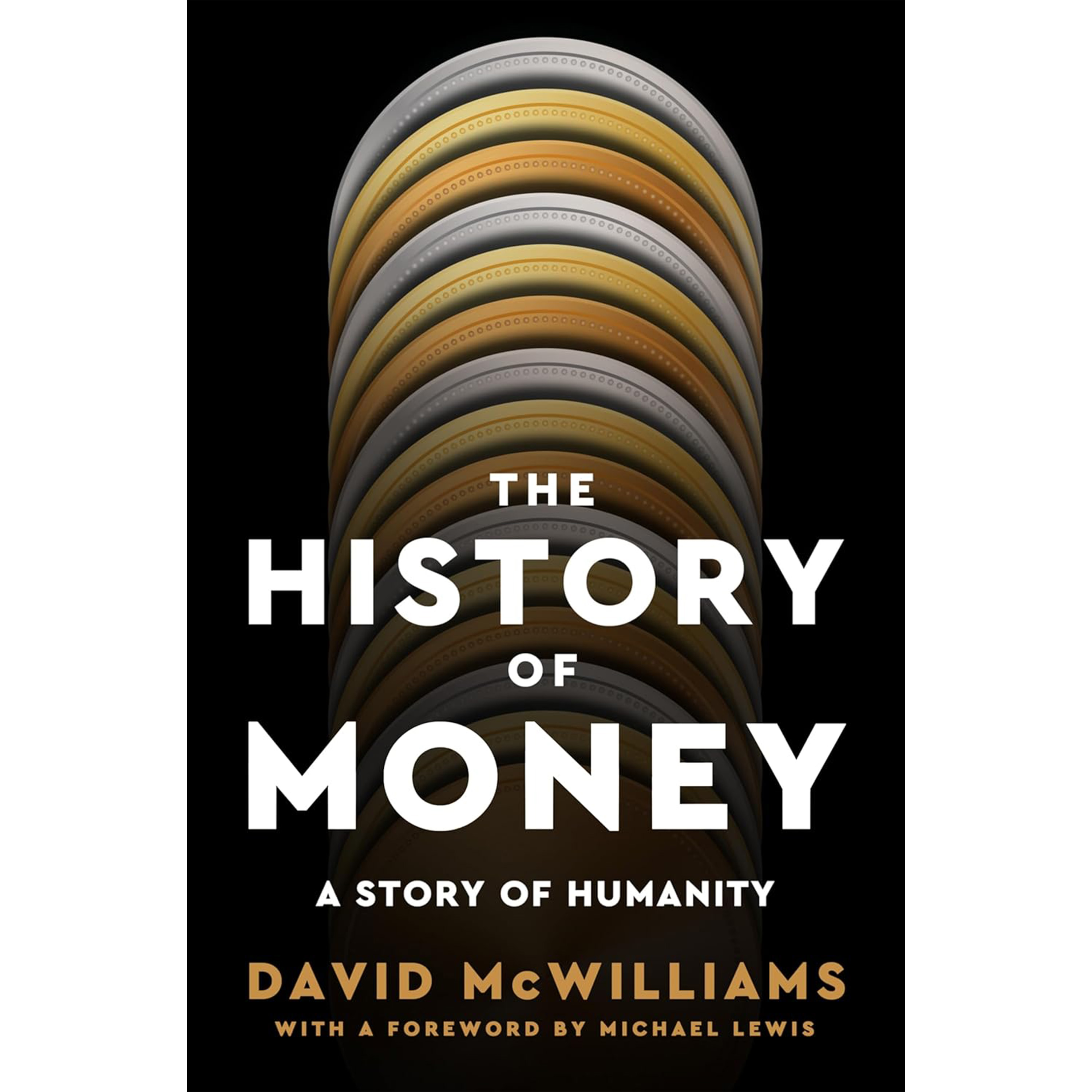
Welcome to A Book of the Legs podcast. I'm Cole Smead, CEO and Portfolio Manager here at Smead Capital Management. At our firm, we are readers and we believe in the power of books to help shape informed investors. In this podcast, we speak to great authors about their writings the late, great Charlie Munger prescribed using multiple mental models and analysis. We analyze their work through the lens of business markets and people. In this episode we will discuss the humanity of money and why it is core to who mankind is and has developed our societies and relationships. And if money can be used for good or evil. Maybe it's not the money. Maybe it's just us. David McWilliams is joining us to discuss his recently published book, the History of A Story of Humanity. Now, before I get rolling with David here, I want to introduce you a little bit to his background. Mr. McWilliams was a Bank of Ireland economist during the early 1990s. He has held other roles at UBS and BNP Paribas. David has been involved in media in Ireland also. He he has written other books including the Pope's Children, the Generation Game and Follow the Money. David is the host of the David McWilliams Podcast. He writes regularly for the Irish Times and is an adjunct professor of Global Economics at Trinity College in Dublin. David, thank you for joining me today.
- [01:45]
David McWilliams
Cole, you are very, very welcome and your listeners will know I'm talking to you from the wildest part of Ireland, Wild, wild west. Place called Inchedoni, which is just out on the tip of the west of Ireland in Cork, southwest of Ireland. And there's an Atlantic storm coming in, so it's kind of both romantic and terrifying in equal measure. Colt in equal measure.
- [02:08]
Cole Smead
So it's not the gale of creative destruction, as you mentioned with Schumpeter, it's just the gale in general.
- [02:14]
David McWilliams
This is when Schumpeter was looking for his analogies. He must have come to the west of Ireland, because it's certainly no, but it's great to be talking to. Lovely to be down here a couple of days before Christmas. There's nowhere better. Nowhere better. Nowhere more peaceful and to a degree, more contemplative.
- [02:32]
Cole Smead
Wonderful place in your book. I kind of look at your writing in this book. It's like a short history because you're giving people a lot to Kind of think about in the development of money over the time periods that you touch on and the people. And it's kind of like you're leaving breadcrumbs that people then can go a mile deep if they'd like to. But I wanted to ask you, what caused you to pen this book? I mean, you've, you've obviously written other books, but. But why this story and writing it like this for this time?
- [03:02]
David McWilliams
Well, you know, I mean, Cole, again, thanks for asking me that question, because I asked myself the question many of the times was as I was sitting down, scribbling away, but bizarre thing you mentioned there in my bio. I started my career as an economist, monetary economist at the Central bank of Ireland, so that, you know, it's like working for the Fed, except on a sort of a much smaller level, but you're working in the institution that in effect magics up this notion. Okay, sure, if you were a man of religious persuasion, you're almost working in the tabernacle where the body and blood of Christ is generated into the host. If you are a believer. So what? Really, in fact, then I went on to investment banking and then all sorts of other parts of the, you know, and I've been working as a monetary economist, public private sector, academia, journalism, etc. For many, many years now. And I had a very, a lot of your listeners might get this too. I had a very, very niggling feeling for many, many years that economists, my tribe, people who took it upon themselves to explain the mysteries of money to the average Joe on the street, that we actually are, many economists didn't understand money at all, that they don't get it, that their definitions are far too narrow. So it was almost for me like a Martin Luther Reformation moment when you realize, hold on a second. These guys with the pointy hats, they're not the races. So what I thought was, hold on a second. What does actually money do to us? Where does it come from? Can it run out? Who's in control? Is anyone in control? Why did it come about in the first place? Who invented in the first place? How did it evolve? Those sort of questions are the questions I've always wanted to understand, number one. And number two, then money is sexy, money is dangerous, money is duplicitous, money is a force. Money can animate human behavior, it can denigrate human behavior, it can change us. So these are the sort of things that I felt like, hold on a second. The economics or economistic view doesn't capture this the way I would Put it to your listeners is that if you have a plumber, for example, in your home and the plumber can tell you, you turn on the tap and this is how the water goes from that pipe to that pipe. And it's a combination of gravity, pressure, the width of the pipes, et cetera. That is how money gets around the system. Probably water gets around the system. Now if you took that plumber for a drink and you say, okay, I understand how water gets around the system, but why do you think water is essential for life? The plumber would have a, I'd say a difficult time coming up with the answer.
- [05:58]
Cole Smead
Sure.
- [05:59]
David McWilliams
Same with the economist. Right. Economists can tell us why and how water gets through the system. Central bank turns on the taps, the spigots, investment banks, banks, so they can tell you about the plumbing. But I was much more interested, interested in why do we need this? What has it done to us? Where does it come from? So that is why I call it a story of humanity. Because I decided therefore to go back to the beginning code and see, okay, where did it come from? Why do you think it started when it did, where it did? And let's look at the relationship. Because the central thesis of the book is that money is the foundational technology that explains human progress. It's a big claim, but that's the central claim of the book. And that's why we had to start a long, many thousands of years ago.
- [06:51]
Cole Smead
Sure. So you start out the book early on by a statement which, you know, I don't think this is super contentious, but I want to ask kind of a follow up question off it. So you say undermine money and you undermine the fabric of society. Is this because you are undermining history or it's because you're undermining time? If that makes sense.
- [07:12]
David McWilliams
It's because you're undermining even more than that. So the book opens with a fantastic true story of a plan by Adolf Hitler to have an airdrop of 93 million pounds over Britain, which would be about seven and a half billion in today's money. In 1944, about four pounds in every ten in circulation. That was the result of the biggest ever successful forgery the world has seen. And it was orchestrated in Sachsenhausen concentration camp between 1942 and 1943. The idea was Hitler couldn't defeat Britain on the battlefield, he couldn't defeat the British with bombs after the Battle of Britain. So he said, I'm going to defeat them by undermining the integrity of the value of and the Trust in their currency, in their money. Now why did he think that? Because Hitler had lived through the Weimar Republic and he had seen what happens in Germany when money dies, when you destroy the value of money, it doesn't just affect things like the rate of inflation, et cetera, as economists will tell you. What it affects is the very glue that keeps society together. Now why is this? This is the key. It is because I believe that money is an extraordinary social technology. And social technologies are technologies that allow humans to collaborate and cooperate at scale together. Now, lots of people listening will think, okay, technologies. I usually think of technologies like an iPhone or a wheel or a motor. Physical technologies, social technologies are different. And the history of humanity, what makes us as a species interesting and different and successful has been our ability to solve problems collectively. That is the notion of 100 brains being better than one. And we solve problems using technology. And the relationship between technology and humanity is a foundational relationship. Some are physical, some are social. And now you think, okay, so why did money emerge when it did as a social technology? And what you see is for the first about 300,000 years of our existence, we were nomadic, we were moving in groups that knew each other. We were in large family groups. And then about 10,000 years ago, we begin to settle down. And about 5,000 years ago, in the civilization of Sumer, which is in the south of Iraq now, we begin to see the emergence of money, this technology. But we also see it co evolve with writing, numeracy, counting, legal systems, organized religions, hierarchical structures, political systems. And you begin to see the co evolution of money with what you would call the basic building blocks of human civilization. Civilization come from civics, coming from cities, coming from urban living. So what intrigued me was, and this is what I'm going to answer your question was what exactly is money? And I think that money is a shortcut that people came up with in order to trade together to understand. And this super abstract notion called value, which is one of the most intellectually abstract things we can come up with, because what you value and what I value are different. And we need a way of figuring that out.
- [11:00]
Cole Smead
Correct.
- [11:01]
David McWilliams
Money allowed us to put a value on work, money allowed us to put hierarchies on society, et cetera. So when you start to see money as this foundational technology, what you also see, money is this unbelievably propulsive force that animates human striving, that pushes us forward, that forces us or compels us or encourages to take risks, to innovate, to imagine a different Future. So when you tinker with money, you're not just tinkering with notions of prices, you're tinkering with an entire encyclopedic ecosystem which is subjugated into one little thing called the dollar bill or the euro or whatever. And with respect to time, one of the most fascinating things about money is money allows you travel in time. So when your listeners, Cole, are getting a mortgage, so bog standard thing, buy a house, you get a mortgage. The amazing thing of the mortgage is you and the lender, if you're the borrower, sit down and you imagine yourself in 30 years time, you travel into the future. This is something we never do in any other part of our lives. Right. You travel effortlessly into the future. The rate of interest puts a price on that, it puts a value on that. You shake hands, you walk away. And the alchemy of finance is animated by, by the perception of time. So you're taking money that hasn't ever been earned to buy an asset that already exists. And in so doing, you travel in 30 years. Sure.
- [12:48]
Cole Smead
And we do that with like insurance contracts too. Like if I have a car insurance, I'm traveling forward in time to have more coverage, to your point, than I would through my own savings that day.
- [12:58]
David McWilliams
Yeah. And these are things that we do now without even blinking an eye. And one of the reasons, I think money's amazing success as this foundational technology is number one, it doesn't exist. It's entirely fabricated in our heads. It's an entirely.
- [13:14]
Cole Smead
You call it a human imagination. Yeah, I understand, like to your point, what you just said a second ago about that, but I slightly differ. I think it's a product of the human condition, not the imagination, if that makes sense.
- [13:29]
David McWilliams
Yeah, you could be right. Which makes it even more interesting because the condition involves soul consciousness.
- [13:35]
Cole Smead
Correct. It's a part of who we are.
- [13:36]
David McWilliams
Part of experience, all the whole gamut. Whereas you're right, your imagination can just be the intellectualization of the human condition.
- [13:47]
Cole Smead
In the Economist spoke under a defined set of principles that have to hold to be true. And to your point, a lot of principles have fallen out the wayside. And yet humans still have money.
- [13:58]
David McWilliams
Well, this is the amazing thing. So when you start at the very beginning, you realize that human progress and money have marched hand in hand. And I say in the first part of the book is that the ancient world had four elements. The Greeks believed there was earth, wind, fire and water. And those four natural elements were the elements that propelled forward humanity. And I think money is almost a Promethean force, that it is those four natural elements you can talk about. This is the fifth element. And it's the element that humans conceived. It's the human element. And it's a force that really moves us forward. And I can't conceive of our world of 8 billion people living on this small planet without understanding our relationship with money. And because humans are complex, money is complex.
- [14:59]
Cole Smead
Well, I agree. The money is our common interest, despite our complexities, if that makes sense.
- [15:05]
David McWilliams
Exactly. So I think, for example, when I was in school, I was in a Catholic school here in Ireland. The priests used to always say, money is the source of all evil. St. Paul. And I used to think, well, okay, I kind of believe this, but now I don't. Now I think there was a French sociologist called Marcel Mauss who said something interesting in the 19th century, said in order to trade, man must first throw down the spear. So what he meant by that is money is an alternative to war because trade is an alternative to war. Because in the old days, if I wanted what coal had and Cole wanted what David had, the way you got it is you beat me up or you killed me for my stuff. Then you introduce money, you introduce trade, you introduce cooperation and a certain amount of collaboration. And lo and behold, what you have is a technology that is an alternative to violence in many cases and can be seen as such. And that's why I think that you look at our world of 8 billion people. Yeah, yes, there are wars, yes, there's violence, but there's, there's not much given what there could be. And I think one of the reasons of that is that money helps us live together. Not ideally, not equally, but it gives us a framework and a system which allows us to coexist.
- [16:24]
Cole Smead
Well, the other, the other parallel I really liked out of your book was you, you know, you discuss why money is more like language. And so you point out that the dollar bill, US dollar bill, is obviously the most prevalent currency. We're in a dollar backed world ultimately, but we're also in an English backed world too. So that parallel is synonymous.
- [16:47]
David McWilliams
You're absolutely. I think this is one of the counterintuitive ideas about money is that what gives money its magic is its usability, that we all use it as a social technology and it's a shortcut for trust. So you and I can meet today? I can, let's say we're in a coffee shop. I'm serving you coffee, you're getting coffee.
- [17:09]
Cole Smead
Which I'll need to do with you sometimes.
- [17:12]
David McWilliams
So you and I don't know each other. I don't know how to trust you. Don't know what your background is. I don't know who you are. I don't know what you've ever done up until this moment. You could be the craziest person I ever met. But because of the dollar bill that goes over the counter or is tapped on our phones, I trust you. So money amplifies trust in society. Now, this is an amazing thing because trust is what keeps us sane, what keeps the whole thing going, right?
- [17:38]
Cole Smead
Sure.
- [17:38]
David McWilliams
So then you think, okay, so the usability of money gives it its power. And therefore the language idea is that the language that is most used is the most useful and powerful. And the language that is most used in the world as a default language is the English language. So I'm sitting here in a place called Inchedoni about 20 miles away. There's little pockets of Irish speakers, okay? They speak the national language. Little villages here, absolutely charming, unbelievably useful for them, culturally identifiable. But we default to English to communicate together properly. Right. In the same way, if you look at money like language, then you look at the international monetary system like language, right? The dollar is, as you said, the English language of the financial world, right? Y Everyone uses it, everyone understands it. The whole world clears their trades in it. Some people might not like it, but that is what gives the dollar its power. It's its usability, its flow. Everyone uses it. What I always think sometimes about people who want to come up with a new form of money. If you look at money as an evolutionary mechanism that has adapted and changed and moved and adapted, innovated as. It's a bit like the English language. If you were to make up a language today, Drew, that the world could speak, it wouldn't look like English. English is grammatically very, very difficult. It's phonetically all over the place. It has taken from Latin, from German, from Greek, from Spanish, etc. But it is what we use. And the international financial system is the same. If you were to make it up today, would it look like this? No, of course not. It would be much cleaner. But it is what we have. And this is what I say sometimes the crypto guys, you know, and I see they're having problems, not surprisingly, these last couple of days, right? Last couple of weeks, is that with respect to language, if you've ever met somebody who speaks Esperanto, Esperanto was a language that was invented in order to be the default language for the cacophony of Europeans that spoke different languages. 19th century, right. It never took off. It was never used. Right. But it's still there in small little pockets. So if you ever speak to somebody who speaks Esperanto, they will bore the head off you for hours talking about how brilliant it is and the rest of the world doesn't give a shit. It's the same as crypto, right?
- [20:14]
Cole Smead
I totally agree, by the way. It's like, you hear, these crypto guys.
- [20:18]
David McWilliams
Will bend your ear. You'll see them in the bar, they.
- [20:20]
Cole Smead
Say, oh, Jesus, here's what Michael Saylor said, and here's what my new friend said. My ear.
- [20:24]
David McWilliams
I'm in my ear. And the farmers at the bar and the people at the bar say, would you ever shut up, for Jesus sake? Right? Talk about something we're all interested in, like football or rugby or whatever. Things we could all talk about human things. So Bitcoin is the Esperanto of money. Absolutely fascinating for those who are involved, but unbelievably dull for the vast majority of people.
- [20:50]
Cole Smead
Hi, I'm Cole Smeads, CEO and portfolio manager here at Smead Capital Management and host of this podcast. If you enjoy this podcast, I'd like to invite you to check out smeedcap.com at our firm. We are stock market investors. We advise investors who play the long game with a discipline that has proven success over long periods of time. Learn more about our funds@smeecap.com past performance is not indicative of future results. Investing involves risks, including loss of principal. Please refer to the prospectus for important information about the investment company, including objectives, risks, charges and expenses. Read and consider it carefully before investing. Smead Funds distributed by Smead Funds Distributors llc. Not affiliated on a philosophical. I have this question for you because I think what you're pointing out is so true and you made me think of this. So we did a book, this is a couple years ago, I want to say, by Father Robert Sirico, and it was called the Economics of the parables and what he does, he goes through Jesus parables and talks about, you know, effectively the physical aspect and the spiritual aspect of both of them. And the two that always jump out of my head are, you know, the parable of the talents and also the parable of the hidden treasure. Because this is Jesus and what is he really talking about? He's talking about money or treasure in money form, let's call it. And Sirico said, you know, this is not not only physically true, but it's spiritually true. And so I say that because there's some of these aspects in your book that as you're going your book, you go from certain discussions on like the evolutionary period, you know, to literally, you know, what was, what Christ was saying. For example, you comment on some of the things that the Bible says. And so I guess the question I want to ask you is, you know, if Jesus talked about money and we try to think about this in the human condition and the faith needed that, that makes me think of this a lot, is like the leap of faith in some respects for money. Do you think it's more, does it require more faith with everything you've just said, to understand everything in the context of a big bang or like Jesus as a God man, which requires more faith? Or are they the same faith? Are they the same faith?
- [22:56]
David McWilliams
I think, I think basically you put your finger on it. So money requires a collective act of faith. It requires a collective suspension of one's critical interrogative faculties. It requires you to offer up a certain amount of bizarre assumptions for it to work. So for example, the dollar bill that I take out of the ten dollar bill or where we are in Ireland, the euro has intrinsic value when, you know, it's a piece of paper with a stamp on it. Okay, you know, when I pick up my mobile phone and the bank says I have money in my account, you know, it's just a set of digits. But because we have the faith in the system, which can, like faith and religion, be undermined, besmirched, be degraded, be sometimes rejected. But that faith in the system is what holds everything together. Now that again is a social technology. Religion is a social technology. It is in effect a set of rules of how we live together. And the interesting thing in all religions is many of the rules are broadly the same, right? But just different flavorings, different background noises, different individuals. But in actual fact, it's a set of rules of how we live. Okay, that's on its functional side. And then on the spiritual side, it's something that involves the human consciousness in a sense of things that are bigger than us. Sure. What I have been fascinated by religiously was why did Christianity, Jesus Christ in particular, emerge where he did and when he did, saying what he did, right, with that message, why did it happen and has it anything to do with money? And if you see when Jesus emerged, the life of Jesus, so he lives in the Greco Roman world, which was the first actually properly monetized societies, because the Lydians were the first monetized societies Pre Greek, around 800 B.C. the Greeks were The first actually properly monetized societies, they were based off a silver monetary coin. This was an extraordinary, precise. I also happen to believe that the reason the Greeks broke the intellectual ceiling and these were the people who came up with geometry, with logic, with rationality, with Greek theater, with Greek philosophy, with proof, with all these things the Greeks came up with. I believe that one of the reasons they did was that they had this technology, money beside them and they became a numerical society very quickly because they were counting all the time. And when you have a numerical society, you have a society that wants proof, wants precision, et cetera, et cetera. But the one thing that money did is it disrupted the old way of looking at the world because money is a disruptive technology. And one thing it meant, Cole, was that if you were a poor man in a society, a pre monetary society, which was basically driven by the dictates of the gods, right, the set of rules of the gods, you had a sort of comfort, like you're a poor man, but the God said you're poor, so you're poor. And that's it.
- [26:18]
Cole Smead
Right, and that'd be like the mythos, right? That'd be the mythos that the Greeks believed in prior to your point.
- [26:24]
David McWilliams
Yeah. And so the idea is in the Greeks shift from mythos to logos, from mythology to logic in a very, very quick period of time in the logical society. And I think the reason they were logical is because they used money and they were precise and they were mathematical, they were numerical. And once you get into a numerical society, you get into a proof based society. So you know, is it logical to believe in this or that and the other. But the other thing that a monetary society created was the very small incipient, what we would now call a meritocracy. So suddenly people who were good with this thing called money could change their status. And after all the promise of money today and back then, the major problems of money is that with money you can change your material circumstances here on earth. That's what it's all about, right? That's why people want it, that's why people acquire it, that's why people covet it, Right?
- [27:25]
Cole Smead
Sure.
- [27:25]
David McWilliams
But there was a flip here, because if you were good with money, then you yourself could take credit for your position in society. The corollary was therefore also the case. If you were bad with money and you remained poor, it was in some way your fault. Now this is a totally different way of looking at the world from the God's world. And I think what happened is Jesus emerges in an urban civilization at a time that had been disrupted by money. And the people who lost out in the monetary world, who weren't wealthy, who remained poor, they wanted a countervailing narrative, something they could cling onto. And Jesus in Christianity said something amazingly radical. He said, no, no, no, the poor are the rich people, the meek are the strong people. The meek will inherit the earth. A rich man will not go to heaven. It'll be easier for the camel to go through the eye of the needle. So he amazingly inverted with a radical message the way in which people have thought about the world for thousands of years. And I believe that was a reaction to money, to, in effect, it was a message. The Christianity was a message of love for the losers in the monetary economy who needed something to believe in. And that, I think, is an interesting way of examining where he came from, why he came the time he came from, and why his message, the message of Christianity was so unbelievably popular.
- [29:01]
Cole Smead
Sure. You also explain Pompeii because obviously, you know, Vesuvius buried the place. So we have quite an archaeological record. Can you just kind of teach our listeners, you know, as we, as you move forward to Rome, how celebrated money was in a place like Pompeii?
- [29:18]
David McWilliams
Yeah. So you have these two countervail narratives, the Christian narrative, and then you have the Roman narrative going on at the same time.
- [29:26]
Cole Smead
Yep.
- [29:27]
David McWilliams
So Pompeii is 79 AD just to put the Christian man, you know, it's about 30 years after Christ dies. 40 years after Christ dies. By the way, at this stage, the Pompeians hadn't got the memo of the meek will inherit the earth. They hadn't. They hadn't got that yet. Right. So they were partying, they love money, et cetera, et cetera. But then once we start to excavate money, what you begin to see are an extraordinary amount of small little shrines to a God with this little small wings on his, on his feet, a kind of a flinty guy, a deal doing guy, a hustling guy. And he was the Roman God of money, and his name was Mercury. And so what you see is this extraordinary devotion to Mercury, to commerce. In fact. Commerce comes from commerce with Mercury. Our word commerce comes directly from the Roman God. What you see is hoards, hordes of coinage. What you see in Pompeii is evidence they were trading incredibly far around the world, like so far out to India, for example. So these were a deeply, deeply commercial people. And then when you begin, as you begin to excavate Intellectually as well as physically, you realize that the Roman Empire wasn't just an empire of conquest, it was an empire of credit. The Romans had a highly sophisticated credit system. They had booms, they had busts, they had banks, they had speculations, they had insurance policies, they had a stock market. They managed to turn the Roman Empire into, into, in effect, one large rights issue for the Roman upper class. They had IPOs. They had all sorts of things that we would now recognize as not just the rudiments, but the building blocks and the sophisticated building blocks of a financial architecture. And that I found really fascinating. The very first credit Crisis came in 13, actually, the year Jesus died under the reign of the emperor Tiberius. The Romans had a beautiful idea about the notion, the mercurial notion, even mercurial comes from Mercury, that actually money can slip through your fingers, right, of money. They had this expression called pecunia non olet, which means money does not smell. And they took that to mean that the provenance of money doesn't really matter as long as it works. There's a lovely story about how they taxed pee or piss or urine and all that sort of stuff in the book. But yeah, for the ammonia, the intellectual idea was that they understood the power of money and they embraced it. And I also believe that the reason the Roman Empire collapsed was because money died. They had a series of hyperinflationary moments which so debased the currency that when you get to the end of the 2nd century A.D. to the 3rd century A.D. as the Roman Empire's borders are beginning to atrophy, what you see also is a series of monetary crises which undermined again, the faith in the system. It undermined the power of the empire, it undermined the brand of Rome, the credibility of Rome, the integrity of Rome. And before you know it, it's all over.
- [33:00]
Cole Smead
When you mention in your book, which is a really fun story, you talk about how Tiberius, obviously, he created the credit crisis in 33 for political purposes, as you kind of point out, and then used it to his advantage to accrue power. Which plays at your other big story idea, which is money is provided power by the state because in effect it controls the people. And that's what Tiberius really showed on that idea. Let's fast forward to the Dark Ages, right? Because Europe really went backwards compared to that structure that we just talked about in Rome. Who do you think was really to blame for that? I mean, you talk about you had really. You really had the Church being as a focal point, but it's not like a church who's emanating ideas and go read your Bible. It's very much like there's not much information past. You're in your locality and the monastic orders kind of dominate society at that time.
- [33:59]
David McWilliams
Yeah, no, I mean, again, I come back. The central thesis of the book is that money and human progress march hand in hand because money allows us to communicate together, to create together, but also gives us the incipient propulsion to innovate. Okay. It gives us that structure. So if you believe that thesis, well, then something's very interesting, which is what you see in the Dark Ages. We see the disappearance of art, of poetry, of all these sort of highly civilized inventions that the Romans had and were using all the time. Right. But you also see the complete disappearance of money. There is no coinage, there is no minting of coins in Western Europe from about 500 AD. When I say, no, there's no significant minting of Choice from a 500 AD to 1000 AD. And when money disappears, all these other expressions of human civilization disappear too. So this is an amazing. Again, I don't over egg the pudding. I don't say this is absolute correlation. I say, isn't it interesting? Isn't the co evolution of these things interesting? And then when money begins to reemerge in the around the thousands, then you begin to see the European economy begin to kick in.
- [35:17]
Cole Smead
Again, when you mentioned back to your point on the church's role, you mentioned the megachurches that were built around starting in a thousand AD and it's like as you were explaining that in your book, you could just see the, hey, the church. Right. Effectively the state and the currency provider in some respects need to build churches. So they got to raise money. So what do you got to have? You got to have coins. It all makes sense.
- [35:39]
David McWilliams
Yeah. And I mean, what I always think as a European, you know, like architecture is evidence. So where you don't have written evidence, you look around at the landscape, wherever you are here in Ireland, you know, you look around the landscape and see, okay, who was building these churches? Okay, guys called the Normans. Right. Okay, well, they obviously had a lot of money to build those churches. So what was happening in the society that allowed the big guys to acquire these are to build these extraordinary structures. Some of them took 200 years to build, like, you know, Notre Dame in France. What was happening that there must have been some surplus been thrown off in the agricultural world. Okay, what was that? Then you realize that these are all come about 100 years after the invention of the metal plow. The metal plow increases agricultural yields. Humans starve less readily or less. Well, I would say that the history of humanity, history of hunger as well. And so then you say, okay, they're not starving. Okay, so if they're not starving, they're having more kids. Those kids are living. There's a surplus. And then suddenly you realize, okay, there's an economic surplus, but how do they capture that? And then you look at coin evidence, and what you see is the re emergence of the minting of silver coins, mainly out of Germany, in Europe, a place called Goslar, where they minted many, many tens of thousands of silver coins. And again you go, yeah, wow. And then you begin to see again as money emerges and reemerges. Then you see places becoming small, little urban centers, people coming to market towns, those market towns having little mints, those market towns trading with each other. And then you track the currencies around and you realize, wow, Vikings were trading out of Ireland all the way to the Caspian Sea, that the world was getting smaller as money was re emerging. And all those things are essential to understanding why humanity and money march together in an innovative whirlwind which propels us forward all the time.
- [37:55]
Cole Smead
I agree. So let me pivot that, because you're right on a topic that you touch on in the book. Let's talk about the Malthusian trap, obviously named after John Malthus. I agree with what you just said. That's why I've always had trouble with the idea of Malthusian economics in general. Wasn't it just a money trap from too little liquidity that caused what we look at as Malthusian problems back then?
- [38:23]
David McWilliams
Wow. It's an interesting question, particularly as you're talking to an Irishman in the west of Ireland, which is the only country that really experienced a Malthusian moment. We are the. We are the. We are the exception that proves the rule that, you know, Ireland, we. We're the country that. That actually became overdependent on one crop, potato. We became a unidimensional, highly dependent country. That crop failed. And as Malthus would say, then Bob's your uncle. The rest of Irish. Irish American history is a Malthusian history, but Irish American history is rather unique, so it didn't happen elsewhere. So I think that what the problem with.
- [39:04]
Cole Smead
To your point, Malthus would say, therefore all the Irish died and the system corrected itself, in a way. But that's not what happened to the Irish. They proliferated everywhere else in the world.
- [39:14]
David McWilliams
Exactly.
- [39:15]
Cole Smead
That's why Malthus was wrong.
- [39:16]
David McWilliams
Yeah, exactly. He was completely wrong.
- [39:19]
Cole Smead
They followed the money, as you could.
- [39:21]
David McWilliams
Say, but then we followed the money to New York City and for there and Boston and Philadelphia. The rest is history, you know. And so Malthus was wrong because he underestimated the extraordinary innovative power of collective human innovation. Right. So that humans. But he was right in one way is that. And this is what gave Darwin, and this is what I found fascinating because I do think the economy is a big evolutionary ecosystem. I think the economy has got more. Has got more to do with biology than it has with physics. And I think economists in general. My tribe has become enamored with physics and therefore has missed some of the great, great moments because in effect, we started with Schumpeter, that it's the creative gales of destruction that define the healthy economy. The economy is never at equilibrium, because at equilibrium means the economy is inert or asleep or sn snoozing. The economy's. It's on 247 all the time. You know it, I know it.
- [40:26]
Cole Smead
Yeah.
- [40:26]
David McWilliams
If you're doing well, you're doing well. Just for now, somebody else prettier, better looking, clever, richer, smarters coming up behind you. You know, this is the way it's. It's an evolutionary process. And what interests me about Malthus was that Malthus did give Darwin the idea, and this is fascinating, that Darwin was. Look, Darwin was a great man for collecting data, but he wasn't a very good theorist. And Darwin got his biological theories from economics, from Malthus's book. Because what Malthus said was that, yes, the Irish will die, but they will also adapt their behavior and the adapting their behaviors, they will emigrate to the United States. They will change. They will write that once there's a big event, humans adapt. And it's that very adaptation which allows us to survive. So Darwin is looking for a theory of specialization and a theory of evolution. And he goes back to Malthus and he says that's it. It's that all species adapt, and it's the species that adapts the best that explains the evolutionary nature of the world. And in a way, I find it sort of quite joyful as an economist who believes that the world is more like an evolutionary ecosystem than a physics laboratory, that the greatest biologist of the world did get his rudimentary arguments or his constructive arguments from Malthus, or at least the bits of Malthus at work.
- [42:00]
Cole Smead
We hope you're enjoying the podcast. You know, we work hard putting together this show, but we work even harder for our investors at SMEAD Capital Management. At smead, we believe in disciplined investing, which is why the SMEAD funds have a proven track record of long term outperformance. If you're an investor who plays the long game and want to invest in wonderful companies to build wealth, we invite you to visit smeadcap.com Past performance is not indicative of future results. Investing involves risks, including loss of principal. Please refer to the prospectus for important information about about the investment company, including objectives, risks, charges and expenses. Read and consider it carefully before investing. Smead Funds distributed by Smead Funds Distributors llc. Not affiliated the other part of your story that I love because I mean, we know this to be true, but you said it, which I appreciate, because to your point, a lot of economists would never say this. You talk about gossip. There's like the human form of gossip as an important piece of money. And you used the story of you growing up as a kid in Ireland in the 1980s. Explain the gossip that you'd be dealing in at that time that you mention in your book.
- [43:10]
David McWilliams
Yeah, so money is social, right? It's a social technology. It brings us all together. And gossip is the way in which humans communicate. We communicate in many ways, but the most surreptitious, the most exciting, the most delightful way we communicate is via gossip. And if you look at any, for example, boom, bust in any sort of market, it's actually a gossip driven event. It's a FOMO driven event. It is a fear of missing out, saying, my God, did you see that's going up? Or this guy, this guy, right? So the way I look at gossip is I think that once you realize that at the core of the economy is the human being, is the people making the human decisions every single day, then you realize that notions like, for example, economists will tell the kids when they come into university. And I see it and I try to bash it out of them, but what's one of the first laws of economics? And the kids will say, well, we learned last year man is rational. I'm like, really? Man is rational? What does that mean? Man is cold and scientific and unencumbered by moods and as logical and mathematical. Have you ever met a human like that? No. Would you go for a drink with someone like that? You wouldn't, right? We're actually irrational. Right? And the irrationality is amplified by the fact that we all communicate together all the time. We get excited together, we get giddy together, we move away together. And I think in the book I was talking about immigration and you know, when kids in our street went to London or New York, right? This is way before the Internet, way before mobile phones. You know, a guy would go off and he'd send a letter home, right? Or somebody else would go to New York and they'd fly back and say, Jesus, your man, who, Mac Williams, he's doing brilliantly over there. And that gossip would go around the street to the younger kids. So we were on a big. A big estate of, let's say, 100 homes, let's say five kids in every home. So it's 500 kids, right? So it's like. It's like I used to call it, it was like a big reservation, right?
- [45:30]
Cole Smead
Our street, Irish reservation. I haven't heard that one before, but that's good.
- [45:35]
David McWilliams
Everyone's flirting away, chatting away, doing their thing. But the gossip had this amazing propulsive power, because you'd hear about a guy doing, well, are a guy, you know, he's got a good job, he's got good money, he's buying drinks for everybody. And it was the gossip that propelled us, that encouraged us, that coaxed us to leave so that we would become the source of the gossip. And this is the way I think humans behave. We're just a social. We're just an animal that chats. We're just a chatty ape that chats away.
- [46:09]
Cole Smead
So on that, you talk about Saracen magic, and this is kind of, you know, to your point, the gossipy nature of this, where you have a collision of people in places like Sicily, right? You have the Normans, who you'd mentioned just a few minutes ago, who had gone there, and they're running into all these cross cultures. Since the Church dominated things like currency. And really, the people, they didn't have a notion of zero because with God, why would you need a zero, right? Plain and simply. But yet the Pope knew what Saracen magic was. Is that a fair way of thinking about it?
- [46:47]
David McWilliams
Yeah, yeah, yeah, yeah. Well, Saracen magic is what the Church dismissed algebra as. Okay? They were very, very perplexed by the fact that Arabic traders in Sicily seemed to be able to do mathematics in their heads, which they could, using fractions, using ratios, using algebra. And algebra had come from the Arabic countries, but it hadn't come from the Arabic countries. It had actually come from Persia, which the Arabs conquered in the 6th century, but they had borrowed it from India. And the reason the Indians were quite happy with zero is that zero is the nothing. It's the void, it's nothingness, right? When you look through zero, there is nothing there.
- [47:34]
Cole Smead
Sure.
- [47:34]
David McWilliams
And this scared Christian theology because we believed in proof, we believed in geometry, we believed in God. So our a form of God. Whereas the Hindus, they had no problem in the void, etc. So this weird technology gets transferred to mathematical technology from the Persians to the Arabs and then to the Arabs to Europe in Sicily. But what the Arabs could do was use in zero. They could count in very big numbers. They could use basic algebra in their heads, and therefore they could express a kilo of dates in terms of a kilo of sugar or a kilo of cotton in terms of. I'm using the weights, kilos, it wasn't kilos, but whatever the weights was in terms of a day's wages. And they could do this really quickly and they could use mathematics in their brain because they could use zero.
- [48:32]
Cole Smead
And.
- [48:33]
David McWilliams
They were taught zero. So the way in which bourgeois kids were taught in Christian countries in the classical period, just before the Renaissance, was we were taught the classics. So we're taught Cicero and Plato. We looked back all the time. Whereas the Arabs, because they were using mathematics, were looking forward. So we were looking using deductive reasoning. They were losing inductive reason. They were much more scientific. And the Church got scared of this because the Church probably understood that once you release the merchant armed with money and algebra, what you do is you create a parallel power in society. Prior to that, there had been the king and the Church. The Renaissance and the rise of merchant classes and commerce puts in a third character called the merchant. And in many ways, the history of power since the Renaissance has been a fight in society between the kings, the priests and the merchants. And these three classes are still very much dominant today.
- [49:50]
Cole Smead
You mentioned, you know, you point out some interesting things. You throw out the idea that Gutenberg wasn't just going into the Bible business for God, he was seeking a prophet. And then also to your point about what you just said, we also can see from history, and you touch on this lightly, but I know there's been other books on it, how the Church figured this out and said, well, we better get into business too, if the merchants are in business, which is why Jacob Fuguer and Pope Pius II ended up creating St. Peter's Basilica. Not all for the sake of the Church.
- [50:24]
David McWilliams
Absolutely. So the Church had to realize, okay, what I call the priestly class, right, the Brahmin class, if you will, they had to figure out, well, where's the power base if these merchant guys are coming up and they're financing some sort of arrogant, rather dissolute aristocrats. We should back these merchants like the Fuggers and the Medicis. These are the guys who've got the real power because they understand money and they are using their brains rather than their brawn. And these are the guys who've got the networks all around the world. So if we want to be relevant, we've got to get into bed with these guys. And in a way, this is the story of the Reformation. It's the story of certainly northwest Europe and the Mediterranean from, let's say, broadly 1500 all the way through to now, which is a fascinating story. I actually should have, when I look back at it now, Fugger was a man I should have had an entire chapter on. And the Fugger family, well, his whole life.
- [51:31]
Cole Smead
I mean, back to your point about the silver mines in Germany. They were involved in the silver mines in Germany. He was effectively the king had given him a royal charter, if I remember correctly. And then the king's making money off of Jacob Fuger. I mean, it made to your point, it was either church or state doing business with Fuguer at different times. So I agree. I think he's probably the. You know, for someone that came in contact with him only a couple years ago, he might be the most understudied person in the history of the Western world, in my opinion.
- [52:00]
David McWilliams
I think you're right. And when I look back and I look back at the book and I'd finish it, you know, and I just thought, I missed Fugger. I missed him. He should have been there.
- [52:12]
Cole Smead
Except that you touched, like, you did a wonderful job in your portion on the Netherlands and Amsterdam. And I never knew that Peter the Great went to Amsterdam, which was a great story. Cause he's like, I can see the success of what's going on. Like, as I'm reading your book, he's like, I can see the success. But he knows what he'd have to risk as czar to provide that. And it kind of reminds me of like, Chinese capitalism. We'll take a little bit of it, but we sure don't want to try it all.
- [52:39]
David McWilliams
No, exactly, exactly. And actually, that's a very good analogy. I hadn't thought of that. Because, as you know, the Dutch were the first people to elect out the king to redundancy because they knew that with money and commerce and if you want to liberate the human commercial mind, you've got to liberate the human mind in all sorts of other ways. And you, you know what? Peter the Great couldn't get his head around was how this tiny little country that had no resources, no resources at all, right. They even had to rent their armies. There's so few of them. How they could become so rich? And he was the emperor of the biggest landmass, the most slaves, the biggest army. And Russia was poor. And he forgot that there's another thing going on. But it's a fascinating story how he went there undercover.
- [53:32]
Cole Smead
It's incredible. I'd never heard that story before. And so as I read your book, again, like I said, you're putting all these breadcrumbs out, and it's like, wow, I gotta go way deeper on that. That is a great story. And so I will probably be separately emailing you saying, hey, what are your two or three best sources on that? Here's another thing I really liked because, again, I was thinking about there's a lot of things in your book that you're. You're, you know, picking up and then setting down for the reader. But there's a lot more connection, I think, in your book than I think a lot of people would just assume on its face. So you talk about the idea that there's really only two investors out in the world. There's momentum investors and value investors. Okay. And you point out how credit can change these things and kind of the. The repercussions of those two phenomena. But that's kind of simply you put, you know, that's what it is. And this is just kind of hitting me right now. But couldn't it also be explained that therefore, momentum is just the mythos and value is just the Lagos?
- [54:26]
David McWilliams
That's a great way of putting it. I would love to have been able to come up with that myself, Cole. But you came up with it. You're absolutely right.
- [54:33]
Cole Smead
Okay.
- [54:34]
David McWilliams
That's exactly it.
- [54:35]
Cole Smead
Well, because I said, just use today's context as an example, let me try and maybe say the mythos. The mythos of today. We're coming out of the mythos of American exceptionalism and the dominance of the US Dollar and the dominance of American capitalism. And that's kind of like the mythos. And I say that because, to your point, I've been in Thailand in the last year, and I've heard people say that mythos, right? And it's like, okay, but that's the mythos. The question is, what is the Lagos?
- [55:04]
David McWilliams
Yes.
- [55:04]
Cole Smead
And the question is, what are we gonna learn in the Lagos period? But I. I almost think of as, like, the pendulum swings, right? So in Europe today, you know, we are, I would argue we're seeing like the Lagos of things. We're seeing pretty matter of fact, things happen in, say, some of the capital markets. They're surprising to people because it doesn't really fit the mythos of what people have been believing, if that makes sense.
- [55:25]
David McWilliams
Well, I think that, you know, if we grab that analogy and go with it, you know, the mythos of Europe is the beauty, the history, the culture, the architecture, the quality of life. I was just in Switzerland, you know, just at the weekend. You know, it still is an extraordinarily beautiful place to live, maybe the best place in the world to be born, etc.
- [55:51]
Cole Smead
Yeah.
- [55:51]
David McWilliams
But we are being attacked physically by Russia, industrially by the United are by China.
- [56:01]
Cole Smead
Yeah.
- [56:02]
David McWilliams
And the United States, who was used to be our best mate, is no longer our best mate.
- [56:06]
Cole Smead
Yeah.
- [56:07]
David McWilliams
And so the logos for us is this new world that we Europeans, just to take your analogy, okay, we have to wake up, we have to figure out, what do we do? We've got Russia in the east, we have America who's looking the other way in the west, and we've got China eating our industry on an hourly basis. And that is, maybe we're further along than the United States, because the United States, the mythos, was American power, et cetera. But America still is powerful. It still is a superpower. It still is in medical technology, in high tech and biotech. It's still very, very far away from the rest. Competition wise. Sure. But we in Europe are very much waking up to the cold and rather unpleasant feeling of Lagos. Sure.
- [57:04]
Cole Smead
Because it's a very. It becomes a very calculated view they have to take versus, to your point, kind of like a warm fuzzy, you know, everything's gonna work out and the United States will always be on our side. And that warm fuzziness is very gone.
- [57:18]
David McWilliams
It's gone completely.
- [57:20]
Cole Smead
You don't have to spend a lot of time on this, but you tell this story. You talk about Washington quieting the whiskey rebels at that time, in your mind, is that at all like Trump sending troops into these cities that are dangerous?
- [57:33]
David McWilliams
It's very, very similar.
- [57:35]
Cole Smead
Okay. I thought so too, but I just wanted to ask your opinion on it because it seemed like, wait a second, there's precedents to this because Washington did it for these guys in Pennsylvania that that didn't want to pay a tax on their whiskey.
- [57:47]
David McWilliams
I was fascinated by the whiskey revolution in the States. I hadn't thought about it and somebody alerted to it and I said, wow, that's interesting. Let's get into that. Let's have a look at that one.
- [57:57]
Cole Smead
The other thing that touched that same chapter was when Hamilton nationalized the colonial debt, which, as you pointed out, it created this breadth and liquidity to the federal market, that if the states had traded on their own, the federal market would have never had that kind of liquidity.
- [58:14]
David McWilliams
Yeah, you'd have been like, Europe with our 17,000 bond markets, or what do we have? Our 27 national bond markets. We should have one bond market. Correct? Right. And then we'd have massive liquidity, and then we could raise money very easily. We could have a vehicle for European savers, all that stuff. Right. So basically you have Hamilton, Washington. I'm not an expert in American history, but seemed to me to be a classic politician. He's a little one step forward, one step backward. Let's bring the guys with us. Hamilton, on the other hand, was much more of a radical. And Hamilton says, look, we are building not just a country that has got a manifest destiny that is separate from the world. We're trying to build a big federal block that at some stage will compete with the Europeans capital markets in industry, etc. We don't want to be some agricultural idle, you know, that maybe Jefferson preferred or what have you. Right?
- [59:14]
Cole Smead
Yeah.
- [59:15]
David McWilliams
We've got to play the game. And playing the game is knocking heads together, and playing the game is going into the states, in that case, Pennsylvania, and saying to these whiskey guys, listen, lads, you want your little pot stills, that's all good, but you got to pay tax. You got to pay tax to us. And of course, Washington was very much, well, let's persuade them. But Hamilton was like, no, we need to get a thing called the US Federal army to go in and kick a few heads and impose our law, federal law. And I think that he also saw the dollar as this mechanism by which Americans could create an asset that could unify a very disunified country. So I think Hamilton, the more I read about him, the more I thought about him, was an exceptional stabilizer. And all revolutions need stabilizers. It's all great to have a revolutionary, but you need a guy who comes in at the far end and said, well, what are we doing all this stuff for? And he stabilized things.
- [60:20]
Cole Smead
Hey, I want to give a big shout out to everyone who's been working so hard on this show. You know, we recently hit the top 10 in investing, investing podcasts on Apple podcasts, and even number one in the business category in several countries. As you may know, this show is brought to you by SMEAD Capital Management SMEAD Capital Management understands how frustrating and illogical the stock market can be. If you're searching for funds with a proven track record, give the SMEAD funds a look. Or better yet, reach out@smeecap.com and don't forget to mention you're a fan of the podcast. Past performance is not indicated of future results. Investing involves risks, including loss of principal. Please refer to the prospectus for important information about the investment company, including objectives, risks, charges and expenses. Read and consider it carefully before investing. SMEAD Funds distributed by Smead Funds Distributors, llc, not affiliated Capitalism creates incredible products. It's funny, I, you know, because of the bicycle mania of the 19th century in the UK I'm quite aware of John Dunlop of Dunlop Tires, who's obviously a fellow countryman and he's from Ireland, you know, where he wanted to create a bike for his son. And so that's what created, you know, the pneumatic tire as we know it. But as you point out, the place that you could most easily extract rubber was in the Congo. And, you know, enter King Leopold, stage left and who. And I remember in grade school we had to read a book by Adam Hochschild called King Leopold's Ghosts, which really speaks to the atrocities of the time. How do you think about, you know, it's kind of like this is one of the truly physics moments of capitalism, in my opinion, where it's like Newton's third law. For every action, there's an equal and an opposite reaction that took place there. You know, obviously we created new products. There was profit that was created out of that. The negative reaction was there was these atrocities and really victims that came out of that. How do you think about the kind of discussion of that?
- [62:23]
David McWilliams
Well, what I wanted to do in the book was look at, as well as the upsides and the extraordinary positive stories around money, I also wanted to look at the negative stories around money. How when Europeans decided to go out in the mid 19th century and colonize, particularly Africa, what people who looked like you and me, right. We might not have the same accent, but we looked like them, did pretty horrible things to people who didn't look like us, right? Sure. And one of the fascinating things was that I had always thought that botany was one of the bridesmaids of colonialism, that what actually happened was throughout the so if you think of cotton, think of sugar. These are all plants. These are new plants that were discovered in the new world, in America and whatever, which changed the way the world looked, which had colonialism, slavery, etc. But the an example was the rubber boom and the extract of nature and how it was extracted in Congo under the Belgian stateling called the Belgian Free State or the Congo Free State in the late 19th century, early 20th century, was a story worth telling. There were two Irish heroes in it. The reason there aren't many Irish people in the book, so there's a couple of Irish heroes in it. That's why it has to have an Irish flavor. One was John Dunlop, the innovator who came up with pneumatic tires. And he just basically says, well, if we put air into this rubber, we may well make the driving experience a little less harsh. But once they figured that out, you'd air and rubber not in just bicycles, but in trucks and tractors and everything. And a guy called Roger Casement, who was an Irish revolutionary hero who exposed the extraordinary exploitation of the local people in Congo. And I think the story, it's the base story of Apocalypse now, it's the base story of Heart of Darkness. It's worth telling, I think, Cole, to just show us what an unfettered human obsession with profit alone can do and why we need to realize that money is complicated because humans are complicated. Humans do horrible things to each other, sometimes in the name of profit, in the name of money. But it's actually what happened in Congo you could argue was the basis for or the foundational crime of the decolonialized movement, which is one of the greatest movements of the 21st century. Decolonized movement.
- [65:14]
Cole Smead
I think of it. I mean, I'll use a more current example. The Internet is incredible and what a great way to find prices and markets and all these things and the spread of information, et cetera. The. How do I want to put it? The indentured nature of OnlyFans is a really bad thing. It just is. It's not good for us. And I'm sure some people really disagree with what I just said. But the truth is it's no different than the Congo. It caused people to be completely subject to things that we don't think are best off for society. And that's highly contentious to say today, but I think in a hundred years we'll look at it like prostitution, hopefully. But much like we didn't look at the Congo like that at that time, and years later we say, you know, that probably wasn't the best idea. The other way I, you know, you mentioned that Lenin considered colonialism like peak capitalism. I don't agree with that, even though I'm sure I disagree with Lenin. A lot of things, because ultimately less humans and less humans that have freedom always hurts money.
- [66:23]
David McWilliams
Yeah, I think what Lenin was saying, look, Lenin was, as I always say about Marx and Lenin, Marx, amazing because he wrote the most successful, unsuccessful book ever written. Right. It was Das Kapital, probably the most successful or influential publication in the last two centuries in terms of what it did to galvanize political movements in the 20th century and still now in the 21st century. But actual fact, a book that if you actually really agonize and interrogate, makes no sense at all on any level and is a profoundly misdiagnosis of the human condition. But be that as it may, and as an Irishman, which is probably the only European colony we were colonized, I do think that colonialism, and I see what happened to us over 400 years was indelibly associated with a form of freewheeling capitalism that regarded the plunder of other people's resources for somebody else's gain as being fair game. And I think that. So it wasn't that Lenin was right, but I think that colonialism and that idea of robbing other people's resources that are not yours and excusing that under the altar of profit is morally dubious. Doesn't mean that the anti colonial movement has produced knights in shining armor, are angelic leaders. It hasn't. It's produced its own fair share of appalling creatures. But as a general rule, you'll find it very hard to get an Irishman to be pro colonial.
- [68:06]
Cole Smead
Sure, I totally agree. I just say it because I also think of other things like where you find the proliferation of money, you find freedom. And I don't think anyone would argue colonialism was freedom to a lot of people. To your point. And so I agree with you. There's. I think it's like, you know, back to, you know, let's use China. Can you be capitalistic and not really believe in money? I think China proves that you don't really believe in the power of money. You believe in doing business for profit, but that's not money and that's not freedom in my mind. And those are, I think those can be.
- [68:39]
David McWilliams
I agree with.
- [68:40]
Cole Smead
You can be confused. Let me ask you. I loved your beer hedgers. Your beer hedgers was awesome. Because to your point, to start this discussion, it takes the economist and says, listen, you can do all the surveys you want and you can produce all the graphs and you know, to your point, physics, relationships, but the guys who drink beer on Friday night, they know what's going on. Better than you do.
- [69:02]
David McWilliams
Yeah, exactly. I mean this, this story comes from. When I was an economist in the central bank, we had a currency crisis. Our governor said, well, David, you guys go out there and explain to the people why there'll be no devaluation. And the people are talking about devaluation are wrong. And we've got all the economic theories and Ireland's part of the European Union and we've got this massive balance sheet and we can defend ourselves. And that was all very well and it sounded great on the news, are in the financial pages of the newspapers, are in the academia, are in talking to brokers and investors. Right. But meanwhile, all the guys who drink beer on a Friday night said, hold on a second, this currency is about to collapse. So I'm going to go to Northern Ireland with our just about to collapse Irish currency and buy beer today because it's going to be more expensive tomorrow once the currency collapses. So you get a run on beer, which is the. And the. These are cops and soldiers and guys who work in construction companies and bus drivers. They get the economy better than all economists. They know what's going on. You can't fool them. And it's the same in America. They know what's going on. Right?
- [70:14]
Cole Smead
Yeah.
- [70:15]
David McWilliams
And we can talk about all our theories and all that, but you know, you go to a bar, you go to, you talk to guys and very quickly you realize they've got it sussed.
- [70:23]
Cole Smead
Yeah, I agree. You mentioned since the end of gold, the number of children per mothers in low income countries has fallen from 5 to 2.4. The Dark Ages show in your story that people with no money was bad. Might we prove that money with no people is the same thing?
- [70:45]
David McWilliams
I think we should probably end here. It's been a fascinating conversation. Cole, I think you're absolutely right. And that is the massive, massive demographic reality that is facing our world, the Western world, which is not necessarily going to be solved by simply opening the doors to people from the rest of the world to come in.
- [71:11]
Cole Smead
I agree. Because that doesn't change the world, that just changes your country's population.
- [71:15]
David McWilliams
Exactly. So I think we've concluded that. I think it's a very good way to conclude. I think that that is a challenge, the demographic challenge. If money is a sort of a reasonably difficult thing to get your head around, but it is actually a foundational technology of humanity. You're absolutely right that without the humans, the foundational technology doesn't matter.
- [71:40]
Cole Smead
It has no value. David, where can people follow you going forward? I mentioned Your podcast, which is the David McWilliams podcast. Are you active on social media or any places out there that they can follow you?
- [71:52]
David McWilliams
So the David McWilliams podcast comes out twice a week. You can get it again wherever you get your podcasts. It's economics, politics, geostrategy or all that sort of. All that sort of good stuff. And thankfully it's well received. On Twitter are ex davidmacw. They're the best places to get me. I'm also on LinkedIn under my own name, but on Twitter I'm more active. Or on X I'm more active. And we'd love to talk to you because these are international stories.
- [72:27]
Cole Smead
Yeah, no, it's wonderful, David. Your book reminds me how a fight on money is a fight on humanity and the complexities, sensitivities and battles we have faced as mankind. Our listeners should go out and buy a copy of the History of Money Today. If you enjoy this podcast, go to Apple, Spotify, YouTube, wherever you listen to A Book With Legs, give us a review, tell others about the books and great authors like David McWilliams that we have the opportunity to understand and study the world with and through for our tribe. If you have a great book that you'd like to recommend, email podcastmeedcap.com that's podcastmeedcap.com. you can also send your suggestion to us on X. Our handle is meedcap. Thank you for joining us for A Book with Legs podcast. We look forward to the next episode.
- [73:17]
Podcast Announcer
Thank you for listening to A Book With Legs, a podcast brought to you by Smead Cap Capital Management. The material provided in this podcast is for informational use only and should not be construed as investment advice. You can learn more about Smead Capital Management and its products@smeedcap.com or by calling your financial advisor.