Loading summary
Transcript166 lines
- [00:03]
A
You're listening to A Book With Legs, a podcast presented by Smead Capital Management. At Smead Capital Management, we advise investors who play the long game. You can learn more@smeedcap.com or by calling your financial advisor.
- [00:22]
B
Welcome to A Book with Legs podcast. I'm Cole Smead, CEO and Portfolio Manager here at Smead Capital Management. At our firm, we are readers and we believe in the power of books to help shape informed investors. In this podcast, we speak to great authors about their writings the late, great Charlie Munger prescribed using multiple mental models and analysis. We analyze their work through the lens of business markets and people. Hosting this episode alongside me is our chairman, Chief Investment Officer and my dad, Bill Smead. Dad, thanks for joining me.
- [00:54]
C
Very excited to be here. Love this book.
- [00:56]
B
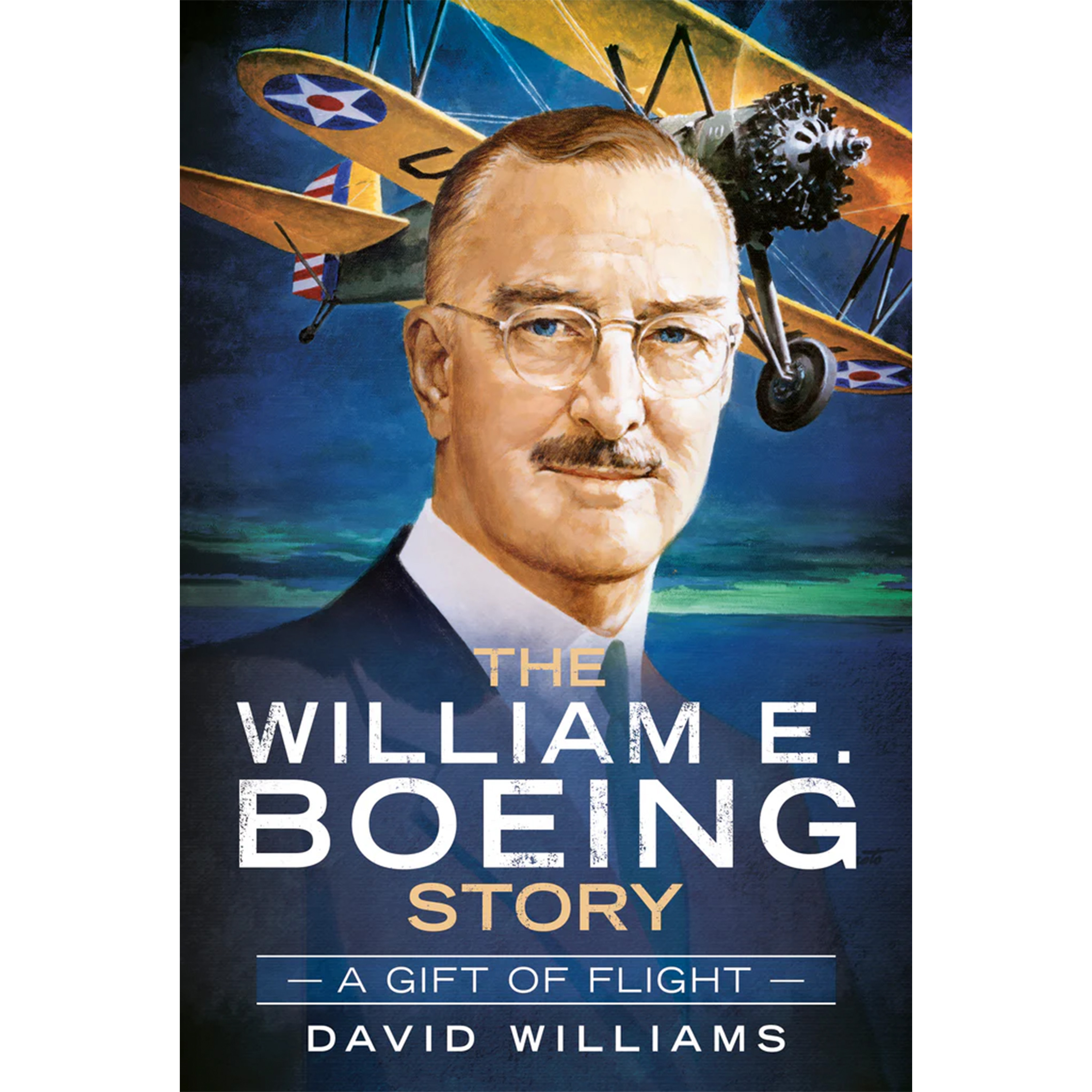
I agree. I'm pretty excited too. It was like a walk through memory lane of my life. And I know aspects of yours. And I also want to throw a shout out to our friend in common, Andy Toles, who obviously teed this up. And so I know Andy's occasionally listening to the podcast, so I'll make sure he knows that. Today we will look at the life of a man and really a family who built one of the great American companies of the 20th century and lost it. We will think about family legacy, patience or patient capital, you might say, and how one lumberman from Grays harbor bet everything he had on the airplane. Joining us is David Williams to discuss his book, the William E. Boeing Story, A Gift of Flight. A little background on David before we get started. David was the former executive director of the Hydroplane and Race Boat Museum near Seattle, Washington. He's written 10 books on motorsports and aviation and he was the race boat coordinator and primary stunt driver for the MGM film Madison. For this book, the Boeing family gave him unprecedented access to their archives. Thousands of never before seen photos which if you get a copy, you can see diaries and personal letters. It's the first ever full length biography of the father of commercial aviation. David, thank you for being here. You know, I have hunches from your, you know, hydroplane background and things like that, but what made you go to the family, say, hey, there's a story to tell and I'd love to do that for you.
- [02:25]
A
Well, Cole and Bill, I'm thrilled to be talking with you. And there's, there's a pretty interesting story in how I got involved with the Boeing family. And as with most things in my life, it does revolve around hydroplane racing. Okay, Bill. Bill Sr. And the Boeing family, by the way, it's full of bills. So there's a Wilhelm, there's a Bill Senior, There's a Bill Jr. And there's Bill. The third founder of the company was Bill Sr. So when I talk about Bill Sr. It's the founder. Bill Jr. Is his son Billy, as
- [02:59]
B
they call him later.
- [02:59]
A
Billy. Yeah. Yes. But, but don't you, you couldn't dare call him Billy to his face. In the 80s, 90s, you know, he was a. A major player, a big, a big deal.
- [03:10]
B
Yeah.
- [03:11]
A
I think only his dad could call him Billy.
- [03:14]
C
I'm William. He's William Wallace. I'm William Wallace.
- [03:18]
B
So we got Cole Williams here.
- [03:19]
A
Yeah, yeah, I understand how that works. So anyway, Bill Jr. Was a hydroplane racer. He. He had a boat called the Miss Wahoo, built in 1956. He raced it from 1956 to 1960. And it was really kind of one of the highlights of his life. He was quite successful with it. And for a driver for the boat, he hired a unique character, a Cold War hero who had. His name was Myra Slovak. And Myra was a pilot for the Soviet dominated Czechoslovakian air force in the 1950s. And he hijacked his. His own plane and flew it across the Iron Curtain, landed in Germany and just happened to bring on board that plane thousands and thousands of pages of classified Soviet documents. So the American CIA just loved Myra Slovak. And they brought him to the US and they said, whatever you want, we'll give it to you. You've been such a good supporter for us. Well, Myra didn't speak English terribly well, so he couldn't get a commercial pilot's license to fly airliners. But the next best thing is they set him up with the Boeing family and he was Bill Boeing Jr. S personal pilot. The reason that was important is because Bill Boeing Jr. Had married a woman whose family was Czechoslovakian, so they could speak with Myra.
- [04:50]
B
Gotcha.
- [04:51]
A
So at any rate, so I ended up restoring this boat through the hydroplane Museum. And as I restored the boat, Bill Boeing Jr. Would come down and look at it. And he brought his friend Myra Slovak with him. I ended up writing the Myra Slovak biography, which is called A Race to Freedom, the Myra Slovak Story. It's a great prelude, if you will, to the Boeing story. And it's currently optioned to Netflix for a series, kind of an action adventure, CIA spy story. So anyway, when we completed the Myra Slovak story, about halfway into the research, Myra passed away and Bill Jr. Passed away. And I was left without two of my primary resources. So I arranged a sort of Casual Boeing family reunion that took place at a restaurant in Kirkland where I brought all of the living Boeing relatives that I could find together in one place at one time to talk about their experience with Myra Slovak, because he was sort of a honorary family member. And it was a great time. And we ended up hearing all about Boeing family recipes and Boeing family Christmas stories. And at the end of that, that reunion, one of Bill Jr's daughters came up to me and said, you know, we've never. We've never allowed anybody to write about our. Our grandfather, about Bill Senior, because the media's never really been fair to him. We think you could do the job. Would you do it? And I was dumbstruck. I said, yeah. And then the truckload of archives showed up, and it literally was a truckload of photographs and letters and diaries. And I felt it was important to tell Bill's story, as this is Bill Sr's story as a real person, not as, you know, not as sort of a heroic character.
- [07:10]
C
Oh, no. Icon is what you're kind of.
- [07:12]
A
Yeah.
- [07:13]
C
Hitting it.
- [07:14]
A
But icons start out as real people. You know, they have. They have pets, they have favorite foods, they have insecurities. And I tried to touch on all of that to make Bill Senior as real a person as I could.
- [07:30]
C
Sure.
- [07:31]
B
So you start out with Wilhelm Boeing, his father, teaching young Bill to hunt in a Michigan forest on one trip. He quotes Gouth. He says, it is not enough to know. You must also apply yourself. It is not enough to want, you must also do. Yes, that becomes Bill's guiding principle. And his form of doing is very unique, even through his whole life. But how does the doer want to end up in, like, shanty towns, for example?
- [08:07]
A
Well, just to back up that, that quote from. From Gerda is so critical. We all know people that are brilliant but never do anything with it or will tell you what they would do if they were you. But if you have the knowledge, you have to apply it, you must know, and you must do well. Bill was smart enough to know that things don't start at the top. You know, a tree doesn't grow from the top down, it grows from the bottom up. The way he ended up sort of in Shantytown Hoquiam, if you will, is his father died quite early. Bill was only nine years old when his father died and then left his mother, Maria, incredibly wealthy. Incredibly wealthy. And Bill was raised with a tremendous privilege. And he ended up going to school in Switzerland, and then he went to Yale. And while he was at Yale, he discovered that his stepfather had not been paying the taxes on thousands and thousands of acres of timberland that Wilhelm had bought on the West Coast. So Bill dropped out of school, hopped a train and went to the west coast to straighten this out. And when he was there, he decided that he, he needed to learn the business from the ground up. He needed to put on the hobnail boots and go out in the forest and cruise. That was cruising, was, it still is, a scale where a timber surveyor will go through the forest, identify the trees that are worth harvesting, the trees that you want to leave to grow.
- [09:59]
B
They still do. Timber cruises to this day are a thing like you still do a cruise to see what's on stand. So this has been done for over 100 years.
- [10:07]
A
Yeah. And just as an aside, I talked about wanting to make Bill as real as possible. I ended up with his cruising logs, beautiful red bound leather books. And he had a very neat handwriting with sort of a brown ink that you could tell was from a pen that you would dink in an ink well. And as I was going through page by page, I came to one page and I opened it and I was suddenly overwhelmed with this incredible set of shaving talcum powder. And it was just that one page. And I realized as I tried to figure out, he would cruise during the day and then the next morning before he went out, he would transcribe his notes. And the poor guy must have worked so hard he was exhausted and fallen asleep and leaned down and put his cheek on that book. And then when I opened the page, 120 years later, it just, it was like a. Like you've all seen the cartoon where a genie comes up out of a lamp.
- [11:16]
B
Yeah, I have.
- [11:17]
A
I felt his presence in as, as visceral, as real, in the room with me as. As possible.
- [11:24]
C
Yeah.
- [11:25]
A
So anyway, Bill went to these, to Hoquiam. He learned the business. I don't know that he ever felled trees, but he was involved with moving the timber. He started out as a proponent of something called splash dams, where you'd build a big pond, you'd dam up a creek in the woods, you'd put all your timber in it, and then when you wanted to move it to town, you'd use dynamite to blow up the dam and you'd have this little flood. He did that for a while until the farmers who lived along the river said, every time you do that, you're flooding our land. And he figured out a better way to move timber.
- [12:06]
C
But that's what probably triggered the flumes. Yes, right.
- [12:10]
A
Yes.
- [12:11]
C
The flumes replaced that methodology.
- [12:13]
A
Sure.
- [12:13]
C
So he goes to the institutes in veve, the same Swiss School as J.P. morgan, then Yale. What did those institutions teach him that. That Grays harbor asked him to unlearn?
- [12:34]
A
I would suspect that both of those institutions. Well, he was very proud of his time at Yale, his time in Switzerland. He learned a lot about sailing and about photography. Those were his two. And stamp collecting. Those were his three hobbies when he was in Switzerland. But it probably that those type of schools could insulate you from the. From the actual physical labor. A lot of the people that went through those institutions were. And not to be critical of anyone, you know, but. But they were money folks who invested and sat in their offices and, you know, moved paper to make money. He learned in Hoquiam that you got to do. You got to get out. You got to get your boots muddy. And one of the strange coincidences of history is shortly after he opened up his lumber company in Hoquiam, there was the huge earthquake, followed by fire in San Francisco. And San Francisco was a city built entirely of wood. They didn't have brick buildings. It was all wood. And many of the lumber companies in Northern California were also damaged by the earthquake. So the first ships to go carry lumber to San Francisco to rebuild San Francisco came out of Hoquiam. And Hoquiam shipped an incredible amount of lumber the first few years after the San Francisco fire. And that is where. That was a huge windfall to Bill because he was the biggest deal in Hoquiam. He was the biggest lumber exporter for lumber producer in Hoquiam.
- [14:26]
C
Yeah. 25,000 acres worth.
- [14:28]
A
Yeah.
- [14:29]
C
Let's see. At the Swiss School, he takes his first balloon ride over Lake Geneva, which is a beautiful place.
- [14:36]
B
Cole and I, we've been there numerous times for business.
- [14:39]
C
He expected to be scared.
- [14:41]
B
He.
- [14:41]
C
He was, and he was thrilled. How much of that moment shaped everything that was to come.
- [14:47]
A
I think it lit a fuse. At that point. Airplanes weren't really a thing. The Wrights didn't fly their first plane until 1904. So that was still quite a ways 10, 12 years in the future. But he loved flying. He loved the perspective of being up in the air and when in. To jump around a little bit. In. In 1910, when there was an air show in Los Angeles, he had to go. He had to go see it. He wanted to see these airplanes. And it. It's a crucial thing to know that Bill came towards aviation as a hobby, as a passion. He didn't really. There really wasn't a good way to make money with aviation at that time.
- [15:42]
B
It was a novelty, if anything, it was just kind of like a spectacular novelty. But yet what do you do with it?
- [15:48]
A
Yeah, there it in, in a way, there's a lot of it that I liken to the current space industry where. Well, pretty much most of most, most of the folks that are currently involved in the space race, the Jeff Bezos, they all got rich on something else. And then they came to space going, these are cool vehicles and there ought to be a way to make a living off of it. There ought to be a way to make money. And then they have created the business of putting satellites and payloads in space. Before, before them, it was just governments that did that. So Bill created the business. He really was the first, not only the first company, but the first person to fly international airmail into and out of the US he actually flew the plane that carried the first airmail letters in and out of the US Then as airmail began to grow, he was able to stitch together several airmail routes that created a cross country airmail route. And as long as he was bringing mail that far, he might as well bring a couple passengers. So that's where United Airlines came from. Few people realize that Bill Boeing also founded United Airlines. He didn't just found Boeing, he founded United.
- [17:13]
B
Well, let me come back to the Los Angeles because he's watching Lewis Paulin burst out of the hidden gully in the farm and biplane as you're telling your story, right? The Wrights have flown at Kitty Hawk, I think seven years earlier. He goes up in a balloon. He's like, this is incredible. I think you talk about the adrenaline that that must have been as he's going up and up and up and being tethered at that time. What made someone like Bill, other than the curiosity of it, know that something new was coming? Like aviation was on the horizon because it was known by some, but it wasn't like everyone's society is like, oh, we're all dying to get up in an airplane.
- [17:56]
A
I can only speculate on that answer. I have lots and lots of letters and correspondence from Bill, but nothing where he directly addresses that question. I can say it's. I know he was fascinated by the captive balloon in Switzerland. And of all, all of the memorabilia from his childhood, he still kept the diploma. It was called the diploma. It was a blue diploma that memorialized his ride in the balloon. Then when he went to the Santa Domingo show in Los Angeles, he went with his sister's husband and his sister's father in law. And in the car ride home from the very, very first flight that Bill saw, Bill's sister's father in law said he was had been a Civil War general. And he said, oh, if only we'd had airplanes at Bull Run, we could have chased Joe Johnson all the way back down to Atlanta. They never would have won the war if we just had airplanes. So from the very, very first time between Bill saw an airplane, he and his family began talking about the military application. But at the same time, the, the thing was so magical. He loved flying. Well, he hadn't flown at that point, but he loved the idea of flying. And then when he and his partner Conrad Westervelt got a chance to actually fly in Seattle a couple years later, it just became an obsession. They did not build the first two planes, the BMW planes, the Boeing Westerville planes, with any notion other than hey this is cool, let's build planes. But while they were building those planes, World War I started and that became an opportunity to sell more planes. And it was, there still wasn't a tremendous non military business model yet. Even the military didn't quite know what to do with it. When the, when the U.S. government, the U.S. army first ordered airplanes, it was for the Signal Corps, it was for reconnaissance. They had no notion that there was a combat capability for airplanes. It was, it was just observation and reconnaissance.
- [20:24]
B
Hi, I'm Cole Smead, CEO and Portfolio Manager here at Smead Capital Management and host of this podcast. If you enjoy this podcast, I'd like to invite you to check out smeecap.com at our firm. We are stock market investors. We advise investors who play the long game with a discipline that has proven success over long periods of time. Learn more about our funds@smeedcap.com past performance is not indicative of future results. Investing involves risks, including loss of principal. Please refer to the prospectus for important information about the investment company, including objectives, risks, charges and expenses. Read and consider it carefully before investing. Smead funds distributed by Smead Funds Distributors llc. Not affiliated.
- [21:08]
C
David I'm going to answer a little bit of Cole's prior question. With such a successful fight and the dad being such a good businessman, it was just a natural thing probably for him to think about what could be because he'd watched his dad do what could be. So from 1950, 1960, he spends $87,236 on his aviation hobby.
- [21:33]
B
The hobby you were just talking about
- [21:35]
C
when he incorporates Pacific Aero products puts it all in, plus $12763 cash and gives himself 1000 shares. He's the sole owner. How does that concentrate ownership shape the next 15 years?
- [21:48]
B
Yeah, because it comes back later. The whole idea of ownership and the capital he put up, you know, I mean, that. That became an issue at a later date.
- [21:55]
A
Oh, it became a huge issue. And. And it led eventually to. To his leaving the. The company. And you can see the seeds planted right there. Sure, but he wasn't. He wasn't thinking about it so much as a business. It was still his hobby, but he was a businessman, so of course he was. He incorporated the business, but he wasn't selling shares at that point. He kept all the shares.
- [22:20]
C
He.
- [22:20]
A
He gave a few out to, you know, to loyal employees. But. I'm not. I'm not sure where we're going other than saying he started as the. As a hobby.
- [22:39]
B
We were just thinking about the capital structure of being like, to your point, it's a hobby. There's not a lot of thought into where it's going necessarily, other than, let's see where this goes. It's kind of the idea at the time.
- [22:49]
A
Yeah, exactly.
- [22:50]
B
Yeah.
- [22:51]
C
And then he hires Wong Tsu, mit, trained from the Chinese Naval Academy. His telegram to Westervelt reads simply, quote, engage Chinaman, unquote. The university club didn't want members to know a Chinese engineer was in the attic, so Wong wore a white serving coat coming downstairs. What does that say about how Boeing hired for talent?
- [23:12]
B
And just for our listeners to preface this, like, this is all in the context of the book, I would say first, secondly, is like, what a. I mean, for someone like Bill Boeing, who's wealthy and notable in town to pick. And as you explain in the book, he very much picked him out for this role with no care for anything other than his expertise like this. This is kind of unheard of at the time.
- [23:36]
A
Oh, very unheard of. And there was a tremendous Asian bias, an anti Asian bias on the west coast at that time. Bill didn't care. He wanted the best that he could get. And Wang sue his. Westervelt was very close with the aviation department at mit, and Westervelt said, he's the best guy there is. Hire him. So Bill did. And then he had to figure out how to make him fit in to kind of the. The racist Seattle community at the time. So they did. They hid him in the U Club. Incidentally, the Asian staff at the U Club was all Japanese. Wang Tzu was Chinese. So there really wasn't much interaction between them, because two different languages, they just happened to have a similar complexion. But yes, there were. There were times when Wang Tzu would need to go down to Lake Union to look at, you know, to watch an airplane test that he couldn't come downstairs until he put his white serving coat on. So no one knew that he was sort of a being secreted up on the third floor. And as he'd come down, one of the guys at the new club would say, oh, hey, I need a, I need a scotch and soda. Would you get one for me? And so there's some comical situations there.
- [25:03]
B
Yeah, I think he said, oh, sir, I'm about to leave out for my break. You'll have to get it yourself or something. You know, something along those lines, which is just like idea of. It is a circle. Let me, let me pivot a little bit. Because obviously Bill, he builds Aldera, which is his massive home in what is the Highlands, right next to Seattle Golf Club, which you talk about this in the boat. The boat. The Olmstead brothers, who created like Central park, came out to Seattle, then did various properties, including the Highlands and Seattle Golf Club and have well known architecture and designs in the area. So this was like, well to do, designed place, etc. You know, Aldera is kind of classically built, like, hey, we're going to do this, but there's going to be a thought, a purpose, a story, fun. Like everything had a lot of sense of it's not random with Bill. He was building, trying to build something greater than other people were always trying to do. And this house kind of had the feeling of it's something greater than.
- [26:04]
A
Yes, and two things. I'll get back to the house, but I have to tell you, you may not be aware that that house spawned another famous billionaire, another big Seattle Corporation. The Maa family ended up buying that house and. And Craig McCaw, who founded MA Cellular, Bruce McCaw Frontier Airlines and you know, the. So the McCaw family were the next family to live in that house. Bill had donated it to the, to Children's Hospital during World War II with the idea that they could sell it and make money. The hospital was never able to sell it and the McCaw family ended up buying it in the mid-50s. So back to the house. Yeah, Bill. Bill only had one way of doing things and it was the best way, the right way. And the house was gorgeous. The landscaping was gorgeous. There are rumors that we've never been able to confirm that there were tunnels built out the back of the house. That could be used for bootleggers and Prohibition, during the Prohibition era. But then also when Lindbergh came to visit after his famous flight across the Atlanta that at the Atlantic, that maybe Lindbergh was secreted into the house through those underground tunnels. So there's a tremendous. Bill had a very outgoing, very kind of. I don't. A very fun personality. But after his run in with the Roosevelt administration and after he got taken to task by the media, he put up a public front that was very stoic. He just didn't have time for anybody but family after that.
- [27:57]
B
This kind of happened too, right off of Aldera. So you talk about in the book, he's got this house. Prohibition comes about first in Washington before obviously it happened federally. So there's Sheriff Bob Hodge, who you talk about in the book, who comes about and kind of a skull dugger in a lot of ways, but yet has this sheriff role. And just to give people a sense, like if you're not familiar with the area, which mostly wouldn't be if you Google the Highlands, it sits on the water down the hill from Seattle Golf Club. So the idea of a bootlegger pulling up on the Puget Sound with a boat, you know, bringing their dinghy out, dropping alcohol off, that makes total sense to me for being, you know, down there before and, and also being along the water there. And so he runs into this and this really brings Bill out into the public because now you have a well to do person like Bill who's being brought up on charges for, you know, effectively running money through Prohibition, you know, bootleggers and liking his alcohol and everyone knows it, while others call it lesser off. People can't go buy that.
- [29:05]
A
Yeah, it's one of those political things and politics works its way through all aspects of the book because it kind of works its way through all aspects of life. But at the time, the Prohibition was being pushed by a very vocal group of very conservative, essentially fundamental Christians who felt that alcohol was evil. And people supported prohibition all the while kind of thinking, yeah, but that won't really apply to me. You know, they're just, they're just talking about they want to close down the nickel whiskey that you can get at the saloon. And all those poor drunks down on skid row. Yeah. Who have fallen. They're not going to come after my champagne and my brandy and my cognac. Well, when, when Bob Hodge was running for. For governor, he wanted a story. He wanted something that would get the media's attention. And he did go after. He Went after Bill Boeing. And it was a very complicated story because the liquor that Bill had had all been liquor that had been gifted to him and his father's estate, or his mother's estate actually, or liquor he had bought long before prohibition went into effect. It became pretty significant constitutional issue that if you own alcohol and then consuming alcohol and buying alcohol is made illegal, what's the status of the alcohol you owned prior to the prohibition going into effect?
- [30:48]
B
Well, you mentioned he's got some, he's got like some really nice super old Veuve Clicquot. Right? That is like, you note it in the book. So in your mind that's important. I was like, wow, that must be really nice stuff.
- [30:59]
A
It must be. You know, and, and he had a whole case.
- [31:03]
C
Well, he, he had the best of everything.
- [31:05]
B
Yeah, yeah.
- [31:06]
C
When he did a boat, he did the best boat. When he did a plane, he did the best, he did the best of everything.
- [31:12]
B
Yeah.
- [31:13]
A
And, but then there was a, there was a second run in that he had later on, which was actually more damning than the first one where he actually was recorded on a, on a tapped telephone ordering scotch for a fourth of July party. And that, that case actually became a precedent setting case that is still the, the federal government had not gotten a warrant to issue the wiretaps. And it was some pretty groundbreaking legal work.
- [31:56]
C
Privacy protection.
- [31:57]
A
And, and actually Bill did not get the privacy protection. The, the privacy protection was written about in a dissenting opinion. And then later on that dissenting opinion, actually, not to get too far afield, but the, the dissenting opinion on the, the case over the wiretapping is sort of created the, the notion of the right to privacy. And that ended up going forward in Roe v. Wade. And, and was a very complex, you know, legal question with the Supreme Court. But Bill found himself in a difficult situation where they had him dead to rights. I mean, and he, he had, he was recorded on the phone ordering alcohol from a known bootlegger and the feds had it. So he ended up turning state's witness and that a very difficult time for him because he was essentially breaking trust with, with his friend who he had bought the liquor from. But he ended up not serving, not serving any time in jail. Charges against him were dropped. But it was a difficult time.
- [33:12]
B
That scene in the book is a great scene. Like you can just imagine what's going on. The defendant, the defendant's lawyer is asking him, you know, point blank, you know, have you received immunity? You know, if he has, you know, he's not A good witness because then he's not a good character. And again, that whole scene was just like. And to your point, you tell the Royal Olmstead side and you know, again, I just think that's a great part of the book for people to go in and want to go down the rabbit hole of that part.
- [33:40]
C
It's got legal.
- [33:41]
B
It's, you know, it's got everything.
- [33:43]
C
This book has everything. So. But by 1919, war contracts dry up. Boeing goes from 400 employees to 80. The company bids on making display fixtures for a department store and loses. They try selling bedroom furniture. How close did the company come to just not making.
- [34:01]
A
Came very, very close. And in fact, there is a story that's detailed in the book where Bill took home a bunch of ledgers, sat with them late at night, drinking his brandy and reading the ledgers, and decided. And he says this in a speech. I decided to close up. We were done. But then as he slept on it overnight, his conscience got the better of him. And the next morning he said, I couldn't do that. I couldn't do that to all those wonderful people who had dedicated their lives to me and to aviation. So let's give it a couple more months. And those couple of months were all they needed to get a government contract to refurbish some.
- [34:41]
B
Yeah. So as you said earlier, the mail business was kind of the original driver of the airplanes. You know, as we learn through this book, as we discuss with FDR and all this stuff, the government isn't very good at doing in business, what a business can do well. And Bill Boeing's life teaches that pretty well. So, you know, they win the Chicago San Francisco airmail contract in 27 at $50 a pound. The way this reads, it was blind bidding. So you put out your bids and whoever the lowest cost bidder, and it's like they're. And they're kind of guessing, right? They're kind of saying, well, here's what we think the male poundage is and things like that. I think the other two bids were 224 and 264. So someone sending a letter, I mean, this is way below what the other bids are. So they're coming in very cost competitive. Competitors screamed he was out to wreck the whole air system. Like cut to kill. He's ruining us.
- [35:34]
A
Yes.
- [35:35]
B
The post office made and post the bond. Right. Because this is so low, we don't trust you. Right, Exactly. In the end, was this just. He wanted to get the contract to prove the concept was that the idea
- [35:50]
A
well, yes, but also he was a competitive guy and he wanted to show that his airplanes and his company were the best. And a couple things that I find quite ironic. The reason he was able to bid so low. This is a little bit of a long story. Bear with me. But During World War I, the US military needed engines for the thousands of airplanes they thought they were going to build. So they contracted with Packard to build this engine called Liberty. And thousands of Liberty engines were built. They were a water cooled engine. And then the war ended before any of these air, any of these engines ever made it to combat. So the US Government had thousands of engines that they had bought and nothing to put them in. So going forward on all the airmail contracts and all future military contracts, for quite a while, the bid specifications said you must use a Liberty engine. Well, Bill had developed a relationship with Frederick Rentschler at. The engine company building air cooled engine, the Pratt Whitney air cooled engines, which were much lighter. They didn't have to have a radiator, they didn't have to have a reservoir for fluid. So he built all of his planes using Frederick Rentschler's Wasp air cooled engine. When people asked him how could you bid so low? He said, because I'm only paying to take mail across the mountains, I'm not paying to carry water. Which was his reference to the, the, the radiators.
- [37:35]
B
Yep.
- [37:35]
A
So when he was able to outbid everybody, the other competitors said, well, you're trying to ruin the business. It's ironic that then a few years later Roosevelt comes on board and says, well these, these bids were rigged. If you'd have been an open bid, we could have got it a lot cheaper. Well, they weren't rigged and you couldn't have got it cheaper because Bill was already underbidding everybody else by a phenomenal amount.
- [38:03]
B
When you, you also, as they're bidding, I thought, you know, you're learning to learn like when you're Bill Boeing. So they're bidding and they're like, yeah, yeah, here's what they think the tonnage is going to be right now. But when they were running other routes, they saw that as they came in and the price was attractive. What happened? Mail volumes doubled pretty quickly. So they could, they could kind of, they had a better model for pricing this and understanding where the business was going than others did at times. As they did more and more mail.
- [38:30]
A
Exactly. And then the thing that was, was really interesting is that when the airmail routes were put together, airplanes would only fly three or 400 miles at a time. As Boeing got deeper into this, he built planes that could fly thousands of miles at a time, which meant that those little routes, you know, there was never at first, there was never a route from New York to Los Angeles. There was a route from New York City to Buffalo, from Buffalo to Detroit, from Detroit to Chicago, from Chicago to Wichita, from Wichita. And as Bill built planes that had longer distance capability, he was able to say, we'll put these all together and as long as we're going from New York to Chicago or New York all the way to Los Angeles, let's put people on. If we don't have enough mail cargo to maximize the plane's capability, we'll sell seats. And that's when they began selling seats is once they were able to stitch these little routes together into longer cross
- [39:40]
C
country routes, just as a temporary digression.
- [39:43]
A
Sure.
- [39:43]
C
Cole's brother Bryce works for the French company that puts the seats in the 777. 7:87. So a shout out to Bryce. Yeah.
- [39:54]
B
My father in law worked in tooling at Everett plant of Boeing for 37
- [39:59]
C
years at the Boeing plant in Everett and lives up north there. So you walk through how Bill Boeing bought stocks on margin and how that worked and it was 10% down in those days. Broker loans, the rest great, as long as the prices go up. Bill's people are doing this. Then October 20th of 1929 happens. How exposed was Bill and what did his response say about him?
- [40:30]
A
I don't think he was terribly exposed because even though he bought on margin, he had, I don't think he bought as much on margin as some of the little people that couldn't afford it. Bill had the money to back up if there was a margin call. He could make the call. A lot of people couldn't.
- [40:49]
B
We hope you're enjoying the podcast. You know, we work hard putting together this show, but we work even harder for our investors at Smead Capital Management. At smead, we believe in disciplined investing, which is why the SMEAD funds have a proven track record of long term outperformance. If you're an investor who plays the long game and want to invest in wonderful companies to build wealth, we invite you to visit smeedcap.com Past performance is not indicative of future results. Investing involves risks, including loss of principal. Please refer to the prospectus for important information about the investment company, including objectives, risks, charges and expenses. Read and consider it carefully before investing SMEAD funds distributed by Smead Funds Distributors llc. Not affiliated. So let's go to the airmail Contract. Because you talked about Roosevelt and we've done Amity Schley's book the Forgotten man, which is a great story of not only the Great Depression, but also the government meddling. And like this part of your book was just meddling.
- [41:51]
C
Oh, that never happens. The government.
- [41:55]
B
So Roosevelt cancels a marital contract, hands the routes to the Army Air Corps. Okay, in just three weeks. Let me say that again in just three weeks. How bad did it get for the lives of people doing that in the army and the mail service itself?
- [42:10]
A
Oh, it got horrendous because the army was never built to deliver mail. And initially, way back when the air mail started. Yeah, the army carried mail. They carried it in open cockpit biplane fighters, little pursuit planes that could carry a couple sacks of mail and they would make these three or four hundred mile hops. When Boeing took it over, he. By the end he was using pressurized aluminum planes with multi engines, with radio communications and heated cockpits. So if they were flying through a snowstorm or a windstorm, the pilot wasn't being pelted with rain, the planes could fly hundreds of miles. Well, all of a sudden, overnight, Roosevelt canceled all these contracts and handed it back to the military. And the military was expected with very little preparation to fly night flights in small fragile planes over the mountains. And the airmail system had put in beacons and literally arrows on the ground that were lighted arrows that pointed you towards the next airport. And the military didn't have any of that at their disposal. And it was a disaster. They crashed a number of planes and killed a number of pilots in just three weeks.
- [43:42]
B
Yeah, I remember in your book you said that Eddie Rickenbacker backer who flew for the military, he called it legalized murder is what they referred to it in the end. So the airmail act of 34 forces the United Aerospace, was it?
- [44:00]
A
I'm trying to think of the T. United Technology Corporation.
- [44:03]
B
Yeah, Technology Corporation breakup. And then they play this idea up that at the Spoils conference, as you talk about when they got together, like everyone got fat and rich. So anyone at the Spoils conference from government contracts for five years, this becomes a massive problem obviously for Bill Boeing and his entities. And they really go after Phil Johnson.
- [44:22]
C
Okay.
- [44:22]
B
That's who's kind of targeted in all this. It's kind of dismantling everyone. Just so everybody knows, like your story. Here is why there's United Air and Boeing and they're separate businesses to this day because of this kind of framework.
- [44:38]
A
Well, and there's still utc, United Technologies Corporation is still exists.
- [44:43]
B
Yeah, it's still a business in the plane business. So, you know, do you look at that? I mean, it's all this Boeing story. It's really just the bedrock of American aviation, isn't it? It just got splintered at that moment.
- [44:57]
A
It absolutely is. And I'm not sure how much time we have left in this. But I do want to point out that the irony is within a couple of years, the US military and Roosevelt specifically needs 11,000 B17s built. And he has to come back to Boeing and say, all right, well, sorry that we blackballed Phil Johnson. We'll let Phil Johnson come back and run the company because he needs to build us a bunch of bombers. And we're sorry we broke up the company. You're too small to build the number of bombers we need. So we're going to take the order for your plane and divide it between you and Lockheed and a couple other airplane manufacturers. So the irony of the government forcing Boeing to break up, at that point, what they were breaking up was United Technologies, but then had to come back to them in just a few years. I mean, less than 10 years.
- [45:54]
B
Yeah. And they came up with the war because the government was in a position of, oh, we've been way behind the eight ball. America played isolationist, they tried to help Britain. We eventually get drawn into the war ourselves. And suddenly it's like these people that they had bad mouth and meddled in their lives and business, they were the most important people for government contracts tied to the war. So you do a great job of Talking about the B17, you do a great job of talking about the B29. Not only does it come full circle with the government, but then it comes full circle for, like, Wilhelm Boeing for Bill.
- [46:26]
C
Yeah.
- [46:27]
B
Okay.
- [46:28]
A
And that is something where the Boeing Corporation historian and I still disagree a little bit.
- [46:33]
C
Okay.
- [46:34]
A
Because if you look at the Boeing corporate record, well, Bill was out from 34 on.
- [46:39]
C
Sure.
- [46:39]
A
If you look at the Boeing family archives, there are thousands of documents. I'll say this. From 1934 to 1942, Bill had nothing to do with the company, except. Except that he had founded the bank that financed all of Boeing's stock releases. And he was the CEO of the bank and approved all the stock releases and that he wouldn't approve a stock release on a project he didn't think was appropriate. So he was still. He was the puppeteer. A layer up, if you will. But then the war happened. The Japanese attacked Pearl harbor, which was very personal to Bill because Bill Junior. There had been a couple kidnap attempts against Bill junior When he was a teenager. So to protect Bill junior, Bill Senior sent him to live in Hawaii. So Bill spent a lot of time in Hawaii. And when the Japanese attacked Pearl harbor, he took that very, very personally. So he came back to the company. And from 1942 to 1946, there are over 2,000 letters, documents, minutes of meetings of Bill Boeing attending meetings at the Boeing Company. If you look at all of the engineering meetings During World War II, Bill's name is top on the distribution list. I have Bill's wife.
- [48:06]
C
That's because everybody's trying to win the war. I mean, that's. And he was a patriot.
- [48:12]
A
He was. And he did not buy a share of stock back. He did not get paid a penny. He did not draw a salary. But he went into work at least two days a week during the entire war, and he did it all free because, as he said, because my name's on those planes.
- [48:28]
C
Yeah, yeah.
- [48:31]
B
But he ends up. I mean, those B29s end up bombing where Wilhelm Boeing's from.
- [48:36]
A
Well, the B17s did. The B29s bombed Japan.
- [48:40]
B
But the B17s. But for Bill, I mean, he's coming completely full circle. The place that his father immigrates from. Immigrates from. You know, he's coming back to fight a war. And given he's got these German roots, and Obviously World War I happens, and this is very common for some Americans, like World War I, World War II, you're kind of fighting against your family legacy.
- [48:59]
A
Your family.
- [48:59]
B
Yeah, correct. And so. And he was passionately on the American side. It wasn't like a debate for him, to your point.
- [49:06]
C
Well, what happens is your name goes from shmied to smead. After World War I, they anglicized the
- [49:17]
B
German names in their case.
- [49:18]
A
Do you know an example of that? Can you think of anyone named Smede who.
- [49:22]
C
Yeah, yeah, exactly. Yeah. So that was very common.
- [49:26]
A
Yeah. Bill's family heritage is in the Ruhr Valley. And if you're A World War II historian, you know how important the industrial Ruhr was and how vicious the battles over the Ruhr were.
- [49:40]
B
That's a real narrow piece. Ellen Church, like, Ellen Church is like an unsung hero in the history of aviation. I think this is a little, like, story you tucked in. And I was like, this is so awesome. It all makes sense now. And there was even a greater calling in that, you know, that she had personally given us.
- [50:01]
A
And I often wonder what would have happened if instead of if they just hired Ellen Church to be a pilot, you know.
- [50:09]
B
Yeah. Could you just tell. There's briefly that, like the Ellen Church story, because it's. It's great. I just love it.
- [50:15]
A
Well, she wanted. She wanted to be a pilot. She wanted to fly. And she presented herself to United Airlines and they said, no, sorry, we don't hire women. We won't hire a woman to be a pilot. What would. What would our passengers think? At the same time, she went home and she thought about it and she said, well, I'm not just a pilot, I'm a nurse. Wouldn't it be great if United Airlines could say, we have licensed nurses on every flight, so if you have a medical emergency or if you have a, you know, if you have anxiety, there's a nurse there to help you. So she went back and she offered herself as a nurse. And the. I'm trying to think of who she dealt with first. But at any rate, they came back and said, well, we'll take you out as a nurse, but you also need to make the passengers comfortable, hand out lunch, give them drinks, talk to them, help them to their seats. And that, of course, became the first flight attendant. And it was just to be sort of a test program. Well, just try it for a couple of months and see how it works. It was so successful. There isn't a plane today that doesn't
- [51:27]
B
have a flight attendant.
- [51:28]
A
That doesn't have a flight attendant.
- [51:29]
C
Yeah. And I wonder on big international flights and so forth, I wonder if one of the attendants is trained as a nurse or if someone.
- [51:38]
B
They usually don't. That's why they asked if there's a doctor on board.
- [51:41]
C
Yeah. If there's somebody that's trained.
- [51:44]
B
So this is one of my other favorites later in the book that I want Bill to mention.
- [51:48]
C
Yeah. So Sunday, August 8, 1955, test pilot Tex Johnson rolls the 1600 pound 160,000. 160,000 dash 80 at 490 knots, 1500ft over Lake Washington in front of hundreds of thousands of spectators. By the way, obviously, I live there.
- [52:06]
B
You're thinking of seafare, Europe. Exactly.
- [52:10]
C
Kind of thing. Then he does it again on the return pass. Bill Allen calls him in the next day. What do you think you were doing yesterday? Johnson says selling airplanes is that moment American commercial aviation was actually born.
- [52:23]
B
Because you tell the next day they have all these buyers there. At this conference, there was an IATA
- [52:30]
A
meeting, International association of Air Traffic of Air Transport. So all of these airlines were visiting Seattle for the Gold cup hydroplane race, and they were at the Gold cup race on various yachts along the log Boom. And Tex, you know, he, he knew the plane could take a roll. It was a zero G roll. It was. And he rolled it both ways. And he T. Wilson called him in and was ready to fire him and then realized, oh, this, this is a great sales technique.
- [53:09]
C
Yeah, yeah. So. So Bill dies on the attack of night off Edmonds on September 28, 1956, four days shy of his 75th birthday. Bertha's handwriting in the log says simply to web, died at 1:08pm what kind of ending is that for a man who spent his life around water and air?
- [53:31]
A
Well, it goes a step further in that his ashes were then taken up to Queen Charlotte Sound and were distributed over the ocean. Before, he loved airplanes, he did love boats. He learned to sail when he was in Switzerland. He loved being on the water.
- [53:52]
C
Like to fish.
- [53:54]
A
Love to fish, loved to fish. And which was a neat thing about his personality. He liked to take the taconite out. He loved to fish and he loved to feed people food that he had caught with his hands. Same way when he opened the Aldera farm in the foothills of the Cascades. He'd love to bring people to the farm and then feed him.
- [54:18]
C
I say, it's so funny. Until I read your book, I didn't understand why I went way out east of Seattle to play golf at this beautiful ultra fancy golf course called Aldara Alderra. I wasn't born and raised in Seattle. I didn't know anybody when I came there. I didn't know any of these things. And so I went and played out there. And then I read your book. Oh, this makes complete sense. They took his property and they put this incredible golf course on this property that he had. And it was such an interesting place that he'd gather friends and relatives and so forth, very dear to him.
- [55:02]
A
And just to settle any confusion, because there are two Alderas. There was Aldera in the highlands. That was his Mediterranean style mansion. But then During World War II, he felt it was too vulnerable because it was right on the water, right on Puget Sound. And there was concern that a Japanese submarine or Japanese patrol boat could attack the
- [55:29]
C
house.
- [55:31]
A
Japanese submarine, they didn't have as good a sonar as they do now. The Japanese submarine could have snuck into Puget Sound and they could have attacked the house. So he gave the house to Children's Hospital and then bought a huge piece of property in the Cascade foothills, called that Aldera. And that has become a golf course or A good portion of that has become a golf course. The family still owns quite a bit of that.
- [55:56]
B
Yeah. Each summer we go up to go see friends in the Seattle area. And since we're from Woodway, where Phil Johnson lived for a period of life, we always stay in Edmonds. And I'm kind of like walking out of your book. I'm like, there's not a single plaque in Edmonds, Washington, saying like, you know, here on these shores died Bill Boeing, one of the greatest forefathers of our city.
- [56:18]
C
Well, and we didn't. And you didn't mention that at Aldura. He had his horses there also.
- [56:24]
B
We didn't talk about his horses. But a whole nother thing for the listeners is like his horses and his horse racing. It's like this is like the height of horse raising at places like Santa Anita down in California.
- [56:34]
C
He owned horses.
- [56:35]
B
And winning big stakes horse races is just such a whole nother world to this book.
- [56:43]
C
It would have been fun to be Bill Boeing, let's just put it.
- [56:46]
B
Yeah. Or be his fraternity brother or something like that.
- [56:48]
C
Or be his buddy from Yale.
- [56:50]
A
Yeah, yeah, that would have been a lot of fun.
- [56:52]
B
Let's see. So, David, you mentioned, you mentioned your other book that you just had come out just a second ago before we started. What, what was the title of that book again?
- [57:00]
A
That book is the Chuck Lyford Story. Every Day Counts. Chuck Lyford was a third gener, third generation. Well, his father was a timber surveyor, a timber cruiser. And Chuck grew up within a stone's throw of Bill Boeing Jr's house. He was a friend of Bill Boeing, a friend of Bill Jr. As well. He became a very prominent powerboat racer, an airplane racer. If any one of you has ever watched the Reno Air races, Chuck was very, very successful with the racing P51 Mustang. Then he became a car racer. Then he married fortuitously. His first wife was Mary Simpson, Simpson timber fortune. His second wife was Pamela Clapp, who was heir to the Clapp warehouse fortune. But he was a philanthropist, a CIA operative in Central America, a boat racer. But this, that story is all about Seattle and kind of continues the, the Seattle legacy that you, that you see in the Boeing book. He. His life overlapped quite a bit with the Boeings and a lot of that. The he then, you know, Chuck became friends with the McCaw family, with Joe Clark, Clay Lacy, some big names in aviation. So it's. Yeah, it's a very fun story. It's a great.
- [58:32]
B
Clay Lacy, aviation still there at Boeing Field. Right? Sure. Is Clay Lacy and drive right by on i5.
- [58:38]
A
Absolutely.
- [58:39]
B
Let's see where else can people follow you going forward? David, outside of your writing, do you have a website? Are you active on social media or anything like that?
- [58:47]
A
Um, right now the only social media. Well, there is a social media for the Myra Slovak book A Race to Freedom and I've got a pretty active site under David under David Williams. And now that I've retired I will be putting up an author's website, but I just haven't, haven't finished it yet.
- [59:06]
B
No worries.
- [59:07]
A
All the books are available on Amazon.
- [59:09]
B
Yep. Your book the William E. Boeing Story reminds me that great companies are built by people who apply themselves to Bill's credit for a lifetime and that the industries you take for granted were once man's obsession. As you think about timber or aviation, legacy is everything in the building of a long lasting tribe for our families, our communities and our companies. Our listeners should go out and buy a copy of the William E. Boeing Story today. If you enjoyed this podcast, go to Apple, Spotify, YouTube or wherever you listen to A Book with Legs, give us a review, tell others about the books and great authors like David Williams that we have the opportunity to understand and study the world with and through for our tribe. If you have a great book that you'd like to recommend, email podcastmeecap.com that's podcastmeedcap.com you can also send your suggestions to us on X. Our handle is meedcap. Thank you for joining us for Book with Legs podcast. We look forward to the next episode.
- [60:12]
A
Thank you for listening to A Book with Legs, a podcast brought to you by Smead Capital Management. The material provided in this podcast is for informational use only and should not be construed as investment advice. You can learn more about Smead Capital Management and its products@smeedcap.com or by calling your financial advice advisor, Sam.