Loading summary
Transcript174 lines
- [00:03]
Podcast Host
You're listening to A Book with Legs, a podcast presented by Smead Capital Management. At Smead Capital Management, we advise investors who play the long game. You can learn more@smeedcap.com or by calling your financial advisor.
- [00:22]
Cole Smead
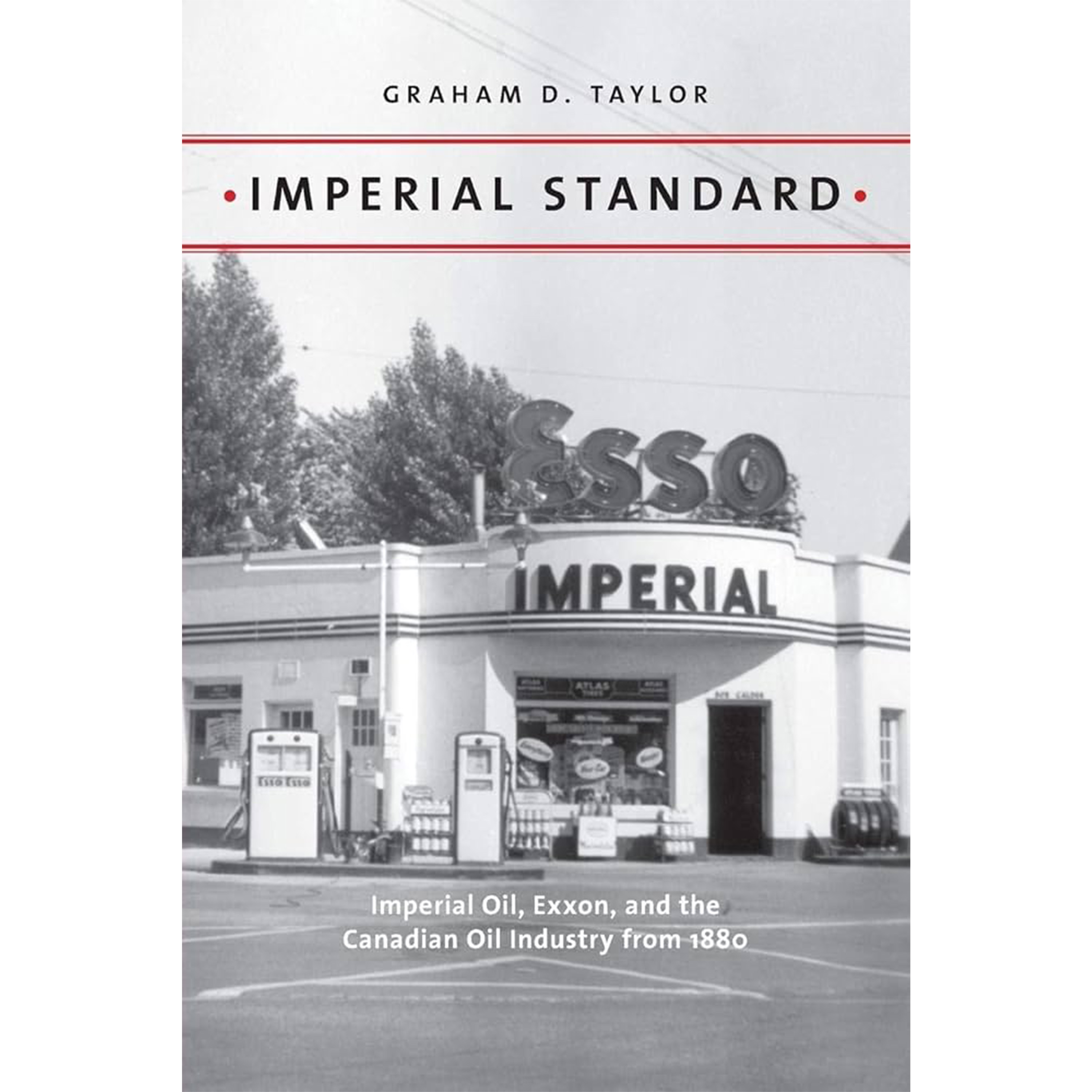
Welcome to A Book with Legs podcast. I'm Cole Smeet, CEO and Portfolio Manager here at Smeat Capital Management. At our firm, we are readers and we believe in the power of books to help shape informed investors. In this podcast we speak to great authors about their writings the late, great Charlie Munger prescribed using multiple mental models and analysis. We analyze their work through the lens of business markets and people. In this episode we are going to learn about another corporate history that transcends to teach us about the history of an industry, a country, regulation and ultimately politics. Graham Taylor is joining us to discuss his 2019 book, Imperial Standard. Imperial Oil, Exxon and the Canadian oil industry from 1880. A little bit of background on Graham. He is a Professor emeritus in the Department of History at Trent University. He is also the author of other titles including the Rise of Canadian business and and DuPont and the international Chemical Industry. He is the Winner of the 2015 Petroleum History Society Best Article prize as well. Graham, I know there's more prizes that go with that, but I'm really glad you're here with me and thank you for joining me.
- [01:35]
Graham Taylor
Glad to meet you.
- [01:36]
Cole Smead
Yeah, very good to visit. And so just to kind of start off like, you know, you'd written, you'd written about dupont, as I just mentioned a second ago. What drew you to want to particularly write about Imperial? I think it's a very purposeful history. I'm surprised that there's not more books out on it, to be honest. But you have, you know what I consider the most formative corporate history on the business?
- [01:58]
Graham Taylor
Well, I guess two reasons. One is that there aren't a lot of companies whose records whose archives are as large and as well preserved as Imperial Oil, largely because of its parent company, which is Exxon. Exxon has maintained a huge archive for years. They've had a multi volume history of their company, Jersey Standard.
- [02:32]
Interviewee
Sure.
- [02:33]
Graham Taylor
So that's one of the reasons. The other is it only really became available to, to me as a researcher when Imperial Oil moved its headquarters from Toronto to Calgary about 2006 or 2007. And what they did then was to open up their archives which had been in house archives for corporate use. Two other researchers, which had not been done before I had actually approached Imperial back in 1970s about wanting to write their history. And at the Time they were very reluctant because at that time, as I cover in the book, there was a lot of politics going on. People wanting to nationalize Imperial Oil or have the government take over it, established Petro Canada to compete with Imperial Oil and other big private companies. So although they did give me access to part of the records, this was where I got stuff on Walter Teagle, president back in the early 1900s. But I didn't get a full. Didn't have access to the full array of records, as they say, until after 2007. Six or seven. And I had retired or was on the point of retiring. And I just finished the history of Canadian business generally. But I wanted to come back and do Imperial Oil because it's also, I mean, as I, as I mentioned in the book, it's sort of as important not just as a business, but to the history of the country of Canada.
- [04:32]
Interviewee
Sure.
- [04:33]
Graham Taylor
For example, the Hudson's Bay Company back in the early days of, even before Canada existed, or the Canadian Pacific Railway, the largest enterprises that were undertaken. Imperial Oil was sort of, I think on that level, it was of that important to the shaping of Canada historically, I mean, and certainly as important in the 20th century as probably any other business.
- [05:00]
Interviewee
Sure.
- [05:01]
Graham Taylor
As. As a oil producing company. It was the largest oil producing company for many, many years in Canada.
- [05:08]
Cole Smead
Yeah. When you point out, you know, you do also a really good job of explaining the history of crown corporations, which obviously, you know, many of those businesses you just mentioned were. And that was all a function of, you know, the Canadian government, to your point, wanting to develop industry. And so therefore it's very integrally tied to. You started your book with Abraham Gessner. I like how you'd start stories topically in this history with kind of an individual to kind of key the storytelling with. What did he figure out early on and what was the dominant energy when Mr. Gessner was on the scene?
- [05:46]
Graham Taylor
Well, he was looking for something that would generate illumination, replace candles.
- [05:56]
Cole Smead
Okay.
- [05:57]
Graham Taylor
And at the time, the major, major resource that was available to provide artificial lighting, as we generically would call it, was whale oil. So in fact, you know, there were whalers going all over the world to, to bring home whale bubber to be made into. Into illumination fuel. But he believed you could find something closer to home.
- [06:24]
Interviewee
Sure.
- [06:25]
Graham Taylor
And he believed that there was a way in which you could take oil and refine, that is crude oil that you could find in many different places in Canada and of course in the United States and elsewhere that could be refined into kerosene, which would be A much more reliable illumination source of illumination than whale oil or candles. And of course, this was before the days of electric power. So, sure. Kerosene was in fact, the major product of the oil industry up until about 1910 when the automobile industry came in, to be sure.
- [07:07]
Cole Smead
And you talk about in 1849, Thomas Derry Hunt found asphalt, or what you referred to in your book as mineral pitch, and the Enniskellin Township. What was the purpose of that material? And I think you also give past history of a lot of this stuff. I mean, the first nations obviously used a lot of these materials in like the pitch of their boats, I think you talk about. So, you know, would that have been led to kerosene right away or were there other uses that naturally the Enniskillen area provided?
- [07:39]
Graham Taylor
Well, oil. I mean, crude oil had all kinds of uses, but the, the sort of use of asphalt was, of course, for, for roads, paving roads or making more stable. And it didn't require a whole lot. It also required distillation of the crude oil.
- [08:03]
Interviewee
Sure.
- [08:04]
Graham Taylor
So it was, it was a byproduct of crude oil, as was kerosene. But kerosene, of course, had a much more larger purpose, large for larger. And in fact, for commercial purposes. You could sell kerosene as an illumination source to the public generally.
- [08:21]
Interviewee
Sure.
- [08:23]
Cole Smead
So Charles and Henry Tripp, you talk about them early on in this history, they started a business called the International Mining and Manufacturing Company. And I think another theme that we can pick up over the years is the debt becomes too great for the Tripp brothers. You know, James Miller Williams, who you teach your, your readers about, takes over as the creditor. And that was in the, you know, 1850s that he's doing this. And it took about 10 years for the oil boom to mature and kind of become a thing. I think it was like 1861 that, you know, Petrolia and the oil boom kind of takes hold. And obviously there's things going on in places like Pennsylvania. And you talk about. Is that another thing that you'd say of this history? Because I think that was the. As I'm, you know, we're investors in the space ourselves. But it seems like what the wise man does at the beginning, the fool does the end, and the booms coincide after periods of underdevelopment under capitalization and really credit cycles.
- [09:20]
Graham Taylor
Well, this is, this is the whole point that you get a, what you might call a first mover, you know, who actually takes a technology and develops it, applies it, commercializes it.
- [09:34]
Interviewee
Sure.
- [09:35]
Graham Taylor
And that the success of that Person, in this case James Miller Williams, brought in many, many other people, said, well, we can, we can do the same thing.
- [09:46]
Cole Smead
Sure, we can, we can be, Mr.
- [09:48]
Graham Taylor
Williams, we can be bigger than or better than, or we'll take advantage of the same, you know, technology that he's developed and acquired.
- [09:58]
Interviewee
Sure.
- [09:59]
Graham Taylor
So I mean, in a way he didn't. He actually disappears from the scene fairly early. There were others who were coming on the scene and were successful. But yeah, you have this sort of boom and bust cycle that goes on and, and it's in the mining industry. You see it, the oil industry in a lot of different areas. You see a first mover successful and you bring in, you know, dozens and even hundreds of people trying to emulate their success. And that's what happened in it. What happened in petroleum, what's happened in, in Pennsylvania. You had, you know, just literally thousands of people trying to exploit the same resource of the crude oil.
- [10:45]
Interviewee
Sure.
- [10:46]
Graham Taylor
All of them hoping to get rich quick, but of course only a few would be able to do so. Yeah.
- [10:53]
Cole Smead
Another part of this is early on, oil is found, but the idea of upstream and midstream and downstream, there really isn't those concepts, is there? It's just kind of all lumped into one category.
- [11:08]
Graham Taylor
Yeah, basically. I mean, that's something that has come about because you had the development of a, some, I call them divisional, multi divisional businesses where they had, they had the business of getting the oil, in this case of refining the oil and then of marketing it. So there's actually three different stages that. But at the beginning, you know, everybody was at least trying to do all the, all things at once. And it was really people like in the case of the United States, Rockefeller or Jacob Engelhard in Canada who said we want to actually, instead of having everybody trying to do everything and competing with one another, we need to rationalize the system.
- [11:57]
Interviewee
Sure.
- [11:59]
Cole Smead
The early history of the business is really, it's a refinery business. To your point, it wasn't really the production. It was. How do you take what's out there from these various people mining it or taking it out of the ground to refining it. You mentioned Engelhardt. I loved Engelhardt because again, you're early on in a business like this. You get grifters in this business. Can you kind of teach us about Engelhardt's background and why he, you know, he wasn't the, the guy you'd want showing up with your daughter, you know, on a date.
- [12:29]
Graham Taylor
Well, he had a lot of irons in the fire. Some of it was bootlegging whiskey. There were, you know, that was people who were in the business of not of oil and other things, had a lot of things that they did. Engelhardt was one who had a, you know, a background with the, with the whiskey trade, with the alcohol trade. And he was always getting into trouble with authorities that were trying to regulate trade. So. But the other thing was he was very good at making contacts, exploiting contacts. One of the, of the families that he brought into and interested in his business, in this case the orally oil business, were the Guggenheims.
- [13:19]
Interviewee
Sure.
- [13:20]
Graham Taylor
The Guggenheims became, you know, one of the world's largest mining companies in as a family. And they put some. They didn't put a whole lot of money, but they put the money in at a strategic time for Engelhardt to, you know, be able to acquire some of the finer refineries in the petroleum area and begin to consolidate the industry.
- [13:43]
Interviewee
Sure.
- [13:45]
Cole Smead
The cartel idea starts to show up in the 1860s. So to your point, there's these, you know, nascent periods and there's exciting periods and then there's kind of the expansion, contraction of those. And so in the 1860s in that area, they start, you know, talking. These various players in the industry start talking about kind of building a cartel to regulate pricing. Did that work? How did they try to do that in the 1860s?
- [14:11]
Graham Taylor
Well, I mean, that happens over and over again. I mean, OPEC is a cartel, for example, correct?
- [14:17]
Cole Smead
Yep. But I think it's a good, it's a good picture into that. Like, does it work and how did they try to do it?
- [14:21]
Graham Taylor
Whole point, it's, it's, it's a, it's a logical thing, you know, for people who are in competition to say, why should we compete when if we get together, we can set prices and we all benefit from it?
- [14:33]
Interviewee
Sure, yeah.
- [14:34]
Graham Taylor
That all works very well, especially if it's after a period when a lot of people are facing ruin or ruin from competition. But there's always going to be somebody who says, well, okay, you know, you have your cartel, but I'm just going to go ahead and I'm going to take advantage of the prices that you're offering and I'm going to underprice you. And, and once that happens, then some of the cartel members say, well, we better get on the, you know, we better go under price. The cartel too. So it begins to break up and then they have to keep trying to reform, reform it sometimes at a larger and larger level. And it was one of the reasons, for example, why people like Engelhardt, I mean, and Rockefeller determined that, you know, this isn't stable. You can't have a lot of independent businesses, you know, agreeing amongst themselves on prices. But there's no, I mean there's, it's self regulating and if there's no, no means of, of exercising that control, you're going to have the cartels break up. They're always going to be unstable.
- [15:41]
Interviewee
Sure.
- [15:42]
Cole Smead
When. And the other thing you talk about in the book as a theme is oil is always pulled out of the ground in places that people are not, generally speaking. So you not only have to pull it out, but you got to move it. And at this time, you know, the pipeline business was a very, a rough term based on what you wrote, but it was really how do you get the oil to a railway and how important were the railways and the decisions over getting to railways at that time?
- [16:10]
Graham Taylor
Well, I, they obviously were very important and in fact, it's a, it, it's a, the timeliness of the railways having extended, you know, both in the United States and in Canada in the 1840s and 50s to areas, you know, which were linking, you know, urban markets to many smaller places. So what the people in the oil business were able to do is if you could find a way to get your crude oil to market or to a railway railhead and make a deal with the shipper, then, then you could go into a, a market and, and start to exploit the benefits of your product. Sure. To a much greater, I mean, otherwise it would have entailed a lot, a lot more. What should I say? Middlemen. You'd have to sell your oil to somebody else and they'll sell it to somebody else and on and on. And so each one takes a cut. So eventually what the, you know, the guy at the beginning who sells can see that the price that they get down the road is much higher than if he had gone into the market directly. And that's the sort of opportunity the railway would provide. And of course, where you had, and this was true both in the US and in Canada where you had railways were complete competing for same, you know, for the same lines and the same markets. And then a smart business person, which Rockefeller was Engelhardt, you could play them off against each other. You'd say, I'll give you, you know, all my business if you give me, in this case, Rockefeller came with the idea of rebates. I'll pay you a fee for transporting them, but you'll, you know, return to me a portion of that so that I will in fact be in a much better position vis a vis my competitors.
- [18:10]
Interviewee
Sure.
- [18:11]
Graham Taylor
And if you had several railways competing for the same supplier, the one who got their best first and made the best deal would be the person who eventually ran the competitors out of business.
- [18:26]
Interviewee
Sure.
- [18:27]
Cole Smead
I want to show, for the next question, I'm going to put up an image here on the screen that you should be able to see here too. I'm going to show a picture of the map of Ontario. And this would be in the 1860s, I want to say from my, my notes served correctly. But here kind of gives a picture of petroleum, which is, you know, really the dominant place to produce oil that you talk about in your book. But obviously right on the other side of Lake Erie is the United States. So how important was the end product at the time? Right. Which would have been, you know, to your point, kerosene and the politics and the trade policies, because not all the oil was necessarily coming from Canada.
- [19:07]
Graham Taylor
The fact is there was oil in both, on the, both the Canadian and US Side in Penn, in Western Pennsylvania. You had a lot of people competing to mine the oil, to drill it, to bring it up out of the ground. And on the other side you had people in that, in that area around Petrolia. What became Petrolia. They weren't really at that point necessarily in competition with each other. But what was critical was that they all had to eventually find refiners. And the refineries had to be set up in a place where the refinery had to have direct access to railway transportation. So that's why, for example, Cleveland was so important. And Rockefeller, who was actually just a merchant in Cleveland, got in early and said, we have to, you know, I'm going to start refining oil into kerosene. They keep bringing the crude oil into kerosene. And then I'm going to use my connections to these railways to get them to the markets in places like New York and, and Philadelphia and so forth. And the same thing was happening on the Canadian side where you would have the refiners that were setting up operations in London, which was one of the largest cities in that part of Ontario. So they would be bringing the, the oil from the petroleum area to London for refining. And that would then enable them to ship their, their oil from their kerosene, I should say, to places like Toronto, Montreal and so forth, the biggest cities. It wasn't, I would guess, until, oh, the 1870s that you began getting sort of cross border competition.
- [21:11]
Interviewee
Sure.
- [21:12]
Graham Taylor
Then you big companies on both sides trying to play They've gone into their own markets and exploited them. Now they were looking for somewhere else to sell their product.
- [21:24]
Cole Smead
Hi, I'm Cole Smead, CEO and Portfolio Manager here at Smead Capital Management and host of this podcast. If you enjoy this podcast, I'd like to invite you to check out smeedcap.com at our firm. We are stock market investors. We advise investors who play the long game with a discipline that has proven success over long periods of time. Learn more about our funds at SMeadcap. Past performance is not indicative of future results. Investing involves risks, including loss of principal. Please refer to the prospectus for important information about the investment company, including objectives, risks, charges and expenses. Read and consider it carefully before investing. Smead Funds distributed by smead funds distributors llc. Not affiliated. So 1880 is the year, if I've got my notes correctly, that Imperial was. Was created and it was pretty much a. Brought together by various players in the refinery business. Can you kind of talk about who came together to create this business?
- [22:24]
Graham Taylor
Yeah, they have. There were a lot of refiners in London, just as there were a lot of refiners in Cleveland. And it's interesting because essentially what the refiners in London, that is on the Canadian side, they actually formed a cartel of refiners in Cleveland. Rockefeller took it a step further at an earlier time. An earlier step of instead of simply forming a partnership among these refiners, he would go. He would go form a partnership with one or two and then they would go and buy up the other refiners and consolidate that. And in a way that was going on the Canadian side, but not nearly as quickly. So that in fact, you had people like Fitzgerald, Frederick Fitzgerald, and you had Eglehart and you had others who were all, in a sense, they were all sharing the same kerosene market.
- [23:40]
Interviewee
Sure.
- [23:40]
Graham Taylor
But. But it wasn't. Although I think Engelhardt would have liked to take it that step further into consolidating. You know, we consolidate the biggest producers or refiners and then we sort of run everybody else out of business, which is what Rockefeller did, and then took into larger markets.
- [24:01]
Interviewee
Sure.
- [24:02]
Cole Smead
But it's shortly after Imperial is put together, they closed down, I think you said seven of their nine refineries because of the oversupplied market. So to your point, it's like there's an industrial logic that has to go along with this.
- [24:16]
Graham Taylor
Sure. I mean that that was one of the purposes of the cartel agreements was everybody had to agree to stop competing with each other. So you had to reduce output. But the question, as I mentioned before, the trouble was unless you had a means of enforcing these sort of quotas on the members of the cartel, there was always going to be somebody who was off underselling them. So it was a, ultimately, let me just put it this way, ultimately what you needed. And this is what Rockefeller from the very beginning said. There's no, it's not enough order in this business, sir. We have to establish control. It's not good enough to have partnerships with others. There has to be one entity that controls everything and forces, and forces everybody else in the industry to reduce or increase their output according to the market.
- [25:16]
Cole Smead
So let's talk about Herman Frasch. You know, teach us who he was and also what his advances were, were that were so important for, for the discussion of, of this history.
- [25:27]
Graham Taylor
The biggest problem, and it was a problem for the Canadians in particular from Petrolia, that the, the oil that they were getting out of the ground had a lot of sulfur in it.
- [25:41]
Interviewee
Sure.
- [25:42]
Graham Taylor
A huge amount of sulfur. And that it made it very hard, let's put it that way, to, to sell the stuff. Because you were selling kerosene to the public generally and saying this is a better illuminant source than anything else, but it smells like rotten eggs.
- [25:59]
Interviewee
Sure.
- [26:01]
Graham Taylor
Actually, the oil which Rockefeller was refining on the United States side, it was a much sweeter oil from the Pennsylvania area.
- [26:15]
Cole Smead
Yeah.
- [26:16]
Graham Taylor
So he was able to actually exploit that in selling his product even to Canadian market because it didn't smell so bad.
- [26:26]
Interviewee
Sure.
- [26:26]
Graham Taylor
On the other hand, when Rockefeller decided to expand out of the Pennsylvania fields because they were getting exhausted, so they went into Indiana and Ohio where there were also oil, oil, crude oil, to be exploited. But there they ran into the same problem that the Canadians had had of what was called skunk oil. It was, it was just sulfur laden. And so both Rockefeller and the London refiners on the Canadian side needed to find a technological way of reducing the sulfur content of the, of the oil, the crude oil they were refining. And that's Herman Fresh was actually, he was from Germany. He was a chemist. He had been looking at ways in which you could reduce the sulfur content of the, of the oil well right until, and make it less sulfurous and less smelly and more marketable. So the London refiners hired Fresh. He was very much in demand. They hired Fresh to do the work for them. And he came in and they gave him all kinds of, you know, titles and money and so forth. But Rockefeller, because he was moving into the Indiana fields, was in a better position to Offer fresh more money.
- [27:58]
Cole Smead
Yeah.
- [27:59]
Graham Taylor
You come to me, I will. Not only will I give you more money, but I'm going to give you your own research lab so you don't have to worry about having to deal with a whole bunch of different people with placing different demands on what you can do and saying, well, we don't want to spend money on your lab. I will put you in charge, but you come and work for me and you do the work for me. Once Rockefeller got Frasch to come to United States, that really was sort of the death knell for the London refiners who were the ones who established imperial oil in 1880 because they simply couldn't compete in the longer term unless they could find something, somebody like Frasch to address those problems or they had to find other sources of oil.
- [28:56]
Cole Smead
That was a large problem in the case of Frasch. You tell the story of effectively Standard licensing that back to Imperial at a cost per barrel. So it was a royalty agreement. But obviously, you know, since they showed Frash, I mean, Frasch followed the old Jerry Maguire standard, which was show me the money, as they say.
- [29:17]
Interviewee
Right.
- [29:17]
Cole Smead
And it worked pretty well. So the other thing too, and I, and, and again, this is a exhaustive history, which I really love. But again, I was, I was playing around with the stuff in my mind. Royal Light originally was a big competitor to Imperial in Ontario.
- [29:30]
Graham Taylor
Yeah.
- [29:31]
Cole Smead
And while I think you point out that Imperial really dominated Western Canadian markets, so you think of like British Columbia, you know, those kind of Western markets are where it was really big. They had some competition, you know. How big was Royal Light? Was that like an 80% market share? What was their dominance in a market like Ontario at the time?
- [29:51]
Graham Taylor
I'm afraid I don't remember exactly the shares, but I do know that Royalite was a very popular refined product in particular. And Imperial wanted to sort of get in and control the Toronto market. So in fact that was where you got the first contest between them once ultimately Imperial took over the Royal Eyed name and began selling their own product as part of using the same brand.
- [30:28]
Interviewee
Sure.
- [30:28]
Cole Smead
And eventually sold that much later date as well. 1890 caused you talk about the antitrust regulation by the US Congress picking up. And you mentioned a book that I wanted to put out to our listeners, a book by Henry DeMores Lloyd titled Wealth Against Commonwealth that also touched that theme too. How big was this issue in the court of public opinion even in the late 19th century? Cause obviously the antitrust and Sherman antitrust type of moves by the US Supreme Court did not come until 20 years after this. But how big was that even in the late 19th century in the public's mind?
- [31:10]
Graham Taylor
Well, I guess I would say that there was a general reaction on the part of the public to what they felt was exploitation by big business. It had begun with the issue of railways. The railways had been heralded as, you know, bringers of prosperity to the, you know, all the smaller prop places in the country. But over 10 or 20 years, when the railways became larger, began setting their rates higher, they began putting. Putting up warehouses and charging fees for storage and so forth. People felt in public, small business people, farmers in particular, that the. We were. They were being exploited by these companies using their control over the technology in the. And over the. What might call the choke point of markets.
- [32:14]
Interviewee
Sure.
- [32:15]
Graham Taylor
And that was extended, of course, to a company like Standard Oil, which by the 1890s had pretty much. They moved on in controlling the oil in Cleveland and the Pennsylvania fields. They controlled Indiana and Ohio. They consoled kerosene marketing in places like New York and Philadelphia and so forth. And they were able to basically set their own prices. And one of the. You mentioned the pipelines, one of the things which the railways had tried to do was to get, if you will, siphon off some of the profits that the oil companies were making by charging high fees. And that's where actually Rockefeller playing the railways off against each other, getting rebates, he was able to then sort of ultimately control the fees that the railways were charging. But even then, when they began sort of forming their own, if you will, agreements to try to control the rebate system, that's when he moved into the pipeline business. Because if you build a pipeline from your source of oil to the market, you bypassed all the other means of transportation. That was a very expensive proposition. Once it was in place, you were in a commanding position over the. The market.
- [33:46]
Cole Smead
Yeah. 1898 was the year that Standard took control of Imperial. You explained that there was a deadlock. Imperial was in a deadlock of negotiations with, I think it was Colonial, was the company trying to buy them out. And they were at an impasse. And so what ended up happening was Standard came in and effectively acquired 75% of Imperial at that time. And I found another theme that comes up, starting with this and also later transactions, is this worked out very well for Imperial shareholders.
- [34:16]
Graham Taylor
Absolutely. That was the whole point was when they were, as I said, essentially the Imperial Oil, which had been a. It started as a cartel, it became a partnership. They were sort of emulating the organization of Standard Oil. But of Course, each member of what had been the cartel had their own interests and wanted to make as much money as they could out of the investments that they had made in the Consolidated company. So when Imperial was reaching the crisis point where the oil was running out in Petrolia, they knew it was only a matter of time before it'd be over with. So they're trying to sell, sell their company off to the best, best bidder. And the thing is that Colonial, which was a, a big English company, they drove, you know, they hemmed and hawed. They said, we, yeah, we'll think about it. And so the many of the investors in, in Imperial Oil were getting antsy. You know, how much longer do we have to wait? And it were a couple of things that I, I guess needed to be mentioned. By that time, the 1890s, Rockefeller had moved into the Canadian market. He had bought into a number of companies in Ontario and in effect it was, it was almost like a military exercise. He had outflanked and surrounded Imperial. Sure with these other companies, they weren't as big as Imperial, they didn't have as big a market share, but all collectively under the direction of Rockefeller, they were able to put Imperial on the spot. And it was at that point that Rockefeller could go to people like Engelhardt, for example, and say, okay, you can wait for Colonial to buy your company or you can take the offer that I might gonna make you, which is you vote to, to sell Imperial to Standard. You get not only the money but you get a position on, on the board of Standard Oil and, and you know, a management position and, and you have all kinds of other opportunities opening up to you in a much, far larger, you know, organization. And that was enough of them bought into that that they basically undercut the Imperial Oil leaders and, and took the, you know, got the benefits of, of the merger. Yeah, it was just, it was, it was a takeover, but it was an early version of a very, what was a very consequential takeover for Canada.
- [37:24]
Cole Smead
We hope you're enjoying the podcast. You know, we work hard putting together this show, but we work even harder for our investors at Smead Capital Management. At Smead, we believe in discipline investing, which is why the Smead funds have a proven track record of long term outperformance. If you're an investor who plays the long game and want to invest in wonderful companies to build wealth, we invite you to visit smeedcap.com Past performance is not indicative of future results. Investing involves risks and including loss of principal. Please refer to the Prospectus for important information about the investment company, including objectives, risks, charges and expenses. Read and consider it carefully before investing Smead funds distributed by Smead Funds Distributors llc, not affiliated. And you credit in your book as others have, you credit Ida Tarbell, who wrote a lot about Standard, William Randolph Hearst, Joseph Pierre Pulitzer and Teddy Roosevelt. And kind of changing the view of Standard Oil from a political media perspective. 1911 obviously changed everything. And I'm going to show a picture here because throughout the book you talk a lot about the tentacles of Standard Oil. And here's the image. Obviously this was the personification of Standard Oil in the media for a very long time. And so you keep coming back to the tentacles and. And after 1911, Imperial really becomes the foreign ownership tentacle of Standard, don't they?
- [38:55]
Graham Taylor
Yes and no. It was sort of a curious event. And one of the things you have to understand about when Standard Oil was, it was attacked by, and as you say, people like Tarbell wrote about it, her father had been run out of business by Roc Rockefeller, associate sort of axe to grind. And people like Hearst made money by, you know, attacking Standard Oil. When Standard Oil was broken up into 30, I think it was 34 companies. It was, there was no, there was no rhyme nor reason to it.
- [39:35]
Interviewee
Sure.
- [39:36]
Graham Taylor
Some of the companies were, that came out of the, this breakup, this dissolution were actually integrated companies. They had refining capacity, crude oil sources, marketing organization. Some of them had only the marketing, some of them had only the oil. As it happened, Standard of New Jersey, which is actually one of the largest of them, had a huge refining capacity, but no sources of oil.
- [40:06]
Interviewee
Sure.
- [40:08]
Graham Taylor
Are very limited sources oil. Whereas something like Standard, what became Standard of California had lots of sources of oil but limited refining capacity and so forth.
- [40:20]
Interviewee
Sure.
- [40:20]
Graham Taylor
And so what happened was in particular for Standard of New Jersey, they believed that they needed to, they needed to expand their search for crude oil in abroad. And they had already set up a company in the 1890s called Anglo American Oil. And Anglo American Oil had been the company to which Imperial had been assigned back in 1899. Although in fact it's so complicated because Standard Oil of New York was the logical place to take over Imperial Oil because it was right across the border, New York was market. And in fact the, the for many, many years, Imperial Oil was literally run by a guy named Chamberlain from his office in Buffalo, New York. It was just a sort of a side, side investment for him.
- [41:27]
Cole Smead
Yeah.
- [41:28]
Graham Taylor
But when the dissolution came, and this is where you get Walter Teagle playing a role, he said, well, we want we want Anglo American Oil to come into Standard of New Jersey. And the reason for that was Anglo American Oil was the part of the Standard Oil empire that had foreign investments, and not only foreign investments, but also access to foreign markets, a known quantity, for example. And the British knew. Knew about Imperial Oil from its British Empire connections. And so Teagle was able to use that when he became head of Standard of New Jersey to get access, for example, to some of the oil in Latin America.
- [42:26]
Interviewee
Sure.
- [42:27]
Cole Smead
And when I was going to say Teagle came from an engineering background. Correct.
- [42:30]
Graham Taylor
Yes, he did.
- [42:32]
Cole Smead
Which was very much the mold of Imperial history over time.
- [42:37]
Graham Taylor
Yeah. The ones, of course, who started it were not particularly in that field, but certainly by, I would say, the early 1900s, you had to have a technical education and background to keep track of what was happening in the industry. It was becoming much more of a. Of a. Of a demanding, intellectually demanding operation. You know, back. Back when it was just kerosene, all you had to do was you got the crude oil, you. You distilled the kerosene out and you sold it. By the early 1900s, when you had the automobile industry beginning and you were starting to use gasoline and so forth, you had to understand the technology of refining in order to make it, maximize the benefit of it, what you were getting. So that's why you had people like Teagle and others who were trained as chemical engineers and so forth, who would be able to see the opportunities and exploit them probably much more than just, say, Rockefeller. Rockefeller, yeah. He was just a merchant who had a real talent, talent for taking advantage of opportunities, but he was not a trained, you know, chemist or anything else.
- [44:02]
Interviewee
Sure.
- [44:02]
Cole Smead
So, and Teagle and I, and I'm paraphrasing here a little bit, so if you disagree with this, by all means, jump in. But in my opinion, after reading your history, Teagle is the patron saint of imperial, for lack of a better term. And he fit the perfect mold of an entrepreneurial engineer who wanted to have their own dominion, but yet fit really well into the Standard Oil mold in such a way where he was obviously going to end up just running Standard Oil someday because he understood what was needed in the empire and thus how to run the empire. Is that a fair assessment?
- [44:38]
Graham Taylor
Yeah, it would. Yes, it was. And you have to remember, much like Ida Tarbell's father had been run out of business by Rockefeller, Walter Teagle's father had been one of the ones who jumped on board and said, I'm going to take advantage of, you know, of the Standard Oil expansion so he is able to get wangle his son opportunities to rise up in the, in the Standard Oil organization.
- [45:09]
Cole Smead
Yeah, so, so let's, let's pivot a little bit. He was obviously highly secretive.
- [45:13]
Graham Taylor
Right.
- [45:13]
Cole Smead
Which kind of fits into the Standard mold, which is that like they wouldn't necessarily tell the shareholders much of anything. From what you wrote at times also International Petroleum Company is eventually lumped into. Imperial International had their what, Peruvian assets and their Colombian oil assets.
- [45:32]
Graham Taylor
Yes.
- [45:33]
Cole Smead
And during the 20s, I think you said that the, the International Petroleum company's dividend was 22% of Imperial's net income. So it was a very large, you know, producer to them. And during this time Oil explodes in use in the 1920s tied to cars. And I actually have a picture, I loved this picture. I just, I think of this being in like an urban setting. Here's a look at like what a gas station looked like. I think this is like a 1914 picture in Vancouver. And but that's, that's what a gas station would look like. You got the tanks holding the finished product. You got cars pumping it out. I think the other thing that can be drawn out of this is usually what seemed like great growth times for the industry should be incredible. Which the 20s were great pickup in demand and yet at the same time it was a massively terrible environment because you explained there was a big glut of product in the 20s.
- [46:30]
Graham Taylor
Yeah. The oil industry has this history, if you will, of, of moving from, you know, dearth to glutton and back again.
- [46:40]
Cole Smead
Yep.
- [46:41]
Graham Taylor
And during the, during the period just around the First World War, it was a period when there was a lot of competition for among companies not just Standard but its biggest rival, which was Royal Dutch Shell for example, to get into, you know, to get as much of what was seen as a diminishing resource under their control. And so for example, that's when you get, you know, Royal Dutch Shell try getting. Going into the Middle east into. To get the Turkish Empire to sign over long term leases to. For drilling. Yeah, you had the first. There was a. The British. You know, Winston Churchill is the. As the head of the navy in Britain wanted to get oil so they could convert the British navy from coal to oil. So he had used influence to set up the Anglo Persian Oil Company with Shah of Persia of Iran which we.
- [47:56]
Cole Smead
Now know as BP is predecessor to bp.
- [47:59]
Graham Taylor
Yeah, well all of these were going, all these things were going on at the same time and, and then in the 1920s, all of a sudden, even though there had been this Huge boom in demand for gasoline. There was also a huge increase in the supply as well. For example, you had the big oil coming out of the Middle East. This was not out of Saudi Arabia, because they came later, but it was from what was known as Mesopotamia, which was Iraq, and of course, the Iranian oil. And then also they've. And this, by the way, is part of the story, Rockefeller. Even before the Standard Oil, even before it was broken up by the Supreme Court, it had huge competition from companies in Texas because Texas was one of the big oil fields that was being developed in the early 1900s. By the 1920s, the East Texas oil fields were the largest in the world. They were like what Saudi Arabia is now. And so you went from a sort of situation of desperate competition for what was seen as a diminishing resource to, as you say, a glut. And all of a sudden the problem wasn't how to find oil, but how to control the amount of oil that was being refined and sold so that you could sustain your profits, because you needed that in order to sustain the organizations that companies like Standard Oil and Royal Dutch Shell had established.
- [49:41]
Cole Smead
What we now know is the tar sands business going back into, say, 1917, the Athabasca region. It was known already then that there were these tar sands assets. Standard was involved in this. You know, can, can you. And I have, I think we have our last picture here that we're going to show. It's a picture of Alberta at that time. And you have, you just have these awesome maps throughout the book. And I kind of gig out at some of these because I just think they're, they're fun to look back on. But here's a look at Alberta at that time and the various, you know, I'll call it oil and gas plays that were noted then. How, how big was leduc? You talk a lot and you kind of use it as the primer to kind of get people excited. About early part of your book, you talk about this gusher at leduc. How big was the leduc, you know, number, number. What was it? Was it one or three? I can't remember the number, but it.
- [50:31]
Graham Taylor
Was like the first was leduc number one. That was the first big.
- [50:36]
Cole Smead
The big gusher. And how big was that relative to the prior oil and gas history in Alberta?
- [50:42]
Graham Taylor
Well, there hadn't been any or not very much oil prior to that. Okay, and let me just go back a second, because you mentioned the oil sands. This, these. The fields of where LaDuke was found in, in the Calgary region. And so forth. This was, this was just straight oil coming up out of the ground. You didn't have to separate it from oil sands or anything, but nobody knew how to reach it. You know, in the Turner Valley, in Calgary, in Alberta, around the time of the First World War, they thought they had found oil, they said, and there was a big oil rush, as they always did, but they didn't find much oil. What they did find was a lot of natural gas. In fact, we found so much that began to. They didn't. Couldn't use it all. And so in order to keep the prices, you know, high, they literally burned a lot of the natural gas in the fields.
- [51:44]
Interviewee
Sure.
- [51:44]
Cole Smead
And that was a sour gas, I think you mentioned.
- [51:46]
Graham Taylor
Yes, yes. And so they were. But meanwhile, they were trying to search for Standard Oil, had Cabbage Imperial Oil, had kept their eye on. Yeah, the gas is great, but we want oil.
- [52:00]
Interviewee
Sure.
- [52:00]
Graham Taylor
And so they continued to drill for oil and they, they actually went to the trouble of buying, buying up all the little oil and gas producers in the Turner Valley and consolidating them. This was what became Royalite. They'd never. Well, they actually did find some oil around 1936. The first big oil find took place in the Turner Rally. But by the standards of Leduc and other things that came on stream in the 50s and 60s, they were. It was very small and it pretty much had petered out by the end of the 1930s. So they had to keep looking and looking and looking. And one of the things, one of the things that happened was this. And it had to do with the way in which people explored for oil, which was, you know, originally, you know, if the oil was near the surface, that was easy. But if it was down under the ground, you had to find ways of how do you know where it is and how far it is.
- [52:59]
Interviewee
Sure.
- [53:00]
Graham Taylor
You literally were drilling. It was like trying to pan for gold. You were drilling all over the place to try to hit oil.
- [53:08]
Interviewee
Sure.
- [53:10]
Graham Taylor
And one of the things. And this was the problem they had for the Albertans in the Turner Valley. They went down to what we call the Cretaceous period, you know, when the dinosaurs were. But you had to literally go down even deeper into the ground in what's known as the Devonian era, geologically, paleontologically speaking, in order to really find oil, what you found at the top was the gas. Because in a sense, the gas was. Was sort of floating on the top of the oil. And so you could, you could drill down enough to get the gas, but you didn't. You had to go much deeper in order to get the oil up. And it wasn't until after the, around the time of the Second World War. Right afterwards they said, let's take a chance, let's take a chance on drilling even more deeply than we have ever before.
- [54:07]
Interviewee
Sure.
- [54:08]
Cole Smead
And you, you commented just a second ago. But I want to come on this. You talk about how stable the 50s and I think the 60s were in the industry compared to everything that kind of happened prior.
- [54:21]
Graham Taylor
Yes. Yeah. Because. Well, I, it was stable in the sense of. What made it stable was that the big oil companies that had emerged out of the 30s and 40s were, let's just say they formed a, if you want to call the refiners and marketers marketing cartel back in the 1920s and 30s, companies like Standard Oil. Actually, the 20s, Standard Oil, Royal Dutch Shell, BP, what became BP and all, and the smaller ones, the Texas companies and so forth, they were in furious competition who was going to get to the, who was going to get onto the market first, who was going to get fine new oil and so forth. But they learned from the experience, of course, that if you get too much oil, all of a sudden the problem is how do you, how do you keep the, you know, the output down so they keep the profits up. And so that was where you had the Oil refiners cartel that was formed at Achinakari in 1927. It was really that experience after the Second World War that made for a stable price regime, a stable oil price regime because the oil refiners cartel, it had all the problems of cartels because they were. There was always somebody trying to take advantage of it. But at least up until the 1960s, they were able to keep a kind of control, even though, even though at the time there were all kinds of new oil sources coming on stream. The Saudi Arabian oil, of course, out in the 1940s. And in normal circumstances that might have led to a huge, a huge, you know, collapse in, you know, increase in production and collapse in prices. But because the refiners cartel were able to keep on, on good terms, I mean, they would, they literally bribed, you know, the, the Shah of Iran and the King of Saudi Arabia. You know, we'll give you lots of money. We'll give you, but you know, we want you to cooperate with us in holding production down so that we can maintain stability in the prices.
- [56:50]
Interviewee
Sure.
- [56:52]
Cole Smead
You know, bitumen or what we now know as heavy oil really got going with sync crude. And you tell a lot about the history. I thought, like the little Interesting tidbit was when they're like, hey, how do we mine this stuff? They're like, let's put a nuclear bomb down there. I mean that was just like crazy to me. But again, they wanted to loosen up this, to mine it. So on some level they wanted to be able to do that as big as they could. And obviously we had nuclear warheads at the time. Obviously mining is a small business nowadays in Canada. It's really the SAG D process which also you talk about steam cyclicality, which was another process used prior to SAG D. And SEG D was obviously started by Imperial Oil.
- [57:35]
Graham Taylor
But I need to correct you a little bit there. The, the, the first tar sands oil, as you say, the bitumen which had, which was kind of mined out by Sun Oil, which is now Suncor.
- [57:53]
Cole Smead
Yep.
- [57:54]
Graham Taylor
And then by the Syncrude Consortium of which Imperial was probably the largest part. They were mining operations. What made them different was the way they went about it. Sun Oil, you know, the bitumen is below the surface, so it has a huge overburden of earth.
- [58:19]
Interviewee
Sure.
- [58:19]
Graham Taylor
You have to get to the bitumen, you have to get the earth off. And that was actually why some idiot decided that an atomic bomb would be great because you would blow all the topsoil off and all the bitumen would be left.
- [58:34]
Cole Smead
It's the ultimate frack, if you will.
- [58:38]
Graham Taylor
In those days, who cared or who knew? But anyway, the mining part was both Sun Oil and Syncru did use large scale mining. And yes, Imperial went a different route in the 1970s, I guess and 80s when they used the SAGD process. And they, you literally was sort of like the fracture fracking in the, in the gas business. You would, you would pump water down into one level in order to force the, the oil, the tar sands oil bitumen to the surface and then you could scrape it off and take it away. And that way it was a successful. I mean there's no question about it. And it's. In many ways it was much less, what shall I say, abusive of the environment.
- [59:34]
Interviewee
Sure.
- [59:34]
Graham Taylor
Though I don't think the, all the, you know, the birds that would drown in the, in the toxic ponds would agree with that. But, but the thing is that when the Imperial went back into, into the tar sands in the early 2000s and they set up the Curl mine and that was the mining technique they're using is very similar to the one that Syncrude was using back in the.
- [60:03]
Interviewee
Sure.
- [60:04]
Graham Taylor
Yes, they could have done the, you know, the underground process, but I think, well, you might Say they were in a hurry because the price of oil was high and they wanted to exploit that. But they did do something interesting. And I was just actually reading about this recently. It wasn't in my book because at the time, the Curl Mine hadn't really gotten underway. They've. They have used huge amount of automation. They literally have robots mining, mining the tar sands at the Curl Mine. The things that people had to do, you know, are there big. Those big, huge shovels they had and the huge trucks they had carrying the, you know, the, the bitumen to processing that. It's all being done by robots literally on the. In the Coral Mine. And I think that that's a. To me, that's a really interesting thing because one of the big criticisms that people make of Canadian business is they're not very. What's the word? Technologically, they don't take advantage of the technology to reduce their costs, their production costs, which is one of the reasons why they're less competitive other companies. But Imperial is an example of a company that said, all right, we're going to open a mine, we're going to do it the conventional way, but we're going to use a lot more AI, a lot more mechanization than they had in the past. Now, they couldn't have done it back in the 70s, sure.
- [61:41]
Cole Smead
Hey, I want to give a big shout out to everyone who's been working so hard on this show. You know, we recently hit the top 10 in investing podcasts on Apple Podcasts, and even number one in the business category in several countries. As you may know, this show is brought to you by Smead Capital Management. Smead Capital Management understands how frustrating and illogical the stock market can be. If you are searching for funds with a proven track record, give the SMEAD funds a look. Or better yet, reach out@smeedcap.com and don't forget to mention you're a fan of the podcast Passport. Performance is not indicative of future results. Investing involves risks, including loss of principal. Please refer to the prospectus for important information about the investment company, including objectives, risks, charges and expenses. Read and consider it carefully before investing SMEAD funds distributed by Smead Funds Distributors llc. Not affiliated. The other thing that's cantankerous. Obviously you got this border that. It seems to be a recurring issue throughout the tariff discussion of the last. I don't know, say 80 years, let's just call it. And then you have Canadian Politics standalone. I think there's two big areas that you talk about in your book. The depreciation expense, which ends up becoming this like recurring issue. Depreciation expense used to be the primary dialogue. Now it's like emission standards are kind of lumped in together as the political football, if you will. Right. But they're ultimately the same thing. They're a cost or a burden, depending on the tax or the fine or whatever. And then the second part is the government saying, hey, we don't like how consolidated you're becoming, so we're going to compete. So like in the 1970s, the Canadian government sets up Petro Canada as this way of like, hey, we're going to sell cheaper gasoline to Canadians. And it seems to be like I have this weird sound in my ears going on all the time where I hear this Trudeau name being thrown around. And they've tend to do some pretty perverse stuff in the industry.
- [63:32]
Graham Taylor
Yeah, well, it's, it's, yeah, I would say that I, you know, I would tell you, say to you, and I know Albertans in general would probably agree, I'm not from Alberta, but they would say that Trudeau father and son were the worst ever had. And the thing is that, that comes partly out of the fact that now I'll insult the people in Quebec too, because they come from a kind of French mercantilist philosophy in which government should always play a role directly in creation of wealth, not leave it to private enterprise. And so the idea that you have these big private companies that are foreign owned, many of them in Canada, but you know, yes, it's all very well, they're creating the wealth and they're paying the taxes and all the rest, but we think that that's not enough control. I mean, if they chose to pick up and leave or if they chose to threaten to, you know, raise prices and what are you going to do about it kind of thing. So that's where Petro Canada sort of came from. Although you see, when Petro Canada was set up, it was right after, in the 1960s and there was this great excitement about the oil off the Alaska coast and so forth.
- [65:07]
Cole Smead
And there was going to Prudhoe Bay.
- [65:10]
Graham Taylor
Yeah, Prudhoe Bay. And how this was going to be so great. And so what Trudeau and the Liberals came up with was this idea, well, we don't want to just let the, you know, the old companies, Imperial Oil and Gulf and Texaco and so forth, come in and expropriate that and, you know, get all the wealth and it's going to cost a lot. So we as the government will go in there and do the original work and eventually it'll, you know, then eventually when it's become profitable enough then we'll sell it to the, to the private companies. But in fact what they did from the beginning was try to set up a integrated oil company with Petro Canada to compete with the majors. And that enraged of course, companies like Imperial Oil and Shell and so forth. They said, you know, you said you were going to do frontier, frontier exploration and all this sort of thing, but in fact what you're doing is you're buying up companies. They brought up a French company, I can't remember the name now, which had a chain of gas stations and stuff and they integrated that into Petro Canada.
- [66:26]
Cole Smead
Yeah, a whole nother corporate history that could go alongside that is we're a shareholder in Alimentation Couchtard. And what we've learned in the history of distribution is that obviously you know, people like that run distribution locations a lot better than the oil companies do or the refineries do for that matter. So I was going to ask you. So this is kind of, I have two kind of bigger picture questions and these aren't necessarily in your book, but I think you have a particular take on these. The paradigm I use for kind of giving a framework around the oil industry in the long run, and you touched on this somewhat earlier. You mentioned the, you know, the Canadian Railways, there's two Canadian Railways that dominate the market up there. That is actually my framework and paradigm, my economic paradigm, if you will, for thinking about where we're going in the oil business. So I tell people that I think there's going to be three Canadian oil companies that dominate the oil and gas business in say 15 or 20 years. Just like we're watching Union Pacific possibly go after CSX in America right now, which would leave us with two major railways here in America. And so if I think that those paradigms, capital intensive industry has cyclicality needs, major investment, those kind of fall in line with the oil business. So I think that's where we're going. Would you say that the railroad business is a good model to think about because again, you need rationality on pricing or is that a bad economic paradigm to frame the oil business with in Canada?
- [67:52]
Graham Taylor
Let's just say that's a good question. Let's put it this way. Railways have an established role of transportation. Once you've got the royal bed in place and the rolling stock and all the rest, it just becomes a kind of, well, who's going to be better and more efficient at running it? Sure in the oil business, it's sort of. It's kind of depends. It depends on whether you're lucky enough to be at the right place at the right time and be able to exploit opportunities. And this has been true in the oil business all along. You will have entrepreneurs. I mean, J. Paul Getty would be an example back in the 60s.
- [68:37]
Interviewee
Sure.
- [68:38]
Graham Taylor
That would go out. And, you know, this was in the time when the big Refiners cartel, the, the Seven Sisters ran everything.
- [68:46]
Cole Smead
Yeah.
- [68:47]
Graham Taylor
But he was able to come in and he, you know, broke into that, that big car. He didn't actually break into the cartel, he just defied them. And it's that kind of thing that, you know, serendipity, if you will, the, the ability to take advantage of an opportunity that I think makes it a much more potentially dynamic kind of situation. Railways, you know, what they're going to do, if they're better at it than the other side or eventually or it makes more sense for them to consolidate in order to cut costs. Yeah, that makes sense. And in a way, the big oil companies have tried to do that. That's why they form the Refiners cartel.
- [69:32]
Interviewee
Sure, sure, I agree.
- [69:34]
Graham Taylor
There's always going to be somebody and in a company. Well, another example, mining is another one. You know, you have, you know, I was actually looking at the gold industry. Gold mining companies like Barrick Gold, for example, are huge. You know, they have exp. They have, you know, investments all over the world, although sometimes they make a mistake. Like, I think they had a big investment in some African country and they, they just had a revolution. And the new president said, I'm going to close down all the. Yeah, the mines, all the gold mines that belong to foreigners. So. But there's another one. It's just, I think it's called New Gold or something like that. And these guys, I don't know, they've got a very few minds spared compared to a company like Barrick or, you know, El Dorado or whatever. But their, their stock has taken off because it's almost like going back to the good old days, the, you know, the gold rush. They're the ones who got there first, you know, unpanned the gold.
- [70:38]
Interviewee
Sure.
- [70:40]
Cole Smead
The other kind of bigger picture question I wanted to ask you was, and I'll give you my two cents on this, and I'll probably look more foolish than you will, but can you ever see a point in the future where Imperial is not controlled or majority owned by ExxonMobil?
- [71:00]
Graham Taylor
What's your opinion?
- [71:02]
Cole Smead
Well, so here's here's I'll give you my opinion. I think I can see where it's not. And if I use your book as my key to understand how that could come to pass, it will only transpire through Canadian politics. That's it. That's the only way it happens. And I could see where a, you know, a very charismatic politician comes about and says, you know, in the scale business of oil, like, if we get down to fewer players, like we will continually, I think we'll do, they will say, why does it make sense to have an American business so onerously controlling such a Canadian history and Canadian industry? And, and, you know, I could see that being. But where it would come about is through the lobbying of a Canadian owner who says, hey, I might want to be the controlling shareholder there.
- [71:54]
Graham Taylor
I. Well, I would say maybe. I mean, in a sense, that's what Trudeau was trying to do in the 70s was create petro Canada as a company that would displace not just Imperial Oil, but all the big oil companies in Canada.
- [72:12]
Interviewee
Sure.
- [72:15]
Graham Taylor
And I mean, well, look at Russia. There's an example for you. The, you know, Putin comes along and he rounds up all the, all the oligarchs who took over the oil industry there, and some of them get thrown in jail and some of them and sent into exile, and now it all belongs to Putin.
- [72:35]
Cole Smead
Yeah. But by the way, there's, there's some oil executives that if it send off an exile, the companies would do a lot better, to be honest. So maybe there's some truth to that rumor. Let's see. I want to hit a couple topics that we didn't talk about, but I just got to throw out there as breadcrumbs for our listeners. Graham. So we didn't, we, you know, we touched quickly at Prudhoe Bay. Other things. We didn't talk about the greater Canadian oil sands, which ends up becoming part of Suncor. Suncorp being part of the old Sun Oil. We didn't talk about interprovincial pipeline. Now, what we know is Enbridge, which was in your book. We also don't talk about Esso, which was a great. You talked about the Esso brand coming across. You talked about a tiger in your tank, which I remember as a kid here in the United States of America. You talked about sponsoring Hockey night in Canada.
- [73:22]
Graham Taylor
Oh, yes.
- [73:23]
Cole Smead
I mean, there was just so many good pieces to this book. So I kind of want to open it up to you, since we're late. Is just, is there something in this history that you found so peculiar or fun that you'd really want to share with our listeners or something that's outside the book that you never did talk about.
- [73:38]
Graham Taylor
Well, I don't. Can't think of things right off the bat. I. Jesus, I sound like that woman around for president last year. I can't think of a thing.
- [73:50]
Cole Smead
Yeah, well, because there's just so many good things. I mean, like when you're explaining Hockey night in Canada, I just thought this is incredible that Imperial was the brand of Hockey Night. And given growing up in the United States, I would never know that. But the tiger in your tank, for example, like I remember as a kid, you would get, they would give you to put around the opening of the gas can. You could put a tiger tail and cars would have tiger tails hanging out of their gas cap.
- [74:16]
Graham Taylor
Right. Yeah. I debt. What's interesting because those were, those were. The American company was the standard. People that invented the tiger, of course, didn't come to think of it, they got it from some British company. There was some British oil company that came up with the tiger, but the tiger, it was. This is the thing that's interesting. I forgot which one it was. It wasn't bp, but it was one of them. The tiger that they featured in their ads was a big scary tiger. And it wasn't a big, you know, wasn't a big hit.
- [74:55]
Cole Smead
Yeah.
- [74:56]
Graham Taylor
When it got to the US they said, oh, we're going to make a friendly tiger. You know, he's a cartoon character. And that was very successful. That was. So it all matters. It all depends on how you, how you design your brand. My guess is as we're in the Trump hero, people would much rather have a fierce, dangerous tiger than a tiger.
- [75:18]
Cole Smead
Yep, yep. I agree, Graham. Your book reminds me that Imperial is obviously controlled by ExxonMobil as it. As it's been throughout its history, including today. But I will say this, the asset base that is more focused than any other point. Looking back, as I think about this very broad aperture of history that they dealt with, the politics may be the ultimate decider of whether this will stay the status quo. The esprit de corps of Canada may be different as the fortunes of the oil business moves forward. If you enjoy this podcast, go to Apple, Spotify, YouTube, wherever you listen to a book with legs, give us a review. Tell others about the authors like Graham Taylor, that we get the opportunity to share the world with and through for our tribe. If you have a great book that you'd like to recommend, email podcastmeadcap.com that's podcastmeadcap.com you can also send your suggestions to us on X. Our handle is meeedcap. Thank you for joining us for A Book with Legs Podcast. We look forward to the next episode.
- [76:18]
Podcast Host
Thank you for listening to A Book with Legs, a podcast brought to you by Smead Capital Management. The material provided in this podcast is for informational use only and should not be construed as investment advice. You can learn more about Smead Capital Management and its products@smeedcap.com or by calling your financial advisor.