Loading summary
Transcript80 lines
- [00:03]
A
You're listening to A Book With Legs, a podcast presented by Smead Capital Management. At Smead Capital Management, we advise investors who play the long game. You can learn more@smeedcap.com or by calling your financial advisor.
- [00:21]
B
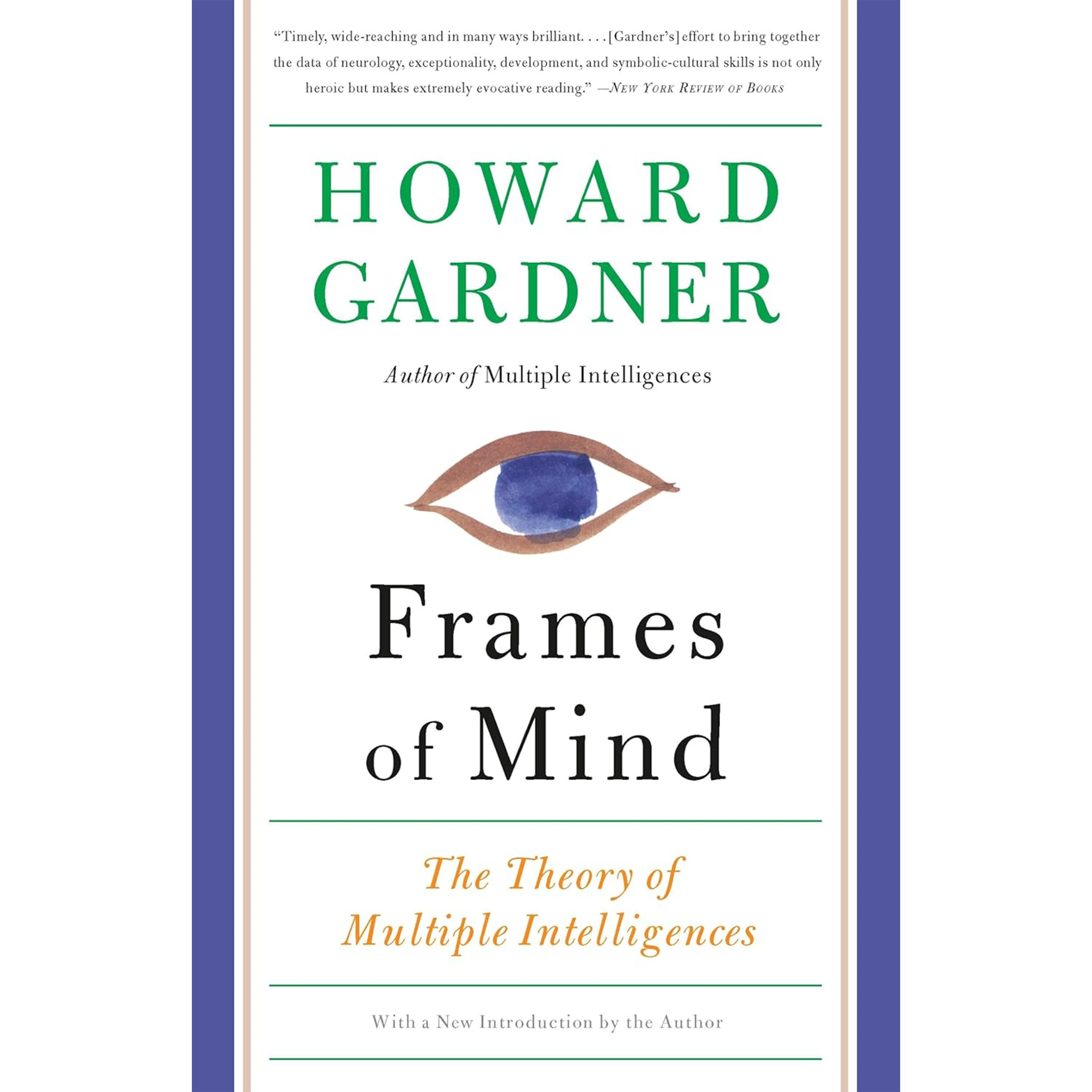
Welcome to A Book with Legs podcast. I'm Cole Smead, CEO and Portfolio Manager here at Smead Capital Management. At our firm, we are readers and we believe in the power of books to help shape informed investors. In this podcast, we speak to great authors about their writings. The late, great Charlie Munger prescribed. Using multiple mental models and analysis, we analyze their work through the lens of business markets and people. Today, we will discuss the nature of human intelligence and how we come to understand it. For most of the 20th century, intelligence was treated as a single number on a test, what we know as iq, for example. Our guest argued instead that human beings possess many distinct intelligences, each with its own development path, its own biological foundation, and its own cultural expression. Howard Gardner is joining us to discuss his groundbreaking book, Frames of the Theory of Multiple Intelligences. A little background on Howard. He is the John H. And Elizabeth A. Hobbs Research professor of Cognition and Education at the Harvard Graduate School of Education and a founding member of Harvard Project Zero. He is the author of more than 30 books, translated in over 30 languages, and a recipient of the MacArthur Fellowship in the first year of its existence, as well as more than 30 honorary degrees from institutions around the world. Howard earned his BA in Social Relations from Harvard in 1965 and his PhD in Developmental Psychology from Harvard in 1971. And I assume you're joining us, Howard
- [01:51]
C
from Cambridge, Massachusetts, where I've been for over 65 years.
- [01:55]
B
Awesome.
- [01:56]
C
Nice to see you, Cole.
- [01:57]
B
Yeah, very good to see you. And this is a, you know, I was telling, like we were talking about before. I'm, I not only thought a lot about your book in terms of like, who am I and how has God made me and what are my intelligences and where are those sit? How have those developed? You know, back to the intro. But then I also think a lot about my children. You know, what are their intelligences uniquely? And so it's a kind of a, it's a really fun petri dish I have in front of me to think about your book. You know, what, what drove you to this original. I mean, you wrote this in 1983. You wrote it. I think you published this before I was born, which is quite an honor to say that I'm, we're discussing this, but what, what, how early did you start to think about this idea in
- [02:39]
C
truth, Cole, I wasn't thinking about intelligence. And I was lucky to receive a large grant from a Dutch foundation to study the nature and realization of human potential. Human potential is a very big topic, I used to quip. It's more of a West coast topic than an east coast topic. But I had the chance to spend five years with a research team trying to find out what was known about the mind, about the brain, from neuroscience, from social science, from cognitive science, from anthropology. I was able to travel many parts of the world, talk to scholars there, observe, go to educational classes in schools and in various kinds of hobbies. And then I had to put it all together. I would now call it a work of synthesis. That's not a word that I had at the time.
- [03:34]
B
Sure.
- [03:34]
C
And what I finally realized was that the notion of intelligence as a single thing was just too simple minded. And as a result of this study, I came to conclusion that the mind is better described as having at least half a dozen, I would now say eight. At the time I said seven relatively different faculties. And that means that you might be strong in one faculty, average in another, and not very good in the third faculty.
- [04:06]
B
Sure.
- [04:06]
C
Why I came to call it intelligence, nobody, including me, remembers. I could have written a book called Frames of Mind and just called it Seven frames of Mind or Seven Abilities or Seven Faculties. And frankly, I can say now I wouldn't have become well known if I'd done that. It was removed. To take the word intelligence, which was singular, and to pluralize it, and then to give 400 pages worth of evidence from all sorts of different disciplines to say why you might be very good with language, average with music, very poor in understanding other people, or vice versa. And that that's a much better description of human cognitive potential than the notion either you're smart in everything, you're average in everything, or you're dumb in everything. And intuitively, everybody who observes knows this. Every teacher certainly knows that you might have a kid who's very good in learning languages, but not at all good in finding their way around an unfamiliar territory, or somebody who was very good with language but couldn't solve a problem between people if their life depended on it. Anybody who thinks about this from their own experiences, yes, there's something to this idea that we have relatively independent human faculties. I call them the humantellinges. I now think there are at least eight. And what's happened and the reason that I am relatively well known is even though psychologists love to fight about this, parents and educators all over the world realized as you did, that it's a much fuller description of what their child and what children are like than the notion that either you're good in everything, average in everything, or lousy in everything. Of course, there are a few Leonardos every 500 years. Leonardo da Vinci was good in everything. And unfortunately, there are a few people who are born with very poor neural systems and they're not going to be good at anything. But most of us have pretty jagged profiles. And what I think I would disagree with you a bit from the conversation we had before going on the air is that our potential isn't really fixed. If you live in a culture which values something and a lot of time is spent on that in your culture, you're going to be much better than if you lived in the culture. Didn't value that.
- [06:31]
B
Sure.
- [06:31]
C
I use an example, at least when I was doing the study in Hungary, in Finland, everybody had to learn to sing and to sing on key. That doesn't mean everybody can turn out to be Pavarotti. But people in a culture like that become much more musically intelligent than people in a culture where music is considered an extra and nobody is expected to learn to sing or to play an instrument. So there's a significant cultural component, where you're right is that there's a small percentage of people who are just at promise for doing very, very well in the field. And you can thwart them, but you can't take everybody and make them into a math whiz or a musical whiz or a golf whiz or a tennis whiz. So in that sense, it's interaction between what God gave you, what your brain gave you, the opportun that you have, the motivation that your family, your friends, your teachers have, and a certain amount of luck.
- [07:32]
B
Yeah, well, you just. It's funny, what you just said really reminds me. So Charlie Munger was doing an interview at Caltech, and this was in 2020, I would say late in the year. You know, we're kind of. We're slowly getting out of the COVID era. And he was asked that question along the lines of, well, can't we through behavioral sciences teach everyone how to become better investors? And he said, well, you can try, but it's not gonna work. And he's pointing out that to your point, there are people that have certain abilities and there are people that don't have certain abilities or, you know, as you as referenced from the word that you said you wouldn't necessarily use, but intelligences. So let's Go. Let's go. What was the old line view of intelligence? Cause you kind of start your book off with this. You talk about how we looked at intelligence with IQ scores. And I think of like Charles Murray, who wrote about IQ scores at one point, and that was very controversial. And we're now asking the question of what is adequate to understand certain things like this, even in today's society, as we debate sats and acts and things like that. So what would be the old line view of quote, unquote, intelligence?
- [08:36]
C
Okay, the IQ test, I don't think it was called that, but it was invented about 1905, so 120 years ago by Alfred Binet, who was a French, I guess we probably called him an educator, but we call him now a psychologist. And he had a very interesting assignment. He was supposed to come up with a set of questions which would predict which kids would have trouble in school. So he came up with a dozen or two dozen questions and he gave it to lots of five, six and seven year olds. And that instrument turned out to be a pretty good predictor of who was going to do have problems in school.
- [09:21]
B
Sure.
- [09:21]
C
Nowadays we might say, well, maybe he was picking up who would be dyslexic. I don't know. I don't think that they had that kind of concept now. But he was also inadvertently picking out people who'd be very good in math, though that wasn't his particular assignment. His assignment was to figure out who would have problems and then to provide some support and some scaffold. People didn't know about this for the first 10 or 15 years, but then the First World War broke out. It broke out in 1914, but the United States got involved in 1917. And at the time people who were leaders in the military said, can we come up with some kind of a test which will figure out who will be a reasonable recruit and who won't be? And they then came up with a test, I think it was called the Army Alpha at the time. Then it became the Stanford Binet. And those are the tests that we know they're not the same test as a binet had in 1905, but they're usually a set of 10 or 20 questions, short answer questions. A few of them we might say are common sense or social, but most of them have to do with language and with math. And so if you wanted to predict whether you were doing an American school in 1920 or whether you were doing recruit of officers or of recruits in 1917 or 18, and you had a limited amount of time you would give them those questions. And probably it was a pretty good predictor of who would succeed, whether you're talking about third grade or being a corporal in the military. Then 20, 30 years later, when most Americans began to think about having higher education until the Second World War, probably fewer than 10% went beyond high school. But after the Second World War, we had the GI Bill. As you know, the United States was then at the top of the world. We could have another debate on whether it's still at the top of the world. But what was then created by ETS in Princeton was the Scholastic Aptitude Test, or sat. And that was essentially the Army Alpha, not applied to future recruits, but rather to who would be eligible to do well in colleges. And the SAT exists till to this day, as does the act. They're not my favorite instruments, but if you have an hour or two and you want to predict who will do well, you in school and who won't, those are pretty good instruments. I have to admit, with one of my granddaughters, my wife and I, we're both doctorates from Harvard, we're looking at the current version of the verbal sat. And we couldn't solve the problems because it's moved much more to fine reading of individual words rather than getting a sense of a paragraph. So even those tests change over course of 67 years. But I think the heart of the matter is if you want a short instrument to predict who's going to do well or who's going to do poorly in a certain kind of school, in this case an American public school or an American college, the IQ test or the SAT test is probably as reasonable as any. But I'm not trying to predict who's going to do well in a certain school. I'm trying to understand the human mind.
- [12:45]
B
Correct. So walk us through your core idea. You talk about various intelligences. So what counts as an intelligence, and what are the signs or criteria you use to determine whether a candidate like competence qualifies for that?
- [12:58]
C
Okay, well, that's what I spent my, my time doing 45 years ago. I would create large charts of tables, probably all paper and pencil at that time. And I would write down all sorts of abilities in all sorts of countries and trying to figure out what strength would be, how you would measure it, and so on. And I finally came up with several different criteria. And one of them was what you talked about, namely an area where people become precocious fairly early. Another was what is valued in a particular culture at a particular time. Another Very, very important for me, because I was deeply into neuroscience, is do we have parts of the brain, parts of the nervous system, that turn out to be dedicated to a particular kind of computation? And as I said, I spent many, many months carving through, trying to figure out the best arrangement. I would now use the word synthesizing. I was trying to synthesize hundreds and hundreds of social science and physical science studies, and I finally determined that at the time, in the early 1980s, human beings were best described as having seven relatively independent intelligences. We've talked about the first two. Linguistic and logical, mathematical, and that's what the IQ test and the SAT does. But I also find evidence for musical intelligence, spatial intelligence, bodily kinesthetic intelligence, interpersonal intelligence, understanding other people. You and I can see each other. I don't know if the listeners can, but we're sizing each other by expression. And when you look bored or when you do your nails, it's different than if you look very intense. That's interpersonal intelligence. Intrapersonal intelligence, understanding of self. That's very hard to measure, but we all have a sense of people who are clueless about what they're like and how to navigate the world, and other people who have a very good sense of what they're like. And after a decade, I added an eighth intelligence I call the naturalist intelligence. Okay, to add in intelligence, I'm not exaggerating. It took a full year of research in neuroscience, social science, and so on. And the naturalist intelligence is the capacity to make meaningful distinctions in the world of nature between one animal and another, between one plant and another, between one cloud configuration another, and so on. And then many people, probably including my own colleagues, said, well, that's not very important anymore because we live in an urban industrial society. And I said, exactly. But the same naturalist capacities which allowed us to survive in the wild thousands of years ago, we use those same faculty when we go to a store and we decide which vegetable to buy, or when we go to an automobile store where people still go to automobile showcases and which car we like and which we don't, we make use of the same brain stuff to discriminate among members of a class. So naturalist intelligence is put to work even if you never go out in nature, because you have to shop and buy and invest and sell. And all of that involves using a naturalistic intelligence. Many people, including students of mine and colleagues, have nominated other intelligences. And I say, that's fine, it's a free market, but I won't add an intelligence unless it fits My criteria and naturalist was the only one that I have added myself. I've written a fair amount about a kind of intelligence which is intriguing, particularly in the 21st century. I call it existential intelligence. It's the intelligence of big questions. Who are we? Why are we here? What's going to happen to us? Why is there a world? Is there a God? If there's a God, why is there evil? And the wisecrack that I use, Cole, is that it's the questions that every kid asks, but only the ones who are interested in the answers have existential intelligence. And that is there are a certain number of kids who really, they can't sleep at night. I was just talking to somebody with a five year old kid. What happens when we die? And a child who's really into something like that. I would say give them credit for existential intelligence, but I've never studied it neurologically. And so it's kind of in, it's in abeyance. You can talk about it, but I haven't given it the seal of approval yet.
- [17:48]
B
And I like the whole, I thought of it because I think of those are, those are framework questions. That's what I call those. Like if you're gonna live your life, what's the framework you work under and do your daily life and make decisions and you know, go into your field and you know, progress. But though, but I often run into people that like, they go out and live their life and there's no framework for how they do that. They're just doing it because inertia is a powerful force, as they say. And so I think those are great ways to think about it. Let me just as an example, let's use linguistic intelligence. You talked a lot about the poet, which I really liked. I really like this idea of like the poet who is studying the use of words and, and the rhythm of words and rather than the conversational. It's like you and I are talking to each other here. Why is that the exemplar of language at its highest form?
- [18:39]
C
A good question. I don't think it's the only example. I mean, I, I almost became a lawyer and I often think about things in the way that lawyers do. And lawyers have exquisite sensitivity to language because they're taking a look at how words were used in laws and how they were applied or misapplied in different kinds of decisions. I would call that linguistic intelligence too, but it's not the same as a poet's intelligence. Sure. So this is a distinction that I and Others make between an intelligence or a domain and field. A domain or field is a society endeavor, like being a poet or being a lawyer.
- [19:18]
B
Sure.
- [19:18]
C
And maybe if we went back to ancient times, we didn't have either poets or lawyers, but we had people who used language well and people who didn't. So we shouldn't confound the intelligence, which is a computational capacity, which is society role, like being a poet or a lawyer or what else would use language?
- [19:38]
B
Or necessarily to your point, it doesn't. How is it valued? Could be completely separate from the intelligence itself.
- [19:46]
C
Exactly. I have a student now who's writing two blogs for me about teaching poetry to three year olds. She's been working in a school in the Boston area and I have yet to read her blogs, but it's a very interesting idea. What sense do young kids make not just about sound, but about metaphor and dissonance and consonants and so on? I will learn from what my student Shriya is renamed, which he finds hi,
- [20:18]
B
I'm Cole Smead, CEO and Portfolio Manager here at Smead Capital Management and host of this podcast. If you enjoy this podcast, I'd like to invite you to check out smeedcap.com at our firm. We are stock market investors. We advise investors who play the long game with a discipline that has proven success over long period periods of time. Learn more about our funds@smeecap.com Past performance is not indicative of future results. Investing involves risks, including loss of principal. Please refer to the prospectus for important information about the investment company, including objectives, risks, charges and expenses. Read and consider it carefully before investing. Smead Funds distributed by Smead Funds Distributors llc. Not affiliated so Chomsky argued and you wrote. We were talking about Chomsky before, but he argued children are born with innate knowledge of language. And we've been talking a lot about this in the podcast in light of, you know, the linguistic models of AI and whatnot. He called it, you know, innate, or I think you call it embryonic in your book, is what the term you referenced for Chomsky. How does that fit into this framework? You mentioned dyslexia. I have two daughters who have dyslexia. So to your point on linguistic and language, I think a lot about this with my own children. And where do you part ways with, say, the Chomsky view of this?
- [21:44]
C
Okay, well, this could be a very long conversation, but I will try to get to the point. Let me first say that dyslexia is is a very specific disorder having to do with making sense of written text Correct and written text didn't exist in most cultures until very recently. So I don't think Chomsky, even though his wife actually taught at the same school that I did, was particularly interested in dyslexia because it's a very specific kind of disorder. But he was interested in how it is that young people all over the world learn language very easily, and he posited it, and something that I would have taken very seriously 50 years ago. I was a student of his that we had something in the head which we would call a language acquisition device, something which is primed to make sense of phonemes and syllables and other other kinds of linguistic entities. And at the time, it seemed to be a good explanation of how 99% of kids all over the world learn to speak very readily and very easily. Chomsky's work was also debated within psychology and linguistics. But let's put that aside. Where everybody's mind has been blown in the last 10 years is by law, by large language instruments and large language models, because these entities, which have nothing built in, can nonetheless learn to communicate in the way that we can. And everybody who's paying attention to this podcast has probably exchanged with ChatGPT or Claude or some other large language model. And so Chomsky, who is still alive but no longer well, would have to be able to say, well, how is the human brain qualitatively different from any kind of entity which, when it's fed enough strings of phonemes, will be able to communicate in the way that you and I are doing? I'm sure he would have an answer, but it's a much more difficult question to answer. And that has to do with the history of computer science, which I know something about, and cognitive science. Until about 1980, the way computational modeling took place was by having very specific rules about what was acceptable and what wasn't acceptable? So he wanted to understand how people do arithmetic or chess or any kind of a logical entity. You would know exactly how it was done if you looked at the program, sure. But once neural nets, as we call them, became the way in which computational thinkers and computational designers worked, to put it in the least possible technical if you throw enough stuff out, the brain or the computer will make sense of it and will communicate the way that we do. And that's nothing about Chomsky. So Chomsky would have to have an answer to that. But where Chomsky and I would be on the same page, and he had said nice things about my work, was that linguistic capacity is a specific Human ability, as is musical capacity, spatial capacity, understanding other people. And those of us who try to understand the human mind as you are shouldn't assume that how we explain language is the same way how we understand, explain spatial orientation or understanding other people or understanding ourselves. That's, I think where I would be
- [25:27]
B
a, a champskin when like using musical intelligence as an example. And this kind of gets your idea of the culture, right. We look at, you know, language, that's a, that's a more prioritized intelligence, if you will, in our culture versus musical intelligence. I think you argue it's more of an accessory in our culture, but that's, you know, back to the point of how we value these things, isn't it?
- [25:56]
C
Yeah. And this may be where you're going to be going, but I was born in a family which just escaped Nazi Germany in time and didn't have any assets. So I had a wonderful family. And when I was 10 years. No, sorry, when I was 5 years old, just barely in school, we went over to a neighbor's house and there was a piano there and I began to pick out things on the piano and, and these neighbors said to my parents, well, your son really has got musical ability. You need to get a piano. So my parents scraped up $30, which nowadays would be like $300, this is 1948 and they bought a piano. And in fact I was very musically gifted and I took piano lessons and I soon became the best young pianist in my city. And then this is for extra credit. When I was 12, my teacher who was my second teacher said, well you're really good. Now you have to travel to New York and practice three hours a day. Because I lived 120 miles away from New York in the city of Scranton. And I said, and I made the right decision. I said no, I'm not interested in practicing three hours a day and I'm not interested in going to New York. And I didn't become a pianist. But it's relevant to your question because even though my parents didn't prioritize music, it just took putting me in front of a piano and having him pick out things for someone to say, yeah, this guy got musical talent. Now they might say he's got musical intelligence. Similarly, let's take chess. I have my, one of my six year old grandsons is playing chess and he's only interested when he can beat me. But it's quite clear that even after.
- [27:40]
B
That's a good grandson by the way.
- [27:44]
C
He understands the move and he's Ready to go to the next step. And anybody who's seen a lot of kids will find those kids who are really very stubborn about not wanting to do something at all for whatever reason. Some who are kind of average in figuring out the rules. And if you work hard for them, this is with a 10,000 hours, they'll get to be good. And some where you say, don't even bother to compete with this kid because he's just got that trail worked out very carefully. And my colleague David Feldman wrote a book many years ago called Nature's Gambit. Nature's Gambit, and it was about prodigies. And the claim he made, which was a very good one, was that one out of every thousand or ten thousand kids has a kind of a brain which just happens to be very well integrated, very well matched to some kind of an entity that exists in the society. Could be golf, could be jiu jitsu, it could be some kind of poetry that I don't know, it could be learning some kind of language. I don't know. It could be understanding weird people. I mean, what is it that a witch can do or a seer or fortune teller? They're not really looking at the beans, they're looking at you and trying to figure out what, what you're like. So there always are going to be people who have unusual minds and brains, and if they happen to intersect with an invention of their culture, which is, shall we say, congruent, they're in business. You and I both know this is your more business than my business that you take 50,000 kids growing up in Silicon Valley and anybody who is a Silicon Valley expert can spend a few hours with a random set of kids and say, this kid doesn't need to go to college, he just should need to come and work right now for open AI.
- [29:46]
B
Yeah, and that'd be like the Peter Thiel theory. Like you waste your time because you're, you're innately greater than these other kids.
- [29:52]
C
Yeah, well, even, let's not say innately, it took very little to nudge you to figuring it. Figuring it out.
- [30:00]
B
Sure. When this gets to. So you talk about this in like the logician mathematical intelligence, you know, you, you talk about this idea that, you know, they, they, it reveals itself almost immediately with little wasted energy on jealousy or reservation. And that's, you know, I think of like children put in a room and it's like, cool. These kids might have higher aptitudes or abilities, but there's just one that it takes little effort relative to the others. That are learning.
- [30:30]
C
But there's a very important point here. And you may know my wife, Ellen Winner, is an expert on gifted children. And what she will tell you is that what you're describing is the prodigy, the person who arrives an adult performance level when they're very young. It's very different from being creative. There are many, many kids who, I'm going to use my primitive example, who can get through calculus by the age of 11, but that's not in particular if they're ever going to do anything original in that. And I was a very good pianist, but there's no evidence whatsoever that I would have been a good writer of music. I just learned to play the Beethoven easily. I mean, for a kid.
- [31:11]
B
Yeah.
- [31:11]
C
So the prodigy is not the same as somebody who's going to be a creator, someone who's going to discover new things or do things in a new way. And I don't understand Silicon Valley well enough to know the difference between, let's say, the hundreds of kids that you're more likely to be boys these days than girls who can master computer science very quickly, and the much smaller 1 number who can actually do something new.
- [31:38]
B
Sure.
- [31:39]
C
Quantum computing or something, which we might say takes them into new territory. Similarly with, with something like physics. Probably before we had Einsteinian physics and before we had black hole physics and before we had quantum physics, you might have used a different set of abilities to be a physicist than we do now. When I was going to school, and you've admitted that you weren't even born then, being interested in animals and plants was very important for biology. By the time I was in graduate school, it was genetics, and now it's probably physical chemistry. So even recognized fields make use of different intelligences as those fields themselves change. And what everybody who would bother to listen to this thing would be asking, let's take politics and diplomacy. What did it take in the First World War? What did it take in the Second World War? What does it take now in 2026 to be good in that area? I don't have any idea why.
- [32:49]
B
The other thing that I thought a lot about, you know, you mentioned right at the outset, you said, okay, great, you have a high iq, so you can join Mensa. And what does that do? You're in a club of other high IQ people that doesn't determine the value of it to society, for example, it just says you have a high aptitude for thinking and whatnot. The other thing, too, and I want to ask you this question. I don't have this in my notes. But I just, I want to. I think this is really important. We've talked a lot about in this podcast that, you know, these large language models do have intelligence in various forms. You know, they're a linguistic model. So we obviously know that they can do language very well as an example. My question to you is, do this also cause scarcity in other intelligences? So, for example, I am a economics and history double major from Whitman College. What has been the kind of the paradigm shift in higher education has been a move away from the humanities, for example, and in light of computer science is becoming more dominant skill set for kids to learn in college. So I also think about, like, how does that change the value in society? And one of the questions being asked today is, are these large language models going to cause things like coding to be less valuable because they're more attainable from an average intelligence level? If that makes sense.
- [34:13]
C
Yeah. No, I think you're absolutely right. You have to be a historian to understand the extent to which what we used as criteria for getting into selective institutions has changed over time. In the 19th century, if I wanted to go to Harvard, I would have to read Latin, Greek, and Hebrew.
- [34:34]
B
The classics, the classical education.
- [34:36]
C
Those languages I'd have to be able to read in Latin, Greek, and Hebrew. Even in the 20th century, when I went to college, that seemed absurd. And now when a large language entity can translate any language into any other language, it's clearly just a. It's a poem in your hat, but it's not something you need. So, yeah, anybody who looks at the history of these things sees that what's valued changes over time. I mentioned earlier that Even the verbal sat, which my wife and I had no trouble with 60 years ago, is a different verbal sat now for my granddaughter than it is for me. Yeah, but you're also raising a question of values. And that is it might turn out that computer entities are able to do certain things much better than human beings. It's a policy question. If you're running educational institutions, what sorts of things we should value? So let's just take poetry. We were talking about my student who's studying poetry. It may turn out that large language instruments can write poetry better than anybody except Emily Dickinson and John Keats. That doesn't mean we shouldn't write poetry, but it means that we have to write it because we want to and not because we can do it better than a large language entity can do it.
- [35:57]
B
Let's see. So I want to pivot our discussion because, you know, you Talk about. You talk about kind of like athletic intelligence is how I think about it. You know, there's been books written, like the Sport Gene, for example, where people have these abilities that are just, you know, unique. You know, they could be prodigy like. But, you know, today is May 18, 2026. I just watched the PGA Championship yesterday, and what I've learned, Howard, is that it doesn't matter how many times and how hard I work in my life, I will never be that good of a golfer. I just. I know that. And very at home with that. But, you know, to your point about. In, in intrapersonal, how often is it that people don't evaluate themselves that well? Right. In other words, they're good at things, but they have trouble introspectively looking in and saying, you know what? I'm just never going to be that good, and therefore, what do I need to spend my time thinking about or what can I be better at? Is that maybe the most misunderstood intelligence because it's just so tough to be self reflecting?
- [37:07]
C
Well, I. I agree with your conclusion, though I haven't written about it, that intrapersonal intelligence is the most puzzling. I think I quipped, even in frames of mind, only your psychoanalyst knows how much interpersonal intelligence you have because he or she notices how often you miss. Miss the point. Miss the point of things. What I. What I would say is that knowing your limitations is not the same as what you decide to do about it. I mean, I might not be very good in learning French, and I might be smart to know that, but that doesn't mean I shouldn't keep trying. Those are two different kinds of things. And yes, you're not going to win the pga, but you're lucky. Golf is a sport where you're lucky to get at least not much worse as you get older.
- [38:03]
B
Well, but I can have a lot of interpersonal interaction with other people, and that might be something that I can use as a conduit to be interpersonal, for example.
- [38:11]
C
Sure. Yeah. No, I think even chess has an interpersonal aspect to it, and golf has a very interpersonal aspect. Unless you're just trying to show that you can drive the ball further than
- [38:24]
B
anybody else, which we are trying to do that, let's admit it.
- [38:28]
C
Right? But I do think that even the knowledge of self is something that's a fairly modern Western phenomenon. I mean, I do a lot of work in anthropology, and the notion of self and of I is much more dominant in the west, and it's much more dominant in the United States. Than it is in Asian cultures, in Confucian cultures, Japan, Korea, China, Thailand and so on. We are a quite egocentric and egotistic society. And that's been an advantage at some point. I think at this point it's a big disadvantage because it's one planet, and it doesn't matter if we're the best on the planet if we destroy the planet. But that's moving into, into, into. Into the political sphere, when a lot
- [39:17]
B
of people would argue that's, you know, that's been true ever since the Protestant Reformation. Right. The idea of self rather than a more corporate view. So explain what you mean by a sense of self as like the balance every individual and culture strikes because we're touching on this, between inner feelings and pressures of other persons or people. You talk a lot about the west versus other cultures you've studied as an example.
- [39:43]
C
Yeah, well, I think you pointed to that. The Protestant revolution, I think that we're probably, you know, starting around 1500 Europe and, you know, the countries that Europe sent people to, like the United States and Canada and parts of Latin America and Australia, went on a somewhat different track than more traditional societies in the Middle east and in the Far East. And it has both strengths and weaknesses. We take the individual and his or her soul much more seriously than other more traditional cultures. And that can be positive or negative. My own feeling is that the United States today has become much too much of an I society that I like capital I, with not much attention to others. And so a lot of my own work, this would be a subject for another podcast, is about how to develop in young children a sense not just of I, but of we and of they. But they not in the sense of they as being enemies, but they as being entities that we should care about. And my own research group is now working on a fourth I, we, they. And it. Because young children now are not only relating to other human beings, they're relating to Alexa and other kinds of AI entities. And for all we know, for a three or four year old, that's at least as significant as another animal or another person. And in the world of your grandchildren, Cole, they'll be working with all kinds of intelligent entities that are not flesh and blood in the way we are, and they're going to have to have relations with them as well. So the notion of human intelligence as being the mark of all intellect is no longer the case. In the introduction to the new issue of Frames of Mind, which just came out In April of 2026, I talk about animal intelligence, plant intelligence, AI and AGI. Because when we had one kind of intelligence, and then Binet said, well, maybe we have two kinds of intelligence. And then Gardner said, maybe we have seven or eight kinds of intelligence. That's all 20th century. But now we have to be aware that plants communicate information to one another. Certain animal species, little ones like ants, huge ones like whales and octopi, can communicate in ways which we can't. And nobody knows about the extent to which various kinds of AIs will be able to go someday.
- [42:46]
B
We hope you're enjoying the podcast. You know, we work hard putting together this show, but we work even harder for all our investors at Smead Capital Management. At smead, we believe in disciplined investing, which is why the SMEAD funds have a proven track record of long term outperformance. If you're an investor who plays the long game and want to invest in wonderful companies to build wealth, we invite you to visit smeadcap.com Past performance is not indicative of future results. Investing involves risks, including loss of principal. Please refer to the prospectus for important information and about the investment company, including objectives, risks, charges and expenses. Read and consider it carefully before investing. Smead funds distributed by Smead Funds Distributors llc, Not affiliated to your point about what intelligences arise and then I will add my second part in what intelligences fall. For example, interpersonal between us and others, we can't seem to crack the interpersonal problem of marriage. It's on a long term decline. It's down 40% over the last 40 years. And it seems to be that we have these other intelligences coming about and we're losing prior intelligences in like how do you talk to a potential mate?
- [44:08]
C
Yeah, well, you made a lot of assumptions there, which I think we would take a different podcast to make. You know, we could easily say that people can't afford to get married now.
- [44:20]
B
Well, they're not even, they're not even having sex or drinking. That there's a much lower hurdle there. So it's, it's, I find it interesting. It's, it's, it. Everyone seems to understand the problem. And by the way, just to give you a sense, people, most people talk about the symptoms of that. So say like, oh, childbirths are down. Childbirths are not down. If you look at people that marry, childbirths are very normal compared to 40 years ago. It's marriage that's declined and caused lower total birth rates among the population. So I think a lot about what, you know, it's, it's kind of like in Physics. For every action, there's an equal and an opposite reaction. And there is a relational movement that. I agree with you. There's new intelligence is coming about. Like my ability to interact with Claude and use it successfully like a good intern is an intelligence. Some people know how to do that and some people don't. Or how you want to use those models for what they're good at or what they're bad at, you know, versus how do I talk to the person down the bar from me that I've never met?
- [45:19]
C
Well, I want to separate out something quite sharply. The decline of marriage can be an entirely different issue than whether we know how to understand other people. The decline of marriage is a sociological phenomenon. Marriage itself was only invented, you know, at a certain time in life. And marriage in my great grandparents time was totally different than it is now. So whether. Whether marriage is something desirable and whether it's something we should be worried about is entirely different issue than whether people understand one another. And interpersonal intelligence is not about marriage. It's whether we understand one another. I might. Maybe it's because I understand you well, I don't want to marry you.
- [46:02]
B
Well, I agree, but. But that would also mean like the, the, the mathematician logician would say, but we're going to die. And the problem is that that's logically bad for humanity. So that again.
- [46:15]
C
But there are 8 billion people in the world, so I'm not too worried about the species declining because of lack of marriage, even though I'm a great believer in marriage. I'm very worried about the species dying out because we kill one another or because the planet gets too hot. I think those are issues that one should be vexed about.
- [46:36]
B
So critics ask whether common sense originality and metaphoric ability are themselves intelligences. How do you respond and why do you locate originality within single domains rather than across them?
- [46:51]
C
Well, the second one, and you'll have to remind me of the first one, the second one is simply an empirical question. Namely, it might be the case with people who are original or creative in one area are also more original and creative in another area. I don't know of any evidence for that, but it's an empirical matter. If you and I were doing a thesis and we decided to look at seven different areas, let's say chess and Name that Tune and writing a Poetry, and we found that people who were good in one area were actual good in other areas. That would be evidence that for a more general creative ability, if we found that strength in one area, didn't predict strength in the other area, then we'd say, no, they're predict, they're independent. So what was the other one that you were asking about?
- [47:37]
B
Common sense, originality and metaphoric ability.
- [47:39]
C
Okay, well, originality would be close to what I would call creativity, namely doing something that is unusual and that other people value. I mean, to lots of things that are unusual. I could continue our conversation by pulling my hair out. That would be original, but it wouldn't be worth imitating. I think that probably if we had all the instruments at our disposal, we'd find some correlation between desire to be original or creative in one area and desire to be original and creative in another area. I don't watch Saturday Night Live, but I would imagine the people on that program can probably be creative and original in more than one area. More so than I. Than I could be. But it's an empirical question whether originality is domain specific or cuts across the, you know, the terrain. I just don't. I don't have a good answer to that.
- [48:36]
B
Well, because to your point on metaphoric, I think of that as being. It's, it's, you know, we often talk about factors in mathematics, let's just say, and then there's the interaction effect of various factors. So, like, we have all these intelligences and a metaphoric ability is the interaction, much like you're saying you might be musically talented and inspirational in that regard, but you also have other intelligences, and that could create originality because it's not just unique to one domain.
- [49:07]
C
I think that's true. And I think, again, if you were a student of mine, we might pick randomly 20 famous examples of creativity and see the extent to which they seemed to be based largely in one intelligence as opposed to putting together a number of different intelligences. And that would be an empirical matter. I don't have a strong opinion about whether they're each rather independent or somebody who's creative in one area might be more likely to be creative in another area. Somebody asked me a really good question about a year ago, and if you give me another five or 10 years, I'm going to try to answer it. I wrote two books 30 years ago, one about creativity called Creating Minds and one about leadership called Leading Minds. In each book, I took about 10 people and described the creativity and described your leadership. And this person asked me a wonderful question. He said, howard, those were all 20th century people. If you were doing this in the 21st century, who would you look at? And that really froze me because areas I know nothing about like finance, which you know something about. I would never thought that that was an area of great creativity. The guy you mentioned, Charles Munger. Right. I'm lucky I know who he is because I wouldn't have known who he was. I did know who Warren Buffett was, but, I mean, Elon Musk. Elon Musk might have. Would have been completely. Or Steve Jobs would have been completely invisible 100 years ago. Yeah, but I think the very important point you're making is the areas in which people show their originality and creativity now may be different than ones that we looked at 100 years ago. And so we have to be looking elsewhere, not just where the light is, but also where people are. I've written about Donald Trump as a media genius because he has such a command of different media, you know, particularly social media. And that would have been worthless 100 years ago. We didn't have a range of media like that.
- [51:13]
B
Yeah, no question. It went to your point that the media, that the dispersion of media is a factor that we didn't have. I mean, there was just fewer ways to communicate at one point, and now there's millions of ways to communicate, hence why we're talking to each other. As an example, you worry about uncritical application of the Western educational model to societies with different traditions and different flavored blends of intelligence. What do you wish more education reformers understood about this?
- [51:42]
C
Well, this is something that I'm thinking about very seriously as we're talking in the spring of 2026. I'm going to tell you my current thinking, which is that a lot of the traditional curricula are going to be unnecessary once kids learn what we would call the three Rs on the basis of computing, namely reading, writing, arithmetic and understanding, something about coding and so on. I think that the educational system 50 years from now, 100 years from now, if it still exists, if the planet still exists, it's going to be much more about human relations and how to get along with other people, how to disagree without killing one another, how to find common values. When we think we come from different backgrounds. And the examples I use from my own background is Scouting and religion. I was a Scout and I've worked all the way through, from Explorer, from Cub Scout to Eagle Scout. I have no relationship to Scouting now. I was raised as a Jewish boy. I was bar mitzvah and confirmed. I have no relationship to Judaism. Now, I'm not hostile to, but I think learning how to deal with other people, particularly people who were different from you learning how to handle disputes without getting violent in my own terms, developing interpersonal and interpersonal intelligence and is what's going to determine whether planet survives. I mean, you're talking now to me right after Donald Trump was in China and Putin is about to go to China and there are a few very powerful people in the world who feel that they can make decisions and those decisions could well destroy the planet. I think that the assignment for the next century is to help people get along with people even if they don't agree about things, without getting violent. So I see it much more in a religious and sense of what's of different kinds of good. And when I talked about our society being very heavily, I focused. We need to become more we focused and we need to be aware that people who are different from us, they're they. But that doesn't mean that they're evil and they should be eliminated. I won't be around to see it. You may not be around to see it, but your grandchildren will know whether we've learned to get along as a planet or whether we've just pursued our own egos and ended up destroying the planet. This wasn't probably why you asked me to be on this.
- [54:27]
B
No, no, no, wait. So I actually have a, I have a very different take on this, but similar need. Let me give you an example. So I actually. So back to your point on like, you know, earlier 20th century education, okay, we called the classics because it was considered timeless. Okay? So to your point, all the original college educated people were learning and same things even to this day. I went to Whitman College, we did a class called Core where you took antiquity and modernity. And that's what we had to your point in common with prior educated people. Now by the way, that's been pretty much gutted in most even private institutions to where you don't even learn about, you know, Plato or anything like that. So what does that give us? I agree with you. It's less in common. It's less that we can take through the periods of generations and it's more like what the dog pulled in that day. And I think my concern with that is that just gives us less in common. So I agree with you that the commonality, the we is lost. And if it's just like we're going to let the music of the season be the season, the seasons change. To your point, they're always changing and that's why education has been changing with it. I think my question is what if we go to something more timeless to have more commonality, for example. And that way from there we go out to do use our own intelligences. From there.
- [55:53]
C
Well, I'm now sharing with you what I'm thinking about all the time and that is that when I talk about having people, especially young people who are different from one another, getting together and dealing with issues, I'm talking about issues in their life, in their world, in their community, which are difficult and which may cause lots of conflict. And I think that's the point at which people become motivated to look at the law, to look at history, to look at geography, and to make use of stuff that you and I may have learned in college because it was assigned, but we may well have forgotten because it didn't fit into the problems we were trying to deal with at the time. And I've actually, you may know this television program, finding your roots that Henry Louis Gates has on public broadcasting. It's about where people discover their genes. I've written a blog which will be posted soon about how starting with genes, G E N E s you can get to any subject from history to biology to physics to the arts. And if you don't like genes, G E N E s you can take genes like in blue jeans, G E A N S or you can take jelly beans like food and any kind of an entry point, you can go to any discipline. And that's the way I think people should learn about disciplines in the future. Not because, oh, it's the second semester in my granddaughter's class recently the teacher said something about the Second World War. So my granddaughter said, what was the First World War? The teacher said, you'll learn about that in seventh grade. A prototype of a bad teacher. I hope she's not watching, but yes. So I think I just created this, we might call this learning on demand. You learn about things in your your world at a time when it helps you solve a problem and you can start anywhere. And that's the kind of school I'd like to see in 50 years. It's not going to happen next year, it shouldn't happen next year because you can't change institutions too quickly. But what I learned from my exploring of large language instruments is not only do they know everything better than I do, they could teach everything better if they were properly trained. And so I would like to leave to human beings the sorts of things which we need to deal with. And that would include your question. I wouldn't call it marriage. A question of long term relationships with people and what's expected in Those things and are they good and are they bad? I mean, I grew up believing in them and I think you did. But you know, Margaret Mead, who was a famous anthropologist, said every marriage should last for 10 years and then it should end because you don't get anything out of it. I think it's kind of silly, but it's a very different way of thinking about things.
- [58:39]
B
Well, except that the data would argue against that because you're in my grandchildren be worse off for that. That's the catch. Right. So the interpersonal is a legacy issue too. But let me, let me pivot a little bit because I, you know, again, I think I always ask like, what's the rate of change? Right. So for example, I totally agree with what you're saying. To bear my soul. I would have been a bad student of yours in college. I would have been a bad student versus as a 42 year old man. I just found your work incredibly fun to read. Thoughtful, playful, creative. Everything. My mind wanders and I think a lot about as I hop around different fields, how my mind is allowed to wander and ponder and do those kind of activities. But that's just, that's what I get excited about. But the core reason I'm doing that is I'm reading, which we know reading is dying on the vine.
- [59:37]
C
And so I worry about that. I worry about that as much as you do.
- [59:42]
B
Well, so, so if we go back to an oral tradition, which you were kind of talking about interpersonal, which is more of an oral tradition, that means the people in the room that can read are going to be really valuable because they'll say, well, let me synthesize out everything that's being said and write it out for us all to understand what is going on and to communicate to more people than are just in this room. Let's just say, and I think it's getting, it's like the profitability of reading via symbols or language is actually going up. Even though the large language models can do that really well. That makes sense.
- [60:22]
C
I would say that nothing, nothing you said brought me up short. But of course, if you have dyslexia now, it's much less of a problem than it would have been before we had large language instruments because it can be read for you. What I'm trying to do in the examples I used is to find things that would motivate people to want to know more. Solving problems in the community is a good motivator. And if you can draw on something, whether it's law or art or history, or mythology to help you deal with those problems. You should. You and I and our families are free to play mahjong or to learn Sanskrit, but those should be options. But learning how to live with other people, and in this sense, it is about inter and interpersonal intelligence. I think that's what's determined whether we still have a planet and not whether we invent machines that are even more logical.
- [61:22]
B
Yeah. So, kind of one of my final questions. Looking back across more than 40 years since you've published this original book, what has surprised you the most about how the theory has been taken up? And what do you wish you'd better understood in 1983?
- [61:41]
C
Okay, good question. Well, the first thing that surprised me was that psychologists didn't have much use for it, but educators thought it spoke very clearly to them. And, you know, if I'm known anywhere around the world, it's because I'm a multiple intelligences guy. And I guess I would say now, except for the strictest psychologist, the general idea of things like emotional intelligence and personal intelligence and artistic intelligence, those are pretty much accepted except by nitpickers. So in that sense, it's surprising and kind of heartwarming. What I didn't anticipate at all, because I followed computer science and cognitive science very carefully, was that the whole notion of intelligence being just a human feature was very constrained. I learned much, much more about the sorts of things that all kinds of animals, from the tiniest to the largest, can do, and even the kinds of communication that plants can do to members of the species to avoid certain kinds of danger and to encourage other kinds of absorptions. And of course, AI and AGI, anybody who's paying attention to us now knows that all sorts of things that we thought only human beings can do are being done effortlessly by these computational entities. So in an essay that I'm writing right now, I'm saying, let's stop having human beings being the only definer of intelligence. Let's see what each of these species and each of these entities, what they would value as intelligence, and by implication, what would they think was important but wasn't, not intelligence. And I think I'm going to end what I'm writing now by an issue which is even harder than intelligence. What's consciousness?
- [63:37]
B
And by the way, that is the question of the ages. I would agree with you. So I love that you came to that, because we've been discussing there's intelligences. The large language models can have that, but they can't have consciousness. And so I don't know why this comes to mind, but the feeling of being in knee deep powder deep in the mountains is a conscious, cerebral feeling that I cannot repeat, which is why it's so incredible. And so just the feeling of that or loving my wife is a conscious feeling and therefore it's tough to deal with that in a large language model. So I totally agree with you. And by the way, for the record, Dr. Gardner, being the multiple intelligences guy is still a great way to go through life.
- [64:23]
C
I have no complaints. I just wish that the world that your children and grandchildren live in and that my kids and grandchildren will be a peaceful world.
- [64:34]
B
Well, you're talking to like the eternal optimist. And to quote you know, Winston Churchill, the United States will always do the right thing after exhausting every other avenue. And so we will get there. It's just a question of when, where can people follow you going forward? You mentioned things you're writing. Do you have a blog? Are you on social media at all?
- [64:52]
C
Yeah, if you go to my website HowardGardner.com there's something called blogs. I'm an inveterate blogger. I am blogging all the time and I think Those appear on LinkedIn. But I just when I have thoughts, I write them out and if people are interested, they should just go there and if they have comments, I'll read them. And if I have something to say, I will. And I'm lucky because I'm well into my ninth decade, but I still have some neurons left.
- [65:18]
B
You are sprightly to say the least. So I this has just been a ton of fun. I really appreciate you coming on, Howard. Your book Frames of Mind reminds me that the human mind is not a single ladder to be climbed, but a landscape and a cornucopia of distinct capacities, each with its own logic, its own development and its own cultural expression. To recognize this is to expand what it means to be intelligent, to be educated and like we talked about between ourselves and in ourselves human. Our listeners should go out and buy a copy today. If you enjoyed this podcast, go to Apple, Spotify, YouTube or wherever you listen to a book with legs, give us a review, tell others about the books and great authors like Howard Gardner that we have the opportunity to understand and study the world with and through for our tribe. If you have a great book that you'd like to recommend, email podcastmeedcap.com that's podcastmeadcap. Pardon me, smeedcap.com you can also send your suggestions to us on X. Our handle is meedcap thank you for joining us for Book with Legs Podcast. We look forward to the next episode.
- [66:27]
A
Thank you for listening to A Book with Legs, a podcast brought to you by Smead Capital Management. The material provided in this podcast is for informational use only and should not be construed as investment advice. You can learn more about Smead Capital Management and its products@smedcap.com or by calling your financial advisor.
- [67:04]
C
Sam.