Loading summary
Transcript181 lines
- [00:03]
Podcast Announcer
You're listening to A Book with Legs, a podcast presented by Smead Capital Management. At Smead Capital Management, we advise investors who play the long game. You can learn more@smeedcap.com or by calling your financial advisor.
- [00:22]
Cole Smead
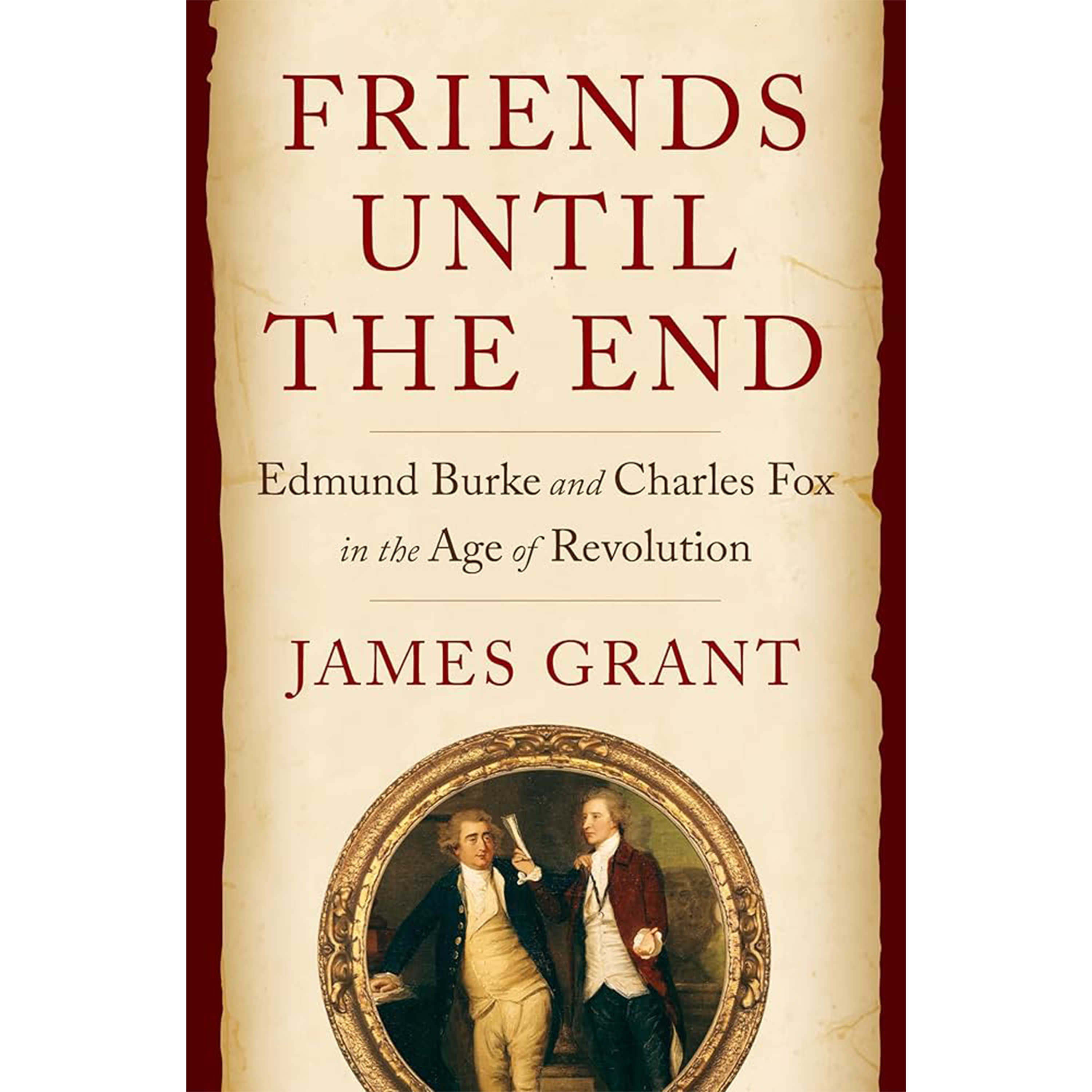
Welcome to A Book with Legs podcast. I'm Cole Smead, CEO and Portfolio Manager here at Smead Capital Management. At our firm, we are readers and we believe in the power of books to help shape informed investors. In this podcast we speak to great authors about their writings the late, great Charlie Munger prescribed using multiple mental models and analysis. We analyze their work through the lens of business markets and people. In this episode we will discuss a unique history of two members of parliament in the mid to late 18th century that that as we entered the age of reason and therefore also revolution. Jim Grant is joining us to discuss his book Friends until the End, Edmund Burke and Charles Fox in the Age of Revolution. A little background for our listeners on Jim, and some of you would know this, but for those of you that are younger, Jim started his journalist career in 1972. He joined Barron's magazine in 1975. More famously, he began publishing Grant's Interest rate observer in 1983, which he continues today. I would just note that he is a prolific author with at least 10 titles that I could count, but I'm sure Jim's going to tell us that I didn't get that right count. These include titles like Minding Mr. Market and his more recent classic In My Mind is badget, which he published a few years ago. Jim, thanks for joining me today.
- [01:42]
Jim Grant
Oh, you're very welcome, Colin. Nice to be here.
- [01:44]
Cole Smead
So I got a sense of this late in the book, but I, you know, as I was kind of going through this, you know, you've, you like history, you like the markets, you have those similarities with people like myself. But what particularly caused you to get into this story and tell the story of these two friends?
- [02:01]
Jim Grant
Well, I think it was mainly for the words they spoke and the things they stood for and the way they stood for them. They were extraordinarily literate people and I understand that today nobody reads books. We're in the age of so called oralism. Yep. Sounds like we're all going to the dentist all the time, doesn't it? We're flossing continuously. But this was a time in which education was predominantly about literature and it was about the Greek and Latin and Shakespeare and Milton and people like Fox and Burke could quote these authors by the yard, as the expression went.
- [02:49]
Cole Smead
Yeah.
- [02:51]
Jim Grant
And the time they didn't spend in classes on the sociology of the National Football League or of, let's see, of American history from 1996 to the present.
- [03:13]
Cole Smead
Yeah.
- [03:15]
Jim Grant
Not having to do that. They immersed themselves in great books and great words and great authors. And it showed, you know, to be sure, they were rather deficient in what we would call the STEM branch of knowledge, but it was not for lack of brain power nor curiosity about mathematics, but it rather was because of what was considered a great education, was almost exclusively a literary education. And that's to the benefit of anyone who loves language and who gets the privilege of reading their words.
- [03:51]
Cole Smead
Agree. I don't have this in my notes, Jim, just so you know, but I like the idea you're hitting on because ultimately. And we'll go into the book here in a second, but I think you're obviously arguing that at some level we've lost that literary touch, or what used to be considered nowadays is referred to as a classical education. Right, Right. You read the classics and you are educated at a higher level in the classics. And then from that beginning of Western thought, which with these gentlemen really had what would be thought of as that today, you then go out and you build your models for the rest of life, whether it be politics, business, or ruling a land.
- [04:32]
Jim Grant
Yes. There's plenty of specialized knowledge of. Al Burke became a very, very accomplished amateur farmer.
- [04:39]
Cole Smead
Okay.
- [04:40]
Jim Grant
And so that was kind of a stemi thing to do. And Fox drank a lot and played cards. Well, that's not literature, but it's.
- [04:50]
Cole Smead
It was very bro y, as they say. Right.
- [04:52]
Jim Grant
Yeah. And so. But the books they read stood by them and with them and indeed dwelled within them their whole lives. And I find that terrifically inspiring. You know, myself, I never had one moment of Latin instruction, little Greek instruction. You know, I was very serious. High school and indeed junior high, elementary school musician. I played French horn and practiced a lot, but I missed. I regret not having had that grounding, but certainly that grounding was well nigh universal among the class of people who became politicians. Sure. And so one of the reasons I write the books that I do, I write kind of half and half, you know, half. Non. Well, the kind of books that you will not find a cusip or a ticker in. Yeah, that's about half of the 10 you mentioned. And I do it because, in a way, I'm a refugee from this age of limited vocabulary and truly uninspired rhetoric. I can name a politician at a very high place in this country who seems like six words under his Belt. I wrote about John Adams during the Clinton term, when the moral collapse of America seemed upon us. Get me out of this. So I got out of it nights, weekends, and the fourth of July by reading all about John Adams. I wrote a biography of Adams. You became a lifelong friend. And in a way, I think the Burks and Fox project was a little bit of. A bit of temporal escapism. When you write about a different age, you get to see the present very differently and you get to imagine the future perhaps a little bit differently.
- [07:12]
Cole Smead
Well, I agree. And speaking of Munger, Munger touched on what you're speaking to, which is he talked about like, I never met Ben Franklin, and I never met many of these people, but I know Ben Franklin, and I got to know him very well through stories about him and his own writing. And I think that I think about that a lot. So to your point, I walk away thinking like, I know Edmund Burke and I know Charles Fox, and I know Lord north, and I know these characters of history through your writing. So let me start out with this. Let's just start with Edmund Burke. Teach us about his upbringing and his family story.
- [07:46]
Jim Grant
Yeah. Well, Edmund Burke was born in Dublin. The year was not quite certain. I don't have the date to have 1729, maybe. His father was a lawyer, and Burke grew up in the Ireland that was subjugated by the English overlords. And these laws that had been imposed upon the Irish at the time of Oliver Cromwell were still in the books. Not all of them were enforced, but too many of them were. And Burke got a very, very full taste of governmental impression just by living as an Irishman in Dublin. And he finally, when he came of age, after attending Trinity College and of course, excelling there, he decided to come north to London to make his fortune. So he was not totally estranged from England or English thought or English politics, but he certainly knew firsthand what it was like to be under somebody's thumb. And Fox was entirely the opposite. Fox was the most cosseted, most indulged, most prized possession of an aristocratic family you could imagine. Try as he might, he could do no wrong.
- [09:17]
Cole Smead
Yeah. And he had everything you'd want as a child at the time.
- [09:20]
Jim Grant
Yeah, except a father who would not pay, virtually pay him who got in sin. Here, kid, here's £1,500 in gold. I go to go to drink yourself to death. So Fox was an extraordinary prodigy, as was Burke. But Fox was a prodigy in all things. In drinking, in horseplaying, in gambling, in the ancient tongues, in Modern Italian poetry. In Whorington.
- [10:01]
Cole Smead
You say that like it's.
- [10:02]
Jim Grant
A sport, like fencing or jousting or. Yeah, yeah, right. Well, it's true. And he amazed and kind of appalled the people in Paris that watched him go about his business of being a young dissolute, you know, why does he do this? You know, so his father was just loved him to death. And he expressed his love by indulging Charles in some of the worst habits you could pick up as a young man. Sure. So one was kind of a middle class striving person who wanted to do something great. He wasn't quite sure that was Burke. And the other was the most indulged son of an English aristocrat you could. You could conjure. And so it's rather extraordinary the two of them came together. You know, Burke was a professed Christian. He believed with all his heart that Jesus was a divine figure. And Fox, Fox only went to church when he was a wedding or something. Probably scampered out early. So. Most improbable pairing socially and spiritually. Yeah, spiritually.
- [11:24]
Cole Smead
So. So early on, you know, this. I think this is a foreshadow of later events in their. In their. At least in Burke's life. You mentioned while he was in school, you know, this idea of like the protector of the helpless or the idea of mercy becomes a, you know, a big idea in his life. You mentioned the Black Dog Prison while he was at school.
- [11:47]
Jim Grant
He.
- [11:47]
Cole Smead
Can you briefly tell that is kind of a picture of who Burke was going to become more of?
- [11:52]
Jim Grant
Yes. Well, the Black Dog Prison was notorious lockup in Dublin. And you know, the kids at the Dublin, at the Trinity College were, you know, they had a famously disciplined. Led famously disciplined lives of scholarship money through Saturdays. But they. That didn't stop them on Saturday from tearing up the town. And Burkham, oddly enough for the future founder of modern conservative thought joined in one of these frolics one night in kind of an attack on this prison, which of course failed in its attempt to release the good bad guys. But it foreshadowed Cole, just as you say it foreshadowed Burke's lifelong determination and dedication to the idea of justice. He underwent enormous personal vilification while he was in Parliament in parliament to defend one occasion, to defend convicted, you know, they called him bugger. So homosexuality was outlawed.
- [13:29]
Cole Smead
Sure.
- [13:30]
Jim Grant
And two were caught in the act and. And they were brought to the public stocks. One was stoned to death there. And this upset Burke deeply and he protested it publicly and he was attacked publicly in Snide letters to the editor of a newspaper in London suggesting that if Burke was so keenly interested in these sods, perhaps it meant that Burke himself was married to a woman only for show. That was the sense of the letter.
- [14:03]
Cole Smead
Sure. It was a front.
- [14:05]
Jim Grant
So he sued the author of this thing and got minimal damages and gave them away, I guess. But he did these things not because there was anything in it for him, but justice.
- [14:18]
Cole Smead
Sure.
- [14:19]
Jim Grant
I so admired him for it.
- [14:21]
Cole Smead
Well, so let me ask you a question on that, because when I was in that section of the book, I was trying to ask myself, thinking through Burke is, did Burke have. You know, I didn't get the sense from Burke. What he said and what you wrote about him is that he wasn't saying like, oh, I'm all for sodomy. Okay. It was the inhumanity of the punishment, particularly the public capital punishment that was witnessed where you mentioned that they're taking out the public and normally they're throwing produce or stuff like that, and someone throws a rock and kills this person over sodomy at the time. Okay. And my read on your writing was that it wasn't the act of sin that they committed in Burke's mind, it was the punishment and the inhumanity of it.
- [15:13]
Jim Grant
Correct? Yeah. He disavowed any defense of sodomy. He bought into that particular. That particular prejudice embedded in English law. But there was nothing about him that would tolerate cruelty. Sure. And again, he rose to the defense of the man he never knew, knowing full well what would cost him in public reputation. Although I dare say more thoughtful people, more sensitive people rather liked him more for it. But certainly the vast public would be inclined to nudge each other with their elbows.
- [16:02]
Cole Smead
Well, speaking of, in the things that were left unsaid, Fox also had a stain on his family. And the stain on his family goes back to the person who let him get away with everything, which was obviously his father. You know, you talked a lot about how it was publicly believed that his father, you know, who became Lord Holland, stole from the king throughout his time in service.
- [16:28]
Jim Grant
Yeah, well, this. This requires a bit of background. And for any financially minded, investment minded people, this will come as a most extraordinary chapter in public finance. There was an office called the Office of the Paymaster of the Forces. And the Office of the Paymaster of the Forces was charged with receiving public money with which to pay the salaries of the troops and the sailors. And the money was his until such time as he needed it to make payroll. Money was his. And he could speculate with it he could invest with the bank of England a good 3 or 4% or he could speculate in common stocks or anything else he wanted to do with it. And it helped. It didn't hurt certainly that the office of the paymaster was also a place where you could get some inside information on what the government was going to do, whether peace negotiations would be fruitful or not. And Lord Howard played this like a fiddle and became extremely rich. So people looked at these hundreds of thousands of pounds sterling. This is big money. This is more than Donald Trump. It's as much as Donald Trump had made in crypto. Sure, almost.
- [17:53]
Cole Smead
Are you saying there's grift going on right now, Jim?
- [17:56]
Jim Grant
I didn't say that. Yeah, no, it's the same. Well, it shares the. They share. The two of them share that. It was utterly out in the open. It was perfectly legal. And I guess that with respect to the president today and his crypto adventures, I'm not sure what the courts will finally decide or how the juridical record will be written. But in Fox's time, certainly what he did was. And although it never passed the smell test and the senior Pitt, Pitt, the great commoner was one point, the office of the paymaster, he declined to use the funds this way. He would not invest them or speculate with them. They stayed locked up in the bank of England. And I guess I'm digressing a little bit, but Burke was that came into the same office and wouldn't you know it, Burke passed a reform that cut him out of the big money. Burke was broke his whole life. Fox was broke. Fox lived from bankruptcy to bankruptcy. Burke's affairs were that much better, but he never actually had to face the indignity of having a sheriff come and stack his furniture outside of his house.
- [19:23]
Cole Smead
Sure.
- [19:23]
Jim Grant
In Mayfair.
- [19:24]
Cole Smead
Well, the other thing that came up throughout this story, I mean, we're talking about people that need money who are in politics. I mean, it seemed like there wasn't a single person in politics that had any money that, that didn't have a gambling debt or some kind of debt being held by, you know, someone that they have patronage to, including, as you point out, the king. You know, the incentives were very perverse in Parliament at the time because of people's debts.
- [19:52]
Jim Grant
Yeah, well, the king was not. The king had a huge allowance.
- [19:58]
Cole Smead
Yep. The civil list.
- [20:01]
Jim Grant
Well, yes. And he. It's like the joke about. I forgive the tone of this joke that makes this rounds during final phases of bull market. I gave my wife an unlimited budget and she. And she exceeded it. Sure. Yeah. Okay. That's the. The king didn't have an infinite budget, but he, he did exceed it. Yeah. And he. And he had to go. Or have his. Have his proxies go begging parliament to top up his considerable income. So. But, you know, the, the, the way it worked in Parliament was that you didn't earn a single shilling out of Parliament unless you held public office. So Burke and Fox both were on the outside looking in. They were both lifetime. Well, a few very minor exceptions. They were both in the opposition for their careers, so they made no money from it. And that put them, as you say, it put them at the mercy of their creditors.
- [21:11]
Cole Smead
Yeah.
- [21:12]
Jim Grant
And Edmund Burke was in the debt of his great mentor, whose name just now, Cole, escapes me. Will fill me in. Trouble with writing a book is that you write it and then.
- [21:30]
Cole Smead
Oh, and there's a lot of names. I mean, you're talking about 50 years of names.
- [21:33]
Jim Grant
50 years. Well, 50 years later, they publish it. Yes.
- [21:38]
Cole Smead
Hi, I'm Cole Smead, CEO and Portfolio Manager here at Smead Capital Management and host of this podcast. If you enjoy this podcast, I'd like to invite you to check out smeedcap.com at our firm. We are stock market investors. We advise investors who play the long game with a discipline that has proven success over long periods of time. Learn more about our funds@smeecap.com Past performance is not indicative of future results. Investing involves risks and including loss of principal. Please refer to the prospectus for important information about the investment company, including objectives, risks, charges and expenses. Read and consider it carefully before investing. Smead funds distributed by Smead Funds Distributors llc. Not affiliated. The other thing too that you illuminate is at the time, I think it was about a third of the seats of Parliament were not even contested, where someone just say, hey, that's who's going to represent that area. Because that was the process at the time versus there were other contested seats. So, for example, like, Westminster was a contested seat and you tell some of the stories of that. Let me pivot a little bit because one of the main debates that seems to come up time and time again throughout this book for Burke, or I'll call it Burke and Fox with Parliament is the idea of regulating commerce versus taxation. The Stamp act was an example of this. Why was that such a main debate? Do we just tax things? And I think of this in the American context. We've taken things like sports gambling and said, hey, let's legalize it because we can tax it. We used to regulate it. Is that a fair way of thinking about some of the debates that the British government had at the time?
- [23:18]
Jim Grant
I'm not sure there's a trade off between regulation and taxing. I. What did they tax? They taxed. Well, in the colonies, famously, they taxed tea. They taxed. There were excise taxes in Britain. Very controversial, hateful even. Some tax collector would come and walk into your orchard and count the apples and you would be done for that.
- [23:45]
Cole Smead
Sure. Very biblical, by the way. Sounds very biblical.
- [23:48]
Jim Grant
It does, yeah. And no income tax. Naturally.
- [23:53]
Cole Smead
Well, let's pivot to John Wilkes because he was also another lightning bolt, I would say, in British politics and in the cultural history at the time. Can you teach our listeners about John Wilkes and why he became so important in the Burke Fox story?
- [24:09]
Jim Grant
Yes. Well, John Wilkes was a well born, ne' er do. Well, he was. His. His principal physical characteristic was extreme ugliness. And nonetheless, a ladies man, he would say that I can talk my face off in 10 minutes. Just give me 10 minutes. Yeah. Charm that. So what? But Wilkes was exceptionally intelligent. He was one of these fabled readers and writers and conversationalists. He was politically the arch enemy of the great dictionary author, Samuel Johnson. But the two of them would sometimes get together and put aside their differences, political differences, and just talk about literature, something they both loved. But Wilkes was the. Was the very human symbol and he was the kind of the avatar of what we would regard as political liberty in a time of very, very aristocratic notions of who might vote.
- [25:42]
Cole Smead
Sure.
- [25:42]
Jim Grant
And the criteria for that very limited, actually, the politics that would allow them to vote. So Wilkes ran under the slogan Wilkes and Liberty. That was what he stood for. That's what people knew when they saw this. Right. And. And Wilkes was elected to Parliament and he stood for things that the King didn't like that the government didn't like. And they voted him. Parliament voted him out.
- [26:13]
Cole Smead
Sure.
- [26:14]
Jim Grant
And the people voted him back in. And they repeated this process many, many times until Wilkes finally succeeded in getting himself back in. And in the meantime, Wilkes formed a friendship with, of all people, Edmund Burke. And Burke kind of helped him in surreptitious ways with getting settled. Wilkes had become by this time, at one point, had become a fugitive from justice. And he made himself scarce by taking the Channel Ferry. And when he came back, Burke helped him to hide out. Sure.
- [26:58]
Cole Smead
Because at the time, if I remember correctly, the publication was the North Britain. That was a very controversial publication. And so I think you were telling in your story that King George and His lieutenants and consiglieres would sit around reading the North Britain. They were like subscribers to the publication and they were just waiting for them to cross the line legally in the publication. And you talked a lot about how the 45th edition was so important because it's finally the time that they crossed the line and the king went after them.
- [27:37]
Jim Grant
Yes. And so, yeah, Wilkes stood for the freedom of the press, among other freedoms. And. And at that time, you didn't have to step very far out of line to be judged guilty of libel and slander. And they came down, the authorities did, on Wilkes's printer, because Wilkes did not sign his own work. And there was a great to do about. About. About the North Britain and about the idea of the freedom of expression. And Wilkes was on the side of the angels. Yeah, we would judge as we would judge it.
- [28:25]
Cole Smead
So Burke at the time called the government despotic, were his words, according to what you wrote. And then I have a quote from Fox. Fox said the House was, quote, and speaking of the House of Commons was, quote, the only revealers of the national mind, the only judges of what ought to be the sentiments of the kingdom, end quote. I mean, this is the part of the story where I'm reading this and I'm saying these gentlemen are fusing their friendship through their political views. Is that a fair point in this Wilkes moment in the story for them?
- [29:03]
Jim Grant
Well, yes. You know, Fox was at one point the most obnoxious Nepo baby with respect to class distinction and snobbery. There was an expression in American corporate finance around the turn of the 20th century. One of the railroad titans said, the only duty of the stockholders is to collect their dividends. And what Fox anticipated this big shot in saying was, in effect, the only duty of the public is to do as we tell them to do through the legislative process of the House of Commons. We speak for them and they would be wise to. To heed us and to stop advising us on a course of action. That was Fox's view. That was never Burke's view. Yeah, but Fox was an insufferable young prig in the early days of his public career.
- [30:22]
Cole Smead
Sure.
- [30:23]
Jim Grant
Which made, of course, his subsequent conversion to a man of the people all the more astonishing to people who knew him way back when, you know. Sure, he made a complete turn in politics.
- [30:36]
Cole Smead
Well, on that idea, we'll obviously talk about the East India Company later. But at the time you were discussing this, what did you have as a shareholder of the East India Company and rights. And you use a Term which obviously comes from like Lombard street and many other writings on the subject matter. But what was the idea of stock jobbing at that time?
- [31:02]
Jim Grant
Stock jobbing was the derogatory term for speculation. And there were no laws against insider trading. It might have been condemned on the grounds of taste. Did it pass a smell test? Nope. Not then, not now.
- [31:18]
Cole Smead
Sure.
- [31:19]
Jim Grant
But you could, I think, if I'm not mistaken, you could not be prosecuted for it. Sure. So stock jobbing was about the manipulate was again a term used to describe the inside world of speculation pertaining in the middle of the 18th century. And that inside world would run stocks up, run stocks down, would do rug poles, would play games with options. Options traded in Amsterdam. Sure. It doesn't sound very different, does it?
- [31:55]
Cole Smead
No, not at all. And also you point out that while this speculating is going on, there's people, there's a lot of discussion, your book over how they're trying to change the regulation of companies like the East India Company throughout these gentlemen's career when it comes to things like the insolvency or not the shareholder rights, et cetera. But while this is going on, members of Parliament are speculating in the East India Company. So there's no rules like you can borrow money, you can speculate while you debate this in Parliament.
- [32:27]
Jim Grant
Yeah. The stockholders were not without some recourse. I mean, they did elect the board of directors. They met once or twice a year. The stockholders did. But just as you say, the insiders had the. Held the whip hand. And it was a. The incentives were not as they might have been for the best outcome.
- [32:57]
Cole Smead
Sure. But they worked for the insiders.
- [33:01]
Jim Grant
They work for the insiders to a degree. But mismanagement ultimately redounds against the interests of everybody. And I think the best illustration of the misaligned incentives prevailing at that time was the compensation system for the young people who went to India to make their fortunes working for the East India Company. And they were called writers. Writers. And they would make this passage by sea. And that was like nine months. Nine months. And they would get off into this most UN English biosphere featuring strange smells and decaying vegetable matter in heat, oppressive, humid, like Washington D.C. but even more. Okay, so. And then they would go to work for the company because they wouldn't go to work for the company. Exactly. Because the company paid a pittance. Instead, they would set up for businesses themselves. They would trade for themselves. And if they survived, and some of them did, some of them survived from that, from the violence that prevailed then, and also from the disease that was ever present. And so the ones who survived and who succeeded in building up individual businesses went back to England fabulously rich.
- [34:49]
Cole Smead
Yeah.
- [34:53]
Jim Grant
But notice that the stockholders did not really reap the fruits of the enterprise and the success of these young people. The young people reaped the success of their own efforts.
- [35:06]
Cole Smead
Sure. Well, it reminds me back in the 2010s of oil executives who got private interests in wells that their companies were drilling. Right. Who's going to get wealthy from that? Well, whoever's collecting money without having to take any risk, to your point.
- [35:22]
Jim Grant
Yes. Well, the writers took plenty of risk, but they didn't share much of their well earned money with the stockholders. Sure.
- [35:33]
Cole Smead
So another part that I think was, you know, we start to really see a contrast. Burke's disagreement with the liberty of conscience. So this came up with the Church, effectively the King, and thus Parliament asked this question of, you know, do the priests have to assign to what I think was called, what was it, 49 articles or 39 articles. I want to say 39 articles of faith.
- [35:58]
Jim Grant
Yep.
- [35:58]
Cole Smead
Correct. And they were being kind of pressed to this. And so this was a debate among the House and Burke disagreed with it on the grounds that that's a human thing to have a conscience and you have to be able to, you know, act on your conscience. And at the same time, there was another very constitutional debate coming up, which was the marriage act tied to the royal family and that I think the king could decree that you had to be 21 or older and he had some control over the marriages. These were all real, just constitutional issues that were coming to the forefront in what I will call the age of reason, if that's fair.
- [36:39]
Jim Grant
Yeah, let's take two of those one at a time. First of all, the debate over the oaths one took of the 39 articles of faith. Now, to gain admission to Oxford or Cambridge, you had to attest to your belief in the 39 articles of religion.
- [37:00]
Cole Smead
Okay.
- [37:01]
Jim Grant
And most of the kids, not unlikely, they didn't know. It's like, can you name 39? No, they couldn't do 39.
- [37:15]
Cole Smead
Sure.
- [37:16]
Jim Grant
Could you mention maybe six of them? No, I haven't. I don't really know. But you believe in them, right? Yes, sir. So that was the way you got through that. And so the question was before the House was, should we abolish this requirement to the attestation to the truth of the principles of religion of the Church of England? And Burke said, no, we should not abolish it, nor we should amend it. Nor should we listen to the priests who would rather not have to themselves attest to it, because the priests are working for the church, which is an arm of the state and they should just do what they're told in that respect. They should accept that they are on the payroll of the government. On the king's payroll. Yeah. And somebody would say, well, why don't we just have them attached to the Bible? This is where it gets interesting. And Burke said the Bible is the most miscellaneous book in the world. Interesting. The most miscellaneous.
- [38:25]
Cole Smead
Especially for a devout Christian to say that.
- [38:28]
Jim Grant
Well, no, but. Yes, but it's. Open it up. It's extraordinary book. All sorts of stuff in there. You believe it all. You mean, can you. Is it all relevant to the. Okay, so Burke said no. So he. So that was Burke's line. Fox said, you know, I don't. No, that's abolishing. He was not one to attest to such things. So.
- [38:51]
Cole Smead
Well, he. So I was gonna say Fox didn't really believe in the morality or simplicity of anything.
- [38:57]
Jim Grant
Well, yeah, I'm not sure about simplicity, but he had a different set of morals than many of his content of his age. So the marriage Act. The marriage act allowed the king to say yay or nay to the proposed union of two members of the royal family and all of its multiplicity, all sorts of cousins and. And branches that went off from the royal family. And the king would have had, as the years go by, as the branches got married, multiplied and the king would have a say over like 30% of the marriages in the kingdom.
- [39:53]
Cole Smead
We hope you're enjoying the podcast. You know, we work hard putting together this show, but we work even harder for our investors at Smead Capital Management. At Smead, we believe in disciplined investing, which is why the SMEAD funds have a proven track record of long term outperformance. If you're an investor who plays the long game and want to invest in wonderful companies to build wealth, we invite you to visit smeedcap.com Past performance is not indicative of future results. Investing involves risk, including loss of principal. Please refer to the prospectus for important information about the investment company, including objectives, risks, charges and expenses. Read and consider it carefully before investing. SMEAD funds distributed by Smead Funds Distributors llc. Not affiliated.
- [40:38]
Jim Grant
This was a very important issue to Fox because his father was a commoner and he married into the aristocracy, into the royal family marriage with nobility. And the king didn't like it. And the king chastised Lord Holland, as he came to be known, for this act of Presumption. And Lord Holland fought back and sponsored laws against the Royal Marriage Act. And then Charles Fox inherited all of his father's prejudices and all of his enemies, and he too, took up the cause of abolishing the Marriage Act. And that was one of the sources of the great conflict between Fox and the king, another being that Fox became the tutor to the king's son in the fine arts of living well. Living well without regard to many of the structures in the New Testament. Yep, yep. So.
- [41:48]
Cole Smead
Or the old, for that matter. Well, and I think even down to on that, if I remember correctly, Fox's girlfriend was a performer, but also a prostitute who the prince took housing with at times as well.
- [42:07]
Jim Grant
Correct.
- [42:08]
Cole Smead
And Maria was her name, I want to say. Is that. Is that correct?
- [42:12]
Jim Grant
She was Mrs. Armistead.
- [42:14]
Cole Smead
Okay. That's right. Yeah.
- [42:16]
Jim Grant
Yeah. And people wonder whether there actually was in Mr. Armistead. But she was a charmer. She was very intelligent. And yet there wasn't much open to a woman at the time in her career. You know, if you weren't married and wanted to work and if you wanted to have a life outside of domestic employment, there wasn't that. You work, you're not going to go to school and become a physician.
- [42:43]
Cole Smead
Sure.
- [42:43]
Jim Grant
So Mrs. Armistead became a courtesan.
- [42:46]
Cole Smead
Sure. The only fans of that era.
- [42:49]
Jim Grant
Yeah. And so fast forward to, of course, the end of Fox's life. And he was this time, he was a minister in charge of negotiations with France during one of the periods of the French. The Anglo French wars, during the times of the Napoleonic wars. And he and Mrs. Armistead by then were married, secretly married, because he made an honest woman of her. They went to Paris during one of the lulls in the war. It was a peaceful lull. And they went to Paris. And Fox was a great Francophile. He loved the French. He loved the language, and they seemed to love him. And he and Mrs. Armistead had dinner one night with Talleyrand, Fox's counterpart in the. In the French diplomatic apparatus. And Talleyrand himself had buried a courtesan. So they're sitting on a. I imagine them sitting on a settee. The. The Talleyrands and the Foxes and the ladies sat together. And I think I quote somebody saying they had some very interesting conversations about the people they knew.
- [44:04]
Cole Smead
So on Fox, by. I think this was 1779 in your book, he's such a prolific or prolific orator that you comment on the women that are showing up to Parliament to hear him speak. Was this Just his oration. Was this his speech or was it just kind of the full package of this Nepo baby? Probably somewhat debonair. He obviously took courtesans and he was a great speechwriter and speaker. Was it kind of like the full package of Fox that caused these women to show up?
- [44:39]
Jim Grant
Yes. Later in his life, somebody made a disparaging remark about Fox in the presence of Fox's then political enemy, Younger Pitt, William Pitt the Younger. And Pitt said, ah, you have never seen him inside the magic circle, which I think meant his rare gift for speech within the House of Commons. But Fox was this extraordinarily magnetic figure. We have joked probably more than we should have about his shortcomings.
- [45:13]
Cole Smead
Sure.
- [45:14]
Jim Grant
Although he's talking to sue us. It's fine. Yeah.
- [45:18]
Cole Smead
Libel's fine nowadays, right?
- [45:19]
Jim Grant
Yeah. Well, for him, at least, distance disinfects all sorts of things. But Fox was, in some matters, exceptionally powerfully principled and fearless in defending those principles. He was a great enemy of the slave trade and he regarded the abolition of that trade, in which he held a significant. Played a significant role as the only thing that mattered to him in his parliamentary career. Sure.
- [45:51]
Cole Smead
When you mention in the book, and this gets into the Pitt period, but Wilberforce is mentioned in your book, and there's a great story and book about Wilberforce out there who obviously he's known as being really the person that ended slavery in the British Empire.
- [46:08]
Jim Grant
Yes. I'm not sure how to divide credit for the abolition of the slave trade at Fox, I think, held a. I'm not sure if he had a majority interest or a minority interest in that particular enterprise. But if you look through the records, I think you agree that his part was very significant. Sure.
- [46:33]
Cole Smead
The other issue that they debated was, again, these are all like what I consider things that we take matter of fact nowadays. But I mean, Parliament had to debate how to treat debts. So, again, perverse incentives. It's 1776 and the House of Commons is debating insolvent debtors and they're trying to figure out what's the level of debt that should be, you know, considered forgivable in a way. And this is being debated among people that have many outstanding debts.
- [47:07]
Jim Grant
Yes. You know, there's probably the most certain way to make sure that a debtor cannot repay his debts is to lock him up in prison. Yet that was the standard procedure. It was thought to be black letter law. Solid, well grounded in history and reason, but. So the prisons were full of people who couldn't pay their debts, nor could they ever hope to pay the debts except for the intercession of their friends. And you know, Burke argued against this ridiculous, as we see it now, state of affairs. And I can't now recall just what Fox said in Parliament about it, but he, but Fox was frequently insolvent. You know what, as I guess I mentioned before that sometimes his furniture was stacked outside his residence in Mayfair and the sheriff had come to take his last chattels. You could not be sued, you could not be locked up in prison for debt as long as you were a member of Parliament and Parliament was in session.
- [48:23]
Cole Smead
Sure. It's kind of like insider trading among the government today.
- [48:27]
Jim Grant
Who said there was insider trading in the government? Yeah, but Wilkes was, you know, made sure to be, he wanted an election to Parliament because he was then kind of invisible to the long arm of the law in some respects. So being in Parliament did have its benefits quite apart from the monetary one, which was actually not a benefit at all, being absent.
- [48:55]
Cole Smead
So Henry Lawrence is captured off of, I think Newfoundland with documents that incriminate the US government with the Dutch. He's brought back to England to be thrown in the Tower. If I, if my memory serves me correctly, you know, Burke's in contact with Franklin because in the background of all this there's obviously the war in the Americas going on, which is eventually lost. But there's this tension of really King George and how he's dealt with that and how Parliament wants to kind of walk the path forward, forward, which was very expensive. Franklin was a popular figure at the time, even in England. He was known as a philosopher and a thinker and by the way, classical education, he's really the father of the modern classical education at what's now UPenn. How was Franklin viewed in the public or how would you view, how would Burke or Fox look at Franklin?
- [49:49]
Jim Grant
Well, Burke was friends with Franklin, they corresponded, I think had held each other in great high regard. Samuel Johnson said, Cola said to Burke that his stream of mind is perpetual. That's Johnson talking about Burke. And certainly the same could be said of Franklin. He was always never not thinking. And the two of them made common cause with respect to the American Revolution. They were both interested in ending it, both interested in America becoming a self governing nation. Sure. And Burke befriended Lawrence in the Tower again risking charges of engaging in treason. People said that if you're in correspondence with Franklin, this leader of the rebellion, that makes you a party to the, to the, to the treason to the rebellion. And you know, Burke shook that off and denied it. And denounced it. But again, it illustrates the many, many instances in which Burke was prepared to risk his public reputation and risk more than that. During the Gordon riots, I guess 1780, when London was burning with the riots of the anti Catholic. Yeah.
- [51:20]
Cole Smead
The Protestants came out.
- [51:21]
Jim Grant
Yeah. And so Burke was not a Catholic, although he was regarded virtually as one by his political enemies because he was.
- [51:30]
Cole Smead
Irish and they called him a Jacobite.
- [51:33]
Jim Grant
Yeah. And Burke walked out into the mob and said, here I am. Let me explain. Tell me where. Tell me where I'm wrong. Yeah.
- [51:47]
Cole Smead
So let's pivot a little bit because we're kind of getting to the final scene in some respects. So there is a coalition. The coalition was north and Fox kind of effectively running the House of Commons. The East India Bill comes up. What they call the India Bill comes up very tenuous, really. Costs that political coalition everything, and it falls apart. The King wanted it that way in some respects, so that's partly why it fell apart. All respects, in all respects. Yeah. He gamed the system to make sure it did fall apart. So then this idea of impeaching Hastings comes up. He comes back to England and Warren Hastings is in effect put on trial. And this is quite a moment for these gentlemen because there is all this money stuff. Right. You know, was he stealing? Was he using his position improperly? Did he cause war? You know, kind of constitutional issues. And then there's also the kind of human issue, I think, Thomas Peirce, in your writing, he called Hastings work un British, which my take was. He was saying it's inhumane, it's ungentlemanly, it's not noble. Is that a way of thinking about how some of Parliament viewed Hastings dealings among humanity?
- [53:18]
Jim Grant
Yeah. Not playing fair, I guess, is what he meant, too. Let's go to the India business. The. The parliamentary business first, just for a moment. This shows the friendship of Burke and Fox at high water.
- [53:36]
Cole Smead
This is the moment we're going to go from high water to low water. Quickly, though.
- [53:40]
Jim Grant
Yeah. But Burke gives a speech that to this day never fails to. When I reread it, sends shivers up and down my spine. Okay. Burke is on his feet in the House of Commons and he is defending his friend Fox. He is defending a bill that would reform the governance of the British East Indian Company and lift the despotism of that company off the backs of the Indian people as they, Burke and Fox regarded it. And at one point he says the following. He says, I'm reading this now. It is in the nature and constitution of things that Calumny and abuse are essential parts of triumph. Now, that's the saying that Fox is willing to suffer the calumny and abuse that are essential parts of triumph. And this has relevance to investing. Sure, it has relevance to investing because there's an expression that Grants has adopted of his own. We didn't coin it, but we know somebody who did and we have repeated it. And that is that successful investing is about having everybody agree with you later.
- [54:58]
Cole Smead
Well, I think we call it the willingness to suffer. That's roughly what he's touching on.
- [55:02]
Jim Grant
Right. So Fox gets up and defends this East India reform bill and in so doing speaks this encomium. Encomium to his great friend Fox. And the bill is defeated. It passes the House of Commons, it's defeated the Lord because the king has virtually bribed the House of Moors to defeat it. Sure. So the, you know, the coalition of. Improbable coalition of north and Fox dissolves and once again the two pals are tossed into the netherworld of opposition. And so I guess it was never quite. They were never quite so close after that.
- [56:02]
Cole Smead
Sure. Because the next constitutional issue that came up was, was King George is not. Well, he is what seems to be losing his mind and going through a series of events that cause people to say the king is not, you know, not going to be able to act as a king would. And so the debate comes up of his son, the prince, as a regent while the king's still alive. So he's not king. He is just the acting regent on behalf of the crown. And this causes a schism in Burke and Fox because you have Fox believing, much like Burke used to, that the king is despotic and Burke yet in this time. And Jim, I need your take on this, because this blows my mind. It's almost like I felt he was saying in my life, there is something traditional about the crown that has always kept a sense of. Of morality and sensibility and timelessness, and therefore it is needed in our lives. That was like my read between the lines on Burke, but was against much of what he said in his younger times as a younger man.
- [57:16]
Jim Grant
Well, I would say, Cole, that Burke was pretty consistent in believing that the British constitution was perfect as it was, and there was no cause, no reason, no justification for tampering. Burke was. We know him now as the father of modern conservatism, and some of us revere him for that. Sure. But he was in his own time, he was rather a reformer. He wanted to reform the. This paymaster of the forces business. He Wanted to reform the way people were treated in the stocks. Rather.
- [58:00]
Cole Smead
Sure. Well, it's very Hayekian in that. There's a liberalism and I know that word's been very perverted in the modern sense, but that's what Burke was. It's a liberalism that at one time seems progressive and another time seems conservative, if that's fair.
- [58:16]
Jim Grant
Yes. And so Burke was reformer except with respect to the Constitution. And people would come and say we need a parliament that is more responsive to the will of the people. Sure. No, no, no, it's fine. As is this great organic thing of wonder and beauty we have. It's a pact between the, the dead and the living and the yet unborn. You don't just go fiddling with it for some perceived short term improvement. You know, it was. Don't, don't. And people couldn't quite figure that. They couldn't figure either why Burke was supporting the American Revolution, yet he came to resist as a complete act of nihilism the French Revolution. What was that about? But I think a little closer reading of Burke's position shows you that there was more consistency than that seems apparent on the surface.
- [59:26]
Cole Smead
Well, I was gonna say part of their schism in the French Revolution was Burke's writing on Marie Antoinette. You discussed her as a very kind of particular figure, even for Burke.
- [59:42]
Jim Grant
Well, this I call you. You're referring to one of the more notorious passages in Reflections on the Revolution in France. Correct. So Burke extols Marie Antoinette and he describes her in terms that are almost erotic. You know, there she was, this, this, this, this sylph, this figure of extraordinary grace. And I'm not doing justice as I could never hope to do with Burke's work. But, but one of the readers Burke had for his, his, his book returned it to him and said, do not print that. They'll laugh you out of you out of the House of Commons. And many tried and many did. You know, it's, it's, it was over the top.
- [60:35]
Cole Smead
Yeah, well, it was too much esteem for a political environment that, you know, it's one thing to keep the monarchy, it's another thing to condone a revolution or say the revolution shouldn't have happened. And I also want to give you a lot of honor in that. You talked about how the profligacy of the government was a dominant feature of the French Revolution regardless of the, I'll call it the political virtues that also were being espoused in that the fiscal roots of the.
- [61:06]
Jim Grant
Borrow from John Cochran, the fiscal roots of the French Revolution, we'll call it.
- [61:11]
Cole Smead
Hey, I want to give a big shout out to everyone who's been working so hard on this show. You know, we recently hit the top 10 in investing podcasts on Apple Podcasts and even number one in the business category in several countries. As you may know, the this show is brought to you by Smead Capital Management. Smead Capital Management understands how frustrating and illogical the stock market can be. If you are searching for funds with a proven track record, give the Smead funds a look. Or better yet, reach out@smeedcap.com and don't forget to mention you're a fan of the podcast. Past performance is not indicative of future results. Investing involves risks, including loss of principle. Please refer to the prospectus for important information. Information about the investment company, including objectives, risks, charges and expenses. Read and consider it carefully before investing. Smead Funds distributed by Smead Funds Distributors llc. Not affiliated all right, so I would be remiss if I didn't bring up my last question because obviously you are the editor and publisher of Grant's Interest Rate Observer. So I have to ask you, as we talk about like that, to end on the French Revolution, what is your take on the economy? And I'll call it the Fed policy course, Jim, because the course seems to have changed quite a bit over the last 120 days, 180 days, let's just call it, and it seems there's a course we're on. How do you see that playing along with the economy? And then the last thing I'll ask you on this subject matter that you can comment on separately is just where you see us in the final stages of a mania. But first on the economy and the Fed, how do you see this game playing out over the next couple years?
- [62:59]
Jim Grant
Well, the administration, or more particularly the White House, or still more particularly Donald Trump himself, wants to subjugate the Fed to his own will, half succeeding. He wants, he wants a low rate of interest. He wants a very, very low funds rate. Sure, he wants that because he wants the economy to run hot. He wants asset prices high. He wants midterm elections to go his way. He is a real estate speculator by trading and promoter by trading. And he's a debtor, but he's a net debtor for most of his life. I think now with his crypto scams, he has come into the world of being cash flow positive. It must be wonderful thing for him to be that creditor now. But so, so real quick question on.
- [63:46]
Cole Smead
That because I agree.
- [63:47]
Jim Grant
Yeah.
- [63:48]
Cole Smead
Where do you See, like so if we're on this policy to lower short term rates, which there's no one to debate that right now, do you think we go to something like two and a half, 275?
- [63:57]
Jim Grant
No, no, don't misunderstand me. That's what he wants. Okay, right.
- [64:05]
Cole Smead
So, so what do you think you'll get then?
- [64:06]
Jim Grant
Well, well that depends, doesn't it? Depends a little bit on the rate of inflation and that's rather the wild card.
- [64:15]
Cole Smead
It is the ultimate, Jim, it's the ultimate wild card and I agree because the knock on question would be where that land so lands the 10 year. Is that fair?
- [64:26]
Jim Grant
Well, the 10 year isn't exactly the slave of the funds rate. But let's say for example that Stephen Moran, who is Donald Trump's voice on the FOMC, gets his way and we have a 2% funds rate. All right. And we are printing at not 3% CPI, but we're printing at 3 and a half percent. Sure. It gets worse. Okay, so.
- [64:50]
Cole Smead
Well by the way, most people, in fairness, Jim, most people think the inflation game's over. I mean I think markets are debating that, but there's a lot of people, there's half the market that's on the side of inflation's not going to be a real thing going forward and another half that says it is. And therefore we land at 4%.
- [65:06]
Jim Grant
Right? Well there's always that, isn't there? That's why we have markets. Okay, so for what it's worth, I'm a believer that inflation will persist rather than vanish. Okay. But if the Fed is going to push down rates regardless and if the inflation rate is going to tick up, not down, you might, you might see a, what we call a bearish steepening of the yield curve in which the long Bond and the 10 year, perversely or not so perversely, I guess go up in the face of falling short term money rates. Sure. Okay, so that's one.
- [65:42]
Cole Smead
So call like 455 as the lower rate goes closer to 3 as an example.
- [65:47]
Jim Grant
Yeah.
- [65:47]
Cole Smead
Okay.
- [65:48]
Jim Grant
Yeah. Okay, so what does that do? It means, so what does that mean for the stock market? Well, it's hard to know because in the final throes of a great levitation in equities, interest rates simply don't matter.
- [66:07]
Cole Smead
I agree and I'm with you there. You're preaching to the choir. Let me ask you a question. I don't think they matter to the stock market, but Jim, they matter to the real economy in a way more than the stock market. So let me just use an example and I think this is to the Donald Trump point at let's just say 3% on the short end of the curve. If you get a bearish steepening in the bond market, don't you still want to be a bank in those spreads?
- [66:36]
Jim Grant
You want to be a bank unless you have exposure to leveraged corporate borrowers that may be unable to service their debts on time and, and good money. Okay, so there are many trillions of dollars worth of private equity in this economy. There are many trillion, $2 trillion or a little bit less of private credit so called. There are structures that are predicated on rates that prevailed in 2020 and 2021 still. And rates as they are today, have tested the balance sheet strength of those and you can see the, the kind of, the bursting of rivets as it were, in these structures, in the prevalence of payment in kind options being exercised to service debts and more borrowing rather than with cash. So I think that the credit tensions in this economy could very well spark a bear market that equities alone would not deliver in the face of rising rates. I think the story to be written is a story in the credit markets rather than the story of the Magnificent seven. Sure.
- [67:51]
Cole Smead
So let me ask you a follow on question on that because all really nasty bear markets in the stock market are typically predicated by credit crisises. In other words, I'm not saying that you can't have a 40% bear market in the stock market without it. I'm just saying it's an easier tell if it's a credit related issue. And hence think of like a 2008, 2009. You know, I think of credit being the, you know, where that, that causes the greatest liquidity squeeze. That would be, you know, historically I'll use 0809 that was precipitated in things like mortgage products and that was a lot of real economy, banks, et cetera. Do you see the same excess of speculation in those arenas comparatively versus in the speculation of crypto and the stock market and what I'll just call general degeneracy.
- [68:43]
Jim Grant
It's always a little bit different. Right. And I don't see the regulators are very scrupulous about closing barn doors after the horses have bolted from one cycle to the next agreement. So where are the next problem areas? And you mentioned seldom I think crypto is vulnerable. I think my beloved gold bullion, my beloved gold bullion goes straight up for about three or four weeks. Heavenly weeks. But things that go straight up, do they Stay. Keep going. Straight up.
- [69:28]
Cole Smead
No, no.
- [69:29]
Jim Grant
So what else is going straight up? Oh, how about Cap X for data centers?
- [69:34]
Cole Smead
Correct. Which means cash is disappearing, Jim.
- [69:36]
Jim Grant
Right, Cash disappearing. And what are these data centers delivering with respect to earning power? Yet nothing so far. Right. Okay, nothing. What is AI is a retail product delivering? So far, nothing. Well, except when college is in session and there's demand for AI for plagiarism.
- [69:58]
Cole Smead
That's a unoriginal thought.
- [70:00]
Jim Grant
Agree, that's a growing concern. But there aren't enough students to sustain the large language model build out. Just college students stealing from authors. So I don't want to sound like the guy who advises the driver of a broken down model A to get a horse, but typically as I read financial history in times of great technological excitement and tumult, that the financial crisis attended upon the overdoing it of the financing precedes the vindication of those ideas in the real economy. So AI will be vindicated in some form and fashion. It could be everything that promoters say it is. But what precedes that, it seems to me unform, is going to be the comeuppance of those who have borrowed not wisely, but too well. All these great tech companies were great because they were prodigious, dependable deliverers of free cash flow and now they're all.
- [71:13]
Cole Smead
Borrowing to, to the point of losing. They're borrowing because they're running out of cash. I agree. So I've. You know Jim, to your point, when you're an asset light business, you become an asset intensive business. I haven't seen a good transition in that yet. Just so we're on the same page, the other thing that we've looked at, and I'm sure as a, as a history junkie, anything that goes over 1% of US GDP in CapEx. So like the railroads did in the 1880s, telecoms did it in late 99 and then oil and gas companies did it in 2014. I find really bad capex cycle. So that's not a good historical guide. And I think the other thing that kind of. I was going to overlay another historical paradigm. The household ownership of equities that the Federal reserve through their Z1 report publishes, it's the highest ever and the S and p from a 10 year forward perspective argues they lose money from these junctures. And so I think, and maybe this is like my biblical context, but maybe I'm in the Burke Grace camp, the people that have taken these speculative risks and made all the money. It's not the three Bottom income quintiles. It's the richest people in America today and the most powerful that I think in a biblical symmetry will be punished to your point because the reward has been unequal relative to the economy.
- [72:36]
Jim Grant
Yes. I don't think the chastisement, to use another biblical word, will fall upon the backs of the bottom 48%. Bottom 48%. It sounds an awful lot like everybody. It's like every man.
- [72:51]
Cole Smead
If you write about inflation, I'd want to be collecting a check.
- [72:54]
Jim Grant
But, but, but, but, but, but. They may not own common stocks, but they will surely feel the loss of purchasing power on the part of the people who have been spending the money.
- [73:06]
Cole Smead
Agree. Well, that's the wealth effect.
- [73:08]
Jim Grant
They didn't get the upside, they didn't get the wealth effect. But they will participate fully in the downside, I'm afraid.
- [73:13]
Cole Smead
Sure. And my only other guess on that, Jim, and you were there so you could give a better 2 cents than me. But it took a couple years after the dot com bubble for the wealth effect to finally slosh over into the real economy. And that was, to your point, heightened in places like Seattle and San Francisco and South Bay in Obviously Palo Alto vs if you were in Houston, Texas. It wasn't the same thing.
- [73:42]
Jim Grant
Yes. I don't know the timeline exactly of how this very carefully planned exercise in and one segmented market. Sure. The levitation of house. You know, Greenspan and others publicly acknowledged they wanted to get mortgage interest rates down to get the economy moving again, to infuse and to instigate more housing.
- [74:23]
Cole Smead
Activity, particularly after 9 11.
- [74:26]
Jim Grant
Yeah. Which they surely did. She shows you a little bit about the perils of a planned economy.
- [74:33]
Cole Smead
Yeah, I agree. All right. So Jim, outside of your publication that we mentioned Interest Rate observer, where else are you active out there that our listeners can follow you or find out about your next books or become a gold bug in maybe.
- [74:54]
Jim Grant
We publish grants Interest Rate observer twice a month as we have for 42 years. And I don't see how people can't do without it. I tell my wife, darling, do you realize how many people aren't reading this?
- [75:11]
Cole Smead
I love it.
- [75:12]
Jim Grant
And we're trying to. We understand that not everyone reads as as they used to or as perhaps they should. And we are starting a series of live call in your questions podcasts with our friends and you can go on the website and find out about this. It's called the Jim and Evan show.
- [75:35]
Cole Smead
Okay.
- [75:36]
Jim Grant
Jim and Evan show. Yeah.
- [75:37]
Cole Smead
Awesome.
- [75:38]
Jim Grant
And we're having one in November. The witness is now going to consult his notes here. I think it's with Chris Davis, who's that wonderfully clever and successful mutual Fund executive. It's the 12th of November, Wednesday, the 12th of November, so you have to listen to that.
- [75:59]
Cole Smead
Nice. Yeah, I like it. And also Berkshire board member, might I add. So.
- [76:04]
Jim Grant
Yeah. Yes. And they. Well, he's a. And a board member of Coca Cola Company validation.
- [76:13]
Cole Smead
Correct. Let's see.
- [76:15]
Jim Grant
Nice guy too.
- [76:16]
Cole Smead
Yeah. Jim, I've loved this book. This is a fun read. Your book reinforces a powerful principle. People don't change over time, they change overnight. They change overnight, they change over time. And the friendship of Edmund Burke and Charles Fox proves that ideology or a friendship through similar ideas may not always keep friendships. Go out and buy a copy of Friends until the end today. If you enjoy this podcast, go to Apple, Spotify, YouTube, or wherever you listen to A Book With Legs, give us a review, tell others about the books and great authors like Jim Grant that we have the opportunity to understand and study the world with and through for our tribe. If you have a great book that you'd like to recommend, email podcastmeedcap.com that's podcastmeedcap.com you can also send your suggestions to us on X. Our handle is meedcap. Thank you for joining us for A Book with Legs podcast. We look forward to the next episode.
- [77:16]
Podcast Announcer
Thank you for listening to A Book With Legs, a podcast brought to you by Smead Capital Management. The material provided in this podcast is for informational use only and should not not be construed as investment advice. You can learn more about Smead Capital Management and its products@smeadcap.com or by calling your financial advisor.