Loading summary
Transcript127 lines
- [00:03]
Podcast Announcer
You're listening to A Book With Legs, a podcast presented by Smead Capital Management. At Smead Capital Management, we advise investors who play the long game. You can learn more@smeedcap.com or by calling your financial advisor.
- [00:23]
Cole Smead
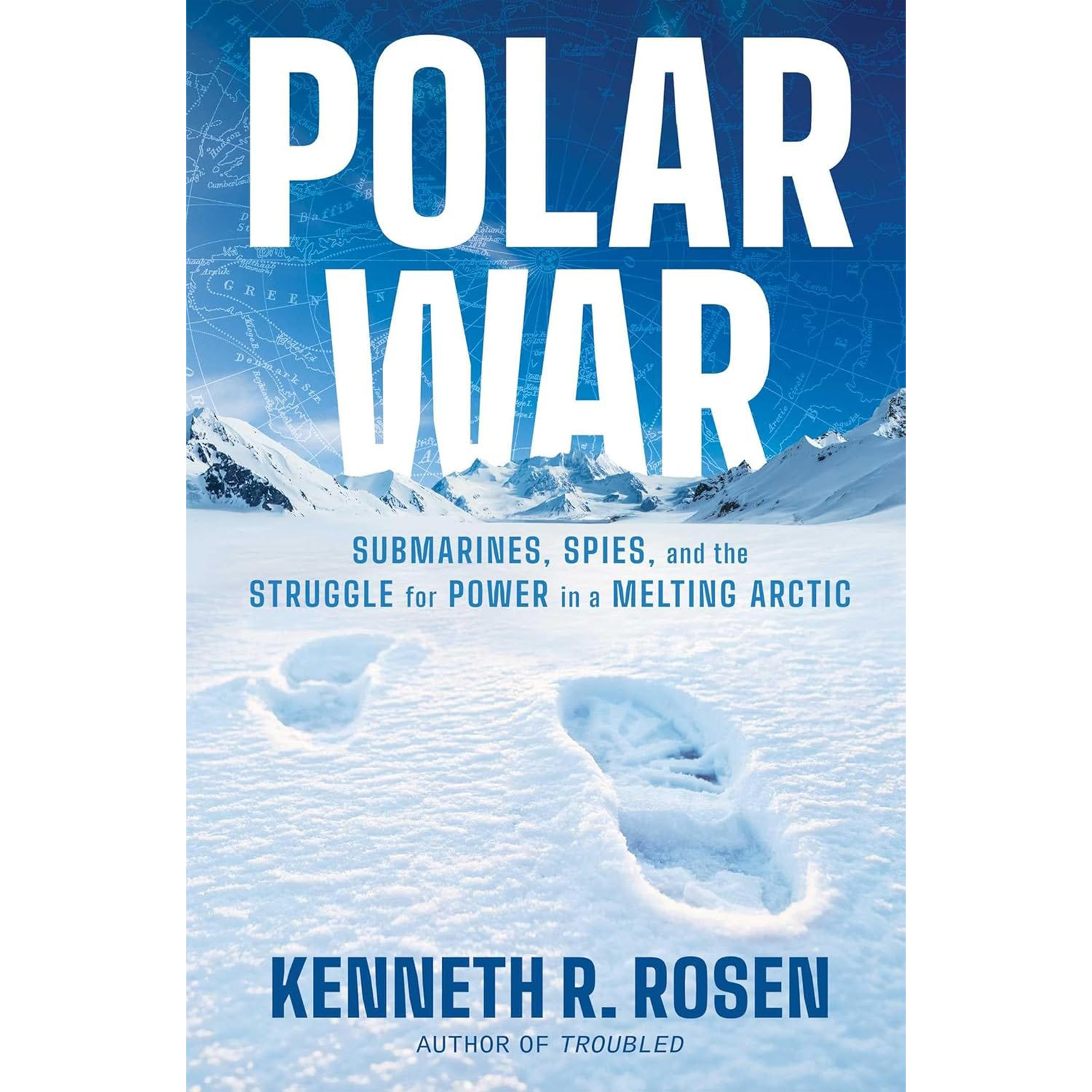
Welcome to A Book with Legs podcast. I'm Cole Smead, CEO and Portfolio Manager here at Smead Capital Management. At our firm, we are readers and we believe in the power of books to help shape informed investors. In this podcast, we speak to great authors about their writings the late, great Charlie Munger prescribed. Using multiple mental models and analysis, we analyze their work through the lens of business markets and people. In this episode, we will discuss one of the most unbearable places on Earth and what often seems to be a typical hotspot of aspiring global empires. Kenneth R. Rosen is joining us to talk about his recently published book, Polar Submarines, Spies and the Struggle for Power in a Melting Arctic. A little background about Mr. Rosen. He was a 2025 Ira A. Lippman Fellow at Columbia University. Ken also received the 2022 Kurt Schork Award for his reporting from Ukraine, Syria and Malta. He also published troubled in 2021 and bulletproof vest in 2020. Ken has written for the York Times and the Atlantic, among other publications. He spends his time between Italy and Massachusetts. And as you mentioned to me before, Ken, you're joining us today from Massachusetts, so thanks for joining me.
- [01:41]
Kenneth R. Rosen
Yeah, thanks for having me. Excited to have a nice long chat.
- [01:44]
Cole Smead
Yeah, this would be fun. So, I mean, you've traveled a lot of places. You've been a correspondent in some interesting places, not even counting the Arctic, you know, what brought you to tell this story? Was it a life event or what drew you into storytelling about this?
- [02:03]
Kenneth R. Rosen
Yeah, Polar came out of a magazine assignment from Politico magazine to go to the archipelago of Svalbard, which is a Norwegian territory in the Arctic Ocean, about 800-900-6-4 north of Norwegian mainland. And they were keen on me looking into some of the security issues that were present there and in the in the circumpolar north, primarily. Months before I'd gotten there, an undersea cable had been severed by conspicuous or inconspicuous means and that nearly severed the communications to the archipelago and islands therein for some time. So I wanted to understand what was happening there. But as I was reporting over two weeks there, I learned that this was more of a trend globally across the global Arctic, not relegated to just the European Arctic. So I was keen with Polar War to sort of understand what the dual impacts of climate change and geopolitics Were not just in the region, but how those two affected our lives here in the lower latitudes and what sort of coming storm we can anticipate from a great power competition in the high north. And with recent news out of Greenland and Denmark, I think it's surprising a lot of people. But I also note that a lot of people saw this coming or similar or some similar situation on the horizon.
- [03:29]
Cole Smead
Sure. So in the opening part of your book, you said that it once took courage to go to the Arctic. Now it only takes time and cash. Give our listeners a feel for the pendulum of when it was courage versus when it became. I'll call it more novelty or your need to do it for your job. What, you know, where did that change in the last, say 100, 150 years?
- [03:52]
Kenneth R. Rosen
I mean, air travel. Of course. You opened up the Arctic to, to anyone who has the ability to pay the exorbitant cost of some of these flights. In the case, I mean, you know, we're talking about Robert Peary back in the 1800s who had to, you know, festoon a wooden ship and brave through ice conditions that no one had braved through to get to nowhere essentially, like not anywhere that they knew that they were going. No place on the map could help them. And they were, they were literally plott the map as they were going. So now after the second World War, you see a lot of lasting infrastructure. I think specifically of Greenland. I mean, the main airports there were built by the American forces to support operations in Europe against the Nazis. And now, like I said at the beginning of the book, I don't have to worry about feeding my dogs or killing my partner in order to feed myself or you know, trying to trek across an unmapped territory. I can simply book a flight and get to a remote community. And yes, there are some hardships. I always try to remind people that Air Greenland is really expensive and it's expensive for a reason, but not because why you'd imagine. It's expensive because they need to factor in the cost of the passengers layovers due to weather and the, and the coverage of board and food and room during those layovers, which can be three, four, five days sometimes.
- [05:17]
Cole Smead
Sure. So you also explained early on the story of the Whiskey War. Can you just teach our listeners that story? Because it really kind of does a good job of kind of talking about, you know, why these things are important in some ways and comical in others, if that makes sense.
- [05:35]
Kenneth R. Rosen
Yeah, I really, when I came across the story of the, the Whiskey War, it was relayed to me by a pilot in Greenland who had served in the Royal Danish Air Force. I realized there was this comical continuation of issues in the Arctic where the only way to settle them was through sort of, you know, tongue in cheek, manners, you know, you can have a resolution and put it on hold for 10, 20 years, 30 years. In this case, it was closer to 50 years. But the. The whiskey war started. I'm going to. I'm going to forget the date. I don't have any. It's in front of me. But it started when a Canadian petroleum company sent a scientist out to go research a small little island called Hans island, and whether or not the ice collecting there in that strait between Canada and Greenland was an effective place to start drilling for oil out in the Arctic Ocean. So they were looking into sea ice conditions and running tests there. But the Danish government believed that to be an affront to their sovereignty over Greenland, and so sent representatives from Denmark to go place a flag and a bottle of aquavit on that rock to let the Canadians know that this was their rock. And so for the next 50 years, what happened was the Canadians would come. Usually military forces would come, replace the bottle of aquavit with Canadian whiskey and a Canadian maple leaf flag, and they would go back and forth, back and forth, deciding who had the right to that island. Near the end of the conflict, as it were, the. The two countries decided that the. The edges of that rock, the island, it's really more of a rock, were where the two countries ended. And that was sort of a no man's land. But in 2022, 2023, the Danish and Canadian governments signed an agreement to just split the rock Hans island in half and call that cooperation, call it for the day. That is how things have often gone in the Arctic, where one superpower or one nation tries to show force to another nation. But it's more or less in jest, and then it's always resolved in a peaceful manner. What we see now is a little bit more antagonistic, and it's not the derby notion in the Arctic, which is largely predicated on international cooperation, search and rescue operations and scientific research.
- [08:06]
Cole Smead
So the Arctic is not seen as a zone of peace. That's what Miguel Korbachev said, and you referenced that in your book. You know, what was it? What was that view at that time, right when he was in power of the Arctic? Just to understand, you know, where we've come from, you know, coming out of, say, you know, what we know as the Cold War era.
- [08:26]
Kenneth R. Rosen
Well, that was From Gorbachev's speech in Murmansk, which is the most populous city in the Arctic, in the Kola Peninsula of Russia. And he was saying that it was a zone of peace near the end of the Cold War, that it should be this place. I think he called it a sink of the global climate into which all strains. Right. And the view then was that this is how the world should operate there. No more nuclear testing up there, no more conflicts in the high North. You know, even dating back to World War II, there was the Atlantic defense wall that the Nazis had built in Northern Norway, and they wanted to ratchet down the tenor and the. And the. And the caustic approach to the region. Now that's changed, and some people no longer see it as a zone of peace, but more like a zone of war. A lot of researchers that I spoke to called it the new Cold War or trying to get behind the new ice curtain. So really harking back to that language we saw during the Cold War.
- [09:22]
Cole Smead
Sure. About the boundaries in the Arctic, you discussed this idea of, like, what is the boundaries in the Arctic and how are those decided as we think about the Arctic Circle?
- [09:34]
Kenneth R. Rosen
Well, it's really interesting. Some of the. Some of the issues that are rising now with the. With the melting of the. The annual sea ice in the Arctic Ocean, which scientists believe will. Will be virtually gone by the year 2030. There'll still be ice in the winter, but all gone in the summers is the opening of shipping lanes and trying to figure out just what that geography is. Right. But as we follow the Pole, the lines of different nations and their sovereign territories sort of like peak and connect at the North Pole. So to determine where along that pole people can claim territory is one question that has only now come up, because for the longest time, everyone in the international community agreed that your exclusive economic zone extended 200 miles off your. Off your shoreline, and that's it. And now with people moving up there and moving more vessels up there and operations up there, there, some people are rethinking that. The United nations conventions on the law of the sea is another thing that the US hasn't signed on to, in part because they want the opportunity to explore further beyond Alaska into the Arctic Ocean.
- [10:44]
Cole Smead
So on the heading of, like, climate change and the ice, you know, receding, you talk about cloudberries, and you kind of tell a story of. Of, you know, where cloudberries are collected and, you know, where they grow and what their uses and then where they're growing new. So, you know, teach us about cloudberries and why they're in the Arctic.
- [11:04]
Kenneth R. Rosen
Yeah, well, I'm, I'm forgetting what they call them in stateside, but we do have them in Alaska. The story you're referring to about the cloud bears was that they couldn't grow in Svalbard, the archipelago I mentioned earlier. And that was, you know, it was impossible for it to grow because the land was so frozen and there was rarely any rain. It was just snow and ice and then dark and light. But more recently, as the Arctic is warming four and a half times, sometimes five times faster than the rest of the planet, that area in Svalbard has seen more rain, it has seen more mudslides, it's seen more impacts from the changes in the global atmosphere to allow for these cloud barriers to now push through and come up.
- [11:52]
Cole Smead
And so you just take that as like, you know, that will just, you know, because I think the other thing I thought a lot about in your book is like these climate things, it's not just things on their face, it's like, okay, what does that cause? Because there's like the knock on effect. So as we talk about climate, you know, it's not everything on its face, there's something else. So, like, who's going to eat the cloudberries or what animals are affected by the cloudberries? Did you think about like that at all in terms of, as you're watching climate change? Because we. I think I'll address this later when it comes to talking about fish, for example.
- [12:22]
Kenneth R. Rosen
Yeah. I mean, the reason I chose the cloudberries was it was a, it was a good narrative tool to get the reader to go to Svalbard from mainland Norway.
- [12:32]
Cole Smead
Sure.
- [12:33]
Kenneth R. Rosen
But also because it shows that there's some precious changes occurring in the high north that do have these unknown outcomes. Right. Like you mentioned, if the cloud barriers come, what other, what other ecosystems and animals are going to be welcome in that planet too? In that region too? You know, it was only in 2014 that that whole Svalbard was locked in ice by early September, early October. And now that is the fjord there is virtually ice free around then. And that has had huge implications for seal life and all the other mammals that live out there.
- [13:18]
Cole Smead
Sure. Can you explain to us what the ice curtain is and maybe use that as a way of talking about Russia's presence in the Arctic.
- [13:27]
Kenneth R. Rosen
Yeah. The ice currently refers to the inability for Western countries to understand or see effectively what Russia intends to do and what they are doing in the high north in the Arctic, especially after Russia's invasion of Ukraine in 2022.
- [13:49]
Cole Smead
Sure.
- [13:49]
Kenneth R. Rosen
After which all western countries sort of severed communication with Russia, more or less, they got something of the boot from the Arctic Council, which is the, the, the Treaty organization of the High north, where all eight Arctic states come to discuss matters of non militarization. So now trying to peek behind that ice current is very difficult. And it's always been Russia who has the largest claim to the Arctic being, you know, 60% underlain by permafrost, having the largest Arctic claim coastline. And they see themselves as the primary dominant force in the Arctic. But without communicating with them, we don't know a much about what they're doing militarily, but also what their change in climate means for us, for western nations and for the planet elsewhere. I mean, permafrost, I guess the book, I try a lot in the book to say why do we care about permafrost thawing? Well, you and I should care because that's a lot of, lot of carbon that's trapped there, that's going to be released in the atmosphere and whether or not it's in Russia or Svalbard doesn't matter because eventually it's going to start warming the places that we live.
- [15:06]
Cole Smead
Sure. And I think you mentioned that, you know, to have, let's just use the, you know, the Arctic ice melt. You pointed out that like having that ice melt is no more problematic than having the ice in your glass, you know, melt and fill up the glass, if you will, versus I think you talked about like the ice on Greenland that sits on land is very different because that's not in the drink.
- [15:29]
Kenneth R. Rosen
Well, yeah, so like the green Greenland ice sheet is like nearly two miles thick in some parts. Right. But that's more of a glacier. And so as the glacier melts and brings more saltwater into the Atlantic, that'll cause problems. But the ice sheet up top is really just frozen water that continues to circulate throughout the year and then dissipates a little bit and then grows as the winter comes. So that isn't causing much of an issue as far as the climate goes. It does, however, impact the way the sun radiates heat or the Earth radiates the sun's heat back into, back into space, back outside of our atmosphere. So the less ice coverage we have there too also impacts, you know, fauna and mammals and most certainly the indigenous communities who are living along the coastlines of these Arctic regions, who relied on that ice to protect them from typhoons and other weather events that were non existent 50, 100 years ago.
- [16:28]
Cole Smead
Sure, in 2025, the idea of American exceptionalism probably peaked. In my opinion, Russia in comparison likes this idea of Arctic exceptionalism. If you were going to define Russia's view of Arctic exceptionalism, what is that?
- [16:48]
Kenneth R. Rosen
It's that it's part of their blood. You know, it's the Arctic exceptionalism for a Russian is that the Arctic is ours. I mean, you know, thinking back to the Gulag or just Stalin's red Arctic propaganda, this has been something that defines the Russian culture and is a part of their character, you know, their strength, that they can survive in the cold, that Napoleon was defeated because of the cold. And you know, for America. You noted earlier in the introduction that I split my time between Italy and the U.S. i think everyone in America should be mandated to. If I were president, one of my executive orders would be everyone needs to spend two years abroad in a country with a language that they do not speak because man, will that humble you. And seeing America from that vantage point over five years living there full time and roving across Europe is disheartening. So yeah, I mean, I agree with you that maybe 2025, maybe even earlier, maybe 2020, American exception are those and went out the door and we are no longer that stalwart global power. We are a global power, no doubt. I mean, our GDP is still what it is, but we don't possess the same sway that we once did. And that is, um, you know, that's unfortunate.
- [18:08]
Cole Smead
Well, to your point, I mean, you know, when I, when I think of like to your point on Arctic exceptionalism, you know, no one's testing that on the Moscow Stock Exchange, for example, but in American terms, to your point about American exceptionalism, it's like our stock market that is a form of American exceptionalism, some would argue, or the fact that our dollars use. So it's also interesting as I was reading through your book, it's like, you know, as you think about this region, like the things that drive some people's day to day in business or in the Western world, I mean those are not the interest day. Today you talk about Svalbard and the nations that agree to cooperate around it. And this is a place, if I remember correctly, they go, I think it's passport free.
- [18:54]
Kenneth R. Rosen
Yeah, visa free.
- [18:56]
Cole Smead
Yeah, visa free. So explain like if you're like, if I'm from the US or I'm from the EU when I show up there, what is that like? I mean, it's, you know, to your point, it's visa free, but at the same time it's it's kind of no man's land, isn't it?
- [19:09]
Kenneth R. Rosen
Well, the Norwegians have been asserting more and more control over Svalbard in the last two years while I was reporting the book, and it's no longer really no man's land. There's a lot of contention between the people that have gone there from the Philippines, from the US from other Scandinavian nations to work there and live there and make a life for themselves without, you know, needing. Needing citizenship or needing any number of other documents to say that you belong there. You were able to just go and belong. And that I think I outline in the book. I try to outline. You'll have to tell me if I'm successful. I try to outline that as one of those things within local politics in the Arctic that is showing this degradation of, of peace and cooperation and what once was the Arctic versus what it seems to be becoming.
- [20:01]
Cole Smead
Sure. Hi, I'm Cole Smead, CEO and Portfolio Manager here at Smead Capital Management and host of this podcast. If you enjoy this podcast, I'd like to invite you to check out smeedcap.com at our firm, we are stock market investors. We advise investors who play the long game with a discipline that has proven successful over long periods of time. Learn more about our funds@smeedcap.com past performance is not indicative of future results. Investing involves risks, including loss of principal. Please refer to the prospectus for important information about the investment company, including objectives, risks, charges and expenses. Read and consider it carefully before investing. Smead funds distributed by Smead Funds Distributors llc. Not affiliated. You mentioned the politics. It's like, you know, there's a large foreign population, you know, I'll call it, for lack of a better term, when I was reading your story, it's like a hodgepodge of people who've ended up there for various reasons, and yet very few of them have any political rights other than they're just present in the city. Is that, is that an easy way of thinking about it?
- [21:08]
Kenneth R. Rosen
Right. So initially it was. Everyone was on an even, even keel, right? You can have a driver's license if you had one from a different country. You could vote in local elections, you could purchase property, you could work there without a work permit, so on and so forth. And then, yeah, over the last two years now, if you're not Norwegian or of Norwegian descent, Norwegian citizenship, then you're, you're more or less unwelcome. And I tell the story of, of a few people who live out there who have seen and felt that change occur and what that meant for their experience of that place to which they went, because they wanted, you know, to get out, to go, to get away from the rest of the world, to get away from the workaday nine to five regular life and live in this cool, beautiful, wonderful, exciting, interesting, unique place, only to then find out that eventually geopolitics is playing a bigger role in their own life there too. It's sort of sad.
- [22:08]
Cole Smead
You also talk about the threats in Svalbard, I think you mentioned earlier. Quickly, like communications cables being cut. You know, I mean, this, I know, I know this is going to sound prima facie or just, you know, really obtuse to say, but who cuts communication cables? And then secondly, how about illegal phishing and other risks like that that I think you mentioned in the book?
- [22:29]
Kenneth R. Rosen
Yeah, it's actually, it's actually the illegal phishing sensors on the seabed floor that were able to catch some of this happening, aside from, you know, the actual cutting of a cable. Who would cut cables? Well, let me ask you, who would benefit from severing communications to an island that they have a small community on and maybe potentially want to expand on?
- [22:52]
Cole Smead
It's right out of a James Bond book.
- [22:55]
Kenneth R. Rosen
Yeah, I mean, it's, it's kind of, you know, but it's commonplace in the region because as Russia becomes more brazen and China becomes more brazen, there are testing vulnerabilities and, you know, can they see what boat was there when the line was cut? Do we know who blew up the, the, the, the pipeline in the Baltic Sea? Do they care that a drone from Russia flew into Finland or that a rocket landed in Poland? Like, what are they going to respond to? You know, before the whole Greenland thing kicked off, I kept asking all these, all the experts that I interviewed, and There was some 400 people that I spoke to over three years. I kept asking, why doesn't Russia just take over Svalbard and see, see what NATO does? Because it's so small, there's like 2500 people there and test them that way, because I don't think anyone wants to watch World War III over, you know, a place where more polar bear. There are more polar bears and people. But yeah, now we got Greenland.
- [23:56]
Cole Smead
Yeah. So you talk about, you know, you know, in the winter months when there obviously is no sun. You talk about this idea of hallucinations. Right. Because usually the way most of us in the world track time, just like the ancients did, was through the sun. We have our watches, obviously, but you can tell where the sun is in the sky. And that doesn't happen there. So what are you talking about when you say hallucinations and what goes through your mind as you wrote about that?
- [24:27]
Kenneth R. Rosen
Well, I'll use the more juvenile example first, which is when I was in Living in Juneau as a, as a cub reporter on my first real reporting job, and, you know, a bunch of people invited me out for drinks one night and I kept saying, oh, you know, it was in July, junior July, oh, I'll go home when it gets darker. And so I kept having a beer and then I had another beer. It wasn't getting darker. And then I realized it was around 12:30 at night, in the morning, and, and I should have gotten home a lot earlier, but my body hadn't adjusted to the notion that, you know, time changes differently when you're relying on the light to help guide you. In Svalbard, the hallucinations that you mentioned in the book is, you know, you. The sun sits on the horizon in such a way that it almost always looks like afternoon. And you know, traveling to all these places over, over those three years, nonstop jet lag, but also arriving to snow and ice all the time, it was, it was a little bit jarring to try to get your, your, your circadia rhythm in, in line with where you were. You know, if you don't have an alarm, you still have an alarm clock that wakes you up at 6am Say, but it's really, really dark out or it's really, really. You're still wondering. Your body's like, well, I don't know, maybe. Maybe it's. Maybe you missed the alarm or maybe that's not your real alarm or. So I was always finding myself, like, did I, I was already here. Did I meet them last time? Was it this time? I know I saw her then, but as a small community, maybe I saw her over there. And those were, those were not as troublesome as maybe I, I highlighted in the book, but they were something that struck me as unique to the region.
- [26:08]
Cole Smead
Sure. And I think you mentioned such a small place that, like, there's two cafes. So, like, did I meet them at that same cafe last time? And so even in your mind, it's hard to differentiate the times you met with them because it's the same places. And to your point, hallucination is more kind of disorienting. To your point, the other thing you touch on, what is the 1:1 myth, and then what happens when you do go in arctic waters with your person?
- [26:38]
Kenneth R. Rosen
Right. The 1101 myth is a survival tactic where you have one minute to control your breathing once you've fallen into frigid waters. 10 minutes to find something to hold on to, and then one hour to be rescued or you'll die. And I remember I took a Knowles First Wilderness first responder course in Reykjavik and was told that if I ever fell into the water without its survival suit on, of course, that I should make sure to have facial hair so that freeze myself to an ice floe or like, you know, or end up like Leonardo DiCaprio in a Titanic. Right.
- [27:17]
Cole Smead
Yep.
- [27:18]
Kenneth R. Rosen
You know, and since then, I've. I've taken more and more classes, and I. I do know that if you. If you can't control your breathing right away, you do face a quick death. But your heart rate also drops when you're plunged into very cold water in order to protect you already. So there's already a mechanism within us that, that, that allows us to survive longer if we're able to recognize it and control it. But the survival suits are great, and I was able to. I've worn one here domestically, and I've worn one in the Arctic Ocean. And, you know, those things will keep you afloat and keep you alive for quite a while if you, if you, if you're. If you suck all the air out and you make sure it's watertight, which.
- [28:00]
Cole Smead
Is obviously what they use. Like, I think of, you know, I think of like all the fishing shows on. On Discovery Channel. You know, I mean, that's. If you have to go overboard, that's. That's what you want to have on.
- [28:12]
Kenneth R. Rosen
Yeah. And you better hope the Coast Guard's ready to respond right away.
- [28:15]
Cole Smead
Yeah. So you then talk about the Arctic Circle assembly. What, who's in it and what's its purpose, and does it really matter, I guess, is my question.
- [28:25]
Kenneth R. Rosen
You know, I wrote that chapter with some trepidation.
- [28:30]
Cole Smead
Okay.
- [28:32]
Kenneth R. Rosen
Because I have a disdain for all things like corporate and political.
- [28:39]
Cole Smead
Okay.
- [28:39]
Kenneth R. Rosen
In some ways. And I find that talking to talk and gather to gather is never really productive.
- [28:47]
Cole Smead
Yeah. It's like. It's like management meetings for the sake of making management important.
- [28:52]
Kenneth R. Rosen
Yeah. And I use the example of one of, you know, a lot of the. Some of the early overseas criticism of the book is to focus on the fact that I. I didn't spend enough time with indigenous communities. And my argument as well, you know, it's a. It's a book about defense and the military. And I note that I tried to include everything, but I couldn't. But at the Arctic Circle assembly, where There were panels about indigenous issues and the struggles facing the indigenous of the Inuit in Greenland, of the Inupiaq in Alaska, of the Sami in Northern Europe, of the Nenets in Russia. They weren't really well attended. But I'll tell you which ones were really well attended. The ones about how we needed to fend off Russia and how we needed to fend off China in the Arctic. So I felt like a lot of lip service was being paid and, and maybe it's a little bit of my own discomfort, like being around a group of people who, you know, chalk themselves up to being experts on a subject, but then at the end of the day only serve their own self interest or self promotion rather than affecting change in those regions. About being in those regions and having those people speak for themselves.
- [30:05]
Cole Smead
Sure. Why? I mean, just to give you some credit since obviously you're being criticized for the indigenous piece, I remember you mentioned like Inuit, you know, people's being moved out of places, including like very historic and, you know, known Inuit people. From your book, you also talk about how you, you kind of criticize in some respects Canada, where you say, obviously they're really more worried about the people that are in southern Canada because that's where most of their people are relative to these populations. So like, I remember that just off the top of my head from your book. So to your point, it's not like you didn't put ideas out there that might not have been the focal part. But in fairness to you, you did mention things that could be problematic. Maybe this group, I think you talk about, if I remember correctly, you talk about them debating the levels of ice breaking ships. In other words, there's kind of like, how are we going to regulate the ice breaking ships? And part of me thought, well, you regulate them by figuring out which one goes to the ice. Is that just crazy?
- [31:03]
Kenneth R. Rosen
Well, I mean, I used that example. They weren't debating that that year or any recent year, this year, last year.
- [31:10]
Cole Smead
Okay.
- [31:11]
Kenneth R. Rosen
You know, these were codes written to determine the ice worthiness of a ship. Right. But sure, I, I paint a picture, as you note, of, of like six or seven or eight different codes that determine different levels of ice worthiness in, in using different metrics to determine that. And that, that disassociation or that crossover or that lack of consensus is probably better to say really defined what I felt was happening at the, at the Arctic Circus, at the Arctic Circle assembly, that, you know, you have all these people who are serious about the region, who really want to help the region, who are focused on ostensibly bettering the region, but then can't come to decide what. What is that? How do you define single year sea ice or first year sea ice or second year sea ice? And you can't decide what ship is. Is rated for that type of ice, but not this type of ice. And then you have transatlantic shipments and they're all using different codes. But we'll focus on whether or not Russia sending spies into Northern Norway instead and ignore the indigenous issues of losing their villages and not paying reparations for colonizing them in the first place.
- [32:25]
Cole Smead
Sure. When I think you mentioned your point on Arctic Circus, which is what you referred to it in that chapter at one point. Your picture of the Arctic Circus, I think finished up with the UAE giving the opening talk, who obviously is nowhere near the Arctic and whose main product is obviously like producing carbon for the world to consume. And it's kind of funny. So in 91, there were quite a few NATO members that get together, including the Soviet Union, that joined in this to deal with search and rescue operations. What was the idea for something like that then? Was that just to your point? It's just survival. We need to help each other because we're not everywhere. What is that now?
- [33:08]
Kenneth R. Rosen
Are you talking about the Arctic Circle assembly or the Arctic Council or.
- [33:13]
Cole Smead
I think you talked about the group coming together to just do search and rescue. Right. So where it's like, you know, they partner together. And I'm trying to remember what part it was right after the Arctic Circle, to your point, or the Arctic assembly, but like where they were just partnering just to do search and rescue. Because obviously, you know, it could be an American team that needs help. It might not be a Norwegian team, it might be a Danish team, it could be a Russian. And just trying to, you know, to your point, be able to survive the Arctic when things go awry.
- [33:41]
Kenneth R. Rosen
I think a long standing truth about the Arctic is that in that region you rely on your neighbors and your neighbors rely on you.
- [33:51]
Cole Smead
Sure.
- [33:52]
Kenneth R. Rosen
And what nations saw after the collapse of the Soviet Union was this need for continuing that legacy across the Arctic and to cooperate and not make it a region of militarization and of war. And that really changed with the first Trump administration when Secretary of State Mike Pompeo started to talk about militarization in these forums, in these forums that were reserved for Coast Guard cooperation or search and rescue cooperation, or shared fisheries agreements, and introducing that to a place that that wasn't meant to be. And so I think there's been a slow decline ever since. Then of, of that cooperation. But that truth still remains. I mean, when I was in Fairbanks, if I pulled over the side of the road to check my text messages, within a minute someone would come over, pull over and ask me if I needed help, if I was all right, if I needed, you know, a spare tire, if I needed to lift somewhere. And that happened all over the Arctic. I mean, I guess that's also, you know, I terry to say that, tell that story because that happens also in small town America too. But in the Arctic, it's a, it's a fact of life and people are just aware that you can certainly die even in a metropolitan area like Anchorage.
- [35:10]
Cole Smead
Yeah. And to your point, I mean, I'll use Alaska as a picture. I'm from Seattle originally, and I remember one time I was going to see some investors up there in Alaska and we did the milk run, which we went from. We were going from Anchorage down to Juneau. And so we stopped in Yakutat and Cordova. And the gentleman I end up sitting next to on the plane is like the Director of Public Supervision in Alaska, which oversees the police officers and the state troopers and things like that. And I remember it hitting me at that moment like, wow, Alaska's just a giant small town. That's all the whole state is. And to your point, it is a picture of really small town. Not usa, but small town in the world. You mentioned this, and I thought a lot about this after reading your book. Is Russia's real goal in many places, not just the Arctic, but I think the Arctic does a good job of showing this is their real goal. Just discombobulation, I think.
- [36:12]
Kenneth R. Rosen
Discombobulation and destabilization. You know, I've reported from Moldova and Transnistria, on the border with Ukraine and these other Russian territories up in, up in Svalbard, Spitsbergen and Barentsburg. And it seems to me that if they can, if the way they want to win is by letting us tear each other apart, by turning us against our allies and our friends. We see that domestically, but rather than getting into domestic politics, we see it now between Denmark and Greenland. Right. Long standing allies, long standing defense cooperation agreements that are now all of a sudden near the ax. So I think, you know, in some respects that's the plan that Russia is hoping that will just. They'll outlast us as a, as a Western force and a Western collective.
- [37:07]
Cole Smead
Sure. You say that the US has a long way to go for a conflict that began years ago. How early, I guess, would you say you Talk a lot about the changes that happened post World War II. You also talk about Seward's, what used to be known as Seward's Folly, what we now call Alaska. Maybe tell that story of how that transaction came about with Russia during Lincoln and what were the thoughts at the time versus what we know to be true for Alaska today?
- [37:40]
Kenneth R. Rosen
Yeah, Secretary of State Seward wanted to buy what many people in the Congress thought was an icebox. It was once Russia, America, this spit of land that we now know as Alaska. And the Russians weren't making enough money for trading and fishing and operating out there with their trading companies. They were also facing domestic conflicts that were draining the state coffers and they needed a way out. How Seward, what about convincing Congress to buy Alaska is one story. I think the story today is that Russia really regrets have sold that to America. And this was in a time when colonial powers were reigning in their reigns across the globe. The UK was giving up Canada, trying to downsize and consolidate their empires. And the US was thinking, well, if we can avoid conflicts with Russia, with the uk, then maybe we can just buy some of these territories that we want. And we, and we do see later in 1916, we purchase, or we purchase the Virgin Islands from Denmark and things like this. I think one interesting note that I don't think made it into the book, was that so disturbed by the purchase or the sale of Alaska was Russia that even during the Cold War, in order to form a more perfect union between the Soviet union and the U.S. there were discussions about building a tunnel from, from eastern Russia to Alaska and then the underwater tunnel in order to reconnect that land and God knows where that would leave us today were that to have come to fruition.
- [39:30]
Cole Smead
We hope you're enjoying the podcast. You know, we work hard putting together this show, but we work even harder for our investors at SMEAD Capital Management. At smead, we believe in disciplined investing, which is why the SMEAD funds have a proven track record of long term outperformance. If you're an investor who plays the long game and want to invest in wonderful companies to build wealth, we invite you to visit smeedcap.com Past performance is not an indicative of future results. Investing involves risks, including loss of principal. Please refer to the prospectus for important information about the investment company, including objectives, risks, charges and expenses. Read and consider it carefully before investing. SMEAD funds distributed by Smead Funds Distributors llc. Not affiliated. Let's see. So then you also talk about, I mean, more than half the people in The Arctic are Russian. The interesting part to that is even Russia has trouble keeping people there.
- [40:27]
Kenneth R. Rosen
Yeah, I mean I was unfortunately unable to get to Russia proper for a number of reasons, logistical but also personal security wise. And I would have loved to gone and I still extend an offer to the Russian Federation if they'd like to invite me out on an official capacity. But there's just simply no work and infrastructure in the Russian Arctic for the layperson to sustain themselves. I mean, there are the Nanette populations that are a roving indigenous population that can exist outside of government frameworks. But most of the infrastructure in the Russian Arctic is predicated on energy, on the energy sector and the military defense sector. Who gets paid are the people who work for the military or for the construction of military bases and liquid natural gas facilities. There's no real opportunities outside that, to say nothing of just like Greenland with only 100 miles of road. There's. There's just no way to connect it to the rest of the country. And when you try to have a family or have opportunities, the only place to really do that is in the city. So you've seen more and more people leaving the north and this is sort of a trend elsewhere too, in Norway as well and in Alaska as well. People coming south to find work and find more comfort, more amenities.
- [41:55]
Cole Smead
How do you look at Canada's interest and role in the Arctic in comparison? I mean, the one thing I take away from your book is if I need to do ice breaking, I'm going to call the Canadians because that's what they're really good at.
- [42:07]
Kenneth R. Rosen
I think a lot of countries are really good at it. It was certainly a lot, certainly all are better than America. You know, President Trump had a lot to say about wanting to turn Canada into another state, an American state. And that was really unfortunate in part because it negates the reality that they control this large swath of land to our north. And we don't need to make enemies with people who are controlling the defenses of our over horizon defense apparatus. But what we should be doing is working more closely with them. So the Canadians interest is really the global interest of the Arctic is the best of the homeland. But also working side by side with partners, they've long tried to establish a program to, to what is it? Revamp or to modernize, remodel, to modernize the equipment that are up, that is up there. That was once the DEW line that covered the northern part of North America with an early warning system against intercontinental ballistic missiles. But that project is really slow And I think going back to my comments about wanting to find a way to work together as perhaps, you know, left leaning as that sounds, it's, it's really important because in order to protect our interests, we need to work with the interests of other people who have ours in mind as well.
- [43:38]
Cole Smead
How, how do Greenlanders look at foreign investment versus how do they look at the eu? Because obviously they're kind of Danish, but kind of not too.
- [43:48]
Kenneth R. Rosen
Yeah, well, as they move towards self determination and full independence from Denmark and to give your listeners a little bit of a background, in 2008 there was a Home Rule act that returned judicial and educational powers to, and civil powers to the Greenlanders for them to administer themselves. And what remained with Denmark was defense and foreign policy. So it opened the door to allow Greenlanders to make some trade decisions on their own and to open up commerce on their own, whether it be through fisheries or tourism, for instance. I mean, they've sort of given up on mining and critical mineral excess extraction because it's been such a disaster. The green laners that I spoke to are mostly in consensus. They want to be able to open up their doors to foreign investment and they're open to Russian investment, they're open to Chinese investment. They're considering returning to the EU market to be able to benefit their people and to become self sustaining apart from Denmark which pays them about half a trillion American dollars a year as a, as a block grant to sustain the economy, about $10,000 per per Greenlander. So they're open to it. But when there has been investment that the Kingdom of Denmark has stepped in in part to prevent what they saw as foreign incursions, whether it be China looking to invest in building out the airport in nuke or other projects in mining. Though there is an American mine in Greenland that is active right now, you know, so they're open to it. They want it. It's not for sale, but they want to engage with the global community and become this place of prosperity for them and for their Inuit culture and heritage. It's partially very difficult right now for them to do so given that the only direct flights to Greenland are through Copenhagen.
- [45:43]
Cole Smead
Sure, I loved this part of the book that I'll ask a question on here in a second. You know, as a 42 year old male that's grown up in the United States, you know, Team America, World Police was a very funny movie. And I think there's this personification especially you know, nowadays think of, you know, Venezuela here recently is like, you know, we're the we can just kind of do whatever we want. American exceptionalism. Back to our prior discussion. But then you talk about, you know, okay, let's say we're gonna go to the Arctic and have a presence. And so you tell the story of Marines showing up to train, and I think they're being trained by the Swedes, if I remember correctly from your story at the time, for no reason.
- [46:23]
Kenneth R. Rosen
Swedish. Swedish. Swedish. And it was Special operations forces out of Germany.
- [46:27]
Cole Smead
Correct. And so they're trying to teach them how to be ready for this climate, this situation, how they need to move, what they need to wear. Can you kind of teach us a little bit of that story? Because, I mean, there's just real implications for being in that cold of weather.
- [46:41]
Kenneth R. Rosen
Yeah, I mean, it's. The story that I'll share is one of extreme arrogance and I think, you know, wholly American. There's one. This was relayed to me secondhand and confirmed through a third party was that the Americans were training with the Swedish armed forces up above the Arctic Circle in a base outside of Karuna. And we decided to go on a ski patrol one day and arrogantly thought that, well, it's cold, but we'll be exercising and the sun's out, so we could. We'll take off our shirts and we'll go shirtless through the snow. What harm can that do? So they trek through the snow and ice on their skis and come back only to find themselves sunburned. You. And I wouldn't consider going out without a shirt on in the cold. But of course, we also wouldn't consider. To their. To their. In their defense, we wouldn't consider getting a sunburn in the cold, but the sun was there, and it burned him. I think an even more illustrative story. And I harp on the Americans a lot. I mean, I'm an American myself. Yeah, Harp on them a lot. In part because I didn't want to do. I didn't want to show one story and say. And have the peanut gallery say, oh, well, that's an aberration. That's a one off that. You know, I try to show a series of miscalculations on the part of American forces. And. And the one that I found most interesting was when the Navy SEALs were training out out in Alaska off of the sewer peninsula, they knew that there was a typhoon coming. They nevertheless launched helicopters to go airdrop some of the troops onto St. Lawrence Island. The typhoon hit, and they were woefully underprepared. They had to. They set up tents that were ripped away within seconds and had to go shack up with locals, which of course special operations forces do all the time. But to think that they were going to be able to do it despite the warnings to the contrary, is really sort of discouraging. And I'm hoping that if people in Washington, if our leaders in Washington read the book, they'll see that there's some real considerations and calculations that aren't being made when operating in the far north, and that we need to be able to do that without the arrogance of the American exceptionalism, like you noted, no longer exists.
- [49:02]
Cole Smead
Yeah. What I mean, to your point, if you're Pete Hegseth and you're reading this book, you're like, we are prepared in a lot of things and we continue to want to be, but this is a place that we haven't necessarily been prepared or trained or well thought in our processes, if you will, to address this climate. Because to your point, the lower 48 doesn't touch this and neither does Hawaii. So this is a. It's a very unique space.
- [49:25]
Kenneth R. Rosen
Here's an argument that Pete Hegseth might make is that we train in the Arctic all the time. We have exercises there all the time. That's great. We only have one full time army company, the 11th Airborne, out in Alaska. Full time. That's it. That's all we've got. And even they have a quick turnover, which I mention in the book, as far as staying there and keeping the knowledge that that exists from having lived and survived in the Arctic for an extended period of time. But we don't have the force capabilities and the force posturing of having troops dedicated to the cold weather. Of course, the contrary argument would be, well, we have more of a threat in the Pacific and that's where we're focusing our energies now. Fair enough. But the Pacific also connects to Alaska.
- [50:10]
Cole Smead
Yeah, I want to put up a slide here because after you talked about this in the book. So you talk about the Healy, right, the U.S. coast Guard ship which I.
- [50:20]
Kenneth R. Rosen
Got here on the screen, what do you think? Does the picture bear out the way.
- [50:23]
Cole Smead
I wrote it, by the way? Perfectly. You said it's all 90 degree angles. And I looked at this, it's like, he's right. It's ugly as heck. I mean, just. It's an ugly ship. It carries purpose and so like, just utilitarian.
- [50:41]
Kenneth R. Rosen
It's utilitarian.
- [50:43]
Cole Smead
It's very utilitarian. Yeah.
- [50:45]
Kenneth R. Rosen
Yeah.
- [50:45]
Cole Smead
It would look like my college dorm room in a way.
- [50:48]
Kenneth R. Rosen
You don't have a picture of the K.V. svalbard to pull up to give, I don't know.
- [50:52]
Cole Smead
But the Svalbard, you talk a lot about those two ships in a particular chapter. So can you teach our listeners looking at this boat, what's the purpose of it? What does it do? How long has it been in service and do we have a lot of these?
- [51:05]
Kenneth R. Rosen
So the heli itself has been in service for more than 30 years. We had up until very recently three full, three full time icebreakers that were capable of going into the far north and Antarctica, but one was primarily dedicated to the Arctic and that was the Healey. There are two other boats, one was dedicated to Antarctica and the third was more or less used as a, as a, as a cannibalized for parts for the healy which often broke down and continues to break down. It was heading out on a mission one or two years ago and there was an engine fire just as it was leaving your hometown port of Seattle and return and cancel the mission. There was another time when it had to cancel a mission and the Norwegians had to come all the way across the Northwest Passage to retrieve scientific buoys in order to save the data that was being collected over two years within those, those buoys. So the ship is primarily a research vessel. That's how it was built. That's what it's for. It doesn't have defensive capabilities per se. It's not a military vessel and it wasn't designed that way. But it is wholly woefully outdated. It is incapable of carrying out missions continuously like many of the, our, our, our other nations icebreakers can. But we did. The Americans did purchase another icebreaker from Finland I believe in December of last year and added that to the fleet and are hoping to, to bolster the, the fleet with more and more icebreakers and security cutters that are, that are ice capable, ice rated to you know, some spec or another depending on which one you're choosing. But yeah, I mean the Healey, it's a big ship and it was the pride and joy and I just when I looked at it as a, after spending two weeks aboard the KB Svalbard, I felt a little, a little ashamed to be American. You know, again, it's a big ship that's much bigger, bigger than a K.B. svalbard, but man, was it not taken care of. And one last, one last example of how unprepared the crew was as compared to the Svalbard. I mean when they launched their small boat to come pick up people that were coming, all the seamen that were Coming off of the Norwegian vessel, they had a tough time dislodging the hook that was connecting it to the pulley that would lower it into the water because it had frozen. It was an icebreaker, and they were having problems with frozen mechanisms. Did the Svalbard have that problem? No, because the ship was designed differently, and they were also prepared for things that happened in the Arctic and had slurries and other chemicals mixed up in case that were to happen. So it was just really disheartening. And again, as an American, I don't mean to beat up on American troops or American forces or American posture, but I just thought we could do better.
- [53:51]
Cole Smead
Yeah. I'm trying to remind myself, you know, I think you even mentioned that the interior of the ship on the Svalbard was, like, so much more enjoyable and livable versus, you know, obviously, the Healey. I want to jump forward. We don't spend a lot of time on this. But you talk about being in Sor Varanger, which is in Norway, Northern Norway. You talk about this friend, Zoran. Is everyone suspect in some places like that? Are they. Could they all potentially be spies or people that are interloping for, you know, counterintelligence reasons?
- [54:29]
Kenneth R. Rosen
Was it a friend? It was a, you know, a drinking buddy for, for a moment, you know, sidled up to me while I was at the bar one night. I don't think everyone's suspect in the north, but certainly in the last few years, there have been defectors from Russia who've been coming across the Norwegian border with Russia, and there's been question about whether or not those were actually, you know, KGB officials who are trying to. Excuse me. Or FSB officials who are trying to get into the, into, into the Western states, into Europe more broadly. I think if you look for a spy, you'll find one. I think oftentimes, whenever I travel around the world to conflict zones, I'm considered a spy. And, and by, by good measure. I mean, I, I, I ask people a lot of questions. I try to find out things that are happening. The only difference between me and a spy is I, I publish all my work and let everyone know about it.
- [55:21]
Cole Smead
Yeah, I love this. So I've been fishing in places like Juneau before or in the Northwest. I mean, you talk about, like, back to the ecological effects. You talk about how Russia brought pink salmon to places that didn't have pink salmon. And I think of in the Northwest, you fish, you can fish, and you catch things like chum or pink salmon or kings or silvers, as they call them. Why are pink salmon so damaging to the ecology of Atlantic salmon?
- [55:52]
Kenneth R. Rosen
They can't spawn the way they could in their. In their home waters. And that has been a fight between the pink salmon and the native population of salmon in northern Norway. I think it was an interesting case study in how the lack of cooperation with Russia meant that the only way that these scientists in this chapter that you're referencing could learn about the impacts of the broader. Of the broader ecology was to, like, take these water samples on the border with Russia and try to figure out what was going on upstream, rather than being able to communicate this sort of devastating effects that those fish were having on the population there. The scientists that I was traveling with during that reporting trip had noted that there once were commercials on Norwegian television about how clean the Norwegian water was, how drinkable it was, but now that was just no longer the case. Another example of how the changing north is affecting more than just. More than just security.
- [56:48]
Cole Smead
Sure. The other story that caught me was that you talk about the river at home, Foss. You know, it sits. This river sits right between Norway and Russia. And I think it's got. I think you said it's got kind of like channel markers or buoys that, you know, delineate which side of the border on. And these have, like, their own Instagram accounts.
- [57:09]
Kenneth R. Rosen
Yeah, yeah, they have these big border posts that are colored to delineate the international borders between Russia and Norway. And Finland has them as well. And, yeah, they became sort of comical after the war. I mean, there used to be a way to transit these countries and commerce could be shared across the border. I mean, Finland, I think, was much more impacted by the closure of their border with Russia than perhaps Norway, given that Finland's is longer. But there is a continual jest that permeates life in the Arctic. Right. I mean, sometimes in the darkness, the only way to find light is through joy and jovility and. And. And making light of things.
- [57:53]
Cole Smead
When. When Ukraine was invaded by Russia, how did that affect migrant flow to Norway in the north?
- [57:59]
Kenneth R. Rosen
I think this goes back to saying that Russia is testing the vulnerabilities of. Of these nation states that border them and also that oppose them. After Russia launched its invasion of Ukraine, migrants were being sent by Russia to these border crossings with Finland and Norway. Primarily in the book I focus on Norway, but sending thousands of these individuals over in the hopes of striking up what I imagine is a conversation over immigration, illegal immigration, and alienating a new population of arrivals to the country, thus sparking more internal debate. About something that perhaps doesn't need to be discussed while one sovereign nation is invading another sovereign nation a couple of thousand miles away.
- [58:52]
Cole Smead
Sure. I think the other thing you point out is if someone comes up and talks to you about that, are they saying that because they have free speech, or are they saying that just because someone told them to say it?
- [59:02]
Kenneth R. Rosen
Or what are you referencing the fact.
- [59:04]
Cole Smead
That the idea that Russians don't really have free speech and so if they're telling you something, someone probably told them to say that, right?
- [59:11]
Kenneth R. Rosen
Yeah. I mean, I think that goes back to the spy question too. Right. Like there's, there's this real wartime feeling, at least in the Nordic Arctic, States of question everything. Trust no one you know. Believing that you know your enemy might not be beneficial in all cases, but it's better to be cautious than wholly welcoming.
- [59:33]
Cole Smead
Hey, I want to give a big shout out to everyone who's been working so hard on this show. You know, we recently hit the top 10 in investing podcasts on Apple Podcasts and even number one in the business category in several countries. As you may know, this show is brought to you by Smead Capital Management. Smead Capital Management understands how frustrating and illogical the stock market can be. If you are searching for funds with a proven track record, give the SMEAD funds a look. Or better yet, reach out@smeecap.com and don't forget to mention you're a fan of the podcast. Past performance is not indicative of future results. Investing involves risks, including loss of principal. Please refer to the prospectus for important information about the investment company, including objectives, risks, charges and expenses. Read and consider it carefully before investing. Smead funds distributed by Smead Funds Distributors llc. Not affiliated. You mentioned, you know, back to your point about kind of like spy stuff, and this is probably not that big of a secret, but you said there's a secret submarine base in Alaska. What are other things like that that you learned in this process or things that you think are lesser known but are not secret?
- [60:42]
Kenneth R. Rosen
I point to the weather balloons that China sent over back in 2022 or 23 that drifted over Alaska. I think it was 2022 that drifted over Alaska and were shot down by F16 fighter jets. Still unclear whether or not they were research, whether weather research balloons or whether they were surveillance balloons. One thing I found interesting, and one thing I want readers of the book to appreciate, is that according to officials at norad, they had known about the launch of the balloon from the get go and so that the capabilities that I shied in the book are those that are visible. And it's not always clear what capabilities we do have. And there's a good reason for that. And, yeah, I mean, you know, what we're capable of might not be exactly what we know we're capable of as far as the layperson goes.
- [61:39]
Cole Smead
So you were in a Dodge truck. You're rolling down the Dalton Highway. I think you're explaining the gentleman driving is doing 80 miles an hour, and he's got a CB radio like everyone would have up there to communicate. And, you know, you hear something that's hard to figure out over the CB radio, and then you come over a plateau to find a tractor trailer jackknifed in the road. And how exhilarating was it to rip past that 80 miles an hour while missing it?
- [62:08]
Kenneth R. Rosen
Being a writer and a journalist, I was exhilarated by the fact that that included in the book.
- [62:16]
Cole Smead
I thought it was a great detail. I was like, wow, dude, that should be like a ride at Disneyland. It's like, are you ready to rip the Dalton Highway? And then everybody says, yeah, let's go.
- [62:25]
Kenneth R. Rosen
You know, And I'm a little bit on a bender here about, like, some of the early criticisms, which I'm happy to address and I want to address because I think a lot of them are valid.
- [62:35]
Cole Smead
Sure.
- [62:36]
Kenneth R. Rosen
And this scene in particular sticks out to me as, like, perhaps one of the things that people would call more of a travelogue. Right. And certainly it's written in such a way, and I meant to do that in part because I wanted people to. You can't write a book about the Arctic and not put people in the Arctic and have them experience what it's like to live in this place.
- [62:54]
Cole Smead
I agree.
- [62:55]
Kenneth R. Rosen
But also, it underscored something perhaps more subtle and perhaps something I could have highlighted more thoroughly, is that, you know, assuming you understood what someone said can lead to your death in the Arctic. Right. So this miscooperation and this miscommunication is detrimental both to me and my friend in the truck, but also to the political sphere and the rule of law that we now find ourselves in jeopardy of losing.
- [63:22]
Cole Smead
Yeah. So I loved this. So you're. I think it was Dutch harbor. Late in the book. You're talking about being in Dutch harbor, and you go to a place called Rats for drinks. Okay. I just got to know, like, I mean, there's the scene. This is a hole in the wall. It's a bar. And I mean, you know, as I'm listening to this and reading this, it's like, I'M seeing, like, small, tiny town in Alaska, and you're at this hole in the wall bar, and it's like everyone's going to let it hang out. Everything goes. No one cares. Is that a good way of kind of synthesizing what rats was like? Because when you explain that a guy, you know, pounds his pear beer and then proceeds to vomit back into the pitcher, I thought, this place is a total frat house waiting to happen.
- [64:10]
Kenneth R. Rosen
These were Coast Guard members, remember? I mean, these weren't just the locals, you know, the community members of Dutch Harbor. These were people getting straight off the boat and going to town. And I, you know, and I spent time out with the Norwegian officials, too, at similar places in Norway. And I could tell you I didn't see them act that way. And they both parties knew I'm a journalist and I'm a writer, and I was there to observe. So whether or not one was conscious of it and the other wasn't, I can't say. But it felt to me, again, like this was indicative of the way America was approaching the Arctic, with this blase, casual, you know, indifference. And, you know, it's just. It's a forgotten place. And I can be forgotten here, too, and I just don't think that's the case in reality.
- [65:00]
Cole Smead
Well, yeah, and I'll just say to our listeners, if you can send me a picture of you at Rats, in honor of, obviously, Ken's book, I will send you tchotchke, because I gotta see this place from the inside. And so I'd love our listeners to go either there or show us a picture, you know, being there the last couple things. Teach us about the Arctic Angels. Right. This force that, you know, I think is lesser known.
- [65:23]
Kenneth R. Rosen
Yeah, I mentioned them earlier. They're the 11th Airborne Division. They're based out of Fort Wainwright in central Alaska. And they for years had operated out of the Middle East Stryker Unit, which is a type of vehicle that is mainly for mainland use in desert warfare and places where there's a lack of snow. But more recently, they were rebranded to be the Arctic Angels or the Arctic Wolves as a. As a. As a move toward branding a part of the army as a dedicated force to the Arctic region. They also wanted to do that because a lot of people who were. A lot of the soldiers who were stationed in the high north in Alaska, were taking their own lives and committing suicide. Whether it be because of the conditions or the NCOs, treatment of those. Of those enlisted soldiers is up for debate. But they wanted to give this force, this group of soldiers, an identity that meant you belong here, your role is important. You're the premier Arctic force living and operating in these very difficult, very trying climates. And no one can put a, put a, you know, put a light to you. That's only a recent initiative to rebrand them in that way, to reflag them, to use the term of art. And so it's not clear whether or not that's like sunk in to, to teach the soldiers within that, within that unit that they are a part of something bigger. That, you know, the Arctic isn't something that people are just thinking is up there and forgettable, but they, they, they are the ones who would be responding in, in the event of an actual Arctic war. Sure.
- [67:11]
Cole Smead
Last thing. Just introduce our listeners to the Trans Alaska pipeline. When did it come about? And then you talk a lot about the last spruce tree north for the pipeline.
- [67:26]
Kenneth R. Rosen
Yeah, the Trans Alaska pipeline was built in the 50s along with the Dalton Highway. The Dalton highway was primarily built to service that pipeline which runs from Purdue Bay all the way down to Valdez and is slowly rolling back its capacity and its production. But that cuts through a huge swath of Alaskan wilderness. And it's a, it's a total blight on, on, on the Alaskan wilderness. But of course it, it's, it's done well for the economy. I think a lot of the jokes when I was living in Juneau were revolving around the fact that we had to pay so much for gas when we were an oil rich state. But the reality is, is that it gets shipped out to Texas, gets refined and sent back. So it just costs more. Yeah, it doesn't really benefit the people of Alaska as everyone had hoped it would. The last spruce tree, you know, as you get farther up toward the tundra, the tree line disappears because things aren't growing in the permafrost. And there was a placard on the last spruce tree along the Dalton highway for many years to, as a tourist spot, as a picture up place. And some years ago somebody came down and hacked at it so badly that it ended up dying and falling and no longer was the last spruce tree on the Dalton Highway. And I wanted to use that story to show that we've sort of taken the region for granted and have mistreated it and misused it and taken from it without giving back and sustaining it so that it can sustain us the way it has for the indigenous communities for so long. And there's that story at the end. I'll leave it for Your listeners to read about, you know, the Greenlandic folklore about what happens when you, when you mistreat the land that you, you come to rely on.
- [69:18]
Cole Smead
Sure. It's funny, you mentioned when you talk about Prudhoe Bay, there's a long old security out there called BP Prudhoe Bay. It's a royalty trust off the oil revenues. And it's funny, it's almost worth nothing because to your point, when prices are high in oil, we push a lot of oil across that pipeline. And when prices are low, it's not a very economic place to get oil. And so to your point, like a lot of these things still follow the curve of prices and what's important. And like the refinery, if you can't refine it there, it means your end product is still going to be really expensive. We're Ken, where can people follow you going forward? Obviously you write a lot, you know, for publications. You know, can they find you somewhere regular? Do you, you know, are you pretty active on social media, things of that nature?
- [70:03]
Kenneth R. Rosen
I do not participate in social media at all and I'm so much more happier because of it. Listeners can find me@kenneth rrosen.com where I post all my recent articles and also have contact information for tips. If, if, if listeners have ideas for stories or things that I should look.
- [70:20]
Cole Smead
Into, have you come up with your next book idea then?
- [70:24]
Kenneth R. Rosen
Yes.
- [70:25]
Cole Smead
You want to tip your hand?
- [70:26]
Kenneth R. Rosen
Nope.
- [70:27]
Cole Smead
Okay. I love it. I love it. Well, I just want you to know, like I said earlier as a kid from Seattle who's been to Alaska and there's just so much about this to your point, and this is what I think you did right in your book. And I'm just going to throw this out there as like, you know, you mentioned this just a second ago. I literally, in my mind I was like, gosh, I want to go visit some of these places. I do want to go to Dutch Harbor. I want to go have a beer at Rats. Like that just sounds like interesting and fun.
- [70:56]
Kenneth R. Rosen
Go responsibly, don't take a big cruise ship. You know, try to limit your, your, your carbon footprint. But yeah, otherwise I say go for it and ride a bicycle or electric scooter around if you can.
- [71:08]
Cole Smead
Okay. I, if I take my wife, she probably won't go along with that, but my buddies might. Kenneth, your book reminds me that second level thinking is required. Direct intentions, as we talk about these global powers are often indirect intentions. It's not really about the Arctic. I think of all the news headlines of the last few weeks. It's like I think back, like tariffs and Venezuela and many things. They're not really about those things on their face. They might be about other things indirectly. The Arctic is often a recipient of proxy ideas and dreams. Our listeners should go out and buy a copy of Polar War to understand the history of these ideas and how they have been collected over time to get us where they are. If you enjoyed this podcast, go to Apple, Spotify, YouTube or wherever you listen to A Book With Legs, give us a review, tell others about the books and great authors like Kenneth Rosen that we have the opportunity to understand and study the world with and through for our tribe. If you have a great book that you'd like to recommend, email podcastmeecap.com that's podcastmeadcap.com you can also send your suggestions to us on X. Our handle is meedcap. Thank you for joining us for A Book with Legs podcast. We look forward to the next episode.
- [72:21]
Podcast Announcer
Thank you for listening to A Book With Legs, a podcast brought to you by Smead Capital Management. The material provided in this podcast is for informational use only and should not be construed as investment advice. You can learn learn more about Smead Capital Management and its products@smeecap.com or by calling your financial advisor.