Loading summary
Transcript123 lines
- [00:03]
A
You're listening to A Book With Legs.
- [00:05]
B
A podcast presented by Smead Capital Management. At Smead Capital Management, we advise investors who play the long game. You can learn more@smeedcap.com or by calling your financial advisor.
- [00:22]
A
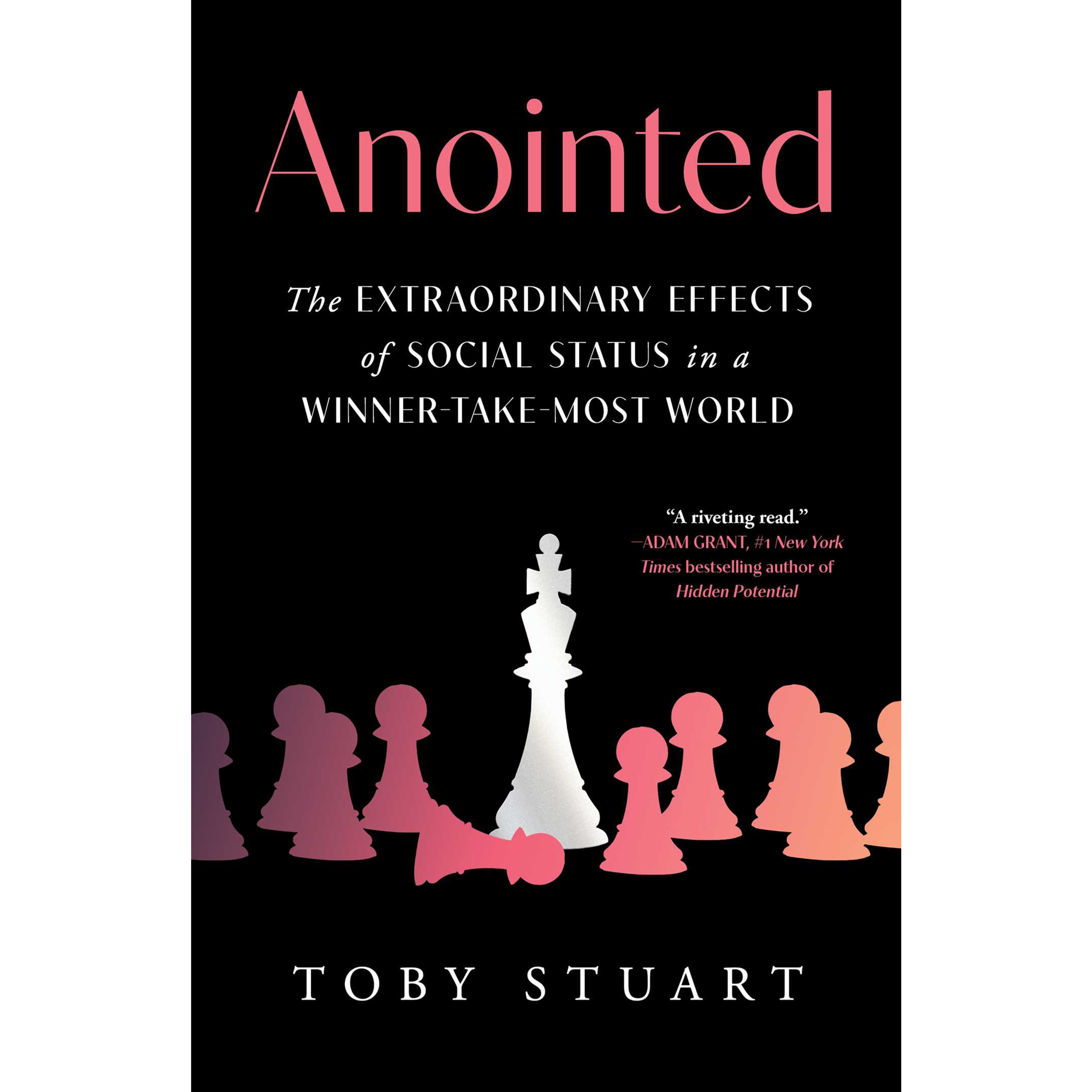
Welcome to A Book with Legs podcast. I'm Cole Smead, CEO and Portfolio Manager here at Smead Capital Management. At our firm, we are readers and we believe in the power of books to help shape informed investors. In this podcast, we speak to great authors about their writings the late, great Charlie Munger prescribed. Using multiple mental models and analysis. We analyze their work through the lens of business markets and people. In this episode, we will discuss a fact of life that people may not like, but we will also discuss whether this will ever change in mankind. Toby Stewart is joining us to discuss his newly published book, Anointed the Extraordinary Effects of Social State in A Winner Takes Most World. Toby is the Leo Helzel Distinguished professor of Business Administration at the Haas School of Business, UC Berkeley. He is a faculty Director of the Berkeley Haas Entrepreneurship Program and faculty Director of the Institute for Business Innovation and Distinguished Teaching Fellow. A little more on him he has taught at Harvard, Columbia University, and the University of Chicago. He sits on multiple corporate boards as well as he was also a department editor at Management Science. He has published in many academic journals. I will note he also, as I like to usually note with authors, holds a BA in Economics from Carleton College and a PhD in Business from Stanford University. Toby, thanks for joining me today.
- [01:45]
B
Thank you so much, Cole. Thrilled to be here.
- [01:48]
A
I have to ask this because it's just eating at me. Carleton College, classic liberal arts school. I assume I saw you an econ degree. I have an econ degree from a small liberal arts school. I assume there was no business, no finance or accounting accounting there. Is that true?
- [02:01]
B
Didn't even know when I was an undergrad. I had no idea there was such a thing as a business school. It was an accident. My whole career was an accident. It was a random chance meeting or a chance interview at the actually at the career center. But I literally didn't even know there was such a thing as a business school. No accounting, no finance, nothing practical. Yeah, loved it for great education.
- [02:25]
A
I agree. I'm with you. At the time you thought, gosh, rubber is not meeting the road. And then years later you actually are very fond of it. So. But I want to start off with your book. So you know what inspired you to write this? You know, I think you kind of said during the book as I was, as I was reading that, you know, a lot of this is based on your work that you did in your PhD, assumably. But what, what inspired you to put pen to paper?
- [02:47]
B
Yeah. So, you know, I've wanted to, just thinking about this, I wanted to do that, I wanted to write the book for a long time. And, you know, the kind of the, the truthful answer is that I think I was traveling, I don't know, 150,000 miles a year or something like that. Like, I'm always flying around, I'm always doing stuff, and I had no time. But I've thought about this for years. I had started on this research trajectory. That too was a complete accident. It was unplanned. But a research trajectory that was looking at the effects of social status, a lot of it in tech, actually. So I've spent, many of my papers are about social status, but in the world of tech entrepreneurship, venture capital, because that's sort of home turf for me in other aspects of my life. But I had wanted to share this material and just never had a chance. And then Covid hit. And when Covid hit, like the gigs, the board meetings, the flights, everything just got to stop. The world halted. And so I finally had this block of time, so I decided to write a book. And then, of course, what always happens is Covid passes. I committed to write the book, and then I didn't, so I ended up writing it while traveling around constantly. But, but it, you know, it was a, it was for me. I've always wanted to share this research agenda that I've had with a, with a broader audience. And it's a great, you know, it's fun. Like, writing a book is just, it's just fun. I mean, it's a total excuse to go read everything. So why. Being like a podcast host is an amazing gig. Like, you just have this excuse, like you have to for work.
- [04:32]
A
It's an awesome gig. I agree.
- [04:34]
B
You're getting it. It's an awesome gig.
- [04:35]
A
Yeah, I'm gonna, I'm gonna bring this up later. I, I, I think it's a cum. Like you were going to talk about a cumulative advantage later. Yeah, and I, that, that is, I, I agree with you in that there is something unique about that experience, but go on, please.
- [04:47]
B
Yeah, so, so anyway, it just, you know, I just, I committed to do it. I, you know, I, like, it's, it's not even a joke. Like, we could literally spend the entire program talk all of the status processes that underlie writing a book. Like, it's been this whole like autobiographical, tongue in cheek. Like, it's just status dynamics playing out in the book world. So much. So. Yeah, so it's been, you know, just this sort of interesting. Like, you know, I'm writing about this phenomenon that's manifested in the. In the actual act of writing a book. So anyway, yeah, that's why.
- [05:27]
A
So you start off this story in the art world you use. I assume it's pronounced yawn six. You know, teach our listeners about him, what happened in. In his situation and kind of why you use that story to open up your book.
- [05:42]
B
Yeah, so I ran across that one and actually, so. So I didn't. Prior to the book, I did not know a lot about the art world. And the art world is another place where it's just status everywhere, you know, status dynamics. So I just. I learned a lot about art in the process of writing the book, and I came across a story, and it's amazing for illustrating the point in the book. So the story goes, there's a. There's an art collector called Jan6, and he's Dutch. His family has been collecting Rembrandts for like six generations or seven generations. In fact, you know, seven generations ago is, you know, great, great, great, great, great, great, great. Grandf sat for Rembrandt portrait. So the guy knows Rembrandt inside and out. And the story goes, he's flipping through an auction catalog from Christie's and he sees a painting and kind of a boom, light bulb goes off. And the light bulb is, the painting is for sale. And if I remember correctly, the estimated range on the value of the painting was 19,000 to £25,000. And the painting was categorized by Christie's as a circle of Rembrandt. That is to say, the painting was not a Rembrandt painting, but it was created by a disciple, somebody who was in the Rembrandt studio, so to speak. And so they had appraised it as this. But Jancik saw it and there were a few things, a few clues in the painting that led him to decide, wait, this is actually a Rembrandt. It's not a circle of Rembrandt. So he then goes out and he buys the painting. It ends up costing him like £100,000 or something. And that's because somebody else might have the same theory and starts bidding the painting up. So he acquires the painting, and then two things happen. One is he goes out and he tries to persuade the art world that this painting is a Rembrandt and that in Itself is fascinating. Right. Because you don't really think about this if you're just a patron of the arts. Like, most of us walk into a museum and it's says it's a da Vinci or it says it's a Picasso, or it says it's a Rembrandt, or it says it's a Matisse. And like, we accept that as a fact, but it turns out in the history of the art, that fact has been wrong many times. Like, there's no 100% definitive way to know that a painting's a Rembrandt, but somebody has the status to anoint at a Rembrandt. And so it's actually this persuasion process where Jan6 has to, like, almost convince the world that this is an authentic Rembrandt. If he does, the value of the painting moves from the £100,000 he paid, which was an overpay, if it's circle of Rembrandt to 50 or $100 million. Like, I don't know what it'd be worth. But Rembrandt, Rembrandts aren't. They don't come cheap. Right. And so. And then that gets to one of the just cornerstone points in the book. And the cornerstone stone point of the book is, let's turn that into just a broader thought experiment. So you have a painting. The painting is the same because there's only one of them. There's just a single painting, and it's the same, but it exists in one of two identity states. It's either a circle of Rembrandt painting or it's a Rembrandt painting. And that shift in the identity of the painter is like $50 million in valuation. Yeah, but the painting itself is the same. And that social status at work, when we look at an object, any kind of object, and we value it radically differently based not on the object. Right. Again, there's just one painting based on the prestige or the prominence or the social status of whoever created or is affiliated with that object. And that's crucial in how market. That shift from evaluating the object to evaluating the identity of the producer has a radical effect on how markets function.
- [09:57]
A
Yeah, I agree. And it's funny you mentioning that. It reminds me you were talking. There's just a lot of things you reference in the book. So you mentioned, like that. We'll talk about the Matthew effect later, but I think of like, the Parable of the Hidden Treasure. It's kind of what Jan went through where he, you know, found something that was incredibly Valuable out there in the market, if you will. And to your point, he, you know, foregone something today, $100,000, even though others might not recognize that. So to your point about market dynamics, but then right on the back of that, in your introduction, you talk about this idea of. Of a big shift. You know, explain the idea of the big shift, because at some point that has to go through a transition. If you think of, like, this highly adaptive neural network that humanity is. There's nodes, and some of the anointing is the nodes and what they control and things like that. But the shift is the network has to adapt at some point to this new information of that. This could be a Rembrandt, right?
- [10:55]
B
Yeah. So the big shift, the idea there. And. And that's really also one of the central concepts of the book. So the idea in the big ship shift is similar. It's that it is this. Instead of evaluating the what, we evaluate the who, so we shift from evaluating the object to evaluating the person. Okay, well, why would. Or the producer. So why would we do that? Well, we do that because it turns out for nearly everything, like, for. I mean, maybe not for, like, a packet of nails at the hardware store where, like, you just. All you care about is that they're nails, but for so many different kinds of products and for people themselves and for experiences and the. And for attention. Like, what do we spend our attention on? We actually face this grave problem of evaluative uncertainty. Like, we just don't know. So, like, you know, the book wine's another fun one that. That I like to kind of poke at in the book. So. Or, you know, most of us walk into a wine store, and the truth is we have no idea. Like, you know, there's like, all of these different products, and we have no idea. And so, you know, we. And then when we taste a bottle of wine, like, for the vast majority of us, you know, you, like, you might like this one more or less, but you'd be way more influenced by someone who you think is knowledgeable about wine, saying, that's the good one, not. Not the other one, because you actually have no ability to evalu the wine. So what do you do? You don't evaluate the wine. You evaluate the winemaker, right? And when you do that, it's not a. It's not an amazing wine. It's an amazing wine because it's a screaming eagle, right? So if I know what that vineyard is, I. I know that's a super prestigious label. So I value the wine based on the label versus the wine itself. Right. And that we'll come back to it later in conversation when we get to the Matthew effect. But that has this, that then creates a self fulfilling prophecy kind of dynamic where to give you a hint of where we're going to end up, if a product is good because it's produced by somebody prestigious, then if that's a fact, then the good product makes that person more prestigious.
- [13:23]
A
Sure. When this gets to your point that you threw out early in the book and I, I think a lot about this, you said that we are quote, wizards at solving the physical world. End quote. And quote, we're demonstrably thick headed when it comes to predicting the social world, end quote. So I, you know, I think about these things that you're talking about where it's like, hey, you know, like great, we can tell you that that's a pound of potatoes over there. That's simple. We're really good at that. Versus it's like, well, what are the social implications of, of things changing? We're really tough for that. Let me throw out another idea to you because I think the other part, because we struggle at the social. I also think, is there a spiritual world and do we just absolutely deny that that's real and therefore it's no shock that we go from physical being easy for us to the social being somewhere closer to a spiritual thing? Does that make sense?
- [14:19]
B
Kind of. I mean, so spirituality is something that I'm terrible at weighing in on. So go back and forth on it myself all the time. So. Okay, so, so nothing.
- [14:31]
A
When I just think it's. It is, there's a human element to it. Right. And so to your point, the social is also human.
- [14:35]
B
Yeah.
- [14:36]
A
And so as soon as we get to the real human elements, we tend to struggle.
- [14:40]
B
Right. I mean, you know, it's just, yeah. So there are these, we live in this, you know, we live in a, in a super complex world. And you know, where I, where I always go, if I remember where I was going with that, with, with that, with that observation is like there are all of these products, like think about Hollywood, for instance, Hollywood is. Or think about the book business. I mean again, we could really talk about the book business literally the whole way through this. So if we go back to the painting, I mean I'm a first time author of a pop general audience book. So I certainly hope some folks pick this up and read it. But usually, but imagine walking into a bookstore, you have to judge the book by the COVID Right. I mean you're either going to judge it by the COVID or you're going to judge it by something very, very, very like little snippet or piece of information you've heard about the book, but you can't really know in advance whether you're going to like it or not. What you could know, though, is if you've read Malcolm Gladwell's books and you generally like them, you could know that it's a Malcolm Gladwell book and then you buy it because of that. Right? So it's not the book, it's the author. It's the, you know, you, you've, you've enjoyed the author before and so, and so you're going off of that. But in general, though, the book business, Hollywood, like Hollywood is, is of course famous or infamous, depending on how you see it for the flop. Right. I mean, where like we can, what we can predict about the physical world is amazing, but we can't predict whether a movie's going to be a hit or not. And so the industry spends, you know, buckets of money on films that just, or Netflix, whatever, on. They just don't go anywhere. People don't like them. So predicting tastes and predicting what happens in the social world, super difficult.
- [16:38]
A
I agree. Let's talk about the three forms of uncertainty that you discuss. And we did a book, I'll call it, a couple months ago that was new, called Uncertainty and Enterprise. And you come from the University of Chicago school, you taught there, the old Chicago school, the Frank Knight world, dealt a lot in the idea of uncertainty. And it's really made me think a lot about this topic. So explain the three forms of uncertainty you have in your book.
- [17:07]
B
Yeah, so, you know, and I have thought about uncertainty so much, but it had never occurred to me that it's the legacy of being at the University of Chicago, which it probably in part is because not only is there the Knightian legacy, but that place, when I was there in the business school, I had this remarkable group of people working on judgment and decision making that were thinking a lot about the role of uncertainty, but uncertainty. I make the claim in the book that there are three major buckets of uncertainty. So one is what do we consume? And we talked about that briefly already, but the number of choices we make about what to consume. So this could be complete B.S. i don't know. But I mean, I, I, in the process, during research of the book, I read that we make like 300 or something distinct choices a day about what to eat. Right. So we are just overloaded with choices and sure, and these are actually choices. Like, I mean, like, you sit around at like, you know, like I sat around at some, some place where I could order 50 things for lunch the other day and I'm like, yeah, what do I want? Like, which of these things am I going to enjoy? I can't even, I can't even really predict what I'm going to like most in 15 minutes when I, when the order comes up. But one kind of uncertainty is consumption. What do we consume? And that, I mean, very broadly, because I view, like, what do we read? What social media posts do we listen to? I mean, imagine your life. Like, you interview people from all different areas, disciplines, fields, pursuits. And so like, you're reading all over the place. So your attention. Dismissed. Must be fragmented everywhere. My mine is as well. So it's what do we pay attention to? And of course, as we now realize in the modern world, our attention is this incredibly valuable commodity. So what do we consume and what do we pay attention to as opposed consumption choices? The second part of uncertainty is how do we behave? So we live our lives mostly in social situations. And when we're in those situations, we have to behave in particular ways and there's an expectation that we'll behave appropriately. Appropriately, whatever that means. And so there's a bunch of choices about how we behave throughout life, and that's both in our work lives and in our social lives and even in our family lives. So there's choices around how to behave and uncertainty about how we do that. And the third broad category of uncertainty, I. I would call allocative uncertainty, which is a group. And there's, you know, just, let's be for the moment, abstract about what a group means. But there's a group, it has a bunch of resources. It has to allocate, it has to allocate those resources. Members, how does it do that? And sure. And. And the book argues that status is just essential to how we make choices, consumption choices, how we make behavioral choices, and how groups make alloc. Allocative choices.
- [20:16]
A
Sure. Hi, I'm Cole Smead, CEO and portfolio manager here at Smead Capital Management and host of this podcast. If you enjoy this podcast, I'd like to invite you to check out Smead Capital. At our firm, we are stock market investors. We advise investors who play the long game with a discipline that has proven success over long periods of time. Learn more about our funds@smeecap.com past performance is not indicative of future results. Investing involves risks, including loss of principal. Please refer to the prospectus for important information about the investment company, including objectives, risks, charges and expenses. Read and consider it carefully before investing. Smead Funds distributed by Smead Funds Distributors llc. Not affiliated because back to the uncertainty. So like true, like Nidian, uncertainty is things which are incalculable or unknowable. Right. And so to your point, the reason why we suck at the social part of this is because it is so unpredictable. Like to your point on movies, it's like what are people gonna want in two years in their content that they take in? Only God knows that. And so it's funny to me that again, you know, back to Chicago in the new school, they'd say, well, everything's kind of calculable. We can build an econometric model to model everything. And then Covid hits and it's like, where was that in the models?
- [21:38]
B
Right? I mean, so there are shocks that wreck the models. I mean, of course, you know, the broad point, the broad point, I mean this is. And, and if you get me started on AI, I'll never stop talking.
- [21:50]
A
But, but you know, well, we'll do that then. I have that.
- [21:53]
B
So yeah, let's save that for the end or as it so it doesn't, you know, doesn't co opt us and become the whole, the, the whole episode. But you know, we're getting way, way, way, way, way, way, way, way, way, way better at predicting things. That's the modern machine learning revolution. Like it's insane. As you know, as I, as I look at this at an academic, as an academic, just broadly, I do empirical social science. So I'm in the business of predicting things I have in my career. And it's stunning what you can predict now relative to what you were able to predict in the past. And that's the availability of data sets that are much more nuanced and fine grained and gigantic in the ability to process them. But also this new technology for prediction, which is what machine learning basically is. But yeah, the general point remains. We have a super hard time predicting things in the social world out super hard.
- [22:50]
A
Yeah, so, so you actually explained stereotypes and categories in a way that I felt was so noble. Most people say, oh, there's stereotypes and categories and they make us worse. But you explain the why of that. You, you effectively make the case. It speeds things up and makes them more efficient.
- [23:10]
B
Yeah. So there are tons of legitimate biases that we have that we don't have out of malice. Right. I mean there's like these, the view of stereotypes and schema, there's a Lot of different language around this or cognitive schema is they make processing of things really efficient, right? And, like, we live in these. We exist in categorization systems, right? So, you know, so take anything that you might look at. Like, take a book, right? I mean, so if you take my book, if, you know, we sent you a copy, so you've seen the book. If you take the book, it looks like no other book ever has before, right? It has a title that no book has ever had, and it has a cover that no book has ever had. And so what if you had to sort out what it is in your head because it's a unique object, but that isn't the way your brain works. The way your brain works is you look at this and you say, well, it's like, it's got a cover, it's got words, it looks like a book, it smells like a book. It's probably a book, because that's why they sent it to me. It's a book. And so you just have this categorization system. Even though this isn't an exact replica of anything that you've seen before, it's close enough to the category that, boom, it's in there. And so we all do that. And we couldn't function without doing that. We can't understand or operate in the world if we had to actually deploy the cognitive resources to decipher what every object is from some form of a scratch, you know, some sort of, like, some, you know, set of primitives. So we have this categorization system where we put people into categories. Well, it turns out, like, gender is a category. We categorize people based on gender. Race is a category. Socioeconomic class is a category, you know, location. So you're. You're. I'm a New Yorker, you're in Arizona. And, like, that's a category. They're just lots and lots and lots and lots of categories that we have for people. But for many of them, we have associations with them, right? So we have expectations of people in those categories of having a certain set of characteristics, and then our brains just sort of automatically associate the categories with those characteristics. Sure, there's an enormous literature, and I've done a little of this, but it's mostly. Tons of other people have worked on this. I mean, thousands and thousands of academic papers on this subject that, like race and gender and socioeconomic class, for example, are social categories that we have stereotyped and encoded in them certain assumptions about status. So, you know, in the workplace, white males are higher status Historically than black females. And so we have this implicit status ordering that exists, and it happens, like, quietly and axiomatically, sort of behind the scenes through this categorization association process that we all do. But, you know, the point is we need to do that kind of thing. It's how we function in the world.
- [26:32]
A
Sure, that makes sense. Tell the story of Alfred Russell Wallace, because this is just a really. You know, again, I'd never heard this. It was just an interesting way of thinking about some of these principles of, you know, being anointed.
- [26:45]
B
Yeah. So Alfred Wallace was the other Darwin. So. And it turns out in science, this is like. This is almost always true. Like, we have these. If you're. If you're.
- [26:59]
A
If you're a scientist, like Nikolai Tesla fits into this mold.
- [27:01]
B
Yes, I mean, exactly. So if you're a science buff, you know, Einstein's the one. Like, Einstein might have just done everything by himself and there was no number two. But for nearly all of recognized science, like, you know, if, you know, there's say, like a Nobel prize that goes out, the prize committee has to think hard about who gets it right. Because there's. Even if you've decided what the award goes for, it's like, who actually deserves the award for that particular. That particular achievement, because there are lots of different groups of scientists working on the same thing. But the thing is, once credit is given, it just radically alters the future. So there are many historians of science who believe that Alfred Wallace was the actual original, sort of, he created the original theory of evolution. And that Darwin, who, you know, we so deeply associ with the evolution of species and is one of the most recognized names in all of science even today, had a competitor who was maybe there first or surely there at the same time, but didn't get the recognition for doing the work. And then we have this enormous difference in faith. Now, a little bit of what makes. Makes that story fun is that there was probably some maneuvering by Darwin that made that happen. And Darwin definitely was the more likely of the two scientists to get credit because he came from a much more prominent background and was sort of in the better social circles, so to speak. But there's this enormous disparity in reputation. So you really have to be sort of a science history buff to know who Alfred Wallace is. But everybody knows who Charles Darwin is.
- [29:02]
A
Yeah, he won the annals of time, as they say.
- [29:06]
B
Exactly.
- [29:07]
A
You talk about the worker bee equation, and I was trying to think about, you know, are there again, we want to make things more efficient we want to get to conclusions quicker. We want to understand what our biases are or our systems that we've used in the past and how do we get to better answers quicker. That's what the system's always trying to adapt to. So I was trying to think of like, you know, your worker be equation and we were talking about this beforehand, but I live here in Phoenix, Arizona. This is a very merit, meritocratic type of society where no one's from here and therefore you show up here and what's good to society and what do you provide and things like that. So kind of worker be ask. But I was thinking about worker B equation against the idea of nouveau rich. Are there a lot of similarities or is there not a lot of similarities was what I was asking myself.
- [29:52]
B
Myself. Yeah. So let me give you two super separate kinds of responses to that, that question. So one is, let me, let me, let me push, push, push us off on worker be for just a minute and, and go to like, what I think is like a really, a really critical point that, that probably everybody will resonate with, which is that, you know, you're from, you're from Phoenix. I split my time between Manhattan and the San Francisco and a couple of other places. You know, your listeners are from all over the place. And, and each of these places has like, and there's variation, there's always variation. But each of these places has like an ethos or a value system and it prior, it prioritizes certain things. So, you know, I was a long time in Boston, so I think, you know, I've been, I've been at the Boston universities. Well, I've been at, at, at two of the Boston universities off and on throughout my career. And when I'm there, like, Boston's a pretty intellectual town. It's a sports town and an intellectual town. Phoenix I spent less time in. But, but sounds like it's a lot oriented around wealth like who's who, who's who's sort of the, the most affluent New York has a lot of different status hierarchies. And I mean it's giant and vast. So there's definitely the kind of the Wall street side of Manhattan, but New York is, there's the cultural elite in New York. So you know, many of the most high status Manhattanites are someplace in the cultural elite. They're critics or artists or musicians or you name it. But the point is that there's a status system everywhere. It's just oriented around different characteristics. Right. The Bay Area is so tech. It's so like, I mean, my world in the Bay Area is so much. Oh, are you a founder? What company did you found? Is it a prominent company? Who was your investor? Was it, you know, was it one of the six big ones? You know, like. And that just like, yeah, you're immediately high status if you're the founder of a Y Combinator, of a company that went to Y combinator and got a Sequoia check. Like, you're just like in the, in the Bay Area elite for having that kind of street cred. But in Phoenix, you're like, you know, what the hell is any of that? Like, you have no idea what any of that is.
- [32:21]
A
Yeah. What does that mean?
- [32:22]
B
Doesn't mean, like, you don't orient around it. So status hierarchies are everywhere. They're truly ubiquitous. But what people value is different by the group. And it even, you know, it's even. So status is given out by a group of people, and groups can even value things that most of us that are illegal or unethical. Like, so you could imagine, like there's a street gang, inner city street gang in Chicago, and it doles out status for violence. Like the most high. The, you know, the, the, the most high status member of the gang is sort of the gnarliest, most violent gang member because that is what the, what the group values. Right. And so you have. And all throughout life, these different status orderings that we orient around and all of us walk into in our daily lives, different group, different places, where what's valued in those groups might be different than the one we just left. That's one of the really interesting things about it.
- [33:25]
A
Yeah. So. So back. I was gonna say back to worker B. You know, you kind of build in what you think the components are to that.
- [33:33]
B
Yeah. So, so that, that's about where does status come from? And okay, the answer to that question is sort of three primary places. Like, how does someone acquire a status? The worker B angle is that the. That's sort of, I think, intuitively what most of us, you know, think or many of us think or believe. And definitely what most of us. If you asked us in the abstract, where would you like status to come from? The answer would be what the book calls worker. Be, activity. And, and that's merit. Like, you have, you have high status because you're either really, really good at something or you put in a ton of effort that's valued by the group. And so you're making a big contribution and you're rewarded for that with the Deference or respect from the members of the group and then that gives you influence and opportunity. So that's the status dynamic. Like, you know, I'm in a group I like, it's the group really values. You know, I'm in a, I'm in the chess club and I can see 12 moves into the future and everybody else can see six moves into the future. You know, I have like, you know, I crush. And because of that I have high status in that group. Right. Which is really different than how you get high status if you're on the football team or whatever else. So but you're adding to a group, the second place you get status. And this is what we were talking about before is you're born with it or without it. And in the social sciences and sociology in particular, we make this distinction between what we call achieved status and ascribed status. So achieved status is worker B. It's like you earned it, you're really, really good at something. Ascribed status is like you were born with a bunch of characteristics, right? You're tall, you're short, you're blonde and blue eyed or dark and brown eyed, you're, you know, white, yellow, brown, black, you're, you know, you're American, you're, you're Japanese, you're ganes, you're, you know, you're what, you're male, you're female, you are a member, you were born into the upper class of whatever society you're in. You're born to the, to the lower class of whatever society you're in. And you basically don't, and we call them ascribed characteristics because you don't choose any of those. And it's a total lottery like you are assign them when you're born. Like they just, they're given to you by whatever birth conditions you come from. But all of these are status characteristics. So people at birth are basically pre sorted into a status hierarchy. And you know, and maybe the simplest way to think about that is like for nearly all of human history we have all lived in some sort of super hierarchical caste system or caste like system. And then you know, you're just born into, into a caste or a class and there is no mobility. Like it's not even open for discussion. Like, you know, you don't go ask like the kid of the, you know, the son of the serf what he wants to be when he grows up, right? Like, I mean he's just going out into the fields like his father did because he was born into that life. And then the third part, which Is the, really interesting is, you know, to me is the, the annoyment part, which is that the third place you get status is people who have it give it to you.
- [37:00]
A
Yeah, and that's your point. I think of, I think of like the starving artist who has really wealthy patrons and therefore that's what gives them status is their great artist among friends that, that value them highly. You, you talk about the competence confusion. I love this, this because I, you know, where, where I think a lot about this idea is where. And I think Galbraith actually wrote a lot about this. John Kenneth Galbraith. He, he talked about the idea that when you, you know, you, you create a certain amount of wealth, there is an intelligence ascribed to you and that intelligence that people ascribe it can be ascribed by the person themselves. And isn't that in effect the competence confusion because you have something that you perceive, you believe you purposely earned it when you may not have.
- [37:51]
B
Yeah, so I use competence confusion slightly differently, but this is also a crucial point. And so let me go to the first and then the second. So the way I use competence confusion is that gets into stereotypes. So we have all of these associations. So if you're male, you're female, you're black, you're Hispanic, you're Italian. I mean, I'm staying at, I'm right this week at an Italian friend's house. So let's pick on the Italians. Like, you know, I have this, I have this kind of Italian stereotype which is there are lots of gestures. Right? The Italians gesture all the time. I was thinking of this like, you know, I know for on video, but I'm like moving my hands all around. Like I would see. Imagine an Italian person. Person does. Well, it turns out that like, so that's a form of a stereotype, but it's a pretty harmless one. Canadians are nice. Yeah, you know, like, yeah, every Canadian's nice. But yeah, I mean, look, I mean, I, I, I, I, I, I've only met nice Canadians and I even used to live there for, for a couple years. But so, so those are like stereotypes, right, where we, where we associate a category with a characteristic, but we also do that for status based characteristics. So. And then this is what comes back to like women in the workplace, where if you take an idea in the workplace and the idea comes out of the mouth of a white male employee, it's probably more likely that that idea will be taken seriously than if it comes out of the mouth of a female employee. Employee. Even if it's the same idea, same rank, same same situation. And there's tons of evidence that that's true. And, and we then, and then I think of that as a form of competence confusion, which is that we think gender implies something about competence, but it really doesn't. It's just the stereotype we have. And again, like, it all happens sort of quietly and silently. I mean, most people who, who, you know, who feel this way, like it's, it's nearly implicit. I mean, in fact, there's whole literature on, on biases like this that, but it has implications for the status order and strong implications in worlds in which status accumulates so that if you get a little bit, you start, you start to get further, further and further ahead. So, so yeah, that was a long winded answer. So I'm going to go back to you.
- [40:27]
A
We hope you're enjoying the podcast. You know, we work hard putting together this show, but we work even hard, harder for our investors at Smead Capital Management. At Smead, we believe in disciplined investing, which is why the SMEAD funds have a proven track record of long term outperformance. If you're an investor who plays the long game and want to invest in wonderful companies to build wealth, we invite you to visit smeedcap.com Past performance is not indicative of future results. Investing involves risks, including loss of principal. Please refer to the prospectus for important information about the investment investment company, including objectives, risks, charges and expenses. Read and consider it carefully before investing. SMEAD funds distributed by Smead Funds Distributors llc. Not affiliated so I want to jump forward to. This is a really interesting story because it points to your, it gets to the idea of the structure of things in a way. Can you, can you briefly tell the story of Matthew Cooper front running the Anointers?
- [41:25]
B
The best. Best. This is the best.
- [41:28]
A
This is awesome.
- [41:29]
B
I love this. Yeah, I mean it's, this is like such a, I mean this is, this is one of the, in my opinion, one of the greatest entrepreneurial acts I've ever known. So. And I agree this is, this is like a former Harvard Business School professor. I have like multiple students who have started multi billion dollar companies in the past, but none of them compare to Matthew Coop Cooper and wine. So Coop's story is he is so he's, he's first off a super personable guy and he does an undergraduate degree in Tulsa, Oklahoma and becomes interested in wine and then does, and then he goes to get a PhD in of all fields, toxicology at the University of Kentucky. And when he's there something happens I won't go into that. But he gets really interested in wine. And so he starts. And this is the late, late 90s. And what's happening in California is like these boutique wineries in Silicon Valley are getting big. Like they're getting these like, cult following. So Coop goes out to Silicon Valley and meets a bunch of wineries and he hears a rumor, and the rumor is that Robert Parker is going to go the following year to Australia to raid Australian wines for the first time. And like, this is shaping up to be a great year. Like, all the weather conditions are right. Everybody's expecting like a really high quality crop of lines from Australia. But Robert Parker's never done this before. Okay, so part of the story is we have to talk about Robert Parker. There's a big part of the book where I talk about the Anointers. These are the prestigious actors that have credibility, legitimacy, respect in our society. And what they do is they transfer their prestige to other people. And we can come back and talk, talk about that. But Robert, Critic. Robert Parker becomes by a mile the most important critic in, in the wine business. And what that means is every month he publishes this, this, this, this magazine called the Wine Advocate. And the Wine Advocate's got a bunch of wine ratings in it. And if you do well on the Wine Advocate, then you crush it in the market, right? So if he gives you a 97, then all of a sudden you gotta, you know, your, your bottle of wine's not. It goes from 20 bucks to 200. Bu.
- [43:59]
A
Sure.
- [44:00]
B
So, so interestingly, there was this whole group of people who would try to get the Wine Advocate just before publication, right? Because if you could just get it like, you know, hours before publication, then you go out and you buy all the highly rated wine and then you can sell it at a huge markup, right?
- [44:19]
A
So everybody, you are the market.
- [44:21]
B
You are the market. So it's like front running, like it's a guaranteed return. So everybody was trying to front run. Like not everybody, but a bunch of people trying to front run the, the, the, the market by, by getting these ratings ahead of time and then trading on them. But Coupe takes us like seven levels ahead. So what Coupe does is he's like, okay, well this guy's going to go to Australia and he's going to rate wine. So what I'm going to do is figure out ahead of time what, what wines he's going to rate highly, which is to say coup goes back to Kentucky, he pulls out some old issues of the Wine Advocate, he acquires a Bunch of bottles of wine and then he starts tasting them and he's already by now a very good taster. So and what he's basically doing is learning Robert Pallet's Parker pet palate. So he can then taste a bottle of wine and he'll say like 93, 97, 89, 99, 88, 97, 100. So he is basically learning what Robert Parker likes. He then goes to Australia, front runs Robert Parker, goes around the country, goes to all these boutique vin vineyards no one's ever heard of, tastes the wine, figures out what he thinks Parker's going to like and then buys it up. In fact, he buys so much wine that he has to rent a box shipping container on a cargo ship to move it all back to California. So he buys wine, he moves it back to California, he rents a two bedroom apartment in the Bay Area to stash it to, to stash all the wine in it. He waits a couple months until the Wine Advocate issue of raiding Australia comes out and then he's got the wine queued up at auction and he does something like a 7 or 8x on his investment. And it just like it's this incredible story. So but what that is is it's the Rembrandt story in real life. It's like there's a bottle of wine, it's worth one thing the day before or the minute before the Wine Advocate comes out and rates it high. And it's worth something totally different the minute after it gets a good review. Review. So if you can forecast that, you can arbit.
- [46:29]
A
Yeah, well. And so again, like I'm thinking about this, you know, to your point earlier, like I'm always trying to learn a little about a lot and as I'm thinking about some of these things, obviously there's a lot of markets related information that you're talking about that on its face. Like that's a great story, but it's a markets related story. He was able to arb the market in a way. You mentioned this for a piece of your book and you kind of dabble in it at other points parts. But talk about some of these dynamics in the stock market, for example, as you note, the stock market's kind of like the social arena. What do we find on average people are not very good at predicting the future. They're just not. And yet at the same time, you know, to use a publication from one of your former schools, Buffett many years ago now wrote in the Columbia Business School, one of the, one of the publications there he Wrote about the super investors of Graham in Doddsville. And he talks about what if he found all these monkeys that are flipping coins and just so happens that they flip it, you know, however many times in a row heads and then you find out they're all, you know, eating and drinking at the same place in Omaha. Right. You'd kind of think, well, there might be something to that. So even in a market dynamic where at large humans are not good at it and they're not going to call it ad alpha, as they say, yet there's still an anointed group even in a big market. Market like that.
- [47:48]
B
Yeah. So let me, let me take this in a couple directions. Love the question. And so, so first, let's go back to Robert Parker for a second because you're, you're, you're totally right. Like it's a market thing, but it's also just to underscore the meta point of the book, it's a valuation thing. Right. And sure. And agree. And I want to take, take listeners back to this idea that you literally have the same process product but its value shifts radically in, in, you know, just in the snap of a finger when one person says this is good, like, and that's anointment. It's like, you know, it's a bottle of wine is worth way less until Robert Parker blesses it. And you know, that's why he was the king. He was considered the kingmaker of the biscuit business. So, you know, the stock market, if only I understood this better or could forecast it better. But what's, what's a fun market right now when you're thinking about status dynamics is crypto, right? So we now see this like multi trillion dollar. Right? So, so the crypto market is a multi trillion dollar market. Now think about a meme coin, for example. Like. Yeah, why, I mean we could, sure you surely have. And we, we could probably do 27 episodes on why dogecoin is worth something. But, but dogecoin is worth a lot. Like, I mean, I don't know what today's market capital cap of dogecoin is, but it's in the billion, the many billions. And it's a meme coin, right? It has, it has no value. We don't even pretend that it has value. It's this weird collectible and the history of dogecoin is, is like, you know, it's Elon Musk and it's Snoop Dogg and it's, and it's Michael Dell and whoever got involved in the dogecoin thing but these are all like high status, highly visible people who bless something and then it acquires a ton of value. And it's even better because they hold a bunch of it when they bless it. And so they're creating value for themselves by, by blessing it. You know, in the market. You know, it's always been my belief that fundamentals don't explain very much and, or they don't explain. I mean, they explain some fraction of the market, but certainly not nearly all of it. And you know, I live in the tech world, which is a world of fads and fashions and could bes, would bes and ifs and the movement of equity values in that world, particularly in the private markets. Right. And so I think you think probably a lot about the stock markets. I live live much more in the private markets because, you know, I work in the world of venture capital backed entrepreneurship and there, boy, I'll tell you, valuation is so much of an anointment dynamic versus a fundamentals dynamic.
- [50:55]
A
Well, to your point, I mean, in that world, who you take a check from really matters. No one's going to go back and be like, well, who bought your stock today? Right. I mean that's just that, that's a, it's a public market thing versus a private market. If you get money from Sequoia, it's pretty much guaranteed you' to a billion dollar valuation over time.
- [51:13]
B
Yeah. And less and less and less. The person who bought your stock today was Warren Buffett.
- [51:19]
A
Agree. And I thought a lot about Buffett as we were talking about some of these dynamics also because once you go to an anointed status, it's like, oh, that's where Buffett eats his cheeseburger. That's where he goes to a steakhouse. That's the plane company that Buffett flies. It becomes this like, you know, like you talked about Kobe. Did Kobe deserve to go to all those All Star games? No, but it's Kobe Bryant. He's anointed and therefore he goes to the All Star game.
- [51:46]
B
Correct? Yeah. And that one was in there because sports, you know, so sports are another area where. So sports are. Sports is a fun area to think about this whole status process because like in sports, if you just think about it like, you know, if we're talking about wine or art, we can all agree like these are confusing products. Like they're super like idiosyncratic taste based. You know, one person looks at a painting and says amazing. And another person looks at a paint. A painting. Ah, you know, I hate it. Like you know, one person wants, like, all the bright colors, and the other is, like, the minimalist, like me. And, you know, and. And is happy to see a red line across a white canvas, you know, so, like, our tastes are super different. Yeah. And there's no, like. And we can't even pretend there's some yardstick for quality. Right. There is no yardstick where we can say, okay, well, like, I'm going to take look at that painting, and here's the. Here's the eight things that make an amazing painting. And I would go through the checklist and rank this painting on each of these eight things. Like, we can't do that. We don't even pretend we can do that. And the same goes for wine. But, like, sports. Let's take sports. So sports. This shouldn't matter at all, right? Because, like, I mean, like, if you're. If you're a runner, like, suppose you're a. You're. You're a sprinter. Like, what matters is one thing, which is how many seconds does it take you to finish the race? And is that fewer, you know, is that one hundredths of seconds fewer than the next fastest person in the race? Like, well, the only thing that matters is how fast you are or if you're, you know, or, you know, did you win the match or not? Or, you know, did you make the basket or not? Right. I mean, so. And those. For those things, like, I mean, right. You think about running, like, it's super simple because it's just objective, right? It is like, it is. Who got to the finish line fastest? End of story. That's the only. That's, like, the only criterion that matters. Nothing complicated like that. We have a yardstick. The yardsticks. A clock. Easy, simple. Okay. So. So I'm sitting here in New York. I'm a tennis fan. The US Opens coming up.
- [53:59]
A
Yep.
- [54:00]
B
Okay. And so let me give you kind of a scenario. Like, let's say we have 20 tennis players. Players. And we're going to do a thought experiment. The 20 tennis players are exactly equal. There's no difference. They're exactly equal. And we put them into a competition. And the thing about a tennis match is somebody has to win. We enforce that. Even if they're playing all night, somebody's got to go two games ahead and the two points ahead in the fifth set, and they win. Win, Right. So somebody's got to win. But the thing is, if we played them out, like, a hundred times, it'd go 50, 50 across, all of them. But the first time somebody Wins. Yep. Okay. And then let's suppose once somebody wins, we rank everyone. Okay? Now the winner is the winner and the second place is the second place and, you know, whatever. So now we've ranked people. They're all the same. We created a ranking. If we repeated this experiment 20 times over, we would have 20 different rankings. Right. Because they're all equal when they start. Okay. But once we rank them, somebody's ahead. Okay, so who's going to get the best coach? Who's going to get the best fitness trainer, who's going to get the best nutritionist, who's going to get to stay in the suite at the nice hotel next to the tournament? Who's going to have the shortest walk to the courts, who's going to play at the most favorable times, who's going to get seated so they play weaker? Right. And so what happens is you're the same at the outset. Even in sports, once we rank people, these treatment effects come into play where the person who's a little bit ahead in the hierarchy gets a whole bunch of special treatment, which gives them an advantage at sport. So even in the most objective areas, where there's like a clear yardstick of who's good or who isn't. So none of the confusion of the art world or the wine world or the scientific world or the tech world, it's just straightforward. But we still see these status hierarchies emerge with real consequences on how, on life outcomes, earnings, performance, fame, celebrity, all the things.
- [56:14]
A
Sure. When you use your story of the two goldfish, I think it was your daughter to explain the cumulative advantage. And it's funny, when you mentioned cumulative advantage, the only other person I've really heard talk a lot about this is actually Charlie Munger. He explained you end up building up a cumulative advantage. And he was talking like over the course of his life as an investor, as a thinker, as a, a polymath, et cetera. But I think a lot about cumulative advantage. To your point, if someone said, Cole, why do you host a podcast and interview two authors every month? Because I want to attain a cumulative advantage and it gives me an incentive structure to go out and be reading constantly, which gives me, to your point, a cumulative advantage over time. It's a very self seeking thing in some ways.
- [56:56]
B
Yeah, yeah. And let me. Can I tell the goldfish story? Is that okay?
- [57:00]
A
Please. Oh, this is great. It's a great story. So please.
- [57:03]
B
Yeah, it's such a, A good, it's such a simple but great illustration of a cumulative advantage process. So, so the story is like, I was living in Chicago. It was freezing cold, gray, crappy day. Like most of them in Chicago. Yeah. Kind of comes with the place. And. And so we decided to get my daughter a couple of goldfish. And so we go off and we go to, like, some pet store in a mall where you buy goldfish. And. And we, like, have this conversation and we bring home two fish. Because, like, I mean, I was going to get one because, you know, my view of goldfish is it's like just a short little window of time before they get flushed down the toilet. So who wants to do that? You know? But she wanted two. And then we decided to get equal ones because she wanted, like, you know, she just, you know, she wanted, like. I don't know, she decided. So. So we look for, like, the two most similar fish. So they were like, you know, give or take the same size. They look kind of the same. And so we home and we dump him into a goldfish bowl. Sure. And it turned out, and we didn't notice this at the shop, that one of the two had this tiny little imperfection at the side of its mouth, like it had been hurt or something. And the food that we had to feed the goldfish were these pellets. And when one of the goldfish would eat its pellet, it would just eat the pellet. But when the second one tried to eat it, every other pellet would pop out of its mouth because of this little injury that it had. And then what would happen is the second goldfish would rush in and eat it before the first one got back to it. So within like three days, we named one of the fish Hoover, like the vacuum cleaner. Cause it was like sucking up all of the pellets. And we called the other one little guy. And what happens is. And it's a perfect illustration of cumulative advantage process. Because what happens is when Hoover just eats like five pellets that belong to little guy or 10 pellets, it gets a little bit. Bit bigger. And when it gets a little bit bigger, when we drop food into. Into the tank, it has an advantage against the. The little guy in. In. In the competition for sustenance. And like a month in, Hoover's this giant fish, and the little one can't thrive. So I'm now literally spending 10 minutes a day to feed the fish. Because every time Hoover pops up to eat a pellet, I have to put my finger in the tank and smack it down so that the little fish actually can get some food. Because I otherwise the big one was gonna eat everything in the tank. So what does that teach us? That teaches us that in certain aspects of life, it is enormously valuable to have what we call a relative advantage. And when cumulative advantage processes happen, what often is at stake is that what often occurs is that one of two actors has a tiny little advantage over the other one, but that tiny advantage just compounds and compounds and compounds and compounds.
- [60:04]
A
And.
- [60:05]
B
And so the bigger that Hoover gets relative to little guy, the larger the advantage that it has in the competition for food. And it turns out status works that way in many different places, where if you just get a little bit ahead, you go off to the races with it, because people think you're better, they give you the benefit of the doubt, they evaluate everything you do more favorably, and then you start to get more resources, so you actually become better. And that's like the tennis story, where you. You actually become a better player because you get a better coach and a better nutritionist, and you get more sleep and you're better rested, and everything around you is smarter and more scientific, so you actually become a better player over time. You didn't start that way. You started equally, but you got a status advantage. And then a compounded. Compounded. Compounded.
- [60:58]
A
Well, to your point, a relative advantage with time being maybe the biggest, biggest factor, creates large cumulative advantages over time.
- [61:08]
B
Yeah, I mean, like, think about a musician, right? I mean, like, somebody gets a lucky break or. Or an actor. I mean, Hollywood's perfect for this, right? I mean, like, you know, there's like a hundred starving actors interviewing for every part. One of them gets a lucky break. Like, you know, they were on it that day, or more likely, they just looked right for the part. Or, you know, there is something about, you know, whatever director, whoever chooses a cast is like, oh, I'm excited about that. About that person. For any random reason, you know, what they were wearing, what they looked, how they. You know, they're the. The energy they had that day. You know, who knows? But, you know, once you get that part, if it's in. If it's in a film that becomes successful, you're totally off to the races. Like, it completely changes the trajectory of your career, which is the essence of a cumulative advantage process. Like, you're similar when you begin. Everybody's like, you know, most of the actors are pretty good, but the one who gets the break.
- [62:09]
A
Hey, I want to give a big shout out to everyone who's been working so hard on this show. You know, we recently hit the top 10 in investing podcasts on Apple Podcasts, and even number one in the business category in several countries. As you may know, this show is brought to you by Smead Capital Management. Smead Capital Management understands how frustrating and illogical the stock market can be. If you're searching for funds with a proven track record, give the Smead funds a look. Or better yet, reach out@smeecap.com and don't forget to mention you're a fan of the podcast. Past performance is not indicative of future results. Investing involves risks, including loss of principal. Please refer to the prospectus for important information about the investment company, including objectives, risks, charges and expenses. Read and consider it carefully before investing. Smead Funds distributed by Smead Funds Distributors, llc. Not affiliated. You talk about people's reaction to anointing and you kind of explain that there's four types of reactions to anointing. You talk, and this is very personal for you. You talked a lot about your own feelings and, you know, you felt anointed earlier in your, your career and how that made you feel and react. And I'd love for you to talk a little bit about that.
- [63:25]
B
Yeah. So, and I, you know, let me say, like, I had no intention of it actually working out this way, but I mean, I ended up studying status because I found this paper in graduate school that just, I was introduced to a paper in graduate school. It's actually called the Matthew Effect in science. It just completely changed how I saw the world. And, and it was a random thing. And it was, you know, the fellow who became my dissertation advisor who really was my mentor and was one of the leading thinkers in this area, a guy called Joel Podolni. But anyways, so I start studying status and then when I finished graduate school, I got this job that I thought was like just a super lucky thing. I thought, like the circumstances all kind of lined up and a bunch of things happened and I lucked out and I got this assistant professorship at the University of Chicago. And I see it, you know, University of Chicago is one of these places. Like, it's a little less, it's probably a little bit less well known than some of the other universities I've been at. But I have always seen it as like the purest place to do academic research, particularly in the social science. Like, you know, as you said, there's the Chicago School and it's like the hallowed halls of the old quad at the University of Chicago. So many, in my mind, brilliant people have been through that place. And it just, when you're there, it has this kind of edge to it that's like, you know, intellectual honesty and hard work and austerity and. And I was like, I felt so fortunate to get that job. And then. But then what you realize is like, okay, now I have that job and I'm nobody. Like, I'm an assistant professor. No one's ever really heard of me. But, like. And if you're an academics, you build a reputation by getting papers published. And the thing is, when you pub, when you send a paper in to be reviewed, send it in on your letterhead, you're like, you know, like your old stationary. And so I'm sending this. Like, I'm nobody, but I'm sending my papers off to these journals with this letterhead from the University of Chicago. So I am the beneficiary of the big shift. Like, no one knows that the work is any good. Nobody really knows who I am at the time. Everybody in my world knows what the University of Chicago is and that they're really smart people there, right? So I get the benefit of being a University of Chicago professor. I never felt like I earned that, but I felt like that put me that. That was my version of Hoover and little guy. Like, it gave me an advantage against people who are in my cohort, and it was a compounding advantage. And so I was, you know, the way my career went is I was, you know, given tenure and full production professor and chair professor when I was. When I was actually quite young. And so the consequence of that is everywhere you go, like when you're carrying this, you know, big, long title at this very prestigious university, you know, but you don't have to shave yet. Everywhere you go, people are like, oh, you must be, you know, super. You know, you must be brilliant. Like, it's going to be amazing. And so the. It creates this super high expectations on you. But if you understand the Matthew effect, which, like, of all people, I understood the Matthew effect because it was what I was doing my work on. You feel like, well, yeah, but I didn't earn any of this. Like, I'm not. I'm not as good as you think I am. I just was the beneficiary of this sort of anointment dynamic. And so for me, the reaction to having high status, particularly when I was younger, was like some version of the imposter syndrome where I think felt like the expectation was that I was going to, like, you know, stick the landing every single time and just nail it and wow everybody. But that that was never going to happen. And so I was constantly Getting invitations to do things that I felt were like unearned and then I was nervous about doing them because I felt like I was going to underd. Deliver. So, so that's one response. Response to, to having, you know, to having achieved some, some status. I would argue it's probably the least healthy, but the most rational response, like that's how most high status people should feel about the world. But I don't think it's like the most emotionally healthy way to deal with a problem.
- [68:01]
A
Well, it's kind of, it's a healthy sense of paranoia in some respect is how I took it to be too. Where you're like, do I really deserve this? I need to prove this. You know, there's like a stuff, self fulfilling aspect of that.
- [68:10]
B
And then it raises exactly that point, which is, you know, in the book I call it the hamster wheel. But like now you have to prove yourself. Right? And so now you feel this internal pressure to really deliver. And that means you have to work hard and you have to, you know, for most people it means you really have to prepare everything. Like, I mean, I've been an unscripted person my whole life, but if I were a scripted person, then I would spend tons of time working on the script.
- [68:40]
A
Sure.
- [68:40]
B
But for me, I worked hours and hours and hours because I just needed to prove that I deserved this position that I had. And that's very stressful.
- [68:54]
A
Well, there's a reason why we have gray hair.
- [68:56]
B
Lots of it. Yeah.
- [68:58]
A
So imposter's the first. And you talk about the hamster effect off that. What are the other three reactions?
- [69:03]
B
Yeah, so the second reaction, which, you know, is probably the most common reaction, but like the best version, you know, the best. There's this quote. I have loved it always. I mean, it's often attributed to Barry Switzer, the football coach, but I'm not exactly positive that that's, you know, that that's the provenance of it. But, but the, but the quote is in reference to someone. He says he was born on third base and thinks he hit a triple. And so it's perfect for this. Right. Because it's like, you know, if you're that person, you believe that you're anointed because you are just that good. Like it's just, you know, it's your incredible ability. And that person sleeps a lot better at night than I did. Right. Because you, you feel like you deserve what you got. And that's a way more comfortable mental state to be in. You know, I think it's an empirically poor representation of the fact pattern. Right. Which is that anyone who's got high status has benefited from the cumulative advantage process essentially. So it's not exactly accurate, but it's probably a healthy way to think. And then the two others, one of them I called in God we Trust. And that is. So if you have religious beliefs, particularly if you come out of the like Protestant Pentecostal traditions, like that belief system has, you know, features preordain ordained ordination. Like you are preordained to be somebody. And it's sort of a belief in a divine differences among us which is.
- [70:55]
A
Like a Calvinist view out of the, those Calvinist doctrines.
- [70:58]
B
Out of those doctrines. And you know, and there's you know, the modern version of that's the prosperity gospel, right. Which is actually, you know, a pretty, a pretty widely held belief system in, in parts of the United States.
- [71:12]
A
And that is like, it's a very aggressive like by the way, I could think of to your point and I was really glad you brought this up because there's some, I mean like. And I just. Full disclosure and our listeners know this, but I am your classic right wing evangelical type and as I'm reading this, I think this is so unhealthy. It is so damning in my opinion that people have this view.
- [71:36]
B
Yeah, interesting. Super interesting. I mean now at this point we should turn it around and I should interview you. But.
- [71:43]
A
Yeah, well, by the way, just I'll give you a movie. I don't know if you ever saw the movie, but Kingdom of Heaven was a movie that came out in the 2000s and it's a story that the Crusades and this kind of, you know, fictional story in the Crusades. And what I think of this divine intervention is like, you know, someone would say, oh, and we're going to conquer and do this. And then like the court jester yells God wills it. And they're like, God wills it. It's like everyone goes on. It's like, well does he. Or did the guy just say it over there?
- [72:08]
B
Yeah, well, and so the, it's funny. So, so the, you know, and I remember like sitting in front of, you know, this was like a pre AI book because I wrote it. Pre AI. I remember sitting in front of like spending a lot of time with Google looking at like looking, you know, looking sort of searching through, finding examples of this. And then I found John D. Rockefeller who like, you know, who.
- [72:31]
A
Rockefeller very much believed in this.
- [72:33]
B
Yeah, yeah, exactly. So Rockefeller, the founder of Standard Oil, which goes on to be like many, many things. And then Exxon Mobil is, you know, probably in, you know, present day terms the wealthiest ever American in terms of the proportion of the outstanding wealth in the nation that he control in his prime. And you know, for him it was just like it was, he was preordained, right? He was destined to be the richest person. It was a decision of, it was, it was God's decision, not, not anyone else's or his. And so what happened is what meant to happen. So that is a, you know, that is a view and there's, you know, a very non trivial fraction of the country holds that view. And then the fourth approach to it, which is, you know, which a psychologist would probably tell you is the healthiest approach, is to accept the fact that if you have high status, you do, but to take a very humility based approach to it. And that is to say like, you know, like always recognize that other people helped you recognize that status itself comes from other people. Like status is deference and for anyone to have status, they require somebody else to defer. So it is a form of a social relationship. So you have a following. You should be grateful for the following. You should be appreciative of the following. You should realize it's not all you. And you know, that's probably the most psychologically healthy approach to responding to having high status. But the point of that section of the book is that like, you know, it's often, you know, I do this all the time. Like, you know, in my life the grass is so often greener over there, wherever there is. And you know, and so if you kind of looking up the status hierarchy, it's like, you know, the grass is green up there. But actually when, when you look into those lives like people aren't necessarily happier, like net, net, you're better off with status than without it. But it's a little more complicated than, it's just like it's all amazing.
- [74:42]
A
I agree. And by the way, you know, I was, I was as I was going through these four categories. So I'm going to throw out a different picture of the last one. So like my view of it is like what I think for me or what I think is the most healthy view is I look at it as all a gift. Right. And by the way, the definition of love, I would tell people is, you know, giving something to someone that doesn't deserve it. And to your point, status isn't deserved in so many cases. And so I look at it from a humility perspective. I look at this as all a gift and I would say, say from God, I don't deserve it. I feel blessed that I have it though, to your point.
- [75:20]
B
Yeah, yeah. I mean, I love that. And, and I don't even think I love that. And I, I don't even think that, you know, so for me, like, you know, as, as, as, as. I mean, and so I'll, I'll tell you, I'm the opposite. I'm, I'm, I'm the liberal atheist. But, but for me, I could just take God out of that equation and see it as a gift and be very.
- [75:41]
A
Which it is. I agree with you. It is a gift. It's truly a gift. And people over assume their talents relative to what are just gifts.
- [75:48]
B
Exactly. And in that case, gratitude is very much a part of humility, and gratitude are very much a part of how one might respond to this gift. I love that.
- [76:03]
A
Let's see. I want to kind of be quick on this one, but I, I loved this. You talk about we're born comparers and a lot of your book goes through that. You talk about pawns. I've always had this big mental debate in my mind because who you associate with, you mentioned is a big deal. So I am the kind of person I'll kind of use. I'll be more introspective myself. I'm the kind of person who I want to be in a pond where I'm not that big of a deal. Not because I'm not arrogant or something like that. People tell you I'm probably arrogant and I'm self confident, things like that. But I like being a pond where I can learn a lot from other people, if that makes sense. And that's why, again, back to the dynamic of the podcast. I like being in a pond. That's a lot bigger than me. Okay. Yeah, right. I know other people who like, they want to be the big fish in the small pond. Have you thought a lot about those dynamics? Because it really tells you something about the person in a lot of cases.
- [76:59]
B
I mean, it tells you about the person and it tells you about. Yeah, I mean, thought a ton about it. So, I mean, it's so, so we are born comparers. And the thing about comparisons are, is that we have a lot of discretion about who's in the reference group. Sure, we pick and we pick, you know, like, and we pick in so many ways and oftentimes we do it without like carefully thinking about it or thinking about it at all. But, but then it has really, really, really significant consequences. Right. And that's the metaphor. Do you want to be the big fish in the small pond, or do you want to be the small fish in the big pond? And those are very different roles, and they're very different places in the pecking order. And, you know, the kind of. You know, I was actually thinking about this earlier today, but there are these set of studies which I didn't mention in the book, but I've already always thought they were great. I mean, part. Because I'll tell you why in a second. So there are these studies, like, let's suppose that you're born in a place when the school year starts on September 2nd, and that place has a bunch of kids who were born on September 1st, and it has a bunch of kids who were born on September 3rd. Okay? So if you're born on September 1st, you're in the. On September 3rd, you're in the new school year. If you're born on September. Yeah. No, the other way. If you're born in September. So if you're two days younger, you're in next year's school year, and you're otherwise in this. And so we have this. And so we have this. Like, there are two people, they're born two days apart, but one of them ends up being the older, oldest person in their. Their. Their class, and the other ends up being the youngest person.
- [78:57]
A
Y.
- [78:58]
B
And so that's this interesting setup because it's super random, like. Like no one controls when they were born.
- [79:04]
A
When you're born, still very loaded.
- [79:05]
B
Buffett says it's still very unloaded. Yeah, exactly. And. And most parents, like, just conform to the letter of the. I'm sure you could. You could exam, but most conference, most parents conform to the letter of the. Of the. Of the rule there. And so they send their kid to whatever. And so you end up with kids who are the youngest in the class or the oldest in the class for random reasons. But that, in a way, is like putting you into different ponds, right? Because it turns out if you're the oldest in the class, you're intellectually, emotionally, and physically more mature than the rest of your classmates.
- [79:41]
A
You get your car before everybody else does.
- [79:43]
B
You get your car before everybody else, but you also hit a home run before anyone else does, make a basket before anyone else does. Does. And you figure out how to calculate the slope of the line before anyone else does. And all of it. And so you have this. You end up in different ponds. And it turns out that nearly all of these studies show that what you really want in life is to be the oldest kid in the class and not the youngest kid in the class. I say this as someone who is always the youngest kid in my class.
- [80:14]
A
So when's your birthday?
- [80:15]
B
My birthday is September 21st and mid September. Birthdays generally, you know, put you into the. The youngest into the. I mean, it depends on when school year starts. But I, so, so I didn't skip a grade, but I graduated high school when I was 17 years old and everybody, you know, so everybody else graduated when they were 18 or 19, so. And then that creates. But anyways, yeah, so because we're born. Comparison, compare, comparators. When we end up in. In one pond, we might be at the bottom looking up. Up in a different pond, we're at the top looking down. And that creates totally different dynamics. But as you said, there's some benefits to being in the lower rungs in certain communities. But my guess is that might be true in the podcasting world, where you probably manage to meet all kinds of people, but it's not true in all walks of your life. And that's the key thing. We all live. Live in multiple hierarchies and we tend to occupy very different positions across them.
- [81:27]
A
Sure, I agree. All right, so I'm going to come. Let's see. I want to go. Since you mentioned it, I want to ask you about the idea of AI. Now, I will tell you, I've thought a lot about this. I don't want to talk about the investment cycle of it, just kind of purely the user use of AI. And like, as an example, I've pulled over the last month of my life, I have pulled such good historical data out of Grok 4. I mean, like the kind of stuff that it would take in a colleague of mine and I days and weeks and to build and whatnot. I mean, like, as an example, I was writing a piece this week. I wanted to know what the stock market concentration was of the railroads in the late 90s, 19th century. And Grok told me what it was roughly by decade. Now, it's an approximation. I don't expect to be perfect. It just gives me a fairly good picture. I also asked it to tell me what the size of the stock market was relative to gdp. Sure enough, it's going into like Federal Reserve academic work to come up with this data. And it's like, wow, this is incredible to get approximate data, not perfect data. And so I thought a lot about what you can do with that. It is a great equalizer in that fact, because it doesn't require an army and a mass of people to get you some of that information like it would have in the past.
- [82:47]
B
Yeah, I mean, so my view of AI is that it, it is like, you know, distantly, distantly, distantly the most significant development in human history. Like I think, you know, we're at like, we're at like a meteor hits the planet and creates the ice, Ice age. Like this is a change everything about everything kind of a moment. So let me, let me make a couple reactions to just that observation. So one is, you call it imperfect, but it's racing towards perfection. Right. So Grok 4 will do that task much better than Grok 2 would.
- [83:25]
A
Sure.
- [83:26]
B
And GPT 5 and Gemini 2.5 and Claude 4.1 opus will do these tasks like distantly better than the previous versions of those models which existed two months ago. Right. So the rate of the. So if you look at the slope of progress in AI, like remember the LLMs have been on the scene for 24 months or something like that. Like, it's insane how much better they've gotten over that, that 24 month period, which is of course the investment cycle that you alluded to. And we've never seen a capital deployment at this scale in the history of everything. Like it's literally unprecedented capital deployment with the enthusiasm around this. But, you know, but another way to say what's just happened is there has been the most incredible reverse split of human labor, cognitive labor. So what? So there are tasks I do that I might have spent months on that I can now do in a minute, literally. Like, and, but, but anybody can do them. Like. Yeah, I mean it took the PhD in all the years to be able to do this, but now like whatever prompt I'm typing in is pretty straightforward. Like anybody can type it in and you know, as the models get equal to and then better at us at analytic work. Right. You're not going to need the PhD to look over its shoulder and see what it does. Right. You're just going to have an agentic AI system looking, checking work of another agentic AI system. And that is that like just that alone is just a radical change in everything. But you know, the last part of the book is like, it's also going to really affect the status system in profound ways. Like anticipating how and why is like, I mean, that's the next book. I've already started to work on that one. The next book's an AI book, but about all the things that it's going to change. But that's the topic of the day, the year, the century, you know, huge, huge set of topics.
- [85:36]
A
So let me come back at that because I, and I've had this debate and, and so, so let me use this. So I think the meteor that hit the earth was the Internet. Just so, just so you know, because it was revolutionary for, from an information perspective, like to your point, on all these large languid models, the fact that they have all this information that was born out of the Internet, which created things like price, discovery and the, the processing of information of different parts of the world that we just never seen before, we'd never, you know, like I think of, you could be in a, in a good sized city and you could sell products, everything, you had the cheapest price and then boom, the Internet hits. And you, you didn't, you were over earning right to your point that your status was depleted by that. And so I think of, I think of the Internet as the most revolutionary thing in my life from a technology perspective. I actually look at this as evolutionary because it's actually drawing on all the information that came out of the Internet era.
- [86:37]
B
Yeah. So I, I mean I, I totally agree and disagree at the same time. So. Okay, what where I, where I agree 100% is no Internet, no AI. Yeah, so, so, and that, but that tends to be true.
- [86:52]
A
It's kind of tautological truth. Yeah, tautological truth.
- [86:54]
B
Well, I mean, you know, there are technologies, cumulative. So you know, to, for modern AI systems, we need to be able to cram billions if not trillions of transistors onto semiconductor chips. Right. And, and to be able to do that took like, you know, a hundred years of work on, you know, different areas of material science and different areas of science. And, and so without those semiconductors, there's no Internet. Without, you know, without like optical network, you know, without, with, without transmission and networking, there's no one. Like, so all these technologies come together and they create something. But, but the LLMs, part of the reason why they're so amazing is because they train on Internet scale data. So you needed, you know, you needed those gigantic, you know, you know, trillions of, trillions of, trillions of databases. You know, like these giant databases of everything about everything to train the models to be generalist geniuses, which they are. So no Internet, no AI. But if we kind of take the effect of the Internet on our lives, which I think has been enormous, and we take the effect of the Internet on the economy and then we compare that to the effect that AI is going to have on our lives and the economy. My bet is, and we're inning one half, we're just starting with AI. My bet is that it's going to be hands down the larger set of social, economic, psychological, societal changes will come from AI. It is going to radically change the world and how it works.
- [88:44]
A
Sure. Well, and it's funny, so we won't do it here, but I'll have to come have dinner with you sometime because the whole separate. To your point about economically important, if you look back at history and this is kind of what I was writing about a little bit, the biggest thing that ever was invested in to this day as a percentage of our GDP was actually the railroads. And that was a huge deal for the West. I mean really you could run the east without railroads and as economic history would argue, but the west had to be tamed by railroads. Now the interesting thing to me and to your point is like the railroads were a big explosion off of James Watts technology of steam engine ultimately and it actually didn't matter for decades for investors. So I've also had to have this kind of dual conversation of like I agree, I can see the value in AI. I wonder what the investment implications are. And also I'm thinking about your status point. Who are the highest status people? People in society based on wealth and power and the ability to lobby in fact politics. Well, it's actually the big tech companies. So as they go from an opex business in the Internet era or software era to a capex business, those are different businesses and usually have different repercussions for investment. And are we using their status to actually over ascribe their ability to deal with the investment capex and infrastructure that could go on and therefore might actually cause risk returns to be lower. That's been like my whole working out and as I read in your book, I was playing these things around my head like wow, there's a lot of hierarchies that you have to deal with in this discussion on AI.
- [90:13]
B
Yeah, I mean I, you know, there's so many different levels of, of this and you know, I wish we had another six hours to start talking about some of it. But I mean, I think so, I think that, and there's so many literally like 10 points just in that one in, in that one comment. I mean, yeah, there's a lot of, there's a lot of chatter out there that there's no ROI on AI. You know, let me just say that one, I don't take that position. Two, the ROI math is already super tricky, right? AI is Literally ubiquitous already. And so the return on investments in AI like that is tricky math already. The third is it is an investment. And so I think that you know, the true returns are, are likely to come down the road. But the fourth is like I, I don't know, how do you even count the trillions of market cap that have been created, that have been created by AI? I mean one stock alone, like what's in, what's Nvidia or today? $4.2 trillion or something. Well guess what? $4.2 trillion of that is AI. Like Nvidia was worth, you know, it was a pretty valuable company. It was pretty valuable company, you know, three years ago, which means it was worth $50 billion selling, you know, GPUs to make video games. Like now it's like, like you've never seen anyone accrete $4 trillion in market cap, you know, in a, in a three year period and now throw, you know, the half trillion dollar valuation of OpenAI or whatever it is today, something like that, the trillion dollar, the trillion plus valuation of Broadcom, literally we've already seen probably 10 plus trillion dollars in market cap created with AI. And that's based on a whole bunch of people's expectations that this is a change everything technology. So in this case I'm putting my money behind the dot, my bet behind the money. But I do think, you know, coming back to the book and I think that it's going to have radical implications for how the status system functions and it's going to reorient it and I've started to speculate on how, but it's definitely going to be like a little bit of a wait and see game because, because it is going to change so much about how life functions.
- [92:40]
A
Sure. To your point. I mean if you told me Chat GPT was going to take, what is it taking? I think it's taken 15% of the search market away from Google. I mean my mind was just blown when I saw that. I thought, oh my gosh, I didn't think that would get anywhere touched in my life.
- [92:57]
B
No, I mean if you had asked two years ago, is there like which of the, which company? Like name the company that has like an insurmountable boat. Like you know, if you ask me that I would have said Google.
- [93:13]
A
Like I would have said Google.
- [93:14]
B
All the companies in the world, Google has the insurmountable moat now Google you. We're getting a long way off the book, but love talking about these topics too. This is the other part of my life you know, tech and entrepreneurship. I think Google has, Alphabet has over the past sort of 18 months made this, I mean it's really been more than 18 months because in a lot of the seminal discoveries in AI actually came from Google. But that company over the last, probably 18 has just made this remarkable transition for an incumbent that owns its market. You know, it's, you know, full bore into AI first and fully transform the company. So, you know, I still like Google's odds in the future, but I think it's been brave, you know, pretty brave investments and strong leadership that is, that have brought that company to where it is today. And we don't often see that in the history of corporate America. But yeah, I mean, who would have thought that we'd even be having the conversation that you know, somebody might challenge, you know, Google's, you know, I'll call it a monopoly. But Google's, you know, 98% share search or whatever it was totally.
- [94:33]
A
Yeah, they're really, they're really testing Schumpeter's creative destruction because in a way, to your point, if you look down the road, you can see where the search business goes away completely and it's dominated purely by the large language models. But providing information back, I mean I.
- [94:48]
B
Already, my habits have changed radically. Like I'm as likely to go to, you know, OpenAI to look for information as I am to go to Google and I like already think about which one I'm going to serve up a query and of and, and of course when you serve up a query to Google these days, you, you more often than not get, you know, get it flipped over to Gemini or you're getting an AI based response to your search. But who to funk it? I mean it's just, just such a speedy change.
- [95:17]
A
I agree, this has been great. So I was going to ask you, Toby, where can people follow you going forward? Also, you mentioned your book you're working on. Do you have a working title that you've already given it?
- [95:31]
B
I keep going back and forth on that, but I am, I am in the middle of it, so I don't quite have a title yet. I'm going to, I've got like seven and I keep, you know, I keep, I keep, I keep going back and forth on it, but it, but it is that. But, but it's like super interesting to write because, because I think what AI is going to do is cause us to literally rethink almost everything about sort of, you know, our human operating system, about how our world works and, and so, so the book is, is diving into to that LinkedIn love to. Love to meet people. Super easy to find on the web. I'd love anyone to take a look at the book and, and I'm really easy to find, you know, so it's, it's, it's. I guess the thing about being a Toby, there aren't very many of us.
- [96:24]
A
Yeah, it's true. It's an easy rememberable name. Well, so I appreciate you coming on. I really enjoyed the book and you're both. Your book reminds me that people always want to do things quicker and that systems adapt around these nodes, these anointed that allow them to do so, as you point out. Like the little black dress was a great example that those nodes include the anointed who allows us to know what we should be prioritizing. That's what they help us with. Also, every human on earth, as you pointed out in your book, knows who's in front of them in the game of life. Go buy a copy of Anointed by Toby Stewart today to think about how these structures influence your life and to his point point, bias your outcomes. If you enjoy this podcast, go to Apple, Spotify, YouTube. Wherever you listen to A Book With Legs, give us a review. Tell others about the books and great authors like Toby Stewart that we have the opportunity to understand and study the world with and through for our tribe. If you have a great book that you'd like to recommend, email podcastmeadcap.com that's podcastmeedcap.com. you can also send your suggestions to other us on X. Our handle is meedcap. Thank you for joining us for A Book with Legs podcast. We look forward to the next episode. Thank you for listening to A Book.
- [97:36]
B
With Legs, a podcast brought to you by Smead Capital Management. The material provided in this podcast is.
- [97:43]
A
For informational use only and should not be construed as investment advice.
- [97:47]
B
You can learn more about Smead Capital.
- [97:49]
A
Management and its products@smeedcap.com or by calling your financial advisor.