Loading summary
Transcript120 lines
- [00:00]
Cole Smead
Foreign.
- [00:03]
Podcast Host / Announcer
You're listening to A Book with Legs, a podcast presented by Smead Capital Management. At Smead Capital Management, we advise investors who play the long game. You can learn more@smeedcap.com or by calling your financial advisor.
- [00:22]
Cole Smead
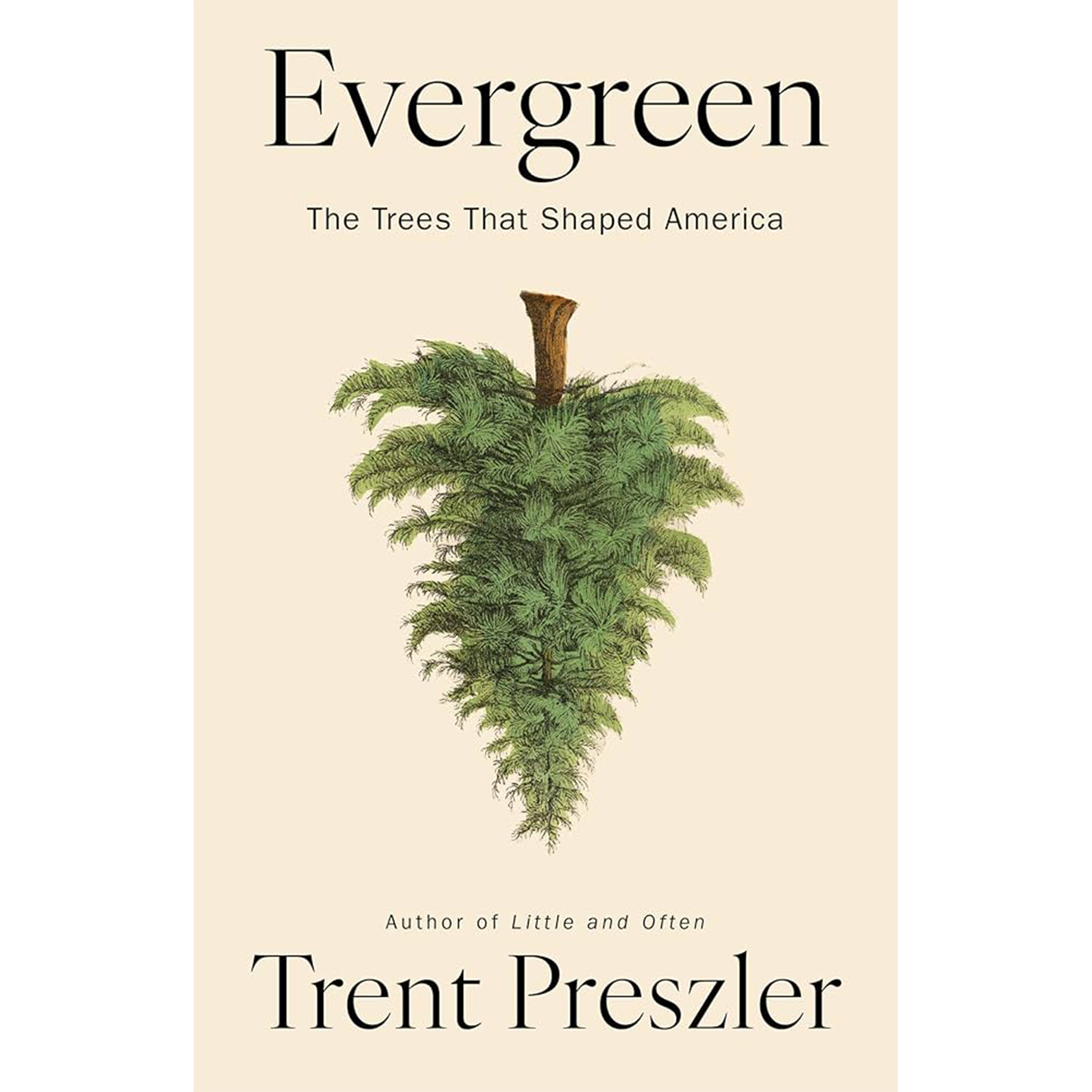
Welcome to A Book with Legs podcast. I'm Cole Smead, CEO and Portfolio Manager here at Smead Capital Management. At our firm, we are readers and we believe in the power of books to help shape informed investors. In this podcast, we speak to great authors about their writings the late, great Charlie Munger prescribed using multiple mental models and analysis. We analyze their work through the lens of business markets and people. In this episode, we will talk about the history of a particular group of conifers, their use, their problems, and in some respects, their future. Joining us is Trent Pressler to discuss his book, the Trees that Shaped America. A little background on Mr. Pressler. He is a professor of practice in the Dyson School of Applied Economics and Management at Cornell University and serves as director of the Henry David Thoreau Foundation's Planetary Solutions Initiative. He serves on the board of directors of One Tree Planted, a nonprofit focused on reforestation projects in 72 countries. Trent received a B.S. from Iowa State University and and a master's and Ph.D. from Cornell University. And my last fun fact on Trent is he also interned in the Clinton White House. So, Trent, thanks for joining me today.
- [01:32]
Trent Pressler
Hey, thanks for having me. It's a pleasure.
- [01:35]
Cole Smead
So, like, you know, there's more to your background and bio, obviously that I didn't go into. But why evergreen trees? Like, what hit you one day? Was it something in your, you know, your background of planting or what kind of captivated your mind on this subject?
- [01:52]
Trent Pressler
Well, there was one day during COVID during the first Covid Christmas, when I'd been home alone for too long and hadn't talked to or seen any people in a while. And I decided that it might cheer me up if I left the house to go buy a Christmas tree. So I put on my mask and I drove to this tree farm a couple miles from my house on Long island where I was living at the time. And I pull in and it's one of those Christmas extravaganzas. So it has the ice skating rink and Mariah Carey music and literal reindeer. It's bonkers. And I see people pulling as I'm pulling in, I see people pulling out with trees on the roofs of their cars. All that's pretty normal. But the trees that I saw them buying had been spray painted. They were every color of the rainbow, like skittles I'm telling you, like bright pink and red and yellow and blue trees. And I had never seen this before. And I'm thinking, so evergreens aren't green anymore. Like, was the basic evergreen not enough? So I cornered one of their employees who was probably this 22 year old who was home on Christmas vacation working at a Christmas tree yard. And I said, what's up with the colored trees? And he said, well, two things. First of all, they're our bestsellers, so don't knock it. And secondly, we started painting our trees green when it became clear that we could no longer grow and mature trees that didn't have yellow or brown blotches. He said, we have so much drought pressure now and heat waves. And so by the time we limp toward Christmas, often our trees are kind of blemished. And just like the American consumer goes into a grocery store and doesn't want to buy a bruised apple, apparently we also don't like to buy Christmas trees that aren't green. So they started painting them green. And then after a couple years, they thought, let's experiment with different colors.
- [03:41]
Cole Smead
Sure.
- [03:41]
Trent Pressler
And so I thought, you know, there has to be a book here. This is just too outrageous not to pursue.
- [03:47]
Cole Smead
Okay, so. So this is actually going to break up a subject that I thought would come out later. But I was thinking a lot about this and I like this story because again, I. I don't remember that right off top of my head from your books. I don't know if it's in there, but let me just use the precedent. So I think you talked about, like the royal family as an example, using a tree at one point. I think it came from their German roots. What if a Christmas tree is actually like a luxury good? When I say luxury good, it's something to your point. It's almost royal in its approach. You talk a lot about the history of that and what if, in many respects, we tried to make it too common and therefore it should be like a. It should be like a Birkin bag where it's like, I have a really nice tree. It's a luxury service. They bring it to my house, they drop it off and they pick it all up. But I say that because is that what the tree is gonna become? Maybe.
- [04:39]
Trent Pressler
I think so. We might be headed toward a future where we have a concierge service for real trees. They are incredibly rare. I mean, back in the 80s, when the Christmas tree business peaked, there were about 22,000 Christmas tree farms selling somewhere around 35 million trees all across America and they were quite common. Today there's only 3,000 Christmas tree farms left and the industry itself has contracted 85 plus percent. Sure. And you know, and so the economic reality is that the product is becoming more scarce, but we have not seen a jump in prices. So even though supply is restricted, demand has kind of tailed off as well and prices have remained stagnant. So your idea for a luxury Christmas tree like a Birkin bag I think is brilliant because the number one complaint that people have with real trees when they switch to an artificial plastic model is that they're just tired of the mess, you know, And I know my own mother changed. It was hard for her to lift a real tree and they leave all the needles all over the house. So. So I think a concierge service for a really upscale tree where they kind of handle all the chaos and mess of it is a great business idea.
- [05:49]
Cole Smead
When I think of it too, because you know, as you talk about and you do really fun in your book, you talk about like the Charlie Bound Christmas and you kind of bring back memories of what everyone's seen as a child, to your point, on Christmas trees and you know, people used to staple the Christmas lights up on their house. And in my hood there's a lot of people that don't do that. They hire a third party service to do that for them because maybe their roof's high or whatever. But again, I haven't seen a Christmas tree service yet, which to your point, I would gladly pay for.
- [06:19]
Trent Pressler
Yeah, yeah, I know. And I think especially a lot of people in cities, people in New York would love that because it's just so hard to do anything or get a tree up a walk up flight of stairs, for example. I think it's a great idea. Now your idea for this business model has been done with artificial trees. So as you probably know, you could spend $2,000 if you wanted to on a really, really good artificial tree that's got fake pine scent and a revolving bass that plays music through a Bluetooth speaker and all the bells and whistles.
- [06:52]
Cole Smead
That's funny. So the most, one of the most famous trees in the world is the tree at Rockefeller Center. You know this, this episode's going to come out right after the first of the year. But I actually will be at Rockefeller center here this weekend. I'm taking a couple of my kids there.
- [07:06]
Trent Pressler
Great.
- [07:07]
Cole Smead
Teach our listeners what does it take to get the tree at Rockefeller center picked and found and where does it come from and what does that process look like?
- [07:15]
Trent Pressler
Sure. There's one man named Eric Powsey who has had the job as head gardener at rockefeller center for 30 years. And so every year he's constantly driving around the northeastern US in his pickup truck, just scouting for possible trees. And, you know, he's got his own sort of mental list of what trees he wants to pick maybe for the next five years. And he continuously revisits those trees, make sure they're healthy and watered properly. But once he finds one, he'll just knock on people's doors. Like he literally pulls in someone's driveway and says, hello, knock, knock, I'm the guy from Rockefeller Center. Can I cut down the gigantic Norway spruce in your front yard? And most people say yes, because it's such an honor and it's a whole thing, right? And then he'll put a little plaque in place after they cut it down, but he sends in a crew, they tape and wrap all the branches carefully to prevent them from breaking. They also have to do stress tests on the quality of timber in the upper branches just to make sure that it can actually hold all those thousands of lights. And Then even the 900 pound crystal Swarovski Crystal star that they put on the top of it. And if it passes all those tests, then yeah, they cut it down and right after Thanksgiving put on a flatbed truck and haul it into New York City for the whole spectacle.
- [08:37]
Cole Smead
You go back to the historic form of what we now know as evergreen, or what I'll call coniferous trees. I think it was pronounced Archaeopterus. Is that fair?
- [08:49]
Trent Pressler
Archaeopterus.
- [08:51]
Cole Smead
Archaeopterus. So what was Archaeopterus, the predecessor to these trees?
- [08:55]
Trent Pressler
So this was the original Christmas tree. This was the proto gymnosperm or it's the oldest tree that we found in the fossil record. They lived about 380 some million years ago in the Devonian period and sort of they dominated the planet at a time when the dinosaurs were roaming the Earth. And then when everything went extinct, either through volcanic eruptions or a meteor hitting the earth, these archaeopterous trees, which were kind of like a top heavy Christmas tree with a big central trunk and then these fern like fronds at the top, they all collapsed into oxygen deprived swamps. And then over millions of years they were compressed under enormous heat and pressure into what we now know as coal. So when we're digging up and burning coal, or even oil to fuel and power modern civilization, we are in effect reversing what happened in the Devonian when all those trees when we captured all that carbon. So you could say in some ways that our economy is powered by fossilized Christmas trees.
- [10:00]
Cole Smead
Sure. Well, I think it also shows that energy begats energy, which is something that I want to bring up later, but it follows the laws of physics. Are we shocked that something that takes in carbon thus produces carbon? No. That's very logical. You talk about for. For centuries, midwinter traditions tended to dominate the use of these evergreens.
- [10:29]
Trent Pressler
That's right. So humanity, really, tens of thousands of years ago, humans would bring evergreens indoors in the winter as a talisman against the darkness. Sure. And especially pagan rituals, they centered around the winter solstice, the longest night of the year. And the evergreen quality of the branches gave them hope for, you know, that there was spring would be coming on the horizon and that we could live through the darkness. But they were actually decorated in these pagan rites with symbols of fertility and worshiped around the solstice. And then there was a pretty enterprising pope who thought, you know what? Let's. If we can convert all these heathens, but maybe, say, attach the birth of Jesus Christ to December 25th to the Solstice, the. Maybe we can bring the pagans into the solstice celebrations and kind of merge, in a way, pagan rituals with Christian rites. And the tree was at the center of that.
- [11:26]
Cole Smead
Sure. And that was kind of a pragmatic approach. You also tell the story of places like Fribourg, Germany, you know, where this was, you know, something, you know, you know, later, but obviously much earlier than other places in the world.
- [11:38]
Trent Pressler
Yeah, absolutely. So the first documented instance of decorating an evergreen tree was in Germany in the 1500s, and villagers would decorate them with baked goods or gingerbread or candies and even fruits. And it was the first sign of a ravenous demand for Christmas trees because some of the local governing authorities had to put limits and restrictions on how many trees people could go out into the forest and cut, lest they just decimate the forest for their new Christmas tradition. It did start in Germany and then emanate out through Europe from there and eventually made its way to the United states in the 1800s.
- [12:15]
Cole Smead
And Charles Foley was the first example of that in the Boston area.
- [12:19]
Trent Pressler
Yeah, absolutely. He was a Harvard professor, and he put up and decorated a beautiful tree and then invited journalists and members of the literati to his house in Cambridge. And one of them was a woman who wrote for the Godey's lady book magazine, which was the most popular publication of that era. And she wrote a glowing review of his decorated tree and the magic of it all. And it really kind of, it kind of radiated out from that moment for the rest of the country.
- [12:47]
Cole Smead
Sure. You also talk about, and I think you mentioned this in the Rockefeller section, how there's a paradox to the tree and it's really in the middle of everything in many respects. So I think the example you used is, you know, you're talking about, you know, people look at it some cases as what was a pagan, now in some cases, like a religious view. Because obviously, you know, to your point, Christianity in some ways, or even Catholicism has co opted the tree. But yet, if you show a tree next to a nativity scene, next to a menorah, like, what does that represent? And that's been a court case that you mentioned.
- [13:24]
Trent Pressler
Yeah, absolutely. The Supreme Court of the United States ruled this in 1984. There was a case where a small town in Rhode Island, Pawtucket, Rhode island, they put up a holiday decoration and there was a banner that said seasons Greetings and then a, a creche depicting the birth of Jesus Christ and a Christmas tree. And, you know, people thought it was overtly religious and that we shouldn't have religious symbols on public land and in public buildings. So it went all the way to the Supreme Court and they ruled that in fact, it's. The Christmas tree is secular and it is now used as part of a holiday celebration for many different religions or even with people that don't have a religion at all. Sure. And it's just a symbol of holiday cheer. So it was sort of indoctrinated in US Law that Christmas trees are secular.
- [14:16]
Cole Smead
Yeah. You talk about the physical science of the tree. I was listening to a podcast that a friend had sent me with a gentleman by the name of Jim Tour, who is a material science guy from Rice University, one of the most famed in his field. He was on Tucker Carlson's podcast and he was explaining the material science of a tree. We can study it, but we can't replicate its structure.
- [14:43]
Trent Pressler
Right? We can't. And it's so special because it's rooted in its cellular makeup. So if you do a cross section of a hardwood, like a maple or an oak, and you look at it under a microscope, what you're going to see is a whole series of circular cells that are arranged haphazardly and kind of in a circular irradiating form. Then if you look at a cross section of evergreen lumber under the microscope, their cells are lined up like perfect little LEGO bricks. They're rectangles and they form These linear chains and those chains at the cellular level are what actually make evergreen timber so great for construction because it gives them kind of a flexibility without breaking. And. And it's been, it's confounded material scientists for a very long time that we can't actually make a man made product that has similar properties. It just hasn't been done.
- [15:39]
Cole Smead
Yeah, because I think you mentioned some of the tube like nature of obviously the composite of it. And let me ask you. So you know the flammability throughout your book is a gift, right? I mean, you know, the flammability is what drove it, its original energy use. Yeah. Explain why these trees are so beneficial when it comes to creating energy.
- [16:02]
Trent Pressler
So evergreen conifers contain a substance called turpentine, which is one of the world's most flammable compounds. And they have this compound as a means of survival. And in fact, their sexual reproduction depends on fire. So you see a spruce tree, for example, they have that conical shape and wider branches at the bottom because that helps wick up fire and flames from the ground, which will then burn the tree and pine cones. When the resin in the pine cones is heated up to over 138 degrees, the resin melts and the scales pop open and the seeds then spread out over the ground and those trees can regenerate themselves and can grow. So early humans realized quite quickly that some trees burned better than others. And they started to selectively harvest pines, spruces, firs and evergreens to use as firewood for heat and warmth, and perhaps most significantly to smelt metal, to transform iron ore into metals and to make sand into glass. And so wood really powered some of these most fundamental human innovations throughout ancient history.
- [17:11]
Cole Smead
Speaking of ancient, you talk about the deforestation of really Rome and the Roman Empire. You talk about how this has been a common theme. It also happened in Europe. It's funny, I actually did in my history major in college. One of the things that we learned was Greece had become so deforest at that time. That really caused the rise of Alexander the Great, because Macedonia still had trees for making ships. And that was a common theme and thread across your book is who had the resources tended to be the economic driver because obviously the cost of the good was so much cheaper for them. Do you think that's unstoppable paradigm? And I say that because history had argued that's gone on, but in some ways it has stopped and reversed.
- [18:02]
Trent Pressler
Oh, I think that's a paradigm that continues to this day in even more dramatic fashion, but just not on our soil. So we're not witnessing it. But if we go back to so Rome collapsed in part because they ran out of trees, they needed more lumber. So they, you know, Caesar marauded through North Africa and Europe in search of trees. The Brits came to America in search of trees to build masts for the Royal Navy. And today. So even though we were not necessarily, you know, the target of other nations, right now we are, and many nations are, especially China, are in hot pursuit of mineral resources to build, to make batteries, Right? So right now, Africa is at the center of that particular firestorm with the search for things like cobalt and lithium and the products and the minerals that we need to power our modern economy, which maybe isn't we're not burning wood anymore, but we do need to have iPhone batteries and car batteries. And so those resources have to come from somewhere.
- [19:05]
Cole Smead
Hi, I'm Cole Smead, CEO and portfolio manager here at Smead Capital Management and host of this podcast. If you enjoy this podcast, I'd like to invite you to check out smeedcap.com at our firm, we are stock market investors. We advise investors who play the long game with a discipline that has proven success over long periods of time. Learn more about our funds@smeedcap.com past performance is not indicative of future results. Investing involves risks, including loss of principal. Please refer to the prospectus for important information about the investment company, including objectives, risks, charges and expenses. Read and consider it carefully before investing. Smead funds distributed by Smead Funds Distributors llc. Not affiliated. Let me just use the bigger picture of this discussion, because if you look at US History, one of the most dominant eaters of, you know, what I'll call this resource has actually been agriculture, Right? Because what they typically do is they'd come in and cut the trees and then you'd plant. Now that we're not an agricultural society, a lot of the Data argues from 100 years ago to today we've added back to our forest. So it's not what it was in, say, 1620 to your point, but it's not what it was in 1920 either. We're more forested than a hundred years ago. How do you look at that paradigm? Do you think of that being it's a capitalistic society that values certain things and wants to solve those? Or what do you think the reasoning is for that?
- [20:31]
Trent Pressler
Well, you're correct in that agriculture was largely responsible for much of our deforestation. You can't, if you're a white landowner or slaveholder in the antebellum south you can't plant cotton until you cut down the trees first. Right. And so in that sense, evergreen timber extraction really supercharged slavery in the south. And it supercharged just the extraction of trees across the country. But to your other point, we have seen a pretty massive regeneration of forests, especially in the Northeast. So that hasn't happened. I'm going to come back to the Northeast in a second. It has not happened in the West.
- [21:07]
Cole Smead
Sure.
- [21:08]
Trent Pressler
So in the west we have such periods of extended drought and heat and beetle kill in large swaths of forests that once we have a fire, for example, or we clear cut a site in the west, often they're not regenerating on their own. They just can't. And there aren't enough mature trees near the burn site to regenerate. In the Northeast it's different. It's a wetter climate. We don't have the same fire pressures. But the forests that are regenerating are grossly different from the old ones. So we don't have monarch species, we don't have many large white pines anymore. And there are a lot of invasive species, especially things like Norway maple or the tree of heaven. And so, you know, you drive through New England and you see trees and it looks forested and so it seems like. And it does feel like. And a lot of data shows that we have more forest cover in the Northeast than we did a hundred years ago.
- [21:58]
Cole Smead
Yeah.
- [21:59]
Trent Pressler
They're also bifurcated by strip malls and development. And it's just, you know, they're forests. They may not be a forest any more than a swimming pool is a lake, but there are trees and they are functioning somehow in a new ecosystem.
- [22:15]
Cole Smead
Sure. Yeah. No, I think I also, you know, I think the other analogy I always think of is like, let's say you grow a garden at your home. Okay. I'm sure you love that garden. I don't personally garden, but I'm sure from what I know with friends that do they love it. That'd be like, you know, part of me thinks like, well, it'd be like going to them being like that flower. Yeah, you, you grew it, but it wasn't natural. You know what I mean?
- [22:38]
Trent Pressler
Yeah.
- [22:38]
Cole Smead
And there was like, there's this sense that like, I think there's two schools of camp on or two camps of school. One is like, we shouldn't touch anything. Right. It's kind of like the minimalist or concert. I'll call it starvationist in some respects. Mantra versus the noble gardener is how I might put it, if that makes sense.
- [22:56]
Trent Pressler
Yeah. Look, we've been gardeners on this continent for 10,000 years. I mean, the original forests that the Pilgrims happened upon, they weren't virgin. Native Americans for tens of thousands of years were managing forests, burning parts of forests to get rid of the combustible tinder sort of in the understory of the forest. They would also use fire to create openings and clearings so that animals like deer could come in and graze and then they would hunt the animals. There is kind of a, I think I would call it a myth that in our modern landscape, when we have 300 million people living in this country right up against forests, that we don't need to manage them and we should just be hands off. But you know, that can be a recipe for disaster because then we're just going to have rampant forest fires. And you know, if it's a resource and it's our most renewable resource we've got, economically speaking, then I think we have my personal opinion, we have a responsibility to manage it in a way that ensures not only its continuation into the future, but our own.
- [23:56]
Cole Smead
Sure. Since we're in it. I love this part of the book. So can you go a little more into, you mentioned, you know, Native Americans did forest management long before white people did, to call a spade a spade. So how did they do that? And because this has been a quite, I mean, this is a quite a political debate, I mean, Trump comments on this whole idea of forestry management and you know what that should be. I was just in Lake Tahoe this last weekend in a community where they had gone in and mulched up all the low lying stuff sitting on the ground as part of their forestry management to effectively not make it a tinderbox and cut the trees up higher to stay away from obviously a forest fire. So we see this, but explain where we started our forestry management and we'll talk about some of the whys that we didn't get there quicker, I guess.
- [24:44]
Trent Pressler
Sure. Well, by the way, I remember that speech by Trump and he was absolutely correct. We need to manage these forests. We have to burn the understory. We have to, as you said, limb them up if we want to have any hope of not having these raging infernos every summer that decimate the west coast. You know, and we haven't learned the lesson because even 2025, the fires in Los Angeles and Malibu were the most economically damaging natural disaster in human history. So we haven't quite learned that lesson. But you know, what it's going to take is tens of thousands of More employees working at the US Forest Service, armed with equipment and backhoes and bulldozers to go in and take care of these forests. Now, what was done to your earlier question? For thousands of years, indigenous people from east to west managed forests almost like garden scapes. So there were parts that were managed for timber in areas that were kind of managed with low growth for fruits and berries, and then parts of the forest that were managed with younger sapling growth, which they used for craft for making things like canoes and bows and snowshoes. And so where we've progressed today, I think, and I don't know, for me, I always feel like I would like to think evergreens and Christmas trees broadly, are one of the least political things that we could ever have a debate about in this country. Because, you know, why wouldn't we want to conserve the grand old trees that are left while having a logical economic plan for utilizing the other resources that we still have at our disposal? Sure. And the most successful examples today of forestry companies, which we'll probably end up talking about soon, are the ones where they have a policy like we plant one or two trees for every single one that we cut down.
- [26:32]
Cole Smead
Yeah, well, so I was gonna say on that. Cause there's the burn side of it. Right. Which you talked about. The natives did manage burns, which is a much bigger thing nowadays, but all the way out to. In the current production. You know, there are things like pre commercial thinning. Right. Where prior to harvest years before harvest, they will commercial thin a stand because that actually causes the most abundant yield for the trees.
- [27:04]
Trent Pressler
That's absolutely right. It's a great point. So, you know, it is also a myth that you can just plant a forest or let a forest regenerate and have it magically produce viable timber. The reason old growth forests were so rich in timber is that the giant trees were actually spread very far apart. As they got older, they shaded out the smaller trees, which then kind of just withered and died. And so your. Your point is, is a perfect example where if you go in and you thin the small saplings and just leave kind of monarch trees and you make sure they're nice and spread out, you will have a much healthier and more functional forest if you're interested in harvesting the timber from it. If you let all those little saplings grow up on their own, you can see this driving around lots of places in successional forests where you got millions of small trees jammed up right against each other, and they end up looking like just a long wisp where it's this long trunk with a few leaves at the top or a few needles at the very top. But they're not exactly a fully functional and healthy mature tree.
- [28:13]
Cole Smead
So under the heading of, like, long time ago, transporting of trees, you talk about the Chacoans and how they move trees around. I was trying to understand this. I mean, this is crazy. I just couldn't believe, first off, put it under the heading of, like, jobs I never want to do in my lifetime. But explain, explain how they're moving lots of trees many miles. I think you. I think it was like a four or five day walk with no horses.
- [28:40]
Trent Pressler
It's astonishing, really. So the Chacoan peoples lived. They were ancient Puebloans. They lived 1100 years ago in the desert southwest. And we have found these archeological sites of these massive homes and these ceremonial underground chambers called kivas. But the homes were like hundreds of rooms, and they were made with massive pine beams. And so archaeologists for many years were kind of scratching their heads thinking, how did they build this massive pine beam structure in the middle of a desert in New Mexico, where the nearest place where you could cut down any full grown pine tree was between 40 and 60 miles away in mountains? And so there was a whole bunch of scientists that did tests to determine that, in fact, those trees in those homes came from the mountains that were 60 miles away. And so then the next question was, well, how did the ancient Puebloans get them there? And where we've kind of coalesced around a notion right now is that they would use stone axes to pummel at these trees for weeks until they fell over. They didn't have metal, so they were using stone ax, like blunt point instruments to cut them down. Brutal. So that's brutal part number one, and then it's 100 degrees number two. And, you know, and they're kind of subsisting on whatever animals they can kill and maybe some pinions and pine nuts. But they wove what were called tump lines or tump straps. And it yucca leaves that they would weave with pine branches, and they would kind of make almost like a headband that would go across their forehead and then it would drape back behind their neck. And if there were two or three guys lined up with tump straps across their foreheads, then someone, then other crew members would lift a pine log up and tie it to the tump lines. So they would essentially walk two or three guys wide, maybe a 30 foot trunk, going across the desert with the trunk of the tree suspended from their foreheads with Tump lines. I mean, this is incredible. I don't know. Like, you're right. I don't want that job. I don't know how they did it, but over the course of about a century, they cut down 250,000 mature pines and hauled them across the desert with their foreheads.
- [31:00]
Cole Smead
Yeah. Never underestimate humanity. I just, I was enthralled by that story. So let's pivot. What were like, what did an early sawmill look like? The first sawmills that we ever saw, how were they powered? What did they look like?
- [31:14]
Trent Pressler
Well, the earliest, most successful sawmills were all built on rivers. So they used a water wheel and the river kind of flowed and it turned the water wheel, which then made up and down blades go through the wood. There was also another method of hand sawing. So they would put, they were called pit saws. And this was all generally run by enslaved labor. And in the 16th and 17th centuries, the European immigrants enslaved upwards of a million Native Americans in sawmills. And the two man pit saw work was also brutal. But they dig like a eight foot deep hole in the ground, lay the log over the hole, and then you'd have one man standing on top of the log above ground and one man below the log in the pit in the ground. And they would be alternately pulling and pushing a saw through the board, through the trunk to get a board. I mean, just brutal work that would take, you know, it could take you days to kind of process one big log, basically. So it all changed with this woman named Tabitha Babbitt, who was part of the Quaker community in Cambridge, Massachusetts. And she invented the circular saw blade. And it just, it changed the world overnight. It changed everything.
- [32:29]
Cole Smead
So you also, right around this section, you teach us where the word backlog comes from too.
- [32:35]
Trent Pressler
Oh yeah. So backlog. In the olden days, in early colonial homes, they would build really wide fireplaces, like 8 to 10 foot wide fireplaces, because they had to heat their homes by burning wood. And most of the, the, the heat went uselessly up the chimney anyway. But so they would bring an oxen or a horse into the house to drag a log, which they would then roll into the hearth. And so you would often stack several pine logs in the back of the hearth of the fireplace so that you, as you burnt one, you could just roll another one down into the, into the active fire. So that's where the term backlog came from.
- [33:19]
Cole Smead
I love that not all trees are the same. I think you tell the story of finding mass trees and how important and valuable this Became for, say, Britain's military.
- [33:32]
Trent Pressler
Yeah. So by the 15th century, Britain had cut down all their trees, and they were blocked by other nations from logging in the Baltics, the Alps, the Pyrenees. And so they were desperate, and early explorers had told them, had tipped them off to the fact that the US had massive, mature white pines. So the Brits said, perfect, we need those white pines to build our masts for the Royal Navy for our battleships. So they sent the pilgrims over here as lumber merchants to cut and extract pine. It didn't quite go as planned, as you can imagine. The rest is history. But the colonists eventually revolted and rebelled. They didn't like that the Crown claimed ownership of all the big white pine trees. And so the American Revolutionary War really started with the pine tree riot, which happened a year before the Boston Tea Party, which not many people realize. I mean, I was taught in fifth grade that it all started with the Boston Tea Party. And it was based on taxation conflicts, but in fact, it was based mostly around the pine economy and how the Brits wanted the big trees for their Royal Navy, and the colonists just wanted to harvest smaller trees to make lumber and timber for building homes and expanding their own economy. It even led to the rise of America's first currency. Like before, the dollar. We had the pine tree shilling, which is a little silver coin you can buy today on eBay for $95,000 a piece. But it was our first currency that the colonists made themselves because the Brits weren't sending enough gold over for them to buy and trade goods.
- [35:06]
Cole Smead
Sure. When you explain the pine tree riot, you tell about the scene where the sheriff comes in and everyone's disgruntled with this sheriff for what had gone on and, you know, obviously colonial policy. And I'm having visions of Eugene in the Disney movie about Rapunzel where he's in the bar with her, and I'm like, I have this cartoon episode run in my head where these guys are about to kick the crap out of this guy. And so I. You were evoking Disney to me for some reason at that point in your book.
- [35:35]
Trent Pressler
I didn't even realize that.
- [35:36]
Cole Smead
Yeah, so. So the home that comes in America early on is very different than the European home. You talk about how the tree really democratizes homeownership because it really was just far cheaper, Maybe less sturdy, but far cheaper to build.
- [35:53]
Trent Pressler
Yeah. So our early homes, when we first started building homes here in the European model, were built with timber framing. So that meant that we used heavy beams and we had to cut Specific joinery to combine two beams together to make walls of houses. It was not only very hard labor because the beams were expensive, but it required a lot of skilled labor. And you would have to do an apprenticeship for two years just to learn how to make a timber framed home. So with evergreen lumber, when we started making what was called balloon framed homes instead, it revolutionized a lot of things. But one of them was that we then had standardized dimensional lumber. So we started cutting wood into common s. So a 2x4, which we've all heard of, a 2 by 4, a 2x6, 2x8. And then instead of going to a lumberyard and saying, here's my list of all these specialized cuts of wood that I need to build my special house, you just go to the lumberyard and you get the standardized dimensions of wood. At that point, then basically anyone that could learn how to swing a hammer could be also taught to build a house. And it democratized home ownership. And it was the first time where something was scalable. So the population of the US was exploding and we needed to build a lot of houses quickly. And finally we had the capability of doing that.
- [37:10]
Cole Smead
Yeah, and we think about this a lot. I mean, full disclosure, we own home builders here in the US and then I think I mentioned before that we own some Canadian lumber companies. And it's funny to me, people will say, oh, wood's expensive relative to history today, wood is actually pretty cheap. It's actually in some respects on the floor relative to where it's been. And I always think about, you know, it tends not to be the inputs that causes a lot of the problem. To your point. I mean, in some respects, if I go out to a tree stand and say, hey, what's the stand cost today? It's very cheap. If you go to the south, the tree stands are very cheap. In fact, it's always been really depressed market. And so I think it's funny when wood gets caught in some of these discussions. And it's like, if you think wood is the problem, you're probably missing the overall, you know, point in this.
- [37:54]
Trent Pressler
I would say you're missing the forest for the trees.
- [37:56]
Cole Smead
Yeah, forest for the trees. So I want to ask you another question. And people back to the idea of energy requires energy. So you're talking about from a structure perspective. And we've talked a lot about the energy usage. I always tell people the forms of energy that we use abundantly tend to be the most concentrated forms. And obviously wood comes from photosynthesis and natural sunlight, which is Not a super concentrated form. And so if you're going to go out and do like a steamboat, how much wood do you need to run a steamboat up and down the Mississippi, for example?
- [38:34]
Trent Pressler
Oh, goodness. The steamboats on the Mississippi were woefully inefficient and, you know, you could burn through, I forget the exact number, but something like 70 to 100 cords of wood a week on one single steamboat. And there were several thousand steamboats. And a cord of wood is a stack that's like 4ft tall and 4ft wide and 8ft long, and it's a lot of wood. It's crazy and it's not efficient. But for a couple hundred years of our history, that's what powered everything. So the genius and the beauty of coal, of course, is that it's so compressed. It is wood. It is wood, but it's concentrated. And so instead of burning mountains and mountains of firewood, you could burn like a bucket of coal and get the same energy out of it. So that's what made that revolutionary.
- [39:24]
Cole Smead
We hope you're enjoying the podcast. You know, we work hard putting together this show, but we work even harder for our investors at Smead Capital Management. At Smead, we believe in disciplined investing, which is why the Smead funds have a proven track record of long term outperformance. If you're an investor who plays the long game and want to invest in wonderful companies to build wealth, we invite you to visit smeedcap.com Past performance is not indicative of future results. Investing involves risks, including loss of principal. Please refer to the prospectus for important information about the investment company, including objectives, risks, charges and expenses. Read and consider it carefully before investing. Smead funds distributed by Smead Funds Distributors llc. Not affiliated. I was going to ask you, have you by chance this is just coming to me randomly, but we had this on a prior podcast about a book about George Hurst, William Randolph Hearst's father. Have you ever been to the kilns up in the mountains of the Death Valley by chance?
- [40:27]
Trent Pressler
No, I have not. Tell me about that.
- [40:29]
Cole Smead
Okay. Because they did. Exactly. So what they did is they went up, they cut down a bunch of trees, put it in kilns to break it down to more of a coal like substance.
- [40:38]
Trent Pressler
Yes.
- [40:39]
Cole Smead
They took donkey trains, went down to the valley with that, and then they would use that to fire the railroad to get the minerals they were pulling out. And so to your point, the incredible part is that's all not no longer going on, but those kilns are still there. So when you Were talking about some of the kiln process. I didn't ask about it, but, you know, you mentioned, like blacksmiths, kilns. You know, trees have always been around kilns, whether as the energy source or as the structure that builds it or whatever that may be.
- [41:07]
Trent Pressler
Yeah, that's a great point. So it's not just that we were burning raw wood or coal dug up from the earth, but the way you make charcoal is fascinating because it's really a chemical reaction called pyrolysis. So you kind of smolder wood in this low heat fire over a long period of time in the absence of oxygen. And by doing that, you basically are distilling wood. You're distilling a solid object into just its carbon component form. So then when you burn coal, charcoal, you don't have to first burn the water and the SAP and all the other chemical compounds that exist in wood. You literally are then only burning the carbon. And because it's concentrated like that, you get a hotter, faster fire than you would with just plain wood.
- [41:57]
Cole Smead
When you mentioned water, can you explain to our listeners, when someone splits a log, have you seen these big, like, you know, wood splitters where they come in and it's like a. It's like a metal ax. It comes down when that log is compressed and pulled apart. Can you explain what that looks like? Because it's incredible.
- [42:16]
Trent Pressler
Well, so tree trunks are basically just compressed drinking straws, but billions of them. And they're roughly the width of a human hair. And they transport nutrients up and down the tree. So sugars and nutrients come down from the leaves and water comes up from the roots. And these capillaries are what not only keep a tree alive, but that's what gives wood its stringy and kind of tough quality that allows a tree to sway in the wind without the snapping in half. So when you see these wood splitting videos, I think I've seen this video go viral on the Internet of how they make firewood. And it's fascinating because, you know, some water spurts out because these are straws that are filled with SAP and sugar and nutrients for the tree. But it also looks kind of like string cheese. Like it's got this strange, like, stringy texture. But it's fascinating to me.
- [43:10]
Cole Smead
Yeah. To watch that water sop out of it. You're just like, wow. I mean, you're shocked because it's like an explosion of water at that last second before it's splitting. So you mentioned turpentine earlier. Can you explain the uses of turpentine you mentioned it's a good energy source, but how else was that used?
- [43:27]
Trent Pressler
Primarily in what we called naval stores. So shipbuilding and boat building supplies were often based on turpentine and a bunch of different solvents. So you think about varnishes for, for furniture making and boat building, waterproofing, chemical compounds. Turpentine was also very useful, and still today is as a solvent for paint. You know, when you're spray painting something with one of those mechanical sprayers, you have to dilute it. So it has a whole host of uses in industrial production. Back in the day, when people didn't really know any better, they also drank it. I mean, people in the 1800s were.
- [44:09]
Cole Smead
They experiment with anything. They're like, I know, yeah.
- [44:12]
Trent Pressler
They were like, my teeth hurt. I, you know, it's 1850, there's no antibiotics. Like, everything hurts. Maybe I'll drink this turpentine and it'll help me feel better.
- [44:23]
Cole Smead
Oh, man. There. It reminds me of, like what people read on the Internet now and then they try out. It's, it's like, we're going back there. We're, we're reverting. We're going to be back to the monkey form at some point. What did cedar cruisers do? I thought this was kind of interesting if you were a cedar cruiser.
- [44:39]
Trent Pressler
So when the turpentine industry was roaring through the south from North Carolina to Texas, tapping all the longleaf pines for turpentine, they would leave behind kind of a scarred, damaged landscape where the turpentine trees were damaged from the tapping process. And then they would eventually fall over, be blown over in the wind, or be basically burned in massive forest fires. But there was another species of tree, the Juniperus virginiana, or eastern red cedar, that grew in mixed stands with the longleaf pine. And the Cedar Cruisers were these companies that made pencils. So before the computer and before really the invention of pens, America depended on, we used billions and billions of pencils a year. And the best wood for making a pencil came from cedar. It smelled nice, it was aromatic, and it had kind of the right softness where you could insert the lead and it would work great. So those two industries were hand in hand. So the rise of the turpentine business kind of also charted a course for the rise of the pencil making business. But eventually they ran out. They ran out. 99.9% of all the longleaf pine trees were killed during the turpentine craze. And most all of the old growth eastern red cedars were also cut for pencils. So then they resorted to using other trees like basswood or linden or even maple and oak to make pencils with. And then they would just kind of infuse them with the scent of the cedar oils to make it seem like it was still a real cedar pencil.
- [46:25]
Cole Smead
Interesting. Yeah. To this day I find cedars in general, but particularly like a Pacific Northwest cedar. We had a two acre property in Seattle and we were on a very forested area. And so we had these big cedars. We're talking like four or five foot, you know, wide cedars. And they're beautiful. They're just like really tough to do anything around because they're just so wide. And so I always, I think we're, you know, we were talking before about going onto a stand and whenever someone's, you know, when they are replanting trees, let's say they're going to go like a traditional Doug fir or, you know, spruce, pine, fir mix in that area. What they will often, if there's like a kind of a boggy area or wet area, they will put down cedar seeds because they know that cedar deals with the water so much better even as a sapling, let alone, you know, that tree. And that kind of begets part of your book, which is really talking about the sequoia, but really, you know, the coastal sequoia versus, you know, what was the non coastal type.
- [47:28]
Trent Pressler
Yeah. So there are several species of evergreens that just love the water and there are some that don't. So the arid climate ones are more like say the ponderosa pines or the Colorado blue spruce. They grow in the arid western range, Colorado, Wyoming, other states in the, in the middle part of the country. But when you get to the coasts, the coastal redwoods grow to gigantic proportions, maybe up to 30ft wide and 300ft tall over the course of thousands of years. And they grow in a wet climate where they actually absorb quite a bit of their moisture from the air. They have this like, leathery green needles that get that sea fog off the Pacific and they drink from the air. It's astonishing. And then the inland redwoods, the sequoias that are kind of growing more on the arid slopes of the Sierra Nevada, they get most of their water from snow melt in the spring. But maybe the tree that loves water the most, the evergreen sitka spruce, grows in a very narrow band on the coast of Oregon and Washington. And it loves growing in these kind of briny saltwater bogs, sometimes even just submerged in water. And they grow to huge proportions Loving the water.
- [48:38]
Cole Smead
You talked a lot about, really, once the sequoia was found, and how novel it was to your point. The size and obviously the height of these. It obviously became a novelty. I think you talk about where they're just going to do a. They're going to do a cut through one of the trees and they're just going to send it off to New York just so people can marvel at the breadth of this. This obviously became a problem because everybody wanted to get their piece of it. You talk about, like, we've seen the old picture, the tree's now gone. We've seen the old picture of the sequoia that had the cut in the middle of it and you could drive your car right through it. I was thinking of that during your book. But this goes on and eventually it's like, there's gotta be a point to this. You used the Walt Whitman poem as a kind of a picture of what was going on. His 19 or his 1873 poem, Song of the Redwood Tree. Farewell, my brethren, Farewell, O earth and sky. Farewell, ye neighboring waters. My time has ended, my term has come. Do you think it will always be like that for the sequoia, or do you think there will ever be a regrowth? And really what we'll find is maybe an old growth in 100 years?
- [49:45]
Trent Pressler
Wow. I get choked up hearing that poem. I mean, I include it in the book for good reason. I just thought he captured the lament of redwood so deeply.
- [49:52]
Cole Smead
Yeah.
- [49:54]
Trent Pressler
So there's a couple things happening with sequoias today. We have preserved what's left. Like we stopped cutting down the ancient giants, right? Yeah, but the ancient giants, the truly big ones, are all over 2000 years old. So will we have old growth forests again? Okay, maybe, but, gosh, I guess. Can we document that for 2000 years and see? So there are stands of younger trees, let's say we call second growth trees that are maybe 200, that are quite big and they're doing well. But we're also seeing quite a bit of drought stress in the sequoia groves. So as the climate is changing and shifting, you know, the sequoias grow in an incredibly small land area. They're just limited to these little patches in the Sierra Nevada. And that's where they ended up almost as an evolutionary dead end in these river valleys and in these mountaintops. And so if it suddenly, over our lifetime in human scale, becomes too dry or too hot for them to live in those valleys, then maybe they won't survive as a Species, I'm not sure, but hopefully with propagation and modern horticulture, we do know that there are hundreds of thousands of giant sequoia trees growing all over the world in botanical gardens. The British especially love redwoods. And actually it's famous that there are more giant sequoias growing in England today than there are in California in their native habitat.
- [51:22]
Cole Smead
Yeah, you mentioned that in the book, which is an interesting tidbit because it's a great climate. To your point, it's a very wet climate, but it's not like the sequoias had figured out how to jump the Atlantic yet.
- [51:32]
Trent Pressler
Yeah, that's true. It's all man, you know, man made. And we kind of have to carry in shepherd seeds all around the world. But we've been doing that since the dawn of time, so nothing unusual about that.
- [51:42]
Cole Smead
To follow your carbon paradigm. I don't know if you watch Landman at all. I do on Paramount plus and I find it's like a terribly entertaining show. And, you know, but in the show they do a lot of depiction of the roughnecks that work out in the oil fields of West Texas. And watching the roughnecks that are living in this subsistence housing while they're on site during seasons and whatnot, it reminded me a lot of what you tell the story of what it's like to be a lumberjack in the West. In some ways I say that because you'll see these roughnecks are male dominated. That follows the paradigm of the lumberjacks.
- [52:17]
Trent Pressler
Absolutely. Yeah.
- [52:19]
Cole Smead
And maybe like the Roughnecks 2, this was a fairly diverse workforce compared to other fields.
- [52:24]
Trent Pressler
Yeah, absolutely. So one shocking story that I came across in researching this book that I felt like I had to tell and ended up becoming the subject of a couple chapters, is that the timber cutting labor force between, let's say, California Gold Rush, 1849 up to World War II consisted primarily of queer men of gay men that were on the down low. And it was also racially quite diverse as well. So in that era, if you were, let's say an African American or a gay man or someone who was accused of what they called at the time lewd or lascivious behavior as defined by America's Comstock act, you could be arrested, you could be put in jail, you could be put in a mental institution for life. Tens of thousands of suspected homosexual men were forcibly castrated and sterilized against their will in that era. And it was also illegal for them to hold a job with the federal government or any state government. So imagine living in that time, having very few options and being desperate to have any kind of connection with other people or even a way of making a living for yourself. And guess who needed an expendable, invisible labor force in that era? The timber barons. They were running the most deadly profession on earth. Lumberjacks had about a 50, 50 chance of dying in a 10 year career in the forest. So they were happy to hire all of these kind of down on their luck, sad roughneck men to travel around the country cutting down trees.
- [54:01]
Cole Smead
Sure.
- [54:01]
Trent Pressler
And it's a shocking story and I kind of stumbled across it when I was in Stanford Library and I was looking at archival photos of these lumber camps of men, roughneck men, working in the trades back in the day. And there were pictures of them dancing and having, they called them cowboy stag dances and bachelor weddings. Both a tragic and happy kind of outcropping of their life deep in the forest, secluded from society.
- [54:28]
Cole Smead
Well, and, and I, you know, the other thing, you know, you mentioned it was male dominated. So I think you talked about like they would even dress up as women in those dances to like kind of recreate something. What they thought of like, you know, being more normal, if you would. But it's not like, I mean, I was even thinking about the inverse. Let's say we inverted that scenario. Would you have wanted, let's say, your daughter, like, I have three daughters, so would I want my daughter to be like, hey, I'm going to go to a lumberjack camp in California, I'll see you later. I was like, oh my gosh, that would be so terrible because I couldn't imagine what it would have been like to be a woman there and all the probably likely atrocities that they would have seen themselves or experienced. So I was, I was having all kinds of like, how do you fix those situations or how do you change those or, you know, whatever that is. And to your point, their life was on the line. And so it tends to follow a similar paradigm to other jobs where people can lose their life. They tend to be male dominated jobs. And that played out true to your point with the lumberjacks.
- [55:26]
Trent Pressler
Yeah.
- [55:27]
Cole Smead
Let me ask you. So the Chicago Fire brings up our old problem of this is a great energy source. Okay. So once you get it lit, it stays lit and burns for a very long time. I think you said there's 18,000 buildings that were burned in the Chicago Fire now, by the way. Only 300 people died, I think you said, which I was like, wow, we're pretty good at saving lives. We suck at building things. So this is not your book. But so. And I'll use this. So there is a building up at the University of British Columbia that was built out of what they call, you know, it's referred to as by some as like tall timbers. But it's effectively like where you're taking lumber and you're plying it together to create much thicker structures. And so the idea is on these buildings, you build like a concrete core and then your floors are effectively timber off the floors that are effectively engineered together. So it's like an engineered board. I say that because one of the bigger problems ecologically we also have is since we do so much concrete, it's not good for our water tables to do concrete. It's like really bad. Okay.
- [56:31]
Trent Pressler
Yeah.
- [56:31]
Cole Smead
And concrete takes time to cure. One of the great parts about the tree that we touch with home building is it's really quick. I mean, you could build a house. Habitat Humanity proves you can build houses quickly. Right. And so I always think about, will we ever shift back in our cities to using less concrete and more timber because of like, we can treat it as a firewood now, things like that?
- [56:56]
Trent Pressler
I sure hope so, because concrete is the single most polluting substance on Earth. So the carbon it releases to process it and make it is truly staggering. And if you look at just sheer volume of the substances that human beings consume and use on Earth, water is number one and concrete is number two. So I mean, it's really staggering. And so the more ways we can think of to substitute other materials for concrete, the better. And you mentioned cross laminated timber, which is a new innovation and the tallest cross laminated timber building in the world, I think is that 18 story dormitory maybe in British Columbia.
- [57:35]
Cole Smead
Yeah, University of British Columbia. That's right.
- [57:37]
Trent Pressler
Yes. Right, yeah. And you know, it's an awesome innovation. And we take trees, maybe marginal trees, that couldn't necessarily be dimensional lumber, but we can chop them up and smush them together into these huge panels. It is. So it has many advantages. One is that it's more beautiful, more attractive. You don't need to do as much finishing on the inside. It's got soundproofing qualities. It actually is quite fire retardant when they're compressed into those panels. And you know, the drawbacks are primarily that you can't necessarily build as tall of a building as you could with concrete and steel. But the main obstacle I'm seeing right now in the marketplace with cross laminated timber is just the physical distance between the manufacturing plants where they're made and the buildings where they're installed. So those panels are enormous. So like if you're, you've got like a 30 by 30 square panel of cross laminated timber to put on the side of a skyscraper, you know, that's got to go on a flatbed truck somehow somewhere from a factory to a building site. And that is really hard to accomplish in a cost effective way. So, you know, could you ship cross laminated timber across the country 2,000 miles on a train? Okay, but who's going to pay for that? By the time it gets there, you've tripled the cost of the building material itself. So if we can fix that problem and solve that nut, maybe it'll be the future.
- [59:08]
Cole Smead
Sure. How important has the Douglas fir been among the evergreens?
- [59:14]
Trent Pressler
Well, it's preeminent. And for many years it was the primary lumber used in building materials for homes, for dimensional lumber. It's the hardest softwood, it's the hardest evergreen conifer timber. And Douglas fir also had this amazing duality because it was also a really popular Christmas tree for a long time. And in its youth, the trees are real bushy and cute and make a nice Christmas tree. And then you let them grow up and they have these massive trunks that don't have a single branch for the first hundred feet. Douglas fir became especially important for this country during World War II. So many of our military armaments and barracks and even the boats were made with plywood that was manufactured out of spun Douglas fir logs. Including the boat that John F. Kennedy was on when it was shot and sank was made out of Douglas fir plywood. So it's changed the course of human history. And now with not much wild Douglas fir left, what we do have is a timber industry with Weyerhaeuser and many other corporations, they focus on selective strains of Douglas fir that grow maybe taller, faster, better, and they'll plant one for everyone they cut down. So it's managed more now like any other agricultural crop, like corn, except on a 30 to 40 year harvest cycle.
- [60:35]
Cole Smead
Sure. And then because that's more in the Northwest, case in the south, they use a southern yellow pine, as they call it, and that's grown much more like a true crop.
- [60:48]
Trent Pressler
Yes, the yellow pine or the loblolly pine dominate the southern industry. So where the longleaf pines went extinct during the turpentine craze, they were not replaced by more longleaf pine. They were replaced with cotton and other crops, peanuts, and then the loblolly pine. And pretty much 95% of America's evergreen sapling nursery operations in this country are growing loblolly pines for the Southern timber industry.
- [61:20]
Cole Smead
Hey, I want to give a big shout out to everyone who's been working so hard on this show. You know, we recently hit the top 10 in investing podcasts on Apple Podcasts and even number one in the business category in several countries. As you may know, the show is brought to you by Smead Capital Management. Smead Capital Management understands how frustrating and illogical the stock market can be. If you're searching for funds with a proven track record, give the Smead funds a look. Or better yet, reach out@smeedcap.com and don't forget to mention you're a fan of the podcast. Past performance is not indicative of future results. Investing involves risks, including loss of principal. Please refer to the prospectus for important information about the investment company, including objectives, risks, charges and expenses. Read and consider it carefully before investing Smead Funds distributed by Smead Funds Distributors llc. Not affiliated, let's say I can't let you get away without saying this. How did Cornell get so endowed so early on?
- [62:21]
Trent Pressler
So the young, enterprising Ezra Cornell made a land deal in northern Wisconsin, and so the federal government had negotiated away from the Menominee indigenous peoples a bunch of prime forest land that had white pines growing on it. And he held it until after the Civil War, until we had reconstruction and the demand for timber was through the roof. And then he flipped it. He sold that land to a young man named Frederick Weyerhaeuser, who was in his 30s at the time and just started his timber company. And Ezra Cornell made about $5 million in 1865, money, which is hundreds of millions in today's money. And he used that to start Cornell University, which is my own employer. So even Cornell has roots in evergreens.
- [63:11]
Cole Smead
Yeah, I love that. Let's see, really quickly, what's the forester's.
- [63:18]
Trent Pressler
Paradox in the Menominee tribal enterprises in northern Wisconsin, where they have reclaimed a lot of their native ancestral lands, they harvest a lot of timber, and in fact they now today have more standing timber by volume in their fields than they did 100 years ago. So even though they're harvesting timber constantly, and the forester's paradox is essentially that you can thin old trees, dead trees, diseased trees, and eventually you'll have a stronger, healthier forest because the trees that are remaining will grow bigger and they'll capture more carbon and they'll have a wider girth and be more suitable for timber production. So, yeah, it's a paradox that you harvest more of something and it actually grows better.
- [64:05]
Cole Smead
Yeah. Now, the most important marital religious conversation of your book is the fake tree. How did it start? And then the better question. And again, like I told you before, I grew up a real tree kid, and we had two real trees every year. Thank the Lord. My mother did all the work and cleaned it up. I think we got to pour in a sugar water mix to the bottom of the tree, was all we really did. My only last question is, how do we stop this? Because we kind of touched on it a little bit. I want to know. We got to stop this because it's not good.
- [64:40]
Trent Pressler
So artificial trees started out as these little bristles. They were literally toilet brushes that were wired together. And. And they didn't really look like real trees at all. So they weren't that popular. And then in the 70s, we had these Evergleams, which were metallic trees that ended up causing a whole lot of house fires. And then they were banned. And still, until the 90s, artificial trees still looked pretty fake. And then there were a few companies that emerged on the scene, including Balsam Hill Brands, which is probably the preeminent one, started by a former McKinsey consultant. And they started making trees that were artificial but looked incredibly lifelike. So the branches are a little bit irregular, and they have more traits in common with real trees. But I make no secret in the book on my opinions about artificial trees. And look, everyone asks me the question, they say, what should I get, real or fake? And I say, always get a real tree. Let's say you do buy an artificial tree. People still throw them away. It's a myth that a plastic tree is forever. They have an average lifespan, maybe seven to 10 years. And then people get tired of it. They want the new model that has the LED lights and the Bluetooth speaker and the fake pine scent. And, you know, and you buy one of those trees and, you know, let's say you do use it for 10 years, and then you throw it in the landfill during those 10 years, that's 10 different trees that someone's not buying from a small family farmer who's growing real trees in land providing habitat for wildlife, sequestering carbon. And a lot of Christmas tree farms are grown on marginal land and on rocky soils and mountainsides that might otherwise be converted to housing developments because they're not good for any other type of agricultural crop. So these Christmas trees are really kind of holding down the fort in terms of our open space in this country as well. And Then I also go deep, kind of at the end of the book, into microplastics. So I just don't believe the world needs more plastic things to throw in the landfill. So when you can go natural.
- [66:49]
Cole Smead
So let me ask one more question, because again, I'll divulge more about me, and I think you'll probably enjoy this. So I buy my America the Beautiful pass every year. We didn't talk about than the Forest Service, but I'll just leave that as a breadcrumb for our listeners to go back and read and you talk about the history of its first director and whatnot. But what if we're underpricing America the Beautiful passes, too? And the way to really cause more resources is. I mean, I think of all the foreigners, like when I went. I mentioned I went to Death Valley. There's so many foreigners that go to Death Valley, more than Americans, I think, each year. And it's like, well, that's a great tourist stop. Why don't we charge them way more for such an incredible asset and resource and beauty?
- [67:31]
Trent Pressler
Yeah, I agree with you. You know, I love that program at the Forest Service. If people aren't familiar, you go on the Forest Service website, the federal government will give you a permit to go cut a tree from a national park or a forest or a state park. I don't know. They have limited areas where you're supposed to go. But it only costs $10.
- [67:50]
Cole Smead
And it's. I think the National Parks pass is, what, 100 bucks a year or something like that.
- [67:54]
Trent Pressler
Yes. Yes. Yeah.
- [67:55]
Cole Smead
It's nothing like we should pay 1,000 or $2,000, and we subsidize it for people with less money. But we should be paying way more for this. It's such an incredible beauty and asset. And if you go to five of these parks, you're like, that was the greatest entertainment I've had all year.
- [68:10]
Trent Pressler
Absolutely. It's our most profoundly valuable natural resource as a country, and we grossly undervalue it at every level.
- [68:18]
Cole Smead
I agree. So, Trent, now that I've indoctrinated myself as a tree degenerate like you, which I feel awesome to say, where can people follow your work going forward? Do you have a substack? Are you on social media?
- [68:33]
Trent Pressler
Yeah. Primarily Instagram. So I'm presslerwoodshop on Instagram, and you'll see my name on here. So it's a little tricky to spell, but you could find me there. And then I'm launching a website as well. And there'll be some more big news coming out about my book in the coming months, so I usually post all my clips and I'll post your podcast too when we get that far. But yeah, Instagram is really the primary spot and I check all my DMs and I try to respond to everybody.
- [69:01]
Cole Smead
Nice. We'll put that in the show notes so that people have your Instagram link. Trent, your book reminds me that all new technologies I think of as you go from the energy source and you talked about, you know, the railroads and planes. I think of the Spruce Grace Groose as an example. That's still in Oregon. All these new technologies, they drive the use of the energy in the building blocks really of the past. Wood has been consumed more abundantly by each technology that's come forth over the last 1000 years. Our listeners should go out and buy a copy of Evergreen to understand where we have been with our resources and why those have changed in use over time. If you enjoyed this podcast, go to Apple, Spotify, YouTube, or wherever you listen to A Book With Legs, give us a review. Tell others about the great about the books and great authors like Trent Pressler that we have the opportunity to understand and study the world with and through for our tribe. If you'd like to recommend a great book, email podcastmeedcap.com that's podcastmeedcap.com you can also send your suggestion to us on X. Our handle is Meatcap. Thank you for joining us for A Book with Legs podcast. We look forward to the next episode.
- [70:10]
Podcast Host / Announcer
Thank you for listening to A Book With Legs, a podcast brought to you by Smead Capital Management. The material provided in this podcast is for informational use only and should not be construed as investment advice. You can learn more about Smead Capital Management and its products@smeedcap.com or by calling your financial advisor Laser.