Loading summary
Transcript204 lines
- [00:00]
Unknown Speaker
Foreign.
- [00:03]
Podcast Host
You're listening to A Book with Legs, a podcast presented by Smead Capital Management. At Smead Capital Management, we advise investors who fear stock market failure. You can learn more@smeedcap.com or by calling your financial advisor.
- [00:21]
Cole Smead
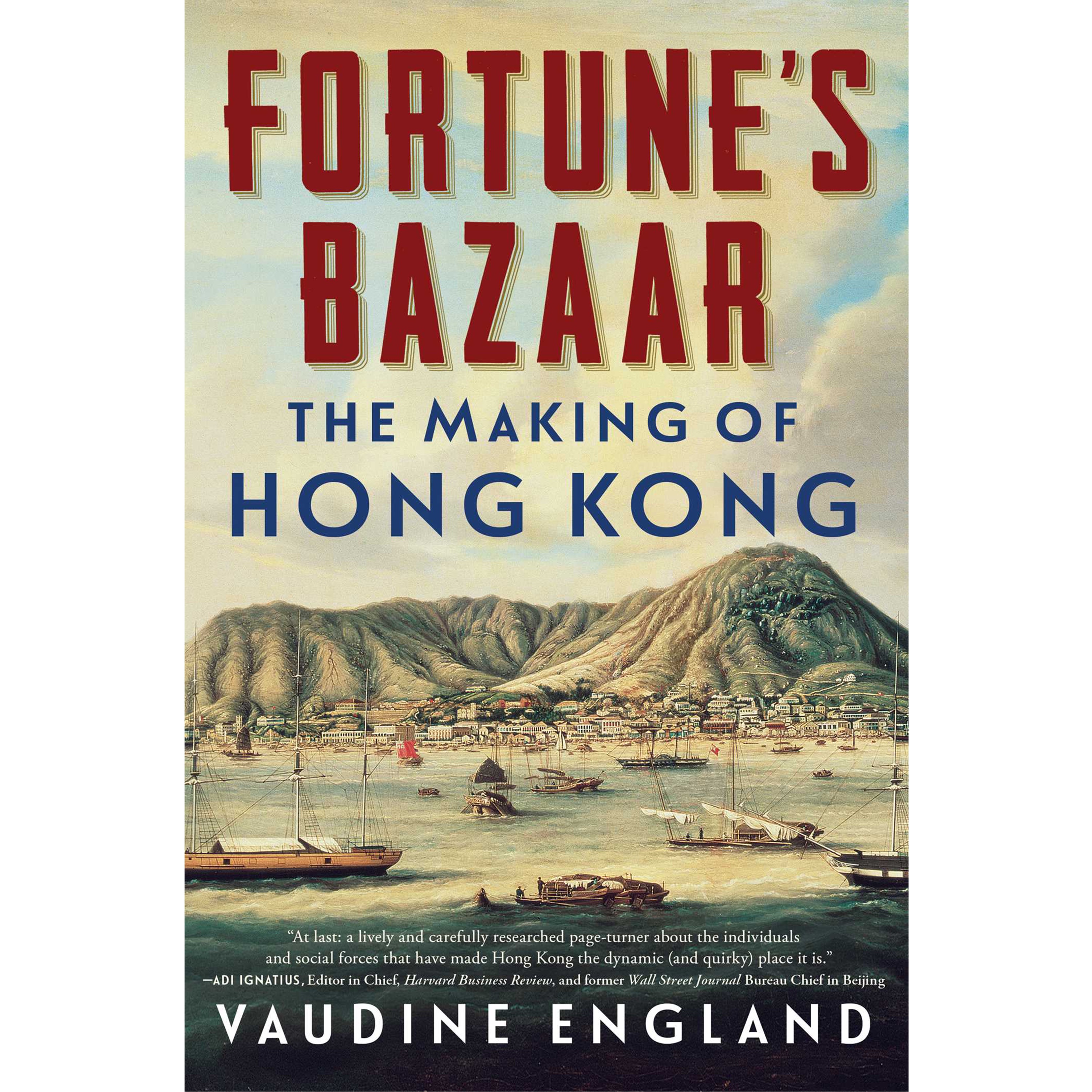
Welcome to A Book with Legs podcast. I'm Cole Smead, CEO and Portfolio Manager here at Smead Capital Management. At our firm, we are readers and we believe in the power of books to help shape informed investors. In this podcast, we speak to great authors about their writings the late, great Charlie Munger prescribed using multiple mental models and analysis. We analyze their work through the lens of business markets and people. Today, we will discuss the messy and often awkward history of the greatest port city in Asia, Hong Kong. Vadin England, is joining us to discuss her recently released title, Fortunes the Making of Hong Kong. Dr. Vadin is a career journalist covering Hong Kong and Southeast Asia. She's reported for Time Magazine, Newsweek, BBC, Reuters, and the South China Morning Post. She holds a PhD from Leiden University in the Netherlands. She has published one other book, the Quest of Noel Croucher. Vadim, thank you for joining me.
- [01:19]
Dr. Vadin England
Thank you very much. I love to hear how you love books.
- [01:23]
Cole Smead
I appreciate that. And you're joining us obviously from the Netherlands, correct?
- [01:26]
Dr. Vadin England
Yeah, absolutely.
- [01:28]
Cole Smead
So you have a lot, you've done a lot of research. You've obviously covered these places a lot. So I kind of highlighted that in your intro. And this is a broad history. I mean, you did quite a bit of work over various periods to draw in sources for this. And so as I was going through this, I thought, gosh, there's family history, there's city history, there's just ethnic history. How, how did you, what inspired you to bring this into one place? And I would say do it very briefly, too.
- [01:59]
Dr. Vadin England
Wow. Yeah, you're right that it was quite a process also over quite a period of time. And when I think of where it all began, I mean, you can go way back to something like 1979. My parents lived in Hong Kong and they used go to church with a guy called Carl Smith, who was this rather huge American pastor. Actually. He'd come out to Hong Kong for the American Church of Christ in China, but he went off piste. He went into this whole thing of genealogical history of like, who are the people of Hong Kong? And he made little index cards for every name he came across and traced all their families. He had tens and tens of thousands of handwritten index cards in his apartment. And at that point, my parents used to say to me, I was not interested in any of it, not the church, not the history, not anything.
- [02:57]
Unknown Speaker
Sure.
- [02:57]
Dr. Vadin England
But they used to say that, you know, at some point, you know, Carl's getting on, someone's going to have to take care of his index cards. Oh God. But of course, I kind of ignored it for several decades. Being a journalist all over, not only in Hong Kong, but in Southeast Asia.
- [03:12]
Unknown Speaker
Yeah.
- [03:13]
Dr. Vadin England
And gradually, of course, I got to know some of these people whose names I'd first heard from Carl or I interviewed certain families and I thought, oh, that's kind of weird. How come you're here and where did you come from and why are you a different kind of. I mean, you seem like another kind of Indian, but actually you've been here longer than most of the Chinese people I know. And you know, so these sorts of questions evolved over many years and then gradually I hopefully also evolved from daily news into doing much longer historical research projects and actually, indeed getting to know some of these families. And so gradually it dawned on me that there was this rather huge story about the beginning of Hong Kong that had not yet been told. And of course, as a journalist you get seriously hooked on, oh God, nobody else has told this story. I've got it. It's a scoop. It's different on a historical scale, of course, but what also affected the whole motivation to try to bring this all together was the fact that as Hong Kong was changing, you know, it was a British colony for almost 160 years and then in 1997 was reverted from British sovereignty to mainland Chinese sovereignty. And with that came, well, too many things to mention here and now. But one of the things was that Beijing always says, you know, Hong Kong was always just another Chinese city. It was always Chinese and it was a Chinese city. And I was thinking, well, actually that can't really be true. I know sort of fifth generation Romanian Jews here who have done, who have been here a whole lot longer than the vast majority of Chinese people of Hong Kong. I mean, at no point am I trying to deny that the majority of people in Hong Kong have always been in some way ethnically Chinese.
- [05:07]
Unknown Speaker
Sure.
- [05:08]
Dr. Vadin England
But clearly there were a whole lot of other people who were also part of this story and whose story was being actually wiped out by political events and by nationality, laws and all kinds of other things. And I thought, gosh, if I don't grab this stuff quickly and pull it together, a lot of this really rich and diverse and just like really interesting social family history is going to be lost. So that was a primary motivation when.
- [05:38]
Cole Smead
To your point, there's A big difference between saying that something's a majority Chinese versus exclusively Chinese. And I'll kind of tee up my next question. I'm going to quote your book. You're talking about another historian here. You say, quote, Charles Hersham has argued that ethnicity, with its meaning of a social group with shared culture, faith and language, is a much better concept than to our discussion just a second ago, race, because it is explicitly subjective, it acknowledges multiple ancestries, and it recognizes that ethnic groups are porous and heterogeneous. End quote. Yeah, Teach our listeners you know what. What that was to Hong Kong, because to your point, you know, those groups were there, but those groups could become part of another group. And therefore, the ability to use race to wait as a way to codify familial history became almost impossible at times.
- [06:31]
Dr. Vadin England
Yeah, it took me a while, honestly, to kind of get a handle on it and also to find the courage to actually contradict a lot of the really established historians on Hong Kong. There's a guy I quote, he talks about how Hong Kong is such a wonderful success. It's a tale of two cities. You've got British Hong Kong over here, and you've got Chinese Hong Kong over there. And they each go their own way and do their own thing. And this is why Hong Kong is so successful. And, you know, maybe it was a sort of a journalistic mind or something, and it was being a little bit simple. And I was thinking, yeah, but hang on a minute. To be brutally frank, I mean, half of them are sleeping together every night. How can we actually separate these communities in that way? And that was a starting point, because if you look also just at any of the famous literature of Hong Kong, and I'm talking fiction, it's always about mixed race. It's always mixed relationships. It's always the appeal of the foreign, whichever way it's going, of the Chinese for the Westerners or the Westerners for the Chinese, plus all the other different community, cultural, faith groups that were absolutely vital to making Hong Kong what it was in the very earliest years. Because this was not a place that was already established as a city before the foreigners arrived. There were very few. There were. I think the most ambitious number is something like 5,000 people on the island of Hong Kong, which is now home to almost 8 million. But I mean, all of Hong Kong, so There were about 5,000 fishes, fishermen, farmers, what we might call smugglers or pirates, but basically people living off the sea and off a bit of the edge of the land. It was not a city and then through indeed the Opium War and British aggression in southern China, they got the island of Hong Kong and foreigners came, Chinese followed. And some of the parts of Chinese society that didn't feel they really had a stake in China, they came as well. These were the first people who came and sort of built the first things in Hong Kong. So gradually you realize that talking about the so called British and the so called Chinese just doesn't cover it because first of all, there's a whole lot of different Chinese and there were different segments of who came and who chose not to and who was not allowed to. And there's a million different kinds of whatever you might mean by British.
- [09:10]
Unknown Speaker
Sure.
- [09:10]
Dr. Vadin England
Plus there's all sorts of other groups involved as well. So it becomes much more interesting actually when you get into the nuance. But to do that, as you rightly note, you have to start thinking about race in a kind of, well, which is a weird thing to think about. And American concepts of race are also quite different to non American because each culture has its own interpretations of these words because you each have a different historical experience of what these things mean.
- [09:43]
Cole Smead
When, as you point out, you could ask your cousins and your cousins might call you a half blood. And what they mean by a half blood might not be the same as what, you know, Harry Potter heard from people, for example.
- [09:56]
Dr. Vadin England
Right, yeah, absolutely. And in fact, originally I'm, I'm from New Zealand now, so I mean, I'm clearly a product of empire, I appear to be white and everything.
- [10:06]
Cole Smead
Yeah.
- [10:07]
Dr. Vadin England
So. And my ethnic history is, is English and Scots, as far as I know, there might be some German, who knows. But nowadays in New Zealand, you know, there's a much greater awareness of the group before us, the Maoris, and they have rights, as they should. And the language is much more prominent than it was when I was growing up. And now, you know, how do you define if you're Mori or not? And there's this sort of, well, is it 10% blood or is it more, you know, these kinds of debates? I mean, they're huge everywhere, but they're affected differently and in different places through different histories.
- [10:42]
Cole Smead
So yeah, I think the other thing too, you find it came a lot more time in your book. It was how the person wanted to espouse themselves or identify themselves. And we'll get more to that. But I think that's an interesting context to think, what's the culture that they most enjoyed? And then secondly, I think the other question you could ask is beyond what they enjoyed or felt most comfortable with which culture help benefit them the most. And I think that's a kind of a. Maybe like a framework for thinking about some of our discussion really quickly. I want to hit on this, though. The British invade Hong Kong effectively in the Opium War, but that wasn't royal policy. Right. It's not like the king was like, I want Hong Kong. Why was that more of an accident?
- [11:33]
Dr. Vadin England
Okay, so. Well, to be precise, they didn't actually invade Hong Kong. Exactly. So up the coast in what is still China and what was then called Canton and is today Guangzhou, same place. It's up the Pearl River. It was the only place in China where foreign traders could do their business for a long time. And, I mean, Guangzhou's got a rich and fascinating history all of its own. And there were all sorts of rules that constrained and confined foreign traders to just one tiny little part of Canton and. And for only part of the year. And originally, of course, it was all about tea and silk, and increasingly it became about opium.
- [12:24]
Unknown Speaker
Sure.
- [12:25]
Dr. Vadin England
And the British in. In particular, although not only there were Dutch and there were Americans and there were Portuguese, but they. They refined this system of how they could sell opium into China and in return, get silk and tea and other things they wanted out of China. So traders in Canton were getting very frustrated about all the restrictions. The Chinese Empire was trying to stop the opium trade, although they went back and forth. And of course, there were a lot of Chinese traders who were doing very well out of it.
- [13:03]
Unknown Speaker
Yeah.
- [13:05]
Dr. Vadin England
The British traders basically persuaded the British government to go to war to lift, in the name of what they called free trade.
- [13:12]
Unknown Speaker
Sure.
- [13:13]
Dr. Vadin England
Now, I'm sure, as we all know, free trade means different things to different people.
- [13:19]
Unknown Speaker
Correct.
- [13:19]
Cole Smead
As we're. As we're learning today. Right.
- [13:21]
Dr. Vadin England
As we're learning today, that story never goes away. But to them at that time, it meant free trade to shove opium into China. So. So that's why the British basically invaded up the Pearl River. It was a complete mismatch that was so technologically further ahead that it was a just about a wipeout of the Chinese at that time in that place, and to make a deal to finish that war. Part of the treaty that ended it was to give away the island of Hong Kong.
- [13:53]
Unknown Speaker
Sure.
- [13:54]
Dr. Vadin England
Allegedly in perpetuity, I mean, for forever. But as we've also seen, that didn't last. And so that's how Hong Kong became a British territory. And initially from the British side. What's really fascinating about all of that is that both the Chinese government at the time and the British government at the Time we were thinking, well, we didn't want this silly little island of Hong Kong. And the. Both the negotiators, the British and the Chinese, really got into trouble with their own governments for that deal. And, you know, we're not terribly interested in it. And a lot of the British traders just wanted a place to moor their ships.
- [14:32]
Unknown Speaker
Sure.
- [14:32]
Dr. Vadin England
The whole idea of Hong Kong becoming what it became was. I mean, very few people had that vision at that time.
- [14:40]
Cole Smead
Sure.
- [14:40]
Dr. Vadin England
It evolved because of the people I'm talking about who came and made it.
- [14:44]
Cole Smead
Well yet. But right from the beginning, in some ways, it seems that the Chinese knew of the possible importance of Hong Kong because I think, as you noted, you know, well, to do, Chinese families were not allowed to migrate to Hong Kong. In other words, they knew that that was not a good thing. But obviously, the flow of capital and people was going to Hong Kong over time.
- [15:08]
Dr. Vadin England
Yeah, I think what's really. I mean, and it really shocked me when I was first told this, and I had to check it out and see if it was really true. You don't actually get a majority of Chinese people born in Hong Kong until after World War II.
- [15:23]
Unknown Speaker
Wow.
- [15:24]
Cole Smead
Interesting.
- [15:25]
Dr. Vadin England
I mean, Chinese people would come to Hong Kong, they might stay for years, but they would always go back to China and would want to be buried in China. The whole thing about your ancestors and your ancestral village and all that, and of course, family, you know, maybe the guy would come or. But not the whole family. So the. The whole context, of course, is that in China at that time, there were huge. There was the typing rebellion, There was huge upheaval, violence, insecurity, lack of food, et cetera, et cetera. So, of course, if you had. If you were not safe or wealthy, then you would go somewhere else to try to make a new way of things. So people would come to Hong Kong and make a go of it or not, and maybe go back to China. There was a lot of back and forth. There was not a problem.
- [16:13]
Cole Smead
Early on, when you talk about how it was, you people were almost Bedouins, where they would come to town, they would do their business, they would make their money, and they would go back to where they're from. So there was almost a roving aspect of Hong Kong, which, again, if I think about that paradigm at that, you know, in the early history of Hong Kong, with that being true, I think of that's a roving group of people. And then I think now, well, this is stasis. You're very much there. Oh, yeah. You're not moving and because you're there and the people that used to rove, they're gone.
- [16:49]
Dr. Vadin England
Yeah. Now, I think also, you know, different times in history, you have to make. Sometimes you have to make a choice. You've got to be here or you've got to be there.
- [16:59]
Unknown Speaker
Yeah.
- [17:00]
Dr. Vadin England
But lots of people, lots of time, like to kind of stay flexible. So. And of course, don't forget, this is a, you know, in the 19th century, it's before this whole idea of nation states was really locked down. It's before the whole issue of passports and national identity and that kind of nationalism, nationalist thinking has really taken off. That's more early 20th century. So that first sort of 60 years of Hong Kong in the 1800s, that, that was a time when you could be more flexible. However, the people who did actually get to Hong Kong and stay there also from the very beginning are, of course, people who did not have somewhere to go back to. They were not from China just next door. They were from Persia or today's Iraq or from Armenia or from parts in India to which they couldn't return for some reason or other. So, of course, they put down roots. Of course, their families are now five or six generations or more because they didn't have anywhere else. And so those. That's why those people are important, because they put roots down and they grew.
- [18:13]
Cole Smead
And developed with Hong Kong touching on that. So to your point, you know, your point, you have the Parsis, you have the Armenians, you have Jews, you have Portuguese, you know, that had their influence in the culture beyond the Chinese, the Malays, I mean, the Indians, etc. What was the Sassoon route, the Sassoon family, what was their route to get to Hong Kong? Because you, you do a really wonderful job in your story talking about how a family started here, they went here, they went there, and then here's how they ended up in Hong Kong. And then you even tell the story of when did they leave and why did they leave and where do they go on.
- [18:51]
Dr. Vadin England
Yeah, yeah. Now, okay, so Sassoons originally, of course, Jewish, were in Baghdad and were very prominent in Baghdad. And the original, I mean, I would say David Sassoon was treasurer to, you know, the emirs and so on, who were important in Baghdad at the time, but gradually realized not going to be safe there for much longer. Let's start moving on. And I mean, of course, there's something specific to Jewish clans and there's several in Hong Kong who are less well known, but perhaps even more wealthy than the Sassoons who have gone through similar routes, you know, where basically every generation has had to move on for one reason or another. Anyway, Sassoons moved from Baghdad first to Basra in the south, and then from Basra across the ocean to Bombay, now in India, in British India, or rather British ruled India, let's be precise. Sure. So, and in Bombay, they. That's where they started making some of their first fortunes. They were not just being a middleman, but actually having the warehouses where other people could also store goods. So they. They invested in. In fixed property.
- [20:12]
Unknown Speaker
Sure.
- [20:12]
Dr. Vadin England
In Bombay, they. They actually had property there. They then also went into cotton mills and, you know, the whole business, I mean, not for today, but of the cotton industry and Britain and India competing with each other, etc. Etc. And the cotton mills of Bombay were incredibly important. So Bombay was, for several generations, a good place for the Sassoons. But, you know, what's also very important in family dynasties is you've got to have the kind of wife who can blithely sit down and produce 11 suns or something, which is beyond my imagination. But there were a lot of Sassoon sons, and they went, you know, one went to Singapore. There were still Sassoons in Singapore. Others went to Shanghai, others went to Hong Kong. Others were in different parts of the world. The Shanghai guys, you know, encouraged the next generation of Sassoons. And then you've got the ones who come to Hong Kong and so on and so forth. It only starts to fall apart when you start running out of sons because, of course, unfortunately, they didn't take their daughters seriously enough. But they then moved into, you know, out of cotton, into opium and. And then much later, by the time of the 1930s and 40s, you've got sir Victor Sassoon in Shanghai having quite the good time and with his hotel, the then Cathay now Peace Hotel and so on. These places and these lifestyles are so by this stage, luxurious and exotic and marvelous. They're great fun to write about. And then a large chunk of the family moved to Britain and became very established as sort of eventually, you could say, buying their way into the British aristocracy and the power system there. So they're just one. And of course, through them and through their networks, because what's important, I realized as I went along, it's not just individuals or families and even faith groups, but the networks that these people build, sometimes just within their own faith group, but often with others. So under the Sassoon umbrella, other young Jewish guys who had followed similar trajectories also followed them From Bombay across through Southeast Asia and up to Hong Kong. And then, you know, Jews were doing business with Parsees, who they met in Bombay because Parsees had come out of Persia. You know, these are the Zoroastrians. I mean, it's a completely different faith group, but they all come together in Bombay and then they do business in Hong Kong. I mean, why wouldn't you. You know each other already.
- [22:48]
Unknown Speaker
Yeah.
- [22:48]
Dr. Vadin England
So you get these really interesting mixes and. And today, I mean, these are still important people in Hong Kong.
- [22:55]
Cole Smead
Yeah, No, I totally agree. So let's. I want to pivot because you touched on this earlier. You talked about everyone sleeping with everyone. So, miss, I opened the newspaper in Hong Kong, and Mrs. Randall is selling honey and other alcohols. Okay. Which I thought was just like adorable and funny and pithy, and yet she's running her business. What is it? What is. What does Madame Randall mean when she's selling you honey?
- [23:23]
Dr. Vadin England
She is selling beautiful jars of honey. In other words, beautiful women. She's selling sex. Right. She's running a brothel. And this was how she advertised her services. So, I mean, some parts of this story are kind of obvious and common to every port. Port city in the world.
- [23:44]
Unknown Speaker
Yeah.
- [23:45]
Dr. Vadin England
Most of the working people at Men, they haven't brought their own families. And there will be women who will be sent or brought in or who will bring themselves to service that trade in Hong Kong. There are particular sort of aspects of it which are peculiar to Hong Kong because of its proximity to China and because of the way women were, let's say, were to some extent, sometimes still are treated in a Chinese cultural context. There was very little choice involved for a lot of these women. In modern language, you would say they were trafficked into Hong Kong and they were treated badly. They had no rights, et cetera. Mrs. Randall's ladies were probably not Chinese because, of course, women turned up from over the top of the Eurasian continent through out of Russia or Eastern Europe. They'd come down through China, they'd end out in Hong Kong, or they might have come from elsewhere. I mean, I always find when you're doing a historical investigation, if you can put yourself in that position and think, oh, what if I had been there 100 than 75 years ago? Where would I have ended out? Same like for you. You might have.
- [25:13]
Unknown Speaker
Yeah.
- [25:14]
Dr. Vadin England
No, you might have been an opium trader doing business with assassin.
- [25:18]
Cole Smead
I agree.
- [25:19]
Dr. Vadin England
I might have been a missionary or I might have been a hooker. I mean, I don't know.
- [25:22]
Unknown Speaker
Yeah.
- [25:23]
Cole Smead
Well, to your point, you mentioned on the Chinese Front. So in China, like, from a Chinese cultural perspective and a legal perspective, women were effectively bought and sold. Like property is what you lay out in the book. And while there were aspects of that in Hong Kong, the idea, for example, of a protected woman was a unique social and plausibly legal status, which was different than a prostitute. Further, as you kind of go along the spectrum, so you have like, you know, your wife and a prostitute, you then have a mistress, which is something more than a prostitute, closer to a protected woman, and you might end up having a second family with that protected woman or just a whole other woman. And so, you know, when I said messiness to open our conversation, the familial history, both ethnically is messy, but just sexually is so messy. Absolutely right. So I think of, like, as soon as you enter prostitution in, you know, that multiple children are coming, multiple families are coming. And I think you do a really wonderful job of discussing. And I think the story that came to mind was, like, you talk about James Endicott, for example, and his wife Ng, maybe kind of give us a picture into Ing to understand how much power this actually gave her to be in this position, which seemed a weird place to be for maybe you or me, if we were a woman at that time, for example.
- [26:51]
Dr. Vadin England
Yeah, no, I mean, I got to say, it's one of the still really untold aspects of the early history of a place like Hong Kong is, of course, the women. And it's so frustrating because of course, they're mostly illiterate, so they're not writing things down. We're not hearing their voice. It's very rare. And this case you mentioned, Endicott's lady Ing Ah Q. She. She makes it into the record because she was arrested. So it's in the newspaper. So that's the. That's why we know about her. Otherwise, it's very difficult to trace the story of a lot of these women who, frankly, I think, were just amazingly strong and determined and impressive, having started out having to a sleep with foreigners, which can be sort of shocking, and not having any particular choice about who or when. But some of these women who managed to become a protected woman of a single foreign merchant were then in a better position. She was in this position and she had her own brains and she started trading on her own account. Now, I mean, James Endicott, who's from a very respectable American family, he was also in the opium trade. She managed. Well, it's a long, complex story, but she had an opium cargo that was stolen by pirates. So she goes off and confronts the pirates. I mean, who would dare to do that?
- [28:24]
Unknown Speaker
Exactly.
- [28:25]
Dr. Vadin England
Through ups and downs, she eventually gets the value of her goods back. But in the course of this, she's arrested by. Well, you know, it's really complicated. There are British laws, there are American laws, there are Chinese laws. So who's liable to what. And again, it's exactly as you point out that, you know, race is a very sort of mutable thing. It can become all sorts of different things at different times in different ways. Gender, I mean, or at least sexual choices can become mutable. And of course, identity, I mean, national identity. Oh, well, I don't want to be under British law where they're fine with trading opium. So actually maybe I do want to be under British. I don't want to be under American where they say they're not fine with it even though they're doing it and the Chinese to something else. So you kind of try to choose the identity, choose the legal system to get caught under.
- [29:18]
Unknown Speaker
Yeah.
- [29:18]
Dr. Vadin England
Anyway, she played all this to her own advantage very well and. And she in the end was let off with it with no problem whatsoever. Was able to keep the proceeds of her trading and was able to invest in property in Hong Kong and also support other women like herself. They formed kind of sisterhoods.
- [29:36]
Unknown Speaker
Sure.
- [29:37]
Dr. Vadin England
And. But the other bit of that story that I find really amazing is that, you know, James eventually realizes that probably for his career or at least for when he's going back to America, he needs an American wife. He can't bring his. His Chinese lady with him.
- [29:54]
Unknown Speaker
Yeah.
- [29:55]
Dr. Vadin England
And he marries Sarah. Is she American? And then she. His. His white wife, to be blunt, takes on the care of his mixed race children, I. E. Some of the children he had with Inga Q. Knowing full well where they come from and caring for them as well. I mean, and she says it's a beautiful thing that they actually. They all know exactly what's going on. And she shares. She shares the whole motley crew.
- [30:24]
Cole Smead
Yeah.
- [30:25]
Dr. Vadin England
Which I find really interesting.
- [30:26]
Unknown Speaker
Yeah.
- [30:26]
Dr. Vadin England
And meanwhile in our Q. Lives to a nice wealthy old life in Hong Kong.
- [30:31]
Unknown Speaker
Yeah.
- [30:31]
Cole Smead
It makes me think of the classic classic rock song. Love the one you're with. And that was a very. That was very much a theme throughout your book, I would say. Let me.
- [30:39]
Dr. Vadin England
I was thinking, you know, she worked hard for the money. Yeah.
- [30:42]
Cole Smead
Well, that's.
- [30:42]
Unknown Speaker
That.
- [30:43]
Cole Smead
That'd be another one. Yeah. So, you know, probably my favorite picture of a Eurasian family is, you know, comes out of. Out of ho. Tongue. Can you teach us? You Know who is his father, who is his mother. And then really, what did he become? I would say from a cultural perspective and then also from a business perspective.
- [31:03]
Dr. Vadin England
Right? Yeah. Robert Houghton. So, I mean, first of all, he made up his name, of course, but his father was one of these Western traders who did not do the right thing. By the euphemism. I mean, protected woman is a phrase, is a euphemism. You're meant to be protected, but often you're not sure. So this guy who, sadly I'm now in Holland with my Dutch husband, but he was a Dutch, probably Jewish Dutch trader called Charles Bosman. And he had a local lady, we don't even know her full name. I mean, Sze. And he, you know, he slept with her for a while and then he left and left her literally holding several babies, you know, and he disappears. She has no money. She has to, of course, find a new protector of some kind. But what is amazing about her and so many others, like Ing Nanki, who we were just talking about, she made damn sure that her kids were educated. So she put the man we now know to be Robert into a school where. And this is another thing I kept on finding things that were quite positive about British colonialism, which kind of shocked me. I think, oh, actually, that wasn't bad. You know, they actually had these schools that, okay, we're not for girls, so that's obviously always a problem. But boys of all different races were all available in different faiths to go to this school and get an education, Central school. And so Robert and a lot of boys in his situation, mixed race and so on, that's how they got educated as. As entirely bilingual beings. And I don't just mean they spoke two languages, they lived two cultures, they could go from one to the other anytime. And I think this is the point that, that many people find impressive about these people. They can almost sort of get up in the morning and decide, well, today I'm going to be Chinese. I'll put on Chinese, Chinese clothes, I'll speak Chinese or whatever, or, you know, by lunch I'll be Western, I'll change into a proper suit or, you know, whatever. They went to these schools and they got educated and they became usually, I mean, there's this phrase, it was word comprador, you know, loosely translated as middleman. But it's much more than that. It's. It's a. It's a complete sort of crossover kind of personality. Someone who understands local ways of doing deals, local sources, local habits and idiom in the broader sense of the word, but also understands how to deal with different kinds of foreigners and get what they want. And if you're in that middleman position and you are able to keep everybody happy, and you're also literally allowed, which is the case, to trade on your own account, then you can make a fortune. And Robert did. He was a comprador for the biggest trading house then. And some would even say not until this day, but for a very long time, which was Jardine's still, as you know, in London and all over the world, especially Indonesia. And he. He was able to, partly, I think, because he had an older sister who'd married a Scotsman, or at least was the protected woman of a Scotsman. It's always a gray zone. You're never quite sure. So he made his first fortune with Jardines. He then went independently into trading on his own account. But he had brothers, half brothers, and, of course, offspring, because he had at least two wives and God knows how many mistresses. So he became this great patriarch, and he quite deliberately went out to create a family clan and create a family name, Ho Ho Tong. So he's got brothers who are Ho Kwok Ho Kham Tong. And then to sort of organize through very judicious marriages, connections with other important families. I mean, you know, I would do great big sort of colored flow diagrams.
- [35:24]
Cole Smead
Trying to match all these.
- [35:25]
Dr. Vadin England
Where these people went and how they interact interconnected. And it, you know, it was quite.
- [35:30]
Cole Smead
The nightmare for a while, by the way, on that. On that subject. So when people say, like, I think of the Barbie movie more recently, when people say patriarchy, there is like. I'll call it like a. I will say a white Western colonialism that goes with that. And when you say patriarchy with Ho tongue, Robert, Ho tongue, it is a vastly different picture of patriarchy.
- [35:52]
Dr. Vadin England
Okay. Yeah. It's one of those words. So, yeah, to me, a patriarch is just a male dominant figure who's gonna run all our lives whether we like it or not.
- [36:06]
Unknown Speaker
Sure, sure.
- [36:08]
Dr. Vadin England
And in Chinese culture, they do it a lot. And, you know, everyone's organized to play their particular role in a vast family complex, whether any of those individuals. Individuals like it or not.
- [36:23]
Cole Smead
With. With Robert, though, I think you had a letter or a statement he had made. I can't remember which was. But you quote it in your book. It, you know, part of. I asked the question was part of the reason that Robert, you know, rep. Like, at least most often was, you know, in pictures seen to be Chinese, it seemed like he had A lot of daddy hurt from his father who was never present. I was kind of like I was, you know, making my little annotations. I was reading your book and I put daddy issues in his section of the book. And. But to your point, I mean, he didn't just organize his children, he organized his brothers. He made sure his children were placed into, I'll call it business alliances, social alliances, social arrangements. And again, like we talked about before, he looked white or British in many respects, and yet dressed traditionally, you know, Chinese. In all the pictures he's caught.
- [37:18]
Dr. Vadin England
I mean, one thing we haven't. I mean, we're talking freely about all of this now. And I could write that book in recent years because some of these families involved are happy enough to talk freely about these things now.
- [37:33]
Unknown Speaker
Sure.
- [37:33]
Dr. Vadin England
But then was a whole different context of prejudice and social hierarchy. I mean, some of these guys, like He Tong, became richer than anybody else. So it's. It sort of didn't matter that they were mixed race, but in their own minds it did. And so what Robert has said at one point early on was that, according to one of his daughters, was that he chose to, quote, be Chinese because he knew they would never reject him, whereas if he tried to pretend only to be British, he would never make it. I'm paraphrasing. It's not exactly what he said, but, I mean, and it's of course, true. There's a slice of Britishness which is utterly snobbish and obnoxious. And, you know, oh, you're. You're really not one of us. And I mean, you know, you didn't go to the right school. I don't have the right accent, for example.
- [38:30]
Cole Smead
Unaccepting. Unaccepting, that's for sure.
- [38:34]
Dr. Vadin England
Whereas a Chinese, ethnically, even partially ethnically Chinese, you're probably not going to be thrown out. That was his calculation. But of course, he played it both ways to suit him, however it played. I mean, he just loved to be knighted by the queen.
- [38:52]
Unknown Speaker
Yeah.
- [38:52]
Dr. Vadin England
And in England. Plus he got all the awards, honors from the Chinese dynasty, and he spent huge amounts of money on all kinds of things, whether they were British or Chinese or something else.
- [39:06]
Unknown Speaker
Sure.
- [39:07]
Dr. Vadin England
To make sure that everybody loved him. So, yeah, he played all sides of every coin.
- [39:11]
Cole Smead
Well, yeah. Him and his wife's golden anniversary for their wedding at the Peninsula Hotel. I mean, as I'm reading your book, I thought, wow, that would be the party that you'd want to be at because obviously the Peninsula Hotel is still there. And so, you know, much of This. I think the other thing I loved about your history is we don't have to look very far to find where the legacies of these have continued to seep through in the lines of the history of Hong Kong. I want to pivot a little bit because since I'm talking about the Peninsula Hotel, obviously Kowloon was dominantly made by the reclamation of land, and that has been a very common thing in parts of Hong Kong. How would, how would reclaimed land go about? Was it just someone buys up all the waterfront and decides to reclaim? Was it opportunistic because they had extra dirt? How did that go on?
- [40:03]
Dr. Vadin England
Oh, huge, huge question there. I'll try to keep it tight. Yeah, the government early on thought, you know, we've just got this tiny little sliver of land on the north side of Hong Kong island, which we now call central. And then they wanted to reclaim, but they couldn't make a deal. One of my favorite guys in the book is this guy, Paul Chater, and he is again, a beautiful mix. He's an Armenian from Calcutta who comes to Hong Kong in 1862. He'd been trained as an orphan, as a surveyor. And so he had this concept of, you know, how you lay out land and so on. He had some skills. Plus by the time late 1900, 1800s, sorry, late 19th century, he by then had, of course, made a few fortunes and had all his contacts and networks, both among merchants and in the government. He was able to make a deal that suited both, whereby merchants who had waterfront sites, because a lot did from early on, that boats would just literally come up to the bank on the land on the island and unload, and there's your sort of go down your warehouse and that would be it. Okay, Things evolved, got more complicated. If you're going to make new land in front of my waterfront site, then I want to keep that right to the water. And so I need a guarantee from you that when you put more land in front of me, I'm still going to be on the waterfront, so I'm going to move forward. Right. Without going into complex property law trader worked out a deal whereby merchants and government would each benefit from basically adding what we now call central. I don't know if you remember where the tram line goes, but everything between the tram line and the actual water now is new land. So and on that, and it's some of the most valuable real estate in the world. And what I mean, it's quite simple. They'd chop off the chops of, of. Of mountains and Bring it and dump it in the sea. Yeah, I mean that's how you, when.
- [42:25]
Cole Smead
And you talk about Chater would literally take a cliff edge, knock it off and they bring it out. I think the other thing too is there were, there would be some time to time fires and so out of the rubble of areas that have been decimated, they would then take and supplant that land elsewhere to clean it up. I think you talk about a creek bed that they end up covering up because again, created more land.
- [42:48]
Dr. Vadin England
Yeah, absolutely. And I mean it's happened several times since. And in fact, the whole sort of harbor of Hong Kong, the gap between the island of Hong Kong and the tip of the Kowloon Peninsula is now about half as wide as it used to be. And you know, it's an incredible temptation of course to governments to just make new land. Wouldn't that be nice?
- [43:12]
Cole Smead
It's good for property taxes, right?
- [43:13]
Dr. Vadin England
Yeah. But yeah, Chado was the guy who somehow made a deal that made that possible. And then of course he founded a company called Hong Kong Land which just by chance happened to have the waterfront rights from his good friends the Sassoons.
- [43:30]
Cole Smead
Yeah.
- [43:32]
Dr. Vadin England
And so he, he could develop a lot of the sites on this new land that he had created. I mean, insider trading doesn't even cover this stuff.
- [43:41]
Cole Smead
Well, yeah. And also to your point, when it gets out to the ho tongue offspring, you know, you have situations where they feel like they got an edge, someone puts a note on the table, they go to use insider trading and it actually financially ruins them. So there's evidence where that goes the opposite direction. Detrimentally on the reclamation. The Kai Tech Airport obviously used to be reclaimed land on the Kowloon side of Hong Kong. I never got to fly in there. I feel bad because I've seen the old plane videos of these planes coming in very narrowly over the hill and the wind blowing and it being very dangerous and scary looking. That being said, when, when Kite Tech was built in, in 1929, how far out would have that been compared to now? The airport's obviously many, many miles away.
- [44:37]
Dr. Vadin England
Yeah, yeah. The scale of things, of course, it just changes so much kind of without you noticing. Yeah, I, I have flown in a many, many, many times into the old Kai Tak Airport, but I always lived on Hong Kong island, so Kowloon felt like kind of quite a long way away.
- [44:58]
Unknown Speaker
Yeah.
- [44:59]
Dr. Vadin England
It wasn't, of course, you're right in the middle of Kowloon City and it was quite fantastic. And you could get a cab from there to anywhere but now the airport, Cheklab Cock is right out on one of the other islands, Lantau island, and whole new infrastructures that could never have been imagined even, you know, half a century ago. New highways and bridges and everything. You can drive to this airport, even though it's on an outlining outlying island.
- [45:32]
Unknown Speaker
Yeah.
- [45:33]
Dr. Vadin England
Takes about 40 minutes. An express train takes about 25 minutes to get to the airport. But it's in a completely different place. That, that's true. That was one of those projects that was connected to the handover that it was started by the British before the Chinese were taking over to kind of encourage more confidence in the future of Hong Kong.
- [45:53]
Cole Smead
Went all the way out to the. Now the bridge that goes to Macau, which obviously that was not there either.
- [45:59]
Dr. Vadin England
No, no, that was. I, I, well, I was a bit simple minded. I just thought really you can't do that. And they've done it. It's not actually used as much as I think they had hoped because of course the costs and all kinds of things, different calculations, I'm a bit out of date on that. But yeah, this whole process of ever closer integration with the mainland, it's physical through these kinds of things you're mentioning. It's political, obviously. Above all else, it's political. It's dressed up as economic, but of course it ends out. It's very cultural.
- [46:41]
Unknown Speaker
Sure.
- [46:41]
Cole Smead
This different stage the other time that this idea of race or ethnicity or people groups becomes in comes into a very focal political view is When World War II, the onset of World War II, Britain seeks to take, you know, British people out. But again, what's the definition of British? Yeah. Is that British by passport or what we deem now as passport or, or cultural, whatever that may be. Because you obviously explained that not everybody that considered themselves British was taking out. And then, and then back to the idea of messiness again, even if you tried to say, great, we're not going to take what we might deem to be British, we'll take other people. You go to other parts of Asia and they didn't want the Asian people either.
- [47:33]
Dr. Vadin England
No. Yeah, it's, it's, it's, it's. Yeah. I mean I, I could sort of riff forever on the problems of sort of nationalism.
- [47:42]
Cole Smead
Yeah.
- [47:42]
Dr. Vadin England
Nationalist identities and nationalist ideas because they really screw up everybody's lives. Yeah. And you see this indeed in 1940 when they say, oh, excuse me, will, Will evacuate all the British wives and children to keep them safe.
- [47:59]
Unknown Speaker
Yeah.
- [47:59]
Dr. Vadin England
Okay. So then you've got women who are possibly part Portuguese or part Indian and maybe part Chinese and their husband of whatever racial mix is actually fighting in the British forces. But they, they're not called British because they're not white, basically. So what's interesting is that in Hong Kong they could identify as British and probably be seen as British. They've certainly chosen themselves to fight for the British side. They are identifying as British to the extent that they're actually choosing to fight for the British side in the war, which is quite a commitment. They're choosing to die for being. Being British. But once they're on this ship full of other British wives and children, they're taken first to the Philippines. In the Philippines, the Philippine government doesn't have a problem. The problem arises with their ultimate destination, which was meant to be Australia. Now, at that time, Australia had what they charmingly called the White Australia policy. And they were on against to take in white people. So these people of mixed race, even though they were British, they identified as British. They fought for the British. Whether or not they had British passports wasn't the issue. They were British. They were not going to be allowed to the final destination. So they had a choice. They could get off in Manila or come back to Hong Kong.
- [49:30]
Cole Smead
Well, it reminds me of how restrictive the Australian policy was during COVID I mean, it was, it was so restrictive relative to other parts of the world. And to your point, that is very Australian in some respects.
- [49:44]
Dr. Vadin England
Yeah. Oh, don't set me up. I'm in Australia from New Zealand. Could agree. Yeah. But no, you know, governments, I mean, anywhere, frankly, make the most ridiculous choices at different times.
- [49:55]
Cole Smead
Well, so let me, let me pivot it because obviously there were tensions prior to World War II in Hong Kong, some that we didn't touch on. But I have my notes here. Was the, I think it was the 19. Was it the 1914 tram boycott, Hong Kong tram boycott, for example. So there's like these underlying tensions. Some of those could be fed off mainland China, maybe like communist tendencies, et cetera. And then you have the Japanese show up. So you're, you know, let's just say in a simple, generic, vague 30,000 foot level, someone would say, well, you know, that'll be so much better because it'll be Asian people ruling a dominant Asian culture. And what you end up finding out is, no, it's a way worse, it's a bad idea for people in Hong Kong and business. And even food becomes scarce in Hong Kong during Japanese rule.
- [50:50]
Dr. Vadin England
Oh, absolutely. And it was quite a. I mean, there are more modern examples of this. Organized media organizations. I'VE worked for. Have thought, oh, let's post an Asian news correspondent to, you know, a Korean to Indonesia or something. Yeah, surely that'll work better than having some white chick like me or something. And it didn't, so. It really didn't. But, yeah, at that time, the essential struggle within China was, of course, between Nationalist Chinese and Communist Chinese. So that was a civil war. And that was going on basically for a very long time. You know, 1911, the empire, the dynasties collapsed. It was a Republican. Yeah. Sun Yat Sen, et cetera. And you basically have a civil war going on all along. You then had the Japanese invading China, really, from the mid-1930s. And. And. And then you have World War II on top of this. So it was a mess. When the Japanese started, you know, moving down through Asia, they had this idea, indeed, which they called the Co Prosperity Sphere, that, you know, we Asians are going to be so much nicer to you than these British overlords.
- [52:11]
Cole Smead
Yeah.
- [52:12]
Dr. Vadin England
Dutch colonial imperialist horrors. Because we're Asian, we're much better. And of course, some people in these various Asian places initially thought, well, yeah, that sounds good, because they're sick to death of Western colonialism. I mean, there are lots of things to be sick of. And that. That's for sure. And yet it very quickly became very clear that Japanese rule, for example, in occupied Hong Kong was brutal. And it was in no way better than British Imperial rule and in many ways a lot worse. You know, people didn't kowtow on the street in the right way. They got slapped or shot. There was an incredibly vicious way of getting rid of people. This was to solve the problem that not enough food was coming in. They were just put on boats and the boats were sent off and nothing.
- [53:07]
Cole Smead
Yeah. I think even said they would just burn boats. Boats that were sent out to sea.
- [53:11]
Dr. Vadin England
Yeah. I mean, forced evacuation into nothingness, basically, is sort of.
- [53:15]
Unknown Speaker
Yeah.
- [53:15]
Cole Smead
Anyway, they also. You also talk about, you know, the. The Japanese military. I mean, the idea of rape was commonplace to women. In other words, the danger of a woman in Hong Kong was heightened during Japanese occupation.
- [53:32]
Dr. Vadin England
Absolutely. I mean, I think we now know pretty well anywhere in the world that rape is a weapon of war and is constantly used everywhere now also as another way to oppress and brutalize a country. But then that was something, I think that was very shocking in Hong Kong, where people had been used to a much higher level of personal security. But it's the same with occupied. I mean, when I read stories about the occupation of the Netherlands during World War II by, by Germany, you know, dear next door neighbor, you know, you get all sorts of similar things, but absolutely running out of food and running out of fuel to such an extent that people would do anything to survive. Well, that made it very clear I think quite early on in, in occupied Hong Kong that Japanese rule wasn't going to work.
- [54:28]
Cole Smead
Sure. Well, but the Japanese still needed the business culture to exist. Right. Because the businesses that are trading, the businesses that are bringing goods and even as we find out later, the businesses that were even in cahoots with the Japanese military. Right. That was the conduit to get stuff to there, to get food to there, to get anything to there. So there had to be a certain amount of diplomacy that the Japanese military had because the town and the city would not function at all without the business people.
- [55:04]
Dr. Vadin England
Yeah, they tried to co opt the business elite. And of course this is the standard pattern for any occupying power. I mean in France you had Vichy and so on, but, and, and of course there are, there will always be traders out there who will trade with whoever for any kind of personal gain, of course. And it's like now when there are sanctions against Russia, who's going to try to break those sanctions or who's not, who's going to find a different way? So at that time, of course there were people finding different ways. But I think the difference, the important point there was that there was still a hinterland of China where there was still agriculture. Food could still come from there sometimes to a far more limited extent than before. But normal trade in terms of, you know, the port functioning and ships coming and going and bringing goods and so on, that wasn't really happening. I mean that they didn't actually succeed in co opting enough of a business elite to keep Hong Kong successful in any way.
- [56:14]
Cole Smead
Sure. I think you talk about the population, it went from something crazy like 1.3, 1.4 million people.
- [56:20]
Dr. Vadin England
1.6 down to 0.6.
- [56:22]
Cole Smead
Yeah, 2.6. Yeah. A million people either left, died, well, you know, whatever were taken into internment in other areas etc, because it just wasn't food.
- [56:32]
Dr. Vadin England
There just wasn't enough trade, frankly.
- [56:34]
Cole Smead
Sure. So, so let's touch on this. Macau has a very, it always has had a special relationship with Hong Kong, but even more so, it almost becomes the escape for Hong Kongers at this time.
- [56:48]
Dr. Vadin England
Oh look, it's the Casablanca of the East. Because Portugal was neutral In World War II, officially speaking, Macau was a Portuguese enclave. So officially Macau was neutral. In actual fact, a lot of people in Macau were more Anti Japanese than not. But it was a place. And you always find a place like this at any moment of stress and trauma in. In any particular conflict, like what Dubai.
- [57:18]
Cole Smead
Has become today for, like, Russians, for example.
- [57:22]
Dr. Vadin England
It's the sort of thing that if it doesn't exist, it's got to be created because still stuff has to be traded.
- [57:27]
Unknown Speaker
Sure.
- [57:29]
Dr. Vadin England
So there were. I mean, the word collaboration and who is a collaborator is, of course, an incredibly messy word and difficult to define, although some people see it as very black and white. There was a lot of that in Macau, of course. People made fortunes. Others just used Macau as a place to go through to get into China where they could live off the land more easily. And a lot of the people who had left Macau 150 years earlier, their families had left. Left and come to Hong Kong now, could go back to Macau and be Portuguese again, I. E. Neutral.
- [58:09]
Unknown Speaker
Yeah.
- [58:09]
Dr. Vadin England
And not have to be a party to the war. So, yeah, it was a handy place, I gotta say.
- [58:13]
Unknown Speaker
Yeah.
- [58:14]
Cole Smead
So let's see. The next thing I want to kind of touch on is, you know, this brings up a whole. I think this is a great big picture discussion. So, you know, looking at this, was it strange that Hong Kong was better kept by what I'll say, biased Britain is how I'll term that then an aggressive Asian country like Japan. And I'm asking that. We've kind of talked about that a little bit. So let's take that to a wider lens. Think of Hong Kong in the aggressive hands of China relative to a biased Britain. I mean, I think about that, like, you know, as a paradigm. And I think today, gosh, I. If I was a Hong Konger, I'd still rather be in, like, 1994, then I possibly want to be in 2024, which is bizarre to think that you'd rather be 30 years prior from a freedom and political and also uniqueness of the culture of a city to decide its own fate.
- [59:09]
Dr. Vadin England
Right, right. No, but you're exactly right. I mean, that is exactly the situation. And most people would make the same choice that you've just outlined, which really shocked me. There was a. And just one quick little anecdote that really made this clear to me. And, you know, the fact that my surname is England is not always a great thing in my life. I had no say in the matter. But.
- [59:38]
Cole Smead
Yeah.
- [59:38]
Dr. Vadin England
And, you know, I used to work for the BBC, so. And I was the BBC correspondent in Hong Kong in the early 2000s, so. And there was this moment where Hong Kong people were activating to Preserve a piece of. The most colonial piece of history in Hong Kong that you can imagine. The first prison, Victoria Prison, the first police station. I mean, the first literally concrete symbols of British imperial power. And here you have, 160 years later, after the handover to Chinese rule, you've got Hong Kong people trying to hold on to this symbol of British imperialism. And so I toddle along there with my little microphone and I say, yeah, hi, I'm. I'm. I'm Miss England from the BBC. Why are you trying to preserve a piece of British imperialism? I mean, really, what's going on here? And they say, oh, because it's part of our collective history. It's part of who we are as Hong Kongers. You know, we're from. We're Hong Kongers. We're not mainland Chinese. We have a different history. And I would say, look, please, please don't just say that because of my name or because I'm for the BBC. You know, don't give me this British line because you think that's what I want to hear. Yeah, they said, no, no, no, we really mean it. And I gradually learned that they really meant it. They are very conscious. And in fact, after a while, I also, once I stopped doing daily news also, and felt more able to feel, you know, have my own feelings instead of having to pretend to be objective all the time. Yeah, we Hong Kongers know that Hong Kong has a distinct and different history and makes it a different place. And that's point one. Point two is, I think, if you understand that the world, I mean, there are always empires. I mean, there are different kinds of empires at different times in different places. I mean, I would call what's currently going on with China as a Chinese empire, they are. The China of today is a lot bigger geographically than it was 500 years ago. They have expanded. They have also been imperialist. If you think about Tibet and Xinjiang, you think about their ideas about Taiwan and Hong Kong, you think even about what they're thinking of the waterways in Southeast Asia, what they call their nine dash line. This is an empire. So you then have a choice. Would you rather be under the British Empire Empire or the Chinese Empire? Or, for example, under the Russian tsarists or under the Ottomans or the Austro Hungarians or whatever. And of course, God knows there's enough wrong with British Empire and in different places at different times, much, much worse experiences than Hong Kong ever had under British rule.
- [62:20]
Unknown Speaker
Sure.
- [62:20]
Dr. Vadin England
That's for sure. I don't want to airbrush any of that. But if you had that choice, I mean, for sure. Why wouldn't you? I mean, if you could. And I think that's what the millions of people on the streets of Hong Kong in 1989-2003-2014-2019, what they're saying is no, excuse me. We kind of preferred it when we were allowed to say what we like.
- [62:43]
Unknown Speaker
Sure.
- [62:44]
Cole Smead
When the old saying holds true, all politics are local. And I think that that especially rings true in Hong Kong. So. And we kind of touched on this. But here's some questions and I mentioned this before. I'll throw out some hot takes. You can say yes, you can say no, you can give me your quick two to three lines on this. If I said I believe the handover in 97 to the Chinese was maybe the most pivotal event in the history of Hong Kong, would you agree? Would you disagree? What would be your take on that?
- [63:17]
Dr. Vadin England
Not the most pivotal. I think the more pivotal you could say 1979.
- [63:25]
Cole Smead
Okay.
- [63:26]
Dr. Vadin England
Was when the first Hong Kong Chinese tycoons took over from British. It was two of the biggest British combines. So when Li Ka Shing came up, he got hold of Hutchison and YK Power took hold of worldwide shipping. That was 1919 79. So that was Hong Kong Chinese money taking over from British.
- [63:48]
Unknown Speaker
Sure.
- [63:49]
Dr. Vadin England
1997, you got Chinese political form taking over British political form. But actually nothing much changed for a while.
- [63:57]
Unknown Speaker
Sure.
- [63:58]
Dr. Vadin England
You then get to more like 2007. I'm into the Sevens, where by then people are starting to become aware that culturally things are changing. A whole lot more mainlanders are coming to town. And I really think the most significant moment has been 2019, of course, when we had these huge demonstrations during the summer of 2019. I mean, what people would call the revolution of our times, revolution which failed, which was crushed by the National Security Law. And those things are still being played out. To me, that's the most significant because it's when it really becomes clear, no, there's no room for maneuver here.
- [64:39]
Unknown Speaker
Sure.
- [64:40]
Dr. Vadin England
This is how it is. You have that power.
- [64:42]
Cole Smead
Well, and then Covid obviously crushed the head of the serpent on that subject. In other words, it took that to a finality. Let me, let me ask you this one for kind of like our next hot take. And I think let's. I'll put some intriguing.
- [64:56]
Unknown Speaker
This.
- [64:56]
Cole Smead
It'll be a one word answer. What was a British national overseas passport ever British?
- [65:07]
Dr. Vadin England
You can't do that. You just can't. There's, there's two things.
- [65:13]
Cole Smead
How about I ask you this, Was it British prior to the more Recent events that the UK has announced with.
- [65:19]
Dr. Vadin England
That passport, well, it was more British than not, but no, because there's a distinction between citizenship and nationality. You can have nationality, but not the right to be a citizen. In other words, to live there. And so that that BNOC passport gave you the nationality of British, but it didn't give you citizenship. It didn't give you the right to live in Britain. It is now, for some, a route to citizenship.
- [65:50]
Cole Smead
Yep.
- [65:50]
Dr. Vadin England
Yeah. But. Yeah, okay. Sorry I couldn't do it.
- [65:54]
Cole Smead
It's okay. It's good. Do you think we will ever see a 2014 Occupy that is more reminiscent of Tiananmen Square in Hong Kong? Or frankly, culturally, politically, Is Hong Kong too Chinese at this point?
- [66:16]
Dr. Vadin England
I think the spirit of resistance both in Hong Kong and amongst Hong Kongers all around the world is. Is so much stronger than people think, and it's really quite moving and inspiring. So do I think there is more resistance to Chinese rule of Hong Kong? Yes. Would I think that the Chinese government is prepared to use the ultimate violence against Hong Kongers? Sure. They haven't needed to yet, but they will if they want. Is Hong Kong too Chinese? Well, its character is changing fundamentally and has changed fundamentally in recent years in that a lot more mainland Chinese are coming and settling and taking over the culture and the language and the power. So some people would say, well, you know, so what's wrong with that? I mean, you know, they're going to be nice people. It's not a big deal. And in some ways, that's. Maybe that's okay, maybe that's true. But the point is, the kind of people I'm talking about in the book, who have come from all over, from all different origins, and who are not necessarily ethnically Chinese at all, they don't have a place in that new China where you. If you're going to get ahead now in China, you have to have mainland contacts. You have to be right in with Beijing. You have to, in effect, be a Mainlander. I asked a shipping tycoon recently, would the people I call my people, the people I'm talking about in my book, who are from all over the place, would they have a chance now to start with nothing and get ahead and make a new life? And the answer was no, you have to be a mainlander.
- [68:02]
Cole Smead
Interesting. All right. And you have this, a lot of this we're discussing now on kind of these hot takes. This is obviously in your final writing in the book, because your book really does just incredible job of encompassing up to really the cold War. And then you kind of. You put your thoughts to today later in the book. And the other person, I just, I'm a big fan of, I think the world of him as a business person, as a political leader, as a spiritual leader, et cetera. Will there ever be a Jimmy Lai again in the vein of the great business men or business patriarchs in Hong Kong? Will he be the last, in effect?
- [68:47]
Dr. Vadin England
Wow. I can't imagine that he'll be the last. What is exceptional about Jimmy is the extent to which his own life story is the life story of so very many Hong Kongers Agree. Who came out of China with nothing, who started in his case, literally on the factory floor, becomes a millionaire and then finds his values and as ideals in not only democracy, also free market ideas, and is prepared to put his mouth. To put his money where his mouth is. Now that's the exceptional bit that you get a guy who's super rich, who's a businessman and is prepared to put all of that at. At risk, his money for a cause that he believes in. And the number of people in the, in the business world who've done that, you can count on the fingers of one hand, that's for sure.
- [69:48]
Cole Smead
Yeah, right.
- [69:49]
Dr. Vadin England
I mean, there's him, there's maybe one or two others. There's not a lot. Yeah, a lot of people a bit more under the radar who are very wealthy Hong Kongers and who are still there and who are absolutely still not, you could say, fighting the good fight, who are supporting people like Jimmy, who are supporting whoever is still in Hong Kong and needs help for the fight for democracy. There are a lot of people under the radar. What is different about Jimmy? He was a very large figure in the business of Hong Kong, in manufacturing and media and much more. And he is such a public symbol and he has been prepared to put himself personally at risk and he has chosen, in effect, to put himself into jail. I mean, he knew it was coming.
- [70:36]
Unknown Speaker
Yeah.
- [70:37]
Dr. Vadin England
He could have left. He chose not to.
- [70:39]
Unknown Speaker
Yeah.
- [70:39]
Dr. Vadin England
To stay there as a. As a public symbol now. I mean, it's a rare personality who can choose to do that. And, yeah, I, I would like to believe there's. There's more out there. Absolutely.
- [70:53]
Cole Smead
1. To your point, I mean, he's also a devout man of.
- [70:55]
Unknown Speaker
Of faith.
- [70:55]
Cole Smead
So it's interesting to watch someone who believes that they're. He just firmly believes faithfully in what he's doing. And to your point, it is. That is so rare, I mean, where his life is at risk based on what he feels called to do for others. Which is incredible.
- [71:14]
Dr. Vadin England
Yeah, yeah, absolutely. It's actually. My father was a church minister, and I argued with him for decades about everything. And I remember saying to him once, look, you know, you can be a political dissident or, you know, a democratic activist or. Or something without having to be a person of God. Why do you need religion for that?
- [71:37]
Unknown Speaker
Yeah.
- [71:37]
Dr. Vadin England
And his. His smart answer was. He said, well, I think you'll find, you know, you can just count them out if you want, but the ones who actually last will have some kind of faith. And, you know, it doesn't have to be a Christian faith or. Or whatever, but they. If. If you're gonna tilt your, you know, windmills, if you're gonna have that sort of dream, which in some. Some ways, even in this biography I've just been reading about Jimmy, it comes across as kind of simplistic. You know, black and white. Yes and no. Goodies and baddies, democracy or not. Democracy. Well, you know, democracy is one of those words like. Like race. You know, it has a lot of different meanings.
- [72:21]
Unknown Speaker
Yeah.
- [72:21]
Dr. Vadin England
But if you are going to believe in one big thing and you're going to put yourself on the line for it, it probably helps if you've got some sort of ability to take a leap of faith.
- [72:32]
Unknown Speaker
Yeah.
- [72:32]
Cole Smead
And have hope. Let's see. There's a lot we didn't talk about. I was thinking about. You mentioned Central School. We didn't talk about St. Andrews and Central School and all the different schools, some of the girls schools that popped up and then disappeared and all that kind of stuff. We didn't. We. I'm trying to see here, other people. Oh, we did not. I'm gonna put this as, like, cookie crumbs to leave out for our listeners. We did not talk about Vandalur Grayburn, who was a perplexing individual and yet an honorable individual in the end, I would say. So I'll put that out for there for our listeners and readers to learn about. You know, we also didn't touch on, you know, some of the. The Korean War helped, obviously, the development of Hong Kong and the American influence in Hong Kong. I was going to ask you, Vadim, where can people follow your writing and what you're working on going forward?
- [73:24]
Dr. Vadin England
Ooh. What I hope I'm writing on is my next project is. Well, actually one of these tycoons in Hong Kong. He was telling me recently that, you know, Vern, you say Hong Kong's all sort of over because it doesn't have these freedoms anymore, like freedom of Movement, free press freedom, freedom of association of speech. It doesn't have proper rule of law. And he was saying, you know, it's really sad that all the. We've lost all these things, but, you know, we're still a port city. We're still functioning. The ships, planes are coming and going and so on and so forth. And so we were having this debate about, are these kind of sweet freedoms? Are they just the icing on the cake, or are they the cake of a real functioning port city? And so I thought I would look at other port cities in Asia at different times, just because Asia is my zone. And I'd love to actually look at port cities all around the world, but you've got to start somewhere. Well, did they all need these freedoms? Are they. Are they the icing on the cake? They're just something nice, extra, or are they essential? And what was really interesting is that a year later, I went back to the same tycoon last year and I said, how are you feeling about the icing and the cake now? Because, you know, you told me it was just the icing, these freedoms. He said, oh, no, no, it's not the icing, it's not the cake. It's the flour in the cake. In other words, he had sort of moved on in a year or two and realized, no, no, those freedoms are essential. Even you want to have a functioning trading port, you've got to have people coming and going. You've got to attract the kind of people who are interested in being there to do new things and to make things happen. And for that, I think you need a fair bit of freedom. So I hope that's what I'm writing on.
- [75:13]
Cole Smead
So is that a coming book, then?
- [75:15]
Dr. Vadin England
Yeah. Well, I shouldn't jinx this. It's. It's with my agent.
- [75:19]
Cole Smead
Okay. And so are you on. Are you on social media or anywhere El. That people can follow your.
- [75:23]
Dr. Vadin England
Not very much. I got to be honest. I'm on LinkedIn. Okay. I don't do a whole lot of other frantic stuff. I find it just takes too much time. Is that very wrong of me?
- [75:38]
Cole Smead
Maybe. Maybe it's something for your agent to pick up for you.
- [75:43]
Dr. Vadin England
I asked him if I had to, and he said no, no, no. So we'll see. But thanks. Thanks for asking.
- [75:49]
Unknown Speaker
Yeah.
- [75:49]
Cole Smead
Well, I appreciate your time and your work in this book. Our tribe should go get a copy of Fortune's Bazaar. Vadim, your book made me think about the messiness of family. And when I say messiness, I mean the beautiful messiness of family, the legacies that come with incredible business success, and the demon that you know may be better than the demon that you don't. If you enjoyed this podcast, go to Apple, Spotify, YouTube or wherever you listen to A Book With Legs podcast, give us a review. Tell others about the great authors like Vadim that we get to spend time and study the world with and through. If you have a book you'd like to recommend, you can email podcastmeedcap.com that's podcastmeadcap.com you can also send your suggestion to us on X. Our handle is meedcap. Thank you for joining us for A Book with Legs podcast. We look forward to the next episode.
- [76:45]
Podcast Host
Thank you for listening to A Book With Legs, a podcast brought to you by Smead Capital Management. The material provided in this podcast is for informational use only and should not be construed as investment advice. You can learn more about Smead Capital Management and its products@smeedcap.com or by calling your financial advisor.