
Podcast
A Matter of Degrees
Hosted by Dr. Leah Stokes, Dr. Katharine Wilkinson · EN
Give up your climate guilt. Sharpen your curiosity. Join Dr. Leah Stokes and Dr. Katharine Wilkinson as they tell stories about the powerful forces behind climate change — and the tools we have to fix it. This show makes sense of big climate questions and critical topics. Our episodes are filled with stories of bold climate leadership, groundbreaking campaigns, and people doing their best to be part of the solution.
A Matter of Degrees is produced in partnership with The 2035 Initiative at UC Santa Barbara and The All We Can Save Project.
17episodes
Episodes
Newest firstAll episodes
The Questions We Ask Matter with Dr. Ayana Elizabeth Johnson
Dec 5, 202400:39:16Tap to summarizeIn this live episode of A Matter of Degrees, Dr. Katharine Wilkinson joined Dr. Ayana Elizabeth Johnson for a conversation on Ayana's new book, What If We Get It Right, Visions of Climate Futures. The need to build community and the imperative to imagine the futures we want are now more important than ever. These topics are at the heart of this discussion, which took place before the election at the Carter Center in Atlanta. This episode was also released on the What If We Get It Right? podcast.
Transcribe →What the Election Means for Climate Policy
Nov 14, 202400:58:08Tap to summarizeThe election is over, but climate progress doesn’t have to be. How can we continue to push for equitable climate policies and defend current investments in clean energy? What are the state and local avenues for addressing the climate crisis? In this live episode of A Matter of Degrees, Dr. Leah Stokes is joined by Adrian Deveny, the Former Director of Energy and Environmental Policy for Senate Majority Leader Charles Schumer. Leah and Adrian talk through what the results of the 2024 election mean for the future of our planet and how we can keep moving forward.Mentioned in this episode is the All We Can Save Project’s facilitation guide for coming together in community during this moment.
Transcribe →Minnesota’s Climate Breakthrough
Oct 24, 202400:34:11Tap to summarizeOn this episode of A Matter of Degrees, we tell the story of how a powerful grassroots movement, ambitious lawmakers, and Governor Tim Walz turned Minnesota into a climate leader. Then, we talk about using the Minnesota blueprint to make change everywhere else.It’s election season, but the federal government isn’t the only venue for climate action. States also play a huge role in our path to healing the planet. Beyond just cutting pollution within their borders, states implement our big federal climate laws, test new innovative policy ideas, and build momentum for nationwide progress. And the center of gravity for state-level climate action isn’t California, or Washington, or Massachusetts. It’s Minnesota. Over the past few years, Minnesota has done more on climate than perhaps any other state, anchored by a nation-leading clean electricity standard that requires 100% carbon-free power by 2040. But these wins didn’t happen overnight, and they didn’t come easy. To tell Minnesota’s success story, we spoke to Aimee Witteman, the Vice President of Investment and Network at Rewiring America, Chris Conry, the Managing Director of 100 Percent MN, and Rep. Jamie Long, the Majority Leader of the Minnesota State House of Representatives.
Transcribe →Project 2025
Oct 7, 202400:30:11Tap to summarizeProject 2025 has been all over the news lately. But what exactly is this conservative playbook for the Federal government? And what does it mean for climate policy? This week, A Matter of Degrees dives into the Heritage Foundation's plan for the next conservative presidential administration. Just weeks away from a pivotal election, we lay out what Project 2025 would mean for the climate movement and how it threatens to unwind all the progress we’ve made. This 900+ page document covers a lot of ground and, as we found out, the devil is in the details. In this episode, we walk through the policies that define Project 2025’s vision for a Federal government that’s fundamentally anti-government, anti-science, and anti-equity and justice. We also take a hard look at just exactly how we got here: who wrote Project 2025, who benefits from it, and what we can learn from it.To discuss all of this, and much more, we spoke to Abbie Dillen, the President of EarthJustice, Zoya Teirstein, a staff writer at GRIST, and Jade Begay, a member of the White House Environmental Justice Advisory Council. Also referenced in this episode is Zoya’s article on Project 2025 and climate policy and The Second Half Of The Decisive Decade: Potential U.S. Pathways On Climate, Jobs, And Health report by Energy Innovation, which models the impact of different climate and energy policy pathways starting in January 2025.
Transcribe →A Look Back at Vice President Kamala Harris on Climate Leadership, Justice, and Solutions
Aug 26, 202400:53:28Tap to summarizeWelcome back for a special bonus episode of A Matter of Degrees! In this episode, we are taking a look back at our live conversation with Vice President Kamala Harris. Since we are once again at a pivotal moment for the climate, we wanted to kick off our new season by looking back at this incredible climate leader who has played a key role in getting us where we are today. We are excited to share this inspiring conversation with you one more time…“We must understand that we are in a very specific moment in time, and this window is going to shut on us. But it doesn’t have to shut on us, if we act.” — Vice President Kamala Harris on A Matter of DegreesAhead of the 2022 midterm elections, we had the honor of joining Vice President Harris live in San Francisco for a conversation about climate leadership, justice, and solutions. She underlined the critical importance of the current moment, and the need to act with urgency in service of what’s still possible.This episode covers a lot of ground, from electric school buses and job creation to the direct link between reproductive justice and climate justice. Vice President Harris shares her personal motivation for doing environmental work, and explains what the Biden-Harris administration is doing on the policy front. Leah cites this academic study on the intergenerational impacts of prenatal exposure to air pollution and points us to a tool for calculating EV and heat pump rebates in the Inflation Reduction Act. Katharine references the Pentagon’s 2014 report describing climate change as a “threat multiplier.”We hope you find the conversation informative and inspiring. Fun fact, this is our first appearance in front of a live audience!
Transcribe →Live Episode: A Climate Book Talk with Rebecca Solnit
Jul 20, 202300:59:03Tap to summarizeWelcome back for a bonus episode of A Matter of Degrees! We were lucky enough to sit down with Rebecca Solnit — author, historian, and climate activist — to talk about her newest climate anthology, Not Too Late. Leah and Nikayla Jefferson both wrote essays for the book and joined Rebecca onstage for this live episode.Not Too Late gets at the tough, vital work of culture change and features diverse climate voices from around the world. In this episode, Leah, Nikayla, and Rebecca hold an expansive conversation about hope, love, and how to stay engaged in the climate movement. Rebecca has written over twenty books on a diverse range of topics, including feminism, history, social change, and of course climate change. Our listeners may also recognize Nikayla as a guest host from our episodes on “The Stages of Black Climate Grief” and “The Journey of Justice40”. Read up on the top ten social drivers of climate change that Nikayla mentions in the episode. For more inspiration, visit the Not Too Late website, created by Rebecca Solnit and Thelma Young Lutunatabua to shift the climate story from despair to possibility. Discover meaningful ways to take climate action via The All We Can Save Project.
Transcribe →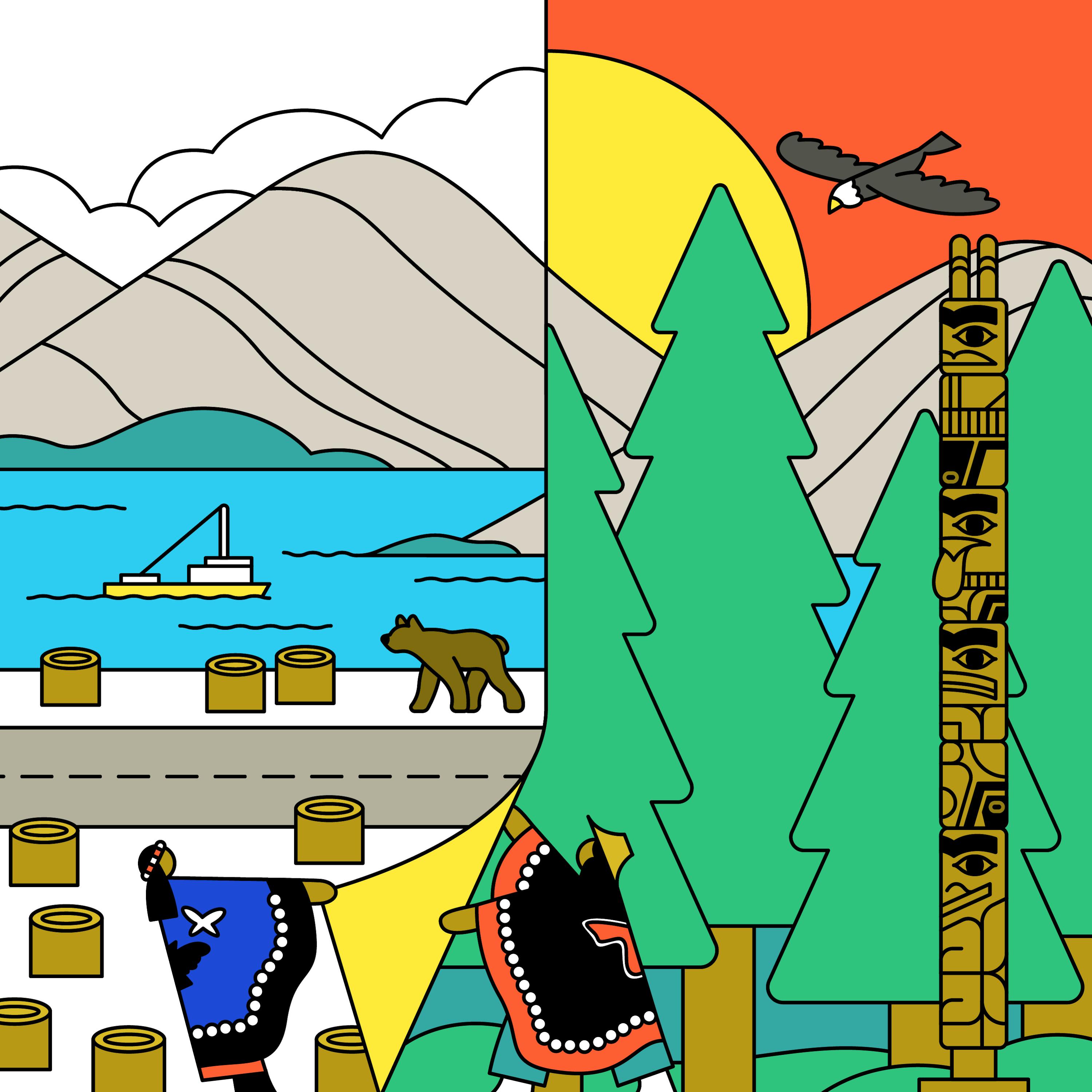
The Tongass: A Way Forward For The Forest
Mar 2, 202300:51:19Tap to summarizeIn our season three finale, we’re transporting listeners to the largest intact temperate rainforest in the world and a vital carbon sink: the Tongass. Katharine and Leah investigate the impact of decades of industrial logging in Southeast Alaska and political debates pitting ecology against economy. We learn from the Tlingit, Haida, and Tsimshian people, who have lived on and with these lands for more than 10,000 years. And we discover how a new chapter for the Tongass is taking root.This episode features Marina Anderson, deputy director of the Sustainable Southeast Partnership, and President Richard Chalyee Éesh Peterson of the Central Council of the Tlingit & Haida Indian Tribes of Alaska. Marina and Richard describe the boom-and-bust extractive economy of the past, and they share new collaborative approaches that are now moving Southeast Alaska towards a regenerative economy — in which the forest and local communities can thrive.Along the way, we learn about key moments in the history of the Tongass: its designation as a National Forest in 1907, major pulp mill contracts in the 1950s, the 1971 Alaska Native Claims Settlement Act, the 1990 Tongass Timber Reform Act, the 2001 Roadless Area Conservation Rule, and now, the modern-day Southeast Alaska Sustainability Strategy. It’s a powerful tale that ultimately points to so much possibility.As this season comes to a close, we’re curious: Have the stories on our show inspired you to take climate action or set new climate goals? We’d love to know! Please take a moment to fill out our first-ever listener survey. Thank you to all our guests, listeners, supporters, production team, and amazing guest hosts, Nikayla Jefferson and Paasha Mahdavi, for a great season! While we’re away, you can discover more meaningful ways to take part in the climate story via The All We Can Save Project.
Transcribe →