Loading summary
Transcript60 lines
- [00:00]
Brian Buckmire
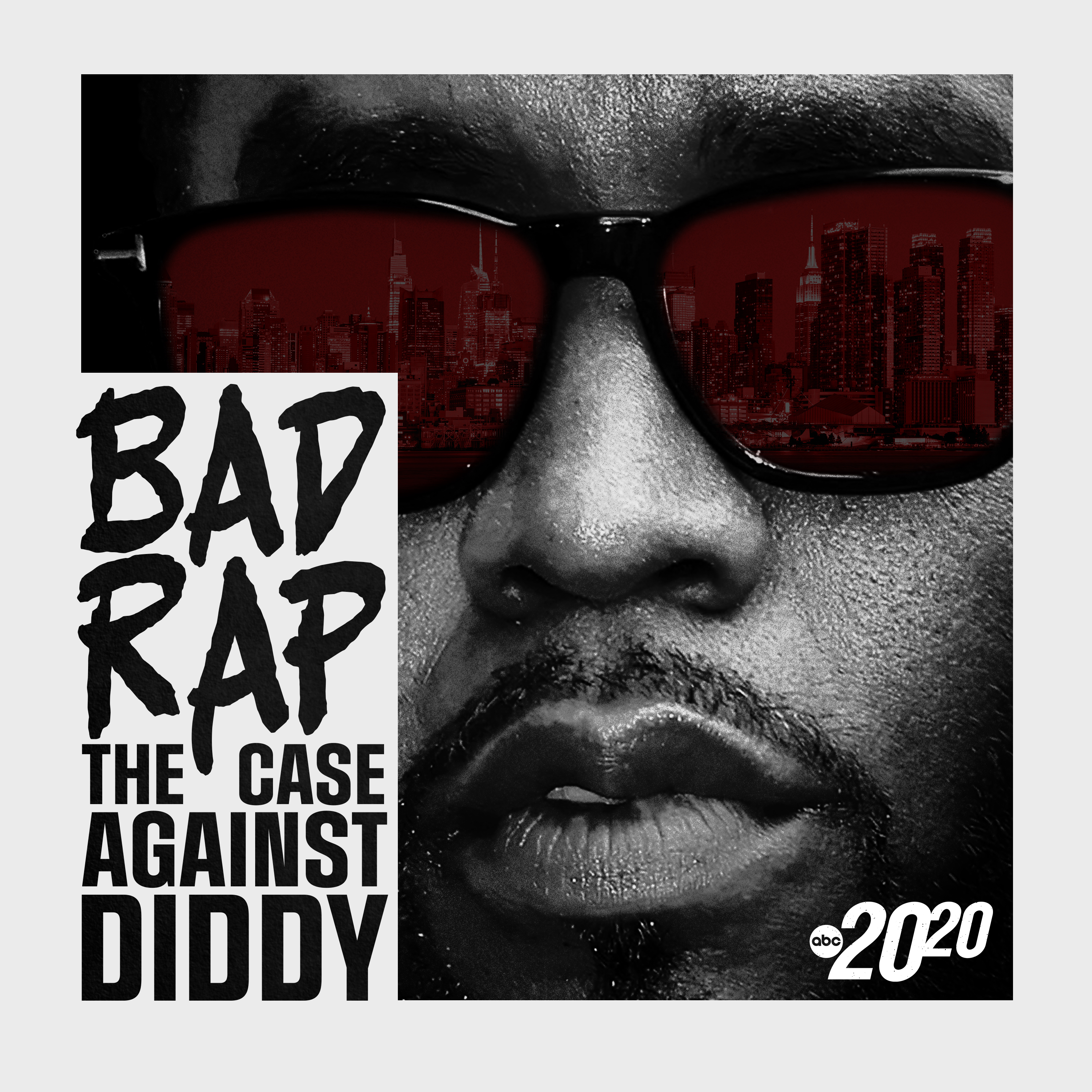
Hi, I'm Brian Buckmire, an attorney and ABC News Legal contributor, and I'm also the host of a brand new series from ABC Audio that I think you'll want to check out. It's called Bad Rap the Case Against Diddy. Over the next six weeks, I'll dive into the rise and fall of Sean Diddy Combs. We'll cover the full story from his ascent to superstardom to the federal charges he's facing while currently awaiting trial, all of which he denies. Then, when the case goes to trial in May, we'll cover it all with real time court updates. Keep listening to hear Episode one right here and if you like it, you can find the show on your preferred podcast app. To hear new episodes every Tuesday, just search for Bad Rap the Case Against Diddy wherever you get your podcasts. Now here's episode one in the summer of 2009, everyone was paying attention to Sean Diddy Combs. He wasn't on the top of the Billboard charts anymore, but he had become a fixture of American pop culture. The flashiest example was his annual star Studded White Party. It was an exclusive event and everything had to be white, from the decor to the dress code. This was the early days of smartphones. Imagine every celebrity worth an US Weekly headline with a bedazzled smartphone in their hand. It was before TikTok and Instagram, when tabloid coverage claimed to break juicy celebrity stories. Compared to the prominence of video and social media today, private celebrity parties were much more private. But One bit of Diddy's 2009 white party was captured on video. Rapper and record producer J Blaze caught it on camera and posted it to YouTube for the world to see. Actor Ashton Kutcher grabs onto a swing strung over the pool and Tarzans across it. Diddy is emceeing in a sea of white suits, dresses, linen and sunglasses. Don't do that at home. By the summer of 2009, Diddy had won three Grammys. He had five songs hit number one on the Billboard Hot 100 chart, and three of his albums had gone platinum. He was successful and rich, four months from turning 40. Forbes magazine put Diddy's net worth at $30 million. He'd presented himself for a long time as a champion and model of black excellence. And he was feeling patriotic after the US Elected its first black president. So he decided this year's White Party would be held on Independence Day. He gave Marie Claire magazine a sneak peek before the party started. The pool draped in gauzy white curtains and chandeliers Platters of shrimp, crab cakes and barbecue were served.
- [03:04]
Sean Diddy Combs
Spread in love. Fourth of July, you know, I'm out here making movies and meeting new people. And that's what the white part is about, about people meeting new people.
- [03:12]
Brian Buckmire
A sommelier explains that all the wines served would be of course, white. We are going to be pouring some wines from the south of the Burgundy region. A Macon village and a Pouillet Fusee. Two of the biggest songs of 2009 were Lady Gaga's Poker Face and I Got a Feeling by the Black Eyed Peas. None of Diddy's music was at the top of the charts, but this was the year he wrapped Making the Band, the show that made him a reality star. And reality shows were hot. Diddy's hit show was the perfect blend of American Idol, the number one TV show in America that year, and another popular show at the time, the Celebrity Apprentice. On making the band, Diddy presented himself as a kind of Trump like figure of the music industry who would crown the next big pop group. Diddy had been throwing these Gatsby esque white parties for almost a decade. The first was on Labor Day in 1998 when he had just bought a home in the Hamptons. He hosted a bunch of them there and then in Saint Tropez on the French Riviera. One year he took a helicopter to the party and landed holding an original copy of the Declaration of Independence. The famous writer Norman Lear loaned it to him. All of the big celebrities appeared at Diddy's white parties. Beyonce, Jay Z, Jonah Hill, Martha Stewart, Paris Hilton, Aretha Franklin, Al Sharpton and Donald Trump. They all orbited the Diddy white party sphere. As a record exec, Diddy helped launch the careers of artists who would become legends. The Notorious B.I.G. mary J. Blige, Faith Evans, Usher, and many others. So it's no surprise people wanted the invite to Diddy's parties. If they had got one, then they belonged in the list of celebrities, politicians and cultural icons who had proximity to a mogul who knew everyone and could make things happen. You could hang out in the backyard with hundreds of guests who made it through the gates to the main party. But it still had a VIP section, an inner circle.
- [05:26]
Jason Lee
There's like the party in the backyard and then there's like the few people in the house. Beyonce was never in the backyard. She's in the house with Jay Z, she's in the house with very the kids. You know, we didn't get to smell the same air as Beyonce.
- [05:38]
Brian Buckmire
Reality TV personality and podcaster Jason Lee was at the 2009 Independence Day White party. He remembers it as a good time and says it helped his career. Lee claims he never saw any darkness or any hints of the crimes Diddy would be accused of years later.
- [05:55]
Jason Lee
People like me who went to the regular Diddy parties, we had our chicken and waffles, we sipped our Ciroc, we danced, and we went home.
- [06:04]
Brian Buckmire
Lots of people who attended Diddy's parties never saw his alleged dark side. For decades, a listers were eager to pose next to the mogul at a Hamptons bash. Today, many of those celebrities are actively distancing themselves from Diddy, not wanting to share that toxic spotlight. At the height of his power and influence, Diddy had complete control over his world. He decided who got to be an insider, controlled what happened when the lights went out. And he'd tell his guest as much.
- [06:35]
Sean Diddy Combs
This is the legendary white party. It's the real white party. Make some noise if you've been here before.
- [06:43]
Brian Buckmire
Okay?
- [06:44]
Sean Diddy Combs
And to all the kids, the kids have like an hour left. So get extra comfortable, kids, because after that, y' all gotta go. It's a rap for y'.
- [06:55]
Brian Buckmire
All.
- [06:55]
Sean Diddy Combs
Cause this thing turns into something that when y' all get older, y' all don't want to come to, okay?
- [07:02]
Brian Buckmire
The curfew announcement, when kids had to disappear and lots of adults left too. It hints at a turn Diddy foreshadows an adult world. A late night world of secrets. And some of those secrets, they've come pouring out. Diddy's rise and fall. It's the story we'll tell you in the first six episodes of this podcast. How a man who is on top of the music industry and on top of the world is now confined to a cell that couldn't be less luxurious, awaiting trial. And once the trial begins, will take you there with twice weekly updates. As the case unfolds, two very different versions of Diddy have emerged over the years. The charmer that he showed the world and the predator that onlookers and alleged victims are now claiming he was all along. Which version of Diddy will win out in court? I'm Brian Buckmire, an attorney and an ABC News legal contributor from ABC Audio. This is Bad Rap. The case against Diddy. Episode one, Party's over. Diddy's white parties were glittering displays of wealth and social capital. But to some, there were clues even early on that Diddy's world had shadows. Justin Tinsley is a cultural reporter for ESPN's Andscape, which focuses on black culture. He says there'd always been rumors about what Diddy was like behind the scenes at parties and in his personal and professional life.
- [08:42]
Jason Lee
It was just a matter of what's true, what's not, and is somebody ever going to come to the forefront and really say, like, these are my experiences with this guy?
- [08:53]
Brian Buckmire
In November of 2023, someone did come forward. Diddy's ex girlfriend, Cassie Ventura, filed a civil lawsuit against him, alleging that for over a decade, he trapped her in cycle of abuse, violence and sex trafficking. The lawsuit was a bombshell. It alleged Cassie was forced to participate in orchestrated, elaborate sex parties Diddy called freak offs that he would film and keep recordings of. A day after the lawsuit was filed, Diddy settled with Cassie for an undisclosed amount and no admission of guilt. But Cassie opened the floodgates. Over the next 12 months, others who had spent time with Diddy, from a music producer to a former model to a yacht stewardess, filed lawsuits, too. These lawsuits alleged rape, sexual assault, and human trafficking. Many also alleged Diddy would spike drinks and lace marijuana with narcotics to knock people out or make it harder for them to resist assault. Some mentioned Diddy videotaping assaults to further control and humiliate his victims. Those lawsuits went from a steady drip to a rapid current. There are now dozens of them. In December of 2023, Diddy said in a statement that he did not do any of the, quote, awful things being alleged. He called them sickening allegations by people looking for a quick payday. His attorney told ABC News Combs couldn't comment on settled litigation, wouldn't comment on pending litigation, and, quote, cannot address every allegation picked up by the press from any source, no matter how unreliable, end quote. But in the fall of 2024, criminal charges were filed against Diddy by the feds.
- [10:45]
Mark Agniphilo
In a dramatic turn of events, federal investigators raiding two homes owned by hip hop mogul Sean Diddy.
- [10:51]
Brian Buckmire
Combs, a Homeland Security spokesperson, says the raid of the rapper's properties was carried out as part of an ongoing investigation into allegations of sex trafficking.
- [11:01]
Mark Agniphilo
Music mogul Sean Diddy Combs arrested in a New York City hotel by federal agents with Homeland Security investigations after being indicted by a grand jury. We're joined now.
- [11:11]
Brian Buckmire
Mansions where he'd once hosted lavish parties were raided by federal agents. In la. More than a dozen officers pulled up in armored vehicles wearing fatigues, guns drawn, pointing them at Diddy's sons, who happened to be at home in Miami. It was police officers in T shirts driving up to Diddy's compound in vans. Combs is now Facing federal criminal charges that read a lot like those earlier civil lawsuits. Sex trafficking, transportation to engage in prostitution, and racketeering conspiracy. The charges accused Diddy of decades of criminal behavior. And unlike the civil lawsuits that he faced from Cassie and now from others, these criminal charges could land him in prison for the rest of his life. Combs has pled not guilty to all charges. His attorney, Mark Agniphilo, called it an unjust prosecution. He said Combs was a, quote, music icon, self made entrepreneur, loving family man, and proven philanthropist who has spent the last 30 years building an empire, adoring his children, and working to uplift the black community. He called Combs an imperfect person, but not a criminal. Once these lawsuits and charges were filed, reporters and fans started looking at Diddy's past with more scrutiny and up close, knowing the allegations against him. Even his famed summer party started to look very different. Like this clip from an appearance on Conan O' Brien's show in 2002. Conan compliments Diddy on being a legendary party host and asks him for tips on throwing a, quote, killer party.
- [12:49]
Sean Diddy Combs
A lot of ladies drink water at parties. They just, you know, so you have. If you don't have what they need, they're gonna leave, right?
- [12:55]
Brian Buckmire
Gotta keep them there. Right?
- [12:56]
Sean Diddy Combs
You need locks on the doors.
- [13:00]
Brian Buckmire
Okay, this is sounding kind of dangerous now. It's a little kinky, but, you know. Yeah, a joke about locking doors so women can't leave. Lands a little differently now. I've been captivated by Diddy's rise and fall for two reasons. The first one is pretty straightforward. When I was growing up in the 90s and 2000s, Diddy was everywhere. It's hard to be a millennial and not know his music or his impact on the music industry. One of his most popular songs I remember playing on the radio in elementary school was It's all about the Benjamins with the spoilers and Can't Nobody Hold Me Down. He marketed himself as a kingmaker in the world of hip hop, and everything he touched seemed to turn to gold. He turned hip hop from being a thing my mom probably didn't want me to listen to, to something that could make you into a billionaire businessman, something my mom would approve of. Back then, before the lawsuits, before the allegations and scrutiny, Diddy was someone you could look up to. But I'm not a culture reporter or a music journalist. I'm an attorney. I spent almost 10 years as a public defender in New York City, the last few of those in the homicide unit. Now I litigate federal civil and criminal cases. And to be clear, I am not an attorney on Diddy's case, but I have represented people who have been accused of the kind of crimes he's being accused of and people who were victims of those types of crimes. And even with all of my experience, when I read through some of the lawsuits from the people who had sued Diddy, I had to stop myself sometimes. The photos and details were jaw dropping. They were a shock to my system. And the federal indictment is sweeping and disturbing. Diddy is accused of running a vast criminal enterprise that abused, threatened and coerced his alleged victims and others around him to fulfill his sexual desires, protect his reputation, and cover up his conduct for decades. Diddy maintains his innocence. His trial is set to start in May. Until then, he's locked up, stuck in a place that couldn't be more different from the luxury he's used to. A place he doesn't want to be. A place that no amount of money can get him out of. A place I know well. More after the break.
- [15:48]
Suvi
This show is supported by Suvi, the Ultimate Convenient Dinner Solution. Suvi is a smart countertop oven and a flexible meal delivery service. With the Sous Vide kitchen robot, you can set up dinner in the morning and come home to a hot home cooked meal. All you have to do is load your ingredients and enter the time you want to eat. It has built in refrigeration to keep your ingredients at the perfect temperature until it's time to start cooking so you can enjoy balanced chef prepared meals without having to shop, prep or clean up. And you can cook anything you want. Each week. Sous vide offers 50 complete meals you can choose from with new options added every week. Or you can use your own ingredients to make your favorite family recipe. Stop spending hours in the kitchen and a fortune on takeout. Let Sous Vide handle dinner. Get 16 free meals when you order today. Go to suvie.com abc that's s u v I e.com abc save time and eat better with Suvvie do you worry.
- [16:43]
Brian Buckmire
About how much someone drinks?
- [16:45]
Mark Agniphilo
Do you feel angry or depressed most of the time? Do you feel neglected or unloved?
- [16:50]
Brian Buckmire
Do you feel that if the drinker loved you, she or he would stop drinking?
- [16:54]
Mark Agniphilo
If you answered yes to any of these questions, you are not alone.
- [16:58]
Brian Buckmire
Not everyone trapped by alcohol is an alcoholic. Families and friends are suffering too. Al Anon and Alateen can help. Call 1-866-200-0223 or visit al anon.org Help in Diddy's old life he could choose which of his many homes he wanted to spend time in. A three story mansion overlooking the Pacific Ocean and downtown la. A compound in Miami, including a nine bedroom mansion, a New York City apartment with views of Central Park. Homes in New Jersey and Atlanta, and a waterfront mansion in the Hamptons. Now Diddy's in the Metropolitan Detention center, or MDC in Brooklyn. This bland behemoth is where he'll stay as he awaits trial. So we're pulling up to MDC now. It's got like this unkept, unwashed, grungy ness of it. There's a tall metal fence around the MDC complex, so the parking lot's as far as most reporters get. But as a defense attorney, I'm here almost every week and I can get further than most. I walk through the gate, up the steps, and through the doors to security. I get escorted into the visitor's area and I meet my client for about an hour or two. For the parts of the jail I can't see, my clients fill me in about how boiling hot it is in the summer, how cold it is in the winter. An inmate told me that at one point, when there was no heat or hot water, he couldn't go to the showers and instead was dumping hot water onto his body from the sink, washing himself and catching the water in the toilet. I had to come to MDC on that cold, gray day in January to meet with a client who was awaiting sentencing. Getting out of my Uber, I looked up at this complex of tall concrete buildings and the gate. Before you come in, you can actually hear people. It almost sounds like they're like rec hour. Yeah, it sounds like they're playing a Sport. Each of MDC's buildings are 10 or more stories tall, and where the windows in a typical apartment would be, you have red brick slabs with narrow slats and big sections of metal grating that give you the impression of a locked jail cell. Even from the outside. MDC's right on the Brooklyn waterfront, just a few blocks from a bougie converted warehouse space full of artisanal shops and upscale restaurants. But if you're part of the legal system in New York, you know that MDC is not a nice place to be. In fact, it's been described as hell on earth, known for its violence, corruption and miserable conditions. It's a federal building, so you can see Department of Justice, Federal Bureau of Prisons, you see the American flag, and the building has watermarks and rust on the metal parts and things of that way. Over the years, it's housed some people you've probably heard of, like R. Kelly, Michael Cohen, Ghislaine Maxwell, Sam Bankman Fried, Luigi Mangione and Sean Diddy Combs. Combs has been at MDC since he was arrested last September. According to his attorney, Mark Agnifolo, Diddy had flown to New York to cooperate with authorities.
- [20:24]
Cameron Lindsay
He came here to turn himself in. He's been looking forward to clearing his name, and he's going to clear his name.
- [20:30]
Brian Buckmire
Paparazzi and onlookers caught snippets of Diddy's visit to New York last September. And from those photos and videos, it looked like he was enjoying his time, talking and smiling with fans, playing hacky sack in Central park, strolling through the city with his family. If Diddy had plans to turn himself in, he didn't do it for the first 12 days he was in New York. But on the night of September 16th at the park Hyatt Hotel in midtown Manhattan, Homeland Security Investigations Agen caught Diddy by surprise. You can see on the hotel security footage that Diddy walked into the front door and the agents approached him. They separated him from the group he was with, put handcuffs on him and took him away. The day after Combs arrest, the prosecutor at the time held a news conference to announce the charges.
- [21:22]
Aaron Katerski
Combs allegedly planned and controlled the sex performances, which he called freak offs, and he often electronically recorded them. The freak off sometimes lasted days at a time, involved multiple commercial sex workers, and often involved a variety of narcotics such as ketamine, ecstasy and ghb, which Combs distributed to the victim to keep them obedient and compliant.
- [21:49]
Brian Buckmire
Because of how serious and violent the alleged crimes are, Combs was ordered held without Bailey. ABC News chief investigative correspondent Aaron Katerski was in the courtroom.
- [22:00]
David Aaron Katerski
Sean Combs entered in a black T shirt, gray sweatpants and sneakers. He actually looked a little stunned as he surveyed the imposing room. Several of his children and his sister were there watching as he pleaded not guilty. And then they saw him led out by the marshals after the judge ordered him into custody without bail. David Aaron Katurski leading us off.
- [22:18]
Brian Buckmire
It didn't surprise me that things didn't go Diddy's way with Bailey. The allegations and trafficking charges are very serious. And if Diddy were out on bail, the fear was he'd have the ability to reach witnesses and possibly intimidate them. I didn't think there was a chance he was getting out, but that didn't stop Diddy or his attorneys from trying. Diddy's attorney told reporters before the start of the bail hearings. MDC was no place for his client.
- [22:46]
Cameron Lindsay
I told Mr. Combs I'm going to try and get his case to trial as quickly as possible. I'm going to try and minimize the amount of time he spends in very, very difficult and I believe, inhumane housing conditions in the special Housing Unit of the Metropolitan Detention Facility.
- [23:04]
Brian Buckmire
Over and over again, Diddy tried to get released. He tried offering a $50 million bond. He tried offering home confinement. He tried to prove he wasn't a flight risk, attempting to sell his private plane and saying he'd surrender his passport to his attorney. He was trying to be a cooperative defendant. But no Sean Combs was denied bail.
- [23:27]
Mark Agniphilo
Four times ABC News Live A judge has denied bail for Sean Diddy Combs Sean Diddy Combs has been denied bail once again. A judge in New York denied music mogul Sean Combs request for bail, saying Combs is potentially dangerous to the community.
- [23:43]
Brian Buckmire
It's not. The judges were also concerned he'd obstruct justice and intimidate witnesses. That last part, witness intimidation, has become a big issue in Combs case in recent months. In one of his first bail hearings, prosecutors presented calls Diddy made and texts he sent before his arrest. They said Diddy reached out to potential witnesses, telling them they'd be taken care of financially if they stuck by his side. And then in November, after he'd been at MDC for about two months and was up for a third chance at bail, prosecutors alleged Combs had been paying other inmates to access their phone accounts and, according to the government, avoid law enforcement monitoring. And prosecutors said they caught Combs on recorded calls from jail asking family members to reach out to potential victims and witnesses and urged them to come up with narratives to sway the jury in his favor. Prosecutors wrote in their court filing, the defendant has shown repeatedly, even while in custody, that he will flagrantly and repeatedly flout rules in order to improperly impact the outcome of his case. The defendant has shown, in other words, that he cannot be trusted to abide by rules or conditions. Diddy's attorneys responded to prosecutors arguments by saying the non stop drumbeat of negative publicity has destroyed Combs reputation and will make it virtually impossible for him to receive a fair trial. So Combs isn't back in his $48 million mansion on an island in Miami beach where at one point he'd ask to await trial. Instead, he's being detained far from the pools, hot tubs, cabanas and ocean views he's used to. So what's it like being an inmate at mdc? What's it like being a celebrity and alleged sex offender in mdc, a notoriously dangerous and neglected jail? After the break, we meet someone who gives us an inside view of MDC most people don't get to see and a window into Combs life behind bars. Just a few weeks ago, I talked to someone who's been past the visitation area at mdc, who's really been on the inside. And I will try my best to make this not feel like a cross examination, even though that is my typical practice.
- [26:12]
Cameron Lindsey
Oh, that's okay. You can ask me anything.
- [26:14]
Brian Buckmire
I mean, that's Cameron Lindsey. He's worked in corrections for 25 years. He was a warden of five different correctional facilities, including MDC Brooklyn. And since retiring in 2014, he's continued to work in jails and prisons around the country as a consultant and also serves as an expert witness, often testifying on behalf of a plaintiff who was hurt or even killed while incarcerated. So he's seen some stuff in this country's corrections system, and he says for anyone going into detention is a shock to the system, but especially for someone.
- [26:50]
Cameron Lindsey
Like Sean Combs, just utterly upending, utterly shocking. I mean, for somebody like you're pointing out, sir, who has, you know, boatloads of money, who is used to a lifestyle of just doing whatever he wants, it's like going 100 miles an hour and slamming into a wall.
- [27:11]
Brian Buckmire
It's small things, like having to wear the same beige prison issued jumpsuit as everyone else. And it's big things, too, like where and how he's housed. Diddy's lawyer has said he's in what's called the special housing unit, which means he's separated from the general population. If it were up to retired Warden Lindsay, he'd go even further, putting Diddy in almost complete isolation.
- [27:35]
Cameron Lindsey
In my humble estimation, an individual like Mr. Combs P. Diddy, he should be quartered separately in a lockdown situation, which would entail 23 hours in a lockdown cell by himself. He would be afforded one hour of recreation every day. He would be afforded three showers per week. His meals would be delivered to him in his cel.
- [28:00]
Brian Buckmire
But that doesn't seem to be MDC's approach. Diddy reportedly has access to at least some other inmates. Convicted crypto fraudster Sam Bankman Fried said in an interview with Tucker Carlson that Diddy has been kind to people in the unit and he's been, quote, kind to me. We also know Diddy's cell is Small, not what he's used to.
- [28:20]
Cameron Lindsey
They have a toilet, sink combo. They have a desk, and they have a bunk, and that's it. They are afforded certain privileges. Reading materials, commissary.
- [28:37]
Brian Buckmire
They keep Diddy separated from the jail's general population to keep him safe. His wealth and notoriety could make him a target.
- [28:44]
Cameron Lindsey
When somebody has this much money and they have been alleged to have committed these heinous crimes, like in this case with P. Diddy, all those things add up to the likelihood of a potential threat.
- [28:59]
Brian Buckmire
It's right for MDC officials to take Diddy's safety seriously. The facility is infamously dangerous. The Associated Press reported that just in the last three years, there has been a stabbing death, a death after a brawl, and at least four deaths by suicide. And in the time Diddy's been at mdc, an inmate was charged with orchestrating a murder for hire plot from inside. A Southern District of New York judge said in a 2024 opinion that defendants at MDC Brooklyn complain of, quote, near perpetual lockdowns, dreadful conditions, and lengthy delays in getting medical care. He and other federal judges have refused to send defendants to MDC on the grounds that conditions are so bad. Conditions at MDC sank to their lowest in 2019 with what Lindsay calls the freeze out, when nearly 1700 inmates had to live in below freezing temperatures for a week.
- [30:01]
Cameron Lindsey
They couldn't get the power on for like, a week. And I was just so perplexed by that. And so that was the first thing that started getting my attention, like, what the heck's going on with the agency?
- [30:13]
Brian Buckmire
There was a heat and power outage at the same time. Cells were dark, toilets wouldn't flush, and access to food, medical care, and phone calls were cut off. Inmates sued. The Department of Justice investigated, and a settlement was reached for about $10 million. When you're incarcerated, sometimes getting the bare necessities can be a struggle. But what happens when your clientele includes people with means, people who are used to buying whatever they want? Lindsay doesn't know anything about Diddy specifically, but I asked him about corruption in general. So if I tell you that I've heard stories like, well, people are buying cell phones inside of mdc, and people are having sometimes lobster dinners or dinners brought to them that you're wondering, how are you eating like this in mdc? Are those shocking to you at all that I'm talking to you about lobster dinners and. And cell phones in mdc?
- [31:11]
Cameron Lindsey
No, not at all. There's an element of corruption in every correctional facility I can tell you. That at MDC Brooklyn. My experience was there was a core of really, really solid staff at MDC Brooklyn that. That held the facility together. Unfortunately, however, there is a disproportionate element of misconduct and corruption within the Metropolitan Detention Center, Brooklyn. So it's true and disappointing.
- [31:46]
Brian Buckmire
It's hard to know the precise impact Diddy's presence has had on mdc, but retired warden Cameron Lindsay says it's reasonable to think there's been increased scrutiny on the facility from higher ups. We do know since he's been in, there have been lockdowns and contraband sweeps involving other inmates in which investigators have seized drugs, homemade weapons, and electronic devices.
- [32:07]
Cameron Lindsey
I can't even imagine the pressure that's coming down from the top of the administration down. I would think that the word coming down is, you better keep these people safe and make sure that you're doing your job.
- [32:25]
Brian Buckmire
So we started with Diddy at his peak, the host of the party that everyone wanted to go to, to the center of an industry that so many wanted to be part of, the key that could unlock success and fame for those around him. But now he's locked up and can't even control the most basic things, like when he eats or bathes. How did Diddy go from mogul to inmate? How did he build not just a career, but an empire? And if the allegations against them are true, how did he get away with the violence, abuse, and manipulation for so long? Coming up on Bad Rap, the case against Diddy.
- [33:05]
Sean Diddy Combs
I've seen a lot of death, you know, I don't know why. Believe me. I asked myself the same question, like, you know, why have I been chosen to see all of this, you know, death at such a young age?
- [33:17]
Brian Buckmire
Diddy's success comes at a price. But time and time again, he doesn't see seem to be the one paying. This is the beginning of this sense of invincibility. In our next episode, we'll trace the path of Diddy's rising star from college dropout to the COVID of Rolling Stone. And later in our series, the early signs of Diddy's alleged dark side start to emerge.
- [33:40]
Mark Agniphilo
We began to see her more in the public as Diddy's girlfriend and less.
- [33:45]
Brian Buckmire
As the artist Cassie. The culture of silence was colossal. It kept people silent for a really long time. And I would venture to say it still is keeping people silent right now. Stay with us as new episodes drop every week in the lead up to Diddy's trial. Once it starts, we'll keep you posted with updates throughout. If you enjoyed this episode, we'd love if you share it and give us a rating on Apple Podcasts or Spotify. Bad Rap the Case Against Diddy is a production of ABC Audio. I'm Brian Buckmire. This podcast was written and produced by Vika Aronson, Camille Peterson and Nancy Rosenbaum. Tracy Samuelson is our Story editor. Associate Producer Amira Williams Production help from Shane McKeon fact checker Audrey Mostek Story Consultant Sweeney St. Vil Supervising Producer Sasha Aslanian Original music by Evan Viola Mixing by Rick Kwan Arielle Chester is our social media producer. This podcast was powered by the Journalists at impact by Nightline 2020 GMA and the ABC News Investigative Unit. Thanks to those teams and special thanks to Stephanie Maurice, Liz Alessi and Katie Dendas. Josh Cohan is ABC Audio's Director of Podcast programming. Laura Mayer is our Executive producer.
- [35:25]
Libsyn Ads
Marketing is hard, but I'll tell you a little secret. It doesn't have to be. Let me point something out. You're listening to a podcast right now and it's great. You love the host. You seek it out and download it. You listen to it while driving, working out, cooking, even going to the bathroom. Podcasts are a pretty close companion. And this is a podcast ad. Did I get your attention? You can reach great listeners like yourself with podcast advertising from Libsyn Ads. Choose from hundreds of top podcasts offering host endorsements or run a pre produced ad like this one across thousands of shows. To reach your target audience in their favorite podcasts with Libsyn Ads, go to libsynads. Com. That's L I B S Y N Ads. Com. Today.