← A Place of Yes | A Grief Podcast 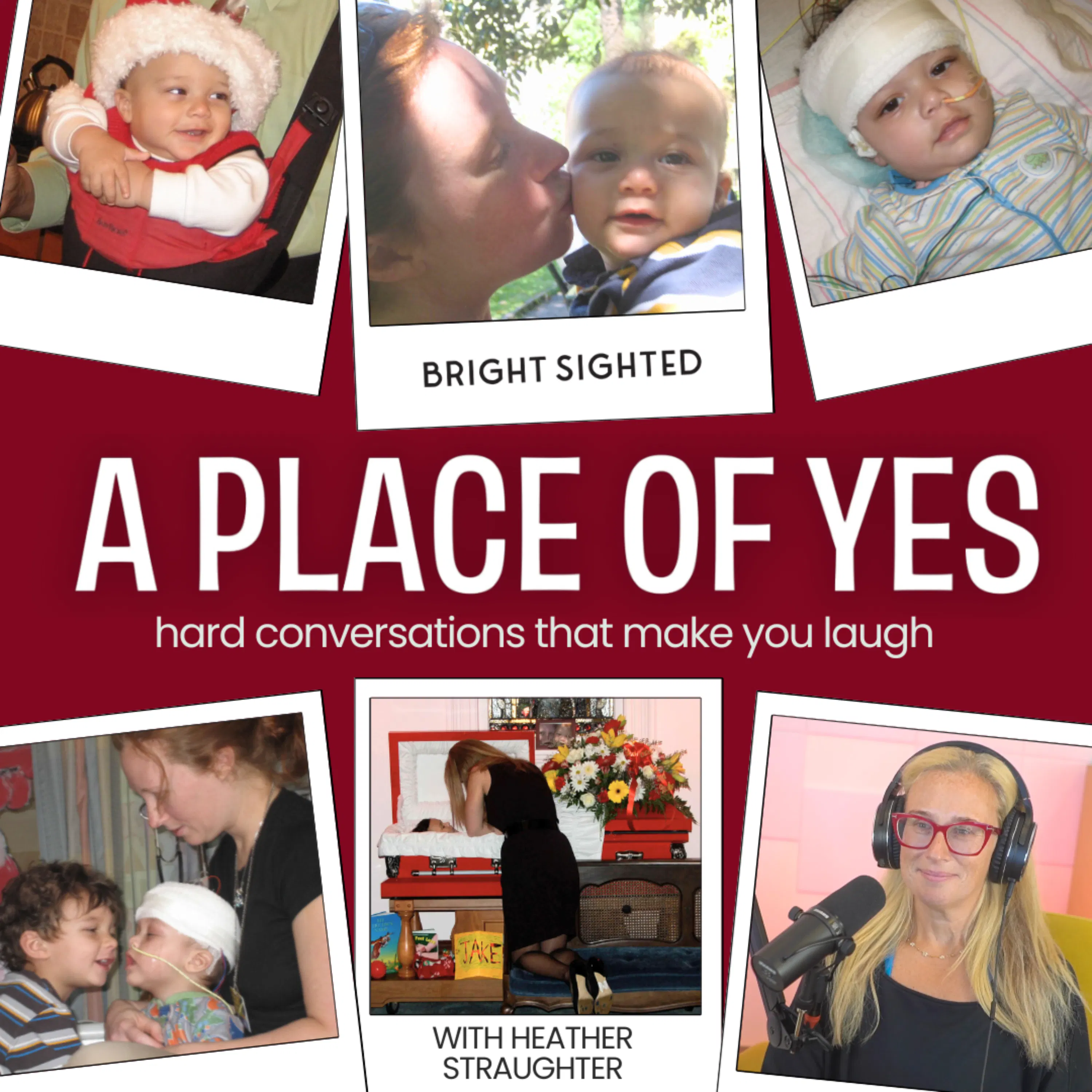
A Place of Yes | A Grief Podcast
How a 3,288-Mile Run Sparked a NATIONWIDE Fight Against Multiple Sclerosis
00:33:27
Loading summary
Transcript62 lines
- [00:02]
Ashley Schneider
The way that she lived her life. I'm driven to talk to people about it because I feel like it's so significant and profound. So a lot of my personal work is so that people know who my mom was and the way that she lived her life, so that they don't have to necessarily be bogged down by their circumstances.
- [00:23]
Heather Stratter
Welcome to A Place of Yes, a podcast about how I moved through my darkest hour. And for me, that was in channeling my grief into good. Welcome to the show. Welcome to A Place of yes podcast where we focus on channeling our grief for good. I'm your host, Heather Stratter, and today's guest is Ashley Schneider, president and founder of Ms. Run the U.S. mississippi. Run the U.S. is a nonprofit dedicated to raising awareness and funds for Ms. Research. One of the things that I think is the most remarkable and something that we have talked about on this podcast before is this idea of running across America. And I am always blown away by the fact that this is even a thing that people can do. So you did that in 2010 to honor your mom who is living with MS, and your goal was to raise half a million dollars, Is that right?
- [01:19]
Ashley Schneider
That is correct.
- [01:20]
Heather Stratter
So welcome to the show, Ashley. I'm really looking forward to talking to you. And can you just share your story a little bit, like, why you do what you do?
- [01:28]
Ashley Schneider
Sure. Thank you for having me. I'm very excited to talk with you and your audience. Why I do what I do. My mom was diagnosed with multiple sclerosis before I was born. And so I grew up watching her lose a lot of mobility and cognitive function because of her Ms. Symptoms. For those of the listeners that don't know about the disease, it's a. It's a autoimmune disease that attacks the central nervous system, which is the brain, the spinal cord, and the optic nerves. And so when someone's diagnosed with ms, their symptoms can vary depending on how bad the attack is, where the attack is in the central nervous system. But specifically for my mom, she had difficulty with fine motor skills. So think of holding a pen or a spoon. Endurance fatigue is a common symptom that people get. Cognitive dysfunction, so brain fog, memory loss, things like that. So my mom experienced quite a few of those symptoms, and I witnessed how it affected her and how that then affected our whole family, essentially my whole life, my mom specifically. But both my parents lived very well through adversity. They. They showed me how to live gracefully while also being in challenging adverse conditions. They took her symptoms and all of the. All the Ways it was affecting her. And they. They really just had a she. Her joy came from a separate place, was not tied to her body and what she was capable of doing. I was a lifelong athlete. Idea dropped into my mind to run across America to try and raise half a million dollars for Ms. I had not run a marathon yet, so I didn't know what running 125 marathons across the country would be like. But I knew in that moment. 120, 525. I knew in that moment that everything that happened had happened to me. Both being an athlete and loving running and also my mom's Ms. Had happened for this. I knew it was what I was supposed to do. So you asked why I do what I do. It's because I recognized the calling. When it dropped into my mind, I knew it was. I was created to do. And then I just take the most reasonable next step. And I'd just been doing the next right thing for 15 years.
- [03:32]
Heather Stratter
It's amazing. So your mom was diagnosed, you had said before you were born. So you have known this has been a part of your life from your earliest memories. And one of the things I think either in our conversation before or in something that you had written, you were watching your mom lose her mobility. Yet you are such, like, was an athlete, like, physical person, obviously capable of running 125 marathons in a row. There's gotta be a direct correlation. Like, do you think that part of growing up that that just you just wanted to push your body or appreciate, like, what is that? Appreciate your body? All of the above.
- [04:07]
Ashley Schneider
I think it's twofold. I believe that I was given the gift of wellness and fitness. I love it either way. I think that even if my mom didn't have Ms. And lose her mobility, I think I was put here to love fitness and wellness and share that and encourage other people to lean into fitness and wellness and kind of take care of themselves that way. So I think it was something that I was given as a gift. And also watching my mom lose poor mobility and function and lose the ability to run and bike and water ski like she used to love to do. I knew very early that I was not going to be promised health and wellness for my entire life. My mom was diagnosed when she was 27. She had me at 31. So she was in her late 30s, early 40s, when she really started to lose a lot of her mobility. 40 is not the end of your life. It's younger, young. Whatever reason that landed really hard on me in my youth And I was like, I'm. I'm gonna take advantage of this. I love fitness and wellness, and I'm gonna. I'm gonna see what I'm capable of, and I'm gonna go for it.
- [05:06]
Heather Stratter
Is that something that other members of your family, like, you have siblings. Like, are they. Do they have that same outlook, or is it unique to you?
- [05:14]
Ashley Schneider
I have two sisters and a brother. The outlook is unique to me. And that's why I feel like it's twofold. I don't think it's this direct correlation that if you grow up watching your parent lose their mobility, you are gonna love fitness. I feel like it was a gift given to me, and also it was amplified by watching my mom lose her abilities.
- [05:29]
Heather Stratter
What did your mom think? Like, so all of a sudden, you know, you have this idea, I'm gonna run across the US And I love that. I love what you said, too. Like, you got this idea. You just one step at a time made it happen. What was your mom's reaction?
- [05:42]
Ashley Schneider
She loved it.
- [05:43]
Heather Stratter
Was she like, you're crazy, or was she like, do it? That's awesome.
- [05:46]
Ashley Schneider
Yeah, both my parents were, do it. That's awesome. Well, I was working on a cruise ship. I was traveling around the world. The idea came to me while I was in Barcelona, and I trained a little bit. I tested my body, and it's running limits a little bit on the cruise ship. And after about a couple weeks, I was like, I knew that how quickly I'd ramped my miles up that I could do it without worrying about injury. So I abruptly quit my job. But I didn't. I told my parents I quit my job. I had the idea of what I was going to do next, but I was going to tell them when I got home. So I get home from the Caribbean, I brought the ship over from Barcelona, got home from the Caribbean, and I sat down with them and told them that I was going to run across America for mom and Ms. Fundraising, and I was going to raise half a million dollars. And they absorbed that information. Didn't say a whole lot. I didn't feel reject, like, rejection from them, but I could tell they were just absorbing it. And then the very next morning, my dad in the kitchen was like, okay, where are you going to sleep? What's the food? He wanted to get into, like, the logistics, but, like, in a good way. Like, let's solve the nitty gritty. Yeah. Like, all this and see how. How we're gonna do it. And so we talked for, I don't know, how long? And just continue that conversation. And my mom is. Was. She passed seven years ago. She was an extrovert. She loved people. She used Ms. As an opportunity to talk to people about what was important to her and her value systems and her faith, and so she saw it as an extension of that. She loved that I was gonna go make an impact on the cause. She loved the amount of people it brought into our circle and how it got first out into the community. Ms. As a disease, because it can take away some of your mobility and function. And I will say that that was the situation for my mom. It's not across the board for everybody diagnosed with Ms. I put together America's longest relay run every year. We have runners that participate in my program that are living with them. So I want to be clear, like, an Ms. Diagnosis does not mean you're going to end up in a wheelchair. It just was what happened with my mom. And so for her Ms. Specifically, it just took away a lot of her independence. And this was an opportunity for us to get out to the community more. She met so many people and made so many lifelong friendships and media interviews and was kind of the star of the show. So she loved it.
- [08:01]
Heather Stratter
That's awesome. Like, so you're still doing this work you have, and we'll talk a little bit about how you have pivoted and from your original. I love that right away they kind of jumped in and helped you and became such a part of it. And you had mentioned, you know, so she passed away seven years ago. My audience knows I lost my son, and I am just so comfortable at. Sometimes I'm like, oh, no. Like, Jake totally is here with me, and he. Like, he loves that we're doing this, or sometimes he. I feel like he's annoyed with me. Like, do you feel like she is still with you? Like, driving you to kind of keep doing it and keep raising money?
- [08:32]
Ashley Schneider
Yeah, she's very much with me. The way that she lived her life, I'm driven to talk to people about it because I feel like it's so significant and profound. So a lot of my personal work is so that people know who my mom was and the way that she lived her life so that they don't have to necessarily be bogged down by their circumstances. But I'll give you a tangible example of how she's still with me. I took a trip recently out to California. I wrote a memoir about running across America, and I'm going through the process of publishing that book. And I was in an event out in California. And there was this experience where it was this music meditation thing, like, live music, and this really amazing singer. And during this specific song, it's called Metamorphosis, she was singing this song, and it was kind of this meditation song thing. I was closing my eyes, and in the middle of the song when, kind of feeling the music, I could feel my mom's presence. And I heard her say, I'm proud of you. You know, it was like a split second, and it was very clear to me that she was with me. And then she said what she needed to say, and she was gone. So, yeah, she's very much with me.
- [09:37]
Heather Stratter
I love that. And I. I'm such a believer in the connections we can still have once we've lost somebody. I just recently had, you know. So Jake's been gone for next month. Will be 14 years. A couple weeks ago, I had this dream. So he was 4 when he passed, and he had a lot of, like, medical issues, so he did not speak. Like, he made noise, but he didn't speak. But in the dream, he said, I'm good. Thank you. And I heard his voice, like, as though he was like, we're talking right now. And it was just this moment where I was like, oh, wow, that's the first time I've heard his voice. But then also, like, hey, he's letting me know. Like, he's letting me know that he's good. So I love that. Like, that's awesome. So that must have felt great, right? Like, really the reason you're doing it. She's here for it. That's so good.
- [10:24]
Ashley Schneider
That. And, I mean, she had a strong faith. I have a very strong faith. I believe in God. I believe in things that we can't see. See, when I'm listening to my gut telling me to do something, whether or not it makes sense, tangibly, in what other people might think or what we're told we should do, I think those are the spaces that not only do I meet my mom, but, you know, all of my ancestors and that kind of spiritual realm that we can't see or touch.
- [10:49]
Heather Stratter
I love that. And, you know, I was listening to a podcast, and the host was talking kind of about this, and it was like, you know, it blows my mind. He was sort of saying, when people don't lean into this, he's like, cause what do you think happens? And I just thought he's like, of course there's more than just. You don't just die, right? Like, you're not just, like, buried or like, there's more. And he was saying it not necessarily in a, like, lighthearted, jokey way, but he was saying it in such a, like, nonchalant way. Of course there's more. Of course there is this other space in my sort of journey. I've been in different spaces with that, right? Like, where sometimes I was less apt to lean in, and other times I'm almost desperate for a sign or a conversation or a dream, and I'm like, dude, where are you? Like, you're leaving me hanging. Cause you're right. Like, we are so limited if we just think it is this time here, everyone has some version of signs. It's funny how if you're open to it, there's all these ways, right?
- [11:44]
Ashley Schneider
Yeah. And why not?
- [11:45]
Heather Stratter
Why not? Like, there's no harm, no foul, right?
- [11:48]
Ashley Schneider
But my mom is more, like, she's just always with me. Whenever I meet someone or when I'm with someone and they are experiencing new grief, I try not to, like, silver line it with all these pleasant platitudes because it's. It can be terrible. I didn't really, really cry about my parents death for two years. Like, it sometimes it takes a little bit to really get into how it affects you. But one of the things I do try and share is that they are always with you. You can take them wherever you go. Because of the ways that specifically parents, or my parents, you know, affected me and the way that I have made my mom's chronic illness my career. But she is really. She's always with me, but not necessarily in an object or. Or a piece of nature.
- [12:38]
Heather Stratter
You know, as I've been talking to people, and there are these different, like, you know, so sometimes I'll see, like, a cardinal in a blue jay. Like, I'll be like, oh, well. And that's Mrs. Somoza's brother David, and that's with Jake. And then, you know, like, I think of all these. And I have a friend who's like, her father's a cardinal, but so she sees two cardinals, her father, and then Jake. You know, like, it's. You can turn it into this whole thing. But I think that there is this comfort in that. You know, I don't think I realized that your dad passed away five weeks after your mom. So that's like a one, two hit. That's hard.
- [13:09]
Ashley Schneider
So my mom, when she passed, she died of pneumonia, which is a common secondary symptom of Ms. So she had been getting pneumonia in the winter for the past couple winters. And this one, the year that she died specifically. She had pneumonia, but my parents didn't know it. And previously when she had been getting pneumonia, she would go to the hospital and you have to basically pass all these tests for them to release you would take about six weeks. So we kind of knew if mom was going to the hospital in the winter, it was going to be this six week hospital stay. She was kind of not well, she wasn't feeling great, and they decided they were going to sleep at all. And she actually passed in her sleep that night. So it was a really gracious way for her to go. I just know that was kind of a gift to her and also to us that it wasn't this long suffering process. So she passes. My dad had been her main caregiver. I naively kind of thought, we're sad mom passed. Like we. We love her. I'm very grateful the way that she passed and that it was this gracious gift, but also terribly sad that she's gone. You know, my dad was still with us and I thought, okay, well, now he doesn't have to take care of mom. Now we can do some things with dad that he wasn't doing, because his thing was, if mom can't do it, I'm not going to do it. He didn't ever want to make her feel that. And so I kind of naively thought, okay, well, now we can go do some adventures with dad and like, start living life with him a little bit differently. The month after she was gone, I learned a lot about my dad's love for my mom after her death. In those four weeks watching him, he was somewhere else. You know, he'd be over at my house. I had. My oldest was 18 months old and I was pregnant with my second. We'd invite him over for dinner and he'd be there, but he kind of was this shell of himself. You could tell that he just really lost his purpose. He would rather do that for the rest of his life and have her at the side than. Than this version of freedom that I naively imagined in my mind. And so it was about this, this month of him kind of being there, but not really. I would catch him just gazing out the window and staring off into the distance. And then my sister went over one day to his place and he was not feeling well. She thought it was a cold. He said he was fine, but she's like, we gotta get you to the doctor. So they went to the doctor and immediately they called the ambulance and they're like, no, this is like a hospital. ER situation. I thought he was having a heart attack. And they got him to the hospital and it was my mom's birthday, so he arrived at the hospital on my mom's birthday. He was in the ER for a while. They admitted him to cardiac unit. Nothing they were doing was helping. He went into a coma and then never woke up and was gone within 30 hours. They couldn't tell us. They said it was some sort of. They said sepsis. So some sort of infection. It happened too quickly. They couldn't identify because they don't just do like a blanket antibiotic. They have to know what kind of bacteria they're fighting. And so they had cultured and you have to wait like 24 to 48 hours for the culture. But if the infection's fast enough, like, that's it. Yeah. Me and my siblings were. We knew he died of a broken heart. He was broken after she was gone. And he knew that was his purpose and so he was gone too.
- [16:16]
Heather Stratter
It's interesting because I so relate and so know that feeling of like. Like thinking that your dad is now gonna have this, like, part two of his life. We can do trips with him or you can do all these other things, but the fact is that his, like you said, his purpose was like he couldn't imagine a life without your mom in it.
- [16:35]
Ashley Schneider
He loved her.
- [16:36]
Heather Stratter
It's weird to say, but like, that love that is so strong and so big and bold, you know, in some ways it's a really beautiful story. Do you find comfort in the fact knowing that sort of they're back together?
- [16:49]
Ashley Schneider
Yeah, we say all the time, it's a really beautiful love story that I wish wasn't my hearing. We all, like me and my siblings all know that is. It's just a beautiful love story. And I am very grateful that they're my parents. My dad and my parents had done their job and we would be okay without them. And I think if there had been any left, anything left for my dad to do, he would have stayed. There really was nothing left for him to do. And the other thing too is I was 35 and I much through my 20s and my 30s, I'm a kind of a go getter. And I had some real strong opinions about how things should be going and. And the things that my parents should be doing and how my mom could be cared for and all the things that we could be accomplishing. I just learned a lot in my dad's death too, that my mission isn't everybody's mission. My dad's measures for success were how well he loved and cared for my mom. He never said that to me, but I realized in that whole journey of my parents death that they didn't have to say it, they lived it. When I think now about his purpose and my mom's purpose for being here, both of them crushed it. Like they high achievement in all of the categories of how they needed to be successful in their life.
- [18:00]
Heather Stratter
It's so interesting because you're 100% right on, on all aspects of that. Right. Like it's so easy for us, especially if we live life a certain way or we're very like goal oriented or like kind of always kind of trying to push, you know, the next level. It's hard to sometimes or it's hard for me sometimes to not always expect that same thing from other people. Things look different for everybody. Like that's actually how it needs to be. Because if it was all the same, a, it would be boring and B, it just. It's not the way it is. I love how you said it. Like they crushed it. They both did what they came to do, what was important to them. The work that you're doing with the organization, the things that you're out there doing is in many ways like a reflection of them.
- [18:41]
Ashley Schneider
They instilled some really quality values in me and my siblings. And the way that me and my siblings live our life looks different. But again, it's the quality, it's the content of the character, it's the value of the work.
- [18:54]
Heather Stratter
Let's pivot a little bit and go back to that first run across America where you wanted to raise awareness, you wanted to raise money. Your initial goal was to raise half a million dollars. Talk about that. How long did it take you? How did you go about it? Did your dad help you with all of the. Where you were going to sleep and all of your meals?
- [19:12]
Ashley Schneider
Sure. Yeah. I did 24 miles a day, six days a week for six months. I started in San Francisco on March 22, 2010 and I finished in New York September 28. So it took me about six months to run across the country. I started my nonprofit Ms. Run the US in the training phase. Originally the idea was to come home. I didn't even think about starting a nonprofit that was not on my radar. I really just wanted to run and raise half a million dollars and give it away to Ms. Research and make an impact on the disease that way. I wasn't really sure what my plan was after that. I did learn very quickly that nonprofits were very happy to receive any money that I raised. But they. I really needed the tax exempt status for the large sponsorships that I was looking for. So that's what got me down the path of starting my own 501C3. For me specifically, I feel that running across America matched not only the amount of pain that Ms. Caused me, but then also my physical abilities and gifts. Really what it did. Is it big enough for me to feel empowered against ms? So whatever level of big someone needs to feel aligned with, I. I encourage people to do it. But for me, it was running across the country. My dad, my family, anybody I was coming in contact with, a lot of people were willing to help and try and talk about this girl running across America for her mom and she needs a motorhome and she needs.
- [20:35]
Heather Stratter
I love what you said about it was the way for you, like, mimic the pain that Ms. Has caused you? Like, I love that connection. People have different reasons for doing whatever it is they do in honor or in memory of someone. Right? And I think that is a really tangible point. Like, why do we do it? And I think that's a really big but important sort of why do what you're passionate about?
- [20:59]
Ashley Schneider
I really didn't have anything to lose. Um, I probably could have got my job on the cruise ship back, you know, and I was in my 20s. I was willing to make mistakes. I have had people even then and now be like, weren't you afraid to get injured? For whatever reason, I knew I could do the run without getting injured. I. It was like, it was just something I knew inside of me that I was going to be capable of. And I wasn't concerned about. About the injury part. I also think it's important, like the, the power of thought and intention. And it's something that my parents had given me. And so I wasn't going to start worrying about something that didn't worry me in the first place. A lot of other people were worried about. I was like, you guys go worry about that. I'm going to focus on the logistics.
- [21:39]
Heather Stratter
You can handle that part.
- [21:40]
Ashley Schneider
I'll do this charity set up. I'm looking for money and a sponsor.
- [21:44]
Heather Stratter
So you did it. You ran across the country, but you did not raise your half a million dollars. That kind of annoyed you, right? Like, because you were like, this was my goal and I wanted to get there.
- [21:54]
Ashley Schneider
I was super, super disappointed. So, yeah, I had done this incredible feat. I was being celebrated. Interviews, events, lots of accolades, messages, people being so excited. And there was this, what are you going to do? Now question. And when I got into New York, it really felt very anticlimactic for me. And I didn't know what to say about it because I knew people expected me to feel the level of achievement they felt for me. But I really was disappointed and only raised $56,000. And you can raise that much money in a well organized weekend fundraiser. You don't have to quit your job to run across America to do it. Yeah, I got the accolade of it. But the whole point was to get awareness for Ms. And to make a massive impact on the disease. So I was disappointed.
- [22:41]
Heather Stratter
So you pivoted. You figured out a way, right, to make more money. So talk about that, like, talk about how you took that, like, disappointment and you really channeled it into what you have now, which is a really solid organization that gives millions of dollars.
- [22:57]
Ashley Schneider
Yeah. During the run, I had had runners who would come out and join me. And again and again and again, I heard people say, runners say they'd always wanted to do something like this, but didn't have the time or the resources. I wanted to give runners the opportunity of what it would feel like to run across America, if only for a week. So I imagined America's longest relay run, each section would be about 160 miles in six days. So that's a marathon a day for six consecutive days. One of the things I realized in only raising $56,000 is that was what my network, what my network was worth at that time. And I thought, if I get other people to do this, they have networks that may be worth that much. And if we collectively do it as a group of 21, maybe we can raise the half a million together. And so I put the team together. I wanted runners to apply to be a part of the team. I did that in 2012 and, and with the projection of starting my run across the country in 2013 or like the relay run, that's what I did. I put the team together in 2012. I had projected that we are going to be in Santa Monica in April of 2013, December of 2012. I only had seven people signed up and I was looking for 20 to run at the time. And at the same time, I had a successful fitness and nutrition business. And then I had this charity run across the country that had only seven runners. And I was kind of like, all right, I don't know what I'm going to do with this because I feel like I'm doing my part. I ran across the country. I tried to raise the half a Million. I came up with this concept. I built the web. I'm doing all the things. I'm trying to raise half a million dollars. It was kind of like, I need some help here. And I got to the point where I was like, all right, well, there's only seven people. I can't run across America with seven people. So I just sent an email out and I was like, hey, really appreciate your interest in the event. I need 21 runners, 22 runners. There's only seven of you. Appreciate your interest. This stuff isn't coming together. I'm sorry, but we're not going to be able to run across America. I got emails back almost instantly, like, take us in your car. We're going to sleep in tents. I'll run across the state of Pennsylvania. We'll find more runners. How many do you need? You figure out where we're staying and we'll get the runners. And that's what happened. We had 16 runners signed up April.
- [25:03]
Heather Stratter
I mean, it just speaks volumes to the effectiveness of the cause, that the people behind it, like, your energy in leading this, that you tried to be like, hey, it's not aligned, it's not working. And they're, no, no, no, we will make this happen. And did you raise the half a million dollars that year?
- [25:18]
Ashley Schneider
We did.
- [25:18]
Heather Stratter
That's incredible. That is the model that you currently use, right? Like, so is this. It's an annual run.
- [25:25]
Ashley Schneider
Yep.
- [25:26]
Heather Stratter
So has it's happened every year since. And is it. Do people do it repeaters or do you have a new crew every time?
- [25:33]
Ashley Schneider
We had a lot of repeaters in the beginning. There's 21 spots in this. In the relay. I originally was like, hey, whoever signs up, like, let's just take them across the country. So we had people do it five, six times, times consecutively. And then we got to a point where we're getting so many applications and one. One part of the org's mission is awareness of what Ms. Is and how it affects people. And so we really started to talk about, as a board, how do we raise awareness? How do we get into more communities? How do we talk about the things that are important? How do we raise more money so that we can fund financial aid requests and the researchers that we align with? And one of the things was, all right, we gotta have new runners in the team every year. That's why we're going to be able to expand. Applications generally are open, but we start interviewing the runners July and August, and then we do team announcement in October. Once the team announced in October. Then we do monthly team meetings on Zoom. And we cover things like org values, the mission, where the money goes. Everybody gets to meet as a team. Each runner has to fundraise $10,000 or more to be a part of the team. So we have a great fundraising program. This program is designed to put people in positive pressure situations, but also give them the tools to be successful in their goals. We have sponsorship, we have a motorhome and a support and gear vehicle that travels across America every year. They take care of the runners and they give them an exceptional runner experience for all of their training and fundraising that they put into the team.
- [27:00]
Heather Stratter
What an unbelievable story. Like, from, like, an idea in your 20s, like, to what you just described. I mean, it's. What an evolution.
- [27:07]
Ashley Schneider
I'm very proud of what we do. I don't do it alone. I have an amazing staff that is just as passionate about what I do. And I do want to say that there were many years where I was doing it with, like, one other. It was like kind of piecing together bare bones was so bare bones. But then also, I wasn't always grateful for it. Like, nonprofit work is hard work. And there were many years where I was like, okay, God, can I have something else to call it? Yeah, if I know I'm a super hard worker. I know I'm smart, I'm intelligent, I'm building this thriving business, but it's not the ROI that you see in for crop. And there are many years where I'm like, please send me someone else so I could do something that will earn me multiple six figures. I'm so, so grateful. It has helped me evolve as a person and has helped me work on parts of myself that needed some. Some work. So I'm very grateful.
- [28:00]
Heather Stratter
Now, it's so interesting that you said that because, you know, with our organization, with Jake's help from heaven, I've had some of that same. I don't know if they're growing pains or not even growing pains, because at some point we were pretty, like, established. But really this year we made some changes for sustainability. And the sustainability was. It was more like me and our board, because that tugging of the heartstrings of, you know, you're making this difference and, you know, the work you're doing is so important.
- [28:25]
Ashley Schneider
But.
- [28:25]
Heather Stratter
But it's also, like you said, nonprofit work is hard work. There's no, like, real off day or, you know, you're constantly going. And it's so hard to always sustain that energy and to, like, how do you know how do you keep doing the good when you're just sometimes not feeling like doing it anymore? So it's important to I think figure out how to find that balance. So you raise this money, do you people apply for help or does it go towards research or is it divided evenly? Like what do you do with the money's raised?
- [28:56]
Ashley Schneider
We are partnered with the National Ms. Society. They have this amazing program called the Ms. Navigator Program. So if you're diagnosed with ms, you don't know anything about insurance or equipment or support programs that you can get help from if you had a flare up in symptoms and you couldn't go to work for two weeks. So now you're two weeks less on pay and you're not going to be able to pay your water bill like we'll pay the water bill type of situation. But that all comes through the partnership with the Ms. Society. So we have a shared space of where we communicate on the requests and we fund them there.
- [29:32]
Heather Stratter
I wasn't sure entirely what was done with the monies and I love that so much. That is so tightly connected to sort of how we do our supports at Jake's Help from Heaven. We get the items that people need. It's like a ripple effect. It's so great. I love what you're doing.
- [29:46]
Ashley Schneider
Thank you. And the other thing that is really important too, a lot of money does go to research and I love research. We have a research part of our mission too but we knew that, I mean we're not, we're not raising like the tens and hundreds of millions of dollars yet for within the ms, you know, so we thought, okay, what, how can we make the biggest impact? You know, it felt like if we were going to cut $100,000 check to research, it felt like a little bit of a drop in the bucket to the totality that is being put towards, towards research. And I'm not saying it doesn't, it's not needed but it one, it felt like a small amount in regards to what is being put towards research. But then also there wasn't that human story and not only can we align it with a personal story, but if I get an individual that comes in and is like, hey, I'm not going to run a product, we have other programs that people participate in but if they're like, hey, I'm not going to do the relay but I want to be part of the ambassador group, I'd really like to fundraise for a person.
- [30:43]
Heather Stratter
Your mom must just be loving this, like from just the way You've spoken about her and how she would like to be out at these. You know, I mean, just knowing that you are like, one by one impacting others with Ms. In such a positive way, it's awesome.
- [30:59]
Ashley Schneider
Thank you.
- [31:00]
Heather Stratter
If people want to do the run or if people want to get involved or be ambassadors, where can they find information?
- [31:07]
Ashley Schneider
We have a get involved tab on our website site. Yep. So go to the get involved tab. We have the relay application. I would not recommend putting a your application in now because we're not going to look at it until July. But the relay is fun to follow. We have an athlete program where we have people running for Ms. At different races. The ambassador program is amazing. And then we do have a couple different events. We have a virtual event in March called the Hometown Challenge. I like to challenge people to do 160 miles in six weeks. Weeks, which is the same mileage our runners do in six days. And so that's a good fundraising opportunity and just an awareness in general of what our runners do on the road. So that's a fun opportunity. And then the relay does come through Milwaukee in July. So if you want an in person experience, come to Milwaukee in July and you get to see what the relay is all about.
- [31:55]
Heather Stratter
So I have very much enjoyed this conversation with you. I love when I talk to people who, you know the kind of tagline of the show. Right. Is like channeling your grief for good. I love hearing other stories of that. Cause I do think that you have taken some of the challenges in your life and you have taken them and pivoted them into something that's so meaningful. So thank you for doing that. We end the show often with this piece called Ask Heather Anything. I turn it over to you to see if you have anything.
- [32:24]
Ashley Schneider
So if it weren't a cardinal, what animal would you pick as the spirit animal for Jake?
- [32:29]
Heather Stratter
Oh, that's an awesome question. This is gonna be a very weird answer. I was just looking through. Cause it was Halloween and I kind of went down this, like, rabbit hole of when the boys were little in their costumes. And I dressed him and Ethan, they were 15 months apart, as little monkeys, like in these, like, really adorable, like, costumes. They were just adorable. But Jake, like, the way he was in that costume was just adorable. That's an awesome question.
- [32:58]
Ashley Schneider
That was a great answer.
- [33:00]
Heather Stratter
No, that is. That just made me really happy. I was like, that's awesome. Well, thank you so much for being a part of this. I have so enjoyed this conversation. Thank you for listening to a place of yes Please follow us wherever you listen to your podcasts. If you really like this episode, please share it with a friend. It would make a world of difference if we we could just reach more people and share the work that we do and the stories we want to tell. Thank you so much for watching.