← A Place of Yes | A Grief Podcast 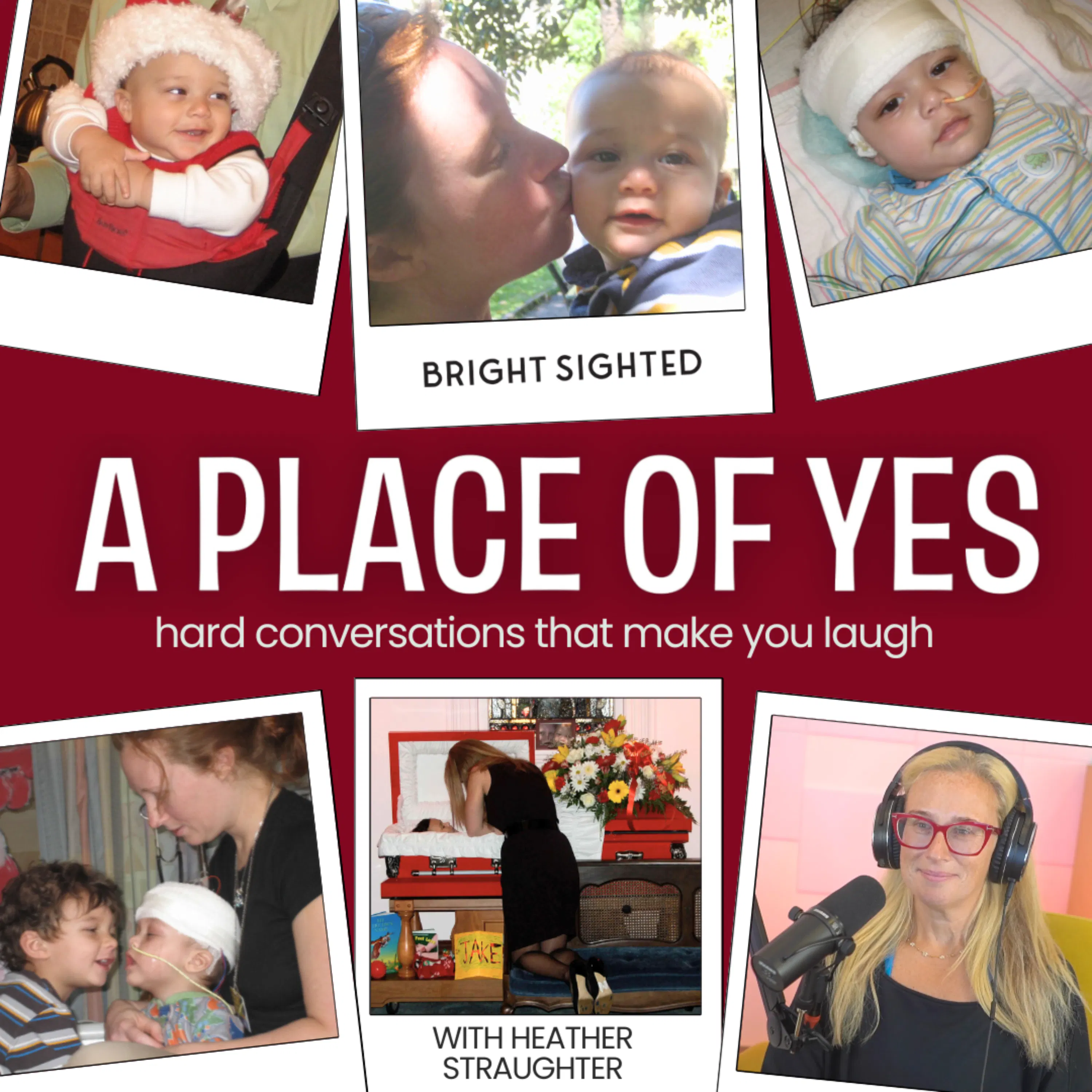
Loading summary
Transcript23 lines
- [00:04]
A
Welcome to A Place of Yes, a podcast about how I moved through my darkest hour. And for me, that was in channeling my grief into good. Welcome to the show. This episode is a deeply heartfelt conversation with Dr. Al Friedman about what it means to raise a rare child from the father's perspective. Too often, fathers are overlooked in these stories. Their grief, their strength, their vulnerability, all can be tucked away while the spotlight focuses on mothers. But fathers are on this journey, too, and their voices matter. With Father's Day approaching, we wanted to share this very special conversation in honor of all the dads navigating the complex path of parenting a child with medical challenges. A quick note. The audio quality in this episode isn't perfect. You may hear a few glitches, but we've done our best to bring you a strong and meaningful episode. We hope you'll stick with us. I am sitting here with Dr. Al Friedman today. He is a psychologist, a consultant, a keynote speaker, and more importantly, a father. You know, we are rare parents. We are in this world because of our children. For me at least, when Jake was first born, it felt so small in a bad way, because I did not know there were other parents like me. And now there's been a little bit of this evolution and community and people doing so much work in it that it's small in a good way, if that makes sense. So all that to say, welcome to the show. Al, I appreciate you being here.
- [01:45]
B
Thank you. I'm honored to be here, Heather. And I agree with you. I think in. In my travels in rare disease around the world, I. I think there are actually maybe two degrees of separation at most. It's. It's a small world in rare disease. And I also agree that when we find ourselves with a surprise, a diagnosis, the life that we thought we were going to have with our child isn't the one we find ourselves with. The child's different than the child we expected, and it feels very isolating and very scary. You feel like you're all alone. And I felt like I was launched into the Twilight Zone and there was nobody else there to talk to until I found other people like us who had experienced a Twilight Zone too.
- [02:27]
A
Perfectly said with that. And you're kind of jumping right into where I kind of wanted to go with you. That feeling of thinking you're going to have one life and then being catapulted into a completely different life. Can you share with me, share with me and my audience about your family, particularly about your son, Jack.
- [02:43]
B
My son Jack was born in Madison Wisconsin, April 23, 1995. So we're coming up on 30 years ago, Jack was born healthy. But at his six month pediatrician checkup, the pediatrician noticed that Jack wasn't sitting up and rolling over the way that six month old babies should. His mom and I didn't realize this. We had met as elementary school teachers, so we were used to kids, but not being babies. So we all of a sudden found ourselves in Children's Hospital, Philadelphia. I'm from Philadelphia and from a Friday, I believe, of the pediatrician six month checkup, maybe four days. Between that day and the day we were told that Baby Jack not only wasn't a healthy 6 month old, but he was diagnosed with spinal muscular atrophy, sma, a neuromuscular disease that at the time had no treatment. We have treatment now for our babies, but we didn't then and we were told to expect to have him for one year, that we should take him home. And we were introduced to so many things that no parent should ever have to hear about. Ventilators and wheelchairs and feeding tubes and DNR and all kinds of crazy things. Over a period of a couple of weeks, our lives were completely flipped upside down. Thankfully, Baby Jack didn't fully cooperate with the prognosis. He was with us for 26 years. A real blessing. I was very, very lucky. I am lucky to be Jack's dad. 26 years was a long time for him to do his job in the world as he did it so very well. Although he was a very big job in terms of his care, he really taught a lot of people, including dad, a whole lot of stuff that is hard to teach, I guess on those 26 years. Jack passed away three years ago, three and a half years ago in 2021. So it was not unexpected that he passed. It was unexpected that he lived as long as he did.
- [04:41]
A
You said something that I have found myself saying so much over the course. So my Jake has been gone close to 15 years, but I say this all the time and I don't always know that people know what I mean when I say it. But you said it and it just it when he said we, he taught you so much, you know, you learned so much from him. Because I do think there are these moments, right where you know, you're thrown into this world and earlier you said the Twilight Zone. And I think that's, it's among like the perfect way to say it because literally one day you have what you think is a healthy baby and it's like A switch, then you don't. And that was similar to Jake. Jake up until eight months was very healthy, very typical kind of doing all the things. He had an older brother, so he was constantly almost doing things early. And then one morning he had a seizure and that was all gone. But those gifts, I think that they teach us, they never go away. And to me at least, those gifts were to slow down, to reevaluate, to prioritize, and to really sort of see the world in a different way.
- [05:45]
B
Absolutely. What you just described doesn't happen quickly, neatly or easily. And I'm a, by profession a psychologist and, and I now specialize in supporting families like yours and mine, Heather, who are faced with very complicated medical challenges, rare disease and a lot of uncertainty. What you just described is exactly the path I took as a dad. Nothing. There was nothing positive at all. On November 7, 1995, when we were told our baby had this incurable disease, nothing could be positive about that. Never. Nothing could ever be positive about that at that time. When we, we have a new diagnosis, when we're experiencing something so new, it. It really is a trauma. When I work with families in groups or individually who are reorienting to this new life that, that we find ourselves in, there's a real period of disorientation, a period of trauma that's the twilight zone. And the needs of, of families at that early stage are very different than the perspective that those same people acquire along the way when they begin to see some of the lessons that we can learn that are not all negative from our children. This takes time and is very complicated.
- [07:00]
A
So you're a psychologist and you were go. You were already planning to be a psychologist, but your specialty was not going to be rare disease families.
- [07:08]
B
At the time of Jack's diagnosis, I was in my internship training as a PhD psychologist. There's a year of internship training before you begin practicing independently. So I knew I was going to be a psychologist. I had been an elementary school teacher in my 20s, went back to school to be a child psychologist. When Jack was diagnosed with sma, I needed a psychologist very quickly. I was on both sides of the therapy room very quickly. Over the years, since that time, since 1995, my practice has evolved and at this point in my career, I'm predominantly working, I'm almost entirely working with rare disease in families like ours.
- [07:48]
A
Like to me, and I'm curious about in those early diagnosis days for you, did you have other. Jack was your first child, correct?
- [07:55]
B
Jack was a first and we adopted a baby Girl from Korea named Kara when Jack was 5. She's now 25.
- [08:03]
A
So as like a parent learning this information, as you said, so almost like 30 years ago. And for me, with Jake, it was 2007, six. I did not know where to go. I did not know who to speak to. I truly felt like we were the only people experiencing that. And we were in an, like, you know, initially, we were in the hospital for 117 days. So I clearly knew that there were other very sick kids and families. But up until that point in my life, like the first 31 years of my life, I did not even know, like, the term rare disease or genetic disorder or any of those things just were not part of my experience.
- [08:45]
B
So you couldn't possibly have been connected with the world if you were living in a hospital for 112 days. Right? You were very insulated in a hospital and in kind of in another Twilight Zone, sealed up in there. I. We spent 300, 350 nights in the intensive care unit with Jack. Over 20 years. I felt very much alone. And it's 1995. Remember, the Internet was brand new. Somebody gave my parents an 800 phone number and said, this is a support group for families who have babies with this condition, sma. And I picked up a pay phone. We were out somewhere, and I actually picked up a pay phone and called this 800 number. And a mom answered the phone. Her name was Audrey. Audrey has a son with sma. And I'll always remember that phone call because I felt for the first time, not alone. A few days into this experience, I was still very traumatized. And Audrey had a support group that she ran from her dining room at her house in Chicago. And she said, don't worry, Al. We are here for you, and we're always going to be here for you. And your baby is a gift. I didn't understand what that could mean. Your baby is a gift. I do now. That group was called Families of SMA and is now called CURE sma, which is the largest support group for SMA patients and families in the world. And it became my extended family. And I thought, well, if they can survive this, maybe I can too. I met some extraordinary people. I read some extraordinary letters. People who were adults with this condition and who rooted us on. Who told me, oh, my parents were told I would only live till 2, and I'm 52, and my dad's been gone 20 years. Like, don't do what he did. He was just waiting for me to die all those years. Cure SMA. Continues to be an extended family. And for 20 years now, I've been running workshops as Dr. Al helping other families as a way to return the favor to those who supported me when I was so scared.
- [10:44]
A
Well, I want to. I want to circle back to something that I think members of my audience may not even know, but I find so fascinating and I love so much you went to a payphone and called a 1-800-number-connected with someone who all these years later, you're still connected with. And that to me is so beautiful. You know, it forces me to kind of re remember some of those moments because I can get stuck in this space that the community did not exist for us. But the fact is the community was there. It was a little. We found it differently. It wasn't as easy to just, you know, now we have these phones that research everything and as soon as it enters your mind. But how wonderful that that community was there. And like, I love that you called an extended families. That is a great reminder that these communities have existed all of this time. The world has changed to make it more accessible, but the communities were there. What do you do with that information when you're given it? And it's. And I ask that very sincerely because with Jake, I never got a diagnosis. We had no real information. But what do you do with that information? And you had mentioned it taking time. But can you walk us through that sort of feeling?
- [11:55]
B
Yes, and I've been on both sides of that feeling as a dad first, and now I help others through that feeling. It's a life altering moment that's very hard to absorb. And when I use that phrase, that twilight zone, it really felt like being blasted off into outer space, like hit by a very strong wave that knocks you over and you find yourself disoriented, not really sure how to find your footing, and you have this primal feeling of trying to survive. Probably the most common question Heather, I get as a psychologist I receive from newly diagnosed families is, is this normal? Dr. Out is it normal that I'm crying all the time? Is it normal that I'm scared that something else is going to happen to my family after this has happened? Is it normal that I can't sleep and I can't eat? And the answer to every one of those questions most of the time is yes, this is a normal reaction. You're not crazy. I was afraid to drive on the highway. I was driving 40 miles an hour on the right lane of the highway. So assuming we'd get into a car accident, I was Afraid to light the fireplace in the house while we were living. When I was in my internship training, I thought I'd burn the house down.
- [13:15]
A
But one of the things you spoke about was that fear, like that initial fear. And I thought those examples you shared about like not wanting to have a fireplace in your home or drive over a certain speed. It brought me back to those early days after we left the hospital. And al I can tell you that I was terrified to parent my child. Jake was my second. Ethan, you know, was healthy and typical and vibrant and, and, and just this energetic kid. And when we finally left the hospital, I was like a deer in headlights. I second guessed every decision I made. I worried about, am I doing enough? Am I not doing, Am I, am I doing too much? Am I not doing enough? Like, is there enough therapy? Does he need more therapy? I think that is one component that I know you do so much work around, like mental health with rare families. And it's one piece that I just think in the caregivers, you know, we're worried so much about our kids and often trying to keep our kids alive that I think we allow ourselves to not be taken care of or to just push everything down or at least I know I did. When you were telling those stories I'm telling you, I could feel it viscerally because I remember that feeling.
- [14:29]
B
Year we all want to do right by our children whether they have a rare disease or not. And being a parent is a complicated and sometimes crazy job. And when you have a child with a life threatening condition, you're scared of losing them. And many parents are scared that they'll be responsible for the child's passing and to help with that fear. My experience personally and professionally is that it really helps to surround yourself with people who are experts in the condition that your child has and to take direction from them so that you know in your heart that your child's receiving not only the best possible care from doctors in the, in the healthcare system, but that everything you're doing at home is everything you can be doing at home. Although that fear never leaves you. For 26 years, we didn't know how long Jack would be with us. And, and so it's kind of like a silent cloud that kind of follows you wherever you go. And when we left the house, it was a big operation with a nurse, with me, a big van with a wheelchair lift ventilator, making sure the battery's charged, making sure the inverter in the van, we could plug it in, making sure the tires were Filled up, making sure that we had the nutrition that we need and emergency medications. Jack had seizures in his adolescence. There were so many different little things in the house, and especially when he left the house. So we had to make sure that everything was covered and also helping him live his life. We went out because he wanted to be in the community every Saturday, his whole life. I took him somewhere every Saturday. And you want to know that you're doing everything you can for your child. It came. There came a point where my own parental feelings shifted from. From a place of fear to more of a place of hope. And I go fear to hope, to love. As I look back on 26 years, I think at a certain point, when we had all our bases covered, knowing that we were doing everything we could for him and that he was living his life to the fullest, I came to a place where I knew that if we lost him when I took him out to the mall that day, that I would know that I did everything possible to give him the very best life that I could. I wanted to be able to look back at Jack's life, however short or long it would be, and look back positively about the life that we gave him and know that he lived every minute of that life the way that he could and the way that he should. Once. Once I got over the fear hump, then I moved to hope that there was meaning in Jack's life and. And the hope that his life would have meaning and that we were doing everything we could to give him that life. And once I made that turn around the corner, things were a lot less scary to me.
- [17:09]
A
So. Right on the money, right? Because I think that you have to get through that fear, because in that fear, there's not living. It's just sort of. You're stuck. I agree. You know, like with Jake, we try. We. We leaned into finding the best doctors and who was gonna. Who was gonna understand him the most. But there also became, I think, sort of from the fear and into the hope, there also was that. And you've taught. You've talked about it to a little bit. Like that acceptance, right? Like that acceptance not only of where we are in our life with our child and with the. The rare disease or, you know, the diagnosis or the prognosis, but also acceptance that we know our child. I think people look at our lives sometimes as rare parents and as those who have lost children. And it's almost like you said, when people would say, you're such a good parent to Jack, it's not a Comparison. It's not that you are father of the year or I'm mother of the year. We're just giving our children what they needed. And it looks different than what other kids needed, but that doesn't really mean anything. I want to touch on two more things. One was the, you know, the, the lessons learned or the not sweat the small stuff, right? Like our kids have taught us over time as long as Jake's been gone. Like, it's. It's almost. I learn it more and more each year a little bit, and maybe it's just getting older and it's whatever, but it's when you see. And I think you referenced, you know, like, you see someone in the airport flipping out. Like, I'm always like, it's not that serious. Life will go on. You know, like. And it does. It's a. It's a unique perspective. One that I sometimes think I can almost be too, like, laid back with things. And it. Because to them it is important. It's a lesson we learn, right? Like, especially when you have a, a diagnosis or when you have a really sick kid or when you lose your child, you have to. It's in your face, what's important and what's not.
- [18:58]
B
I often travel and give talks at conferences and lessons learned is the frame that I now share with others. And there are a lot of lessons we've already talked about the trauma of a diagnosis, living with a lot of uncertainty, the importance of community and connection and many more. Twenty years in, what came to me was a different lesson. And that was that along with the rare disease came some rare gifts too, in my son's life and so many other kids and families I've known along the way. And one of the rare gifts that our kids offer is that gift of perspective. Everybody else's big problems are our small problems. The gift of resilience, the gift of creativity. We have to do things differently. They offer us perspective, and the list goes on and on of some of the rare gifts that come with the rare disease. And I've been speaking about that, I'm writing about that. And that's how I'm processing and reflecting on my 26 years with my son as I serve the community as a professional as well.
- [19:58]
A
When you said creativity, it made me think about what you had spoke about earlier, that every Saturday you went and did something with Jack. We very much believe too of, like, how could we give him the best, Give Jake the best life? Like, and what did that look like? And it didn't look the same way as everyone else because, you know, there were things we that were limitations and Jake didn't have quite as much equipment, but he had a lot of equipment. And, you know, when you kind of said all the things you have to bring out, but it was worth it, right? It was worth it to have some sort of adventure and to make that happen. And, you know, you said the gift of creativity, that just reminded me of that. But it's just that joy.
- [20:34]
B
It's a lot of hard work. But with creativity, we're able to provide for our kids what they need. I just want to say that I'm sure that your Jake is very proud of you for doing all that you've done for so many years to help the rest of us.
- [20:48]
A
Well, I appreciate that and I am. It's always really special to me when I can connect with someone. You know, it goes back to the beginning of the conversation where those early days feel so isolating and you feel so alone and you feel like you're the only person. And I still, all these years later, find such great joy in connecting with someone who has my shared experience.
- [21:08]
B
Same for me. Heather, really enjoyed this conversation and getting to know you, and I'm honored to be included in your podcast and really recording this experience. I find it helpful. Thank you.
- [21:19]
A
Thank you so much for being a part of this. Thank you for listening to A Place of Yes. Please follow us wherever you listen to your podcasts. If you really like this episode, please share it with a friend. It would make a world of difference if we could just reach more people and share the work that we do and the stories we want to tell. Thank you so much for watching.