← A Place of Yes | A Grief Podcast 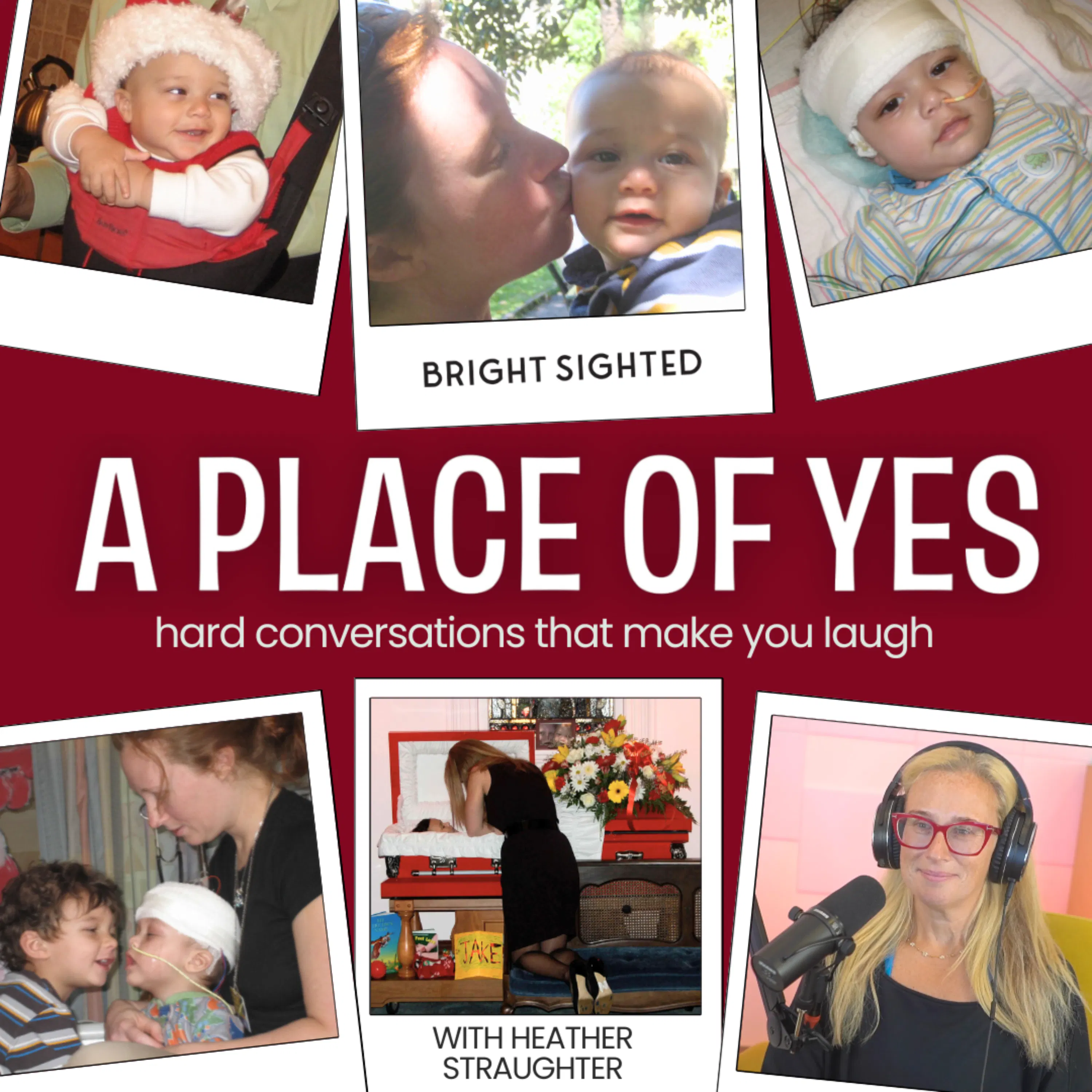
A Place of Yes | A Grief Podcast
The Importance of Adaptive Equipment for Medically Complex Individuals | Rifton Equipment
00:29:50
Loading summary
Transcript52 lines
- [00:04]
Joe
Rifton. We started in 1977. So in the world of equipment for children with disabilities, we're fairly old and we've been around. We've seen a lot of development in this space. We. Right from the start, we were dedicated to this notion that a child with disabilities has something immeasurably important to contribute to society. And unfortunately, society has denied them that opportunity to make that essential contribution.
- [00:41]
Heather Straughter
Welcome to A Place of Yes, A podcast about how I moved through my darkest hour. And for me, that was in channeling my grief into good. Welcome to the show. So welcome to A Place of Yes. I'm your host, Heather Straughter. And today we have embarked on a very exciting adventure, a very exciting adventure for me as the president of Jake's Help From Heaven, because we have worked with a company named Riftan, I would say, since very close to the very beginning of Jake's Help From Heaven. And for those of you in the audience who aren't familiar with the work of Jake's Help From Heaven, we are a nonprofit that started after I lost my son Jake. And we wanted to help families like ours. And Jake, he had a lot of medical issues, a lot of disabilities. We were very reliant, and we became very well versed in the. In the medical world and in the special needs community. And we became reliant on just equipment that not only helped him and kept him safe, but it changed our family dynamic. It improved our quality of life. And what we wanted to do with Jake's Help From Heaven was to ease that burden of other families that were like ours. All that to say, I am sitting here with Joe, president of Rifton Equipment. Well, first, welcome to the show, Jo. Thank you for having us. Here at Rifton, what they do is they. And I'm going to let Joe kind of tell the story because he tells it in such a meaningful way. But what they do is they create adaptive equipment for those with special needs, and they do it with the child and the family at the center of their mission. Can you talk to me about Rifton and about the company and really just about your process and everything that you do.
- [02:19]
Joe
So thanks again for having me. Rifton, we started in 1977. So in the world of equipment for the children with disabilities, we're fairly old and we've been around. We've seen a lot of development in this space. We, right from the start, we were dedicated to this notion that a child with disabilities has something immeasurably important to contribute to society. And unfortunately, society has denied them that opportunity to make that essential contribution. And so we feel very strongly, and we've talked a bit beforehand, there is a whole community behind Rifton and within that community, disabilities are. I mean, the care and the nurture and also the contribution from someone who is disabled, not just a child, is very much a part of the community and very important to the community. And we feel that there's a voice that is important to hear. And we also feel very strongly that the team of caregivers that surrounds a child with disabilities, and that obviously includes the parents, but the therapists and you know, the bus driver who takes them into school in the morning, that's a really important team. And the equipment that we design is to serve their needs just as much.
- [03:35]
Heather Straughter
And I always suspected that, you know, when we were working together, because your equipment does stand out. And the fact is your equipment is all of those things that you just said. I didn't always know the thinking behind it. I could assume it, but to hear you say it, it is so important because so many times we purchase, you know, so the way Jake's works is we get applications, we don't make the decisions of what the items are. People come to us with specific requests. When I have a chance, for instance, like if there's a bike coming in and it's between one model and I know that you guys have a similar model that will do it, I gently try to nudge towards Rifton for the fact that when we receive it, to deliver it to the family, it's already built and safe and solid. And I think this goes to what you just said about therapists and bus drivers and the caretakers. It is made with ease in mind. It is made with not only the comfort and safety of the child, but with that of the caregiver. I can't tell you how many times we've gone on a delivery, for instance, of a bike that is not a riften, where we put the child in and oh, it needs an adjustment, right? So then we take the child out. And this isn't just, you know, a typical three or four year old that is just getting annoyed by it. This is someone that often then you have to transport to another chair to be safe because they can't be alone. Each change could take five, six, seven minutes. And it can happen multiple times. Your bikes, you can adjust with the child in them. It's easy, it's safe, it's all of these things. It's. I feel like I'm an infomercial for you, but I truly Am just so. It's so genuine because I'm so obsessed with your products.
- [05:05]
Joe
And I will add to that. First of all, really gratifying to hear that. It's nice to know that you're hitting the mark and you're meeting needs. But the other piece of it is we feel that a child with disabilities, and particularly a child who is, who cannot articulate, they deserve the very best. And they often don't get it in our society today. Not only that they may not get the best, but they may also have to wait far too long to get the equipment that, the essential equipment that they need. And so we keep hearing these stories about waiting eight months, nine months, sometimes a whole year to get equipment that is really life changing equipment. So that's the other thing we're dedicated to that give them the best and give it to them now. And they can't make that contribution to society unless they have the equipment they need.
- [05:52]
Heather Straughter
As I listen to you talk, and especially with that last piece, as Jake's mom, right? As someone who for his four years of life was so embedded in the advocacy and the fight. So to hear you speak is so rare from other people who have not been personally. So where do you get the passion for special needs? Is there a personal connection for you?
- [06:14]
Joe
I mean, like I said, there's a community behind Rifton. It's a Christian community network and it's dedicated to this notion that we are placed on the earth to care, to care for people around us and to look out for those who don't have the benefit that we all enjoy in real life. You know, if we have a family in our community with a child with disabilities, that child is really important to the whole community and it's important that the other kids that he's completely part of their experience. We have just experienced over the years what an enormous contribution that that child can make. We're foolish if we deny ourselves access to that experience and the wealth that that child can bring.
- [06:55]
Heather Straughter
It's so refreshing to hear, you know, and I've talked sometimes in the podcast about, you know, before I was married and before I had children, I was a special ed teacher in Boston. At that time, inclusion was, it was very like school dependent. You know, some of the schools in Boston were still very resource room or kind of even different wings for special needs. The school I was in was an inclusion classroom and I was certified in both special ed and regular ed. So I was the primary teacher of an inclusion classroom and it had a variety of physical and academic needs. You know, it had some gifted, as they would call them, and then, you know, just the whole range of students. And I, back then, was such a fierce advocate before I had my Jake, before I have anything, because I, too, believe exactly what you said. And it's not just advocating and fighting for sort of what is right for that individual. It is the benefit that all the other children can receive from, you know, I mean, from not having kids that are slightly atypical or different or whatever in a separate space. Right. Like, I had some really, really bright kids in my class, but what made them learn the topic better was sometimes pairing them with someone and having them teach it and understanding how helping someone else understand something if it was a child with sort of physical disabilities being out there on the playground and figuring out how to include them. For me, it is. It's so refreshing to hear people talk about it. Cause sometimes I'm like, oh, they must have a personal reason, because you don't always see the good in people. And I just love that this community exists.
- [08:25]
Joe
The other piece of it is interesting. You mentioned you had some background in special ed. We feel enormously privileged as a company that we get to interact daily with this cohort of amazing people who are basically positioned in schools, in the public school system. They're therapists, they're aides, and they're special ed teachers. And there's no other. I don't think there's another group quite like them that have. They recognize these kids have something really important to contribute and the dedication and the devotion. When we take our photographs for, like, our catalog or our website. Yes, we take photographs of equipment, but we always tell the photographer, okay, once you've got the equipment shots, take a step back. And we want you to look for the interaction between caregiver and child. And you are going to discover these magic moments when the therapist or the special ed teacher is so focused on this child's needs that everything. They tune out everything else in the world, and they're just thinking about. And those are magic moments. And we have good photographers who can capture those moments, and that really tells the story. And so those photos are always featured on the COVID of our catalog because that's really. That's who we are, and that's what's important. The equipment in the end, is not.
- [09:42]
Heather Straughter
That important, but the equipment provides the ability for those children to have those moments. Right?
- [09:48]
Joe
Absolutely.
- [09:49]
Heather Straughter
You know, it's just. And that's the piece where even so, we were fortunate enough today to, you know, get here early. And you Gave us like a tour of the factory and kind of how everything's made. And there's a couple of things about that that I want to discuss with you. But one of the things when we came into here and I saw the stander that's back here, and I said it to you, and then independently, my husband Brian said it to you, was we saw that stander and we both were like, oh, I wish that was there. I wish that existed for Jake 13, 14 years ago. Because that is a stander that would have changed his life. He needed to be in a stander a couple hours a day for weight bearing. Cause he was non ambulatory. He couldn't. He didn't get any weight bearing. And it was impacting his hips and all of those things. But the stander he had back then was so uncomfortable. It was wooden. It was. It was not forgiving. There was no cushioning. He hated it and we hated it. You know, Brian was actually better at it than I am. Cause he'd, you know, he'd come home from work and he'd be like, did Jake do his standing? And if I didn't, he would make sure he did it. But sometimes I knew how important it was and I knew it was for his benefit. But you also hated to see your child miserable, you know, and he would be. I see that and I just see the thought behind it. I see the kindness behind it. I see the compassion. I see the therapist focus. I see all of that. And that to circle back to what you said, had he been in that, he could have been face to face with me or with his brother Ethan. And instead of being miserable, he could have experienced joy. Like we could have shared moments because we could have had him eye to eye.
- [11:13]
Joe
Yes, absolutely. And there's another. There's another idea that's associated with that, and it's become very important to us at Rifton, is the equipment needs to be pleasing to the eye. It needs to be attractive. It needs, you know, the aesthetics are really important. For example, our tricycle. We won a trike that a child like Jake, if he had gotten a bit older, that he would have been proud to be seen in it. And not only that, but his parents would have been proud to have their child riding in this bike because it looks cool. Unfortunately, for that sometimes gets lost in the design world. For medical devices, we tend toward the institutional and the medical. And we forget how important aesthetics is.
- [11:53]
Heather Straughter
On the drive here. Honestly, it is one of the things I said to Christine, our producer, I said, you Know, one of the things we love about this is that it looks good. And I said, it's not embarrassing. And she said, what do you mean embarrassing? Like she wasn't sure. And I said there would be stuff, that equipment that it's institutional, that is bulky, that's hard to move, that is gray, or like just not great looking. And not only for the child is it not uncomfortable, but just, you know, they don't, they don't feel like they blend. And for Jake, who didn't really know if he was blending in or not, for me or for Ethan, it was kind of like, ugh, like it made you stand out, this equipment. I can't tell you how many times I hear from parents, and it's almost the parents joy, that I don't want to say matters more, but that makes your heart happy sometimes more than the kids joy or the siblings joy, because they'll be like, oh, all these kids came up to my child and they wanted to touch the bike. They wish they could have it, they wanted to ride it, people, because it looks fun, it looks, it's child oriented. It looks cool. Like it doesn't look institutional.
- [12:53]
Joe
The other piece of it is. And it's also related to this, you will be familiar with this, and I'm sure many of your listeners will be familiar with this if you're a parent of a young child and it becomes clear that this child has special needs that is often very, very difficult to accept. And we find that a big hurdle is the idea of placing my child in a medical device. And so we go to great lengths to make sure especially that early intervention equipment is non threatening, is welcoming. The color, even just the color choice is really important. So. And we try to make like we have a line of chairs called the compass chair line. And we try to make it as much look like a classroom chair as it possibly can so that the child doesn't feel different, doesn't stand out. And that's really important. Just as important for the parents as for the child.
- [13:45]
Heather Straughter
One of our first guests, and as soon as you said that, it reminded me. One of our very first guests was Lizzie. And she talked about her daughter Cece, and we bought them, I believe it was the compass chair for their daughter Cece at home. And Cece has an older sister and a younger brother. And Lizzie talks, and I'm kind of paraphrasing, but she essentially talked about how she had this chair or this table where she wanted her kids to always be able to sit around and play. And she never Realized, you know, once she had a daughter that had some special needs and different abilities, like, it was kind of heartbreaking to see the table and chairs because all three of her kids could not sit there. And it just became the symbol of something that made her sad. And then when we brought her the chair, it fit at the table. And immediately CeCe could sit with her younger brother and older sister at this table and have a craft moment or have a book. Like, just kind of have these moments. I mean, it was wonderful that CeCe could then have that with it. But that moment was a gift to Lizzie. Right? Like, all of a sudden, you know, and as parents and as just people, as humans, we always have these. Whether they're preconceived or, you know, these ideas of what we think our life will be. And oftentimes you grieve the life you sometimes thought you were going to have. That moment that had become such a difficult moment for her, that chair changed it. Because all of a sudden, that chair allowed CeCe to sit at this table.
- [15:05]
Joe
That's what makes this work that we do so rewarding. You get into areas like hygiene and toileting. We don't like to talk about it, but for parents and for the child, it's so important to have to be able to toilet in dignity and privacy.
- [15:22]
Heather Straughter
We have bought that chair to several of our applicants. And honestly, I'd shown you some of the videos just that I easily had on my phone, and I think of all these different ones. But I got an incredible letter from a mom who lived in a. You know, her son was 22, cerebral palsy. They lived together in this very small apartment. And what she was having to go through to try and toilet her grown adult son was just uncomfortable for everybody. We brought that chair in the letter, as she wrote, like, it's almost. It gave him his dignity back. It gave her, like. It just changed a lot of the relationship. And thinking of those things are not things that I think people in typical parenting or typical lives, you don't have to think about it until you have to think about it.
- [16:05]
Joe
Oftentimes I had this unforgettable experience shortly after I started working for Rifton. I went to a school, it was out in Buffalo, I think, or Syracuse, and talked to a therapist. We were introducing some of our newer toileting equipment, and he related this story. He had an 8th grade boy was getting ready to go into high school, and he asked him, what's your biggest fear about this? It's a big transition to high school. And he said, If I could get to a point where I didn't have to be lifted onto a changing table and changed behind a curtain in the classroom, if I could stand at a urinal in the boy's bathroom and do it myself. And it was like a moment that something so small and seemingly so insignificant could just transform this boy's life and just give him some confidence. I just never forgot it.
- [16:53]
Heather Straughter
No, it's those moments, though. It's exactly those moments. Jake had a hard time holding his head up. It was always hard because if he, like, was. If he was in his car seat in the car and his head fell, like, I'd be driving, like, pushing, like, trying to get his head up, or his brother Ethan would always know to, like, lift his head. We discovered once that we had, like, kind of like a necro, like, almost one of those, like, airplane things. And we would use that for him because if his head fell forward, he could lift it from here to here, but if it fell all the way down, he couldn't. And it was the smallest thing. But once we started putting that around him, it was life changing for him. Those are those moments, right, where there don't always have to be these big changes, like the big equipment is fantastic because it does change your life, but sometimes just the small change.
- [17:38]
Joe
Absolutely. And we have this wonderful relationship with a nonprofit in Albany called the center for Disability Services.
- [17:43]
Heather Straughter
Oh, we love center for Disability.
- [17:45]
Joe
And they have a program called the MOVE program.
- [17:46]
Heather Straughter
Yes.
- [17:47]
Joe
What I love about the MOVE program is it's built around this idea that. Let's start with what the child. What does the child want to do? What are the goals that the child has? And so early on in the process, they'll ask, what is it that you'd really want to do? And some of the answers they get are remarkable because they've had a child say, you know what? I want to be able to walk to the fridge and bring a beer to my dad, or I want to be able to get up from my classroom chair and go get a book off the shelf myself. I don't want to wait for a teacher to bring it to me. And so they say, okay, what are the skills that we need to do to be able to do that? It's a transforming program. It's a wonderful program. I can't. Wherever I go, I talk about it because it's so wonderful.
- [18:26]
Heather Straughter
It's amazing. What they do at the center is remarkable.
- [18:29]
Joe
I mean, my CFO would shoot me if I said this, but so often you wish we could just Give this stuff away because it's the reimbursements. The healthcare system doesn't favor the parent, the family with a child with disabilities. And we have to find ways to accelerate that whole process. And that's another area of concern for us that we are very active in, is how can we address some of these deficiencies in the healthcare system that create these delays.
- [18:56]
Heather Straughter
It's one of the reasons we do the work we do at Jake's was because. And it's only gotten worse and seemingly going to get worse with the broken kind of healthcare system right where it's. And you referenced earlier, the long waits. We have so many of our families who, we approve something in March, and I'm still following up in November, December for this equipment and the cost, you know, insurance is covering less and less. And then it's up to organizations like ours, but we can't always cover 100% of everything because then, you know, we, we talk as a board all the time, like, do we. Do we help less people more or do we help more people a little? You know, and, and we sort of have ended up like a marriage of the two. But we really want to provide as much impact for as many as we can in a meaningful way. And there's a sweet spot there, but it's harder and harder to find it.
- [19:44]
Joe
And, and, and it is because, you know, the need to save costs for healthcare. But we, I mean, a good example, we have this standing device here, this, the red one here in the background. You mentioned it, how Jake would have appreciated it. We are a New York manufacturer. We make these products and distribute them all over the world from New York, New York. Medicaid will not cover it because they set their reimbursement too low for that. And we can't produce it for what they're reimbursed, what they're going to reimburse. So we have kids all over the world who are benefiting from this standard, but we have kids in New York.
- [20:20]
Heather Straughter
Who can't access it.
- [20:21]
Joe
So that's, I mean, that's something we're working now with, you know, with the legislators in Albany, and they're concerned about it, but it's just, it's a long, slow process. You have to commit to it. It's going to take us years to get there, but we have to do it. It's a fight we have to do. And luckily, we do have some strong advocates in Albany who are willing to take up that, the fight for us.
- [20:41]
Heather Straughter
We are lucky in so many ways. I say this on behalf of, you know, kind of under the umbrella of Jake's mom, you know, but also as the president of Jake's Hell from Heaven. We are so lucky. And I'm so happy that we found you guys and have the relationship we do with you guys. You know, we're trying to make as much of an impact and you guys are helping us get there.
- [20:59]
Joe
And we absolutely appreciate the work, the work that you do. And I think the only other thing I would, I would tell your listeners, you mentioned earlier that for years you, you worked with our equipment and didn't, didn't realize we were your neighbors. So even though we do ship products all over the world, if you have among your listeners, if you're here in, in New York State, absolutely. Stop in and visit. Bring your child. If you have a child who needs equipment, bring the child here. Because the people who assemble this equipment love to see a child actually using the equipment. Know that you're welcome. It's interesting. You take a very involved child and you have all the accessories you need, but then the equipment is designed to teach them to graduate so that they don't need that accessory. So they call them prompts. So you'll start with a gait trainer with a full support walking saddle and arm prompts to keep their arms immobilized. So if they're dealing with spasticity, for example, they can concentrate on the reciprocal movement of their feet. But then as they gain skills, as their muscles develop and they gain motor control, you take those prompts away. And so in the end, hopefully the child graduates to just a basic walker. And then, of course, the ultimate goal is to independent ambulation. So, yeah, you start very, very complex and you. And it becomes simpler and simpler. We don't make gait trainers to stock. We make when an order comes in. Our promise to the customer is you get, you call in an order with all your specifications and within five days that will leave the factory. So it means that. And you probably sensed a little bit as we walk through the factory, it means that everything has to flow very quickly through the factory. But the other thing is, we also feel very importantly that there are inevitably times when a child can't even wait five days. And so we bend over backwards. We've often delivered overnight if the child needs it. And there's a compelling reason. Our staff on the floor, they love to respond. And it's part of the culture that I think we've, we've always encouraged since, you know, since we started.
- [23:00]
Heather Straughter
Like, you can tell when when the person is doing what they are meant to be doing. And when you talk about it right from when I, you know, we met and we were going through the factory and you were, you talked about the importance of getting the equipment to the people who need it in a respectful and a quick time. And you talk about it like you're, you're clearly doing what you were meant to be doing.
- [23:17]
Joe
Well, it's, it's very hard to disguise that.
- [23:19]
Heather Straughter
No, it's just. But it's so like. And I go back to it, I was like, as Jake's mom, to hear people talk about kids like my son with such respect and compassion and understanding, even though he's been gone almost 14 years, like that's still. It just makes me feel good. So I just. You're doing what you are meant to be doing and I applaud you and I'm grateful that you're doing it well.
- [23:38]
Joe
Thank you very much.
- [23:39]
Heather Straughter
A place of yes, really started kind of as this offshoot of Jake's Help from Heaven. But at the heart of it, it was a place for me to talk about the loss of my son. And one of the things that I've learned in doing this is that it's not just other people who've lost children. Grief is this. It's true. Grief is very universal and everybody has a place in this journey. And one of the things we've talked about is sometimes it's grief is a traditional loss, like someone that you've lost, that's important to you. Other times grief is grieving a life you thought you were gonna live or grieving on behalf of someone else. And I feel like all of us experience grief in such a. In some way and sometimes that drives us to be who we are. Have you had a personal experience with grief that you think you bring to the table or you bring to your work here at Rifton or.
- [24:21]
Joe
Well, living in close knit community as we do, if one person grieves, the whole community grieves. And so we have such a wealth of experience of shared grief and it's such an important part of who we are as a people that it's hard to know where to start. Because what you describe is so important to us. I had a brother, he was 10 years younger than me. So when I was 13, 14, he died of very rare cancer. And that has obviously stayed with me all my life, guides how I approach every relationship. It was just. It was a very rapidly aggressive cancer. So he was diagnosed at the end of February and died in May. And just went through an enormous disfiguring and just went through enormous pain. And just to also see the effect on my parents and the grieving that especially my mother went through, which lasted years until her death. It never left her. She became such a wonderful, vibrant, joyful person. But underneath all that was this incredible, harrowing experience that completely formed who she was. And I saw that even as a child, I could see that effect. And then of course, it stayed with me my whole life. So absolutely that guides who I am. It guides my approach to work and my approach to how I relate to other people within Rifton, but also people I meet.
- [25:47]
Heather Straughter
I think it's such a topic that for so long people did not talk about. And I do think the more we talk about it, the more it kind of makes our world smaller a little bit because a lot of us experience so much of the same. It's just better to experience it together than in isolation. And you touched on something when you talked about your mom and you talked about the grief that stayed with her until she died. Right. Cause it is. It's a horrible, horrible loss. But you also described her as full of joy. And that is kind of one of or has become. It's not always been, but it's sort of become one of my like kind of pillars of how I want to live. Right. That you can live with great grief and great loss, but you can live with great joy. And those two things can exist and they should exist and it's okay to have them both.
- [26:25]
Joe
It's so important.
- [26:26]
Heather Straughter
Yeah, it sounds like something that, like you have taken away from your mom too. Because I think that it's. It's that balance. Right?
- [26:30]
Joe
Yeah. Well, I think. I think the one final message or thought is that, you know, it sounds trite and it sounds even a little corny, but I just firmly believe that that cohort that we talked about, especially the school based PT or OT or even, you know, the aid in the clinic, the aid in the children's hospital. I just, I firmly believe there's a, you know, there's a special place in heaven reserved.
- [26:58]
Heather Straughter
Thank you so much for allowing us to come here, to be a part of what you do here and for sharing your stories. You can tell that whether it's Mark, I think of Jake, like at the heart of what you do and you are impacting lives.
- [27:14]
Joe
Thanks.
- [27:21]
Heather Straughter
Ponder. Ask Heather anything.
- [27:24]
Joe
The question that always interests me because I saw my parents go through shared grief. And what's the secret for. For allowing something like that to strengthen a marriage as opposed to.
- [27:35]
Heather Straughter
It's an excellent question. Because the norm is not that families stay together and if they parents stay together and if they do stay together, they often have a more tenuous relationship. I don't know what the secret sauce of ours was, but I do know that we try to support each other and we still do try to support each other in the way that each other needs to be supported. And sometimes in the beginning, I think that was hard to navigate. What Brian needed wasn't necessarily what I needed, but then by just paying attention to each other and being there for each other and sort of figuring out what I need to do for him and what he needs to do for me, and they may look different and it's okay. We very consciously kept Jake present in our life. You know, sometimes it was just routinely, habitually, like cheersing to Jake at every meal when he was ill. We couldn't do a ton of traveling like we did, kind of a three hour radius and we started traveling a little more like he passed away in December and we took Ethan to Disney in March. But we did that with this idea that Jake was traveling with us and he couldn't when he was on Earth. He couldn't have come to Disney with us, but he could come with us in this sort of other way. I think all those ways didn't make us grieve in isolation. We grieve together. It'll be 14 years December 8th, that Jake will be gone, but we are leaving December 4th and we're spending through the 10th in New York City, which is just a place we love. It's a place that we did bring Jake, you know, kind of to along. Ethan and his girlfriend are meeting us for a couple days and we are leaning into and kind of saving space for knowing those are hard days and making room for it, but also using it as a. Not just a sad time, as a time to sort of be proud of what we've done in his memory and think about who he is as a 17 year old, no longer as a 4 year old. And that was a long winded answer, but that's beautiful.
- [29:23]
Joe
I appreciate that.
- [29:24]
Heather Straughter
Thank you. Thank you so much, Joe, for being on the show. I appreciate it.
- [29:28]
Joe
Well, thanks very much for having me.
- [29:32]
Heather Straughter
Thank you for listening to A Place of Yes. Please follow us wherever you listen to your podcasts. If you really like this episode, please share it with a friend. It would make a world of difference if we could just reach more people and share the work that we do and the stories we want to tell. Thank you so much for watching.