← A Place of Yes | A Grief Podcast 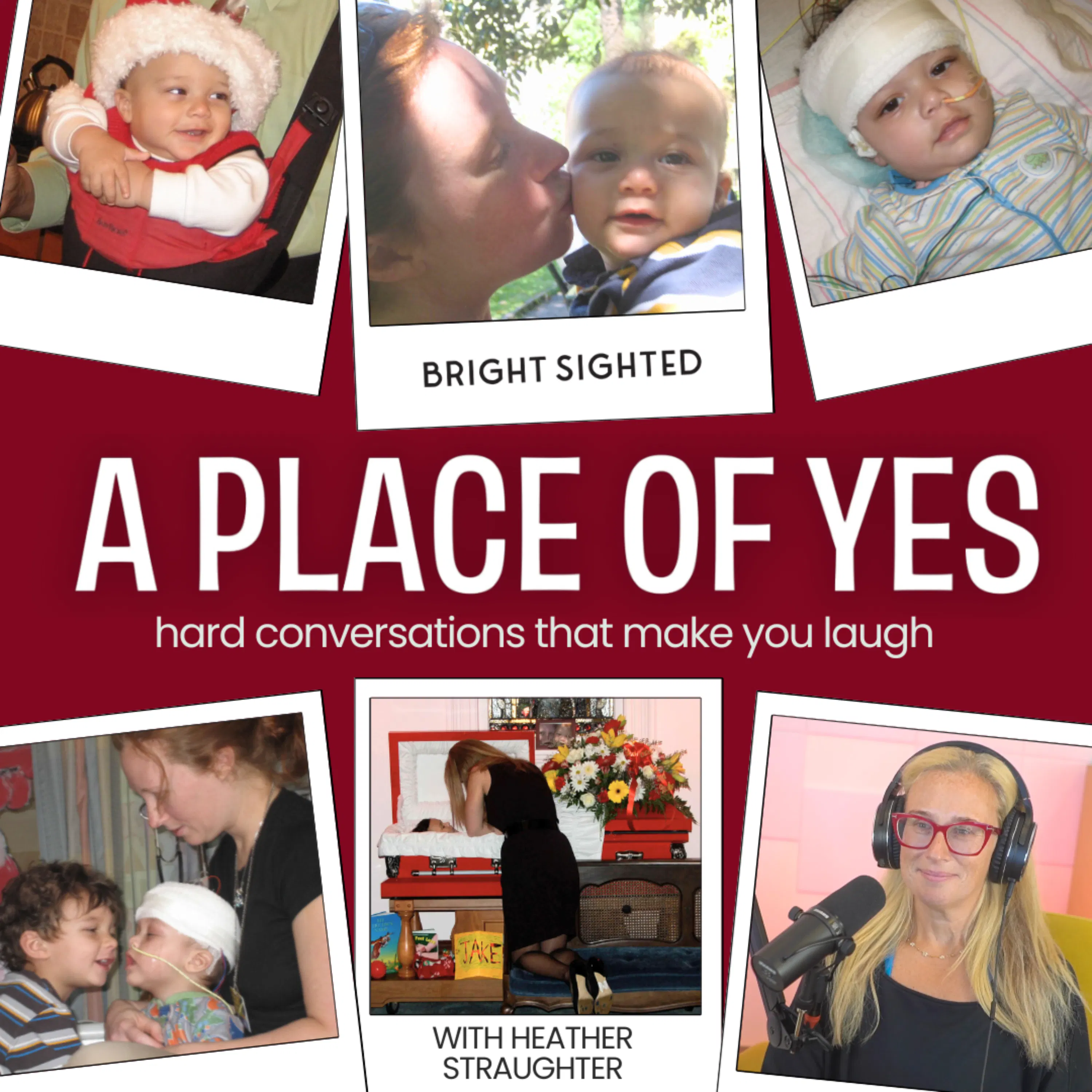
Loading summary
Transcript153 lines
- [00:01]
A
Exclusively on ESPN. UFC 312, Saturday. Reigning middleweight champion Dricus Du Plessis defends his title in a rematch against Sean Strickland. And Zhang Weili defends her strawweight title against undefeated tatiana Suarez. UFC 312, Saturday at 10pm Eastern. Buy it on espnplus.com ppb.
- [00:32]
B
She had went into the hospital for what we thought was Covid. She was having some breathing issues, upper respiratory issues. We had convinced her to finally go into the er. Almost immediately she went on life support, and then after doing some scans, they thought she had ovarian cancer. After doing some blood tests, we actually found out it was lymphoma, not ovarian cancer. We started chemotherapy right away and during this time, actually she went on life support twice. We took her off and and then we had to immediately put her right back on.
- [01:00]
A
Welcome to A Place of Yes, a podcast about how I moved through my darkest hour. And for me, that was in channeling my grief into good. Welcome to the show. Hey guys, it's Heather Strader, your host of A Place of Yes. In this week's episode, we are having a conversation with Mackenzie Czarzicki. She is the host of a podcast herself here on the Bright Sided Network called Destination Saratoga. She's also heavily involved in Discover Saratoga. We are talking about the impact of losing our loved ones. We are talking about the importance of honoring memories, and we're talking about the different ways that everybody copes with grief. Mackenzie emphasizes the importance of allowing oneself to grieve authentically. And while that's something we talk about on the show, she really nails it this because she knows what she needs from herself and what she needs from other people to work through this grief process. She talks about the loss of her mom that came on pretty suddenly. She talks about the conversations she has with her children and the way that they remember her. It is a really meaningful conversation. I hope you enjoy it. And lastly, this episode is brought to you by Saratoga Casino Hotel. As you know, if you listen to this podcast and if you're involved with Jake's Help from Heaven, they have been day one supporters of our work and and we are just grateful that they support this podcast as well. So welcome to A Place of Yes. So I'm here today with Mackenzie Czarzycki, who just started her own podcast, part of the Bright Sided Family, Destination Saratoga. So welcome to the show.
- [02:39]
B
Thank you for having me.
- [02:40]
A
No, thank you for being here. So can you share with the audience, share a little bit about your story, share about what you're doing with Destination Saratoga, but also about why we're here having this conversation together.
- [02:51]
B
Talk about the light stuff first. My name is Mackenzie Zarzicki. I'm the vice president of marketing communications at Discover Saratoga. In 2024, we became the tourism promotion agency for Saratoga County. So we are now responsible for promoting Saratoga as a destination for leisure, travelers, meetings, events, group. And part of that, we have now taken on some more media tools with our podcast, our YouTube series, our mobile app, our website, among other things. So my goal with the podcast is to use it as a platform. Platform for our members to tell their stories, to attract travelers, to share hidden gems, and to really put Saratoga county on the map.
- [03:32]
A
As you were talking about all this, you know, I'm thinking about like a place of. Yes. And it's interesting because they're very different topics. Right. Like you're sort of like travel and tourism and I am grief and types of grief and medically fragile and loss and all of these things. But our purposes in what we're doing are so similar. Right. Because we're creating these networks for people. We're creating these networks where people can easily access what they're looking for and that they can make connections.
- [04:00]
B
Yeah.
- [04:00]
A
So they're very different connections. But that is one thing that I have loved about doing a place of. Yes. Is that I feel like these conversations have connected people and they have, in a way, the same resource as kind of what you're talking about. Maybe they don't need it right now, but they've got this toolbox of like when I do need it, or where can I go to learn more? Where can I go to to hear somebody talk about what I need to hear or what I wanna talk about. Which leads me then to you. Right. Like, I think everybody has a grief story to some degree. I know a little bit of your background and you shared a little bit with me, like in the survey and stuff. But you lost your mom and your mom was your person, right?
- [04:40]
B
Yes.
- [04:41]
A
Can you talk a little bit about that?
- [04:43]
B
Yes. So I was 34 years old when my mom passed away in 2022. I had a 2 year old daughter at the time and I was 3 months pregnant with my son. And it hit me like a ton of bricks. In May, around May 23, I think it was my brother's birthday. She had went into the hospital for what we thought was Covid. She was having some breathing issues, upper respiratory issues, and we had convinced her to finally go into the er. Almost immediately she went on life support. They said she had either pneumonia or some sort of upper respiratory issue and was kind of drowning in her. Herself, her fluid, her breathing. So we put her on life support. And then after doing some scans, they thought she had ovarian cancer, which was very strange. The two, one extreme to the other. They did. They saw a whole bunch of tumors in her lower abdomen. After doing some blood tests, we actually found out it was lymphoma, not ovarian cancer. So at the time, that was a better diagnosis. We started chemotherapy right away, and during this time, actually, she went on life support twice. We took her off, and then we had to immediately put her right back on. They had to drain her lungs and all of these things to keep her comfortable. So we took her or we put her back on life support. And then when we found out that it was lymphoma through blood work, we immediately started chemotherapy. And almost immediately, she reacted positively to the chemo. So in total, she was at Saratoga Hospital for 48 days. She was pretty bedridden at that point. We had done about three or four rounds of chemo before she came home. She had to go through a whole bunch of physical therapy in order to walk again since she had been bedridden. We had some nurses come to the house when she got home to help her with that. And at one point, we thought we turned a corner. She had made significant progress. The tumors in her lower abdomen had practically disappeared. In September. I want to say it was around the 13th. It was just after Labor Day. We had done a CT scan, and they said she was in remission. So we were all selfish. Yeah, for 24 hours. And then literally the next day she woke up, and it had looked like she had a stroke. We weren't sure if it was that or Bell's palsy. She had a very droopy right side of her face. She was having problems seeing she had very limited mobility in the right side of her body, in her hands and feet. So we immediately went back to the doctor. The oncologist, did a scan of her brain, and we found out that the lymphoma spread to her brain, and she had a ton of lesions. So it was very disappointing time. In the midst of all of that, I had reached out to Dana Farber because I wanted to get a second opinion. Not that I didn't trust the wonderful doctors here, but when someone you love is given such a diagnosis, you wanna make sure you do everything you can for her.
- [07:33]
A
I'm a big advocate of that. And that's never a comment on where you are or whatnot. I just think it's really good practice. Right. And like you said, it's. When it's so personal, you want to just make sure that.
- [07:44]
B
And I felt bad. I mean, I'm the youngest of three. I had a big family. I had a stepfather, and I was the one who took on all of the responsibility, health wise. I definitely think I'm a very, you know, a type person and controlling, for lack of better words. But I wanted to make sure she had the best healthcare. So I reached out to Dana. I drove her all the way there. We had an appointment. We had a doctor. For the most part. She was just reviewing all of the data.
- [08:09]
A
Was this in September? Like, after.
- [08:11]
B
This was over the summer.
- [08:12]
A
Okay. So this was before you knew that it had spread to the brain.
- [08:14]
B
Correct.
- [08:14]
A
Okay.
- [08:15]
B
And at that point, we had sent this. The brain scans to Dana Farber, and they confirmed it. At that point, we had to switch to Glens Falls Hospital because Saratoga couldn't administer the type of chemo that she was getting. It was like methyltrexate, and it was a very strong type of chemotherapy. So we ended up going to Glens Falls Hospital and did. I think it was her fifth round of chemo, and she wasn't improving. Her white blood cell count didn't get better. She didn't get any more mobility. If anything, she was getting worse. So I remember Columbus Day weekend. I actually went to my college to see some of my teammates. I played field hockey. We watched a game. I brought my daughter. And then that Monday, I was Columbus Day, I had it off. I was supposed to go see my mom and bring my daughter, and I didn't, which is a huge regret that I have. The very next day, she went into the hospital, and we thought she was going to do another round of chemo. But when she got there, her blood work wasn't on par and she was not very responsive. It was strange that Wednesday I went to her house with pizza, and she had this huge appetite, and we were talking. At that point, I knew that I was having a boy, and I wanted to name him Barrett, which was my mom's maiden name. Oh, okay. And I remember sitting with her, braiding her hair and telling her that I was gonna name my son Barrett. That night I tucked her into bed, and I went home. The next day. She was going to Glens Falls Hospital to do a round of chemo. And from that point, she never was coherent again. When I showed up at the hospital on Friday, they postponed chemo from Thursday to Friday. When I showed up at the hospital at 7am for the doctor's rounds, when the oncologist comes through, I had a breakfast sandwich and a tea. I thought she was gonna have this appetite. We were gonna talk. We were gonna start chemo. And I had found out that from the day before, she had never become responsive again. She was there. She was breathing. She wasn't on life support, but she hadn't opened her eyes, and she hadn't spoken. So that's when the oncologist told me we had to put her in hospice. And I was like, absolutely not.
- [10:14]
A
Because she still thought that you were fighting.
- [10:16]
B
Yeah. And I was like, I'm not. This is not okay. I'm not going to accept this. Like, you've only. She's only been in your care for a month or so. And I immediately called Dana Farber, and thank God the oncologist called me back and kind of talked me off the ledge, per se. But she said, you know, we've. We've consulted. We spoke to her doctor in Saratoga, and unfortunately, there's nothing else that we can do. So she said, this is the right choice. I think you need to keep her comfortable. And that's. That was the beginning of the end. And then six days later, she passed away.
- [10:46]
A
Well, I'm so sorry that. And when was your son born?
- [10:49]
B
He was born six months later. So my mom died on October 20 of 22, and my son was born on March 21 of 23. At the time, when my mom passed away, I went into a pretty serious depression. And when my son was born, I struggled tremendously with postpartum depression. And I would say for the first eight months I had, I was very disconnected from him in a lot of ways. I felt like I had to trade my mom for him. And it was hard to connect with him because of that. I felt guilty. Like, I got this wonderful present, but I had to give up something for it. And I know that's not true. I know that's not the reality, but.
- [11:28]
A
That is a very real feeling, you know? And it's. It's. It's not fair. Right. But that's what grief does to you sometimes, is it sneaks into these ways, and it makes you think these things are true.
- [11:39]
B
Yeah.
- [11:39]
A
When they're not. And, I mean, I even remember when my grandmother passed, and she was. I don't even remember how old she was, like, in her 80s. Right.
- [11:48]
B
Like.
- [11:48]
A
But I remember this thing, like, Jake was already sick, and I wasn't the only one who thought it. Other people Sort of thought, like, well, okay, she's going to pass away so Jake can live. Right? Like, I think that's. Sometimes that is a common thought people have. And whether it's for comfort or if it's out of anger or whatever it is, it's an interesting thought.
- [12:07]
B
I think it's our brain's way of trying to rationalize what's happening to us. At least that's the way my brain works a lot of the time. It's, why did this happen to me? Why?
- [12:16]
A
Because there has to be a reason. Sick.
- [12:18]
B
Why did she have to die? I am not the kind of person who can just accept that's life. That's the circle of life. You know, shit happens.
- [12:25]
A
No, like, you want to know why or how?
- [12:27]
B
I want a reason, and I want. I want to fix it. I'm a fixer. So it was. It was really hard. And. God, the last two years of my life, my mom passed away. And then less than a month later, my dog died suddenly. My dog, I had for 12 years, and she was like my first child. And then my son was born, and I was struggling with postpartum depression. I had this crazy shift in family dynamics. I was already feeling so alone, so lost, so confused. And then 10 months from the day my mom died, my stepfather had a heart attack and passed away unexpectedly. So it was just wave after wave of grief, and I couldn't catch a breath. I couldn't catch a break. Well.
- [13:10]
A
Cause you never get the chance sometimes then to, like, you're not. Not that you're ever through grief, but you're not. You're in it, and then you're in it again, and then you're in it again, and it's like.
- [13:19]
B
And it's hard to grieve each one. Like, I look back, and losing a pet is so small in the grand scheme of things, but I couldn't even grieve my dog because I was so raw from my mom. And then my stepfather passed away, and I was still grieving my mom. And there are moments when I look back and I'm like, wow, I never dealt with that. I never sat in that grief because something else happened so quickly.
- [13:43]
A
So you're jumping from episode to episode.
- [13:45]
B
And then you throw in families and estates and all of those other very minute things, and it clouds. It blocks the grief that you need to deal with because you have other things that need to get done. And sometimes I think it's easier to focus on a task than to sit in your sadness.
- [14:04]
A
It's one of the things I think that are. That is so unfortunate about how we as society deal with. With death and grief. Right. Because I think I'm seeing it a little bit now from a different perspective. But, you know, so. So my husband lost his father a couple about two or three weeks ago. And the shift from when the family is all together around the person they're about to lose, like, in trying to be a united front, to the shift of when each person is dealing with their own grief, and how that comes across was. Was a very interesting dynamic. I'm an only child, so I don't have that sibling relationship. And I don't. I don't know what it's like. You know what I mean? Like, I sometimes try to put myself in that feeling, but I don't know. How is that for you? Like, are you closer to your siblings now or less so? Or is it. Like you had mentioned you're the youngest and you were the one that kind of handled all the things. I feel like that's similar. My husband's the youngest, and he just takes care of a lot of stuff.
- [15:01]
B
And I think naturally, one person steps up in a way because everyone deals with grief differently. That was me. I stepped up to be the health proxy. She asked me to be her health proxy when she was sick. And when everything else transpired, I stepped up to do the things because I felt like a. I wanted to have it done. I wanted to have it done right. It made me feel valuable. And again, it distracts your brain. Right. Like, I keep going back to it. People deal with things differently. Some people retreat, some people sleep, some people drink, some people eat. Whatever. I keep my brain busy. And for the most part, it was a good thing. Our family dynamics changed tremendously. Luckily, my two biological brothers and I are still very close. Okay. I think they're appreciative of, you know, what I. What I did for the estate and trying to keep things moving forward. But we made it. We made it through. And now I feel like that's a chapter I can close. Now I can start focusing on the good memories, the good times, and just moving forward. I. I want to move forward, and I want to honor her memory. And I try to do that in little ways. For example, at Christmas. So go back a bit. And during COVID there was something that came out is all over Facebook and stuff, where people were ringing bells at 6pm on Christmas Eve in honor of hope and togetherness for those who couldn't be with their families. And I remember my mom sent out this Mass text message to, like, everyone she knew, and she's like, on Christmas Eve in 2020, we're all ringing bells at 6pm and at the time, I thought it was just hysterical. I'm like, mom, yeah. Like, seriously? So that was really important to her. And now we do that every year on Christmas Eve. I love that my family rings bells at 6pm in honor of my mom. And it's such a simple yet very important way for me to honor her and remember her. So those are the types of things that I want to do.
- [16:46]
A
I mean, I love that. And you touched on something really important, I think, because even though you've all lost your mother, and I honestly got this from a previous guest, and she was talking about how even though you can grieve the same person, you're grieving different because your relationship was different.
- [17:02]
B
Right?
- [17:03]
A
So what you are missing about your mom is different than what your brother's missing. So, you know, their grief shows up in a different thing. And maybe with their families, they have a different. You know what I mean? I just think it's so interesting. Cause, yes, you're all grieving your mother, but you're grieving your relationship with your mother.
- [17:20]
B
Absolutely.
- [17:21]
A
You know, you think about parenting, right? And you're a parent now. And I think of, like, I don't want Ethan to always do exactly what I did, but I want him to be inspired by what I did. Right? So when you think of your parents, your kids, and what you want for them as they get older in life, you know, you don't want them to be clones of you. You want them to take all the good from you.
- [17:39]
B
I want them to be better than.
- [17:40]
A
Me and better than you. Right?
- [17:41]
B
Like, that's what I'm always like, and I stand by that. Becoming a parent, it's like, it is the hardest job that there is. And every day I question myself if I lose my patience with my daughter. And I'm like, I lay in bed at night and I think to myself, man, I wish I did this differently, or I wish I said this differently. It's so hard to be a parent. And there's no perfect parent. And all I want at the end of the day is for my children to be better than I am. Like, simple things. I'm late for everything. And I say to my daughter when I drop her off at school, when you get older, I want to make sure I want you to be on time. Okay? Make that a priority. Make sure that you're on time for things. When you say you're gonna be, and not in like a demanding or passing way. But we'd say it jokingly because it's like, that's my goal as a parent, is to teach them everything I know. I want them to be respectful. I want them to say please and thank you. I want them to be kind. But I also want them to be their own person too. So learn from me what you can and be a better version. You know, you just keep doing it.
- [18:40]
A
And you keep modeling and you keep showing them. And you think of your mom, right? Like all the things you've taken from her. Like, I think of my parents all the time. And, you know, and it's. It's always funny because sometimes you do things exactly the way they did because you want to. It was so important to you, even if you hated it when you were a kid. And some things you do differently.
- [18:55]
B
With my children, I know that I am not a very affectionate person. I'm not touchy feely hug kind of thing. It's not my jam. But when I grew up, my mom wasn't a very touchy feely person, and we used to talk about this. So I was afraid when I had children that I wouldn't be affectionate, that I wouldn't feel comfortable hugging and snuggling and all of that. And that's not the case. Like, my daughter would crawl back in my belly if she could. Like we're that close. But it's funny because my mom grew up in. She was born in 1955, so she grew up in a harder generation. And her parents never told her they loved her. And my mom had told me this story a couple times, and she said there was no doubt in my mind that my parents loved me, but they never said it. So my mom said, when my became a parent, I made sure I told you children how much I loved you. And so for me, I feel like I'm taking it one step further now. I always tell them I love you. And something my mom said to me, and I always say to Madeline, you know, I love you to the moon and back, or I love you to the moon. And we say that a lot. And then we hug and we snuggle and we kiss. So things have evolved. I think it's one generation, you know, each one getting a little better, a little softer, a little bit more compassionate. And I think that's a great thing.
- [20:08]
A
I think it's an amazing thing. And you know it. I talk a lot on this show. Like, you know, I don't. I Don't go to therapy or. I don't do any of this stuff. But I talk about my feelings all the time.
- [20:15]
B
A girl, you know, therapy every other week.
- [20:18]
A
Lots of people do. Not my. I just don't. But I talk things through. I have great friends who I like, will go on my hour walk with each morning at the crack of dawn. You know, we kind of laugh sometimes. It's like, where we vent. Or you just. Like, sometimes you just got to put stuff out there.
- [20:32]
B
Totally.
- [20:33]
A
I will say, like, the whole shift in the change of, like, you know, when I was a kid, mental health wasn't really a thing you talked about. Certainly not when my parents were kids.
- [20:42]
B
Yeah.
- [20:42]
A
But now, like, we talk about it with Ethan, you know, and do I talk about it as much as I should? I don't know. But, like, I feel like we have made it a more comfortable space. Right. Like. And the world has just changed that. And I think grief is a huge avenue in which things have changed. I talk about it a lot on this show of, like, Even in the 15 years since Jake has been gone, in the beginning, there wasn't a lot of talking about it. Part of why I was like, I kept so much. Like, I don't wanna say I kept it bottled up, but I would write these letters and, you know, I still write them sometimes to Jake, but there was a block of time where those letters to Jake were really raw and really angry. And it was almost the way. It was almost like therapy for me, I think.
- [21:19]
B
Yeah.
- [21:19]
A
But because there was no place to have those conversations, so I just wrote these. Really. And sometimes people would be like, oh, I hate reading that. You know, it's like, you're so angry, and it would just make me wanna throttle people. But having these conversations, right. They're really. And whether you're ready to have them or not, the fact that they exist and that they're out there for people to listen to.
- [21:38]
B
Yeah.
- [21:38]
A
Is helpful.
- [21:40]
B
I couldn't agree more. And one of my biggest pet peeves about grief is that people don't often mention the person you lost. And I think a lot of time people are afraid to mention my mom's name or to bring her up because they think it might upset me, but it's actually the opposite. I want to talk about her. I want to share memories. I want to laugh. I want to.
- [22:05]
A
What's your mom's name?
- [22:06]
B
Mary Lou.
- [22:07]
A
Mary Lou.
- [22:08]
B
I want to say, remember when mom did this? Or when we went on this vacation? And I just. I really want more people to do that, because I haven't forgotten about her, you know? And it's almost like people think, okay, if I don't say it, she won't remember that it happened and be upset or triggered or whatever. But in reality, when people don't talk about her, it's as if she didn't exist.
- [22:30]
A
You are not the only person, by any means, who has that feeling. I mean, I agree wholeheartedly. And I've had so many guests, like, sitting exactly where you're sitting, where that's exactly like. And I've joked with some of them. Cause it's like, oh, wait, I forgot my son died. I can't believe. You know, I mean, no, we never forget. We live with that all the time. Someone saying Jake's name is not, like, all of a sudden reminding me that I've had this horrible loss.
- [22:51]
B
Absolutely.
- [22:52]
A
It's just. I'm like, oh, hey, yeah, let's talk about it. So when you were saying some of that, it made me wonder, do your brothers like to talk about your.
- [22:59]
B
No.
- [22:59]
A
Okay. So, like, I was still very raw.
- [23:02]
B
Like we said before, I think we all deal with it differently. And a lot of awful things have happened to us over the last two years. And I think that right now, there's still. We're all caught up in a different phase of grief. Right. People grieve in different ways. People go through different phases or steps. I know there's so many. So much reading out there about how you grieve. And I just. I think it's all. I think everyone does their own thing. And you can be angry. I. I go through moments where I am furious. And a lot of it happens at night. I actually have crazy dreams where I'm, like, flipping out. Like, why did you get cancer? Why did you die? Why did you leave me? I'm 36 years old. I have two little children, four and one. And I have no parents. In some ways, I. I feel like an orphan. And I'm pissed. The secondary grief is real. People don't talk about that. And I talk about it with my therapist every other week. I'm not just grieving the loss of my mom and my stepfather and my biological father. I'm grieving the grandparents. I thought they would be the future memories that we would have together, the relationships they'd have with my children. I'm grieving the loss of the family dynamics, the big, huge family I had on every single holiday that no longer exists.
- [24:17]
A
I mean, that's very real.
- [24:19]
B
I'm grieving so many things beyond Just the person. It's like, people don't take that into consideration. And in this country, it's like you get five bereavement days, and then you're back to work and you're back to life. And when you're a parent, you never get a break. And I can't tell you how many days I spent crying in bed. And my daughter is like, mommy's sad, Mommy misses Grandma Lulu, or Grandma Lulu's in heaven. And I'm like, I feel like the worst parent in the world because I can't get my ass out of bed and take care of my daughter. But at the same time, it's like, that's what I needed. When my mom first passed, I had people who wanted to bring over a casserole or wanted to do this or wanted to do that, and that's not what I needed. I wanted to be alone. I wanted to be angry. I wanted to be sad. I wanted to have whatever feeling that I needed to have and not feel judged or someone, you know, looking at me or paying attention to me. I just. I needed to be alone. And a lot of people didn't understand that. Everyone was telling me I was doing it wrong. Everyone had a story. Well, when I lost my mom or when I lost my grandmother, you know, I had to do this, this and this, or I wanted family, or I wanted this. And everyone. Everyone should be able to grieve however they want and whatever they need. But I didn't feel like I was given that same grace.
- [25:34]
A
You know, it's interesting because you touched on so many things that I just. I agree with you. Right. Like, it's almost like grief in this country is like, we compare it. And I even think I do it sometimes, too. Because we only know what we know, and we only know what we are feeling.
- [25:51]
B
Exactly.
- [25:51]
A
And because grief can be all consuming. Right. So you think the way you are going through it is sort of universal, but it's not. You know, it just really isn't. I do think that feeling that people have of wanting to make it better.
- [26:05]
B
Yeah.
- [26:05]
A
You know, and I always try to say it comes from a good place, but it doesn't mean it's a good thing, Right?
- [26:11]
B
Absolutely.
- [26:11]
A
Like, the intent is often people just don't want to see you sad or mad or any of those things. But we need to be sad and we need to be mad, and we have the right to be.
- [26:20]
B
Absolutely. And I never doubted that people that it came from a loving place because until.
- [26:26]
A
But it doesn't make it easier True.
- [26:28]
B
Absolutely. Until you're in that situation yourself, you don't know what to do. And like you said, grief is not universal. Because losing your mom at 12 or 32 or 67, it's different. It's different from everyone. But at the end of the day, I do believe you still miss that person. Right. And if nothing else, I feel like I've learned that our parents are not invisible. Right. Like you grow up. And I always thought my mom was larger than life, like she was my superhero and never did I think that she could be taken away from me. She was my best friend, my confidant, my sounding board. I don't think I made one life altering decision without running it by her.
- [27:10]
A
Do you have something you do in place of that now?
- [27:12]
B
No.
- [27:13]
A
So that's hard.
- [27:14]
B
I'm working on it. I'm working on it. I have gotten to this place where I feel like venting is a burden, that I'm unloading these feelings. And so I talk through a lot of it with my therapist. I'm trying to be more self confident in my decision making, you know, and okay, what, what would my mom do? What should I do? What feels right in the situation? I've. I feel like I've had to grow up a lot. I've changed tremendously. I'm absolutely not the person I was two years ago in many ways, good and bad.
- [27:43]
A
Would you still just talk to her like I do? Okay.
- [27:45]
B
I talk to her all the time. And sometimes I think I hear her in my head and then I'm like, is that what I'd want to hear? Or did she really say that? You know, I'm always questioning it, but I do think that she's there. I do think she's listening. I'm a big believer in signs, and I feel like I've seen a lot of signs. I was actually telling you before we started, I have this great story and this is what makes me believe. So I'm not a super religious person, but when my mom was on life support for the second time, it was Saturday morning, and the Saratoga hospital called and said, we need to put her on life support. Do we have your permission? And I said yes. It was like 9:00 in the morning. I ran over to the hospital, she was on life support. The doctor was like, I don't think she's gonna make it. So I'm sitting there holding her hand and I'm like, mom, you can't leave me. Like, I'm not ready. You know, it's been a Week from the time you got to the hospital, like, I need you, I need you, I need you. And I just remember actually speaking to her while she was on life support. And then a couple months later, it was in the middle of the summer, we were together and my mom is like, I have to tell you something. And I was like, what? She's like, you saved my life. And I was like, what do you mean? She's like, when I was on life support, she said she had an out of body experience where she felt her soul leave her body. And she was kind of hovering over us in the room. And she said she wasn't scared, she wasn't worried, she felt safe and warm and she thinks she was, you know, ascending somewhere. And then she heard me and she came back. And then of course, she passed away two months later. And I'm like, why couldn't that happen again? You know, like. But there was a reason she had to come back.
- [29:21]
A
There was a reason you had more time. So what that tells me, she knew you needed her and she bought you. Like you bought more time. And that's incredible. And all the things that you have just said about her, right? Like she's your confidant, your best friend, all those things, you were hers too. Because she was like, oh, hey, I still got a job to do here.
- [29:43]
B
Yeah.
- [29:44]
A
I mean, that's beautiful. I love that. I believe all of that stuff through and through. I'm almost desperate to believe that kind of stuff, to be honest, because I just think it is.
- [29:52]
B
They can't disappear.
- [29:53]
A
They don't disappear and they're important and they don't. Just cause their body's not here doesn't mean they're gone. Like none of those things. Right. And I even like that she felt at peace. Right. So does that give you any comfort there, you think?
- [30:05]
B
Because it does.
- [30:06]
A
Assuming it was the same two months later. Right?
- [30:09]
B
Yeah, I do think that she's at peace. As much as a four year old can understand. I talk about it all the time with my daughter. You know, I tell her, grandma Lulu and pop are in heaven. Um, we have a digital picture frame in the dining room that has family photos, pictures of our dog. And she always says, kylie's in heaven. We always come back to the same thing, but she's in your heart. They never leave. They're here. And we talk about them all the time. And it's a fear of mine, but I know it's not gonna happen because of how much I talk about her. But I don't want Them to not know them just because they're not physically here. And she gets it. Like, she likes to draw, and she'll pretend to write these notes, and she'll be like, you know, Grandma Lulu's in heaven, and Mommy and I miss her, but we love her so much.
- [30:52]
A
And, you know, none of it's easy. It's not. And sometimes you think, you know, it's. The one thing I think about grief. Right. Is that. And you kind of were mentioning it, like. Cause all these other things happen. Like, life goes on.
- [31:04]
B
Life goes on.
- [31:05]
A
Like, there's no. You can't just sit in it. And even when you want to sit in it, it's like, you often can't. Then when you sit in it, then people like you said, oh, you shouldn't be sitting. You should be with it.
- [31:15]
B
Oh, you're smiling today. You're not sad anymore.
- [31:17]
A
You know, it's like you're always feeling like you're doing it wrong.
- [31:21]
B
Yep.
- [31:21]
A
And then I think there's comfort when you realize that there is no right or wrong. Right.
- [31:25]
B
Like.
- [31:25]
A
And that it's okay to be who you are and feel what you feel, you know? And you talked about your dog. Kylie.
- [31:32]
B
Kylie.
- [31:32]
A
Kylie. And your stepfather. Were you still close with your stepfather? Was he just heartbroken when your mom died?
- [31:39]
B
Yes.
- [31:39]
A
Do you think that, that.
- [31:40]
B
Absolutely. My parents divorced when I was, I think, nine years old, and my mom pretty quickly remarried. I think it was like a year and a half later. And I grew up with my stepfather. I'm pretty sure we lived together for 22 years. My stepfather taught me how to drive a car. My stepfather walked me down the aisle. My stepfather was pretty much my father. And my mom took care of him. In many ways. They took care of each other. When she passed away, I think he was lost. Very lost. And then he had a heart attack. And it was awful. The whole thing was awful. The only comfort I can get in it is that I hope they're together. I hope that he is happy. And he had a lot of struggles. He had a tough battle with mental illness. And I just hope that they're together, they're happy, they're looking down on us. I hope she and my dad can be friends again. I hope they're all up there, you know, having a good party. That's what I want when I die.
- [32:45]
A
No, it's funny to think about, right? Like. And I go in waves with what I sort of think about. Like, sometimes I do. I picture it, like, exactly, like, down here, but just up there and Other times I think of just this, like, kind of spiritual, like, different. Right. Like, just. I don't always know. And then sometimes I read this one book once called Many Lives, Many Masters. Someone gave it to me right after Jake died. And it's funny because I'm not necessarily into this whole, like, many lives that, you know, that we keep coming back or whatever, but the way it was written was so compelling, and it was exactly what I needed. You know, I was. God. How old was it when Jake died? Like 36. I needed it. I needed to think of that. What was interesting about it was it talked about. It talked about, like, the different connections you have with people. Right. And, like, how sometimes you're so close and it's. You know, I think about it when you talk about, like, you and your mom. Well, maybe like, in a different life, like you guys were best friends. Or maybe in a different life, like, it's so. It's interesting. It's this idea that some people. It's like you've known them forever.
- [33:36]
B
Yes.
- [33:37]
A
And it is like you've known them forever because in a previous life you were, I don't know, like, friends or even, like, animal. Like, I don't know, like, I don't always buy into it, but I just think there's such comfort in it.
- [33:48]
B
It definitely puts your brain at ease when you're thinking, that person's not here. They gotta be somewhere better, right?
- [33:53]
A
They're somewhere well, and it's like they're not. I think the one thing I say I know for sure and I don't know for sure, but they're not gone. Like, you know, you don't just. You live on, if no other way. You live on in, like, the things you're doing in the way you are talking to your memories to Madeline all the time, in the way you're wanting people to listen to your memories and share your memories and ask about her. Like, those are all ways in which we keep them alive.
- [34:19]
B
Absolutely. Whatever pattern, whatever stages you need to go through, you have to experience them in full. Like, you have to let it out. And that's something I talk about with my therapist a lot. It's like post holidays always get me. I feel like I use all of my energy and emotions to, you know, make sure we have the groceries for Thanksgiving, cook all of the meals, be present, and then the next day, depressed.
- [34:42]
A
Yeah.
- [34:43]
B
Christmas. It's like you spend an entire month getting ready, buying presents, wrapping presents, doing all the things you celebrate Christmas, and then the next day, depressed. So rather Than letting that take over weeks. I'm trying to just be present in it and be sad. Yeah. Christmas was wonderful. My kids were so ecstatic. Barrett's still learning at one. He's like, what are all these things? But Madeline was just thrilled. And it was so fun to be on the flip side of the giving versus receiving side of it. Right. It was lovely. It was sad, too. You can be sad, and you can be happy in the same moment. I am so happy for my children. I'm so grateful that we could give them these presents. I'm grateful for my husband's family and that we could have a wonderful dinner together and be together as a family. But I'm also really sad that my mom is not at the table.
- [35:30]
A
And that is. We talk about that all the time. And that's actually, like, one of the tenets of this show and of my sort of personal life, like, my parenting style of everything. Because I do think people feel like you can only do one thing. But no, like, life is this complex world that we're in, and you can experience great joy. It's always there. But I have also had really great experiences. Like, I have belly laughed and had fun and drank too much rum punch with my family and done, like, you know, had great adventures and gone on great hikes and have beautiful moments, and I'm still. And I still miss them. You know what I mean? Like, those things are true. Two things always exist or more things. In some ways, grief is a gift because it allows you to see this perspective that allows you to be there for other people and allows you to be compassionate and allows you to know there's more to it than that moment. Because I think sometimes people focus on just that moment. Like, Christmas is so important because I need to make sure Santa came, and Thanksgiving has to be perfect, and I have to take all the pictures of all the things. And we focus on taking the pictures, and we focus on the outfit we're gonna wear, but we don't focus on what's actually important. And when you lean into your grief, it reminds you of what's actually important.
- [36:51]
B
Absolutely.
- [36:51]
A
And it's not how many presents Santa brought. It's that you're all sitting there in that moment. Grief has softened my edges, and the more I lean into it after all these years, it has just made me truly see what's important and value it. And I think that not enough people let it guide you. Like, let it guide you, right? Like, let it be what you need. I say this all the time, too. I Would give a million dollars to, like, be way less enlightened and have my kid, you know, and just be a super shallow mom that showers both kids with all the things. But that's not it, you know, that's not the way it works. And I don't know.
- [37:27]
B
I couldn't agree more. And the compassion is something that I think grief does give you, right? We are fortunate to be here. And sometimes bad shit happens and it's a lot of times gonna happen to everyone.
- [37:40]
A
Look what's happening in la, you know? I mean, bad things happen all the time. And I think when we put ourselves in these bubbles, that it only happens to us or it doesn't happen. Like, that's just. Unfortunately, that's how life is, right?
- [37:52]
B
But the compassion is a huge thing. Like, if you haven't been through it, it's hard to be able to say to someone who lost someone, I'm sorry, you know? And when you've been through it, you know, there's no words that you can say that will make the situation better. I'm here for you. You want to talk, I'll listen. You just want to cry. Here's my shoulder. And I've noticed going through this, the friends that get it and some of the friends who don't, right? Like, in the beginning, it feels like everyone wants to step up with food or flowers or this or that. And then there's people who still reach out and say, hey, how are you? How are you feeling today? And that means a lot.
- [38:28]
A
There's so many lessons. And it's the compassion and it's the understanding and putting yourself in other shoes, but you can still be pissed off, you know, like. But I just think it's.
- [38:38]
B
It reminds me of expectations. My mom and I often had conversations about expectations because I. I would feel that people would let me down, right? Like, I would meet someone and I would think the world of them. Or it could be a family or friend or something, right? And because you would do something a certain way, you expect others to do them a certain way. And when that doesn't happen, you're let down. So something that I have tried to work on my whole adult life, but more importantly, the last couple years since I lost someone, is trying to eliminate that expectation in my head. And that's something that was really hard for me to comprehend when I lost my mom. It was like, this is how I need to grieve. You all should get it, like, jump in line. And everyone's different.
- [39:25]
A
Well, and it's so true. And it's like how we all put ourselves at the center of it.
- [39:29]
B
Right.
- [39:29]
A
It's not about people letting us down. It's about people doing what they need to do. And sometimes it doesn't look the way we think it should look, but it doesn't mean that it's. I don't know. I think we just. We have to focus inward instead of looking for things outward.
- [39:43]
B
Exactly.
- [39:43]
A
And I am guilty of it all the time. Like I just said, I have a mental list of people who didn't reach out on December 8th. Like, I am not perfect at following my own thoughts, but I also know that leaning into it, that I need to not take some of this personal. I need to just accept that people are where they are and I am where I am, and I can move through things better if I let some of it go.
- [40:04]
B
And focusing on yourself, I think that's a huge part. Because we can't control others. We can't control what they do. We can't control how they're going to react. Well, we control.
- [40:12]
A
And thank goodness, right? Like, we can hardly. Like, controlling how I feel about things is enough of a task.
- [40:18]
B
Totally.
- [40:19]
A
Like, if I had to control everybody's feelings.
- [40:21]
B
I know.
- [40:22]
A
Then I'd be really exhausted.
- [40:23]
B
Keep it together, mackenzie.
- [40:24]
A
Keep it together. You know, So I think if we all just kind of focus on what we need to do to be better, to be a better human, to be a more compassionate friend, to not make someone's grief about us, but about them. If we individually do that, then we don't need to do it for other people or we don't need to tell other people what they need to do. Easier said than done.
- [40:46]
B
Totally. Totally. Sometimes I fight the signs and the feelings, you know, but. And I always second guess. Like, I like to go to mediums. I like to have conversations and stuff. So I feel like she's here. And sometimes, you know, you get some clarity on some things. But sometimes I also question all of the signs. But there have been so many signs that have happened over the years that I just can't deny. Like, the first Christmas after she passed away, I was at Target, and I was walking down the aisle, and the person. The Target employee who walked by me had a walkie talkie, and the person on the walkie talkie goes, mary Lou's got it. And I just stopped in my tracks and was like, okay, Mom, I'm listening. You know? And there have been other times when I see a cardinal. I remember I saw this family of cardinals in the tree outside My house, and one of them was brown. And I was like, that's weird. Like, all the other ones have these bright colors, right? Like, bright red feathers. And I think I might have been telling my therapist about it, and I was like, it was so weird. There's this, like, ugly brown bird in the tree. She's like, that's a female cardinal. So there's my mom hanging out with all the males, you know, all the men who've passed away, and she's still leading the pack.
- [41:57]
A
I am 100% here for all the signs. I lean into them. I love them. I think they're real. I think it's their way of letting us know they're around. And I love it. Just. I love it. I'm really in touch with it, and I just think it's all good feelings, right?
- [42:12]
B
Yeah. I think it helps us survive.
- [42:14]
A
We do a segment called Ask Heather Anything, in which case now you get to ask me anything.
- [42:18]
B
Ask you anything.
- [42:19]
A
I know.
- [42:21]
B
So what do you do to honor Jake? What are some of the traditions or.
- [42:25]
A
Oh, we do a lot, you know, so we in. In this sort of. I don't know if it's more obvious, but, like, in the. More, like, public way. We have a nonprofit, you know, so we started. He passed away in December, and we were incorporated by that march called Jake's Help From Heaven. Our mission is to create opportunities for those with disabilities and medical challenges to thrive. And we try to. We have a board member who always is asking, like, you know, what would. What would Jake need? So he's at the center of all of our work, and we're super proud of that because we have, since 2011, awarded $1.8 million in grants to the local area. So that is, I think, like, kind of the public big way in which we honor him. And it. It's a way in which it allows me to have this real vehicle in which to talk about my son all the time. On another level, we do some smaller things, right? Like, we. We see him as a cardinal. Every time we say cardinal, we get kind of excited. You know, we used to do this every meal, and now we don't. But we periodically, like, we cheers to Jake. I don't wear one, but my. My husband, my son, and his girlfriend wear these red Jake's Hell from Heaven bands. And they wear them until they fall off, and then they put a new one on. So I. I don't know if Brian's on his, like, third or whatever, like, but wears them all the time, like, in the water. In the shower. And honestly, when we were in Jamaica, Brian's current one that he has is, you know, they're bright red, but because of the wear and tear, it's almost yellowish. It's almost like the color of this chair. Ethan's is still pretty red. His current one is still pretty red. So he's like, ugh. And he's like, he's like, you need to make sure I have enough of these so that for the whole rest of my life, like I always have one to put on. It's been Brian's way sort of from the beginning. It's never been my way. Cause I just don't do that. But you know, we wear a lot of red. Cause that kind of. Because he was a cardinal. Yeah, I've got these red glasses. You know, I. We find all these ways in which it helps us to think that by doing these things, he is here and he is part of it. And you know, even when he first passed away that March, we took Ethan to Disney because it was something we kind of wanted Ethan to experience, but we weren't always sure how we were gonna do it with Jake because we couldn't go on a plane, we couldn't do things. But right from the beginning, and it's sort of how we have honored him the last 15 years. It's like we are gonna go do things, we are gonna see things, we are gonna travel in a way that we couldn't when he was alive. And we're going to do it and we're going to bring him with us, you know, so it is. God. It was three months after he had passed and we brought Ethan Little, who was six by then, but you know, six year old kindergarten Ethan to Disney. And we just leaned into it and had a great time and did it kind of in honor of Jake.
- [44:58]
B
That's awesome.
- [44:59]
A
Thank you so much for being a guest on this show. I have loved this conversation and I, I'm. I'm thrilled that you were on it with me. Thank you.
- [45:06]
B
Thank you so much.
- [45:09]
A
Thank you for listening to A Place of Yes. Please follow us wherever you listen to your podcasts. If you really like this episode, please share it with a friend. It would make a world of difference if we could just reach more people and share the work that we do and the stories we want to tell. Thank you so much for watching.