← A Place of Yes | A Grief Podcast 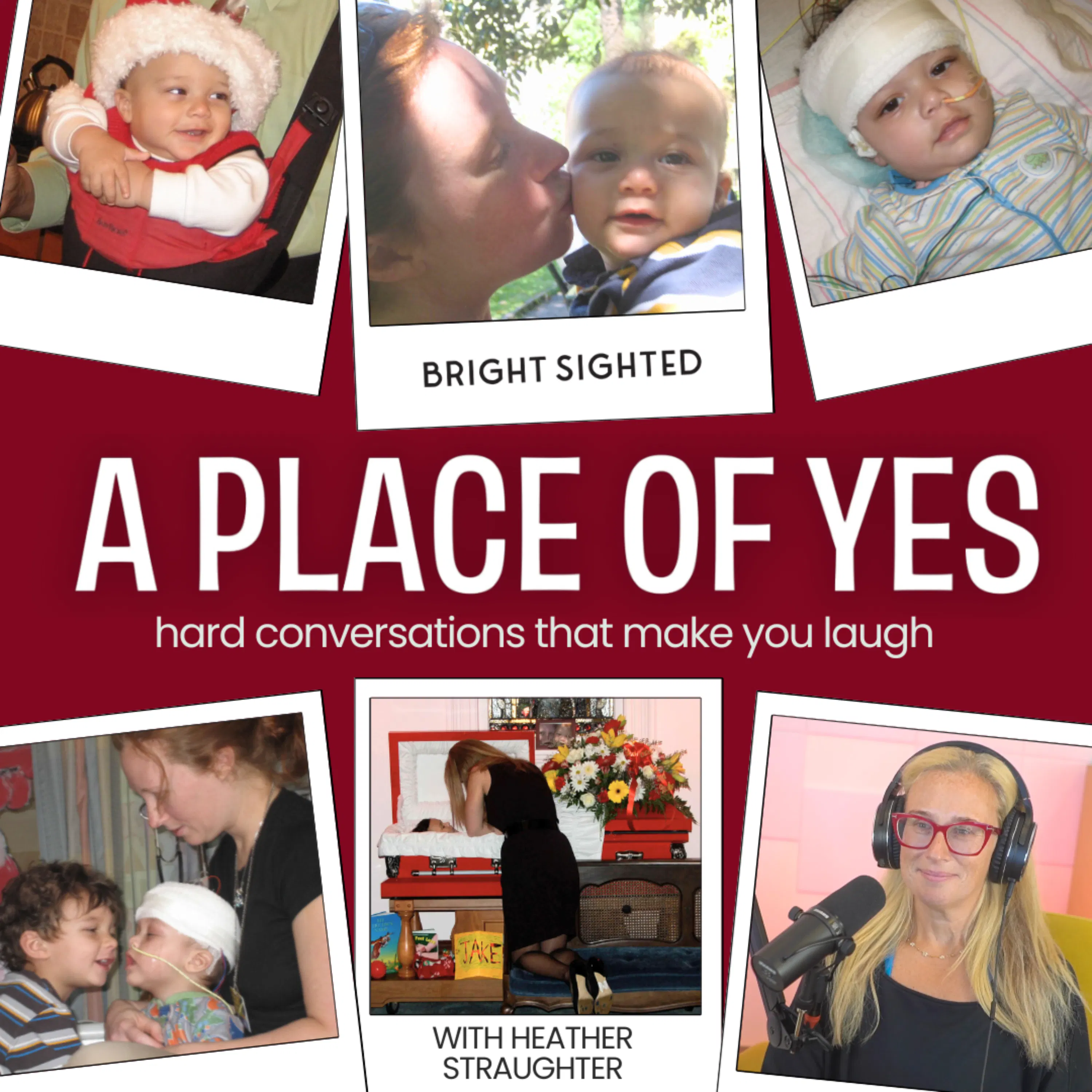
Loading summary
Transcript98 lines
- [00:01]
Rebecca Finegloss
Two hours later, I'm leading this meeting. A colleague of mine hands me my phone and says it's been ringing over and over again from the same person. My dad had since remarried and it was his wife, and she called me to tell me my dad was dead. I was at work doing. All of my colleagues were there, every single person I worked with, everyone that I respected and reported to, they all saw me at the very worst moment of my entire life.
- [00:30]
Heather
Welcome to A Place of Yes, a podcast about how I moved through my darkest hour. And for me, that was in channeling my grief into good. Welcome to the show. Today's guest is Rebecca Finegloss, a certified grief support specialist, startup founder, podcast host, and former state and local policy advisor. Rebecca. But in the way that so happens on this show. I found her on Instagram. I just felt like our vibe would connect, our energy would be matched, and I just got really excited. When I was getting ready to have Rebecca on the show, I read some of her articles. She's been featured in the LA Times, in Fortune magazine, HuffPost, Elle. And in one of those articles, everything she said was not only the way I think about grief, but the way that we talk about it on this show. So before I do my official welcome, I'm going to read this quote, and for my faithful listeners and my friends and family, they are going to think that I said it. It's simple, but it is entirely true. We don't need to tell them to look on the bright side or fix their grief. Grief doesn't have an answer. Sometimes it just fucking sucks. And on that note, welcome to the show. Rebecca.
- [01:46]
Rebecca Finegloss
Yes. God, Heather, it is such a pleasure. And I feel like the vibes are already vibing.
- [01:53]
Heather
They are vi.
- [01:55]
Rebecca Finegloss
I think we are two peas in a pod. So I'm all about it. Yeah, grief does fucking suck. And it also gets to bring us together with some cool ass people.
- [02:05]
Heather
And that is, I think, the biggest thing from the show that I have learned. Like, I've always sort of felt this, right? Like, grief is hard, it's dark, it's sad, it's miserable. It just sucks. You would be so much happier without it, but when you lean into it and let it be. I have met some of the greatest people and facing our grief, which I think is kind of what you're all about, right? Like, why do we try to, like, bury it or pretend it doesn't exist or pretend everything's fine when it's not? And it leads me to the part that I cannot wait to hear. You Talk about. So as part of your introduction, can you share with my audience what your year long grief sabbatical, like, how you did it? Because I think it's brilliant.
- [02:47]
Rebecca Finegloss
Oh my gosh. Okay, so let's like rewind a little bit. Yes, I know, I jumped right in. Yeah, no, I love. But in order to set a little context, like a caveat is, I don't recommend that the average person just like quit their job and walk away from their life for a year because, I don't know, you want to like, explore your. Your deepest, darkest thoughts. Like, that is not a. A sustainable message to deliver to the world. That is not what I recommend for me. I was in a position by the age of 31 where both of my parents had died. My father very Suddenly on day one of COVID lockdown. My mom 20 years earlier when I was a child. And then I had decided to get divorced a year after my dad died, which was a good choice, but also, of course, comes with its own pain. I found myself really struggling in this job I had hustled so hard for. I was working in state government. I was leading all of this work that I had like, climbed the. All of the. It's not really corporate ladder in government, but like all of the seniority ladders I had. Right. I had earned it. And I felt awful by the end of 2021 and was like, man, something pretty drastic needs to change in my life. And I need to explore these really heavy feelings that I have been trying so hard to just outrun my entire life. And so I decided to leave my job and spend a year exploring this idea of grief. And I called that year Grieve Leave, which I was surprised no one else had, like, taken that domain name or trademarked or, like, it just felt so right. And I'm very, very grateful that I was in a position to be able to do so. And I spent that year doing all kinds of things, from travel to writing, to throwing a divorce party, to volunteering at grief summer camps for children who have lost parents, to taking a music songwriting class, which that footage has never surfaced on the Internet because it was so embarrassing. But it was like, really valuable for me.
- [04:57]
Heather
Sometimes you just gotta do stuff.
- [04:59]
Rebecca Finegloss
I just wanted to explore all of these different ways of like, what is grief and what is grieving and what am I actually supposed to do to face these feelings? And I blogged about it. It turns out that, you know, everyone worldwide is asking these very same questions. That blog took off in ways I never, ever could have imagined. And that became the basis for founding my own company. So Grieve Leave was born. And these days, I help people all over the world think about grief and loss. And it is, again, such a privilege to be able to do it.
- [05:30]
Heather
It's so funny, I guess, how we end up in these places, right, that are so perfect for us. And it's never what you imagine your life will be. And we can talk about that a little bit too. Cause I think under that umbrella, part of love about your work too, is it's. There's grief with loss, right? Like with death. And that is the grief that most people think of when they think of grief and they kind of think of, oh, there's six stages of grief. And where are you? Are you angry now? And, you know, they kind of think there is this timeline and this evolution when those of us in it, and which, by the way, is almost everybody at one point or another, but there's also that grief that is not about death. And you kind of referenced it with your divorce, Right. Like, it can 110% be the right thing. But there's still that idea. And on the show, we talk to, or I talk to a lot of guests who, you know, maybe they haven't lost their child, but their child has significant health issues, or they, you know, there, there's all these other things. So there's that idea of grieving the life that you thought you were going to have. And those are real feelings too. Like, those are really valid feelings. Right. And I think that we, we've never, or I used to not have language for that.
- [06:38]
Rebecca Finegloss
It's revolutionary, right? That actually, like, surfacing and naming, all of this heaviness that has been sitting under the surface for so long but was always there. We just always didn't have names for it. Yeah.
- [06:50]
Heather
And like you said, like, you're talking to people all over the world. Like, when we try to do this ourselves, right? Like when we're just in our own heads, you feel crazy. But then all of a sudden you talk to someone and they're like, oh, my God, I thought that too. We all have these dark places, these thoughts, these feelings. But if you don't talk about them and if people aren't there to hear you or make you, like, you know, maybe we're, we're either all crazy or we're not crazy or somewhere in the middle, but we're, we're all experiencing it. I lean into the crazy.
- [07:22]
Rebecca Finegloss
It's like, it's that we, we're not crazy for grieving. Right. Like we're just not. And I feel like our society wants to establish this narrative that you were referencing this earlier. There are X number of stages of grief. I will process them linearly. I will successfully overcome my grief. You know, tie it up in a move on, check, I'm done. And that is just not the way that grief works at all. When we wrestle with that, when we face that, as any griever globally knows, when you are not done with your grief, when you have not tied it into a bow, you feel crazy because the narrative does not match your actual experience as a griever. But you're not crazy. It's just that the way we conceptualize how we are supposed to move on from grief and loss is just complete bullshit, especially in America. And we can do so much better. But that comes from being a little more honest about what our experiences are actually like. Grieving and naming non death related losses is grief too, because it all comes with this heaviness and complexity of thoughts and feelings and let's just call it what it is. It's grief. And that will help us carry it better.
- [08:39]
Heather
I remember when I sort of had that shift because, you know, so. So my son died 15 years ago. I was so alone in it. I mean, not alone in the sense that like my husband was in it too, but it was not. I mean, I talk every day now about grief. I'm talking to people, I'm writing about things, I'm doing it like I'm finally in it. And if I had been in it 15 years ago, I just can only imagine how much. I don't even know how to say it, but like, just healthier. I would have felt like some of the darkness and like the stages would have been very different, but I was very much like a. You know, my son died, I was younger and it was just kind of like, Heather, you do this and it's just, I think that's how we, especially in this country, we give people, you can be sad now. This is how you deal with your sadness. And then we don't want to talk about it ever again.
- [09:26]
Rebecca Finegloss
Totally. Or it's like we ostensibly look a certain way, we look successful, we seem happy, we are doing well in school, or we have a lot of friends, or we're doing well at work. Therefore people view us as not grieving anymore. Right. That we have.
- [09:43]
Heather
You can't be both.
- [09:43]
Rebecca Finegloss
Yeah, you can't be both. And I think that narrative is so dangerous. It is one I certainly bought into as a child. I mean, the Message that I certainly received from the age of five, when my mom was diagnosed with glioblastoma, deadliest form of brain cancer, to the day she died and after, when I was 13, over those eight years and beyond was, oh, Rebecca's doing well. We know she's handling this well because she hangs out with her friends all the time because she's doing well in school. Like, she handled her mother's death well. Good for her. She will keep being successful.
- [10:18]
Heather
A plus student. Yeah. Yeah.
- [10:20]
Rebecca Finegloss
A plus student. Gold stars all around. I think that narrative was working well for me for a while, but it is not a sustainable one. And it certainly broke down when my dad died, too. There was just no more. I couldn't outrun that grief anymore. I couldn't cover it up with achievement anymore. Plus, then my marriage was falling apart, and I was like, oh, my God. Like, there is no escaping the heaviness of this grief. It is staring at me. It is drowning me. I have to acknowledge it, finally. So many of us, like, God forbid anyone who is listening has experienced that amount of compounded grief. I do not wish that on anyone. I don't want anyone to think, well, my. The grief that I feel, you know, whatever it is, is it that bad? So it shouldn't, like, drown me. No. Like, any grief is heavy, and if we start to face it earlier and stop trying to, like, bury it or avoid it or out hustle it, we will feel better. Like, that is what I hope that people hear, you know, that it doesn't have to get so bad. You have to wait till everyone's, you know, gone in your life to acknowledge it.
- [11:24]
Heather
I love that you said that. And honestly, it's one of the things that I. Honestly, I used to very much, like, when I was young, in. In my grief journey, felt like there was this hierarchy, right? And I was at the top of it. God damn it. My kid died. All of you all can just, like, you know, like, I was like. And then as life continues and I matured a little and I started having these conversations, it's like a light bulb went off, and I would. And it's sort of like you said, like, I don't care if your dog died. For some people, their dogs are 100% their fur babies. That's real grief. Like. And it was so freeing for me, even, because I felt this heaviness that I think society puts on you. You know, the whole saying you should never bury your children or, you know, the circle of life isn't supposed. Like, all of those Things that people say to sort of make you feel better made me feel like I was having the number one worst grief. Like the worst thing in the world happened to me. You know, like I was like a Hallmark.
- [12:22]
Rebecca Finegloss
Here's my trophy. Yeah, I won.
- [12:25]
Heather
Yeah.
- [12:25]
Rebecca Finegloss
Yes. Yes.
- [12:26]
Heather
But then when I realized that this feeling is the same, the heaviness is the same, or like, we can feel the way it impacts us. And it can be your dog passing away. It can be that you've had three things happen to you all of these things. It can be losing your job. It can be losing a friendship. These things can make you feel a certain way, and you will always feel better if you allow yourself to feel them and find a community.
- [12:55]
Rebecca Finegloss
Yes. Oh, my. Wait. Can I tell you something that happened the other day that I feel like you will appreciate, and I'm sure your listeners will appreciate. I felt very silly in my grief the other day when one of my dogs, Ralphie, he is very cute. I would bring him over here if I hadn't, like, secured the dogs far away. So if they bark. Ralphie, the other day was at the vet with a really serious medical problem that just came out of the blue. I won't get into all of it. He's 10. He's a senior dog. But completely unexpected emergency vet visit. Oh, I'm going to get emotional just thinking about this. I had to leave him overnight in the hospital. He's fine now. Been on steroids for a while. When I tell you leaving my dog at the emergency vet overnight and coming back to my home, I sobbed. But part of me was like, come on, like, this is not as bad as your dad died. Like, come on, like, you can get through this. And I had to talk myself down and be like, no, this grief matters, too. This is grief, too. You're not silly for feeling that level of intensity. Like, grief is grief. It doesn't matter if it is your dog potentially bleeding out in the hospital overnight. Like, that is horrifying. And it is worth my tears, too.
- [14:08]
Heather
It is worth my tears. I love that. Yep.
- [14:10]
Rebecca Finegloss
Yeah. Yeah, I can. But I can hold that grief at the same time that I know that the phone call that I got was randomly on a Saturday afternoon that my dad died. Like, that was bad, too.
- [14:21]
Heather
So you just said, you know, you got the call on a Saturday afternoon, like, for such a long time. Wednesday nights for me. And it's funny that I record the show on Wednesdays, but, you know, Jake died on a Wednesday. Wednesdays will always hold less so now, honestly. But, like, that first Wednesday, I, like, was crippled by it, you know? So it's those moments, no matter what happens, like, I can close my eyes and put myself right there in that moment again. And I suspect that phone call is the same for you.
- [14:50]
Rebecca Finegloss
Oh, my God. It was just awful. It was such a weird day, though. Nothing was normal about that Saturday.
- [14:56]
Heather
So you said it was the beginning of lockdown, which was just nuts. Oh, God.
- [15:01]
Rebecca Finegloss
Yeah. So. So I worked in government. I was the. At the. That day. Let me just, like, paint a picture.
- [15:08]
Heather
Yes.
- [15:09]
Rebecca Finegloss
March 14, 2020. So I was, quite literally at the grocery store getting ingredients to make a pie, because it was pie day. And then I got a phone call from my boss saying that I needed to come to a secure location in the state capitol to help us shut down schools across the state of North Carolina. And I would be supporting our governor's team in how we were going to do that. Okay, cool. So I leave the grocery store, you know, I put down my pie ingredients at my house, and I'm like, what does one wear to a government shutdown meeting? Like, what am I. What am I doing here? Yeah, what am I? Like, should I put on a blazer? Like, I don't know. And I.
- [15:49]
Heather
Or are we comfy?
- [15:50]
Rebecca Finegloss
Yeah, what's the vibe here? And I call my dad on my drive over to Raleigh. It's about 45 minutes. I live in Durham, North Carolina, and I was driving in, and I was like, dad, guess what I'm about to go do? Like, this is crazy. My dad and I were incredibly close. You know, I'd always share big moments in my life with him. It was just pretty normal for me to call him. I call him, I tell him what I'm doing, and he said, that is amazing. I am so proud of you. Go be safe. Do great work. I love you. And, you know, we got off the phone. Nothing really out of the ordinary. He sounded, like, a little bit short of breath. I knew he hadn't been feeling well. I think I said something sarcastic to him. Like, sounds like you might have Covid. Like, go. Don't breathe on anybody. Go rest, dad. And then, because that's our sense of humor, two hours later, I'm leading this meeting in this secure location in our state government building, and someone, a colleague of mine, hands me my phone and says, it's been ringing over and over again from the same person. And it was my. My dad had since remarried, and it was his wife, and she called me to tell me my dad was dead. I was literally leading a Meeting. I had just spoken to him two hours earlier, and I stepped out to take a call and say, what's up? My entire world flipped again. It had already flipped once that day.
- [17:13]
Heather
Like, your world flipped. And how do you talk to him two hours ago? Like, I. I would.
- [17:17]
Rebecca Finegloss
It didn't compute. It was also what was. So this was really hard. I was at work doing. All of my colleagues were there, Every single person I worked with, everyone that I respected and reported to, they all saw me at the very worst moment of my entire life, you know, sobbing on the floor. That was very strange to wrestle with over the next few months when I got back to work. Nothing will ever be the same with these people. I love them, you know, like, they. We are connected in very deep ways now, not just because of COVID response and itself is like, a crazy environment to work in, but, like, they saw me in the absolute worst moment of my life. So it's things that were mundane and normal of, like, work relationships changed forever in that aftermath.
- [18:06]
Heather
Of, like, there's comfort in people having seen you at that moment.
- [18:12]
Rebecca Finegloss
It's very humbling. I think this happened to a lot of people during COVID in this virtual work environment where boundaries between what was personal and what was professional were really shattered. I think there's good that comes from that, that I think we're touching on right now. The good is that we see each other as more human now, I think, than we ever have before in our workplaces. That is also hard because it. Vulnerability is. Is. It's hard. Like, it's hard to feel that scene and that vulnerable all the time. And it can be mentally quite exhausting.
- [18:46]
Heather
Was it Covid?
- [18:48]
Rebecca Finegloss
Great question. He tested negative for Covid postmortem, But at the time, there were, like, a handful of tests in the entire state, and he was tested postmortem because he was a physician and had been rounding and seeing patients all week. So if he had had Covid, it would have been newsworthy. But he tested negative. Autopsy was performed, and we determined that it was blood clots. So he had pulmonary emboli, one in each lung. That led to his sudden death. And that is why he was short of breath earlier. Some of the clots were kind of breaking up in his lungs. The theory is maybe because he had been traveling a few weeks earlier, maybe he got some clots in his legs sitting on a plane. Maybe he had had Covid, like, a month before anyone knew about this whole Covid thing.
- [19:35]
Heather
Well, that whole time, there were all those people who were sort of like I had a friend, totally my age, young, healthy, all this stuff was in and out of the hospital like twice that like February with like lack of breathing, all of the stuff, you know, I think sometimes it was. If you were sick in February, we didn't even know Covid was a word.
- [19:53]
Rebecca Finegloss
We had no idea. And it was, I think it was just so infuriating at the time because we, you know, it was so sudden and there were no answers. It was just this finality that I had never experienced before in my life of, oh, there's absolutely nothing I can do to rectify this situation. He's just gone.
- [20:12]
Heather
And the hard part of that, like that sudden loss, in my opinion too is like, is, it's, it's like a minute, right? Like it's like you're. And I guess all death is that way to some degree. But like, you know, this past December, my father in law passed away and my husband and I sat in the room with him as he. And we happened to be there when he took his last breath. I found it to be this incredibly beautiful moment. And because I wrapped myself in all thoughts, death and grief and stuff, I was, I was like, I thanked him for trusting us to be the ones that he knew it would be okay. That like, that moment to me is very different to like the moment you're talking about or the moment that I had with Jake where literally I was like, wait, I was feeding him one minute and then he was like, there is a moment, no matter how much time passes, I think it's like it can bring you that, it brings me back to that, that pit in my stomach, like my brain. It's like misfiring. It doesn't know how to compute.
- [21:06]
Rebecca Finegloss
The word I would use is anger. Like I'm very angry that my dad died still now, like right now in this moment. And I would love to believe that I'm not. Like, I would love to believe I'm at peace with. No, I'm really angry that my dad died. It's not fair. But I think back to how different that sudden death was to my mom's death, for example, which was over the course of eight years of very slowly, you know, experiencing the impacts of brain cancer treatment. That's a really different experience. I was also a kid, so I, even though it was a long process and I think the adults around me knew how the story was going to end with my mom, I don't think I fully understood that she was going to die. I think there is beauty in grief. There Is beauty in all of this too? Like, I. I love thinking about my dad. I really. I love thinking about my nana. I love thinking about my mom. It's different though. I think I'm jealous of people who have really beautiful memories of their mothers in particular because I didn't get to know her because I was so young when she got sick. My. The way that I think about her doesn't bring me the same kind of joy as like thinking about my relationship with my dad does. It's just all different.
- [22:20]
Heather
Does that ever make you feel guilty? Like, that's kind of a loaded, heavy question. But I say that sometimes where like there are certain people that I miss so wholeheartedly because I knew them so, so well and it's like my entire being. But then there's other people who I just wasn't as connected to or whatever. So that's almost like I have a ranking of who I grieve more.
- [22:43]
Rebecca Finegloss
What you're saying is so real and like it's getting me a little teary eyed because we're post Mother's Day, which is I think my least favorite day of the year. And you.
- [22:52]
Heather
Horrid. Yeah.
- [22:53]
Rebecca Finegloss
Hinted at this, but I. It's like I can imagine my dad sitting right here. I know what he would say to me. We could. I could have an imaginary conversation and like a not weird way. But I guess it is kind of weird. But like I knew him so well. We were so close. I can imagine his mannerisms. I can't do that same thing with my mom at all. And I don't know if it's guilt or just like that.
- [23:16]
Heather
Sadness. Yeah. It's just sad.
- [23:19]
Rebecca Finegloss
I wish that I had those memories. It is deeply unfair that I don't. The moments where I do feel guilt is I will find myself talking about my dad and my grief for him more often.
- [23:32]
Heather
Yes.
- [23:32]
Rebecca Finegloss
Or I'll be writing, you know, a blog post or talking, you know, in an interview or talking in some kind of space or even talking with friends, saying, gosh, I wish my dad were here. And I catch myself being like, I guess I should say, and my mom, my mom were here. And then I feel guilty. It's so normal to me, her not being here. It is still abnormal to not have my dad here.
- [23:53]
Heather
Well, it's also, I think once you become an adult, right, like, because your life changes less. Like when we're kids between 5 and 13, you are all different kind like, you know what I mean? Like your, your world is so different in those eight years. Whereas from 30 to 38 or whatever, you know, I mean, like, once you reach a certain point, the changes aren't as vast, which is.
- [24:14]
Rebecca Finegloss
I think that's so well said. And with my mom, it's. I wonder if this resonates for you or is. I imagine it's something you think about. Like, your relationship with your mother changes over time. I have heard. I imagine. And, you know, like, very much so.
- [24:29]
Heather
Yes.
- [24:30]
Rebecca Finegloss
The way your mother mothers you is different as a little tiny kid versus, like, when I was getting married. Frankly, I wonder if I even would have gotten married if I had a mother who was monitoring maybe a little more closely what was going on there. Love my dad, but it's okay.
- [24:48]
Heather
You can get away with things with your father in a way that you don't with a mother that you don't.
- [24:51]
Rebecca Finegloss
Yeah, I think my mother could have seen through some of my bullshit, I imagine.
- [24:56]
Heather
But I.
- [24:57]
Rebecca Finegloss
Like, she would have parented me. She would have mothered me differently. And I feel like the older I've gotten, the more I've realized as a young woman now and a woman that is contemplating whether I want to be a mother or not. Damn, I wish I could talk to her about that. I won't ever have that chance. And that really sucks.
- [25:13]
Heather
It does suck.
- [25:14]
Rebecca Finegloss
That really sucks.
- [25:15]
Heather
So I think this is kind of similar. And I talked about this on my, like, little solo episode a little bit, but I was resonating with so much what you were saying about your mom. My struggle with time passing and Jake dying when he was four is this idea that I just don't know who he is. Like, he just had a birthday May 4. He would have been 19 years old. I have my son Ethan, who is 20. I know what, you know, young adulthood looks like. I don't know what it looks like for Jake. And that's kind of a little bit like, that's its own. The grief. I don't wanna say it gets worse, but it. It evolves. And what I'm grieving now is so different than what I was grieving when he first passed. Like, I. I wouldn't say better, worse, or any of that, but it's just so different because I'm grieving. I'm grieving, basically those 15 years that I never had. And that's kind of like. I don't know how to tell the story. Like, you know when you kind of just said, like, I could talk to my dad right now, and I can picture the conversation. Cause it's what we would have had five years ago or Whatever. Like, I talk to Jake all the time, but I struggle between talking to him like he's a four year just shooting the shit with them because I'm like, oh, I. This is how I talk to Ethan. So I'm gonna talk to Jake too. But like, I don't feel confident in it.
- [26:28]
Rebecca Finegloss
Yeah. God. I mean that. It's getting me very teary. I want to imagine who my mom would be today. And so I use the evidence that I have, right? Like, I know who my godmother is and who was so close with my mom, right? So I can see how she treats me. I can see how she interacts with her grown kids, you know? You know, I can kind of infer here, I know who my dad was. I can think about how my mom would have aged. I think a really creepy but also cool thing that we have now is technology. So when I wrote a piece for Slate, when this came out, I saw that dude, hear me out. Hear me out, listeners. Cause I'm going to say something very, very weird. When the aging filter on TikTok came out, the first thing that I wanted to do was like, hold up a picture of my mom to it and see how she would age. You know, I did the aging filter on myself too. And then I saw that I looked exactly like my late father. And like, that was creepy and also beautiful and. But I really wanted to see what my mom would look like. Otherwise I would never know. It has given me something to visualize that is strangely comforting. And also I remember asking my brother that. Same as Daniel, Daniel, do you want to see these pictures of mom? And he was like, I'm good. I don't think I ever want to see that ever. Thank you, though. But it's given me like a visual in my mind.
- [27:56]
Heather
So I'm going to take this one step further. And when I go home today, you know what I'm going to be doing?
- [28:02]
Rebecca Finegloss
Oh yeah. Oh yeah.
- [28:04]
Heather
Even when I read your article, I was like, oh, that's so cool. But I did not think of it in terms of that might solve one of my problems or it's going to be really weird.
- [28:13]
Rebecca Finegloss
But like, brace yourself. Coming full circle here, I feel like the thing to do is acknowledge that you have grief, period. Make space for that grief, and that there are so many different ways that we can do that and if AI can help us today, great.
- [28:32]
Heather
One of the things that was on my list to talk about was your meet and greets. There was again, I don't remember if it was on your Website or where I saw it. But it was like this concept and correct me if I get this wrong, but the idea that, that I picture, it's like a meetup where you, you can grab a beer and you just like. Yeah, it's not formal, it's not therapy, it's not grief counseling. It's just other people grieving, having a beer at like wherever place you are, talking about your people and where you're at.
- [29:01]
Rebecca Finegloss
Dude, I'm telling you, here's, here's where this whole idea came from. Let me take you back in time to 2022 in my year of grief leave. I said to myself, okay, I'm going to go attend some grief support groups. Let me see what is available. I'm going to like go face my grief. I'm going to do what I, you know, I'm supposed to do here in the south, in North Carolina. If I want to go to a grief support group, it is in a church basement on like a Tuesday at 4 for the average young working person. They are not present for that. I'm also not Christian. I am Jewish. And so the idea of like meeting in a church didn't, it didn't appeal to me anyway. Even though it was advertised as interfaith, I went to a few of these grief support group meetings. I was the youngest person there by decades. I hated every minute of it. It was not the right environment for me. As I tried to find grief support groups that felt relevant to me, I could not find anything. What I wanted was to just like chill with other people who understand loss. What I decided to do was make my own events. They fall under this umbrella of meet and grieve events. They include, you know, we might meet up at an exercise class that we host. We might host a sad hour instead of a happy hour at a bar. I love that we've hosted a candle making meet and grieve event. We're hosting an event at a brewery next weekend or this weekend. Excuse me. Asheville, North Carolina. It is this idea that like, grief doesn't have to be something that is clinically supported and intervened in all the time. It can just be part of, you know, your experience and that the only thing that helps make grief a little easier to carry is talking about it and connecting with other people who get it. I love that we've created spaces where people can just share, show up. And what I love is people say things like, heather, they'll literally come up to someone and be like, so, like, who. Who are you grieving? Like what, what do you. What brought you here? Tell me. And then they just said, person.
- [31:13]
Heather
Yeah, who's your person?
- [31:15]
Rebecca Finegloss
What's going on? And they immediately connect. Like the conversations are just real and funny and authentic.
- [31:23]
Heather
Like it's where everyone is. I. So I love that so much. And similar to your experience. Experience. When Jake first died, we were like, okay, you know, Ethan is 5. He called 911 when his brother, like, we have to figure something out. And they sent us to. And I think for some people maybe it's a great program. And it was for families in loss or whatever. I will tell you. We did a six week program. We went. I don't know what. When it was Tuesdays at 6 or whatever. The three of us left there. So upset everything. Like it was the opposite. Like. And I remember being like, okay, like, this is not, this is not gonna work for me because I. If I'm going to something that is supposed to help and I am leaving basically. And this sounds horrible and I don't necessarily mean it as horrible. It sounds, but it was, it was just the rabbit hole, right? It was the rabbit hole on rewind. It was everybody going down the darkest path of sadness. I don't get out of bed. I don't do this. And then it was like one upping. Well, I haven't got. This is the only time I get out of bed all week. And I was like, this is not helping anybody because we are, we are creating a visual here. And I got very nervous about like Ethan seeing it because I was like, we're creating. We're almost like normalizing extreme depression as grief. Like we're equating the two as opposed of saying, let's talk about it. And if you're, if you come up with a great memory that you're sharing of your person and it makes you laugh, it's okay. Like you can grieve and you can laugh.
- [32:56]
Rebecca Finegloss
Yeah, it's.
- [32:57]
Heather
And it was just so icky.
- [32:58]
Rebecca Finegloss
Frustrating.
- [32:59]
Heather
Yeah.
- [33:00]
Rebecca Finegloss
I hear it's. It's so interesting because, like, I feel like a lot of the grief support that is out there in the world and I'm. I'm not going to knock it. I think a lot of people want that kind of space to hold you in your sadness, to hold you in your darkest moments, to give you a space where you can cry. Maybe you feel like you can't cry anywhere else. Great. Like, I want those spaces to continue. That is so great. That is. Yay. Those spaces. For me, I want to just feel like I can Be real and that I am not being performative.
- [33:35]
Heather
Yes.
- [33:35]
Rebecca Finegloss
Any way at all, whether that is performatively sad or performatively positive. Right. About how I'm feeling in my grief. And so what I love about our events that we host is like, you could also just come and literally not talk about your grief at all. And it doesn't.
- [33:51]
Heather
You can just take an exercise class.
- [33:52]
Rebecca Finegloss
Yeah, you can just take an exercise class. But you know, just that you're surrounded and that gets me teary eyed again. I feel like I've just been very emotional today. The comfort of just looking around at the other people and know that, wow, these two dozen other people doing yoga with me today are all here because they're grieving too. And that's all the support that I needed.
- [34:11]
Heather
I agree with you, like, not to knock that program because I think, you know, people need their acceptable places to be sad when that's the only kind of grief support we offer. It either does become performative. Right. Like it becomes, oh, I need to show the world I'm still grieving. And this is the only way that looks. And I think that gets kind of. I think people get stuck. I agree with what you said earlier. I can't believe no one came up with Grieve Leave before. Because it's so brilliant. It's so brilliant. Like I've been.
- [34:37]
Rebecca Finegloss
It's just same with Sad hour though. Like, how is no one else like talked about, like, you know, again trademarked, have a cool logo. Like, how is this not a thing already?
- [34:48]
Heather
We've touched on this to some degree. But like, there is this expectation when you are grieving that things look a certain way. And one of the things that I talk about the most, like, and actually there was. There was a friend of mine who lost her daughter a year and a half ago or so. One of the first things she said to me, she was like, heather, am I ever going to be happy again? Because she was in the throes of it, like in the thick of it. One of, I think the most important things that I can say to people is that, yes, you will be happy again. I almost feel like it gives them permission and it's permission from somebody who's lost a child. So somehow that matters because I do think that for so long we had just the stages of grief and you were given, okay, you have, you know, six weeks to be sad or whatever that number is. But then you get over it and we're all pushing back a little bit now and saying, no, you never get over It. You learn to live with it, and you lean into it and all of these things. I would hope that there's less pressure for people to feel that sadness is the only way to experience grief.
- [35:48]
Rebecca Finegloss
Yeah. Yes. And it's like the idea that there's a caveat when we say you never get over your grief. That doesn't mean that you sit in the depths of sorrow every single day. You learn how to carry your grief better over time. You learn how to carry it differently. Like, your grief. Your grief doesn't get worse or better per se, over time. It just gets different. We view grief too often as this binary. You're either grieving or you're not. You're either sad or you're happy. And I think that is a limiting way to view the dynamic reality of what grief is. It is holding all of these different feelings at the exact same time. And that doesn't devalue your grief because you're not sobbing in a corner about it. However you feel in your grief is valid. However you feel in your grief is enough. You can't, like, feel more.
- [36:44]
Heather
It's not a grief competition. But, like, I feel that's. I mean, it's so valid, though, because I feel like that is a little bit what society puts out. Like, grief looks like this, and this is how you show your sad, you.
- [36:58]
Rebecca Finegloss
Know, like, which is why we have, I think, such an important opportunity with the platforms that we have to better represent what grief actually looks like and sounds like and feels like and give a more dynamic range of what it can be.
- [37:15]
Heather
Well, thank you, Rebecca. I have so enjoyed having you on the show.
- [37:18]
Rebecca Finegloss
I dream this was perfect.
- [37:21]
Heather
It was so much fun. I was so excited for this conversation, and it did not disappoint. Like, I have a new best friend. I feel like, oh, my. I was like. I was like, yeah, grief besties. We have to go have some beers. Like, all the things.
- [37:33]
Rebecca Finegloss
I can't wait.
- [37:34]
Heather
The sad hours, all the things. I love it.
- [37:36]
Rebecca Finegloss
Let's go. I'm totally pumped.
- [37:38]
Heather
Thank you.
- [37:38]
Rebecca Finegloss
I really appreciate you, Heather. And thank you so, so much for all that you do and the conversations that you curate on your podcast. Like, you get to have these types of conversations because of the person that you are and the work that you do in creating this environment. So thank you.
- [37:54]
Heather
Thank you for being a part of it. I appreciate it. Thank you for listening to A Place of. Yes, Please follow us wherever you listen to your podcasts. If you really like this episode, please share it with a friend. It would make a world of difference if we could just reach more people and share the work that we do and the stories we want to tell. Thank you so much for watching.