← a16z Live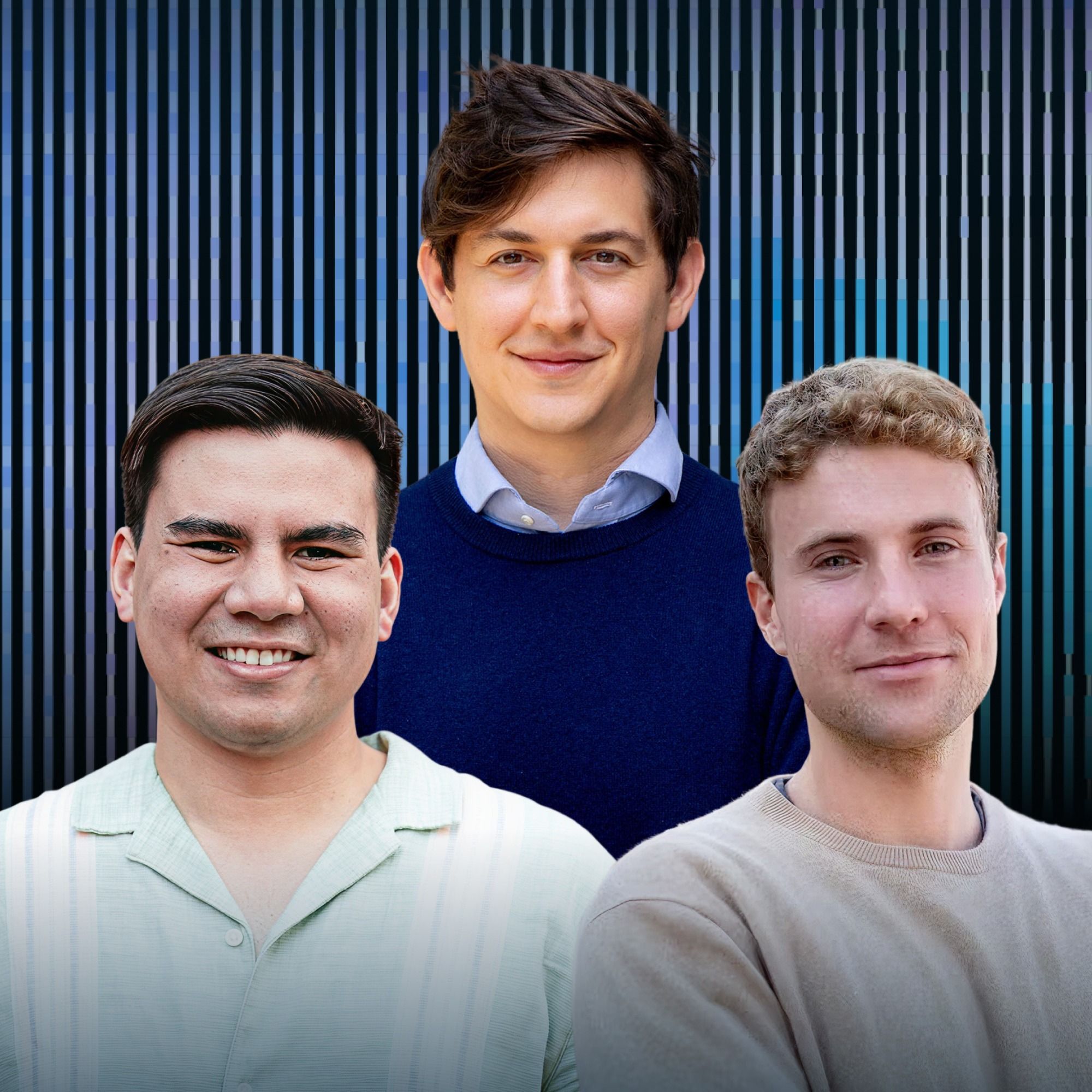
a16z Live
How Startups are Fixing Healthcare Friction
00:23:54
What if the biggest lever for improving U.S. healthcare isn’t clinical, but operational? In this episode, recorded live at New York Tech Week, a16z General Partner David Haber speaks with Trey Holterman (Tennr) and Christophe Rimann (Camber), two founders tackling the core infrastructure problems that slow down healthcare, from broken referral handoffs to denied insurance claims. They discuss building trust in high-stakes workflows, how better incentives (not just better tech) drive adoption, and why the most defensible products aren’t just smart - they work 97%+ of the time. Plus: advice for founders, the cultural edge of New York startups, and what they’d fix first if they ran HHS.
Loading summary
Transcript53 lines
- [00:01]
Kristof Riemann
Our goal is really just turn healthcare insurance payments into something that looks like credit card and for some reason for decades we've just accepted that health insurance is not going to go through a similar flow.
- [00:12]
Trey Holterman
We have to have the controls that says okay, now we know that we can benchmark qualifying a lab well enough over 97% that we're going to be able to roll this out to production. That's defensibility, that's happy customers.
- [00:24]
Kristof Riemann
If we use the latest fancy tooling to get slightly more efficient and slightly better outcomes, all they care about is that latter part, not the latest fancy tool.
- [00:33]
Trey Holterman
The amount of time it takes them to first touch contact a patient that got sent in their way is 22 days. 22 days and the average turnaround for us is 20 minutes.
- [00:43]
David Haber
What if the biggest lever for improving our healthcare system isn't clinical but operational? Hi, I'm David Haber, a general partner at Andreessen Horowitz. In this episode recorded live at New York Tech Week, I sit down with Tener co founder Trey Holterman and Camber co founder Christophe Riemann, both of whom are tackling some of the most entrenched, frustrating problems in healthcare. From broken referral handoffs to delayed or denied insurance claims. These aren't new issues, but they're increasingly solvable with better data tech enabled workflows and AI powered tooling, we cover what it takes to build trust in high stakes workflows like patient care and revenue cycle management. The difficult but critical 10% that separates enduring companies from shiny demos, the misunderstanding understood cultural and operational strengths of regional healthcare providers. What both founders would fix first is they ran the Centers for Medicare and Medicaid Services or the Department of Health and Human Services. The episode wraps with hard earned advice for aspiring founders in healthcare.
- [01:53]
Kristof Riemann
As a reminder, the content here is for informational purposes only, should not be taken as legal, business, tax or investment advice, or be used to evaluate any investment or security, and is not directed at any investors or potential investors in any A16Z fund. Please note that A16Z and its affiliates may also maintain investments in the companies discussed in this podcast. For more details, including a link to our investments, please see a16z.com disclosures.
- [02:23]
David Haber
We'll kick things off with your founding story. Both of these founders are operating in the healthcare space and building really interesting companies. I'm lucky enough to get to work with them very closely. As you guys each looked at the healthcare landscape, what was the one thing that was broken that got you guys to jump in and want to solve
- [02:37]
Trey Holterman
the problem so for us, it's very simple. It's the fact that when a patient gets prescribed going from point A to point B, they actually only ever make it to the place they got sent under 50% of the time. So it's this very simple problem. My mom, who's on the family medicine side, would describe it as like the black hole problem. It's that there's this moment in time where you go from one provider to the next provider. Nobody's really responsible for you in that time period. And it's like you get sent into a black hole. I learned about this just from angry group chats from my mom venting. And at some point you're like, oh, wait a minute. That's like actually a pretty solvable problem, but it's subtle and hidden and you don't really hear about it until you actually dig in and say, what's going on there.
- [03:15]
Kristof Riemann
Yeah. I think similarly, mine came from personal experience as well. I was diagnosed with ADHD in early college and so had to deal with my own healthcare journey. And I think most people who have had exposure to working with insurance companies for a while understand how difficult that can be. After grad school, I ended up becoming a healthcare consultant and got to see on the provider side exactly what's happening in the health insurance world and really wanted to be able to help providers get paid faster and easier and for less money. And so that was the impetus of founding this about four and a half years ago.
- [03:47]
David Haber
Now, one of the questions we always ask when we're making an investment is what is the why now? And I know entrepreneurs often think about that as well when they're thinking of starting a company. What was the catalyst? What changed in the ecosystem? Maybe from a technology perspective, that made Tenor and Camber possible.
- [04:03]
Kristof Riemann
It's interesting because we were founded before all of the current trends in LLMs and Gen AI were occurring. And so we were founded actually more around the thesis that healthcare was shifting to a more recurring model. Right. So we started primarily in behavioral health at the beginning with the notion that behavioral health was seeing a lot of investment. This was in 2021. Covid was creating a massive spike in the amount of behavioral health care that was necessary. And so that was actually the initial thesis for us. And it was more data play. Hey, we can accumulate enough data to actually be able to understand insurance claims, some really good insurance claims as a result of that. And then, honestly, I would have to say over the past couple of years, all of these edge cases that we assumed from a margin Perspective we could handle manually. We really saw this accelerant where for all the edge cases, LLMs have been a massive driver of value for us, whether that be our insurance operations, people literally just dumping massive amounts of claims data into LMS that we have internally all the way to. We have services to read unstructured data, we have services to call payers automatically behind the scenes without a human in the loop, all that kind of stuff has been massively helpful.
- [05:04]
Trey Holterman
Our theory on this is the reason that it was working maybe three years ago is different from the reason it started working when everybody was saying chatgpt. I think now at the enterprise level, there's a great why now of people are really seeing the results from a lot of this type of technology. And so their why now is their CEOs breathing down their neck, the CIO, maybe the COO, in our case breathing down their neck. So their now is like, well, I need to keep my job. So that's a good why now too. But every why now it's like always very specific.
- [05:29]
David Haber
Maybe just a level set for the audience. Who are your customers? What are you doing in practice? What specialties? What are their sizes? How do you get paid? Maybe explain a bit more about what each of your companies do.
- [05:39]
Trey Holterman
Yeah, so you can bucket providers oftentimes into referring providers and receiving providers. People either sending patients or receiving patients. A lot of people receive patients and then send them along. But we only work with people that are receiving patients that deal with, okay, I've got this patient coming in, likely to have serious back pain, but for us to actually do the consult and to actually perform some surgery, we have to go and collect all this additional documentation. So these tend to be specialists, they tend to be specialty pharmacy tend to be medical devices. So drugs, devices, imaging orthopods, anybody that's doing really like a specialty that requires a lot of documentation to get a patient in is our typical bread and butter.
- [06:14]
Kristof Riemann
For us, it's going to be providers from 7 to 7,000 provider employee groups. And what we do is we really help you submit better insurance claims. So ultimately, we're a data platform that synchronizes to your EHR on a nightly basis. And we can use that to really learn patterns in your data, to submit better claims, make sure they get paid faster, and make sure they get paid more accurately.
- [06:34]
David Haber
Trey, you had one of your hot takes on kind of healthcare's adoption of technology. I guess what's been surprising of deploying your product in the wild with your providers or what's something you didn't expect.
- [06:46]
Trey Holterman
So there's this baked in sort of assumption of elitism that you have on both the coasters. Oh man. Like just let me into that provider in Texas and they're going to be upside down, I'm going to fix them up because they have no clue what they're doing. So it's so wrong. It's so hilariously wrong. And what those people know how to do is not just understand technology. Actually that's where we've been really impressed. They actually know how to drive the operational change really well because we don't come as outsiders saying, hey, we're buying the company, we're going to change this up. We're like, hey, we know how you set this technology up for operational success. And if we do this right, this is the outcome that we're going to see. And we get buy in from leadership who obviously ultimately partners with us. And then we watch them cook with their departments and it's just incredible. They're super competent, they're really good at their jobs and when the solution works, they tell all their friends, Yeah, I
- [07:31]
Kristof Riemann
think that healthcare has this kind of, to your point, reputation on not wanting to buy software. And I think generally speaking what we've found is if we can fit into one of the boxes that they're buying for, we just compare ourselves to BPOs, right? Like our outsourcers. Basically. A lot of people are already outsourcing this service to, in our cases mostly India or the Philippines. That's a huge, I think 250, $300 billion market. And for us it's to your point. Outcomes is all that matters. If we use the latest fancy tooling to get slightly more efficient and slightly better outcomes, all they care about is that latter part, not the latest fancy tooling. Healthcare has been way more willing to adopt these tools as long as we can drive the outcome.
- [08:05]
Trey Holterman
In 2021, like when we were starting, it was like, oh, every good idea, every good problem has already been solved. It's like there's no more good ideas left. And like the one thing that I wish people had told me is that it's just a really bad mindset to assume, oh, all the great ideas are taken, there's no more opportunity, there's nothing interesting left to be done. So if we invert the questions, what are the worst assumptions or what has really surprised you is like how many problem that are to be solved and that you should not overthink the midwittery of a lot of thinking on the subject.
- [08:31]
David Haber
You're both building companies here in New York City. I thought like only AI companies were able to be built on the West Coast. Why New York? And what's special about building here specifically?
- [08:41]
Trey Holterman
Here's the thing. This is my stupid hot take our company, if we were in San Francisco, we'd be considered cool. We'd be considered like, oh man, they're so fast growing and be like, oh, brand name is whatever. If my girlfriend makes a rounding error in her job adjusting spreadsheets, she will wipe away more money than we make in a year. And that's what New York really reminds you of. It's like you're a small, dinky little company, but I actually think there's a really good energy. Like the early great startups of San Francisco. You were a loser and you were supposed to be a loser and you were leaving your like cushy, awesome, sick IBM job or sun microchips job to go start something. And when we were in San Francisco, it's like this insulated, protected environment. We started there first year where it's like you get credit for just participating and you get all this sort of clout for being at the right party or networking event in New York. You're just like, I'm poor and I came with a six bedroom shady apartment. I had a skateboard backpack. And that's I think like desperation that has driven me a lot more. So our take is what is the environment that is going to yield the best environment for you, I think. And then the people that you can be surrounded with. We've never felt like we had to hire less than people in New York. We felt like it's quite the opposite. We've got incredible talent. Never felt like, oh man, I want to work less hard because of the environment we're in. That's my take.
- [10:00]
Kristof Riemann
Honestly, since I've been here. I'm incredibly grateful that we built the company here. We just hire a ton of very different people on our staff. We have a number of providers. Right. Just that kind of different talent pool has really been amazing.
- [10:11]
David Haber
I love it. I always say opportunities live between fields of expertise. And it's both kind of an investment philosophy of mine, but I think it's also a metaphor for New York City because tech has this tendency to cut across industries. And I think the businesses that are most uniquely New York are those that live at those intersections. And these are two great examples. Let's see how to ask this question. It's hard to keep track of all the changes that are happening from an AI perspective. 4.0 mini O3, the next sort of model release. From your perspective, what is most exciting about some of the foundational infrastructure being built? What is overhyped? How are you using some of this technology in your products?
- [10:46]
Kristof Riemann
I think we think about it in two ways. One, what is just core efficiency that we can be driving? And this is not necessarily specific to us, it's not necessarily built to the product. It's just how do we encourage people to use the latest tooling and experiment with the latest tooling. And for us it was setting actually from the top down. We are always going to be experimenting with this and this is really important for us, honestly. At our leadership meeting on Mondays, I started an initiative. One of our leaders has to present on something that they've tried over the past two weeks which like, might not have worked, but just in terms of like, get that culture of experimentation. And then the second part is how do we build it into the core product, which is less about, okay, the human efficiency side of it, but literally how do we take advantage of all these trends? We're not a foundational model company in any meaningful way. We just leverage a bunch of different services and every time a new model comes out, we get excited because it makes our payment posting service better, it makes our claims stat. We're in the process right now of building a bunch of bots to just go onto payer portals and pull claim status information. And that wasn't possible a year ago versus it is now. So I'm at least trying to push a culture internally of how do we continuously get better at thinking about both of these buckets.
- [11:48]
Trey Holterman
The one thing that you've probably solved for this somehow, but we had to ban ChatGPT generated written documents because it's just the most annoying regurgitated thing. Here's this six page document spread that I've created to explain this strategic move. If you encourage that and then you have a bunch of chatgpt garbly gook walking into meetings, you get this like horrible other side. So we're innovating in so many places. But like, by and large, I think 98% of the next chapter for Tenor is execution on these basic things that have been true for a very long time.
- [12:19]
David Haber
I feel like 18 months ago the kind of common trope in AI land was anything that wasn't a foundation model company is a GPT wrapper that feels like not the case anymore. Certainly not in the last six months. We talk about this a lot, but how do you think about differentiation versus defensibility and where your sort of moats exist. If you think about it in that
- [12:36]
Trey Holterman
context, we made the decision that we were going to basically train our own models for criteria determinations. Are you going to be successful or is this patient going to get denied? And there was a bunch of reasons that we did that and we continue to do that. But the sort of joke was at that time, I think the VC trope was, this is all going to go to AGI and it was like, okay, all right, then I guess we shouldn't build it. Should we just go home? But regardless, though, the idea was okay. Generic models are going to get so good that it really won't matter. And what we've seen is that generic models have gotten so good that it doesn't actually matter what your demo is in a lot of cases on the model side of things, because anybody can fake a demo. You don't know that it's actually not good until you're using it, like day after day on industrial scales. We're talking about hundreds of thousands of patients a week here on our side that have to go through these rails. You can really have a great differentiated workflow showing how the integrations work, showing all the actions that are going to spawn off automatically. Great.
- [13:27]
David Haber
Cool.
- [13:28]
Trey Holterman
What matters, though, is like, how about we don't go try to get everybody and their mother that wants to buy AI and then have them, like, be disappointed or something because it's not solving, like, climate change. And then they're like, churning in three months because they had no idea what they purchased. So that's where defensibility comes in. Differentiation. Can you out demo somebody because you build your own model? No defensibility. Will they stay with you because you have the controls to create an experience that you know will be delightful? Yes. So for us, when you're determining whether or not a patient is going to qualify for an expensive lab, I can definitely get you a demo of ChatGPT doing that really well on Rails. That thing works on our benchmark 61% of the time. Nobody has ever renewed software that works 61% of the time. They renew software that works 97% and up in our experience. And so we have to have the controls that says, okay, now we know that we can benchmark qualifying a lab well enough over 97% that we're going to be able to roll this out to production. That's defensibility. That's happy customers.
- [14:27]
Kristof Riemann
I think outcomes are the only thing that's defensible here, in my view. You can be Building to your point, any kind of model, and if it doesn't actually drive an outcome that is better than what a provider can expect by quite a bit, especially for us, it's like we're asking you to give us one of your most important workflows, which is how you get paid. And we have to be able to prove that time and time again. And we do see a fair number of, oh, we're going to submit this via the portal, via an LM bot, and it's going to work. And if that fails, literally 10% of the time, that's 10% of your revenue that you're going to lose out on. And so for us, all of it is in that last 1 to 3%. That's where we spend 95% of our time today.
- [15:02]
Trey Holterman
The 910s are so easy. It's like vibe coding. I had a really savvy private equity customer that hired some very smart kids at MIT that are sure they can rebuild their ERP in three months. And I said, listen, I remember thinking the exact same thing. And my God, people underestimate that last 10%. I mean, that last 10% is like decades of company building and enterprise and like real industry, but we still see
- [15:26]
Kristof Riemann
that over and over, especially in healthcare.
- [15:28]
David Haber
Maybe just to humanize the impact that you're having on your customers, maybe. Kristoff, start with you. Describe the practical impact you're having on physicians, their patients.
- [15:37]
Kristof Riemann
Ultimately, our goal is really kind of cliche, which is turning healthcare insurance payments into something that looks like credit cards. Right? You swipe a credit card and you just generally expect to get paid. And for some reason, for decades, we've just accepted that health insurance is not going to go through a similar flow. Our providers before us might be collecting on first claim submission. So you submit a claim and you get paid. Generally speaking, we would see kind of 80%, right? And that's pretty good. Some of our providers when they came to us, were somewhere around 60%. So that means you did the work already, you're trying to get paid, and you only get paid 60% of the time. The result is a fair number of providers came to us at a position where they were almost bankrupt. They have these kind of core workflow problems that they're trying to dig themselves out of. The worst part is if you're in this situation where you're getting paid 60% of the time, you're spending all of your time trying to fix the past mistakes that you had, rather than be able to get to a proactive Point where you might be able to collect 90, 95% of the time, which is where we are. That's, I think the really cool part about the impact that we've been able to have is we're doing this for about, I think, 95,000 patients across the US now. And for those 95,000 patients, generally speaking, they can assume, and the providers that are rendering them treatment can assume that they're going to get paid 93% of the time on first claim submission. And so that makes a huge difference. If we can scale this to more providers so that they can not think about how they're going to get paid, that is huge.
- [16:54]
Trey Holterman
We reduce delays and denials for patients. It's does the patient get from point A to point B? I can show you the best neuro oncologist in the country. And if I showed you this neuro oncologist operations, part of what we do is we do the standard operating procedure analysis where we get in the guts and we deploy and we're trying to understand what is really going on here and what we uncovered. One of the most important neuro oncologists in this country, the amount of time it takes them to first touch contact a patient that got sent in their way is 22 days. 22 days. And I don't need to tell you what diagnoses people are being sent in for. I don't need to tell you what these patients end up confirming when they get in there. But we can all agree it shouldn't be 22 days. And the average turnaround for us is 20 minutes. It doesn't mean that you're going to be through an auth in 20 minutes. That's impossible.
- [17:38]
Kristof Riemann
We wait for a payer.
- [17:39]
Trey Holterman
But it does mean that you're gonna get contacted, you're gonna have complete visibility and you're gonna know as a patient, this is where I'm at in the process and I'm in safe hands.
- [17:46]
Kristof Riemann
That ties back to what you were mentioning earlier, Trey, on the why now Question, which is in many cases in healthcare especially, it's like we've just accepted so much of this as broken. And for some reason we just assumed that 20 days was an acceptable amount of time to have on the referral process. We assumed that 60% was an acceptable amount of claim payments. Right. And I think the real why now is people deciding actually, no. What if we just tried to attack this problem and solve it with the
- [18:08]
David Haber
latest tools and maybe transitioning a bit? How do you think about building company culture? How would you Describe the culture that you built. I think we're seeing smaller teams in this new wave of company than we have ever before and companies are growing faster. Tell me your philosophies about how you built your businesses and your teams.
- [18:24]
Kristof Riemann
Startups in general are really hard. Like healthcare in general are really hard. And I think the kind of realization that healthcare is so depressing that if you can't laugh at it, you're probably not gonna fit in at Camber. And I think that's been the number one unlock for us is it's okay that it's really hard and we're all here to do something really cool and we have to push at and if we can laugh about it in the absurdity of it, like, that's okay too. So honestly, that's evolved pretty dramatically over the past few years and I'm pretty excited and proud of the culture we've built today.
- [18:51]
Trey Holterman
Yeah, take the work seriously, not yourself. That together it's a pretty good combo. Interesting people, interesting problem. Not taking ourselves too seriously. It's going to be fun.
- [19:00]
David Haber
Change gears again. If you guys were running HHS or cms, what changes would you make to transform healthcare?
- [19:09]
Trey Holterman
I think we're super proud to be at least adjacent to some of the work that's being done on RAD V audits. It's basically like how you score a population and how healthy you declare a population to be. If we were in charge of the cms, I think we would want to make sure that the American people's dollars are going towards treatments and not going towards inflated risk scores. That simple like that is the most important thing. There is already so much money in the system to solve a lot of these problems ten times over. We need to make sure they're getting allocated correctly. My one prediction is that you're going to see audits of these plans that are grifting the American people to the likes of which history has never before seen. And they're cracking down on it. They just announced that they're going to do it. They're going to use some of the best technology in the world to use language models to audit which plans are trying to game Medicare Advantage. And there's just going to be so much capital that goes in the right direction.
- [20:00]
Kristof Riemann
Yeah, it's interesting to see because there are a decent chunk of payers across the country where the truth is the incentives are actually very aligned. The provider wants to get paid, the payer only wants to pay out good providers. Right. But there are enough bad actors on both sides that we spend all of this time trying to basically build out guardrails and build out all these systems to identify this very small population of bad actors. But we have the data to be able to identify those bad actors. And my encouragement to something like the HHS is build that kind of data first fundamentals so that you can actually be able to identify the bad actors and stop catching the good ones. I think the most frustrating thing for us is we have to help our providers jump through so many hoops just to prove out what we already know and what the data already shows, which is these are good providers and they're not trying to commit fraud. But across the board, if we can leverage the data more effectively to push towards a world where claims get paid out closer to real time, that is going to be one of the single biggest reductions in administrative waste that could occur.
- [20:56]
David Haber
Awesome. For the entrepreneurs listening or future entrepreneurs listening, what advice would you give them? For folks looking to build in healthcare
- [21:03]
Kristof Riemann
specifically, I think healthcare is all about incentives. The tech is more or less just there to help fix an incentive problem. And so we, I think probably about a year in, spent a significant amount of time rebuilding our business model from the ground up to think about, okay, how do we drive incentive alignment amongst us and our stakeholders, in this case providers and patients, to actually be able to drive significant value for everyone? And we had a product at that time. We pivoted our product almost entirely to match this kind of new business model and this new incentive alignment. And honestly, that's when we started growing. It wasn't a tech problem. There was a huge amount of tech that we had to build out to be able to do what we're doing. I think if we had not aligned the incentive model from day one, we could have built all this tech and it would be useless.
- [21:43]
David Haber
Maybe just describe the new alignment.
- [21:45]
Kristof Riemann
For most of our providers, we only collect if we're helping you collect. And in cases for our larger providers, that actually means we put our money where our mouths are and do it at risk. We're not going to charge if we don't improve your core metrics. For us, that drives a significant amount of value for our providers. And if we actually are able to do what we say we're able to do, we can drive value for us as well.
- [22:04]
Trey Holterman
My take would just be keep it simple because healthcare is this thing where everybody is such an expert that they love like experts use jargon. Jargon creates confusion and confusion keeps people out. Kristof, what you said, it's like you only get paid if your customer gets paid. And that's just logical and it's simple and it's okay. Hey, what if we're a billing provider that gets paid if our customers get paid? And then behind the scenes, you do complex technology, you operationalize, but it's such a simple value prop. There's a good munger quote. Take something simple, take it very seriously. And I think that's still so true in healthcare. It doesn't need to be some insane, weird thing. Take it simple. Good incentive alignment, good ideas, and there's probably a great business to be had.
- [22:43]
Kristof Riemann
And you can actually see that. In contrast, I think there's a whole host of healthcare companies that were founded in the early 2000s to mid 2000s, where if you go on their website. I've been in healthcare for quite a while now, and I still can't tell you what a lot of them do. Right. Like, healthcare is an area that wants to attract complexity. And I definitely agree with that because
- [23:00]
Trey Holterman
you have middlemen left and right and left. And you're like, oh, what do you do? Oh, you take 10%. Oh, what do you do? You take 10%. Oh, you. Like, you figured out, like, people insert themselves in places all the time. And if I was starting one of those companies, I would definitely use maximal acronyms and make sure people didn't understand what I do.
- [23:15]
David Haber
Obfuscation as a service. All right, with that, you guys brought this on. If you weren't caffeinated before, before. I feel like everybody's awake now. And again, thank you guys so much for coming. Hope you guys have a great New York Tech Week.
- [23:30]
Kristof Riemann
Thanks for listening to the A16Z podcast. If you enjoyed the episode, let us know by leaving a review@ratethispodcast.com a16z. We've got more great conversations coming your way. See you next time. Sam.