← The a16z Show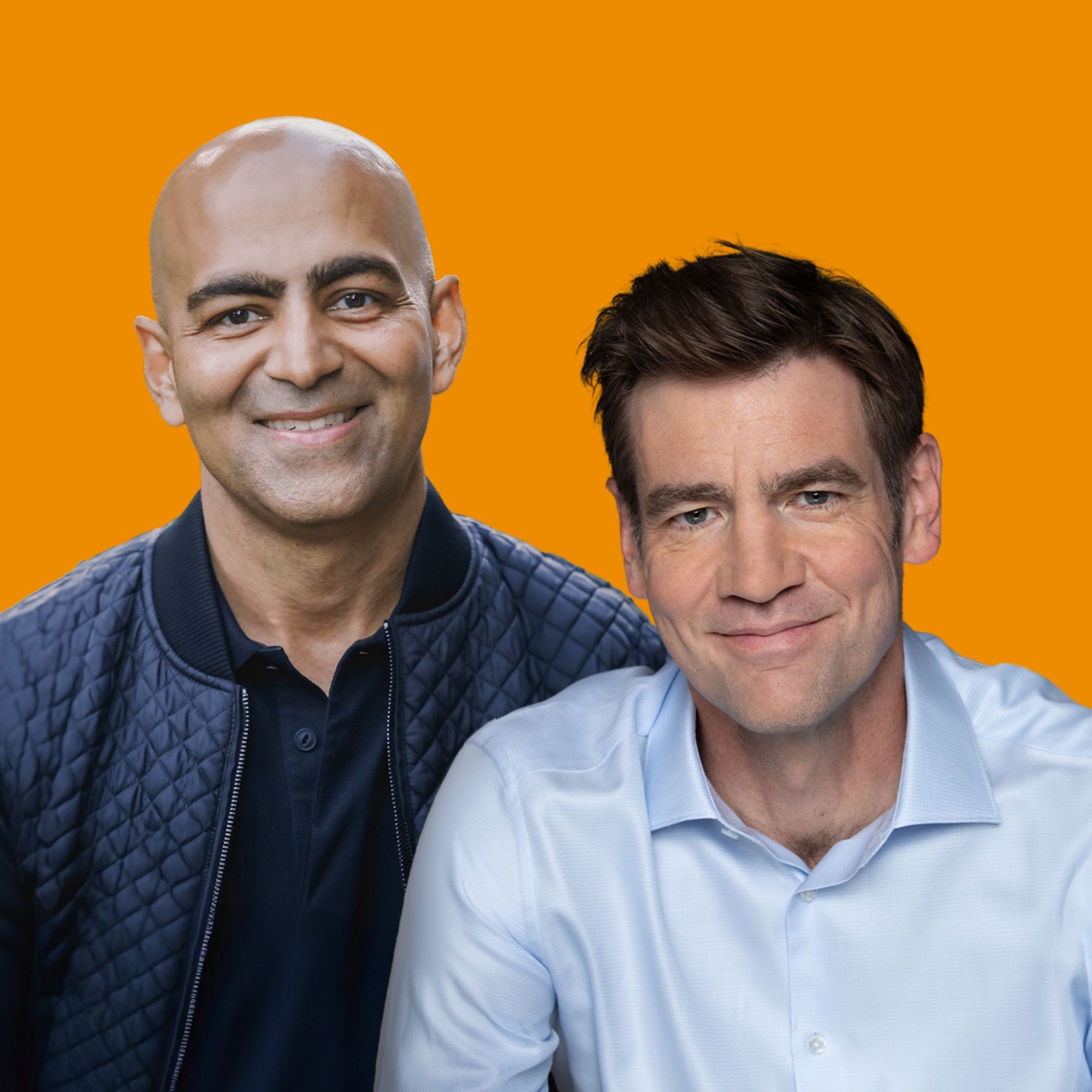
The a16z Show
Chris Dixon on How to Build Networks, Movements, and AI-Native Products
00:42:59
Why do some consumer products explode into networks that reshape the internet, while others fade away? Today on the podcast, a16z general partners Anish Acharya and Chris Dixon take on that question. Anish invests in AI-native consumer products and the next wave of consumer tech. Chris is best known for his work in Web3 and network economies, and he’s also led some of a16z’s biggest consumer bets. Together, they cover the history and power of consumer networks, the exponential forces that shape how they grow, and what it all means for founders building in the age of AI.
Loading summary
Transcript52 lines
- [00:01]
Aneesh Acharya
Whether you're an investor or entrepreneur, the most important thing to start with is to look for these forces. To look for these exponential forces. You can do all sorts of tactical product things, everything else, but these forces are going to overwhelm you for better or worse.
- [00:14]
Chris Dixon
How intentional do you think you have to be as a founder about building like you're building a tool? Do you have to be sort of thinking about the network a priority, or can the network sort of emerge? Because in AI so far we've seen a lot of tools and not a lot of networks. What's your instinct?
- [00:30]
Podcast Host
Why do some consumer products suddenly explod explode into networks that reshape the Internet while others fade away? Today on the podcast A16Z General Partners Aneesh Acharya and Chris Dixon take on that question. Aneesh invests in AI, native consumer products and the next wave of consumer tech. Chris is best known for his work in Web3 and network economies. And he's also led some of A16Z's biggest consumer bets. They cover the history and power of consumer networks, the forces that shape how they grow, and what all of this means for founders building in the age of AI. Let's get into it.
- [01:02]
Chris Dixon
Welcome to the a16z consumer pod. I'm super excited and honored to have my partner, Chris Dixon here today. You know, Chris, you're probably best known for your work in Web3 and network economies recently. But what folks may not know is that you led a lot of the most important consumer investments at Andreessen, Horowitz and Prior. You also founded two consumer companies. I thought a fun place to start would be networks. That feels like the first place you really cut your teeth. So maybe talk about your investments in Stack, Overflow, Pinterest, Instagram, and how you generally think about consumer networks.
- [01:32]
Aneesh Acharya
So many of the most important Internet services are networks, right? Going back to the early Internet, email and the World Wide Web, which are still, of course around and really important, are networks, right? And they're networks in the sense that the service gets more valuable as more people use the network, Right? If you were the only one on email, it wouldn't be particularly valuable during the, you know, the kind of the rise of the Internet in the 90s and 2000s. That's when you had things like YouTube and Facebook and later on Instagram and a whole bunch of other really important networks. You know, if you're an entrepreneur or an investor during that period, they tend to be very valuable companies. They're very hard to build. And we can talk about that later there's different kind of tactics and strategies for doing that. And so yeah, my background, I started two companies. The first was a consumer security company and the second was a consumer AI company and then was a personal investor. I co founded a seed fun called Founder Collective which was an investor in things like Uber and Venmo and Stack Overflows you mentioned and just sort of revolved in a bunch of these networks as the Internet evolved. I think to really talk about networks though, it's important to kind of step back. And the way I think about the kind of fundamental to me a foundational question in tech is, you know, why in tech do you have these companies come out of nowhere and end up being very impactful, having hundreds of millions or billions of users being very valuable in a way that you typically don't see that in other industries, right? What's fundamentally different about tech? And I think the answer is that in tech you have some very strong kind of exponential super linear forces. So the most famous example of that is Moore's Law, right? So Moore's Law is the idea that sort of every roughly two years or 18 months, the performance of semiconductors doubles. It's a rough approximation, but it's basically been true. You've seen this compounding improvement in processor performance. I think there's also kind of a broader Moore's Law which is storage, networking, like all the kind of computing resources just gotten much better. Which is why you have things like mobile phones, right? So if you go back and look pre iPhone, mobile phones were pretty junky and limited in capability and didn't have touchscreens and had poor performance. And what you know, Steve Jobs and Apple's great insight was, was that actually, by the way, the first iPhone also I think it was one of the people that bought on the first day. It also was quite limited. But part of their brilliance was they saw this curve, right? They saw this exponential curve and they rode that curve. So Moore's Law is a very important exponential curve. But the other kind of, I'd say there's two other really important exponential curves in software. One is what I call composability. Composability is really, I think, what's accounted for the rise of open source software. You know, why did Linux go from a hobby project in the 90s to the dominant operating system in the world today? The answer, a lot of it is composability. Composability means the software is open source, anyone can contribute to it, and you can very importantly, sort of harness the collective Intelligence of the Internet, as opposed to locking up, you know, only relying on your employees. Right. Anyone in the world can, you know the famous phrase all bugs are shallow with enough eyeballs. And really importantly, with open source, software becomes like Lego bricks where anyone can take a piece and reuse it. And so you get this kind of compounding, exponential kind of improvement growth. And then the third really important exponential force in tech is network effects, as we were talking about, which is why networks are so important. Right. So they start off often quite limited. Facebook was just at Harvard, and it was essentially a real time kind of yearbook or whatever for students at one school. And of course, you know, then kind of hopped by lily pads to other schools and high schools and eventually to kind of global domination that we have today. And so they saw, you know, Mark Zuckerberg and the team saw this power of network effects and kind of rode those network effects. And so that's kind of why, I mean, Clay Christensen calls this disruptive technologies. It's this kind of puzzle in a way, of why in tech you have these very strong incumbents who seem to miss, you know, And I think you could tell the story today about maybe intel and Nvidia or something like intel.
- [05:16]
Chris Dixon
Or even ChatGPT and Google. You know, I was just reading.
- [05:18]
Aneesh Acharya
That's a great example. Yes. Is that neural networks 10 years ago were kind of toys, right? Yes. And I mean, they were cool and I think a bunch of people saw the potential of them, but the reality is it just didn't work that well. Right. I mean, I remember there was a chatbot kind of VC thing in, I want to say, like 2016 or something. I don't know if you remember that. Maybe you were.
- [05:37]
Chris Dixon
Yeah, the chatbot. Chatbots had a moment back then.
- [05:40]
Aneesh Acharya
Yeah, they had a moment. But, you know, the reality is it just. They weren't that good. Right. Yeah, they just couldn't do the job. But of course, they got much better. And the genius of OpenAI and other pioneers in the space was to make that bet. Right?
- [05:51]
Chris Dixon
That's right.
- [05:52]
Aneesh Acharya
And then Google today is in kind of an awkward position, right, because they have this huge incumbent business that depends on the sponsored links, and they're trying to layer in AI and do things like that. But it, you know, in some ways it. It didn't come out of nowhere, but it grew, I think, faster than even some of the optimists predicted improved faster. And so. So the big takeaway here is, I think whether you're an investor or entrepreneur, the most important thing to start with is to look for these forces, to look for these exponential forces. And one of the lessons I learned in my career was you can do all sorts of tactical product things, everything else, but these forces are going to overwhelm you, for better or worse. And that the first thing to understand is that kind of landscape of these forces and how they're moving and how you can hopefully be on the right side of them.
- [06:37]
Chris Dixon
Chris, how intentional do you think you have to be as a founder about building like you're building a tool? Do you have to be sort of thinking about the network a priority, or can the network sort of emerge? Because in AI so far, we've seen a lot of tools and not a lot of networks. And then, of course, in hindsight, everybody was designing a network from day zero. What's your instinct?
- [06:55]
Aneesh Acharya
That's a great question. So, like, I wrote a blog post years ago called Come for the tools, Stay for the network. And the idea was, what I observed is sort of a tactical pattern among entrepreneurs. I cited Instagram as an example. So young people won't remember this, but Instagram actually kind of initially its network, Instagram's network was not a big part of the product. It had a button where you could share on Instagram. But why would you do that? Because no one was on it. And so what you would do is, I think, two things. One is they had these cool filters, which at the time you had to pay for, and other services, and they gave them away for free. So kind of just effects or lenses or whatever you want to call them. And then secondly, they piggybacked off other networks so you'd share to Twitter. And then I think a year or two later, Twitter blocked them. And there's a whole kind of thing. You see that today, maybe with Substack. Substack starts off right, piggybacking on the email network, on Twitter. My I'm not the firm's investor. I'm not personally involved. My sense is they're now getting traction with their own network. You go to the Substack app, right? And so I think it's kind of a similar tactic. I think you can see some of this kind of come for the tool, stay for the network. And I'll defer to you on this because I'm not as up to date. But like modern productivity tools, maybe like Figma and Notion, things like this, where they're useful, single player, right? You can just go to Notion. And it's a really nice way to edit a document or Figma to kind of do Design. But also there are social features that I think become essential. These things are all degrees, right? Google Docs, I love Google Docs. I use it, I use the social features. The reality is, is it really a network? Like, I could probably switch and then just share links with somebody else. But the social features layer on other some products like Instagram, it becomes essential, right? Like, it's just you simply can't leave Instagram if you have a following and you want to keep that following. So it kind of varies by use case. But by the way, I think you see some of this now in Stripe, doing the link product, which is a payment app, I think Shopify and the Shop product, right. I think those are really nice user experiences. You know, I don't have to type in my credit card again. Now there's kind of a network, right? Shopify originally was just kind of a tool for sellers merchant to get online.
- [08:49]
Chris Dixon
That's right.
- [08:50]
Aneesh Acharya
So I think it's a really powerful tactic, right, because network effects cut both ways. Because network effects are great when you have them, but they're really hard at the beginning. No one wants to be on a dating site with two people, right? I mean, or something, right? And so like, how do you make these things useful from day one? But then the problem with single player, right, is it's just hard to defend them. Right. I think you're seeing this in AI now today, you know, much better. But you're seeing a lot of like really cool tools because it's an amazing technology. But then it's like, okay, you can change your face, app or whatever, but then how does it sort of move beyond faddishness, right? How does it move to something that really engages people over a long period of time? And often the answer in consumer products is networks. And so then you have to layer in a network. The challenge is, of course, you don't want to just layer it in for the sake of it. You need to actually be useful. So, yeah, I'd love to hear from you. What are you seeing in that area?
- [09:33]
Chris Dixon
Yeah, you know, well, it's actually interesting because it feels like the big networks have become hypersensitized to this idea of new networks emerging that were bootstrapped on their networks. So I think Twitter of 10 years ago would have, you know, been a lot more asleep at the wheel to the threat of a substack. And they were pretty aware of this potentially happening. And of course, Facebook has deep platformed a ton of companies that they thought were going to do this. And Insta and others so one, I think the networks are more sensitive and then on the tool side actually because the tools have been specializing in their own directions and part of it is sort of product features, but part of it even for some of the multimodal tools is aesthetics. You know, midjourney just has a different aesthetic than Ideogram. So they can both coexist and they're not directly competing. So even though the tools are seemingly substitutes, so far we haven't seen that trade off and they're all working. Maybe that's just where we are in the product cycle. But I do think it's sort of a topic for a lot of AI founders which is there's not an obvious network to build around a lot of these tools. And how much of that should be sort of pre designed versus let's just keep pushing the edge and the network.
- [10:34]
Aneesh Acharya
Will emerge and also the it will show up in two ways. Right. Like one would be in the usage. Like you might see some of these tools not get used as much. But the other is in pricing, right? Yeah. Even if you carve out a niche, how much more people willing to pay for that niche versus those competitors. Right. So yes, yeah.
- [10:53]
Chris Dixon
And actually prices have been going up interestingly. Like Google's top SKU is 250amonth, Grox is 300amonth. I don't think we've ever seen a time where consumers were paying those kinds of prices. I mean one of our, our sort of extreme views here is that the future of consumer disposable income will be like food, rent, software and then software is going to subsume a lot of the other areas of discretionary spend today.
- [11:14]
Aneesh Acharya
It's also possible, I've always suspected in tech in Silicon Valley kind of we underestimate the power of just kind of brands and consumer inertia. And I think you're sort of seeing that today with chatgpt of just like such a household name like overnight almost that even though it doesn't have in this sort of technical sense maybe network effects, I mean memory and things, but I mean it's not, that's more stickiness network effects, but just the brand effects are so powerful. Right. And you become kind of known and the cursor is known as the best vibe coding platform or whatever.
- [11:44]
Chris Dixon
That's right, yeah. She was going to ask you about that, Chris. You know, of course network effect is a gold standard for defensibility. You know, you've maybe talked a little bit about how brand is underappreciated. You just mentioned it. Do you think being a high NPS DAU product, is that enough of a moat or do you think that like we really have to push for building around these compounding forces?
- [12:03]
Aneesh Acharya
Yeah, it's a really interesting question. I mean one argument would be the Internet. I think there's a decent argument. I was actually having this argument at one of our partner off sites. Not argument, but discussion is that maybe a lot of the network effect has been externalized to the Internet, right? And so the idea being, you know, you're a cursor and then suddenly you know, it becomes popular or mid journey let's say, right? And then you get all these mid journey influencers, YouTube videos, websites, how to guides and so you still in some sense have a network effect, but it's just not a network effect that's in the product itself. It's sort of externalized to the Internet, right? And maybe that's a difference now. Like the era I'm discussing was the era when the Internet was being built. In some ways the Internet is built now. I mean, I'm sure it'll hopefully improve and change. But it's built, right? I mean it's built and it's 5 billion users. And maybe the rules are different now. And maybe now that effect of getting sort of all of those different, the adjacent networks around you gives you in a sense a network effect. You try show up top and search chat, GPT recommends you, you know, the algorithms feature you like, you know, and there's of course there's a soft sense of like a brand, people have heard of you. But it's also this whole giant kind of system, right, with all of these different interconnecting networks might strongly favor those products. And then it becomes sort of a timing thing, right? You get in early, the timing seems quite important, like getting in, being the first to kind of own the, own the meme in the category and get that effect going and then maintaining it through product velocity and high quality and everything else which is non trivial is very hard to do I think particularly in AI, you tell me. But to always stay on the cutting edge, it's expensive, a lot of capital, that's another thing. By the way, the capital effects in AI you do well, you raise the most money, you know, I assume the people raising a billion have already proven a bunch of things and at some point the capital becomes a moat, right?
- [13:55]
Chris Dixon
100%. Yeah. No, it's very interesting because there's this barbelling that's happening even in software where the bigs are getting bigger. But we're also seeing the sort of like single person, 100 million run rate company is coming, or maybe it's already here. But certainly the bigs are getting bigger and capital is a part of that.
- [14:10]
Aneesh Acharya
And maybe, maybe the market's just so big that the answer is both, all of the above. It may just be that as you said, it becomes like food and rent and it's just software is moving beyond kind of the quote unquote software budget.
- [14:22]
Chris Dixon
It really hasn't been zero sum so far. It's been shocking. Like prices are going up and everything feels like it's working. So maybe we'll look back and say that was a sign. But, but so far so good. You know, Chris, I thought actually since you mentioned vibe coding, it would be fun to talk about movements. You know, it feels like you've been early to a bunch of movements. Products like Co, of course, and MakerBot, those felt like niche communities on the Internet when you started paying attention to them. How do you think about investing in movements and how do you think about building around them when there's sort of questions around, is this a toy? Is this something sort of structural? Is it durable, ephemeral, maybe? Talk a bit about that.
- [14:56]
Aneesh Acharya
Yeah, yeah. I mean, it's a little bit to the point. We were talking about, about the networks becoming externalized. I used to spend a lot of time, I don't know, 10 to 15 years ago, just like on subreddits in kind of niche communities. Partly because I'm interested in that stuff and partly because I think they're very powerful. Right. If you look at Wikipedia, stack overflow, like a lot of these kind of interesting kind of movements like community sites, like they're often like 20,000 people. Like they aren't that many. They aren't the millions that you might think there's millions maybe doing a little bit here and there. But I just think a lot of, you know, and if you look at open source software and crypto projects, like it's just a lot of things that, that, that have been kind of, you know, popular movements that grew were really led by a relatively small, I mean, I'm saying on the Internet scale, relatively small, sort of hardcore enthusiasts who are really smart, often technical. And so, you know, and it's sort of this, you know, famous old quote, I think, Williams, Gibson, that the future's already here. It's just not evenly distributed. Like I've, I've always believed that. I think if you just go back historically that's, that's the case that like you know, we're talking about neural networks. Like that's been going for. Since 1943 or something. And there's been, you know, communities of people, including like the people, a lot of the people that lead the labs today who, you know, 15 years ago were seen as kind of niche, more niche or something. You know, they weren't. Neural networks weren't the dominant, you know, approach. And so, you know, with that thesis sort of you want to sort of find the next thing, then the next big thing. Like one way to do it is to look around and see where these kind of, you know, I would describe it as sort of hyper enthusiastic, sometimes cultish. You know, they have their own language, their own norms, you know, kind of a sense of insider outsiders. And so I got into that kind of a while ago and that's how I got into originally, like into Bitcoin, you know, is I just followed those people and I found it was one of those things where it sounded kind of silly at first and then as you learn more about it seemed a lot more interesting. Like that's always an interesting feature, right? There's some things you learn more about and they aren't, they aren't that interesting. Some things, you know, they are kind of silly. You know, the moon, the. The conspiracy theories that the earth is flat or something. Like I went one day hour looking at that stuff and it's like this stuff is just crazy or something or I don't know, the mainland conspiracies or whatever. Whereas, you know, you dig into this stuff and you don't have to agree with everything. But there's smart people and it's very interesting. So, you know, for like, for me it was like 3D printing. Like this led to my investment in Oculus and Coinbase. Really we're both from that, you know, from that thesis sort of VR seeing the developers and the kind of, you know, Kickstarter community enthusiasm around, you know, when Palmer Palmer Lucky was first creating that the it also, you know, I got into kind of nootropics and that led to an investment in things like Soylent and got into back then it was like this is like when I joined the firm 2013, like drones. We did a few investments around that and you know, just sort of looking at these interesting kind of hobby and the hobby communities. I mean there's a bunch of reasons why is. I think it's interesting way to look at it is one is those are the people that create these things. I mean, if you have 20,000 hard, you know, Interesting technologists, they often build things. Right. And so they're going to build some interesting products. It's also like a great kind of marketing engine. Right. They're out there. They often have sort of outsized influence on the Internet. They have followings, you know, they, they help kind of get the energy and energy going and build things and kind of market them. It's not like it's not foolproof. And you have. It's hard because a lot of these things just end up kind of being niche or don't have. I think it's going back to the exponential forces. Like you take Nootropics, like that's still a thing that's around, but I don't think it's, you know, it hasn't created a big tech company as far as I know. But I think it's partly because it's just got linear forces, not exponential forces behind it. Right. There's only. There's not sort of some engine exponentially driving it to have better and better products maybe.
- [18:47]
Chris Dixon
Actually, though, you. If you look at a company like Function Health, you know, Function Health is sort of the catalyst for this huge movement, consumer movement around health and quantified self and, and Nootropics was a bit of the predecessor to that. So in a sense there is this sort of slow exponential maybe and then very rapid uptake. And I think timing is a really interesting question here because with these movements, you don't know if they're going to play out over a hundred years or 100 days sometimes.
- [19:12]
Aneesh Acharya
Yeah. So I don't know that you know much more about. I've a little bit about Function Health, but that's interesting. Yeah. And you're right, it could just be that like 3D printing is a good example where, you know, it's still around. It didn't kind of get as big as people had hoped. You know, I had an investment in MakerBot back in, back then, which got. Was a kind of a leader and got acquired. And, you know, it's still a hobbyist thing. It's interesting. I think the limiting thing is in the physical world there isn't kind of a Moore's Law driving it. That said, I expect that over, you know, 50 years or something, it will become a more important thing. And you're right, you're right. It could just be a timing thing.
- [19:48]
Chris Dixon
Yeah, yeah. The vibe coding thing, to come back to that, that feels like this sort of irreversible consumer phenomenon where everybody is maybe not quite programming, but creating software in a way that they weren't 10 years ago. How do you think of that as a sort of decentralizing force? You've talked about the economics of software versus the means of production. The means of production are sort of getting decentralized through these new tools like Repl. Dot and others. Cursor. Is that sufficient to lead to a renaissance in the open web or what do you think are the second order implications of everybody programming?
- [20:22]
Aneesh Acharya
Yeah, it's a great question. I mean the thing with the Internet and the consolidation, I mean the Internet has become increasingly consolidated. If you just look at, and you know I wrote a book about blockchains and this was a kind of core theme in the beginning of the book was talking about sort of what happened with the Internet getting consolidated. Just if you look at metrics like the amount of money revenue generated, the, the traffic, right. I mean it's more and more, it's like 95% plus of that. Both those metrics are, you know, now in five to 10 companies hands, you can make an argument either way like with AI, you know, look, with AI, I mean we're already seeing this in the data. A lot of AI obviates the need to click through and go to a website, right? And so, and I think we just saw, I think we just report out that like a bunch of like travel sites and others were kind of seeing some alarming drops in SEO, which I think is kind of inevitable if you know, look, I mean it's a mixed thing. Like on the one hand I'm a user of ChatGPT and it's amazing to just get an answer right, not have to go and like searching again after you, you know, and go through all these websites and like, and it's sort of this vicious cycle thing where like the websites lose traffic and they get more desperate and then they put a pop up ads and other things. And so it becomes even a worse experiment. This has been going on for like 10 years is this kind of, kind of negative flywheel I think that's been going on. So look, on the one hand it's great for consumers. You get an vibe coding and a lot of, you know, we were investors in Stack Overflow which you know, got acquired but I think their traffic has dropped a lot because of vibe coding. And you know, it's this thing where vibe coding, I think probably some of the training data came from stack overflow and GitHub in places. But then it becomes better and like, you know, like I use, I've used Cursor to do some fun projects it's an unbelievable tool. I think it's clearly good for the world, you know, that the, it is, you know, bad for those websites. It's a great question. I think, you know, I hope what we're seeing is a renaissance of. It seems like we're seeing a paid software of, of sort of businesses that, you know, they don't need to dominate the Internet and be Facebook, but they can get to hundreds of millions in revenue. I mean, I think we're seeing this, right?
- [22:33]
Chris Dixon
Yeah.
- [22:34]
Aneesh Acharya
And so I think from an entrepreneur's perspective, it's a very, very exciting time. I think we can see a lot of great products. I think it's a great time for consumers. You're, you know, you're. Maybe that will change over time. Maybe they'll need to layer in ads and the incentives will shift and do, you know, kind of things that are more adversarial towards consumers. I think right now I like the AI thing products and that they feel very aligned with users. Like they're really just genuinely trying to create great products and charge for them.
- [23:03]
Chris Dixon
Exactly, yeah, yeah. We sort of call it this like emergence of narrow startups where they charge high prices and deliver, you know, exceptional value. And maybe a controversial statement right now is that there are no marketing problems, only product problems because the technology allows you to be so ambitious on behalf of your customer and then the costs actually ironically lead to better business models because consumer founders need to think about monetizing early, otherwise they're just going to go out of business. So it does feel like there's a renaissance in paid software that's happening that makes it a more fun time to build than five years ago.
- [23:37]
Aneesh Acharya
Do you think that over time that will shift potentially because people will realize that maybe the kind of low hanging fruit is picked the higher paying consumers and to get the rest you need to layer in different business models, ad based business models and so forth.
- [23:52]
Chris Dixon
Or I don't know, I mean it feels like there's so many more consumer needs that are addressable and they're addressable in such a significant way by the technology that you can actually specialize and go very, very deep. Like there, you know, there's AI therapy generally, then there's AI therapy for people that have adhd and then there's people who have ADHD that are in a certain life stage that perhaps want to interact in a certain way. You can just go extraordinarily deep. So I don't know if it leads to consolidation over time or if you can continue to specialize and for a small number of people, be their prim. That actually might lead to a good topic around the idea Maze. You know, Chris, you've talked a bunch about platform shifts. You've invested around platform shifts. You've predicted them. One of the interesting things about this platform shift is that the properties of the platform are sort of emergent. They're not explicitly defined by Apple as iOS was. They're things that founders and even the people training the models are discovering. Does that sort of change your mental model around platform shift? And maybe how similar or dissimilar Is that to Web3?
- [24:52]
Aneesh Acharya
Yeah, I mean, so the idea maze concept, this originally came from our friend Balaji Srinivasan, and I wrote about it a while ago. The way I think about the idea is that is that there was this old debate of, like, with startups, are the ideas more important or the execution? Right. And sort of, I think with the idea maze, the way I think about it is it says they're both important in the sense that it matters which maze you enter. I'm entering the AI maze for, you know, health, healthcare, or I'm entering the AI maze for image generation or whatever. Like, clearly the idea. And you go in with an initial product idea, and clearly that matters. But it also matters that, you know, it's a maze, meaning it's dynamic. The world will shift, like, you can't predict it. So, you know, the canonical example in my mind is Netflix, right? Netflix started off, you know, mailing CDs, right? So the hypothesis is that movies will become, you know, the Internet has changed way people consume movies. People will subscribe to them, but today we need to send them by mail. And then over time, they pivoted to digital distribution, and then they pivoted to. And then they started getting pushback from the content providers, and they pivoted to original content. Right. So they really did two almost complete company pivots. But their core maze was right, Right. Their core maze was like the Internet will lead to subscription movies in some broad sense. Was correct. But then they were extremely agile with respect to the implementation of that. Right. And so I think, to me, that's, you know, that's the idea maze concept is you're sort of. You're entering a maze. As an investor and as a founder, you need to think, am I a person who wants to be in this maze for 10 years? Am I willing to be, you know, agile and often, you know, persevere through difficult periods? It's often emotionally challenging, I think, but not just intellectually. Challenging. And so that's kind of the life of a startup. Now when you think about AI, look, we have a very clear megatrend of these, you know, of AI being, you know, it's intelligence, it's a very broad and important technology. Obviously everyone, I think everyone knows that. And then secondly, you have these scaling laws which seem to be, you know, which seem to be quite powerful, right? It's. The models are getting much better. And then I think an important distinction there would be, there's specific scaling things like LLM, pre training or something, which I think people may have debates about. At what point do you have diminishing returns? Maybe we're hitting that, I don't know, defer to the experts. But then there's that sort of a process. But then there's the meta process. And the meta process is AI overall, right? There's people working on whatever, reinforcement, learning, and I'm sure 100 different techniques. Now, AI, the sort of meta process, which means, like, it's at this point really an economic phenomenon which is there's all of these smart people there, there's business models behind it, there's funding, right? There's not just one process, there's many processes being explored. Kind of reminding me of Moore's Law, like from the outside, Moore's Law, I think, like, naively, I'm not a semiconductor person, is like, wow, these semiconductors magically get better every two years. If you read books about, I've read a few books about it from their perspective. They run, you know, some fabrication technique hits a wall, they freak out, and then some brilliant person from another lab comes up with a new fabrication technique, right? And so it was always each process would run, you know, and have diminishing returns. Asymptote at some point, you know, but the meta process, the sort of the bigger industry flywheel did not, you know, led to this smooth growth. I think my sense is AI is in that kind of, you know, semiconductor like place where you have this meta process that's very likely to continue scaling exponentially for a very long time. And that creates a huge opportunity for entrepreneurs. It's also a challenge, right? I mean, the opportunity obviously is you can build things with a. The capabilities will grow, there'll be all these new opportunities and so forth. The challenge is, you know, are the incumbent models going to be sort of God models that subsume your use cases and how do you kind of play that? Right? And so, you know, I think what you're seeing, right, is that you see people say, well, I'M going to go so deep on a domain that that will be my edge. You know, I know everything about this specific domain and I, and I know that, you know, no matter, no matter what the, you know, incumbent models do, I'll always be able to have an edge in my product or I'll have such a good brand recognition or strong user base or reference selling or whatever it might be. Right. So I think that's the both kind of threat. And if you go back and with the semiconductor analogy I mentioned like, you know, the canonical case study in Clay Christensen's Innovators Dilemma book is you know, the hard, the PC industry, the hard drive makers, you know, and it was just very like kind of fruit fly Darwinian struggle where you just had like thousands of companies and very short life cycles for a lot of the companies. But, you know, but then a lot of very successful companies. So, you know, it's going to be, it may be a very kind of brutal process for entrepreneurs in the sense of just like a lot of competition, a lot of other smart people, you know, very dynamic idea maze, but also massive opportunity.
- [29:53]
Chris Dixon
How do you think, Chris, about native versus keymorphic technologies in that context? You know, everything is changing, especially when you're building for consumer. Does a consumer change their preferences when they get, you know, this magical new technologies invented or in a sense, does the emergence of the native technologies also dependent on sort of consumer preferences changing and being informed by these external forces about things like AI?
- [30:15]
Aneesh Acharya
Yeah, great question. So just maybe I'll define the terms. Right. So skeuomorphic. Native what? Skeuomorphic is a term Steve Jobs used to use with respect to design to talk about how he likes some design. Like the original book bookshelf app. Book app on the iPhone had like grainy, grainy stuff on the background design that kind of took. Or the trash can on the, on the, you know, on the desktop computer. Desktop sort of, you know. Right. It, it harkens back to a, to a different form factor. It's a common pattern in technology and media is when you have a new new platform or media form develop is that people start off kind of imitating prior media form. So early films, you know, were shot sort of like plays with a camera and a better distribution model. And then people kind of invented a native grammar film and you know, close ups and establishing shots and all those kinds of things. Early Internet, a lot of the 90s Internet looked like, you know, you take like a cat, a catalog, you know, commerce catalog and put it online or a brochure and Put it online. And it took 10 to 15 years before you had things like YouTube and you know, modern social networking and things that really just couldn't have existed prior to the Internet. You know, user generated. Anyone can upload a video and things. So I think some of it is, some of this is technology like YouTube you couldn't have had until you had really wide broadband penetration, right? So some of it's the underlying technology takes a while to kind of get there. YouTube also, you know, when it started off it was just like funny viral videos. A lot of it was copyright violations. It took a while to develop kind of native YouTubers, right. Content creators. So that's often just like a generational thing, I think, I think it literally is a new generation sometimes, right. People that just that, that don't look at the technology as a threat but as an opportunity. And, and so that, you know, that was a big part of it. And then part of it's the entrepreneurs just have to figure out the, it's the idea maze thing, right? They just have to figure it out. Like what do people want? Like a lot of people, there was a lot of debates around YouTube's time as do people want just take football and you know, take NFL and stream it to the web. There are a lot of companies doing that. Tastes aren't going to change. Why would people want to watch, you know, four people joke around or something, right. Maybe there were analogs like is that like talk radio or is that this. But it just, they really just didn't understand. So you know, I don't think human nature, I mean obviously there's a new generation with different ideas. I mean, I don't think think fundamentally humans changed, you know, in, in, in a deeper sense. But, but you know, it was understanding the capabilities of technology, the cultural shifts around it, the network effect around it. And so with it, you know, I, I personally think with AI, A really interesting question and I'm sure you've thought much more deeply about it than I have. It does. I mean most likely we're in a skeuomorphic phase right now.
- [32:57]
Chris Dixon
That's right.
- [32:58]
Aneesh Acharya
And, and what is the native phase going to look like? Like what is. I think it's going to be. And usually that for me at least personally, I like the native face better because it's kind of crazier and more interesting. And you know, so what would, you know, if you look at image generation, they're kind of just basically taking what illustrators do. But one thing I would mention is like a cool thing with Photography, I think, is that, you know, when it first came along, it seemed like a threat to representative painting. And you saw kind of art move to more abstract art to kind of get away from that. And I think, you know, you go back and read stuff at the time and there was a lot of kind of hand wringing around that, like, is this going to, you know, kind of cheapen this art form? But. But an interesting thing happened, right? Which is a new art form emerged, which is film, right? So you took, you took. It wasn't just you're copying. So in some sense, like photographs were the skeuomorphic kind of quote unquote, app of cameras. But film was a native one, right? You had a new art form. And I wonder about that with AI. Like right now you have the kind of image generation which is kind of, you know, taking what human might do and automating it and movie generation and the other kind of videos we see online. But is there a new medium, for example, that hasn't emerged yet? Is it, you know, maybe it's a virtual worlds or something? There's probably a bunch of hypotheses as to what it could be. But my experience has been. Is often surprising and it's hard to predict. But that's where a lot of the cool, creative, interesting stuff comes in. It may take another generation or, you know, five to 10 years for like a new set of AI native kind of kids to grow up.
- [34:32]
Chris Dixon
That's right. Yeah. It's actually really interesting because we're, in a sense, we're in the command line era of AI and there's some things that, you know, you can articulate well with words. But if I describe to you, like, what kind of music do you like? It's hard to say, you know, we don't have the language for it, most people to say, well, I like a certain sound with a certain sort of aesthetic. And it's moody, but not too moody, and it's 110 beats per minute. Like, most people lack the language to articulate the art that they love. So even the idea of prompt to media feels skeuomorphic. And there's gotta be like a more native way to explore it. I don't know what that looks like yet, but I'd be surprised if it's prompt in the long term.
- [35:09]
Aneesh Acharya
Prompt, like, I guess people are now calling it context engineering, not prompt engineering, which I think is a nice. Or some people are right, which is, I think is a nice rephrasing, because that is kind of what you're doing, right? You're taking the fact that all of this stuff I do in the real world that ChatGPT isn't able to see. Right. And I'm trying to summarize all that knowledge that's. That's hidden to it, the context, and put it in there. All right. And that does feel like something that should be automated, right? Yeah, Machines. And I think that's what people, I assume that's what they're doing with these potentially new ambient devices people are creating.
- [35:41]
Chris Dixon
Yeah. I mean, even in the media case, you know, like my Spotify library is probably much more useful for generating music that I like versus my articulation of it.
- [35:50]
Aneesh Acharya
That's right. I think we're in a different era now. Like, I think the AI, I kind of have come to believe that we're sort of in a different epic or epoch. Like in the sense that the Internet is built, like we were saying earlier, the Internet's built and this is just a different. And maybe like, you know, some of these. That's why I was saying earlier, like some of these things like network effects, maybe they're less important now because it's in the network itself, it's externalized. And maybe that some of these kind of dogmas that people like I have, you know, as entrepreneurs or investors have believed for 20 years are changing actually, and different. And so in that sense, yeah, I think in that sense, experience can be a hindrance.
- [36:27]
Chris Dixon
You'd mentioned in another pod that, you know, if you had one, one sort of issue to get passionate about in the world of AI was open source and open source AI. Do you, do you want to speak to that for a moment?
- [36:36]
Aneesh Acharya
Well, we were talking earlier about the democratization of the web or how kind of consolidated the Internet is or technology is. You know, I think I would argue, and I think a lot of people would argue that open source software has been an incredibly important force for democratizing technology. Right. I mean, the reason that you can get a Android phone for $10 and get on the Internet so cheaply. Right. Is you're. Is that basically all the software is free. I mean, imagine if there was an open source and, you know, operating system providers used to charge $100 and you'd be paying that on client and maybe on the back end and there's a whole other set of stack of software that you'd be paying for, and instead you're not. Most Internet users are, you know, the vast majority of the kind of bits being hit are open source. It also is what makes, you know, startups Exist, Right. We can fund startups and they can spend hundreds of thousands of dollars and you know, or even less sometimes and be up and running with, you know, really competitive, great software. And that's because of open source. Right. So we, you know, I think about a lot and I think, you know, on a policy side as a firm we've been at big advocates for, you know, making sure open source is around and competitive. And you know, first that means not banning it, which there are bills out there, particularly at the state level that want to put in, you know, not expansion, not explicit bans, but de facto ban. So like for example, California had a bill that, that would have, would have created unlimited downstream liability for software developers which would have effectively killed open source. So that's step number one. And then I think step number two is, you know, are the incentives there to create open source. I think I watched a interview, I think it was a dorkish interview with Satya from Microsoft recently who it was really good interview. He argued that open source will always exist because enterprise customers always demand at least one kind of open source alternative. Like they'll just, they'll, they'll end up funding it. Okay. And that's why you always see kind of this proprietary open source, you know, combo. But then you have, you know, Facebook is doing with Llama. I don't know if they'll continue to do that. There are some startups doing it. You know, China has been very into open source. Maybe that's a kind of a national strategy. Maybe that changes it some. Maybe you do it at first to kind of create attention and kind of marketing and then you change it. You know, I wish there were more. You know, it's just the thing with AI that's different than operating systems. Like with operating systems and databases, you just needed a bunch of coders sitting around. With AI, you need massive capital expenditure to train the models. So I just don't know long. I think it's an unknown question long term, are there good steady state funding models for open source? I think a possible outcome, which I think is pretty good outcome is open source is just always a little bit behind. Like the way OpenAI is now releasing older models.
- [39:21]
Chris Dixon
Yeah, yeah.
- [39:22]
Aneesh Acharya
And I think that's probably a fine outcome like for startups to exist for consumer, you know, we want consumers to get inexpensive healthcare advice. You know, the next best model in five years will probably be good enough. For most startups it will probably be good enough. And then for the, you know, super high end stuff, you people pay for it. And maybe that's a good outcome, good kind of equilibrium state, and maybe that's where we're headed. I hope so. I think it would just be a bad outcome if you had four companies that had just vastly better closed source technology and could effectively kind of charge rent to consumers and startups.
- [40:00]
Chris Dixon
Yeah, yeah, I agree. It's interesting, I think a lot about the early ethos of Android, which felt like it matched Google's sort of open web mindset. And then when it became clear that iOS was beating their pants off by being a closed ecosystem, Android became very closed and started to mimic the sort of closed iOS strategies. So we'll see what happens with Meta and Llama if they sort of replicate that. But that's a worrying dynamic. I think that the more optimistic case is that we haven't yet seen the same sort of app platform feedback loop and the lock in that you get from the foundation models. So there is sort of a case for them to continue to release the next best model and for the models to be somewhat substitutes for each other.
- [40:42]
Aneesh Acharya
So far, yeah, the Android case is a good kind of, I think, cautionary tale. Right. Because I think maybe in some technical sense some of the code is open source, but it de facto isn't. Right. All the services, everything else, like unique information and it was one where. Yeah. Where they kind of made lots of overtures that way. So that would be. Yeah, that would be the worry. But it does seem, I think it feels a lot better than it did three years ago or something with the China. The China open source stuff, the policy stuff is better. We're seeing, you know, the fact that OpenAI is doing older models, like, it seems like we're in a better spot for open source. I think some of that's also the scaremongering that like a chat bot's gonna murder everyone or something is like. I mean, that's like literally zero people have died from chatgpt so far as far as, you know. It's just the whole, you know, So I think that maybe people are chilling out on and. Yeah, so it feels like we're in a much better spot. I'm cautiously optimistic on open source.
- [41:34]
Chris Dixon
Yeah. Two years ago the conversation was a lot about, you know, if OpenAI is the only game in town. Over time they take all the economics of the compliments and it doesn't feel like that's happened, which is, you know, to your point in the amazing book about ballooning. It feels like that's why there's a lot of interest in acquiring IDs because they understand that like if the foundation models start to become more interchangeable, they're going to have to move upstream and own, you know, user facing economics. Amazing. Well Chris, thank you so much. It's great to hear you talk about sort of consumer and AI and all the implications and we're super thankful to have you at the firm.
- [42:08]
Aneesh Acharya
Well, thank you, thank you. This was fun. Foreign.
- [42:14]
Podcast Host
Thanks for listening to the A16Z podcast. If you enjoyed the episode, let us know by leaving a review@ratethispodcast.com a16z we've got more great conversations coming your way. See you next time. As a reminder, the content here is for informational purposes only, should not be taken as legal, business, tax or investment advice, or be used to evaluate any investment or security security, and is not directed at any investors or potential investors in any A16Z fund. Please note that A16Z and its affiliates may also maintain investments in the companies discussed in this podcast. For more details, including a link to our investments, please see a16z.com disclosures.