Loading summary
Transcript95 lines
- [00:01]
Philip Buckendorf
We have a software crisis.
- [00:02]
Lieutenant General Leonard J. Kaczynski
There's just no time to wait. If you don't have that sense of urgency, we're not going to accomplish what we need to do.
- [00:08]
Philip Buckendorf
You can build the most advanced equipment, you can produce it at the largest scale possible. But if you can't get it where it's needed, when it's needed, it doesn't exist.
- [00:17]
Lieutenant General Leonard J. Kaczynski
There's always been collective defense, but not necessarily collective logistics. Any one nation can't do it alone.
- [00:23]
Philip Buckendorf
Whatever we're modernizing now, this is not going to be the last update. Software is never complete. Software is moving incredibly fast.
- [00:29]
Lieutenant General Leonard J. Kaczynski
The best type of war you fight is one that you don't have to fight at all.
- [00:33]
Podcast Narrator
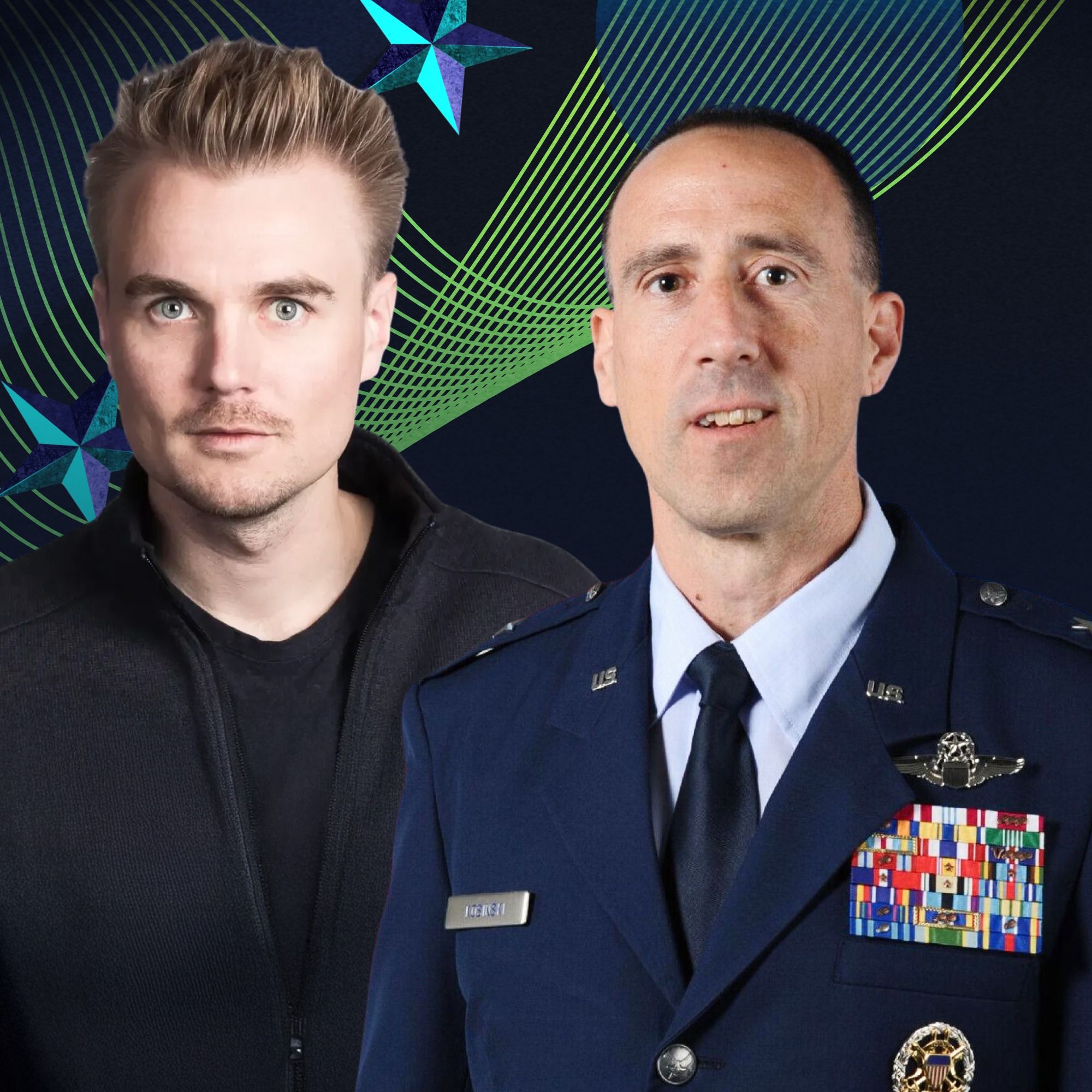
The largest companies in the world today are software companies. And many of these companies have become household names for developing fun software. Software that powers the games we play, the apps we scroll. Software that helps run our lives and manage our work. But the world also needs serious software. The kind of software that runs the autonomous vehicles in San Francisco, the software that ensures planes take off and land safely. The software that ensures critical supplies make it to our shores and equally, the front lines of our military, even in contested environments. The challenge? Across the commercial sector and the public sector, much of this serious software is built on legacy technology. And with the world moving at the speed of software, our infrastructure gets more brittle with each passing year. When it breaks, it causes inconveniences at best and tragedies at worst. But here is the good news. Software continues to eat the world. And the brightest minds are increasingly interested in solving these serious problems. So in today's episode, recorded live at our American Dynamism Summit in the heart of Washington, D.C. we sit down with Philip Buckendorf and recently retired Lieutenant General Leonard J. Kaczynski. Philip is the co founder and CEO of Airspace Intelligence, a company working to address the software crisis across some of the country's most critical public and private sector institutions, from air traffic to defense. Lt. Gen. Kaczynski is ASI's chief strategy officer and the former Director of Logistics for the Joint Staff. Spending over three decades of leadership in air mobility and logistics, seeing firsthand what consequences we face if logistics are overlooked.
- [02:17]
Lieutenant General Leonard J. Kaczynski
It's just like oxygen. It's fine up until you don't have it, and then it becomes a concern.
- [02:22]
Podcast Narrator
Together with our very own Leila Hay, A16Z's go to market partner focused on American dynamism, the group explores the challenge of hardening America's logistical network, but also how the public and private sectors can join forces via dual use software and the modernization and risk posture that we need from governing agencies. So what's at stake if we don't get this right? Listen in to find out. As a reminder, the content here is for informational purposes only, should not be taken as legal, business, tax or investment advice, or be used to evaluate any investment or security, and is not directed at any investors or potential investors in any A16Z fund. Please note that A16Z and its affiliates may also maintain investments in the companies discussed in this podcast. For more details, including a link to our investments, please see a16c.com disclosures.
- [03:18]
Leila Hay
Philip I'd love to start things off with your story on your ASI company page and I quote it says 12 years ago you were frustrated by Germany's stagnant approach to national security and its economic degrowth mindset. Tell us about that moment in your life and why you came to America.
- [03:34]
Philip Buckendorf
Grew up in Germany, spent some time in the UK and then pretty much after college. So this is about 2011, 2012. Learned to basically figure out like, hey, what am I going to do? In my 20s I knew I want to be in a fast paced, demanding environment. But what I found in Europe was most of my friends just wanted to party. Germany just decided to pull out a nuclear energy to become fully dependent on cheap Russian gas. And then the top 5% in my friends and social network glorified consulting to go into consulting. At the same time, the government made it as hard as possible to build anything from starting a company to venture capital. At the same time. While all that kind of happened and while I observed that and internalized it, I heard about Silicon Valley and I was like, that sounds like an interesting place. It sounds like everyone is just obsessed with building and technology. And so a friend of mine and I, we basically traveled to Palo Alto, stayed in a hacker house. For the first three years I slept on bunk beds and ate frozen food from Trader Joe's. But it was the most exciting environment to be in. Everyone was building in that hacker house. Everyone was thinking startups and technology and fast forward. I now probably spend nearly as much time or even more time in the US than I did in Germany. Our second daughter was just born here in DC last week. In many ways I lived the American dream. Everything that I did, everything that I learned, none of this could have been built, I would say somewhere else. It was the ecosystem, the ethos, the energy, the people that enabled that. And I'm very, very grateful, but also determined that that was very much the right decision on where to go.
- [05:17]
Leila Hay
I love that you actually started your career in the world of autonomy and autonomous vehicles. Can you talk about your career journey there and what brought you to asi?
- [05:25]
Philip Buckendorf
Yeah, I mean, when kd Lucas and I started asi, I would say we were kind of the ultimate outsiders. We weren't pilots, we were not in defense before, we were not logisticians, we worked on autonomous driving. And so this is around 2017, 2018. Autonomous driving was very popular, very hard. And while many liked that, we didn't felt overly crowded. And we started this company with a simple question, which is what are other modes of transportation that require better software? And the first six months of asi, we went to operation centers and wanted to understand like what's the state of software, what's the state of technology, no matter if that is in maritime or in air operation centers. And I would say to some extent we expected or hoped to see science fiction. What we saw was like the most ancient software possible. And that very much made it very, very obvious to start this company with a mission to enable the kind of world's most critical operations and optimize the most valuable assets and infrastructure that we have as a country. And that's how we got started.
- [06:26]
Leila Hay
Fascinating. Leo, I'd love to hear about you. I know that recently in the joint chief serving as the Director of logistics, three star general, you just retired. What brought you to ASI?
- [06:38]
Lieutenant General Leonard J. Kaczynski
Yeah, so spent over 30 years my career in the military, starting with air mobility operations and then last seven years really logistics. So after I retired, I got the advice to kind of give yourself about six months to figure out what's next after doing something for that long. Although I knew what I was passionate about, national security, logistics optimization type things, and had a chance over that six months to meet different companies, see different technologies and see a lot of things going on there. But when I met Philip and the team at asi, something unique and something I guess compelling to me. One was, well, distribution platforms and planes and ships are all quite important. It really comes down to the data, to be able to access that data, to be able to optimize and figure out what we need to do. That was something I'd say struggled with in the Department of Defense. To be able to just access and then to be able to understand and be able to, to really optimize the things we need to do now in the future. So the combination of that piece being exciting, startup being exciting, not just support the military, but also the whole commercial sector, which is hugely important for both Absolutely.
- [07:38]
Leila Hay
And can you tell us a little bit more about your career prior to asi?
- [07:41]
Lieutenant General Leonard J. Kaczynski
Sure. That started off, actually was initially going to be an engineer, went to graduate school for industrial engineering optimization type things, neural network specifically 30 plus years ago, before we really had processing power to do that. Then quickly went into pilot training and then flew mobility planes for many years. But last really seven years or eight years ago, my first real foray into like really broader logistics, I was a director of logistics for US Africa Command out of Stuttgart, Germany. And that was also during the pandemic, but just working with Department of Defense logistics and infrastructure, trying to move around Africa, just the size and scope and then you add on the pandemic and then went to Japan for command assignment, then came back to the Joint Staff as a director for logistics with Ukraine going on support for Israel, everything else, and just realizing challenges with our defense industrial base, challenges with what we have. And really one of the main efforts there was really that data software piece, which we just weren't very good at trying hard, but had a lot of catching up to do in the Department of Defense.
- [08:41]
Leila Hay
Makes a lot of sense. So you've been all over the world and we're just seeing these common core challenges across everywhere you were. A lot of it is around data and software. Well, I'd love to kick off and first talk about the air domain. So obviously ASI got its start in the aviation space. It's an area where we've seen a lot of challenges. On the one hand, we as consumers are told that flying is the safest mode of transport. And statistically that's correct. On the other hand, we're seeing headlines every day. We're seeing news about air traffic control shortages, staffing challenges. Can you just help us paint a picture of the aviation industry and what the state of play is?
- [09:19]
Philip Buckendorf
First of all, it is definitely by far still the safest domain and mode of transportation. But we're fundamentally looking at three different problems. First, one is staffing. So there's a significant staffing shortage right now in the industry.
- [09:32]
Leila Hay
Why is that?
- [09:33]
Philip Buckendorf
You've seen a lot of retirements throughout the COVID pandemic. Training was not happening at the same speed during the COVID pandemic. I would say in general and more broadly, beyond air traffic control, the industry might have also lost the ability to attract the very, very best talent. And we can talk more about what that also meant for software. So we have a staffing shortage on one hand, then we equally have a software crisis. We got legacy software that is FALTERING that is falling apart whenever it happens. You have these massive outages that are incredibly consequential to the entire industry. And then you got very outdated infrastructure. I would say what is not talked about enough is how they are actually all interconnected. Let me give you an example. Like staffing on software go hand in hand. If you have better software that is much more intuitive, you can train people much faster, even more. If you have software that is supporting the operator, that operator is a lot more productive. You're minimizing workload. If you don't have to do 10,000 clicks, but just a few, or you have AI that is assisting you in your decision making, it can be much, much more productive. And then even more that is leading to second order consequence. If you're increasing productivity, that means you can actually pay people more.
- [10:50]
Leila Hay
Right.
- [10:51]
Philip Buckendorf
And that means more people want to operate or work in the field. And so I think what is not considered enough is how staffing and infrastructure are fundamentally actually software problems. You can't separate these three areas and look at them in kind of an isolated way. Software is eating the world and that is very much true for this domain. And I think internalizing that and as there's a mandate to modernize now and pull this sector and this industry forward, like looking at it through the software lens is absolutely critical. And I think some of that is happening.
- [11:24]
Leila Hay
And it sounds like there are all of these challenges, but they're sort of being looked at in silos. It's like people are trying to say there's a people problem here, there's an infrastructure, infrastructure problem here, there's a tech problem here. But actually these things are all connected and if we can modernize them, that's how we're going to be able to move faster.
- [11:39]
Philip Buckendorf
Absolutely. And you're training a new generation.
- [11:42]
Leila Hay
Right.
- [11:42]
Philip Buckendorf
If you're training a 25 year old air traffic controller like that individual grew up with iPad, Snapchat, et cetera.
- [11:50]
Leila Hay
Right.
- [11:50]
Philip Buckendorf
Google is using Google Maps when they drive a car.
- [11:52]
Leila Hay
Right.
- [11:52]
Philip Buckendorf
The generation that has retired or is about to retire, they grew up with IBM green screens. They are familiar on how to use that technology. They use that technology for the last 30 years. But, but the new generation that is being trained now, they're not familiar with those legacy tools. And I think it's absolutely essential that software is being modernized and is being brought up to speed. What people are used to use from a software quality perspective.
- [12:18]
Leila Hay
And actually I'd love to double click on that. We're here at the American Dynamism Summit in Washington D.C. we all are grappling with the fact that there was a tragic accident here in our city just a couple months ago. A commercial airline collided with a military copter. Philip, I believe you were at Reagan National Airport at the moment that that happened. People assume that good safety records equate with good technology, but it sounds like we're actually dealing with a lot of legacy technology. Can you help us understand what that looks like today?
- [12:46]
Philip Buckendorf
The way I would frame it is it's very much a philosophy problem. The philosophy on what software should look like might be a bit broken. And I think it boils down to three issues. The first one is software and computer are very much connected. So what does that mean? If you have software systems that are deeply coupled with the compute power? It's very hard to modernize anything specifically if you are dealing with an industry where you have facilities all over the country. So you cannot just launch an update over the year and all the software is updated. That doesn't work. No. You would literally have to go from facility to update the software or patch things if that is needed. And then every single time you're running at risk, it's like, okay, can the compute actually handle that new software update? So the first part that really has to happen is when we think about modernization is like, how do we separate software and compute? It's essential because again, whatever we're modernizing now, this is not going to be the last update. Software is never complete. Software is moving incredibly fast. So the separation of software and compute, absolutely essential. The second part is, historically, software in this domain has been built as if it would be hardware, while the entire world is moving towards a direction where even the hardware companies build hardware as if it would be software. So it's in many ways the inverse. All right, so whenever there's a modernization effort, and no matter if this is with the government or on the commercial side, in your operations, there's usually a need. A program is started, it's being funded. The first thing that happens is like a thousand page documentation is written. Already tens of millions of dollars are spent on just writing the documentation. No software built yet, nothing shipped, nothing works yet, it's just the documentation, right? So now we're already tens of millions of dollars into just documentation. And then over the next 10 years, for hundreds of millions of dollars, like software is being written from scratch for that particular problem area or against those requirements. And then like 10 years later, all that is magically considered working and finished and it's being rolled out Obviously, by that time, it's already out of date and antiquated because the state of technology has changed a lot over those 10 years, and then it's somewhat maintained for the next 20 years.
- [14:51]
Leila Hay
Right.
- [14:52]
Philip Buckendorf
But I mean, we all know this is not how software is built, given how fast it's changing, how fast it's moving. And then the third one is that the companies that historically participated in the space can no longer attract the very best software engineers. Like the very best software engineers do not want to work in that ecosystem. And with those structures, they want to build rapidly.
- [15:15]
Leila Hay
Right.
- [15:16]
Philip Buckendorf
They want to build close to the user. They don't want to be handed a list of like 10,000 requirements and then just write code against that. But the combination of what all these things meant is like you are basically in the setup that does not produce the software that should be produced. And then if you wrap all of that into an acquisition framework that is incentivizing those philosophies, you've got a really big problem at hand. And that is where we are right now. But I think things are about to change.
- [15:41]
Lieutenant General Leonard J. Kaczynski
We may talk about this later, but when I just think about the Department of Defense, the way you describe that ecosystem and our challenges, exactly the same, especially in the logistics business within each service, like the Army, Marine Corps, Air Force, within each subunit. As you go down, legacy systems that were programmed by great people decades ago, but weren't designed to be able to connect and to do that. And we spent so much time trying to ad hoc systems to put together where we really should be thinking forward to have that clean sheet type of software that can be iterated. There's just no time to wait. I mean, you have to move fast. And even moving fast, it still takes some time. But if you don't have that sense of urgency, we're not going to accomplish.
- [16:16]
Leila Hay
What we need to do on that point around urgency. We have to fix the status quo. It's exciting that this administration seems very committed to moving fast. Would love your perspective on how fast we can solve some of these big challenges.
- [16:30]
Philip Buckendorf
Yeah, I think things will only change if the momentum kind of stays what it is right now. If there's a real urgency for change. I think President Trump, Secretary Duffy set the direction of the mandate. I think the next step is for Congress to fund the modernization efforts at the faa. I would argue there in many ways, it's one of those areas where there is strong bipartisan support for this. It's very hard to argue why not to modernize air traffic control systems. And why the US should not have the very best software in that field. I think everyone agrees that it's the very best what we should have.
- [17:03]
Leila Hay
Right.
- [17:04]
Philip Buckendorf
But then I would say at the same time, it's important that the guidelines are put in place on how to spend that money and how to not repeat the same mistakes from the past. We don't need to spend 10 years on custom development. If we can actually purchase software that already works in the private sector, that is already commercially deployed, that we can literally just purchase and use as is, maybe make a few modifications, but it's already stuff that is available that is a lot more efficient, that allows for much faster modernization, and it's also the safest because it's already proven. So I think the next two steps here is like making sure the resources are there. I think it's fair to say the FAA has historically not had, or most recently has not had the resources that they need to modernize, but then making sure the structures are done the right way so we're not repeating the same mistakes over again.
- [17:55]
Leila Hay
Absolutely. And when you say proven software, would love to understand what exactly you mean by that. How has ASI worked with the commercial sector and the DoD already to help provide some of these capabilities?
- [18:07]
Philip Buckendorf
Absolutely. I mean, to give you some examples, right? So when it comes to some of the modernization efforts that the FAA will pursue around, for example, air traffic management, like a lot of that software that is needed, a lot of the capabilities we already have commercially deployed with the airlines, Right. In many ways, a lot of the airlines are advocating they would love the FAA to use this type of software. So instead of building that capability from scratch for hundreds of millions of dollars, and that has historically been the idea, Right. Why not use something that already is deployed, that already is used by some of the largest airlines in the country? Like, why not use that? Because it already works. And the same has been true. When we started working with the US Air Force, the reason why we were able to deploy within months and have seen our software being used in live operations was simply because it already worked in the commercial sector. It was already deployed there in kind of 24, 7, 365 days a year type of fashion. I think there are certain areas where dual use is a good idea, and there are certain areas where dual use is not a good idea. But when it comes to some of these industries, where the private sector and the public sector have to collaborate very closely together, dual use is a phenomenally good idea. Not just because it's more efficient, but it also Enables more collaboration. And when it comes to the national aerospace system, it's a system that is managed by the government, but it's used by the private sector, meaning the airlines.
- [19:29]
Leila Hay
Yeah. At the risk of really bringing a Silicon Valley term to the table, like there's a network effect here. Right.
- [19:33]
Philip Buckendorf
100%.
- [19:34]
Leila Hay
You want everybody singing to the same tune. And if you have a platform where everyone has access to the same data, then everything can be more efficient.
- [19:42]
Philip Buckendorf
Yep.
- [19:43]
Lieutenant General Leonard J. Kaczynski
Just adding from my experience in the Department of Defense aspect, and maybe people don't realize but day to day that US military uses commercial transport, whether it's trucking, rail, air, sea, and then any kind of contingent or disaster type of escalation, we would have to actually use more. So it's really the same resources, the same need for that collaboration. And when we need to be able to really work well together on the same system and platforms.
- [20:08]
Leila Hay
Absolutely. And that brings me to the next thing I wanted to double click on with how ASI has been expanding into areas like logistics. Can you maybe just walk us through what exactly that looks like with the DoD feels like a black box for many folks. Then when we say contested logistics, what does that exactly mean?
- [20:27]
Lieutenant General Leonard J. Kaczynski
So contested logistics, that's actually a military term. Every military term we have to like definitions and doctrine and even secret stuff that we discuss, but just to understand the concept of it. And most of us order things online. I'm sure you may have done that within the last week. So when you order it, you worry about the price, maybe when it might get there. But most people have no concern about where it's built or the supply chain when it gets there. Unless it's going to be delayed or you realize that there's some weather system in that any given day you have contested logistics. It's just that the consumer and actually even the CEOs of some companies or even senior four star generals may not think about logistics day to day because it hasn't been a problem in the past. The idea of contested logistics is that whether it's weather, whether it's maintenance, whether it's other situations, you're going to have challenges. And how do you understand that? Predict and optimize. And that's what asi, that type software. But on the other side from the military perspective, is that the contested logistics from adversaries will look for your vulnerabilities which would be in our supply chain and logistics pieces. So that's where you really to be able to outdo them and to maintain, to be able to do what you need to do is to be able to understand where your vulnerabilities might be, have that resiliency in there and predictive to go around another. When we in the military move an aircraft carrier or a group of soldiers somewhere, you make that decision. But people don't often think about the whole supply chain, the tail, I guess of that you'd call it, the food supply, munitions, everything else to get them there and get them back. But that's hugely important because no matter what great weapon system you have, if you can't supply and sustain it and move it where you need to, it's not effective. And I really think logistics and experts do think of it as a weapon system itself. I mean, it's your competitive advantage if you can leverage it. If you can't and you don't see it, it becomes your greatest weakness and vulnerability. So we want it to be your competitive advantage by providing this capability.
- [22:17]
Leila Hay
It's almost like electricity or water. You don't think about it working or not working until you flip the switch and your light doesn't come on or you turn the faucet and the water doesn't run. So it's really the backbone of everything.
- [22:27]
Lieutenant General Leonard J. Kaczynski
We've seen that from I think day to day, the pandemic, when face masks or toilet paper, things like that. But from the military I saw that with support to Ukraine, where there's just munitions and things we are moving and just the resources to do that, the supply chain to be able to replenish those. And as you start thinking through and potential crises as things escalate, you'd want to be able to predict that and to understand that better. It's just like oxygen. It's fine up until you don't have it and it becomes a concern.
- [22:54]
Podcast Narrator
Yeah.
- [22:55]
Leila Hay
Philip, what's your perspective?
- [22:56]
Philip Buckendorf
To echo very much what Leo shared, we talked about air traffic control and air operations before. Same there.
- [23:02]
Leila Hay
Right.
- [23:02]
Philip Buckendorf
You just assume things are working till they don't.
- [23:05]
Leila Hay
Right.
- [23:05]
Philip Buckendorf
That's why I think sometimes those sectors are a little harder to gather everyone's interest for it or to make sure the funding is there.
- [23:12]
Leila Hay
Right.
- [23:12]
Philip Buckendorf
It's very easy to spend money on the fancy weapon system, the autonomous drone, the new kind of high tech equipment, whatever it is, because it's like physical, it's like visible, etc. But when it comes to the, I would say quote unquote, the silent software that runs in the background that enables all of this to work, that allows the most advanced equipment to go where it's needed, when it's needed. I think that's sometimes too much of an afterthought. And I think in many ways you could argue you can build the most advanced equipment, you can produce it at the largest scale possible, but if you can't get it where it's needed, when it's needed, it doesn't exist.
- [23:47]
Leila Hay
Why has that been such an underserved topic? Because to your exact point, when we think about defense and some of these new capabilities, we're talking about autonomous drones and counter UAS capabilities and electronic warfare. We haven't been talking nearly enough about logistics, but we have just been through the pandemic. Like we've seen the disruption in our personal lives. Why do we still have this disconnect?
- [24:09]
Lieutenant General Leonard J. Kaczynski
I think human nature wanting to go back to the status quo. I mean, you have all this stress and you just want to take a deep breath and go back to what seems comfortable. But we've been able to be comfortable for the last few decades because we haven't had a global war fortunately. And so it takes pressure points like the pandemic to really see here's where our vulnerabilities. And that's where there was a lot of investment going taking place. But then that human nature of just easing back, same with air traffic control, you know, great people working on that, but they deserve a much better system, software system, at least the 21st century to do that. And you hoped it doesn't have to come to something where there's almost a crisis or something that the other is. We've been over the last several decades just accustomed to just in time. Logistics has just been a cost area. You're worried about cost reducing that it's all well and good if there's nothing out there threatening that supply chain. But you realize that just in time isn't in time at all if you can't get that part or that supply. They need companies that I talk to and others are realizing this, that really their competitive advantage can be in that resilient, that understanding, that supply chain and logistics piece. But you know, instead of having think of the cost, it should be something that's their competitive advantage, something that provides profit or NISC for the military, more deterrence and capability. We've been talking a lot about this.
- [25:22]
Leila Hay
I love it. Well, I want to go back to the dual use topic. That's an area where we spend a lot of time. We think about companies that have an existing commercial capability that is doing great work in the commercial sector. They can take that exact same capability to the DoD, walk us through how ASI fits into that puzzle and some of the areas where you all are going to be able to lean in.
- [25:44]
Philip Buckendorf
I think there are certain domains, certain capabilities where building something specific for one sector is absolutely the right way to go.
- [25:52]
Leila Hay
Right.
- [25:53]
Philip Buckendorf
A new missile or an aircraft carrier, there's not much commercial applicability for that.
- [25:57]
Leila Hay
Right.
- [25:58]
Philip Buckendorf
Logistics is one of those domains where I would argue it's like the flagship example where you want to have dual use. And why is that? Leo to some extent already alluded to it from a defense perspective, a lot of the capacity resides in the private sector on the commercial side, and that goes way beyond the civil reserve fleet.
- [26:20]
Leila Hay
Right.
- [26:20]
Philip Buckendorf
It's the same infrastructure that are used, the same ports.
- [26:23]
Leila Hay
Right.
- [26:24]
Philip Buckendorf
And guess what? Our adversaries are actually trying to deploy their software into allied ports. Like Chinese are really good in making sure their software runs in ports. They're giving it away for free. And there's a reason why they do this, that.
- [26:37]
Leila Hay
Right.
- [26:38]
Philip Buckendorf
And then from the other side, let's say the private sector, like if you're providing mission critical infrastructure like transportation, you want to make sure you're using military grade software because the stakes are just so high.
- [26:51]
Leila Hay
Right.
- [26:52]
Philip Buckendorf
So you want these two sectors to be very close. Yes, there needs to be separation, but there's nothing better than actually running very similar to the same software stack on both sides so that these two sectors can communicate, can collaborate, can share data when it's needed, and that it doesn't feel in the moment of crisis. Oh shoot. Now we need to understand like what does a software step, what does the data structures look like on the other side so we can actually coordinate. You don't want to figure that out when you're in the moment of a crisis. You want to have that done before.
- [27:27]
Leila Hay
Right.
- [27:27]
Philip Buckendorf
And that's very much, I think, what we're trying to to do at asi. We want to make sure that the very best logistics software, the very best software to operate mission critical operations is deployed with the companies that are doing that in the private sector as well as with the government, and then enable these two sectors to collaborate. So in many ways it's like I'm always saying, it's like the truest form of dual use because we're not only sharing technology, but we're also enabling collaboration and communication between these two sectors.
- [27:55]
Leila Hay
So.
- [27:55]
Philip Buckendorf
And I think then to some extent you can make the argument of you want to use similar ideas or similar mental model when it comes to the collaboration between the US and its allies, specifically on the side of military Logistics, contestant, logistics. It is always about the integration with our allied partners. How can we tap their infrastructure, how can we use some of the capacity that they have? How can that all be coordinated? And there are times where you want to have more separation, and then there are times where you want to have tighter collaboration and more sharing. And you need to have the infrastructure in place that allows for that.
- [28:28]
Lieutenant General Leonard J. Kaczynski
So in my previous job I was a U.S. rep for the NATO Logistics Committee. Over the last few years, in NATO, there's always been collective defense, but not necessarily collective logistics. Logistics was on the nation to do things, but the realization is that any one nation can't do it alone. So this idea of collective logistics across NATO, which US is a member of NATO, is all common sense, but they finally put it into not only an understanding, common understanding, but planning and other things to how best utilize our collective logistics capabilities and plan for that in the future.
- [28:59]
Leila Hay
If we talk about modernizing logistics for the DoD, what exactly needs to change? Is this a policy issue? Is it a culture issue? Is it an experimentation issue? What do we need to fix here?
- [29:11]
Philip Buckendorf
I think it's really thinking very differently about the software. And when I say software in this case, I don't mean like just the legacy software, but I think also what we deployed in recent years, I think the last five, 10 years, a lot of the modernization that happened was just like putting up new dashboards that are running in these operation centers on bigger TVs, but we haven't really deployed software to the warfighter, to the operator. David Julovich is putting it very well when he's saying the world is getting a lot more spicy. It's much spicier now. And what that means is we actually need different software. When the world is stable, you can operate off like near real time displays. That means the human operator is seeing problems as they happen and then they react to it. But that's not necessarily the world we're living in. The world is a lot more uncertain now. And I think that means we need to have software that is showing the operator what is about to happen in the operating domain. How do they need to adjust? I would say anticipation in many ways is a new high ground when it comes to software. We've seen three evolution steps, right? The first evolution was we have compute, right? This is in the 1970s, 1980s. We had workstations. They were not connected. You input some data and there's some optimization process or some form of processing that is happening and then you have an output. The next evolution was when all Those workstations became connected, right? The Internet. So now a lot more data became online. And the next step from there was like, oh, great, now we can extend that to the Internet of things. A lot more sensors became online. So the big challenge was like, how do we fuse all that data, right? How do we make sure we have a great common operating picture? I think that was very much kind of the focus over the last 15 years or so. So data fusion and like, displaying that data and making it accessible very often to these critical industries and the military. I think now we're at the very beginning of a new revolution, which is prediction machines, right? How do we actually build interfaces that are predicting what is about to happen? What is the state of the operating domain, what is the state of the supply chain, what is the state of the assets? We're oper not just right now, but over the next hours, over the next days, over the next weeks. And how can we forward simulate that? And that is an enormous advantage for an organization if you have that capability. And now we need to make sure we're rolling that out and we're embedding it in our operations from an ASI perspective. We pioneered some of that work very specifically in the air domain. But we need to do that more broadly now across all domains, across both sectors, private and public. And then I think the second part is we need to enable much tighter collaboration between the two sectors. We talked about that already a little bit. But the key issue is going to be how do we get more capacity asap, right? And yes, we can think about how do we build more ships and all of that. And there are clear needs for that. But again, all those things take time. But at the same time, there is already a lot of capacity within the Western hemisphere between the US and its partners and allies, as well as between the private and the public sector. Like, how do we enable collaboration, communication to make sure that capacity can be used and can be used effectively or efficiently? And then lastly, I think it's important that these sectors are not just an afterthought. How do we make sure that these sectors get the funding and the care and the attention, not just when things fall apart, because that means it's too late, but how do we make sure we invest in these sectors proactively before things fall apart?
- [32:39]
Lieutenant General Leonard J. Kaczynski
I think the last point about just the funding and prioritization, I think from policy logistics is just fundamental to everything we do and to fund it and prioritize it. The other is, and this came from your air traffic controller explanation about just the skill sets that it took in the past to get proficient, maybe with older systems. And so I had a big challenge in the joint Staff as a director for logistics in creating joint logisticians. So in the military term, joint means you've got the Army, Air Force, Navy, Marines, and each of those have perspectives. If Air Force wants to move something, they think about doing it by air, Navy by sea, for example, or maybe army by ground. First you have to be an expert in that kind of logistics, the air logistics, that takes several years and not a decade. And then opportunities to become a joint logistics expert, which means you have to understand all of those. That takes a lot of time. And we're challenged to do that. Not that we shouldn't strive to do that, but when you have AI decision making tools that can enable individuals to make decisions just to facilitate, instead of taking 20 years to train someone to do this, you have software that you can be trained and still learn, but can give you the option of multimodal to send it by ship or air or what the best decision is. I think that's really an accelerator from what we need to do, because not that we still shouldn't train and achieve that, but you know, in today's technology, we should be leveraging that technology as opposed to struggling to try to provide this one person that can do everything. And if that person's not there, then you can't succeed.
- [34:04]
Leila Hay
Exactly. If I'm a developer, I don't need to go out and buy a bunch of servers and rack and stack them in my garage. I can swipe my credit card with one of the cloud providers and focus on higher level efforts, actually build the software. So it sounds like there's a similar opportunity here for acceleration. Philip, I'd love to ask you one more question because you started to touch on the intersection of AI and logistics. If we're doing all this right and we get in a time machine 10 years from now, what are some of the problems that we're going to be able to solve with getting that right?
- [34:34]
Philip Buckendorf
One is we will be able to do a lot more with the capacity that we have available. So that's one, I think. Two is we will be able to harden our logistic networks in a uncertain world or uncertain state of the world. I think no matter how some of these crises are going to pan out, I think the probability is very high that the next few decades are going to be a bit more dynamic and uncertain than the last two decades were. And that means that every form of supply chain Any piece of mission critical infrastructure will be in one form or shape, be disrupted. And how do we have software that allows us to very quickly reroute stuff so that the impact of that uncertainty doesn't impact the warfighter, doesn't impact us, the civilian infrastructure, because we have the software systems in place that are able to kind of balance that out and reroute things. And again, I think the uncertainty we have a, obviously from geopolitical tensions, but equally from sanctions. Also from a climate perspective, the increasingly more volatile weather has a huge implication, for example, to the national aerospace system and travel. And so how can we have logistics systems that are able to anticipate these challenges and then balance things out when needed? Because you have that predictive capability.
- [35:59]
Lieutenant General Leonard J. Kaczynski
No one I know wants to fight a war, but we want to be able to prevent that. Philip already alluded to, no matter what ships and aircraft and high tech weapons you have, if you can't sustain them, you can't move them when they need to be. The adversary knows that. Or even if you can move them where they need to be, but you can't keep them sustained for any given amount of time that doesn't provide that deterrence. And that's something fundamental that we've, I think, maybe not had to think about as a nation for many decades. But having that ability to do that, to provide that deterrence based on understanding and really fully taking advantage, I mean, of the logistics capability allows us to be stronger and hopefully fast forward 10 years from now, I can't tell you everything that will happen that time, but we will still be able to turn, make sure that it's a free and open world. Because of that. If we don't have that capability, it makes anything we do from the national security perspective that much harder. And I don't want it to be that much harder for our military men and women out there.
- [36:52]
Leila Hay
What are the risks if we don't get this right, if we don't modernize what's at stake?
- [36:56]
Lieutenant General Leonard J. Kaczynski
There should be a sense of urgent because there's no time. There's a book out there called the 100 Year Marathon by Michael Pillsbury and some of the background. The premise of the book is that adversaries like China have been looking at our vulnerabilities and supply chains for quite some time. And in a marathon, even if Philip's much faster runner, but if I start running today, he doesn't start to tomorrow, I probably will win. And this is where the sense of urgency to catch up with our risks, our risks lie in our ports lie within our supply chain. You'll see news releases about hacking into water supply systems in places in Texas. And you wonder, why is that all happening? If you look at Sun Tzu ancient strategy, the best type of war you fight is one that you don't have to fight at all. We just as a nation, we have been able to power project and do things from everywhere around the world. And it's been great for the United States to do that. We have an amazing capability. But in this age of contested logistics with hypersonic missiles and cyber and space threats, our ability not just to operate abroad, but just to be able to leave our own ports and to be able to move rail and everything uncontested no longer exists. It probably hasn't existed for a few years or more. And so that's really where the risk is. So that's why the risk of not really taking action, not drastically updating your system to the way that cutting edge industry operates at the Department of Defense with logistics has built a system 40 years ago and done minor updates to it. That's not the way we need to operate in the future.
- [38:22]
Philip Buckendorf
And also from a geography perspective, I mean, this stuff is so important, right? I mean, the many ways the greatest asset for the US is you've got a massive ocean to the west, you've got a massive ocean to the east, right? It's actually very, very hard for any adversary to attack the US on its homeland, given you have the oceans. But at the same time, from a global power projection, we need to be able to overcome these vast distances over the oceans. And that requires logistics, right? And our adversaries know that and like their strategies are very much like, okay, how do we cripple key logistic infrastructure, no matter if it's in the homeland or with allies and partners to make sure the US is limited in its capability to make sure the equipment can go where it's needed, when it's needed, right? And that requires software as much as a physical infrastructure to allow that we maintain the ability to project power globally.
- [39:17]
Lieutenant General Leonard J. Kaczynski
Just some tangible examples. You look back to the colonial pipeline. For those who are in the east coast couldn't get gas for quite some time. You look at the Suez Canal Back in 2021, you had a ship that was trying to parallel park, got stuck there for six days. Just billions almost of dollars of trade that were affected by that. Those are things that had different reasons to do it. No nefarious actions in particular, but you could just imagine those vulnerabilities that we have and you just can't stop. If we're at a crisis, you're going to have to be able to overcome that. And that's why this predictive logistics capability, AI enabled, is a way that we would have to go to be able to look and think to come up with solutions. I think that's so key.
- [39:57]
Philip Buckendorf
And then how do we understand the threat profile for every single node in the system? Right? How do we understand the threats that might impact key infrastructure? We see a lot of underwater sea cables are being attacked, right? Like every key node in the system is a vulnerability. And like, how do we make sure we have the technology in place to detect any threats, no matter in what form or shape they are coming? And then how do we quickly click counter that by relying on other notes, more than maybe particular notes that are impacted in their capacity and efficiency.
- [40:30]
Podcast Narrator
Now, if you made it this far, a reminder that this was recorded live at our third annual American Dynamism Summit in the heart of Washington D.C. and if you'd like to see more exclusive content from the summit, head over to a6tc.com American Dynamism Summit. Or you can click the link in our description.