Loading summary
Transcript70 lines
- [00:02]
A
Step out the front door like a ghost into the fog where no one notices the contrast of white on white and in between the moon and you Angels get everyone. And welcome to they're playing our song. The show where we make your song our song. I'm your host, Rob Perry Crews and today we have a very special guest. The only person I could rope into doing this show with me, my. My wife, Diana. Hi, Diana.
- [00:29]
B
Hello.
- [00:30]
A
Hi. So, Diana, you are here to tell us about one of your songs, one of your special songs, something that means a lot to you, that you enjoy and that you want to share with the universe, the world. So what song did you pick? What song did you bring to us?
- [00:43]
B
Your whole audience, the world.
- [00:46]
A
My mom might listen to this. I might have some friends on Facebook who will try it once and then say never again. But at least for now, assume, okay, the how two guys all said assume. Popularity will come to you.
- [00:59]
B
So, okay.
- [01:01]
A
Anyway, what song? On our show, we pick a song and we kind of talk about some special things and make it a special song to us and why we think it's special to everyone else. So what song do you have?
- [01:11]
B
So I chose Round here by Counting Crows.
- [01:15]
A
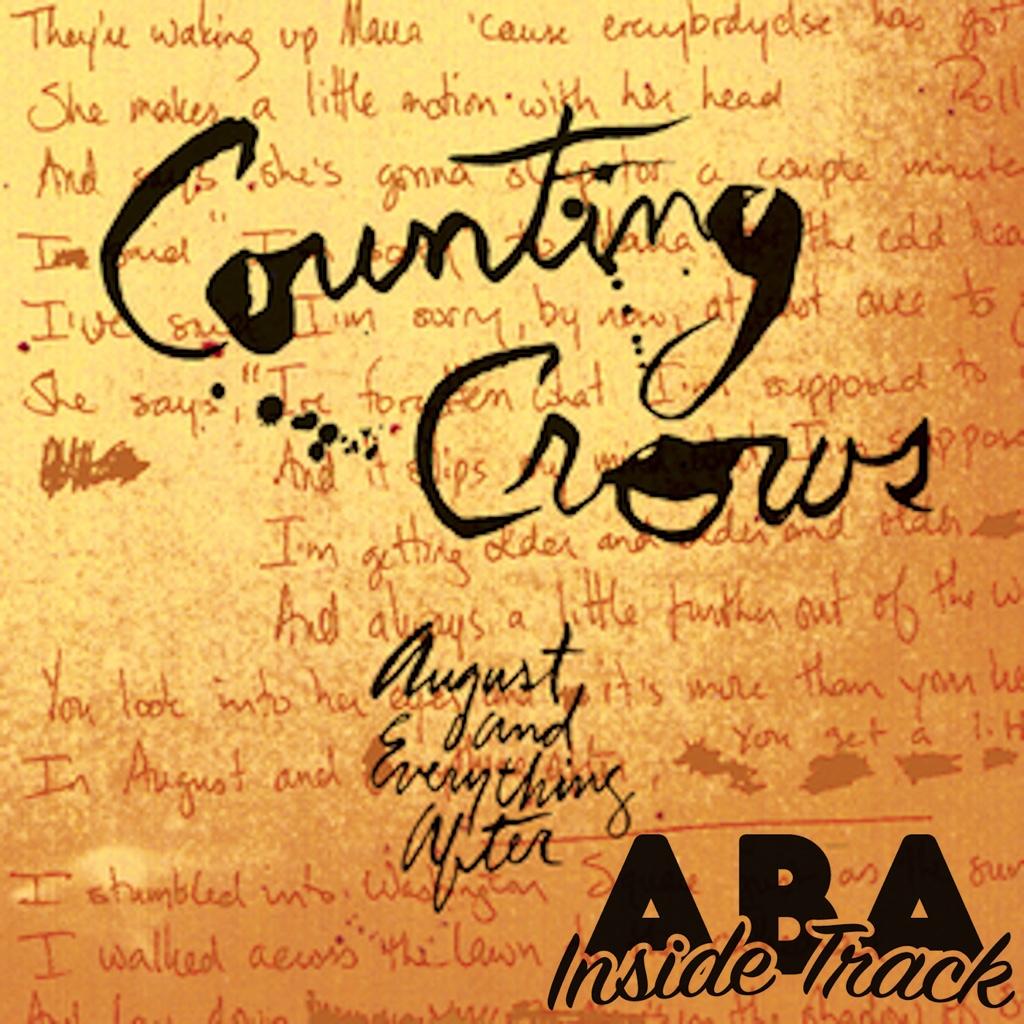
Okay. Round here by the Counting Crows was on their album August and everything after it is kind of of the genre of mid-90s alternative y mainstream radio. Interesting. I remember it was interesting time in music. I think that's when I was starting to listen to music pretty. Pretty seriously. So, Diana, why did you bring. Round here. Why did you bring us this song?
- [01:41]
B
You know, you asked me to pick a song and that is one of the first ones that came to mind. So I decided that maybe that came to mind for a reason and I would just go with it.
- [01:53]
A
Okay. It is a. It is a nice song. I kind of remember hearing it on the radio way back when. So sort of nice to revisit. Revisit a golden oldie with Would have been like 20 years ago at this point.
- [02:04]
B
Wow.
- [02:05]
A
Doesn't feel that a lot. All right, so you brought us around here. And most of the show goes to a section that I like to call musical notes. Now, notes about our song. So I have a couple questions that I'm going to ask you.
- [02:19]
B
Okay.
- [02:19]
A
And then we'll sort of discuss them and see where that discussion goes. So my very first question, I think it's important with any song. There's something about it and it's not just the sound or the words. It's usually a feeling or a time and a place. So when, as far as you can remember. Did you first hear this song?
- [02:38]
B
Well, this song is. I mean, I know why it's important to me, because this is part of that really small window of really formative time, I think, in everyone's life when you're really discovering music. And this song. So I came out in 1994. Is that right?
- [02:58]
A
I forgot to look that up.
- [02:59]
B
You didn't look that up.
- [03:00]
A
I started to, and then I forgot. I got distracted.
- [03:02]
B
Well, I'm pretty sure it was 1994, so it's 14. And this song was actually the first CD that I was ever allowed to purchase.
- [03:13]
A
Very first CD. Oh, my God.
- [03:15]
B
That's correct. Because Nirvana Unplugged was vetoed. It's too out there. But Counting Crows made the cut, so this was my first album.
- [03:25]
A
Okay.
- [03:28]
B
And a lot of the songs from that album have sort of that special nostalgia to them. But this was probably my favorite one.
- [03:37]
A
Okay. Back in 1994, September 14th, 1993 was.
- [03:41]
B
Oh, I got it in 94.
- [03:44]
A
Okay. And alternative rock is what Wikipedia has. Has decided this counts as. All right. So. So it is really tied to not just a special memory, but kind of a special, you know, like you said, window. So, yeah, just kind of that period of time, but your first. Your first album. So that makes sense why that would be. Would be special. Now, what. What do you like most about this song? And when I say most, is it something about the lyrics, the music combination of the two?
- [04:14]
B
It is some of both, I would say. So there's a real sense of place, I think, and emotion that this song brings that I could attribute to some extent to the music and the way that it's put together, but also the weight, not just the lyrics, but the way that the lyrics are sung.
- [04:37]
A
Yeah, I would agree. I think listening to it, I felt like it had. That was Adam Dirtz. Durst. Durst. With the guy with the dreadlocks. Right. Dated Courtney Cox, I think was the interesting fact. It really had this kind of a mid-90s earnestness. I feel like there were a lot of bands like the Gin Blossoms, so that post Nirvana band, pretty much everything, I think that was on sort of mainstream alternative radio. Just everyone. They really felt like they. They believed what they were singing. And I know this song has kind of a. Not quite a whiny, like a plaintive tone, you know, like, I'm about to cry in a second.
- [05:13]
B
Very much so.
- [05:14]
A
I'm going to cry about whatever I'm singing about.
- [05:18]
B
No, that's a good way to put it. And, you know I. I was trying to figure out how to put into words what I like about his voice, but there's a lot of singers that fall into that category that I really like their voice. And it's like, yeah, plaintiff is actually a really good word to use to describe it, but it's. He's. His voice sounds like it's, like, cracking. Right? Like, on the, like, brink of maybe crying or cracking. And I really like that in this song. I. I like the singer from the Violent Femmes for the same reason. I like Bob Dylan for the same reason. I like Jake Bug for the same reason. Like, there's a lot of, like, when you have that quality to your voice and you're singing, like, it totally wins me over. So, yeah, I love that about Adam Durst and his dreads.
- [06:04]
A
I'm a big fan, I think, of any song that. That just really, like, pours. Pours emotion out at you. You know, I was kind of listening to the lyrics, and I wasn't quite sure what the song was quite about. Like, about a girl coming into town and this man sort of reviewing the place he lives in and the things he likes about it and sort of seeing the world through a new, new perspective. But mostly I just picked up on that sense of, like, oh, everything he is feeling is so many feelings.
- [06:34]
B
Yeah, it's perfect when you're 14.
- [06:37]
A
This is a formative time for music. Now, I talked a little bit about it, but what do you think this song is about? Or have you ever thought about what the story of the song is?
- [06:46]
B
I think I always picture it taking place in the really desolate Midwest, which might be because there's another song on the album called Omaha, just somewhere in middle America. So I think I combined the two of them. I don't remember what the music video for this song was, but that might also contribute, perhaps, to sort of my recollection of it. But I think that, you know, the overall, like, feeling of the song is one of being in a desolate place and being alone, but I'm not really sure that that feeling is necessarily warranted. Right. So, like, the image that I'm left with at the end of this song is of someone standing in, like, a really shallow pool.
- [07:39]
A
Water.
- [07:39]
B
Yeah, okay. Pool of water that you could walk out of, but instead they're choosing to sit down and remain in that pool of water. Okay, Okay.
- [07:52]
A
I didn't quite get the. Quite the feeling. I think it wasn't quite the visual I had in my mind, but I don't know.
- [07:59]
B
I should watch the video to see if it's like relate if I'm relating it to something that I've seen in the past. Because that very well could be. But the overall feeling that I get from this song is one of sort of self searching, but not necessarily self discovery. It's just sort of the acknowledgement of I feel like I'm different than other people. And no one in this town, this small town that he and Maria or whatever are living in can. Can really relate very well to.
- [08:34]
A
Yeah, I. I mean that's the sense I had too of, you know, I think some of it was like I said, the kind of perspective of you have this character Maria who comes into town and she's sad and she's talking about maybe she's gonna jump off a building and all. And how. How that affects the. The protagonist, whoever that might be, whether it's, you know, supposed to be you or it's Adam Durrs, whoever it is. And. And sort of just, you know, reimagining what his town is from that outside perspective. And then sort of like. Like you said, doing that self searching. So I'm just thinking about things and yeah, there's no resolution. I think you get that from the very end of the song. I love a song if it ends on a minor chord. Yeah. If you want someone to say this song means something, I think you want to end on that minor chord. But it has that sense of like, oh, that ellipsis of oh, maybe it continues to be sad from here on out.
- [09:23]
B
Yeah.
- [09:24]
A
A little depressing, but definitely a 14 year old feeling. So is there a specific part. I know you talked about the feeling you had. Is there a specific part of this song that you know. That's the part. That's the part I just think of. It pops in my head when I remember this song.
- [09:41]
B
Certainly the end has a nice resonance to it, I would say. I also really like the way he. The words she's always on my mind. The way he says that just is a. Sounds cool to not be able to put it in better words.
- [10:00]
A
Is this a band that you. You. You liked, you know, at that age, or that you. You liked other songs by them?
- [10:08]
B
Yeah. So I had this album and then I had Recovering the Satellites, I Believe, which came next. And there we. We being. Me and my friends also had several other like bootleg versions of different, like concerts and things like that. So we got different versions of these songs. And then we even took a trip to end like a road trip and went and saw Counting Crows playing In somewhere not our hometown. So that was kind of cool as well.
- [10:46]
A
Good.
- [10:48]
B
So, yeah, I. I mean, I. I did. I liked this band a lot. They had a good sound to them. They were kind of folksy. Right. And I like. I liked music that wasn't necessarily, like, mainstream, and at the time, they were kind of alternative. Although I feel like now you look back and it doesn't sound as alternative. Perhaps as other things.
- [11:13]
A
I feel like they get lumped in with the sort of. The Hoodie and the Blowfish.
- [11:16]
B
Yeah, they were way different than Hootie and the Blowfish to me, to my friends, I think.
- [11:22]
A
So. I would agree. I would agree with that statement. So we talked a lot about parts of the song we liked. We talked about how this song is special to you, but at the end of the day, sum it up in just a couple words or sentence or two. Why is this your song?
- [11:38]
B
I think it really has to do with my personal experience with the song. And, you know, whatever you listen to when you were 14 or whatever was the first CD that you got to purchase is probably going to hold some special spot in your musical heart. So I think that that is likely where this song has special meaning for me. And it. I think it probably resonates pretty well with anyone who is a teenager.
- [12:07]
A
Yeah. So that's why it's your song. Now convince us. Why should it be our song? And by our. I mean the world. You know, the thousands and thousands of people who aren't listening to the show.
- [12:19]
B
If other people. Oh, sorry, I don't.
- [12:23]
A
That's the point of the show, though.
- [12:24]
B
Oh, but everyone shouldn't like the same music. I don't care if other people like. Well, this song. I like this song.
- [12:32]
A
Yeah, well, I'm not. I'm not saying that everyone has to love your song, but I think when song is special. Why. Why do you think it would resonate with other. Other people or why should they give it? You know, if they're like, okay, they're kind of like a butt rock band. I don't want to listen to them. They're old. Why. Why would you say, well, give. Give this a chance. This is something you might want to check out, because it is special to me. And maybe it would be special to you. How. What could you say?
- [12:58]
B
Well, I think what you said initially about how earnest Adam Duritz is in his lyrics and in the way that he sings is something that, you know, I think it's easy for people to make fun of people who are earnest, and there's Something to be said for being the person who puts yourself out there and says, this is who I am, this is how I feel, and I don't care what other people think. This is me. And that's what I think Adam Durrett did until no one listened to him anymore.
- [13:31]
A
I feel like he had a period where he was writing Shrek songs or something like that.
- [13:36]
B
Did he write some song like that? What are he doing now? I don't know. But I hope that it makes him happy because I think he's probably someone who has a hard time being happy based on the music that he's written. And I always liked that about him, that he really had his heart out there and you can't make that up, you know.
- [14:02]
A
But I agree that it was really the. The voice that he presented. You know, the lines like, catch me if I'm falling, that kind of repeated nature to it. I always love, you know, I'm under the gun. That I think that's really where it just sounds like he's like, oh, he's gonna. He's gonna lose it. This is where he's gonna cry or
- [14:20]
B
he's go inspiration through. Yeah.
- [14:23]
A
So. So you know what, Diana? I. I know you don't care because you're cool and everything, but I think. I think Round Here by the Counting Crows is now our song. And by our. I mean, the Universal are not just the two of us. Well, that's all the time we have for the show. I'm kind of hoping to keep these relatively quick because I don't edit very well and I just kind of want to get people's message out there. So I hope this was enjoyable for you. Thank you very much for being willing to come. And I'm pretty sure you'll be my only guest for the next few of these, but no problem.
- [14:54]
B
It's a short commute.
- [14:57]
A
It's just over to the little table and the little microphone. Well, so thank you for coming. If you are interested in sharing your song with the world and by the world, it's like me and, you know, Diana might listen to some of these. Who knows that she's not on. You can check us out on Facebook at our Facebook page. Facebook, playingoursong.net you can follow us on Twitter @playingoursong. You can check us out on the web@playingoursong.net for updates. And I'm going to try to post things like lyrics and album art on there as well so you can follow along a little more. If you haven't heard the song, though. I'm going to also have a link to the songs on on itunes or Amazon so that you can get a chance to listen to it yourself and join in the show. If you're interested in giving us feedback or if you want to be on the show to share your song, you can email me@robayingoursong.net and thank you again, Diana, for being here. Can we. Can we follow you on any social. Social media outlets or anything you want to plug? Any movies coming out?
- [15:57]
B
No, no, I'm sorry, you can't.
- [16:01]
A
All right, well, you could try to friend Diana on Facebook. I don't know if she will accept. She's probably already friends with you if you're listening to this. All right, everyone, well, thanks so much for being here. Thanks for sharing your feelings on this song.
- [16:15]
B
Absolutely.
- [16:16]
A
And everyone who is listening, the few of you, I'm sure, just at least to check the sound quality till next time. Remember, it's your song, so play it long and play it loud. Take care. Bye, everyone.
- [16:39]
B
And I'm under the gun around here.