Podcast
Above The Treeline with Andy Young
Hosted by a podcast from TreelinePress · EN
Higher ground thinking on digital transformation, AI, and customer communications told through the lens of print, mail, and global market insight.
treelinepress.substack.com
treelinepress.substack.com
11episodes
Episodes
Newest firstAll episodes

Redefining Communications Services
Jul 700:55:41Tap to summarizeOne of my recurring observations about the printing industry is how often companies present themselves through physical scale. The aerial view of a large warehouse with access to critical transportation and postal infrastructure. The production floor. The equipment. The size of the operation, or the number of locations spread across the country, becomes the proof point.There is nothing wrong with that. In print, operational strength and redundancy matter. But if a company is trying to tell a different story about its future, why are the plant and physical operation still the centerpiece of the narrative?A Different SettingI didn’t sit down with Sami Antaoui, CEO of MBA Group, beside a press or on a production floor. Instead, we met at Hend House, MBA Group’s central London offices, in a space featuring large atrium windows, a spiral staircase, open seating, and not a print plant in sight.The offices were once home to Walt Disney Studios, which felt strangely appropriate. Like Disney, MBA Group is in the business of imagination, design, experience, and execution.We recorded our conversation in the screening room, where executives once reviewed pre-release versions of Disney films. It felt like a fitting setting because, in many ways, Sami and his team are “imagineering” what a communications service provider can become.Beyond the Familiar NarrativeI am often asked by print service bureau operators: what does a shift to digital-first thinking actually look like? What is the message? The business case? How do they tell a new story?MBA Group has been in business for more than four decades, with deep roots in print and physical communications. Physical communications remain an important part of the business. But our conversation was not really about print. It was about what happens when a service provider expands the definition of the work it does. With customers such as American Express and Deutsche Bank, MBA has to take innovation seriously. Over time, it has become a core part of the company’s success strategy.MBA has continually looked up upstream into data, closed-loop outcomes, software platforms, digital engagement, customer journeys, personalized video, BPO-style services, and managed communications. Its marketing and outward messaging rarely lead with print or even cover it. Instead, MBA leads with ideas, customer experience, transformation, and the changing role of communications. And, as an extra bonus, the print volume that remains becomes a nice value-add.Why This Shift MattersFor many transactional and regulated communications providers, print volumes are under structural pressure. Customers are digitizing. Enterprises are trying to reduce costs. Consumers expect faster, more contextual, more convenient interactions. At the same time, trust, compliance, and accountability still matter deeply.The future may not belong only to those with the largest production platforms or the lowest unit cost. It may belong to those that can help clients understand customers, coordinate channels, manage context, and improve the experience around essential communications.From Output to OrchestrationIn our conversation, Sami described MBA Group as a communications group rather than simply a print provider or digital provider.The question is not whether a communication is printed, emailed, sent by SMS, delivered through RCS, or managed through another channel. The question is what the customer needs, what the business is trying to accomplish, and how the communication fits into the broader relationship.A provider that once produced output can become a partner in journey design. A company that once managed print files can help manage data, timing, channel selection, customer response, and engagement history. A business built around production can grow into software, orchestration, digital engagement, advisory services, and closed-loop communications.MBA Group’s Pulse shows how service providers are moving beyond output and into orchestration, connecting data, channels, timing, and customer context. The conversation also touched on RCS, WhatsApp, AI, private ownership, and the role of trust in digital communication. But the larger theme was clear.The customer communications market is not simply moving from print to digital. It is moving from output to orchestration. From production to context. From channel delivery to customer experience.The Question AheadThat raises an important question for every service provider in this market:What are you really becoming?Episode 29 of Above the Treeline features Sami Antaoui, CEO of MBA Group, in a conversation about transformation, growth, and the expanding role of communications service providers.Work with TreelinePressTreelinePress is an independent, vendor-neutral platform with a clear point of view on where customer communications are heading.The work is less about traditional analyst coverage and more about finding and telling the larger stories behind market change by connecting corporate strategy, technology, industry transformation, and the people shaping what comes next.I work with companies and industry leaders through executive interviews, sponsored podcasts, event coverage, and market commentary to explain not only what an organization is doing, but why it matters.To discuss a story, sponsorship, event, or custom media project, connect with me at TreelinePress.com. Get full access to TreelinePress at treelinepress.substack.com/subscribe
Transcribe →
Beyond Print: Danny Cook on the Future of Go Inspire
Jun 1800:55:10Tap to summarizeA Personal History with XeroxYears ago, during a customer roundtable, the host opened the session by asking everyone what they had wanted to be when they were growing up.My response, without hesitation, was, “I wanted to work for Xerox.”That answer created a slightly awkward and funny moment.At the time, I was part of Ricoh’s Global Production Solutions team, formerly IBM Infoprint, which was based in Boulder, Colorado. Sitting in a room representing one of Xerox’s larger competitors was probably not the ideal setting to admit that Xerox had once been my dream employer.But it was true.Growing Up Around XeroxAs a kid, our Xerox sales representative, Carl Jenson, was the coolest guy I knew. He wore gold wire-rimmed glasses and three-piece suits, and he drove a big fancy car. To me, he represented a company that exuded professionalism and class.But the appeal went beyond the image.Xerox was one of the most innovative companies in the world. Long before digital transformation became a boardroom cliché, Xerox was changing how people interacted with computers, created and reproduced documents, and moved information through organizations. For those of us who grew up around the industry, it felt as though the company was helping define the future in real time.My family’s business was a small reprographics firm, and Xerox was woven into the fabric of our daily operations. Xerox service representatives became almost like family. They were familiar faces who spent time in our business, understood how we worked, and showed up whenever we needed them. One of them even attended my wedding.That was the kind of relationship Xerox built with its customers. It was not simply selling machines. It was becoming part of the operation and, in many cases, part of the story of the businesses it served.I never ended up working for Xerox, although I came close once. Instead, I spent much of my career watching Xerox from the outside, following its successes, its challenges, and its continuing evolution.That history is part of what made my recent visit to Go Inspire Group, a Xerox company, in Leicester, UK, so interesting and, in a way, so personal.Go Inspire is part of Xerox’s Digital Services business, but it also represents something larger: a possible window into what Xerox is becoming.A Different Kind of AcquisitionWhy would Xerox purchase a print service provider?This is not the first time Xerox has looked beyond equipment to expand its role in business services. In 2010, it acquired Affiliated Computer Services, which became the foundation of its business-process-outsourcing operation before being separated as the independent company Conduent in 2017.Go Inspire represents a different type of services strategy, but that history makes Xerox’s decision to acquire a services company worth examining.For those who remember the old Xerox Reproduction Centers, or XRCs, the relationship between Xerox and service providers was sometimes complicated. XRCs often focused on legal copying, scanning, and document production. In many markets, they were viewed as competitors by the very customers Xerox also served.XRCs no longer exist, and the acquisition of Go Inspire in 2022 feels fundamentally different. Rather than extending Xerox deeper into a traditional print-services model, the acquisition reflects a broader understanding of what customers need today.Go Inspire is a very different business operating in a different market context. That was one of the questions I wanted to explore when I had the opportunity to connect with Danny Cook.Danny described the rationale for the acquisition in simple terms: “I think it’s more directional.”That forward-looking statement says a lot. Go Inspire was not simply an attractive print operation in the UK. Xerox saw a business already moving toward strategy, data, creative services, and omnichannel communications.Today, businesses are no longer looking for isolated solutions. They are looking for partners who can help orchestrate communication across channels, departments, and customer touchpoints.The challenge is no longer simply producing documents. It is connecting experiences to outcomes.A customer may receive a printed statement, scan a QR code, visit a website, receive an email, engage through a mobile device, and ultimately complete a transaction through a digital workflow. Increasingly, organizations want those interactions managed as part of a coherent business strategy rather than a collection of disconnected systems and solutions.That is where Go Inspire becomes interesting.Beyond PrintFor years, industry observers have framed conversations around print as a debate between physical and digital communications, but the reality is far more nuanced.Customers do not think in channels. They think in outcomes.As Danny explained, “We’re an outcome-based business. It’s not about digital or print first.”That captures the larger shift. The starting point is not the channel. It is understanding what the customer is trying to achieve and then working backward to determine the right combination of data, creative services, technology, digital delivery, and print.Customers want information when they need it, in the format that makes the most sense at that moment. Sometimes that is digital. Sometimes it is physical. Often it is both.Organizations that understand this are increasingly focused on customer journeys rather than communication silos. That shift creates opportunities for companies capable of bridging worlds that have historically operated separately and turning those combined capabilities into repeatable solutions that can be scaled across operations, customers, and markets.“The value is further up the chain,” Danny said.It is found in understanding who to target, why the communication matters, and how the channels should work together and not simply in producing more output.Go Inspire brings deep expertise in production, compliance, personalization, data, creative services, and delivery. Xerox adds technology, automation, scale, customer relationships, and a broader digital-services infrastructure.The opportunity lies in bringing those capabilities together as a unified, repeatable solution.Viewed through that lens, Xerox’s investment in Go Inspire begins to look less like an acquisition and more like a strategic marker.The Xerox RenaissanceThe opportunity has never been to abandon the expertise Xerox and Go Inspire have built over decades. It is to use that experience as the foundation for something bigger.As my friend Ray Stasieczko would say, “You can either drag the past into the future or bring the future into the present.”The difference is whether legacy becomes a constraint or an advantage.Viewed that way, Xerox’s history in production, information management, service, and customer relationships is not something to escape. It is something to build on.I believe Xerox may be entering a renaissance of sorts.It has been through a difficult period of financial and operational restructuring, but it does not appear to be trying to recreate the company it once was or relive the glory days of copiers and office equipment.Instead, it appears to be leveraging the assets that made Xerox successful in the first place: trusted customer relationships, deep expertise in business communications, operational scale, technology, and an understanding of how information moves through organizations.Building the FutureAs businesses struggle to connect physical and digital experiences, manage increasingly complex customer journeys, and navigate rapidly changing communication preferences, the need for integrated platforms will only grow.The companies that succeed will not be those that choose paper or digital. They will be the ones that understand how to make both work together.The company that fascinated me as a teenager may not look the same today.But the opportunity in front of it may be every bit as significant as the one that made Xerox a household name in the first place.And that makes this next chapter for Go Inspire, and Xerox itself worth paying attention to.TreelinePress is built for this kind of work: connecting corporate strategy, market transformation, and the larger stories reshaping customer communications.I work with organizations through executive interviews, sponsored podcasts, event coverage, market commentary, and custom media projects designed to explain not only what a company is doing, but why it matters.Connect with me at TreelinePress.com Get full access to TreelinePress at treelinepress.substack.com/subscribe
Transcribe →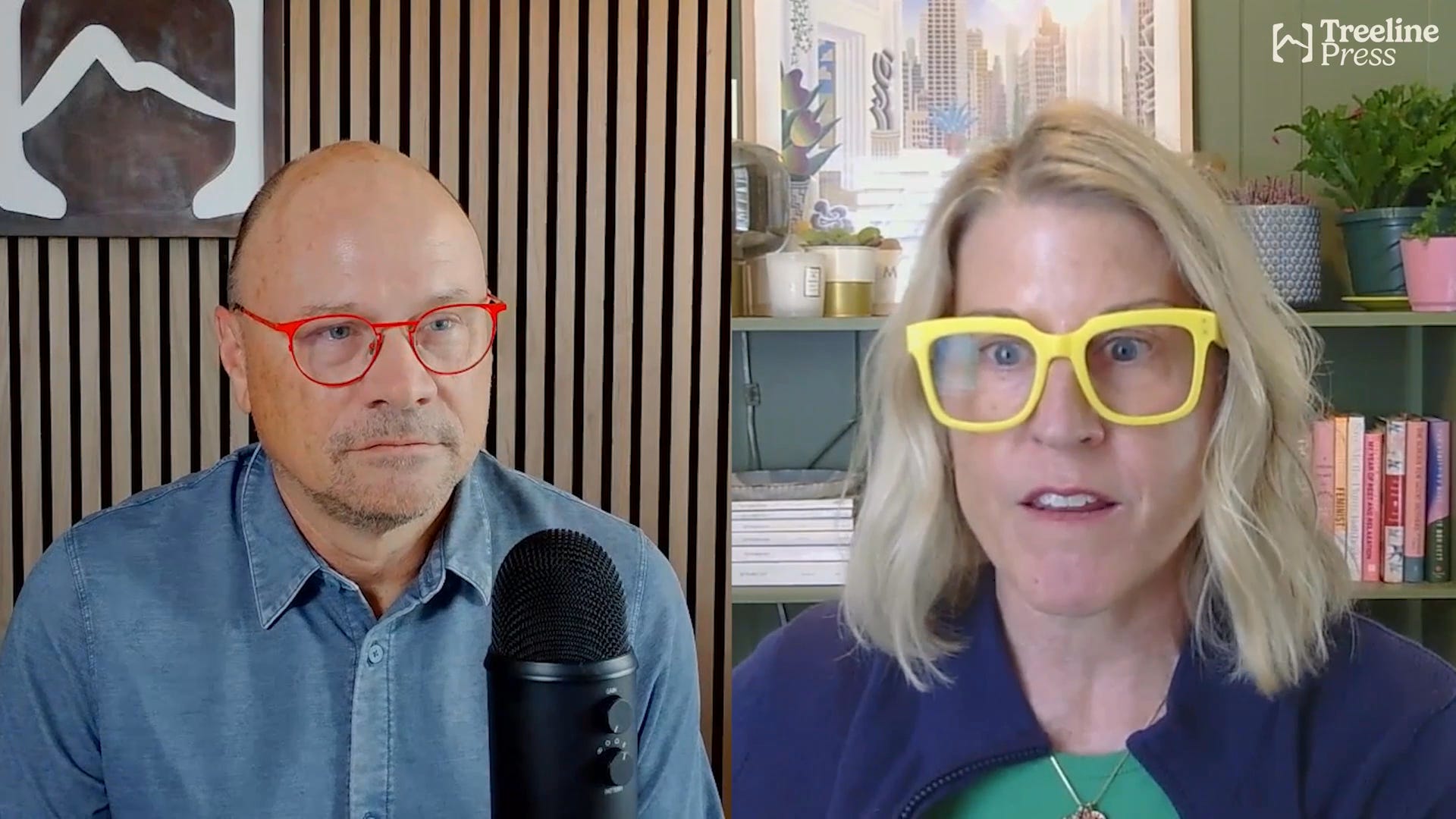
CCM’s New Enterprise Role
Jun 1100:46:27Tap to summarizeI met Amy Machado of IDC earlier this year in Chicago and knew right away we would have a great conversation. So I was really looking forward to sitting down with her for this episode #27 of Above the Treeline.Partly because Amy is an industry analyst. A true market researcher. Someone who has spent years doing the disciplined work of tracking markets, briefing vendors, asking better questions, and separating signal from noise.I like to believe I do some of that too. But if I am honest, I am probably more observer and commentator than traditional analyst. I watch, listen, and ask questions. I look for the patterns and try to make sense of what is changing before the industry has fully agreed on what to call it.Not only do Amy and I share a stylish taste in eyewear, but we also share a real interest in the future of customer communications and how data, governance, content, and AI are changing what this market is becoming.That is why I wanted to talk with Amy. Two CCM nerds talking about the market without much of an agenda. We agreed on a lot, but also brought different perspectives. Hers is grounded in real market data and structured research. Mine is shaped by a lifetime of experience across nearly every corner of the business.TreelinePress is a reader-supported publication. To receive new posts and support my work, consider becoming a free or paid subscriber.From Print to Something BiggerThe conversation started with a simple question. Where was the CCM industry 15 or 20 years ago?Amy’s answer was immediate. Print.We were both there. Xplor 2002 in Anaheim, California. Disneyland. The Angels had just won the World Series. Amy was working for InfoTrends. I was there with IKON Office Solutions demoing a web-to-print platform called WebPrint.Yes, we had the internet. Yes, digital was already part of the conversation. But it was mostly on the edges, and certainly not the way companies interacted with or informed customers.Bills, statements, notices, and most regulated customer communications were still deeply connected to paper and mail. That is where much of customer communications management aka “CCM” came from, a fixed, linear, output manufacturing process. For many years, that has been the gravitational center of the customer communications market, and in many ways, in certain sectors it still remains. But that center has moved especially in markets outside of the U.S. That is where Amy’s perspective became especially useful.From Output to Enterprise InformationFor years, customer communications were often treated as the final step in a business process. The job to be done was to compose the document correctly, produce it reliably, archive it properly, and deliver it through the right channels.In regulated industries, that matters a great deal. But the role of those communications is changing inside the enterprise. The documents, archives, metadata and customer histories that sit inside CCM environments are not just operational outputs. They are being recognized as part of the enterprise information layer and corporate memory. That is why this market is getting more interesting, not less. CCM is no longer just about the document, composition or even print. It is about the data, governance, orchestration, and intelligence that surround the document. The Lines Are BlurringAmy also described a market where the old category lines are getting harder to defend.CCM, ECM, file sync and share, capture, intelligent document processing, enterprise search, content services, workflow, archive, and analytics have historically been treated as separate functions.That structure made sense when the business process was linear. But the enterprises no longer operate that way. Customer interactions now move across channels, teams, systems, and moments. The information going out to a customer is increasingly connected to the information coming in from a customer.The full content and document lifecycle is becoming more connected, and the next phase of the market will not be defined by who can generate the best-looking document or manage the most efficient print stream. It will also be defined by who can connect context, data, governance, and delivery in a way that supports the future enterprise.Why the U.S. Still Talks So Much About PrintOne of the recurring questions in my own work is why the U.S. customer communications market still talks so much about print and mail compared with other parts of the world.Amy pointed to a mix of history, compliance, regulation, legal risk, and legacy adoption patterns.In other markets, particularly in parts of Asia, the path was different. Populations were significantly larger, but a much smaller share of people had checking accounts, credit cards, or the same legacy banking and billing infrastructure that shaped the U.S. market.As a result, many of those markets did not have to unwind decades of paper-based customer communication habits. They were able to move more directly into mobile-first and digital-first models.The U.S., by contrast, has been carrying the weight of its own history. Its legacy infrastructure worked well enough for long enough that replacing it has become more complicated than simply choosing a better channel.In the U.S. paper remains because it is familiar, provable, and perceived as lower risk than the alternatives, even if it could be accomplished digitally. That does not mean print and mail will remain the future center of the U.S. market. Rather, it continues to operate as a risk-management mechanism. Thanks for reading TreelinePress! This post is public so feel free to share it.AI Is Not the StrategyNo conversation about the future of customer communications can avoid AI, and ours did not. But one of the things I appreciated most about Amy’s view of AI is how grounded it was.AI is not the strategy, and AI should not be used for its own sake. It has to solve a real problem. It has to produce measurable value such as reduced cost, increased revenue, improve productivity or support better outcomes.That sounds obvious. It is also often missing from the current AI conversation.For the last couple of years, many organizations have been under pressure to answer a boardroom-level question: what are we doing with AI?The better question is: where can AI create value without compromising accuracy, compliance, explainability, or trust?Amy’s point was not that companies should avoid AI. It was that they should be careful about using AI simply so they can say they are using it.If the core of your business operation has not changed, or does not need to change, then the role of AI should be considered carefully. It has to solve a real problem, support a measurable outcome, or improve a process that actually matters.Amy made another point that should matter to every CCM leader: modernization and migration still come first. That may not sound as exciting as AI, but it is probably more important.Many enterprises cannot fully take advantage of AI-enabled capabilities because their underlying systems, repositories, and workflows are not ready. Before many organizations ask what AI can do with their communications, they may need to ask whether their content, metadata, archives, and workflows are ready for AI at all.The Knowledge LayerThe industry has long talked about a single source of truth. I have never been completely convinced that phrase captures how enterprises actually work.The future may be less about a single repository and more about a trusted, accessible, governed knowledge layer that can support secure and accurate outcomes across the enterprise.Collecting, rationalizing, governing, and coordinating enterprise knowledge may be one of the most important future roles of CCM. It is also an area that could potentially be delivered as a service. The future is not just producing the communication as output. It is managing the knowledge, context, rules, evidence, and governance that make the communication reliable in the first place.The Competitive Set Is ExpandingCCM vendors are no longer only competing with other CCM vendors.The competitive set now includes ECM vendors, content services platforms, intelligent document processing providers, data platforms, enterprise search providers, marketing technology platforms, CRM systems, workflow platforms, and AI-enabled enterprise software companies.CCM is no longer operating in a contained category. It is being pulled into a much larger technology conversation, and that larger conversation is increasingly about data, orchestration, governance, and customer intelligence.If Salesforce, ServiceNow, Adobe, Snowflake, OpenText, Box, Hyland, and other enterprise platforms move closer to customer communications, then the CCM industry has to decide whether it will defend its historic footprint or expand into adjacent territory.Amy framed the issue clearly.Other platforms may come after CCM’s piece of the pie.The question is whether CCM vendors are prepared to go after theirs.You May Not Be as Far Behind as You ThinkBut the part of the conversation I hope people hear most clearly came near the end.Amy said that IT teams and enterprises responsible for CCM may not be as far behind as they think they are.That should come as welcome news to a lot of people dealing with the pressure of digital transformation, AI modernization, migration, governance, and the never-ending expect...
Transcribe →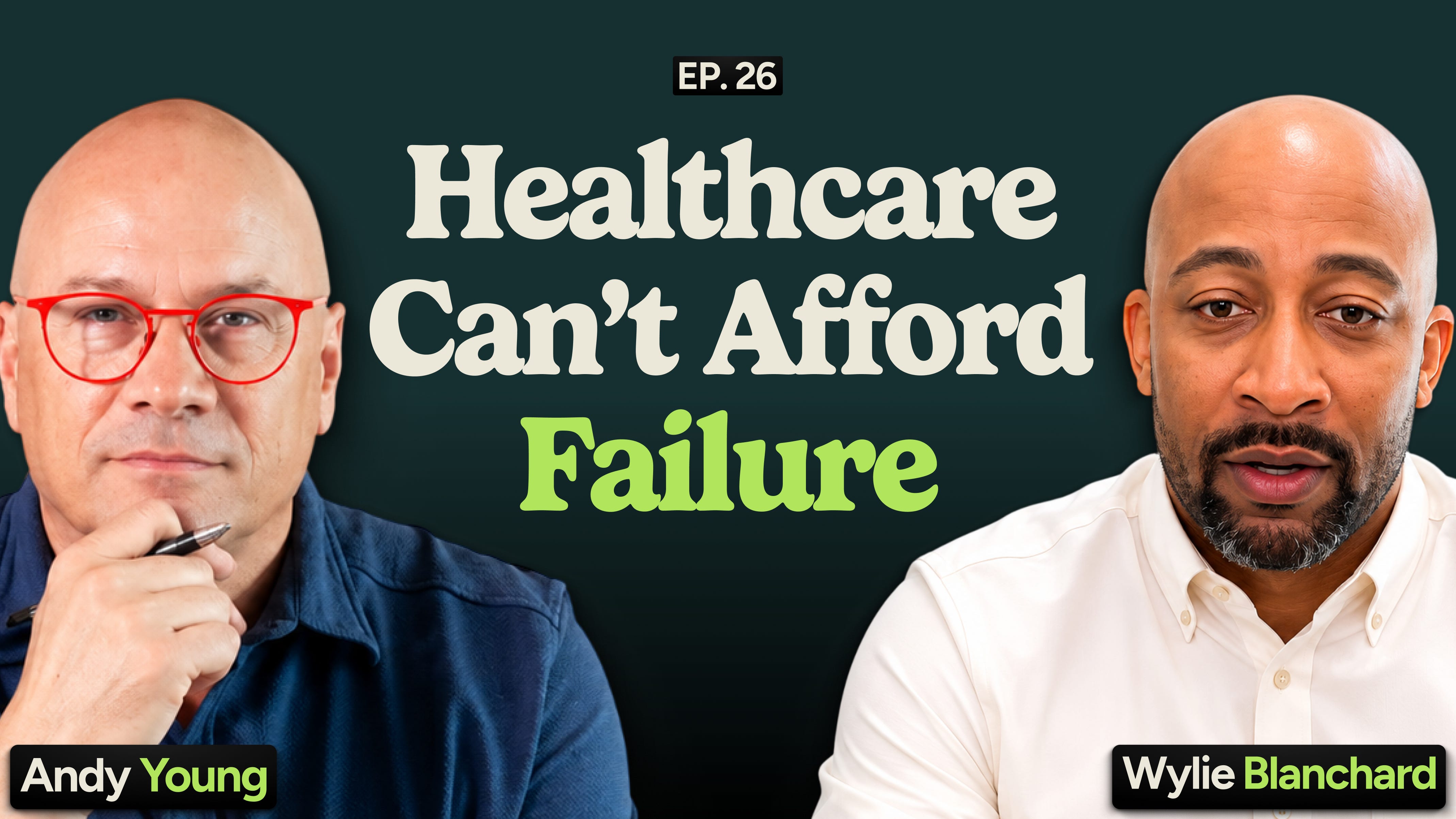
What Healthcare Taught Me About Mission-Critical Communications
Jun 500:55:07Tap to summarizeClients have asked me several times why I do not spend more time looking at the healthcare industry.Honestly, I have avoided it because healthcare communications are differently complex compared to other regulated industries like financial services, P&C insurance, and utilities. I knew that was true, but I could never quite explain why it was more complex or how it was so different.After all, when you are manufacturing a regulated printed piece and putting it into the mail, the processes are effectively the same regardless of the vertical industry.Gratefully, my conversation with Wylie Blanchard changed that and helped me understand both what I have been avoiding, and what other regulated industries could learn from healthcare innovation.Healthcare Is DifferentHealthcare may be one of the most important categories of customer communications, and also one of the most specialized. It is not just statements and bills. It is test results, appointment reminders, pre-care and post-care information, and more. And unlike a monthly bank statement, healthcare communications can be acute but infrequent, or chronic and overwhelming.Patient-facing innovation in this area moves slowly, and usually for good reasons. As Wylie put it, there are lots of hidden threats. Like other verticals, the outcomes are highly regulated, the workflows and systems are deeply embedded, and the decisions often involve clinicians, scientists, and technologists trying to balance innovation against the very real consequences of failure.Many times, the people in charge of these decisions in a clinical setting did not go to school for IT.They went to learn medicine.In industries outside of healthcare, when something goes wrong, fines, legal action, and brand reputation are on the line.But in healthcare, it can truly be life and death.Innovation in Mission-Critical EnvironmentsIn Above the Treeline podcast episode #26, I spoke with Wylie Blanchard, author of Zero-Downtime Care and now an Amazon #1 bestseller. I came away with a much better understanding of why healthcare modernization is so difficult.Wylie and his team have worked across payer and provider environments, public health programs, consulting, and healthcare technology projects. In his book, he shares practical, hands-on experience: what works, what does not, and more importantly, how to engage leadership and organize an approach that keeps compliance, security, and usability in mind.The book is clearly rooted in healthcare, but the framework reaches well beyond it. Nearly any highly regulated, mission-critical environment can learn from this approach.The AI CounterweightWylie deliberately avoided making AI the centerpiece of his book. In fact, it is not included at all.For a book published in 2025, that is actually refreshing, because almost every technology conversation today seems to get pulled toward AI within a few minutes. The noise is everywhere.Wylie’s perspective is a useful counterweight. It also speaks to a practical, measured, and thoughtful approach to innovation.In a mission-critical environment, it is not enough to say a system is intelligent. Someone has to own the output. Someone has to explain the process. Someone has to understand what happens when the system is wrong, late, incomplete, misunderstood, or operating outside the intended guardrails.That is especially true in healthcare, but it is not limited to healthcare.The same issue applies anywhere regulated communications intersect with automation, decisioning, personalization, and customer-facing interactions. It also helps explain why AI is discussed so frequently, yet its use in applications across highly regulated fields is still limited.Zero Downtime Beyond HealthcareWylie’s work gives anyone working in a mission-critical environment a useful framework for thinking about transformation and digital innovation. Every regulated industry is being pushed to modernize. Every organization is being asked to move faster, become more digital, provide a better experience, and introduce more intelligence into customer-facing systems.The question is not whether modernization happens. The question is whether organizations understand what cannot be allowed to break along the way.Check out Wylie’s new book on Amazon. TreelinePress is built for this kind of work: connecting the dots between customer communications, martech, AI, print, mail, and the enterprise systems now reshaping the market. If your organization is trying to understand where CCM is headed, how digital adoption is changing the economics of customer communications, or how AI and context will alter the role of regulated communications, connect with me at TreelinePress.com Get full access to TreelinePress at treelinepress.substack.com/subscribe
Transcribe →
Built for Distance: How USAA Engineered Digital Access Long Before “Digital Transformation” Became a Strategy
Mar 300:51:47Tap to summarizeEpisode 25 of Above the Treeline features Andy Keller, a 42-year veteran of USAA Insurance who began his career in 1984 as part of a government-sponsored IT co-op program and retired as a Technical Architect Lead. Over four decades, Keller worked across core claims systems, document composition, image capture, e-delivery, cloud migration, and enterprise modernization initiatives. With renewed conflict in the Middle East and American service members once again deployed into harm’s way, it feels appropriate to pause and acknowledge the families who carry that weight.USAA was built to serve them.As a non-veteran member of USAA, my connection is through family. My father served in the Marine Corps. My wife’s father served in the Army. Like many members, our relationship to USAA is generational. It is rooted not only in financial products, but in service.Because long before “digital transformation” became an industry strategy deck, USAA was solving a practical problem: how do you serve members who may be anywhere in the world, often far from home, often in unstable environments, and still ensure continuity of their financial lives?That question shaped architecture. It shaped communications. And, in this episode Andy Keller makes clear, it pushed USAA toward digital access decades before much of the broader customer communications industry began to move.From COBOL to CloudKeller entered USAA at a time when customer communications were inseparable from mainframe logic. COBOL, PL/I, assembler, JCL. Xerox MetaCode driving print streams. AFP conversion. Automated document factories. Inserters. Postal optimization.Paper was not a channel choice. It was infrastructure.One of his early assignments involved what would later become a precursor to digital document rendering: capturing output, overlaying data, managing fonts via XY coordinates, and enabling internal service representatives to view member documents electronically. That work predated widespread internet adoption.The architectural seeds of digital were present long before the market language caught up.Digital as Operational NecessityUSAA’s founding constraint serving military families who could be deployed anywhere in the world shaped its communications strategy long before “digital transformation” became an industry phrase.Keller was part of the team that helped implement USAA’s early electronic delivery capabilities. By the early 2000s, the organization was delivering policies and statements through web and mobile platforms. Adoption was slow and steady—approximately three percent per year over two decades, until digital became the behavioral norm.Today, digital adoption exceeds 70 percent. More importantly, the cultural posture has shifted. Paper is no longer presumed. It is optional. The Regulatory GateKeller describes the most significant early barrier not as technical, but legal. Compliance teams interpreted statutory language such as “written notice” as inherently requiring physical mail.Only when regulatory clarity explicitly permitted electronic delivery did institutional momentum accelerate.This is a recurring pattern across regulated industries. Technology capability precedes regulatory comfort. The constraint is interpretation, not innovation. The Seven-Foot StackOne memory Keller shared is instructive: a member once stacked every piece of USAA mail received over time. The pile stood roughly seven and a half feet tall.That visual reframes the direct mail debate.From the sender’s perspective, each piece fulfilled an obligation or represented opportunity. From the recipient’s perspective, it accumulated as volume. As waste. As digital access matured, paper increasingly became triage sorted over a recycling bin, with only urgency determining survival.The authority of the printed artifact erodes when redundancy became visible.Charging for PaperUSAA experimented for years with incentives to encourage electronic adoption. The inflection point came when paper statements carried a modest monthly fee and digital adoption jumped materially from 3–4% to 7% or more. The lesson is uncomfortable but clear: cost shifts behavior faster than encouragement.As institutions approach 80 percent digital participation, similar economic signals will likely become even more common.Obligation vs. OpportunityKeller frames the internal divide as obligation versus opportunity.Operational communications such policies, disclosures, statements are compliance bound. Marketing communications pursue growth and brand reinforcement.Historically, these streams operated in parallel stacks. Different systems. Different governance. Different incentives.The unresolved challenge is integration: how to fragment content dynamically for experience optimization while maintaining regulator-approved language structures that were designed for fixed layouts and immutable pagination.This becomes not a print-versus-digital debate, but an orchestration problem.The Postal DimensionKeller also served for decades in local public office, including as mayor of a small Texas municipality. That dual exposure of enterprise architecture and public governance shaped his view of institutional inertia.The Postal Service, constitutionally embedded, is not obsolete. But its operating assumptions were built for a correspondence era. Return mail volume such as checks mailed back to billers was the first major collapse. Electronic bill presentment and payment removed a foundational volume from the postal stream.The next shift is subtler: as transactional communications become digitally default, physical mail concentrates into parcels, logistics, and selective high-value touchpoints.AI: Accelerator, Not ApocalypseFrom Keller’s technical perspective, AI is less existential than evolutionary.Its most immediate value lies in interrogating legacy systems, extracting business rules embedded in decades-old code, and accelerating modernization cycles that historically stalled under technical debt.Insurance products often contain state-specific logic encoded in languages whose original authors have long retired. AI’s opportunity is institutional memory recovery.The risk is governance complacency. Garbage in, garbage out still applies. AI does not absolve accountability.The Default Is MovingAndy Keller’s career arc from mainframe-based document factories to cloud-based digital orchestration mirrors the broader shift underway across regulated industries.Paper began as infrastructure.Digital began as an accommodation.Digital is now becoming the default.The decisive transition is not channel substitution. It is authority migration. It is gravity pulling the center of customer communications to a new place. When the mobile interface becomes the starting point of the customer relationship, gravity shifts upstream into data, orchestration logic, compliance architecture, and AI-assisted intelligence layers.USAA was built to serve members at a distance.A century later, that distance remains, and connecting matters more than ever. NoticeSpecial thanks to Andy for his time and insights. It should be stated that Andy’s opinion’s are his own and do not reflect the position or views of USAA Insurance. Get full access to TreelinePress at treelinepress.substack.com/subscribe
Transcribe →
Accessibility as a Service Isn’t Just for People. It’s for Agents, Too!
Jan 2800:26:19Tap to summarizeWhen I sat down with Ernie Crawford, President and CEO of Crawford Technologies, I wasn’t expecting such a personal story to launch our discussion on digital accessibility. But it was his mother’s declining vision and a stack of unreadable investment statements that ultimately helped shape a technology platform now used by some of the world’s largest banks, healthcare companies, and service providers.In this first in-person, audio podcast episode 22 of Above the Treeline, Ernie and I unpack what “Accessibility as a Service” really means today. It’s no longer just about meeting ADA or WCAG requirements. It’s about automation, real-time delivery, customer experience, and increasingly, machine readability in an AI-driven world.Crawford Technologies deserves real credit for helping lead the accessibility conversation across the CCM industry. Long before it became a regulatory flashpoint or an RFP requirement, Ernie and his team were building the tools, platforms, and education that helped make digital accessibility a strategic priority. Now celebrating its 30th anniversary, CrawfordTech has established itself as a trusted partner to over 2,000 organizations on six continents, consistently earning top marks for innovation, service, and customer satisfactionThat longevity is paying off: the company reported record revenues in 2025, with a 41% year-over-year increase in accessibility services and 47% growth in European markets. A significant share of that momentum is being driven by expanding adoption of AccessibilityNow Translate and increased demand for scalable, cloud-based SaaS delivery modelsMore than a technology story, it’s also a story of sustained leadership. CrawfordTech marked its anniversary with a reaffirmed commitment to solving complex customer communication challenges delivering innovation with a human touch. Key TakeawaysAccessibility goes beyond complianceAccessibility is no longer just a legal checkbox. It improves SEO, supports machine agents, and strengthens CX. As Ernie put it, “The approach we take is to make it both accessible and usable”Large print is not just a font changeIt’s full recomposition. Following Clear Print standards, Crawford reduces the bloat while maintaining readability typically 2.5x expansion in the number of printed pages instead of 9x. The next frontier: multilanguage PDFsOne PDF, multiple layers, multiple languages selectable by screen reader or viewer. Crawford is working with industry experts like Duff Johnson and PDF Association to make this both usable and testable across platforms.TreelinePress is a reader-supported publication. To receive new posts and support my work, consider becoming a free or paid subscriber.Accessibility isn’t just for the disabled, it’s for the agents, too.In a future where machines read and act on our content, proper tagging and structure will define how organizations deliver value, stay compliant, and compete. If you’re a service provider and not already offering accessibility, it might be time to start.This is just a slice of what Ernie and I covered—from the flaws in composition engines to the realities of batch versus real-time remediation. It’s a must-listen for anyone in the customer communications, print service, or compliance tech space.Sneak Peak: Industry Summit, April 8–9 in OrlandoCrawford Technologies and Madison Advisors are teaming up for an expanded edition of last year’s successful industry roundtable. Expect deep dives on regulatory shifts, document tech strategy, and AI’s growing role in content accessibility. Hear why he believe it is this years must-attend CCM event. Final ThoughtsThe world of customer communications is evolving—and accessibility is no longer optional. As Ernie shared, whether it’s responding to regulatory pressure, delivering a better customer experience, or enabling AI-driven document intelligence, accessibility is now table stakes. Service providers and enterprise tech teams have a real opportunity here—not just to comply, but to compete.Interested in having your company featured on Above the Treeline?We’re always looking for sharp perspectives and innovative voices shaping the global future of customer experience, communications, compliance, and AI-related technology. If you’ve got a story worth telling, let’s talk.Reach out to info@treelinepress.com, connect with me directly on LinkedIn. Get full access to TreelinePress at treelinepress.substack.com/subscribe
Transcribe →
Rethinking the Document of Record: Is PDF the Only Option?
Jan 2000:44:42Tap to summarizeI recently had a great conversation with Duff Johnson from the PDF Association. Duff has spent his career advocating for PDF, and for good reason. PDF has been one of the most important and enduring standards in enterprise communications.I’ve personally spent more than 30 years working with PDF and Adobe Acrobat, going back to the early days when simply being able to preserve layout digitally was transformational.So this conversation with Alan Berger is not about whether PDF is good or bad. It’s about asking a different question.Is the document of record inseparable from the page, or are there now compliant alternatives that better align with how customers and systems interact today?====================================For decades, regulated customer communications have followed a familiar pattern.A document is created, delivered and archived.A checkmark for compliance.That model made sense in a paper-first world where proof of delivery was the primary objective. Proof that something was sent. Proof that it was printed. Proof that it could be retrieved years later if needed.But the world around those communications is changing.In my recent Above the Treeline podcast conversation with Alan Berger, CEO of InfoSlips North America, we kept returning to the same realization. The industry is not being held back by technology. It is being held back by a mindset that still treats communications as the end of the process rather than part of an ongoing relationship. A conversation.This is not a debate about whether PDFs are good or bad. PDFs remain an important and reliable workhorse across regulated industries. The issue is more subtle and more consequential.The problem emerges when page-based, document-centric thinking becomes the ceiling for digital progress.When the page became the experienceMost regulated communications today are still shaped by their print origins.The same file that once drove a printer is now delivered through a portal or an email notification. From an operational perspective, very little has changed. Only the transport mechanism is different.From a compliance standpoint, the requirement may be satisfied, but from a customer standpoint, the experience often feels disconnected from everything else.Customers engage with organizations through mobile apps, websites, alerts, and messaging channels that are responsive and contextual. When a statement, policy notice, or regulatory disclosure arrives as a static artifact, the contrast is immediate.In my conversation with Alan, he described how regulated communications are often viewed as a sunk cost. Something the business has to do, not something it can learn from, improve, or design around customer understanding.As a result, these communications frequently sit outside digital transformation programs, outside customer experience strategies, and outside AI roadmaps.What regulation actually requiresOne of the most persistent myths in this industry is that regulation mandates a specific format.In reality, most regulations focus on outcomes, not file types. They emphasize immutability, audit readiness, authentication, retention, and accessibility. They do not require information to be delivered as a page-based document, just that they are “written communications” or “in writing.” This distinction matters.From a UK perspective, the direction of travel is becoming clearer through the FCA’s Consumer Duty framework and the more recent PS25/13 policy statement. Together, they indicate a shift away from fire-and-forget communications toward proof and performance.The regulator is no longer focused solely on whether information was sent. Increasingly, firms are expected to demonstrate that communications support customer understanding and appropriate outcomes.Electronic delivery becomes the default not because digital is convenient, but because digital enables evidence. Evidence enables testing. Testing enables improvement.Digital delivery is not digital experienceMany organizations believe they have modernized because they reduced print volumes or moved customers to online portals.But placing a PDF behind a login screen does not create a digital experience. It simply relocates a legacy artifact.For customers, especially on mobile devices, long documents can feel more like images than information. They are difficult to navigate, difficult to interpret, and disconnected from the moment the customer is trying to resolve.Most communications were built to optimize production and distribution, not comprehension and interaction.TreelinePress is a reader-supported publication. To receive new posts and support my work, consider becoming a free or paid subscriber.Strategic distance and why leaders are pulling aheadThis issue becomes even clearer when viewed alongside broader global banking transformation.In its research on how retail banks build strategic distance, McKinsey & Co describes how leading institutions are separating themselves from competitors through digital capabilities that reshape customer experience, not just operational efficiency.The consistent message is that differentiation no longer comes from products alone. It comes from how effectively organizations design and connect customer journeys.Digital leaders do not modernize one part of the experience while leaving others frozen in time.Rethinking the document of recordThe document of record still matters. Immutability still matters. Auditability still matters.What changes is how the customer interacts with that information.Instead of freezing experience at the moment of composition, communications can be structured in ways that allow them to adapt across devices, support accessibility by default, and present information in context.The record remains intact, but the experience becomes dynamic.This distinction becomes even more important as AI and agent-driven experiences begin to shape how people interact with information. Agents do not read pages. They work with structure, context, and meaning.From documents to understandingAt its core, this is not a file format discussion. It is a purpose discussion.Is the goal simply to deliver information, or is it to ensure understanding?When communications are designed around understanding, they can reduce confusion, lower call center demand, improve satisfaction, and strengthen trust. When they are designed solely around output, they quietly introduce friction at exactly the wrong moment.The traditional model of produce, send, archive is not wrong. It is just no longer enough.Andy’s ThoughtsThe future of regulated communications will not be defined by whether something is paper or digital, PDF or not PDF. It will be defined by whether the communication helps someone understand what matters to them at the moment they need it.Compliance will always matter. Records will always matter.But selecting a channel and checking a box is no longer the finish line.The organizations that pull ahead will be the ones willing to look beyond the page.That shift is already underway. Get full access to TreelinePress at treelinepress.substack.com/subscribe
Transcribe →
Ahead of Its Time: A Conversation with Annemarie Pucher
Jan 1200:34:32Tap to summarizeOne of the more fascinating conversations I’ve had in a long time didn’t start with AI, agents, or customer experience buzzwords. It started with a LinkedIn post about preserving intellectual knowledge.That article, “The Vanishing Wisdom: The Knowledge Tapped Between Two Ears,” was written by Annemarie Pucher, CEO of ISIS Papyrus Group, and it immediately got my attention. Not because it was provocative, but because it articulated something I’ve watched enterprises struggle with for years, and have experienced firsthand when experts with decades of knowledge and judgment retire or walk out the door.What followed was a wide-ranging conversation that made one thing very clear. Papyrus Software hasn’t been chasing where the CCM market says it’s going. They’ve been quietly building for where enterprises eventually have to go.Before “Agents” Had a NamePapyrus came out of the same origins as many long-standing CCM vendors in the late 1980s: mainframes, printers, Xerox 9700s, and direct-to-output architectures. But instead of staying anchored to output, they moved early into something most of the market resisted at the time: process.A document without a process, as Annemarie put it bluntly, is worth nothing.By the early 2000s, Papyrus was already closing the loop between inbound and outbound communications, integrating data capture, classification, and automation while most organizations insisted those worlds should stay separate.Then came a detail that feels almost surreal in hindsight. In 2008, Papyrus patented what they called a user-trained agent. At the time, nobody really knew what to do with agents. The industry didn’t have language for it. There was no category to put it in.Today, everyone is talking about agents.The Enterprise as a Living SystemI really love the way Annemarie describes the enterprise. Not as a stack or a collection of tools, but as a living system. More like a doctor diagnosing a patient than an architect assembling components.Documents, data, and processes aren’t separate domains in this view. They are indicators. Evidence of decisions. Traces of how work actually gets done, including all the exceptions, workarounds, and human judgment that never make it into formal documentation.TreelinePress is a reader-supported publication. To receive new posts and support my work, consider becoming a free or paid subscriber.This perspective matters because it reframes the problem enterprises are trying to solve today as they rush to feed LLMs and AI systems. The issue isn’t just automation. It’s visibility. It’s understanding why decisions are made, not just what happened.That’s also where knowledge loss becomes painfully real. When experienced people leave, the rules don’t just disappear from systems. They disappear from context. From memory. From the space between two ears.Why This Matters Right NowIt’s impossible to have this conversation in 2026 without talking about AI. But what made this discussion different with Annemarie was how grounded it was.AI doesn’t fail because models aren’t powerful enough. It fails because enterprises lack context. Without shared language, visible rules, and clear process intent, intelligence becomes guesswork.Papyrus’ focus on adaptive processes, business language, and ontology isn’t academic. It’s foundational. AI needs something to reason over. It needs enterprises that can describe themselves clearly and consistently.In that sense, Papyrus wasn’t early to AI. They were early to what AI actually needs in order to work effectively.Andy’s TakeYou often hear about AI as if it is something you can bolt on at the end of an outdated process. A magic bullet that will make all things possible. This conversation made the opposite case. Intelligence starts with understanding how work actually gets done. It starts with capturing judgment, exceptions, and intent while that knowledge still exists. AI doesn’t replace that work. It depends on it.Too many transformation efforts fail because enterprises try to automate what they don’t truly understand. They digitize outputs without addressing the processes and decisions underneath. Then they wonder why AI projects struggle to deliver meaningful results.Papyrus’ story is a reminder that real progress often looks boring before it looks brilliant. It doesn’t announce itself with buzzwords. It shows up quietly, years ahead of demand, waiting for the rest of the market to catch up. Get full access to TreelinePress at treelinepress.substack.com/subscribe
Transcribe →
Stop Dragging Prints Past Into the Future
Jan 500:28:26Tap to summarizeThere’s something appropriate about opening 2026 with a conversation recorded at the very end of 2025.One year closing, another opening and where you stop debating tactics and start asking more fundamental questions. Not what should we improve, but what are we actually holding onto that no longer works.That was very much the spirit of this conversation with Ray Stasieczko, host of End of the Day with Ray on YouTube. I originally reached out to Ray with a fairly specific question: Why should print service providers be paying attention to what’s happening with the big OEMs?That question lasted about five minutes.From there, the discussion expanded quickly into end-user behavior, declining print volumes, AI hype versus data reality, parcels versus mailboxes, and why 2026 may be the year the industry finally runs out of room to postpone hard decisions.What surprised me most wasn’t disagreement. It was how often Ray and I, despite coming from different vantage points, landed in the same place.Different Lenses, the Same ConclusionRay and I don’t approach the industry the same way.He tracks the business of print: OEM strategy, dealer economics, capital structures, and where hardware-centric models start to strain. I focus on print volumes and the broader migration of customer communications away from paper and into digital, interactive environments.Yet despite those differences, we kept circling back to a shared realization:The industry doesn’t have a value problem. It has a volume problem.That distinction matters more than most people want to admit. Value arguments are emotional. Volume is structural.Volume determines:* Whether presses stay busy* Whether service contracts make sense* Whether consumables scale* Whether labor models hold* Whether capital investments can be justified“The industry keeps talking about how valuable print is. The ecosystem doesn’t run on value, it runs on volume.”As volume declines, even gradually, the entire economic model starts to destabilize. And no amount of optimism changes that math.The End User Isn’t in the Mailbox AnymoreOne of the most revealing moments in the conversation came when we stopped talking about equipment entirely and started talking about behavior.Ray asked a question that felt almost too simple:“Who the hell wants to go to their mailbox?”That question cuts through a lot of industry noise.People don’t avoid information.They avoid friction.The modern end user expects communications to show up:* Where they already are* When it’s relevant* In a format that’s easy to act onThat reality is why parcels and packages came up so quickly in the conversation, not as logistics, but as attention moments.A package gets opened immediately. Mail gets sorted, stacked, ignored or thrown in the bin. From there, the discussion moved naturally away from printed inserts and toward something much more telling:“It’s not even going to be a printed material in the box. It’s going to be a QR code in the box.”That single shift reframes how we should think about direct mail, advertising, and transactional communications. The opportunity isn’t about printing better. It’s about meeting the customer at the moment they’re already engaged.Stop Dragging the Past Into the FutureA recurring frustration throughout the conversation was how much energy the industry spends trying to preserve familiar models instead of designing new ones.Ray was direct about it:“Everybody’s trying to drag outdated processes into the future instead of figuring out how to disrupt themselves.”That mindset shows up everywhere:* Digitizing legacy workflows instead of replacing them* Using AI to automate bad processes* Treating incremental change as transformationThe industry has become very good at selling reassurance to itself.But reassurance doesn’t change customer behavior. And it doesn’t reverse declining volumes.AI Isn’t the Strategy, Data IsNo year-end conversation would be complete without AI coming up, but this one avoided the usual hype entirely.Ray’s position was clear: AI is not the problem, and it’s not the solution either.“AI is just going to take your data and digest it. If your data’s screwed up, AI is irrelevant.”The real issue isn’t intelligence, it’s discipline.AI doesn’t fix broken data.It exposes it.It accelerates whatever foundation already exists.For companies hoping AI will magically rescue outdated systems or unclear strategies, that’s a dangerous assumption.Why 2026 Is DifferentWhen I asked Ray what he sees coming next, his answer wasn’t about features or formats. It was about financial pressure.“We’re going to see the money look at this industry in a whole different way.”In Ray’s view, 2026 is when patience runs out.That means:* OEM shakeups become unavoidable* Some industrial print players exit altogether* Capital markets stop accepting “long-term transition” narratives* Boards and private equity demand clarity, not comfortIncrementalism won’t survive that scrutiny.“You can’t be dragging the past into the future.”A Personal NoteBefore closing, I want to acknowledge that Ray is one of those who encouraged me to just do it, and start a podcast.Not to wait until it was perfect. (Which is video is not!)Not to over-engineer it.Just to start having the conversations. (The best part!)That advice stuck. These podcasts may not be polished or beautiful, but they contain something far more important: real experience, honest perspective, and conversations the industry often avoids. For that encouragement, and for consistently saying the quiet part out loud, I’m grateful and look forward to many future conversations with Ray. Final ThoughtThis conversation with Ray wasn’t about being negative on print.It was about being honest about where communications are going and whether the industry is willing to follow them.Communications are not disappearing. They’re relocating. Finding a new home in a digital eco-system. 2026 will reward the companies that understand that difference and challenge those that keep defending the output instead of the outcome.Listen to the full podcast to hear where Ray and I align and what he believes is coming next for OEMs in 2026. Get full access to TreelinePress at treelinepress.substack.com/subscribe
Transcribe →
Above the Treeline with Drew Petersen on Skiing, Mental Health, and Purpose
Nov 2400:30:38Tap to summarizeBecause the start of ski season coincides with something we rarely talk about: a spike in struggle. As the days get darker and colder, and as life accelerates toward the holidays, many people quietly slip into depression, anxiety, isolation, or substance abuse. Some fight it in silence. Some mask it behind adventure. Some never say a word.If you’re reading this, consider this your reminder: ask one person in your life how they’re really doing. And listen.In this Episode #18 of Above the Treeline, I had a powerful conversation with professional skier and mental health advocate Drew Petersen, a personal hero, and someone who understands the stakes more than most.A Conversation on Skiing, Survival, and PurposeWhen Drew and I met for the first time, it didn’t take long to realize his story isn’t just about skiing. It’s about staying alive.He told me he recently moved to Carbondale, Colorado new home, new trails, new community and that this season he’ll be skiing Aspen. We talked about the joy of the shoulder season: trail running, mountain biking, desert trips to Moab. But almost immediately, our conversation slid to something deeper: mental health, suicide, addiction, and why these topics belong everywhere, including in the mountains and in business.When I mentioned seeing clips of his TED Talk circulating around Instagram and Facebook, he laughed at the irony:“There’s an irony in the term ‘public speaking’ because public speaking mostly happens in private.”His talk is reaching people. And it matters. Because as Drew put it, mental illness is everywhere. It sits in every industry. Every community. Every family.And yes, every ski town.Mountain Life Isn’t Just Powder DaysLiving in places like Breckenridge, Park City, or Aspen looks idyllic. But as Drew explained, these communities carry some of the highest suicide rates in the country. * Intense lifestyles with massive highs and crushing lows* Pressure to perform or “keep up”* Transient communities with weak support systems* Substance abuse woven into social culture* A stigma that tells people they should be “living the dream,” so why admit they’re struggling?For me, Drew’s stories hit me personally. They reminded me of my son Alex, and of how many young people, especially those drawn to mountains, speed, and adventure battle something invisible beneath the surface.Drew said something that stuck with me:“When I started to realize what was going on around me… I felt less alone. And then I felt terrified.”You can be surrounded by beauty and still be hurting. You can be at the peak of the mountain, or like my Alex, jumping out of an airplane, and still feel the edge.TreelinePress is a reader-supported publication. To receive new posts and support my work, consider becoming a free or paid subscriber.The Role of Community: Lift Lines, Narcan, and Real ConversationsAt one point, Drew and I talked about substance abuse, alcohol, opioids, fentanyl and how deeply intertwined these problems are with suicide. I shared stories of talking with strangers on chairlifts who casually mentioned meth or pills the way you’d mention après beers.His response was direct:“We gotta make Narcan cool.”This is what he means:We need conversations in lift lines.We need stickers. Posters. Training.We need to normalize awareness, not bury it.We need recovery to be as visible as the next powder day advertisement.Drew is nearly six years sober. He talks about it openly because someone needs to.Running for His Life: Leadville and the “Why”Most people know Drew as a professional skier featured in movies, industry ads and magazine covers. But many also know him through his film “Feel It All,” which follows his attempt to run the Leadville 100 while threading his mental health story throughout.This year he ran Leadville again his fourth time and described it as the most fun he’s ever had running 100 miles, at 10,000 feet above sea level. (Fun?)He also described the evolution of his “why”:* One race was an act of self-love.* Another was about being a vessel of love.* All of it was about learning to love himself after years of hating himself “to his absolute core.”Near the end of our conversation, he said something I want to carve into the top of every trailhead sign in Colorado:“Simply by being human beings on this planet… we are all deserving of and worthy of love.”Schools, Youth, and the Moment That Defined His PurposeDrew has been pouring an enormous amount of energy into speaking at schools. Middle schools. High schools. Universities. Meeting Hope Squads, students nominated by peers to lead suicide-prevention programs.In one high school gym in Idaho, Drew stood in front of 1,300 students with his film playing on the scoreboard.He told me that during a moment in the film where he talks openly about suicidal thoughts, he looked around at those kids and felt something snap into place:“That is the exact moment. That is my purpose on earth. It’s why I didn’t kill myself.”That’s what resonance looks like.That’s what impact looks like.That’s what purpose looks like.Drew lives it everyday for everyone struggling with mental health issues. Above the Treeline: The Metaphor We ShareToward the end, we talked about the metaphor that’s shaped both of our work.For me, Above the Treeline is about perspective getting out of the dense forest of life and seeing clearly again.For Drew, it’s literal. When he moved to Carbondale, the first thing he knew he needed to do was climb Mount Sopris. Peaks are places of ceremony, clarity, and transition for him.He told me:“Being in the alpine is where life feels the most vibrant. Where perspective shifts.”That’s why I’m using one of his photos in the opening my keynote, a shot of him climbing a snowy ridge above the green summer valley floor. It forces people to look differently at the story I’m telling. And that’s the point.We have to get Above The Treeline to see where we are.And sometimes to see where we’re going.And sometimes just to see that we’re not alone.Closing Thoughts: As the Snow FallsThe ski season is beginning. We’ll wax skis, check avalanche gear, line up first chair. We’ll chase the storms, the turns, the bluebird days.But let’s also check in with each other.Look for changes.Ask questions.Notice silence.Reach out.Share your own story when you can.Use Drew’s story when you can’t.And remember Drew’s final reminder:We are all deserving of love.We are all worthy of love.No qualifier required.Thanks to Drew for the honesty, the humor, the humanity, and for the work he does on and off the mountain.When the snow finally starts to fly here in Colorado, I’ll head to Aspen and take Drew up on his offer: a chairlift conversation, some turns, and a big wide groomer to “let ’er rip.”Stay safe out there.Stay connected.And most of all stay Above The Treeline. Get full access to TreelinePress at treelinepress.substack.com/subscribe
Transcribe →