← Achieve Your Goals with Hal Elrod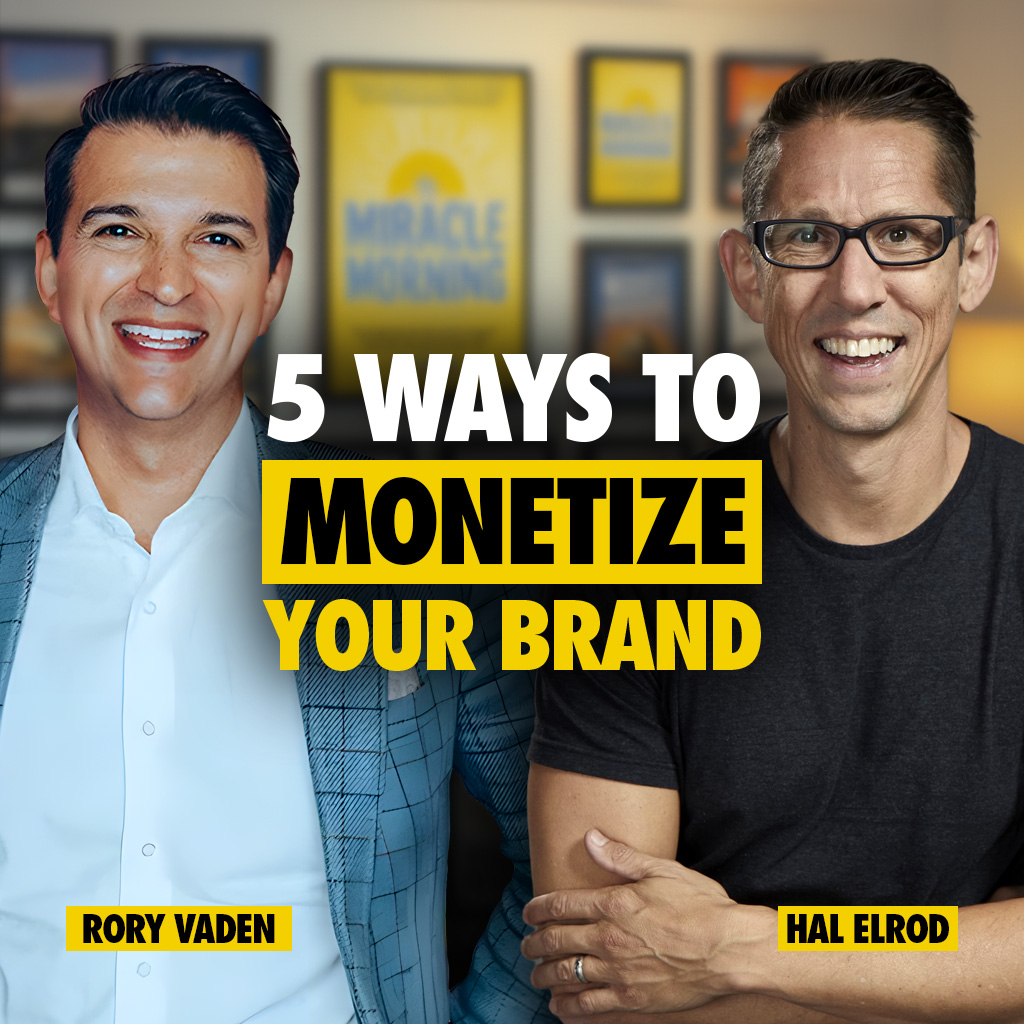
Achieve Your Goals with Hal Elrod
604: How to Grow and Monetize Your Personal Brand with Rory Vaden
00:45:04
When most personal brands fail to achieve their full potential, it’s not because the message isn’t valuable; it’s generally because the focus is diluted, the strategy is scattered, and the mission gets lost in the noise. Most entrepreneurs...
Loading summary
Transcript62 lines
- [00:02]
A
Hello and welcome to the Achieve your Goals podcast. The show that empowers you to wake up to your full potential and achieve your biggest goals and dreams. I am your host, Hal Elrod and I invite you to join us each week as we share actionable strategies to take your life to the next level, as well as interview world class experts and entrepreneurs who have achieved extraordinary goals themselves. And we ask them to give you a peek behind the curtain and teach you exactly what you need to do to do the same. Ready? Here we go. Welcome to welcome to the Achieve youe Goals podcast. I'm your host, Hal Elrod and today it is my great pleasure to bring on my friend and author of the new book, wealthy and well known Build you'd Personal Brand and Turn youn Reputation into Revenue. Rory is also an eight figure entrepreneur. He walks his talk and he's a Hall of Fame keynote speaker. Now his expertise focuses on helping individuals build a distinctive and influential personal brand that will enable you to reach and impact more people while generating more income for you and your family. And today he's going to share why your personal brand is as much, if not more a spiritual mission than it is just a financial decision, why pursuing multiple streams of income is the wrong approach and the importance of having a primary business model. He's also going to share the five different ways to monetize a personal brand starting immediately and a heck of a lot more. So it is my great pleasure to introduce you to Rory Vaden and have him help you build a multimillion dollar personal brand that can help millions of people transform their lives based on your expertise. Rory Vaden, it is good to see you, brother.
- [01:44]
B
Brother, it's always good to see you. I'm so inspired by you and always have been and honored to be here with your people.
- [01:50]
A
Yeah, no, this is cool. We have a lot of love for each other, I think. So it's really, you know, even before we hit record, we're just vibing and connecting and edifying each other, you know, so we got all that out of the way, all the touchy feels, so now we can get down to business.
- [02:04]
B
I mean, I would just say because you know, like obviously we work with personal brands and we got into this space to help mission driven messengers. We got into this space because we felt like there are people who can change the world, who care about changing the world and they're getting overshadowed by people who want to just make money and want to take advantage of people and like you do represent everything that we want to be about. Of, like, the people we want to help and be a part of their journey. And like, that we want to promote. And we think the world needs more people like Hal Elrod that actually are doing it for the love of humanity and making a difference. And it's great. You know, we want to make money, too. We want to make lots of money, and we want our clients to make lots of money. But it's like, money is subservient to Mission, and you've always been that guy, and I've always loved that about you.
- [02:48]
A
I appreciate that, man. And what I love about you is that you have done all the legwork to figure out how to get people like me and get the message out there in just a bigger way. Your clients, for those who don't know, I mean, Ed Mylett and Lewis Howes and Amy Porterfield, some of the biggest names out there that are reaching millions of people. And a big part of that is because of you. In fact, you know, I'm. One of the reasons, or the main reason I had you on is your new book is my business bible right now. Like, this is my. So it's wealthy and well known. Build your personal brand and turn your reputation into revenue. It's not just I'm reading it. I've read and marked it up. And then now it's like, there's so much. It's a masterclass where I just keep going back to it and back to it. I send pictures or I leave voice notes to my team. I'm like, okay, you guys. So on page 82 of the book, like, I just learned this strategy. We've got to implement this. So, yeah, man, thank you. Thank you to you and aj, Your wife, who co authored this book with you.
- [03:40]
B
Yeah, well, thank you. That's such an honor. And maybe we should just do this right now, because you were just talking about it like, one of the reasons you had me on is I said, yeah, so AJ And I co wrote the book. We hit the New York Times bestseller list, which is my second time, her first time ever. And part of what we're doing is we're giving away the entire audiobook for free. I mean, you were holding up a physical one. But not only did we write this book, we published it under our publishing company, which is called Mission Driven Press. And we structured an arrangement with Simon and Schuster so that we could eliminate gatekeepers from major publishing. So we own that book. And part of what that allowed us to do is go, let's give it away for free for anybody. So Anybody who wants it on audio at least can go to freebrandaudiobook.com forward/elrod, right, for Hal Elrod. So freebrandaudiobook.com elrod they can get it for free and listen to it. And then of course, if they want to buy a physical car, they can do it, but, like, we're giving it away. It is that mission, man. It's going like, we want to help the people who want to change the world. And a lot of our clients, how they feel like the world's best kept secret. It's like they look at other people on social and they're like, I have more valuable advice to share than most of what is being shared. Like, they look at other speakers and they're like, I could do that. But they don't spend as much time marketing and decidedly they're more humble. And so in some ways they get overpowered and thus overshowered by people with bigger ad budgets and bigger teams and who are more financially focused. And we're just kind of combating that. So for to be part of your playbook and your team and like, man, I say look out for Hal because you guys have done so much where I go, taking what your organic momentum is and then coupling it with like a lot of our systems and strategies. It's like, I think you're barely just getting started.
- [05:29]
A
Hal, I appreciate that. I said I was. I was on a Miracle Morning team call with our developers in Pakistan and we've got admin from the Philippines this morning. And so people, it was as late as 11pm and then here it was 10am and that's what I said. I said, y', all, the Miracle Morning mission, right? This is about impacting people's lives. And if you feel ever like your job, you've been doing it a long time, it's getting stale. I said, go to Amazon or go to the App Store and just read the latest reviews and hear the people saying, I just discovered this and it's transforming my life in this amazing way. So, yeah, man, I appreciate.
- [06:04]
B
And let me say this. So one of the principles in the book, which is one of my favorite principles, is we say the best form of marketing in the world is a changed life.
- [06:15]
A
Yeah.
- [06:15]
B
Not a pretty website. It's not beautiful colors, it's not the right fonts. It's not an amazing funnel. We do all that stuff. We do lots of strategy, but at the end of the day, it is a changed life. And if your message changes lives, that's the most important marketing you ever do. And again, you are a great example of that. Where you go, like, the work that you created is changing lives. And what happens if you do this personal branding, right? Your customer force becomes your sales force. It's like so many people think that the sale is made and finished when we collect cash, but to a mission driven messenger, we go, no, the job isn't done when I collect their money. The job is done when I deliver the result to my customer that they signed up for, when they experience the transformation that I promised. And when you do that, you know, like you mentioned, so many of our clients, Trent Shelton, John Maxwell, Cody Sanchez, like, so many of our clients are just like executing and succeeding. And it's like, frankly, that has more to do with them than it does with us. But because our clients keep winning, they then tell people about us. And that's what you do. And that's what we want the people listening to do is to go, yeah, we want marketing, we want tactics, we want strategy, we want AI, we want funnels, we want data, we want dashboards, we want systems, we want advertising, we want all those things. But at the end of the day, it's like, we want to create work that changes a life. And if that's the only thing you get right, then it's Miracle Morning and it's all the reviews and it never gets old. Changing a life never gets old.
- [07:56]
A
I mean, that's a great quote. I love that. Changing a life never gets old. I couldn't resonate more. And that brings up when I'm speaking sometimes and someone tells me, you probably hear this all the time, but your book. Yeah. You know, I go, I've never heard it from you. This is the first time I've ever heard it from you. Right. Like, so it is. Yeah. It never gets old. Let's zoom out and ask the big question. You know your expertise around personal branding. I've watched many of your interviews on YouTube and you sometimes define it differently as digitizing your reputation. Am I saying that wrong? Digitization of reputation.
- [08:28]
B
Digitization is what personal branding is. Not is. It's not a lot of the things people think of. It's not a website, it's not social media, it's not a YouTube, it's not a podcast, it's not logos, it's not fonts. What it is, is, it's personal branding is the digitization of your reputation. And the full definition we would say is it's the formalization, digitization, monetization and multiplication of your reputation. But it starts with being an amazing person in real life. We don't want to try to fake our way there with hacks and gimmicks and tricks. Like, you can't hack your way to changing someone's life. Like, you don't gimmick your way into changing someone's life. So it starts with your offline reputation, your offline expertise in going, what have you earned the right to talk about? In what way can you transform lives? And then once that's dialed in, then we go, all right, we're going to teach you how to package it, commoditize it, and then monetize it and multiply it. And so that's how we think of it.
- [09:34]
A
If you struggle to fall asleep or stay asleep, I have a supplement that I take that I've taken for about three years now, virtually every single night. I highly recommend it. It's called Nightcaps by Cured Nutrition. It is a CBN and CBD oil supplement and CBN supports your body's natural sleep rhythms throughout the night for deep restorative sleep that leaves you feeling refreshed and ready to rise in the morning. Highly recommended. I book in my days with Cured Nutrition. I take their flow gummies in the morning. I take nightcaps at night. And you can get 20% off of both of those products. As a listener of the Achieve your goals podcast, head over to cured nutrition.com/ford/hal. That's cured nutrition.com/forward/hal and use the discount code HAL for 20% off your entire order. And if you do a subscription, which I do, a monthly subscription for both of those products, you get an additional 20% off that stacks on top of the 20% as a listener so you can save a bunch of money and it'll help you fall asleep and stay asleep again. Cured Nutrition Nightcaps in the evening and I start my day with flow gummies every single morning. And I hope these products will help you and enhance your life as they have for mine. Enjoy the rest of the episode. You just said something that I'm going to read the back cover of your book. The quote from page 67 of the book you have at the top, you are most powerfully positioned to serve the person you once were. And I love that. When I left my corporate or my sales career, I was like, what am I qualified to do? I'm like, well, all I've done is sell a lot of Cutco. I'm going to launch a coaching one on one coaching where I'm coaching Cutco reps because I'm best positioned to serve the cut, corrupt that I once was. Right. So when I read that on the back of the book, I was like, oh, I so resonate with that. Who should care about a personal brand? I'm just wondering if I'm my audience and I'm listening and I'm going to, who does this apply to? Like, I'm not an author or an influencer. I don't maybe want to build a social media following. So who should care about a personal brand and why is it important?
- [11:41]
B
Yeah, So I think there is a tactical answer to that and then there is, I'll call it a spiritual answer to that. The tactical answer is anyone who needs to drive leads or awareness for something should care about building a personal brand. Right. From a tactical perspective, we don't view this as influencers or social media or vanity. We view this as driving warm leads into your business 24 hours a day, seven days a week. But for us, this isn't just a tactical or a professional thing. For us, this is a spiritual game. You know, and I hope you don't mind me sharing. You know, I'm very open. I happen to be a hardcore Bible thumping Jesus freak and so is aj, my wife and business partner and co author. We believe that the highest value of someone's life is to provide the highest value they can to other people. So many people are chasing happiness and when you chase happiness, you end up following a trail towards indulgence of like, what makes me happy, what do I want, what do I need people to give me, where do I need to go, what do I need to eat, drink, how do I need to feel? It's a very self centered path and you don't end up feeling happy. The people who end up feeling happy don't ask, how can I be happy? They ask, how can I be useful? They ask, how can I be helpful? They go on a journey. What we realize is that our deepest purpose in life comes from helping other people go through things we have been through. And that is where that became our flagship quote. That's also on the back of the book. It's also inscribed on the front of the book. If you take off the jacket, it's an Easter egg. I don't know if you've seen it, but if you take off the jacket of the book, it says, I'm gonna.
- [13:27]
A
Look for that right now. Let's go.
- [13:31]
B
You are most powerfully positioned to serve the person you once were. And we didn't actually know that when we started the company. It was after we had done about 2,000, you know, we work with human clients one on one. That's what we do. And when we work with people one on one, we started to identify this pattern, like, over and over again, of like, this is the shortcut, like, this is the secret to finding someone's uniqueness is realizing, oh, for all of us, you're most powerfully positioned to serve the person you once were. Why? Because your credibility doesn't come from degrees. It doesn't come from media appearances, it doesn't come from third party validation. Your credibility, frankly, comes from your pain. It comes from the fact that you have experienced the heartbreak, you've experienced the setbacks, you've experienced the failure, the rejection, the challenges, and you've overcome those. And the credibility comes from the fact that you've actually walked the freaking path. And so anyone else who happens to be on that path, you can be their guide and you speak to them more powerfully. Right. It's very obvious what you do, right. Like surviving cancer and sales rejection. And like all of the ways you've inspired people, you're inspiring them because you're helping them do things and solve problems that you've solved. Same is true for us. Right. Brand Builders Group has gone from zero to $20 million business in seven years. How did we do that? Well, we exited our first company, which was a sales training company. But my biggest dream was I wanted to know, how do you become a. How do you write a book that gets that New York Times bestseller logo on the COVID And how do you get a book in an airport? And how do you get to be the guy speaking on a stage in front of an arena full of people? And how do you make an audience laugh? And how do you create a TED Talk that goes viral? And how do you create content that's original, not that's generic regurgitated ChatGPT stuff, but original thought leadership. And we've just spent our life doing that. And so if someone has that calling on their life to go, I know I have a message inside of me. We believe the calling on your heart is the result of a signal that's being sent out by somebody else who needs you. And that person actually needs you more than you need them. And so we just exist to help clarify and codify that gap.
- [15:56]
A
Yeah.
- [15:56]
B
And bridge that gap.
- [15:57]
A
Yeah. I love it. Right now. I think that personal brands, it's a popular topic. However, I would say if we're looking at the majority of personal brands, they struggle to make significant income. And I know that your publishing imprint is Mission Driven Messengers. That's who you talk about in the book. That is literally who you serve. That's who your clients are. But why do you think the majority of personal brands struggle to make a significant income?
- [16:22]
B
You ask the question, why do they struggle? And then also, you know, why is it important? But to make income? The reason why they struggle is I think people confuse humility and confidence and arrogance, and they're all mixed up. People inadvertently believe that building their personal brand, to build a personal brand is all about promoting yourself. They have a limiting belief that says, ooh, building a personal brand means I need to show how rich I am and I need to have a private jet and a fancy car and a big house. And I need to tell everyone how smart I am and how successful I am and all of my famous friends. And they equate building a personal brand with a bunch of things that have nothing to do with building a personal brand. A great personal brand is not self centered. It's service centered. And the moment you flip that switch and you go, this is not about me being famous. This is about me sharing what I have that's useful for people and trying to help the people out there who are hurting and who are seeking and searching and who frankly could be quite literally on their hands and knees praying for answers to questions that I know the answer to. Because I've walked down the path and to go, if I have the cure for cancer and I don't have the courage to tell anybody that it exists, that is not humble, that is selfish, that is a disservice, that is, I think, dishonoring to the creator. To go, you were created to help other people. I've put you through a series of struggles that have led you to discover answers that not only have helped you, but can be useful to others. And to go, that's what this is about. And the moment that switch flips, yeah, now they can start to make money. Not because they're focused on making money, but because making money is literally a byproduct of how much value you add in the world. And if we can multiply the value you're adding in the world by utilizing the tools and multiplying how many people are exposed to that message, Great, then money is great. If money is a byproduct, it's beautiful. Money makes a terrible master, but it is a great scoreboard that measures the contribution you're making to other people because you get paid for the value you create in the world. And so we can make revenue as long as revenue is subservient to reputation, we can make money as long as money is subservient to the mission, we can make income as long as income is subservient to impact. And again, the reason why they don't make money, they have a limiting belief that they have to be flipped. And it's not. You can focus on impact and create income, you can focus on mission and create money, you can focus on reputation and revenue will show up. And once that switch flips, I mean We've had 13 of our clients, 13 of our clients are making more than $1 million per year, more than what they made when they started working with us. Is it because we teach them the most brilliant things? I mean, we try to do that, but it's really because they get crystal clear that their message matters, their mission matters, and that they can throw themselves full heartedly into helping others and let money just be a byproduct and like they'll make more money than they ever need to make.
- [20:00]
A
There's a few things that come up for me when you're sharing. That one is going back to what you're talking about around focusing on helping people. And the more you serve, the more value you add. That's what you're paid on. I learned this from a mentor when I was young and it was the key to success is to get off self and on purpose, right? Stop worrying and focusing all about you and how you're showing up and how you're perceived and, and just your own issues and your own lack of I don't have enough this or that and just focus on purpose. How can I help the most amount of people? And then that leads into the zig ziglar quote that I've lived by, which is like, you can have everything you want in life if you help enough other people get what they want. And when I heard that, I called it being selfishly selfless. Like, hey, look, it's okay to want to take care of yourself, right? It's not about altruism and I don't care what happens to me and my family. I'm just here to serve. You know, you can know that, hey, I want to be successful myself and I want to have financial security and to take care of my family and provide. But like you said, you flip it from I'm going to get off self on purpose, create a mission that's bigger than me, and then I'm going to put all of my energy not into me, but into my mission.
- [21:07]
B
Right.
- [21:08]
A
And then. And I heard you say something, and I think in the end of my let conversation, I was watching, which is that something along the lines of it happens eventually. Everything you want might not happen right now, but if you continue to stay on mission, I'd love for you to say that much more eloquently than I just did.
- [21:23]
B
Yeah, yeah, yeah. So that's one of the principles that we kind of stumbled into early on and we found it to be true, is that you always get paid for how hard you work and for the value you provide. Sometimes it's now.
- [21:37]
A
Yeah.
- [21:37]
B
Usually it's later.
- [21:39]
A
Yeah.
- [21:40]
B
But always it's eventually. It's not the theory of reciprocity, it's the law of reciprocity. It's the way that the world was designed and set up. Right. You can't constantly give and add value to other people and not have it come back to you. Right. I often. People often comment on. They go, like, you seem to give away all the secrets on the podcast or like the book. They're like, how can you spend years of your life writing a book and then give it away? And it's because we go, yes, we want to add value, but we've done this enough to go. We trust that even if we try to give it away for free, what shows up is way more money. You can't out give God, you can't out give the universe. And all of us feel this way, right? When someone does a favor for you, whether they take you for the airport, they watch your kids, right? They cook you a meal, they make a great introduction for you, they give you some free advice, Even when someone comments on your social media or shares, they write a review you want to give back to them. It's hardwired into this. So you always get paid eventually. Now, what's weird is it's. It's not always necessarily from that direct relationship. Sometimes you give a lot to one person and they don't give much back, but on the whole, it always comes back again, you know, not to go to Jesus on everyone, because not everybody believes in that. But like, you know, one of my favorite Bible verses is in Malachi, and it says, it's one of the only places where God says, test me in this. And he's talking about the tithe, and he says, bring the tithe into the storehouse, which mathematically, that was a tenth, right? A tenth of our earnings. He says, bring your tithe into the storehouse and see if I don't throw open the floodgates. Of heaven. Right? And he's saying, test me. Like, trust me with the idea that if you give a little, I will bring it back to you. Whether you're a Christian or not is just going, It's a law of human nature. It always works that way.
- [23:36]
A
All right, let me ask you a question. How many apps are you using for your personal development? Maybe a meditation app like Calmer Headspace, an affirmation app like I Am, or think Up a book summary app like Blinkist, a journaling app like 5 Minute Journal, a visualization app like Envision, an exercise app like 7 Minute Workout, and maybe even a habit tracking app to keep it all together. That is a lot to manage and a lot to pay for. What if you could replace all of them with just one app? Yes. It is called the Miracle morning app, and it is essentially seven apps in one. Hundreds of guided meditations and breathwork tracks, a full library of affirmations, plus tools to create your own visualization prompts for 10 key areas of your life. Guided workouts from 2 to 10 minutes long, book and audiobook summaries of top personal and professional development books, and a journaling tool with guided prompts. The wheel of life or a blank page to write freely. It simplifies your morning, saves you money, and helps you start every day with clarity, purpose, and energy. And it's one of the only apps in this space with a 4.9 out of 5 star rating. Try it free for 7 days. Just search Miracle Morning in your app store or go to miraclemorningapp.com to get started. All right, back to the show. I'll echo the spiritual perspective, which is for me, whenever I'm in fear and stress, because in the moment, like, business isn't going well and this is, you know, an income and I have these huge expenses, I a tax bill or whatever it is, and I'm stressed and I'm in fear. And whenever I get into prayer, I usually journal as I'm kind of praying and meditating and just letting things flow through me. And to me, these divine downloads, as I, you know, I call them, it's always Hal, how many times do I have to tell you? I've always protected you. No matter how low you've been, no matter how much you've gone through, I've always protected you and I have always provided you. Yes, 2008, you lost your house. You lost it all. But that was just a season. And then it came back. So why do you think that for 46 years, you've always been protected, guided and provided for. And yet you think, not this time. Like, this time it's not going to work out, you know, so that's so good, Hal.
- [25:54]
B
And it points to when we say, for us, this is spiritual. And not everyone has to be spiritual. And certainly not of all of our clients. Not, not even our employees are all Christian. Many of them are not. But when we say this isn't just a professional or a tactical thing, but a spiritual one, here's something that really blew my mind. So one of the things we discovered in this journey, the real way to know you're being self centered about something is if fear shows up. If you're scared, love that you are being self centered. Think about like recording a video. I'm only scared if I'm like, okay, is my outfit cute? Like, does my makeup look?
- [26:33]
A
How am I going to cross? What are they going to think?
- [26:34]
B
Am I going to say the right thing? Are people going to say, oh, that's lame, or, oh, you're, you're trying to. Fear is such a self centered concept. We only feel fear when we're like, am I going to make enough money? Am I going to be smart? What are people going to think? But here's what's magical. It's so magical. I go, it has to be spiritual. There is no fear once the mission to serve becomes clear. Yeah, there is no fear when the mission to serve becomes clear, right? And I go, the moment I just go, I just want to help other people. And this is like, if you think about like firefighters as example, a lot of times we credit first responders with like superhuman courage. And I'm not going to say they're not courageous, they certainly are. But in my interactions with, with them and you know, we interview lots of Navy SEALs and stuff that we've had on our podcast and for our various books and stuff, what I really see is a life not defined and marked so much by superhuman courage, but superhuman service. They go, my fear is irrelevant because there's a baby inside that house, right? My fear is irrelevant because my country is at risk. My fear is that relevant because that woman is being attacked. It's service is where our strength comes from. And you go, if you're driving down the road and you see a car flipped over that's on fire and you run over to help the person, you're not thinking, does my breath stink? Is my outfit cute? Do these pants make my butt look big? Like, none of those thoughts are there because you're going to help someone like all of us are in our best self. Our highest self is to be our highest value to others when we're serving. And what blew my mind is to go, oh my gosh, fear is the signal that I'm being self centered.
- [28:25]
A
I love that. Yeah. And service is the spiritual freedom from fear, the liberation from fear to be in service. I love that. And that just goes to kind of show like, oh, maybe that's what life's about. Maybe that's the purpose of life, is for each of us to serve one another to the best of our abilities and then everybody wins, so to speak.
- [28:44]
B
So I think it is right again. So biblically, somebody actually asked this of Jesus. They said, basically, there's whatever it is, 613 laws in the Old Testament or something. And this teacher says, well, Jesus, what are the ones that matter the most? And he says, it's simple. Love God and love others.
- [29:00]
A
Right.
- [29:00]
B
Jesus answers that question directly. Now, even if you don't believe in God or you don't believe in Jesus, then you go, okay, just take half of it. Love others. And you go like, that's a pretty dang good answer. You never get tired of serving other people. It never gets old with helping other people succeed. Right. So. And your fear goes away. It's magical. Yeah. So you want to talk tactics.
- [29:20]
A
Exactly. We want to shift from spiritual to tactical. And I want to start here. You've talked a lot in your videos about the importance of a primary business model, which kind of can be counter to, I've heard you had a video go viral about multiple streams of income is not the way.
- [29:34]
B
Right.
- [29:34]
A
So you talk about a primary business model, tell us what that is and specifically what the two different lenses are that you look through when you're thinking about a primary business model.
- [29:43]
B
Yes. So let me tell you a story about a friend that we both have in common. Okay, so Lewis Howes was our very first client. And in 2018, when we started working with Lewis Howes, he had a podcast that had like 30 million downloads. He was doing well, but he was not a celebrity. And when Lewis called me, he said, hey, the podcast has grown a lot, you know, but I'm spread thin. I'm not making a lot of money. I just feel overwhelmed and I'm working so hard and we're generating multi seven figures in revenue, but I'm not keeping much of it. I'm paying all these people to do all this stuff. And he was just like, hey, can I spend some time talking, creating strategy with you? That's where brand Mills Group was born. Well, the very first thing that we did when we were working with Lewis is we said, we take everyone through an exercise called the revenue streams assessment. And we said, okay, list out all your revenue streams. Louis had 17 revenue streams. He only had, like, nine employees. And we're like, louis, that's crazy. And he goes, well, wait a minute. He goes, no. I've been taught my whole life, multiple streams of income is how you get rich. And I said, louis, multiple streams of income is the dumbest advice on the Internet, and let me tell you why. Nobody who got rich got rich from multiple streams of income. Nobody. Jeff Bezos got rich from one company. Amazon. Bill Gates, Microsoft. Jamie Krin, Lima IT Cosmetics. Sarah Blakely had Spanx. You can go, Jennifer Lopez was a dancer. Right. Jerry Seinfeld was a comedian. The Rock, in the beginning, was a wrestler. Nobody who got rich got rich from multiple streams of income. The way you get rich is from one amazing stream of income. And one of the things we say is if you have diluted focus, you get diluted results. Now, the reason you hear that is once you get rich, then you diversify, because then you have money to hire people who can be focused, and you can hire people to do things. So, yes, now the Rock owns a tequila brand, a clothing line, a football league, a sports drink, a coconut water, a men's facial product, a production company. But in the beginning, the Rock was just a wrestler. You know Gary Vaynerchuk? Yes. He's on all the platforms today. But in the beginning, he talked about one topic on one platform. Wine and YouTube. In the beginning, Amazon only had one product. Books, right? Yes. They sell everything today, but how did they get there? You can't look at what rich and famous people are doing today. You have to look at how they got there. And people go, well, what about Elon Musk? Right. In the beginning, Elon Musk made all of his money from one company. PayPal.
- [32:31]
A
Yeah.
- [32:31]
B
Then he diversified into all the stuff that he does today. So if you're a small company, you go, how do you get rich? You don't get rich by having lots of marginal performing streams of income. You get rich from having one freaking amazing stream of income. Well, to Lewis's credit, to come back to that story, we said, and this is like, Lewis has been so generous in his praise of us and his events and podcasts. Like, I've been on the show several times. But, like, we didn't teach Lewis a secret podcasting hack or I never taught Louis anything about how to go viral or how to be a great interviewer. The only main thing that we did do for Louis is we said, Louis, of these 17 revenue streams, there's this one, that's the podcast, which seems to be the one you put the least amount of time into. It's the easiest for you to do. It creates the most results with the least amount of effort. What if you shut all this other stuff down and went all in on the podcast? And to his credit, he was the one with the cojones to do it. He shut down 14 revenue streams overnight. One of them was a multi seven figure mastermind that, that I was helping him lead. We were getting value from doing this together. And we decided, you know, again, to his credit, like, this was a conversation, a 30 minute conversation in the hotel lobby. And he was like, at the mastermind, he's like, I'm going to go upstairs and we're going to tell him tomorrow that we're shutting this down. And that's what we did. And it was like, scary. In the next two years, he went from 30 million podcast downloads to 500 million.
- [34:13]
A
Wow.
- [34:13]
B
And now over a billion. And he did that by focusing more on fewer things. And that's the strategy. So we help everyone go, what's your primary business model? And a lot of what we do is a series of one things. When we first start working with people, we go, quit trying to be everywhere all the time to all the people selling. You're talking about too many topics on too many platforms to too many audiences, trying to sell too many different things. And you're bouncing off the wall. Because if you have diluted focus, you get diluted results. Instead. Our strategy, which seems to have worked very consistently, is we say, figure out, what one problem do you solve, what one audience do, you solve that problem for? What one solution do you have to that problem? What one revenue stream matters above all others? What one traffic source can we master to drive people to one lead magnet, to request one free call to drive them to one sale? And it's like if you get clear on all those series of one things, we call it Sheehan's Wall. Because I, I named this after a colleague of mine, Peter Sheehan, who originally taught me this concept in a corporate environment, which is like, you know, if you take a, a sledgehammer and you try to break through a wall, if you hit all these different places on the wall, nothing happens to that wall. You just get frustrated and you work harder, but you're just like chaotic. But if you hit the Same spot.
- [35:36]
A
Over and over and over.
- [35:39]
B
Eventually, you break through the wall. And that's what we've done for ourselves, our clients, and now several people. And it would be my advice to anybody listening, you get rich from one amazing stream of income.
- [35:50]
A
Yeah, I love that. It's common sense when you go, well, yeah, it would make sense. If I'm putting all my energy, right, Sheehan's wall into this one thing, I'm going to figure out so many different nuances and, oh, this is working. That's not working. What about this? Now? I'm going to develop a new relationship which leads to a new opportunity, right? All this one thing. For me, it was the miracle morning. My goal was to sell a million copies in year one, and I was 987,000 copies short. Like, abysmal failure. 987,000 copies short. And I dusted myself off and I'm like, I'm committed to this mission. I don't care if it takes me 30 years. Although at 13,000 copies a year, it takes 76 years to get to a million. So I was going to be 110 years old when I got there. But. But the point is this. It took six years. And to your point, when you're putting forth, you always get paid for the work you do. Not always immediately, but eventually, six years later. It's not like I was like, oh, man, I'm so mad that it took me six years. Instead, hindsight, I'm like, oh, there's no way I could have done it in one year because I didn't meet that. That agent, Celeste, my agent, until year two. That led to 42 foreign publishing deals that led to this opportunity, right? Like, it had to happen exactly as it did, but it was the. The work day after day after day for as long as it took, and it took a lot longer.
- [37:07]
B
So in those six years, you're banging your head against the wall, but, like, you're going to get paid the rest of your life for that work, right? You get royalty checks forever. That is how it is. But there's nobody there cheering you on when you sold 13,000 copies. Going is, keep going, Hal. Just five more years of just getting your face kicked in. And by the way, you're going to get cancer. And, like, by the way, like, you're going to lose your house. Like, no one's there cheering you on. You got to be the person cheering yourself on. You got to be the person going, I'm so committed to this mission. I don't care if I don't make any money. I'm going to do this. And then one day you break through the wall, and then the whole wall comes cracking down.
- [37:49]
A
Tipping point, right?
- [37:50]
B
Tipping point. And now all of a sudden, it's like, oh, my gosh, I get paid so much more for how hard I work. Like, I would do this for free. I'm making more money than I've ever made. It's easier than ever to get clients. I get more referrals. I meet more cool people. Our clients all succeed, and then they go, tell everybody about us. And like, in your case, it's like the book, and it's just like, it just spreads. And you go, it was the six years, but most people give up after month three. And they go, this doesn't work. And then they never experience it.
- [38:20]
A
I've had so many authors, when I've spoken at events about books that go, man, because I have this graph I show that showed how long it took for the book to take off. And I was working and not getting paid, and so many authors. Exactly what you said. They go, I only promoted my book for three months, but I wasn't seeing the results I wanted, so I stopped. He goes, what would happen if I.
- [38:39]
B
Did it for six years?
- [38:40]
A
I can't even imagine where I'd be now with that book. I've only got about five or so minutes left. Rory and I could talk to you all day. We'll do this again, but do we have enough time? Can you rapid fire, like, what are the. I want to close out with again, More tactics for people. What are the five different ways to monetize a personal brand?
- [38:55]
B
All right, rapid fire. There's only five ways to monetize a personal brand. We call them the paid. It's an acronym, P, A, I, D, S. Again, it's in the book, which you can get for free, but you go, all right, how do I take a pile of followers and turn it into a pile of cash? It's only these five vehicles. So the P IS products. You sell physical products. You could self publish a book. You create a day planner. You do T shirts like whatever. But a physical product, A is ads and affiliates. And that's where you don't actually sell your audience anything. You sell other people access to your audience, which is what Lewis's business model is. He doesn't sell to his podcast listeners. He sells to advertisers. I is information products, right? So that's courses, certifications, membership sites. A lot of our expertise is in information products. And you're Selling information, the D is deals. So third party deals, brand deals, music deals, licensing deals, TV deals, royalty deals, those usually don't come till much later in someone's career. And then the S is services. So you sell. These are time for money exchanges. You go, I'm going to do coaching, I'm going to do speaking. I'm going to clean your house, I'm going to cook your food, I'm going to whatever, I'm going to wash your car, I'm going to, I'm going to exchange my time, I'm going to do your financial planning, I'm going to be your doctor. And people poo poo on services all the time because they're like, well it's not scalable. Well I know a lot of dentists that make millions of dollars a year like servicing people. There's two ways to scale services. One is to increase your prices. The other is to train other people to do what you do. So it's totally scalable. Right. Brand builders group to this day does one on one human coaching. And we've been able to scale a multi eight failure business and we got a few dozen employees, 50, 50 about now. So that's the only five ways you can make money is one of those five. And the goal is not to have multiple. The goal is to have one master one. And then we start talking about scale. So here's a little bonus. So when you look for selecting your primary business model, which is the one long term, we encourage you to look for what we call dares. D A R E S. These are the five characteristics of the perfect business model. So the dares are we want things that are digital, automated, recurring, evergreen and scalable. So digital means we have no manufacturing, shipping or storage costs. Automated means they're completely self serve for the clients. Recurring means they pay again and again. Evergreen means it never needs to be updated. And scalable means we can add more revenue without having to add more overhead to service it. So those are some of the frameworks that we walk people through. And it's different for everybody. It's not like a one size fits all. All of us have a different uniqueness and our core business model is part of that decision.
- [41:38]
A
I have to tell you, DARES is why my chief growth officer works with us right now. So Jeremy Reizig and I have been close friends for 25 years and I've been trying to recruit him forever. He's incredible at leading our events and all that. But I'm like Jeremy, come be full time on The Miracle Morning team. It wasn't until he went through your brand builder's 12 month program and learned about dares, and then learned about the Miracle Morning app and went, wait a minute, this is digital, automated, recurring, evergreen, and scalable. And that's literally. He's brought up dares so many times on our calls, man. So, yeah, I didn't even make that connection until you just brought it up again.
- [42:14]
B
I love that.
- [42:15]
A
Yeah, that is pretty cool. The book, everybody. I mean, this is a must read, I believe. Wealthy and well known, build your personal brand and turn your reputation into revenue. It is like a master class. You get this one book, you follow it, you don't need another one. And then you can get it for free. What's the URL again? If they want to get the audiobook for free.
- [42:34]
B
FreeBrand audiobook.com Elrod freebrand audiobook.com Elrod it's the whole audiobook. It's lifetime access to it and you know, there's no catch. You just go get it.
- [42:46]
A
Awesome. And I know we've had almost a thousand people in the Miracle Morning community that already have gone and downloaded the free audiobook, so. Well, Rory, hey, man, you and I are so aligned in mission first and, and I just, I appreciate you and the work that you're doing and I look forward to you and I being friends. Continuing friendship and working together more.
- [43:02]
B
Yeah, Amen, brother. I would second that. And I go, thanks for your example. You are what we think a mission driven messenger should look like in the world. And I would just remind anyone who's listening that goes, if you're feeling a calling on your heart as we talk about this to go, I feel like I've got a message to share. I would argue that that is a signal being sent out from other people who need you and that, that it is part of God's divine design of your humanity, that everything you've been through has been primarily for the purpose of preparing you and shaping you and molding you and making you into the person you needed to become one day to serve someone else. And that's why you're feeling that calling. Don't ignore that. It could be the very purpose for your existence. And if that's you, I hope you download the book. I hope, you know, we get to talk to you and, you know, stay plugged in.
- [43:55]
A
Absolutely. Rory, I appreciate you and everything that you said. I could not agree more, man. It speaks to my heart and I feel compelled to keep doing what you are speaking about, which is just the more we help other people. Everybody wins. So goal achievers, I love you and appreciate you again. The book is wealthy and well known by my friend Rory and his wife AJ Vadin. And you can get the free audiobook at freebrand audiobook.com forward/elrod and then if you're like me, you're going to be like I need the physical because like I need to like revisit this and underline and circle and but we might as well start with the free version and go from there. So I love you so much and I will talk to y' all next week. Take care everybody. See you, Roy.
- [44:33]
B
Love you brother. Thanks for listening. To learn more about the achieve your goals podcast and to get access today's show notes, transcript and exclusive content from Hal Elrod, visit HalElrod.com podcast thanks again for joining us. Be sure to tune in next week for another episode of the achieve your goals podcast.