← Achieve Your Goals with Hal Elrod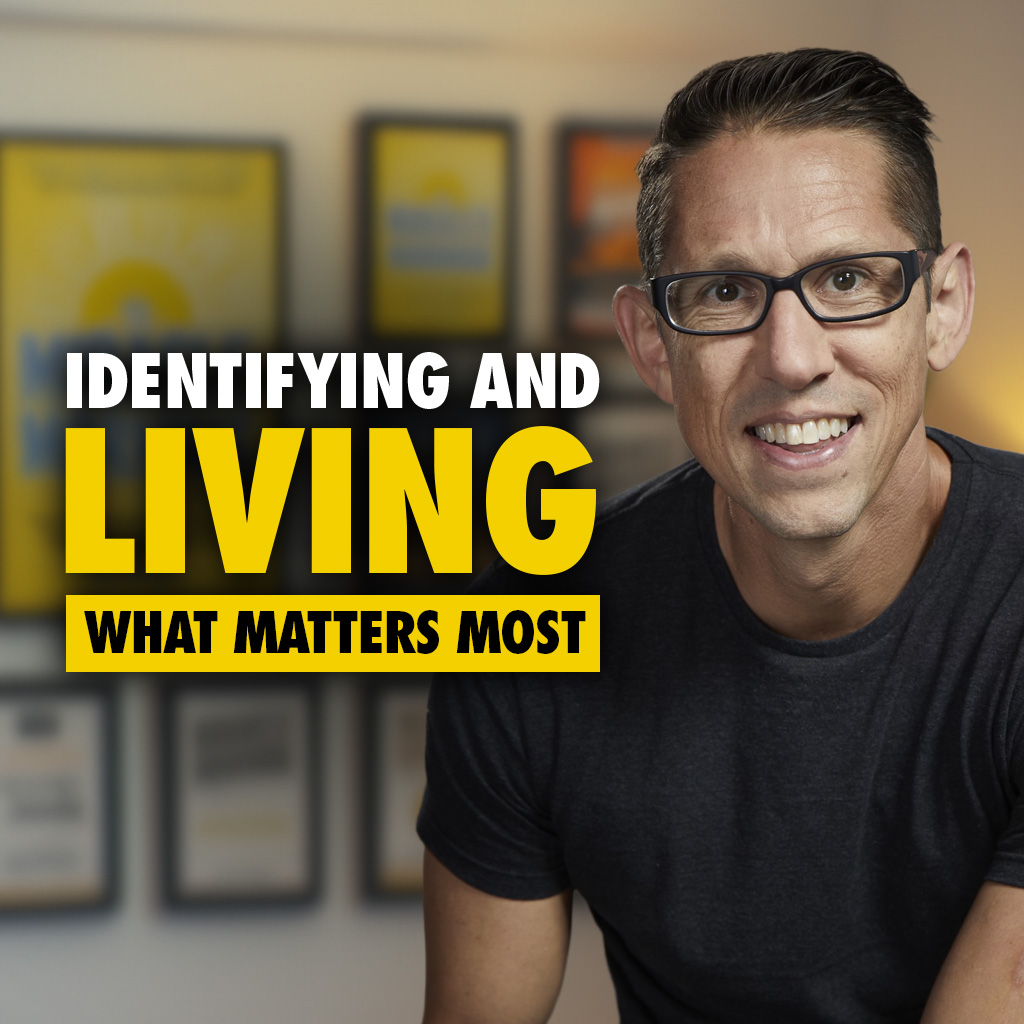
Achieve Your Goals with Hal Elrod
605: Identifying and Living What Matters Most
00:37:03
If someone asked you if your family, health, or relationships are your top priorities, you’d likely say, “Of course!”. But would your calendar or eating habits tell a different story? Today, I’m going to walk you through a simple three-step...
Loading summary
Transcript1 lines
- [00:02]
A
Hello and welcome to the achieve your goals podcast. The show that empowers you to wake up to your full potential and achieve your biggest goals and dreams. I am your host, Hal Elrod and I invite you to join us each week as we share actionable strategies to take your life to the next level, as well as interview world class experts and entrepreneurs who have achieved extraordinary goals themselves. And we ask them to give you a peek behind the curtain and teach you exactly what you need to do to do the same. Ready? Here we go. Foreign welcome to the achieve your goals podcast. This is your host, Hal Elrod. And I'm a little bit under the weather, so might sound a little off today. And please pray for me because tomorrow my son and I are supposed to go for a very special father son wilderness retreat in Idaho and we need to be better for it. And both of us are under the weather as of yesterday. Actually, by the time you listen to this podcast, the retreat will be over. So I don't know if you can retroactively pray if that's a thing. But anyway, good vibes are what I'm trying to send me and my son so we can feel better tomorrow. Because if we don't feel better, they won't let us go. And that leads us to today's podcast episode, which is what matters most, or I should say rediscovering what matters most, which by the way, might be the title of my next book. It's a talk that I've given twice now and the first time was impromptu. It was something that I felt just called to share in the moment and, and let me explain. So I was at an author mastermind last month, about a month ago, and the last day that morning I hadn't spoken at the event and the last two years I had spoken at this event. It's a small like 50 person, like a true mastermind of top authors. And I think you have to have sold a hundred thousand copies of your book minimum to be allowed to go to the event. And so these are all my peers and people that I look up to. I mean James Clear was there who wrote Atomic Habits. There's some really incredible authors who I like, reminds me of high school. I know about you, but like when I was in high school, like, oh, I'm not part of the cool group. Like these are the cool kids. And that insecurity plagues me as a 46 year old man to this day. And it's when I'm in rooms like that where I'm like, oh my Gosh, like, I don't belong here. You know, the imposter syndrome. So the last day, I wasn't planning on speaking because I'd spoken the last two years and I'm like, I've pretty much shared everything that I know about selling books and building a brand. So I don't feel compelled to share anything else. And on the last day at the event in the morning, Tiffany Elise spoke and she wrote the book Budget Nista. She's known as the Budget Nista. And she also has a show on Netflix and really amazing woman. And she was sharing a just tragic yet inspiring story about her husband who died of a brain aneurysm. And he was in his 40s, really healthy, fit. And one day he called her and said he had a headache and it felt weird. And he was going to go check into the emergency room or the urgent care. And a few days later he passed away. And she's sharing this story and the room. Many of us are in tears or choked up. And like, it was just such a gut wrenching experience that she was sharing. And as she was sharing that, I suddenly felt like, oh, actually, Hal, this voice in my head, I feel like it's the voice of God or highest. I don't know exactly what it is, but you get this like inspiration, right, where you're like you're inspired and it comes to you like an all knowing. And I go, hal, you're supposed to give a message today, but it has nothing to do with books or business or anything like that. Your message is about what matters most in life based on the experiences that you've endured and the journey you went through to identify that for yourself and then the changes that you made to your life to live in alignment with what truly matters most to you. And so this is the message I got. And I just pulled out a piece of paper and I just started like scribbling. Okay, like, all these things are coming to me. Like, I should share this story about my sister and this story and this story and I should share this. And so I sent a text message to the emcee of the event, the host of the event, Mike Michalowicz, you might know him, he's the author of Profit First. And I said, mike, I feel like I am called to give a message today. It's not about books. It's about what matters most in life. And no pressure, like, I know I'm not on the agenda, but what do you think? Would this serve the audience? And he texts back, he said, hal, I Think that's exactly what this audience needs to hear. He said, I think you're the person to deliver it. He said, and would you be open to closing out the event? Now, keep in mind, this is not like, a message I've given before. In fact, it's literally just being written as I'm sitting there in the event. And, like, the pressure of. He's like, would you close out the event? He said, 15 minutes. Is that enough to close out the event? And I said, yes. But also, I was super nervous because, again, these are my peers. And it's one thing to. I'm a speaker, but usually when I give a speech, it's like, this is a speech that I have practiced, and I have slides so that when my brain damage kicks in and I don't remember what I was talking about, I can reference the slides and be like, oh, yeah, yeah, here's where we're going. But this was none of that. So I took a bunch of notes, and I tried to, like, outline a little bit of a talk. And at the end of the event, he brought me up, and then he said, hey, Hal reached out this morning, and he said he had a message on his heart that he wanted to share with y'. All. And I thought, no better person to close out the event or whatever. So I go up there, and normally I don't have notes when I'm speaking. I mean, this is what I do for a living. And actually, I think I asked, raise your hand if you're a speaker. And, like, half the speaker raised their hand. I said, if you're like me, you don't want to have notes because you're supposed to know what you're talking about. I said, I don't know what I'm talking about. And this just came to me this morning, and I felt like I was supposed to share this with you. And so I've got notes to make sure I don't mess up. And y', all, I didn't look at my notes once. So I spoke for the next 15 minutes, and I didn't look down at my notes. I don't think even one time, it just, you could say, came through me. That's kind of how I believe, right? Like, that you're channeling wisdom beyond yourself. Or it came either through me or it just came from the heart, right? A little bit of both, I guess. And so this is the message I want to share with you. And this is a message, I think that we could. Like, this could be every week. Like, every week it could be a conversation around like, hey, what matters most in your life right now? Because it changes, right? There are certain things that don't ever change. Like health. Health always matters most, right? Like if you don't have your health, as I learned during my cancer journey, it's like, oh, none of my other goals matter if I'm dead, if I don't make it through this journey. So health to me is always like number one. Because all the other goals depend on you having at least a some level of health where you're alive and you are functional. So I think health is universal. But there's also things that during different seasons of your life, what matters most can change. So for example, if you have kids, I think for most parents, the children should be either number one on that list or very high. Right? If you are married and you have a spouse or even in a relationship. Right. Especially married though, and even with kids, like, okay, your significant other, that relationship, it better be good because you better put energy into that. It better matter most. Because if it's struggling, anyone that's married with kids can speak from experience. Then your parenting is going to struggle because you're going to fight in front of the kids and there's going to be animosity and there's going to be tension and the kids are going to feel it whether or not you're fighting in front of them. And so your spouse matters. So relationships matter most. I would argue financial security is on that list of what matters most. So there's all these universal things that are true for most, if not all of us. But then based on the season, for example, let's say your kids turn 18 and they leave the house. Well, not that they don't matter anymore, right? But if you're not in charge of their well being every day, then in terms of where they move on that list, it might not be at the top. Right. If they're an infant and they can't live without you, then they've gotta be at the top of your list. If they're an 18 year old, that is okay. If they don't talk to you for a week, they don't necessarily need to be at the top of the list. And I know that, like as I'm saying this, I always hear people arguing like, well, your kids always matter most. Do you get what I'm saying though? Right? Like the amount of energy you have to put into that isn't the same when they're gone as when they're at home. All right, so we can Agree. There are seasons of life and things matter at different times. Are you like me in that you want to optimize your energy and your focus? Well, if that is you like I do, then I highly recommend that you check out Cured Nutrition Flow Gummies. I'm telling you, I said this last week. I think I'm, like, addicted to these things. I take them every morning. In fact, yesterday I took them twice. Took them in the morning first thing, and then I took them before my workout as well. Four functional ingredients that will help you increase your focus and energy. It's Lion's Man. That improves mental clarity, focus, and memory. Ginkgo biloba enhances cognitive speed and memory and boosts blood flow to the brain. Green coffee increases alertness, reaction time and enhanced mood with 48 grams of caffeine. Very minimal caffeine, just enough to give you that edge. And then Hua Serata supports neurotransmitter function, memory, and learning. And they're all in these delicious apple gummies. I take two gummies in the morning to get into my flow state, and I highly recommend that you do the same. Head over to cured nutrition.com forward/how that is cured nutrition.com forward/hal and use the code HAL at checkout for 20% off your entire order. And if you do a bundle or you do a subscription, it stacks on top of that so you get an additional 20% off. Check out the Flow Gummies and their other products as well@curenutrition.com HAL and enjoy the rest of today's episode. So when I gave this talk at this author mastermind, I told everyone the title of this message is what Matters Most. But it has a question mark at the end. I said, because I can't tell you what matters most to you. Like, this is a very personal thing. And while there are these universal things that do matter most for all of us, ultimately what matters most for you in your life at this time is for you to decide it's a very personal thing. And want to share a quick story with you on how I realized that I was living out of alignment with what mattered most to me. And I didn't realize it, I was lying to myself. So the year is 2016, and I was 37 years old. And if you would have asked me, hal, what matters most to you, I would have said, family. My family, hands down, my wife and my kids. And I would have said that for a few reasons. One is, I think you're supposed to say that, all right, of course family should matter most. But more importantly, or more honestly, like, in my heart, I truly believed that my family was the most important thing to me. But here's the disconnect. And this is where I want to invite you to consider for yourself. Because where we're going today is identifying what matters most to you. Looking at where you are out of alignment with what matters most to. In terms of how you're spending your time, the actions that you're taking or not taking. For example, if you say health matters most, but you're eating unhealthy food all the time, you're living out of alignment. If you say family matters most, but you're working all the time and you're not spending time with them, you're living out of alignment. And so for me, I would have told you my family was number one. But if you would've said, hey, Hal, let me take a peek at your schedule. And I would've immediately, I would've gone, oh, why do you wanna look at my schedule? And you would've seen, oh, wait a minute, Hal. You say family's number one, but you sure do work a lot. And it looks like you even end up working sometimes in the evening because you don't get work done when you're supposed to be off. And it looks like there's some weekends where you're gone, away from your kids, traveling, giving a speech, and even just some Saturdays. It looks like you had to work on this last book project that you weren't supposed to be working on, but you're behind deadline, so you had to tell the wife and kids, hey, sorry, y', all, I've got to work today. That was my reality. And I asked this question a lot when I speak to any group of professionals, whether it's entrepreneurs or. Last week, I spoke to an author group, another different author group than the one I'm talking about. I also spoke to two groups of attorneys. I'll often ask, raise your hand if you have a family, either a significant other, and if you have kids, and usually it's the majority of the room that has kids, 80% or sometimes close to 100. And I say, if I were to ask you if your kids are the most important thing in your life. Kids and spouse, raise your hand if you would say that your family is number one. And every single hand goes up. And then I say, all right, thank you so much. Put your hands down. Now, if I were to look at your schedule, would it be obvious to me that what you just raised your hand and said is your Top priority, your family. If I were to look at your schedule, would that be in alignment? Would it be obvious? Raise your hand if it would. And usually it's like, I don't know, 10%, 20%, maybe at most 30%. I doubt that, though. It's usually it's not very many hands. Go back up. And so I want you to think about this throughout the entire episode today. And I'm under the weather, so I'm already feeling myself fading. So I'll probably keep it under 30 minutes. But what matters most to you, is it health? Is it your relationships, your family? Is it financial security? And often what ends up happening is because financial security, like when we're struggling financially, that becomes urgent and it becomes like an emergency. And then all of a sudden that which matters most, which is really the people in our lives. In fact, let me pause. I was going to tell you a story and I want to tell you this story because it's very important to set the precedent here. The year was 2016. I started to tell you the story. I was driving in my car and one of my best friends in the whole world, John Vroman. I've had John on the podcast before. He is the founder of my favorite group that I belong to. It's called Front Row Dads. And Front Row Dads is a mastermind for fathers. And the tagline kind of tells you what the group's about. And the tagline is family men with businesses, not businessmen with families. And it's based on the idea that very often when you're an entrepreneur, it's mostly entrepreneurs in the group. But it's like, I'd say there's probably 10%. It's a significant chunk of men that don't consider themselves entrepreneurs necessarily, but they just want to be the best husbands and the best fathers that they can be. Although there are also dads that are not married, that are divorced or in the group. So all types of dads are in the group. But. And there's also a Front Row moms group, which I imagine is just as great. But I've never been a part of that. But so John calls me. And by the way, he wasn't the founder of Front Row Dads at the time, so he was an author. He had written a book called Front Row. Oh, gosh, I'm embarrassed. Front Row Life, I think because he was the founder of a charity called the Front Row foundation. And that charity sent people braving life threatening illnesses to the front row of the event of their dreams. It was kind of, like, Make a Wish. The difference was it was Front Row. And the main difference was it was for all ages. So Make a Wish, I believe, is just for children. You have to be under a certain age. Whereas Front Row foundation would send people in their 30s, 40s, 50s, 60s, you name it. You could nominate your grandfather to be a recipient, that kind of thing. And he was the founder of Front Row foundation at that time. He'd written a book, and he was a college speaker. And he said, hey, Hal. He called me. I picked. I can picture where I was on Highway 71 here in Austin, Texas. I was driving home, and he said, hey, I was talking to a new acquaintance. And he said, they asked what he did, and he said, oh, I'm an author, I'm a speaker, and I run a charity. It's called the Front Row Foundation. And the guy said, oh, tell me more. And he tells them all about the foundation. And then the guy says, oh, are you married? He says, oh, yeah, yeah. After five minutes of talking about what he did, and it was all related to writing, speaking, foundation, then the man asked him, are you married? And he said, oh, yeah, yeah, yeah. I have a wife and I have two boys. And he said, he got off the phone, and it just struck him that when he was asked what he did, his family was an afterthought, that they were like, oh, yeah, yeah, yeah, and I have a wife and two boys. And he said he just realized in that moment that he was not living in alignment with his highest priorities. And so he called me and he said, hal, I want to figure out how to align my work so that where I spend most of my time during the week, I want to somehow align it with my family so that there's alignment between what I say matters most, my family, and how I actually am spending my time in a way that supports not only my family, but other families. And he said, so I'm thinking about, we have the Front Row Foundation. I'm thinking about Front Row Dads. I was like, I love the idea. All right, let me ask you a question. How many apps are you using for your personal development? Maybe a meditation app like Calmer, Headspace, an affirmation app like I Am, or Think Up, a book summary app like Blinkist, a journaling app like 5 Minute Journal, a visualization app like Envision, an exercise app like 7 Minute Workout, and maybe even a habit tracking app to keep it all together. That is a lot to manage and a lot to pay for. What if you could replace all of them with Just one app? Yes, it is called the Miracle Morning app and it is essentially seven apps in one. Hundreds of guided meditations and breathwork tracks, a full library of affirmations, plus tools to create your own visualization prompts for 10 key areas of your life, guided workouts from 2 to 10 minutes long, book and audiobook summaries of top personal and professional development books and a journaling tool with guided prompts. The Wheel of Life or a blank page to write freely. It simplifies your morning, saves you money and helps you start every day with clarity, purpose and energy. And it's one of the only apps in this space with a 4.9 out of 5 star rating. Try it free for 7 days. Just search Miracle Morning in your app store or go to miracle morningapp.com to get started. All right, back to the show. And then here's what he went on to say that really struck me because up until that point I was just thinking about, oh, he has this cool idea of having a business that's aligned with his family values. Awesome. Then he said, hal, here's what I realized at the end of my life, what's going to matter most to me are the people that I spent my life with. My wife and my children and my friends and my family. And. But he said, more than anything, my wife and my two kids. And he said, and my kids, they're not going to remember how many books I sold or how much money I made or how successful my business was or how many mortgage payments that I made for the family. He said, they're going to remember the quality of our relationship, of our connection, of how much time, quality time that I spent with them. And he said, so what am I doing? Like, I've got to get my priorities in order. And so that planted a seed. Not at the moment. I was like, yeah, you're right. I mean, that is amazing. Our kids aren't going to remember how much of all these things that we think are so important that really won't matter in the end. Like, think about that. How many of the things that you spend your time doing today will really matter at the end of your life. And I'm not saying that everything you do has to be a thing that matters at the end of your life. Right? Like the emails that you answer today. So this isn't about an all or nothing pursuit where you go, okay, I'm going to quit my job and just 100%, I'm going to homeschool my kids. That's not what this is about this is about leaning further in the direction of alignment with what matters most. In fact, I'm going to encourage you to just take a baby step. A baby step. The first step is actually to write this down. Write down what matters most to me. That should be a question that dominates our thinking every single day. And when I say dominates our thinking, that's a little bit of an aggressive word, but at the very least, like, it should be a journaling question that we're answering on a regular basis. Right? What matters most to me in my life. And hopefully you write those answers down and then you put them into the form of an affirmation where you're affirming every day, these are the things that matter most to me. My health, my wife or husband or my significant other, my children, if you have them, financial security, all those things matter and then some. And then it's. If you follow my affirmations formula, step one is affirming what you're committed to, so what matters most to you that you're committed to. And step two is affirming why that's a must for you, so why it's important. So you're reminding yourself, why do my children matter most to me? Why does my spouse matter most to me? Why does my health matter most to me? Why does it achieving financial security or freedom, why does that matter so much to me? That's the second step. But then the third step is which actions will I take and when to ensure that I am following through in this case, that I am living in alignment with what matters most. So if you're new to the way I teach affirmations, let me run through those three steps very quickly. Number one, affirm what you're committed to. In this case, you're affirming what. What you're committed to that matters most, which in general, that should be what you're committing to in general. Like, why would you commit to the things in your life that don't matter most? Like that would make sense, right? So step one, what you're committed to, step two, why it's a must for you or why it's important, why it's important to you. And step three, which actions you will take and when. And this is how I structure all of my affirmations, which are simply keeping my most important commitments and the reasons they're important and the actions I'm going to take to ensure I follow through. It's always keeping it at the forefront of my mind, keeping it top of mind so that I'm present To it so that I can align my thoughts, my words, and my actions and my schedule with what matters most to me. So a few months after that conversation with John, that's when I was diagnosed with cancer. And I went through the hardest few years of my life. And eight months of those, I was in the hospital. For the majority of them, I was away from my family in Houston, three hours away more often than I was with them, which that was one of the things that made it the hardest. Not just that I was sick from chemo and all of that, but that I wasn't able to see my kids. And even when they would facetime me, I felt horribly ill for about three out of every four weeks of the month. So it was during cancer that I had my real epiphany. And it was that seed that John Vroman planted about what matters most is our family, that at the end of our lives, when we look back, that's what we're going to, I believe, either regret that we didn't live more in alignment with what matters most, and you can call that your values, right. Or that we did. And so I realized, oh, I'm a workaholic. I say family is my number one priority, but I work way too much. In fact, you might remember, I don't know if it was in the miracle morning movie, I think it was. I don't know where it was somewhere. But I remember saying, and I just remembered this, that I used to schedule, like, my son would want to play during my workday, and he was 3 years old. Oh, God. If I could get anything to go back in time and, you know, have this to do again. But before I had cancer, I would be like, okay, buddy, I can play for three minutes. Or I don't remember the exact time, but I remember, like, five minutes, three minutes, maybe ten. I don't know. But I feel like I remember there being, like, kind of short time periods. And now, I mean, I'm just like. It just. It pains me as I'm remembering this, just because nothing mattered more to him or me than us spending time together. But during. Before I had cancer, I would set the timer for five minutes, and so we'd, like, play for five minutes, action figures, whatever, And I go, okay, Daddy has to go back to work. How shitty. Pardon my French. But, like, that sucks. That sucks. I regret that big time. And so let's fast forward. So before cancer, I was a workaholic, and I put my family to the side more times than I could count. And I didn't Even realize I was doing it. And after cancer, what are some of the things that I do differently? Well, even when I was still going through chemo and I was back at home, I was exhausted. But I made it a point because I couldn't really play with the kid. Like, I didn't have a lot of energy during the day, but every morning, I woke my kids up with a stuffed animal puppet show. Every single morning I was in charge was their alarm. So during school, for the entire school year, I would wake them up with these two puppets. It was a rainbow unicorn and then this like, goofy looking guy we called Derpy. And I would do a puppet show for them and they would just crack up laughing. I made it really funny. And then I would put them to bed every night with stories. So that was one of the things that I did when I was at a really low point, right. I had every excuse to be like, I'm too sick, I'm too fatigued to spend time with my kids. I made sure that I bookended my days every day with what mattered most, my kids. That was post cancer, after realizing I was not living in alignment with my family being my top priority. And so I would start with the puppet show in the morning, I'd wake them up and I'd put them to bed every single day. So that was one little thing that I did. And then I started taking them to school. And to this day, my daughter is now 16 and my son is 13. And I drive my son to school every morning and I pick my daughter up. Now, I want to be really honest about this. That is a major inconvenience for all of my professional goals. Meaning I also help them get ready in the morning. So essentially three hours out of my workday. So almost half of my workday is spent helping the kids get ready from school, driving to school, and then picking up from school. And please, none of this is like, oh, look at me. I'm so great like that. I'm not pleased. I hope that's not coming across that way. I'm just telling you how it is. And so for me, like, I give up income and I give up productivity. Two things that I definitely value. They are on the what matters most list, but they are underneath my wife and they are underneath my kids. Right? So I. And being that I'm an entrepreneur, I realize that not everyone can do that. So you're gonna have to modify these things. I'm just giving you a real life examples that hopefully spark ideas for you on how you can align Your time and your schedule with the things that matter most as best you can. And maybe that just means, again, waking your kids up before you go to work and putting them to bed in the evening. If you have kids, right? If your health is your priority, which it should be for all of us. For me, before I had cancer, another quick before and after. Before I had cancer, I ate what I thought was really healthy. But when I got cancer and I looked back and I'm like, what are the things I put in my body that are not natural or that are not healthy that might have caused my cancer? Because what's interesting is I probably ate healthier than most people. In fact, that was my identity. Like, I only eat organic vegetables and I only have grass fed beef. I spend the extra money because I feel like I'd rather spend the money on the front end than spend it on my medical bills, right? The irony of that statement that I was making that I thought was, I think I'm pretty healthy. However, again, it's interesting that we lie to ourselves unintentionally, right? We believe our own story. So my story is family is number one. But I wasn't living that way. My story was, I am a very healthy person. But let me tell you what I was doing that wasn't so healthy. Number one. I started taking Adderall. Adderall, which is a pharmaceutical drug. And this isn't my expertise. I just know that it wasn't made from the earth, it was made in the lab. I have read articles about the side effects of Adderall that are not good. It's a methamphetamine. I mean, again, you can do your own research. I'm not here to speak again. I don't have any scientific pedigree to be able to speak on the harmful side effects of Adderall. I just know that I was taking it every day, that it gave me headaches almost every single day. So because of the Adderall. And then, by the way, this is because, and this is an important point, I was valuing productivity above my health. I was valuing productivity above my health. So whether or not the Adderall had side effects, I wasn't even looking into them because I just wanted to maximize my productivity. And so I was taking it and it gave me headaches. That might have been my body's sign of being like, hey, Hal, you shouldn't take Adderall, it's giving you headaches. But instead of listening to my body, I went, well, no, no, that's okay. I Used to have. What was it? Excedrin. It's like the most hardcore Excedrin you can take back and body. So it had aspirin, acetaminophen, and caffeine. So I would take that every day in the afternoon to counteract the effects of the Adderall that I was taking and the headaches that I would get. And I don't know if you've seen the latest research on acetaminophen, but it's not good, right? It even says on the bottle can cause. I believe it says bleeding of the liver. Bleeding of the liver. I'll ignore that because it helps my headache. You know, crazy this is. Right? And then what else was I doing? I was having one beer after work every single night. One beer. And again, I justified, well, it's only one beer. Like most. A lot of people drink way more than that. They say comparison to the thief of joy. I think comparison is also the thief of excellence. Because if we compare ourselves to people that we view like, well, people do worse that some people do this or that, and that's worse. So I'm. I'm healthier than most people. Like, I don't know if that's like a. It's a lie that we tell ourselves or not even a lie because it's true, but then we justify harmful behavior because other people do more harmful behavior, right? Like, I only smoke crack once a week, and some people do it every day, so I'm better. I mean, that's a, like, extreme example. But that's what I did. So I took Adderall every day. I took bare back and body to combat the effects of the Adderall. I also drank a beer to mellow out in the evening every night. I also ate vegan ice cream, which that's not healthy. And again, this story of, well, it's vegan. Like, yeah. And it's filled with sugar and preservatives. So, anyway, I'm sorry, I don't mean to go too far on this health tangent, but I just want you to reflect this on you. Like, are there things that you are putting in your body that you know deep down, if you stop and you're honest? And maybe you would justify it by saying, well, it could be a lot worse. I know people that do way worse. Are there any areas that you're doing that right? And so for me, after cancer, it's like, oh, I'm not going to justify things that aren't good for me just because other people might do worse things. I'm going to strive for impeccable integrity in my diet. I'm going to strive to eat things that are not synthetic, that are not processed, that are not made in the lab. Right. But that come from the earth. To me, that's the easiest standard of, like, is this meant for the human body? If it comes from the earth, it probably is. So. And for me, that's organic vegetables and still grass fed beef and all of those things. So I said I was gonna go under 30 minutes. We're at 31 minutes right now. Let me wrap this up by inviting you to simply consider those three questions and do it in writing. Do it in writing, Journal this. Do it in. Combine writing and silence. Right. Like, ask yourself the question, what matters most to me? And then close your eyes and put your hand on your heart and set a timer for five minutes, ideally first thing in the morning when your brain isn't fatigued. At the end of the day, you can do it whenever. Do it now. I mean, now is better than not at all. But I like to do things like this either before bed, as I'm falling asleep, or early in the morning when my brain is calming or calm. And so what matters most to you? Write down a list. Don't judge it, just write it all down. And there's your thought. Joggers, health, relationships. And I'd get specific, like, which relationships? Significant other, spouse, children, parents. That was one thing. After my cancer, too, is I started pouring into my parents and my sister a lot more because again, I realized, oh, I'm a workaholic. I don't have time to talk to my mom and dad. And now I call them multiple times a week, sometimes every day. I call my mom, I called my dad, I called my sister. Yeah. Because again, they are on my what matters most list, and they're very high. And then also, financial security. Like, yes, that matters most. Like, you've got. That's on the list. So what matters most to you? Why does it matter? Why are these things important? The more you can articulate that, the more you will tap into the meaning and the importance and the heartfelt connection you have to these things. It's one thing to just make a list, right? That's intellect. You're like, what matters most? Health, check. Relationships, check. Money, check. Yeah, you can check the boxes and write them down. But no, no, no. It's. Why? Mm. Why does health matter most? Wow. Because if I don't take care of my body, I'm not gonna be around for my kids. If I don't take care of my body, I might join the 50%, roughly of people that are going to end up getting cancer in their lives. Ooh, if I don't take care of my body, I won't be able to have energy to be a grand like, what are the reasons that really matter? And when you connect with the why, the reasons why these things are so important, why they matter most, that's where you really get traction to make change in your life. Without the whys, without the compelling reasons of why these things matter most to you, it's a lot easier to dismiss them and go, eh, it doesn't really matter. I made the list, I wrote the list. It doesn't matter. But when you connect with the why behind and underneath each of the things that matter most, now you're compelled to step number three, which is what changes are you going to make? Which actions are you going to take? What changes to your schedule? And that's the most effective way to make changes, I find, is to change my recurring daily and or weekly schedule. For example, my wife and I play pickleball once a week because it's in alignment with my health priority. But that's not why I do it. I do lots of things for my health and exercise, but it's. It's because my wife loves pickleball. I like pickleball a lot, she likes it even more. And it's a chance for us to spend time together and do something. Not to mention we play with other couples. So it's like checking all these boxes of what matters most. What matters most, Health. What matters most, my relationship with my wife. What matters most, my relationship with my friends. Right. Like, all of these things are fun is on that list. Fun matters. Enjoying life. And I'm knocking all of those out with that. Two hours of, or actually 90 minutes of weekly pickleball that we play. So for you, what does that look like? For you, what matters most? Why does it matter? Take time. This is not just a BS podcast where you're like, yeah, that was cool. That got me thinking. No, like, you need to sit with this, schedule time, and not even just one day, write this down. What matters most? Why does it matter most? And which actions are you going to take then? Make that a rough draft. If you can do it on your computer, you might want to journal by hand, but move it to your computer so you can keep editing it and adding to it. Make this a living document that you revisit day after day after day for weeks, months, years. Because what matters most to you will change and evolve over time. But I believe think about this. At the end of our lives, when we look back, we're either going to look back with regret. Why? Because we didn't identify and live in alignment with what really mattered most to us. What else could cause us more regret than to look back and to realize we did not live in alignment with what matters most? Like, when I look back at that story I told you of my son wanting to play with me three years old, I can picture him. He was so sweet and innocent and beautiful. And I would set a timer for five minutes to play with him. Like, that's a regret that I have and I can't change it. But I can change everything else. You can't change the past. You can change everything else. If your kids are grown out of the house and you're like, oh my gosh, I was a workaholic, oh, there's no point in living in regret. But it's okay to visit regret so that it gives you a little bit of a fuel, a nudge to make changes moving forward. So if you didn't do the right thing in the past, you can't change the past. You can change everything else moving forward. All right, goal achievers and members of the Miracle morning community, friends, family, sisters and brothers, I believe we are all one family, the human family under God. And it is my great privilege and pleasure to be on this journey with you. Thank you for allowing me to be a part of your life, and I love you so much. Have a great week. I will talk to you next week. Thanks for listening. To learn more about the achieve your goals podcast and to get access today's show notes, transcript and exclusive content from hal Elrod, visit halelrod.com thanks again for joining us. Be sure to tune in next week for another episode of the achieve your goals podcast.