← Achieve Your Goals with Hal Elrod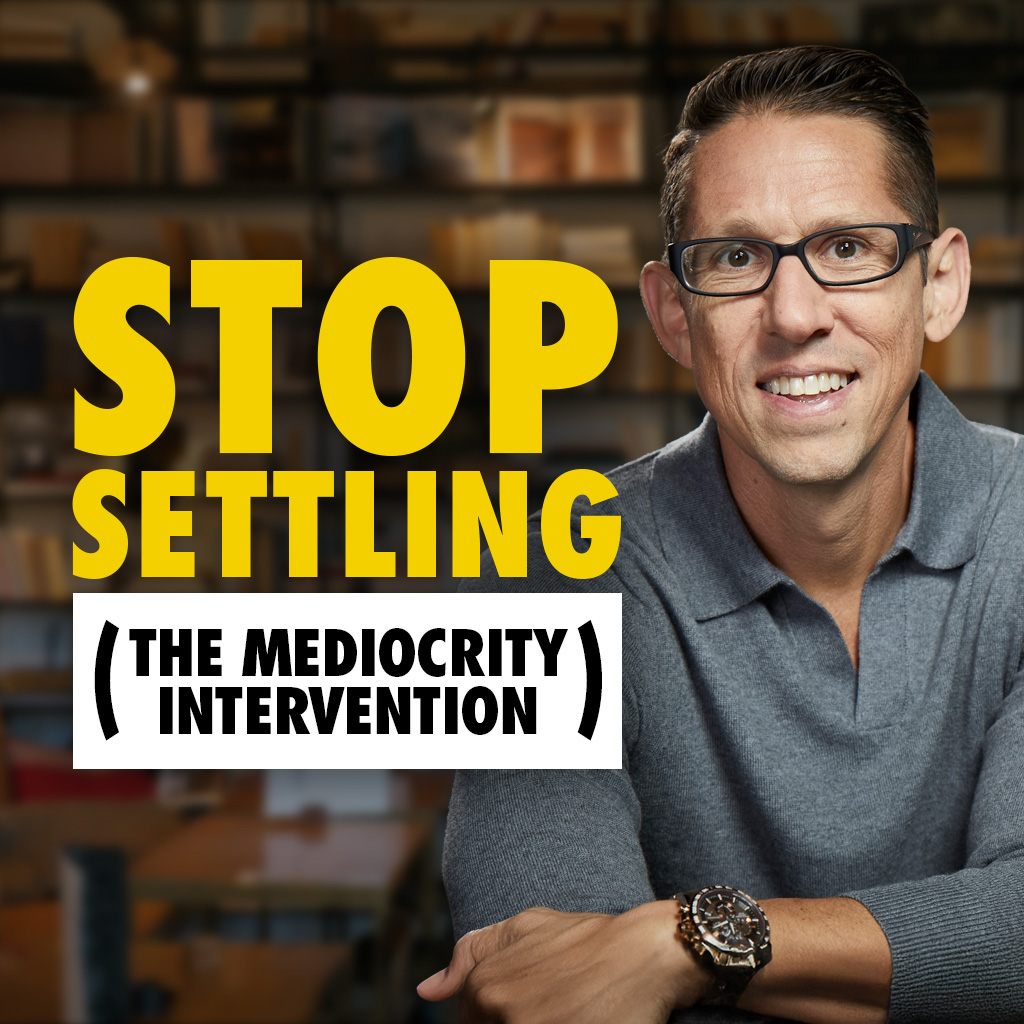
Achieve Your Goals with Hal Elrod
606: Stop Settling (The Mediocrity Intervention)
00:27:17
Do you ever find yourself going through life on autopilot—settling for routines, habits, and outcomes that fall short of what you truly want? Without even realizing it, we often accept mediocrity in our health, relationships, work, or personal...
Loading summary
Transcript23 lines
- [00:02]
A
Hello and welcome to the Achieve your Goals podcast, the show that empowers you to wake up to your full potential and achieve your biggest goals and dreams. I am your host, Hal Elrod, and I invite you to join us each week as we share actionable strategies to take your life to the next level, as well as interview world class experts and entrepreneurs who have achieved extraordinary goals themselves. And we ask them to give you a peek behind the curtain and teach you exactly what you need to do to do the same. Ready? Here we go. Hello, my friends. Welcome to the Achieve youe Goals podcast. This is your host, Hal Elrod. And last week we talked about rediscovering what matters most in your life and then aligning your schedule with your true priorities. I think it's one of the most important topics. It might be the topic of my next book. It'll definitely be part of it. This week we're gonna continue that conversation with what I'm calling the mediocrity intervention. And essentially, mediocrity, I think, is a word that has a lot of different interpretations and sometimes people view it as an insult. I view it as a reality check for all of us. I view it as a really healthy way of evaluating whether or not we are living in alignment with our true potential, with what matters most to us. The way that I would define mediocrity, in the simplest way, it's about accepting less than we want and less than we're capable of, right? And if you're honest, we've all done that at some level. Everybody has. So this is mediocrity. The intervention, if you will, is just a reminder, a reality check, an invitation to evaluate how am I living in relation to what I really want and what I'm capable of. That's it. That's all this episode is about. In fact, I'm planning on keeping it relatively short. But I want to begin with the end in mind. What I mean is, like, think about the end of your life or towards the end, when you're looking back, right? Not like when you're on your deathbed, but you know, when you're getting in your 80s or 90s or hundreds or wherever you aspire to live toward. Like, imagine toward the end, the last year, if you will, and you look back because one day this will all be over. And so at the end of our lives, I don't believe that we're going to care about the bills that we paid, but how much of our attention does that demand, right? Paying bills and making money and all of that. Not that it's not important. It's a part of life. But I don't think we're going to care about the bills that we paid or the cars that we drove or what other people thought of us. What will matter is whether or not we lived a good life. Now, a good life, that's subjective. You would define what a good life is for you. But I believe that. Again, following up on last week's episode, which was about rediscovering what matters most in your life and then aligning your schedule with your true priorities, I believe that will be the measure of a good life if you did it, meaning you lived in alignment with what truly mattered most to you. And for far too many of us, or for all of us at different degrees. Varying degrees. You know, some people are living mostly in alignment with what matters most to them. Some people are completely in alignment. And it's a small percentage, I think, for most of us, we look back and we go, oh, man, I wish I would have done that differently. Like, I have regrets. I wish I would have. I don't know if I said this last week, but I moved away from my dad. My dad moved. We were in California. He moved to live next to me and watches, you know, my kids, his grandkids grow up. And then there were some things that went on in California, like in the state that my wife and I did not feel good about and didn't agree with and decided we wanted to move to another state. And I did. And my dad was trying to talk me out of it, but he never actually said, like, how this is. Like, this will break my heart if you leave. This will make me so sad. I was so oblivious. I don't know why it didn't connect with me. And now it's one of my greatest regrets. Family is what matters most to me. Like, family is what matters most in my heart. And last week, like, we talked about, if it matters most in your heart, it also needs to matter most in your schedule, otherwise you're out of alignment. But anyway, so that's heartbreaking for me. Like, I'm sad, can't change it. But I've told my dad. I've expressed him multiple times, dad, I'm so sorry that we left. You know, and he's. I mean, my dad's sweet, and he knows I was doing what I thought was best for me and my family. And he doesn't make me feel bad about it at all, which is great, right? He doesn't guilt me or shame me or Go, ah, yeah, I can't believe you did that to me. Never once has he said that. But it's out of alignment with what matters most to me. So back to this idea of the mediocrity intervention, right? You think about getting to the end of your life and looking back and being grateful if you lived in alignment with what mattered most to you. And here's the thing. It doesn't matter what happened in the past up until today. You can't change the past. And you also can't change other people, but you can change everything else. And so it's about today. And if you didn't listen to last week's episode, I'd encourage you go back and listen to that. It was episode, I think, 605, right? You just go to miraclemorning.com podcast and you can go find all the episodes. And it was titled what matters most. But using that as the foundation for this episode. And you don't have to listen to that episode to get value out of this one. But going back to this definition of mediocrity, again, it's accepting less than we want, less than you want, accepting less than you want and less than you're capable of. That is how I define mediocrity, right? It's not a judgment. It's just an assessment. It's an evaluation. It's a consideration, right? Like I want to always be considering. Am I accepting mediocrity for myself? Meaning, am I accepting less than I want? Is this really what I want? Am I in alignment with what matters most to me? And mediocrity, as I said, it's not about being average, but it's about you feeling good about living in alignment with your potential, what you desire. And the good news is you have everything within you today, right now to change that. If you struggle to fall asleep or stay asleep.
- [05:52]
B
I have a supplement that I take that I've taken for about three years now, virtually every single night. I highly recommend it. It's called Nightcaps by Cured Nutrition. It is a CBN and CBD oil supplement, and CBN supports your body's natural sleep rhythms throughout the night for deep restorative sleep that leaves you feeling refreshed and ready to rise in the morning. Highly recommended. I book in my days with Cured Nutrition. I take their flow gummies in the morning. I take nightcaps at night. And you can get 20% off of.
- [06:24]
A
Both of those products. As a listener of the Achieve your.
- [06:26]
B
Goals podcast, head over to curednutrition.com/hal that's curednutrition.com forward/hal and use the discount code HAL for 20% off your entire order. And if you do a subscription, which I do, a monthly subscription for both of those products, you get an additional 20% off that stacks on top of the 20% as a listener, so you can save a bunch of money, and it'll help you fall asleep and stay asleep again. Cured Nutrition nightcaps in the evening. And I start my day with flow gummies every single morning. And I hope these products will help you and enhance your life as they have for mine. Enjoy the rest of the episode.
- [07:08]
A
And so today, again, the episode's called the Mediocrity Intervention. And what we're going to do, we'll look at the five universal reasons we settle and the five steps to rise above it so that you can make the most of this one life that you have been blessed to live. All right, so let's start with why mediocrity shows up in our lives in the first place. And there's five universal reasons that I've come up with. That is why we settle. That, I believe, is why we settle. Number one is comfort addiction. Comfort addiction, it's just choosing ease over growth. So it's doing something that makes you feel good, right? It stimulates you. It stimulates dopamine and the pleasure centers in your brain, and you feel good instead of pursuing growth or a meaningful goal. So comfort addiction is something that we all deal with and need to be aware of. Now, nothing wrong with comfort, but comfort addiction is when you're choosing to do things that bring you comfort over things that will actually bring you fulfillment. That's the difference. Number two is the fear of failure. So we'd rather often avoid trying than risk falling short, right? This fear of failure keeps all of us stuck. So it's like, you know, not starting a project cause you're afraid of looking foolish or not starting a business cause you think you don't have what it takes. So fear of failure for all of us causes us to settle. Number three, low standards. We normalize mediocrity because everyone around us is doing the same. I said this recently. I don't know if it was on a podcast or it was a. Might have been a virtual keynote that I was giving. But, you know, they say comparison is the thief of joy, which is based on this premise that if you compare yourself with someone who is looks better than you or lives better than you or makes more money than you or is more successful or anything better than you, that they, you feel like you perceive that they have that you don't. Well, comparing yourself to that person, right, it's the thief of joy. You're like, I would feel happy, but if I had what they had, if I had more in comparison, not only to another person, but to an ideal, right? Ben Hardy wrote the book the Gap and the Gain. And that's what the gap is all about is you're comparing yourself to the gap between where you are and some sort of imagined ideal that you have, whether that's another person and how they're living, or it's just a goal, it's something that you wish you were doing, you wish you would have accomplished that you didn't. You wish you were further along, you wish you were. You would have done things differently in the past. When you spend time measuring yourself in the gap, you are in the gap between where you are in this ideal, you don't feel good, right? Well, the other end of that, this other end is the low standards piece. Comparison is also the thief of excellence. It's a thief of joy. If you compare yourself with some ideal, it's the thief of excellence. If you compare yourself with someone doing worse than you. When you normalize mediocrity because everyone around us is either doing the same, it's like, ah, there's people way worse than me. So I can accept this standard. And I used to do that with my health before I got cancer. I would drink alcohol, I would take prescription medication, I would eat too much sugar. And I would always justify it by saying, I eat healthier than most people, I drink less alcohol than most people. I only do one prescription medication. Compared to other people take a dozen, right? So comparison, when you're comparing, they call that comparing down, right? Comparing up is like up toward the ideal and feeling bad about yourself. Comparing down is where you feel you justify these low standards because you could be worse, they could be worse, right? Number four, the fourth universal reason that we settle for less than we want and less than we're capable of is lack of clarity. And I know some of these are repeats. You're like, yeah, yeah, I've heard that before. But again, it's not about what you know, it's about what you're living. It's about what you're present to. It's about what you're aware of. So lack of clarity. If you don't know what you want, you default to good enough. Remember, mediocrity is settling for less than you want and less than you are capable of if you don't know what you want, then you default to good enough. That lack of clarity causes us to settle. And think of it, most of us, most people, we are on autopilot. I am, you are, we all are. In fact, all of us at some level are on autopilot. We wake up, I imagine myself with my mouth hanging open, right? Just looking at my to do list. All right, what do I have to do today? Okay, I'm going to show up to that thing at 8:00am and then that thing at 9:00am and then that thing at 10:00am and then I'm gonna go. And then I'm. Right. And then I'm gonna go home. Then I'm gonna eat dinner, and then I'm gonna. And I'm gonna rinse and repeat. And that's. For many of us, that is our lives. If we don't take the time to clarify. In last week's episode, it was clarify what matters most to you. This week's episode, right. This is about clarifying what do you really want? And there's certainly overlap between what you really want and what matters most to you. But last week it's about what matters most to you. Family, health, et cetera. This week it's about following up and going, okay, what do I want? I've identified that health matters most. Now it's time to get clear on what I want. What are the goals? What are the habits? What are the routines? What are the outcomes? What in that area that I've decided matters most? My health. What do I want? I decided family matters most. Great. What do I want my marriage to look like? What do I want to be present in that relationship? What do I want to be as a father? Right? So it's moving from defining these categories of what matters most to clarifying what you want specifically. Because lack of clarity again, I'll say it again, third time, if you don't know what you want, you default to good enough. And number five, and this is big, it really ties in with number one, which is comfort addiction. But it's short term gratification. Short term gratification. It's trading what you want most for what you want. Now, I really want to be healthy, like long term. But right now, I really want to eat this candy or I really want to snack. I want to feel good in the morning. And I know it's late at night, but gosh, I really want to eat that ice cream right before bed. Right? And then I will sleep terribly because I'll have food in my stomach and sugar and da da da da.
- [13:31]
B
Right?
- [13:31]
A
So many of us, right, that's a very good example. Are sacrificing long term health for short term pleasure in food or in laziness. Like I really want to be in great shape, but I'd rather enjoy the relief of procrastinating and not going to the gym today. And if any of those sound familiar, by the way, those five reasons again. Number one, comfort, addiction, choosing ease over growth. Number two, fear of failure. We avoid trying rather than risk failing. Number three, low standards. We normalize mediocrity because everybody around us is doing the same. Number four, lack of clarity. If you don't know what you want, you default to good enough. And number five, short term gratification, trading what you want most for what you want. Now if any of those sound familiar, you are not alone. We all fall into these traps. They are human nature. But the key is to not stay there. All right, let me ask you a question.
- [14:24]
B
How many apps are you using for your personal development? Maybe a meditation app like Calmer Headspace, an affirmation app like I Am, or Think up a book summary app like Blinkist, a journaling app like 5 Minute Journal, a visualization app like Envision, an exercise app like 7 Minute Workout and maybe even a habit tracking app to.
- [14:44]
A
Keep it all together.
- [14:45]
B
That is a lot to manage and a lot to pay for.
- [14:48]
A
What if you could replace all of.
- [14:49]
B
Them with just one app?
- [14:51]
A
Yes, it is called the Miracle Morning.
- [14:53]
B
App and it is essentially seven apps in one. Hundreds of guided meditations and breathwork tracks a full library of affirmations, plus tools to create your own visualization prompts for.
- [15:04]
A
10 key areas of your life.
- [15:06]
B
Guided workouts from 2 to 10 minutes long, book and audiobook summaries of top personal and professional development books and a journaling tool with guided prompts. The wheel of life or a blank.
- [15:18]
A
Page to write freely.
- [15:20]
B
It simplifies your morning, saves you money and helps you start every day with clarity, purpose and energy. And it's one of the only apps in this space with a 4.9 out of 5 star rating.
- [15:32]
A
Try it free for 7 days.
- [15:34]
B
Just search Miracle Morning in your app store or go to miracle morningapp.com to get started.
- [15:40]
A
All right, back to the show. So now I'm going to share a five step intervention with y'. All. This is the mediocrity intervention. This is how you break free. The five step solution, if you will, to rise above mediocrity. Above settling for less than you want. Settling for less than you are capable of. Number one. It's happening right now. This is the good news. It's literally happening right now. Awareness. Awareness. But you have to take the awareness of these concepts and you have to bring them into your internal thinking. So in other words, admit where you're settling. Ask yourself, where am I tolerating less than I want or less than I deserve? And I'd encourage you to write it down. You know, unless you're just have a rock solid memory. If your brain is like a computer and some people, that's you, not me. I think it was before the car accident, before the brain damage and the blah, blah, blah, whatever. No excuses, play like a champion. But if you can compartmentalize all this in your brain, great. If you're like most people, write it down. So step one of the intervention is awareness. Again, admit where you personally are settling. Where are you settling for less than you want. And by the way, you might immediately justify it. Well, yeah, I'm not spending as much time with my kids as I want, but I can't because I like. Whoa, whoa, whoa, whoa, whoa. Step one is awareness. Keep. Save the. But. Right. Save the justification. Just get clear. Admit where you're settling. And again, the question to ask is, where am I tolerating less than I want or deserve? Step two, and this is the antithesis to the fourth reason that we all settle, which was lack of clarity. And this is clarity. Define what you do want. And it's got. I'm telling you, it's gotta be in writing. Put this in writing. Because you don't just think of this one time while you listen to the podcast. You literally look at these. You write it down. You look at it every day. You utilize these five steps, this five step intervention that I'm sharing, to direct your thinking toward your ideal outcomes that you predetermined. And then you start living, leaning toward the alignment that you deserve, that you seek. Alignment is the key to live in alignment with what matters most to you. So, number two, the second step in the five step intervention. So, number one is awareness. Admit what you're settling. Number two is define what you want. That's clarity. Define what you really do want. What does extraordinary? Don't settle. What does extraordinary look like for you? In health, relationships, work, you name it. What does extraordinary look like for you? Number three, raise your standards. Raise your standards. Decide that good enough is no longer acceptable. Decide you are no longer willing to settle for less than you really want, than you really deserve. And then you are truly capable of in other Words. Make excellence your baseline. Identity, not the exception. Not for other people that you separate yourself from and think, oh, well, they're better than me, or they're more motivated than me, or they're younger than me, or they're insert your excuse. Like, raise your standards. Make excellence your baseline. And again, identity, like who you are. I am no longer willing to settle for mediocrity. I'm no longer willing to settle for less than I'm capable of and less than I want. I am committed to excellence in my life. That's where it starts transforming. Your life starts with a commitment to excellence. Raise your standards. Number four. I debated calling this baby steps or courageous action, and I landed on the latter. Courageous action. Because even baby like, baby steps, still, it still takes courage. To take a baby step of something that you don't normally do, that takes courage. So here's the way. So courageous. If you're taking notes, I hope you are, please. Or go back, listen to this podcast with a notepad. But number four is courageous action. This is the fourth step in the mediocrity intervention. But if you're taking notes, write this down. Take one bold, uncomfortable step. Okay. Take one bold, uncomfortable step. This is not a quantum leap. This is not running a marathon. The courageous action, it's just one step. But it's a bold step. It's an uncomfortable step. It's a step out of your. Because everything you want, it exists out of your comfort zone. Remember, the number one universal reason that we settle is comfort addiction. And you know what? In hindsight, actually I would add the word zone. Comfort zone addiction. That's what I would. Comfort zone addiction. That's what I would write. It just came to me like, that's actually how I would phrase it, because that really is what it is. We create a comfort zone, and then we get into autopilot. And the irony is our comfort zone isn't comfortable. It's uncomfortable. We don't like it. We don't like that we're settling. We don't like that we're not living in alignment. But for us, we've decided that either we don't know how to change or we're not capable of changing one of those two. And so we're going to stay in our comfort zone. We're going to. Even though it's uncomfortable, even though it sucks, and we're going to settle. But we don't want to get to the end of our lives and look back and go, man, why didn't I do that? Five step mediocrity intervention. When Hal shared with you, why didn't I take the time to write it down? Why wasn't I worth it?
- [21:01]
B
You are worth it.
- [21:02]
A
And number five, so after courageous action, and let me say this, by the way, courage is the antidote to mediocrity. And you don't need confidence first, you need courage. Courage is to step out without confidence. That's what courage is. It's like I don't even know what I'm doing. I don't feel very confident. But I'm going to take one bold, uncomfortable step, right? And that first step, by the way, can be listening to this podcast again or now taking notes and actually committing to revisit this so you can keep leaning into what we're talking about today. And number five, and this is crucial. It's absolutely crucial. It's why I hired a coach back in the day. And then I hired a writing coach to finish Miracle Morning. After I tried to write the Miracle Morning for three years and I wasn't done, I hired an accountability coach, got it done in six months. And that is number five, accountability. So step five of the five step mediocrity intervention is accountability. Don't go at it alone. Surround yourself with peers, with mentors or systems that keep you aligned with your highest standards. Right? You can have an accountability partner. You can write down your commitments every day in your journal and then simply assess every day. Did I follow through or did I not? You can use a streaks app, like the Miracle Morning app gives you that saver. You can track your saver streaks. Or for things outside of the Miracle Morning, I use an app called Way of Life. I think it's called Way of Life. So I've got all these different habits that I track every day. Those are my accountability buddies. But it's always more effective to have another human being holding you accountable than it is yourself. Because even for me, I go through streaks where I'm on Point for 30 days. I'll follow through every day or most days, and then I lose track and I get distracted and I go on vacation and then I fall off. But luckily, I have people on my team that hold me accountable. So I'm not working with a coach right now. I just stopped a few months ago to make some changes. But I have essentially built in coaches. Jeremy Reisig, who is my chief growth officer at Miracle Morning, Jeremy and I hold each other accountable. We are each other's coaches, and he's one of the best accountability coaches I've ever had. That's why I let my coach go. Cause I'm like, you know what? I've got, Jeremy, holding me accountable and giving me insights and so on and so forth. All right, so with that said, let me real quickly review these five steps. The five step mediocrity intervention. To break free from mediocrity, from settling for less than you want and less than you're capable of. Step one, awareness. Admit where you are settling by asking yourself, where am I tolerating less than I want or deserve. Step two, clarity. Once you've got awareness and you've gotten awareness of where you're settling now you need clarity on what you want. What do you want that area that you're settling in to look like? What again, what does extraordinary look like for you? And you're not going to get to extraordinary on day one. It's going to be one bold, courageous step at a time. Step three, raise your standards. Decide that good enough is no longer acceptable. Mediocrity is no longer acceptable. And again, for your baseline, make excellence your baseline. And not just your baseline externally, but make it your baseline identity. Like, this is who you are. I am no longer someone that settles for mediocrity. I am committed to excellence in every area of my life. This is an inside out job. Creating the life you want, transforming your life, improving an area, your marriage, your business, your health. It's an inside out job. It starts with these steps. Step four, courageous action. Take one bold, uncomfortable step. Remember, courage is the antidote to mediocrity. And you don't even need confidence. You need courage because courage is taking that step, whether you feel like it or not, whether you're motivated or not, whether you feel confident or not. That's what courage is. And last but not least, step five is accountability. Don't go at it alone. Find at least one other person. Maybe you share this podcast episode with them. Maybe it's a. You're a former accountability buddy or a friend or a spouse or a kit, whatever, one of your children. Pick another human being. That you will leverage your integrity and your reputation by giving them your word that you're going to follow through. All right, those are the five steps. Look, mediocrity, it's not who you are. It just happens when you stop intervening in your own life, when you stop being intentional about your own life, when you stop reflecting and doing these steps that we've talked about today was your intervention. It was intervention for me, too. It's for all of us. So reflect for a moment. What are you settling for less than you want and are capable of. And then pick one step. It doesn't have to be all five of those. Pick one of the five steps. Awareness, clarity, standards, action or accountability, ideally in that order. But just pick one and start today. Because again, one day we're gonna get to the end of our lives. And when that day comes, the question won't be how comfortable you were or how safe you played it. The question will be, did you truly live? Did you show up at your best? Did you love? Did you invest in your health and in your relationships? Did you grow consistently? Did you make a positive impact for other people? Did you live the best life that you possibly could have as the best version of yourself, not the perfect version, but who truly made a sincere effort to show up at your best? This is the real antidote to mediocrity. Thank you for listening. I love you so much and I will see you next week. Thanks for listening. To learn more about the Achieve your Goals podcast and to get access today's show notes, transcript and exclusive content from hal Elrod, visit Halelrod.com podcast thanks again for joining us. Be sure to tune in next week for another episode of the Achieve your Goals podcast.