← Achieve Your Goals with Hal Elrod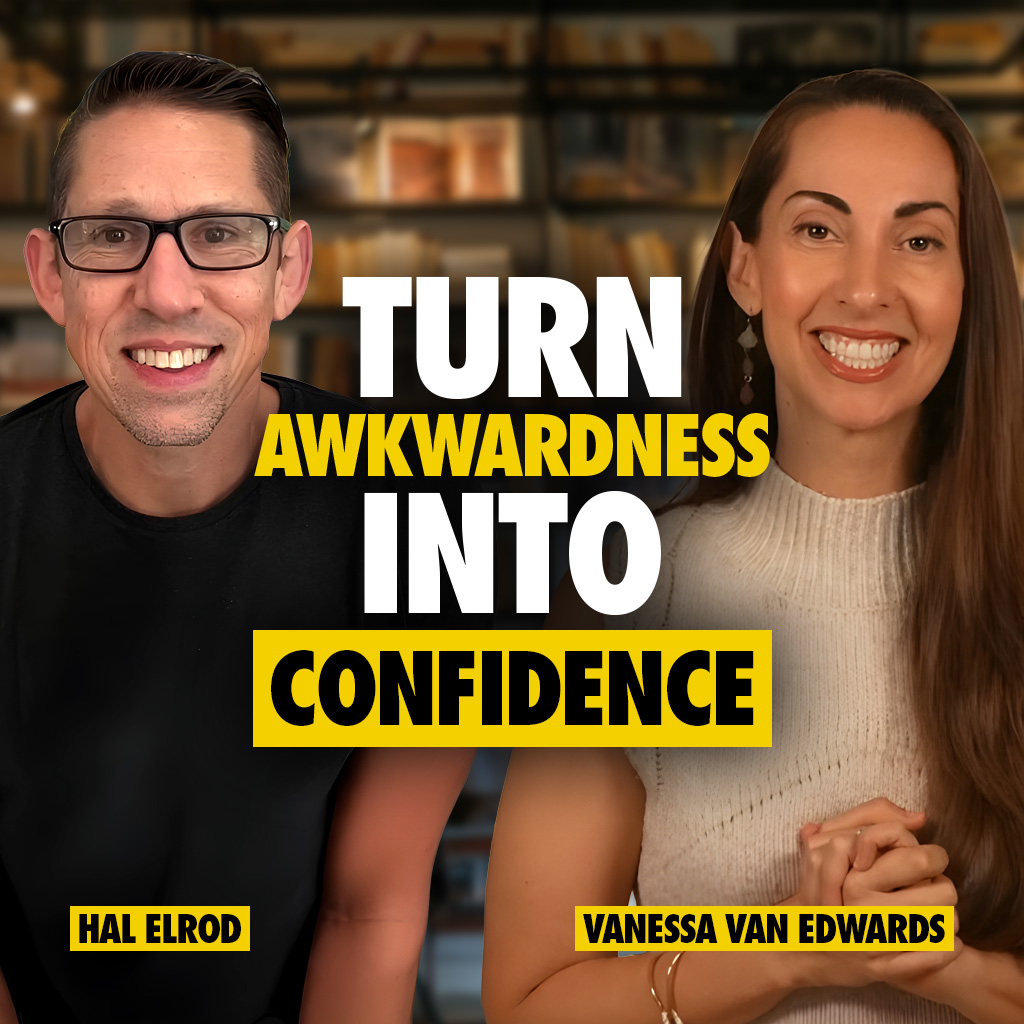
Achieve Your Goals with Hal Elrod
624: How to Be More Charismatic and Have Great Conversations with Vanessa Van Edwards
00:42:38
Loading summary
Transcript133 lines
- [00:02]
A
Hello and welcome to the Achieve your goals podcast. The show that empowers you to wake up to your full potential and achieve your biggest goals and dreams. I am your host, Hal Elrod and I invite you to join us each week as we share actionable strategies to take your life to the next level, as well as interview world class experts and entrepreneurs who have achieved extraordinary goals themselves. And we ask them to give you a peek behind the curtain and teach you exactly what you need to do to do the same. Ready? Here we go. If you want to be able to make an impactful impression on other people, whether it's your first impression or people you already know, people that you work with or social situations, one that make you look really good, or maybe you feel like you're good at what you do, but you're not getting the respect or the influence or the opportunities that you deserve. This conversation will change how you show up in this episode. You'll learn the exact cues that make people instantly see you as confident, likable and credible. Whether it's on Zoom in meetings, on dates, from stage to an audience, anywhere. Today I'm sitting down with Vanessa Van Edwards. She's a behavioral researcher and bestselling author of two books, Captivate and Cues. She's the founder of Science of People and her work has reached tens of millions of viewers because it is effective. And in this conversation she breaks down charisma into something that you can actually learn. A simple science backed blend of warmth and competence and the exact cues that signal both. You'll also learn what to do in the first 10 seconds of any interaction. Again on Zoom in a meeting on a first date, so you instantly come across as confident and likable. You'll also learn the biggest charisma killer most people use without realizing it. That creates unlikability and how to better ask questions that create real connection fast. Vanessa also shares her own recovering, awkward story. We all have one of those, right? And she gives practical, immediately usable tools that you can try to enhance your relationships today, let's dive in. Vanessa Van Edwards, it is so good to be with you.
- [02:24]
B
I am so happy to be here with you my friend. I can't wait to dive in. I can't wait.
- [02:29]
A
We got a lot to talk about and we were just talking that you moved away from Texas and so I'm excited to see you and sad that you no longer live down the road.
- [02:38]
B
Although now I have a better morning routine. So it's going to give a better answer because in Austin I was always either Cold or hot? Now I have something better.
- [02:46]
A
Let's just start there. I wasn't planning on that. But since you brought it up, what is your morning routine?
- [02:50]
B
Okay, so I think this really matters. Obviously we are kindred spirits in this way. And I realized I was in a location where I couldn't do a lot of my ideal morning routine. Like literally my physical location was limiting the kind of start I wanted to have to my day. And starting energy is everything.
- [03:08]
A
Yeah, right.
- [03:09]
B
Starting energy happens every morning. Starting energy happens every Monday. Starting energy happens every first of the month and first of the year. So I was like, I need to be in a place that serves it. So my ideal morning routine literally did it. This morning starts with cuddles. I have two little girls, a three year old and a seven year old. They march into my room. I mean there's like a, like they like march right into my room. They get right in bed. We do about five minutes of cuddling. I love that oxytocin burst first thing in the morning. So a little bit of cuddles, a little bit of giggles.
- [03:37]
A
My 16 year old daughter does not like morning cuddles the way that she used to it.
- [03:41]
B
Yeah, dang it. I better appreciate it while I have it. Well, if it's not going to be them, it's going to be my, it'll be my partner. Like he kind of misses cuddles because he doesn't, he, he doesn't get them anymore. Two girls get them anymore. So cuddles. And then usually I get up and I try to have matcha first thing in the morning. I think that green tea booth is just so good. So I try to make a matcha. I also attempt and you'll. This is really from you, which is as I'm whisking it, you know that beautiful whisk. I'm like gratitude, gratitude, gratitude. So like as I whisk I imagine like the great. The gratitude for the day. So I'm like whisking and doing gratitude. I, I try to anchor my gratitude to a habit or a ritual or else I won't remember. So whisking and red lights are my two anchors.
- [04:23]
A
Oh, red light therapy.
- [04:25]
B
No, like a stop light.
- [04:27]
A
Oh, red lights. Yes. Yeah, no, that's for me. It's my car. I used to call it my gratitude mobile. When I hit traffic, it was like, okay, I'm stuck in traffic. I can slow down and just be present to all that I have to be grateful for. So let's go.
- [04:42]
B
Yes. And I used to get really Irritated at red lights. And I was like, no more. I have no control over this.
- [04:47]
A
Yeah.
- [04:47]
B
So every time I'm at a red light for more than a second, it's gratitude. Instead of my to do list. It's like, what are all the good things? Like, what's good, what's good, what's good, what's good? So Matcha, what's good? A little bit of gratitude. Then I try to get sun on my face. Sun on my face.
- [05:01]
A
Good.
- [05:02]
B
Which was the hard part about when I was east. And then also in Texas is like any kind of sun on my face is. I feel like it's like natural caffeine. So I try to go out just for five or 10 minutes and get it on my face if I can. My little girls will sometimes play around me. Then I do. And this is so weird. My girls love it. We do a little trampoline. I have a trampoline and we trampoline.
- [05:22]
A
An indoor trampoline or a big outdoor trampoline.
- [05:24]
B
I'm in California now. I'm outside. So now I'm outside. We have a big, and I mean big outdoor trampoline that we installed and we just do a little bit of jumping. There's something about it.
- [05:34]
A
It wakes up your lymphatic system. I mean, it's actually, it's scientifically proven to be one of the best things you can do for your body. Yeah.
- [05:40]
B
Yes. There's something about it. And if I can put on music, I try. So, like, I'll like put on like a little bit of K pop Demon Hunters if, you know, you know, you know, whatever gets my girls jumping. And then either my husband takes my girls to school or I do. The last thing I do if I have time is a lymphatic drainage. 10 minute exercises. You start from the top, move your shoulders. Um, you're doing a lot of activation in all your lymph nodes. And it's an. It's like a nine and a half minute little flow, and then I'm ready for the day. That's it.
- [06:09]
A
What I love about that is you're not doing the savers. I mean, you're actually doing some of them without naming them that. And I'm gonna invite you to now from now on, you say, here's my miracle morning. Just for a little branding. You can call it that. From now on.
- [06:22]
B
Yeah, I'm doing it.
- [06:23]
A
The point is, it's. You're starting your day in an intentional way that fills you up, that puts you in a peak physical, mental, emotional, and spiritual state to show up at your best for those you love and those you lead. That is a miracle morning in whatever form works for you. So I love that also.
- [06:39]
B
I'm trying to gift that idea of a miracle morning to my kids. I think this is a skill we have to flex. Right? What I loved about your book is being purposeful and intentional with your mornings. It takes work. It's like a mental workout. Like you have to think about, what do I want, what's the intention? And then I have to activate the ritual. Right? It's a multi step process. If I can get my kids knowing, if I do this, if I jump before school, I feel so much calmer. If I listen to music before I get in the car on the way to school, I'm like buzzed. I'm happy. So I think that also if we can gift our miracle morning to our partner or to our kids. My brother is even staying with us and I made him do, I made him do my, my lymphatic exercise today. And he's like, wow, like, my back feels better. He's like, my back feels better. I'm like, yes. And so look, I love a self care routine. I love thinking about self, but I also think that thinking about ourself too much is the definition of misery. So I think if we can also think about other and how we could gift a miracle morning to someone else by bringing them into it with us. It also gives us oxytocin. Like that also gives us the chemical bonding, which is where I think miracle morning and science people meet in a beautiful crescendo.
- [07:51]
A
I love that. And me, my kids now, they're teenage years and they're like, dad, we're not doing your miracle morning anymore. But I have so many great journal entries and selfies where when they were like 6, 7, 8, 9, we did our miracle morning together and we did yoga videos and we did, you know, we meditated and we read and all of it. And it was, yeah, it was such a, an amazing bonding experience.
- [08:14]
B
They'll come back. They'll come back. There's something that happens at like 14 to 17 where anything that your parent does is super uncool.
- [08:22]
A
Totally.
- [08:23]
B
So they're in it and they're like, miracle morning. I like a naughty night. They're gonna be about a naughty night because it's the opposite of your miracle morning, dad. Right? Like, let them have that.
- [08:37]
A
My daughter, I've been talking about co authoring the miracle morning for teens. And she's like, I don't Want to do Miracle Morning anymore, dad? Maybe Naughty Night. Maybe she would go co author Naughty Night. I don't know.
- [08:47]
B
I mean, I'm for it. And by the way, like, there will be a moment. Usually. I've noticed it's like between 20 and 23, something happens where they're like, you know what is really great? A morning routine.
- [09:01]
A
Totally.
- [09:01]
B
Maybe I should, like, have some rituals in the morning. I'm telling you, it'll be their idea. They'll think you never taught it to them, and all of a sudden they're doing miracle mornings. Just wait.
- [09:10]
A
Are you like me in that you want to optimize your energy and your focus? Well, if that is you like I do, then I highly recommend that you check out Cured Nutrition Flow Gummies. I'm telling you, I said this last week. I think I'm, like, addicted to these things. I take them every morning. In fact, yesterday I took them twice. Took them in the morning first thing, and then I took them before my workout as well. Four functional ingredients that will help you increase your focus and energy. It's Lion's Man. That improves mental clarity, focus, and memory. Ginkgo biloba enhances cognitive speed and memory and boosts blood flow to the brain. Green coffee increases alertness, reaction time, and enhanced mood with 48 grams of caffeine. Very minimal caffeine. Just enough to give you that edge. And then Hua Serata supports neurotransmitter function, memory, and learning. And they're all in these delicious apple gummies. I take two gummies in the morning to get into my flow state, and I highly recommend that you do the same. Head over to cured nutrition.com forward/how that is cured nutrition.com forward/hal and use the code HAL at checkout for 20% off your entire order. And if you do a bundle or you do a subscription, it stacks on top of that, so you get an additional 20% off. Check out the flow gummies and their other products as well@curenutrition.com HAL and enjoy the rest of today's episode. Well, that's like me and my wife Ursula, and I'm. You probably have this too, where all spouses do, I think where I'll come to Ursula, like, hey, I totally heard this thing from my friend or Instagram and I'm going to start doing it. She's like, I've been telling you that for like seven years. I'm like, you know, so. Yeah.
- [10:55]
B
Yes, that is exactly. Oh, my gosh.
- [10:58]
A
My daughter. Here's the thing. She's already seen, like, you know, the economy is not what it was. You know, the housing market, the price affordability is not what it was. And she's like, dad, I've realized that I think I may end up working with you in Miracle Morning someday. And after three years, she was like, no, I'm going to be a famous actress. And now she's like, I think I might end up at Miracle Morning. So she used to introduce me at my live events. I'd bring her with me whenever I could. I think she started at nine in front of hundreds of people. And she was so. She's like a natural. She's so funny. Blah, blah, blah. So, yeah, she's. She's perfect. Word. Well, here's the question that I wanted to ask you. Initially, I wasn't going to start the Miracle Morning. You say that you're a recovering awkward person. And I saw. I watched your TED talk. 6.3 million views. By the way, it's an amazing TED Talk. Remind me the title of it.
- [11:44]
B
You are contagious.
- [11:46]
A
You are contagious. Yes.
- [11:47]
B
When Covid. That was not so great. That was not so great.
- [11:50]
A
That's funny.
- [11:50]
B
What?
- [11:51]
A
It probably went even more viral then they're like, oh, my gosh, I'm contagious. I need to know.
- [11:56]
B
It did.
- [11:56]
A
It did. But. No, but you show a picture of you that absolutely exemplifies this recovering awkward person. How old were you in that picture?
- [12:06]
B
Third grade. I had a bowl haircut, and I loved a plaid vest. Boy, did I love a plaid vest. I had giant braces and almost no teeth. Just envision that.
- [12:16]
A
Yeah. Yeah. You did say it was your plaid vest phase, right?
- [12:19]
B
That was my plaid vest phase. And I think the peak awkwardness was I would get hives when I had, like, social anxiety. So I would break out and hive, especially on my forearms. I would get hives. And so it was this horrible feedback loop where, oh, yeah, I was nervous about recess, so I would get hives. And then, you know what makes you even more nervous and socially conscious? Hives. And so it would, like, build on itself. And that. That was the first moment where I realized we have these loops that we create for ourself, and awkwardness is one of them. So if you feel awkward before you even walk into the room, that shuts down your voice. Like, your voice changes when you feel awkward and afraid. It shuts down your body language. It makes you have resting, bothered face, which then makes you look unapproachable, unlikable. Then it makes you unapproachable likeable, which makes you even more awkward. So we have all these loops and I'm a recovering awkward person now I'm in recovery.
- [13:11]
A
Well, you're a world renowned expert in communication. I'd say you've recovered.
- [13:15]
B
Yeah, well, I mean, I still have my moments. Right. Like we all do. And I still struggle with awkwardness. I think that, like, it never goes away. And I think that this is what's really for anyone who's listening who has awkwardness. Confidence is not the absence of awkwardness. Confidence is feeling the awkwardness, acknowledging it and then doing stuff anyways. Right. And so I think that why I always say I'm recovering, not recovered is because I will still feel awkward, especially around cool people. Dude, I. How you and I have had dinners with cool people. Yeah, cool people make me so nervous. I was nervous at that dinner that we went to with all those cool people.
- [13:56]
A
Was I? I'm the same way, Matt. It's my high school insecurity. I'm still the freshman that's like not one of the cool kids. And now it's just fellow authors and speakers. But I still feel like I don't belong in this room. I'm just Hal Elrod. Like, I'm just me.
- [14:11]
B
Yeah. Yeah. So I think Hal and I, we were at a cool dinner with cool people and I thought you were cool. So you were in that cool group.
- [14:17]
A
And I thought you were.
- [14:17]
B
And I was like, okay, I still do. But I felt really awkward and I was like, I could stay home, like, I could skip or I could try to be something I'm not or try to be impressive. But I was like, no, like I'm going to be me. I'm going to feel the awkwardness and still be confident in just being me and being very present. So I think that that's what if you're recovering awkwardness is you still feel awkward. That's okay. It's knowing what to do anyway.
- [14:40]
A
Yeah, well. And that's the thing, you know, I had no idea you were awkward. I was like, whoa, this gal is super sharp and charismatic and funny. All of the things. What?
- [14:50]
B
Thank you.
- [14:51]
A
Yeah. No, I'm serious. So, yeah, we hit it off. Talk about charisma. I just mentioned that I thought you were so charismatic. How do people develop charisma? Are you born with it? Can you develop it if you don't have it? How important is it? Because to me it's extraordinarily important. It's the first impression. It's how people feel around you. So where does it come from? Can we create it? If someone doesn't feel like they're charismatic, what would they do?
- [15:18]
B
Yes. So thank goodness charisma can be learned. It can be cultivated. And researchers out of Princeton University studied what is charisma, what makes us drawn to certain people. And they found that charisma is a perfect blend of two traits, warmth and competence. The reason we like highly charismatic people is because when you see them, when you hear from them first, they're signaling very high warmth, trust, likability, friendliness, openness. But at the very same time, they're also signaling competence. You can rely on me. I'm effective. I'm capable, I'm efficient. We love to be around people who quickly answer two questions. Can you trust me? And can you rely on me? This makes up 82% of our impressions of people. So when you ask, is it important? It is essential when we are having an interaction, whether that's social or professional, we are 82% of how we treat you is based on your warmth signals and your competent signals. And thank goodness, if we have innate competence, so we know our stuff, we know what we're doing, and innate trust, we're not up to no good.
- [16:26]
A
Right?
- [16:26]
B
We have good intentions. The answer is being able to clearly signal that warmth and competence. And the problem that people have is they under signal, especially professionally. I work with a lot of high achieving professionals. They think to be taken seriously, to be seen as powerful, they have to signal less. Less facial movement, less body movement. And this actually makes them difficult to interact with. So some of the best pitchers that I see, like, I love watching the show Shark Tank. You'll notice the pitches that do poorly are the ones with the really, really smart entrepreneurs who under signal. Ah, they have great ideas, great numbers, great data. But the Sharks are like, I can't connect with them.
- [17:07]
A
What do you mean under signal? What is signal?
- [17:09]
B
So signaling is using. There's four ways that we signal. I call these cues. Cues. Right over here.
- [17:15]
A
One of your books. Yeah.
- [17:16]
B
Yep. These are the social signals we send to each other. There's four ways that we signal. One is through our words. The types of words we use signal warmth and competence. For example, if I send you a text that's like, hi, friend, good morning. I'm so excited for our podcast today. Heart emoji that is high in warmth. I use the word friend. I use an emoji. Warm people love an emoji. And I exclamation point. Also highly warm versus, if I were to say warning, can't wait for a powerful episode today. Strength emoji. That is a high competence text. Strength emoji. Very simple words. And using the word powerful. Right. So we signal warmth and confidence with the types of words we use in our profiles and our emails. Verbally, when we're speaking. The second one is our body language. So our facial expressions, our gestures, our posture, how we move through the world, how we handshake, how we make eye contact, all of those signal warmth and competence. There's warm cues and there's competent cues. Third is our voice. How we say our words, our tone, our volume, our pitch, our pace, our cadence signal warmth and competence. So how I'm delivering my content is helping you digest? Hmm. Can I trust her? Can I rely on her? My vocal tone. So a very quick example. If I were to say, morning, I'm so happy to be here. Yeah. You would listen to my tone more than my words and think, she's not happy to be here. And in that way, tone actually matters more than words. Right? You're going to believe my tone more than the actual words being said. We don't place emphasis on tone. We often forget about tone. And the last, smallest one is our ornaments. So the colors we wear, what's behind us in our background, what props we have on our desk, what. What we hold in our profile picture. For example, if you have a dating profile picture and you have a puppy with you, that's going to signal high warmth. And that's also going to signal certain aspects of your personality versus if you're. You have a picture with your degree behind you, that's going to signal differently. So all of those things are painting this picture to other human beings of our warmth and competence. My mission, I think it's why I was put on this earth, is to help you take control of your signals so you know exactly how you're coming across to others. And it's not by accident. You're not accidentally under signaling or worse, accidentally showing an imbalance, accidentally signaling too much warmth and wondering, why are we not taken seriously? People who signal high in warmth. We've measured this. Are interrupted more in meetings. They get more pushback on their numbers when they ask for salary or raise. They have a harder time closing in sales and negotiations. Or you signal too high competence without enough warmth. And people take you very seriously. People say that you're intimidating, cold, hard to talk to, you can't make friends, you can't click with people. People have trouble trusting you. They think you're smart. They have trouble trusting you. I want to take control of those signals. And then the bonus of that is once you begin to learn there are 97 signals for warmth and competence. You also can decode people better. So you show up in a room and you can say, wow, this is a very high competence room. I have the choice to dial up competence to match if I want to, or the choice to dial up warmth if I have to. I think that control gives us a lot of confidence and I think it's the antidote to awkwardness if you struggle.
- [20:34]
A
To fall asleep or stay asleep. I have a supplement that I take that I've taken for about three years now, virtually every single night. I highly recommend it. It's called Night Cat Caps by Cured Nutrition. It is a CBN and CBD oil supplement and CBN supports your body's natural sleep rhythms throughout the night for deep restorative sleep that leaves you feeling refreshed and ready to rise in the morning. Highly recommended. I book in my days with Cured Nutrition. I take their flow gummies in the morning. I take nightcaps at night. And you can get 20% off of both of those products. As a listener of the Achieve your goals podcast, head over to curednutrition.com HAL that's cured nutrition.com forward/hal and use the discount code HAL for 20% off your entire order. And if you do a subscription, which I do a monthly subscription for both of those products, you get an additional 20% off that stacks on top of the 20% as a listener, so you can save a bunch of money and it'll help you fall asleep and stay asleep again. Cured Nutrition nightcaps in the evening. And I start my day with flow gummies every single morning. And I hope these products will help you and enhance your life as they have for mine. Enjoy the rest of the episode. So what comes up for me that's fascinating and I think because I try to think how do I show up for things? And I know for me I don't overthink it. I just show up with like love and energy and authenticity, right? And if I do overthink it, then actually where I get insecure. And I want to ask you about this because I imagine someone listening and when they heard warmth for most people, they're probably like, yeah, I can show up and hey everyone, it's great to see you and just this genuine, authentic warmth. But what came up for me that I imagine some others thought maybe is the competency piece. And it comes up the imposter syndrome that we all struggle with this is actually why I think I am insecure in. When I'm with my peers who I view as smarter than me, more accomplished than me, etc. Is I'm like, oh, they're gonna figure out that I'm not as competent as them. I don't know what the hell I'm talking about. I don't. Like, you know, I mean, I do. And. And. But maybe they're at another level. So if someone's like, I'm intimidated just by the fact that I need to bring competency, because what if I'm not as competent as the people I'm in the room with?
- [22:59]
B
Yes. Okay, so when I. First of all, I just want personal note. When we went to dinner, did you feel that? Did you feel like people were more competent than you? I'm just curious.
- [23:10]
A
I don't remember, but I don't think so.
- [23:12]
B
Okay, good. Because you were in a table of very successful people, and I would put you as extremely competent. So just to give you some feedback is I would never see you that way. And I don't think other people do either. So you need to quiet that voice. Like, don't believe every thought you think.
- [23:29]
A
I need to use my miracle morning affirmations to continue to quiet that voice?
- [23:32]
B
Yeah, that's it. Like, I really believe. Like, don't believe every stupid thought you think whatever that voice is, is, like, no, thank you. Like, gentle, no, thank you. And I'm telling you, I've been with you, and you are very competent. So that's. I had to give you a little pep talk on that.
- [23:45]
A
Thank you. Thank you.
- [23:46]
B
Yeah. Second is, remember, competence is not knowing everything. And this is the curse of smart people. Most of my students are extremely smart. They're very high in competence. They're serious growth learners, and they come into people school and that they struggle with. Exactly. This competence is knowing what you know and also knowing what you don't know.
- [24:07]
A
Yeah.
- [24:08]
B
So getting very clear, what am I an expert in? What is my unique value? How am I indispensable at work, in my company, with my friends, in my family? What do I know and know? Well, honing it, I call that expert power.
- [24:24]
A
Yeah.
- [24:24]
B
Every single one of my students, they have to hone their extra power, which is exactly what I want everyone to do here. What is that unique skill set? Talent, knowledge, expertise that you can do better than most, that gets you to flow, that you feel super capable in. Like, it gives you that gift of, like, I got this. Like, I want that internal feeling of dopamine. Actually, like, there's a lot of motivation. They're like, I got this. That. Know that. Hone it, talk about it, label it, make sure people know that that is your expert power. It should be known. Then know what you don't know and own it. Label it, don't fake it, don't pretend. I'll give you a very real example. For me. I love teaching, I love science, I love research. I think I have a weird talent where I can read a 20 page academic paper and take out the one gold nugget.
- [25:16]
A
Yeah.
- [25:16]
B
Don't know where that came from, but that's my entire business. You know what I'm really bad at, though? Visualizing that concept. Slides, social media, graphics, trying to visualize it. Cannot do. And we are in a world where you have to do that. So what my team has told me, stop making slides, Vanessa. Stop making graphics. They are horrible. And so I know it's very. On my team, I try not to pretend do things I don't know how to do. We love competent people who are like, this is my skill set and I need help with this.
- [25:47]
A
Yeah. That are humble, that have humility around, like, oh, actually I know little about that. And then are even curious, like, tell me, I would love to learn from you.
- [25:57]
B
Yes. And also we love people who ask for advice. Yeah, we love them. I think that we undervalue that skillset. I have an entire chapter about asking for advice in my book, my first book. Because it is not a sign of incompetence, it's a sign of competence.
- [26:11]
A
Yeah.
- [26:12]
B
So what I would say is you can fight imposter syndrome with knowing what you know and then celebrating what you don't too.
- [26:18]
A
I love that. So I actually wanna unpack what we just touched on, which is in this. So there's warmth, which I think that should be easy for most just to go in with love and empathy and desire to just connect, you know? Go ahead.
- [26:32]
B
Well, can we pause for a second? So I. This is so funny. So you are naturally warm.
- [26:36]
A
Yeah.
- [26:37]
B
You have a natural warmth, so you assume it's easy.
- [26:39]
A
You're right. Yeah.
- [26:40]
B
For many of my students especially, I have a lot of students who are on the spectrum. Warmth is not that easy. I have a lot of students who are very technically brilliant, highly competent, and warmth is not easy. So I want to shed some light on this, which is intention can bring warmth. So if your intention is good to build connection, to teach someone something, to help someone with something, to make a product better. I have a lot of like, for example, we have two groups in my course. We have my real warm folks that are like lovers and givers and cheerleaders and I love them. And they're like, how do I learn to share my competence? I am, but how do I learn? And then I have my competent folks who are like it, graphic designers, engineers, CTOs, totally love data and research researchers. So for them, remember that your intention to share your technical skills is warmth. So remind yourself, ground yourself in why am I sharing this data or this technical ability? So you want to help, you want to offer, you want to make better. And also humor. Humor is a great one. For example, I do a lot of presentations to like engineers or very technical folks. And I love like gifs of data. You know, like I'll use like a giphy of like data falling all around and they just love this. So how can you add elements of humor into your presentations when you're in person? Can you tell a funny story about your kids or yourself or your way to work on the way to work? Those are all warm as well. So it doesn't have to be your expertise that's warm. It could also be the extras. So I just want to share that for my people who are like, I don't think warmth is easy.
- [28:14]
A
Yeah, no, and thank you for pointing that out because again, for me I'm saying it's easy because it's easy for me. Right. Whereas you would say reading a 20 page, like if I read a 20 page research paper, I would not comprehend a lot of it and I would forget all of it. So it's like, yeah, that's not my strength. I want to ask you, in terms of charisma and connecting with people, what part do questions play? Right. So meaning, like you mentioned that competency is knowing what you know and also knowing what you don't know and being willing to not try to sound smart when you're like, I have no idea, but I don't want to sound stupid, so I'm just going to talk and circles and. Right. So where do questions come into play in terms of like some of my best conversationalists, like my friend John Vroman, I think John was at dinner that night, wasn't he? Was he?
- [29:00]
B
Yeah, yeah, yeah.
- [29:01]
A
He is one of the best conversationalists on the planet and it's just because he asks really good, thoughtful questions and he listens like his life depends on it. And I suck at both of those things. So help me and help our listeners. How do we ask better questions and how important is that?
- [29:20]
B
Okay, so first, before we even get into warmth and competence, Script breaking questions are charismatic. There's an area when we visualize warmth and competence. It's actually a scale. So we have high warmth and high competence is that upper quadrant. Then you have high warmth with an imbalance and then high confidence. And the bottom one is not enough of either. I call it the danger zone. When you don't have enough warmth or enough competence. The number one way to kill your charisma is to ask an autopilot social script. That is, how are you? How's it going? What's up? What do you do? Where are you from? Yeah, when you ask those questions, you are literally telling the other person's brain, stay asleep, stay on autopilot. This is going to be like every other conversation you've ever had. So first we have to take away autopilot questions from a repertoire. They are killers of charisma. So I want you to stop doing those. I want to go on a small talk diet. That's the very first thing is stop asking script questions because you're going to trigger the autopilot response. That's number one. Number two, then you have a choice. You can ask warmth related questions like, have any fun plans coming up this weekend? You're soliciting, you're gathering warmth, you're triggering warmth. That question. Another warm question. What personal passion project are you working on? Do you have any side hustles? Like more warmth, excitement, passion, competence? What's your big goal for 2026? Do you have a big goal this month? Hey, what's your ritual every morning? I actually think that's a competence question. Agendas, rituals, goals, expertise, competence. So you have a choice. You can do warmth questions if you want to trigger warmth. And by the way, my highly competent folks, I encourage them to ask warmth questions at the start of meetings.
- [30:59]
A
Hmm.
- [30:59]
B
I'm like, you're about to go into a very technical presentation. You're about to pitch a really a big idea. I have a lot of entrepreneurs who follow me. They do a lot of pitches to like VCs or prospective clients. And I'm like, if your presentation is high in competence, you have to start with warmth. So they pick warm questions versus let's say that you're actually trying to trigger a little bit competence on your team call. I have a lot of leaders, you know, you want to trigger that competence. Ask competence. My favorite, my default questions are a blend of both. And there's a few questions that hit this. So here are my favorites. You're welcome to Use them.
- [31:29]
A
Okay.
- [31:30]
B
Working on anything exciting recently. I think that what do you do? Is a terrible question. It's scripted, and if someone isn't defined by what they do, they really don't like that question.
- [31:40]
A
Yeah.
- [31:40]
B
Asking. Working on anything exciting recently is a perfect blend of warmth and competence. It's work, but also exciting. So it's. It's a nice default question.
- [31:49]
A
Yeah.
- [31:49]
B
And if someone loves what they do, they will tell you. They will tell you. They will bring up what they do in a frame of excitement, which is way better than the typical social script.
- [31:59]
A
Totally.
- [32:00]
B
If they don't like what they do, they will tell you something better. And so it's a permission question. So that's one of my favorites. Another kind of hybrid question is have any new and exciting plans coming up or have any big and exciting plans this summer, this weekend, this break, this holiday? You can ask for plans that are exciting. So those are my default questions that you can ask as well.
- [32:22]
A
All right, let me ask you a question. How many apps are you using for your personal development? Maybe a meditation app like Calmer Headspace, an affirmation app like I Am, or Think Up, a book summary app like Blinkist, a journaling app like 5 Minute Journal, a visualization app like Envision, an exercise app like 7 Minute Workout, and maybe even a habit tracking app to keep it all together. That is a lot to manage and a lot to pay for. What if you could replace all of them with just one app? Yes. It is called the Miracle Morning app and it is essentially seven apps in one. Hundreds of guided meditations and breathwork tracks, a full library of affirmations, plus tools to create your own visualization prompts for 10 key areas of your life. Guided workouts from 2 to 10 minutes long. Book and audiobook, summaries of top personal and professional development books. And a journaling tool with guided prompts. The wheel of life or a blank page to write freely. It simplifies your morning, saves you money, and helps you start every day with clarity, purpose and energy. And it's one of the only apps in this space with a 4.9 out of 5 star rating. Try it free for 7 days. Just search Miracle Morning in your app store or go to miracle morning app.com to get started. All right, back to the show. I love that. And yeah, for me, what are you excited about right now is that's my go to question because. Right. And it brings out whatever they want to talk about. Right. The beauty of it. And they might go for me. I've been Getting asked, when I get asked that, it's like, my son's in basketball right now, and going and watching his games is the highlight of my life. Like, that's my answer. Right. But three months ago, it might have been like, oh, my gosh, I have this new book, the miracle morning after 50, coming out. Like, we're almost to the end. Right? Like, so it just gets people talking about what they're excited about. And then for me, I will also, depending on the nature of the meeting or the conversation, I'll say anything challenging right now you could use some help with. And what that usually does is that really gets them to dig deep and then be vulnerable and then feel connected to you because they're like, wow, I feel safe to share something with you because of the way you've brought me into this conversation that I'm actually. I'm going to tell you something that I haven't. I've really kind of been keeping to myself. Right. So, yeah, so those two. It's like, start with the. What are you excited about? And then go ahead.
- [34:41]
B
Yeah. That is so good. I just have to highlight that because it's actually warm and competent. Asking about a challenge is competent because you're trying to solve it, but the intention is warmth. Right?
- [34:52]
A
Yeah.
- [34:52]
B
Is a perfect question. I told you. You're naturally charismatic.
- [34:56]
A
Let's go. I got stuff. All right. We could go lots of different places here, but let's, you know, if anybody is listening. Actually, your expertise. What, you're talking about me. You're a body language expert. You're a communication expert.
- [35:07]
B
Right.
- [35:07]
A
You have all these areas of expertise. What do you feel like if someone is listening, what could you either share with them or what have you shared with them? How might they apply this? Like, I kind of want to take, like, okay, you've taught so much already. There's so much that I feel like you've. You've shared. So if someone's listening and they're like, wow, this is really great advice on connecting and being charismatic and. And having great conversations. Where should I use this? Should I use this at home with my spouse tonight? Should I use this at work? Like, what are some, you know, one or two or three ways that people can apply this right away?
- [35:38]
B
Okay, so I love this question because let's make it really practical.
- [35:42]
A
Yeah.
- [35:42]
B
Your first 10 seconds. So your first 10 seconds of an interaction that matters to you, that could be a date. First date. That could be a team meeting. That could be talking to your family. That could be walking into a party. Your first 10 seconds is your biggest opportunity for grabbed or missed charisma, and that is because often we miss those first 10 seconds. So when we. We analyze. So in our lab, we analyze these interactions, we see that someone will do great once they've started. But that first impression, if you don't nail it, it's really hard to recover. So I want you to take back. I want you to reclaim those first 10 seconds. And let's just. For practical reasons, let's. Let's start with video calls. Video calls are walking into a business meeting or a room. Okay, first, remember, your first impression happens the moment someone first sees you, not the moment you start talking. My introverts like to think that their impressions happen when they start talking, but actually it happens when someone first sees you. So when someone first sees you, there's a couple things happening that I want you to do. First is if you can have visible hands, it immediately ups your warmth. Right. So I started this video when we first came on of morning. Yeah, good to see you. Right. So a palm is my favorite. A palm is like a window to the soul. It shows I'm literally not hiding anything. It does something very primal to our brain. I am literally not hiding anything. So when you walk into a room, when you hop on video, when you walk into a board meeting. Morning, everyone. Palm flash. Palm flash. Okay, Visible hands out of pockets, not behind your back, not stuffed into a purse or a bag. Okay, visible hands. First 10 seconds. Right upon first. Visual second. It's a hard one. People don't always like it, but it's. It's the hard truth, which is when we first see someone, we are very quickly, in less than a few seconds, trying to decide, do you look more like a winner or do you look more like a loser?
- [37:29]
A
Mm.
- [37:29]
B
And this is tough love.
- [37:31]
A
Harsh truth. Yeah.
- [37:32]
B
Researchers from University of British Columbia studied athletes across cultures. Athletes across cultures make the same body language when they win a race or lose a race. So when you win a race, you take up as much space as possible. You have a lot of space in your torso. You maximize between your ears and your shoulders.
- [37:47]
A
You.
- [37:48]
B
You've spread your arms wide. You usually tilt your head towards the sky. Losing athletes do the opposite. They roll their shoulders in. They tightly put their chin to their chest. They usually have their arms pinned to their sides. Here's the problem. Most people say, oh, yeah, yeah, Vanessa, I know. Good posture. And then I say, do you ever check your phone while you're waiting for a meeting to start? Every single time you check Your device. You are accidentally going into loser body language by accident. And typically, our first impression happens when you're waiting for a date and you're on your phone, someone's waiting for video, you're on your phone, someone's walking into a room, you're on your computer.
- [38:21]
A
Yeah.
- [38:22]
B
So I want you to make sure that in those first 10 seconds, you are maximizing the distance between your shoulders and your ear. That is a very weird measurement, but it immediately signals confidence. And you are taking up space with your body. You don't need to have your arms spread. Like, that's a little bit socially aggressive. But having space between our torso and our arms, claiming our space. So that in those first few seconds, they look at you and think, wow, she looks confident. It's a very primal part of our brain, and it makes them feel at ease. It's not just for your confidence. It's for their confidence in you. And that sets you up for a way better interaction.
- [38:55]
A
I love that. Then I'm thinking I need to be further back in the frame potentially. Right. Like here versus where I was super close.
- [39:01]
B
Yes.
- [39:02]
A
And yeah. Yeah. That's amazing. And I think about when I speak on stage, my body is my tool. I am like, I'm using my entire body as I'm sharing stories and communicating messages. Right. Yeah. Interesting.
- [39:15]
B
And so I think that the more we think about our whole body, the better. And so just those two interactions, those two interventions are going to help your interactions. And then if I had a bonus tip for, like, very practical is what are the first 10 words you say so verbally? We also have a verbal first impression, and typically we throw away our first 10 words with something accidentally negative. So we're like, oh, I'm so sorry I'm late. Can you see me? Can you hear me? Oh, I've been so busy. It's been so stressed. I've been so crazy. Right. Like, yeah, don't use those words. Think of what is something good? What is something good? Ah. I'm so excited to see you, Hal. Oh, I've been looking forward to this all week. What a lovely zoom background. Wow. You look great. I'm so happy to be here. What an honor it is to have this. This is the best part of my day. Like, what is something authentically good you can share that is literally triggering for good?
- [40:06]
A
Yeah. I love that. Well, you are a wealth of wisdom and knowledge. Vanessa, where is the best place for people to continue learning from you? In the intro, I mentioned you have two books, Cues and captivate Right. So those are great opportunities for people to dig deeper, but where's the best place for people to go find more? Vanessa Van Edwards.
- [40:24]
B
Yes, I give a free social strategy and icebreaker every single Monday on my newsletter. So on Monday, I send a really good icebreaker question that you can use in team meetings, on dates with friends, and then one social strategy, like a very practical strategy that you can use. I hand write curate this organic newsletter myself. I spend a lot of time on them, so I, like, love them. So if you give me precious space in your inbox, I make sure that I try to be as aggressively helpful as possible. And that's scienceofpeople.com is my website and you can send the newsletter there.
- [40:55]
A
Scienceofpeople.com if you want funny tips, you.
- [40:59]
B
Can follow me on all the socials. I'm doing ridiculous social videos all the time for smart introverts. So if you want me to just make you laugh and give you tips, I'm also Vanessa Van Edwards on all the places.
- [41:10]
A
Yeah, I love your Instagram. That's where I always watch your stuff. Yeah. Well, Vanessa, I love you so much. I'm going to come visit you in California at some point and if you get back to Texas, reach out and get you.
- [41:21]
B
I'm get you here. I'm gonna get you here.
- [41:23]
A
I love it. I used to live in Southern California, so it's like, it's. Yeah, it's my stomping ground. Well, so much love. Thank you so much for today.
- [41:29]
B
Thank everyone for listening. And I know that some of these tips take some courage. I know it takes courage to go off social autopilot. I know it takes courage to dial up our signals like we under signal because we're afraid and nervous. So if you're like, I want to be courageous, I think this is worth every ounce of effort that you put into it. And I just want to commend your bravery on trying these tips.
- [41:50]
A
Beautifully said, Vanessa. Thank you so much, Everybody. Go to scienceofpeople.com check out Vanessa's books captivate and her book cues and follow Vanessa Van Edwards on social media for fun, funny, authentic, enjoyable content. All right, much love to everybody. I will talk to y' all next week. Take care. Thanks for listening. To learn more about the achieve your goals podcast and to get access today's show notes, transcript and exclusive content from Hal Elrod, visit halrod.com forward/podcast. Thanks again for joining us. Be sure to tune in next week for another episode of the achieve your goals podcast. Sa.