← Achieve Your Goals with Hal Elrod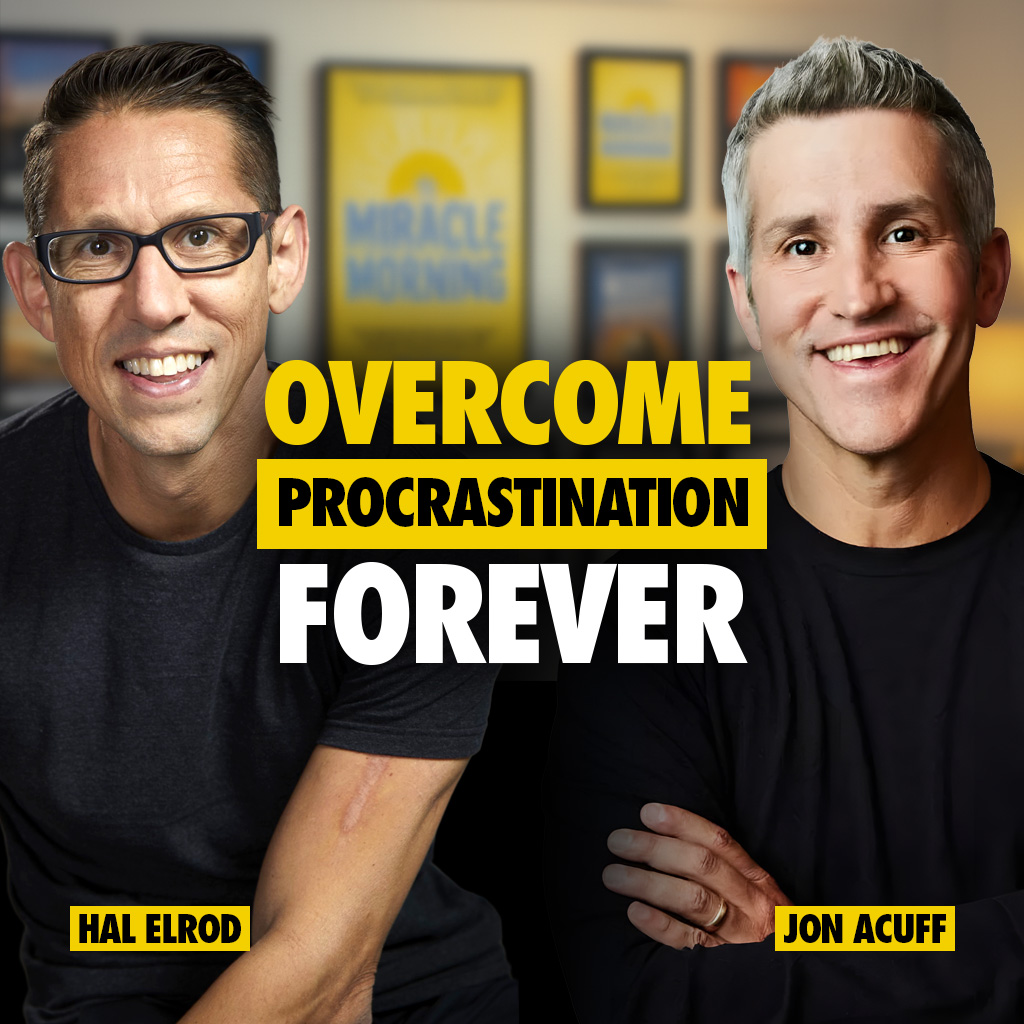
Loading summary
Transcript73 lines
- [00:02]
A
Hello and welcome to the achieve your goals podcast. The show that empowers you to wake up to your full potential and achieve your biggest goals and dreams. I am your host, Hal Elrod and I invite you to join us each week as we share actionable strategies to take your life to the next level, as well as interview world class experts and entrepreneurs who have achieved extraordinary goals themselves. And we ask them to give you a peek behind the curtain and teach you exactly what you need to do to do the same. Ready? Here we go. Look, we all struggle with procrastination standing in the way of what we truly want and are capable of. But what if procrastination isn't our problem? What if it's actually our brain's attempt to protect us from something we are afraid of? That's not a riddle. It's the argument that my guest today makes. And honestly, by page three of his new book, procrastination proof, I was already rethinking everything I thought I knew about why I keep avoiding the things that I know I should be doing. John Acuff is a New York Times bestselling Author of not one, not two, not three, but 11 books, one of those gifted communicators in the personal development world, and someone whose writing made me stop, underline the page and say out loud, oh, that's why I've been procrastinating. His new book, procrastination proof isn't just the best thing I've ever read on the topic. It's really a roadmap for building the life you actually want. Because procrastination is just a roadblock to standing in between you and that life. And in this conversation, John breaks down why most of us don't have a time problem, we have a permission problem. He walks us through the five reasons we procrastinate, the four step framework that rewires how you take action and ask a question that genuinely stopped me cold. What will your future self thank you for that you do today? This conversation with John was a game changer for me. I think it's going to be a game changer for you too. Here we go. John, are you ready?
- [02:00]
B
Dude, I'm ready. I am a billion percent ready.
- [02:04]
A
We procrastinated the intro. You just said eight minutes about I couldn't figure out how to get us started. So I'm excited, man. I admired you from a distance for a long time. You and I connected a while back, I think August at the author mastermind, author for author. And yeah, man, your new book I am deep into procrastination proof. And I was just telling you, this is phenomenal. Thank you so much for writing this.
- [02:24]
B
I appreciate it. Yeah, it's been fun to become like an in real life friend with you. There's authors you kind of circle and you get to do speaking events, but you never meet them. And so, yeah, that event, Donald Miller's place, was really fun because it made people I admired 3D, and I appreciate that.
- [02:39]
A
Yeah, no, absolutely, man. So I was just telling you this before we started recording, so I'm going to repeat myself, which is. So as an author, I read every book I read. Right. It's like through two lenses. It's like I'm receiving the content as a human being that still struggles with procrastination in certain areas of life. And so I'm learning, oh, my God, this is genius. To overcome procrastination. But then as a fellow author, I'm appreciating. I'm like, oh, I love how he did short chapters. I can just get win after win after win after win after win, nugget after nugget after nugget. I love the content. I love the frameworks. Right. So, like, I'm admiring how well you wrote the book while I am applying it to my life, man. So that's how I'm receiving this.
- [03:23]
B
Yeah. And we're the same way in that sense where it's. I think we both like simplifying complicated things and then creating real actions people can use in the real world, where it's not a theoretical thing. It's not. I'm adding more confusion to something that already feels overwhelming. But I'm going, hey, how do I simplify this? And then give you something you can do immediately so that you. You get the same emails I get where people go, my morning changed, and I didn't know that changed my whole day and changed my whole week and my whole life ultimately. So that's what I think. You and I overlaps on so many different things.
- [03:53]
A
Yeah, I think so. I think the more we get to know each other, the more we're going to appreciate how similar that we are starting with the problem. Right. Which is procrastination. And you talk about it's actually a solution. So we're going to get to that in a second. But I just want to invite everybody that's listening. Right. To consider the. The effects of procrastination. And you can also unpack that because obviously you do it really well in the book. How procrastination is literally it's the dream killer. It's the thing that prevents us from doing what we're destined to do, what we could do, what we deeply, deep down want to, but are maybe afraid to do, all the things. But where I want to start is that you actually say that procrastination isn't a problem, it is a solution. Right. And that's quite the twist and quite counterintuitive. So what do you mean by that?
- [04:36]
B
Well, I mean, it offers you a solution to what you feel is an even bigger problem. So an example would be, you don't want to go spend Thanksgiving with your parents this year, and you don't know how to tell them that, like, and your spouse aren't going to go, whatever. And you don't know how to tell them. And procrastination goes, don't worry, I got you. I'll solve this. We won't talk to them about this for six months. We'll wait until the week before. Or you go, I want to write a book. I've always wanted to write a book, but I'm afraid of criticism. And I know when I write it then I'll be open to criticism. And procrastination goes, I'll save you from that. You'll never get publicly criticized about a book. I'll just make sure that never happens to you. And it doesn't tell you the full thing, which is, by the way, you don't get to write the book. You'll hear this in, like, AA circles. A friend of mine's a kind of like, the sponsor of all sponsors in Nashville. He talks about, for a lot of people, alcohol was a solution. Like, they didn't know how to process some of their parents divorce. And alcohol said, I'll numb it for you. I'll help you fix it. And it even got you through some situations. But at some point in your life, it's no longer a good solution. It's no longer really serving you. And my argument is there's a better solution. And the book argues that permission is a better solution and then kind of unpacks that. So I don't want to put any shame on anybody who's ever waited to do something or delayed. I think we all have. But I'm trying to prevent you from saying, I wish I had started sooner. Everybody who ultimately does the thing says the same thing. I wish I had started sooner. Or they go, that was easier than I thought. I wish I had done it. What was I so afraid of? What was I so, you know. And they go, Like, I get to run a business. I get to lose weight, and I'm trying to Prevent people from 10 years in going, I wish I had started sooner, because I think you don't have to wait that amount of time.
- [06:13]
A
I love that. And, yeah, so it's really. Procrastination's a solution for inner turmoil.
- [06:18]
B
Yeah. And you. You look at it and go, I'll choose procrastination because I'm afraid of the alternative, which is doing the thing. Or, like, one way people procrastinate is they think it's part of their skill set. They go, I'm a procrastinator. It's how I function best. In college, I got a great grade on a paper I did the last second, and they mistakenly think it's actually a tool that's helping them. And they've studied that for years. It's just not true. But sometimes we think like, no, it's who I am. It's how I do my best work. We hear authors say that all the time, and the reality is, not only have they tested it, and scientifically, it's not true, but no one's first draft is their best draft, if we're honest as humans. If I give myself three extra days to look at it and think about it and breathe about it, I find a mistake, I find a typo, I find another idea that's even stronger. But I told myself, no, I do my best work at the last second. And nobody's first draft is their best draft. Everybody's second draft, I love that is better.
- [07:13]
A
I just experienced that firsthand. I just gave my first TEDX talk on Friday. Oh, congrats, dude, and thank you. But I struggle with memory issues from my, you know, chemo, car accident, all the things. And so I have a limiting belief that's like, I have a bad memory. And so I often. That's actually a reason I procrastinate is because I'm like, I can't memorize it. So I'm just gonna wait till the last minute and I'm gonna wing it. And that's always worked out for me pretty well. Well, with the TEDx talk, it was 10 minutes, and it had to be, like, word for word memorized because I'm like, I can't just wing it. And so that was a huge overcoming of a limiting belief. But to your point, I got the first draft done two months before the TEDx talk, and by the time I delivered the TEDx talk, I was on V18.
- [07:55]
B
Amazing.
- [07:55]
A
I was on my 18th draft. And it was a masterpiece.
- [07:59]
B
Yeah. It hummed it. Like, there was not a word that wasn't serving the next word or the previous word. Like, totally. It hummed better than if you had. Like, and you're talented at winging it. Like, I'm talented at winging it, too. But if I'll be honest, there's like. Like, you take that talent and add craft and then watch out. Like, and so that's what you did.
- [08:19]
A
Yeah. You get those shower thoughts. Right. If you. If you hadn't taken the action on day one, you wouldn't have gotten the shower thought on day two. That led to an improvement on day three. That led to a. You know, falling asleep and waking up and journaling. Right. Like, you have to take that action to create more clarity and creativity along the way. You mentioned permission a second ago. And one of the things you say in the book is that most people think they have a time problem but they really have a permission problem. And that's a big theme of the book, is giving yourself permission. Talk about that.
- [08:47]
B
Yeah, it's funny. It's a word we don't say a lot as adults, but once I say it, you'll start to hear it. But when we were kids, it mattered the most to us. We understood permission was everything. Like, a permission slip was a passport. It allowed you to go on a field trip or join a soccer team. And then you start to study the best stories that have ever been written. And there's often an element of permission. Like in Lord of the Rings, Gandalf gave it to Frodo. He said, you have permission to be more than a hobbit. You have permission to save the whole world. Morpheus gave it to Neo in the Matrix. Here's these two options. You have permission, like, you have permission to wake up in your bed tomorrow and believe whatever you believe. Or you can stay in Wonderland and see how far down the rabbit hole goes. Cinderella, the fairy godmother gave her permission. You know, you have permission. And so. So many of the things we really want to do of, like, oh, I get to do that. You and I, like, we've had the great fortune, like, with the way our books have done and the career we've had we've been able to be in rooms with people that we used to think had a secret handbook to doing everything perfectly. And then you get in the room and you go, oh, they're making it up, too. Like, this person's just giving themselves permission to go. So then I just tried it. Like, then I just. You and I were at an author summit where a guy sold millions of copies of books. Young guy, he just gave himself permission to go, I just read chapters on TikTok out loud and my.
- [10:04]
A
And people realized, yeah.
- [10:07]
B
And now he's on a rocket ride. He constantly gave himself permission to go, I'm going to self publish. I don't understand publishing. I'm going to do it this way. I'm going to do this. And so, so many of the things that you just find out, like, oh, they did it because they gave themselves permission to do it. And there's internal permissions you give yourself, you can give it as a leader to other people. Like, once you see the power of that word, you just start to notice it everywhere.
- [10:31]
A
Are you like me in that you want to optimize your energy and your focus? Well, if that is you like I do, then I highly recommend that you check out Cured Nutrition flow gummies. I'm telling you, I said this last week. I think I'm like addicted to these things. I take them every morning. In fact, yesterday I took them twice. Took them in the morning first thing. And then I took them before my workout as well. First thing. Four functional ingredients that will help you increase your focus and energy. It's lion's man that improves mental clarity, focus and memory. Ginkgo biloba enhances cognitive speed and memory and boosts blood flow to the brain. Green coffee increases alertness, reaction time and enhanced mood with 48 grams of caffeine. Very minimal caffeine, just enough to give you that edge. And then Hua Serrata supports neurotransmitter function, memory and learning. And they're all in these delicious apple gummies. I take two gummies in the morning to get into my flow state and I highly recommend that you do the same. Head over to cured nutrition.com forward/hal that is cured nutrition.com HAL and use the code HAL at checkout for 20% off your entire order. And if you do a bundle or you do a subscription, it stacks on top of that so you get an additional 20% off. Check out the flow gummies and their other products as well@curenutrition.com HAL and enjoy the rest of today's episode. Yeah, well said. It is that simple. One of my mentors when I was young, he said the difference between successful people and unsuccessful people, or one primary difference is that successful people do the things that they need to do that are actually not that hard to do. It's just easier not to do them. And that 99% of people choose the easy road, they go, it'd be easier to not do it, which is literally. It'd be easier to procrastinate. Oh, yeah, right. That's the solution. It's the solution where I don't have to do the slightly harder thing. It's not that much harder. It's just giving yourself permission, reading like Joseph Nguyen who wrote don't believe everything you think. Right? Reading those books on TikTok, reading the chat. That's not hard. You hit record on the computer, you read a paragraph and you sell 2 million books. You know, it's crazy, but the procrastinator goes, ah, but what if I don't, what if I don't sound right and I don't know how to do the camera? And the John Acuffs of the world, their social media looks so polished. Which, by the way I'm talking, this is me. I have. I'm not social media. I'm always comparing myself against Mel Robbins and you know what I mean? And like, oh, I'm not as good as them, so I suffer for that. I want to talk about mindset for a minute. You've written several books on my 11 books, several books about mindset. And I know that you mentioned that procrastination is really just a mindset issue. So specifically, why is mindset so important when it comes to overcoming procrastination and building the life that we want?
- [13:22]
B
I think it's everything. I mean, the way I think about mindset is thoughts turn into actions, actions turn into results. The things you think become the things you do become, the things you get. And all too often we over focus on the results, but we never change the underlying thoughts, so we never stick with the action and then we therefore don't get the results. So for me, that was kind of the eureka moment I experienced in my mid-30s was, oh, the problems I have are mostly mindset. They weren't physical. Like if you live in Montana, a bear is a physical problem. Like, I can't think my way out of that situation. Like it's a bear. But the things that people struggle with when it comes to the kind of work we're talking about are perfectionism, procrastination, imposter syndrome, inner criticism. You don't physically wrestle with those. Those are all mindset issues. And my argument is often that when you dare to be more than you currently are you awake? The dragons of mindset, those things I just mentioned, like, the dragons only bother people who are coming for the goal. So like, I Never had imposter syndrome until I decided to write a book. Like, it never bothered me, Like a dragon never bothers people that are snugly asleep in their comfort zone. It doesn't have to. You're not trying to do anything. But when you try to say, I want to start a business, I want to write a book, I want to get in shape, that's when these kind of mindset issues get loud. And it's my favorite thing to write about. So Soundtracks was about overthinking and kind of my framework for mindset. Finish was about perfectionism, which is a mindset issue. And this book, Procrastination, is about a huge mindset issue. And once you realize it's mindset, hopefully some weight falls off of you as you go, oh, I can use the same brain that's creating that problem to actually change that problem. What would that look like? My thing with mindset is always, I didn't like all the research I read that would say, turn it off. Turn off your thinking. Just stop thinking. What a waste of a gift. I love to go, if I have a ton of anxiety, I really have a ton of creativity. If I figure out how to apply it the right way, when people say to me, they go, why have you written 11 books? I go, I have so much going on up here. Like, I have so much going on up here. And, like, my next book is going to be about optimism. And people are going to go, why? I'm going to say, because I'm a pessimist. Like, I'm naturally pessimistic. I just learned years ago the ROI of positivity is better than the ROI of negativity. So I practice positivity, and this is how I've learned to practice it. And. And so, yeah, for me, that's why I love jumping into mindset issues, because most of life's problems in the modern world start there.
- [15:47]
A
Yeah. So I want to ask you. And this just came up for me right now as you were talking. This is the first John Acuff book that I have read, admittedly. And I like your writing so much that I want to order. Like, if you had to pick up all your books when I finish reading Procrastination Proof, what would be the next 100?
- [16:06]
B
Soundtracks.
- [16:07]
A
Soundtracks.
- [16:07]
B
Yeah, soundtracks. And, like, you'll like this. As an author, I realized as I was releasing it, if I had named it Inner Voices, most men wouldn't have read it, because men don't want to admit they have an inner voice. But because I named it Soundtracks, even. Like, I went and spoke to 4,000 ranchers at cattle Con, the world's largest beef event. It was me and Dale Earnhardt Jr. Just a couple of NASCAR legends sharing the stage. And even a seventh generation rancher will go, I have a broken soundtrack that's not allowing me to release my farm to my son because I've wrapped my identity into it. And who am I if he's in charge, like, and he's left the farm and gone to the city and now I want him around, but I never gave him real responsibility. And so, like, soundtracks is the one that for me goes to the widest audiences possible and gives you a real handle. Like you and I, the thing again, there's so many things we do similar. You and I are handle makers. We put handles on ideas so that people can bring them into their life with them. We have enough ideas in the world, we don't have enough handles. So, like, Miracle Morning is a fantastic handle. I can pick it up. I can bring it into tomorrow so easily. So soundtracks, the day after I speak at a company, they go, oh, we're in a meeting. And somebody said, that's a broken soundtrack. We need to change that. So that would be the one that I would say, yeah, if you're going to read a second one, that's the
- [17:24]
A
one I'd say, okay, all right, I'm going to put that. That's going in my cart today on Amazon, man, I love that. So I want to break down some of the reasons we procrastinate. You outlined five in the book. And I think this is so important because I've always, as a speaker and an author, I've always thought, okay, we have to understand why we're doing what we're doing to really be able to overcome it. Because if you're just given the solution, like, hey, just do these things and you'll improve. But if you're not understanding the underlying root, it's just like health. If you don't understand the underlying root cause of what caused the cancer or what caused the obesity or what's causing whatever the issue is, right, then you're not able to really address and overcome it. So I'd love for you to just highlight for people so that we can all understand, because we all procrastinate, why are we doing it? What are the five reasons that you identify?
- [18:12]
B
Yeah, so one is task. The task feels overwhelming and you'll hear people say, when this is a broken soundtrack, I don't know where to start. And it's A broken soundtrack. Because what you're really saying is, there's a perfect place to start, and if I pick the wrong one, it'll be harder. Or if I find the right place to start, it'll be easy. And so that I don't know where to start. The task feels overwhelming. And sometimes it's because we've made the task overwhelming. Like, we've made it too large, we've made it too gnarly. A lot of New Year's resolutions fail because we commit to doing something for a year we've never done for a day. That's like marrying somebody you just met at speed dating. And so I go, no, no, no. It feels overwhelming to write a book because you've made it overwhelming. Like, let's figure out how to do it in a small, subtle, easy way that builds on itself. Sometimes it's task, sometimes it's early. As I mentioned, history. You did it in the past, and you. And you think it's now part of your skill set. Sometimes it's just time. You go, I don't have enough time, and I want to do it perfectly once I have time. Or you believe the someday myth, like executives will say to me, someday, when things aren't so busy, I'm going to learn AI someday. As if there's a someday week that shows up completely empty and you go, oh, my gosh, it's here. I have no meetings, I have no commitments. This is when I'm going to do all those things I said someday I'd do. So it's a time issue. Sometimes it's just the fear of what will happen if you actually finish. You're afraid of, like, you've kind of bought the lie that I can say, I could have done that if I wanted to, but I didn't really want to. Versus the reality of I tried my hardest and it still wasn't enough. Like, that's a humbling experience where you try your hardest and go, and anybody who's ever launched a book has had that experience. There's some books that take off. Like, every one of the authors that were in that room with us would have loved that experience. That young man had. Like, whereas, like, I read on TikTok some and then, like, I sold 2 million books. You're like, I would like that, please, like, if you could give me that. Or, like, I would like that path too, but you've got this fear. And. And then the last one that gets me the most probably is ego. There's an element of ego where I Shouldn't have to do this. This shouldn't be this hard. I sometimes struggle with entitlement. I'm recently, like, going all in on LinkedIn. I feel very late to LinkedIn. Like, I always thought of it as the boring social media. And like, Twitter and Instagram are fun, but a soundtrack I'm listening to as a leader now is Instagram is fun. LinkedIn is profitable. Like, guess where people are. The book business speakers. They're on LinkedIn. And then Hal. The thing that got me, dude, the eureka moment was I realized LinkedIn is the only social media platform where people don't get in trouble for being on it at work. If your boss comes in your cubicle and you're on Instagram, you close it. If your boss comes into your cubicle and you're on. On Facebook, you close it. On LinkedIn, they ask you to participate in it. Companies give you LinkedIn assignments of, hey, make sure you're promoting this team. We're about to go public in a couple months and we want to. And so for me, like, learning to go, okay, I need to be on LinkedIn versus going, why isn't LinkedIn growing? I'm not doing anything. I want it to grow. Or podcasts. People in our space go, you gotta have a podcast. It's easy. Or they say, this is what. This is what they do. They go, one. You're leaving money on the table. Like, there's a pile of money on the table and you're just not taking it. And then they go, and it's easy. Like, it's very easy to do it. You should just do it. Have a video podcast, have a whatever. And the third thing they do is they tell you someone who's killing it, as if it's easy. They go, look at so and so. They're kill. Like they're. They're just killing it. And you go. And then that creates entitlement. Because then I go, try it for a month and it doesn't work. And I go, I shouldn't have to do this. Like, I had a one. There's a writer on my team, and she asked the other day, she's like, did you know your LinkedIn would grow like this? And I said, yeah, because I'm working really hard on it. It's only not going to grow if I don't work at it. The entitlement is, I shouldn't have to do this. This is somebody else's job, somebody else's role. And like, I saw that with parenting. We were at a swim meet. And like, if you only have one day left to live on the planet, I hope it's at a swim meet, because those days are like 19 years long and we're at a swim meet. And I was like, this is the worst. And then I was like, wait, what parents are supposed to be here for Ellie and McCrae? Oh, it's me. I'm 100% of their dads. Who else do I think is supposed to do this? And it was like, hey, get over yourself. Be all here. Be all into this. Like, let's focus. And that's some of that ego that makes people go, I shouldn't have to do this. And then they procrastinate on things that are actually their responsibility.
- [22:26]
A
If you struggle to fall asleep or stay asleep, I have a supplement that I take that I've taken for about three years now, virtually every single night. I highly recommend it. It's called Nightcaps by Cured Nutrition. It is a CBN and CBD oil supplement, and CBN supports your body's natural sleep rhythms through the night for deep restorative sleep that leaves you feeling refreshed and ready to rise in the morning. Highly recommended. I book in my days with Cured Nutrition. I take their Flow gummies in the morning, I take nightcaps at night, and you can get 20% off of both of those products. As a listener of the Achieve your goals podcast, head over to curednutrition.com HAL that's curednutrition.com HAL and use the discount code HAL for 20% off your entire order. And if you do a subscription, which I do a monthly subscription for both of those products, you get an additional 20% off that stacks on top of the 20% as a listener. So you can save a bunch of money and it'll help you fall asleep and stay asleep again. Cured Nutrition, Nightcaps in the evening, and I start my day with Flow gummies every single morning. And I hope these products will help you and enhance your life as they have for mine. Enjoy the rest of the episode. The Entitlement piece Another way it shows up for me at least, is if you used to get a result a certain way and now you're not getting it, and you're like, I'm entitled to getting a result and it's unconscious. You're not saying it with those words, probably, but I'll give you an example. So when I wrote Miracle Morning and I launched it, I was a college speaker, and my goal in 2012 was I want to be a corporate speaker. Because the college Caps out at a much lower rate. And I want to earn a, a living doing this. And so every speech I've gotten for the last 14 years has been a CEO that read the Miracle Morning or a HR person. And then they went to our website and they emailed me. Every speech has been incoming. I've never. And I've always had enough speeches. Well, my kids are older now, and now I don't have, like the dad guilt where I'm like, okay. They actually want me to, like, go away for a few days. They're fine with that. They're not little anymore.
- [24:38]
B
Totally.
- [24:39]
A
And so I want to speak more. And so I'm like, how are we getting more people? And somebody on my chief growth officer, he's like, hal, you gotta go back to like, your sales roots, dude. You've got to make a spreadsheet. You got to make your first people to see list. You got to make videos and call your reach out to your clients and then ask for referrals. And then when you're at the event, which normally I go to the event, I speak and I leave. He's like, no, you gotta sit, have dinner with the CEO.
- [25:04]
B
Yeah.
- [25:04]
A
And at first I'm like, no, I'm entitled. I don't have to. Like, this isn't how it works. You don't understand. People just reach out and ask for speeches. And so here's the cool part, and this is what I want. Like, initially, I was procrastinating. I was resistant to do all these things that I've never had to do before. And then probably two or three months ago, I start reaching out to other speakers. Our buddy Joey Coleman, I'm like, joey, how do you get speech? You know, And. And he gives me a masterclass and I make a spreadsheet and I write down my clients and I start sending texts. And at first it's like, I'm resistant. I'm procrastinating. It's out of my comfort zone. I'm scared. And now, a couple months into it, I booked two keynotes this morning over text message, like, with one of my former clients. Like, there's so much momentum and it's so exciting. And so I'm just sharing this because A, I was procrastinating due to entitlement based on how I've gotten results in the past. It shouldn't have to be so hard. I shouldn't have to do so much. But the most important part that I want to share, Jonathan, for everybody listening, John, is the outcome of not procrastinating anymore. I am on fire and it feels so good. I have not been this excited about my business in a long time. And it's because I overcame procrastination. I did the thing that I was scared of that was out of my comfort zone that I shouldn't have to do, and now it's. So anyway, I'm your walking example of like, hey, when you stop procrastinating and you actually do the thing you're afraid of, it's amazing. And I know I'd love to hear one of your. You have so many stories in the book of how you overcame procrastination.
- [26:43]
B
Well, I'll give you one that this is like a bonus one that's not in the book, but it's related to what you just said. So we do this thing called Stage and page. It's a two day intensive event in our office. Only like 20 people for writers and speakers that want to do what we just talked about. Stage and Page and Page. And so one of the things I teach them that took me 10 years to learn, that you can learn in 10 minutes, was my version of what you just said was when I'd be at an event and I'd be in the lobby after, if I didn't sprint to the airport, like, I'd be in the lobby after and somebody would say, hey, we love that speech. We'd love to book you at our event. I go, great, here's my card. I'd give my information and I realized I just gave them a job. I just assigned them a task and they are going to lose that card by the time they get to their hotel room. That's not their job, that's my job. So now what I do is I go, oh, I would love to do that. Can I get your cell phone? I'll follow up. I own the follow up and the soundtrack that helped me with that. And something my wife's taught me is, are you signing the front of the check or the back of the check? Are you signing the front of the check or the back of the check? Or for younger generations, are you sending the Venmo or receiving it? I'm signing the back of the check in that situation. That's my job. So I need to do that. And there's other situations where, like, I have contractors that I've hired that try to give me back work. And I go, oh, no, no, no, wait a second, I'm signing the front of this check. So for me, once I realized that, then it changed my whole attitude of like, oh, I need to no longer procrastinate on this. If I want to have a thriving speaking business, I need to be the one that owns Follow Up. I'm the CEO of Follow Up. I've got the most skin in the John Acuff game, so I need to be the one that does that. So for me, though, ultimately, a lot of beating Procrastination is figuring out what's your dream. Like, the four permissions the book covers are. Permission to dream, permission to plan, do, and review. The challenge with Dream is that if you don't have the dream, you'll never change your life and you shouldn't. Like, no one willingly leaves their comfort zone and they shouldn't. It's comfortable. The only reason people ever leave their comfort zone is something outside. It is worth being uncomfortable for. And in my experience, it's one of two things. Desire or disappointment. You bump into something and go, oh, I could do that. Like, I sold two nights out at Zany's, the largest comedy club in Nashville, because I saw an opener of a national tour and I thought I could do that. Like, if that's what it is, I could do that. And then that desire made me do a lot of embarrassing things that normally I would avoid. I didn't procrastinate.
- [29:06]
A
You did stand up.
- [29:06]
B
Yeah, so I did sold out two nights of Zanies and dude, I worked my butt off to sell it out. And then I spent three months writing a 60 minute set. And I'll be honest, an exec from Comedy Central friend of mine said, I said, I'm doing a 60 minute set. And he said, you know what else is really good? A really tight 15. Like, that was his way of being like, Bro, 60 minutes. But I did that out of desire. The second reason people change is disappointment. They go, I'm not where I thought I'd be. Like, and it hurts enough that I'm going to change. But so much of procrastinate, like, you'll run through a wall if you know the right wall first. People think they're going to become disciplined and then change. That's not how it works. It's you have a desire or disappointment. And then. So my version of that. I didn't start getting up early to write my blog because I was disciplined. And I was like mark Wahlberg at 2am doing burpees. Like, I got up early because I loved blogging and I had two kids under the age of four. I didn't stop watching so much TV because I was disciplined. TV just wasn't giving me anything. Blogging was giving me everything. And now my schedule was, like, every hour was a log. And I wanted to throw those logs into the fire of blogging and make it as big and as powerful as it could be. So that's where I try to encourage people. Like, you don't have to know the perfect dream by any means. That's its own sort of trap. But, like, you at least need to know, like, here's a thing I want to try. Here's a desire or a disappointment I want to fix. Like, the disappointment can be a plenty good motivator in the right season.
- [30:27]
A
We have miracle morning for me. Came out of. I was broke. 2008, economy crash, losing my house. I'm like, oh, this sucks. This is terrible. I'm so desperate. I'll do anything to change my life. Wait, become a morning person. I'm not a morning person. I can't, right? Like, I'm entitled, right? I don't. I never had to wake up early to be successful, and then, like, oh, but a lot of people do. That's how they become successful. What if I did that? Right?
- [30:50]
B
So same with me. How? The line I use about my season was, I didn't know we were poor. I just thought we liked camping. Because I told my wife we were outdoorsy when we were young, and she's like, no, we were broke. That's what. Like, we could only afford $11 a night at a campsite for vacation. That's why we were camping. I was like, oh, you don't say. That was poverty, so. And I think that's a fine motivation.
- [31:09]
A
Yeah, I love it. You just mentioned about blogging. I'm just curious. When did you start blogging and do you still blog?
- [31:14]
B
No, I started. Dude, my first blog was 2001. You had to build it with Dreamweaver. It was terrible. Dreamweaver is impossible. I had a website doing music reviews, and I was like, oh, my gosh. Like, you can just. The Internet. I realized you can just be whoever you want to be. Like, I interviewed the guy from five for Fighting. He had this song, Superman, that was really big. And he was like, well, you're a rock critic. You get it? And I was like, I'm not a rock critic. This guy. So I did that. It was really hard. I got really discouraged, and then I stopped for, like, seven years. So when I say procrastination, like, I have friends that right now. Like, my buddy Dustin Nickerson, who's a comedian, said, dude, I rolled my eyes when I saw the title of your new book because you never procrastinated. And I would say, hey, man, I watched me from 2001 quit a blog and not pick it back up for seven years. And I look back and go, man, if I had fed that thing for seven years, if I had like. And I have regret over that. I don't want other people to have a seven year slump or a seven year. And so then I started aggressively in 2008. I don't currently blog right now. Yeah, do you currently blog right now? Are you writing content? Are you on like substack or medium or something?
- [32:22]
A
I'm not. I'm not. Right. I should be. I'm not. I'm just the podcast and trying to figure out what my next book is going to be. I've got all the preliminary stuff for a couple different books right now. Just deciding which direction I'm going to go.
- [32:31]
B
Oh, nice.
- [32:32]
A
And in which order. One of my mentors used to always call it your disgrace list, which is. You're like, I should be doing that. I could be doing that, but I'm not doing that. And I think every procrastinator has the disgrace list. Right. And so substack is on there. I'm like, everybody's doing a substack. Why am I not for you, though
- [32:48]
B
on my list is like, I should be consistently creating content. I don't know the format. Like, I'm figuring out the format. But like for you it might be. It's not where you're supposed to be. The book is the longer term. Like when I look at Miracle Morning, if you told me I'm gonna create another framework or another thing, I'd go, that's where you quote, unquote should be. Because that's a 10 year window versus I need a substack or I need a medium. Like, that's what I'm trying to figure out.
- [33:15]
A
No, that makes great sense. Me too, man. You and I should brainstorm. Mastermind.
- [33:19]
B
Yeah, exactly. That's what we're doing.
- [33:20]
A
Yeah. And YouTube seems to be the thing. I've got a major insecurity slash limiting belief around. Like I can go on stage just like you and talk to 10,000 people, turning my phone on and being like, hey, I was I going to say, you know, yeah. So whenever I do a video, dude, it's so funny. All of my bloopers end with the F word. If I'm doing a 60 second video, I'm 38 seconds in. I'm like. And then I. My brain I call, you know, brain damage kicks in and I'm like, ah, what was I talking about?
- [33:48]
B
Yeah, yeah.
- [33:49]
A
So I have my own struggles. But you just touched on something that was actually I wanted to go deeper into, which is the book centers on four permissions. You talked about what a permission is earlier. Dream plan, do and review. Can you break down how those four kind of work together to make someone Procrastination proof the title of the book?
- [34:10]
B
Yeah, it's. Well, it's just a success loop at the end of the day. So dream. It's like, what do I want to do? Plan. How will I do it? Do, Am I doing it? Review. Did it work? And if you do those four things consistently, it's almost impossible to not be successful. And the problem is dreamers get stuck dreaming. They have a thousand ideas, zero actions. They have a really hard time moving to planning because dreaming runs on optimism. Planning runs on realism, and they get stuck in that gap. Perfectionist gets stuck planning. They go, I'm going to change the world as soon as I have enough data, as soon as I have enough information. And you'll never have enough information. Like, perfectionists demand certainty from an uncertain world. So, like, I'll do this if I'll build the YouTube channel, if you can promise me in two years it'll be really profitable. And I'm like, I can't promise that. And then hustlers get stuck doing. There's a lot of your audiences probably in the hustler category, and they like to go from dream, skip, plan, and just start going. They're going. They're going. They hate a review. Sales teams hate reviews. Like, I work with so many sales guys that are like, all the paperwork, the bureaucracy, and the leadership team is like, we just need to fill out three fields on a form. We need the name of the person you sold it to and their address so we can fulfill it. And they're like, oh, you're holding me down. I'm a sales animal. Get me in the streets. Like, anything that's not exactly. That feels like a hassle. They don't see that a review actually makes sure you're headed in the right direction. I know a ton of people that are making a ton of effort. They're just running off a cliff. And a review is just data and data. My soundtrack for data is always data kills denial, which prevents disaster. Data kills denial, which prevents disaster. Data is just going like, hey, this is where you're headed. But we hate data. Culturally, we hate it because it tells us the truth. And like, the first time I saw that happen, it was at a restaurant in New York, and everybody was going to order some crazy meal, and we open up the menus and they had added the calories next to each meal, and everybody's meal changed. Everybody got really mad and was like, oh, take a salad with grilled chicken. Like, dressing on the side. Not the side of the plate, the side of the restaurant. I'll just stare at it longingly. Like, the meal had the calories, whether I knew them or not. The data was just like, hey, if you want your pants to fit, here's a little bit of data. And so usually when I sit down with an individual or a company, I can figure out, like, oh, you've got a ton of dreamers, but nobody's doing. Or you've got a ton of, like, hustlers who are doing, doing, doing. There's no plan. You and I see that all the time in our industry where, like, you get around somebody and they like YouTube. They go, you gotta have a YouTube channel. You gotta blow up YouTube. And you go, how is that profitable? Go, no, it's not. But, like, someday, maybe, like, what's your plan? We'll figure out the plan. Like, oh, you're just dumping buckets of money into a thing because you think you're supposed to do the thing, but you're really like. And often the people that tell you and I to do YouTube, that's what they do. So, like, I always push back when somebody goes, oh, man, you've got to do more YouTube. I go, have you written 11 books? Because it might be we have different business models. Do you do 50 to 60 corporate speaking gigs a year? Oh, you don't do any. You just 99% focus on YouTube. Let me not feel shame in this moment and go, I should just do YouTube because it's so easy when it's 99% of your job and it's not 99% of mine, which is fine. That's fine. But then you get distracted. Like, I can usually pinpoint where somebody stuck in one of those four areas.
- [37:34]
A
All right, let me ask you a question. How many apps are you using for your personal development? Maybe a meditation app like Calmer Headspace, an affirmation app like I Am, or think up a book summary app like Blinkist, a journaling app like 5 Minute Journal, a visualization app like Envision, an exercise app like 7 Minute Workout, and maybe even a habit tracking app to keep it all together. That is a lot to manage and a lot to Pay for what? If you could replace all of them with just one app. Yes, it is called the Miracle morning app and it is essentially seven apps in one. Hundreds of guided meditations and breathwork tracks a full library of affirmations, plus tools to create your own visualization prompts for 10 key areas of your life. Guided workouts from 2 to 10 minutes long, book and audiobook summaries of top personal and professional development books, and a journaling tool with guided prompts. The wheel of life or a blank page to write freely. It simplifies your morning, saves you money, and helps you start every day with clarity, purpose, and energy. And it's one of the only apps in this space with a 4.9 out of 5 star rating. Try it free for 7 days. Just search Miracle Morning in your app store or go to miracle morningapp.com to get started. All right, back to the show. That's an important lesson that you just shared. Here's a bonus permission for everybody, which is permission to not compare yourself to other people and feel like the way they're doing it is the right way. And if you don't do it their way, something's wrong with you. And we all do that, by the way, right?
- [39:06]
B
Oh, my gosh.
- [39:06]
A
That's really, really important.
- [39:07]
B
Yeah, I do you like, I could list the five people I'm doing. Like you said. Mel Robbins. Who amongst us right now isn't like, she's killing it. The thing she's doing, like, where's my protein shake? And it's like, bro, like, let her be her. One of my soundtracks is I'm a sucky Jim Collins. I tell myself that all the time because when I write a book, there's like, boy, you got to have like 85 pages of research. And the flip side is, I'm funnier than Gary Vee. I'll never out Gary V. Gary V. But like, humor is one of my targets. So, like, that's my I'll never out entrepreneur him. But then the crazy thing is, dude, people will look at a guy and I think Gary Vee does amazing work. Like, but they'll look at Gary Vee and they'll compare themselves and not know he has 800 employees. You would never drive down the highway and see an eight story building with 100 people on each floor and go, that building's crushing me right now. I suck compared to that company. But because it's individual, we go, man, Gary does 450 pieces of content a week and I'm only doing four. I'm so inadequate and like it's such an unfair comparison. So yeah, I think we're all susceptible to it and I think we have to like tease it enough to be like, I'm a sucky Jim Collins. Like I'm the worst Brene Brown. My Brene Brown impersonation is terrible. Like she's a great Britney Brown. I'm a pretty amazing John Acuff if I'll admit that and be comfortable in that. But anyone outside of that I suck at.
- [40:30]
A
I love the comparison you gave with the Gary Vee. If you saw that he has 800 employees making him look the way that he does. Like, I just was speaking in Greece at the health optimization retreat. Do you follow Tim Biohacker on Instagram?
- [40:42]
B
I don't think so.
- [40:43]
A
Highly recommended one of my favorite content creators and just really good content on health. But, but anyway, I go, dude, and it's so well produced. So we read his event and I'm like, dude, your social media game is off the charts, man. It is so good. And then I, you know, and in my mind I didn't say this but I'm, you know, I've looked at it and gone, I suck. I can't, I don't know how he makes it look so good. And he goes, I have a team of 15 people and we're spending a quarter million euros on my social media every year. I'm like, oh, I bet If I hired 15 people, which I, I don't know that I could justify that expense, but oh, that makes sense. And then I like, I stopped feeling bad right then. I just got excited to set financial goals so I could hire 15 people and spend a quarter million euros on my social media.
- [41:31]
B
My version of that was. And I put this in the book, some entitlement on my part was Greg McEwen, who's a friend at this point, great guy, wrote Essentialism, sold a million copies, super smart dude. He was on Tim Ferriss podcast. And so this is like four or five years ago. I was like, oh I'd love to be on that show. As if he was going to say here's Tim's number, you can be on tomorrow. Like I thought that was maybe there was a button. I pressed the Tim Ferriss button and then I just got to be on the show. And he was like, yeah, if you want to know the six month process I did. Or like what? I was like, oh, of course. Like it was so crazy that I thought he'll just, there's a switch, there's a lever versus like that guy, like, you know, I worked for Dave Ramsey for a couple of years and it was wild. Like he has 1100 employees now and there's still people I meet that are like, it's just him and like a couple of radio people probably. And I'm like, no, it's probably one of the largest companies in our area. And there's a reason the work they do is at that level of quality. And when you know that, it does hopefully make you go, oh. And it hopefully inspires you and encourages you on what you're doing well.
- [42:31]
A
And it's interesting and I will say this too, just to put a cap on that. So I've recently downsized and what I realized is my mind was like, bigger is better. Like we all think, right? Like, like Miracle Morning. I've always said it's a hundred million dollar brand. I just don't know how to create a hundred million dollar brand. That's been my soundtrack, dude. So I've been like, why need to partner with people and bring more people and like get bigger and bigger and bigger and bigger. And when I was going through chemotherapy through cancer, I woke up at like 4 in the morning one night and my wife and my son were asleep next to me and I was like, I just want a simple life, dude. Like this is all I care about is these human beings. And I just want to make enough money to pay our bills so I can spend as much time with them as humanly possible. Bigger is not better. And so I'm now finally like leaning out and like moving toward that. I want to say this. We just covered, right, the four permissions.
- [43:24]
B
Dream do, dream plan, do review.
- [43:28]
A
Dream plan do review. And what I want to say about your book, it's so interesting that it's the best book I've ever read on overcoming procrastination. And I meant to say this earlier, but 15 years ago I used to run a private coaching or a group coaching program where I had 200 people that I would coach, you know, twice a month. And one of our calls was on procrastination. And so I spent two weeks speed reading books, doing all this research. So it's a topic I've spent two weeks is not like you've spent 10 years on it. But the point being, this is the best book I've ever read or best research I've ever come across on how to effectively overcome procrastination. So that being said, this is almost more or equally a book on how to create the life that you want, how to achieve your biggest goals and dreams. And that's an interesting thing, is, like, you could have literally called it, like, how to achieve your biggest goals and dreams, and it would have been just as accurate. And you would have been like, hey, procrastination is the roadblock. Let's get you over that so you can achieve your goals and dreams. And I just want to say that for the people listening or if they're considering buying the book, is like, procrastination is the roadblock that's holding you back from the life you want. And that's really what this book teaches you to do, is overcome that roadblock so you can create the life that you want. Anything to add to that?
- [44:47]
B
Yeah. I mean, that's really astute. That's a great way to say it. You're already giving me marketing ideas about the book because it just came out, but yet nobody reads my books because they want to get better at mindset. They want the rewards that come from being better at mindset. And the same is true. Like, nobody goes, I want to fix procrastination. They say, I want to achieve a thing. And so, like, my definition of procrastination is really simple. It's when your actions don't match your intentions, when who you say you want to be is not who you're being, there's a big gap. The reverse of that is what I would say is a remarkable life. When your actions match your intentions. Like, the Venn diagram is like an eclipse, and that's what dealing with it allows you to do. So for me, that you're a hundred percent right. Like, that's what I'm trying to get people to do is like, oh, if I deal with this, there's nothing I can't accomplish. And procrastination is one of those rare things where we apply it to every situation, Meaning we procrastinate on things we want to do. I want to write a book, and I put it off. But we also procrastinate on things we don't want to do, like the laundry and our taxes and a difficult conversation. So when you deal with it, it is one of those things where you go, oh, my gosh. In the same way that, like, miracle afternoon wouldn't work, the same way that miracle morning does. Because when you deal with a morning, you slingshot yourself into the rest of the day. The whole day changes. But again, like, afternoon wouldn't have the same power. But when you go, it's a foundational touch every part of your day tool. And I Dare you to see what happens. Like, you think it's just a morning and like you drive to work and you leave it there. You don't leave it, it follows you all day. It touches everything. That's to me, what a book like this intends to do is like, yeah, how do you get the thing?
- [46:29]
A
Yeah, I love that. I'm going to make one more observation on your book and then I'm going to, I want, I have one more question. The observation is I love you talk about early on in the book, which is there's a lot of self development that takes a long time to get results for. And you're like, overcoming procrastination is instant win. And it was the idea. And the question is going to be about you defining what remarkable is. Because to me that is how you define like what's on the other side of procrastination. But the cool thing you said is when you overcome procrastination, you instantly win. So for example, exercising for one minute versus zero, that's remarkable.
- [47:05]
B
Infinite, right?
- [47:06]
A
Yeah, infinite. Making five phone calls when you were making none, right? Or you know what I mean? Like, so that was a really interesting frame that like you actually immediately, by doing the thing you've been putting off, you go from mediocre in terms of like accepting less than you really want to. Remarkable instantaneously, right? So it's like we don't need to wait a year for all the things to come together. Like, if we apply what's in this book, you immediately move from where you are procrastinating, putting things off to being remarkable. And my last question is, what is remarkable? What is that for people?
- [47:41]
B
I would say that it's very personal. First of all, if you want to have like a miserable life, use somebody else's definition of success for your own. Like, and boy, the Internet makes that easy. We talked about that a little bit today. So I mean, mine is again, remarkable is when your actions match your intentions. You kind of get to set that. So for me, one of life's greatest challenges and gifts is what is my definition? Like, here's my big thing. Like, every decision you make today is sending a blessing or a curse into your future. Like, that's the challenge. Every decision you make today sends a blessing or curse into your future. And we write our letters the wrong direction. Meaning we say in circles like this, what would you tell your 20 year old self? Like, if you give your 20 year old self any advice, but the problem is that person no longer exists. And if you want to waste your life, try to do something today to change that person. Because there's not a thing you can do to change the 20 year old. But the 7 year old version of me exists, the 40 year old version of somebody younger exists, the 65 year old exists. I can send gifts to that person with the actions I make now. So part of it is going just a simple exercise. If the 60 year old me or 10 years old or whatever wrote you a thank you letter, what would they thank you for doing? And I think mine would say, hey, thanks for investing in a house that your kids want to come back to. Like you steered financial decisions to having a mountain house that someday they'd want to bring their grandkids to. Thanks for doing that. Thanks for pouring into those relationships so your kids want to hang out with you even when they don't have to. Like I have a 20 year old and a 22 year old and the 22 year old is going to spend the summer with us. We're going to leave for a bunch of weeks to go to the mountains because the 20 year olds out of camp, working all summer. But like that's awesome. I think the 6 year old me would say, hey, thanks for not being so busy. You missed the pizza dinner you hosted for your daughters and 15 of their sorority sisters that night. I remember writing down tonight, I'm a billionaire. This is the richest I've ever been. Because I was in their college town, we hosted 20 of them for like bad bar pizza. And I was like, oh my gosh, I got to see my kids thrive. So I just think that's a really good remarkable exercise is five years from now, what will I be grateful I started today? 5 years from now, what will I be 10 years from now? Whatever. What will I be grateful that I didn't put off? And that to me, my definition of discipline is make tomorrow easy today. Make tomorrow easy today. What can I do today to hook up future me? What if I want a great Friday? What can Monday me do? Like, how do I send that person gifts? And when you think about it that way, planning gets easier, vision casting gets easier. Just like, oh, here's what I want. I want my 60s to look roughly like this or my 40s, whatever. And then you just start making the decisions that get you there and then. And it's not like you wait, like every day gets better. Like every day you're like, oh, I'm hooking my. Like every day you wake up and go, oh, I'm doing it. The thing is working.
- [50:29]
A
Yeah, I love the way that your brain works, John. And for anybody listening, you get an idea why the book is so enjoyable. Because John has such a. You have such a way of articulating things that are, you know, you give us the handles, right? The dream plan, do review. It's like, yeah, we've, you know, that's not like something I've never heard before.
- [50:47]
B
Who hasn't heard the word do? Like, nobody right now is like, you're saying, I gotta do it. That is. Nike hasn't told me that. But John, John is so fresh. What a fresh perspective.
- [50:58]
A
But yeah, the way you simplify it, you give us the handle so we can actually implement what it is that you teach man, so well. Hey, everybody. The book procrastination proof, never get stuck again by John Acuff. Highly recommend it. When I finish this, I am going to be reading the book soundtracks. That's my next read. John, thank you for giving that to me and appreciate you, man. Thank you for all the work that you do. And I'm so grateful that we are finally connected.
- [51:17]
B
Yeah, I'm glad to be your friend and it's fun. You and I have passed on a couple of events and it's fun to in your wake have them go, oh, my gosh. Hal did this on stage and he did this with our team. So like Brian Buffini, that was feedback. I heard from their team that they loved what you did.
- [51:32]
A
That's awesome, man. Yeah, that was. Brian was phenomenal. Well, cool. Well, hopefully we'll share a stage sooner rather than later. And at the very least, I will see you in Nashville, the author for author mastermind in August.
- [51:41]
B
Awesome, man.
- [51:42]
A
Well, appreciate you, brother. All right, everybody, Procrastination proof. Go grab a cop. By the way, anywhere special to get this at this stage or just wherever books are?
- [51:49]
B
Amazon, wherever books are sold. And then we have a quiz. If you want to figure out which of the four permissions we get stuck in, it's just jonacuff.com quiz john acuff.com
- [51:59]
A
quiz all right, I'm going to take the quiz today. All right, everybody. Appreciate you. Love you. Talk to you next week. Thanks for listening. To learn more about the achieve your goal podcast and to get access today's show notes, transcript and exclusive content from hal Elrod, visit Halelrod.com podcast thanks again for joining us. Be sure to tune in next week for another episode of the achieve your goals podcast.