← ACQ2 by Acquired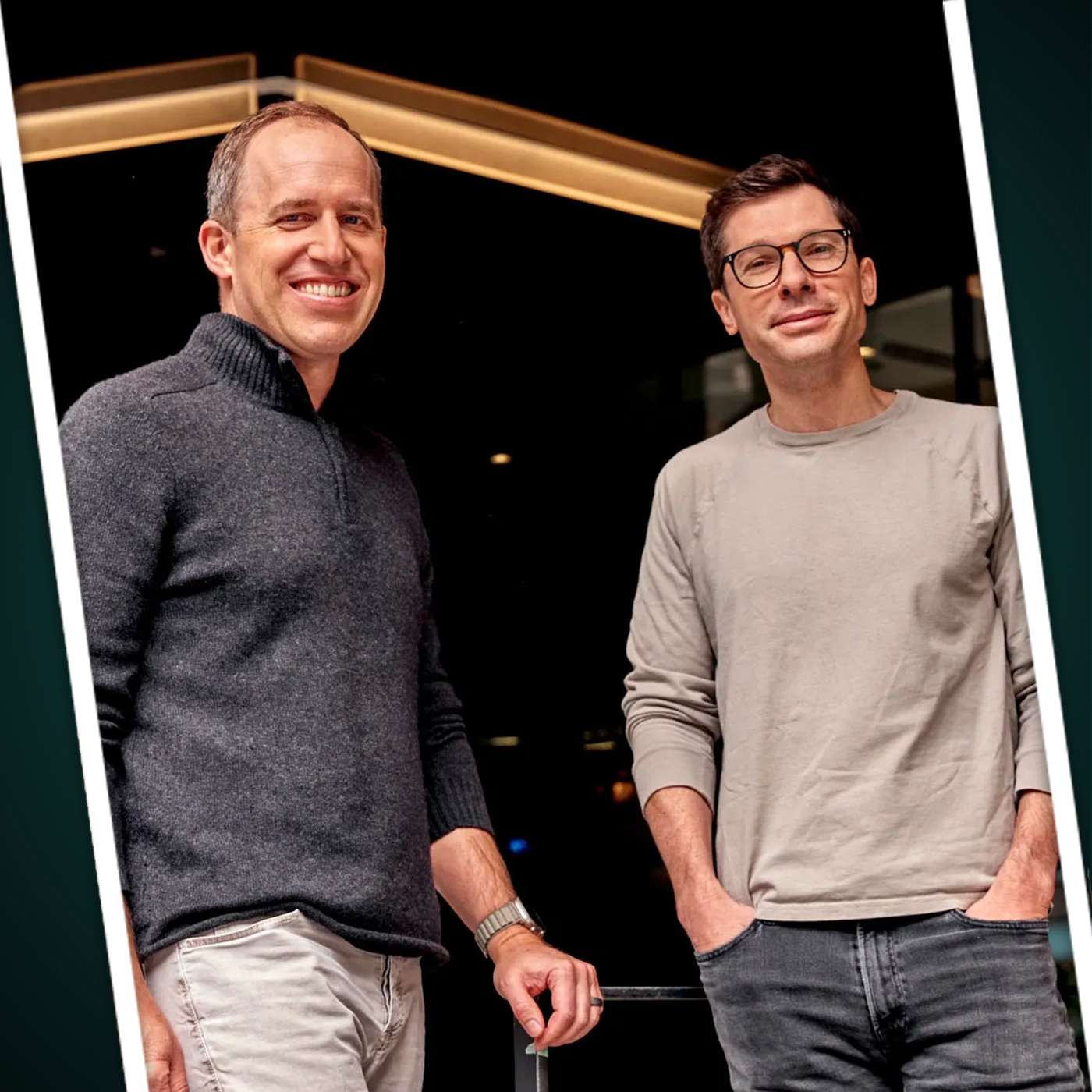
ACQ2 by Acquired
How is AI Different Than Other Technology Waves? (With Bret Taylor and Clay Bavor)
01:13:20
Loading summary
Transcript207 lines
- [00:00]
Ben Thompson
Hello acquired listeners, we have a very special treat for you today. We have an episode here with Brett Taylor and Clay Bevore. David, this is an awesome conversation.
- [00:11]
David Rosenthal
We've gotten to know Brett and Clay a bit over the years and especially in doing research for our Google episode. They were both incredibly helpful because they both started their storied careers as APMS associate product managers. Google back in the early days helped with part one, they're helping with part two. They're now co founders of Sierra together, but really they both have had among the most incredible careers in tech in the last 20 years.
- [00:39]
Ben Thompson
Yes, Brett's done various things. Clay has done one thing or many things inside Google. But Clay was at Google for over 18 years. Started in the APM program, worked on everything from ads at the beginning, led.
- [00:50]
David Rosenthal
Product for Gmail, drive, docs, all the.
- [00:54]
Ben Thompson
Apps, everything that became Workspace eventually ran Google Labs, did a bunch in their hardware, VR, AR future looking screens. Brett, his name pops up in like every episode research. He was at one point the CTO of Facebook. This is after his Google days where he of course co founded Google Maps. He was the co founder of Friendfeed which I loved Friendfeed as a big user before that was bought by Facebook.
- [01:21]
David Rosenthal
Started quip, got acquired by Salesforce and.
- [01:23]
Ben Thompson
Then became the co CEO of of Salesforce. Still actively writes code by the way referenced on this episode.
- [01:30]
David Rosenthal
We have a fun little bit at the end where we're like okay, which of you created more market cap in your career? You know Brett through your incredible journey or Clay just by cranking on Google.
- [01:39]
Ben Thompson
And Brett is the current chairman of the board at OpenAI and I think we didn't talk about in this episode but is also crazy was the chairman of the board at Twitter in its final moments as a public company. So two legendary figures to sit down and talk with this episode we talk about everything AI. There's the great conversation of is AI a giant step forward change in the world or is it just better software? And what are all the second order effects of all the change that's going on with AI? We talk about Sierra, the company that they are currently building together and a lot of little tech history tidbits, especially as it relates to our Google episode too. So please enjoy our conversation with Brett Taylor and Clay Bevore. Great to have you guys here.
- [02:21]
Clay Bavor
Thanks for having us.
- [02:22]
Brett Taylor
Thanks for having us.
- [02:24]
Ben Thompson
This feels like a special moment for us here at Acquired. You both have helped so much with past episodes. You have sent us nice little notes with corrections and tidbits and here's how we think about it. So thank you both for that.
- [02:37]
Clay Bavor
Oh, it's so fun to be a part of it. And I thought part one just nailed it. In particular in the later parts of it, just how Google really got distribution right. Toolbar and Google Pack and Google Earth and so on. So I loved listening to it.
- [02:50]
David Rosenthal
Oh, man. The Google Earth story of the spyware of Toolbar included in the install package.
- [02:57]
Ben Thompson
Careful, David, with that spyware word.
- [02:59]
Brett Taylor
It's a bundle. It's a bundle, David.
- [03:01]
David Rosenthal
Yeah, yeah, yeah. That's a word that has disappeared from the lexicon.
- [03:06]
Brett Taylor
I've been thinking about that actually in the age of AI, because if you look at the early Internet, you had archaic terms like information superhighway. And remember webmasters?
- [03:14]
Ben Thompson
Oh, yeah.
- [03:14]
Brett Taylor
Those were like the people who maintain websites.
- [03:16]
Ben Thompson
That was my first job title.
- [03:17]
Brett Taylor
And I wonder now with AI, we have all these terms, AI engineer, AI architect, all these things. You wonder what's going to stick and what's going to feel like information superhighway. So anyway, I think a lot about that.
- [03:30]
Ben Thompson
Do you have any beliefs? It seems like we've already seen Prompt engineer kind of enter and exit the lexicon.
- [03:37]
Clay Bavor
One of my favorite things to do is go to the Internet archives Wayback Machine and look at a company's website and when they transition from ML to AI and then AI to gen AI and then from gen AI to agents and agentic. And so there is a lot of jargon in the space right now and we try to keep it simple. I don't know what the information superhighway equivalent is yet, but I'm sure it's there.
- [04:03]
Brett Taylor
My hypothesis is actually the word agent will stick. I think I like the nouns of these technologies. So web had sites, mobile has apps, AI has agents. And I think it's going to stick for that reason, but a little bit like app. The word app in the VC community in 2013 was a hot word. Now it's just a noun that describes a packaging for a piece of technology. So I think agent will go that way. It'll feel extremely novel and shiny and complex now. And then it will start to be, oh, this is just the digital autonomous thing, like we have a billion of in our lives. So I think the word agent will stick. But we can talk in 10 years and we'll see if I'm right.
- [04:44]
Ben Thompson
Have you evolved the lexicon of how you describe Sierra? I mean, you haven't had that long of a life as a company, but it seems like there's Already been a tremendous amount of change in AI since you started.
- [04:55]
Clay Bavor
In a nutshell, what we help companies do is build their own customer facing AI agents for all parts of their customer experience. And we think in the future your AI agent will be more important than your website, more important than your app. It'll be the main way you interact with your customers. And in terms of how we've talked about it outwardly, actually when we launched the company just over 15 or 16 months ago in 2024, we were worried when we said in the launch blog post, every company needs an agent, that people wouldn't know what we're talking about. And so fast forward just 12, 15 months. My goodness, agents are everywhere. I think people understand it now.
- [05:35]
Brett Taylor
It's like, ah, the word agent again, you know. But it was really cool 15 months ago.
- [05:40]
Clay Bavor
So I was speaking with the CIO of one very large retailer and he stopped me about 15 minutes in and said, clay, can I just thank you for not saying the word agentic in the first 15 minutes here. So just trying to keep it straightforward.
- [05:56]
David Rosenthal
I can't believe that Sierra is only what, like less than 18 months old?
- [06:00]
Brett Taylor
We started the company a little before that, but we like told the world what we were doing less than 18 months ago. And it's insane. The way I think about these technology trends is they layer on top of each other and sort of compound. So, you know, to put a PC on every desktop, which was I believe Microsoft's mission in the early days, on.
- [06:19]
David Rosenthal
Every desktop running Microsoft software, of course that was stripped out once the DOJ started sniffing around.
- [06:25]
Brett Taylor
Yeah, you had to actually make a supply chain of PCs, you had to lower the cost of the chips. You had to. And we got to basically 2 billion PCs is my understanding. We didn't actually get it to everyone in the world. Then you developed the Internet and it got to ride on the coattails of the PC revolution. So at least in most workplaces there were PCs and you were able to connect it in universities and workplaces and then eventually people's homes. Then when the smartphone came out, you had the Internet already. So if you remember Steve Jobs pitch, it was a browser with an ipod. I can't remember the whole thing. It was a great keynote pitch. But he could ride on the coattails of all of that infrastructure, build out the networking, the existing websites. And now with AI, where we only had 2 billion PCs, we have more smartphones than people in the world already connected by the Internet. So when you make something like ChatGPT, you can go to 0 to 100 million users, faster than any technology in history. Because of the other technologies, though, you couldn't have gotten there if not for the build out of the Internet if not for the smartphone. And so for a company like Cira, we're growing so quickly because the plumbing is already there. People already have a phone number that's getting 100 million phone calls a year, and it costs a lot of money, and people don't like it very much. And the technology is available. So I don't mean you can just turn it on. Obviously, there's a little bit more work to it than that. But we're just riding on the coattails of all these amazing technology investments. So these new technologies can be adopted faster than any of the previous ones in history. And I love those graphs of electricity, Internet, smartphones, and they just also get so steep. The lines just look vertical by the end of the graph. And we're just living in that world, which is fun and insane.
- [08:13]
Ben Thompson
What do you think the natural limit of that is? Will we see something that gets a billion users in a day five years from now?
- [08:21]
David Rosenthal
Yeah, we're already, like, so compressed. It's like.
- [08:23]
Clay Bavor
Well, one stat I look at all the time is the first website came online in and around 1991. It wasn't until 2002 that you had about 10% of the world using the web in a given week.
- [08:35]
Ben Thompson
It was illegal in 1991 to use it for commercial activity.
- [08:38]
Clay Bavor
No. There you go.
- [08:39]
David Rosenthal
Really?
- [08:40]
Ben Thompson
Yeah. 1993 was the actual.
- [08:42]
David Rosenthal
That's why.com is a thing like dot commercial.
- [08:45]
Brett Taylor
I can't believe I didn't know that. Now everyone knows that I didn't know it too. I'm on a podcast.
- [08:49]
Clay Bavor
It's okay. It's okay. And in comparison, ChatGPT took 25 months or something to go from not existing to something like 10% of the world using it in a given week. And so a billion users in a day. Ben. I'm not sure about that, but I do think the compounding kind of S curves layering one on top of another just drives distribution. Also awareness. Right. The ability for someone to become aware of a new thing has shortened from potentially years to months to minutes with just ubiquitous social media and all of the distribution channels there are.
- [09:24]
Ben Thompson
So, okay, what's the current record? If we're going to say no, it could never possibly be a billion users in a day. I think I saw lovable eight months in. I'm sorry. This was a revenue milestone. It was 100 million in revenue. But what's the fastest company you've ever seen to 100 million users.
- [09:41]
Brett Taylor
It's got to be ChatGPT, right? I mean, I don't know this, but it has to be. And when we go back to talking about Google, which started in 1998 and sort of one of the darlings of the dot com era, one of the things I think a lot about is if I mention the word.com phrase, that word.com phrase to you, most people mentally associate with pets.com and all the companies that failed.
- [10:08]
Clay Bavor
Webvan. Webvan 2 in there.
- [10:10]
Brett Taylor
Webvan. Yeah, exactly. And almost to a T. If you say.com people come back with the failures. If you look at the S&P 500 now and you look at the amount of value from companies created in that, one could argue that actually almost all of the exuberance and hype was totally warranted. And it in fact did change commerce in fundamental ways. It did change the financial system in fundamental ways. It changed everything. My guess is we're sort of in a similar era. You have a lot of snake oil. The jokes you were just saying about people. God, say the word agentic again. Oh my God. But it's coupled with ChatGPT growing faster than any consumer product in history. You look at the revenue growth of companies like Sierra, you mentioned lovable, all these other B2B software companies. I think there's very real value being created here. And fundamentally software is not just adding productivity to workplaces and to individuals, but actually completing. And that's where the word agent comes from. Agency and reasoning. And I think we're going to see this really significant uptick in productivity. And that's going to be coupled with B2B software companies who are selling this, sharing some of the upside of that productivity enhancement and for consumers. I self identify as a computer programmer, that's like the thing I love to do the most. And I'm like, man, that's sort of like saying, do you remember the calculators? The people who calculated things before we had calculators? I'm like, am I that?
- [11:35]
Ben Thompson
And they were computers too. They were also called computers. People who compute.
- [11:38]
Brett Taylor
Yeah. So yeah, the thing I self identify with is being obviated by this technology. So it's like the reason why I think these tools are being embraced so quickly is they truly are like an iron man suit for all of us as individuals. So I think we're going to look back at this era and we're going to joke around about whatever turns into information superhighway, like the terms that get antiquated. But I think we'll also look back and say this was an inflection point in society and technology and I think it will be as significant as the advent of the Internet.
- [12:05]
David Rosenthal
Yeah, it's wild. I mean thinking about the acceleration of adoption of these successive waves, which by.
- [12:11]
Ben Thompson
The way I looked it up, ChatGPT was five days to a million users and two months to 100 million users.
- [12:17]
Clay Bavor
That sounds right.
- [12:19]
David Rosenthal
I don't think we're quite there yet. I mean you guys would know better than us if we are or aren't and what it's going to look like. But once we figure out distribution of like the equivalent of an application layer on top of AI, ChatGPT, et cetera, all the friction to adoption and distribution is just gone. Even in the dot com website, you could argue there's no friction to type in a website or go to a service. But the human has to become aware, have interest. The whole sales interest, awareness, decision action, that's just gone.
- [12:51]
Ben Thompson
Why, David? No, no, no, you still have to learn that a thing exists.
- [12:55]
David Rosenthal
No, no, no, I mean say chatgpt, if that becomes the front door adoption for new services and businesses built integrated into it, well, ChatGPT is just going to figure it out and serve it to you. We saw this with Studio Ghibli, right?
- [13:08]
Brett Taylor
Well actually I think it's going to really upend the Internet in pretty meaningful ways. So you talked about the awareness, adoption, et cetera. Like if you look at the market on the Internet now you have demand generation and discovery which is right now dominated by social media and the ad networks affiliated with social media. Then you have demand fulfillment which used to be search and AdWords and all of this. And that used to be, still is obviously. And then you have the actual transactions themselves, like the commerce systems and other things like that. And right now you could say AI is impacting all of those products in very meaningful ways. But as you alluded to, David, let's just say that personal agents become a thing. How does that impact that entire funnel? Because when you're generating demand that probably will still be relevant for individuals. But are you going to be generating demand for people? Are you going to be generating demand for their agents? What does that even mean?
- [14:05]
David Rosenthal
And if it's other agents making the decision of whether to interact or not, that whole demand gen cycle that takes time with humans without question.
- [14:12]
Brett Taylor
And you all have discussed pricing strategy in a bunch of your different shows, which is really interesting. And there's a classic have a really expensive product and one slightly less expensive below that, and how people react to it psychologically and all these other things. And if it's an agent, what happens there? Will these things sort of trend towards the mathematically optimal? Because you think about these platforms, brands don't want to be disintermediated and they don't want to be commoditized. And then the platform providers, they don't explicitly say it, but they sort of want to disintegrate and commoditize everything. And it's not a formal strategy, but that's sort of the natural tension of these platforms with personal agents and agents like Cira builds for companies that represent their customer experience. I think the second and third order effects are very hard to predict here. And what does it do for the demand generation, demand fulfillment ad market? What does it do for these platforms?
- [15:04]
Clay Bavor
What.
- [15:04]
Brett Taylor
Which companies will have their own agents and have enough brand equity to have their own agents? And which companies will be dependent on. It's a little bit like saying which retailers depend on, say, Instagram ads versus first party discovery. So I think we're at the cusp of something that will, in five years, we will have a very different market on the Internet. And I think even for people in the middle of it like Clay and me, it's very hard to predict. I don't think many of us predicted many of the second or third order effects of the mobile app store or social networks correctly. And I think this one's even harder to predict. But I think it's going to really upend, I think, the economy of the Internet in significant ways.
- [15:41]
Clay Bavor
Brett and I like betting. And one of the bets we have is the year in which greater than 50% of conversations with agents built on Sierra are with people's personal agents. So agents talking to agents.
- [15:54]
David Rosenthal
Okay.
- [15:54]
Brett Taylor
Yeah.
- [15:54]
David Rosenthal
So what's the bet?
- [15:55]
Brett Taylor
What's the overall?
- [15:56]
Clay Bavor
We can't reveal. No, we can't reveal the number. Can't reveal the. Can't reveal the date.
- [15:59]
Ben Thompson
Company secret because you think you'd impact the outcome or.
- [16:01]
Brett Taylor
Clay has so far won all. All three bets that we've had.
- [16:05]
Ben Thompson
Really? What are some of the other ones?
- [16:06]
Brett Taylor
The theme is Clay is more optimistic than I am.
- [16:09]
David Rosenthal
Optimism always wins.
- [16:11]
Clay Bavor
One of the first was we had a bet as to what percent of all incoming customer issues one of our agents could resolve. And Brett was maybe the pessimist and realist. Favorably, charitably. And I bet we'd exceed 80% by the end of the year. And we did, and it just exceeded.
- [16:32]
Brett Taylor
Every expectation Where I was at 50 just for reference. And Clay, like, not only won the.
- [16:37]
Clay Bavor
Bet, but like won handily by a significant margin.
- [16:40]
Ben Thompson
And this is across all your customers. Whenever a new issue is originated with one of their customer service requests, how often the Sierra agent could handle it.
- [16:48]
Clay Bavor
That's right. And looking at a particular customer and these agents, it's so neat. They're not only answering questions, but doing things like if you are moving from car A to car B and have a SiriusXM subscription, Harmony, which is Sirius XM's agent, can actually send a satellite signal from space to refresh the encryption keys on your car. ADT's agent that we built with and for them. If your alarm panel starts beeping, you don't know why, it can troubleshoot, can figure out which of the 52 different panels you have and then mail you a battery itself. If that's the issue, by the way.
- [17:22]
Brett Taylor
Just think of that for a second. You're talking to an AI that's talking to a satellite that's sending something to your car. Like, no people involved. Yeah, you're probably like, yeah, of course it does that. But like, it's like science fiction three years ago now. You're like, yeah, of course the AI is talking to a satellite. No big deal. Yeah.
- [17:36]
Clay Bavor
I remember one of our earlier customers, Olakai, they sell great flip flops, by the way, if you're in the market. And on the day that we successfully. One of our agents successfully processed a warranty, looking at photos, inspecting the photos to make sure it was the product in question, and then shipped out a new pair of replacement shoes on all on its own. There was cheering in the office and it's just neat, these agents interacting with the physical world.
- [18:04]
Brett Taylor
By the way, this is a true story. So I'm in an interview with a candidate and the whole office is like, yeah. And I come in and they're like, we exchanged some flip flops.
- [18:14]
David Rosenthal
Woo.
- [18:15]
Brett Taylor
And so it was a moment. You had to be there. But it was a very exciting moment.
- [18:20]
Ben Thompson
For us, which must be an amazing way to demonstrate culture to a candidate, by the way, that they come out of an interview, they're like, what the hell? What's going on?
- [18:27]
Brett Taylor
Yeah, no, it's fun. I mean, it was just a hilarious moment because it was so like, explain me. It felt so trivial. Let me explain why flip flops are a big deal to us, but trust me, this is a big deal.
- [18:37]
David Rosenthal
That's like the. Were you there? It might have been a little before your time, but when Facebook was negotiating with Microsoft for the ad deal and they were having the hackathon to launch International that same night and it was all orchestrated all together and there's like house music playing and all the middle aged Microsoft execs like, what the hell is happening here?
- [18:58]
Brett Taylor
The hackathons at Facebook were epic. And yeah, there's always someone. There's usually Mark Slee DJing. And yeah, it was great. It was fun.
- [19:06]
Ben Thompson
All right, listeners, we want to thank a new friend of the show, Plaid. The name is likely very familiar to you after our recent ACQ2 episode.
- [19:14]
David Rosenthal
Odds are you've used Plaid before without even maybe realizing it. If you've ever linked your bank account to apps like Robinhood, Venmo or Chime, you you're one of the millions of people, like one in every two Americans who've already used Plaid.
- [19:29]
Ben Thompson
I feel like I've grown up in the tech industry. Alongside Plaid. There are so many modern experiences that are powered by them. And at its core, Plaid isn't just about making it easier to connect to your bank. It ends up being the backbone for thousands of companies building faster, safer and more seamless financial experiences. So whether it's reducing fraud, speeding up onboarding, or turning old school banking processes into something that feels instant and effortless, Plaid is making it happen.
- [19:55]
David Rosenthal
So last year, Plaid rolled out some powerful tools. Think cash flow data for better credit decisions, anti fraud tech with AI and analytics for bank payments. And this year, they've leveled up again with major updates across all three of those product lines.
- [20:09]
Ben Thompson
Yep, they're even helping businesses manage things like direct billing for your subscriptions. So the bottom line is Plaid is making it easier for companies to build smarter, safer, and more personalized financial experiences that just work.
- [20:22]
David Rosenthal
If you're building financial tools or infrastructure, Plaid's data analytics can give you a serious edge, whether it's fighting fraud, underwriting smarter, or managing payments more efficiently.
- [20:31]
Ben Thompson
So if you want to learn more about how Plaid created one of the biggest networks in financial services today, listen to our recent ACQ2 episode with Plaid's founder and CEO Zach Perret Zachary. And our thanks to Plaid. Some days I wake up and I'm on one side of this debate, and some days I wake up on the other side of this debate. The first way is AI is such a transformational technology. It is different than anything that's ever come before. It let's just look at labor productivity. It makes people so much more productive that you need way fewer people to make things. It's going to put all these people out of work. Every societal model that we've had in the past is now broken because this is such a giant step change for everything. The other days I wake up and I'm like, it's just software. Mobile apps were great software. SaaS was great software. Cloud was an amazing way to run your software. Software gets better with Moore's Law and more powerful, more sophisticated, and this is just more powerful software. How do you guys think about that?
- [21:30]
Brett Taylor
The first principles way I think about it is what are you making plentiful now? That was scarce before and how does that impact society? So I think about taking energy and making it scarce to plentiful to the point now where you walk into a room and you flip on a light switch and you don't think anything about it. But for hundreds of years that was a scarce resource and it is now.
- [21:55]
David Rosenthal
Again with data centers.
- [21:57]
Brett Taylor
Yeah, that's right. We're doing our best.
- [21:59]
Clay Bavor
Where are the Tokamak fusion reactors?
- [22:02]
Brett Taylor
I think in the western world, similarly, food access, food is largely plentiful. Food insecurity, while present, isn't a dominant part of society as it once was. And now we're going to a world where intelligence has gone from something scarce to something plentiful. I think it's very hard to imagine. Prior to modern farming and food distribution, most people spent a lot of their time thinking about food. That was a big part of just living. And now it's something that is for a lot of people, not a central part of their day to day plan is acquiring food first. I think we have gone through transitions as significant of this in the past as society, but I think it's very significant. I don't think it's just software. That's my personal opinion, though I do waver like you, Ben. Some days I'm on one side of this. On the other, I think it's pretty significant because I know I personally and probably everyone on this podcast identifies to some degree their identity with their intelligence. Right. It's a big part of why people listen to your podcast. It's how you got into university and got a job and got all these other things and you say, gosh, if this is now plentiful, who am I? What do I contribute? And I brought up the kind of personal thing. It's really interesting. There's this meta thing in the Silicon Valley right now, which is if you tell you what jobs are most likely to be automated with the current generation of technology, you would probably put software engineering right at the top. The people building this technology are building the technology that is disrupting their own profession. And that's, I'm not sure, unprecedented, but certainly unusual with technology disruption. So I think this idea of identity and intelligence and the technology impacting our own perception of self worth is happening in a very personal way for a lot of the people working on it. I am very confident that on the other side of this, just like we've gone through with the Industrial revolution and the agricultural revolution, all these other things, we'll come out the other side and just end up like higher leverage species. We'll spend our time on different things than we did before. But I believe that this will make us just happier, more productive, have more plentiful. We will just have access to more things. I just think about really simple things like access to mental health care, access to education, access to medical advice, access to legal advice. We are essentially taking expertise and making it a commodity. And I think that is generally democratizing. I think many of the things I mentioned, if you have wealth, you have a lot of access to, and if you don't, you don't. What a cool thing that we've made this universally accessible. But just like you had the Luddites and the Industrial Revolution, you have this period of transition where it's saying how I've come to identify my own worth, either as a person or as an employee, has been disrupted. That's very uncomfortable. And that transition isn't always easy. If you look at globalization, it lowered the cost of a television set, but it was hard if the factory in your town was shut down. If you look at things like GDP numbers or productivity numbers, it obscures the individual impact. That is not always fun or easy or good. And then similarly, it could be great in 10 years, but really hard over the next two years. And I think probably all of those things are true.
- [25:25]
David Rosenthal
And Silicon Valley is right in the middle of it.
- [25:28]
Brett Taylor
Yeah, you're just in the middle of it. My view is it is as transformational as the former of what you said, Ben. I think it is truly transformational. I also think the transition will be awkward and probably slower than people think in the last comment because it was too long of an answer. But I don't think all parts of the economy can absorb intelligence equally. So let's just say we develop fairly generalized superintelligence. I always use the analogy like you can invent a lot of drugs, but if clinical trials still take a long time, you're not necessarily going to get new therapies rapidly. You have regulation, you have cultural resistance, you have all These other things. The technology is transformational. I think probably it will impact society on a more measured pace than I think a lot of the folks in the AGI community think, just because of the natural rate limiters of society around. It's not like intelligence is the only input to productivity growth. But I really do think it's transformational, and I think it's both in a great way and a kind of uncomfortable way. I think it's transformational.
- [26:27]
David Rosenthal
Specifically for you guys. I'm so curious. What is the state of human capital at Sierra? You're one of the leading AI companies. You could probably recruit anybody you want, I mean, given who you guys are. But at the same time, you were just saying, Brett, AI can probably do a lot of what people at Silicon Valley companies used to do. Like, what are you guys doing? You're living it day to day.
- [26:46]
Clay Bavor
Well, first of all, everything we do as a company is going to be the direct or at least indirect result of talented, smart, amazing people who are motivated to accomplish an important mission, doing great work. And so since starting the company In March of 23, we've grown immensely. We're the leaders in the space, and the demand for what we've built has been overwhelming. And we are just growing the company in terms of people and geographies and industries as quickly as we possibly can. And on top of that, though, it's like we look for every point of leverage we can find with AI. And so we aggressively use cursor in our engineering teams. And I don't know what the percentage today of lines of code written by cursor is, but it's pretty darn high and getting higher by the day. To Brett's previous point, it is today this immense force multiplier for talented people who. One of our most senior engineers, actually the first person who joined the company after Brett and me basically sent a coding agent over the weekend to just come up with a dozen PRs for things that he wanted to fix. And it came back, and half of them were great, a quarter of them were total garbage, and a quarter needed some work. But it was, in a way, him working the entire weekend with guidance from him.
- [28:08]
Brett Taylor
Let me double click on the cursor thing, though, for a second, though, because Clay and I talk a lot about this. So we always like to say the way we think about an AI first company is we're building a machine to produce happy customers. So that's the way we think about it. And I think that's important because it's like if something comes off the assembly line of a machine that's malformed, you don't just fix that thing. You say, what part of the machine broke to produce the malformed item. And so, just as it relates to, for example, software engineering, we have this philosophy, like when Cursor, which is the most popular copilot for software engineers to write code, and now having some sort of more agentic flavors of it, if it produces incorrect code, our philosophy is don't fix the code. Fix the context that Cursor had that produced the bad code. And I think that's a big difference when you're trying to make a company driven by AI and just use AI, because essentially, if you just fix the code, you're not adding leverage. If you go back and say, what context did this coding AI not have that? Had it. Had it, it would have produced the correct code. I don't want to pretend we're perfect here, but that's the way we think about it. I really like thinking of our business as a machine. This is a Clay ism. He said this once right when we were starting the company. He said, we're building a machine to produce happy customers and nerd stuff. Snipe me. And I'm like, oh, we are 100% building a machine. Employees roll their eyes, but it's like, fix the machine, fix the machine. Don't just fix the output of the machine. And I think with AI, it actually creates a very actionable framework for how to bring AI into the company. But somewhat ironically, as Clay said, we are hiring a lot of people. Notably, to me, all the AGI labs are hired a lot of people. So there's some. I don't know. The elephant in the room is it's not quite.
- [29:49]
David Rosenthal
You guys are at the center of this. I mean, Brett, you're the board chair at OpenAI. What do you guys do? As Sierra, you're incredibly well funded, et cetera, et cetera. But you can't compete with a $300 million comp package for someone. What is going on with hiring?
- [30:04]
Ben Thompson
I assume you don't need those people.
- [30:06]
Brett Taylor
Yeah. So we're an applied AI company. Let me just give you my view of the market. This is something you all could debate. So I think there's basically kind of three big categories of AI software companies. First are the foundation and frontier model companies. These are the folks that are somewhat infamously or famously competing for these scarce resources of these great researchers. Many of them, like OpenAI, are mission driven and trying to create artificial general intelligence. Some of them are more commercially minded and essentially building these models which they then license or lease out to companies like ours. Then there's a category of people who make tools on top of it. So the proverbial pickaxes in the gold rush, you need data labeling services and you need a data warehouse on which you can. Or you need a retrieval augmented generation like a vector database to support retrieval augmented generation. And all these things just I'll say all these tools that one uses when you're building an AI platform. And then there's companies like Cira, where we make AI agents for customer service, customer experience. Harvey, who makes AI agents for the legal profession. I think companies like Ryder do it for marketing. So there's just all these are, I'll say, vertical AI applications and we're downstream of a lot of that. If we're doing our job, we're taking the best of these models and composing them to make these amazing experiences. Just like if you were VCs and someone a software as a service company came up to you and said, step one is we're going to build our own data centers, you'd look at them very skeptically. You'd be like, really? Why not just rent a server from Amazon Web Services or Azure? I think the same is true of applied AI companies. It may not have been true a year and a half ago or two years ago where I think everyone wanted to pretend they were cool.
- [31:51]
David Rosenthal
Oh, shoot. We had Clem from hugging face on and he was like, I deeply believe that every applied AI company needs their own foundational model and needs to build it themselves.
- [32:00]
Brett Taylor
I could not disagree more strongly with a single sentence.
- [32:03]
Clay Bavor
That was the trend in 2023. You weren't cool if you didn't have your own foundation model and adapt to and character and inflection. It's like those all ended differently.
- [32:13]
Brett Taylor
It turns out that unless you're a pharmaceutical company and you get pharmaceutical companies get protection from patents for an asset that has value for a long period of time. I mean, I've heard from multiple investors that foundation models are the fastest deteriorating asset of all time. And so if step one of your business is to burn through tens of millions or hundreds of millions of dollars of capital before you find product market fit and that asset has value for like a week, I'm not sure it's like a great business model. And so, yeah, I could not.
- [32:42]
Clay Bavor
What's a very, very expensive carton of milk?
- [32:45]
Ben Thompson
Let's use the hypothetical example of training a frontier class model today. What do you think the usable life of that is you got to amortize a lot of token generation in a pretty short period of time to make that worth it.
- [32:59]
Brett Taylor
It's complicated. There's different ways of looking at it. So I'll start with there isn't one. It depends on what type of model you're building. DeepSeek somewhat famously in their paper talked about reducing the costs of building these. But I think there's a difference between foundation models and frontier models. Frontier are really the best of the best. And this is what labs like OpenAI aspire to always have. And when you have the best model, you attract different customer base. It's sort of always been Apple's strategy with their devices and things like that. There's a difference. If you think of these things as commodity, you'll take a different strategy. You say our goal is to have the most intelligent model. There are downstream benefits of that beyond the cost of those individual models. I actually think there's not a one size fits model for most tasks. Now there's a really interesting trend in model building called distillation, where you can take a very high parameter count model and essentially make a smaller parameter count model. Let's call it 80% as good. And I'm just making up that number. It really varies.
- [33:59]
Ben Thompson
And Deep SEQ did this right, based on open source.
- [34:02]
Brett Taylor
Well, there's two interesting trends and probably the researchers will sort of wince at my simplification. You have distillation on one hand, which can take a very expensive model and make something that's almost as good, but much cheaper for inference. And then you have this post training process which is reinforcement learning on chains of thought, which is the basis of things like O3 and 04 and these really advanced models, the two together. You just have so many variables of like cost, performance, quality, reasoning, all these other things. Actually, the reason I think it's exciting is if you look at the database space right now, there's not one database. If you want to do large scale data analytics, you'll choose one thing. If you want to do a transactional data store, you'll do another. I think we're moving to that area of models. And when Clay and I talk about how to produce a delightful low latency phone conversation, you care a lot about latency. That's one metric of quality that isn't intelligence, but it's important. And put another way, if you had to think for 30 seconds before responding on a phone call, that might not be a viable. And then similarly, if, let's say you're a company who has a relatively inexpensive offshore contact center and you need your cost of your AI to be lower than that. Well, cost matters too. If it costs $2,000 per phone call, it might not actually be viable as a business. I say all that because I'm not sure there's one answer to your question, Ben, because it really depends on who you're selling it to and what their goals are. But I think that's good because sometimes you want something for drug discovery and you want the most intelligent model. Sometimes you want something for a low latency transactional phone call and you care about latency and cost more. It's creating a market for these things where I think if you're one of these big foundation model companies, you actually can have a portfolio of products. But to your point, broadly first principles, I think the reason why Clay mentioned the consolidation in this space, it has to be consolidated because to basically make the money back on the pre training and post training process, you need relatively few players that are collecting taxes from all the players on top. Or you just can't make the math work.
- [36:11]
David Rosenthal
Yeah, for startups, going it on your own is just completely nonviable in every dimension because there's the capex, but there's also the opex. You could spend the capex. Let's say you magically got $50 billion as a startup to build a frontier model. Well, you can't just let it sit there, right? Operating that model and having it continue to run and continue to improve on it. That's what people are getting paid $300 million a year to do.
- [36:38]
Clay Bavor
The primary constraint I don't think is capital. It starts with the people and there's a small set of people who know how to architect these models, do the pre training runs, do post training, RL runs, and so that would be the starting place. And then to your point, the capital outlay for building a data center that can train these multi trillion parameter count models is just enormous. And you have to amortize the cost of the people, amortize the cost of the capital to build out the data centers, and then do that to your point, in a pretty short period of time in order to make the math work. And so I do think there will be a very small number of these frontier models and research labs producing them. They will optimize all the way down to the memory, the chips, power delivery, and build this highly vertically integrated stack to get as much value out of the model as quickly as possible and at lowest cost possible.
- [37:37]
Brett Taylor
And by the way though, just with all the press around the talent, it's still a rounding error compared to the infrastructure. So I think it's worth keeping that in mind. It's just very expensive, period. Just because it's a salacious story, the capex is still the dominant cost.
- [37:53]
Clay Bavor
Just earlier today in Google earnings they say, oh, we're going to spend an extra $10 billion on infrastructure build out.
- [38:00]
Ben Thompson
This year going from 75 to 85, something like that.
- [38:03]
Clay Bavor
75 to 85. It was like, oh by the way, we're spending another 10. That's the scale at which these build outs are occurring.
- [38:10]
Ben Thompson
Which is so interesting because these tech businesses that everyone loved and applied these really high multiples to for so long were these asset light, low capex requirement businesses where your expensive thing was your human capital to produce software. And then once you've paid for your human capital you just have this 85% gross margin, amazing business model of software that's not really true anymore. These big tech companies have massive ongoing capex.
- [38:39]
Brett Taylor
It is, I mean it probably cuts both ways too. I think it represents significant barriers to entry too. And I think just look at Amazon Web Services which is one of the more impressive businesses built over the past 30 years. And in contrast if you look at the trends of how often do you see a new social service pretty often over that 30 year period. It doesn't mean that products like Facebook have gone away, but the barriers to entry are much lower as well. So you're right Ben, that the way you model these businesses changes is a significant barrier to entry as well. I'm not sure how to think about it strategically because you can look at a DCF analysis in one way. I think it's important to zoom out. The half life of technology companies is not that long. There are a few, but they're the exception. And I, I've brought this story up before, but this is 100% true. I started at Google over in the small building in Mountain View and we moved into a campus and it was the Silicon Graphics campus, amusingly by the way, they were still using a couple of buildings on the end. So you had this company that was literally dying and selling their campus for parts.
- [39:44]
David Rosenthal
I didn't realize SGI was still there. Oh, that must have been so sad.
- [39:48]
Brett Taylor
Oh, we go into the cafeteria and we had free food and they were paying for their food in the same cafeteria. I mean it was just super awkward.
- [39:55]
David Rosenthal
Oh, brutal.
- [39:56]
Brett Taylor
And then though, at Facebook we were at this, first the office downtown, then the old HP building next to Stanford and then we moved into Sun Microsystems campus, which had also died. So both of those companies in my lifetime were at the top of the stock market and then had sold their campus for parts and then we were taking it over. So I say all that because it's useful to look at 80% margins, blah, blah, blah. But how many technology companies have lasted more than 40 years? And obviously these technologies are new, so I think it's just complicated as you look at these things. I would make the same decisions as a lot of the hyperscalers in terms of CapEx. I think first, the promise of the value of artificial general intelligence is so great. I think the expected value equation is absolutely worth it in my opinion. And then similarly, I do think the scale afforded by these investments represents a lot of strategic values. Well, I totally get why it's complicated for investors, but I think it's just the landscape changes and I think there's probably a bigger risk of not existing in 30 years than selling a spreadsheet.
- [41:01]
David Rosenthal
Well, if you look at their market caps, investors are giving them a pass for now. Speaking of strategy, you guys have talked about this plenty elsewhere, but I really want to double click with you. Your business model and pricing strategy at Sierra was radical. Brett, you were most recently the co CEO of Salesforce. I could not imagine a more deeply invented software as a service category. And so you guys making the decision to throw out that business model and do something else for enterprise software is radical.
- [41:34]
Ben Thompson
It's very telling. At the very least. Lay it on us. What's the strategy and why'd you do it?
- [41:39]
Clay Bavor
Well, we started from first principles and asked what are agents actually doing? And in contrast to software as a service or software you'd buy off a shelf at Fry's Electronics decades ago, which might help you be marginally more productive, help you get a job done. Agents in contrast, are actually getting the job done for you. And so you're in essence hiring software to accomplish a task and get it done well. And so as we were thinking about, how do you price this? What is the business model seat based? Well, what is a seat? That doesn't make any sense. Consumption, where it was like, is it per message, is it per token, is it per conversation? And none of these things actually mapped very well to getting a job done and getting a job done well. And so going to kind of principles of value based pricing and pricing against value delivered, we arrived at what we call outcome based pricing or resolution based pricing where we only charge our customers when their agent successfully completes the task that it set out to do. So the ADT case, and that's defined.
- [42:50]
David Rosenthal
As human, does not get involved.
- [42:52]
Clay Bavor
That's correct. So completely gets the job done. And the reason this is important is what we're trying to do in a way is resolve this age old tension between the cost and quality of customer experience. Where I think every great business wants to deliver an amazing experience experience to their customers. But unless you're like Hermes or the Four Seasons, it's too expensive to do. A phone call might cost 10 or 15 or $20, or rolling a truck, a service truck might cost hundreds of dollars. And so how do you bridge that gap? And we think that AI changes that. And AI, it turns out, can do things that people value very much. It can reason and decide, it can take action, it can speak your language, it never gets tired, it's always patient. And most importantly, it can get this job done. And what we love about the model is it deeply aligns with our incentives, with our customers. Right. They want to lean on their Sierra agent as much as possible because when they do, we deliver a better customer experience and save the money. We're motivated to build the most performant, capable agents that we can. So it ends up a very different relationship where as opposed to kind of vendor customer, we are partners trying to build this incredible agent to elevate the customer experience and also save cost.
- [44:13]
Ben Thompson
Well, you guys are effectively carrying the risk. You're incurring all these costs of doing all this AI, of building all this software, of hiring all these people, but you're not getting paid unless the ultimate bottom of funnel thing happens.
- [44:24]
Clay Bavor
That's right. It's an expression of confidence that our platform will deliver and our agents will be the best and that they can deliver. And so again, I think it's a strong signal of the quality that we can deliver, our confidence in the technology. And again, the incentives alignment is extremely powerful.
- [44:43]
Brett Taylor
If you talk to a comp expert, if you look at enterprise software sales team, usually their compensation is 50% salary, 50% performance based based on quota attainment with people. We've always thought about, how do you incentivize the behaviors you want? And it's a huge topic. And executive compensation for different roles. We really just want to move software in that direction. So if the AI agent is supposed to make a sale, it should be paid a commission. If the AI agent is supposed to handle customer service, it should be paid when it solves the problem. If it doesn't, it didn't do its job. If it didn't do anything Valuable for you, you shouldn't pay for it. To your point, Ben, we're taking on the risk, but I also think as a consequence, we're making something more valuable. It's very easy for our customers to know the value of their Sierra agent. They know how much it would have cost to have a phone call with a person. They know how much it costs to have the Sierra agent solve it. We're saving our customers hundreds of millions of dollars in operating expenses and improving their customer experience. And to your point, David, when you brought up the software as a service revolution in the early 2000s, I mean, I'll. I'll pause so you can take this any direction you want, but I think this will upend the business model of enterprise software in a really positive way.
- [45:57]
David Rosenthal
Oh, I still want to ask about this.
- [45:58]
Clay Bavor
There's the analogy with ads, online ads, where we move from CPM to CPC to pay per conversion. And as you move closer and closer to the actual value, you can deliver a much more valuable service.
- [46:13]
Ben Thompson
And you have to. It forces your company to deliver value. Otherwise you go out of business.
- [46:18]
David Rosenthal
Have you guys started to see or discover little glimpses, really, to underscore Radical. And Brett, you said if this model takes, it's going to change everything. This isn't just a pricing model. When Marc Benioff invented SaaS, it changed everything about Silicon Valley, not just how software is delivered. Have you guys started to see or get inklings of what the second and third order effects of the business model is going to be?
- [46:43]
Brett Taylor
Clay have mentioned that we're more partner than vendor. I'm going to give my historical context, which might be slightly embellished, but you can poke at it. If you look at perpetual license software where you bought a version of a piece of software, what you do is a company would buy it and then typically you'd have a group of people at the company who installed it and maintained it and managed the upgrade process and ran the servers and did a lot of stuff. When you had the equivalent of that, that was software as a service. It wasn't just that you switched from capex to opex and you had a perpetual license and you went to a subscription software, which changed accounting and all that. It also changed the people you needed. You didn't really need the site reliability engineers to keep the service up, because that was actually something that you got from your software. As a service vendor, you didn't actually have to worry about the servers either. So you could actually probably get rid of a data center. Actually, if you switch entirely to software as a service. You probably don't even need a data center team at all. So you end up where not only do you change the way you pay for the software, but you actually change the roles and responsibilities for it. With software as a service, you kind of obviated the need for a lot of the lower level technical machinery of running the software, but you still had to install it and customize it and all these other things. And I always use the analogy list to just take like a, you know, CRM software or something and you install it and your sales don't improve. Like, well, whose fault is it? And I don't think many people would blame the CRM software. It's like maybe you have bad salespeople. I don't know. It's not.
- [48:16]
David Rosenthal
Are you talking from experience now?
- [48:18]
Brett Taylor
No, no, it's just, you know, it's 100%, you know, it's like we use Salesforce this year. It's a great CRM. I love it. It's like I'm very loyal to that place. It's more just like an accountability thing, right? Like it's, you know, the software vendor provides the software. It's up to you to make it work. And there's this arm's length accountability for it. As you said, Ben, we don't get paid if it doesn't work. So it actually really changes the shape of what I think a software vendor would call a post sales process. Because you can't just throw software at the wall and say, good luck to you because it's actually in our interest to make you successful too. And so if you don't know how to make your agent work, we want to come help you do that. So we spend as much time thinking about how to be of part partners to our customers after they purchase our software, as we do before. And we have customers who are extremely technically sophisticated who don't even want to talk to us. And that's great. We have some who barely have an IT team and they help us. We want you to make it work and we need to make sure that we match, sort of meet those needs as they come up. I think that's exciting because I think the relationship that companies will have with Sira will be as different as the difference in relationship that we went through with the on premises software as a service vendor. And I think it will mean sort of, as Clay said, you're hiring an agent to do a job and that's just a very different relationship than installing a piece of software. And so I think it's exciting and I think the second of four order effects will be how procurement teams think of what they expect of their software vendors towards outcomes accountability. As you said, Ben, risk is fundamentally the role here. But I also hope that if we fast forward 10 years and maybe we have the privilege of being. You're doing an acquired on us. And the magic of our business model is when you talk to our customers, we're the strategic advisor in AI. It's like a deeper, more foundational relationship than simply a software vendor.
- [50:13]
David Rosenthal
Which is funny. I feel like the best enterprise software organizations and sales folks and leaders have always been that to their customers. But the business model wasn't aligned.
- [50:24]
Ben Thompson
They weren't really directly incentivized to.
- [50:27]
Brett Taylor
Yeah, ask ahead of procurement. Like when you get the bill of materials, you're like, what is this stuff?
- [50:31]
Clay Bavor
Brett mentioned commission. We work with one very large furniture retailer. We're paid on commission if we attach a premium delivery service to furniture delivery. And so it was like we're literally paid on sales commission today. And so it just broadens the aperture of what's possible with the software. What are all the jobs that a customer facing agent could do? And that's where we get really excited about the possibilities here. It's like, what will that look like when a company can show up kind of at its best in every moment with its customers, with an agent that is fluent and helpful and can actually get stuff done for you across kind of all parts of the customer lifecycle.
- [51:10]
Ben Thompson
You know what's funny is we just used an old word that is already obsolete in your model, which is post sale. You were talking about how, oh, post sale, we're incentivized to go and work with our customers. And in fact we demand it. We have to, because it's Rottweiler. It's actually not post sale. You've signed a deal, but you haven't made the money.
- [51:29]
David Rosenthal
Right. Sales don't happen until their sales happen.
- [51:32]
Ben Thompson
So the whole notion of there's this firm dividing line between pre sale and then the sale and then post sale kind of being about renewal. Ultimately what post sale is about is are we going to get the renewal next year, in three years or whatever. This kind of breaks that it does.
- [51:46]
Brett Taylor
And actually leads to a couple other things, which is like two things, which is speed to delivery matters a ton. And making it super, super easy to set up matters a ton too. Because to your point, Ben, if it's like complicated or slow, you're not earning money until it's live and successful. So, like, we focused on a couple things. Like, we're typically going live in a small handful of weeks. It can be as low as like two or three weeks for an agile firm. Can go as high as a couple months for maybe a more, I'll say traditional company that has a lot of internal gates to go live. The other thing though is we spend a lot of time to enable not just technology teams to make these agents, but also their customer experience teams. One of the reasons why IT projects go slowly is you end up with this kind of slow loop of like, figure out what the requirements are, throw them over the wall, have someone implement it, go, no, that wasn't right. Go back and forth and do this loop.
- [52:41]
Clay Bavor
Talk separately to the marketing team.
- [52:43]
Brett Taylor
If you think about the furniture retailer Clay mentioned and like, who's the expert in these premium delivery packages? What's been effective in the past? That's someone on the business team, not someone on the tech team. So we have all these no code tools, so these teams can go in and actually build their agents themselves. No AI experts, no tech expertise. But all goes back to the thing you said, Ben, which is like, we need to empower customers to make these successful interactions live because it is a gate to our revenue model, but it aligns all these incentives. The reason why we're so focused on going live in days or weeks is because we're as interested in you in that being the case. And I really love the incentive alignment that it drives in our product.
- [53:22]
Ben Thompson
And in theory, it should open up way more experimentation for customers. And if you don't have to sign a big contract and then be locked into that vendor and have a big implementation time and owe them a certain amount of money no matter what it's like, okay, I'll adopt five vendors and we'll see which one actually moves the needle for our business. Now, that ignores the complexity of, like, there is real setup time and there's human focus as your sort of bottleneck. But if we can solve some of these problems, then in theory companies should just adopt way more partners and see what works in the way that cloud allowed you to just allow your engineers to quickly spin something up versus provisioning a server.
- [53:57]
Brett Taylor
It cuts both ways too. I think. One thing, if you talk to a head of technology at a big firm right now, they've probably done too many proofs of concept and don't have enough live successful. So it cuts both ways. It's fine to experiment if you have the wherewithal to make decisions and move quickly. When we advise our clients, we often say, have the business metric you're going to go achieve and just go achieve it. Running a lot of experiments can be useful, but often just having the top down initiative to do it is just as important. But then there's this other thing I think related to what you said. There's this term in enterprise software, best of platform or best of breed. Best of platform is sort of like that proverb, no one gets fired for buying IBM. It's basically saying, look, if you have a huge enterprise license agreement with one of the big incumbent vendors, Microsoft or whatever, and they have a new offering for an ERP system, buying that, your CEO is not going to be like, you bought an ERP system for Microsoft. What are you crazy? No one will ever say that. So that's where I think procurement processes and purchasing processes tend towards platforms. And so the more a technology is considered a commodity, I think the more it tends towards best of platform because you get essentially commodities of scale in your big enterprise license agreement. You can get better discounts, you can do all these things you don't need to onboard a new vendor security, blah, blah, blah. When new technologies come out, this pendulum swings from best of platform towards best of breed. And the reason for that is incumbents typically aren't that great at these new technologies. We talked about business model changes. If your software is a service vendor, you kind of have a strategic impediment to embracing new business models. Similarly, just because you're good at making a database in the cloud for ITSM system doesn't mean you're necessarily good at making AI agents, right? So there's technology barriers, there's business model barriers. And so right now, I think to your point, Ben, people are experimenting a lot more. But also bluntly put, the value of the AI agent in displacing labor costs is so much greater than the software costs that people will go towards the highest quality software right now, which is in companies like Cira. I don't think that will happen forever. At some point we'll be talking on this podcast and it's like, oh yeah, AI agents. I made one, I made 12 this weekend. It will no longer be technically hard and then you start to swing back towards platforms and this is the race. So right now there are best of breed companies like Cira. Can we gain enough of a clientele and customer base and customer success that in 10 years we are the incumbent or will we not prove our value to enough people such that when the best practices, these technologies become more commonplace that incumbents can adopt it. And you see this time and time again. I think it's why almost every great technology company was born in a period of technology disruption. The Internet gave birth to everything from Salesforce to Google to Amazon. The mobile phone gave WhatsApp, Uber, DoorDash, Instacart. And so right now, it's like, I just look at all these saplings that are growing right now and which of them will grow into the next generation? So anyway, that's how I think about it for what's worth, is it's like a race right now. Quality is all that matters, and it's why our company's growing so well. But it is not something we're entitled to for a decade. We need to essentially create the kind of scale that is necessary as this technology becomes commonplace.
- [57:33]
Ben Thompson
So you've both led really big teams, and you both have been sort of the crack incubation project in the past. Brett, I'm thinking Google Maps or Clay recently with Project Starline, which is now Google Beam. Is that the right Google Beam?
- [57:48]
Clay Bavor
Yeah. Beam me up, Scotty.
- [57:49]
Ben Thompson
Sweet. In building Sierra in this AI era, is there anything different about being leaders of people and leaders of teams versus sort of these almost famous teams that you've led in the past?
- [58:02]
Clay Bavor
I think first and foremost in building a startup, you operate just at an entirely different scale, like orders of magnitude smaller SC than Brett and I were operating at in certainly our most recent jobs. And so there's a proximity to all of the details, all of the work that is important in building and running the business. And that, I think is part of leadership and demonstrating. It's like, look, we are in a very small boat together and out to build something great. Brett will, on a Sunday night, check in 1,000 lines of pristine code, and I will be in the weeds of pricing proposals and our contracts and the exact copy and our marketing language and so on. So I think first and foremost, it's just a level of being in the details. I think one thing we've tried to bring to Sierra that I think echoes running these larger teams with broader sets of functions is when you're operating at the kind of intersection between what is possible and what is not yet possible. This kind of zone of the barely doable, it's super important that to the largest extent possible, you be able to kind of control your own technology destiny. And so we talked earlier. We don't do our own pre training. We don't build our own foundation models. We do have a small research team, and I think that's somewhat uncommon for an applied application layer company, but many of the breakthroughs that we've had that have enabled us to deliver such quality and cost savings and more have come through novel agent architectures and really going down a click or two in the stack to innovate it at lower levels of the technology stack.
- [59:45]
Ben Thompson
Has that felt familiar to you? Because it seems like your whole career has kind of been in frontier technologies. If you look at all the AR&VR, very much so.
- [59:53]
Clay Bavor
That's actually one of the parts I love most about building Sierra is you are at this frontier where it's like, can we even make this work? Can we get this thing to do this thing reliably and well? And so it's not a simple matter of programming. It's not typing into a keyboard until, or I guess asking Cursor to do something until a piece of software emerges. It's exploration, it's discovery, it's posing hypotheses and validating or invalidating those again and again and again. And so there's a real element of science and exploration and figuring out how to make this thing work in addition to then translating those inventions into things that are directly useful for our customers. Contrasting what we do today with augmented reality glasses, the development cycle for a wave guide or a display is like years or maybe just under a decade. What I love about this is the immediacy. We can have a breakthrough in our agent architecture on Monday, implement it on Tuesday, and have it deployed with hundreds of our customers on Wednesday and directly see the impact of that work. I love the immediacy of that. And to have both this kind of invention and discovery and the unknown, which is very exciting to be in and the direct practical application of it, it's super fun and one of the best parts of building the company.
- [61:22]
Ben Thompson
Brett, how's leadership felt different for you this time around versus Salesforce or Facebook?
- [61:28]
Brett Taylor
So plus one to everything. Clay said. I think creating a company in the age of AI is interesting because we talked about how software engineering is impacted by AI, but everyone's job is as well. So I think one thing culturally that feels meaningful is having active conversations about how to use AI to do our jobs differently. It's an awkward conversation, but it's like if you're a software engineer and you're not using something like Cursor to do your job, you're probably being half as productive or even worse than you could be. And so there's almost this, like, you want people to sort of adopt these tools because they want to. And you sort of need to sort of volunteer them to do it too. You know, it's like, I don't think we can succeed as a company if we're not the poster child for automation and everything that we do. And that feels really different. And I have a lot of empathy because I'll just take like a real simple example. Like Salesforce had 80,000 employees. After the pandemic, getting people back to the office was a total pain in the ass. You know, like just people had moved people. This lifestyle changes, all these things. Every big company goes through it. And people who say it's easy, like haven't run an 80,000 person company, you know, it's like. And different people have different approaches. It's just hard. At Ciro, we're in the office company and we just said, if you don't want to be in the office, don't work here. It's super easy. Like we're a new company. So it's just so easy to do these things at a small scale. I observed just like having everyone in our company. You didn't use ChatGPT deep research before your sales meeting. Are you kidding me? That's a best practice that everyone should do. Imagine doing that with 10,000 salespeople to roll that out. I think about it a lot. And then just having the vantage point of having come from larger, I just have a ton of empathy, for lack of a better word, the cultural change management of absorbing these technologies into larger organizations. So we're trying to be the poster child of it. And then because we are a partner to so many larger firms, I have a lot of empathy for the challenges of adopting technology into cultures. I think it's really, really hard. And I have a ton of respect for leaders who are able to do it at a larger scale.
- [63:38]
David Rosenthal
I'm curious, maybe as a good final question for you guys on this front about you guys as co founders. I imagine that must have been extremely intentional because it's not like either of you, given your careers, couldn't have just gone and built a company yourself, probably funded it yourself. You didn't need the team slide to raise money, so to speak, having you both on there.
- [63:59]
Ben Thompson
Or better put, you could only had the team slide.
- [64:01]
David Rosenthal
Yeah, right. For either of you, it would have sufficed. It must have been very intentional. How did you guys think about it?
- [64:07]
Brett Taylor
I've been trying to work with Clay unsuccessfully every single day since I left Google in 2007.
- [64:14]
Clay Bavor
This was 20 years in the making.
- [64:16]
Brett Taylor
The short version of this is the only way I could convince Clay to actually work with me to start a company with him. So I was like, fine, I'll do it. I'm just kidding. It was sort of like that, though. So we started in the same program. Marissa Meyer hired us both at Google as associate product managers. We were more or less friends ever since. It was like a relatively small group of people.
- [64:35]
Ben Thompson
Legendary program.
- [64:36]
Brett Taylor
Oh, totally. And we had this monthly poker game that happened roughly twice a year just because people were busy. So we've been friends for a while. And every single place I went, I would call Clay. I'd be like, you gotta come here.
- [64:49]
David Rosenthal
It's great.
- [64:50]
Brett Taylor
Clay was like, sundar has as high of opinion as Clay as I do, and it was just hard to make everything work. And so we had lots of dinners. And Clay may have a different version of this, but I'm just like, I just kept on getting rejected. And so then when I said I was leaving Salesforce, we ended up having this long lunch, and we both found out we shared a passion for large language models.
- [65:11]
Ben Thompson
What year was this?
- [65:12]
Clay Bavor
This was December 2022.
- [65:14]
Ben Thompson
Okay, so ChatGPT had just come out.
- [65:16]
Brett Taylor
Just come out. I had announced I was leaving Salesforce. ChatGPT comes out like a week later, and we're all just talking about it. And I was like, I didn't know what I was going, but now I know I'm going to work on this. I don't know what yet.
- [65:26]
Clay Bavor
You thought I was kind of the AR VR guy, which I was. But also in labs, I had been obsessed with language models and things like NotebookLM, which came out of it. And we were both like, okay, we are both obsessed with what is unfolding right now in technology and where this goes. And over that lunch, hatch plans to start the company together.
- [65:47]
Brett Taylor
We had no idea what we're doing. We figured it out much later in March because you got to get out of your job, do all these things. We just knew. We just had the premise, which is this technology is going to change everything. It's going to create a bunch of business opportunities. Let's go ride into the darkness and figure it out later. But just to meta point, I'm just a huge believer in the power of partnership. I mean, you've interviewed a lot of entrepreneurs. It's hard, it's stressful. You take everything personally. It is so nice to have a partner to do it with. Because when you're having the moment and you need to just rant at the sky, we can call each other up. I just couldn't imagine doing it solo. I just don't.
- [66:27]
David Rosenthal
Well, it's funny. Part of the reason I asked the question, I didn't want to lead the witness too much, but we talked about it at the beginning of our Google episode. The vast majority of companies we cover is the singular founder, the Mark Zuckerberg. Even Microsoft. Bill had Paul Allen.
- [66:42]
Ben Thompson
They have co founders, but they're not the main.
- [66:45]
David Rosenthal
The main guy. You guys grew up at Google, which was like a true partnership.
- [66:50]
Brett Taylor
Yeah.
- [66:50]
David Rosenthal
I would just wonder if that formative experience and seeing Larry and Sergei together rubbed off on you a little bit.
- [66:56]
Brett Taylor
It's actually funny you say that too, because Clay and Brett. Brett and Clay has the Larry and Sergey people talk about us as a unit. They joke around that we spend way too much time together.
- [67:06]
Clay Bavor
So much time together. Instead of having a holiday party, we have a Sierra birthday party every year in March. And Brett and I said a few remarks and someone said, you guys seem to have a really nice dynamic. This is one of the spouses there. And I said, yo, it helps that we actually like each other and like spending time together.
- [67:24]
David Rosenthal
The other funny thing is, I'm not sure which of you made the better decision after your APM stint of like, Brett, you obviously created a lot of market cap where you went. Clay, you also, by not going anywhere, created a lot of market cap.
- [67:41]
Brett Taylor
Yeah. It turns out both Facebook and Google are pretty.
- [67:44]
Ben Thompson
Brett, in many ways, I feel like you have the single best career of anyone in Silicon Valley in the last 50 years. Do you ever reflect on that and pinch yourself and go, how the hell did this happen?
- [67:55]
Brett Taylor
Well, that was very kind of you. The thing actually I feel most grateful for is to have been inside of some of these remarkable companies. There is a parallel to actually the acquired podcast. What I've always loved about listening to your overviews of companies is the genuine affection for the companies and business models and what makes them great and what makes them tick. It exudes from the way you talk about these companies. And I feel that way about Google and Salesforce and Facebook and my own companies that I've started because they're all so different, yet they're all successful. And I remember first going into a Salesforce management team meeting and being like, I don't understand anything going on here. It was just so different then. Certainly, quip, the company I had started, but like Facebook and Google, yet it was this remarkably successful company. So I was like an anthropologist. It was like Jane Goodall observing the gorillas or something. Like, what is going on here? I'M taking notes, I'm like, so when he says this, this person does that and why is that good? I need to figure this out. And so you end up realizing just the shape of consumer companies and enterprise companies and. And I thought I knew what great go to market looked like until I went to Salesforce and realized that I had just simply never seen greatness before. I just feel like it's been such a privilege to learn from people like Marissa and Larry and Sergey and spend a lot of time with Mark Zuckerberg and Mark Benioff, who's one of the closest mentors I've had in business. So yeah, the resume, whatever the very kind words you said. But actually for me, just having been there and actually gotten to see what you all cover every day, but first person and actually contribute to it, what a privilege. So it's been a fun just to observe some of the great companies of.
- [69:38]
Ben Thompson
Silicon Valley and meanwhile Clay, you got to know the absolute crap out of Google while Brett is doing all that. 18 years, is that right?
- [69:47]
Clay Bavor
Over 18 years I worked on basically every part of the company, search and ads, and then ran product and design for Workspace and kind of played an enterprise software person on TV for a couple of years because it was both the consumer applications and then Google apps for work. And then there was that awkward period of G Suite before it was Workspace, a name I much prefer and then spent most of the last 10 years working for Sundar, building forward looking things for the company, AR and VR. Google Lens, one of the earlier applications of applied AI and then most recently rehydrating Google Labs, at least the name as kind of a incubator of forward looking bets for the company. And that's where things like AI Studio and NotebookLM and some of the more recent AI applications came out of. Touching on a similar thread as Brett, I just feel such gratitude to have seen greatness up close, to have been some small part of building the company and to have had within 18 years of Google in a way, you know, I don't know, two, three, four different careers or jobs where I built hardware from scratch and you know, visited assembly lines in China to see, you know, headsets and wearables being assembled. And that was something that when I joined in 2005 as an APM working on some part of the ad system, it never would have occurred to me. And so the flexibility, the opportunity and, and the privilege of operating with such scale, building something and having it in the hands of hundreds of millions, if not billions of people, it's truly something. I love my time there and am immensely grateful for everything I learned and most of all, the friends and just amazing colleagues I made along the way.
- [71:39]
David Rosenthal
Amazing. All right, wait. I got one more question before we wrap. I can't let this be friend Lunch's poker games during the Google era. What was your conversation like then, Brett? Did you know you were going to win?
- [71:55]
Brett Taylor
We've woven in and out. Like, when I started Quip, Clay was working on Google Apps, so we were still cordial. You know, we didn't talk shop very much during it.
- [72:03]
Ben Thompson
Well, he was a giant, and Quip was so small. I mean, at that time, it was like. Sorry, sorry. It was the notion of its time.
- [72:12]
David Rosenthal
This is Ben's strategy. He builds you up and then he cuts you down.
- [72:15]
Brett Taylor
And it was interesting. Our program, like Lars Rasmussen, who was one of the guys who created Google Maps with me, all also went to Facebook and was part of our poker circle too. And so we mixed a lot. And actually testament to relationships being deeper than rivalry in some of these places, it was still very fun. We gave each other a little shit, so it was fun.
- [72:34]
Clay Bavor
My favorite years at Google were definitely not the Google years. I'll just say that.
- [72:41]
David Rosenthal
Yeah, Brett, you probably weren't even allowed out of the building to go play poker.
- [72:44]
Brett Taylor
Hands on deck, code, rag down, right? Yeah.
- [72:47]
Ben Thompson
This is something that I think is totally lost to history. Unless you guys lived it like you at Facebook, it was an existential threat. We are so scared that Google's actually going to get this right. And at Google, the URZ quake memo, I mean, Google for three years, completely reoriented priorities as a company saying we have to nail social. It wasn't just like a side thing for either company. This was like the battlefield. And it ended up actually being a nothing burger. But at the time, it really mattered to both sides.
- [73:16]
Brett Taylor
It did. I mean, this is the thing. Like, this is what's going on with AI right now, too. I mean, when smart people at all these companies realize the size of these markets and at the time, how will sharing within these social graphs and private networks impact the Net and search and all these other things? It feels existential on all sides. And I think it's easier to trivialize. It's very easy to make Google jokes. But it was a genuine effort.
- [73:46]
David Rosenthal
Easy for you to make.
- [73:47]
Brett Taylor
Yeah, certainly. And I've certainly had my mistakes in the past. We wanted to go through those all today. I think there are a lot of parallels, though, because when you have a technology incumbent faced with a big new wave of technology. Microsoft famously, I think, fumbled on mobile, despite Windows Phone and Windows Mobile being ahead of many of the other operating systems at one point did very well in cloud. But both were treated with a lot of gravity at that company. And right now, just that analogy part of it was born of the personal rivalries and the staff weaving between Facebook and Google, which was somewhat unique to that time. Put another way, I think I joke there's a corporate strategy and then there's pure ego. And I think it was a mix of a lot of the two. But I think you can see the same thing in AI right now. Everyone's trying to recognize this wave of technology is going to dramatically change markets and what do we want to be when we grow up? And you're going to see the equivalent of ursquake at a lot of different companies right now, given the wave of AI.
- [74:49]
Ben Thompson
Well, Brett Clay, thank you so much for coming on with us.
- [74:52]
Brett Taylor
Thanks for having us.
- [74:53]
Clay Bavor
Thank you so much for having us, listeners.
- [74:55]
Ben Thompson
We'll see you next time.
- [74:56]
David Rosenthal
We'll see you next time.