Loading summary
Transcript171 lines
- [00:00]
Will Smith
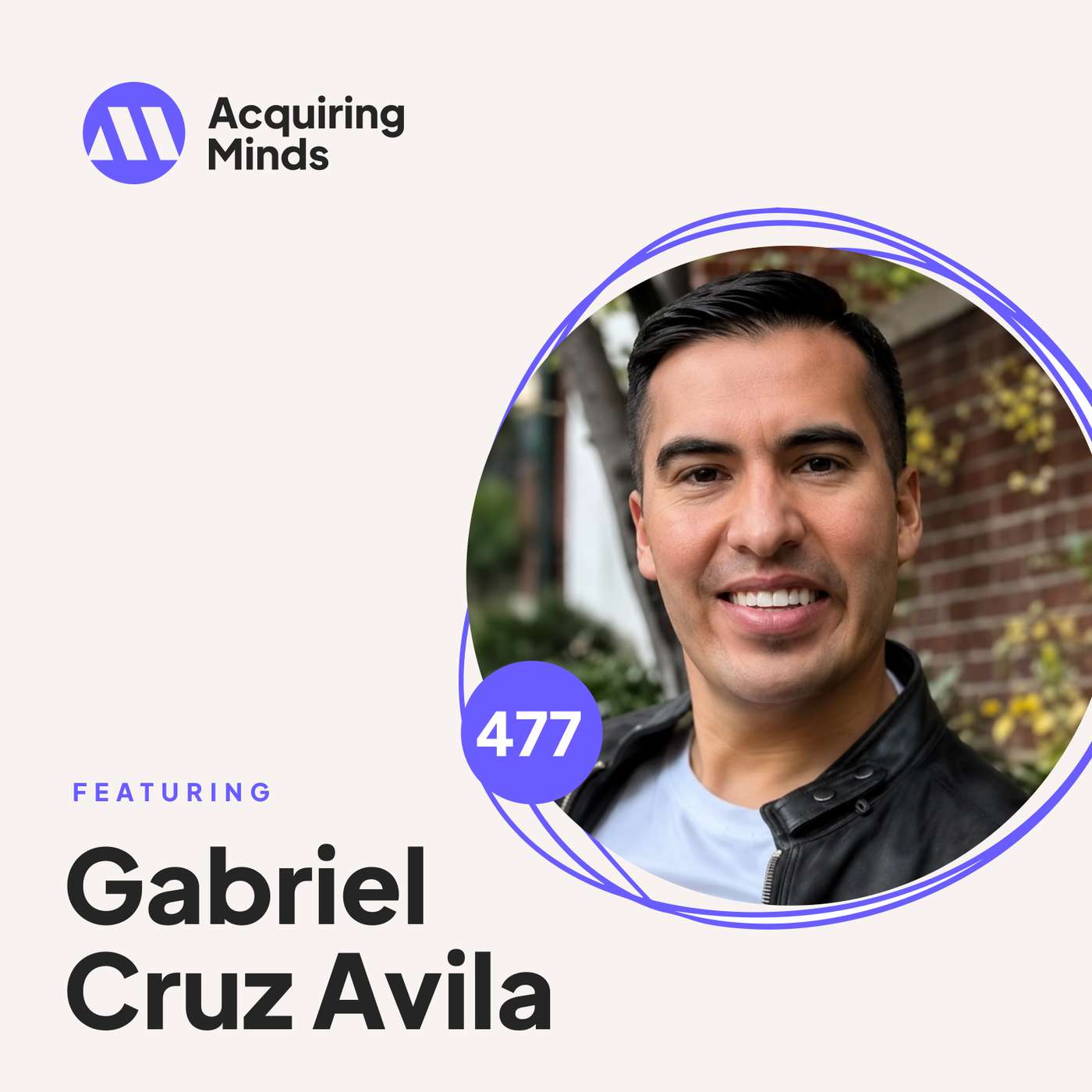
Searchers are warned that buying a business is a one way door. Once you're in, you're in. Today's guest went in with the opposite assumption that if it didn't work out, he could sell the business. And two years later, that is exactly what happened. Gabriel Cruz Avila bought a Houston area remodeling business in early 2024. Katy Tile and Marble is a 30 year old residential remodeler that had endured many cycles and had strong characteristics like
- [00:33]
Connor Gross
favorable working capital dynamics and a network
- [00:36]
Will Smith
of longtime subs rather than employees. But Gabriel also stepped into a rockier situation than he realized. The business had just had its worst year in over a decade and the sellers weren't exactly forthcoming about it. Listen for how that shows up in his advice to you searchers. But the harder story here is personal. Gabriel went through a divorce in his first year of ownership, unraveling the family vision the acquisition was built around working alone seven days a week. He ultimately chose to sell, not to maximize price, but for what he calls emotional health. This isn't a failure story, and it
- [01:19]
Connor Gross
isn't quite a success story either.
- [01:22]
Will Smith
It's the middling outcome where, frankly, probably many more ETA stories than we realize land. But Gabriel comes out the other side sharper, seasoned, with two years of intense operating experience. In his words, a very expensive mba, he's well equipped for whatever comes next. If you want to see Gabriel in person, he'll be on stage at ETA Circle in Houston in a few weeks. On August 24th at 5pm, register@etacircle.com link in the show notes Here he is Gabriel Cruz Avila, former owner of Katy Tile and Marble. Regular listeners of Acquiring Minds will recognize the name Connor Gross. Connor is the expert at the intersection of franchising and entrepreneurship through acquisition, ETA and In a webinar this Thursday, Connor will lay out the three paths to franchising for acquisition Entrepreneurs. The first, conventional searching the second, the plant your flag strategy and the third, partnership. Each path looks different, and which one fits depends on your goals, your strengths and your appetite for risk. Among the topics you'll learn this what the three paths each entail, how acquisition entrepreneurs can pursue each path, the benefits and drawbacks of each, how to determine which one best aligns with your goals, and case studies from entrepreneurs for each of the three the webinar is the Three Paths to Franchising for Acquisition Entrepreneurs and it is this Thursday, August 6th, noon Eastern. Link to register is right at the top of this episode's show notes or on the Acquiring Minds homepage.
- [03:20]
Connor Gross
Acquiringminds Co.
- [03:33]
Will Smith
Welcome to Acquiring Minds, a podcast about buying businesses. My name is Will Smith. Acquiring an existing business is an awesome opportunity for many entrepreneurs and on this podcast I talk to the people who do it. Running payroll, paying your bills, closing your books, and producing financials. These are critical tasks every business owner must do or oversee, but spending time on them distracts you from the leadership in growth work you want to do. So let system 6 do it for you. Owned and led by a former Searcher, Chris Williams, System 6 is a leading outsourced finance team for hundreds of SMBs, including over 50 searcher acquired businesses. Chris, Tim and the System 6 team understand firsthand the challenges, the opportunities of jumping into a business as its new owner. So whether you own your business already or have one under LOI, talk to System 6 about how they can give you time back and improve your financial operations. Mention Acquiring Minds and they'll provide a free review of your books and financial ops, a $500 value. Check out system6.com, link in the show notes or email helloystems6.com
- [04:57]
Connor Gross
Gabriel Cruz Avila welcome to Acquiring Minds.
- [05:00]
Gabriel Cruz Avila
Well thanks for having me. I looked for for this opportunity a long time ago, so I'm excited to be here. Thank you.
- [05:07]
Connor Gross
Gabriel, you acquired a residential remodeling business in early 24. Your ownership ended up being two years. You told me it was a quote, very expensive MBA. We're going to learn what we can from your journey. Let's begin with some background on you please Gabriel.
- [05:25]
Gabriel Cruz Avila
So I was born and raised in Mexico and during high school in Mexico I was, I was a swimmer, competitive swimmer. So our coach in Mexico, he became a mentor of mine and after high school he actually encouraged me to apply to schools in the US as a student athlete. So I did. 2010 I went to a division to school in Mississippi just to swim and study. It was a great experience overall, lots of international students and from there I made my way to Houston in 2015. That's where I actually enrolled myself on an MBA. I didn't do much outside of school during my college career because I was swimming. So after my MBA networking I started my career in oil and gas. Different supply chain roles I would say from 2016 to early 2024 I never stopped working during my early search as well. So had a background in supply chain operations, manufacturing to distribution and logistics. So during, during that time I did develop an expertise to work with people from different backgrounds to kind of enhance myself as a leader, as a manager. And those skills are the ones that I intended to use to buy and operate a business at a high level. During my last two years in oil and gas, I was bored, right? I was working three hours. I was, you know, just very good at my job at that time. And, you know, whenever you're born in a company and you don't have too much motivation, that kind of opens to curiosity, right? A lot of us start that way just being curious, see what else is out there. And I stumbled upon the term entrepreneurship through acquisition, through YouTube, through podcasts. You know, your podcast was one of those as well. You know, Kodi Sanchez was one of those. And then just by meeting some mentors here in, in Houston, you know, through the it's called ATA Entrepreneurship Through Acquisition Circle chapter, I was able to actually prepare myself to, to buy a company. So overall, that's my background. We can elaborate more if you want.
- [07:35]
Connor Gross
Yes, let's do that. Gabriel. So you said you're working 30 hours a week in your job, you feel like you've worked, mastered it effectively, and, and so you have free time on your hands. And when somebody feels not challenged by their job, they start looking around. But for many people, that probably means how to get a promotion or, or what better job at a competing company to go pursue it doesn't mean jumping out and be buying a business.
- [08:08]
Will Smith
So.
- [08:08]
Connor Gross
So why was that where your attention was drawn?
- [08:13]
Gabriel Cruz Avila
So I come from a family of entrepreneurs. I mean, my dad was always, he always had his own business. That's how he helped us out and paid for private education in Mexico. That's how I sustained most of my life in the US Outside of my scholarship. My dad paid for my education, he paid for my mba. So I always had a lot of respect for that and a lot of admiration. As I went through my early career in the US my mid-20s, I started shaping the idea of maybe I want to give it a try to be a business owner. I just didn't know how or where to start. I didn't have a set goal in mind. I didn't have defined path as far as passions. I knew I was really good with people. I knew I was energetic. I knew I was always someone that likes to plan and sell structure for myself. You learn all of that working for big companies. That's why I thought buying a business was going to give me what I was looking for, because it will allow me to not change my lifestyle, right. Have a salary from day one, while at the same time experiencing what my dad was doing. Just running a company that's on the 3 million revenue, which funny thing, at the time the financials of the company I bought, they were very similar to the financials of my father's business in a way, employee headcount and revenue wise as well as. So during the early process of searching for a business, I always had the idea of, okay, let me just try this out, see how I feel, see how I operate. And worst case scenario, if I don't feel like this is for me, I can just sell it back. That's the beauty of buying a business with a stable reputation. You don't have to stay. You can always find creative ways to change your environment. Obviously I didn't buy the business with the idea of I'm just going to do it for a little bit. You know, I bought it with intention of creating a legacy for myself. And you know, at the time I was, I was married. We can talk more about that, you know, later on the episode. But yeah, I didn't have strong passion or path, but I knew I wanted to at least give it a shot to be a business owner. So I thought it was the best way of doing that.
- [10:24]
Connor Gross
Well, that's certainly one of the interesting features of your story that you were able to sell the business back onto the market. My intuition about this is actually different than yours that, that buying a business is much more of a, of a one way door. Once you go through it, you can't undo it trivially. It can be very difficult. It's not as easy as just placing the business on the market and a kind of sort of undoing or extracting yourself back out of this entrepreneurial venture. However, your example is a, is a counterpoint. You did exactly that. We're jumping way ahead, just back really quickly to your father and what was the character of his ownership like? What did you see as a young person? You've talked about the financially, what it enabled you and your family to do. But what about other features of what you saw his professional life to be?
- [11:24]
Gabriel Cruz Avila
What I admire and what I saw. Obviously you see a lot of good things, but you also see a lot of things that have a consequence. Right. So he was barely home just to start, right. He was growing his company when we were very little. So I saw just a lot of him being absent, just not being humble then I, I was able to really understand since very early on my childhood that what he was doing was what was something that will allow us to have a different lifestyle. You know, I mean what I, what I had in Mexico is what 1 or 2% of, of the Mexican Population has, you know, I had adhd, I went to private school, I went to, I don't know if you're familiarized with Montessori system. It's a, it's a different, you know, non traditional system. You know, we travel, we are just a nice life. So, you know, as I started just being a teenager, I understood that, hey, if I'm staying in Mexico, I mean, really the only way to be successful is to have your own business, to have your own. Be the owner of your own time and resources. And that's what I saw. My dad, you know, I saw him. Other than that, I saw him really happy and motivated to do his business. He was just born to be an entrepreneur. He will tell me, you know, before I bought the business, I always wake up ready to tackle the, the challenges, you know, so he'll tell me, once you start your own company, that's how you're going to feel. You, you can't wait to start your day. And I just did not feel that the same way when I, when I run the company, you know, as, as he did. And it made me wonder, maybe I had to start from zero and develop something on my own to kind of develop that, that, that strong feeling, you know, just like, like a baby, right. You is born, you raise that baby right. But whenever you inherit something that's not yours, I don't think it's the same passion as entrepreneurs. I have seen where they start their own companies rather than buying a company because you, you don't earn it, right? You, you bought it. Yes. You earned the, the capital. They know how to operate it and run it, but you didn't earn the business that's, that's in front of you as someone that started from scratch. So, I mean, yeah, yeah, that's an
- [13:27]
Connor Gross
interesting observation, although in some ways obvious, but it's not one that we talk about much at all on the podcast. Maybe it's because. Maybe it's because there is some discomfort with that fact, what you just described in the ETA community, that, you know, that there is a, that there's. Because we're buying a business, we're one step removed from the, the passion or the sense of ownership. The, the true psychological sense of ownership. So really good to hear you talk about that. And we'll probably hit upon it again. Okay, so you decide to search, you go down the rabbit hole. Cody Sanchez, Acquiring Minds Get. Give us just a quick snapshot of the search, your search itself, and let me preface it by saying Reed Pen Baker of ETA Circle, who You got plugged into you in Houston. ETA Circle is a big ETA meetup, for lack of a better word, in Houston. Knew you introduced us and said you were one of the most energetic searchers that he'd ever seen. So tell us about what that search look like.
- [14:36]
Gabriel Cruz Avila
I briefly mentioned. So, you know, I, when I was very young, I was diagnosed with just adhd. So I was in swimming because of that reason. So I always had these very, very high levels of energy and I carry that through my, through my roles in corporate America. So I met Reed halfway through my search, just through LinkedIn. I sent him an email. I said, wow, you know, a group of entrepreneurs. I want that to buy businesses in Houston. That's, that's super helpful. So I reached out to him. He interviewed me probably like six months before I bought my business, probably like mid 2023 or so. He became a mentor of mine. I went through a few of his events and that gave me more, even more confidence and ammunition to an execute. Because, you know, when you're doing this solo, I mean, yeah, you listen to podcasts, you see a lot of content, but it's not the same as seeing people actually doing it right. So that really gave me the ammunition I needed to go in and execute. Besides that, it was a solo search. I was working still full time. I was probably investing 10 hours a week or so to see businesses within the Texas region in the trades. Business mainly. Obviously no restaurants, no tech companies or anything. I wanted to keep it simple and I wanted to buy a business I could understand and scale. So eventually narrowed down to Houston, $3 million business and below. And I end up just submitting around, probably like around 10 Lois total within the Houston area.
- [16:09]
Connor Gross
And did you consider that a lot of Lois? Because Reid thought that you did put out a lot of Lois to, to your credit, that's something that searchers are often cautious about doing. And, and some of the conventional wisdom is, is, you know, you should, you should put out offers, put more offers out than maybe your, than your instincts tell you to. But it sounds like you didn't have that problem.
- [16:36]
Gabriel Cruz Avila
No, I mean, I, I didn't go through what's called analysis by paralysis or also, a lot of people start and they stumble upon a great business very early and they either they don't submit an LOI or they, they go through more businesses. And I met a lot of people that probably spent more than two years finding for the business. And at that point you end up forgetting what's a good business, what's a bad Business. Right. So I didn't want that to happen to me. I wanted the search to be no longer than six months. So yeah, out of those 10, Lois, I mean I did sign a lot of NDAs. I did so thousands of memorandums. I saw so many business plans all over Texas. Right. By actually executing on Lois, there was not too many businesses out there that the number one within Texas, I mean within Houston, that I could afford a number two that had the, the history or the, the legacy that I was looking for because I was looking for a non asset business. I was just looking for a business that had a stable reputation. And this company, K Talent Marvel, I mean it had 30 years in the industry. Right. So I mean it was close to where I close to my house. It had a very, very nice history. So if you narrow it down to those two or three variables, there's not too many businesses out there.
- [17:51]
Connor Gross
Yeah. And even in an enormous market like Houston, I mean Houston's population is what, top three?
- [18:01]
Gabriel Cruz Avila
Yeah. I was surprised on the third spot, you know, just all these people moving from California, New York, so.
- [18:07]
Connor Gross
Right, yeah.
- [18:09]
Will Smith
Buying a small business sounds simple.
- [18:12]
Connor Gross
Find a company, due diligence, get a loan close.
- [18:18]
Will Smith
In reality you wear every hat just to get the deal done. And then the moment you close, you have to throw those deal making skills out the window and learn how to operate. You shouldn't have to rebuild this infrastructure
- [18:33]
Connor Gross
from scratch and you definitely shouldn't do it alone.
- [18:37]
Will Smith
That's why Walker Deibel created Acquisition Lab which started as an accelerator has expanded into a complete ecosystem for acquisition entrepreneurs. Over six years, the lab's 1,200 members have acquired over a billion dollars in businesses. The lab puts everything under one roof. An active community, deal reviews, post close services and a dedicated fund helping experienced operators buy larger businesses. If you're serious about buying a business, come see why Lab members have a 40% success rate. Learn more in the show notes or@accentlab.com
- [19:22]
Connor Gross
acquiringminds and say a little bit more Gabriel, about something you touched on earlier where you, you actually, from your corporate days, from your W2 days, you have experience in supply chain, in managing warehouses and in managing different types of people. So you are not somebody who is, you know, just a kind of spreadsheet person in a cubicle air conditioned environment. Well, I guess the warehouses probably were, but, but you felt like you brought an ability to work in a trades business that many searchers don't have and they, they do it anyway. But they, they know that it's going to be an Uncomfortable and new experience for them. But you actually felt like you were already equipped in to, to manage such a business, right?
- [20:13]
Gabriel Cruz Avila
Yeah, a lot of. So what a warehouse manager represents. A warehouse manager is someone that you don't do anything yourself. But the complexity is within making people do everything. Right. I mean you're managing assets and you're managing people. Right. And people in our warehouse, you have supervisors, production lines, you have forklift drivers, you have, yeah, you have probably a few analysts in the office, you have customer service representatives. But the type of people that you are dealing with is mainly the people that are usually in these types of trades. Flooring H Vac businesses is the same type of Persona or people with similar backgrounds and demographics. Right. So I knew I was not going to just do a 365 change in terms of leadership and as well as whenever you're in an operational role on a distribution center or manufacturing in Florida that operates 24 7, you get used to just thinking quick in your feed and you need a lot of that just to operate a business that's running. Because essentially once you put yourself in that company, the company runs a certain way and if you don't adjust your baseline of your decision making style to the company, then the company is going to be affected at some point. You're a flying risk. Right. So talking about a company that generates, you know, $3 million, obviously you have to churn projects. You know, we'll remodel four or five projects every two weeks. So those projects need decision making constantly. So I didn't have any issues adjusting to that, to, to that part of the road.
- [21:42]
Connor Gross
Okay, let's hear about the business that you acquired. Yeah, Tell us the bullet points and then tell us why you liked it.
- [21:51]
Gabriel Cruz Avila
So Katie Tile and Marvel is a company that was founded in 1991 here in what's called Katy, Texas is one of the suburbs of surrounding areas of Houston. Katie is probably the fastest growing or the most probably at this point is the biggest sort of in the Houston area. Katie has been tripling in terms of housing, in terms of trades businesses since early 2000. So the company was, funny thing, founded in 1991 and then the, the owners I bought it from, they actually bought that company in 2001 themselves. Then I acquired in 2024. It's a company that throughout the years they, they started with just flooring, basic carpet, you know, early 2000s. You know, all of these homes in at least in Texas had mainly carpet or than hardwood floors or anything else on the homes. Right. And then at some point, you know, in mid-2015 or so, then the, the for different types of floorings like hardwood, laminate, vinyl. So the company was known for that, just a flooring company. And then at some point they started doing full remodels like kitchens, bathrooms, custom cabinets, paint, you know, electrical work, plumbing, anything inside the home, even patios. Right. So 2023, that's when I approached them. The company historically Trend in between 2.6 to 3.7 in, in, in annual revenue. These type of companies have a high variance in revenue because historically, at least in Texas, there's usually natural disasters, usually like big floods every five years. So when that happens and they have that, that, that magic year where there is probably like a, a double increase in revenue for that particular year. Right. So as a business owner, you don't want that to happen. But I mean, it's nice to know that hey, maybe every five to seven years is going to be a year where you're going to really like increase revenue by double digits. No, so that's overall, that's the profile of the company. They had six full time employees in W2W2S and then they had around 15 to 20 subcontractors that they'll hire. I mean they will contract probably like 80, 90 of their own capacity just based on the seasonality. You know, in interior remodeling, mainly in residential, people want to do bathrooms or kitchens from March all the way to, you know, October, as you probably know because of the holidays and school. November, December, January and February are more slow months. And then you know, from March on, this just more of a, of a high run. So it's a seasonal business. You have to be careful on how you, how you invest on projects, how you invest on inventory of front. A lot of inventory is just construction materials for most of the projects. But since it's a customer modeling company, a lot of the selections and materials in terms of like hardwood or tile, that's just picked by, by the customer. Right. So it's project based. Okay, so yeah, that's in a nutshell.
- [25:01]
Connor Gross
Let me, let me follow up with a couple questions here, Gabriel. So you said what the revenue was? High twos to mid threes.
- [25:08]
Will Smith
What was the revenue again?
- [25:09]
Gabriel Cruz Avila
So their highest revenue recorded was around $3.7 million in 2022. Post pandemic, a lot of people started doing remodeling. Right. You had that post pandemic boom. And then 2023, it came down to all the way from the 3.6 to the 2.6 million in 2023, that's when we started seeing a lot of the geopolitical events happening around the world. A lot of the wars, a lot of the, the Fed tightening on interest rates. Right. So that's when we started seeing inflation year, where we started seeing all these repercussions from the pandemic and other factors. Right. So 2023 was a bad year for them. You know, they were also struggling operationally. So I see why they were tired, they were exhausted or running the company for 23 years, why they wanted to sell the business.
- [26:01]
Connor Gross
Okay. So top year was about 3, 6, and then 2023 with all of these factors that you just said was 2.6, so which was a bad year for the business. So that is quite a swing. So it's also a very cyclical business. Seasonal and cyclical.
- [26:20]
Gabriel Cruz Avila
Cyclical, you're correct. Yeah.
- [26:22]
Connor Gross
100 and. But on the other hand, it is a business with, it is a durable business because it has survived multiple swings in the economy. Right. You, you actually, despite the seasonality and cyclicality, you also saw on the positive side, durability.
- [26:39]
Gabriel Cruz Avila
I saw durability because in the bigger trend, I mean, other than the, the factors I mentioned on the floods. Right. It's a business that you see a track record despite of everything that happened recently, the business has been able to show constant revenue. Worst case scenario, they never lowered the revenue lower than 2.5 historically. So I mean, that, that just gave me some confidence there. You know, worst case scenario, this can be my outcome. 2.5, 2.6 million dollar annual revenue. So amortizing an SBA loan, you know, you, you see yourself in that worst case scenario being able to, you know, to afford the business in, in case things still don't pick up on the economy. Because at the end of the day, it's a luxury business. Right. People don't remodel a full bathroom or a kitchen unless they have the cash or unless they refinance their home. And for those things to take place, they need to have low interest rates and decent loans to do so. Right. So. And confidence on the economy. So, you know, we haven't seen that yet. Right. We're still adjusting in our own economy as we speak. So I can tell you more, more about these other challenges I had as I acquired the business. But yeah, I saw that Trend, you know, 2.2.5, 2.6 million on the worst case scenario, and then $3.7 million a year if things go well and, and things just are the way they are.
- [28:01]
Connor Gross
And, and what do earnings look like or what are the net margins on a business like this or on this business?
- [28:07]
Gabriel Cruz Avila
Yeah, you're looking at after. So before you subtract all the expenses, operational margins, gross margins are at around 40%. That's just basic revenue minus your materials and your labor. And then after you subtract all your expenses, your EBITDA, it comes down to like around 12 to 15%.
- [28:31]
Connor Gross
Okay. Okay. So on a 3 million dollar year, you could be doing $350,000. Let's say 350 even maybe 4. Okay. One thing that jumps out at me in this business is that it's, it does a little of everything. It sounds like as you said, started with flooring, then bathroom remodeling and kitchen remodeling and kind of it will do. You know, it's basically like we said at the top, a residential remodeler. I wonder it was that, was that, is that a negative that there, that it wasn't positioned to do one particular service? How did you think about that?
- [29:13]
Gabriel Cruz Avila
So I think that's, that was their approach, the idea of the previous owners. That's how they, they run it for many, many years. Just a few flooring company. But then as competition started to actually be a challenge, the, you know, there was just a lot of competition out there. In recent years they had to train their, their subcontractors to do more skill work, which is full bathrooms and full kitchens as higher profit margins. But it's just more skill work, more, more things into play, like more electrical design, plumbing, you know, stone, like countertops. So I thought it as a great thing because it allows you to be flexible and to seek all kinds of residential projects. So for me it was a great thing. You know, one, once I saw kind of like what the contractors were able to do with, with their skillset, I was very excited to just be a part of that. Yeah, essentially the only issue is, you know, to get meat in the table, you know, if you get the revenue, if you get the leads. Like actually the execution of the projects is, is the easy part. Just because of the high quality of the contractors, you know, that were involved in the company. Essentially that's the real, the real value here. The reputation obviously with the contractors.
- [30:30]
Connor Gross
Well, let's dig into that for a second. But just to underline the point that in fact that there was so many services offered was a good thing. It was a hedge, it was flexibility so you could adapt to the market. If, as I guess the previous owners had, if flooring demand goes down, there's an opportunity now to, to remodel bathrooms and so on.
- [30:52]
Will Smith
Great.
- [30:52]
Connor Gross
Okay. The. But you, you talk about the quality of the contractors, but the. So these are in fact your own subs, your own contractors. They're not your employees, which is great because you don't. In a soft market, you're not forced to make payroll. You can flex with the market. Very powerful. On the other hand, is it not a moat? Because those folks don't, you know, they're not your. They don't belong to you. They can work for other GCs.
- [31:23]
Gabriel Cruz Avila
Exactly. So I mean, it's. How do I explain? So these contractors, they develop an early relationship with the previous owners when the businesses started, when actually bought it, bought it in 2001 from the previous owner. 90% of these contractors were already involved on the company. So it actually looked like a small family. You know, there was a really great understanding that the contractors knew that they had to give us priority because we'll give them all of our business. And it was in this industry, our company was very well known for always have, having work in the area. Right. So our subcontractors, they knew it was on their best interest to always prioritize on our projects before anyone else, just because we have that long history with them, that relationship. So it was, it was a very nice, well understood relationship where they knew they were subs, but they had to prioritize on every single project we gave. And then we, we never encounter an issue where any sort of subcontractor told us, I'm busy doing something else, I can't do your projects. It was always the other way around. When are we doing the next projects? I need more work. So it was just a nice thing to have. You know, you'll think that in the, in this kind of industry, the most challenging part is to actually find good contractors for the. In our case, it wasn't. In our case, we have that really nice relationship with them. And obviously operationally the contractors were, they had a lot of perks with us. For example, we will deliver all the materials for them to the project location. We will handle all the housekeeping, all the cleaning. You know, we'll, you know, give them work orders that said very thoroughly what they had to do. So they had it easy. They just had to do what they did best, you know, lay tile, you know, fabricate installation of countertops, do the plumbing aspect of it. But other than that, I mean, we did everything else logistically ourselves. They didn't have to pick up material from different vendors, which is Usually a challenge. Right. For customer modeling projects. So they had a good thing going with us and you know, it was just a mutual benefit that we were making good money. They were making good money.
- [33:32]
Connor Gross
So that sounds like a really powerful dynamic in the business. And one other thing to say about subs and versus GCs, you, you were essentially not essentially you were on your projects, the general contractor. So there's a working capital point to be made there. We hear so often in construction that working capital, that the working capital feature of the business is a weakness. Bad working capital dynamics. But that's when you're a sub, because the GC is, you're waiting for the GC to pay you. That's not the case. At least in residential remodeling. Gcs actually have great working capital dynamics. Right, so talk us through that.
- [34:14]
Gabriel Cruz Avila
Exactly. So it's a negative cash flow where you, you, you earned your, you earn your cost before you even actually like execute the project. So just to give an example for, for every project we had to get an upfront deposit from our clients. That's half of the project total cost. So if in average a master bathroom was $20,000 or so, we always get 10,000 up front probably like a month before to order materials and get the project scale in our calendar. And then the 10,000 will get it once the project was completely finished and we will use the 10,000 to pay our contractors and then one month later pay our material. So it was, it's a double edged sword. You have to be very careful with how you, you perceive cash flow because you, you can earn a lot of revenue upfront and thinking that that that month was a great month when in reality you're always one month up front in terms of revenue but not on actual costs because of that reason. So yeah, it's a great, it's a good problem to have to earn your cash flow up front. So you never really, if you scale everything right, you should never run out of cash to fund projects and to
- [35:24]
Connor Gross
schedule projects, which is just really profound. As regular listeners will know. The working capital management in a small business is, is deceptively difficult. Of course dynamics change from industry to industry. But what you want is to get paid upfront and, and then pay out whatever your costs to deliver the service or product later. And so that's a great feature of a business. Your point though is that it doesn't make it easy necessarily. You get this revenue up front and you have to be really careful and cautious about how you deploy it because you may think you're earning more money than you are because as you accept revenue, there's still a lot of expenses that you're then going to have to pay for as the project unfolds. So be careful.
- [36:07]
Gabriel Cruz Avila
Exactly. No, definitely 100%. And not to mention, you know, on every project, especially for full remodeling projects, you have to be very careful. You set up a quotation, an estimate, right. But as you probably know, in remodeling a lot of things can go wrong. You know, you can end up with less material, you can end up with an unhappy customer that was envisioning something different in their mind. You can end up with just a change on project scope. You know, now that now they want to extend the bottom, you know, further or they want to tile to ceiling instead of to eight feet. So a lot of those things are like you have to capture extra revenue, the gray area, which is usually 10% additional cost or revenue during the project. So if you don't capture those, then at some point in a quarterly or annual basis, you will see your margins suffering because of those reasons.
- [36:58]
Connor Gross
Given how much estimating and really understanding the nuances of doing a remodeling are a key performance, key to the performance of this business. How much of that did you see yourself having to learn? You said there were six full time employees. Were you going to be the person to go out doing the sales, doing the estimating or was that already baked in, in one of these six or two of these six employees?
- [37:25]
Gabriel Cruz Avila
So that was the, the real challenge was what you mentioned, how I was going to immerse myself to add value into the company and how I was going to reposition the employees that stayed when the owners left to do the, you know, the high value, know how tasks. Right. So the previous owners, husband and wife, they were there full time on the business working at least 40 hours, both of them 50 hours. The husband was doing all the contractor supervision, project estimates, so he was 100% on the field. And the wife, she was doing all the project management and just business compliance aspect of the business at the office. Payroll taxes, just making sure the, the people in the customer service were answering the emails correctly, etc. So I knew I was going to take a role in the company where actually will it will force me to work more than 60, 70 hours because it was catalog as a owner dependent business. When I bought it, I knew I was going to have a high, a high, a high ebitda. I knew I was going to have a high payout as a business owner. But that payout will come with a lot of work involved. Right. So because I know it was going to be challenging to hire one or two more persons, train them properly, and then split the tasks of the previous owners. And you're talking about previous owners with 20 years of experience or so doing this. Right. So that was a challenge. My first six months I did execute the role of the wife. I was just strictly in the office. 100% cleaning accounts, payout and receivables. You know, they were not a very, they were not very organized. When the business was transferred to me, there was a lot of cleanup that had to be done, you know, doing some minor enhancements on our erp, connecting with clients in the, in the office, doing some inventory. So once I figured that out and I had that part under control, then I stepped into the field to do the, the more challenging role, which is getting meeting to a table, right. Going in, doing measurements, selling the company on the, on the estimates, and then executing the projects at the same time. So that, that's the role I took for the most part during my time in the company.
- [39:42]
Connor Gross
The first six months back office and then after that you were in the field and being estimator and project manager.
- [39:52]
Gabriel Cruz Avila
Yeah, 100% exactly.
- [39:53]
Will Smith
Great.
- [39:54]
Connor Gross
Gabriel. Well, we want to spend time, more time on your ownership and what that actually looked like. But let's not get too far away from the transaction. Can you share with us what you purchased the business for, acquire the business for and what the structure was I
- [40:07]
Gabriel Cruz Avila
purchased the business for? The business was advertised as 1.7 initially. That's how it was advertised for 1.7 because the business was taking revenue prior Covid, which was more skewed on the higher side, as I mentioned, on the 3.5, 3.6 million a year, doing the 3.5x multiple during negotiations and you know, after doing my due diligence, I close on 1.4. So I bought the business for 1.4 million. And during the, the actual 2 year period while I was in the company, I did increase the revenue, I'll say 15, 20% from the previous year. The 2023 was a terrible year for the, for the company in reality, for whatever the reason is reasons. So my first year 2024 from 2.6 to 2.9 million in revenue. And then my, my second year 2025, we, we closed at 3 million revenue. So it was also a great year. And I can get more into specifics on the EBITDA for 2025. That's when we, we, we started Encountering the the tariff war. Right. So Trump started slashing tariffs on a lot of materials used for remodeling. So our costs increased.
- [41:34]
Will Smith
Looking to secure an SBA loan to buy a business Meet Pioneer Capital Advisory your go to partner for sophisticated buyers who want deals closed quickly and on the best possible terms. The Pioneer team has closed more than 100 SBA loans, averaging timelines well below industry standards. Founder and owner Matthias Smith and COO Valerie Stash bring over two decades of SBA lending experience. Matthias and Valerie have built a team that meticulously works your deal from underwriting to close. You'll have a full bench working on your behalf. Sales associates who streamline onboarding M and a financial analysts who craft investor grade lender decks and an operations team that manages every step of the closing process with institutional level rigor. Pioneer is not a single person, but your true deal team. Visit pioneercap.com or click the link in the notes.
- [42:42]
Connor Gross
So 1.4 million purchase price and then what was the structure of the deal?
- [42:46]
Gabriel Cruz Avila
The structure of the deal. Sorry about that. The structure of the deal was the typical structure. So it was a solo search. So 80% SBA loan loan 7 a 10 my cash injection and then the other 10% it was a seller note that was on standby until the SBA loan was paid off. Right. So not a current interest, just on standby until the SV loan was satisfied. So that was just the, the structure of the business. 80, 1010 which is, which is pretty typical.
- [43:21]
Connor Gross
The, although the full standby where the seller's not going to get any of their financing payment until after the SBA loan is paid down, you know, which, which if you don't Prepay that'll be 10 years. That seems like a bit of an unusual feature. How did you land on that?
- [43:42]
Gabriel Cruz Avila
We landed on that because if we didn't have that kind of structure, it wasn't going to because the business didn't own any assets. It was a goodwill business. There was more, there was a higher tolerance on, on any SBA loan bank. You know, how do you call that term? You know that, you know the business makes X amount of EBITDA and then you have to have that multiple to satisfy the loan requirements. Right.
- [44:09]
Connor Gross
The dscr.
- [44:10]
Gabriel Cruz Avila
Dscr. Because there was no assets on the business, we had to hire very high dscr. So it essentially, you know, forced us to either have those terms as they were or, or just find another bank. So the previous owners, they just wanted to sell it. They were not very excited at spending more time on the business. So at that point they, they were able to just agree to, to. To anything, just to, to. To. To sell the business for that amount. So that's really what led to that.
- [44:41]
Connor Gross
And you must have had negotiating leverage in the sense that the revenue was declining. Now it's a cyclical business and so there's going to be ebbs and flows. But usually sellers try to sell the business after a particularly strong year. They were selling the business at a particularly weak moment in the business's life. So that gives you a lot of leverage, does it not?
- [45:07]
Gabriel Cruz Avila
That's a great question. So I think I was probably not naive, but obviously was my first time buying a company and since I did not do a two year period where I just searched for businesses and submitted Lois and went through negotiations, I wish I had more content, more experience for to your point, I wish I negotiated even more. The previous owners were not very transparent with me on the month to month profit and loss statements during 2023 because we started actually talking at the end of the summer in 2023. That's when I had assigned LOI so I had exclusivity to buy that business. And my obtaining funding was what delayed me the most. I think it took me like four months to actually get the loan approved. So during that time they were not very transparent with their financials. Right. They only showed me 2022 on before as far as tax returns, as far as like, you know, just profitability, as far as like their, their SDE. So you know, 2023 was a, a very weird way the way it was presented to me. Not to mention there was a lot of other things like payroll. They, they increased their payroll costs dramatically during 2023 and that wasn't really presented to me. So going back to that, I wish I was more experienced and more aggressive into digging this stuff out and negotiating and I will have bought that business for probably like 1.2 million and they probably will have accepted 100%.
- [46:43]
Connor Gross
Yeah, yeah. And so you were operating off of 2020, 2022 performance.
- [46:49]
Gabriel Cruz Avila
Exactly the whole time.
- [46:50]
Connor Gross
Essentially the whole time. And that had been a great year. And then 2023 was the bad year. So you were, you stepped into a business that had just had a really bad year and you didn't really know that until you got.
- [47:02]
Gabriel Cruz Avila
It wasn't 100% clear because of the way the, the PNL. Some things that were thr. It was just in bits and pieces here and there. They did not want to show that they were having that kind of a year. And Also not to their defense, but I mean it's not easy to run and sell a business at the same time for them. You know, they were, they were all there, right. So they were not used to the, that's another reason why they sold the company. They were not adjusting to the digital era of doing things. You know, now we want things quick, right. And everything is live, right. So I can pull a profit and loss statements in five minutes from QuickBooks. They were more old school on that way. You know, they took time to do their things and they were running the company themselves. They, they had no, they couldn't find a way to delegate a lot. They were doing some so much stuff themselves, right. So I knew I was buying a business that was very heavily dependent on them and my low hanging fruit or my experience. My, my idea was to maybe not grow revenue but to make it a less owner dependent business to, to sell it that way and to make money that way.
- [48:04]
Connor Gross
Ah, okay. Well I want to hear more about that in just a second. But first, so what do you think your learnings are? You could have negotiated harder. Perhaps you could have done more diligence.
- [48:17]
Gabriel Cruz Avila
The learning experience here. Once you're, when you're a searcher and you find a business that you really like, that kind of feels more of your checklist, your requirements, what you're looking for. You usually just get very excited, right? It's like when you're about to get married. It's like you are just excited on anyone or anything that brings up something that's supposed or that's, that's, that's a different opinion to what you want to do. You usually don't listen to it the way you should. So that's my advice to, to the audience, right. Have an open mindset, be patient and just get excited about this business that you found that, that fills in all your requirements and then just probably like I was looking at Houston, but I could probably will have maybe just done a comparable to other similar businesses in the U.S. right. Just to see what their business, what their profit and loss statements were, what their costs were, how they were structured. So even if you're buying a business in your city, open yourself to maybe submitting one or two lice to a business with a different, I mean a similar, similar profile, right. Almost a copy paste a digital twin and then do that granularity analysis. So I, I think I failed on that. I didn't really have too much point of reference or residential remodeling businesses. I didn't really compare to Much of that. So that's just my, my advice to the audience. Yeah.
- [49:42]
Connor Gross
Great. And, and all because of your eagerness and excitement. So you were blinded a little bit or, or not as, not as careful as you could have been because of your excitement.
- [49:54]
Gabriel Cruz Avila
Exactly. No. Yeah. I was Looking@ Wow, 2023. Great year. 2023. The owners are tired, they want to leave. I can do way better than them. You know, I, so I was trusting too much on the history of the business high level. And obviously I had no idea that technically the, our economics were going to drastically change for the worse. You know, after 2023, things didn't really get back pretty pandemic. They actually got worse or. Well, there was too many changes. Right. So I, I didn't really anticipate on that either. 2024 was just a tough in time to buy a business in this, in this sector.
- [50:32]
Connor Gross
And we are just about to hear about that. But one more thing. So do you think that if you knew then what you know now that you would have, you've already said you would have negotiated harder and you probably would have won, gotten the business for a lower purchase price, but do you think that you would have passed on the business altogether, not bought it at
- [50:56]
Gabriel Cruz Avila
all, no matter the price question? Probably not knowing what I know now, I will have done things a little bit different on a negotiation. But taking aside some personal things that happened to me while I was running the business, I think it was a great business. And just looking back, if I could reverse time, I will have bought it for maybe 1.2 and, and then just I can tell you more. But on the operation side, just be more cautious, build the cash flow a little bit different. But yeah, I will have still about the business. Yeah.
- [51:28]
Connor Gross
Okay. All right. Okay. Gabriel, let's now, let's now do here about the journey of ownership. So the I really interesting to hear you say that you perceived the. Your thesis or your strategy was that you were going to. You're going to be less focused on sales actually and more focused on operational efficiency to modernize the business and make it more. Create operational leverage and more profitable. Even though you knew you were going to probably have to hire somebody else because you were replacing 80, maybe 100 hours of week a week of work between the two owners, husband and wife. As you described their division of labor. They were each working 40, 50 hours a week and you were going to come in and replace both of them. And you know the. We have a concept here that an owner hour, this is like a dog years thing Right. Owner hours are actually, maybe you should apply a multiple to them. So one owner hour equals two of your hours. Because they've been doing it for 30 years and they really, they can do it more efficiently, faster, you know, with their one hand time behind the back, one hand tied behind their back, so to speak. So you were, you were taking on a big a lot. But what did you see as the opportunities? Did I characterize it right? Go from there.
- [52:50]
Gabriel Cruz Avila
Yeah. So I identified that the wife was the one with the know how and actually calling the shots. She was doing the main, the most important part of that company is the way you execute the projects, the planning aspect of it. So she was doing all of that side of things. So my first six months I just wanted to learn everything from her. Before she left it was an eight week transition, so I didn't have too much time. So once I stepped into that office, we had, imagine it's a showroom. You walk in and you see tile, you see flooring, you see sample of showers, you see countertops. So it's just a nice showroom. In the front you have two salespeople just in the front. Phone calls, emails, greeting customers, displaying materials. And in the back they had two other persons doing administrative work. One person was dedicated to do accounts receivable and the other person was accounts payable. So you have four full time employees in the office doing those things. Just very repetitive tasks. And then you have obviously the lady, the owner doing all the coordination of these people and actually calling contractors, executing the projects. She was the person in between the customer, the client and the contractor. So she was doing those things and at the same time she was doing the compliance aspect of the business, which now it can be automated. You know, just paying taxes, paying payroll, paying vendors, etc. So during the first six months I did identify three things. The first thing was the system that we were using to do our operations was a system that was heavily relied on data entry. So the system drove the activity rather than vice versa. You have a system where you do a lot of data entry but you don't get too much of it. Right. So the system owned the stuff. So I work with the owners of that company to enhance the system, to just have more automation. Simple things. Like in procurement, if you're going to send a po, I just want to do three or four clicks on a work order and I want the system to do the rest. Just throwing an email to the vendor with an automated PO and an automated response. Right. So that we fix that kind of like caught a lot of time of the person that was doing procurement. And then on the other side, on the vendor side, we did a lot of EDI linking, so electronic data interchange between vendors accounts payable or vendors inventory erps to our system to also ease the reconciliation of materials and pay vendors that way as well. So within those two things I was able to literally at some point remove the two persons that were doing that full time. Those persons went away. Not to mention, you know, there's a lot of platforms like QuickBooks for example, with you as an owner you can automate things, automate classifications from your bank transactions to your, to your P L. So you know, taxes, payroll, etc. So all of that was automated as well. So those two persons in the back literally went away. The two persons in the front, I identified that they were more suited on having more of a better experience with clients, focusing more on design, focusing more on turning emails with better quality faster. Like if a customer send an email inquiring about project scheduling, material selections that was more controlled and cleaned in a way our turnaround was, you know, within 24 hours, you know, just submitting quotations, etc. Before that the turnaround on emails was probably like three or four or even five days. You know, the emails were always piling up, you know, when I arrived. So that was another thing. So once we, I figured those things out, we had rules in place and everything. Then I stepped to the, to the actual operations outside. So the business inside stay with two persons full time. And I hired a part time person just to kind of rotate the team inside and to. You just have more flexibility there. But you know, once you automated the system from accounts payable and receivable standpoint, then there was not much to do for the previous employees that were in the back reconciling, doing inventory and then just paying the bills. Right. Essentially the system did it for you. So yeah, that was.
- [57:25]
Connor Gross
Well, that sounds like very successful. Not great news for those two people in the background. But the. It's. You must have been pretty encouraged after your first six months in the business that you have created all this efficiency that you hoped you would from the outside.
- [57:44]
Gabriel Cruz Avila
Yeah, no, I was happy, I was excited. But I knew I still, I have a lot to learn. You know, after the two month transition with the previous owners, the husband did stay with me to work full time. Right. So otherwise I wouldn't have been able to do this in the office first. So he did stay with me for an entire year after the transition was finished and doing still all the estimates. So more of a part time role. He took in the company in an hourly basis, but he stayed still doing all the estimates outside because I needed to take my time to either do the estimates or run the projects. You cannot do. All right. Or at least not with someone that has no experience doing this. So once the office was under control, the previous owner, the lady, left the company. Then I stepped outside and I started just running the projects myself. So I was like a hybrid role in between being in the office, coordinating subcontractors, coordinating our own employees, and just communicating with the customers on the project. So I focus on customer experience. Right. I feel instead of focusing on getting more business and sales, focus on a way that every customer has a great experience to just have more organic revenue. So have more word of mouth. So we increase our Google reviews from having maybe 5 reviews a month to having around 10 to 15 reviews in all 4.4.95 stars. So that really increase a lot of organic revenue in the company in. In this kind of sector, rather than paying for ads or advertisement or marketing, if you can really just focus on your reviews to have traction, that is just the best way to go. You know, once. Once you have that going, you know, we will actually flag you as someone more often than not because, you know, obviously in the area, the system knows that you're doing a good job, that you are a reputable company, and they want to pair that with whoever is searching for things in the area. Right. You don't have to pay for advertisement.
- [59:44]
Connor Gross
And did you. Did you start also more proactively asking for reviews or did people just. Yeah, so the classic tactics of sort of asking for reviews, but also then a very strong emphasis on the customer experience so that they leave good reviews. And that together created a happy review. Good review. Flywheel.
- [60:08]
Gabriel Cruz Avila
Yeah, we develop a process, you know, I mean, in the office, the review request was there during preliminary, preliminary planning with clients, you know, just to give you an idea on a transaction. Just so you know. So the typical transaction was someone called the office say, hey, my name is Mari. I want to remodel my bathroom. My neighbor spoke very, very great things about your company. I'm ready for you guys to come in and help me out remodel my bathroom. So that was a typical transaction. Step one. Step two is in this case, we will set up the appointment in the office. I will go and do the measurements. I'll talk to Mari. And it wasn't really measuring, was going in and selling the company your services. Yeah, we, you know, we did your neighbor's bathroom. We enjoy it. She was a great person. This is what we do. This is what we offer. Tell me more about your high level idea, right? So you never want to overwhelm customers, but you don't want to ask high level, what do you want to do here with your bathroom, your kitchen, and then probably like expanding from there, just, you know, making it instead of just remodeling, maybe just a shower, actually doing the full bathroom, you know, adding cabinets, adding plumbing, etc. Etc. So that's what you did in the. On the estimates, you will sell the company, right, to just get a, a bigger project per se. Step two, you come back to the office, you type the estimate very nicely. There's a lot of solid systems out there to do estimates, project takeoffs, right? And step three, that person comes to the office at some point with her estimate, say, hey, you know, I got this estimate from, from Katie Talent Marvel. Can you help me put it together? So that's when the people in the office will be like, okay, let's help you select materials. You know, what kind of tile do you like? Do you want something with pattern? What kind of layout do you want? Do you want, what kind of shower fixtures are you looking for? So put the project to the air, per se. Do some design work. That was another value added service we added. We hired someone part time, a designer to come in and do nice design work with customers. We didn't have that before. And then step four is that person puts money down and we execute the project a couple of weeks later down the line. These type of projects were three to four week projects, full remodels. So just in a nutshell, that's kind of like a typical transaction on this kind of business. So I knew it was very important to do the estimates because that's really where you made your money. That's where you sold the company. That's where you will amortize all your costs in that estimate. It's very hard to change an estimate in terms of dollar value. Once you give a person a piece of paper saying it's going to cost you $20,000 to do this once you execute it. If you forgot to add more materials, more labor, whatever the reason is, is not a good practice to just change that dollar amount there. You know, you have to have a very strong reason. So really like, if you don't have someone that's doing the estimates the right way, then you start already losing business before you even start doing the project.
- [63:06]
Connor Gross
So Gabriel, when we Talked about your replacing the two owners. So I actually had it wrong. In fact, you weren't going to step in and replace their 80 to 100 hours all at once. It was gradual.
- [63:18]
Will Smith
The.
- [63:18]
Gabriel Cruz Avila
Yeah, the.
- [63:19]
Connor Gross
The husband continued doing his field work and then only once you got the back office working did you go out into the field yourself. Did he train you on doing these estimates? He must have. I mean this, there's a lot to learn in doing an estimate properly.
- [63:34]
Gabriel Cruz Avila
Yeah. So I got a lot of exposure indirectly, not really training with them. I actually never really spend time with him doing the estimates. But when you're in the office, you learn a ton in terms of, you know, how these, how the costs are organized, the margins. And then once you step into the field to actually execute the projects, you learn even more. So by doing those two things. I didn't really felt I needed like, you know, hands on training from the owner. He was also very expensive. Right. My payroll was, you know, was getting up there. Right. So I want to just take advantage of what I have learned so far and I felt confident. So I basically, once I was ready, I actually took up his role. I didn't hire anyone else. I was able to do the whole thing myself. We didn't really have any sort of business decline or anything affecting that, that, you know, that action. So, you know, once he left, I knew I needed to invest some time at some point hiring someone to be my right hand person, like a operations manager. And that was my plan for the end of 2025. Just to either sell the company or just now make it a less business owner dependent. Now that you're running it, you're executing, everything's going great. Okay, now let's hire someone to take some of this responsibility out of you and then you can focus on either growing the business or in my case, it was selling the business. So I did hire someone to do operations. Yeah.
- [65:05]
Connor Gross
Great. And we're going to certainly spend some time on that decision here in a minute. But just to wrap up your ownership. So you had said that the 2023, when you were negotiating the acquisition, revenue declined a lot to one of its weakest years. The softness in the market continued into 2024. So you were still in a challenging, broader market environment, but you did grow the business. Is there anything more to say how you did that other than other than the reviews that you talked about?
- [65:40]
Gabriel Cruz Avila
Definitely.
- [65:41]
Connor Gross
So. And the efficiencies? Yeah.
- [65:43]
Gabriel Cruz Avila
So 2024 and 25, we did grow the business as far as revenue, but because of the increase of Costs from the tariffs that the US impose. In a lot of countries, 70% of all the materials for remodeling from tile, ceramic tile to hardwood floors come from other countries. Europe, Latin America is already diversified. There's not like a specific section. It's all very super diverse. China, a lot of quartz come out of China. So that just basically increased my cost by at least 20, 30% on materials during 2025. So even though we technically were doing great, I didn't saw those returns on my EBITDA because of the material increase. So I started having some sort of cash flow situation. So that forced me to stay and work as much as I was doing rather than hiring more people as I wanted just because I had to keep my cost super lean. So during all 2025, I had to keep only the three people in the office I hired. Hiring an operations manager full time. I hire one of my contractors, became a full time employee where he was doing a lot of hard work logistic wise. He was picking up materials from warehouses, doing all the operational staging for the projects. But I was still the one doing a lot of work that I needed. I did not need to do that much work for that much time. But just the operational cash flow in the business allowed me to do that just because I couldn't afford hiring someone else. As the business normalized in a way where we got out of that challenge at some point, the tariff was kind of normalized as far as costs. A lot of vendors saw that it wasn't a good thing for the industry to slash on those costs high. A lot of big companies, a lot of big names started calling down their costs towards the end of 2025. And that allowed us to just have, you know, some form of a decent EBITDA. You know, we did 3 million revenue and yeah, we were in the 350, close to 400, 000 on, on actual pure profits EBITDA. So. But yeah, I mean it didn't, it wasn't nice for me. I had to absorb all that operational requirement.
- [68:03]
Connor Gross
And so how hard were you working? How many hours?
- [68:05]
Gabriel Cruz Avila
Let's say I was working like probably like 70, 80 hours a week for the entire year 2025. And that also was a factor that pushed me to kind of sell the business. You know, when you're in that kind of operational mindset for too, too long, you, you're not that positive and you just want to find a way to make it stop. So you know, wow, you know, just I didn't mention it earlier at the beginning but you know, I bought a business also because I wanted to, you know, establish a family and have something for my future kids myself, you know. But you know, the first year I bought the business, I went through a divorce. I wasn't expecting that at all. So those external factors, those personal situations, you know, kind of forced me to just sell the company. You know, towards the end of 2025, I was working too, too hard. I wasn't enjoying it anymore and I was going through a life crisis where I didn't see myself doing it because number one, I was already single. I was living further from where I was. I wasn't even geographically like close to the business anymore. So just because of my personal situation, I wasn't really too invested on the company anymore. So Taurus Q3 2025, I put it for sale through biz by sell. I did everything myself and again, lack of cash flow, it didn't allow me to, to afford a broker or anything. So I, I did the whole thing myself. And it was painful, I'll tell you. But you know, I was very resilient through my corporate years where I was able to withstand to run the company and sell the business at the same time. And you know, that's what happened. You know. Q2, 2026, I stepped out of the company.
- [69:51]
Connor Gross
Q2 2026, which is just a number of weeks ago then. That's correct, yeah, we're recording on July 2nd. So when did you fully close and then step out of the business?
- [70:03]
Gabriel Cruz Avila
So we signed a contract at the end of 2020 25, I'll say around early December because the, the new owner's funding also the RSVA took, took a little bit too long. You know, I, I actually, and we actually did the actual transaction February 20, 2026, but I stayed for a six week transition. I stayed for a longer transition. So I stepped out of the business the 5th of June, fully completely.
- [70:37]
Connor Gross
Okay.
- [70:38]
Gabriel Cruz Avila
So you know, even during the, after the business was no longer mine, I still had to work very, very hard the first month for this person to come into speed on the operation. Just because this business is a very heavily owner business dependent as I took upon and I never had the time to make it differently then. It took me a while to train him and just maintain the operations during the first month.
- [71:06]
Connor Gross
Yeah. Do you think you would have sold if not for this personal crisis, the divorce and the fact that part of your buying this business was to create something for your family also? Right. It wasn't, it wasn't just the distraction and pain of the divorce. It was also your vision was to potentially kind of build a family business.
- [71:30]
Gabriel Cruz Avila
Exactly. Yeah. That will have helped to stay put. 100 for, for the audience. You know, I mean, whenever, if you're married, when you buy a business, I mean your, your, your partner, your husband or wife that are going to be support for, for you, right? They're probably even going to work on the business 10, 20 hours. Some, some they'll have some involvement because you are a team. So that's kind of the mindset I had when I bought the business that we were a team and even though I was going to be the one running the business, that person was going to support me in some capacity in the office, you know, around 10 hours a week or so doing some, some work. So that was there at the beginning. And yeah, definitely that, that definitely pushed me to sell it rather than keeping it. Just I wasn't motivated to, to keep the company for myself if I had no one to share the success with. You know, when you're on your own and you don't have that high level vision of sharing your success with someone, like in this case, if you have kids, I see a lot of friends that have kids that they go out and they work hard just because they have kids and, and they have to write. It's very, it's a very strong motivator to have. And in my case I was just burned out. I was exhausted. So I, I had just kind of like a negative approach to things in general. I feel like having a partner will have changed a lot of that.
- [72:51]
Connor Gross
But in your, with your partner, your wife. So she did not participate in the business and that did not meet your expectations? Was that just for trying to glean what we can from your painful experience?
- [73:07]
Gabriel Cruz Avila
No, she did.
- [73:08]
Connor Gross
At the beginning, was it what, was there a lack of mutual understanding of what it, how it would affect her life or how involved she would be or.
- [73:18]
Gabriel Cruz Avila
No, I think it was pretty clear like the first six months she was very invested on it, pretty much doing around 15 hours a week. She was helping me, you know, social media, some project management aspect of the business. Like I'll, I'll give her a. These are my top three projects. Help me out. I'm, I'm overwhelmed doing, running the business, but I need help with social media accounts, I need help with compliance, paying taxes, I need help with X and Y. So she was very pretty much invested on that, doing a lot of things that, that helped me and help the business as a whole. So, you know, as that went away and the business required just more of me just to absorb that work. I was just very, very burned out. And I just couldn't afford to hire more people because of the situation we were in 2025. I wanted to keep the business as profitable as possible to, to sell it for a good amount. Right, you can always hire people. I mean you, as I was telling you, 2025, my SDE, $350,000. That sounds like a great payout for myself. Right. But you know, I didn't want to take out a hundred thousand on an ops manager from that se because I wanted to sell the business for a good amount. So I knew I, I had to just absorb a lot of that.
- [74:37]
Connor Gross
But let's look at that number for a second. That 350, that was before debt service, right? You were still going to have to pay debt for service or. No, that was after dead service.
- [74:48]
Gabriel Cruz Avila
No, that, that was before de service, you're correct. Yeah.
- [74:51]
Connor Gross
Okay, so that 350 was going to drop to what, 200, like 2.
- [74:56]
Gabriel Cruz Avila
Yeah, 200 and something. Yeah.
- [74:58]
Connor Gross
Okay, and then, but okay, so then you're still making 200, but you're working very, very difficult, very, very hard. Except, and now you're alone. However, you could have afforded to bring in somebody for $100,000 a year to help you with the operations. But then you're down to $100,000 a year, your own take home.
- [75:19]
Gabriel Cruz Avila
And that could be fine if I wanted to keep the business. Because at that point you're not, you don't really care too much for USD. You just care on growing the company, setting off structure for the company to just grow, period. Right. So you're also more optimistic. You know, I know right now as we speak, 2026, I mean, we had a good start in the company, I think. Q1, 2026 was great. So as I was selling the company, I was like, why am I selling it?
- [75:43]
Will Smith
Well, and that, and that's kind of
- [75:44]
Connor Gross
also what I'm getting at here, Gabriel, is that, is that this isn't a story of, this isn't a failed search. This is a, this is a story where the first two years of your ownership were very difficult and you chose to sell after two years for professional but also personal reasons. It didn't go the way you wanted to, but you actually ended up selling the business. So there was, you know, there was a market for it. And as we're about to hear, you got 10 Lois or 1010 exactly. Soft offers, as I understood. So. And there was even a world where you could have held on to the business, you yourself felt like, oh gee,
- [76:24]
Will Smith
should I be selling this business and
- [76:26]
Connor Gross
you know, cash flowing it a hundred thousand dollars or a year or, or continuing to just that hundred thousand dollars being your salary and continuing to work on the business now instead of so in the business. So this could have unfolded in a very different way.
- [76:43]
Gabriel Cruz Avila
It was just.
- [76:44]
Connor Gross
Okay. Okay. So just to be clear, this isn't a story of, you know, this isn't a failed search story at all. This is just a, I don't know, actually, how would you characterize it?
- [76:54]
Gabriel Cruz Avila
You have to be willing to understand that your environment may change. Personally, there's a lot of things out of your control. But my piece of advice, if you're married and you're buying a company, I would say just make sure you, I mean, it has nothing to do with the company. Right. Make sure your, your actual relationship with your partner is solid, just like before you have kids. I'm guessing if before you have kids you have some sort of problems, you want to work those things out before you have a child. Right. Otherwise, once you have a child, then if you don't fix those problems, then they just grow. So just as piece of advice, if you're married or you recently got married, before you buy a company, wait a little longer just to, to just basically make sure you, you and your partner are, are on the same page on things. And that can, that can be a problem. You know, if, if personally you, you see some, you, you see your marriage affecting you personally, I rather advise to work those things out first. And then once, once you're in. In environment where your personal routine is not really going to change drastically before you buy a company, then go ahead and do so. But for me, I was kind of 50, 50 there. I knew I had some problems. I knew probably like I was going to divorce at some point. I just didn't see it coming that quick, you know. But it's just the way things unfolded. Just, that's just my advice, you know. Yeah. But other than that, you know, if, if you don't have a partner that supports you, then it's very easy for you to get into an idea of getting out of the business just because you are no longer happy executing, you don't have motivation.
- [78:30]
Connor Gross
Thank you for sharing all this, Gabriel. So to the earlier thought that you went into this project with that. If it doesn't go the way I wanted to, I'll just, I can sell the business. This isn't something where I am locked in forever. And I, and I said to you that I thought generally people considering buying small businesses should treat it as something they're going to be locked into and there is no undo button. Talk us through your thought there and what you actually found. I mean you, you were able to find a seller. Am I wrong to tell people to treat this as a, as a one way door?
- [79:09]
Gabriel Cruz Avila
No, I, I think to the contrary. You know, from doing the preliminary analysis, doing your solo search, executing the easier, the easiest thing was to sell it. It was easy because you know how to market it, you know how to do a nice business plan. You know what searchers are looking for because you were looking for that very same thing, you know, before. So you know just how to position your company to, to, to be presented on that, on that way. Right. Maybe it's not in, in terms of the cash flow, but it's in terms of, of what the company is, what they represent and what that company can bring to a table to someone that wants to be in that kind of industry in residential remodeling. So during my time in residential remodeling, I saw a lot of companies going bankrupt, going out of business, a lot of big players, a lot of our vendors that sold those countertops or flooring, a lot of companies were going out of business or bigger players just doing a lot of Marius acquisitions just because it was, it was just a tough period. So I use a lot of that data to present the company in that way. Despite of all this. This is who we are, this is how much money we're making, the company has, plus 30 years in the industry. You put those things together in a nice memorandum in a nice business by sale profile. And I did got a lot of attention really quick. So I was just a bit shocked. But I probably invested five to 10 hours just putting all of these things together. And then from there it just took off. I had no issues finding, finding someone.
- [80:39]
Connor Gross
And these people expressing interest in your business were other searchers?
- [80:44]
Gabriel Cruz Avila
Yeah, I'll say half have private equity groups, solo searchers, but mainly groups that wanted to acquire companies in the services sector. In Texas, a lot of just mergers and acquisition companies approach me and do
- [81:05]
Connor Gross
you feel like from all of those, Lois, that you received that they were strong offers?
- [81:11]
Gabriel Cruz Avila
I think nowadays the way an SBA loan works, they want to see some sort of assets rather than goodwill. Right. Something that they can, they can put their hands on in case a business goes wrong. Right. Which in terms can be land, equipment, etc. So yeah, the hard part was to get funding. You know, again, if you're buying a business that solely relies on, on their, their reputation, their goodwill, then it's going to be more challenging to, to sell the business for the, for the multiple that it deserves. Just because you have that, that risk aspect of it with whoever is going to lend you the money, either a bank or, or, or you know, a bunch of investors, right. They want to at least have some, some assets there to, to keep on in, in case something goes wrong. So yeah, that was a challenging part to, to sell the business for the right SDE because of that reason, because you are just selling a reputation. That's what you're selling. And funny thing, true, I sold it for 1.2 and some change.
- [82:11]
Connor Gross
And why is that funny?
- [82:13]
Gabriel Cruz Avila
I mean a funny thing because I going back to our, our conversation here, you know, I wish I bought it for that amount, knowing what I know now I will have paid that amount and I end up selling it for that amount just because, you know, a. There was no easy you go and you work with another bank. But again, I was in the same situation where the previous owners were. I just wanted to, to sell it and I didn't really have a lot of patience for negotiating negotiating. You know, I set up a worst case scenario number and that kind of worked out.
- [82:49]
Connor Gross
So, so even though, Gabriel, you had done all this work over two years to make the business more efficient, you still felt overwhelmed and fatigued and you just wanted, as I think as you put it, you just wanted it to stop. You want, you wanted the work to stop. And so that was paramount. Not optimizing every dollar in the sale.
- [83:11]
Gabriel Cruz Avila
It was paramount. It was mainly my personal situation. I think the business represented also part of my, my marriage and I just wanted to move on, you know.
- [83:20]
Connor Gross
Yeah, sure.
- [83:21]
Gabriel Cruz Avila
You know, whenever you end up a marriage and you are, I mean, obviously you just want to get into a different environment. Yeah, you know, that was part of the way. So that played, definitely played a role. You know, I just wanted to, to move on and I wasn't really looking to sell the business to, to, to, to make, get my return back. You know, I was selling maybe for emotional health reasons.
- [83:43]
Connor Gross
So for the audience, you know, I think one of the outcomes that we don't talk a lot about, but it is one to be considered very, very carefully is not an outright failure. So success failure, opposite ends of the spectrum. But there's a middling outcome where your SBA acquired business isn't, is growing less than you'd like to see it grow. It is less profitable. You're making changes. You know, the, the, the, all of the great changes that you envisioned are coming to fruition more slowly. In other words, everything is just not unfolding the way you want.
- [84:24]
Will Smith
But the business is.
- [84:25]
Connor Gross
You're paying your SBA loan, you're paying
- [84:28]
Will Smith
yourself,
- [84:30]
Connor Gross
but it's not, it, you don't, it's, it's not currently. And you don't see a near term future where things are going to get exciting and interesting and worse. Perhaps you don't even like the work that much.
- [84:41]
Will Smith
Maybe you discover you don't like the
- [84:43]
Connor Gross
industry or you don't like being a business owner.
- [84:45]
Gabriel Cruz Avila
Yeah.
- [84:45]
Connor Gross
And, and so you don't show up in the 2% of, you know, SBA failures. You don't show up in the statistics. But it probably would be considered a negative outcome. You wish you could undo this decision. And I think that this is more common than we realize. And we should, we, we don't talk about it much on acquiring minds, but probably should.
- [85:09]
Will Smith
And you're a little bit trapped.
- [85:10]
Connor Gross
Trapped would be the word. You're now stuck in this business and going back again. I don't mean to belabor this, but the idea that, you know, it's hard to find an exit then because it's, it's not trivial to just, you can't just, I would say you can't just think you can just sell your business to somebody else to, to exit stage. Right. But in fact, you did, you were,
- [85:31]
Will Smith
you felt trapped, but you also were then able to get out of it.
- [85:34]
Connor Gross
And if you're the buyer that worked out for you hadn't worked out, you had another nine buyers that you could probably figure out something with, you know,
- [85:40]
Gabriel Cruz Avila
there's always an exit. Especially because the way I understood it is you're a business is an asset. So you're buying an asset either either asset intensive in terms of physical things or in terms of reputation. So if you're buying an asset, you can always get creative to, to sell that asset. Yeah, it takes time to put the documents, it takes time to meet the searchers, it takes time to get the funding. Right. But if you both execute now, you, you want to sell a business, it's really, you have a lot of skills to do it and do it effectively. Right. So there's always a way out, obviously. Depends how you bought the business, if you have partners, if you have investors behind you. For me, it was a very straightforward transaction. It was just me, so I didn't really have to ask for a lot of permission from anyone. It was just me.
- [86:28]
Connor Gross
Yeah.
- [86:28]
Gabriel Cruz Avila
And yeah, at the end of the day, really ask yourself that question. And that's obviously part of the solo search. Right? Ask yourself the questions. Do you see yourself actually working 60, 70 hours? You have to do it. You have to be willing to put in the work. A lot of people buy businesses because they want to keep their 40 hours, but they want to own something. Right. But at least in my case, it wasn't really the thing. I knew I was going to work, work very hard, but I knew I was going to also get a good payout, which will have worked out if, you know, I hired an ops manager, I had more time for myself. I didn't have that emotional baggage that was kind of like affecting me at work. Right. So you just have to be willing to put yourself on those worst case scenarios. And if you're willing to go through that, then go ahead and buy the business. Right. But 100%, if, if you are not okay with your partner, don't even entertain the idea of buying any sort of company because he's definitely going to, to expose those weaknesses as you need more support from that partner present. Yeah.
- [87:34]
Connor Gross
That obviously is, is such a big part of your story, of this story that you went through this divorce during your ownership. So, so in some cases, this, in some ways, this is a special case. But we do hear time and again that you got to get your partners on board. And this is, this journey is going to be so all encompassing that it's going to affect your partnership, your marriage, one way or the other. And everybody needs to understand that going in, not just you, but your partner as well. And everybody needs to be signed up and on board for what's coming and on healthy financial, on healthy emotional footing too. Is, is your point sexy?
- [88:14]
Gabriel Cruz Avila
Yeah.
- [88:16]
Connor Gross
We're wrapping up here, Gabriel, but I heard. So there was a. You chuckled when you said you sold it for the number that you wished you paid for it.
- [88:25]
Gabriel Cruz Avila
Yeah.
- [88:26]
Connor Gross
You bought it for 1 4, sold it for 1 2. So you took something of a loss on, at least on the, on your entry and exit price overall. How would you say you did financially?
- [88:37]
Gabriel Cruz Avila
So if you just focus on numbers, for example, if I take into account what I paid myself from day one to the day I've left, I did made my money back in that form, you know, as a W2 as owner draws, you know, I think I pulled out around close to 400,000 on that two year period as a salary and as a, as a distribution to an owner. So dollar by dollar I did made my money back as I was paying myself during the entire process. And definitely once I sold it, you know, I lost $200,000 or so. If you subtract those, I made $200,000. So, you know, you can, you can call it you broke even, but then you can also the variable of all the time and risk that you invested on the business, right? So you, if you factor in the time, all the hours I put into it, then probably was a bigger loss, right? But you know, at the end of the day, I, I sold it knowing that, you know, I didn't really need the cash flow or anything to, to do other things. You know, I wasn't, no one else was depending on me to, to sell it. So as long as the SB along was satisfied and I knew, you know, I knew I couldn't sell it for more because I also wanted the business to succeed. Don't get me wrong. Right now, it's still very difficult for the residential remodeling industry. It's very competitive. The margins are smaller. If I had stayed, yeah, there was a lot of room for growth in other areas. But then, then again, you know, it goes back to being motivated to grow the company, right. I did. I only scratched the surface. I stayed in the area that we were doing, Katie. I never really went to other, bigger suburbs in Houston so the company can succeed. I just didn't want to sell it. And I know I couldn't sell it for a higher profit because I knew there was not going to be any sort of SBA loan that was going to take that valuation. So I just didn't want to waste my time because I knew exactly what the banks were going to lend and I just decided to not waste my time and sell it for the right amount.
- [90:54]
Connor Gross
And then how do you reflect on what you earned or didn't or lost professionally and personally?
- [91:01]
Gabriel Cruz Avila
Yeah, definitely. Financially, I mean, if you say you have $200,000, you can just put it on the S&P 500 and make your 15 return in those two years rather than wiping that out while you're paying yourself. Right. To cover your day to day expenses, divorce expenses, whatever, whatever that is. Right. So, I mean, from a financial standpoint, I think, you know, it was a loss, but it wasn't horrible. I, you know, it wasn't like I lost everything. Right, you lost what you put into it wasn't a big business. And then personally, I think it was a very expensive mba. I learned so much out of it. You know, I learned how I behave in High pressure environments. I learned more about my skill set. I learned how to run a company that operates at $3 million revenue, 20 something indirect employees. So it was just very, you know, I did something just a lot of people don't have a chance to do. So knowing what I know now and what I learned, my next venture is going to be something where I start from scratch. No death, no SBA loans. Since I have seen how a business can be run and how you can grow it now I think it's going to be something more organic for myself. I do want to go back to corporate, to W2, but then I also want to keep that entrepreneurial spirit open, very open to start something from scratch. Since you already run a company, you don't have a lot of what ifs or how you know a lot of these gray areas or how do you do the compliance of a business? How do you even start generating leads? How do you even go and sell, you know, so you learn all of those things while you're running a company. So I'm grateful. I know those things now to start something from scratch.
- [92:41]
Connor Gross
And the starting from scratch is, is. Is what, is why? That. Because of the ownership piece that you saw in your dad that you didn't feel.
- [92:53]
Gabriel Cruz Avila
The ownership piece, it has to be something that you're very passionate, very, very passionate about. The. And then the, the fact that if you start something from scratch, you control the speed on how the business can grow, right? You can keep it very small, where it's just something that's more of a hobby, or you can scale it as you want to aggressively. And again, you know, being a business owner gave me the tools to understand what kind of approach I want to take. So if I start something from zero, I'm in control, 100%. There is no debt, there's no SBA payment, there's no set number of hours I have to put into it. It's just basically the business will grow as fast as I want it to go.
- [93:37]
Connor Gross
Well, let's not forget though, I feel, now I feel like I have to defend eta.
- [93:43]
Gabriel Cruz Avila
No, no, ETA is great, man, but it's very case by case. Each story is different.
- [93:47]
Connor Gross
Of course. Of. Of course. And I, I'm joking, I'm not being defensive, but we. But let's not forget the value of eta, where the product market fit is already there, the revenue is already there. You're starting from, you know, you know, first and second base. Of course you lose something in doing eta, but you also gain a ton. And so for each person listening they have to decide, of course is, you know, what you gain an eta but lose perhaps in, in the purest sense of ownership, purest sense of control. No debt. You know, if you can't tolerate debt is, you know, is, is that trade worth it? And that's what everybody decides for themselves.
- [94:29]
Gabriel Cruz Avila
It is a very safe path. You know, you do your analysis and you know there's debt. But the beauty of ETA is that, you know, the depth is amortized to, to the business. So it's all, it's all good at the end of the day it's just you have to willing to put in the sacrifice, the work and obviously things can happen to you outside of your day to day that may affect you. But you know, that's, that's just life. No, but yeah, I'm just grateful to, to move on and you know, actually just reset and start from zero.
- [94:56]
Connor Gross
Gabriel, thank you for sharing this story. This. Well, every story of ETA is highly personal. Yours is even, I think more personal. It's fair to say you're going to be on stage. We referred to ETA Circle earlier in the conversation, Reed Pennebaker's ETA Circle, the Houston meetup where people with ETA stories like you come and share their story on a panel and then are there for, are there to answer questions and meet everybody. You're going to be on stage for that. Don't know if it's already scheduled. I'll get that date from, if so from Reed and put that in the intro. But anybody in Houston or close to Houston be listening for that, watching for that, so you can go. See you Gabriel, in person. Thank you for coming on Acquiring Minds.
- [95:37]
Gabriel Cruz Avila
Thank you will appreciate it. It was a pleasure and thanks for everything you do for the space.
- [95:42]
Connor Gross
Hope you enjoyed that interview.
- [95:43]
Will Smith
Don't forget to subscribe to the Acquiring Minds newsletter. We send an email for every episode
- [95:49]
Connor Gross
with an introduction to the interview, a link to the video version on YouTube
- [95:54]
Will Smith
and soon key takeaways, numbers and more
- [95:58]
Connor Gross
essentials for from the interview.
- [96:00]
Will Smith
For those of you who don't have time to listen or watch it, subscribe
- [96:04]
Connor Gross
at acquiringminds Co. You'll also find all our webinars there on the website, both
- [96:11]
Will Smith
those we have coming up and recordings of past webinars. At this point, There are over 30 webinar recordings, a wealth of information on all the technical nitty gritty of buying a business.
- [96:24]
Connor Gross
Acquiringminds Co.