Loading summary
Transcript145 lines
- [00:00]
A
Today's guest is all about bringing Founder.
- [00:03]
B
Mode to his acquisition.
- [00:05]
A
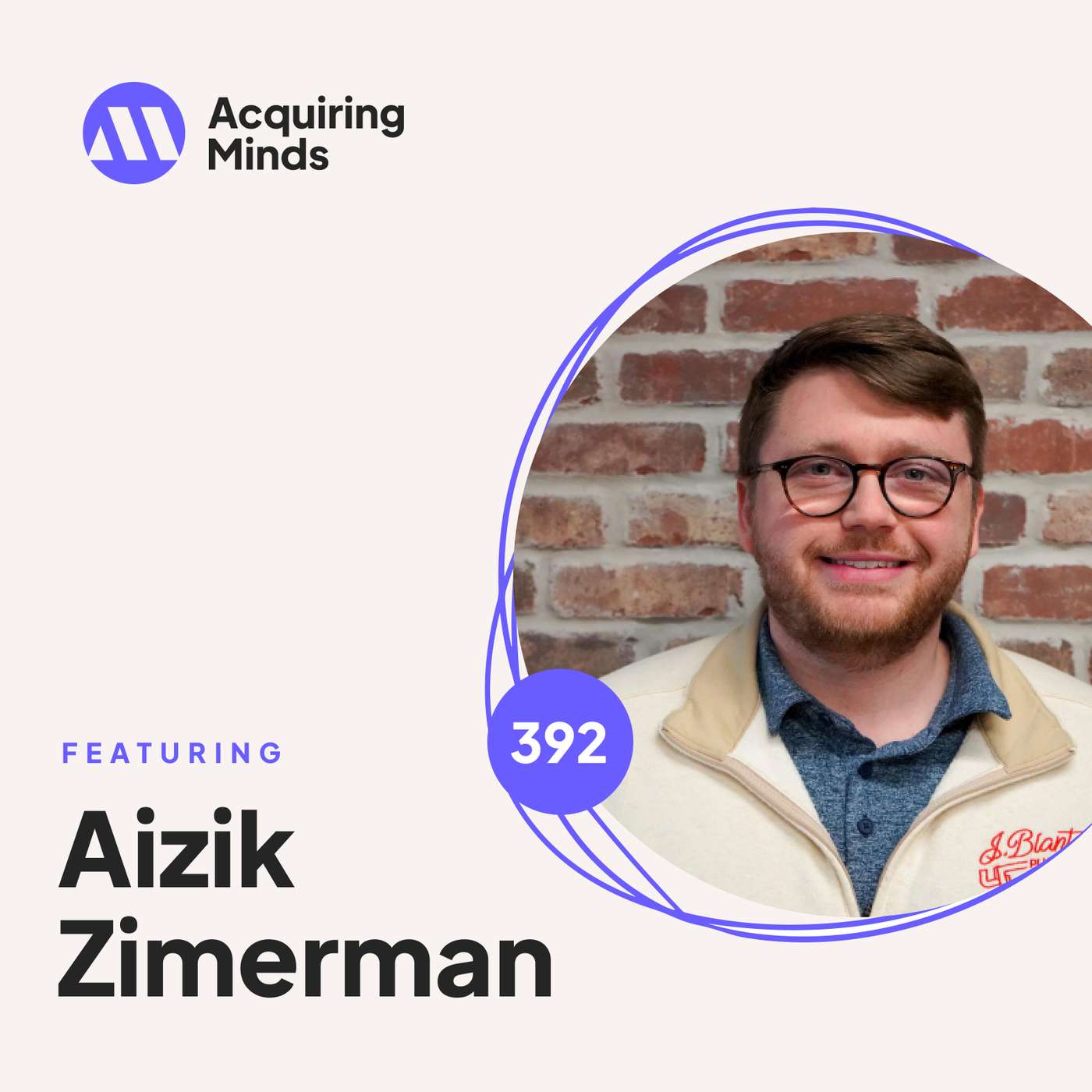
Isaac Zimmerman acquired Jay Blanton's, a plumbing business in Chicago. Isaac intends to spend years, decades maybe, building his life's work in this industry. I thought this vision was compelling, so much so that I talked about it in a recent speech at the Southeastern ETA conference at uva, where I said essentially the following. This concept of Founder Mode is borrowed from Techland, where Y Combinator founder Paul Graham made it famous. The idea is essentially that as founder of your company, resist the conventional wisdom to delegate, delegate, delegate, that you should put great people in management positions, then.
- [00:48]
B
Get out of their way.
- [00:50]
A
Instead, you should sweat the details and be engaged more actively, more deeply than our notion of of what the ideal chief executive looks like. Founder Mode was controversial. It kicked off debate across Silicon Valley. But agree with it or not, it's a useful concept, particularly in eta, where the Holy Grail is often taken to be building the business into one that runs without you. On Acquiring Minds, I too celebrate that outcome. But there is something to be said for pouring yourself into the business you buy, for completely identifying with it, rather than trying to figure out how you can extricate yourself as quickly as possible. You might characterize these dueling orientations as the private equity approach versus the founder approach. As you'll hear, Isaac falls squarely in.
- [01:50]
B
One of those two camps.
- [01:52]
A
Which one resonates with you? Here he is Isaac Zimmerman, owner of Jay Blanton's. Regular listeners of Acquiring Minds know that blending ETA with franchising can be a powerful combination. Connor Gross is an expert on the topic, and he returns for a webinar on the ABCs of actually executing an acquisition strategy within a franchise system. Topics will include how to source off market deals as an outsider to a system or as an insider how franchise diligence differs from independent business diligence the flywheel effect of Franchise Acquisition, Integration and capital raising in exit strategies the webinar is the ABCs of franchise M and a deal Sourcing Diligence and Integration and and it's this coming Thursday, October 2nd at noon Eastern. Link to register for the webinar is right at the top of this episode's show notes or on the Acquiring Minds homepage.
- [02:59]
B
Acquiring Minds Co.
- [03:12]
A
Welcome to Acquiring Minds, a podcast about buying businesses. My name is Will Smith. Acquiring an existing business is an awesome opportunity for many entrepreneurs, and on this podcast I talk to the people who do it. If you ask owners in the ETA and search community which insurance broker provides highest quality work, great outcomes and has a practice dedicated to searchers and acquisition entrepreneurs. One name comes up again and again. Oberle. Oberle Risk Strategies has worked with hundreds of searchers over nearly a decade and is in fact led by a two time successful searcher, August Felker, which makes Oberle a specialty insurance brokerage for searchers.
- [03:58]
B
By a former searcher.
- [04:00]
A
And if you've got a business under loi, Oberle will provide complimentary due diligence on that business's insurance and benefits program. An easy, no risk way to get.
- [04:11]
B
To know August and the team at.
- [04:13]
A
Oberle to take advantage. Check out oberly-risk.com that's o b e r l e-risk.com link in the notes.
- [04:26]
B
Isaac Zimmerman welcome to Acquiring Minds.
- [04:28]
C
Thanks for having me Isaac.
- [04:30]
B
What characterized you to me after our pre call was your vision and your passion. You are building what you put as.
- [04:41]
A
Your life's work from the acquisition of a plumbing business.
- [04:45]
B
So I am eager for the audience.
- [04:47]
A
To hear what I heard the other day.
- [04:50]
B
Let's start with a little background on you please Isaac. Where does it begin?
- [04:55]
C
Yeah, thanks again for having me. I grew up in a entrepreneurial family, so my parents were small business owners in Cleveland, Ohio and did ETA before it was really called ETA or a search fund or whatever, but bought and built some businesses in Ohio and industries that they originally didn't know much about but got into through buying a company specifically was healthcare nursing homes. So I grew up in this entrepreneurial small business family and knew that one day I wanted to buy and run a business but I didn't know how to do that and so I went through my education, studied finance and accounting, got an mba, ended up working in a variety of roles in investment banking, private equity, did some operating at some pretty well known companies on general manager type roles and ultimately felt through that that I was ready to buy a company. Ended up doing a search while in business school, so I went to the University of Chicago for my mba, ended up doing a search while I was there on purchasing a residential plumbing company about halfway through business school between my first and second year and I've been running my company called J Blanton ever since this September. So in approximately 19 days will be the three year anniversary.
- [06:11]
B
Fantastic. What, what a great distillation. Nice Isaac. Let me ask some follow up questions there. First of all, so it was an entrepreneurial family, specifically entrepreneurship through acquisition, although as you put it, they didn't know that they were doing the thing that would be cool 20 and 30 years later. But why did you Decide you would buy a business as opposed to starting one. Was it just because you were modeling your parents or what?
- [06:39]
C
Yeah, I mean, I. I guess it just. Yeah, it was a modeling of my early experience. And I think that kind of got reinforced as I went through my formal education and work experience. You know, I don't really have a lot of, like, novel zero to one ideas. I think of myself more as a sponge. And I love learning, and I love learning business. And I think business is a. Is just a gigantic game. And so I love learning from other business people, whether it's podcasts, books, whatever. And so I felt like one of the things that I'm good at is learning and studying what other people do and copying it and then being able to apply it. So I didn't feel like I was, you know, I'm not Elon Musk. I don't really have tremendous, new to the world, zero to one ideas. And so kind of taking my upbringing and then melding that with my life experience of not coming up with a bunch of zero to one ideas, it just made sense. Like, wow, I could get to be an entrepreneur. I could get to build a business. I saw this through my family and I see it through real world experiences. So I can do all these things that I want to do and be creative and be an entrepreneur and I don't have to go 0 to 1. So it just all, all made a lot of sense.
- [07:49]
B
And so that's the timing of your journey to buy a business. You had worked in banking and in private equity, so the two big traditional finance roles, and then end up at business school. Where along that path did you decide, okay, now's the moment? Because you did buy, as you said, between your first and second year. So you bought while still in business school. Kind of certainly unusual. So how did you think about timing here?
- [08:17]
C
Yeah, I mean, I'd pretty much decided that I was going to do this around the time that I was applying to business school. And so I thought, you know, I can go to business school. I could go to Booth. They have an ETA program. I can use the time of, like, being a student and also, you know, having a little bit more free time and not having the pressure of working, I could take that and sort of formulate my theses, figure out what I want to do, like what would I want to buy, and then, you know, potentially start searching. Although I wasn't so forward thinking that I was going to search. And then kind of coincidentally, very quickly around that time, I decided that I met some People who had bought and built in home services. You know, probably most notably, the first person I really met who has been a friend of mine for a few years now is this guy named John Wilson, owns Wilson Companies in the Cleveland area and met him, actually met him through Twitter, sent him a direct message on Twitter, whatever, four or five years ago and shadowed him and just kind of fell in love with home services through that. And so all this timing kind of collided where I was applying to business school, wanted to do a search, met John, fell in love with home services. And then very quickly I was like, you know, I don't really need any other thes. Theses. I kind of found this one. Like this one checks all the boxes for me. I really like it. And then I just kind of dove in, shadowed more people, and then was really focused on that pretty much from the beginning of business school. And then it kind of grew naturally from there to the point where I decided to start searching spring of my first year and then had by fall. So, you know, within six months I had found and closed on my business and then started running it in September, right when I started my second year.
- [09:59]
B
Wow. John Wilson, you mentioned he's been on the pod and yes, he is. He's well known, particularly in the world of home services as a. As somebody who has started and grown through acquisition, you. And in fact, I think I've seen him tweet, I think when you visited John, I don't know. I know you've now been there multiple times, but I seem to recall a tweet where you were there on site as a searcher, like before you were.
- [10:27]
A
In your business, or maybe you were.
- [10:28]
B
Recently in your business. And so I knew that you guys knew each other and it's kind of. And that was. But that was some years ago, so it's kind of like a look at you now sort of thing.
- [10:37]
C
It's a very, very full circle moment in many ways.
- [10:42]
B
And Isaac, what did you fall in love with, with home services? It's. It's obviously very popular among searchers, among private equity, as we'll get into. But some of that I feel like is just trend. What was it that, that in its essence that you saw that attracted you so much?
- [10:59]
C
Yeah, I mean, there's so many things, like, I just think it's the most fascinating business in that I think of it as like a pure business sandbox where you can do anything and build anything as big as you're capable of building. So, you know, home services, let's take plumbing And H Vac. There's some of the largest industries in America. Plumbing. 100 billion h vac. A hundred billion. That's infinitely sized. They're infinitely fragmented. You know, biggest company to market is typically not more than 1%. So now you have a gigantic market. It's super fragmented. It's Amazon proof, Covid proof, China proof. It will always be needed. Whether people are in the metaverse or not. They still want to use the bathroom and shower and have air conditioning. And so you just have. You're basically insulated from all these dynamics. And so because of that, you can build as big of a business as you're capable of. So from the opportunity standpoint, like, I think that's super cool. Secondly, I've always been, for whatever reason, interested in like consumer marketing and like consumer dynamics. You know, I worked for UberEats at one point. I worked for one of the largest alcohol companies in the world called Beam Suntory. So I've always been like, interested in just like consumer marketing. And so what's really cool about home services is, you know, I think of it as a consumer sales and marketing business that happens to like, then perform a trade. And so you have like half of my business is consumer sales and marketing. And then that sort of like more white collar consumer driven sales and marketing function has to meet blue collar labor. And like, that's how you actually do the operations. So that is also a really interesting dynamic because it makes it pretty complicated, which allows then for you to generate, I think like outsized returns because you have to be able to manage like a white collar consumer services marketing sales function. You also have to manage blue collar labor. So you have this like infinite business sandbox. You have consumer marketing, which I'm excited by. You have a kind of difficult operating situation with two sides to it. I think you can generate returns with. And then like the business kind of has every aspect of business within it, which is kind of cool. Like, we have obviously marketing, we have sales, we have our own warehouse, we have like logistics with a bunch of trucks. We have obviously like accounting and finance because that's inside of our company. So I just feel like it has all of the. Not really stuck just doing one aspect of business. You get to have like all the different stuff that's contained within having like a real world business. So I think that's pretty cool too.
- [13:27]
B
Yeah. Well, I. Two particular things to respond to there, Isaac. First, your. Your sense of a home services business is fundamentally the opportunity to build a consumer brand. That this is a consumer marketing Business. But I'm actually reminded of a recent guest. Ryan Andrews, who bought kind of a specialty paint business for, for Homes, said the same thing. He thinks about his business as a sales and marketing organization first, not a painting business. Yeah, so, so great, great point there. And then the, this idea of market size, of the infinite sandbox. Of course looking at tam, looking at total addressable market is nothing new. That's where a lot of kind of business theses, investment theses begin. But from the searcher's perspective, I'm not sure I've heard, heard it put that way. And the point is that you feel that you could devote your entire career to this and just grow indefinitely for as long as you want, for as big as you can make it. This, this market will support that. And do you, and you feel like that's, that's pretty unique to home services?
- [14:33]
C
Yeah, I mean I wanted to play sort of like an infinite game because I thought that would be the way to make the most money and have the most fun is to do something that I could do for a long time. It wouldn't be capped out by yeah, the dynamics of the market or changes in the market. And so for me, you know, I think you're rewarded the more you do something it compounds. And so I thought that was a big motivation for me was just be able to play a long term game. I don't really know how big a market needs to be. I mean probably like several tens of billions. I mean something where capturing 5% of that is a multi billion dollar company. That's a pretty big market. And so if you capture 5% of the residential plumbing market in the U.S. that's a 5 billion dollar year company, which is a gigantic company.
- [15:19]
B
Yeah.
- [15:20]
C
And so, so yeah, I think if you, if you can only have to get 2 to 5% market share to have a gigantic multi billion dollar business, that's a pretty, that's a pretty sexy industry.
- [15:31]
B
Yeah. Well, now would be a good time to define what these aspirations of yours are. How, how, what are you trying to build here? Either in hard numbers or in whatever qualitative way you want to describe it.
- [15:45]
C
Yeah man, I want to build the largest home service company in the country. I think that if we keep doing what we're doing and just keep getting better, like I want to build a billion dollar company. I think it's possible. I don't think it'll be easy. It has not been easy so far. But again, if we keep doing this for decades, there's no reason we can't get there. So my ambition is very big. And I think, you know, whether it's plumbing, H Vac, other potential services, there are, there's an infinite Runway and there's a couple, you know, plumbing, H vac, electrical businesses that are $1 billion now or close to $1 billion. So they've already shown that's possible. And there's several that are in the multi hundred million S. So even with just those couple services, those couple trades, it's very possible. And so my ambition is, is very high. I've never, I didn't start this to run a small business. I'm really not interested in small business. Small businesses equals big problems. So it's more fun to run a bigger business and have more resources to do more things and to be more creative. And I think the more resources you have, like I view my business for me and like what I do every day, I view it as like my creative outlet. So like I view it as like my version of like a painting. And so I get to kind of do all the stuff that interests me on a daily basis and experiment with stuff. And so, you know, in all the different departments, I like to come up with ideas, steal ideas and then get to experiment with them in a creative way. And the bigger businesses, the more creative and the more you get to experiment.
- [17:17]
B
Define billion dollar, or are we talking, what are we talking? Valuation, revenue. Billion dollars in, in home services revenue. And there already are a few players that size.
- [17:30]
C
There are a few, a few roll ups that are a billion or close to a billion.
- [17:36]
A
Looking for an SBA loan to buy a business. Then meet Pioneer Capital Advisory, your team for getting an SBA 7A loan quickly and at great terms. The team at Pioneer has closed 81 SBA loans in just the last two and a half years, with an average close time well under the industry standard. Founder Matthias Smith and General manager Valerie stash both have 10 years of SBA experience and know the process cold. There are three analysts at Pioneer who build you a lending presentation that speaks the language of the bank's underwriters and gets them to. Yes, two account managers to guide you from underwriting to close as fast and smoothly as possible. And two sales associates ready to walk you through the Pioneer Capital Advisory process. That's nine people at Pioneer, a real team to get you where you're trying to go. New owner of a business. Go to pioneerCapitalAdvisory.com or click the link in the notes.
- [18:46]
B
Speaking of roll ups, Isaac, one of the reasons to not get into this world would be, oh, you know, private equity is super active in home services, particularly in H Vac, maybe less so in plumbing. But right where you kind of set your sights is where we hear that the, that, that there's a frenzy of, of buying these types of businesses, that the multiples are too high and that basically you're too late. If you think about an industry in terms of innings, we are late innings in this world. Respond to that. Why didn't that put you off? Now you bought a few years ago, but even at that time we were already hearing about H Vac being pretty hot or excuse me, and plumbing, I mean, respond to that please.
- [19:28]
C
Yeah, I think it's nonsense. I think it's a crazy, crazy notion. I mean, look again, this industry has been around for thousands of years, you know, since the Romans. So clearly plumbing has always been around. H Vac has been around for a very long time. It will always be around. And because of that there's different cycles of things. So I don't claim to be a historian, but the plumbing and H Vac and electrical segments have been rolled up and disbanded multiple times over the years through booms and busts. And so that will keep happening. And there's always a way like, yes, like maybe what's changed is maybe when you're in a boom, it's like a little bit harder to get into the game and you have to pay up a little bit more to get in the game. Like you can't, you know, swoop a decent company for four times ebitda. But it doesn't mean that if you're not like, okay, you may have to pay six, seven times. But if you have an actual ambition and a plan, paying a couple extra turns on entry does not matter. And so if you plan to build something substantial, whether you have to pay a little bit more on the onset is honestly like relatively irrelevant. And so for me it, I mean, I think it's a perfect time to get in the industry. And I think, and honestly like a lot of the roll ups on, I think honestly just make it better to operate in industry in a lot of ways. Like number one, it professionalizes the industry. So like this is something that honestly I didn't appreciate until I was kind of like far into operating. But home service is a really weird industry in that people are so connected and there's trade organizations, whether it be like a community around service Titan, which is one of the biggest software platforms in the industry, or whether it's best practice groups like nexstar that we're a member of. Like, the industry is very open and connected and like has shared playbooks and people are very willing to share what they're doing because people don't really compete. And people don't really compete because it's a local service and it's infinitely sized. So people are generally not greedy in this industry because it's not winner takes all. And so because of that, like there's always people to learn from, people are always willing to share. So I think private equity like professionalizes the industry, which contributes to more best practices, more playbooks, better talent. So I think it helps operate in the industry. And I think number two, like, you know, a lot of people don't want to work for a lot, a lot of like technicians or like, you know, field employees don't want to work for like private equity firms. I think a lot of the companies that I see like kind of start to lack their soul. So without a actual founder, without a real CEO, like I see a lot of these roll ups which are really just like a disparate connection of brands. Like some of these roll ups have like a hundred brands in different markets and they're all operating as a hundred separate little companies. And like I know some in Chicago that are part of the same group. Like there's, there's a group in Chicago that has four or five, $5 million little companies all in Chicago. So like it's just like, it's kind of silly. They like over acquired.
- [22:28]
B
Why is that silly? Why is that silly, Isaac?
- [22:31]
C
Because they don't like actually have economies of scale for Lethar. Like I don't like, I think that these businesses don't. Obviously there's some purchasing economies of scale, but there's actually not, there's dis economies of scale from having multiple brands, especially multiple brands that close. Like now are you going to have five CEOs of these five, $5 million companies? Are you going to have one? What is he going to split his time between five locations? Is he or she going to like, you could have a bunch of different management teams and leadership teams. Like it actually just makes no sense. Like they end up with different cultures, different ways of doing anything. Now you have to market five different brands in one market. So you have to come up with five times the amount of creative and copy and marketing and strategies. So it has, it's. So I, what I see is a lot of these companies, at least in Chicago, which is the third biggest city in America and has a lot of these companies, I see a Lot of them as like zombie companies where they're not real companies, they're just, you know, private equity firm effectively bought a Google page, bought some employees and they're just generating whatever amount of money they're generating a year, somewhere between 3 and 10 million in revenue and they're just kind of sitting there stagnant and slowly, effectively slowly dying. And I could think of multiple of these.
- [23:49]
B
And how. And how is Jay Blanton your business not a zombie? Contrast it with what you just described.
- [23:57]
C
Yeah, I think it's not a zombie because we're alive and it's run by a real person, which is me. And I'm obsessed with this. And this is what I spend all my time doing and thinking about. And it's not even just me. Like there's other, you know, I would say like a lot of the companies who are part of the best practice group I'm in nextar are similar type companies, although there's just a very small percentage of the market. But I think when you have a owner operator running a business like that embeds a lot of soul into the business. And like if you just come in like people come into our office and they say all the time, I've never been in a plumbing or H vac company that looks like this. Like we have like lounge spaces in our office and a bar and cold brew taps and pool tables and it looks like a, like a modern type company on a plumbing company. And so I think yeah, just like you have life and culture by having people who work there have life and culture and who care about things. And when you strip a company of the people that were there and they nurtured it like a baby and they built it or they care about it that much and you just have like a random manager you hired plus a bunch of like field employees, that's not a winning company. And that's a company that when you are an organization with life to you, you can hire and poach from. And so we hire a lot of people, we interview a lot of people from these like zombie private equity companies. And I'm not saying they're not all zombie private equity companies. Like there are several, like these roll ups I talked about, they have a few flagship brands and those flagship brands are very successful and they are having a lot of success with those. But that's you know, one or two or three out of 30 brands that they have. So all their energy goes into those couple flagship brands and then all these other ones. Yeah, die as zombies or will Die as zombies. Because you can't, you cannot manage 30 brands in 30 different states with 30 different teams. Like that's insane.
- [25:55]
B
And Isaac on the other, on the other end of the spectrum for owners and kind of the flavor of owners in home services. Describe those. The kind of, the kind of typical owner in, in how you're not that either and maybe let me just like tee up exactly where I'm going. When in our pre call you had talked about kind of the type of owner that you are is neither. You know the private, you know you have an advantage that you just described over the private equity owners of some of these roll ups. You also have an advantage over the traditional owners. The, the, the kind of boomer owners of these businesses. What is your advantage over them? Because they have the soul that you say that the private equity roll up slack. They have the soul. What so what advantage over them do you have?
- [26:44]
C
Yeah, I mean I think it's youth and it's energy. There's not very many young hungry founders, operators, CEOs in this industry who are running even like slightly remotely scaled companies. So I'm 32. The average owner of plumbing and H Vac companies is a lot, if they're not private equity owned is a lot older than 32. You know they're probably mostly in their 50s still if they're still running it. And obviously there's a new. Like this is the thing, this industry is constantly reborn. So there's new companies being started every single day. But they start off as one, one or two truck operations. And most, you know the average plumbing company where my business we're about $25 million of revenue now the average plumbing company is probably 3 or 400,000. And you rarely find ones over 10 million. Like over 5 or 10 million. That's a very big plumbing H Vac company. Like there's not that many brands that get that big. And so the amount of greater than 5 or 10 million dollar revenue plumbing H Vac businesses that are owner operated by somebody under 50 years old, like that's a very, I think that's a quite a small group of people. And most right now in the industry, most younger owner operators, founders, CEOs if they're younger, their businesses tend to skew a lot smaller because they just recently started them and in the future those.
- [28:05]
B
Will be bigger and they're, and, and they're probably technicians.
- [28:07]
C
And a lot of, most of them were obviously. Yeah, most of them were technicians. So a lot of them, their ambition honestly like none of them don't even necessarily have an ambition to get over a million dollars. Like if they can build a million dollar revenue business, make a few hundred grand themselves, like that's a really good lifestyle for them and their family and that's like an awesome result. And they do then. So yeah, I think when you look at the pool of people who are committed to building something, are running a business and could potentially have 10, 20 years of Runway ahead of them in this industry, that is not that many people. Like, I've only met a small handful in the last three years of attending a lot of different industry things. I've only met a few people and like one of them is like John and there's a couple others and there's, there's not that many of them.
- [28:56]
B
And so to the listeners who are contemplating buying a business, you still think that there's a lot of opportunity in, in home services or in, in plumbing and H vac in particular?
- [29:07]
C
Yeah, absolutely. I mean, yeah, there's endless, I mean home services, general, it's endless opportunity in sort of the big three mechanical ones. Plumbing, H vac, electrical, they're still endless, endless opportunity. You just have to. People should not do things just because they hear that it's going well. People should do things and choose businesses in their life based on what they're excited about and they think they can be good at and not based on what is flavor of the month or sound sexy. You need to mirror what you think you could be good at with what you're excited about.
- [29:42]
B
I love. Wow, that's a really, really key takeaway, Isaac. And I actually, I actually pressed you on that in the pre call because in some ways that, that boils down to, you know, buy a business and something you're passionate about and good at. Passion meets competence. Right.
- [30:01]
A
And I said, you know, not everybody.
- [30:04]
B
Is fortunate enough to find a passion or find an industry where it's just like, wow, I just can't raring to go and get into that industry. And, and even in your case when I, when I kind of pressed you, you were like, yeah, well I, it wasn't that, it wasn't like I fell in love with plumbing immediately. It was some years of developing and really understanding my, developing my kind of thesis or really understanding myself and where I want to spend a couple of decades.
- [30:36]
A
Right.
- [30:36]
B
So elaborate on that for us.
- [30:39]
C
Yeah, I mean, I think. Well, for me personally, you know, I worked in a lot of different companies, I tried a lot of different things. So my first, you know, whatever amount of time it was Eight years of my career, I tried many different companies and many different types of roles. Whether they were fight, whether it was finance or marketing or sales or general management, whether it was a technology company or a consumer startup or a old financial firm. Like, I tried a lot of different stuff. So I just learned a lot about myself, like what I'm good at, what I'm not good at, what I like, what I don't like. And I think if you're just introspective about that stuff, I think that you can, I think that you can find something that ultimately is, is very exciting. I feel like I finally really reached out the last three years and I had a mentor actually comment on this like a year ago with. I didn't say any of this to him, but I had a meeting with him and he said, you seem a lot more relaxed. Like you seem like you feel like you're on the right path. And it like struck me really deeply. Cuz he just saw that without me even saying anything. And then I thought about more and I was like, yeah, like that is super, super accurate. I mean I'm not relaxed at all in general, but I am relaxed and that like, I don't really wonder about like, am I doing the right thing? What's my future, blah, blah, blah. Like I just, I just do this, this is my, this is my hobby.
- [32:03]
B
It's a wonderful, it's a wonderful transition to have made because I, I can understand that professional angst and going from having that angst to not is really quite a load off and feeling like you just fit in what you're doing. So I think a lot of the, the reason that I, that this podcast is successful because I'm, I'm doing the kind of the same thing. Great. Isaac. Well, one other, two other things I want to have you talk about directly related to just kind of like who you are and this, this whole approach that you're taking to building. Jay Blanton, first is the. You said that you, you don't relate to the ETA crowd, to the search crowd anymore or you don't kind of identify with them. Why?
- [32:51]
C
Because I identify with home service entrepreneurs and I don't know, maybe that's like kind of again, linked to like really loving what you're doing and like becoming obsessed with your industry. But I see so many other people, like they buy a company and they seem to still be so focused on like the searching and buying phase and like not on like the being a CEO and like running their business day to day or like the industry. And that always kind of confuses me because, like, it's. I can't relate to it at all. Like, now that I like buying a company and searching was just like a small time period so I could get to this point and do this. And like now what actually excites me is like this industry and running my business and making improvements every day to all the different areas of my business. That's what excites me. And buying a business was just like the tool to get here. And it was a very small tool for a short amount of time. And like now I'm here and I see so many people who, yeah, are like so obsessed with the buying phase. I don't know, like, this is going to sound like a little controversial. Wrong word. But this is something that like, this is another thing I don't really like. So like, one thing that I was really thinking about in the process of buying a company is I didn't want to do. I didn't want to buy a company and set it up in such a way that I would have to sell it or would sell it in three to five years and then have to find something else. Because what I noticed was most people who did search a lot of like the MBA ecosystem that does search, they basically buy a company, let's say it goes pretty well. After three or five years, they have to sell the company. They make some money, but not that much money. So they still have to get a job or do something. And then they end up either having to like, research at that point and restart or they end up as like something else in the ecosystem, as like an investor. And I just thought that was like, really lame because after three or five years, I feel like you're just getting good at something. A lot of the compounding really starts to go and flow. And like, why, why restart? Like, I'm not restarting right now. That's crazy. I'm definitely not restarting after three years.
- [34:57]
B
And why do you think that is a, A common pattern?
- [35:02]
C
I think because. Well, I think a, like, people raise money and they raise money in such a way where they. I think the traditional like, search deal is to do raise money, run as like a quad, like basically an independent sponsor. And like it has a life expectancy of three to seven years, whatever you want to say it. And like, it's probably set up that way because people don't put that much thought into like, what they really want to do the next 20 years. They just like, are like, okay, I want to be a CEO, I want to make money. This is a path to do it. So let me buy a business, run it, sell it, and then I can figure out what I want to do. But like, it's not really about like building something. And so I've talked to a few people about this, but that's something that I, I really think that much about this anymore. But I used to think a lot about it. Especially like before I bought this company. It was more in like the search phase and talking to people and yeah, like.
- [35:59]
B
And did you always know about yourself that you were not going to want to go that, that path, that pattern of selling after five years, you, you now know that you don't want to do that. But was it always your intention to avoid that and instead go the path of hold forever, build forever?
- [36:16]
C
Yeah, I mean I think that the, again, like the culmination of like thinking and trying stuff for eight years and then deciding to do this, it's like, okay, if I could do this and make it work, like I don't want to have like go through this again. And I would also clarify, like, I don't know that it's a forever hold. It's because I don't want to look like an idiot in a few years of this changes. But it's definitely a long term thing. What format? You know, forever is a long time, but it's definitely a very long term thing. And I'll definitely in whatever format be doing something related to residential services for many, many, many decades. I think we have many decades of Runway here. But, but yeah, it was just like, okay, I put in all this stuff for eight years now. I've been doing. Now like now I especially believe that's not been doing this three years. It's getting easier to do it. I see a path forward for it to keep getting easier and for the flywheel to compound. And it's like I did not want to be, yeah, I did not want to be 40 years old or my late 30s or mid-30s and like restarting my, my effectively restarting my professional life again and having to figure stuff out.
- [37:25]
B
We have captured a lot of this, this phrase that I'm about to share. But do you have anything more to say about founder mode?
- [37:34]
C
Well, so I've, I've like kind of thought about, we kind of talked about it. But like what I think separates what I'm doing and some other people I know from like a lot of these private equity companies. And like I said, I like to study and like research a lot of people and one person who is, you know, obviously an incredible world class entrepreneur and very inspiring is Brian Chesky, who founded and is the CEO of Airbnb. So, you know, one thing that always didn't really resonate with me for years now, especially as like a CEO of this company now, is I feel like there's like a common maxim or like set of phrases around, okay, being a leader means hiring the best people and then like leaving them alone to do their job. And for the last three years running this business, that didn't resonate at all with me because I felt like I had to be obsessed with everything to be involved in all of the details. And that whenever I was involved with the details, that's when stuff would go the best. So the more I was involved, the more I was obsessed, the better everything would go. And that was true across every single area of the business. And so like, I just, but I would always like, feel this guilt, like, okay, I'm doing this, but I'm supposed to be more hands off. I'm supposed to be like, that's what a leader is. And so then like you have this like internal guilt, like, okay, I must not be a very good leader because I need to be like super hands on for stuff to go the way that I want it to go. And then one day I was listening, this was a couple months ago, like Brian Chesky, the founder of Airbnb, did this speech which I think has gone very famous now about like founder mode. And I watched this speech and I was like, wow, this is like exactly what I've been feeling, like completely encompassed by what he's saying. So I can't take credit for this phrase or this idea because he verbalized it a thousand times better than I ever could. But I felt like it so perfectly matched what I had felt and relieved me of a lot of this like leadership guilt that I felt. And now when I see companies, I do think that this is one of the main things when I look at like a successful company that I see in a non successful company, whether this is a small business, an ETA business, or even like public companies, like if you want to take like example of like an elon Musk company versus like a random Fortune 500 company, like, or like Nvidia or like whatever, like these companies that seem to be doing the best and innovating and pivoting and growing, they have this like founder, owner, operator energy inside of them. And I don't think that's like replaceable with a random person you hire. Yeah, and so for me in my very small world, like that's what I see is the difference between what I'm doing and a lot of these private equity roll ups and these random brands and even a lot of the other ETA searchers, like I feel like they themselves are not really owner operators, they're not really founders. They are more moonlighting as doing this and they have whatever reasons of wanting to be their own boss or make money or frankly not even having a clear idea of what they want to do. And I think that is one of the biggest differentiators to me. And if I was going to invest in somebody else trying to buy a business or build a business, I would only invest in somebody that I thought had this founder, owner, operator type energy towards what they were doing.
- [40:51]
A
What do the following Acquiring Minds guests.
- [40:53]
B
All have in common?
- [40:55]
A
Doug Johns, Morley Desai, Tim Erickson, Chirag Shah, Shane Ursam. They all went through the Acquisition Lab, the accelerator in community for people serious.
- [41:07]
B
About buying a business.
- [41:09]
A
But they represent just a sliver of the Lab's success stories. The number of deals across the Lab's cohorts now stands at over 120 with over $300 million in aggregate transaction value. The Acquisition Lab was founded by Walker Deibel, author of Buy Then Build, the book that introduced so many of you to the very idea of buying a business. The Lab offers a month long, intensive, almost daily Q and A sessions with advisors, live deal reviews with Walker, Deal team introductions and an active community of serious searchers. Check out acquisitionlab.com link in the notes or email the Lab's co founder Chelsea wood. Chelsea buy then build.com.
- [41:58]
B
Isaac the conventional wisdom the so the anti founder mode conventional wisdom is that scale only occurs when there is delegation. And so that's why you know, hire great people and let them do their jobs and get out of their way. So two questions. How is it that so so it comes from a pretty rational place this this conventional wisdom. How do you see that now that you're in there and isn't there a logic to that at some point you're not going to be able to be involved in everything to get after you get beyond a certain point. Although of course as you just pointed out Elon Musk and Steve Jobs were were running multi billion the most valuable companies in the world and they were both brought the founder energy and obviously had scale. So where is that disconnect?
- [42:57]
C
Yeah, so this is also I'm shamelessly stealing this from Brian too. Like he says that in this speech and I agree with this, that you have to own the product as the CEO or, or the founder or whatever you are, you have to own the product of the work, meaning the final output, whether that is your marketing strategy or your warehouse strategy or your sales system for your in home professionals. Like, you need to ultimately own how that ends up. And you can't delegate that, but you can delegate execution of stuff. So as you scale, more and more of the execution can be delegated. And then you have to then have control points where you're checking the execution to make sure it matches what you have as a strategy. But like, okay, so if my company is a direct consumer sales and marketing business, I cannot delegate marketing to somebody else in my company. And I never can and I never do. So like, I think about all the marketing campaigns we should be running, I think about all the different areas and ways we should be marketing. I read books about, you know, like right now I'm reading three books at once about direct mail marketing and like thinking about what we should be doing with direct mail marketing and the offers we have and stuff like that. And like that you. I cannot delegate to anyone else now when I come up with some stuff to do on marketing and it's not that my team doesn't give me ideas too, but I kind of ultimately delegate getting leads and marketing to them. So, you know, say I'm reading these books, I'm coming up with ideas for mail and direct mail marketing we should do. Okay, well then I'll have my team help put together the mail. So I'm not the one physically putting the designs on a piece of paper always. I do help like write copy and. But you know, we're sending 40,000 pieces of mail in September and I've been involved, I think about, okay, who are we mailing this to? What are we saying on the mail? How are we going to lay this out? I look at the mail before it goes out. Okay, do I like the way the offer set up? Do I like what the offer says? And if we were a $100 million company, I would do the exact same thing. So I think if you come up with a, like, what is your company? What are the most important things in your company? You can't delegate those most important things. And you need to own that product and have checkpoints for it and then have people help execute on it.
- [45:24]
B
In a home services business, arguably, at least from the consumer's perspective, the final product or the final service is the plumbing itself. Right. How does your founder mode approach square with that? Because you're not able to check that work. You, you know, don't know the trade. I mean, you do now you know how to run a business in the trade. How about that? Whereas. Whereas a Brian Chesky, you know, he. They came up with Airbnb because they actually, like, had one or they stayed on somebody's couch or there's something. I mean, there was. There was. I mean, he had gone through the experience much more directly than in your case, like running a plumbing business. So how do you think about the founder mode as it attaches to the end service delivery?
- [46:08]
C
I mean, that's a good question. I think that our service is not just the end plumbing. It's the consumer experience from start to finish. From when they call on the phone, what is the experience they have to. When the person is dispatched to, when the person arrives, what do they say to. How do they do the diagnostic work that builds confidence in the customer? So to me, actually, even as a plumbing company, physically turning the wrench, and I think actually, like a lot of my peers would agree with that, is only about 5% of the value the consumer gets and the experience they have. And that's actually the most commoditized part of it. So every company in Chicago that's a polling company will install a water heater. If they're relatively professional, they're all going to install it the same way. What you're paying for is that consumer experience from a company that's going to make it easy to schedule, that's going to give you confidence throughout the process in the way they communicate with you to if there's an issue, are they going to resolve it and stand behind it, blah, blah, blah, blah. And I can manage, like, every single part of that because it has nothing to do with turning the wrench. So, no, I cannot check to see if the connections on the water heater were done correctly. But what I can do is I can build a process that scales where I have auditors that I've hired. So a lot of overseas employees, like, maybe like close to 47 overseas employees now. And I use a lot of global talent for, like, enforcing things and for, like, auditing stuff. So I have like, multiple people that audit jobs and things to make sure that, like, stuff happens that it's supposed to. So, like, okay, let's like, just take an example, like excavations. So we have a process where it's a checklist. Like, okay, anytime we're digging a hole, we have to follow, like, all these safety procedures and take all these pictures. Well, I Have an overseas person that audits every single excavation job and make sure all the pictures are on there. And talk to the technician, hey, you're missing your measurement photo. You guys are not in your safety vest. You're missing your hard hat, whatever. And so we make sure that we, like, follow all those things. So what I can do is, yeah, build processes that will help the work and consumer experience be the way it's supposed to be. And the actual wrench part of it, to be honest, is only 5% of, I think, the value the customer is paying for.
- [48:18]
B
These are profound insights, Isaac. Thank you. Let's return to the plot now. We still got a ways to go. Okay, so you've had seven or eight years of professional experience. You decide you want to buy a business. You decide you want to buy business in home services. Home services is the infinite sandbox. You can spend decades there and build something big. You go to Booth University of Chicago's business school and pick us up.
- [48:43]
C
While in Booth, I start searching the spring of my first year. Find quickly. I'm honed in on plumbing and H vac businesses in the Midwest. End up mailing, reaching out to the former owner of Jay Blanton. Sent him popcorn, wrote him letters, ended up cold calling him. One day he answers the cold call and it goes. It just goes from there. Cold calling. If people ask him about searching, think cold calling is the number one thing to do Again, if you're honed in on something, if you're honed in on an industry or an idea, pick up the phone and call people. I don't really believe in emailing. I think that it's not that effective. I mean, obviously, like do it and people will probably respond to this and say that they bought a business, they're emailing. But I think the number one thing you could do is just pick up the phone and cold call somebody. And so, yeah, cold called them and started a. You know, from that cold call 90.
- [49:41]
B
Days later and you got Jay Blinton from. You were. You were cold calling a bunch of regional H Vac plumbing businesses.
- [49:49]
C
Google Maps. Why any. Any plumbing and H Vac business that had a decent amount of Google reviews. I was cold calling.
- [49:58]
B
And so you ended up with Jay Blanton because that was. You found a willing owner. Essentially found a willing owner.
- [50:04]
C
Within an hour. I assessed that it checked the boxes of a home service business I was interested in. And then what were those boxes? Residential focus. So not doing commercial or new construction, just doing residential service and replacement was on was big enough that it had some team, some of a management team, some people there. So it wouldn't just be me running the company. It had you know, 12 years of operating time so like had some longevity to was on. You know this financials have been trending up like it have been growing. It's. It was on service titan. So it was on, you know, kind of the modern technology platform that should be on, which was a very good sign about a lot of things. I mean that's pretty much, that's pretty much it. I just needed that meet a couple people, do a proof of cash and we're ready to go.
- [51:03]
B
Okay, let's get into. Speaking of being ready to go, let's get into how you structured this, this deal because it's pretty unusual. So starting with what were the numbers of the business when you were going through this acquisition?
- [51:18]
C
Yeah, I mean when I bought the business it was doing about 6 million of revenue and about a million of EBITDA.
- [51:24]
B
Okay, and what were the terms at which you bought it?
- [51:28]
C
I bought the business for about five and a half million dollars.
- [51:33]
B
So five and a half million is a pretty full multiple for a company of this size. I assume the answer to that is well I'm going to be in this for decades so it won't be that much of a needle mover over the long term.
- [51:48]
C
Yeah, I mean I think I kind of, I guess like honestly in the scheme of the industry, I mean that's a good deal. Like I think there were comparable companies trading for six to ten times at that time. Like there were other comparable companies that people, private equity firms bought for 10 times, I think 10 times for a.
- [52:04]
B
Million dollars of earnings.
- [52:05]
C
For sure that happened. I mean that, I mean to be honest with you, it's actually slower now then when I bought the business which was more in the zero intra like whatever this was 2022, which was more, I feel like in the free money world with low interest rates, I feel like it was even crazier than multiples being paid when I bought my business. And there were definitely companies very small, I mean h vac companies bought for 8 to 10 times. I even know a couple in Chicago. And so I mean again their math, just like all the math is buy this for eight times. My platform trades for 17, 20 times. So it's accretive. So I actually think because it was a proprietary deal that five and a half times is actually a really good deal at the time for the business.
- [52:50]
B
Great. Okay, good clarification. So the way you structured the acquisition was Pretty unusual. First of all, was there an SBA loan?
- [52:59]
C
I have an SBA loan, yep.
- [53:01]
B
Okay, so there was an SBA loan. There were their investors.
- [53:06]
C
I thought a lot about during my search. How could I structure buying a business that would allow me to do this for a long period of time? And I did that in a couple different ways. First of all, I think a lot of searchers today are using too much debt. So I think that they especially self funded searchers or more independent sponsor type searchers and I think they have this vision of like they need to own the entire company. And so they're going to raise the minimum amount of equity possible, lever up 90% SBA debt or some other debt source and try to run the business that way. And that is not conducive to a long term hold or to running a business. So I knew I wanted for long term and I wanted a cap structure that would allow me to do that. And so I got, I used SBA debt, But I did 65% equity out of the total cap structure. Wow. So it was about 6,535.
- [54:01]
B
Okay, so you used an SBA loan for just 35% of the business versus the kind of 80 to 90 that seems to be common in SBA land or in self funded search SBA style deals.
- [54:13]
C
You.
- [54:13]
B
So that's bringing a lot of equity to the acquisition and then you put a lot of cash on the balance sheet. I don't know if you want to share what that number is, but I know what it is and it's a lot. So you really, really.
- [54:25]
C
Several millions of dollars.
- [54:27]
B
Several millions of dollars. So you several millions of dollars on the balance sheet and then a lot of equity into the acquisition transaction. So, and that sets you up, as you said, very nicely for not feeling under the gun for, you know, heavy debt payments and for now growth. But of course a lot of equity means giving up a lot of ownership. That's the trade, that's the uncomfortable trade. But it sounds like you retained either a lot of ownership and, or at least a lot of control whether or not, you know, you have, you know, whatever your actual share, you know, common equity number is. Can you say more about how you pulled that off or give us more details about retaining so much control while bringing in so much equity to the deal. Yeah, unless the equity was off your, off your own personal balance.
- [55:23]
C
I mean, I used, I used a lot of my money and my family's money so that, that obviously helped out. But what I would say in a general sense is I think that searchers and people could, if they have their end goal more clearly in mind, can structure things where they have more control by the way they search. Again, you don't have to use other people's money to search for a business. So if you don't use other people's money to search, you're going to end up with having the ability to have a more of a bespoke structure and to have more control over the terms. And so yeah, by nature of how much of equity I brought of my own to the table, the fact that I did a self funded search, the fact that I used SBA debt that I personally guarantee, I structured a bespoke deal and yeah, having control over my business long term, to live or die by this was my main thing that I was open about during the entire time. And I was not willing to embark on this long term journey, pour my heart and soul into something and then forcibly by my own, not my own control, have to stop doing it in three or five years. Because I said this earlier like I was not willing as the culmination of all the eight years of work I did on myself and the opportunity I had in front of me, I was not willing to have to restart in a short time period. So I structured everything around that so that I could align myself to pour my heart and soul into this for many years.
- [56:57]
B
And so your, the investors that you had were signing up for a long term for, for a very illiquid investment for sure. When you said that self funded searchers or SBA style acquisitions where it's you know, 80 or 90% leverage does not set them well up for a long term building a business over the long term. Why not?
- [57:26]
C
Because you've sucked all the oxygen out. Like, like you are not going to.
- [57:29]
B
Like because the debt is going to be too heavy to be able to grow.
- [57:32]
C
You're constantly doing too heavy, you're going to have too much fear and too much risk. Like there's been, we've made a lot of mistakes learning this business the last three years but because we've had breathing room, it's given us the creativity to make mistakes, to spend money and to figure this out. And you know, we've basically, you know, sitting on the three year anniversary, we've run rate 4 or 5x the revenue and we're run rate and if we keep up where we are right now, we've 3x the EBITDA. So you know, we 4x the 4 or 5x the revenue, 3x the EBITDA in three years, if we keep going with what we're doing right now through the balance of the year. And so, you know, obviously it's worked out really good so far, but it's all. It's worked out really good with a lot of micro ups and downs. And what's allowed us to have those micro ups and downs is having oxygen and breathing room so that we could invest to grow. So that if we tried something and it didn't work, okay, not a big deal. So that if we had somebody leave a key, employee leave, and we had to take a step back, it didn't cripple us. So, like, do you want to, you know, be a big fish in a small pond? A small fish in a big pond? And I think, you know, it's a lot more fun to run a business with more resources and it allows you to be a lot more creative and do a lot more stuff. And yeah, I would not, I don't know, I would not buy a company. 90% debt. I think that's crazy.
- [59:07]
B
Very important point. So you said, Isaac, you forexed revenue, so you started at 6 and so now you're in the mid 20s.
- [59:16]
C
Yeah, about 20.
- [59:17]
B
You're a million dollars of SDE. You're 25, a million dollars of SD and you've tripled that. So you're now at about 3 million of EBITDA Runway right now.
- [59:25]
C
Yep.
- [59:26]
B
Congratulations. In just three years.
- [59:28]
C
Yeah, I mean, we've got a. I don't really like resting in it because I always feel like at any minute everything could reverse backwards. I think that's like more of a mental illness I have where I'm always paranoid. So I don't really sit in it in like a happy way. And I'm always like thinking about how to move forward and like build more and how to have more of a cushion. But yeah, I mean, things have gone, I guess by many standards they have gone well and are going well. But there's a quote that only the paranoid survive. And I'm always paranoid.
- [60:05]
B
Where do you think you can get in the next five years?
- [60:09]
C
I would like to have $100 million of topline revenue. And I think that in five years from now. Five years from now. And so that would, if we had 100 million of top line revenue, we probably would have somewhere between 15 and 20 million dollars of EBITDA. And yeah, I mean, if we just keep, I think basically from where we are now, basically just have to grow 33% a year. 25, 1, 2.
- [60:35]
B
Oh, only 33%.
- [60:37]
C
It's going to get a lot harder. Yeah, it's five more years of 33% growth of the year. Obviously the, the absolute dollars get a lot harder.
- [60:46]
B
But let's talk about growth, Isaac, because one thing that you said, and I've actually seen you, you've been putting out videos which I also want to Hear about on LinkedIn. In, in one of them, one of your recent ones, you talk about organic versus inorganic. Tying this to our, just the, the segment that we just went through. Part of the reason that you put so much cash in the balance sheet when you bought the business is because you thought you were going to go out and grow a lot in buying up a lot of other businesses. And you now despite the fact that you, that you have this ambitious growth goal of 33 a year, you're off in organic. You're, you're, you're much more in all in on organic, at least for the moment. Why?
- [61:29]
C
Yeah, I mean I think when I actually got into this, I guess like maybe that's kind of goes back to what I said about one of my skills, I guess possibly could be the fact that I am a spongebob and I like to learn and copy stuff. And so as I got into the industry I saw some of the other real operators, like people who are very successful in home services. Again these like founder type owner operators who were, had done amazing things, whether it's Chris Hoffman or Tommy Mello in garage doors. And I saw what they did and for very long period of time, until they got to a hundred plus million, they didn't buy anything. They built it organically and I saw what they had built and I saw the value of those businesses and other ones and I realized that the most valuable, strong, resilient business was one that was one brand, one team, a real company and not a patchwork of brands. So I saw what they did and that gave me that new playbook, so to speak, of what was possible. And so I saw what they did and I was like, well these businesses are way better than the other ones that I've seen people build. They are worth more money, they're more resilient, they're better. That makes more sense to me.
- [62:38]
B
What about the argument Isaac, that you can grow faster with inorganic? I mean there's a, there's a reason for inorganic, that it can really accelerate growth and that if you, like you said, I mean if you bring the kind of this founder energy, this long term horizon that you can build a muscle within the organization to integrate these acquisitions so that they, that it's not a patchwork and that they're subsumed by the Borg, by the Jay Blanton Borg and become part of the, part of the business and part of the culture. That doesn't interest you? Or at least not right now. Or you disagree with, with my.
- [63:15]
C
No, I think. But I think there's a time and place and I think you have to be of a scale where you have the right playbook and you're right ducks in a row. Like when I self assess and I don't know if we're going to talk about this, but this is kind of my same thesis on like doing multiple trades too. Like most people do plumbing and H vac and electrical and we're very unique in that we pretty much only do plumbing right now and we're one brand. But I think you have to like earn the right to do M and A. You have to earn the right to add more services. And so like when I self assess where we are at 25 million, I'm a very harsh critic. I give us like a B or a C in our operational capabilities across all departments. And I think until that's higher, you don't have, you have not earned the right to do that. And so you have to have your management infrastructure in a certain place. You have to have your warehouse systems in a certain place. You have to have your ability to like grow field professionals and technicians and middle managers. And you have to have all of that in a place where you have a playbook and you have control over what you're doing and then you've earned the right to add more services, buy more companies. And I think that's what I saw in, you know, the Chris Hoffman or the Tommy Mellows of the world. They waited until they had enough scale where they could actually impact something and obviously they've now started doing acquisitions and others have and I think those are going well, it seems like. And so I think people just jump the gun. And a lot of times people buy stuff because they have no way of growing any other way. And my thing is like this is not like McDonald's. We're not like a multibillion dollar company company. Like we're a tiny home service company. If you can't organically grow and if you're between 0 and $100 million of top line in a home service business and you can't organically grow double digits, it's just because you don't know what you're doing. It has nothing to do with needing to buy something like you're an ant. We are an ant. And so ants can always grow. You just have to figure out what you're not doing right.
- [65:09]
B
But Isaac, now you're making it sound easy. But of course, plumbing is a very crowded space. I mean, if I put plumbing near me, I'm going to have a bajillion options.
- [65:19]
C
So.
- [65:21]
B
Yeah. Why is it just so straightforward as long as you kind of do it right? What, what, why, what is doing it right?
- [65:29]
C
I think like again, understanding the fundamentals of how your business generates demand. So like one of the most important things is digital marketing. Okay, well, if you're want a home service business, you should probably study digital marketing, build a team that understands digital marketing and put a lot of emphasis on that. So like for the last year and a half, we've like put a ton of emphasis into digital marketing in different avenues and that's built up. You know, I think we're better than most other home service companies at digital marketing and we try a lot of different stuff. And I have a, you know, six person team that does digital marketing. One person in the us, five overseas. And that doesn't mean that we always grow. Like we go through periods of months where we'll be flatlined and then that's just like, okay, why are we flatlined? What do we have to try? What's the new avenue we have to pursue to unflat line ourselves? But I guess, yeah, again we always, I always have the perspective of if we're not growing, we don't have enough irons in the fire, we're not doing something well. So I always try to have multiple irons in the fire at once that I think can, when they hit, they can grow us. So like right now I have multiple irons in the fire of stuff that I think can produce double digit growth for next year. And I'm tinkering them right now so that over the next few. Because right. You know, I feel like we'll have a very good last couple months of this year. We got a lot of good stuff hitting, but I know that I got a 233% next year. So I got to start doing stuff right now that I think could pan off next year.
- [67:02]
B
Isaac, One of the other things, one of the other side effects of private equity taking such an interest in home services is not just that it drove up multiples to enter the industry by buying a business. It also drove, drove up the cost of leads because private equity was dumping money into digital marketing. This this industry became very digital marketing focused and sophisticated as I understand it. So even though you might have this edge against the private equity roll ups, the zombies as you call them, you are going to be competing head to head with them on, you know, the, the, the pages of Google. Has that, has that not had an effect that and, and I'm, I'm just not sure if just bringing a lot of good founder energy there how that, how that plays out. Because, because you don't have to have founder energy to do digital marketing well, meaning these private equity roll ups probably are in a good position to out compete you online in digital marketing.
- [68:05]
C
Yeah. So that's the hilarious thing is they're not. So I think you can apply founder, owner, operator energy to digital marketing. Like there's so many little things that we do in a thousand different ways that we're experimenting with that are not scalable and something that other people are doing that cause us to win in digital marketing. I'll give you an example. And anyone can do stuff like this. What is the most important thing in digital marketing or Google? The number one most important thing is reviews. That's the most important thing. Okay, well what are you going to do to get reviews and what are the best reviews? They're picture reviews from your customers. So what do we do? We incentivize our technicians to get reviews and get picture reviews and we incentivize that by having leaderboards, competitions. Like we're running a September competition right now. If our, if our field professionals, anyone that gets at least 15 picture reviews on Google in September, they get a bonus day at PTO and they get invited to a topgolf event that we're going to have internally. And anyone who gets at least five of those reviews gets invited to the topgolf event. What do we do? Also we role play with our technicians. Okay, well how you do, how do you ask for a Google review? So here's a QR code, you're going to show it to the customer. What are you going to say to get that Google review? And we role play that. And that's the number one thing you need to do to grow in digital marketing reviews. And you need picture reviews. And so we, I realized that, we realized that and we just focus our time on doing that. So most of the time when I hear somebody's not growing, I, I look at what they're doing or I ask them, I say okay, well who does your marketing? How do you do your marketing? Okay, we have an agency. Okay, let me pull up Your Google profile. And I find like glare, immediate, glaring mistakes in it. And I'm like, you have never even thought about this. Like, you've put no effort, effort into actually understanding what you're doing. You're just outsourced all your thinking. So obviously you're not successful if you're just copying what everyone else does, which is blindly working with an agency. And so, you know, I mean, I remember when we, we used to work with a bunch of marketing agencies for digital marketing. And this was a few, this was maybe like a year ago, year and a half ago. And like we were paying like $6,000 a month for SEO and what that included was like five web pages a month or like two webpages a month, like something ridiculous. Well, I hired my own digital marketing team and using AI, we built 5,000 pages in one month. So it's like, why was I paying $6,000 for two, two web pages? Like, there's technology. You could build 5,000 instantly.
- [70:36]
B
Sure.
- [70:37]
C
So it's just stuff like that. Like, I think people like, what business are you in? What drives the needle? And just focus on that. So, okay, this is a digital marketing business, not just a marketing business. It's really digital marketing business. Okay, well, what's the king of digital marketing? Google. Okay, well, what do we have to do to try and win on Google? Well, we need reviews. Well, we need picture reviews. Okay, let's work really hard at sharpening up our Google profiles. Let's try to get a lot of reviews.
- [71:06]
B
Well, I, and I understand that, Isaac. I guess what I would have thought is that every, all the other 50 plumbing companies in Chicago are doing that as well. I mean, there are best practices that even I, as a consumer can tell now when I'm, you know, I'm being asked for reviews every time I interact with any consumer business. So. So I guess the answer is that in home services, these best practices still aren't being used by the, the companies as much as I would have thought.
- [71:34]
C
Definitely not being used. And even more so, I think in most industries and businesses, even when you look at successful companies, at some point, they stop doing all the stuff that at one point made them successful. And they're just kind of successful by nature of like being big and having a brand reputation. And even they fall off of doing the stuff. Like I like, I'm not even going to say who it is, but I pulled up somebody very famous in home services. I pulled up his Google page yesterday for one of his main locations and so on. Like your Google business Page where you have, if you click on any like, service, business, pulling your HP business, one of the sections on the, on the, on the map, the Google my business profile page of the map, it'll say services. You list all your services, okay, water heater installation, faucet insulation, toilet installation, whatever. Next to it you have a box where you can write a description of it. And that is basically kind of like SEO. You want to write a description and it makes it more searchable and more credible. Well, this guy didn't have anything written. And this is a multi hundred million dollar company and this is their flagship location. So I'm looking at that. I'm like, obviously you don't even know what you're doing and obviously you have no one looking at this, but who knows what they're doing? And so that's what I'm saying, like no one. And we probably have a bunch of shit that we're doing wrong too. So that's what, like everyone is constantly doing stuff wrong, no matter how successful they seem.
- [72:55]
B
Yeah, yeah, that and right there is a great point. We're wrapping up here, Isaac, but I want to hear about the content that you're putting out on LinkedIn that I referred to earlier. What is the goal of that? How have you found it? Tell us what you can about the whole strategy there and the experience so far.
- [73:13]
C
Yeah, so I just started making content. It's slightly unnatural to me, but I started doing it again because, you know, I know a lot of people in home services, a lot of people are building content and I just saw the benefit it brought to their companies and to their time in the industry to do it. And so, you know, I figured I'm building this, but you're, you're not trying.
- [73:30]
B
To get customers from LinkedIn content. What, what are you trying to do? Who are you trying to reach and why?
- [73:36]
C
To reach other people who are owning, building, operating and home services, whether they're running a company, want to run a company, or maybe they're like vendors associated with the ecosystem. But like basically people who I think similar to me or like would be interested in some of the stuff that I think about and consume the other podcasts and information that I consume. And so I'm making it just to build connections in the industry, get to know people and build, hopefully build an audience of people that I can talk to about stuff. And I think that if I, you know, from what I've seen from other people who have done it, I think it accrues a lot of benefits to them. Professionally and personally. And so I think if I can keep doing that, like, what, what are.
- [74:15]
B
Some of the benefits other than just a broad network? John Wilson is a good example who has a podcast. It's quite popular, as I understand it. Well, what benefits do you think that he's seeing from that or somebody with, with a platform like that?
- [74:29]
C
Well, I think a. Like it forces him on a more recurring basis to engage with different people around the industry, which he learns from, takes those ideas, brings it back to his company. So I think he takes those ideas and naturally makes him get more ideas and bring them back. So I think that's one thing. I think the second thing is he builds relationships with vendors who want to sell to home service companies. And because of those relationships, he gets, you know, good pricing on stuff for his business. So I think it tangibly benefits him that way. And so I think, I mean, I think those are two main things right there. Like, just get to know more people, get ideas from them. Secondly, I think you could get better pricing from vendors over time if you can help market those vendors and introduce them to your audience. And yeah, I think, see, it's just like, fun to share stuff. And like, I've obviously benefited tremendously. I said I don't really make up stuff my own. I just like, basically, you know, good artists, copy great artists, steal all of my stuff that I. Whatever little bit of stuff I know I've basically stolen from other people in the industry and just like stuck it together like a puzzle.
- [75:32]
B
Isaac, anything that we didn't get to that you wanted to make sure to share with the audience?
- [75:38]
C
I don't think so. This is a good interview. It's very wide ranging. I think that you've gotten whatever ideas I have, you've gotten a lot of them out of me. And I think my only message would be to, from the perspective of somebody trying to search or searching or trying to figure out what to do, I would just be very thoughtful about what you're trying to solve for. Like, what is the life you want, what do you want to do with your time and engineer it around that. And you don't necessarily have to do it in a way that everyone else does it. If you are a little bit creative and think about it, you can shape stuff to what really matches what you want to do. And you should think not in just two or three years time, but try to think in 10 years time. Because the more you do something, and the longer you do something, the better it gets. And yeah, that's my only message. If my message to anyone in home services that happens to watch this is please reach out. I love meeting people, doing shop tours, having people at my company and I'll keep keep sharing more home service content.
- [76:44]
B
Great. Well we'll put your LinkedIn in the notes Isaac Zimmerman Founder Mode Founder Energy Isaac Zimmerman, I love the perspective that you brought bring to eta. I feel like now that I've heard you articulate it so clearly, so forcefully, I feel like it is lacking in our world. So it's really I'm really pleased to to be delivering it to the audience. Thank you very much sir.
- [77:07]
C
Thanks for having me.
- [77:08]
B
Hope you enjoyed that interview.
- [77:10]
A
Don't forget to subscribe to the Acquiring Minds newsletter. We send an email for every episode.
- [77:16]
B
With an introduction to the interview, a link to the video version on YouTube.
- [77:21]
A
And soon key takeaways, numbers and more.
- [77:25]
B
Essentials from the interview.
- [77:27]
A
For those of you who don't have time to listen or watch it, subscribe.
- [77:31]
B
At acquiringminds Co. You'll also find all our webinars there on the website, both those we have coming up and recordings of past webinars.
- [77:42]
A
At this point There are over 30 webinars, webinar recordings, a wealth of information on all the technical nitty gritty of buying a business Acquiring Minds copy.