← Acquiring Minds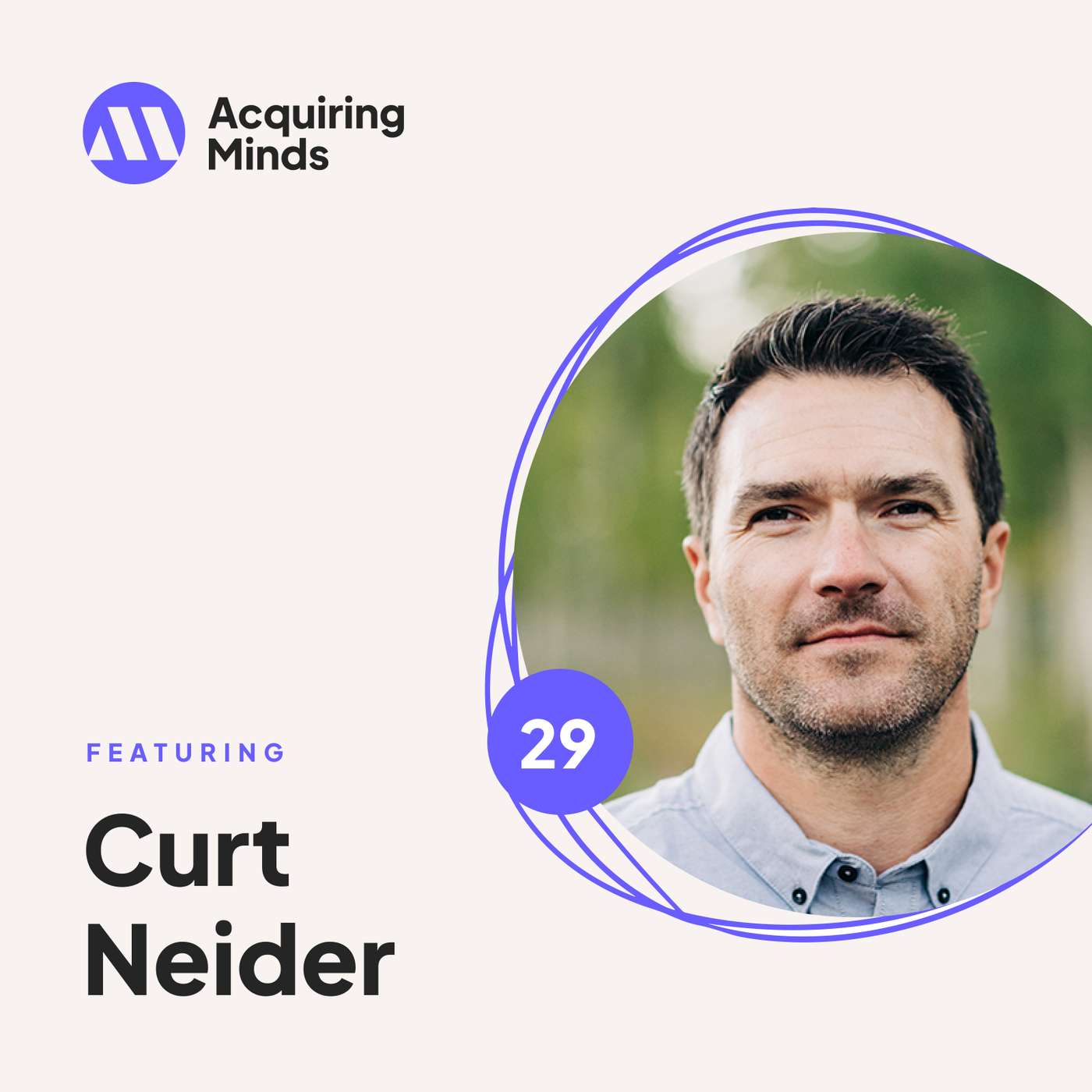
Acquiring Minds
How to Buy a Medical Billing Business
00:45:35
Less than a year after acquiring a $1m medical billing business, Curt Neider is already looking for his second deal.
Loading summary
Transcript163 lines
- [00:11]
A
Welcome to Acquiring Minds, a podcast about buying businesses. My name is Will Smith. Acquiring an existing business is an awesome opportunity for many entrepreneurs. And on this podcast, I talk to the people who do it. Today I'm speaking with Kurt Nider, who, along with a partner, acquired his first company in December, a medical billing services company doing about a million dollars a year in revenue. It's gone well enough in these nine months that they are already looking to do a second acquisition. Like me, Kurt was blown away when he learned about the opportunities to buy an existing business, and he acted on it, and it's obviously working for him in his own words. Here's the story from Kurt Curt Nider, thank you for joining me today on Acquiring Minds.
- [01:00]
B
Thanks for having me.
- [01:01]
A
You and a business partner acquired a medical billing solutions provider, Illuminate Billing Advocates, not that long ago in December, so about nine months ago. And it's gone well enough that you're looking for a second acquisition already. So we're going to hear that story today. Why don't we start with your quick personal background on you. Two or three minutes on your background and what led you and your partner to want to go out and buy a business?
- [01:33]
B
Yeah, my personal experience involves a lot of construction, some real estate development, that type of thing. I've got a degree in construction management.
- [01:43]
A
Okay.
- [01:44]
B
So was a general contractor for a number of years. My experience as a general contractor led me to a relationship and employment with a private equity group here in Salt Lake City, Utah. We brought the chain five guys to Utah. Our first store in Utah was the first five guys west of the Mississippi. So when we started, our first store was like store 200. And by the time we were done, I think there were like 3,000 in the country. When I transitioned out of that position, my family and I made the decision to move to Hawaii. We spent some time there, you know, doing family time and the mini retirement, according to Tim Ferriss. And it was a mini retirement. Geographically, I still needed to work. So I started a business when I got there, which I sold a couple of years later. So that was my first experience. And really I had seen dispositions and have been involved in the sale of businesses, but that was the first kind of one where I personally owned the business and went through that process start to finish. At the same time, as a family, we were looking to transition back to Utah, where, you know, a lot of our family is from. And so I knew I was going to have to either start something, you know, new here or find the right thing for me. So I had been keeping an eye out for a business to buy traditionally or specifically doing what we're told not to do. Right. I was casually browsing here. There's a classified website called KSL.com I would go to Craigslist, but ended up finding this business on bizbycell.com.
- [03:31]
A
What is KSL?
- [03:34]
B
It's just a local kind of. There's a local news radio station here. They've got a TV station and a radio station, but they just happen to have like the classified. Biggest classified ad in the country. I'm not sure why, but they have a big presence. Either way, the wrong place to be looking, right?
- [03:54]
A
And Kurt, why did you. Having started something in Hawaii and sold it and done. All right. Why did you not want to start something again? And why did your attention go to acquiring something?
- [04:06]
B
I'm not 100% sure. Looking back, I would say that I think there's. It's a little bit of maybe kind of experience progress, right? Starting up from scratch is a lot of work, right. It's tiring, there's fatigue.
- [04:24]
C
Right.
- [04:24]
B
That kind of comes from or goes into that. I've been there a bunch of different times. And in my real estate career, I had kind of seen this, like, progression in deal size, right. The first. The first home that I ever bought was like $200,000. I could barely afford it. Came in to do a flip, learned some things, basically broke even. The next house was slightly bigger, but made a decent amount of money on it, right. The next house was slightly bigger, but really everything I could afford. And kind of as you start to progress in your career and your experience, not only does your experience kind of start to steamroll, but also your ability to get a deal done right, get a capital structure kind of formed, and then get the bank to say yes. So this was kind of a similar way, right. In the past, if I wanted to start a business, most of the time I just needed to do it on my own, right? Cash or credit cards and just figure it out and bootstrap as long as I could make it. At this point, I had kind of always known there were things like that out there. I have family members who have sold businesses, that kind of thing. So I knew there were bigger deals out there. On the private equity side, I had seen some deals, but they're really more like family office size deals. So I knew there were these startups that were a lot of work and no money and not the kind of thing I really had appetite for. And then I knew there were These big deals that I couldn't get done. I didn't have the sophistication, I didn't have the gunpowder to get them done. And so I knew there were these little niche businesses, and frankly, I didn't know that I could get one of those deals done. But they were enticing to me.
- [06:17]
C
Right?
- [06:18]
B
I liked the idea of saying, I'm going to skip five to 10 years by buying somebody else's business.
- [06:26]
C
Right.
- [06:26]
B
I Skip the first five to 10 years of bootstrapping and scraping by and come in and pick up a system that's already rolling. It might be somebody who's gotten to the end of their kind of their experience and their willpower and they're ready for somebody else to take it to the next level. It might be somebody who's at the end of their career and just looking to ride off into the sunset. I didn't really care. As a general contractor, I was typically a service provider. We came in and we helped somebody else build their business that they were then going to run forever. But as soon as we were done with that, our project, we were out. We built ourselves out of a job every single time we completed a project. My business in Hawaii was a service provider for hotels, apartment buildings. You know, we did. We did commercial fragrance and scent marketing. It's kind of a niche business. But I started to find joy in helping other people with their business and doing the kind of work that a lot of people don't want to do.
- [07:34]
C
Right.
- [07:34]
B
It doesn't need to be sexy. The less attractive that it is to the everyday person or college grad. It's great for me, right. Types of businesses and this business fit that, right? Medical billing is behind the scenes. I don't think there's any kids who grow up saying, I want to be a medical biller when I get older. You know, it's an administrative hassle for a lot of our clients. And so it checked a lot of the boxes as I. As I was looking. And we really like adding value to those clients, right? I mean, it kind of just fit that niche for us. And it was the right size transaction for me.
- [08:24]
C
Right.
- [08:24]
B
When I go back to that kind of real estate investment paradigm, this was a stretch for me, right? It's a stretch for what I thought I could manage, what I thought I could get financed, you know, kind of top to bottom, fit the excitement stretch for me. You know, you got to. It's got to be something that you're excited about, especially if you're saying, I'm going to roll the dice because if this thing fails, I'm going to be paying on an SBA loan for a long time. So I got to be pretty excited about it going in.
- [08:55]
C
Right.
- [08:56]
B
Um, this fit, it fit that paradigm for me.
- [08:59]
A
Um, what, what excited you about what, what excited you about it? Was it, was it just like. Did you see that the business had a lot of low hanging fruit to improve and value or what?
- [09:11]
B
Yeah. So the multiples were there.
- [09:13]
C
Right.
- [09:14]
B
When I looked at the business and I'd been looking at a lot of businesses and started to get into the buy and build and some of the kind of search funder information that's out there on the Internet, I started to get to know multiples and metrics and that kind of stuff a little bit better. I was looking for something in a two to three times multiple of earnings. And it fit that. There's also like this kind of an altruistic kicker in this business.
- [09:46]
C
Right.
- [09:47]
B
We're in healthcare, but we specifically deal with substance abuse and mental health providers. So our clients in many cases are, you know, kind of a bleeding heart.
- [09:59]
C
Right.
- [09:59]
B
They're a person who's out there trying to help people get better. They're fixing lives, they're. They are saving people on a day to day basis. And what we do can actually be a problem for them sometimes. Right. Because if they don't focus on getting revenue in their own door, then they ultimately can't help that many people. And so there's kind of a, there's this, we're helping make the world a better place upside.
- [10:28]
C
Right.
- [10:28]
B
It's different than air fresheners. Air fresheners was strictly like opportunities. It's sales. Right. It's definitely opportunistic. And it's not to say there was anything that good good that came from it because there's a lot of good. Right. It's an experiential business. But this one, there's, there's, there's definitely people out there to be helped. So it's fun to be a part of that and to make some money along the way to it. And so certainly is, is not a bad thing.
- [10:54]
C
Right.
- [10:54]
A
That's cool. I didn't realize that billing, billing solution providers could, could be, have this kind of like altruistic byproduct if you're kind of helping the right. Helping the right practice.
- [11:05]
B
Yeah. And maybe that's my spin. I don't know. You know, I would think when I think of the doctors that I know most of them became doctors for money.
- [11:16]
C
Right.
- [11:18]
B
And that's okay. I don't have a problem with that necessarily because in order to make money they really have to go out and help people. Right. So I'm not going to pretend like I became. Not going to pretend like we bought this business because I wanted to save the world or anything like that.
- [11:35]
A
Sure, sure.
- [11:36]
B
But it does make it. It's kind of a positive upside, right?
- [11:40]
A
Yeah, yeah, for sure. And so from that to the, to the dirty numbers, what can you tell me about. You said you liked the multiple. It was, I think you said below three. I think you said to something. So can you give me a sense of size, like six figures, seven figures in terms of revenue margins? Anything that you can share there?
- [12:02]
B
Yeah. When I was looking at a business, one of the things that I noticed, and I'm sure you're familiar with this, I'm sure a lot of our listeners are. But as you start to get a lot higher revenue and a lot higher net income, it throws off enough money that it can support a lot more debt.
- [12:23]
C
Right.
- [12:24]
B
Or it's just more attractive to family offices or whatever. As you get really small, those multiples go way down and you can get a lot more bang for your buck in a lot of cases because the business just isn't enough to support someone.
- [12:38]
C
Right.
- [12:39]
B
So for me, my minimum threshold was to say, okay, when I'm looking at businesses, I need something that's going to be able to support the debt service and kind of a practical lifestyle for myself, which at around a million bucks in acquisition price, you're saying you end up being somewhere in the direction of maybe 15,000 bucks a month in debt service based on the model that I was following. And then what's comfortable on top of that is really dependent. That could be. I think most of the banks I talked to, they probably wouldn't take you serious if that number was anything less than say 60 grand. And even that they were going to handicap it. So certainly it needed to be a six figure income. And this business is low seven figure in revenue.
- [13:35]
C
Right.
- [13:35]
B
We're a little over a million bucks. They were before we acquired them. That's. And our multiple was about a little over Right. Around a three times our means.
- [13:48]
C
Right.
- [13:49]
B
So that kind of paints that picture for anybody who feels like doing the math.
- [13:53]
A
And are the margins good in this, in this world, in the medical billing?
- [13:57]
B
Yeah, the margins have been okay. I think we have, I think we are better than average. But it's certainly, I don't know that I'd say they're robust compared to know some, some industries. So one of the, one of the complications that we had is I found this business. I started to kind of build a model around how to, how to finance it. So we did a 80% SBA note, 10% seller note, and a 10% equity injection. Once we got to figuring out working capital, I had intended to just wrap working capital into my original note and had a banker actually coach me through pulling that out. So we did that kind of 80, 10, 10 model on the acquisition price and then did an SBA Express line for all of our working capital, which has been really efficient. So we're happy with the way that structure has worked out.
- [14:55]
A
And the only reason not to do that is just because you're paying a little bit higher interest on the working capital loan. But why did the banker.
- [15:04]
B
If you put it all in a 7A, if you put it all on.
- [15:06]
A
A 7A, the total interest would be a little bit less. Why did the banker want you to convince you to do a separate loan for working capital capital, just to make things clean or what?
- [15:16]
B
Well, there's flexibility there, right? So for us, if you do the whole thing in a 7A, if you pay it down, you can't get it back.
- [15:25]
C
Right.
- [15:26]
B
Once you pay that principal back, it's paid back. And so you kind of are stuck hanging on to cash and paying interest on principal that you could pay off just to have reserves. Whereas with a line of credit, you can kind of treat your line of credit like reserves. So for us, I mean, we minimize our line of credit credit every month, right? Probably, probably weekly, actually, because we just try to minimize that as much as possible because it's still there, it's available when you need it. So it's actually a little cheaper to do the line of credit version both on interest and on fees, because the fees on a 7A are going to be higher than on an SBA Express. So you save in both of those places. So it's, I would say it's a lose on for the banker. Right. I don't think the banker makes money by coaching you into that structure. That's him looking out for your best interest.
- [16:16]
C
Great.
- [16:16]
A
Okay.
- [16:18]
B
The other thing that's a little bit quirky about that deal is I had kind of put that model together, started to reach out and talk to some of the capital, the potential equity sources that I knew was getting really good feedback. I don't think I was going to have any hard time finding the equity that I needed. And one of those individuals who is my current partner is also a cpa. And I put it in front of him and said, hey, double check these numbers for me. They look good to me. But I had a couple of weird things being told from different bankers that I didn't use. And so I wanted to double check their questions. And one of those, which can be confusing for buyers, is if a business is doing their accounting and taxes on different bases. Right. So that was one of the issues that I ran into as this business was keeping their books on an accrual basis, but paying their taxes on a cash basis. So then during the. During the due diligence period, that turned out to be kind of a nightmare because they didn't line up right. And so you had to be savvy enough to line those numbers up anyways, put it in front of him, and he came back and said, okay, you know, not only do they look good, but let's do this together.
- [17:34]
C
Right.
- [17:35]
B
Which is what we really decided to do. And that's really great for us.
- [17:40]
C
Right.
- [17:40]
B
I think in our. Our kind of prior call, we talked about partnership, and there's a cost there and a benefit. And there's no question I'm happy with the decision that I made there. Mike Hansen's been a fantastic partner, and I wouldn't, I wouldn't change that decision. I don't know that it works that way for everybody. So, yeah, maybe we're lucky or blessed, whichever way you want to go with that.
- [18:04]
A
But you didn't go looking for a partner. You didn't reach out to Mike Hansen with a partnership suggestion. He said, this looks like a great deal. He proposed it, correct?
- [18:16]
C
Correct.
- [18:16]
B
Yeah. Yeah, it was his idea. He and I had worked together in the private equity business that I worked in for almost 10 years. I think like seven or eight of that. We were both there. He was the CFO of that organization. So we had a big track record of working together, knew each other's kind of strengths and weaknesses. And he was willing to look past my weaknesses. So that worked out well.
- [18:40]
A
Hopefully your weaknesses are his strengths and vice versa. So there was enough meat on the bone with this business that you could do the SBA structure as you outline the 80 10, 10 and still have enough to pay you both reasonable six figure salaries. Is he full time in the business now or is he not active in the business? He's just an investor.
- [19:04]
B
He is also full time in the business. And I think for both of us, it's probably a step back from what we could get in the market for our skill set. Just Working for somebody else. It is also a step in a direction for us. The current business is not the end game. We would like to grow it. It's certainly an opportunity for roll up or bolt on opportunities. And because of our experience in the private equity world, we also still have a little bit of that background of with the right skills and the right systems, we can run more than one system at a time.
- [19:43]
C
Right.
- [19:44]
B
So we're looking for other billing companies to add to our current mix, but also looking at a couple other opportunities that may or may not come to fruition. And not afraid of kind of going in a little bit of a different direction at the same time for that reason.
- [20:03]
A
Well, I want to get into that. I think it's striking that you guys already feel comfortable enough in this new business that you've transitioned into that you're looking at your next deal or your next thing. But before we do that, I want to understand the medical billing world a little bit more because I feel like I've seen these listings myself on Biz Buy Sell. So your office, your team is mostly remote. It's an administrative business. Obviously you're, for lack of a better word, I mean, you're kind of pushing paper around and you're the interface between a medical provider and the insurance companies essentially. Right. And I guess the patient as well, to a lesser degree. But there's some interaction there. And, and there is licensing. Right. So your staff all have to become licensed as medical billing practitioners.
- [20:55]
B
There's very little licensing for us practitioners. Doctors, care providers certainly have to be licensed. In our industry. There are certifications, but they're not governmental. They're accreditation. Basically there's certified professional coders, certified professional pillars. There's definitely a lot of education around what we do, but no legal requirements to have any of that, which creates a huge spectrum of quality in the industry.
- [21:25]
C
Right.
- [21:25]
A
So how do you find hiring? Is that difficult?
- [21:28]
B
So far it's actually been really good. One of our managers has some HR experience. My partner has a lot of hiring experience. And so they've got kind of a little process that they go through. They've got an assessment that they do as part of that. And of the hiring that we've done so far, we feel like it's gone really well. We're very happy with who we found. And then on that quality control topic, it's not irregular for you to find a care provider whose spouse does the billing because they just need to figure out how to get the money through the door.
- [22:08]
C
Right.
- [22:08]
B
So they're coming From a background where they just want the money, they don't necessarily have any training in it.
- [22:15]
C
Right.
- [22:16]
B
And so there's a lot of places where that certification can add a lot of value even though it may not necessarily be regulated.
- [22:24]
C
Right.
- [22:25]
A
Okay. And would you call this business a recurring revenue business?
- [22:32]
B
Yeah, yeah, I would. So our model is a percentage of revenue. So all of our revenue is based on a percentage of reimbursements that we collect for our providers. So certainly can go up and down, certainly can fluctuate depending on who it is you're working for. In the industry there is some variation as well. So there are some medical billers who work largely with fee for service or cash pay facilities where they're charging the public.
- [23:08]
C
Right.
- [23:08]
B
They're charging individuals for services, they're sending out statements every month, they're doing collections somewhere along those, you know, anywhere along that kind of line. For us in the industry that we're in, most of our clients will collect their cash pay as needed, any deductibles, co pays, that kind of stuff, they'll typically collect that on their own. And we're only liaisoning with insurance companies, so ours is slightly different that way, but in a way that we really like.
- [23:44]
C
Right.
- [23:44]
B
We don't, we don't chase any individuals for, for money and that kind of thing. It's every. For us it's all third party insurance reimbursements.
- [23:52]
A
So yeah, that sounds like that would be a less pleasant side of the.
- [23:56]
B
Business having to debatably they might hate our side, right?
- [24:01]
A
Yeah, yeah, I guess. So basically you sign up an office and then that office, basically some percentage of their revenue is going to you to handle their billing every month and your revenue goes up and down as the office's revenue does. Kind of almost. There's almost a direct correlation. And did you like not knowing anything about this business? Did that concern you when you considered buying it?
- [24:33]
B
Yes, certainly. As I was going through due diligence, I actually became a certified professional biller. So I went through all of the training to kind of get familiar with the nuts and bolts of what was done on a day to day basis and luckily haven't had to do much of that when I got into the business and got to know it a little bit better. The management team, kind of middle mid level management team that's, that's already here in place is just fantastic about what they do.
- [25:02]
C
Right.
- [25:02]
B
They're fanatical, they work really hard and I think in a lot of ways just needed a little bit different support from I don't want to say above, but I think they needed a little bit better support. And so that, to answer your question, that certainly made me nervous. At the same time, in a lot of ways, it was straightforward enough and the training that I went out and got was enough to reassure me that it was the kind of thing that we could handle.
- [25:32]
A
Okay, and did you envision adding value to the business and growing it, or was it kind of buy and hold?
- [25:45]
B
Yeah. So for me, growing it is always upside. But when I'm. When I was looking at deals, I was always hedging against that, right? Every deal I looked at, I was saying, okay, if I buy this and it, you know, if it makes 50% of what it does now, am I still going to be okay?
- [26:04]
A
You know, so you protect your downside and you. And, you know, the upside is a nice to have, but not part of the expectation of when you buy, when you bought this business.
- [26:16]
B
Yeah, yeah, yeah. We try to kind of keep that in the blue sky realm.
- [26:22]
C
Right.
- [26:22]
B
I don't, I don't want to make bets on, on blue sky. So what we've been lucky to do is come in and especially with my partner being a CPA and adding some systems and processes on our, on our software side, been able to do two things is really when we came in from the beginning, the first thing that we started on really, and we hit really hard was to say every single one of these claims, right? Everything, every single one of these claims that comes through for us is almost like a sacred responsibility to make sure that it doesn't disappear, right? Because it's, on the surface level, it's just revenue for one of these facilities, right? It's just money. But the reality is there's a patient on the other end who's getting careful for this, right? And insurance companies have provided a policy where they've guaranteed coverage for this care, and an individual's been paying against that, right? And so for that claim to get lost, for it to not get paid for whatever, to me felt like really we had a moral responsibility to make sure that there were no leaks at all in our system. So we started with that and we hit that really hard. And then as you start to work through that, there's kind of some snowballing effect that comes along with it, right. As the system gets better, our employees, stress goes down, their job gets a little bit easier, everything gets a little bit easier to track, and you can start to give that information to the facilities and your clients so that they have more transparency into where those claims are, the efficiencies there, and all of that kind of stuff. So we hit that, and I think we feel like more of the upside has really been recognized on that side as opposed to the marketing side. We feel like we've been successful in implementing some efficiencies that we're really happy with.
- [28:29]
A
You basically operationalized tracking all of these claims, whereas before each of your billers did it their own way, it was maybe less, more siloed. Like people didn't, you know, this person is working on these claims, but the other person couldn't tell you anything about where those claims are. Just each person had their own little fee of their claims they were working on. And so it almost sounds like a CRM for tracking claims through kind of a pipeline.
- [29:02]
B
Yeah, it's certainly similar, and there's a lot of different software products out there that are available to do that. One of the trick. One of the challenges that you run into is it's one thing for everybody in your organization to run things the same way. If ever your clients, their business a different way. The inputs are not the same.
- [29:21]
A
Right.
- [29:22]
B
So you've kind of got to sell the value of, you know, kind of this operational structure downstream that way as well.
- [29:34]
A
Okay, so let's. Let's pivot a little bit just now to the fact that you, you know, you feel like you've executed this transition successfully. You've. You've improved these at least some. Some of the efficiency with what we just discussed, and now you're looking at your next thing. So tell us more about that. You said maybe another medical solution, medical billing provider, maybe something else. What. What are you thinking? I mean, I have to say, Kurt, of all the people that I've talked to, I think seven months or. Where are we? Nine months is a record in already looking for a second deal. We were talking offline about that. I should look for people who have had failures when they've acquired a business and have them on as guests, which I agree with. But your story is kind of like the opposite. It's like, okay, that was easy. Nine months later, where's my. I'm going to go do another deal now. So disabuse me of that or tell me no, I'm right. It really is that easy. Or was that easy for you at least?
- [30:38]
B
No, I certainly would not want to sell that. It's been easy. I think one of the things that was a value to us especially is we came in with kind of a team mindset from the beginning, right? We came in with a partnership with multiple sets of skills and I think there are certainly there are major things that we've done in the last nine months that had I come in on my own, I would not have been able to do or would have had to outsource at great expense. That would have been a much bigger challenge.
- [31:16]
C
Right.
- [31:17]
B
And still may not have worked. So I think some of the, some of the credit for that would have to go to the team. Right. I think we've had, you know, a little bit more bandwidth in order to be able to take some of those things on our team has the team that was in place before we came on also has been very responsive. They've been awesome. I don't think everybody gets a reception like that and our clients are the same way.
- [31:44]
C
Right.
- [31:45]
B
So I certainly wouldn't want to pretend like it's been easy. I certainly wouldn't want to pretend like there have been no toes stubbed along the way. Like I say, marketing is a challenge. That's something that we're still working our way through and trying to figure out how that part of the business can really be accelerated. And in some ways it's catch 22 a little bit. So it would be easy to say, oh, this has been so easy and such an easy success, let's go do another one. The other side is to say we did come in with a team.
- [32:20]
C
Right.
- [32:20]
B
And so that changes some of the metrics to where we're, you know, we're in a position where we're saying we, we need to do more.
- [32:29]
C
Right.
- [32:29]
B
We need to take on a little bit more in order to support the platform and support, you know, our team.
- [32:34]
C
And.
- [32:37]
B
Kind of keep us interested in the business and where we're headed.
- [32:41]
C
Right.
- [32:43]
A
Okay. So what do you think it's going to be another, expanding the current business, another acquisition within medical billing or something outside?
- [32:52]
B
We would love to do that. That also has turned out to be a bit of a challenge. Using this as a platform for roll ups and bolt ons was very attractive to us early on. Still is.
- [33:05]
A
I think that's where I found you on Search Funder. I think you were asking if anybody has a line on a deal for, from another medical billing company for sale. Go ahead.
- [33:15]
B
Yes, certainly keeping an eye out for those and a lot of the kind of search funder strategies and the buy and build strategies really help for that.
- [33:25]
C
Right.
- [33:26]
B
Because like you said, you see medical billing companies online for sale really all the time and it's rare that you find one that hasn't already been sold. Which is a little bit of one of those frustrating tactics that brokers tend to use of leaving a listing online for a long time after it's already sold. But they tend to go pretty quick. It's a competitive marketplace. And so that's, you know, those types of acquisitions are certainly something that we're attracted to. Over the nine months, last nine months, have had multiple of those conversations, you know, with either sellers, potential sellers, future sellers, you know, and sometimes it's timing, sometimes it's, you know, does it. Is a child going to take on that business at some point in the future? So certainly interested in those, but they've been very competitive so far.
- [34:29]
A
How were you able to get seems like a good multiple, a good deal on Illuminated, if this is such a competitive space?
- [34:39]
B
I think it's a little bit anomaly. I don't know that I would say it was like a foreclosure sale.
- [34:47]
C
Right.
- [34:47]
B
It wasn't a fire sale. We paid pretty close to market on it, but at the same time it was unrepresented. So it was sitting on a website but not being pushed by a broker. I don't think they were doing any of the broker networking type stuff that would have needed to be done in order to add value there as a broker. Right. So I think both the seller and we, you know, cobbled together, I think we got to keep some of that kind of margin.
- [35:18]
A
Yeah.
- [35:21]
B
And then as we're looking at other opportunities, you know, Mike and I have varied experience and so that, that leaves the potential opportunities that are out there are not limited to just what we're doing right now. And there are some things that potentially could work together kind of hand in hand or be just completely different businesses and that would be okay. The other thing that's nice is not that this is specific or accurate to our current situation, but as we've, as we've gotten to know the SBA model, as we've gotten to know kind of the acquisition climate, it's fun to kind of take some of our other previous experiences and make the analogies there.
- [36:08]
C
Right.
- [36:10]
B
There's the. In the real estate world, they have this brrr model. I don't know if you're familiar with that. That's the kind of build, rehab, refinance, repeat model, which is the. A lot of single family home investors use that In a lot of commercial and business finance, the multiples and the loan to values and that kind of stuff don't really line up with real estate, but with SBA size deals in A lot of ways there's kind of some analogies there that work out well.
- [36:45]
C
Right?
- [36:45]
B
And this fits that category of hypothetically, you can buy a business with 10% down, let the business pay itself off and then sell it and move on to the next one, or continue to run that business forever. If you let it pay itself off, then you can still buy another one, that same kind of structure. And so not to say that we know where that direction is going to take us, but there are opportunities, right? One kind of altruistic opportunity could be to say the banes of the world would just buy it and strip it down and sell the parts. A lot of private equity companies would say, okay, we're going to buy it and we just have to go some multiple of what we're doing now before we sell it in three to five years. And there's room in this industry to say, okay, well, what if we buy pays itself off for a while once there's kind of some meat on the bones, what if you turn around and sell it to somebody else who is in a position to gain some value from the business? And what if that buyer is the employees?
- [37:57]
C
Right.
- [37:59]
B
The business that we're involved in fits that category. There's some great employees in it and potentially down the road that could represent a really meaningful opportunity for them to recognize some upside.
- [38:11]
C
Right.
- [38:12]
B
So I think what we like about the model in general, the capital structure model, is that there's opportunities there, right, Both for us on the buy side and on the sell side.
- [38:27]
A
The fact that you guys are out there looking for another business and kind of just what you described is you have a lot of different directions you could go, a lot of different options. That tells me that you both could see yourselves stepping out of the. Out of the business, out of illuminate that you've acquired and that it would continue to operate. Am I. Is that correct?
- [38:48]
B
Yeah, potentially.
- [38:50]
A
Because for so many SBA buyers, they are buying themselves a job and that's what they intend. They intend to be the CEO for a while longer than nine months and really run the business, grow it, refine it, et cetera, like you guys are doing. But it sounds like you're already in a place where you don't need the business, doesn't need you. And is that because of things you've put in place, or was the business already kind of self running, self operating when you acquired it?
- [39:23]
B
I wouldn't say that necessarily. I don't think the intent would be to step away yet or soon. We certainly would still like to stay involved. And I think there's. That it goes back to that there's two of us, right? I think, you know, one of us can always stay the CEO and the other one can be the CEO of the other one or however that works out. We certainly like to stay involved, but have more bandwidth, I think, than kind of your typical, you know, sole proprietor, buyer, or however you want to, you know, title that role. But, um, it is to. To your question, though, it does go to the value of buying an existing business.
- [40:09]
C
Right.
- [40:10]
B
I think that's one of the problems that a lot of people who start a business from scratch, you know, run into is it's kind of the E. Myth paradigm. I don't know if you're familiar with that book, but, you know, they really have the. Have the. Have a hard time of letting go of, you know, certain reins within the company. And when you come in secondarily, it's a lot easier to do that. You know, you're not emotionally attached to some of the roles or details in the business, which can be. Can be, I think, a little bit of a blind side. But as you know, as long as you're aware of those and looking for them, then it doesn't need to be a issue.
- [40:47]
A
Your experience going through the acquisition of a company, a small company using an SBA loan with a partner and now looking for a second acquisition, is there any lesson that jumps out at you? Anything that you'd advise somebody yourself a year ago or a year and a half ago that you did wrong or could have done better, at least.
- [41:08]
C
I.
- [41:08]
B
Don'T know if something that I. I certainly don't have any regrets, and I'm trying to think of things that I would do differently. I'm pretty happy with the way that worked out. I think there are a lot of pitfalls in the financing element of buying a business. I think it's really important to get connected to multiple specialized bankers early on in the process. So that's something where I feel like we wouldn't go back and do that differently. It's a problem that I hear a lot of people have and.
- [41:49]
A
Sorry, what's the problem exactly?
- [41:55]
B
In that you don't borrow money from the sba, Right. You borrow money from a bank. And every bank has a different appetite, they have a different specialty. And if you walk into the same bank where you got a car loan or you've got your mortgage and ask them for an SBA loan, you're not going to be happy with the way that turns out, right? So whether you're finding somebody on Search Funder or one of those arenas that are specifically geared toward acquisition, small business acquisition, you really just need to find a bank specializes in SBA products, SBA acquisition loans, because it's even different within the 7A world. You can't just find an SBA 7A specialist, because they may. I've got a very good friend who I grew up with who would be the first person I would take a loan to who has done sba loans for 20 years. And they don't touch anything that's not real estate.
- [42:54]
C
Right.
- [42:55]
B
They're only doing real estate associated loans. And so it really just comes down to finding that specialist who can help you kind of run the bases. So that's something that I would certainly counsel. But I think we got lucky on that. I think because of my familiarity with Search Funder and spending time in the arena, I just happened to stumble on it. So shout out to CIBC bank and Colin on that one.
- [43:23]
A
Colin at CIBC Bank.
- [43:26]
C
Yeah. Cool.
- [43:28]
A
Kurt, this is great. If people have questions about the medical billing world or acquiring a business, or acquiring a medical billing business, how can they reach you? What's the best way?
- [43:39]
B
LinkedIn. Yeah, so it's just Curt c o r t nider n e I d e r on LinkedIn is probably the easiest way. I'm on there too often.
- [43:50]
A
Okay. Or Search Funder, which is where I found you. Everybody listening to this podcast should be on Search Funder and learning and meeting people. This is great, Kurt. Thanks for the time and congratulations on having your first acquisition be so successful that you're ramping up for your second one. And when that happens, I want to have you back on to hear that story.
- [44:14]
B
Of course, of course. Thanks for what you're doing. I think the educational tools out there, like what you're doing, just open a ton of doors. I think they're a huge asset to, you know, people who are poised to be able to do what you and I are doing or looking at doing every day. And it just only takes a little bit of explanation for, I think, for people's minds to really be blown.
- [44:37]
C
Right.
- [44:37]
B
There's huge opportunities out there, and I don't know any of the stats off the top of my head. I'm sure, you know, you guys, you probably see them all the time, but just the amount of kind of wealth that needs to change hands, you know, in the next 10, 15, 20 years, when it comes to business ownership is just. It's insane.
- [44:56]
C
Right.
- [44:57]
B
So, yeah.
- [44:58]
A
And then when you combine that with access if you're fortunate enough to be in the US with the sba. When you combine it with the ability to get such compelling financing, it's. It's really a very strong opportunity. It certainly blew my mind and set me on this path, so. Couldn't agree more.
- [45:15]
C
Yeah.
- [45:15]
A
Appreciate what you're doing, Kurt Niter. Thank you, sir. All right, talk soon.
- [45:19]
C
Thanks. See you.