Loading summary
Transcript135 lines
- [00:00]
A
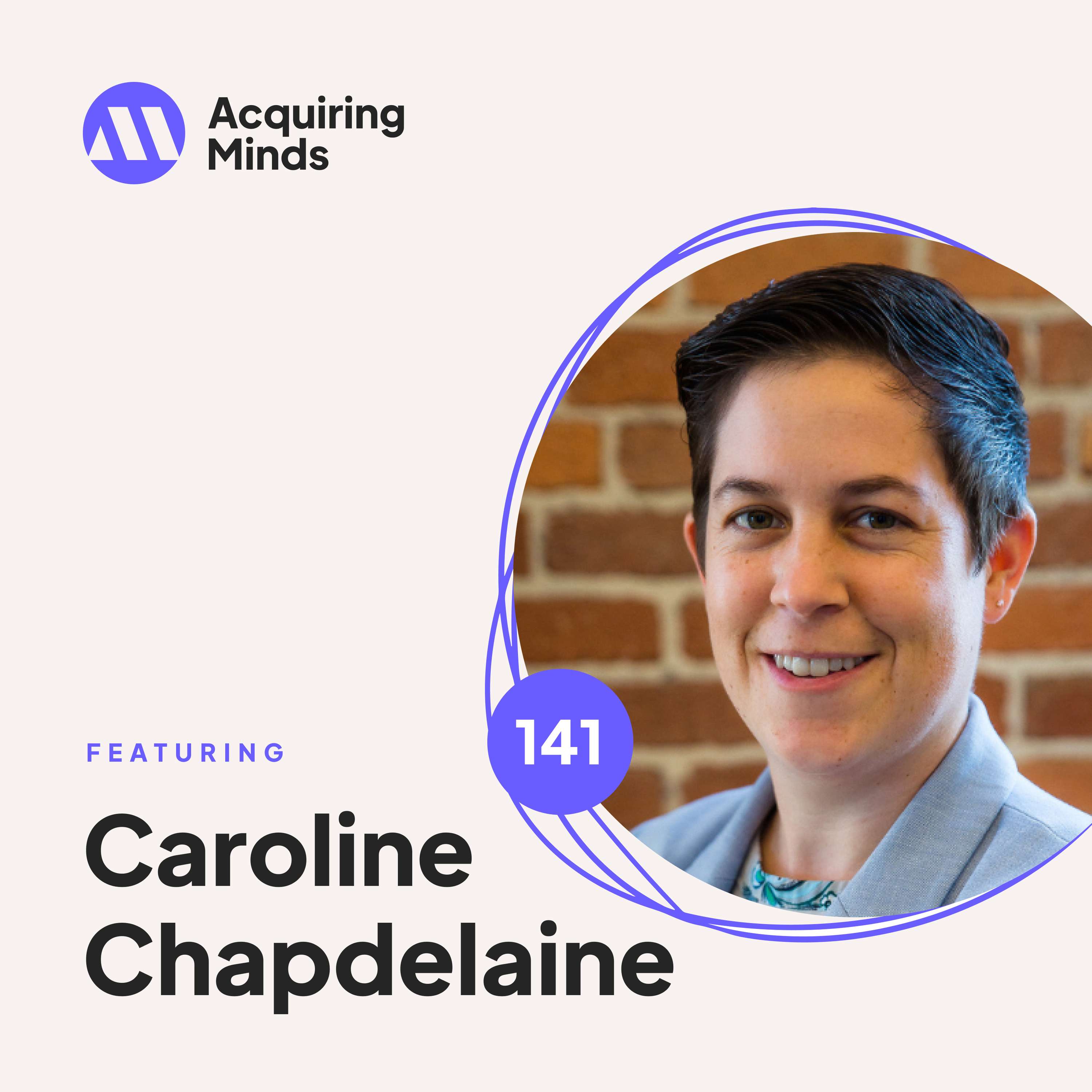
Caroline Chapdelaine bought a defense contracting business.
- [00:04]
B
In October of last year. This is a business that manufactures a.
- [00:09]
A
Piece of technology designed by a team of scientists.
- [00:12]
B
Caroline, very sharp, but not a scientist.
- [00:15]
A
Is now the CEO and operator of.
- [00:17]
B
This science heavy technical manufacturing business.
- [00:21]
A
It's a really interesting story and includes themes that Acquiring Minds hasn't touched on.
- [00:26]
B
In other interviews, like defense contracting, an enormous industry, but one you don't hear about much in our world of buying.
- [00:34]
A
Businesses and buying a carve out that is a larger business selling off one of its business units and the benefits of buying an asset heavy business. Searchers typically prefer asset light. These first six months of ownership for Caroline have not been easy, much of.
- [00:52]
B
That attributable to the fact that this was a carve out. There was a scary cash crunch and.
- [00:58]
A
Consequently some dark moments. Moments that Caroline, a veteran, says were more stressful even than combat. As of now, things are looking much better and I hope you'll listen closely to how Caroline navigated those dark moments both practically and emotionally. Here she is, Caroline Chapdelaine, owner of Northstar Photonics welcome to Acquiring Minds, a podcast about buying businesses. My name is Will Smith. Acquiring an existing business is an awesome opportunity for many entrepreneurs and on this podcast I talk to the people who do it. You already know that business owners are making amazing use of virtual assistants, often based in the Philippines. And while virtual assistants are helpful, virtual professionals are transformative. More Staffing is a boutique agency that hires a players in the Philippines not for simple tasks but for deep competency work. Think operators, supply chain managers, controllers. More Staffing de risks your engagement with a 12 month guarantee to you and they provide coaching for six months to their talent. When an engagement begins, that means your hire is coached in the background, no additional cost to you, so that your working relationship flourishes and is as successful as it can be. Global staffing is increasingly the norm and building the muscle within your business to take advantage of it will be crucial.
- [02:39]
B
In the years ahead.
- [02:40]
A
Speak with More Staffing about the pool of capable affordable managers they can connect you with. Check out MoreNow co. That's MoreNow Co.
- [02:53]
B
Caroline Chapdelaine welcome to Acquiring Minds.
- [02:56]
C
Will Smith thanks for having me.
- [02:57]
B
Caroline. You wrote me saying since buying this business I have had days more stressful than my combat tour in Afghanistan, but I am still happy I did it, exclamation point. That was a great lead doing my work for me. Your acquisition is unusual among my guests in that it's a carve out meaning you bought a business unit from a larger company. It's also in the defense contracting space. I haven't had anybody in that industry yet. So we're going to hear all about that and much more. But start us off please, Caroline, with a little bit of background on you.
- [03:36]
C
Okay, thanks, Will. So, born and raised, Albuquerque, New Mexico. I commissioned out of the University of Colorado at Boulder as a U.S. military intelligence officer for the U.S. army. And I spent my first tour in Korea, some time in Thailand before coming back stateside to Washington where I met my now wife and she was in the service too. We ended up going to Afghanistan together for one of our combat tours. And when we came back we both had finished our service for the army. So we left. We traveled for a while, we were vagabonds in Alaska and New Zealand. And then we finally came back to where we are now, which is Salt Lake City, Utah and got our now adult jobs, landed in corporate America. I ended up in the defense world working for a few different the major prime companies. Orbital, ATK, Northrop Grumman, L3Harris, doing a whole bunch of things, operations, supply chain, all which kind of gave me the foundation for what this business we're going to talk about is. And in about 2019 or 2020, I was accepted to Wharton for the EMBA program which was an amazing opportunity, great education and it exposed me to ETA. I like many MBAs, went in knowing I wanted to do something entrepreneurial and only thinking there was the startup way and quickly finding that I am not a startup person. Although ironically enough this company ends up being sort of a startup esque thing. And so finished Wharton and started my search back in at the end of 2021 and then finally landing this company last year.
- [05:16]
B
Awesome. Caroline. Just higher education gets beaten up a lot these days. And, and you know, I was taken with how when when we spoke on the pre call like you thought Wharton was amazing and Wharton of course is one of the most illustrious business schools on the planet. I just like hearing, you know, people speak positively about, about the, the, the fancy schools rather than always kind of putting them down. Even though I have plenty of guests on, on the pod who went to the fancy schools. Just share with the audience your history at Wharton. What your experience at Wharton.
- [05:48]
C
Yeah, sure. So I came up through like the Albuquerque public school system, so I never really thought I belonged in an Ivy League. I think I tried for Yale and definitely got shot down for undergrad. And, and so when I was accepted to Wharton, I thought at the time, and I still think that they're probably not actually going to give me my degree. I am not worthy. But I got there and find out. Many people have this self doubt about themselves. Many people come from all walks of life. It's not all silver spoon folks. Some from my background. A lot of great veterans were part of the cohort. And not only is it a collection of great people who've done amazing things with their lives and can teach you so much about different industries, but the education itself really was for me huge. The professors are world class. They not only teach you the concepts, but they're really ingrained in each of their industries. And so they understand the ups and downs of what's happening in business day to day. They're not just stuck in research papers. And so you can go talk to them after class and walk through the problem you're having in business. Because I was part of the executive mba, this allows you to stay in your work and then go to class two days out of every week. And this is super helpful with the cohort because that means you can go apply whatever you learned in class that day for the next couple weeks, try it out, see what breaks, bring it back to class. Challenge the professor with, hey, you said this is how it's done. Why didn't it work? Which makes such an interesting conversation with professor and the other students. And so for me developed so much more knowledge than I ever knew I was missing.
- [07:24]
B
That's great. Thank you. And then how did you all choose Salt Lake?
- [07:28]
C
Yeah, well, my wife's family is from here. She grew up here. My heart's still in Colorado. And so we both decided whoever got a job first applying to our respective states, that's where we would stay. And she won out. And ultimately it's been wonderful. Don't tell your audience, but Utah is such a cool place when it comes to skiing or mountain biking and everything else. So over time I'm, I'm grateful that my wife was faster at the draw.
- [07:55]
B
Okay, Caroline, so you learn about ETA at Wharton and you. But you both get jobs and end up in Salt Lake. And so how does take us from there to this, the notion that you'd buy a business and this particular opportunity that you did go.
- [08:13]
C
Yeah, so like I said, I was still working in the corporate job while finishing out Wharton was. Once I took the ETA class with Bob Chalfin, it became clear that that was the only future for me. And so I, you know, like many of us who end up in eta, started gobbling up all the resources out there. The Stanford study, the Harvard Book, I went to Sam Rosati's Tampa Bay collection of ETA Education, which was very cool. And as I learned more I figured out I just needed to jump in Headfirst. And so I went about this search self funded searcher, still working, thinking I was going to do what I had thought was the very typical way of find a business, get the SBA loan and then make millions and get to brag about it. But things don't quite work out that way. This particular business, I ultimately ended up buying it with two partners. One was a former Wharton classmate and another was working as the head scientist of this spin out that I ended up buying. And I had actually done some consulting work for them about a year prior before this buyout option came up. So we all knew each other sort of in spring of last year they approached me and said, hey, we want to spend this out. The parent company needs to get this little defense company off its books because parent company is a biomedical company, it doesn't fit their portfolio. So you think you want to buy it out. And I was on the surf. So absolutely. And you know, full steam ahead, started looking into all the usual things that we're supposed to do when we buy out the business, right? Get the LOI written, go secure the SBA loan. And one of the first interesting snags in this was I called Lisa at Live Oak, who's popular for this community, and explain to her the situation, like, hey, I know this small photonics business. It's got great technology, it's got good customers, we're spinning it out of this parent company. And she stopped me down my track. She's like, look, spin out. We call it a carve out or a division of. She said most banks won't touch this because essentially what you're doing is you're going to do a startup. And to me, in my head I didn't think so. But now looking back, I very much understand why a bank would view it this way. When you pull a spin out out of a parent company, you lose all those infrastructure parts that you take for granted, like it hr, just the day to day basics. And while those aren't necessarily hard to re establish, it's one more thing and it's one more cost. And so after that conversation with Lisa kind of, you know, tried a couple more banks, this isn't going to work out. And then fast forward about a month or two, one of the partners got cold feet for a myriad of reasons. And so by that summer I thought the deal is dead. I will Go back to scouring for some other deal And Caroline, let me.
- [11:15]
B
Stop you there for a sec. The prior to getting introduced to this opportunity, how, how had your search been going and what were you looking for?
- [11:26]
C
Yeah, good question. It had gone fairly well actually. I think just before that or right after that, I had gone to check out a defense machine shop out in Colorado. I was leaning towards the defense industry because I've been in it for so long. I knew I had some edge. I understand the technology, I understand the contracts and I understand the relationships that exist in there. And so I was looking very much for that. But it is challenging to find a good defense contractor because all of the big fish gobble them up. I mean this is like the usual play in this space. Transdigm did it, I think as far back as the 80s or 90s where you roll up a few good companies that own IP and are built into you build the one screw that goes into the 747 and now you're on that contract forever. And so these big primes, or even medium sized primes will gobble up little companies very quickly if they see that they've got useful IP or somehow can help their company even in the slightest. So it's not easy to find a half decent defense contracting business, but nonetheless I found an interesting machine shop, didn't quite scratch the itch that I was looking for, didn't check all the blocks. So there was nothing as interesting as this one on my search.
- [12:43]
B
Okay, but you did have kind of this, an industry thesis, for lack of a better word, that you were going to go after, you were going to go after defense. Caroline, I'm going to ask, I may throughout ask some pretty basic questions about defense contracting. As a guy who lives, you know, half a mile from the Pentagon, I should be, I should be smarter about this stuff, but indulge me. What's a prime?
- [13:05]
C
Oh, prime contractor usually refers to? Well, it is the, the company that has the direct contract to the US government. So when we talk about primes, the, the big ones that come to mind right away are Northrop Grumman, Boeing L3 Harris, Lockheed Martin. Those are some of the big primes.
- [13:25]
B
And so when Lockheed Martin has a contract to build, I don't know, 10 cutting edge airplanes for jets. Thank you. For the, for the Defense Department. There's going to be dozens, if not hundreds of other suppliers that go into that, that they subcontract to.
- [13:44]
C
Thousands. It is incredible. Thousands, yeah. How much the US economy runs on the defense market. There's so many small companies that in every state you're in, every city you're in, they're all around you. You might not know it. They build something as small as a screw or some type of composite part. And you probably know many people that are in the defense industry and they may not even know that they're ultimately delivering to the US government to build an end product. But it's foundational part of our economy. If you look at how much of our GDP goes towards the defense industry, it's going towards a lot of jobs throughout the U.S. yeah, yeah.
- [14:19]
B
And is the terminology like in the automobile industry industry you have tier one, tier two, tier three, based on kind of like this, the degrees of separation from the end user.
- [14:30]
C
Okay, exactly.
- [14:31]
B
So a tier one would be a prime or the tier one would be the one under the.
- [14:36]
C
I think it's usually prime, tier one, tier two. And now I'm probably going to be shamed by all my defense mates that would be like, you should know better. But I'll just be the expert here. Prime, tier one, tier two.
- [14:48]
B
Okay, great.
- [14:50]
A
August Felker is a two time successful searcher, first with a traditional search fund. The second time around he did a self funded search. Today August runs Oberly Risk Strategies, an insurance firm with a dedicated practice group for searchers and acquisition entrepreneurs like you. If you've got a business under loi, Oberle will provide complimentary due diligence on that business's insurance and benefits program. A great no risk way to get to know August and team. They love helping searchers. They've worked with hundreds. Oberle is a specialty insurance brokerage for searchers by a former searcher. Check out oberle-risk.com O B E R L E Risk link in the show.
- [15:36]
B
Notes just a little bit more on. Well actually to your point about how it's hard to find a small defense contractor as an acquisition entrepreneur to buy because they're snapped up by private equity or larger businesses that kind of roll them up and then sell that to an even larger business or private equity concern in the defense contracting space. So fast forwarding back to this acquisition opportunity that landed in your lap. That sounds kind of like amazing. Like that fits right in there that you. Because it's a small defense contractor which as you're going to tell us had this like amazing, pretty, pretty differentiated technology and hadn't been out there independent for others to learn about because it had been under the auspices of this other company. Right. So is that part of the reason why you were pretty excited about it. It seems like it's a perfect candidate to buy, grow, and then sell to a larger. A larger concern later.
- [16:35]
C
Yeah, that all sounds good on paper and certainly is what my thinking was, but, boy, it's a bumpy road getting there. I know that we have the premium level of this technology in this space. Largely why I bought this, which goes against everything we're supposed to do, was just conviction of the people that I was buying it with, that they were good people with smart heads. And it came with a bunch of employees, which I didn't know at the time but have since learned are really, really smart folks. And those sort of checked a lot of the blocks. But the other thing was, I didn't want to wait around for anything that looked better. I took some of Lisa's notes and kind of was like, shoot, maybe this is a bad idea. Maybe this is not how we're supposed to do it. But I also have heard enough stories about not closing on a business that I thought, even if this crashes and burns, at least I can try. And so it was a bit of eagerness, a bit of trust and conviction, then. Yeah, it checked a few of the blocks.
- [17:36]
B
Yeah. Well, also, you had. You had worked, as you said, you'd worked with them as a consultant. So you knew the players. Okay, maybe you didn't know everything about them, and happily, they turned out to be even more competent than you thought, but you already had some. A lot more knowledge about the team that you'd be working with than most of my guests do.
- [17:51]
C
True.
- [17:52]
B
And you understood the product, and you. You had rapport. I mean, you already built this rapport. They reached out to you. I mean, there was all these reasons that in some sense, it had been de. Risked compared to the businesses that my. That my guests often buy. And so I don't. I don't think you've said. So tell us just the. The bullet points about the business. What exactly does it do? What's its history? How many people are on the team? Why is it differentiated? Just all the relevant points.
- [18:19]
C
Sure. So when we ultimately end up buying it out, we call it, and it is named now, Northstar Photonics.
- [18:25]
B
It builds North Star Photonics.
- [18:27]
C
North Star Photonics, it builds the premium component that goes into fiber optic gyroscopes, which are on everything that flies for the government and helps jets, missiles, satellites, navigate in the absence of gps. So, pretty important element, absence of gps, as in sometimes GPS can go away, or sometimes you can't use GPS because somebody will know you're using it. And so that's where a fiber optics. Yep. So that's where a fiber optic gyroscope comes in. And since we have the component that is most important to it and make it the best in the industry, we're on a few of the big programs out there, which is pretty cool. There are a few, about four different product lines we have each that can kind of grow in different ways on the platform. The company itself, when we spun it out, we actually got to keep all employees that were involved in the photonics business. So that was 13 at the time. We've grown to 14 now and soon 15. The business, roughly speaking, because this is spun out, it wasn't like I got a clear financial picture. So roughly speaking, it was about 2 million in revenue and 300k in EBITDA.
- [19:42]
B
And to Lisa Forrest's point, that 300k does not include a lot of the overhead that was going into the business that was basically feeding the business that wasn't included on the list of costs like HR functions and Internet, et cetera. So there was going to be in your pro forma, did you bake in having to absorb basically have all these new costs as you carve this business out?
- [20:11]
C
Yeah, I didn't do a half bad job actually of understanding what those costs were. What I didn't factor in, what me and the partners didn't factor in was what came after buying the business. We knew that. So we end up closing on the business September 1, October 1, October 1, the business becomes ours. And we know at the end of the year the parent company has to actually move out of their location, which means we need to move out of the location and find our own space. And the product that we build has to be built in a certain type of environment, a clean room with certain levels of cleanliness. And so there are only so many buildings that are possible for us to rent. So we know we need to, you know, we close starting October 1st, got a brand new business, get the employees jazzed and oh, by the way, in two months we have to move this entire very complex clean room space and find real estate in one of the most expensive places on earth in California, and hopefully get back up and running. And that's some of the snags that I hadn't foreseen was just how expensive that was going to be and then what the impact it had on our existing contracts with customers.
- [21:22]
B
Yeah, because I imagine renting that was like the rent, the clean room was one of those costs that was not on the P and L of the business. And so that was going to be a new cost and that's going to be expensive because you can't just rent any old place. You have to. What do you do? You rent a place and then inside you. You convert it into a clean room or are there clean rooms for rent? Pre. Pre ready clean room for rent?
- [21:45]
C
Good question. I'd learn all this stuff really fast. Turns out both. And we had an evaluation of about four different places in the similar within like a five mile radius of where we were currently living. So. Or where we were currently working out of so that we didn't put any strain on our employees if we moved too far. And there was a mix. Some were it's office space and you've got to build a clean room up from the ground up and that was going to be massively expensive. We knew that was going to not only be just outright capex expense but time consuming to get back up and operational. A clean room has a lot of different utilities to get it where it needs to be. And then there were a couple others and one that we ultimately landed on that already had some variant of clean room in them. So that means a faster Runway for us to get back up and going. But in all cases, and certainly what we found with this, these clean rooms are in some level of disrepair because the landlords, it's not really their job to maintain the clean room itself. And so as soon as a tenant moves out, they're not going to keep up on all the different filtration systems and cleanliness that needs to be in there. So we still had to come in and do a lot of work.
- [22:54]
B
Okay, well Caroline, I want to just step back a couple minutes back to the product itself. So it's a technology that, a device that includes technology that's I guess proprietary technology that allows an object or a vehicle to know where it is without the use of gps. So it's basically a location inject technology that's an alternative to gps. That sounds pretty like as a layperson we all like I just assume that GPS was, was the invention of being able to know where you are on the planet's surface and that that was kind of the only technology that, that that offers that. So the fact that there is this other technology and it can be that that can work without a reliance on satellites is, you know, it's eye opening. It sounds kind of pretty badass to me.
- [23:49]
C
Yeah, we think so.
- [23:51]
B
Yeah. No, you're excited about it. I'm actually surprised that it's only 2 million. It was only $2 million in revenue. That for, you know, such an. If you said this, this, this technology sits on vehicles up and down the DOD Armed services already. Is that, Is that what you said?
- [24:07]
C
That's correct. Yeah. We don't. So the, the challenge here I think you're getting at, if I can steal the words out of your mouth, is that we build the premium component of what's already a very expensive system. And only the government is willing to pay this price. So we won't yet see Teslas throwing in a fiber optic gyroscope just yet. Until reality strikes that GPS can be unreliable or we can bring down the costs of all the componentry that goes into fiber optic gyroscopes. We're still only working for the government. Now the question is, why isn't Northstar Photonics on every platform the US Military makes? I'd like to know as well. But there is one other major competitor in this space. Northrop Grumman builds basically like the Camry Toyota of this, of the entire fiber optic gyroscope. And most platforms in the military can get by with that. With good enough. We build the Ferrari or the nicest one. I'm not really a car person, but this seems like a nice metaphor. Yeah, we build the premium. So when you need to get. When you need to land a jet on a particular Runway in a particular country at a particular time, you want to use ours. If you just need to get within 100 miles or so, you could use Northrop Grumman.
- [25:24]
B
Okay, great. And can you share what a single unit costs or a ballpark?
- [25:31]
C
Yeah. So our unit, the chain of events, the. What we call the ioca, the photonic component is. I probably won't share a particular cost because it's a fairly competitive space, but is in the sub 20,000 for a single component, you need three. Because a fiber optic gyroscope works in all three planes and usually government systems they build. If you think the F35, I think they have a few hundred, if not thousand out there that would need something like this. There's different missiles, different satellites that all need these types of components. But as you go up the food chain, which is something we thought about doing right from going our component, the ioca, that's got the semiconductor and the fiber optics, you go into the fiber optic coils, then you go into the inertial measurement unit, and on and on and on. That's where you really can start charging a lot. But that's where we start getting in Northrop Grumman's turf and won't win. They're too big and they can do things. They can eat us with costs all day.
- [26:35]
B
Okay, okay, okay. And just really quickly on the story. It was a biomed company that had developed this internally. Why had they developed internally?
- [26:46]
C
Internally, yeah. It was one of the founders, sort of pet projects he had, and I don't know quite the history. This entity has sort of existed in our couple parent companies for over 20 years. So the technology has been around for a while and I think one or two founders in that chain of events had some particular interest in it, and then their parent company grew out of it, and so it kept getting sold. And this is the first time this photonics business has got to stand out on its own without any impact of different industries affecting the business.
- [27:16]
B
But actually, it had changed hands before. More than once, it sounds like. Oh, okay. Well, that was. That actually also is a little bit of a de risk because you know that it can survive a transition. And some of the folks on the team have been through this before, so they're not maybe not totally freaking out.
- [27:34]
C
Yeah.
- [27:35]
B
When they're having to move offices or what have you.
- [27:38]
C
True.
- [27:39]
B
Okay, Tell us a little bit about the terms of the acquisition. I know it happened that it almost happened and didn't happen and then did happen. So give us an abbreviated version of that. And what. And most especially, what did the ultimate deal look like? Terms, acquisition price, so on.
- [27:54]
C
Yeah. So it fell apart in the spring and then came back aggressively. I think the partners called me in August and said, hey, deal's back on. We're going to close within a month. Are you still in? So it was a bit of, oh, my God, there's so many things we need to do, like the LOI and the due diligence. And ended up kind of scrapping the book on all the things I had learned on eta. We got the LOI in place and a little bit of negotiation back and forth. But truthfully, the parent company wanted this off their book badly because if we didn't buy it, they were at the position where they were just going to have to throw it out, which would be a waste of incredible technology. Sad to lose the employees that had all worked so hard and expensive for the parent company. Right. Because they're going to have to pay for the destruction of all this lab equipment they could never use. So both parties were highly motivated to do this quickly and to do it well and to treat each other well. So the final terms of the deal end up being the three partners, me the head engineer, and then what? Becomes a board member who's the head of sales at the parent company. We end up buying the company for 600k up front with a $1 million earnout over three years. And the important part that I don't think we always talk about as much in the CTA community is the balance sheet, which ends up being hugely important when I run out of money here. In a few months we got about over a million dollars worth of assets, different types of lab equipment. Something that got me spooked at the beginning because in ETA I've read and probably my own failure to buy into it so much. Everyone always says, stay away from these asset heavy businesses, look for SaaS, look for something that doesn't even have a footprint. And it ends up being actually wonderful that we have these assets because it allows us to get a loan later on. So we ended up not funding this. We didn't need debt up front. We got to transition most of the customer contracts. And so we knew we'd have revenue coming in at some point. And yes, sure enough, we ended up closing at the end of September as planned and off to the races.
- [30:06]
B
I'm sorry, you said you didn't end.
- [30:08]
C
Up getting debt, so. Not in the beginning. Because we used equity to do that. First 600k of the buyout and then the $1 million earn out over three years. We knew we could cash flow with the existing contracts of customers, so we didn't need it. We thought.
- [30:25]
B
So as we'll hear more about that, I guess the acquisition price is technically 1.6. Yeah. And with a million dollars in assets, I mean that's. You're. You're again in arguably pretty de risked. I mean you're not gonna. You're not gonna wanna liquidate the company, but if you had to, you have a million dollars and a million dollars in assets as you said, Right?
- [30:46]
C
Yeah. Right.
- [30:47]
B
So you'd have. Yeah. So the 600000 you had to bring up front, the three partners, the three of you pooled to your own cash to. To do that. And how did you guys decide to split up the equity? Is that.
- [30:59]
C
Yeah, actually I think it's worth talking about. So we ended up splitting the equity. The chief scientist came in, he said, hey, look, my only rule here is that I get to be the majority share owner. Said I've worked for 30 years making other people rich who get to make the decisions. I just want to make sure that I can call the shots if need be. So fair enough. He took the majority share. The second partner had made the deal happen and had far more equity. So he took the second share and I actually have the minority share. But my desire was just let me lead a company and show that I can do this. And also, I don't know that either one of them had any interest in leading the company. So it was an alignment of interests. And as well, I guess we're only six months in, so we'll see if this is true. But at no point has our ownership portions been a contentious issue or really changed how we make the business happen. So the majority share owner, he's not trying to throw his weight of being the owner because he just wants to be part of this really cool technology. I don't really need to be the CEO waving the flag at the top of the mountain. I just want to resource all these people so they can do all the cool stuff they're doing. And so this ownership breakout is not really impacting how we work as a board. And I went into this and maybe they did too. We haven't really unpacked it yet fully, but not counting on this to, to make me millions. I mean, it'd be really cool if it did. But even if this is just something interesting that we all get to do together for a few years and we don't get to, you know, run off with, with all the, the money at the end, such a great opportunity to get to work with these two.
- [32:43]
B
And so does that mean that when you had initially considered eta, were you envisioning kind of something that was going to be more beneficial than this deal is likely to be to your balance sheet? So in other words, you were willing to kind of accept less. What, you know, let's assume this is, whatever, a success, but not an absolute grand slam, you make millions thing, but a good success. But it's probably, given your minority stake, probably less overall money to your balance sheet than if you had, you know, bought a, you know, bought a defense, a machine, defense contracting machine shop yourself and then sold it. Right. And so, and you were willing to take a. Take some less because you just really enjoy the people and you think the technology is really cool and you think the team is really strong. Is that a good encapsulation or what?
- [33:31]
C
And certainly when I started this ETA journey, I was adamant about not having partners. I wanted to go do this by myself and prove I could. Boy, naive me back then has learned a thing or two. We were kind of forced into this partnership, all three of us, because this deal couldn't happen without each other. And I've come to learn as the months have passed, just how thankful I am that I do have smart partners to work with. That, sure, I could have done something on my own and maybe owned more of a company, but I would not have been as successful as I am. Owning a small part of a company with really smart partners or in many eta case, investors. Having people to work through some of these challenges with people who think differently, people who are willing to challenge my assumptions, has made me more successful and hopefully them as well. And so however this, this company ends up, will probably be more successful financially, spiritually, whatever, than had I done this on my own. So I, I have since fixed my ways of saying no partners. I'm doing this by myself and accepting that. Turns out a strong team can, can make everyone better together.
- [34:45]
B
And why do you think you were so committed to. To doing it solo? Initially?
- [34:50]
C
It was like, you know, you just want to prove that. Yeah, yeah, maybe it's something that shallow that I want to prove I can do it and that I didn't need anybody's help along the way. And boy, is that misguided. In every step of every journey, you need people along the way. And whether you actually call them partners, investors, or mentors, whatever, you're gonna need a team along the way. And so, yeah, this, this worked out well.
- [35:13]
B
That's great, Caroline. Cool. Let me just. Just a little bit more. I want to get into kind of what has happened and how kind of rocky it's been.
- [35:25]
C
Yeah.
- [35:25]
B
But I do want to just talk about risks a little bit more. We already talked about the, all the attributes of the carve out and stuff. The. How did you feel about, like, not understanding the technology yourself? So you, you, you know, you're putting all of your faith in these really smart people, which is great. But like, and. And let me just compare it to what a lot of people do in, in our world is, you know, let's say just as a stand in, they buy a plumbing company. Not understand knowing the first thing about plumbing.
- [35:56]
C
Yeah.
- [35:57]
B
So this isn't unheard of, but it's also always a big risk. And, and, and we, we often talk about, like, buy really. It's not that opaque to you as the buyer. And you do understand the business well. You have some, you know, kind of domain expertise, if possible. How do you. How did you wrap your head around that?
- [36:17]
C
It was humbling. I really. They're both partners. Spent a couple hours of education with me for the first few weeks. To help me understand how this technology works, why it works the way it does, why it's the best there is. And it's been very cool to learn it and recognize that, okay, I'm going to own this business, and I will not be able to jump on the assembly line. I will not be able to step in if times get tough, because I just don't. I mean, we have PhDs who have at least 30 years of experience who have. They know. Yeah. Like, there's just no way I can catch up. But hopefully I can get smart enough that I can do the business side of the house, that I can talk to our customers, talk to our vendors and make the business stronger while they actually do the technology side of the house. But it didn't scare me off in the beginning because every part of my life has been learning technology and things I don't understand and using whatever skill set I do have to make that a success, even if it's not being the expert in the room. And so it was okay to have to still have a very steep learning curve and what this technology is and can do.
- [37:26]
B
And a couple other things just the. And these are. These are risks that. That everybody in the seat you're sitting in now has to deal with, but key man, risk. So you talked about how one of your partners, the chief scientist, he. He was the one who wanted to do it, then didn't, then came back and did. Right. So you know that he has. He's capable of not wanting to do this. He ultimately changed his mind happily. But you know that there was some lingering or that he had doubt at some point, so that. How did you think about that? And also, again, because this is so, so specialized, so technical, this technology, it's really, really relies on him and the rest of the team. So I imagine kind of to a person, each. Each, you know, each member is. Is pretty valuable and, And. And kind of a. A point of failure from a risk perspective.
- [38:14]
C
Definitely.
- [38:15]
B
So answer that for me. And then. Yeah, answer that for me. And then I got one more question on the risk.
- [38:21]
C
Yeah. It did not go past me that he came back and said, hey, now I'm willing to do this. There was a little bit, but, like, you know, you kind of said no last time, but something had changed. And these are the intangibles of deal making. Right. Like, I don't know if there's a gleam in his eye or more pep in his step, but I could tell that he actually was genuine and that he said, hey, I'm committed Now I really do believe in this business. And so the first part was conviction. The second part that I, I learned more and more since is how much he loves and trusts the employees. They worked together, some of them for at least five years, some as many, 20, 30. And so if he was going to do this, he wasn't one. Once he's in to, to suddenly back out and, and leave these employees hanging. So that was the, the faith I went on and, and ended up paying out.
- [39:12]
B
Great. And then lastly, just. It's a, it's basically a single product business, right? Essentially. Well, you said, you said there's kind of four, four units, but essentially it's kind of like this single technology packaged in different ways or.
- [39:27]
C
Yeah, that's a good way to put it.
- [39:28]
B
What of that risk that like, I don't know if, if one of the other primes comes out, you know, develops this technology or something. Yeah, there's not, there's not a lot of diversification in what you're offering the market there. There's a concise way to put, put it.
- [39:41]
C
Yeah. Pretty wide moat with those four or five PhDs with 30 years experience each. Because it's not only the IP, it's the trade secrets as well. They just know how to do some of these things that you can't reverse engineer. So even if the primes got their hands on this, even if they somehow got our ip, they still don't have enough to go figure it out. And it's really expensive to develop this stuff. Were not that pricey of part of the components that they need. And so it's cheaper just to buy the part from us than it is to try and develop it. It's a very important component, but it's not one that's breaking their. Breaking the books for them. So not a lot of risk of them developing it on their own. Hopefully a lot of chance that they'll want to acquire us at some point, but we'll see.
- [40:36]
B
Great. Okay, so you buy the business, Caroline, now start taking us through what happens last fall.
- [40:43]
C
Yes. So then the drama starts. We know we have to move. We are quickly figuring out the real estate so that we can start moving. In December. We finally land a place in San Jose. Looks pretty good. It's got a clean room space. It's actually massive. We were. Our photonics business was existing probably in less than 5,000 square feet at the parent company and this place was 30,000 square feet, a third of which is clean room space. So it's far more than we need but we know we're ambitious, we're going to grow, and so it's probably okay. And we got it at a pretty good deal because the real estate market there is kind of a lower point. So we get the place, we get the movers. Because moving this much lab equipment is not like two guys in a truck and some pizza and beer to get it done. It ends up being three trucks of movers with about 16 guys over three days and some heavy equipment to move some of this stuff. So the quote they gave us up front was expensive, and we knew it was going to have to be expensive. But then after the move, which goes very well, they hit us with the actual bill and it ends up being three times the cost that we thought that we originally quoted. And that hurts a lot, but that's recoverable. So in January, we're figuring out, okay, I work on a payment plan with them. This is horrific. But then the next challenge comes, is we don't just get to move into this clean room space and start building. One of our primary customers that we're counting on for cash flow needs to come in and audit the space and approve it for production before we're allowed to make anything or sell anything to them. Because this goes into such an elite piece of equipment for the military, there are really, really high quality standards that have to be met. And it's not a check the block exercise. It's a really in depth experience to make sure that you're not only maintaining the level of quality in the production, but that the paperwork is there and all this stuff. So we knew that that could be a thing. And our customer also hadn't really foreseen just how challenging this was going to be for both sides to get us stood back up and then approve us for building. And so we move in December. We are, our team works really well, really fast. We are set up and ready to build in January, but turns out we're not going to be able to start producing until April and there's very little cash coming in. We are running out of the bit of equity that we had put in and times are getting desperate. I've hit a couple of my lowest lows in life in this process because this is the first time I'm dealing with the potential of complete and utter failure, at least in my mind. And so it's a pretty trying moment for the company.
- [43:33]
B
Caroline, why weren't you going to be able to get revenue until April?
- [43:38]
C
So until this primary customer, who's the majority of the revenue until they Approve our production system and quality system. They can't allow us to build parts for them or ship parts to them and therefore they can't pay us.
- [43:51]
B
Right. And so it was just going to take for all that to happen as you like calendar. It was just going to take out till. Till April.
- [43:57]
C
Yeah. To get everything stood up the way it needed to be as clean as it needs to be. The quality system where it needs to be we knew is going to take till April.
- [44:05]
B
And so what are you. So if you can talk to me a little bit about these low points. Is this one of these aforementioned days that were more stressful than your combat tour?
- [44:16]
C
Yeah, that's worth unpacking. So, boy, I've been humbled a lot by this journey. I thought when I went into ETA that I'm a veteran, I've been shot at in Afghanistan. I've seen hard times and did okay, brought everyone home safely. I can run a business that can't be more stressful. I was wrong. It turns out it is more stressful but in a different way. I don't want to make little of the stresses of war, but the military and particularly going to combat, you're trained to and very good at dealing with this fight or flight response. You get shot at. What you need to do to address that issue, whatever the immediate threat is, that's what you're trained to do and handle. And so I was good at that. A business or many of the business challenges that I faced so far. You can't use that tool of how do you manage a fight or flight response. It's not, oh, if I just work really hard for the next hour, I can conquer this. It's actually like I need to step back, evaluate what my options are, ask the team for help for what their thoughts are and then do the best solution and correct from there. And so that's why I made this comparison that because I thought the military had already challenged me more than anything else could. Therefore the business wouldn't be as hard. Was just a misunderstanding of the different anxieties and stresses that life can present to you. And so these low points that I start finding are challenging my assumptions and beliefs of I thought I could run a business that I've got this great experience, I've got this great education, I should be well suited to step in and make miracles happen. And turns out not. I'm no miracle maker any more than the next person. So that was the first thing is that I can't just fix these problems. The second was running out of cash to me, felt like the ultimate failure because now we were putting in personal money. We were asking employees to take a hit to their pay. And for me, this felt like, if you're doing this, you are a failure as a CEO. And that was tough to swallow. I don't know that I've yet overcome that feeling or quite reckoned with success and failure in those terms, but that's what really brought me down.
- [46:36]
B
That's strong, Caroline. Okay, so in this dark moment and just what do you do? I mean, I do want to know what you did actually, tactically, but what did you do to kind of get over your panic or get over your. Your feeling of. Of the abyss? Like. Yeah. How did you. How did you finally, finally, like, wrap your arms around your own emotions?
- [47:00]
C
I did all the things that everybody says you're supposed to do. Focused on my physical health. I focused on my mental health. I leaned on people. And so I. I was even more frustrated because I was doing all the things that. That you're supposed to do for stress management. I was in therapy. I was meditating. I was trying to have a regular workout schedule. So despite doing all those things, none of them actually solved the problem. I end up actually getting higher anxiety. I have insomnia now, inexplicable leg pain. All these problems develop. I don't have any solution. And the things that got me through were have myself a good cry, drink a heavy dose of wine or whiskey, and then have my loving, caring wife come and remind me that this too shall pass. Though in my small little bubble right now of sadness and self pity, it feels really bad, but it's probably going to be okay. You're surrounded by good people who love and support you. Even your employees know that you are giving it your all and will probably not suddenly abandon you because of this. This small blip. So having a support network that can. Can help buoy your emotions when everything else has failed.
- [48:21]
B
You had mentioned that this rocky patch was also when you really appreciated having partners. So did you also. Did your two partners also help you in this moment?
- [48:35]
C
Yeah, and they fulfilled their role rather than being this kind of emotional support. Because I think all of us try to put on a pretty strong face for each other because I think if one of us breaks, we're all going to shut down. But being actually the logical conversationalist board that we need to be for one another is where it came in handy. So that was where it was so helpful to pull apart the issue, talk through different solutions that we could try for me, I thought we had so few options that I was already kind of planning the wind down and how painful it was going to be and kind of already catastrophizing the whole thing and then having them kind of start jumping in with, hey, we could do this, or, hey, have you tried this bank idea or that suddenly got the gears back in motion of like, okay, probably not the end of the world. There are many things we can try before we have to burn boats and call it quits. And that was a huge help to have the three of us just sit in a room and talk through the solutions.
- [49:35]
B
Caroline, you may have already said this, but remind us. The your two partners, one is the chief scientist who we've talked about now, who is the boss of the team and works in the business. And then the other, your other partner is not in the business. Right. He's actually has his own job. Correct.
- [49:51]
C
Right. So he's just sitting back as a board member right now. Occasionally steps in for sales. He's. He's had, I don't know, over 20 years in related industries and is just a king of salesmanship. And so he'll come in when we kind of need to close a big deal.
- [50:07]
B
Great. Okay. And so what were from these, from these powwows with the two of them? What were some of the solutions that emerged to try?
- [50:19]
C
Yeah, some were grimmer than others. Internally, it's, you know, you could address the immediate issues. Are there any revenues that we can collect even though we couldn't collect from this particular customer? We did have grants through the government that we could move faster. We could look at expenses. Are there any things we. Anything we can cut? There were a couple things. Are there any employees we can cut? Which that was another one of those things. Like, just the thought of it was awful. Or is there a way we could change their pay? And we ended up actually doing one of those employee options, which was to ask them to take a pay cut for a week and then replenish them with PTO later to pay back that. And then looking at the external capital options of can we raise equity from a VC or from ourselves personal loans. And then finally what we end up settling on, can we secure some kind of debt from a bank?
- [51:15]
B
Great. And so what did that. So that's what you ended up settling on and did. Did. So tell us a little bit about what that looks like.
- [51:23]
C
Yeah. So when I first was buying the business, I had called some banks, right. Was told, no, this is not something appealing. But now desperate times call for Desperate measures, we run out of cash. I get a little more aggressive about calling banks. I reached out to a couple close friends and said, hey, here's cash crunch. Is there some type of debt structure that banks have that can help? And the first suggestion I got was the SBA Express line of credit. And I hadn't heard that before. The other advice that I leveraged was try a local bank. This is from one of my classes at Wharton of sometimes you don't go to the big fish or the likely candidates that maybe an ETA that you'd normally go to, but like, go to your local bank where you can actually meet somebody who maybe lives down the street. So I end up calling a local Utah bank, said, hey, I heard about this SBA Express line of credit. Here's a situation. Is this a good fit? And the lender who's got 15 years doing SBA lending said, tell me more about the business. And I explained it. He said, you have assets? And I said, oh, we have a ton of assets. We have all this equipment. And in my mind I'm thinking, this is all like all of our super nerd equipment. Nobody cares about this stuff. It's not of value to anyone but us, but to a bank, it actually is hugely valuable. He said, if you've got assets, we can use that as collateral and actually do the SBA 7 loan. Said, so send me your balance sheet and let's talk numbers and then we'll come back with options. And sure enough, you know, we've got a million dollars in assets. I send them the list of, you know, blah, blah, blah, microscope that nobody's obscure things that nobody's ever heard of. He takes a look. He said, hey, we'll send out an appraiser, but if it's worth at least this, we can get you $500,000 probably within a month. I'm like, mind blowing experience for me because I thought no bank would lend to us. But yeah, as we unpack this, we'll actually be funded in about a week. We were able to do the SBA loan in a way I hadn't known about before or hadn't considered, which was rather than doing this terrifying personal guarantee that everyone talks about because we had such an asset heavy business and we had enough assets that appraised, I think, yeah, well over a million dollars. The bank said, we don't even need you to pledge any kind of personal assets. The banks or, excuse me, the businesses. Collateral assets alone will be enough. And, yeah, so we should have that soon.
- [53:45]
B
Amazing. Amazing. Caroline Pretty cool. So for $1 million in assets, they give you, they give you half a million dollars in loan. I wonder if that ratio, that two to one ratio is typical when you go to a bank and, or anybody looking for money because you are in crisis. You know, that obviously gives the person on the other side of the table a lot of negotiating leverage.
- [54:07]
C
Yeah.
- [54:07]
B
And banks who we know are, are risk, the most risk averse of all money, money men, money people, like, seem like they'd be the least likely candidates to, you know, help a business in distress. Again though, he's, he's, he's very well collateralized with all of your, with all of your, your assets. But I mean, I don't know, am I, are my instincts wrong there or I mean, were people like, wait, you're telling me like, also, also I get in light of Lisa Forrest conversation with you, which is like, don't do a carve out. No banks will do a carve out. No bank, no banks. Atlanta gets a carve out. Here you come in, you know, four or five months later having done a carve out and things aren't going well, and it just seems like, okay, now they'll be even more likely. No, I don't think so. A lot, lot less likely to work with you and, and help you out. So did that dynamic come up at all, the fact that you're basically in distress seeking money from conservative banks?
- [55:03]
C
Well, I tried not to let my opinions get in the way of the facts. And so I didn't bring all of that anxiety and terror into the conversation with the bank because truthfully, we do have customer contracts. There is a bright light at the far end of the tunnel, but it is there. And so even though I felt like the world was crashing in, in truth, the business was okay. It was going to be okay if we could get this debt and the bank was protected. And so from their perspective, we have an okay Runway for the next year. And if it all goes south, they have these assets on hand and so they're going to be okay. So I was very well aware that I needed to not bring in my own thoughts in the conversations with the bank. And I'm glad I didn't because now looking back, I'm like, oh, this is actually a pretty good deal for the bank. There's not much risk for them. Even though at the time I thought, like, it's all going to burn and we're just, everyone run for the hills, don't touch this business. You know, that was just the mental state of the time.
- [56:04]
B
So yeah, yeah, great. And just about the light at the end of the tunnel. So. So this, this big customer of yours who was. Had all these requirements, the quality assurance and so on, and needed to check the production facility, etc. Were they all but a. Yes? They were like, yes, we're going to do this contract in April once we just, you know, tick all these boxes and make sure everything's fine. So it really, it really did feel like pretty guaranteed that if you could just, just make it to April, you'd be okay sort of thing.
- [56:36]
C
It was. It's very much that and this proving to be true. So they, the customer was on site last week, as expected. They looked through the whole system. It's like, yeah, you got a couple of minor things you can fix. But in truth, it's. Even though we had moved locations, it's not like we had wildly changed what we were and who we were. We were still the same people making the same parts and still wanted to adhere to the quality standards because we know how important it is. So we hadn't changed. The customer needs our parts pretty bad. And so even if we had failed completely for some reason, they would have just stepped up the game and sent more people in to make us healthy again. So having now crossed that threshold and making the small corrections for this customer, getting the bank loan in next week and then more customers coming on this summer, the light at the tunnel. Tunnel is growing a smidge brighter.
- [57:30]
B
You know, I wonder, just for people who might be listening to this and ever have experienced or might experience distress, can you. I'm just thinking out loud here. Did the idea of actually asking this customer to prepay or even to extend credit to you come up? Or was that just like they were going to be and you would, of course you wouldn't do that if they could just go get your technology else. But if they really need your technology and as you just said, they're invested in your success, maybe you could, you know, expose yourself a little bit to them in the way that you wouldn't and maybe a normal vendor client relationship. So did that, did that possibility come up or are there strategic reasons not to do that? I'm not seeing.
- [58:16]
C
No, no, definitely did. So we've been in bed with this customer for a very long time, both of us, Both of our successes wrapped up in one another. They had already put forward some prepayments, they had already done a lot to see that we'd be successful because it would have been more painful for them if we were not they would be in big trouble. But also they're just like good people and had some genuine care for us, our employees and our technology. But still, not to look a gift horse in the mouth. We thought about going back and saying, can we have some more? And I started hinting at it, even on some, you know, we have weekly calls with these folks. And I even started hinting at it like, hey, so we're getting a loan soon to keep us afloat until we can ship.
- [59:01]
B
You'll scratch the back of the neck intel.
- [59:05]
C
Yeah, a little bit. And so I dropped some hints so that if things really, really went south and we had to call in another favor, it wasn't going to be, you know, a big surprise to them. And it wasn't. They knew how hard it was for us to get this business going. They probably could and would still step up. But thankfully, we haven't had to ask that of them yet and hopefully won't need to.
- [59:31]
B
Yeah. Yeah. Well, all of this, despite the fact that you're learning it the hard way, what you are really learning up close is how valuable what you have is that one of your clients is like their own success, relies on your success. And so that they would. I mean, you know, I remember hearing this phrase from private equity people, like, when they're evaluating businesses to buy small business. It's like, ask yourself, why does this business. What is the phrasing like?
- [60:01]
A
Does this.
- [60:02]
B
Why does this business even exist? Or does this business have a right to exist? And I think, I think really the point of that question is like, is this business basically just interchangeable, you know, like one plumbing company versus another plumbing company? And frankly, there's not much difference there other than, of course, quality and so on. But really, a lot of the businesses that my guests buy and these small businesses that, that, that acquisition entrepreneurs buy, there's not a lot of competitive differentiation from one type of business to another. And so, and so this is, you know, your, your cases is, is the exact opposite of this, is this. It's this incredibly strategic, unique, decades of development, intuit technology. So it damn sure has a right to exist. And your customers just really, maybe a better way to put it is your customers desperately need you to keep existing. And that's a powerful, powerful attribute of a business that I'm not used to seeing from my guests.
- [61:02]
C
Yeah. And I kind of feel like, will, I should have called you four months ago because when you phrase it so nicely like that, it does sound like this business is fine. There should be no anxiety ever. But you're right. When you put a lot of this, this comes back to the don't let my own opinions of the truth get in the way. It's true. A lot of this stuff really does de risk and makes this opportunity have so much potential. All the more reason that if I fail, I'm going to feel like such a dope. But we'll deal with that in the next episode.
- [61:33]
B
Well, Carolina, I want to start wrapping up, but I have. Well, just to make sure so. So we leave the story, people. It's clear where, where we're at. You got the loan from the bank, the SBA loan backed by this, this collateral, this million dollars in assets. And you are really close to getting the contract and the revenue from this big client. And then you have other clients, customers later this year that are also on deck to, to start paying you. Great. Okay, awesome. So. So just a, a couple kind of theme questions. Just how are you finding being a remote CEO operator? You're in Salt Lake there in San Jose.
- [62:14]
C
Yeah.
- [62:14]
B
What, what, what are the, what are the dynamics of that look like and just kind of like what's it. Whatever you want to share about that.
- [62:21]
C
Yeah, it's, it is worth talking about. I wouldn't choose it. I would prefer to be able to drive over to the business right now, say hi to everyone, check in on things. But this deal is what it is and had to be the way it was going to be. And I couldn't uproot my family and leave Utah to go be there. And so I had to make the best of the situation. I fly out basically every two weeks, spend a few days there catching up with everyone. But the reality is I am the dumbest person in the room when I go over there. Right. Like there is. I can run the business, but technically, it's not like I add a lot of value to this team. They don't need me to know how to do their job. They need my partner, who's the head scientist. And he really does run the day to day because he understands the day to day. So my presence there is, I'm sure, helpful in some ways. But more important is what I'm doing behind the scenes, which is customer calls and vendor calls and making sure the cash flow is there, making sure we can secure this debt. All the stuff that goes with CEO ship, that's not, you know, beating your chest in front of the employees kind of thing. So it's fine. I don't mind the travel. I've done travel for a long time, so for Me, it's a quick hop, skip and a jump to get over there. And while I wish things could be different, it's manageable.
- [63:37]
B
Is every other employee than you an engineer or scientist in some way or are there any operations or sales or business or admin people on the team?
- [63:47]
C
So half the team is some variant of scientist, engineer, spends lots of time thinking about hard problems and solutions. The other half of the team are assembly people who are very, very skilled at putting these tiny things together in microscopes, who've worked on this stuff for, I mean, either our product or some product for 30, 40 years. So yeah, half assembly, half scientists. And then now that we are kind of getting our feet under us, I'm starting to put in more support staff to keep the to day running.
- [64:21]
B
But as, but kind of historically or as of now? Ish. You were the only, you were the only operations admin, like non technical person?
- [64:31]
C
Yeah, yeah.
- [64:34]
B
And just want to ask because I don't, I don't have many women as guests and, and that's a theme that's come up, including a panel that, that I did that Chelsea Wood hosted with three women acquisition entrepreneurs. I imagine obviously your military experience, you probably, you're probably used to being one of the only, if not the only woman in the room in acquisition. Entrepreneurship is also a very male dominated space. So anything to say about that or. You don't have to, but, but now, now would be the time if, if you want to, if you want to speak to the other, other women out there considering this path.
- [65:14]
C
Yeah. Yes, I absolutely want to highlight the fact that I come with a few labels that you don't usually see. Right. Woman, gay, veteran, disabled. I hope they are never part of the dialogue, but they still are. And you're right, every career I've been in, I am a minority in some way and that has forced me to make sure that it is never part of the dialogue. So I have worked very, very hard in each role I've been in to make sure that it's not my gender, my sexuality, my conditions that are of interest to people, it's how hard I work, how much I can bring to the team that is of interest. And so as I've made my way through these different parts of my career, I try to avoid places that are discriminatory like that, both in the ETA as well as many of my careers in the past. It could serve as a great litmus test of the team or the business. I'm looking at is if there is an immediate reaction of oh You're a woman, like, in some kind of derogatory way, or, oh, you have a wife. That kind of thing can be like, okay, well, if that's going to be your reaction as perhaps a current business owner, chances are your team might look something like you. And this is not the business for me, so it can be. Use your strengths to your advantage. But I hope that this will not be part of the dialogue for forever.
- [66:38]
B
And have you found that there have been interactions like that where there was some kind of reaction like that and. And you decided, okay, well, this is probably not somebody I want to work with.
- [66:49]
C
To be honest. It's never. It's rarely that strong of reaction where you can, you know, sense that somebody thinks less of you because of whatever label you want to throw in there. It's. It's hard to kind of put your finger on. You can. There's usually some subtle hints of doubt or of the side eye or something that isn't quite explicit where you can be like, hey, asshole, look, I bring something else besides just whatever labels you might see on the surface. And so being keenly aware that that is something that might be in the back of somebody's head and addressing it head on, if it need be. Absolutely. Or of just being very, very aware that if that needs to be part of the dialogue or if that may be a challenge you face, that either you address it early or get out of there and find a place that suits you better and that you have more aligned interests in.
- [67:46]
B
And just last question on this, Caroline. Do you feel like your terror when things weren't going well? Do you think that that weighed heavier? I mean, do you feel like you carry, like, more responsibility or at least like an internal sense that you. You have that much more pressure for this to be successful because, like it or not, you. You might be representing certain demographics.
- [68:10]
C
Oh, yeah. In every case in my career. Right. Like, if the army was kind of the first real jolt of that reality of there was there were metrics that separated men from women in combat arms in how we perform physically. And so it was always something that. It felt like we had to outperform the men or at least be equal to show that, like, look, we bring stuff to the table, and gender is not a limitation here, but maybe even advantage or at least a neutral thing. And so I've always felt that in every part of my career that someone somewhere might actually be looking to see, like, hey, if she can do it, I probably do it. And I don't want to fail, especially because of that. So that weight is definitely there, but I'll bury it deep inside and try not to let it come out too much.
- [69:03]
B
Let's wrap it there. Caroline, this is a wonderful conversation. How can people reach you? How do you prefer people reach out?
- [69:09]
C
Email, which is unfortunately very long. Caroline.chapdelineorthstarphotonics.com Mouthful, but I think we'll probably hyperlink it and then LinkedIn, same, same name.
- [69:21]
B
All right. I will put all that in the show notes, and we will definitely need to check back in with you to see how all of this has played out in the next year. Thank you very much for this, for this time, Caroline, and for reaching out initially. You were right when you said your your story was an unusual and very interesting and valuable one. So thank you very much.
- [69:42]
C
Thank you, Will, and thanks for all you do for the community.