← Adult Child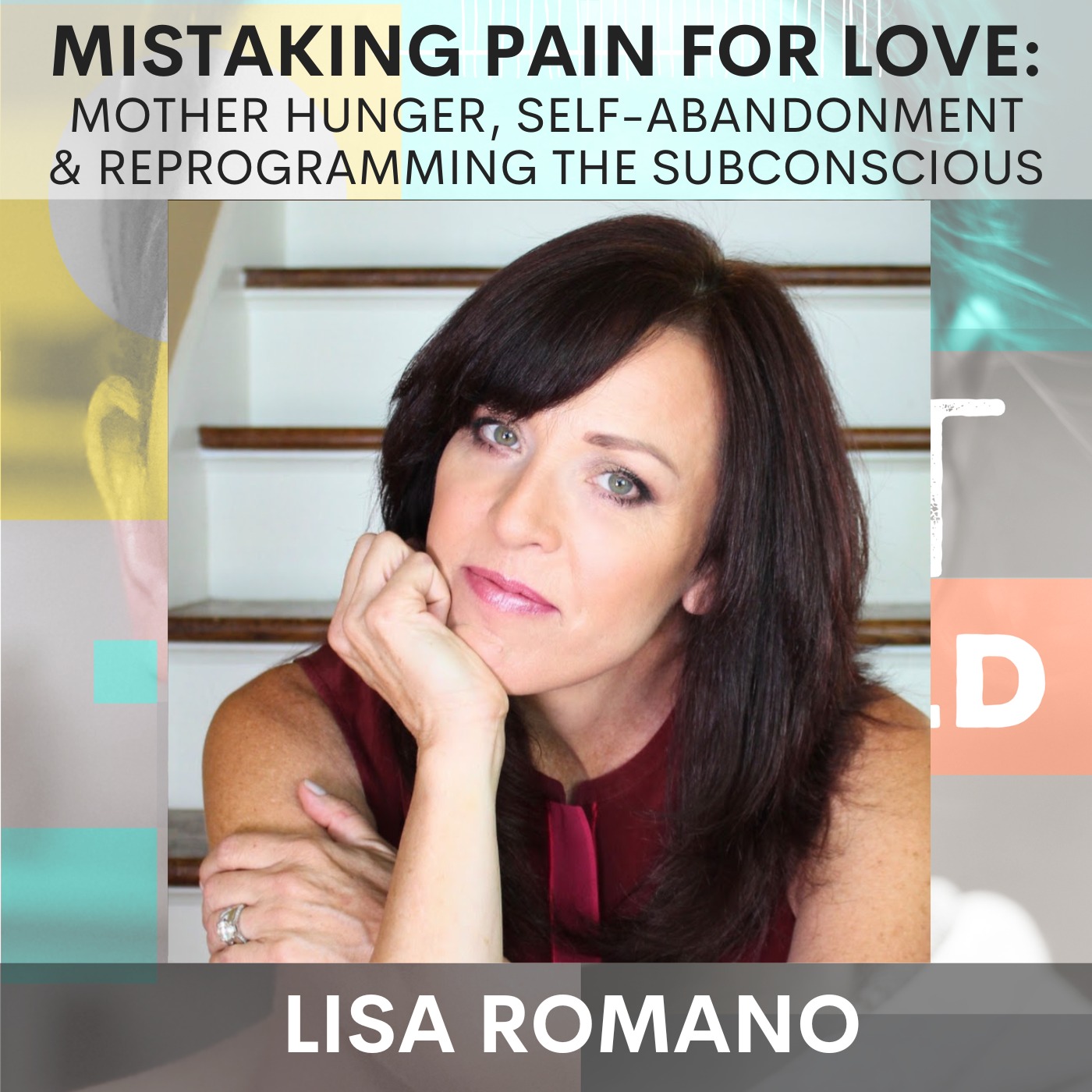
Adult Child
Mistaking Pain for Love: Mother Hunger, Self-Abandonment & Reprogramming the Subconscious w/ Lisa Romano
01:05:47
Loading summary
Transcript139 lines
- [00:02]
Kelly Clarkson
It's Kelly Clarkson, here to talk all things Wayfair. The best place to buy furniture, decor, and anything else you can think of to create a home you absolutely love. I know when I shop with Wayfair, I find options for every style. Whether I'm feeling boho or farmhouse, modern, traditional French country, I can find exactly what I need for my home and more. No matter your space, style or budget. Shopwayfair.com to make your home way more you.
- [00:28]
Lisa Romano
Wayfair. Every style, every home.
- [00:30]
GoFundMe Announcer
Imagine if today was the day your idea changed someone's life. Imagine if you could help someone pay for college, help your community build a new playground, or help a child make it to that dream competition with GoFundMe. It's all possible. GoFundMe is the world's number one fundraising platform, trusted by over 190 million people every week. Ordinary people meet their goals and do extraordinary things. Your ideas matter. GoFundMe isn't just for emergencies. Want to raise money for your kid's soccer team or raise funds for a small business, a creative project or event? GoFundMe helps you turn ideas into reality and help adds up. Fundraisers you start for someone else raise up to five times more. So think right now. Who could use your help? Change rarely comes from waiting. It comes from someone deciding, today I'll start. Don't wait for someone else to bring change today. Start your fundraiser in just minutes@gofundme.com that's gofundme.com to start your fundraiser. Gofundme.com this is a commercial message brought to you by GoFundMe.
- [01:31]
Andrea (Podcast Host)
When I learned that I was worthy of self, love, a love that was worthy showed up. My name is Andrea and this is an old child. What's making you smile? Welcome back to Adult Child, where we take a deep dive into the impact of growing up in a dysfunctional family. Ahoy, my dear shit shows. For any new listeners, my name is Andrea. I am a total and complete shit show. I am a captain of the ship. And I just want you all to know that I will be relaunching the podcast in the next few weeks. Yes, you heard it in the next few weeks. And I just need to name this. I just need to say this out loud because that's what we do here, right? We're just real and raw and don't try to act like we got it all together. Perfectionism has been absolutely kicking my ass. The amount of pressure that I have put on myself for my first episode back has been Absolutely relentless.
- [02:54]
Lisa Romano
Okay.
- [02:55]
Andrea (Podcast Host)
It has not been fun. And, you know, I was somebody for a long time who didn't think that I struggled with perfectionism until I realized that procrastination and overthinking is a form of perfectionism. Perfectionism has many faces, y'.
- [03:17]
Lisa Romano
All.
- [03:17]
Andrea (Podcast Host)
That was our topic for today's shit show support group. And so the amount of pressure that I've put on myself for this episode is ridiculous. And I understand that this pressure is not coming from anyone other than me. And so I just needed to name that. I just needed to say that out loud, just between friends. But I will be back shortly, and I've already got a bunch of interviews recorded that I'm super pumped for you guys to hear. And, yeah, let's roll, baby. It's time to roll again. Okay. Much needed hiatus, but ready to reach more suffering adult children out there. Ready to reach more damn shit shows. Okay, so today we are going to revisit an episode with quite a powerhouse, Lisa Romano. You know her, you love her. You watch her YouTube videos. Codependency queen, as I like to call her. I love this conversation with her because I felt like you got to see a side of her that doesn't necessarily come through in her. In her YouTube videos. So let's just get on with the damn show. First, let's talk about why us? You need to damn the join shit show my online support community where we have a minimum of six weekly zoom support groups where you can connect with other fellow shit shows who are doing the damn work to heal. This is an app. This is a support community available to you 24. 7 At your fingertips in your back pocket. Through our app, we have a chat that's 24.
- [05:04]
Lisa Romano
7.
- [05:04]
Andrea (Podcast Host)
We have various different sub communities that are targeted to your particular struggles or interests, whether that shit show parenting, childhood, sexual abuse survivors, healing from narcissistic abuse, employment struggles, food struggles, neurodivergent issues. You name it, we got it. So hop on board this healing ship that's also quite fun. This is relational trauma, folks. We heal relational trauma through safe relationships. This is where you can do so for less than a dollar a day. And if you're wanting to know what this community is like, make sure you check out the chit show Saturday episodes where you either get to hear a recording from our groups or you get to hear an interview with one of our lovely members. So you, yes, you the person that's been wanting to join for forever. Let's just do it already. Okay? Let's just do it. Already see the link in the show notes. Or you can go to adulttradpodcast.com shitshow next. Give me a little follow on the Insta on the TikTok at Adult child pod. And last but not least, whatever you do, please, please, please Give a damn 5 star rating on Apple and Spotify. Thank you.
- [06:04]
Lisa Romano
Love you all.
- [06:04]
Podcast Interviewer
All right, y'. All, this woman needs no introduction. We have Lisa Romano. You're a. Are you a gcoa, A grandchild of an alcoholic?
- [06:13]
Lisa Romano
Yes. Yes. But I would. My. My parents weren't diagnosed. I would, you know, they would never say yes, but, you know, the whole denial thing. Like, my mom goes to Ireland, she comes back, she. She's hiding B. Hiding B. Bailey's right. And then just says, oh, I'm not going to drink anymore, but I'm not an alcoholic. Well, she was a dry alcoholic. Yeah.
- [06:35]
Podcast Interviewer
So.
- [06:36]
Lisa Romano
Yeah. So.
- [06:38]
Podcast Interviewer
So you're all the things I. Yeah. When did you first hear the term adult child?
- [06:44]
Lisa Romano
Interesting. I'd always. The first time I heard the term adult trial was probably in therapy when I was losing everything. My mind, my body, my marriage and. But I. It was an interesting concept to be granted permission from someone outside of myself who was obviously a lot smarter than I was, who said, you've got this thing, you know, you're an adult child of an alcoholic. And I went, that's a thing. And I have a right to say that my childhood sucked and that there was something wrong with the way that I was raised because the denial. Don't ever say that. Never mention anything outside this house. You know, what happens in this house stays in this house. You know, the shame and the no talk rule. It was programmed into me to not even consider that. That what was wrong inside of me had something to do with what was being done to me or part of what I was experienced. I felt effed up. Therefore, it was my fault, period. And so to be given permission to, like, break out of that parameter, that faulty paradigm was lifechanging. I didn't know what I was going to do with it. It's like being 12 years old and finding, like, $10 million. What do I do next? I don't know. I have no idea. Must be a good thing. But I don't know how to, like, manage money and set myself up for a life. I don't know how to use it, but I knew that it was important and that just. That really started my recovery process through consciousness and understanding the subconscious mind. And.
- [08:30]
Podcast Interviewer
Okay. Oh, for a second, I thought I didn't Press record, but I did.
- [08:32]
Lisa Romano
Sorry.
- [08:39]
Podcast Interviewer
So it's interesting. So I was just reading back through your books, both of your. Do you call them memoirs? Do you want to highlight? Like, what do you feel like are a few experiences from your childhood that really paint the picture of what the dynamics were like in your home?
- [09:01]
Lisa Romano
1. That one scenario that pops into my mind right away is. Is being 9 or 10 years old. And back then in the 70s, you could literally babysit, like, three kids at, like, 9 or 10. Yeah, no, it sounds crazy.
- [09:20]
Podcast Interviewer
Drive them around, be an uber driver at 9.
- [09:23]
Lisa Romano
I don't know if I go that far, but, like, you know, being older than Google, like, we got away with things that, like, it was just insanity. But anyway, I was, like, babysitting at 9 and 10 years old, and if Rosie down the block did good at bingo, she'd come home and she'd reward me as long as her kids were okay. Yeah. And I didn't know what to do with this money, but I knew at the time I was aching to, like, have a connection to my mom. And her feet were always chapped because she was obsessed with cleaning the house. And so, literally, they were cracked and bleeding. And I thought, I know what I'm gonna do. I'm gonna go to the store and buy her a pair of sneakers. So I get on my bike and I go down to the Woolworth store, and I'm just so excited that I'm gonna buy mommy a pair of sneakers with the money that I made, and she's gonna know how much I love her. And she's outside on our soup and queen smoking a cigarette, and I'm super excited. My heart's, like, pumping. And I give her this box, like, mommy, you know, I. Here. And she opened up the sneakers, and. What a very stoic expression. What do you think you can buy my love, Lisa? And I was. I was crushed. It was. All the life was drained out of me. Like, I wanted to do something good. Now it's been. Been perceived as something bad. What's wrong with me for trying to do this, Trying to love her, trying to show her it's bad, it's bad, it's bad. And that really was the nature of my relationship with my mother for the. The entirety of our life. I don't ever remember having a nurturing experience with my mother, except one time when I tripped down the stairs and her friend was over a woman I had never met before. And I was kind of shocked because my mother was like, oh, come sit. Come sit on Mommy's. Lap. So that told me later on that you knew, you knew to do, how to be. You knew when you were being nurturing, when you were withholding nurturing and you shouldn't have. So this was selective nurturing. So the idea that there was some conscious understanding that she was withholding affection, affection from me was just a lot. Another layer of like acceptance and grieving that I had to go through, you know, on the recovery journey. So that's. That really sticks out in my mind.
- [11:54]
Podcast Interviewer
Oh yeah, I remember that story. God. Heartbreaking.
- [11:58]
Lisa Romano
Yeah.
- [11:58]
Podcast Interviewer
What. What was your. You had another. You had a sister and a brother.
- [12:04]
Lisa Romano
Yep.
- [12:05]
Podcast Interviewer
And what were.
- [12:06]
Lisa Romano
What.
- [12:06]
Podcast Interviewer
How did. What was your mother's relationship like with them?
- [12:10]
Lisa Romano
I think it's pretty typical of dysfunctional families where we all had roles to play. Yeah, it was really interesting. I was my father's golden child, but my mother's scapegoat. So it really pissed her off that my father thought I was smart. It really. And I would cringe like, please don't acknowledge may dad because I don't understand. But that's going to make mommy mad. So I had to. To refrain from accepting his love because I just intuitively understood, look, she's not happy, you know. And so I was her scapegoat. And then what my. I would say my sister was her golden child, but she triangulated me against my brother. In other words, it was the two of them. So he also felt like she could withhold. And so this was an opportunity for him to bond with her by having an alliance against me. And so coming home from school at 12 years old or 11 years old, having a really rough day because of course I got bullied at school.
- [13:16]
Podcast Interviewer
Yeah, you had a horrible experience at school.
- [13:18]
Lisa Romano
Oh yeah. I had shaped my life, but I had, you know, low self esteem and all that. Didn't feel like I was worthy of friendship. So how could I be myself? I couldn't. I had constantly edit myself. And the level of self consciousness to a debilitating degree was a daily part of my life. And coming home and hearing my mom and my brother laughing at the top of the staircase and thinking, oh my God, that sounds so nice. Like they're laughing. Because my mom did not laugh. No. And I dropped my book bag and I'm walking up the stairs and as I get closer to the top of the stairs, I recognize what they're doing. They're reading my diary, laughing. And it was a CPTSD response. I lost all emotional control. It was just a wicked experience to go From. Wow, they sound so happy. And again, that moment of hope being pulled away from me. And then, like to be so upset that you're laughing at a diary. Because my mind was the only place that I felt like they couldn't touch. Like, my secrets. Like, I'm not revealing my secrets to you. So to know that my mother violated that and then brought my brother in and the two of them thought this was funny. And then on top of it. Look at her. She's crazy. Look at her falling apart. You're crazy. You're crazy on top. So now my reaction is wrong. It was just really effed up, you know, but that really was what she did. So she. She triangular triangulated my brother against me. So it was a really. When you come from a toxic home, you know, nobody. Nobody's here on the ship. Like, no, no. Like, you're in bumper cars, man. It's like no one knows where they're going. You know, people are getting run over. Nobody cares. Everybody pretends the legs aren't broken. It's just mayhem. But what's really crazy and debilitating, I think all of it. But as a child, when you know that your inner reality doesn't match your outer reality and everybody's pretending like everything's okay, like every. No, nothing's okay.
- [15:24]
Podcast Interviewer
It's such a mind, especially for a.
- [15:27]
Lisa Romano
Little kid, you know, a little kid whose brain is trying to wire for, you know, some semblance of what is the world and how do I fit in it. So when nothing makes sense in the outer world, you know, our brains don't wire for a sense of continuity, a sense of rational thinking. It doesn't. We are. We are. Our mind is chaotic, and that creates tension in our body that we eventually learn how to alleviate through sex or through drinking or through shopping or sticking our fingers down our throat, you know, we. We naturally gravitate towards some way to alleviate this tension that nobody in our outer experiences a. Is acknowledging or knows how to. How to help us. If they did acknowledge it, they wouldn't know how to help us. So, you know, it's like the inmates have the keys. You know, it's like, who's the boss? You know?
- [16:26]
Podcast Interviewer
Okay, I. I developed separation anxiety at 9. And then my parents sent me to a therapist. And I remember asking years later, I'm like, did you ever tell that therapist that you're an alcoholic and that you.
- [16:44]
Lisa Romano
Guys fought all the time?
- [16:45]
Podcast Interviewer
And my mom's answer was, no, it did not seem relevant.
- [16:50]
Lisa Romano
Denial. Yeah. Again, it's like the person, you know, in the American Indian tradition, back in the day, if you brought a sick child that was acting up to the medicine woman, she looked to the parents and she said, what have you done? It was immediately understood that this child's behavior was an effect and not the cause. And so if there is a child that is. In most cases, I mean, there are no, There are anomalies, but I think it is a safe argument to be had when we recognize that the child's behavior is response to something that's happening outside of them. My mom at. When I was in. I was seven and my. Yeah, I was seven years old. So my first grade teacher said, I think Lisa needs a therapist. And that.
- [17:42]
Podcast Interviewer
And especially for back in that day, that's kind of saying a lot. Right.
- [17:47]
Lisa Romano
My mother would not take me to a therapist, of course, And I know why. Because she was afraid I might tell the truth. So the fact that I was withdrawn and I wasn't able to acclimate and I was inhibited, you know, and it was difficult for me to, like, merge with the other kids she was seeing in my need for her approval, she could see it. And she was a young teacher, but my mother didn't tell me that until I was well into my 30s. But she used it as a rationale to justify her feelings towards me. Well, he was 7. And I said to her, I said, mommy, do you realize that as young as seven, I used to hear you telling your friends that you were mean to me because we had a personality conflict? I was seven. So she was, what, 28 by that time? So I was seven. She was 28. Super young. Right. She was actually 26. Right. She was a baby. Right. But what does an immature mind do? It rationalizes cognitive bias. So an unawakened mind doesn't understand itself. So my mother, being the adult child of an alcoholic, had all sorts of denial. Right. Thought what a lot of adult children of alcoholics do. I just won't drink and my life should be easy. No, it will happen to you just like it happens to everybody else until you fix it. Yeah.
- [19:14]
Podcast Interviewer
I almost wonder if things would have been better for you if she had been drinking.
- [19:19]
Lisa Romano
I think I. I've thought about that in the past, and I. And I think the difference would have been, oh, it's alcohol. So maybe it's not just, I'm bad. It's like, oh, Mommy drinks and that's why she's that way. I could have possibly made a correlation, but to me, it was just, no, it's You. You're bad, and that's why Mommy is this way.
- [19:41]
Podcast Interviewer
Yeah. I thought that that was such a powerful moment in your book when you talk about that. And I guess it was the shoe incident, but, like, when you really did. Because I think a lot of kids subconsciously feel like it's their fault. But for you to have that very conscious awareness of I'm bad. And so do you say that, like, when John Bradshaw talks about, like, you know, shameless acting in and shameful acting out, would you say that you went the shameless acting in route?
- [20:08]
Lisa Romano
Yeah, and I think that's. I think women do that more than men. It was. I'm shame. It was. It was such a profound moment that I could. If I took you back to the town that I was raised in, I could show you the exact spot on the street I was on when I had that moment. Lisa, you don't go and buy your mommy nice cards, you know, that say all these. Lovey. You know, there was another thing.
- [20:39]
Podcast Interviewer
You gave her a card, and she never read it, right?
- [20:40]
Andrea (Podcast Host)
Or.
- [20:40]
Podcast Interviewer
And then you followed up with her about it.
- [20:42]
Lisa Romano
Well, there was. I wrote her a poem and I put it, and she's like, yeah, I threw it away or whatever. Like, she just constantly discarded it, you know? But there was another time where I thought it was constant attempt for connection, right. Which is so innate. We're driven to it. It's tied to survival, you know, but we throw ourselves up against the wall and run into traffic, you know, for people who don't get it. So we have to awaken, right? So that's the. That's the cornerstone of codependency. It's like, I just keep trying to get you to see me and love me. But there was another time where I took my bike, my blue Schwinn, and went to this little stationary store, and I. And I just thought, I'll just show her. I just have to show her that I love her. And I bought a car. When I went to buy the card, I. Card, I brought it to the counter and I lost my nerve. And I thought, you don't do these things because you're bad. So my. My inner narrative, my inner critic had downloaded the message. You're bad. And so there was a cognitive bias within my own psyche towards my own self. You're bad. So doing something good doesn't make sense. Go get the freaking Charleston Chew can of Pepsi and bag of onion and garlic potato chips, because you don't do these good things. You're bad. So it's it's taken me quite a long time to unravel the psychological piece, the spiritual piece and the emotional piece, but I would have it no other way because I'd still be acting out these patterns.
- [22:16]
Podcast Interviewer
Absolutely. So when you see your, your, you know, you leave your marriage, at what point. Well, I guess two questions. At what point did you kind of come to terms with the true impact that your childhood had on you? And at what point did you realize that you had complex ptsd?
- [22:40]
Lisa Romano
Oh, they were very different moments in time.
- [22:42]
Podcast Interviewer
Yeah.
- [22:43]
Lisa Romano
The complex PTSD came later where, again, it, I don't. It was a. It was like Shrek says I was an onion.
- [22:54]
Podcast Interviewer
Never ending onion.
- [22:56]
Lisa Romano
Yeah. But it does get better. It gets sweeter towards the middle. Right. But it was this. Okay, I have permission to understand that my parents didn't do such a great job. Okay. They're adult. Okay. Okay. I had. Permission granted. Wow. I'm codependent. Wow. I'm allowed to say I'm not happy. Permission granted. Permission granted. And so it was through therapy with a very intuitive therapist. And they really didn't diagnose, they don't, they can't diagnose you with codependency because it's not in the dsm. Right. So it's a cluster of symptoms. And it takes a very intuitive therapist, psychologist, a psychiatrist, to be able to understand the dynamics at the, at the root of this behavior. So he understood codependency because he was recovering codependent. So he said, you know, you're depressed, you have clinical depression, but that's because you're codependent. And you're codependent because you were raised by two unrecovered adult children of alcoholics. I was like, what? And so it was at that point was like, permission granted to look within. Amen. So I learned everything I could about codependency and the bells started to go off. But, and to be honest, my therapist didn't talk a lot. But like a lot of therapists don't do like 45 minutes of listening to me, blah, blah, blah, blah, blah, you know. But when he did speak, I held on to every word. And that's when I started to do my. I've always been very curious by nature. And I started to dig in deep. I was like, okay, if I was raised by two people who are unrecovered, what would have, what would have looked like for me if I was raised by healthy, well adjusted people? And that's when I started to doing, doing the side by side analysis. And I Thought, well, if I was a healthy adult, then that would be because I was raised in a healthy environment. So what would a healthy child have received? And I ran through. I have a nursing background. So I went back to my psychology books. I was like, oh, Eric Ericson, stages of emotional development. I was screwed. Between 0 and 18 months. Trust versus mistrust. And I just went through what should have happened. And I was validated and horrified at the same time. Like, how could such murder of a soul happen under the eyes of a school system, under the eyes of my grandmother, my grandfather, my aunts, my uncles, my mother's friends knew that I was being emotionally tortured. My father knew, how could my little soul have been so murdered? No one did anything, and no one did anything. Everyone pretended it wasn't happening, right? Because as I started to realize the damage that was done at an emotional and psychological level, like I said, it was validating and crushing at the same time, but at least it was helping me understand the self. So then suddenly I had this separation of consciousness which allowed me to have compassion for myself, which happened to me at 12 years old when I attempted to take my life. There was this moment of separation between the image of me in the mirror with a gun to my head, right? There was this moment of separation where, wait a minute, I'm not that person, but I could observe that person's pain. And in that space was the miracle of empathy, which was void in my family. There was no empathy, right? So how could I have empathy for the self? I just beat myself up. I don't know what self compassion looks like. No one's ever had compassion for me, right? And so it was that moment of separation that, in terms of my consciousness, that saved me at 12 years old. And then again, it was like another moment of separation while I was going through the healing journey that allowed me to have empathy for the young woman I was. And I started. I started. My inner narratives just started to change. Like, Lisa could be no other way, you know? And then, poof. It's not you. It's your programming. You were programmed. You. You were neurologically wired at a subconscious level, right? So here, as a. As a spirit incarnate, which I believe that we are essence, I am subject to the laws that govern this body, and those are my five senses. And that's the default setting of my brain. I'm not responsible for an innate need to bond with my mother for me to develop psychologically sound. I didn't create that need. And I'm not responsible for what happens in my brain when that need goes awry. I'm not responsible for that. There are going to be psychological consequences when a child feels rejected and cannot bond with, especially their mother. So if I was codependent and if I wasn't the mother that I wanted to be, if I wasn't the wife I wanted to be, if I wasn't the person I wanted to be, I had to accept that because it could be no other way. Based on the parameters that govern a physical world and govern my brain and govern the experiences that I was not responsible for. But I did have, I felt a responsibility, a right and an obligation to heal so I could break the cycle. And that's what I decided to do.
- [28:35]
Podcast Interviewer
And then when did the PTSD aha come?
- [28:38]
Lisa Romano
I think the PTSD aha came well after I was out of my relationship with my ex husband and I found I was like, why is he still triggering me? Like he's out of my life. Like we live separately. Like, why when he texts me, do I. Do I feel like my brain is on fire? Because I literally. It was like my brain, it was like zapped. Yeah, in a second, instantaneously. It could be a look. Yeah. Because he was stalking me at where I worked. So it could just be a truck that looked like his truck. It could be the kid saying, mommy, Daddy said, or, hey, I bumped into your ex. It could be anything associated with him. And I realized that it was this automation process that was happening that I didn't have conscious control over. And that's when I was like, I don't want anything controlling me on the outside, but I am being controlled by something on the inside that's being triggered by something on the outside. And that's when I understood triggers emotional flashbacks. Because I'd be talking to my best friend and she'd be like, where are you? I was like, what do you mean? She said, you're not here. And I didn't even know I was fading into the background of an emotional flashback. I just, it just so. It was just so normal. I was being pulled back in time. And it was when she. She said things to me like, you're not here. I was like, you're right. And again, separation of consciousness. I began to observe when it was happening. And that's when I started to understand, oh, this is cptsd. It's bigger than him. Because I also had the same reaction to my mother. And so he was, he was her emotional twin. And in my body, that was my program twin. Right. That was the the program he represented the energy that I had with her and the patterns that she helped create inside of me. And so that's why they were, in my opinion, one in the same. I married my mother. Mm.
- [30:44]
Podcast Interviewer
So what happened with me is.
- [30:48]
Lisa Romano
My.
- [30:48]
Podcast Interviewer
Picker wasn't getting any better. You know, like, I got sober and all of my other friends pickers were kind of screwed up, but they started to improve.
- [30:58]
Lisa Romano
Yep.
- [30:58]
Podcast Interviewer
And I couldn't figure out what was wrong with me, and I couldn't figure out why in each relationship, I felt and acted crazier each time. But, like, nobody. I mean, I had been in AAA for, you know, seven years. Like, nobody had. It was like, why the. Didn't anybody have any idea? I had no idea that I was living in a trauma response every time I was in a relationship.
- [31:24]
Lisa Romano
Girl.
- [31:24]
Podcast Interviewer
Like, there's so many people out there who have no fucking clue that they have complex ptsd.
- [31:33]
Kelly Clarkson
It's Kelly Clarkson, here to talk all things Wayfair. The best place to buy furniture, decor, and anything else you can think of to create a home you absolutely love. I know when I shop with Wayfair, I find options for every style. Whether I'm feeling boho or farmhouse, modern, traditional, French, co country. I can find exactly what I need for my home and more. No matter your space, style, or budget. Shopwayfair.com to make your home way more you.
- [31:59]
Lisa Romano
Wayfair. Every style, every home.
- [32:02]
GoFundMe Announcer
Imagine if today was the day your idea changed someone's life. Imagine if you could help someone pay for college, help your community build a new playground, or help a child make it to that dream competition with GoFundMe. It's all possible. GoFundMe is the world's number one fundraising platform, trusted by over 190 million people every week. Ordinary people meet their goals and do extraordinary things. Your ideas matter. GoFundMe isn't just for emergencies. Want to raise money for your kid's soccer team? Or raise funds for a small business, A creative project or event? GoFundMe helps you turn ideas into reality and help adds up. Fundraisers you start for someone else, raise up to five times more. So think right now, who could use your help. Change rarely comes from waiting. It comes from someone deciding, today I'll start. Don't wait for someone else to bring change today. Start your fundraiser in just minutes@gofundme.com that's gofundme.com to start your fundraiser. Gofundme.com this is a commercial message brought to you by GoFundMe.
- [33:02]
The RealReal Announcer
This podcast is supported by the Real Real. Meet Christine. She loves shopping. And this is the sound of fashion overload. Too many fabulous things, not enough space. So Christine started selling with the RealReal.
- [33:16]
Andrea (Podcast Host)
I've always loved collecting designer pieces, Gucci bags, Prada heels. But my style keeps evolving. Selling with the RealReal game changer. I earn more. And they do everything.
- [33:27]
The RealReal Announcer
Seriously, just drop off your items or schedule a pickup. We handle the photos, descriptions, pricing, even shipping. You just sit back and watch your items sell fast to our 38 million members.
- [33:38]
Andrea (Podcast Host)
And I get peace of mind knowing I earn more selling with the RealReal than anywhere else.
- [33:43]
The RealReal Announcer
Exactly this. That's the sound of your closet working for you. The RealReal earn more, save time, sell fast. And right now you can get an extra $100 site credit when you sell for the first time. Go to therealreal.com to get your extra hundred dollars. Therealreal.com that's therealreal.com.
- [34:02]
Lisa Romano
Well, what we're talking about, you know, I think. I don't think it's our fault. I think that the psychological community has failed us. I think that the self help movement has failed us. I think we're finally having. And certainly people of your generation will take it further than how I've taken it, right? So I wanted to be part of the movement where it's like, okay, there's something wrong here. And it's bigger than forgiveness, you know, it's. It's bigger than positive affirmations, right? And it's bigger than me being in therapy for 20 years and you never asking me about my relationship with my mother and my father. Are you saying that I have no right to bring up my ex because he's not sitting next to me? Well, he's refusing to come to therapy, right? So we go to the psychological community and we're asked to talk about how we feel. But we're never really taught that our feelings are the result of what we believe. And then we're never really taught about what parameters create a belief, right? So we focus a lot on the symptoms, try to make people's anxiety go away. Yet anxiety is divine truth. Something's wrong and my body knows it. And we're not taught that until I get my mental toughness in order, until I learn to think in a rational, logical way, right? Until. Until I develop my cognitive faculties. Then I'm always going to believe that what I believe is true. And therefore I will always feel the way I always feel. Therefore I will always make the same decisions I have always made. Therefore I would always pick the wrong person. So I think you know that I believe the psychological community is changing, at least I hope it is. Where we move towards teaching patients to better understand the self. Rather than just tell me about how you feel and, you know, when does anxiety happen for you and how can we develop some skills around you, counting to 10, somebody who has high cholesterol, how can we get you to not drive past that bakery every day after work so you don't feel compelled to stop the car and go, go get yourself a canoli. There is a bigger issue here. This person is not taking care of the self. This person might be stuffing themselves as a way to anesthetize themselves and to flee from pain. Maybe food was the way this person was comforted as a child because no one was there for them. So. And then the self help community. I grew up in the age of Louise Hay, where it was a lot of just think positively. I love me Louise Hay. But we're not taught. When we're talking about my inability to move my life forward in a positive way, no matter how hard I try, no matter how many affirmations I do, no matter how much medication I take, I take, no matter how willing I am to forgive. We're talking about cpts Day. We're talking about my brain's automatic response to an external stimuli that has to do with implicit memory of which I have absolutely no flipping control. No control. I can, I can develop more cognition and consciousness around the way that I feel. I can do that. But that takes some skill, coaching, training and self love. Yeah, and self love for sure. So it's not our fault when it's not our fault. So it really. And I think that's why life coaching has become the billion dollar industry. It is. That's why I think podcasts by people like you do explode, because people have been living it, are talking. It's. We've tried the AA. I've done the 12 steps. I actually, I love 12 step meetings. There. There's a place in recovery for them. Me personally, I was kind of left flat in coda because I wasn't getting the tools I needed to overcome codependency. The actual tools. I'm just being honest. Although I believe that we need a place where we can go where people are speaking our language and we're not. We don't feel so alien anym.
- [38:41]
Podcast Interviewer
Yeah, no, I mean, AA obviously saved my life, but, you know, I had, I had no idea what was to come. You know, I'm glad that nobody Told me that, oh, at nine years sober, you're going to be in even more pain than you are right now with one day sober. Because I don't know if I would have stayed sober. But it's been so interesting for me because now it's like I just view everything so differently, you know, I really just view my alcoholism as a symptom of just this, of this trauma, you know, you're right.
- [39:15]
Lisa Romano
So you're talking about a shift in consciousness, which is a conversation that's left out of therapy sessions. It's left out of our interviews with psychiatrists. Well, what level of consciousness do you think you're at when you feel that you want to drink? Or what level of consciousness do you think your trauma is at? Right, because it's a cause and effect universe. Like, what level of consciousness do you think you're at now? Suddenly just that question causes a mind to question itself. There are different levels of consciousness. Einstein says you can't solve a problem from the same level of intelligence that created the problem. So if I'm an active alcoholic, then, and my best friend, we're trying to help recover right now, you know, she'll not. She's not going to be able to resolve this issue from the same level of consciousness that created the issue. There has to be a shift in consciousness for her to be able to objectify whatever experiences help create this issue. The psychological and physical dependency upon alcohol, which, by the way, makes sense because the brain is designed to run away from forest fires, not towards them. The brain is actually wired to alleviate stress. And whatever is. I have been programmed to think does that best is my first choice. We all make sense. Addiction is about. It's not about any lack in any of us. Addiction is about us trying to manage pain. That's what it's about.
- [40:58]
Podcast Interviewer
Did. Were your parents still alive when you got into recovery? Like, deeply. Your mom's still young. Are your parents still alive?
- [41:07]
Lisa Romano
No, my parents have passed. But fairly recently, I published my first book in 2012, and I had been writing it for a decade. And when I met my husband Anthony, he's like, so what do you do in your spare time? I'm like, well, I'm writing this book. He's like, what's it about? It's like, codependency. Oh, what's codependency? And I tell him, he's like, why don't you publish it? I was like, well, I don't know. Might hurt my feelings. He's like, well, isn't that codependent? Light bulb moment. And then my. Obviously we're all codependent. My sister, my brother and I. My sister was in a very toxic, dysfunctional marriage. And after about 20 years, she was done. Didn't handle it very well on the outs. Okay, Granted, my brother in law was not happy with her wanting to get a divorce. And he devolved very, very quickly into a world of Xanax and alcohol, threatening suicide. And I called my parents and I said, listen, he's working up his nerve. And I was called crazy and overdramatic, just like I always was, and called my sister. I said, he's working up his nerve. I said, he needs help. And she basically told me to mind my own business at the time. And almost a month to the day, he took his own life. And when I got the news, my brother called me and he said, lisa, he took, he took his life. I just hit the ground because I was riding the road back to maybe. And I knew in my heart that if he knew this information because his parents were alcoholics, I thought if he knew this information, if he understood himself, he would not have done this. He would have understood. It's difficult. Divorce is difficult. But when you're talking about the wounds of an adult child, you're talking about abandonment trauma. You're talking about this, this sense of being separated from this person that you love that causes us to feel as if we've slipped off a mountain backwards into this abyss with this. It's bottomless. We're free falling. Right. Abandonment is akin to death.
- [43:26]
Podcast Interviewer
Yeah.
- [43:28]
Lisa Romano
Brain reacts to abandonment the same way it does to a threat of death. So all of the bells and whistles are going to go on. And without coping skills and without higher states of consciousness, it's all consuming. So, yes, no one, as someone who felt like she wanted to die, I didn't want to die. I wanted the pain to stop.
- [43:51]
Podcast Interviewer
Exactly.
- [43:52]
Lisa Romano
I don't want to die. I just wanted someone to give a shit. I wanted someone to stop hurting me. I wanted someone to advocate for me, you know, just somebody. Somebody just stopped the madness, you know? But I couldn't name the madness. The madness was me, according to my family, you know. But in that moment, literally there was a light. I saw a light in my head. And I thought, I have to publish that book if it helps save one person. And if that means my parents don't talk to me anymore, so be it. If that means my brother, my sister don't talk, I will be able to live my life. It was that strong of a calling inside of me to write the Road Back to Me. And so my mother called me one day and she said, I want you to know I know about the book. And I thought, oh, shit, here it comes.
- [44:39]
Podcast Interviewer
I didn't know about it.
- [44:40]
Lisa Romano
She said. She said, I want you to know I know about it.
- [44:43]
Podcast Interviewer
Okay, so had you told any of them?
- [44:46]
Lisa Romano
I didn't tell anybody.
- [44:47]
Podcast Interviewer
Were you already a public figure at that point?
- [44:49]
Lisa Romano
No. Okay. No, I was just in my head, you know, I'm doing my own thing. Single mom, three kids. I'm running a personal training business. You know, I have my little website going. I'm good, I'm good. But I have this thing that I have to do. I have to write this book and get out there, and then. I'm good, I'm good, I'm good. But it just. People started emailing me, you know, and that's just. They. And I could not, not talk to them about this book. And I thought, this is amazing. Like, it went to an Amazon bestseller seller overnight, you know, went to 25 overnight, you know, out of all the books out there on codependency, an adult child of alcoholic issues. Like, so I was like, oh, okay, what is this thing? And I think that's what happens automatically when you dive. You align with your divine purpose. When you follow that impulse to do something that feels important to you. I don't care if it's like, I love roses and I want a beautiful rose garden. Follow it, follow it. You don't know where it's going to lead you. So I think I really aligned with divine divinity. When I published that book, Carl Jung would say I was individualizing. I was becoming my true self versus this. Having a slave mentality, a slave to my parents, programming a slave to worry about what other people are going to think about me. Because you know you're going to get labeled crazy when you start telling the truth. Right. So it was actually my ex. In retaliation, he knew I had written the book. The kids had told him.
- [46:18]
Podcast Interviewer
And he reached out to your parents.
- [46:19]
Lisa Romano
Yeah. And. Yeah. So you read it? My ex? No.
- [46:25]
Podcast Interviewer
Your mom?
- [46:26]
Lisa Romano
I have no idea. I don't think so. I have. I have a feeling it's all part of the denial system for the same reason that she didn't send me to a therapist at seven, you know, but she did say. She said, I read. She said, your sister showed me the first three chapters online because if you go to Amazon, you could read introduction. And she said, from what I can tell, she said, everything you're saying is true. And she said, I understand your message.
- [46:53]
Podcast Interviewer
Wow.
- [46:54]
Lisa Romano
That was huge for my mom. Wow. Huge. Huge. We never talked about my book again. But that was. That was really big of my mom.
- [47:08]
Podcast Interviewer
No kidding. And so then how, then what kind of transpired as you stepped into this, you know, role and healer, and how.
- [47:20]
Lisa Romano
Did the relationship it had, you know, thank God for the. The rules around codependency, because it was just. I have to focus on validating myself. I have to release other people of the burden of needing to validate me. I have to release people of the responsibility of agreeing with me. So therefore, I'm called to be myself. Right? And I'm also. I have to learn to tolerate other people's perceptions of me. I have to give people permission. And I not. I mean, I had to. I had to frame it this way so I understood what I was doing. I had to give people permission to view me through any lens that they wanted, which allowed me to say, it's okay that you see me that way. You know, I have no right to control your perception of me. You're an individual. You know, you're on your own path. And based on your history, based on the parameters that your ego have constructed for you, you feel the way you do about me, and that's okay. And I'm not going to be a slave to your projection. I'm not going to spend my life trying to convince you I'm not who you think I am. I'm done. Done. And so with all of that running in the background of me practicing it every day, I mean, me saying no to my family, no, I'm not coming to that dinner. You know, Uncle Larry's coming. He is a vicious alcoholic. He calls me the C word. I'm not going to expose my children to that. Saying no to my family system and then knowing, here it comes, she's crazy. She make a big deal out of nothing, right? So it was like, I know it's coming. It's predictable. And I just said, namaste, I accept it. You know, you can't. You can't get. Get mad out of a. At a gorilla for hanging out of a tree. I learned to stop getting angry at people who were unrecovered for acting a fool. Yeah, right, right. Like, it's okay I expect you to act this way. So it's just like, again, so now I'm not a slave to trying to disprove their opinion of me. Because you're damned if you do and you're damned if you don't. When someone has this preconceived idea of who you are, because their cognitive bias is going to literally, by default, discount any information that lies in conflict to their perception of you. Well, I got too many things to do. You think I'm a right ahead, go right. You think I'm that, go right ahead. It's totally fine. So with that running in the background, I. It gave me the freedom to, like, focus on myself. Right. So that's. I manifested my husband Anthony. So the book was. Met him in 2010. The book went live in 2012. We got married in 2013. I immediately wrote my road beyond the Codependent Divorce Quick. It was like this avenue within myself was just open. Then I wrote Quantum Tools right behind that. Then I was loving the self affirmations one and two. Then it was codependent. Now what? It's not you, it's a program. Then it was codependency manifesto. So it was just like, once I stepped into that, it was just let it roll. Just let it roll. And then it was also, in my family, your accomplishments were always shit on. So I just didn't tell them about my accomplishments. I didn't tell them anything. Nothing. Ever? Never. I never. I never told them anything because, first of all, I didn't need their validation. And so that was really important to me. Like, there was. There's no reason for me to tell them what's going on in my life. A, I don't need their validation, and B, they're going to shit all over it anyway. So without any of that energy flowing that way, I was free to be myself and my life rapidly improved. I remember Anthony had a birthday party for me when I turned 50, and my dad walked into the restaurant. He's like, wow, you've done well for yourself. You have. A, I don't recognize any of these people. Who are they? I said, they're my friends. He said, wow. It was hard for him to fathom that outside of this.
- [51:56]
Podcast Interviewer
Yes.
- [51:57]
Lisa Romano
Family that I could actually do well, which was interesting.
- [52:02]
Podcast Interviewer
Did either of your siblings find recovery?
- [52:06]
Lisa Romano
I would say they found awareness.
- [52:09]
Podcast Interviewer
Okay.
- [52:10]
Lisa Romano
I would say that they found the truth. Truth is very different than recovery because I can know I have cancer and do nothing about it. I can know I have cancer and not quit smoking. So I would say that they understand what's happened, but I would not say that they're in recovery. No.
- [52:31]
Podcast Interviewer
That's so funny that you said that. I found out I was an adult child at seven years sober, but I heard a woman at an AA meeting talk about adult children of alcoholics. And I go home and I read the book and my mind's blown. And I go back the next week and I'm like, thank you so much for your share. And she was like, that's great, Andrea. But I just want you to know that, like, it's going to take a lot more than reading this book. It's going to take you years and years. And I thought, Lady, I'm 28, I don't have years. I need to have this shit fixed yesterday. And I really just hope that her childhood was like, way more up than mine. And so I was like, okay, I'll take a year off from dating.
- [53:15]
Lisa Romano
Right?
- [53:15]
Podcast Interviewer
That'll be good, right? And I say, just like learning you have cancer doesn't make the cancer go away. Learning that my date issues and dating were related to my childhood was not sufficient enough to bring about any sort of change. But I think you have to be in that awareness. We often have to be in that awareness first and then feel the pain of that awareness before we step into action.
- [53:38]
Lisa Romano
Yeah, I think that's all part of the plan. That's all part of the divine plan. You know, we incarnate on planet earth with spiritual amnesia. We don't know how powerful we are. We don't know. And if we did, we'd be acting, then our pain wouldn't be real, we'd be acting. So the very act or fact that we come here with spiritual amnesia and we feel so disconnected from our parents and life and we, you know, we're sabotaging our lives. The very fact that we do that and that's real and that's authentic and we find out, we find the way to self discipline and we find the road back to the self and we find our. We find the tools to master the self and to become self actualized. And ultimately, ultimately I feel that our journey leads us towards this sense of oneness. I have always been connected to everything. I just didn't know it. The power to change my life is now. It's never been outside of me. You know, higher power is in me. I am an extension of higher power. No different than my dog, right? My dog has consciousness. She dreams. So I've never not been an extension or I've never not had access to this infinite intelligence. It was just trauma eclipsed it. And it's by acknowledging the trauma that that eclipse starts to move a little bit. It's like, oh, acknowledge a little bit more. Acknowledge a little bit more. And you're right, it is the pain that moves us into action.
- [55:09]
Podcast Interviewer
Yeah, that.
- [55:13]
Lisa Romano
I think that. I think there are. I think that human beings have the potential to move into action without pain eventually.
- [55:20]
Podcast Interviewer
Yeah. I'm not one of them. I haven't been yet.
- [55:23]
Lisa Romano
But I. I just don't know that where that consciously evolved yet. But I do think conversations like this help part of the push forward.
- [55:33]
Podcast Interviewer
Yeah, absolutely. So what, what do you feel like really cultivated? You know, connecting with. With your higher power. And especially in those beginning years of recovery, what were the practices that you feel like allowed you to really tap into that?
- [55:52]
Lisa Romano
First and foremost, meditation. Because once I started understanding the subconscious mind, I understood, I was literally programmed that below the age of seven, everybody is in a theta brainwave state. Theta is a hypnotic brainwave state, which means that you are being hypnotized rapidly. So and that's when all your intrinsic memories are being formed. Associated with riding a bike, associated with brushing your teeth, associated with tying your shoes. There's a lot of stuff a little human being by the time they're seven needs to know at the unconscious level. But while we're downloading information for how to tie the. Tie our shoes and look both ways before we cross the street, we're also being wired for a sense of self. We're being wired for the rules of engagement in our family. And so that's all implicit. Those of us. I had a client who said that he grew up his whole life, his mother was an alcoholic. And when he heard the ice hit the glass, he had a CPTSD response because he had been conditioned to know that hell was coming. After a couple of drinks with her, his mom, that and he would be in a state of trauma watching her drink and seeing her face change and watching her body movements. Movements change. So he would dissociate, right? And he would freeze and he would see it coming. And so now as an adult, when. And he would be triggered. That's intrinsic memory. So sight, sound, taste, touch, they're all. It's by default. And so when he would hear glass ice hit a glass, he would have this CPTSD response. That's part of our theta brainwave programming. And so I realized that once I was putting all this, this research together, I thought, oh my God, my unprogrammed. And so my reticular activating system. There's a lot of neurology here, but the reticular activating system is the part of the brain that's the gatekeeper. It has been designed by the parameters of childhood to decide what to allow to come into your conscious awareness and what to not allow. And so as simple as. It's really not simple, it's not funny. But for the case of making this. Making this really easy to understand is if I don't believe that I'm worthy, then my subconscious mind cancels out any information to the contrary. Just like when I was a little girl and I was at the register, my reticular activating system said, no, no, no, no, this doesn't fit. Go get some potato chips.
- [58:37]
Podcast Interviewer
Yeah, get those. Onion and garlic potato. When do they stop making those? Why did they stop flavor?
- [58:42]
Lisa Romano
I don't know. So it's once you. Once I understood that, I knew that I approached it from a very pragmatic view and thought, I have to. I have to catch these thoughts. I have to become. I didn't yet understand the silent observer and blah, blah, blah, the power of now. I just. From a very pragmatic, almost like research point of view, it was like, slow down your thoughts, catch them. And so what did that look like? Meditation, four hours a day, silent meditation. No, I went on. I didn't know how to meditate at all. So I was like, YouTube, you know, like YouTube was just happening. But I would look up guided meditations, pineal gland meditations, higher self meditations, chakra balancing meditations, anything, anxiety meditation, any type of meditation. Guided meditation that allowed my conscious mind to check out. Because I knew, and I understood from my research of the subconscious mind that the subconscious mind is always active. It's always looking for a pattern. And so if I could spend enough time meditating or listening to a different pattern, then I could reprogram my reticular activating system. I could literally reprogram my subconscious mind with new information. And so that I woke up early in the morning and I did my journaling. So I was catching negative thoughts, codependent actions. How can I be less codependent? That was my journaling. Then I would do a meditation and I'd get on my day with the kids. The minute I had time, I came home, literally sat down on my little tiny couch because that's all I could afford, and I did another meditation. If I sat up and my mind was just writing some mental chatter, nope, I went back down, laid back down, did another meditation. If I sat up again and I was bombarded with mental chatter, I went back down sometimes 3, 4 hours until it became. Until I noticed that I could walk about and the mental chatter wasn't going on. My husband says to me, now, what do you think about it. I go, nothing. He's like, what? I said, I am really. There's no background noise so much anymore. I have to add. I have to call it into consciousness, because otherwise I'm enjoying the tree, I'm enjoying enjoying the sun. When I get into trouble, when I forget to do that work. Because the default mode network of the brain is designed for autopilot. So whatever the subconscious tracks are, they come back to the surface without a conscious gatekeeper. So that's what that looked like for me. A lot of journaling, a lot of meditation, supreme accountability, reading everything I could about codependency, love addiction, holding myself accountable in. In. In my recovery work, and also how I was showing up as a person, as a mom, as a friend, just constantly policing myself and correcting what I knew was a product of my childhood.
- [61:53]
Podcast Interviewer
With the. With the negative beliefs of when you would notice that they were popping up.
- [61:58]
Lisa Romano
Were you.
- [61:59]
Podcast Interviewer
Were you also, like, autocorrecting it with. With reverse beliefs or you just dip it?
- [62:05]
Lisa Romano
Now, in the beginning, what I was doing was I was just. I remember I went into a dollar store and I grabbed a marble notebook because I came out of work, and I looked in the rearview mirror of my car, and I said, you look like today. I was like, who said that? Where'd that voice come from? Right? Because that's not the way I would consciously want to speak to myself or my inner child. I thought, there it is. There's that voice. That's my mother's voice. So I thought, oh, I got to get control over that voice. So again, another level of separation separating my consciousness from the voice. The voice is not me. It's an echo of the past. It's a pattern. And so I ran in and got a marble notebook, and I was. I titled the. The day, the time, like you look like today. And I just kept taking this. Like I said, I was like, on a safari for negative thoughts. So I didn't correct anything yet. I just wanted to get a clear.
- [63:03]
Podcast Interviewer
Vision of what the hell is going on up there.
- [63:06]
Lisa Romano
Absolutely. And then it was like, again, another level of compassion. How could you not have asthma? How could you not have migraine headaches? How could you not have rashes? If that's the point of view that your body is listening to, how could you attract a healthy relationship? How could you sleep well? How could you make good choices around nutrition? You're always going to be grabbing for some. Some form of garlic potato chips, whether it's a man, whether it's a friendship, whether it's food, whatever it is, until you gain control over it. So I was more interested in the beginning of getting like, okay, what is it, what is it, what is it, what is it, what is it? And becoming the silent observer. So once I got a little bit of an idea of like, oh, that's what's going on inside of there, then it was, I'm going to reframe it. Then it was like, okay, when I have this thought, I'm going to think that thing.
- [64:06]
Podcast Interviewer
Bravo. I know you're. I could talk to you for. For ever. I really appreciate your everything.
- [64:14]
Lisa Romano
I appreciate what you're doing.
- [64:16]
Podcast Interviewer
Yeah, I know, man. There's just like, there's just so many people out there who don't know that they're an adult child.
- [64:22]
Lisa Romano
Correct. Well, that's why I do, like, when I do a webinar, I use that terminology.
- [64:27]
Podcast Interviewer
I really appreciate how often you use the term.
- [64:30]
Lisa Romano
Yeah. And the last webinar I held, I even defined the adult child because by definition, an adult child is someone who approaches adult life from the position of a child, you know, subservient, feeling less than highly agreeable, lacks confidence, needs permission, you know, acts out, is not acting for our higher good. We tend to sabotage ourselves. We put our foot in our mouths, very reactive, you know, rather than, you know, taking in all this data and looking at it from a critical point of view and then deciding to make a choice based on all of the criteria. Right. So even though I might want to punch you in the mouth, I probably won't because maybe I'm wrong. Right. So you talk, you know, you make.
- [65:26]
Podcast Interviewer
A ton of content about narcissism. Do you, what are your thoughts on, like, do you think that this is a word that is being misused? Overused? What are your thoughts?
- [65:35]
Lisa Romano
I think that it's an important conversation to have because although, yes, I think in lots of, in lots of ways it is being misused, especially on YouTube, as far as I can. I can see. However, I think it's. It's an important topic to have because many adult children who feel subordinate, who don't feel good enough, who are struggling with codependency, oftentimes attract highly narcissistic people into their lives who exploit the need to be needed, who exploit the lack of confidence, who exploit the abandonment trauma. And so I see a, I see a crossover between being the adult child of an alcoholic struggling with low self worth and abandonment trauma and being attracted to it, to a, a partner who is highly narcissistic, who, who mirrors our parents Energy. Right. Because a parent who is unaware of how their behavior is affecting their child is in essence swimming in narcissism. Alcoholism may be a culprit. Lack of awareness might be a culprit. Pain and trauma in their childhood might be a culprit. But for the sake of helping people figure out who they are in the context of a toxic relationship, I think explaining narcissism is very, very valuable because sometimes adult children are online. What's wrong with my partner? Why won't he talk to me? Why do I keep chasing my partner? Right. Or my partner keeps threatening to divorce me? What's wrong with me? And so I think it's an important conversation to have. My parents were narcissistic and they were adult children of alcoholics. So there was a piece to that. So my aim is to cast a wide enough net that people who resonate with narcissistic parents might discover that they are actually an adult child. And you and I both know that the literature for adult children will benefit the child of a narcissist as much as it does the child of an alcoholic, whether or not that narcissistic parent drinks.
- [67:47]
Podcast Interviewer
Yeah, you're so right. Is there anything what happened you want to promote?
- [67:55]
Lisa Romano
Well, I do have a 12 week class that is perfect for adult children and it's not an easy class. I am someone who believes in honing in on the actual reason for why you are the way you are. So the first couple of weeks. Yeah, yeah. I've wasted too much time dancing around the mulberry bush. Like, tell me what's wrong with me? How did this happen and how can I get better?
- [68:20]
Podcast Interviewer
So is that just always available or do you run them in cohorts?
- [68:24]
Lisa Romano
Well, tomorrow we relaunch it live, which means that you, if you buy it live, then you get access to me and four life coaches in a live Facebook group. And every Saturday morning at 9am I offer a 90 minute live stream where I'm answering questions live. And so you have access to a live Facebook group that's interactive, but you can also get it on demand and you can do the work on demand at your own pace, in your own time. But that doesn't come with a live Facebook group. And that's 50% off the. The fee for the nice.
- [68:58]
Podcast Interviewer
Well, I will put that in the show notes and I would love for you to come back.
- [69:03]
Lisa Romano
Sure.
- [69:03]
Podcast Interviewer
Just scratch the surface.
- [69:05]
Lisa Romano
Thank you. I know, but you know what? Like, like you and I both know, you know, not knowing what's wrong is the biggest problem. And so scratching the surface is what we need to do, you know, keep scratching that edge. Yeah. Well, thank you for fighting me. And keep doing what you're doing, and I'm so proud of you. Congratulations.
- [69:28]
Podcast Interviewer
You.
- [69:39]
Lisa Romano
Just let it all go.
- [69:41]
Andrea (Podcast Host)
What's making you small now?
- [69:43]
Lisa Romano
Just let all go what you got to do. Yeah.