← Adult Child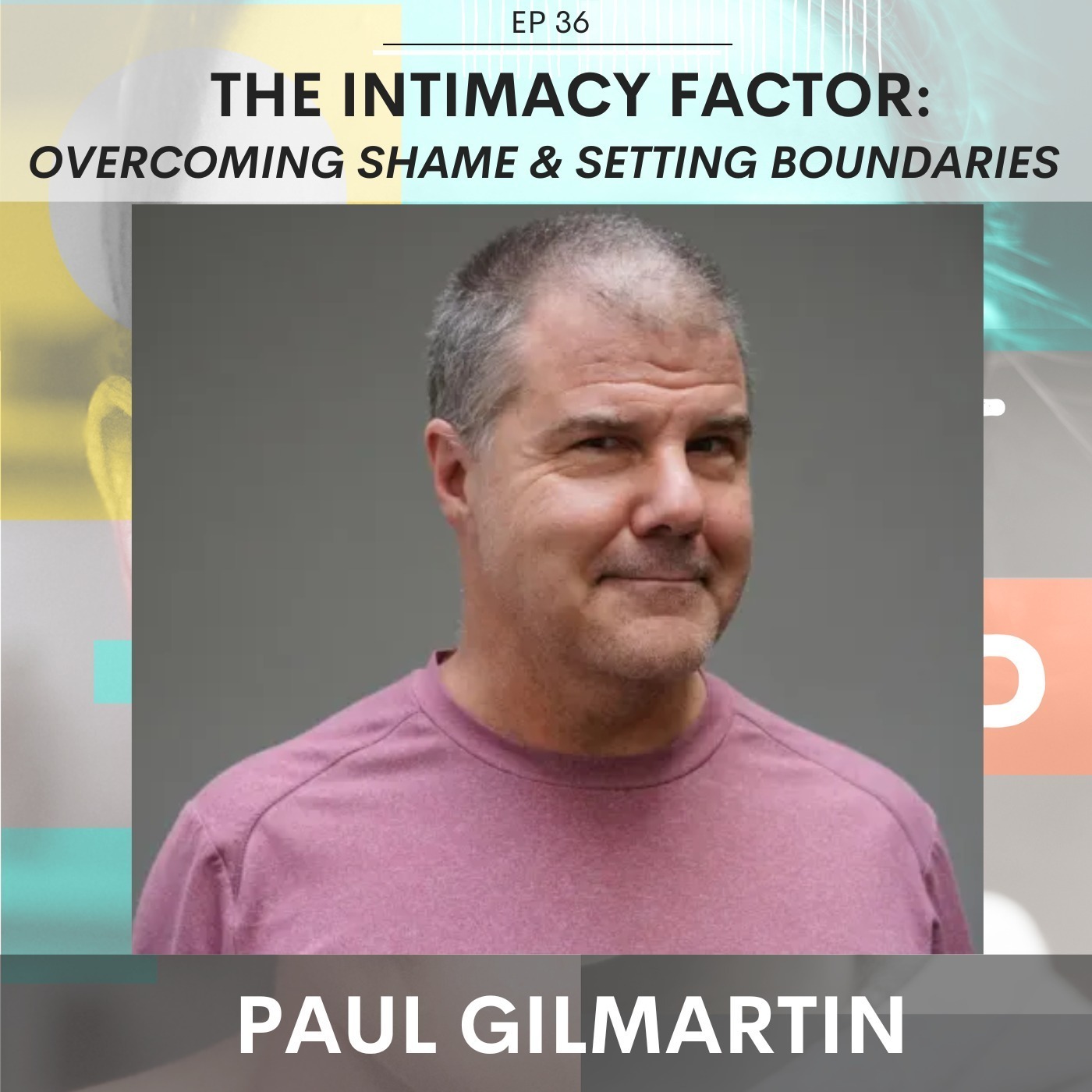
Loading summary
Transcript175 lines
- [00:00]
Andrea
So tell me if this sounds like you. You're the one holding it all together. You're the reliable one, the helper, the fixer. You're getting it done at work in your relationships, for your family. But inside you're exhausted. Rest feels impossible or even guilt inducing. Asking for help feels unsafe, maybe even a little shameful. Your body is always clenched. You're running on empty, but you can't stop. So here's what no one tells you. That hyper responsibility, that constant over functioning that is one of the most overlooked forms of functional freeze.
- [00:30]
Paul Gilmartin
We're.
- [00:30]
Andrea
We tend to think freeze looks like shutdown, like doing nothing. But sometimes freeze looks like doing everything. Fixing, helping, performing. All while disconnecting from yourself underneath it all. And here's the thing. You can't think your way out of this mindset. Hacks won't melt this freeze because it's not about mindset. It's your nervous system stuck in survival mode. It's about your body believing it's only safe if you keep doing. And I know plenty of you right now are hardcore relating to everything that I'm saying. Which is why I'm so excited about Breathe to Heal, a six week Somatic breath work core course designed exactly for this. Led by Teresa, a certified Somatic breathwork practitioner and a fellow member of our show community, this course will help you reconnect with your body, regulate your nervous system and begin to feel safe enough to rest, slow down and just be. And y'all. This is a steal compared to most systematic healing programs out there. We start on Wednesday, May 14th at 8:30pm Eastern. It's all online. It's live on Zoom, so get your damn spot@adultchildpodcast.com breathe to heal.
- [01:27]
Paul Gilmartin
That's breathe with an e at the.
- [01:29]
Andrea
End or you can see the link in the show notes. Your nervous system has been waiting for this, so please don't leave it hanging.
- [01:37]
Teresa
Healing the shame that binds you. My name is Andrea and this is Adult Child.
- [01:52]
Paul Gilmartin
What you holding on to? I just let it all go. What's making you small now?
- [02:00]
Andrea
Welcome back to Adult Child where we take a deep dive into the impact of growing up in a dysfunctional family. Ahoy my dear Shit shows. For any new listeners, my name is Andrea. I am a total and complete shit show and I am the captain of this hot mess of a ship. And if you're wondering what the hell is an adult child, it is someone who grew up in a dysfunctional family whose unresolved childhood wounds are surfacing in adulthood and not in a good way. Okay, not in a good way.
- [02:33]
Paul Gilmartin
What does this look like?
- [02:35]
Andrea
People pleasing, approval seeking, an inability to say no, an overdeveloped sense of responsibility, A track record of toxic relationships, whether that be in romance, friendship, work, a tendency to stay in relationships way past their due date, fear of people and authority figures, an addiction to negative excitement, AKA drama, chaos, a deep fear of abandonment, an inability to feel emotions, having reactions that are out of proportion to the situation at hand, low self esteem, highly judgmental of oneself and others and if you related to, let's say three or more of those, you are definitely in the right place. Okay, so for those of you who may not know, I am currently deep in the process of reimagining and relaunching this podcast. So after a profound period of breakdown that led to incredible breakthroughs both personally and creatively, I am more excited than ever to share with you the next chapter of this journey. This next phase is all about transformation. Think of it as adult child 2.0, filled with even more heart and soul and raw truth. We will be exploring new depths and tackling our healing in ways we haven't before. So stay tuned. Things are about to get even more real, but as I gear up for this relaunch, I'll be taking you on a trip down memory lane. Over the course of this time, I will be providing you with oldies but goodies from the Adult Child catalog from the past four years. This is also a perfect opportunity for you to binge on the wealth of episodes we have here in the Adult Child library and rediscover some gems that you might have missed or revisit your favorites with fresh air.
- [04:30]
And if you're looking for ways to.
- [04:31]
Connect with me while I'm hard at work at this relaunch, you need to damn the Join Shit Show. My online support community where I host four weekly Zoom support groups. This is a safe harbor for all of us to navigate this shit show of a healing journey together where we share support, laugh, grow together. This is a support system in your back pocket at your fingertips. We also have a variety of small groups that focus on niche interests or struggles. We have several small groups that meet on a weekly or bi weekly basis, including a group for childhood sexual abuse, a marriage and divorce support group. We have a dude group, a shit show dudes group. We have an internal family Systems parts work group. So if you haven't yet, this is a perfect time to Damn the Join Shit show where you will feel seen, heard and understood like never before. This is relational Trauma, we heal relational trauma in safe relationships. This is a place where you can do so for less than a dollar a day. Less than a damn dollar a day.
- [05:41]
Paul Gilmartin
Okay.
- [05:41]
Andrea
You'd be crazy not to try this out. See the link in the show notes to Damn the join. You can also find me on Instagram and Tik Tok Dult Child pod. Please also go follow me on YouTube as this whole relaunch will be on YouTube Adult Child Podcast. And please, please, please, whatever you do, give me a damn five star rating.
- [05:59]
On Apple, on Spotify.
- [06:01]
Thank you, love you all and see you soon.
- [06:07]
Teresa
Today we are joined by comedian, actor, and more importantly, someone who has really paved the way for having vulnerable, difficult, yet empowering conversations about all the shit that so many of us try to avoid talking about. Mr. Paul Gilmartin. He is the host of the Mental Illness Happy Hour podcast where he talks about addiction and childhood trauma, mental health, all that shit that none of us, you know, suffers from or could really do. And he's getting real and raw with us today. He's going to share about his childhood, about hitting bottoms in sobriety, setting boundaries, and toxic shame. Now, we are way past due on having another conversation about toxic shame. This is such a important piece of the adult child syndrome. Now, John Bradshaw has his book Healing the Shame that binds you. And I would say that it is shame that binds us. Adult children. You know, regardless of the specific details of our childhoods or how this has showed up for us as an adult, this shame piece is something that we can all really identify with. So let's just recap a little bit of what we talked about in it was episode three so Healthy shame, regular shame. This is an emotion that arises from having the consciousness that we have done something dishonorable or improper. It is a fundamental part of life because it serves an important purpose. It serves as the catalyst to making positive changes in our lives. It serves as a motivator to look at those parts of ourselves that we'd prefer not to look at. So shame is a healthy and normal emotion. Toxic shame, on the other hand, is internalized shame, meaning it no longer acts as an emotion, but as an identity. It is the belief that we are wrong, we are unworthy, we are unlovable. Toxic shame is the the result of growing up in a family that failed to support our growing sense of self as kids. And what happens is we start to collect these shame stories about ourself, our family, whatever, and this gets imprinted in us. And I want to read this paragraph from Healing the Shame that binds you, he says. Any subsequent shame experiences that even vaguely resemble that past trauma can easily trigger the words and scenes of our original trauma. What are then recorded are the new experiences and the old. Over time, an accumulation of shame scenes is attached. Each new scene potentiates the old, sort of like a snowball rolling down a hill, getting larger and larger as it picks up snow. And so all this shit, all this snow gets woven into our identity and it wreaks havoc. And we go through life experiencing a deep sense of inadequacy, of unworthiness, and we don't have a fucking clue what is going on. As I've said before, I realize that's another thing that I say a lot too, as I've said before. Or I also go, as I said in a prior episode, but as I've said before, this was my experience. I didn't have a fucking clue how little I thought of myself. You know, on a conscious level, I believed that I was smart, pretty, funny, but my actions clearly showed otherwise. And what I've come to learn is that it is possible to have high self esteem, but low self worth. And the way I view it is that self esteem is in the head, while self worth is in the heart and soul. But the good news is, is that it is 100% possible to break through this toxic shame, to de. Internalize it. And take my word for it, I have had experiences that in the past, before I started my adult child healing, would have really, really triggered me and sent me into a shame spiral.
- [10:28]
Paul Gilmartin
My pleasure to introduce standup comedian, television personality, and most importantly, the host of the podcast Mental ILLNESS Happy hour, Mr. Paul Gilmartin.
- [10:43]
Andrea
Welcome.
- [10:43]
Paul Gilmartin
Hey.
- [10:44]
Hey.
- [10:44]
Thank you. Thanks for having me.
- [10:47]
So I want to start just by paying you homage and recognize you, for you have 463 podcast episodes.
- [10:58]
563.
- [10:59]
563.
- [11:00]
Wow.
- [11:01]
I think only those maybe show up on Apple.
- [11:04]
Yes. Yeah, the first 94 are held back so I can release this as best of episodes. Why didn't I just let you say 463? Why did I have to be a dick and go, no, no, actually.
- [11:17]
No ego. I would have done it too. That's 100 episodes.
- [11:22]
That is.
- [11:23]
It's not like, I mean, let's say I. I downplayed it by like, 20. Like, yeah, maybe you let that slide. But 100 is like a significant number.
- [11:32]
Yeah. Been doing it since March of 2011. It's funny, I thought I got into the podcast game late in 2011.
- [11:39]
I know. I wonder when Joe Rogan started, I think, before that. Yeah, you got into it late. Oh, my God. I started in 2021, so I'm ancient. What do you think about when you reflect back on it? I mean, you. You've impacted a lot of people's lives. What does that feel like?
- [11:59]
Well, that feels great to. To hear. The reason I started it was, you know, I never intended to do it as a job. I just felt like conversations around mental and emotional struggles needed a platform that was. That felt real and uncensored and with fucked up humor, but not in place of the vulnerability and the intimacy. But in addition to it, what was the backstory?
- [12:32]
Was there a pivotal moment or experience that you had? What's the origin story?
- [12:38]
Well, went off my meds and wanted to kill myself and realized, oh, my God, it's the depression. I've been dealing with this for 10 years and was still fooled by it and thought there are people out there that don't even believe depression is a real thing. And. And I just felt like a podcast would be a great medium to have conversations. And it was inspired a lot by the help I had found in support groups for my addictions. And I felt like that you didn't need an expert for people to feel less alone and to feel hope. It was. I felt the power of people sharing their stories and just the peer to peer. Human connection was so helpful to me. I thought, I can offer that I can have people on to. To come and tell their stories.
- [13:33]
Yeah, I mean, I guess that's the magic, right. Of aa. And with Bill, like, it's all these doctors had been trying to help these people for so long, and then when it was one alcoholic helping another, that was the magic sauce.
- [13:47]
Yeah. Yeah. Human connection. Gabor, mate. Is that how you pronounce his name? He talks about that. That is the thing that can replace addiction is human connection.
- [14:00]
Yes. So I love on your website it says, you sound like all the guys that I dated. It says, Paul was thrilled to be diagnosed with the clinical depression in 1999 because it meant he wasn't just an asshole. But by 2003, he realized he was still an asshole and an alcoholic. And since 2003, he has been sober, mostly happy, and a tiny bit less of an asshole. That was me. It was all of my dudes. My picker was alcoholic assholes. So you're my type. Before my picker was broken, I'd be all over you. Yeah. Do you want to talk about that? What was that moment like for you when you finally were Given that diagnosis, what did that mean to you?
- [14:47]
It. It was a relief to know there was a name for what I was dealing with. I thought it was just that I was born unable to feel the good things in my life. I didn't know that there's a price to pay for numbing yourself with drugs and alcohol and addictions. And it was. The other piece of the puzzle was dealing with the issues outside of the. Whatever you want to call it, chemical imbalance, lack of, you know, serotonin, which was the spiritual and emotional nature of trauma, untreated addiction, being riddled with fear, insecurity, selfishness. And so those are the. The things that I. I battle today. The meds help a lot with my depression, and as does diet and exercise and support groups. But I. I still view the world through a lens of selfishness and fear. But I'm able to catch myself most of the time and go, oh, this is just, you know, the darkness talking to me. This isn't reality.
- [16:06]
Well, I would think. I mean, if you. If you got diagnosed with clinical depression in 99, but you were still an active alcoholic, I wouldn't imagine that, you know, were meds very effective. I would imagine that it's rather difficult to treat clinical depression while you're still an active alcoholic.
- [16:28]
I had about a year where I was taking meds, but I wasn't drinking.
- [16:32]
Okay.
- [16:33]
And so I got to feel that. And then what made me start drinking again was a friend of mine had taken her life, and a group of friends were over, and we were all kind of mourning her, and everybody was drinking, and I couldn't cry, and I felt shame that I couldn't cry. And so I thought, I bet if I drink, I'll be able to cry. And I had a couple drinks, and I went in the bedroom by myself and was able to cry. And. But then I started drinking again.
- [17:13]
What an alcoholic thought, I bet if I drink, I can cry.
- [17:18]
Yes.
- [17:19]
If there's any question there.
- [17:21]
There's no question. There's no question.
- [17:24]
So. And were you doing standup at this point?
- [17:28]
I was still doing stand up. I did stand up probably until 2010, maybe. And then it just felt like maybe it was after 2010, maybe it was 2011, 2012. I lose track. But doing TV stopped in 2011. That's when the show I was working on was canceled. And there was a part of me that was relieved. Financially, I was not happy, but creatively I was happy because the show had really kind of ceased having freshness for a couple of years. It had really just become a platform for advertising.
- [18:09]
What was that transition like from working while you were still drinking, doing comedy while you were still drinking, and then transitioning to doing it sober?
- [18:18]
It was great. A lot of people have this fear that, oh, if I give up my drinking or my drugging or whatever my addiction is, I'm going to lose my edge. I'm still able to get in touch with, with anger, but it's not my predominant emotion, whereas it used to be used to drive everything. And I found that it was easier to take chances because I was less afraid of failing. And it just showed me that getting sober removed things that were kind of blanketing my life and muting who I was inside. And that was, that was a revelation for me. And I realized in many ways I was more born to do this than I was born to do stand up comedy or tv. That I stand up and TV were just ways that helped me do this job. Exactly, yeah. And. And that was a comforting feeling. And I also had the benefit of being married at the time to somebody who was bringing in money because the first two, three years I was not able to support myself doing the podcast, but I had faith that things would have a way of working out. And they. And they did.
- [19:39]
And was there ever a point where you, you thought about stopping it? No, never.
- [19:45]
Never. Not in the 10 years. There's. There's been times when I feel overwhelmed by the subject matter and I've had to kind of take care of myself to make sure my battery doesn't get drained by the subject matter. I'm not able to read as many books about it as I would like because I don't want to feel dread around doing my job. And if I did everything that I intellectually thought I should be doing in relation to the show, I think I would feel emotionally depleted.
- [20:20]
Yeah, I would imagine that you're getting some pretty heavy messages from listeners. So how do you handle that?
- [20:28]
I try to answer everyone, um, but there's a line beyond which I can't be what that person wants me to be for them. And so I have pretty clear boundaries around, around that. But I do try to respond in a way to let them know, I hear your pain, I hear your struggle, and I'm not the solution. I am a cheerleader for the, the people who can help that person, be it support groups or therapy, and. But I can tell them, you know, you are not alone and there is hope and there's help out there. It's just going to take you getting out of your comfort zone and through trial and error, finding out what works for you. But I can guarantee you sitting in your recliner and thinking about how shitty your life is is not going to help you move forward, because I did that for decades, and I had a great life.
- [21:30]
Yeah.
- [21:31]
But I just couldn't feel it.
- [21:34]
So I know that from our prior discussion, you're somebody that has encountered bottoms in sobriety. So my one question to you is, and we've talked briefly about your childhood, and I'd like to get into that more. When was it in your sobriety journey when you. You really realized that that was the work that needed to be done, that. That we. You really needed to dive into. To childhood stuff, unresolved childhood pain.
- [22:04]
I was probably sober about seven years, and it presented itself. I had been an unfaithful husband until I got sober. And then I was faithful for the first seven years of my sobriety. And then I felt something inside me wanting to be that guy again, and it scared me. And so I thought, I need to get into the solution. I can wish things were different, but I need to deal with these feelings. And I also knew that there was a struggle with intimacy inside me, A disconnection, if you will, between my head and my, you know, my groin and. And the universe put somebody next to me in one of my support group meetings who said, hey, have you heard of this support group? And the focus of it is around intimacy and love addiction, sex addiction, perfectionism, fear of responsibility, really, intimacy disorder. And I went there and did not want anything to do with it, did not want to be a part of it. Sat in the back with my arms folded, didn't get to know anybody. Left as soon as the meeting was over. And of course, big surprise, got nowhere. And then at about eight months, I went, you know, I'm getting out of this what I put into it, which is almost nothing. And so I started going to more meetings, started hanging out after them, getting to know people, letting them get to know me, helping out, you know, setting up chairs or doing whatever, taking commitments. And that's when I really began to feel the benefits of the program. That's when I began to feel intimacy with the people in my group. And that became the template for me having intimacy outside of the group. And that's also when I realized there were problems with my marriage, and a lot of them had to do with me and the damage that I had caused through my infidelity and emotional distance and verbal coldness. And I was just not a. A consistent Husband And I had to own that. And I had to say, hey, what can I do to change? And so I started doing the work there and, and I started uncovering things that weren't new memories to me but that I had minimized, that I had explained away. And my then wife had told me many times, you have not dealt with your mother. And I'd be like, she just doesn't like my mom. And of course she was.
- [24:58]
That part might have been true too.
- [25:00]
But yes, that yeah, they're not mutually exclusive. And in my support group I began to see what she was talking about because the violations by my mom, many of them were under the radar, some of them were over the radar. But you don't know what's your normal when you're a kid. You don't know that it's fucking creepy that your mom is taking your temperature rectally when you're eight. You know, it's creepy when she, you know, has you get in the bathtub when you're 12 or 13 because you have gravel in your knee. It's creepy when she, you know, is touching your butt and telling you how handsome you are and pinching your butt. And it's creepy when your, your mom is breaking down and crying to you like you're her therapist and you're seven. She's complaining about how she wants to leave your dad.
- [26:02]
Yep.
- [26:03]
And I finally saw the pattern of all those things and it hit me one day that I was an object to my mother. I'm sure she was loving me as best as she could and that she did not choose to be how she was, that she was a product of her environment. But I couldn't minimize it anymore. And the wall finally came down and I just broke down and I started sobbing and I went to my then wife for a hug and I said I. She tricked me. She used me. I was a good boy and I didn't deserve it. And she said, I've been waiting 20 years for you to say this. And it was a relief to hear that because for the first five years of dealing with that truth, I went back and forth between I'm not making it up and I'm making too big of a deal of it. When you're groomed by a caregiver to put their needs ahead of yours, you don't undo that overnight. And it took years for me and cutting contact with her not because of what she did, but because she truly refused or was incapable of owning her part in it and respecting my present day boundaries that's why I had to cut contact with her. And that was the hardest right up there with my marriage breaking up, the hardest thing I had ever gone through, but the best decision I ever made for saving my mental and emotional sanity and, you know, heading towards being the guy that I wanted to be. I, you know, I was a user, an objectifier, and I had a lot of shame around my past and the way I looked at and treated women. And I'd like to think I'm. I'm not that guy anymore. And part of what was necessary was me processing that stuff. Not to punish my mom, but to grow. You know, there's some therapist or somebody said, you know, you can't really get into a relationship until you've divorced your mom. And that doesn't mean cut contact with her necessarily, but it means to stop placing her needs ahead of her own. You know, if you grew up in a house where you were the caretaker emotionally for a parent, good luck having intimacy in your relationship. Yeah, the fear of being overwhelmed and devoured. You know, I think a lot of us think that any attention is positive as a kid, but that's not true.
- [29:03]
Mm. So. So what did. What did healing look like for you?
- [29:11]
Feeling angry, feeling sad, feeling hopeless, feeling confused? Wanting a mommy, Wanting to be rescued by women? You know, I went from objectifying them sexually to objectifying them emotionally and just wanting to dump all my feelings and have them literally and figuratively hold me and mother me and baby me. And it's. It's embarrassing to. To say that, but I felt like a boy. And in many ways, I was. It was like I was going back to square one and taking care of that little kid that had just forsaken his needs to do whatever needed to be done to survive in. In my house. And it was awkward. And one of the things I. I tell people when they ask for advice about healing from childhood sexual trauma or emotional incest is be gentle with yourself, because it will not be graceful. It will not be linear. It will not be on any schedule you hope it's going to be, because mine was not. And I had to learn boundaries, not only to set boundaries, but to recognize other people's boundaries, to realize, you know, this woman might not be comfortable talking about sexual fantasies. She might not be comfortable talking about her. The intimate details of her life. Just because I'm comfortable talking on the first date. Yes. Yes. So I had to begin to learn that. And, you know, I realized the shame went from feeling like it was my fault with the stuff because I Got aroused by the bath that my mom gave me. And I felt like a fucking monster for that for years. So I went from having to forgive myself for that to having to forgive myself for the way in which I was healing and how ungraceful I was and how bad my boundaries were. And, you know, shame is like a barnacle that just will find anything in your life to convince you that you're bad, you're wrong, you're embarrassing, and, you know, that's not to excuse anything you did. But, you know, there's a difference between beating yourself up and taking note and trying to do better next time. And so that's what I try to do today, is to treat myself like I would treat a friend. You know, I wouldn't shame them.
- [31:57]
Yeah. Feeling shame rather than believing we are shame, you know?
- [32:02]
Yeah. Have you experienced a childhood trauma?
- [32:06]
Yeah, yeah, yeah, yeah. So I was also parentified. Emotionally parentified as well. So I found out my mom was an alcoholic when I was seven. And then. Yeah.
- [32:18]
She had a coming out party.
- [32:20]
Yeah. In the. At a. At the bathroom in a restaurant one night. When I asked what was wrong, she said, I'm an alcoholic.
- [32:27]
Oh, my God.
- [32:29]
And I said, what does that mean? She says, that means that I can't drink.
- [32:33]
I remember you sharing that on my podcast.
- [32:36]
Yeah. And so it was like, from that point on, I. I had that sixth sense, you know, Like, I knew when my mom was going to drink even before she did, you know, So I took care of her when my dad was out of town, and then when my dad was in town and my mom was drinking, I mean, I. I was his emotional support and his confidant. Right. You know, I became the surrogate parent. Um, I became his. The only time he was ever emotionally available to me was when my mom was drunk and emotionally unavailable to him, you know?
- [33:05]
Oh, that. That. That's not going to fuck you up as a kid.
- [33:08]
No, not at all. And then. But then I. And I became the scapegoat, though, you know?
- [33:14]
Right.
- [33:15]
So then all the shame got put on me.
- [33:18]
One of the things that I learned as I started processing this and playing the. Yeah, but it's not as bad as this person thing or. Yeah, but, you know, she didn't ever grab my penis or, you know, they didn't beat me, you know, they sent me to college, you know, etc. Etc. It doesn't matter what envelope the pain arrives in. Your needs not being met as a kid is your needs not being met as a kid. And this isn't to grade your parents. This is for you to begin to fill that emptiness that you have inside you.
- [33:58]
So true. It is. I mean, that was. That's why it took me so long to figure out what was going on, because I didn't think it was that bad, you know, One, because I was never physically or sexually abused. There was this other part of me that somehow felt like since I knew about it, like, you know, it wasn't. A lot of kids, I think, are trying to fill in the pieces and trying to. They sense that something's wrong, but they don't know what's wrong. I was very aware of what was wrong, you know, And I think with that, I could talk about it. I could talk about it without getting upset, right? But it was as if I was a news reporter standing in front of a burning house. But the. The house was actually mine, you know?
- [34:39]
Right. Right.
- [34:41]
All right.
- [34:41]
Andrea
Shit show, ladies. Have you ever had those days where everything just feels so much damn harder than normal and you can't figure out why? I already know the answer to that question is yes. And boy, have I definitely had more than my fair share of those days and totally get just how frustrating this can be. But recently I've learned that sometimes it's not just stress, lack of sleep, a dysregulated nervous system. It could also be my hormones at play. And that is where Happy Mammoth comes in. They offer a free two minute quiz that can help you uncover the root cause of your hormonal symptoms. It's super easy. Any shit show can do it. Just answer a few questions about what you've been going through and where you're at in life. After taking this quiz, you'll get personalized recommendations to help balance your hormones and start feeling better. So I took this hormone quiz myself. The quiz suggested that my body may be overloaded with estrogen, which is affecting me in all kinds of ways. And one of the recommendations that I got was to start taking Hormone Harmony, which helps with bloating, chronic fatigue, weight gain, mood swings, and more. And after adding it to my routine, I've definitely noticed a difference. Now, taking care of your hormones isn't just about feeling good right now. It's also about investing in our healing journey. And so, by taking this quiz, you'll learn more about your hormone balance, which will allow you to start making small, intentional changes to support you on this healing journey. Whether it's the Hormone Harmony or another Happy Mammoth product, the quiz helps guide you towards solutions that work specifically for you. So if you're ready to start feeling like yourself again? Head over to happy mammoth.com and take their free a free 2 minute hormone quiz today to find out the ultimate answer to your stubborn hormonal issues. And for a limited time, you can also get 15% off your entire first order with my code adult child at checkout. That's happy mammoth.com and use the code adult child for 15% off today.
- [36:30]
Paul Gilmartin
And there's something else that happens too is we feel that we should feel more emotion recalling the events that happened to us. But there's often a numbness in their place. And the real unmanageability isn't the memory of it, it's the ripples it had on our emotional growth, the fear of trusting the. And we don't recognize it as a fear of trusting. It's just our instinct kind of gets fucked up. And for me, a lot of the healing looked like becoming friends with my body, knowing when to listen to my body and knowing when my body is just reacting to something that's triggering. And that took a while for me to get a handle on. Yeah. Does that make sense?
- [37:21]
100%. How did you notice, how were trauma responses coming? Like, did you experience like hyper vigilance at all? Emotional dysregulation? Like, how did, how did kind of complex PTSD show up for you as an adult?
- [37:38]
When I would share my stories about the things that my mom did to me, especially the sexual things with a woman who felt safe, my hands would shake, my body would enter this adrenalized state. And what felt really fucked up is there was also kind of an arousal aspect to it which felt disgustingly predatory to me. So I would be feeling shit, but it was also like I needed to vomit. And so there was this really confusing sense of I'm doing something that I need to do that's healthy and I'm doing something wrong. Because it felt like on some level I was violating women again. And so I had to learn. And this wasn't from any woman saying what you're saying is violating to me. It was just a sense of like, I was dirty. Like, I was just dirty. And I would think to myself, who. What kind of fucking creep, you know, gets sexual adrenaline from recalling something that they hate that happened? Well, it turns out a lot of people do, and a lot of people have sexual fantasies related to the trauma that happened to them. That's just one of the ways that our brains deal with it. But as time has gone on, I don't experience that. Like, I used to and that is a huge fucking relief. Like sharing this with you right now. I feel very matter of fact about it. And that's a relief to, to be able to. To get to that place because it was just so complicated emotionally to, to feel all that, all that stuff.
- [39:40]
What about the shame when you talk about it? I mean, has that lessened dramatically?
- [39:44]
It has, it has. I don't know if I would say dramatically. The shame of having experienced it is not there because I know those things weren't my fault. But the shame that it's not valid enough is still there, that somebody is going to be thinking, you fucking baby, you are making such a big deal about this. Your poor mother.
- [40:15]
Where does that come from? Where is that voice from?
- [40:18]
Well, one, an email I got after I shared my story on Dr. Drew's podcast. This person called me a terrible son. Thrown my mom under the bus. And I knew intellectually, hey, this is not about you. This person is dealing with their own shit and you just happen to be the closest target. But you know that when somebody pushes a particular button that we have, logic goes out the window. So it's a minority of the feelings and thoughts that I have, but it's still present. I still get a bit anxious when I share that because there's the part of me that feels like a drama queen.
- [41:05]
But I would imagine that some of that has its roots in childhood though, that some of those messages are ingrained. So what's your father's role in all this?
- [41:15]
At the end of the couch, writing checks. Checked out. Alcoholic, high functioning, but just totally not abusive. Neglectful. Neglectful. You had to really get his attention to get his attention and yeah, that, that. It's still a hard thing for me to. I don't know if the word make peace with would be the right thing, but, you know, when he died in 06, I didn't feel a lot. And I've really only cried once since then because I didn't have many memories of feeling close to my dad. It was always like it was an inconvenience for him to be present with us. And before he died, I made peace to some degree that that's who he was and that's all I was going to get. And what do I want to do with that? Do I want to be angry that there isn't more? Because that's how I really was for a lot of years was I just felt like if I could just get him to see, you know, what it. That it's not cool to be on a Walk with your kids and be walking 25 yards ahead of them, barely listening to what they're saying.
- [42:42]
Did they say married?
- [42:44]
They separated. They were separated for probably the last, I don't know, 13 years of. Of his life.
- [42:53]
But they didn't divorce because I would imagine, obviously your. Your mother is the quote, unquote perpetrator.
- [43:00]
But.
- [43:00]
And I think it's easy for us to kind of have our focus on there, but, you know, at the same time, there. There is the anger of, you know, it's like. It's like with my dad, right? It's. My mom was the alcoholic, but my dad was going out of town with. With the understanding that my mom was driving me around drunk. So were you, like. So I understand not staying in the place of anger, but I would imagine it was very important for you, too, to. To have those feelings come up, you know?
- [43:29]
Yeah. Yeah. Like, how do you stand and watch your wife sexualize a child? You know, I understand that he didn't know probably about the thermometer and the bath, but, you know, you're your mom chiding you for, you know, not wanting to be naked in front of her. You know, I think any decent husband would say, hey, respect his bodily autonomy. He doesn't want to be naked in front of you. Don't make him feel like he's a weirdo.
- [44:05]
So he was. He was already passed. By the time when you started to work on all this stuff, he had already died, correct?
- [44:11]
Yes. Yes. And it was probably about two years after he died that. Three years after he died that I started getting help for my intimacy struggles. And, you know, my mom also did something that was kind of fucked up. You know, my dad was a moderately physically affectionate guy until I was about 11 or 12. You know, one of my favorite things, or maybe nine or 10. One of my favorite things that he would do was when I would. When it was. I was ready to go to bed, he would carry me up the stairs, and it was just this little routine. And there was this part where the ceiling kind of came low enough for me to touch it, and I would touch it every time. And, you know, you could actually see, like, handprints on there from it happening so many times, and I just loved it. And then one day it stopped. And my mom told me years later that around that time she told my dad, I don't want you being physical with him anymore, because if you're drinking, I'm afraid you're going to molest him.
- [45:23]
When did you tell you that?
- [45:27]
Maybe it was after he died? Yeah. Yeah, probably. I don't know, maybe 12, 13 years ago.
- [45:37]
So. So you mentioned that, you know, you've cut communication with your mom partially due to her, you know, unacceptance of. Of what you experienced her not respecting your boundaries. So. So you're doing this healing work, right? And I'm assuming as. As immediately as it starts, you're not. I would. Well, maybe you did, but I would assume that you're probably not running to your mom and telling her everything. At what point in your healing journey did you come to her? What did that look like? You know, I'm assuming that this was something that you got the support and advice of, you know, your support system. So I'm curious. What did that look like? What did you go into it? What were your expectations going into it?
- [46:26]
Yes, great question. You know, the options I knew I had based on talking to my friends and my support group and my therapist was, I can confront her or not. And I was terrified of confronting her. And I felt like, you're, you know, fairly athletic, man. She's in her 80s. What are you afraid of? And I think only somebody who has experienced sexual trauma can understand that fear of talking about that. And I also knew or had the feeling that there was not going to be any type of validation that felt satisfying. And I would probably just feel angrier that she didn't see me.
- [47:29]
What was your relationship like at that point in time?
- [47:32]
I. The day that it all came to a head and I broke down and cried, I was actually getting ready the next week to fly back home to be there for her 80th birthday.
- [47:47]
Okay.
- [47:48]
And I called and left a message and said, I can't make it. I'm sorry, I need to take a break. I'm exhausted by our relationship. And to her credit, she called and left a message and said, I understand. And that felt good. And after about a year, I felt like, you know, a way that I might be able to restart communication with her would be through letters. Because, you know, one of the things that has always felt overwhelming about my mom is, you know, she'd get on a subject and just talk for 40 minutes without, you know, you being able to get a word. Word in edgewise.
- [48:35]
So how many years into working through this stuff are you? Just to clarify, how many.
- [48:39]
Year and a half, maybe, at this point. Okay. And so I sent her a letter and said, let's try corresponding via mail. But I don't want to talk about the past because I just. I just didn't want to go there. And I was talking about what was happening on the pod. I was afraid that it was going to get back to her because I just didn't want to deal with her making it about her and her feelings and her being the victim. I also felt guilty that I was talking publicly about this. I don't think I would have done it if she wasn't so old, if she wasn't. If she was on public media and a podcast listener and all her friends were podcast listeners, I probably wouldn't have done it. But. So we exchanged letters, and the first letter was fine, and then the second letter, she brought up the past and essentially kind of said, you know, have you ever considered that your depression is, you know, because of your attitude in so many words? I don't think it was that blunt, but. And the other thing she said is, you know, maybe your cousin abused you in some way when we let him babysit you. And it just made me so sad. It made me so sad. And I went into a depression, and I realized, I can't do this. I can't do this. And I probably waited another nine months. And I think she sent me letters in between, and I didn't open them. My then wife open them, and I said, you know, if there's any important information you need to give me, you know, let me know, but I can't read these. She would open them and read them to herself and roll her eyes and be like, Jesus. Holy. And. And then I thought, you know, I just need to write a letter and end this. And so I did. And I feel like it was as honest and compassionate as I could be, because I do feel compassion for my mom, and I do have love for her. But one of the things that I learned is it's important to have compassion for other people, but not at the expense of compassion for yourself. And I've been doing that my whole life with her. And I listed all the things that I'm grateful that she gave me and taught me. I didn't get in. I didn't take her inventory and say, you know, you know, you're a monster, you know, or whatever. How could you do this? I wrote that in letters that I didn't send, that my therapist said, write what you'd really like to say and don't. Don't send it.
- [51:40]
We'll.
- [51:40]
We'll read it. And I did that. But this one, I just said, you know, I. I don't hate you. I'm not angry at you. I just. For my own mental health can't have contact with you and I hope someday you understand. And I sent it.
- [51:58]
Did you, did you, did you say anything about your experience? I mean, those incidences, is that ever something that you heard her.
- [52:08]
Well, she, a friend of hers heard that on my podcast, me talk about that.
- [52:13]
Okay.
- [52:14]
And this friend tried to intervene and say, you know, your, your mom doesn't know what you're talking about. And you know, please call her. And you know this, this woman worked at a hospital for years. She might have even been a nurse. And I said to her, well, let me ask you this, if one of your nurses was rectally taking the temperature of an 8 year old child, would you allow them to keep doing that? You know, she didn't respond to that because I, I didn't want her to say, oh yes, you shouldn't have contact with her because of that. I just wanted her to not minimize the creepiness that I was dealing with. And I sent that letter and, and my mom left a message for me, kind of half owning it saying, you know, I'm sorry it happened. I didn't know I had such a terrible childhood.
- [53:29]
That's what I was going to ask you is what do you know about her childhood?
- [53:33]
Terrible, terrible childhood. Her mom left her in the care of friends, her father left the friends she was raised by. You know, the father was alcoholic. I'm sure getting beat and I'm sure there was creepiness. And, and so I have empathy for, for her. I feel sadness that that was the childhood that she got dealt. But I can't rescue her. I can't be her object because she had a shitty childhood. It's probably more of an acknowledgment that I expected to get, but probably the biggest factor was the fact that she couldn't even respect my boundaries for one letter or for two letters. That was the thing. There was something else that happened with her before I cut contact with her before. This is probably in the year leading up to me kind of having that epiphany was we were talking about something and she is not somebody who was comfortable with anybody having an opinion different than hers. And she would just, the energizer bunny be willing to go toe to toe to try to make you see things her way, no matter how insignificant it was. And so, you know, her tool for getting people to acquiesce was being willing to outlast them. And we were just disagreeing about something and in the middle of it I said, you know, can we please stop talking about this? And like, 30 seconds later, she was like, hey, let's read this spiritual literature together. And I said, I know you want to have a closer relationship with me, but I. A lot of times I don't feel safe around you. And she looked right through me. No questions, no comment. And that says a lot about what that relationship is with that person. When you say something like that and they're not interested in knowing more that that coupled with the not respecting the boundaries for the letters. If she had respected those things and wanted to know, hey, what can I do so that you feel safer around me? It's not like I felt physically unsafe around her. I just didn't feel emotionally safe around her. I would just shut down. I couldn't wait to leave her apartment. I would just feel like I wanted to sleep when I was around her. And so those were the real reasons that. That I cut contact with her. But it's been a relief. It's been a relief not feeling the dread when her number comes. I don't want to.
- [56:42]
Well, I was. Yeah. I don't want to put words in your mouth, but is there a part of. You know, it's not about her. You said it says a lot about the relationship or her not respecting your boundaries. I mean, I feel like it's. It's not coming from a place of. She doesn't want to, but she's literally incapable.
- [57:06]
Yes, I do believe she's. She's incapable. Yeah. Whether it's an inability to make the right choice that she knows intellectually she should do, or whether she can't picture what making the right choice, the healthy choice for a relationship with her child.
- [57:32]
Probably at that point, I would imagine that she's so sick that.
- [57:37]
Yeah, yeah, I. I think she probably has some type of personality disorder or clearly. Yeah, Yeah. I. I think there might even be a dissociative aspect to her. You know, I would not be shocked if she had been diagnosed with multiple personalities, but she would be unable to recall things. You know, but a lot of times she would recall things completely differently, and that would be so frustrating because oftentimes they were things that were meaningless. You know, about when I got my fillings replaced, it's like I was there. I remember the experience. I was 26. You weren't even in the building when it happened, but she would insist, you know, oh, no, this happened.
- [58:32]
So it's been how many years now since 20?
- [58:37]
Well, the letters were probably in 2012, 2013, but the initial phone call saying, I need a break was in the spring of 2012.
- [58:47]
And there's been no nothing since she sent those two responses.
- [58:51]
Sometimes she will leave a voicemail or she doesn't have my new address. You know, after my marriage broke up, I moved, obviously, and I asked my brother not to give her this address.
- [59:11]
So you. And then when did you get divorced?
- [59:15]
2016.
- [59:17]
Okay, and so then you're in a relationship now, but were you single for a period of time?
- [59:23]
I was. I was probably for, I don't know, a year or two at least.
- [59:28]
And then.
- [59:29]
At least a year.
- [59:30]
And then what did dating look like when you step back into that?
- [59:36]
Weird. Weird. You know, the last time I had asked a girl out, you know, Fox TV didn't exist. It was 1987 was the last time I went on a first date.
- [59:58]
I wasn't even.
- [59:59]
So it was. Yes, yes. And so it felt. It felt weird. It felt weird. You know, I'd been with her for 28 years.
- [60:10]
Wow.
- [60:13]
So it felt very weird. It also felt liberating in some way that, you know, I was getting a fresh start with all the tools I'd learned in my support groups. And it was exciting to know that I was capable of intimacy and that I was capable of wanting monogamy. Not to just be monogamous, but to want monogamy. I enjoy monogamy. And that, to me, was a revelation. Sex used to be a thing for power and validation. And like I said earlier in the conversation, my head and my groin were disconnected. And I began to realize, probably because of all the work that I had done, that they are connected now. And that doesn't mean I don't ever go into the Rolodex in my head Sometimes if I'm having trouble, you know, getting to the end, I think people know what I'm talking about.
- [61:23]
I think so.
- [61:24]
But I invite my partner into what that process is like, and that, to me, is a source of. Of intimacy rather than shame. You know, if that's going on with her, I ask her to invite me into, you know, what's going on with her. And I don't want to get out of bed as soon as sex is over with. I enjoy laying there and her head on my chest. And I love that part of it. That's all new to me. That's all new. And I thought I was incapable of that. I thought I was just born a pig and I would die a pig.
- [62:08]
That's amazing. What about the type of person that you were attracted to? I mean, I'm assuming that that changed quite a bit internally.
- [62:17]
Yes. Yeah. The thing at the top of my list was not what do they look like? It was more, who are they as a whole. Yes, physical appearance is a factor. You know, I. I can't be with somebody who I find objectively unattractive.
- [62:40]
Makes you want to puke, right?
- [62:45]
But it wasn't the primary thing, and it still is not the primary thing. I find my girlfriend to be beautiful, but was not based on, you know, what size is she? It's based on who she is. You know, her. Her energy, how she treats me, how we interact. Yeah, it's all the corny shit that I used to fucking hate hearing people talk about because I thought they're lying. They're lying.
- [63:26]
What about, you know, revealing yourself and sharing some of those, you know, more personal things? Because I know for me in the past, I can be rather inappropriate and just kind of lay it all out in the beginning. So what did that look like in this relationship?
- [63:45]
Well, like. Like what? Give me an example of what you share that you thought was inappropriate.
- [63:51]
Well, if I'm just going into my childhood, like all, you know, going heavy into my childhood. On the first date.
- [63:57]
Yeah. Yeah, on the first date, definitely. Well, for instance, on our first date, I had just come from therapy, and it was somatic experiencing, which is really fucking intense. Yeah. And she said, so what did you talk about in therapy? And I was like, well, this is the first date, so I certainly, you know, want to respect the boundaries. And, you know, I said, you know, it was around childhood stuff. And she was like, what childhood stuff? You know. And so I spoke in kind of a general way, but there was a compassion and a validation I felt on her part that opened the door for me to fall in love with her. And I wanted to see her again. And I was happy that she wanted to see me again. And it, you know, at maybe the sixth or seventh date, we were out at dinner, and she said, you know, what do you talk about at your meetings for intimacy and addictions? And I said, well, you know, we. We talk about perfectionism, we talk about fear of intimacy. Yeah, Sometimes we talk about, you know, sexually acting out or, you know, becoming romantically addicted. But it's. A lot of it is the struggle to practice self care, you know, to silence that mean voice in our head while also trying to grow and become more responsible. And I said, if you want to know what I acting out looked like, you know, I'll share that with you. Because a part of me wanted to be known, wanted her to see the. That part of Me, because I want to. I want to be known by the person that I'm in love with. I don't want them to love me in spite of parts of me. I want them to love me as a whole. That. And that doesn't mean to approve of any bad behavior on my part or to minimize things that I've done. And. And I did. And she thanked me, and that was. That felt amazing. You know, I felt. I felt validated. I didn't feel like a dirty monster, which is a pretty high bar to reach for in a relationship.
- [66:48]
No. I think that there's. There's a part of me that truly believes, you know, if it's. If it's meant to be, then it. It doesn't matter what we say or what we don't say, you know, it's all gonna work.
- [67:01]
Yeah.
- [67:02]
So I went on a date, I guess, two weeks ago. I hadn't. It was probably the first one in, like six months. And the real victory was it was okay. Like, I enjoyed his time. I didn't overshare, which was great. I wasn't planning our wedding on my drive home, which. Great. I would have gone on another date with him had he asked. But then two days later, he just sent me a text saying that he had a nice time, but that he didn't feel a romantic connection. And he wished me the well and the. It was the biggest fucking miracle and blessing that receiving that message did not change in any respect how I felt about myself. You know, like, that was a. Like in the past, I would have spun out. I'm going to be single forever. There's something inherently wrong with me. And my first thought was, honestly, well, there's obviously somebody better for me. And that is like a huge fucking miracle.
- [67:55]
What do you think led to that?
- [67:58]
It's all this work that I've been doing. But you know what?
- [68:00]
Your support groups.
- [68:02]
Teresa
Yeah.
- [68:02]
Paul Gilmartin
And I think therapy.
- [68:04]
Yes. And this. This. I'm finally doing something where I'm. I have meaning and purpose, you know? Like, this podcast has just been huge. I mean, because this podcast is the culmination of a lot of things. Right. It's about healing from the pain, but it's also about, like, finding out, like, what I'm supposed to do, you know, and, like having passion and purpose and excitement, you know, and it's just. It's. It's self worth, you know? I just feel like I. I really like who I think before. I liked who I was on the surface, but subconsciously I fucking hated myself, you know? And I feel like that is. I mean, obviously, there's always more work to be done, but. Yeah, I just. I don't. I don't feel like that is the only thing that's going to, you know, fill the hole in my soul.
- [68:56]
Yeah. Yeah. It. Expecting somebody to fill those parts of us is. It's crazy making. It's crazy making, you know, and friendship to me is. Is the most important part of, you know, obviously, communication, but feeling like I'm part of the team rather than, oh, we're disagreeing. I'm going to get in my corner and try to win this argument. You know, I was married for 15 years before I realized how fucked up that is to. To want to be the victor and then, you know, and then, you know, sit on the couch with the vanquished and expect our relationship to be great.
- [69:40]
Yeah. Yeah. 100. And sense of humor is up there. Like, that's so important. And I'm weird, you know? Like, I need somebody who's gonna be about this weirdness, as I'm sure you feel the same way, so.
- [69:52]
Yeah, yeah, yeah. Or at least somebody that accepts my weirdness.
- [69:56]
Exactly. And somebody who thinks I'm funny. Well, this has been so lovely. I just want to give a shout out to Shoshana because she was the one that recommended me to your podcast and kind of set this all up. So she's big fans of both of our pods.
- [70:13]
She is awesome. She. She has been a supporter of. Of my podcast for years and constantly gives me awesome feedback and suggests guests and just am so grateful for listeners like her and for her turning me on to you and getting to have you on my podcast.
- [70:33]
Yeah. One second to come out. DVD.
- [70:35]
Never. Never.
- [70:36]
Okay.
- [70:36]
No, it's unlistenable.
- [70:38]
It's in those 100.
- [70:42]
It's. I couldn't burn it fast enough. I actually just threw the computer out. Threw it in the dumpsters. I don't care how much this costs.
- [70:50]
Like a new mic.
- [70:51]
Yes.
- [70:54]
Whole new setup.
- [70:55]
Teresa
Yeah.
- [70:56]
Paul Gilmartin
No, probably in the next month or two. Yeah. I have so many backlogged episodes, but I. I loved our conversation, and I love this one. You're really easy to talk to, and you ask great questions.
- [71:18]
Let it all go. What's making you small now? Let all go. What you got to do yet?