← Aeon Byte Gnostic Radio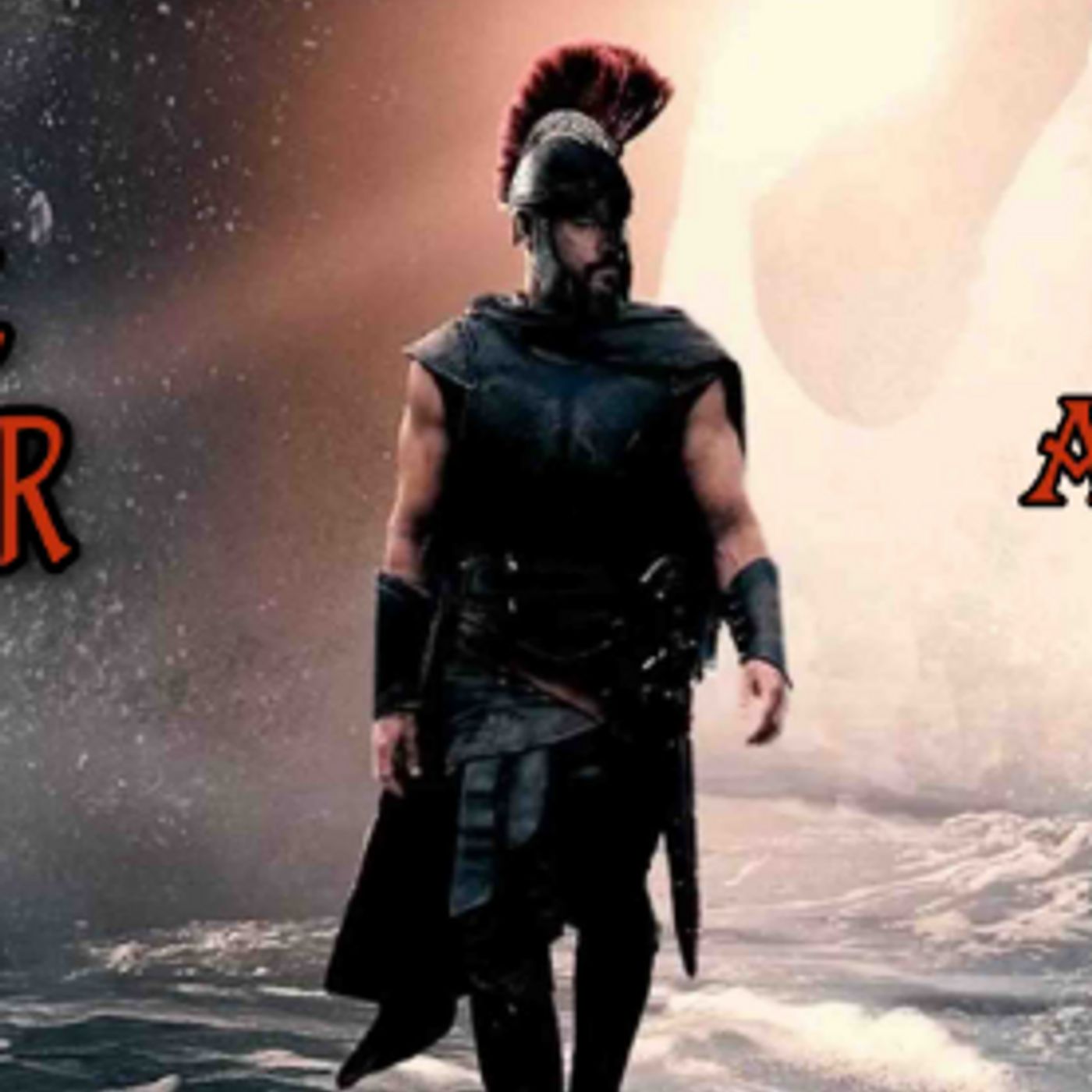
Aeon Byte Gnostic Radio
Bernie Taylor on Odysseus: Monsters, Ghosts & Christopher Nolan’s Agenda
00:59:43
As an equinox celebration, let’s have Bernie Taylor give us both the true and esoteric dope on a timeless myth that will be a cultural event later this year.
Loading summary
Transcript141 lines
- [00:01]
Announcer
There's a difference between liking a house and actually getting it. Redfin is built to close that gap. Redfin agents close twice as many deals as other agents, so when you find a home you love, you're not a step behind. When it's time to make an offer, that means less watching great homes disappear and more zeroing in on the one you'll actually end up calling home. Redfin helps turn saved listings into real addresses. Get started@redfin.com own the dream this episode is brought to you by Nordstrom. Ready to refresh your wardrobe? Nordstrom has all the latest styles for spring, from elevated dresses and denim to standout tops and accessories. Discover the trends and essentials you'll reach for again and again. We've got brands you love, like Waif, Princess Polly, Mango, Adidas, and Favorite Daughter. Plus free shipping, free returns, and quick order pickup. Make updating your closet effortless. Shop in stores@nordstrom.com or download our app
- [00:59]
Vance
Avoiding your unfinished home projects because you're
- [01:02]
Bernie Taylor
not sure where to start.
- [01:03]
Vance
Thumbtack knows homes, so you don't have
- [01:05]
Bernie Taylor
to don't know the difference between matte,
- [01:07]
Vance
paint, finish and satin or what that clunking sound from your dryer is. With Thumbtack, you don't have to be a home pro, you just have to hire one.
- [01:14]
Bernie Taylor
You can hire top rated pros, see
- [01:16]
Vance
price estimates and read reviews all on the app. Download today.
- [01:20]
Announcer
What is this lost tradition called Gnosticism? This ancient art of inner knowing and blissful transcendence? Those mystical teachings of individuality that brought the wrath of the Church and other institutions across history? Is it possible to learn about the Gnostic secrets of primordial goddesses we can still call upon, heed their warnings about alien beings keeping us in bondage in a terrible simulation and feeding upon us. Can we discover today and use their timeless rituals that caused expanded consciousness and astral flights that unleashes our inner light and divin? And the original teachings of Jesus and Mary Magdalene that promised a world of dignity and freedom for all living beings? Yes, you can. And so much more. From the Gospel of Thomas to the Gospel of Mary, from the teachings of Simon Magus to the mystery of Abraxas to the revelations of Sophia? It's now available in one course. Enter the Virtual Alexandria Academy. Know the unknown and the reality beyond reality.
- [02:39]
Miguel Connor
Feliz heresies and bienvenidos al real. How's everybody doing? I hope you like that intro. It's from the Gnostic the Virtual Alexandria Academy. I thought I'd put it out because I have recently added two two lessons recommended books and the Gnostic View of Evil and the Book of Enoch. Now available at the Virtual Alexander Academy. You can get at the website or you can get it directly at Patreon. So check it out if you want. It's got more than 30 courses, about 50 hours and it does come with all Astro Gnosis replays. Free when you join, but let me introduce myself. My name is Miguel Connor and I am your pompadist of Gnosis, that madman across the waters of creation. So glad to see you. Whether you're watching live or you are catching us on Z Replay. Welcome to this age of Hermes, this Philip K. Dick world and these Gnostic times. And as always, for our 12th visit, which is of course very astrological, it is a pleasure to have Mr. Bernie Taylor. Bernie, how you doing?
- [04:03]
Bernie Taylor
Miguel? First, thanks for having me on the podcast again. We always have a good time. And the Moondog Vance for being the sidekick and answering all the tough questions. Life is just beautiful. We're going to do some exciting stuff today. We're going to delve into the big screen and the past. Odysseus. It's going to be lots of fun. Welcome aboard.
- [04:27]
Miguel Connor
Welcome. Yes, I saw your presentation and it is awesome. And of course Odysseus is timeless. It's one of the original hero's journeys, as many have shown us. And obviously the movie will be a cultural event this year in summer. Of course. As I always like to say, Christopher Nolan only serves slop soulless movies. I enjoy them, but I don't think he transcends. He's. I know he comes from. He wants to be the next Stanley Kubrick. He is miles, miles, miles away from anything like that. But whatever. People like his shit don't know what to say. And with us too, we got the Moondog Vance. Vance, how are you doing?
- [05:09]
Vance
Oh, not too bad. I was up late last night, so bit groggy. But I'll try to stand up to the the quizzes that may ensue from Bernie.
- [05:21]
Bernie Taylor
So Vance, are you saying that you haven't seen the slides?
- [05:24]
Vance
No, I don't peek. I'm not a cheater.
- [05:26]
Bernie Taylor
No, you didn't see the slides. Interesting. Good Q and A Today
- [05:32]
Vance
we do
- [05:36]
Miguel Connor
it's A again. It's a good presentation. So we'll get started for sure. As always, after the Bernie's presentation, if you have any questions, please super chat them so we can get you from the den of the comment sections. Of course, if you are a member like Bad rad. I see you there. If you're a YouTube member, recognize you from Patreon. We'll take your questions and as quickly as we can. Not much else. And, well, there's quite a little bit of housekeeping, and then we'll jump right into it. Just as a warning, the password was changed for those of you who get the private RSS feed on AV Prime. So if you have an issue, go to the website or just message me. I'll give you the new password. Something we do every two years or so. But, you know, it's got to be done. Of course, if you're on Patreon, you do get your private RSS feed without a password, and you can connect it to Spotify, a very cool feature, the Red Circle app, which also streams aeon byte that will be going the way of the dodo at this month. So if you are there, please jump on Patreon, YouTube or AV Prime. And I think that's it. Just want to keep you guys a breast of signs, if you know what I mean. So let's not waste any more time. Let's jump into this Odyssey. Let's do it. Let's see, where is Bernie's presentation? And here it is, Odysseus and Ghosts by the mysterious Bernie Taylor.
- [07:10]
Bernie Taylor
And this is relevant to our time because, of course, as you mentioned, Christopher Nolan has a movie coming out in July. And did Christopher Nolan read the book the Odyssey? Did any of his team read the book of the Odyssey? Well, after you get through tonight's program, you finish it up, you watch the movie. You can ask that question yourself. But my guess is that he hasn't. But I did. In the last year, I read the odd the. I read the Odyssey. And it's a fascinating book for reasons people couldn't imagine. So, first of all, we're gonna have an overview. We're going to talk about the monsters we remember, the big ones, the ghosts of the underworld and the return. That's the question. The question. Well, the Illidan Odyssey were both written by. Allegedly written by Homer. Nobody really knows because Homer himself wasn't documented. And he was a blind bard. So he sang or he. He gave the verses to a musical instrument. I believe it was a Lear. Okay. And there were other parts. He just wasn't the only one. It was a thing of the time. But apparently he was the blind bard. It was a thing. There's two words you'll hear out there in the word of the Odyssey. One is Odysseus, and the other one's Ulysses. They're the same. Odysseus is Greek, Ulysses is Roman. In Greece they say Odyssey. Odysseus, Odysseus. So if you don't remember the correct spell, the correct pronunciation, you can write it out in Greek and everybody will just understand what you got. Odysseus. And of course there's the Iliad, which is the story of the Trojan War and many people's. There's two sides in archaeology about the Trojan War. One side believes that it's completely bogus as a location in Troy. The other side believes that the initial archaeologists who that is the place. But the initial archaeologist totally bungled the excavation. So archaeologists aren't very happy about the whole thing. Okay. And then the Odysseus was the mastermind behind the Trojan horse. And that's what how most people remember Odysseus. Now the Odyssey is his story after he leaves Troy. There's many books, many books. And many people may have seen the Ralph fies movie in 2024, the Return, which is a series of books within The Odyssey books 1113 through 20. So it's. There's many books and people say did you read the book? Well, there's many books. Did you read the the Odyssey? The answer is I did, but I didn't read the, didn't read the Iliad. So yes, there is the Return which is quite interesting. And then we have the movie the Odyssey. Christopher Nolan's coming out this July and what we have in the preview is the, you know, our hero or soldier in this image. He's, he's rowing, helping his team row about and he's got his, his hood off where they all have their hoods on, handling the rain. And Matt Damon, he's a character. But let's.
- [10:35]
Miguel Connor
Don't you love how Agamemnon looks like Batman?
- [10:39]
Bernie Taylor
Yeah, exactly. It's quite the.
- [10:42]
Miguel Connor
Absolutely no, couldn't help it just couldn't
- [10:44]
Bernie Taylor
help now when most people don't know, in fact 99.9 of the people who know the Alien Odyssey that there's other books and these are lost books that we have pieces of as told about through other authors. Okay, so there's many lost books and one of the books is the telegony and post Ithaca journey of Odysseus that when he dies and it tells the story of his death and we'll capture that towards the end. So if you want to know how he dies, because he does.
- [11:18]
Miguel Connor
Yeah, I know, I know, but you saw this lies.
- [11:21]
Bernie Taylor
But Vance hasn't seen it. But Anybody out there? Hang on.
- [11:23]
Miguel Connor
I knew from history, so from literature,
- [11:26]
Bernie Taylor
how does he die? So we're going to talk about the books 9 through 12, which is Odysseus's account of his adventures. He's the only survivor, he's the only witness of any of this stuff. And that, and that's. We're hearing his perspective. And odysseus has a 10 year journey home from Troy and it takes him 10 years to go from Troy to Ithaca, which aren't that far apart on a cruise. You know, it's a, it's a day and a half. Okay, the day and a half with a few meals in the middle, but it's not that far away. But he gets blown off course. He gets completely blown, of course. And the blowing of course is a literary device. We have this with Dorothy in the wizard of Oz and some. I remember growing up that there were like 20 or 30 wizard of Oz books in the series on the shelf at the library. And you can create these series of books such as the Odyssey or the wizard of Oz by having a mechanism that sends the hero off someplace that they have to return. And then you can make up stories all that you want. So Odysseus recounts his story because this is Odysseus narrative at Shira among the Phaeacians. Okay. Which is what we would say somewhere between Iberia and, and Rome. And Rome, yeah. Italy. That, so it's, that's the concept of where share of it. But of course the, it's, it's mythical. Okay. And so this is Odysseus accounts, remember that? Okay, so he, he arrives on the, the beach, he has nothing. You might have a teenage daughter who broke up with a boyfriend. She says, dad, I have nothing. Well, she actually has a lot. When he arrives at the beach, he has absolutely nothing. He, he drapes himself in seaweed. That's how little he has. And he plays to the, the generosity of the king and queen's daughter, no, Saya. And she brings, she brings him to the court, the court of the Queen of Reedy and the king Antinius. Okay. Alcanus, Alkinus. Okay. And in the court he arrives and there's a bard, a bard just like Homer. And the bar tells the story of the Trojan war heroes. And Odysseus cries when he hears this because he's, he's been gone for a number of years. He doesn't know what happened to these heroes on their return. He doesn't know the story. So he cries and he also says what A great story, tip the bard well, which is really Homer saying, tip me well for telling this story as we're going along. So there's. I'm not self serving. It's a self serve. Well, I'm not sure what, how you call this, but it really is, it's about as self serving as you can get.
- [14:24]
Miguel Connor
Yeah, he didn't have the machine at the coffee shop.
- [14:28]
Bernie Taylor
Exactly. So it's a famous scene among artists, classical artists, about the. In more recent times that Odysseus crying at the court of Alkinus. Well, some, some artists have actually read the book, unlike I read the book. And there's an artist, Johan August Malstrom and He wrote the 19th century, he painted the 19th century and he, he gives a different narrative of this. And in the image we see, we know that Odysseus is the sole survivor of his ships. And he recounts the fascians, how he lost his crew and his journey to the land of the dead. That's what we know from Homer. But who is Odysseus looking at? Odysseus is looking at the Queen of Reedy. The king is sitting back, he's got his arm, he's got, he's looking straight in her eyes, he's got a hand out looking for, for assistance and he's got his right arm on her knee. So he's, he's seeking to play her. What is he seeking to play her about? Well, we're going to find out. And the gallant Odysseus. Okay, well there's three monsters that I would call minor monsters and they're the ones that most people know about. In the Odyssey, there's Polyphemus, Polyphemus. The Lagestronians and the Sheila. And most people know the story of Polyphemus is in a cave and he eats Odysseus, six of his men. He kills them and eats them, devours them. But Odysseus is real clever and he names himself Nobody. And so when he closes the, he closes the, the gate of the. Put a boulder in front of the doorway of the cave and Polyphemus's friends call and who's there? Who's there? And who, who, who's. Is there any problem with anybody hurting you? And he says nobody, Nobody. Money. So it's the clever Odysseus. Okay. And in classical times, people painted Polyphemus with three eye sockets, but only one had an eye. It was a way that they did it because they, they didn't imagine the animation of today that you can actually just have one eye on the forehead. So he did have one eye, but he had, he had two empty eye sockets. And you'll see that into like last few hundred years as well. So pre animation there's three eye sockets and Odysseus, Odysseus is men stabilized the eye of, of Polyphemus. And then as Odysseus is sailing away, which is sure. This is going to be in Christopher Nolan's movie. Oh, this is brags. You know, I am Odysseus. I am the wonderful. And Polyphemus says my father will curse you and you will if you return, you'll only return home alone. And that's kind of. Most people know that story. And then the late, late, late Strogonians were sort of gigantic people, both men and women. And he to the ship sailed into their, the port. They threw rocks on him and they, they sank them. Odysseus escapes with the one ship that he was that was anchored outside the port. So these are stories about how Odysseus is losing his crew. And these are the stories that he's telling the Queen of Reedy he's making up. It's not his fault. That's the story, okay? He's. There's a shilla, there's the fish Schiller. And of course in the Odyssey, Homer writes that hug Sheila's crag, sailing her sail on past her top speed. Better by far to lose six men and keep your ship than to lose your entire crew and the whirlpool of Sherbatus. Now Skela was a this monstrous creature on the cliffs or sort of like on the bank. And Charbos was a whirlpool. And so you had a sail. If you went too close to Sharp List, you're going to your whole. You're going to go down the drain. Okay, but if you get too close to Sheila, Sheila's going to grab some of your men. And he loses six of his men to the mouth of the shilla. So he's losing men. But it's not Odysseus's fault. And Schiller is believed now to be at the, through the, at the Strait of Messina. Ships powered ships go thorough there all the time. It's no problem. But you know, if you catch the wrong wind and there's a, there is kind of a whirlpool, but it's nothing that's going to suck down any ship. And the whirlpools from the, from the, the currents from the two directions, but it does exist. Okay, so we take these monsters, the Legostronians, Polyphemus and Schiller, at the word of Odysseus. There is no evidence besides what he says to the Queen of Reedi that these exist. And he tells the story of meeting Cersei. And in Greece they say Kirke and Odysseus is bewitched by Kirk Cersei and he spends one year on her island. Now, Vance, if you, if you return home the next morning after being out that night all night long, and you're supposed to be in by 9 or 10 and that you said you were bewitched by the woman at the bar and you couldn't help yourself, how would your significant other take that?
- [20:12]
Vance
Oh, I don't know. I think maybe with a grain of salt.
- [20:17]
Bernie Taylor
Okay. In a salt. Because you come back the next morning, right? You know, right? He's. He doesn't come back the next morning. He comes back, he leaves a year later and people say she's a witch and all this sort of stuff, but, you know, he's, you know, he and his crew had a good time. It just is what it is, right? They had a good time. So after, after a year, she sort of gets tired of him and she says to get out. She gets tired of the whole crew, the whole story, right? His men are chasing her, her women around and she's the hostess, probably run out of food and things like that. So Odysseus is told by Cersei to return home, you need to first go to the Land of Dead and meet the Sea of Teresius. And the Teresa Teresius will give you knowledge of how to get there. Now, the Land of the Dead is believed to be to the west. The question is how far to the west? And one clue of the Land of the Dead is that it's where the Titan Oceanus reigns. And Oceanus reigns outside the Mediterranean, whereas Poseidon reigns inside the Mediterranean. And this was all resolved in the. The War of the Titan, the Titans and the. The Titans lose and Poseidon gets the Mediterranean and Oceanus gets the other oceans. But of course, we know now that Oceanus got a much better deal because there's more oceans outside the Mediterranean. But they didn't know that at the time in all in their infinite wisdom. But that's, that's how that goes. But to get to the Land of Dead, one has to cross the river sticks. And that's a common narrative that we hear and we may even say in our lives, pay the. The ferryman to Cross. And the Styx is the daughter of start of Oceanus. So they get to the. They get to the land of the dead and Odysseus, the first person they meet is Elvenor Elpenor. And Elpenor tells them the story that he was on the roof at Cersei's the night before they. He was sleeping on the roof the night before they left. He falls off and he dies. And he doesn't have a proper burial. And so Odysseus listens to the story and says, well, you know, I am a good. I am as a captain, I am a good host and that you must. I must take care of my men. What he's really doing is projecting to the Queen of Reedy that you are a good host and you will take care of me. So he has this, this, this hidden motivation. So Odisha sails back to Cersei's island. They all have fun. I'm sure they had a little fun. They with her, her lovely ladies, they properly bury Elpidor and they show that they have great hospitality. And then they sail back to the land of the dead because they. They're on a mission to talk to Tauracius. And Thracias foretells the future to Odysseus, okay? And he tells him many things. One of the things he says is he warns Odysseus not to harm the sacred cattle of the sun God Helios. He says, but of course they do. They harm the. They. They steal and harm the. The cattle of Helios and they. Zeus wrecks their ship and then Odysseus is the only survivor of this. So he does exactly what they. They. What they. What Teresius tells them not to do. And that sets the stage again to where we are on the beach with Odysseus, who has absolutely nothing except the seaweed around his waist, okay? As is. As pictured. So he does in this land of the dead, he meets ghosts and he meets monsters. And the first ghost he meets is his mother, of course, right? Because this is a. He's saying he's a good guy and is a good son. And I'm thinking about my mother. And he asks about his. His wife. He asked about his father, he asked about his son. And three times he tries to grasp his mother, Anticlea. And three times she. She whisks away because she's a ghost. You can't, you can't hug a ghost. Everybody knows that except Odysseus at the moment, in his. In his grief and his longing for his mother, which is Feeding again to Queen of reading. The next 13 ghosts are women. So, Vance, would you have guessed that. That the third. The 13 ghosts that he meets are women?
- [25:01]
Vance
No.
- [25:01]
Bernie Taylor
What even crossed your mind?
- [25:03]
Vance
Well, the first thing that. No, but the first thing I thought is Cersei maybe sent them.
- [25:12]
Bernie Taylor
The next 13 ghosts are women. So again, he's just playing to the queen. Now, four of these ghosts appeared in the Iliad, so we can say four of them are part of the. The narrative. And one of them being his. His mother. Okay, so it's. Okay, so four of them appear, but nine of them first appear in the Odyssey, and they first appear in the land of the dead because he has no other narrative with them. So the question is, why? What goes back to Queen Aridi, who in the earlier image, he's looking at her eye. He's got his hand open, his palm open, and he's got his right arm on her knee. Odysseus has nothing. He has no food, he has no clothes, he has no riches, he has no passage home. And Reed, he says that I'll give you what you need. And she's just so. Because he's such a nice guy and, you know, he's. Oh, this is flirting with her. You know, it's as some men do, not. Not the three of us, as some men do. And this isn't really so much different from Christopher Nolan. He needs clothes, he needs foods, he needs riches, need passage to the Oscars or. Christopher Nolan has an audience, and he has a completely different audience than Christmas Queen than Odysseus has because Queen of Reedy is interested in women. You know, he's. And maybe men monsters, whereas Christopher Nolan is, you know, how much blood, guts and gore can I feed to my male testosterone audience? And, you know, I'm there. I'm not a. I'm an anti. That just. That's this. That's the story. So who are these ghosts? Who. These ghosts that he meets in the land of the dead, the underworld? Well, one of them is the ghost of Antioch, who bore two sons from Zeus and she went mad, wandered restlessly around Greece. So this is a tragic figure. Zeus harmed her and then her life was ruined. Speak. So this is what a queen wants to hear, that he. This is what Odysseus is sensitive to, these sort of characters. Right. Okay, the goats of Alcmena. Who's the. The bio. Who's the mother, the biological mother of Hercules or Heracles? The. His adopted stepmother would be Hera, and she was the most beautiful woman in the with wisdom in the ancient world. So again to Queen of Reed. You're saying these are the people that came to say hey to me. Alcmena would be at. Will be at. Would have been at the next Bezos wedding. And she certainly would have been at the second. That's the kind of people the ghost of later seduced by Zeus when he transforms in this swan and from which is hatched Helen of Troy. A Listers. And these are the kind of people that. That he. That he's showing that come to say hey to him. Not the. The swarms of peasants and the. The laborers and the people wrote the ghost of Phaedra, who's the wife of Theseus who kills herself. She fell in love with her stepson and who was killed by Poseidon on behalf of her husband. She kills herself. Tragic death. Again, she speaking to what the stories women want to hear. Okay, this is soap opera stuff. The ghost of Ariadne, another daughter of King Minos and help Theseus escape from the Minotaur. Important character. Fun stuff. The ghost of Process who he left the husband leaves for eight years to test her fidelity. And he. When he returns, he disguised himself and seduces her. And so he. He's. He acted badly on behalf of. On behalf on a woman. And he actually kills her with an arrow while looking for his girlfriend. So this just shows he's on the A list and he feels deeply for women. And that's why these. We just had a few of them, but that's why these ghosts are there. Okay. It reminds me of a scene. A picture, a selfie taken that. That Neil Degrassi Tyson and I were taking and Obama jumped in. So Obama wanted to be known as a science scientist and we were okay with it. So we took the picture and we have it. It's one of those things. So the next ghosts are of heroic. Heroic Greek men. Agamemnon, Achilles. Achilles was played by Brad Pitt. Right.
- [30:05]
Miguel Connor
And Troy is.
- [30:06]
Bernie Taylor
And Troy is Minos, Orion and Hercules. So the Moondog. You would agree that these are all like heroic men, right?
- [30:14]
Vance
Oh, totally.
- [30:15]
Bernie Taylor
Yeah, totally. I mean you. I mean these are the guys you want to pal that round with, right?
- [30:19]
Vance
Well, I'd be kind of embarrassed thanks to them. You know, they're all such he men.
- [30:24]
Miguel Connor
Well, at least you know how to take out Achilles. Achilles,
- [30:30]
Vance
yeah, he's a real heel, you know. Killed
- [30:35]
Bernie Taylor
so Interesting. So. So I should actually. I should have put a question mark behind this because. Are these the ghosts of heroic Greek man? I guess I forgot to do that because Agamemnon was murdered by his wife because Agamemnon killed his daughter and their daughter and sacrifice for Sage safe passage to Troy. Of course, her boyfriend helped him to do that. Her to do that. So was Agamemnon such a great hero that he gave up his daughter sacrifice for sake pack passes of Troy? I don't know about that one. So we're gonna knock him off the list, right, Moondog? Yeah. Yeah. He's not the best guy.
- [31:16]
Miguel Connor
Okay. Yeah.
- [31:17]
Vance
Strike.
- [31:17]
Bernie Taylor
And then Achilles. After Troy. Achilles. Or actually during this. During this. Another.
- [31:28]
Announcer
There's a difference between liking a house and actually getting it. Redfin is built to close that gap. Redfin agents close twice as many deals as other agents. So when you find a home you love, you're not a step behind when it's time to make an offer. That means less watching great homes disappear and more zeroing in on the one you'll actually end up calling home. Redfin helps turn saved listings into real addresses. Get started@redfin.com own the dream. The world tells girls who to be. American Heritage Girls helps them discover who God created them to be. Bold in faith, strong in character, and confident in purpose. Through outdoor adventure, service, and discipleship, girls are equipped to lead with courage and live out their biblical worldview. Help build the next generation of bold women of integrity. Start a troop today@AmericanHeritageGirls.org okay, I have to tell you, I was just looking on ebay, where I go for all
- [32:29]
Miguel Connor
kinds of things I love.
- [32:30]
Announcer
And there it was.
- [32:31]
Bernie Taylor
That hologram trading card. One of the rarest.
- [32:34]
Miguel Connor
The last one I needed for my set.
- [32:36]
Announcer
Shiny like the designer handbag of my dreams.
- [32:39]
Bernie Taylor
One of a kind.
- [32:40]
Announcer
Ebay had it.
- [32:40]
Bernie Taylor
And now everyone's asking, ooh, where'd you get your windshield wipers? Ebay has all the parts that fit my car. No more annoying, just beautiful.
- [32:51]
Announcer
Millions of fines, each with a story. EBay. Things people love.
- [32:56]
Bernie Taylor
Running a business means checking a lot of boxes.
- [32:58]
Announcer
Let's see. Payroll, Check. Inventory. Check. Insurance.
- [33:03]
Bernie Taylor
Ah, good thing Simply Business makes getting small business insurance fast and easy. Check insurance off your list@simplybusiness.com the Amazons. Amazonian women fought on the side of the Trojans. It was kind of complex. Lots of. Lots of battles going on. And Achilles kills the Amazon queen, and he kills her. And she. See, she was such brave in battle, and she was so strong and she is so beautiful that she could have been my wife. I'm so sad that I killed this woman. And so he. He, He. He just. He has tearied eyes. And so Queen Areni, she'd be like, this guy's a turd. I mean, that's what she's been thinking. You. You killed a queen for no reason and now you're regretting that you. You did it. So Vance, how would we put Achilles on the list of, you know, good guys in the eyes of queen, aren't you?
- [34:01]
Vance
Oh, not not. I mean, especially since. Since he. He lost his prime Amazon prime privileges at that point.
- [34:08]
Bernie Taylor
Exactly.
- [34:10]
Miguel Connor
Wonder Woman take care of him.
- [34:13]
Bernie Taylor
So Vance, do we take Achilles off of your hero list?
- [34:17]
Vance
Yeah, yeah, he's gotta go.
- [34:18]
Bernie Taylor
Yeah, well, okay, I'll. Okay, we'll just take that one because we got. There's two, right? You got a few left. Okay.
- [34:23]
Vance
I don't know.
- [34:25]
Bernie Taylor
Okay. And then. So the death of Achilles is a famous story. Achilles heel. And of course he goes to the underworld. There's a famous quote from Homer. I'd rather slave on earth for another man, some dirt poor tenant farmer than rule rule down here over all the breathless dead. So the underworld is such a great place. And in the end Achilles got his due. Okay, and this was a queen of Reedy knows this story. So she's. Of course. Actually she hears. Actually she hears it first. Odysseus. She doesn't, you know, she knows that about the Achilles heel. She knows he killed. That he killed the Amazon queen. But now he hears from Odysseus that he's regretting all the stupid stuff he did in life too late. Especially when things against women. Yeah, okay. And then there's the. There's. He meets Ajax. Was. Is when. When Achilles dies, he has this divine armor to be sent given to somebody else. And is Odysseus fight over it? Is wants to fight with his, you know, his hands and his, you know, swords and things. But Odysseus sort of woos him and speaks around the fight itself and he ultimately gets the armor is realized he's been had and he takes the sword of Hector and he kills himself. In the underworld, Odysseus sees is who just walks by him, won't even say hi. So one would say that Ayas, who was who. Who was vying to be the second most heroic personality among the Greeks in Troy. He's petty. I mean really. So Moondog, where do we. Where do we see is on the list of these heroic greed.
- [36:18]
Vance
I think we got to clean Ajax out. We gotta clean it.
- [36:22]
Bernie Taylor
He's petty. He just should have said, hey, scrub
- [36:26]
Vance
him off the list.
- [36:27]
Bernie Taylor
Scrub this one off the list. Exactly. Okay. And Then there is. He meets Minos and who is a tyrant king who gave children to the Minotaur as a tribute. He becomes a judge in Hades. So he gets the. To be the judge over the other turrets. But think of. He gave up his children to the Minotaurs tribute. How is Queen Aridi going to take that one As a mother with a daughter who Odysseus tried to, you know, sway. So Vance, do we keep Minos on the list? On the heroic? This list is getting pretty short, isn't it? It's not.
- [37:07]
Vance
Yeah, he's full of bull, that guy.
- [37:09]
Bernie Taylor
Exactly. But we do see a trend. There's a theme here. And then he sees Orion. Orion is blind. He searches for the rising sun. It's part of his narrative. Well, the reason that Orion became blind is because he raped a king's daughter who then blinded him. So Orion probably, you know, do we. And he slaughtered animals everywhere he went for the simple sake of slaughtering. There's no rhyme or reason. Vance, is he still on your list?
- [37:43]
Vance
I can't see him staying on it. Nope.
- [37:45]
Bernie Taylor
Yeah, I can't say that. Yeah, but any. Odysseus never met Hercules because Hercules was in the night skies, a constellation. So he made that one up, you know, maybe the other ones, you know, he encountered. But he made up the story that he met Orion. And then there's Hercules, the greatest, you know, as he's, you know. Hercules slayed his own children with the bow. But he did it when he was. And he was drunk when he did. He had a drinking problem. And his repentance, his penance was the 12 labors. Okay? And on one of those 12 labors, he sought to obtain the belt of Hippolyta. And she offers to give him the belt, okay. And he kills her anyway. And then he kills all the. All her generals and all sort of stuff. So Vance, just this. This one might be a 50. 51 with you. Is he still on the hero list?
- [38:45]
Vance
I don't know. He's the last one and you know, he's up there. He's got constellation in the sky, of course, so did Orion. So I don't know.
- [38:52]
Bernie Taylor
I guess, yeah, I take him off. Yeah, I would take him off. And of course he never met. Oh, this is. Never met Hercules because as you said, he was a constellation in the sky. So he brought in Hercules because Hercules is like the most obvious person who has harmed women. I mean, the history. I mean, it's Zeus and then it's Hercules, right?
- [39:13]
Miguel Connor
That's the father, like Son.
- [39:17]
Bernie Taylor
And so he brings the, he brings these characters in. Okay, so all these heroic Greek men. Well, we've decided Vance has changed his mind with a little insight. And, and without having read the book, he now is. Has switched teams, one could say.
- [39:31]
Vance
Yep.
- [39:32]
Bernie Taylor
But there are other male people that he meets. And these, these next ones are actually criminals. This titious. And he, he attempted to violate Leto, the mother of Apollo. And Artemis spent his time in the underworld being tortured by two vultures who feed on. Fed on his liver. It's very similar to the story of Prometheus where he's tortured by the. Tortured by the vultures and the livers grow back. Okay, so I, I didn't ask you about this. And we're just going to say he's a, he's a monster. We'll just, we'll go with that one this and this. Tantalus, another. These like real, real monsters. Okay. He reveals the secrets of the gods made to stand in a pool of water below a fruit tree. So he can't, he can't eat and he can't reach down for the water. He's both hungry and thirsty, so he's tantalized.
- [40:26]
Miguel Connor
One could say, oh, this is before, this is before Satan and the demons management, right?
- [40:34]
Bernie Taylor
Oh, yeah. And then this Stisophus was. Everybody kind of knows the story. He attempts to cheat death and his eternity is to halt a boulder up a mountain. It rolls down. He has to. His whole. His attorney is pushing up and having a drop down on him. He has to push it up again. And so these are, these are valid criminals that of course Queen of Reedy would say, you know, Odysseus is saying that these people are in hell. They all went to hell, exactly where they should be. And that's why he gives them after all the women. But he includes these otherwise prominent characters. And remember, this is all Odysseus's account of his adventures. Okay, so there's no collaborative evidence. This is, this is purely Odysseus. So the land of the dead, the cast of monsters and ghosts. Third 13 notable A list, women plus Anticlea, his, his mother and nine monstrous men. So in Odysseus's version of the story, okay, he arrives back at Ithaca and he arrives back fully clothed with, you know, beautiful clothes that Queen of Reedy has given him. That's the story. And then he encounters Athena and Athena says to him, let's think about this strategy. Let's just think about the strategy. And there's a famous painting, Athena revealing Ithaca to Ulysses and it was recently up at auction at Sotheby's. Estimated bids bid 20 to 30,000 US dollars. That's not a bad price for these things. You'd be thinking hundreds. I mean, some. And the. The companion in the series is the advice that Odysseus takes. She tr. Athena transforms Odysseus into a beggar so that when he goes back to Ithaca, he can have his ruse to fit in with the court without all the suitors slaying him, of course. But what. That's. This is Odysseus's version of the story. What really happened is Queen of Reedy didn't give him clothes, she didn't give him riches, she gave him food and passage home. That's it.
- [43:01]
Miguel Connor
That's.
- [43:01]
Bernie Taylor
That's what really. Because she says, this guy's a scoundrel. He has manip. He has been manipulating me since he arrived on the shore. My daughter, to bring her. To bring him to the court. And he makes up all these stories about all these ghosts, the monsters that he loses his crew over just to explain his own navigational mistakes and his. And then all these. These female ghosts that are playing to her as. I want to be a lister, she's probably an A lister. She would. She'd be at the. She would have been at the last Bezos wedding and I'm sure the next. So you, Miguel, was Odysseus one of Joseph Campbell's heroes in the Hero with a Thousand Faces? Well, according to Joseph Campbell, yes. Okay. But is he really. So in the Hero's Journey, you have this cycle and the call to adventure and. Absolutely. He goes on the call to adventure. He has many supreme ordeals, initiations completely. That is part of the narrative. And then the unification transformation becomes this better person. There is no part of this story that I. I've read that Odysseus becomes. Transforms and they've become a better person. It just isn't there. It just. It's not. I mean, people who didn't read the book, who. Who've heard pieces, stories here and there and, you know, maybe watch the movie from 1960s, they're like, of course he's such a great hero, but that's not the Odysseus in the book. And that you. To read the book this nuance. Because Homer doesn't tell you who all these female ghosts are. Okay. The Greek audience knew who they were and knew the backstory and knew the reason that he was feeding these female ghosts to Queen. A reading for his mother, right? Oh, my mother. You know, you know, and so he's playing to her feminine wiles. Okay. And then the return back, the heroes returning. So yes, he does return to Ithaca, but, but, but, but, but there's a book that comes after. And in the added post Ithaca journey, Odysseus dies by his son Latinus, who's birthed by Cersei. He doesn't know. Oh, this Latinus doesn't know. Odysseus is the father and Odysseus doesn't know that Latinus is the son. And this is the post Ithaca journey means he's left Ithaca. So did he return home? I don't think so. And you know, I'm a huge fan of Joseph Campbell, undoubtedly. I, I think he's more of the, the scoundrel, slimy tragic hero who's created all his own problems and he never, his return never even happens. He dies because the reason he hasn't come back for those 10 years and spent one years in searches island. He doesn't want to go home. He's a, he's a, he's a man, he's a warrior on the, he's on the hunt, he's on the kill. And it just. He doesn't want to go home. And so quickly he leaves. And then the irony is that he is killed, slayed by his own son Latinus. And Latin has, Latinus has his own story because Latin of Latinus sounds like Latin, which comes into the, the founding of Rome. So who was Odysseus's audience? Well, clearly it was Queen Aridi, because he's got, he's looking at her eyes and he's got his right arm, right hand on her thigh and he's got his hand out. I need your help, Please, please. So he, he, this, this artist read the Odyssey? Well, has Christopher Nolan's team read the Odyssey? Probably not. Maybe they read the classic comments. I'll buy that one. We'll see. But we'll, we'll give him benefit of doubt this, this July. And what is the audience of the Odyssey? Who was it produced for? Well, as sure as heck wasn't produced for Queen Oridi. For a summary of this. Odysseus has lost all his men and ships. He has created a narrative of monsters. Explain his poor seamanship and leadership. Queen of Redee holds the fate of Odysseus in her hands. Odysseus feeds her stories of ghosts from the underworld which speak to the strengths of and undue suffering of women as well as recognizing male monstrosities. We had that whole list, didn't we? Yeah, See, we put them on the list. And Odysseus never fully returns home to be a king, ultimately slayed by a child he fathered through the enchantress Cersei. Now, if that isn't a story, I mean, it's got all. It's got love, it's got betrayal. I mean, it's got ghosts, it's got monsters, it has all these characters. But the key to the whole thing is you have to know who the characters are, and the Greeks, the Greek listener from the Bard, as well as the reader and people for antiquity, who people. The classicist would know who those people are and why he had all these women first. And so, Vance, have I changed your mind on anything in this last 46 minutes?
- [48:41]
Vance
Oh, yeah. You know, the whole stories of all the Greek heroes and so forth kind of falls apart in the. In the. In the slime of their. You know, of course, the portal sailors that got killed because Odysseus was not very good sailor. You know, you can't blame them. But still, you know, it's. It's a shame. Makes me want to go on the side of Troy now. I always like the Greeks versus the Troy, but maybe. I wonder if the Troy heroes were like Xerxes and all that. I wonder if they were the scoundrels, too.
- [49:20]
Bernie Taylor
Well, that would be another. A podcast for another day, wouldn't it, Miguel? Another time that we can explore the question of the. The Trojans and their. Their antiquity with Sybil. And there's a story there, that's for sure.
- [49:37]
Miguel Connor
And that's Troy. That was enough. Thousand.
- [49:40]
Bernie Taylor
Yeah, exactly. And so do we. Do we believe that? So I say bad, bad. Tad, this is a great primer for the upcoming movie. Thanks, guys. I would hope that this is a great primer for the upcoming movie, because it's. It's an alternative perspective. This, you know, after the State of the Union president gives the address and this is called Republican right now, and then the. The Democrat gives the rebuttal. So this is. This is the. This is the rebuttal from someone who actually read the book in recent times? Yeah. Vance, did you read the Odyssey or Iliad in high school?
- [50:25]
Vance
No, I don't think so. If I, If I did ever hear
- [50:28]
Bernie Taylor
of anybody read it in high school that you believe they read it?
- [50:32]
Miguel Connor
No, Miguel, same question many times.
- [50:37]
Bernie Taylor
Many, many times you've heard people say they read it, but maybe they really didn't read the books.
- [50:44]
Miguel Connor
And, well, there's so many layers to it. Again, yes, as I've said before, it has, well, it does have many lessons, like the fact Troy, the, the war according to Zeus is because he felt the world was too overpopulated. So you've got eugenics and the gods always threatened by humanity and humanity self destructing. You can see it in many layers. And of course it's got all the myths. It's, it's the classic Hellenistic thing where people are flawed and they're doomed to fate. You know, like Oedipus killing his father, who he didn't know. And you know, men are flawed and no matter what they do, they're gonna screw up and their fate is sealed. You know, something in those days that was popular we can relate to too in our lives as we go in circles like wind up dolls and we see politicians doing the same tricks and self destructive things. So it does have a lot of universal things. And of course the great fight against Poseidon, against Athena, the unconscious versus wisdom and civilization and the trickster is usually the winner. So there's a lot out there. And I like what you said about Queen Eritia because maybe Homer's audience were wealthy patronesses, right? Bernie, he was trying to please them because they were paying for his bills. So he had to change things around. So I wouldn't be surprised. That's why the story is as it is.
- [52:13]
Bernie Taylor
Yeah, yeah.
- [52:14]
Vance
Well, the Greeks put these on as plays, right? Didn't they put them on as plays.
- [52:19]
Bernie Taylor
Tragedies, absolutely. And people would know in that play or when the bard sings, and it might be for one book or two books, and everybody knew the book that came before and the book that came after and so someone step in to that, that next scene. But yeah, it's, it's quite this, it's quite. Can you imagine? So let's say Matt Damon could see this podcast, this session we did. I'm sure you guys can just send an email and he'll have a chance. Would he walk out that I, you know, after he's seen this and the movie is already made, when he said that I am the great Odysseus, I played the hero. Or he'd be like, oh my God, why did I play this?
- [53:02]
Vance
Really?
- [53:04]
Bernie Taylor
Yeah.
- [53:05]
Miguel Connor
I mean, when I read it as a teenager, I never saw anything heroic about Odysseus. He was a short guy, cocky, he was kind of a weasel. But I was like, I was more interested in the monsters and the gods. That's the fun thing. Not the humans and their dumbass little games they played. I think it'd Be great if we got Mel Brooks to do a skit because you say Odysseus was in a ship for 10 years, which would have taken what you said a year and a half to do.
- [53:37]
Bernie Taylor
No, today actually. Today be a day and a half. At that time, maybe it was a week. I don't know.
- [53:43]
Miguel Connor
It was that far before I did. Yeah, it'd be funny. Like Odysseus was going and he saw on the beach like Moses and the Hebrews wandering for 40 years, which should have taken, you know, a few months. It's like the two. You know, I guess that's a motif, people being lost forever.
- [54:01]
Bernie Taylor
Exactly. And I think. I think that Homer and the ancient Greeks from where the story comes from, they had a lot of humor, the subtle humor that Elpenor. They meet Upenor in the underworld and he's. He has been properly buried. Of course. He's. He's playing a reedy for that. You gotta be a good guest too. Because I was a good. A good host. Like I. We've both been good hosts. And. And he's got to sail all the way back to the underworld to bury him. And that he fell off the roof and no people forgot about him. It's kind of a comic relief that. That he didn't count his men before he got on the ship. I mean, I would think that'd be like the first thing. First thing being a captain is you count how many people got off and how many people got back on again. Yeah.
- [54:46]
Miguel Connor
What's the name of that horrible captain in the show? Zach Brannigan. What's the.
- [54:51]
Vance
Oh, Zach Brannigan. Yeah, yeah, yeah.
- [54:55]
Miguel Connor
And Future Rabbit. I think that's a more how Odesis probably was right woman.
- [55:02]
Bernie Taylor
So he's. He's a tragic hero, but is. I'm not exactly sure how hero is because he makes up this whole. Everything that I did in the last hour. So he completely made up because he is the only witness. And that's what he. And Queen of Reedies.
- [55:21]
Miguel Connor
And it's interesting about burying his dead, I think. Yeah. With the Greeks. Because you see that when Achilles kills Hector, it's so important that his father get his body. For the Greeks, it was a proper burial was the most important thing because it'll send your guys to this boring Hades. But the burial was very important. I mean, there's stories where a Greek general who lost a battle would not. Would not be executed because he lost the battle. He'd be executed because he didn't bring all the bodies home to be you know, put the coins in their eyes and buried the proper way. So it was. It was very important to the Greeks.
- [55:59]
Bernie Taylor
Absolutely. One has to get the eyes and across the river sticks into Oceanics, the underworld. And yes, it all. Somehow it all ties together all these. These mythologies and we. They tie together of course through in the Odyssey and the Iliad. That's how we. That's how we first learned of them in other Greek authors kind of expand on the stories and they recap on them and flashbacks sort of thing. But yeah, he does is ultimately his son. His. From his. His year on the island with a beautiful woman turned it turned back on him. So everybody beat everybody out there in podcast land. Don't do that.
- [56:43]
Vance
If you run across an island with a witch on it, stay away.
- [56:47]
Bernie Taylor
Don't even look. Don't even look. It's a. But fun stuff, guys. We did it for sure.
- [56:55]
Miguel Connor
Yeah. Yeah. Again, this is a classic story. Again, as I've said before, if you read the. The Great Declaration by Simon Magus, he brings up the Odyssey. It was scripture back then. I mean, some say that the Acts of the Apostles is influenced by everybody, you know, or what's in Mark when. When Jesus falls asleep on the ship. Odysseus does the same thing in the same weather. So it was, it really was sort of the, I don't know, Star wars or the Matrix of its time. Everybody knew about it, regardless of your religion, background, culture. And it influenced everybody from religion to literature.
- [57:35]
Vance
Yeah. I wonder if it was satire, you know? You know, it was a Greek satire.
- [57:41]
Bernie Taylor
So it was the Seder satire, is that you're asking? But there was the Pan. The word panic does come from pan.
- [57:53]
Miguel Connor
Oh yeah.
- [57:54]
Bernie Taylor
Have you had James Hollis on your program?
- [57:58]
Miguel Connor
Yes, that's one.
- [57:59]
Bernie Taylor
One of the stories that he talks about. How long ago did you get have him on?
- [58:03]
Miguel Connor
It was probably. I think it was 21 around there.
- [58:06]
Bernie Taylor
20. He's, he's. He's the closest you can get to Young. I mean, he's closer. And he comes out. He comes out. He used to come out to Portland. We were friends of Young and the normal friends of Young met in a church where there'd be, you know, maybe 80 people. And when he came into town, it was a church with 300 people, a different church. Had to find a new location. But he talks about the. His background. What was as a Greek classicist, I believe he taught at a college. And then he became a young analyst. And his, his perspective was to look at young analysts through the classic. The classics and he would bring in these words such as pan and panic and tantalus and tantalize. He would tell these stories as they. So that we could remember it. I'm sure the Greeks saw it the same way. So Vance, were you tantalized today?
- [59:02]
Vance
Definitely. It helped my interest entirely because you couldn't really reach.
- [59:07]
Bernie Taylor
Reach for the truth or get the benefit from the base. You were somewhere in the middle there. The netherworld, as usual. Cool stuff.
- [59:21]
Miguel Connor
Yeah, yeah. Thanks for the support, Harry. Harry Zary 13. Thanks for the little super sticker. Really appreciate it. You don't see any questions from the audience before we wrap up, Vance?
- [59:35]
Vance
No, I don't. I'd like to shout out to bad Tad, member of the YouTube channel who's had many good comments today.
- [59:45]
Miguel Connor
Yeah, thanks for being here, man. Yeah, yeah, yeah. Homer's still influencing us. Yeah, obviously. Yeah. And even more with the one the movie comes out so dreary and dark. It's just. Anyway, I'll still. I'll probably watch it but.
- [60:01]
Bernie Taylor
Well, we're gonna regroup on this, aren't we? In the next podcast we do, we'll do a session to, to just catch up and then we go into the big program.
- [60:09]
Miguel Connor
Yeah, yeah, for sure. Yeah. For the audience this is a. Well, we're pretty much at the. At the spring equinox. So Bernie always comes for a celebration as he does in the solstice and usually the autumn equinox and the winter equinox. So this is what we're doing. Tomorrow we will continue. We'll have a show with the spring equinox on occult farming. And you'll see how magical it is if you put a little magic in your farming including weather control the genie and your stuff. So will be joined by Todd Elliott. Next week we'll go into more nostril improper. I will do a member presentation on the dark side of Gnosticism and oh, it's dark. It's time to expose things and break them open. You'll be very surprised. And some good shows on. On the demiurge and quantum physics. The shadow. So yeah, so this is. Yeah, we're. We're going into the underworld next week guys. And yeah, please support AM Biden any way you can. Member one time donations. Really appreciate your help. Any, any help to keep this red pill cafeteria open. And yeah, as always, if you're looking for voiceover work or you know something, you want to be a sponsor on this show. Right now it's 100 audience supported but let me know. But yeah, I Think that's it. We are at the end of yet another wonderful chat with Bernie. Let's see what number 13 brings us. But, yeah, as always, Bernie, thanks for coming on the show.
- [61:47]
Bernie Taylor
It's my pleasure. I will put my hand on your knee, I'll look in your eye, and I'll just ask for everything you can offer.
- [61:56]
Miguel Connor
As long as you're wearing seaweed, baby, that's all you need to do. That's where you're seeing. And, Vance, thanks for keeping us company, too.
- [62:04]
Vance
Sure. I think we got. We've gone full Cersei on this.
- [62:08]
Bernie Taylor
On this show tonight.
- [62:11]
Miguel Connor
Yeah, I know people sometimes think of Cersei from Game of Thrones. For those of you who'd watch it.
- [62:17]
Bernie Taylor
Yeah.
- [62:18]
Miguel Connor
All right. Well, for those of you who joined us, thanks for being here, really. As always, enjoy your company. You guys are amazing. You're gonna do so many wonders. You've got it in you to bring so much light to this world. Bring out your little Homer and stop bringing out your little Homer Simpson and let's. Let's create the epic. Let's go on our hero's journey. But that's it. Again, thanks for being here and please have a good night and take care of yourself.
- [62:48]
Announcer
There's a difference between liking a house and actually getting it. Redfin is built to close that gap. Redfin agents close twice as many deals as other agents. So when you find a home you love, you're not a step behind when it's time to make an offer that. That means less watching great homes disappear and more zeroing in on the one you'll actually end up calling home. Redfin helps turn saved listings into real addresses. Get started@redfin.com own the dream. Spring styles are at Nordstrom Rack stores now, and they're up to 60% off. Stock up and save on Rag and Bone, Madewell, Vince, All Saints, and more of your favorites.
- [63:29]
Miguel Connor
How did I not know rack has Adidas?
- [63:31]
Announcer
Why do we rack for the hottest deals? Just so many good brands? Join the NordicLub to unlock exclusive discounts. Shop new arrivals first and more. Plus, buy online and pick up at your favorite Rack store for free. Great brands, great prices. That's why you rack.
- [63:47]
Bernie Taylor
Running a business means checking a lot of boxes.
- [63:50]
Announcer
Let's see. Payroll, check inventory, check insurance.
- [63:55]
Bernie Taylor
Good thing Simply Business makes getting small business insurance fast and easy. Check insurance off your list@pledlybusiness.com Dentistry is changing fast. Keeping track has never been harder. That's why you have to check out the thank you for flossing podcast. It comes from the association of Dental Support Organizations and delivers unfiltered conversations with executives, innovators and clinicians. Drive driving the industry forward from DSOs and innovation to workforce and policy. It's the smart listen for dental professionals who want to stay informed and ahead of the curve. Search thank you for flossing and subscribe today. If you like the show, please take a moment to rate, review and subscribe. It really does help the show to grow.
- [64:41]
Vance
Thank you for listening.