Podcast
Afri-CAN by Pharo Foundation
Hosted by Afri-CAN Podcast · EN
Africa: lost continent, aid-dependent basket case of economic development failures? Forget the old clichés. Francesca Beausang and her guests explore the ideas and concrete innovations through which Africa is becoming a model of innovation-driven development for the world. Afri-CAN is a podcast run by Pharo Foundation, a mission-driven, impact-oriented organisation that designs, funds and operates economic development programmes towards a vibrant, productive and self-reliant Africa.
14episodes
Episodes
Newest firstAll episodes
Scaling Quality Early Childhood Education in Africa
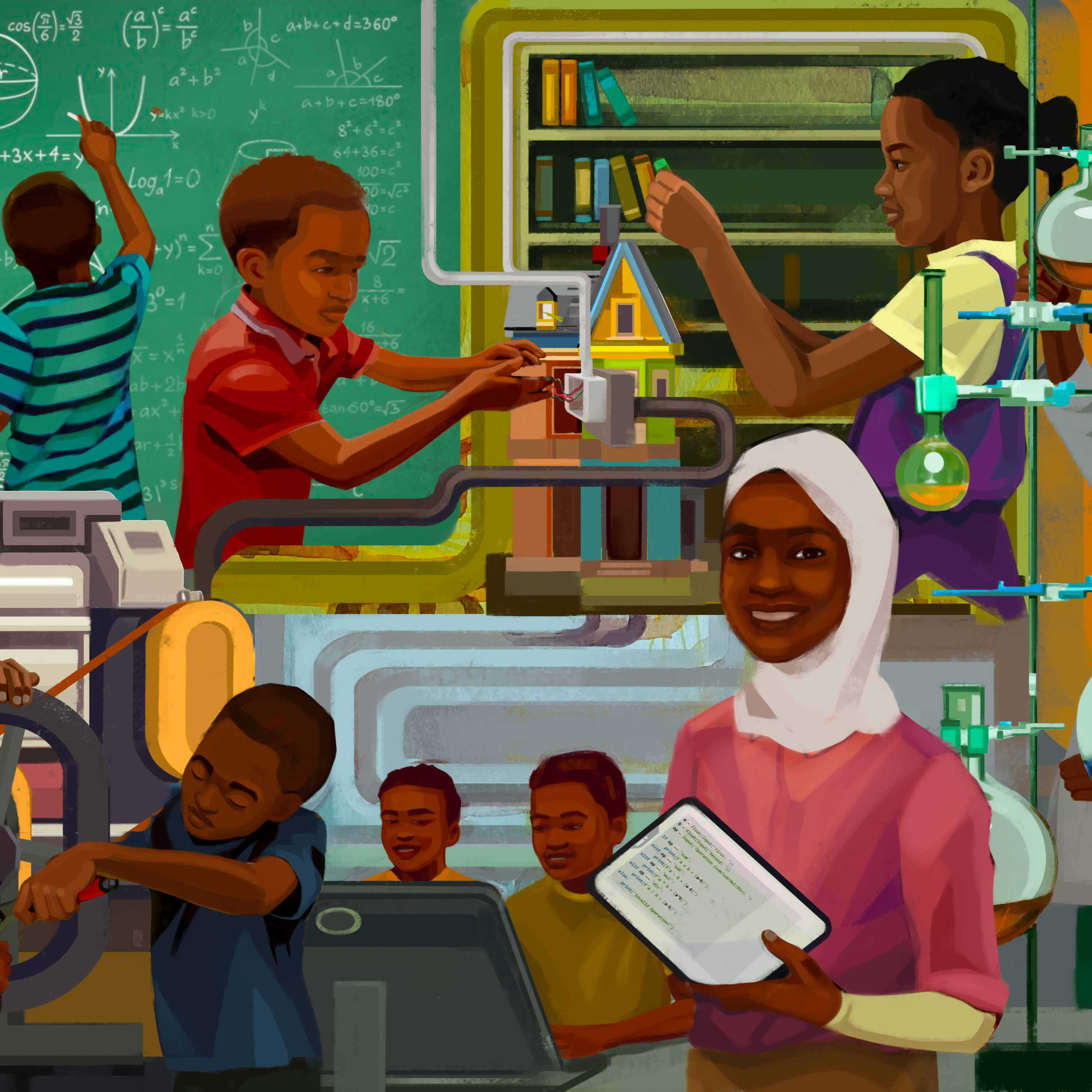
Mar 800:35:10Tap to summarizeHow can Africa scale high quality education that develops the whole child?In this episode, we define quality education as academic rigour plus scientific inquiry, critical thinking, and socio emotional development, producing learners who can engage global issues from a locally grounded perspective. Nafisa Shekhova (Aga Khan Foundation) explores innovations to expand early childhood education for low income and internally displaced children, including thoughtful use of EdTech and partnerships with existing community models such as Quoran based schools (madrasas).Follow Afri CAN on Spotify and Apple Podcasts for more conversations on development and innovation across Africa.
Transcribe →Music, Consciousness, and Student Success
Mar 300:28:35Tap to summarizeHow can African education systems support both academic results and the deeper life skills students need to succeed?In Music, Consciousness, and Student Success, we explore how music and consciousness-based learning help develop the “whole child” — strengthening resilience, focus, and long-term outcomes from pre-school to tertiary education.Guests: Kimball Gallagher (Juilliard-trained pianist, founder of 88 International) and Tahirih Danesh, PhD (Law) (CEO, Africa College Foundation; leading Education Town).Follow Afri-CAN on Spotify and Apple Podcasts for more conversations on innovation, development, and what’s working across Africa.
Transcribe →A Lost Boy’s Fight for Water Justice
Feb 1600:38:16Tap to summarizeWater can be life, livelihood – or a trigger for conflict. In this episode of Afri-CAN, we explore how rivers, wetlands and shared basins shape both survival and geopolitics in Africa.Our guests are Edoardo Borgomeo, water management lecturer at the University of Cambridge and award-winning expert on water planning under climate change, and Deng Chol, one of the former “Lost Boys of Sudan”, now a doctoral researcher at Oxford studying the socio-hydrology of the Sudd wetlands.Deng shares his powerful journey of walking over a thousand miles as a child and the story of a water system serving millions of people in South Sudan that almost became a pawn in regional power struggles. Together, he and Edoardo unpack how we can move from water as a source of tension to water as a platform for cooperation, combining diplomacy, science and ancient practices.Listen to find out what it would take to build truly peaceful water agreements in Africa – and why the future of entire communities can depend on how we share a single river.
Transcribe →What Eco-Labels Mean for Investors
Jan 1400:38:30Tap to summarizeImpact investment is booming, and up to half of it now targets environmental goals. But how do fisheries in Africa and other developing regions actually access that capital? In this Afri-CAN episode, we dig into the blue economy with Kaspar Baumann, Partner at impact-investment firm Clarmondial, and Amanda Lejbowicz, Fisheries Sustainability Expert at the Marine Stewardship Council (MSC). They explain how fisheries standards and certification work, why investors need robust evidence of environmental performance, and how governments, financiers and coastal communities can align around sustainable fish stocks, decent jobs and export growth. From improvement programmes and loan guarantees to the realities of measuring environmental impact on the water, this conversation shows how sustainability can move from a label on a packet to a genuine investment signal, and what that might mean for countries such as Somaliland.
Transcribe →