← After Dark: Myths, Misdeeds & the Paranormal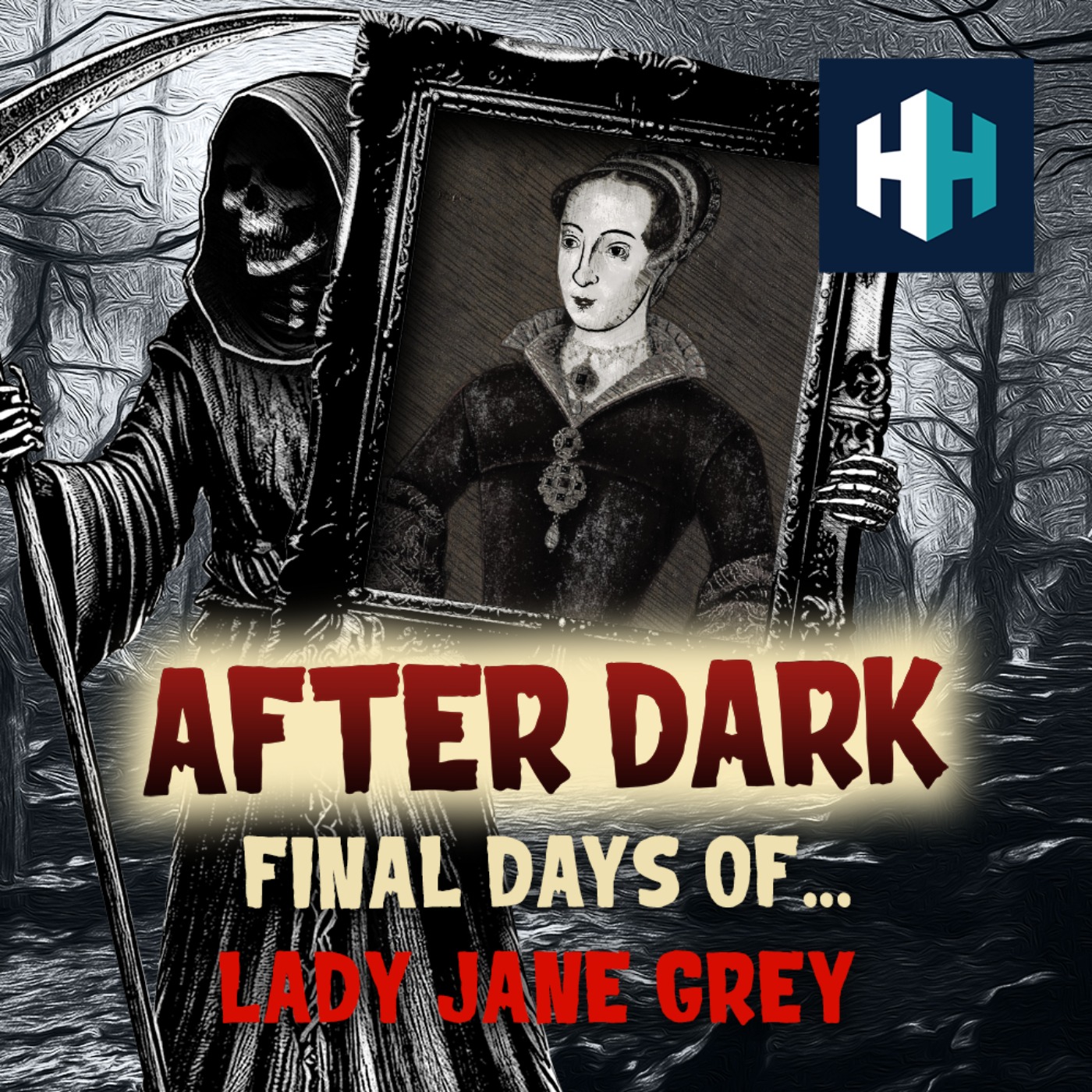
Loading summary
Transcript61 lines
- [00:01]
Mom
You know, as a busy mom, there are lots of ways you can help yourself fall asleep. You could stare blankly at the ceiling and replay every conversation you've ever had. Count sheep, have a debate with your pillow, give up caffeine, try acupuncture and buy a weighted blanket that will make you sweat profusely. Or you could try some milk, which has nutrients that support healthy sleep. Visit gonnaneedmilk.com for more info. And for everyone's sake, please don't give up caffeine. You know, as a busy mom, there are a few ways you can build strong muscles. You could get a gym membership which you'll never use, buy all sorts of expensive equipment for your garage that you'll forget you have, pay for a personal trainer that you'll never have time to meet with, and buy a fitness watch that only makes you sad every time you look at it. Or you could go for an easy run and try some milk, which helps build strong muscles. Visit gonnaneedmilk.com for more info. And please don't make yourself sad.
- [01:01]
Austin James
Hey, it's Austin James. Yes, I'm living with diabetes, but it doesn't have to define me. Thanks to the freestyle Libre 3 sensor, I get real time glucose readings throughout the day. The Freestyle Libre A3 plus sensor is small and easy to wear, giving me the freedom to focus on my life as a parent and a musician. Now this is progress. You can get a free sensor at FreestyleLibre US offer available for people who qualify.
- [01:22]
Dr. Tracy Borman
Visit MyFreestyle US to see all terms and conditions. Certain exclusions apply. Data on file Avid Diabetes Care for prescription only Safety info found @freestylelibre us.
- [01:40]
Anthony
Taking up one side of Trafalgar Square in the heart of London is the National Gallery. Tourists mill around on its steps all year long, staring up at Nelson on his column and debating whether or not they ought to make funny faces at the guards at Buckingham Palace. But if you climb past the tourists on the steps, sending pigeons flying as you go, and go inside the gallery's ornate marble entrance hall, then a hush will fall. Turn right through the first door and you'll be face to face with one of the most dramatic and enduring images in European art, the execution of Lady Jane Grey by Paul Delaroche. It's gigantic, full of bright colours and deep shadows. On one side of the painting is the executioner, wearing ruby red tights and leaning on an axe. On the other side, two ladies in waiting have already collapsed with grief. In the centre, in a dazzling white dress with her hair Falling over her shoulder and a blindfold over her eyes is Lady Jane Grey, the Nine Day Queen. Jane has been calm until this final moment when blindfolded and kneeling, she has reached forward to put her neck on the executioner's block. But she's been unable to find it. Where is it? What shall I do? She is reported to have said. Now, as this painting shows, her hands are being guided towards it by the Lieutenant of the Tower. There's so much power and powerlessness, I suppose, in this image of a young person groping for the executioner's block, pleading for help. It's easy to see why it has endured and come to define Lady Janegrave for so many. But does this do her justice? What more is there to her story than this final moment? Who was Lady Jane Grey, the Nine Day Queen?
- [04:02]
Maddie
Hello, and welcome to After Dark. I'm Maddie.
- [04:05]
Anthony
And I'm Anthony.
- [04:07]
Maddie
And today, as you might have gathered, we are talking about the execution, the final days of Lady Jane Grey, known as the Nine Day Queen. It's a fascinating history, but as we heard there in Anthony's opening, it's also one that has been sentimentalized. It's been made into stories and films. We have a lot of myth to wade through here in order to get to the fact. Now, helping us do that today is Dr. Tracy Borman. Tracy is of course our historic hero, but now she's officially the nation's historic hero after she received an OBE at the start of this year. Now, her most recent book is Anne Boleyn and Elizabeth, the mother and daughter who changed history. Tracy recently joined us to talk about the final days of Anne Boleyn. Today's episode, though, takes us into the next generation of Tudor troubles. And she has a new documentary out on this very topic, Nine Days Queen on Channel 5 in the UK. Tracy, welcome back to After Dark.
- [05:10]
Dr. Tracy Borman
Thanks, Maddie. It's lovely to be with you both again.
- [05:13]
Maddie
It's always a joy. Now, this is a history that I think I know. I'm familiar with the stories with the painting that Anthony described, but I'm not particularly confident in the context. So can you just give us a little bit of the lay of the land at the moment when Lady Jane Grey takes up her nine day queenship?
- [05:35]
Dr. Tracy Borman
You're right, it's one of those subjects in Tudor history. It's actually quite rare in that people know the tagline nine Days Queen, but not so much about the detail that lies behind it. So Lady Jane Grey, fascinating figure, tragic figure as well. Why did she even become Queen? Well, this is really where the story begins, because if it hadn't been for Henry VIII deciding to sort of divert the natural order of succession and then his son Edward diverting it again, Lady Jane would have come nowhere near the throne. So she was the daughter of a Nobleman, Henry Gray, 1st Duke of Suffolk, and Francis Brandon. Now really it was her mother who was significant because she was the eldest daugh of Henry VIII's sister Mary. So she had royal blood in her veins, which of course she then passed to her three daughters, Jane and Jane's sisters Catherine and Mary. The reason that that royal blood became significant is that Henry VIII deliberately excluded the descendants of his other sister Margaret, who had married King James IV of Scotland. Henry VIII was at war with Scotland, didn't want any steward on the throne of England. So in his last will he stipulated that the descendants of his sister Margaret could never come to the throne and that after his immediate heirs, his three children, then the children of his sister Mary and their children would be in the line of succession. So I think Jane was something like fourth in line to the throne at the time of Henry's death. Then we have Henry succeeded by his young son Edward, who of course is expected to reign a long time and marry and have children to pass his throne to. But none of those things happen. Edward dies at the age of just 15. Now he is a very staunch Protestant and that really influences his decision, at least in part, to leave his throne not to either of his siblings, his sisters Mary and Elizabeth, but to Lady Jane Grey, because she, like Edward, is a very devout Protestant. But there are other things at play here as well. Edward's government is dominated by John Dudley, who arranges a marriage between his son Guildford and Lady Jane. So really he's persuading Edward to leave the throne to Lady Jane so that effectively his son will be king or King consort. So there's this very complex kind of pre story really to this most brief of Tudor reigns with this 16 year old girl as she is. When Edward dies in 1553, suddenly being plucked from the shadows and made Queen.
- [08:41]
Anthony
Of England, it really feels like that to us in a modern perspective. It really feels like this is a bit of a head spinner where you're thinking, where has this come from? This really doesn't seem to follow much of a through line at all. So what were the machinations that they went through to make sure that Jane did become Queen? Seeing as it's so confusing to us, what did they do to make sure that she was positioned right at the moment when Edward dies.
- [09:11]
Dr. Tracy Borman
Yeah. So all of this really is taking place as Edward is dying. So admittedly, John Dudley, Duke of Northumberland, has kind of lined all of this up a short while before in making this marriage between his son Guildford and Lady Jane. But it's down to Edward, the young King himself, to actually change the succession, because otherwise it will naturally go to his elder sister Mary, which is just the last thing he wants. He's Protestant. Mary, of course, is a very devout Roman Catholic. Not just a Catholic, she wants to completely unpick the Reformation. So Edward writes this device for the succession. It still exists today. If you Google it, you'll see the document there and it's been transcribed, where Edward diverts that succession away from his sisters and towards Lady Jane and her heirs. And so this really then is quite a seismic change in the succession because even though there's nothing in law that says the crown is hereditary, it has to go, you know, to the nearest in blood. That doesn't exist as a law, but it kind of is what's been happening for hundreds of years. So it's a big thing for Edward to disinherit his sisters. And definitely he's motivated by religion, but also he's under pressure, as I say, from the most powerful man in his government, John Dudley. The interesting thing is, why does he disinherit Elizabeth as well? Because his younger sister he's very close to and she's a Protestant. So happy days. Surely why not have Elizabeth on the throne? Well, it's said because Edward fears that she might marry a Catholic. But I think this is when you really see John Dudley's hand in all of this. Because he doesn't want to live Elizabeth, he wants his son to be King consort and his daughter in law to be Queen. So he's pushing for this. And who knows what goes on behind closed doors when the very fragile boy king is very close to breathing his last and he's kind of either voluntarily signs this device or is put under some pressure to do so, but otherwise. Yeah, I mean, most people in England must have been like Jane, who, why, why is she queen? And it was quite a reaction when she was declared queen, age 16. And to say the reaction was muted among Londoners, I think would be putting it mildly. Londoners could usually be relied on to cheer for the right person. There was none of that. And really there was no sense of jubilation that you normally get with the arrival of a new monarch.
- [11:59]
Maddie
I'm just looking, Tracy, at the document, the device that you've spoken about there. I've got a picture of it and it's a remarkable piece of evidence. And I think the thing that is coming to my mind most is just how young these people are. Edward is still a teenager. Jane is a teenager in this moment. And you can see it in his hand on the page. You can see that he's unsure of himself. The first sort of two or three lines he has crossed things out. He's writing in between lines. He's made these mistakes. This doesn't look like an official document of a king giving his crown over to someone else. This looks like a note scrawled under pressure. And we know he's ill, of course, but it looks like a teenager who's not sure of himself, who's just scribbled these lines on a piece of parchment, handing the crown to another teenager. Yeah, this is remarkable. And you know, I think in your work, Tracy, you know, you've looked so much at Elizabeth I in particular as a teenager, as this young girl who grows up in the shadow of her mother with this sort of ghost haunting her and how that affects her adult life. So you're used to dealing, I suppose, with historic figures in some of their most youthful moments. But do you see this story as being particularly tied to youth and inexperience? They just, I can't get my head around how young they are.
- [13:17]
Dr. Tracy Borman
They're so young. You're right. It's one teenager leaving his throne to another teenager. And you definitely see it with that device. I would encourage your listeners to look it up because this isn't some beautifully crafted document with, you know, the illuminations that we're used to seeing with official state documents. It's a poor piece of homework. You would not hand that in if you had much choice in the matter. Crossings out childish handwriting, you think, my God, these people are children. Except they're not. In that Tudor childhood is very short. You're believed to go from being a child to being an adult at the age of six. That's when childhood stops really in Tudor society. And that's when really children are treated as adults and particularly a future king of England who is absolutely from birth trained to the role. So we can't necessarily compare a modern day 15 year old. No disrespect to those with Edward as he is making this seismic change in royal dynastic history. Even. So, yes, all of the players in the story of Lady Jane Grey, really, the key players, are exceptionally young and therein really lies a lot of the tragedy as well. And let's be clear about this. There's no hint whatsoever that Jane wants this to happen. She is not scheming for the throne, as other women in the Tudor period have been accused of, most notably Anne Boleyn, who we talk about in another episode. But Jane, this is the last thing she wants. I think she too feels slightly bewildered at being plucked from obscurity and put on the throne by her ambitious father in law. She's only just got married and it's all happening very, very quickly. And she makes no secret of the fact this is the last thing she wants to do is take the throne from the woman who she knows is the rightful claimant, Mary, the eldest daughter of Henry viii.
- [15:16]
Anthony
Before we just go on to the coronation scene, which we'll discuss in a second, I just had a quick question, actually, and that question was, what happened to Edward vi? Why did he die so young?
- [15:28]
Dr. Tracy Borman
Ah, so, yes, Edward vi. I'm pleased you ask this, Anthony, because often he's portrayed as this sickly king because, you know, spoiler alert, he doesn't live very long. And so he's almost depicted as from his earliest childhood being very sickly. He wasn't. He's a robust young man, very healthy. You only have to look at that amazing Holbein portrait of Edward as a baby. Very much a chip off the old block, if that's not too dreadful a pun for the Tudor period. He is robust and healthy, but a few months before his death, he contracts measles and that seems to have fatally weakened his immune system and he never really recovers and he dies probably of tuberculosis, that seems to be the most likely. When we kind of look with a modern eye at the symptoms that Edward was suffering from, it seems to have been tuberculosis and it was a very, very painful, lingering disease. And there is some suggestion that Dudley and the other ambitious men clustered around his deathbed painfully prolonged his life with the use of mercury and various things in order to ensure that that device had been signed and that the succession was secured for Lady Jane Grey. So you feel an awful lot of sympathy for this 15 year old boy, really.
- [17:06]
Matt Lewis
I'm Matt Lewis, host of the Echoes of History podcast, where every week we'll be delving into the real life history that inspires the locations, characters and storylines of the legendary Assassin's Creed franchise. Join us as we explore the narrow streets of Medici ruled Florence, cross sand dunes in the shadow of ancient pyramids, climb the rigging of 18th century brig, sailing across the Caribbean and come face to face with some of history's most significant individuals. Whether you're a history fan, a gamer, or just someone who loves a good story, Echoes of History is the podcast for you. Make sure to catch every episode by following Echoes of History, a Ubisoft podcast brought to you by History. Hit wherever you get your podcasts.
- [17:58]
Austin James
Hey, it's Austin James. Yes, I'm living with diabetes, but it doesn't have to define me. Thanks to the Freestyle Libre, a three plus sensor, I get real time glucose readings throughout the day. The Freestyle Libre 3 sensor is small and easy to wear, giving me the freedom to focus on my life as a parent and a musician. Now this is progress. You can get a free sensor at FreestyleLibre US offer available for people who qualify.
- [18:19]
Dr. Tracy Borman
Visit MyFreestyle US to see all terms and conditions. Certain exclusions apply. Data on File Avid Diabetes Care for prescription only Safety info found @freestylelibre us.
- [18:28]
Mom
You've been waiting all year and the moment is finally here. Bolin Branch is the betting brand for better sleep and their best sale of the year is happening now. Right now you can get 25% off the organic cotton sheets loved by millions of sleepers. They feel breathable, luxuriously soft, and get softer with every wash shop. Bolin Branch's cyber event with extended returns for the holiday season. Hurry to bolinbranch.com and use code buttery for 25% off everything. Limited time only exclusions apply. See site for details.
- [19:02]
Austin James
Ryan Reynolds here for I guess my hundredth mint commercial.
- [19:06]
Dr. Tracy Borman
No, no, no, no, no, no don't. No, no, no.
- [19:08]
Austin James
I mean honestly when I started this.
- [19:10]
Dr. Tracy Borman
I thought I only have to do like four of these.
- [19:11]
Austin James
I mean it's unlimited to Premium Wireless for 15amonth. How are there still people paying two or three times that much? I'm sorry, I shouldn't be victim blaming here, give it a try@mintmobile.com switch whenever you're ready.
- [19:25]
Dr. Tracy Borman
45 upfront payment equivalent to $15 per month new customers on first 3 month plan only taxes and fees, extra speeds.
- [19:30]
Mom
Lower above 40 gigabytes.
- [19:31]
Maddie
C details it's such a fascinating story that has real human beings at its heart. I think even though we're dealing with these huge questions of monarchy and rule. Let's go then Anthony to Jane's coronation and that very divine godly ritualistic moment, but also a human one. Tell us a little bit about that scene.
- [20:05]
Anthony
Edward vi died on 6th July 1553. He was 15 years old. Now his device for the succession would come into effect a few days later. Jane learned the news that Edward was dead and that she was to become queen. She is reported to have been distraught. Maybe in those first moments she could already sense her doom, feel the artist's paintbrush ready to immortalize her execution. The day after receiving the news, Jane and her husband, Guildford, entered the Tower of London to prepare for her coronation. As was customary, they arrived via the River Thames on a procession of barges. The group looked rather splendid. Jane wore a green velvet dress embroidered in gold with a long train carried by her mother. Her headdress was encrusted with jewels, and on her neck were rubies and diamonds. As she walked, a canopy was carried over her, with Guildford, tall and blond, next to her, shining in white and gold, Jane was every inch the queen and ready to begin her reign. But it was not long before the Tower she entered in such glory would become her prison.
- [21:26]
Maddie
Tracy, is it fair to say that Jane sees danger from the beginning? Is she uneasy going into this moment?
- [21:34]
Dr. Tracy Borman
She is absolutely uneasy. This is not something she's ever sought. She is a young woman of real integrity. She has strong religious beliefs. She's a devout Protestant, but she also knows the difference between right and wrong. She's been raised with a keen awareness of the Tudor succession, the heirs to the throne. She knows her own royal status and that she stands in that line of succession, but that she's a little way down the queue, so to speak. And now she's been bumped up the queue and she hates it. This is really something that she tries her very best to resist. And this is when you see the powerlessness of Tudor women, even a royal woman, even a queen, she is really just the puppet of the powerful men around her, or at least that's what they hope she will be. But Jane is also a young woman of some spirit and resilience, and she speaks up for herself. Where she really expresses her objection to everything that's happening is, yes, she goes through the charade of arriving at the Tower for her coronation, albeit looking a bit uncertain, as the crowds are there watching her. But the thing she refuses to do is to wear a crown. That's kind of a deal breaker for her. And at the time, she recalls being told she could take it without fear, which thing I, for my part, heard. Truly with a troubled mind, she said, and with ill will, even with infinite grief and displeasure of heart. So there they are, they're saying, look, here's your crown, your queen. You sense her kind of physically recoiling from this symbol of monarchy that she knows in her conscience is not hers. By right.
- [23:31]
Anthony
What I think fascinates so many people about this period, specifically the Tudor period more generally, are these women who are often pitted against each other, but who allow us an insight that we don't always get to see at the apex of power. And by introducing some of these women into the historical narrative and reintroducing them into the historical narrative in the last, let's say 30, 40 years, it's just become all the more captivating and enriching for it. And Jane is right at the center of that in a very real sense. Even though it's only nine days days that she has to reign for. It quickly becomes apparent, and correct me if I'm wrong here, Tracy, but it quickly, I believe becomes apparent that Mary's not going to stand for this. That's Henry VIII's daughter Mary. And she says, right, I'm going to fight. This is my God given throne, essentially. What do you think is the dynamic once Mary enters the picture in such a forceful way? Does Jane stand a chance? Is this something Jane can oppose? Does she want to oppose it? Based on what you've just told us.
- [24:33]
Dr. Tracy Borman
I don't think she does at all. And probably given half the chance, she would have joined Mary's army and helped her take the throne. Absolutely. She, I think in her heart knows that this is deeply wrong what's happening. Mary Tudor, this really is her finest hour because she knows that the crown is hers by right and she is prepared to fight for it. And she very quickly rallies huge support. She's in Norfolk at the time and from Framlingham Castle, she kind of rallies her supporters around her. And really as soon as she raises her standard, if you like, this is when the people of England get behind her and Lady Jane Grey's regime starts to collapse like a house of cards. And it is a decisive moment. It is a moment driven very much by Mary. Because at the end of the day, if Mary had just said, and Elizabeth had just said, okay, fair play, we'll step back, that's what our brother wanted, then the people of England wouldn't have much choice really than to get behind this new queen Jane. But Mary has done the very opposite of that. She's going to fight for that crown. People see her as the true Tudor princess. And there's a lot of affection already for Mary because you know, those who live long enough can remember when Mary's mother, Catherine of Aragon, was supplanted by the great whore Anne Boleyn. And they've always been very affectionate towards Catherine of Aragon's memory and towards her daughter Mary. So she's a popular choice at this time as Queen and very, very quickly gathers a huge body of armed supporters and is able then to basically write to Jane and her regime and say, the game's up, come on guys. And she starts to make her move towards London and everything collapses very, very quickly for Jane thereafter.
- [26:28]
Maddie
Let's talk about that collapse then, Tracy, because we have on the one hand Jane the queen and she's about to become Jane the traitor. So she does face a downfall and she's put on trial, is that right?
- [26:41]
Dr. Tracy Borman
Yes. So at first Mary is actually quite lenient towards Jane. I think Mary recognizes Jane hasn't really. Well, she has done something wrong, but it's very much against her own will. This was not driven by Jane and Mary really flying in the face of opposition from her counsellors and advisors, says, I'm not going to take any action against her. She does put Jane on trial in 1553 along with her husband Guildford, and they're fairly swiftly condemned. But Mary makes no secret of the fact she intends to pardon them, certainly pardon Jane. She'll keep a close eye on her, but she will be allowed her liberty. And this is the real tragedy now because that's what should have happened. Lady Jane Grey was no threat. She'd never wanted the crown to begin with. She's probably delighted and relieved that the rightful successor is now on the throne. She would have given Mary no more trouble, I have no doubt of that, even though they're on opposite sides of the religious dividend. But then, early the following year, 1554, there is a rebellion against Mary, whose popularity has been quite short lived thanks to her determination to marry Philip of Spain and her absolute staunch Catholicism. She wants to return England to the Roman Catholic fold. And this is deeply unpopular with many of Mary's subjects. So they raise a rebellion, the Wyatt Rebellion, led by Thomas Wyatt. And what really seals Lady Jane's doom is that her own father takes part in this rebellion against the Queen and really that is the pivotal moment and he really condemns his own daughter to death by doing that.
- [28:36]
Maddie
Most teenage girls feel their fathers are embarrassing, but that is less than ideal.
- [28:40]
Dr. Tracy Borman
I mean, really. Yeah, Modern day dads and their embarrassing antics. They pale into insignificance next to the actions of Henry Gray.
- [28:50]
Maddie
Fun fact. I once spent the night in a Catholic church built during Mary's reign up in Lancashire and it was suitably Gothic and terrifying. So I've always got a slight sort of soft spot. Terrible fear of Mary, I have to say. So we have Jane dethroned very, very quickly, within nine days. And initially she poses no threat. Mary's going to let her go. And then her embarrassing dad takes part in the rebellion against Mary. She's put on trial. She's sentenced to death by, is it burning or hanging? Do we know what her intended end was to be?
- [29:28]
Dr. Tracy Borman
It was to be beheaded. That was going to be the punishment that Mary ultimately decided on. I think there may have been some question mark over whether burning was there as an option, but certainly beheading was the one that was chosen.
- [29:43]
Maddie
But this doesn't take place immediately, does it? She is put into storage, if you like.
- [29:49]
Dr. Tracy Borman
She is. So she really goes from being a queen in waiting at the tower to being a prisoner in the tower. And at first, Mary, yes, she realizes there's a sentence there and there's a verdict and that the sentence, you know, in theory, has to be carried out, but she's not in any great hurry to do so. Until then, this Wyatt rebellion takes place which condemns Jane and her husband, Guildford, I should say, and they are condemned to die on 12th February, 1554. So any hope of mercy? And there was real hope, actually, until Jane's father took place in this rebellion. Any hope of mercy, I'm afraid, had disappeared.
- [30:50]
Matt Lewis
I'm Matt Lewis, host of the Echoes of History podcast, where every week we'll be delving into the real life history that inspires the locations, characters and storylines of the legendary Assassin's Creed franchise. Join us as we explore the narrow streets of Medici ruled Florence, cross sand dunes in the shadow of ancient pyramids, climb the rigging of 18th century brigs, sailing across the Caribbean, and come face to face with some of history's most significant individuals. Whether you're a history fan, a gamer, or just someone who loves a good story, Echoes of History is the podcast for you. Make sure to catch every episode by following Echoes of History, a Ubisoft podcast brought to you by History. Hit wherever you get your podcasts.
- [31:41]
Mom
You know, as a busy mom, there are lots of ways you can help yourself fall asleep. You could stare blankly at the ceiling and replay every conversation you've ever had. Count sheep, have a debate with your pillow, give up caffeine, try acupuncture and buy a weighted blanket that will make you sweat profusely. Or you could try some milk, which has nutrients that support healthy sleep. Visit gonnaneedmilk.com for more info. And for everyone's sake, please don't give up. Caffeine.
- [32:18]
Dr. Tracy Borman
I just find this story so poignant, because what must that be like, to go from being queen in a tower awaiting your coronation to literally blink of an eye? You're a prisoner, you're there waiting for death. For anybody, that is a major mental leap. And for a young woman who may still be only 16 at this point, 17 at most, I just cannot imagine the terror she must have felt.
- [32:50]
Maddie
It's quite a shift, isn't it? And Anthony is now going to take us into the Tower with Jane to explore a little bit of what that would have been like.
- [33:02]
Anthony
Jane had entered the Tower to become a queen. She stayed there, prisoner, spending her days crossing and recrossing the ground where she would eventually die. She would spend months living inside its wall in a cruel limbo, unclear whether she would live or die. She didn't, however, pity herself. Throughout, she showed the fire of a martyr in the making. She inscribed poems on the walls, wrote eloquent letters defending her faith. When at last her fate became clear, she told her family she went gladly to meet her maker. And when Mary sent a Catholic priest to convert her, Jane remained resigned, resolute. The Lieutenant of the Tower asked Jane to leave him a token. She obliged by bequeathing him a prayer book on which she wrote the words, the day of our death is better than the day of our birth. At last, the day came for Jane. 12 February, 1534. Somewhere in the far future, an artist's easel creaked and the National Gallery in Trafalgar Square began clearing a space on its wall.
- [34:16]
Maddie
I have these two visions of Jane now, Tracy, and I'm hoping that you can maybe join them up for me in my head, because we've got this version of Jane as the Queen who's had this downfall. And as you say, she's literally gone from living in the Tower as the Queen to being a prisoner. And I sort of picture her having to move her Tudor suitcases from the nice room down to the prison cell. And that's. That's maybe slightly historically inaccurate, but just slightly. Just slightly, yeah. But I have that version of her and then I have this version of her that it seems to me people sort of scramble to get hold of. We know potentially that she wrote, I think it's her name, multiple times on the walls of the Beauchamp Tower where she was a prisoner. And we know that she leaves this prayer book and writes in it. These are very tantalising glimpses of this young woman waiting for death, waiting for the moment of her execution. Are we able to get any closer to her than that, or are we only left with these little gorgeous but quite obscure details?
- [35:22]
Dr. Tracy Borman
It's always quite frustrating when you're researching, and I have to say, it's usually women's history, that the details can be quite sparse and you have to infer a lot from them. In fact, we do have a real sense of Jane by this point and of her time in the Tower, really, most of all, her piety. This is what carries her through and this really is powerful for Jane. It's quite hard perhaps today to realize just how much comfort Jane would have derived from this, but she was almost ready for death, welcomed it. She firmly believed that she was going to heaven. She had a very strong piety. And so we know that this is a huge source of comfort and solace to Jane the prisoner. But yes, you're also right about the sort of lack of physical traces left behind. It was Guildford, her husband, who was kept in the Beauchamp Tower and on the walls of the Beauchamp Tower. It's actually my favorite part of the whole Tower of London because of the prisoner graffiti. And it's just chilling to see these people who know they're going to die and they feel the need to just leave a bit of themselves behind for posterity. And you will see challenge to your listeners here. If you go to the beautiful tower, it's quite hard to find, but there is the name Jane etched into the stone and it's commonly thought to have been etched there by Jane's husband, Guilford Dudley. Jane herself actually was kept in a house on Tower Green, so not very far at all, just along from the Beauchamp Tower. And we know that she was occasionally a guest, a dinner guest to the Tower Constable and other members of the Tower community who I think really took pity on this young woman who they could see was no traitor really. Perhaps what she's done was traitorous, but she herself was a loyal subject to Queen Mary. So I think they fully appreciated the tragedy that was about to unfold. It's interesting as well, this relationship between Jane and her husband. On the one hand, popular films have depicted this as a great love story against all the odds. But we know, for example, that Jane utterly refused to make Guildford king. And this kind of flew in the face of everything that John Dudley, her father in law, wanted. This is why he'd gone to so much trouble to make his son king. But he said, no, worse. The effect of the crown is not a plaything for children. So I'm not just going to give my joint sovereignty to this boy. So she doesn't make him king. And she also refuses to see him in the Tower before their execution. But I don't think that's necessarily hostility. I think she probably couldn't really bear to share his tragedy as well as her own. But one of the, oh, the most chilling and painful things is that she actually asks for his headless body to be brought past her window so she can see it. And that's when she loses her composure. I mean, not surprisingly, he has been executed up on Tower Hill. That's where most executions take place. Jane, because of her status, is afforded the privilege of a private execution inside the Tower walls. And this is also where Anne Boleyn and Catherine Howard, the other queens of England, beheaded at the Tower, they too have been given this privilege of a private execution.
- [39:05]
Anthony
If you'll indulge me for a second, let's cast off our historian's analytical brain for a second and speculate. Because it's fun to speculate sometimes. Tracy, I'd like to know what you think we've missed out on by missing out on a full reign of Queen Jane. That rhymed. I didn't mean it to rhyme, but look, it's a happy coincidence. What have we missed? What would she have been, do you think? What kind of queen?
- [39:27]
Dr. Tracy Borman
I love a what if, Anthony. I'm all for this. It's great, isn't it, to speculate? I actually think she would have been a very good queen. She had the makings of a very just queen, certainly a pious queen. It's interesting. England would have had a completely different experience, or perhaps in a way similar, but to Queen Mary who wanted to bring England back to Catholicism, Jane would have wanted to make Protestantism absolutely the official religion. But would she have gone as far as Mary and ordered, you know, that anybody not conforming would be burnt at the stake? I kind of find it hard to believe she would. She does come across as a fair, a principled young woman, real integrity. So I actually think we've missed out on somebody rather special here. I think she could have made a real success as queen from a selfish point of view. And this is the only reason I'm pleased she didn't, because I think it's a tragedy. But then would we not have had Elizabeth? Possibly not. And she's my all time favorite.
- [40:30]
Maddie
I'm really sold on this. I'm all for her. I'm Team Jane. I need to ditch the Georgians and become a Janeite.
- [40:38]
Anthony
Now, Maddie, don't Get ridiculous. Somebody has to do the Georgians. It's just us.
- [40:42]
Maddie
Yeah, it'll have to be us. Tracy. We heard at the beginning, Anthony, describing the famous Victorian painting of Jane's execution. And it's filled with all kinds of sentimentality and drama and theatricality. Can you tell us about the moment of her execution, historically speaking, and also what your relationship is with that painting, then, knowing what you do about her end? Does it do it justice?
- [41:08]
Dr. Tracy Borman
I think it does, actually, yes. Delaroche. He was well known for kind of dramatising historical events. He also imagines the. The last moment that Anne Boleyn saw her daughter Elizabeth, for example, and many others besides. But I think this is one of the more accurate depictions because he depicts the heartbreaking moment in Jane's execution because she has prepared for this. She is a very, very courageous young woman. She wants to do this right. She wants to die right, if you like. And so, of course, she makes the customary speech from the scaffold, completely acknowledging, accepting her fate and the justice of the Queen. And she dies in her piety as well, of course, reciting a Psalm, Psalm 51. Have mercy upon me, O God. And when the executioner asked her for forgiveness, she granted her forgiveness, that it was customary, but she added this plea. I pray you dispatch me quickly, because this is an axe we're talking about here, not the sword that Anne Boleyn was granted, which was a more reliable death, the ax. It could take several blows to sever ahead, but then the tragedy unfolds because she's blindfolded and she can't then find the block she's kind of feeling around her. Where's the block? And she panics and cries, what shall I do? And that's the moment captured in that extraordinary painting in the National Gallery. And it's probably the lieutenant of the Tower, a man called Bridges, who guides Jane's hands to the block so that then she can lower her head and wait for death.
- [43:00]
Maddie
It's so awful. It's so awful. And it's. Again, it's so human. She's so young, she's so vulnerable, and she seems like an all round stellar gal, and you have totally sold me on her. And I'm just so sad for the way that she meets her end. Do you think that she's worth our attention, especially when it comes to this period when we're so obsessed, and rightly so, to a certain extent, with Anne Boleyn, with Elizabeth, with Henry, does she deserve more than she's been given in terms of Attention by historians, attention by the public, by people visiting museums, visiting the Tower in particular. Would you like to see more spotlight shone on her?
- [43:44]
Dr. Tracy Borman
I would. I think she deserves it and I think she deserves it in two ways. Firstly, because of what she did and the woman that she was. But also, as we were touching on there with the what if, what she might have been. I think she had such potential to be a great queen. It's a tragic story and it's a story just known by that nine days. Oh, yeah, the nine days Queen. In fact, it was technically a bit more than nine days, but let's not dwell on that. But I think as well, perhaps here in this podcast, we ought to start a campaign that we refer to her henceforth as Queen Jane, Lady Jane Grey. We call her Lady Jane Grey because that's what the later Tudors wanted us to call her, because she's a usurper. She should never have been Queen. She was absolutely lawfully a Queen of England. So it starts here. Now, Queen Jane.
- [44:38]
Maddie
I love it.
- [44:38]
Anthony
This is how you get your damehood. You know, there's your campaign that's gonna change everything.
- [44:42]
Dr. Tracy Borman
There's damehood, then perhaps his throne.
- [44:47]
Anthony
It's all a stepping stone, all via After Dark. But listen, we're just here as facilitators. Tracy, listen, some of these conversations, and I'm not just saying this because you're here and we're talking to you again, they are the most enjoyable conversations we have because it's so innate to you to communicate this in such an open and conversational and accessible way that it's a pleasure to speak to you. And I know our listeners absolutely love when you're on. So thank you again for coming in. We just adore it. If you have enjoyed this episode, and I know you will have had, then you can listen to another conversation we had with Tracy on Anne Boleyn. We also have a huge back catalogue by now, over 100 episodes where you can delve in and listen to all the darker sides of history. And if this is a topic that really gets you interested in the past, then you should check out our sister podcast, Not Just the Tudors, which is hosted, of course, by the brilliant professor Susanna Lipscomb. And you can hear all about this time period from Susannah and from her incredible guests. If you've enjoyed this episode, please leave us a five star review. Wherever you get your podcasts, it helps other people to discover. Until next time, happy listening.
- [45:56]
Mom
You know, as a busy mom, there are lots of ways you can help yourself fall asleep you could stare blankly at the ceiling and replay every conversation you've ever had. Count sheep, have a debate with your pillow, give up caffeine, try acupuncture and buy a weighted blanket that will make you sweat profusely. Or you could try some milk, which has nutrients that support healthy sleep. Visit gonnaneedmilk.com for more info. And for everyone's sake, please don't give up caffeine. You know, as a busy mom, there are a few ways you can build strong muscles. You could get a gym membership which you'll never use, buy all sorts of expensive equipment for your garage that you'll forget you have, pay for a personal trainer that you'll never have time to meet with, and buy a fitness watch that only makes use sad every time you look at it. Or you could go for an easy run and try some milk, which helps build strong muscles. Visit gonnaneedmilk.com for more info. And please don't make yourself sa.