← After Dark: Myths, Misdeeds & the Paranormal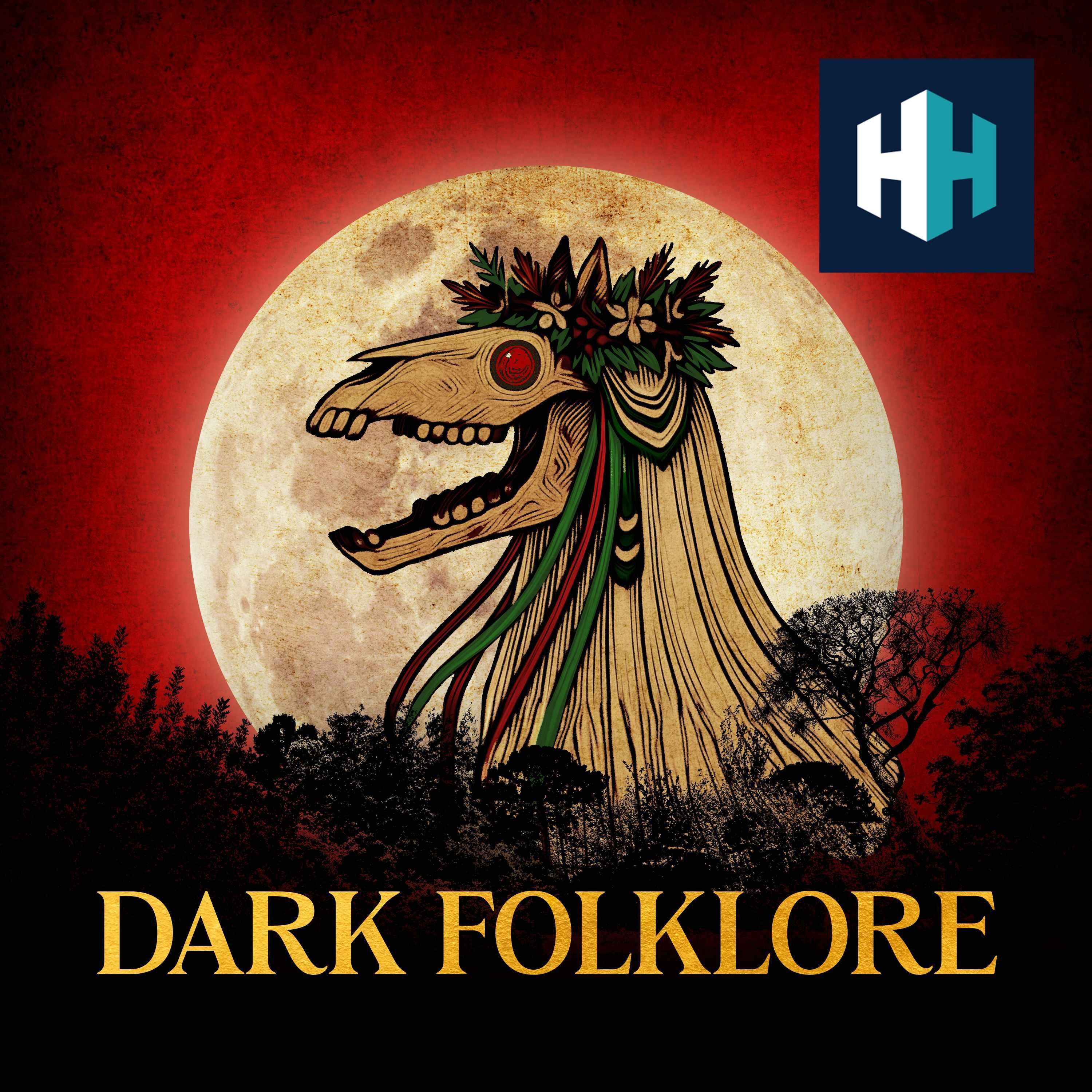
Loading summary
Transcript73 lines
- [00:00]
Anthony Delaney
Hi, we're your hosts Anthony Delaney and Maddy Pelling and if you would like After Dark Myths, Misdeeds and the Paranormal ad free and get early access.
- [00:10]
Maddy Pelling
Sign up to History Hit with a History Hit subscription. You can also watch hundreds of hours of original documentaries with top history presenters and enjoy a new release every week.
- [00:21]
Anthony Delaney
Sign up now by visiting historyhit.com subscribe.
- [00:27]
Russ Williams
Worried about what ingredients are hiding in your groceries? Let us take the guesswork out. We're Thrive Market, the online grocery store with the highest quality standards in the industry. We restrict 1000 plus ingredients so you can trust that you'll only find the best high quality, organic and sustainable brands all free of the junk. With savings up to 30% off and fast carbon neutral shipping. You get top trusted groceries at your door and you can stop worrying about what your kids get their hands on. Start shopping@thrivemarket.com podcast for 30% off your first order and a free gift.
- [00:57]
Unknown
This podcast is brought to you by Sony Pictures Classics Presenting on Swift Horses Starring Daisy Edgar Jones, Jacob Elordi, Will Poulter, Diego Calva and Sasha Calle. Muriel and her husband Lee are beginning a bright new life in California when he returns from the Korean War, but their newfound stability is upended by the arrival of Lee's charismatic brother, Julius, a wayward gambler with with a secret past. A dangerous love triangle quickly forms when Julius takes off in search of the young card cheat he's fallen for. Muriel's longing for something more propels her into a secret life of her own, gambling on racehorses and exploring a love she never dreamed possible. On Swift horses. Opens April 25th only in theaters. Get tickets now at onswifthorses.com A real.
- [01:43]
Lemonade Pet Insurance Review by Madison H.
- [01:45]
Russ Williams
You know, I thought it was a.
- [01:46]
Unknown
Little ridiculous to get pet insurance, but I really didn't want to not take my little kitten to the vet because of money.
- [01:52]
Russ Williams
In the last eight months, I've taken him in six times because of ear.
- [01:55]
Unknown
Infections and saved literally hundreds of dollars.
- [01:59]
Russ Williams
You may even need to get surgery.
- [02:00]
Unknown
And I couldn't consider it without Lemonade's help. I recommend Lemonade to all my friends constantly, and now I'm recommending it to you.
- [02:08]
Check it out@lemonade.com Pet.
- [02:19]
Maddy Pelling
In the Mists of ancient Wales, where magic and reality are intertwined, a tale of two dragons emerged that would shape a nation. As the 5th century dawned, King Vortigern sought to build a fortress atop Dina Semris, and with each attempt to construct it, however, the foundations crumbled a young boy believed to be Merlin the magician from the legend of King Arthur was revealed the true cause of the king's woes. Beneath the hill, in an underground lake, slept two fierce dragons. One red, the symbol of the native Britons, and one white, that of the invading Saxons. The disruption above had awoken the two dragons who engaged in a fierce battle. Despite the white dragon's dominance, it was eventually the red dragon who was victorious. This legend, woven into the fabric of Welsh lore, became a rallying cry for kings and commoners alike. The red dragon, Yvry Goch, evolved into a symbol of Welsh resistance and pride. From the banners of Roman soldiers to the standards of Welsh kings, the dragon's image has endured. In time, it even found its way onto the flag of Henry Tudor, who claimed descent from the legendary King Cadwaladr and placed it on the white and green background that we're familiar with today. Yvrygoch still flies proudly over Wales, a fiery emblem of a nation steeped in myth and magic, forever reminding its people of their storied past and the enduring spirit of the land.
- [04:38]
Anthony Delaney
Hello and welcome to After Dark Myths, Misdeeds and the Paranormal.
- [04:43]
Maddy Pelling
I as ever, I'm Anthony and I newly am Maddie.
- [04:46]
Anthony Delaney
Yes, before that's not who she was. The artist formerly known as as Madeline, the full name. If you've been listening over the last couple of weeks, you'll know that we have been focusing on the mythological history of Scotland and Ireland's dark folkloric tales. And this week you might have guessed from the intro, we are heading to Wales, a country, of course, steeped in folklore. Now, in that intro, we just heard the origins of the Welsh Red dragon, a foundational myth of Wales. But to help us learn a little more, we're joined by Russ Williams today. And Russ is an expert in all things Welsh legends, folklore and myth. And he is the author of the incredibly titled where the Folk A Welsh Folklore Road Trip. Russ, welcome to After Dark.
- [05:31]
Unknown
Thanks for having me both. It's wonderful hearing how careful people pronounce my book.
- [05:36]
Anthony Delaney
The title.
- [05:37]
Maddy Pelling
I have to say I've never pre ordered a book quicker like I am. Absolutely. That is coming to my door very, very soon. What a great title, Russ. Before we begin, I've got to ask because I really have done my homework on this. I've been preparing, but I'm still nervous. How was my Welsh pronunciation? Am I going to jail for it? Was it acceptable?
- [05:57]
Unknown
Dina Zemrus, you nailed that.
- [05:59]
Maddy Pelling
Oh, okay, that's one tick. That's one t. Give Me, the bad news.
- [06:04]
Unknown
Well, I did have a chuckle in my head when he went. When he called him Vortigern, I know the Welsh name, Gur Seyn. And I was like, good move.
- [06:12]
Maddy Pelling
Yeah. Yeah. Okay. I have to give him credit to our producer for that, who clearly took that name out of the script, was like, she's not capable of that one. Let's simplify.
- [06:23]
Unknown
And then that would be the dragon.
- [06:27]
Maddy Pelling
Okay. Vry goch. Okay, we're getting there. We're getting there. We're learning on this.
- [06:30]
Anthony Delaney
You can never go to Wales now, Maddy. That's it.
- [06:33]
Maddy Pelling
Well, I am officially banned now, of course. Yes, yeah, yeah, absolutely.
- [06:36]
Unknown
But you told the story beautifully, though, I must say. It was very dramatic.
- [06:40]
Maddy Pelling
Well, that's what counts.
- [06:42]
Anthony Delaney
That's what's called a shit sandwich. Right. It's like, you give good news, then you give the shit news, and then you give the good news at the end. So, well done, Russ. That's perfect management there.
- [06:50]
Maddy Pelling
I will never be crossing the border into Wales ever again. Russ, we're so excited to talk to you about this because your work is so steeped in these traditions of storytelling and the question of what folk can do for us then and now. So let's begin with the origins of the Welsh Dragon, as I'm just going to call it now. Yeah, okay, let's be clear going forward. So can you just tell us a little bit about the origin story? We heard it laid out there, but can you give us a sense, as an actual Welsh person, of what this story is all about and what it means to Wales today?
- [07:23]
Unknown
Yeah, so that's a very interesting story. Like you said, it's very much people associate, right, The Red Dragon, the Welsh flag. But there's nothing in the story whatsoever that says. And that is why we have the Red Dragon as our flag, you know, so that's kind of come along over the years and. But what are people off. What I off here very often? So, for example, I live in Cardiff and I used to work in a primary school, and they told the rs, you're from North Wales, you know. You know, the stories tell the kids why we got the Red Dragon. And I said, you know, that time the Welsh one beat the English one and all this. And I was like, that's not how it goes. So people, for whatever reason, have picked that tale and says, that's right. And I'll tell you where the confusion comes from. So Merlin says, there's a prophecy, if the white one beats the red one, then the Saxons will successfully Invade us. And I think that's where that confusion comes from. And then people have just simplified it for children, I think, over the years. But what a lot of people don't realize as well is that that story is something of a sequel, if you will. So I believe it was Gerald of Wales who came up with that one. But the two dragons featured the Mapinogion, which came about, you know, years before that.
- [08:39]
Maddy Pelling
Yeah. So tell us what. What that is then, Ross, because that's a text that is going to crop up again and again in this conversation, but people might not be familiar with exactly what it is.
- [08:49]
Unknown
Yeah, so the Mabinog, you know, the OG Welsh tales, if you will. You know, they're. I think they were written down in the 1350s, I think, but they existed as, you know, oral tales for years before that. And it's essentially. I think they derive from the matters of Britain and they're essentially. It's like. It's like the Welsh version of the Greek myths. They're the oldest, they are very deep rooted in British history and there's a lot of real historical figures thrown into these. These stories, and they very much still dominate the Welsh folklore scene, if you will. And one thing I learned right in my book was a lot of the folktales that came after that. So many of them weren't even Welsh, you know, they were brought over by either by invaders or people that heard stories from other countries. But the map in Orgion. Yes, as Welsh as you can get with the legends.
- [09:42]
Anthony Delaney
And Russ, you said there. There's kind of a legacy even today with these tales. I'm just wondering how much do they change and what are those changes? How do they change as we go through the centuries? And are any of those changes particularly modern now?
- [09:58]
Unknown
Well, I mentioned that they were written down in the 1300s. I would argue even they were modernized versions of the Mapinogy. In one story, you know, there's very evident. In one story, for example, two characters are playing chess. It's about pre romantic or just when the Romans would come in and they didn't have chess in those days, but they did by the time they were written down. So the evidence is very clear. And also, so in that story, Max and Ledig, the Roman emperor who came over to Wales, a lot of Welsh nobility descended from him, you see. So in the stories, he's portrayed as this wise emperor that everyone loved. The real person, far more complicated. And he actually tried invading Rome and he betrayed the empire, ultimately. But that, I think, is the magic of Folktales is that they are. They're constantly evolving. And it's not just the Mabinogy and a lot of these tales, the older they get, you know, you can see the societal changes in them. So the lady of the Lake, for example, that very common story found all over Wales, but the names of the characters change, that's all. So essentially, a mortal man falls in love with a fairy woman, and she gives him three opportunities. She'll say, right, if you hit me three times, then it's all over, you know, but. And then you notice as the years progress, hits me, changes to lie to me or upset me, you know, so you can see the societal changes. But even though, you know, people love doing modernized version of the Mabinogion today, because these stories, in their essence, they fit with the same fears we have today. A lot of them, for example, concentrated on the perils of war and how silly it is, the exact same feelings we have today. And that's the magic of them, I think.
- [11:46]
Anthony Delaney
It is what keeps these things alive, right? And it's how they. It's how they keep coming back within generations and informing and reinforcing this sense of national identity. And I just want to talk a little bit about that with you specifically, how did you come to these tales, Russ, because you obviously have a really good breadth of knowledge. And, you know, I know growing up in a country where folktales are fairly present, you cross paths with them, but was there a moment or a thing or a time where you went, ah, this is something I really want to pursue in more meaningful way?
- [12:18]
Unknown
Right, well, in primary school, we are taught these tales, but like I mentioned at the beginning, we don't necessarily get the full story. You know, we saw very simplified versions. So a lot of Welsh people retain this, you know, the vague memory of, oh, yeah, that story with the two dragons. But I gotta be honest, like, more Welsh people probably know more about Greek mythology, you know, or the Viking myths than they do about the Mabinogion. And I myself never gave them a second thought growing up. And what happened during lockdown, obviously, limitations. I could only go 10 miles away, so I thought, all right, where can I go? And I just started stumbling across these locations. Someone told me, oh, that's where this story took place. Place. And. And I was telling my friends, and a lot of them said, you know, Russ, I'm Welsh, I should know these tales. But I don't. That and people saying, oh, that story about the Welsh dragon beating the English one and stuff like that. So I kind of arrogantly almost said, right, I'm going to educate the masses now. But what I felt was a lot of these books on Welsh folk tales were either very academic or aimed at children. And that's when I came up with where the Folk then, because a lot of people have an interest in these stories. So I aimed my approach towards them, basically. And I think I. Yes, I found an audience. It's very interesting. Next month, I'm going to HMP Berwyn, the prison in Wrexham. They emailed me a couple of weeks ago, say a lot of our inmates ask about Welsh folk tales. Would you like to come in? So. So it's very evident they're not for kids and they're not just for the, you know, academic people. They are stories for the people.
- [14:02]
Maddy Pelling
That's music to my ears to hear you say that, Russ. I think the value of folk tales and the telling of them, the telling of stories and bringing people together to hear those stories is so magical and it's so important. You know, these are stories that are dark, that are complicated, they're sophisticated stories, and like you say, they're often simplified for children. And they're still the versions that we imbue ourselves today. And actually, when you hear the more complicated versions of them, they can trigger all kinds of questions about local identity, national identity. Something that's coming out of our conversations about folk across all these episodes that we're doing is the relationship to the landscape. And you were talking there about the lockdown and having everyone's world shrunken in that period and not being able to access big swathes of land or to travel very far and having to then build a different kind of relationship to the landscape that's near you? Is that something that you've now incorporated into your practice as a folk storyteller, a collector of folk stories? Do you go out into the landscape specifically because you've heard a story, or do you visit somewhere and think, that was a magnificent landscape, an incredible mountain or a lake or whatever it might be? I need to know more about the stories people tell about it. Is that how you interact with the world around you?
- [15:21]
Unknown
Now, 100. You know, one point I make towards the end of the book is that, you know, we are very often we don't look at our own back gardens, do we? We always want to see what's on the other side of the fence. You know, what. What other country can I visit? What can I learn about them? And I've learned so much. You know, I mentioned I was quite arrogant in the beginning said, right, I'm going to teach everyone else. So that was 2020. It's now 2025. And the amount I've learned about my own nation, visiting places in Wales, like you said, I'll go there for the legend. Places I never knew existed. And so much nice places to see and people to meet, stories to hear. And yes, it has really opened my eyes that there's a lot. And Wales is such a small country, you know, but there's so much to see. But also there's something of a time limit, if you will, because once they learned as well, a lot of these sites are under threat, you know, they won't be here forever for various reasons. So hill forts along the coastline, for example, erosion. So you think in 50 to 100 years time, a lot of these hill forts won't exist anymore, you know. And then there were other places that disappeared due to industrialization. There was one great place, there was a family, you know, the story goes that one of the men married a fairy women back in the day. And to this day, the family is still referred to as Taylor Till we've tagged the fairy family. The nickname lives on, you know, the actual family. But I went to see the cottage where the story took place and they'd knocked it down and built a car park over it, you know, enough for about three or four cars in the middle nowhere, you know, so. Yeah. And other places, there was a mural that was burned down in an act of arson, you know, so, yeah. So if you do have an interest and if you do want to see what your country has to offer, don't say, oh, I'll go someday, you know. Yeah. Because they won't be here forever.
- [17:35]
This podcast is brought to you by Sony Pictures Classics, presenting on Swift Horses, starring Daisy Edgar Jones, Jacob Elordi, Will Poulter, Diego Calva and Sasha Calle. Muriel and her husband Lee are beginning a bright new life in California when he returns from the Korean War. But their newfound stability is upended by the arrival of Lee's charismatic brother, Julius, a wayward gambler with a secret past. A dangerous love triangle quickly forms when Julius takes off in search of the young card cheat he's fallen for. Muriel's longing for something more propels her into a secret life of her own, gambling on racehorses and exploring a love she never dreamed possible. On Swift horses. Opens April 25th. Only in theaters. Get tickets now at onswifthorses.com I don't know about you, but the number one thing I look forward to when I return from traveling is a good night's sleep in my own bed. That has never been more true than it is now that I have a Sleep number smart bed. I get so sore after traveling on planes, but after literally one night in my Sleep number smart bed, my body feels restored, rested and relaxed. The fact that my bed actually listens to my body and adjusts to my needs to keep me sleeping soundly all the way through the night is worth it. Al. Not to mention my husband and I never need to argue over firmness because we can each dial in our own sleep number setting. Why choose a Sleep number smart bed? So you can choose your ideal comfort on either side. And now for a limited time, Sleep number smart beds start at $849. Price is higher in Alaska and Hawaii. Exclusively at a Sleep number store near you See store or sleepnumber.com for details.
- [19:11]
It's a cold day here in Alaska, but there's one animal seemingly unaffected. Bright eyed and determined enters the husky. Observe as they go up the mountain, guided by pure instinct. They are truly amazing masters of this wilderness. But even these amazing pets can't sign up for Lemonade Pet Insurance. You can sign up now@lemonade.com Amazing worried.
- [19:41]
Russ Williams
About what ingredients are hiding in your groceries? Let us take the guesswork out. We're Thrive Market, the online grocery store with the highest quality standards. The industry we restrict 1000 plus ingredients so you can trust that you'll only find the best high quality organic and sustainable brands all free of the junk, with savings up to 30% off and fast carbon neutral shipping. You get top trusted groceries at your door and you can stop worrying about what your kids get their hands on. Start shopping@thrivemarket.com podcast for 30% off your first order and a free gift.
- [20:20]
Anthony Delaney
Russ, we talked about the Vry Goch and now I'd like you to take us back into that Welsh garden that you described so eloquently earlier and tell us a little bit about the Mari Loyd. Gosh, there's my pronunciation coming in there. But tell us a little bit about the roots of that and what that story is.
- [20:38]
Unknown
Yes, the Mary is, you know, there's something of a folk revolution going on in Wales at the moment. I don't know about the rest of the uk, but I've certainly it's very evident in Wales. I think social media has helped. So the Mari Lwyd, it's interesting there's no story as such so I was a bit hesitant to include her, you know, because so there's no legend, if you will. So it's a folk tradition, you know, it's a wassailing tradition. They believe it started. It was a way for the poorer people in the community to have their own feast during Christmas time. So what would happen, They've got a horse's skull draped in ribbons and a cloak and there's a band of them. There'll be people dressed as other characters as well, and musicians, and they'll go around houses in their village and they'll knock on doors and they'll challenge the people on the inside to a punka, which is essentially. It's a Welsh battle of rhymes. And the person on the other side will rhyme back, saying why they should not come in, that if the Mari Lord wins, then she gains access to the house and they're given some beer and some food and then they move on to the next house. So a lot of things, the tradition started, it was just the way for the poorer people to have their own fun at Christmas time. A lot of the people, they wouldn't. They would engage, but they wouldn't try too hard to not let them in. You know, it was all part of the fun. But it's a southern. Well, I say Southern traditions. Little pockets of Wales, you'll find it, but mainly down south. So I grew up in North Wales, never heard of the Marilloyd until I moved down to Cardiff and I saw on Facebook, I saw what I said, can you believe there's a country where every Christmas they dress up as a dead horse and challenge people to a Welsh rap battle? You know, I was like, what is this? But the Mari's getting very popular now, and there's a lot of people in America, you know, with Welsh ancestors, and especially around Pennsylvania and the Marie Loyd, there are groups over in America doing it. So. Yeah, so she's the Marie Loyd. There's a rise since the 70s and the 80s. The tradition has really come back.
- [22:51]
Anthony Delaney
Do you know what's really striking me there, actually, Russ, is that there's a tradition in Ireland called the Wren Boys.
- [22:58]
Unknown
Oh, yeah.
- [22:58]
Anthony Delaney
And you dress up as something similar. Not the horse head, but something. It's a wicker head and you go around to people's doors and you're asking for. And it's around Christmas. It's a poetry thing. I don't think there's a battle element that's quite. I like that. But clearly there's some kind of a. And it's interesting that we have the Wren Boys and I think the Marie Cluid means the grey mare. Right. Isn't there? That's the loose kind of translation. So it's something. It's invoking these animals. It's really interesting to see these cross cultural connections.
- [23:29]
Maddy Pelling
It's interesting as well, Anthony, that you say that, because in where I grew up in Staffordshire, which isn't that far from the Welsh border, really, we have Abbotts Bromley as a small village, and they do. I think it's around Christmas time. It's certainly in the winter, a dance with huge stagthorns that are hundreds of years old, and they're just hanging in the local pub for the rest of the year. You can go and have a drink next to them. And they're massive. I mean, they're unbelievably big. And they're brought out every year in this dance. And there's something there, I suppose, about. Because the Marie Fluid as well happens, doesn't it, in the winter and around Christmas time. And it's something about sort of life and death and that animalistic thing. And it's. I mean, you mentioned about it being sort of like a battle and it's. You know, we think about wassailing traditions more generally across the British Isles, certainly. And I'm thinking about a sort of medieval period in particular, and that it becomes a kind of upending of the hierarchy of a village or a town or whatever, where the poorest people get to be mischievous and there's a sort of threat element. Like, it's fun, but there's also a darkness to it, isn't there? This sort of life and death, There's a bit of danger. There's the transgressing of boundaries, literally coming into people's houses. Does that aspect of it survive today, Russ?
- [24:42]
Unknown
Well, no. Yes. The tradition has evolved, if you will. So a lot of times they don't go knocking on doors these days, but they'll go around the pubs and they collect money for charity. But even then, they'll say, sometimes people don't appreciate it. You know, people be having a pint and someone comes in snapping a, you know, horse's skull in their face. And they do get people telling them, go away. You know, what are you doing? So. But the reason the tradition died in the first place, the church didn't like it, first of all, because, like you say, it was rowdy, right? It was people going around houses getting drunk. And I believe there was one place, Mercedesville area, I think, where things got violent. I think they got into someone's house and basically just robbed Them, you know, so there was this element of, wow, all right, we need to put an end to this. So it's great. I think that it's coming back now, but like I said, it's evolved and it's a bit more accessible.
- [25:40]
Anthony Delaney
Talk to me, then, about. I'm going to give the English translation of this because I don't want to butcher the Welsh translation. I want to hear you say it because I have a feeling it's going to be nice and dramatic. The hounds of the underworld.
- [25:52]
Unknown
Yes. You know, I had to Google this myself because. Yes, so it's Koon. Annwn. Okay, so Koon, I know, is correct. So Annwn is the name of the Welsh of the world. Right. Where the Tulwyth Teg or the fairies live. But it's not the kind of word that most Welsh people would know or hear. You know, unless you've read the Mabinogyn or what have you, I don't think you would have heard it, you know, So I didn't really hear about it until 2020. I pronounce it as Annwn, but I've had another Welsh speaker tell me, no, it's Anwn, not Anwn. Annwn. But I've also seen it spelt with an F. Annwn. Most people I've heard go with Anwn.
- [26:34]
Maddy Pelling
But I love that there is that ambiguity because that so much of folklore does come down to that, doesn't it? And sort of, to a certain extent, personal taste and interpretation as well. So these are spectral hounds. Spectral dogs, aren't they, Russ? And they're quite different from in England, at any rate. We have the black shuck, this idea of this huge black dog dog with often sort of yellow fiery eyes that can be, in some cases, depending on whether you live in the north or south, the east or west of the country. You know, it can be a portent for evil, it can be a sign of things, bad things to come, but it can also be a protective spirit as well. But the hounds of the underworld in Wales, they look a little bit different. Am I right in thinking they're white? They have white fur. That doesn't seem as scary. I mean, I'm sort of picturing something a little fluffier.
- [27:19]
Unknown
Yeah, yeah. So, and that's interesting, you know, you mentioned the colours there. So another animal associated with Welsh of the world, a white cattle. So I mentioned at the start that the ladies of the lake who, you know, fought mortal man, and yet she has three goals. Well, those ladies are often associated with white cattle and Then a lot of the stories, so lakes in particular, a lot of folktales happen around bodies of water or lakes because they were considered like portals to Anun almost. And a lot of these stories begin where the ladies or the tulwyte would come out, and with them a herd of white cattle comes out and they bring them up to the surface to graze and then go back. And the khuna, known very similar, so all white and they've got pink ears, pointy pink ears. But the unknown. Some stories differ. Some say they are. You know, they kind of foretell doom or death. They say that it would be. There's been a couple of kins of the underw. The first one was Arawn. Then you had Gwynapne. Later stories would say that these kins would leave the otherworld with their dogs and the dogs would chase after people to collect their souls to bring to the other world. But they don't feature. You don't come across them often. But in the Mabinogion begins with a kunan. So the whole event of the Mabinogion begin when a mortal man comes across a dead stag surrounded by the Kuna nun, and he kind of shoos the dogs away, takes the stag home for himself, and the next day he gets a knock on the door by the kin of the underworld, Arawn, who tells him, that was my kill, my dog's killed, that you now owe me. And that's how the events all start.
- [29:09]
Maddy Pelling
I wonder if there's something about the colour of the Welsh landscape as well that is related to the sort of paleness of these creatures. I was in North Wales recently and I'd sort of forgotten the slate there. I mean, it's so overwhelmingly grey. And I don't mean that in a bad way. There's so much depth to it, there's so much richness to the colour of the stone, the colour of the land there. And I wonder actually if these creatures, because they're sort of of this world, because they can come through these portals, these bodies of water or these hills or wherever, that they're kind of colour coordinated in a way that the black shuck of England isn't necessarily like. I wonder if there's something uniquely Welsh about that colouring of those creatures.
- [29:52]
Unknown
Yes, Like I said, I've never come across an explanation as such. But it's interesting. You mention the landscape and the contrast. And one thing that is mentioned about Anwn in a lot of the stories, they describe the underworld almost as a tropical paradise. It's warm down there. There's loads of flowers, less greenery, and then all these white creatures that dwell there. So that. Yeah, you are right, there is. People have differentiated between the two worlds when it comes to the landscape, but in terms of why they're white, I haven't come across an explanation. I gotta be honest.
- [30:30]
Anthony Delaney
Well, I'm gonna give it to you now. It's because they're spectral and that's it. We're just gonna go with that. And they're kind of like ghosts, and they're a bit white. Russ, I was really interested to hear the impact that your research on this and the gathering of these stories has had on you as a Welsh person. But what I'd love to know, you know, ultimately, what we're concerned with on After Dark is history. It's a history podcast. I'd love to know what you learned about how these folk tales intertwine with the history of Wales and what they can tell us about the history of Wales as well as that kind of more folkloric side of things. Where do they intersect and do they sit comfortably with the history?
- [31:09]
Unknown
I haven't read up on Irish tales myself, but one expert I interviewed did compare Welsh and Irish tales and say how they. How they differentiate from a lot of other cultures. You read these tales or you hear them, and you often think, right, what was the moral there? That, you know, what's that about? But there are no morals in a lot of them. They are just interpretations of historical events. They tell the history not accurately, but that's what they're there for. And for hundreds of years before they were written down, they were kept alive. So the Welsh princes and what have you, they would always have not a court's jester, but there would be someone in this court who would live where the prince lived, whose sole job was to narrate these tales and to tell the history so they survived. And what's interesting, I mentioned then about Max and Led Dig, the Roman emperor and how he's portrayed. So you can imagine if for hundreds of years these stories were kept alive by people who are very close friends with the Welsh nobility, who all descended from Max and Ledig. They weren't going to tell the stories how it really went. So they say, oh, Max and Leddig were this wise leader and everyone loved him. And then what you notice with folk tales, the ones that came after the Mabinogion, is that so many of them are simply not from Wales at all. So there's a story in a castle down south, where a lady, the princess, dies over in France, but a spirit returns to haunt the castle. Same story, different princess in another town, CAERphilly, there's about three or four of them. Well, they all have in common. They were Norman castles. So the evidence is there, not necessarily in the stories, but where they're from. And then you could see the history then.
- [32:59]
Maddy Pelling
And you can see as well just how important storytelling was to all of these societies as we go through all these different centuries, that, like you say, there's a kind of bardic tradition in royal courts or, you know, sort of leaders in different regions of Wales, at least that there needs to be a storyteller, that it's that important to the identity of different groups of people, whether it's national, whether it's regional, whatever, that it's sort of central to Wales. And I love what you're saying, Russ, that. That it's a way for people inside Wales, and indeed out of it today, to come into contact with some of that history. It's a way in to think about how Wales has changed over the centuries, what it means to the people then, what it means to people now, what it could mean in the future as well. We've been talking about so many stories that are in the Mabinogion, and I want to just talk about one more. And I suspect, like so many of these tales, it appears outside of that collection as well and has developed in all different ways. But. But this is the story of Rhiannon. Can you tell us something about who this person is? Because this is a fascinating tale and.
- [34:00]
Unknown
A very fascinating character. Rhiannon, I think the two, I think, are the most popular female characters. But there you went from another story. And Rhiannon, I think every. A lot of Welsh people instantly recognize Rhiannon. And Stevie Nicks was a fan, right? So, you know, the fleet were. Maxon. Rhiannon is based on the Welsh character, but Stevie Nicks got it wrong. So she first heard of Rhiannon. She watched a film based on the Mapinogion, but again, it was a modernized version. They changed it, and Rhiannon was portrayed as a witch. And Stevie Nicks would introduce the song by. Oh, this is a song about a Welsh witch. And then sort of eventually corrected her. She read the Mabinogion and she actually wrote a couple of songs about Rhiannon after that, actually portraying what she was like in the stories. So Trianon, very interesting. There's a lot of theories that she was probably the remnants of some old Celtic dating A very an equestrian goddess because she's often depicted riding a white horse. And that's where we first meet her. So the character I mentioned at the start who took that stag from the ken of unknown, he sees Rhiannon up on top of a hill on a white horse, and it takes him three attempts to catch up with her. They eventually fall in love. But her tale is a very sad tale because she's often portrayed as this powerful female figure, a goddess. But in the story, the story is very tragic. So her son is kidnapped by a monster in the middle of the night and the servants don't want to be blamed for it. So the servants kill a puppy, smear the blood all over Rhiannon's room, and when she wakes up in the morning, she's blamed for the death of the child. And as punishment, for several years, she has to carry every guest to the castle. She has to crawl on all fours and carry them on her back to the castle until the end of the tale where they find the son. The map in Organ is strange, so there's a four main tales. They don't follow a single narrative as such, but her son is the only character who appears in every one. So the first tale is all about his birth and what happened when he was kidnapped. Second tale, we have a war with the Irish where he has something of a cameo appearance when he turns up for the fight. And then the third tale, he goes back home to his mother, Rhiannon, and halfway through the tale, they touch this magical cauldron made of gold, and they are turned into stone or gold or frozen in place. So Rhiannon is trapped there until at the end of the tale when she's rescued. So, yes, it's very interesting. She's often portrayed as all powerful and God is, but the in the stories she has a very tragic. It's a very tragic tale. Rihanna's Tale.
- [37:06]
This podcast is brought to you by Sony Pictures Classics. Presenting on Swift Horses starring Daisy Edgar Jones, Jacob Elordi, Will Poulter, Diego Calva and Sasha Calle. Muriel and her husband Lee are beginning a bright new life in California when he returns from the Korean War. But their newfound stability is upended by the arrival of Lee's charismatic brother, Julius, a wayward gambler with a secret past. A dangerous love triangle quickly forms when Julius takes off in search of the young card cheat he's fallen for. Muriel's longing for something more propels her into a secret life of her own, gambling on racehorses and exploring a love she Never Dreamed Possible on Swift horses. Opens April 25th. Only in theaters. Get tickets now at onswifthorses.com I don't know about you, but the number one thing I look forward to when I return from traveling is a good night's sleep in my own bed. That has never been more true than it is now that I have a Sleep number smart bed. I get so sore after traveling on planes, but after literally one night in my sleep number smart bed, my body feels restored, rested and relaxed. The fact that my bed actually listens to my body and adjusts to my needs to keep me sleeping soundly all the way through the night is worth it alone. Not to mention, my husband and I never need to argue over firmness because we can each dial in our own sleep number setting. Why choose a Sleep number smart bed? So you can choose your ideal comfort on either side. And now for a limited time, Sleep number smart beds start at $849. Price is higher in Alaska and Hawaii. Exclusively at a sleep number store near you. See store or sleepnumber.com for details.
- [38:51]
Anthony Delaney
I love this idea that we're talking about. Often things that originate first of all through oral tradition. And so as a result, by the time they come to be written down, they've probably morphed a million times. They've changed, they've taken on different aspects to suit the time. And I love that Stevie Nicks enters into this story then, and that then becomes part of the folklore. Like this is still folklore and this is still part of Rhiannon's folkloric impact happening in the 20th century. So that's. That's really, really interesting. It brings to mind, Russ, a question about the portrayal of women in. In the Welsh folklore. Is there a general summation that you can give on that?
- [39:30]
Unknown
I wish I had a story about a strong female lead from back that later folk tales. Yes. You get strong female leads who. They're the ones. They're the main characters and they trick the monsters and they're the heroes. But certainly the older tales, but they're very much the victims of the nature of bad men from what you're saying.
- [39:50]
Maddy Pelling
As well, Russ, there's a kind of ambiguity, particularly about Rhiannon's power, I suppose, isn't there, that she is on the one hand, as you say, kind of all powerful, but then she's treated in these tragic ways. And I wonder if that ambiguity is part of how people in the sort of the far distant mists of time and certainly in the centuries since have observed women and understood them as potential threats, but not quite being able to define what that power is and therefore they're treated badly. And I wonder if that's something that we can kind of take from these stories, that women aren't necessarily depicted as the heroes because people often don't know what to do with them. They don't really understand what they're capable of or what they should represent in the story because they don't have the same male coded adventure stories that, you know, you see so many Arthurian knights, for example, having, you know, that kind of chivalric tradition of you will go out into the world and find something, an object or do something, do some kind of act that will prove that you are worthy of whatever standard of your society, and then you'll come home and everyone will slap you on the back and tell you you're a great guy. And that doesn't really exist for women in the Welsh tradition from the stories that we've discussed here, anyway.
- [41:03]
Unknown
No, they're either the damsels in distress.
- [41:06]
Maddy Pelling
Or the evil witch and nothing changes.
- [41:11]
Unknown
Yeah, that's the thing. And perhaps the reason they've kind of perceived as strong figures, perhaps people do view them of, you know, despite how awful their lives were, they had that resilience, you know, they still managed to pull through. Perhaps that's why people hold them dear.
- [41:28]
Maddy Pelling
You mentioned at the start of this conversation, Russ, that there is something of a folk revival happening in Wales at the moment. And from our conversations that we're having with people in Scotland and Ireland and in England as well, I think that's true everywhere. It's a bit of a phenomenon in this moment that we're living through and it's very, very exciting. If our listeners want to engage more with Welsh folklore, with folk practices, where would you suggest they start? Other, of course, than buying your brilliant book. What's a good place to begin?
- [41:58]
Unknown
Well, people often ask me, right, Russ, how important is it we keep these tales alight and how do we do it? And I think just as the narratives are evolving, I think the nature of how the platform used is also evolving. So, yes, in Wales, like I said, the map in Ogion are still very popular. You can go to theatres to see, you know, theatrical musical versions of them, or you can go to author events where people like myself will narrate them. But there's also, there's another example, if that's not your thing. There's a video game currently in development about the Mabinogyon, and it's going to be the first video game to be entirely in Welsh, and one of the people working on it worked on the Assassin's Creed series. So you see the Mabinogyon, I found yet another, a new platform. Now they're evolving and they're surviving. In terms of where you would like to go, it's such a shame. See, I used to have my go to answer was this manor unfortunately closed down in January, but you could go there and they would dress like they did in the olden days and kind of show you around. So that would be my go to answer. But yes, it depends how you want them told.
- [43:14]
Maddy Pelling
Well, I love the idea of hearing you and others narrate these stories. I think that's really powerful because something that's come out in all conversations is just the importance of that oral history and speaking these stories out loud. So I think that's a fantastic place to start.
- [43:29]
Anthony Delaney
Russ, thank you so much for joining us on After Dark and to help fill in some of these folkloric gaps that we are encountering as we go through each of the countries in England, Scotland, Wales and Ireland. So it's great to have that Welsh perspective and I really am interested in how all of these tales kind of coalesce as well. I think it's really interesting to see what the similarities are, what the differences are and how they share so much of their telling in common, I suppose. Thank you all for listening to After Dark. As usual, you can leave us a five star review wherever you get your podcasts. And until next time, happy listening.
- [44:12]
Unknown
This podcast is brought to you by Sony Pictures Classics, presenting on Swift Horses Starring Daisy Edgar Jones, Jacob Elordi, Will Poulter, Diego Calva and Sasha Calle. Muriel and her husband Lee are beginning a bright new life in California when he returns from the Korean War. But their newfound stability is upended by the arrival of Lee's charismatic brother, Julius, a wayward gambler with a secret past. A dangerous love triangle quickly forms when Julius takes off in search of the young card cheat he's fallen for. Muriel's longing for something more propels her into a secret life of her own, gambling on racehorses and exploring a love she never dreamed possible. On Swift horses. Opens April 25th. Only in theaters. Get tickets now at onswifthorses.com I don't know about you, but the number one thing I look forward to when I return from traveling is a good night's sleep in my own bed. That has never been more true than it is now that I have a sleep number smart bed. I get so sore after traveling on planes. But after literally one night in my Sleep Number Smart bed, my body feels restored, rested and relaxed. The fact that my bed actually listens to my body and adjusts to my needs to keep me sleeping soundly all the way through the night is worth it alone. Not to mention, my husband and I never need to argue over firmness because we can each dial in our own Sleep Number setting. Why choose a Sleep Number Smart bed? So you can choose your ideal comfort on either side. And now, for a limited time, Sleep Number Smart beds start at $849. Price is higher in Alaska and Hawaii. Exclusively at a Sleep Number store near you. See store or sleepnumber.com for details.